
From Active Duty to Lifelong Cancer Patient: Rachel on Living with Recurrent, Incurable Lymphoma
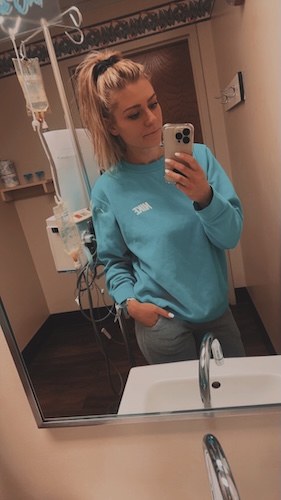
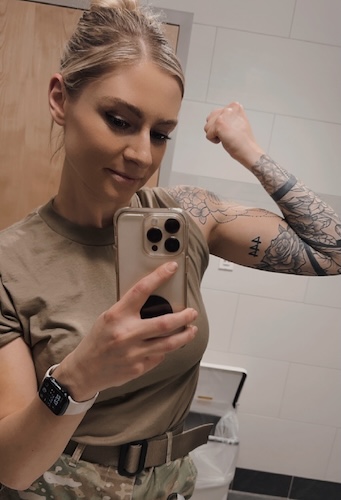
Rachel was 20 years old and fresh out of Air Force basic training when she was diagnosed with a rare, incurable form of lymphoma that behaves more like a chronic disease. It’s called nodular lymphocyte predominant Hodgkin lymphoma (NLPHL). What began as noticeable lump she could feel in her groin turned out to be the start of a decades-long experience that has included ongoing surveillance, multiple recurrences is different places in her body, and treatments ranging from radiation to immunotherapy. She’s now based in Cleveland, Ohio, and is receiving care at the Cleveland Clinic after being medically retired from the Air Force. She’s currently preparing for surgery to address her third recurrence, this time in her pelvis.
Interviewed by: Taylor Scheib
Edited by: Chris Sanchez
When Rachel was first diagnosed with this kind of lymphoma, her radiation oncologist told her she was in remission and left her with the impression that treatment was complete. It wasn’t until years later, when she relocated to Mississippi and was seen by a lymphoma specialist at the University of Alabama Birmingham, that she learned the full truth: her cancer was incurable, and she would be a lifelong patient. The word “incurable” hit her hard, particularly because she was healthy, active, and still serving in the military. She had deployed, risen in the ranks from enlisted to officer, and poured her identity into her service. When the cancer returning at age 30, reality truly landed.
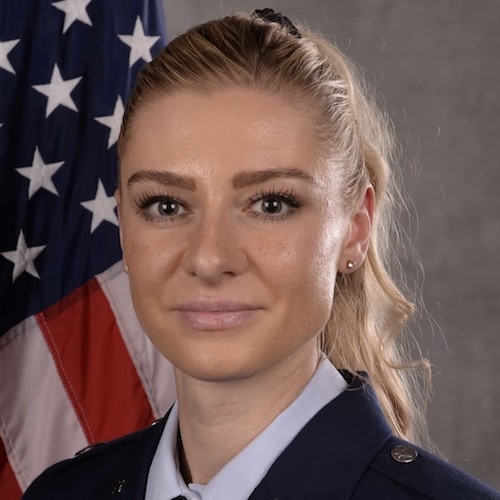
Throughout two recurrences and now a third, Rachel has navigated the complicated challenge of finding specialized lymphoma care while moving from base to base. She credits the transition to a dedicated lymphoma specialist as a genuine turning point, not only in the quality of her care, but in her understanding of her own disease. She now receives care through a palliative care team, which she’s quick to clarify is about comfort and quality of life, not end-of-life care.
Through it all, Rachel has found her footing in purpose, community, and presence. She hikes, juices, paints, builds Legos, and takes boxing classes. She’s writing letters to her children for future milestones, just in case. And when people call her strong, she gently pushes back: “I’m not strong because I chose to be. I’ve just had no other choice but to go through this.”
Learn more about Rachel’s story by watching her video and reading through the edited transcript of her interview:
- Getting to the right specialist changes everything. Seeing a lymphoma-specialized oncologist rather than a general radiation oncologist fundamentally shifted Rachel’s understanding of her own diagnosis and the care options available to her.
- “Incurable” doesn’t mean “untreatable.” Her experience shows that living with an incurable blood cancer can look like years/decades of active, meaningful life, managed through surveillance, targeted treatments, and surgical intervention when needed.
- Community is medicine. From the Wounded Warrior program to infusion chair friendships to online lymphoma support groups, Rachel consistently points to connection as one of her most powerful sources of resilience.
- The hardest part of a chronic cancer can be the invisible weight. Scanxiety, the daily mental calculus between treatment and quality of life, parenting while ill, and losing an identity built around physical strength: these are the burdens rarely visible from the outside.
- A diagnosis can transform your relationship with time. Rachel moved from being a young woman who didn’t think twice about the future to someone who finds deep meaning in a boxing class, a family dinner, and the little things she once overlooked.
Rachel’s Diagnosis Facts
- Name: Rachel H.
- Age at Diagnosis:
- 20
- Diagnosis:
- Nodular Lymphocyte Predominant Hodgkin Lymphoma (NLPHL)
- Symptom:
- Enlarged lymph nodes she could feel as lumps in her groin
- Treatments:
- Radiation therapy
- Monoclonal antibody: rituximab
- Surgery (upcoming)
- Rachel’s Diagnosis Facts
- Who I am
- Recognizing early symptoms: Swollen lymph nodes
- Getting diagnosed with lymphoma at 20 years old
- The lymphoma came back 10 years later
- Navigating care teams and lymphoma specialists
- Medical retirement and losing a military identity built around staying strong
- Parenting with incurable lymphoma
- My positive mindset with incurable cancer
- Self-care: Staying active, eating well, and finding joy
- Living with lymphoma
- “Just keep going”: Finding the will to fight when there are no other options
- Hear from people living with lymphoma
Who I am
Hi, I’m Rachel. I’m from Cleveland, Ohio. I was originally diagnosed on active duty in the Air Force at Wright-Patterson Air Force Base when I was 20 years old. I had nodular predominant lymphocyte Hodgkin lymphoma in my groin. It came back after eight weeks of radiation, and then recent studies have shown it’s actually now called nodular lymphocyte-predominant non-Hodgkin B-cell lymphoma. So that’s my diagnosis.
Recognizing early symptoms: Swollen lymph nodes
I didn’t have any B symptoms. [Editor note: Night sweats, persistent fevers and unexplained weight loss are three of the most common symptoms of lymphoma that as a cluster are called B symptoms] I just had very large, palpable lymph nodes in the groin area. My doctor immediately directed me to get an ultrasound, and they could tell right away that something wasn’t normal. Then I had surgery to confirm it. Over the years, I’ve had different symptoms, like night sweats, neuropathy, and things like that from treatments, but at my original diagnosis, it was just large lymph nodes that you could feel.
Getting diagnosed with lymphoma at 20 years old
I had just graduated from basic training and was at my new duty station. I thought the lumps were muscle from all the working out I’d been doing. But my then-husband — he’s now my ex-husband — said, “I think you need to go get that checked out.” So I did. I wasn’t really concerned. I definitely didn’t think it was cancer.
After I received the lymphoma diagnosis, I went numb. I think when everyone’s diagnosed and they hear those words, you go into fight-or-flight, and that’s the only thing you’re concentrating on. I did have a few panic attacks too, because I was still going to work and thinking, “What’s going to happen? What does the future hold?” It was a pretty stressful time.
I called my family right away, and everyone was in shock, so that is probably another good word to describe it. Being very young, I was concerned about things like, “Can I have kids? Am I going to die?” — all those feelings that come up.
What really helped was that the Air Force offered me the opportunity to be part of the Wounded Warrior program. I was actually able to travel out to Las Vegas and compete; I swam in high school, and they had swimming competitions. I met so many amazing people who had been through far worse than I. We all played sports together, and they had so many words of encouragement.
Understanding an incurable diagnosis: What “lifelong cancer patient” really means
The strange part is that I didn’t know my cancer was incurable at my first diagnosis and treatment. I had four weeks of radiation, then had another PET scan that showed the cancer had actually moved further up into my abdomen. So I had another biopsy surgery and then four more weeks of radiation, and then my scan was clear.
At that time, I was being treated by a radiation oncologist, and he said, “Radiation got it. You’re good. You’ll be in remission.” I didn’t learn it was incurable until I moved to Mississippi and went to see an oncologist at the University of Alabama, Birmingham, who specialized in lymphomas. He explained it to me, and I said, “What do you mean this is incurable?” And he said, “You’re a lifelong cancer patient.”
I was in the Air Force. I was healthy. I was working out. I had deployed. Part of me felt like if I just kept going, it wouldn’t affect me. Hearing the word “incurable” was devastating. I do have two young children, and the fact that it keeps coming back — when it came back, when I was 30, that’s when it really hit me. I thought, “This actually is true. This could eventually take my life, or at least cause complications.” And now it’s back again. So they were right about that.
Ten years in remission: Managing scanxiety and living with uncertainty
In my mind, I was thinking, “It’s fine, everything’s fine, it’s never going to come back.” But it really hit me when it did return — that was when I started to truly process everything and realize, okay, this is something that’s going to keep coming back.
I joke about it — I don’t know if you’ve seen the movie Mean Girls, but I say, “Lymphoma, why are you so obsessed with me?” Because it just keeps coming back. But I try to have a good attitude about it.
They had me do yearly PET scans. You’ve probably heard the word “scanxiety” — scan anxiety. Every time I had a scan, I would just be nervous that something would show up. I’ve been trying to live my life without worrying about it, but it’s always been there in the back of my mind. There are good days and bad days. Some days I’m eating with my kids, and I think, “This could be my last dinner,” or “I might not be able to see them graduate or be at their weddings.” But I know it’s all just part of life, and no one lives forever.
My friends and family have been great in supporting me. I’m actually living with my parents right now, so they can help me with the kids, surgeries, and all of that. I’ve had help all along the way.
The lymphoma came back 10 years later
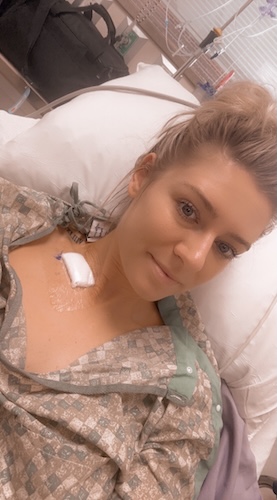
Once again, I didn’t have the B symptoms. But you could feel it — it came back in my chest that time. You could feel the lymph node; it was pretty large. I actually just got a tattoo right next to the scar — a word that means strength and perseverance in Finnish, because my family has some Finnish background.
You could feel it, and then I had a scan; it showed up, they did the biopsy, confirmed it, and all that. I think because I’ve been under such close surveillance, they’ve been able to catch it every time.
Treatment for the first recurrence: Rituximab
At that time, they didn’t suggest radiation because it would have been directly over the heart area — you never want to do radiation over your heart if possible. So I chose to do four rounds of rituximab, which is a drug administered through an IV — it’s similar to chemo, but it’s not chemo.
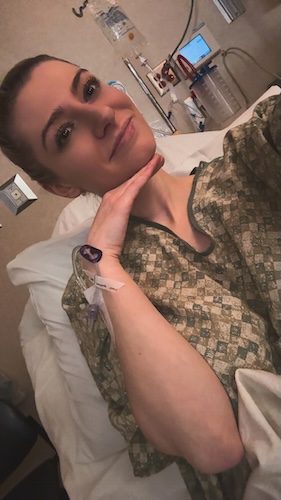
In the first round, I had a terrible reaction and almost died. I had a whole team working on me because my body just didn’t respond well to it. The three rounds after that were okay. So I did four rounds of it.
Third recurrence and my current treatment plan
Unfortunately, my last scan showed a new recurrence — now it’s in my pelvis area. A third different spot in my body. This is something this cancer does: it constantly travels through your blood and lymphatic systems, and then it decides where it wants to settle and grow.
The oncologist gave me a few different options — just watch and wait, since, as we discussed, it’s going to keep coming back regardless. Watch and wait until it starts causing symptoms or I start having issues. I also met with the surgeon, and the plan moving forward is to have surgery to try to remove it all. It’s only a couple of lymph nodes affected right now, but they’re pretty large.
Hopefully, with surgery, I won’t actually have to do any other treatments, which I’m really excited about, because no one wants surgery, but radiation and chemo are just so hard on your body. I have said a couple of times, when I get into a negative mindset, “If it comes back, I’m just going to let it run its course.”
But when I saw the results this last time and talked to the oncologist, you go back into that fighting mindset — “I’m going to fight. It’s not going to take me this time.” So that’s the plan for now. I’ll be having surgery soon, and then hopefully be in remission again. I was only in remission for two years this past time with the rituximab.
My decision to have surgery also came down to the fact that if it keeps growing, it might affect other parts of my body — it could metastasize to my liver and other places. So this time I decided, “Just get it out.” Hopefully, my body can live with a couple fewer lymph nodes, and we’ll go from there.
They medically retired me from active duty this past February, and that’s when I moved home with my family and started going to the Cleveland Clinic pretty much right away.
Navigating care teams and lymphoma specialists
It definitely has been a game-changer having a lymphoma specialist, because I know I’m with the right person who can say, “Here’s what’s going on.” But it’s also been a very frustrating experience in part because of being on active duty — I’ve had to move around and get different doctors, and military medicine is very complicated when it comes to the referral system and who you’re authorized to see. Now that I’m retired, it’s a little easier to choose who I want to see.
I’ve learned so much. And sitting in the chair getting infusions was meaningful too — I just met so many people, and we all lifted each other.
After my rituximab treatments, I got to ring the bell — like cancer patients do when they finish their treatment. Someone said something to me that really stuck: “I’m really happy for you, but it’s hard — because you’re never really going to get to ring that bell.” And I thought, “You’re right.” I rang it, but for most people, that means, “I’m done.” For me, it meant there might never be a final bell to ring. It just is what it is.
They’re also setting me up with a palliative care team, which a lot of people confuse with end-of-life care — but it’s not that you’re dying right now. It’s just a care team to make sure you’re comfortable, with pain management and all of that.
A lot of those words scare people. It’s interesting because most people don’t know how to react when you say, “I have cancer.” They treat it like the worst thing in the world. But for me, it’s really been part of my life since I was a young adult. I think I have a better understanding of the system than most people. That’s why I’m part of a lot of Facebook groups with people who have the same type of cancer — I try to help people along the way, because there are a lot of difficult decisions to make. Treatments are very harsh on your body.
It’s a balance: do you want harsher treatments that do more damage to your body, or do you want to just — I hate to say “give up,” but — let it run its course? Some people do decide that. It’s like a mental battle every day. There’s a balance between “I want to spend time with my kids because I know time is short,” or “I want to travel the world because I haven’t been able to.” It’s a mental battle every single day.
Medical retirement and losing a military identity built around staying strong
In my mind, being in the military was almost as if I could just keep going — if I could keep up with everyone at PT and training — then the cancer would stay away. But that’s not how it works. I had gone from enlisted to officer, and I was so proud of what I did — being able to lead airmen, just loving my job. So it was really difficult to retire.
They medically retired me because I’m essentially medically unemployable for active duty. I was lucky to have gone on one deployment. But that was my purpose, and losing it was hard. When my mind was telling me, “Just keep going,” the reality was that the cancer was going to come back no matter what.
It was very difficult for me to be medically retired because I wanted to keep going. But now I’m going to focus on my health and on trying to help other people — which is hopefully what this does — and find a new purpose.
Parenting with incurable lymphoma
The first time I went through cancer treatments, I didn’t have kids. When it came back when I was 30, I had both my kids, but they were both still pretty young, so I made the decision to just act like nothing was happening. My parents came out to help me with the kids during chemo treatments and surgeries.
My son is old enough now — he’s turning nine in August — that I’ve started trying to talk to him about it so he can understand. He still doesn’t quite grasp it; he’s still young. My daughter — I haven’t talked to her about it yet. But I do let him know things like, “Hey, mommy’s really tired. I need to take a nap.” About the upcoming surgery, I told him, “I’m going to need to rest — you guys are going to need to stay off of me for a while.”
I also have a few plans in place, just in case anything ever totally goes south. I’m going to write them letters to open at different milestones — when they graduate, when they get married, when they get their first job. I’ve done a lot of research on how to prepare them for life without me.
They’re good kids. They’ll be fine.
My positive mindset with incurable cancer
Going through all of this has given me a different perspective on the world, on people, and on life in general. I do get comments about it a lot, actually — even before people know I have cancer, they’ll say things like, “You’re like sunshine.” And I think it’s because the little things just don’t matter to me. It’s almost hard to describe, because if you’ve never been through it, you don’t get it. But it’s like — my kid broke a bowl? It doesn’t matter.
I want to connect with people. I want to experience things. I just took a boxing class this morning — I’ve never boxed before, but I said, “I’m going to go try it.” I want to do everything I can because it’s more special to me. I’m not caught up in the little stuff — like having a perfect front lawn.
I’m not going to waste my time on things that don’t matter when I know my time is precious. If I’m giving you my time, that means something to me, because I don’t know how long I have. No one does — you could get hit by a bus tomorrow.
Self-care: Staying active, eating well, and finding joy
Being out in nature is really good for anyone, but especially for me. I do a lot of hiking, sightseeing, and bike riding. I also do organic juicing — carrots, celery, all those good things. I don’t eat fast food, and I try to stay away from sugar, so I’m very health-conscious. I stay active and go to the gym.
That said, I do have very bad days where I just want to lie in bed, and sometimes my body needs that rest. My functional medicine doctor has said this can be very isolating — it’s pretty much like having a chronic disease. Some days, I don’t want to get out of bed, and I don’t want to talk to people. But you have to pull yourself out of that, because it can be very isolating, and not everyone is compassionate or understanding.
I try to instill healthy habits in my kids, too. We do yoga together. I try to teach them how to meditate. I play piano, I swim, I paint, and I’m obsessed with gem art. I build Legos. I have a mini bucket list of things I want to do before I can’t anymore. Just having small goals — knowing I want to do this thing, see this person, travel, and see friends I haven’t seen and tell them I love them. That’s how I take care of myself.
Living with lymphoma
Community was easier in the Air Force because you make friends and family wherever you go. Right now I’m struggling a little bit — I have my family, which is great, but I’m working on building more of a community.
I’m sure I’ll meet some people through the palliative care team who can point me to resources. I’m constantly looking into talk therapy groups, cancer survivor groups — doing my research.
“Just keep going”: Finding the will to fight when there are no other options
A lot of people have told me, “You’re so strong. I don’t know how you’ve done this.” And I reflect on it and think — I’m not really that strong. I’ve just had no other choice but to go through this.
When I say “just keep going,” I do have my ups and downs. I’ve said, “I’m just going to let it take me.” But then this last time, I took a deep breath and thought, “We’re going to get through this. I’ve got support.”
Some days I just live meal to meal — make sure I wake up, have a good breakfast, think about lunch, make a good healthy dinner. Some days it’s day to day. And sometimes I don’t have good days. But it comes down to just keep going. It’s kind of like Dory from “Finding Nemo” — just keep swimming. And I’m a swimmer, so that fits perfectly.
My “why” for keeping going is everyone who has ever supported me, taken care of me in the hospital, held my hair when I was throwing up — if everyone invested all of that in me, I need to keep going for those who love me.
And of course, my kids. I want to be there when they graduate and see all the amazing things they do. They keep me going a lot, too.
Hear from people living with lymphoma
Real experiences with diagnosis, treatment choices, side effects, and life beyond lymphoma — in their own words.
Leave a Reply