
Diagnosed at 32 with Stage 4 Breast Cancer; Claire’s Been at ‘No Evidence of Active Disease’ for Three Years
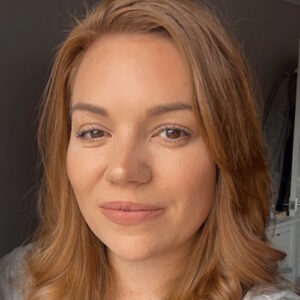
Claire was 32, married, and raising a two-year-old son when a bump at a children’s soft play area led her to notice that one breast had become swollen and rock hard. She assumed it was a leftover issue from breastfeeding. Ten days after she called her doctor, she was told it was breast cancer: a 9-centimeter tumor, later staged as HER2-positive metastatic breast cancer that had spread to her lymph nodes and lungs.
Interviewed by: Tory Midkiff
Edited by: Katrina Villareal
With the stage 4 diagnosis, Claire was told she would receive only palliative care, chemotherapy to slow the disease rather than cure it, with no surgery or radiotherapy. She spent the following weeks thinking through the practical weight of that news: updating her will, teaching her husband their son’s routines, and writing birthday cards for a future she wasn’t sure she’d see. What she didn’t know was that her medical team was treating her with curative intent from very early on.
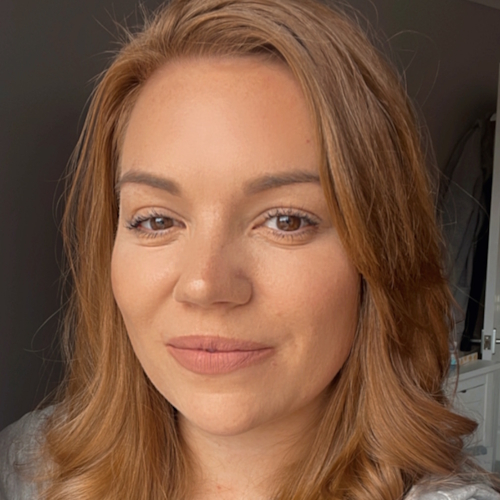
Claire’s cancer responded well to chemotherapy and trastuzumab, a targeted therapy that her doctor credited with turning what would once have been a six-month prognosis into a treatable one. A three-month scan showed no remaining disease in her lungs or lymph nodes and only a small amount of dead tissue in her breast. Her disease responded strongly enough that her care team offered her a mastectomy and full lymph node clearance.
Throughout treatment, Claire kept working, parenting, and pursued fertility preservation, ultimately freezing 11 embryos with her husband. She is now three years past diagnosis, cancer-free, and outspoken about self-advocacy: pushing back on a treatment plan, researching instead of Googling a prognosis, and never letting a doctor tell her she doesn’t know her own body.
Watch Claire’s video or read the edited transcript of her interview to find out more about her story:
- Trust a physical change even if it seems minor. Claire wasn’t checking her breasts that day; a bump at a children’s soft play area is what led her to notice the swelling that turned out to be a 9-centimeter tumor.
- Time to think and research is almost always available. Claire says cancer is rarely as fast-moving as people fear in the first days after a diagnosis, and that time is worth spending on questions and advocating for your care.
- Bring a back up to an appointment if you need it. Claire tells people who’ve had a lump dismissed more than once to bring someone who will advocate for them if they don’t feel able to push back themselves.
- Fertility preservation is worth raising even amid a fast-moving diagnosis. Claire’s surgeon brought it up before she had the chance to ask, and connected her with a fertility specialist almost immediately.
Claire’s Diagnosis Facts
- Name: Claire W.
- Age at Diagnosis:
- 32
- Diagnosis:
- Breast Cancer
- Staging:
- Stage 4 (Metastatic)
- Biomarker:
- HER2
- Symptom:
- Swollen and rock-hard breast
- Treatments:
- Chemotherapy
- Monoclonal antibody: trastuzumab (ongoing maintenance)
- Surgeries: unilateral mastectomy (right), full axillary lymph node clearance
- Radiation therapy
This is not medical advice. Please consult with your healthcare provider to make informed treatment decisions.
- Claire’s Diagnosis Facts
- My life before a stage 4 breast cancer diagnosis
- Feeling a swollen and rock-hard breast by accident
- Being told it was cancer
- A devastating discovery of learning I had stage 4 breast cancer
- Finding out my cancer is HER2-positive and the treatment that improved my odds
- The truth about curative intent
- What cancer taught our family
- Finding my people
- Fertility preservation
- Know your rights at work
- Making space for the hard days
- Hear from people living with metastatic breast cancer
My life before a stage 4 breast cancer diagnosis
Life was completely normal. My maternal grandma passed away from breast cancer in the 1980s, before I was even born, so it hadn’t been anything on our family’s radar. It wasn’t something I’d been aware of in depth.
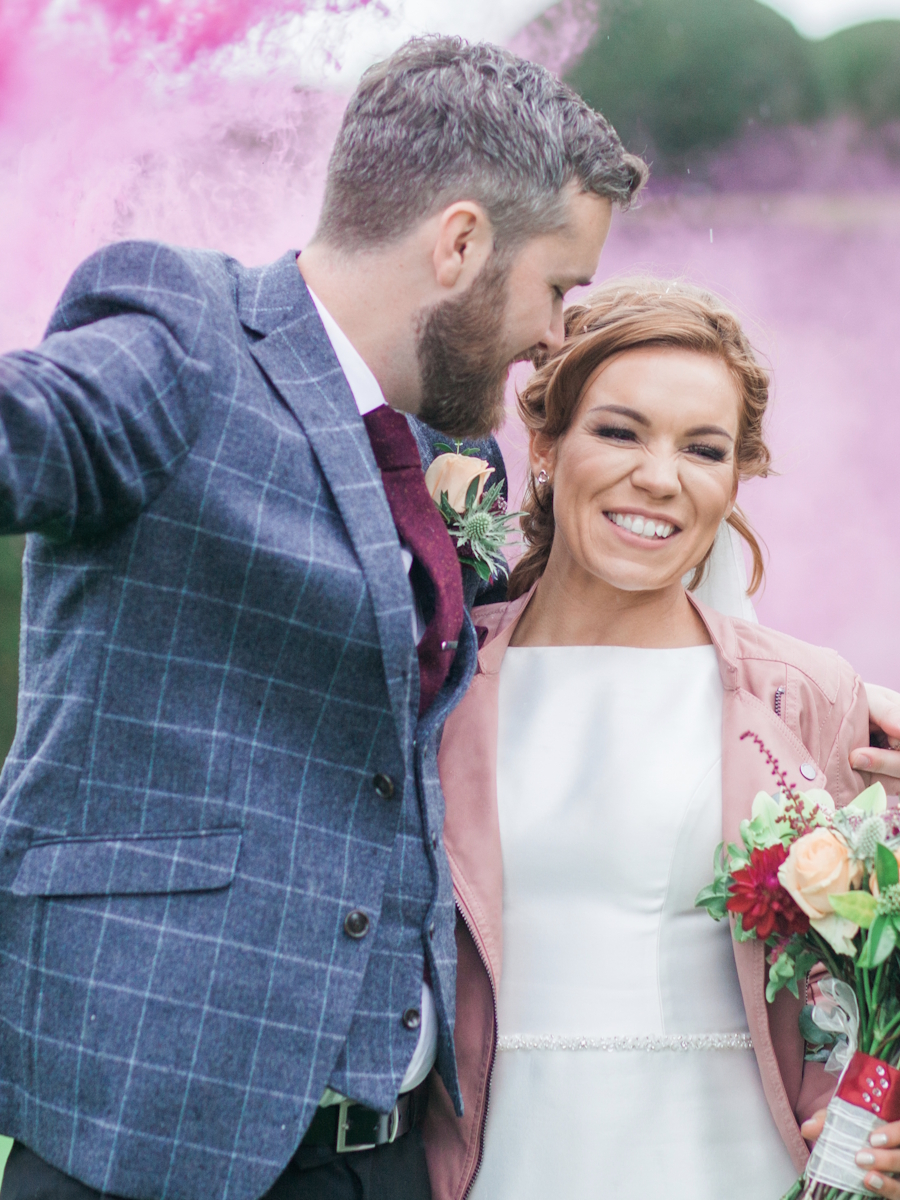
Life was normal. I had the perfect job, which I loved. We got married before the pandemic hit, bought the family home, and our son Teddy had just turned two. We were trying for another baby and nothing was happening, which happens to a lot of people. But we were a normal little family, sailing through life. Nothing crazy. We went on holiday and worked. When I say life was great, life was pretty good.
Feeling a swollen and rock-hard breast by accident
We must have been trying for our second baby for about a year. I remember having monthly meltdowns over why it wasn’t happening for us. It got to a point where my husband said we’d go and speak to somebody, since he worked for a private healthcare company at the time. He said he’d sort it out, and I said okay.
About a week later, I took my little boy to a soft play center. We were playing around and I knocked my right breast. I felt like I’d winded myself, which I thought was a bit weird, but I didn’t think anything more of it until about two days later. When I looked in the mirror, I thought, “Why does one breast look so much bigger than the other?” I asked my husband, “Does this look weird to you?” He said, “Yeah, it doesn’t quite look right. We’ll keep an eye on it, and we’ll call the doctor.”
Then I started to feel that it wasn’t a lump: the whole breast was swollen and rock hard. I thought it was a bit weird, but because I had previously been breastfeeding Ted, I thought it had something to do with that.
Seeking care for my breast cancer symptoms
I remember it clear as day. I called the doctors while I was at work; it was about 10 o’clock. They said, “Can you get here in the next half an hour?” Immediately, I thought, “What? Why do you want to see me in half an hour?” They said an appointment had come up.
When I went in, they asked me a couple of questions and felt around, including under my armpit, if you’ve ever had the misfortune of going through that. The doctor said she was going to refer me, but only because of the history of my maternal grandma. She said she didn’t think there was anything wrong, but they wanted to make sure.
She said she was putting me on a 10-day emergency referral. In the UK, you get put on a 10-day emergency referral because the health service is supposed to diagnose cancer within two weeks of someone reporting symptoms. But when she said emergency referral, I asked again, “Why? What do you think it is?” She said, “No, no, no, I don’t think it’s anything.”
Then about three days later, I got a phone call from our breast unit and got an appointment at half past eight in the morning. My husband came with me. It was 10 days from the moment I found the lump to going into the breast unit. We didn’t have time to think about it.
Being told it was cancer
The last thing I thought was that this was breast cancer. I thought I had a blocked milk duct, something left over from breastfeeding, and nothing to worry about. When I went to the breast unit that day, they told me that same day that it was breast cancer. I didn’t have to wait for biopsy results or anything. They said it absolutely is. I had a 9-centimeter tumor.
The doctor said she was going to do a biopsy, but asked how I wanted her to tell me. I said, “Just give it to me. Just say the words.” She said, “You’ve got breast cancer.” I remember I started laughing, because I thought, “This isn’t real life. I’m watching someone else’s story.” She said she knew it was a bit of a shock. I said, “A shock? I’m 32 years old. People like me don’t get breast cancer.” I was healthy, active, and I’d never had any health problems in my life. It was the biggest shock ever. But thank God I took Ted to soft play that day. Otherwise, it probably wouldn’t have swelled up, and I probably would have been none the wiser.
From biopsy to discussing breast cancer treatment
When I went to the breast unit, one of the nurses came in and felt around. My husband was in the room. She left and said she was going to get me a gown because we were going to do an ultrasound. As soon as she left the room, I said to my husband, “She just looked at me like I’ve got cancer.” He said, “No, she hasn’t; stop being so stupid.” But you just know in your gut.
I went for the ultrasound, and while she was doing it, she said, “It is cancer; you can see it here on the screen.” She said she needed to do a biopsy to know exactly what it was. I didn’t even know what a biopsy was. I’d heard of a mammogram, but I’d never had one, so I didn’t know what that was either.
When we did the biopsy, I had no idea what to expect, but it was more painful than I thought it would be. They had to take four samples of tissue. Then we went through to see a breast surgeon.
I hadn’t seen my husband from the moment I said, “She’s looked at me like I’ve got cancer,” until going in to see the surgeon, which was about a 45-minute gap, because he wasn’t allowed into the other rooms. The first time I saw him again, before I’d even had time to process anything, the surgeon said, “At least we know what we’re dealing with now; it’s breast cancer.” I looked at my husband and he said, “What? No, hang on a minute. Are you sure you’ve got the right person?” We were both in a state of shock.
When you get told news like that, everything goes quiet. You’re in the room, but you’re not listening while people are talking at you. I remember thinking, “Please don’t say chemotherapy. Please don’t say chemotherapy.” And he said, “Because of the size of it, we know it’s quite big, you will have to have chemo.” I thought, “Oh no.” My experience with chemotherapy was what you see in films: people getting sick and thin, and losing their hair. I didn’t want my little boy to see me like that.
Then he said something about surgery, and I remember thinking, “I need him to do reconstruction at the same time.” He said, “Let’s not run before we can walk. Let’s calm down.” My final question was, “Do you think I’m going to die?” He said, “Absolutely not, no. Well, you are going to at some point, but not from this.” I thought, “Okay, right; that I can work with. We can deal with this.”
From there, because of the size of the tumor, I had to have full body scans. They wanted to see whether it had spread anywhere. In my inexperience with cancer, I thought that doesn’t happen when you’re 32; that happens to older people with weaker bodies.
A devastating discovery of learning I had stage 4 breast cancer
Unfortunately, the full body scans came back showing that it had spread. It had reached the lymph nodes in my armpit and my lungs. My full diagnosis was stage 4 metastatic breast cancer with spread to the lungs.
They said, “You’ll only be receiving palliative care.” I remember thinking that meant I was going to die. We all know what palliative means. They looked at me and asked if I could sign to say I would receive it. I remember thinking, “I’d only just turned 32. I had my whole life ahead of me. I’d made all these plans. I was just getting started in my career. We wanted more of a family.”
In those initial days, it took about three to four weeks to get the full picture of what was happening in my body. I think a lot of cancer patients can relate when I say you think you’re going to go to bed that night and never wake up. You think it’s going to be that quick. Of course, it isn’t.
How my diagnosis changed everything
Initially, they said I would need chemotherapy, surgery afterward, then radiotherapy, and that would be that. When it came back that it was stage 4, they said I would receive chemotherapy to prolong my life, but there would be no surgery in the National Health Service (NHS). They said they didn’t see the point in it because it had already spread, and it would be a waste of resources, which is a bitter pill to swallow when you’re hearing things like that.
No radiotherapy either. There’s no evidence or data to suggest that surgery and radiotherapy would help. We’d do chemotherapy and see how I responded, and then it would be a case of keeping it stable. If it kept growing, there were other treatment options to move through. But the likelihood of ever getting rid of it entirely was low, because stage 4 cancer generally can’t be cured. It is what it is.
I thought, “Okay, think logically. Think as a mother. Finances. Ted needs looking after. Mike, my husband, needs to know how to order his school lunches, his school uniform, how to make the pancakes Ted loves, and that kind of stuff.” We’d made a will, but everything was left to each other. There’s a good chance my husband is going to have a relationship with somebody longer than the one he had with me. I needed to change my will, because I wanted Ted to get my half of everything in case Mike remarried and my half became someone else’s.
There was a lot of logistics in my head, and that’s what kept me going. I thought, “I’m not going to be here to see Ted through these periods in his life. I’m not going to see him graduate, buy his first house, and get married. But what I can do is leave him things, so when he does buy that first house, he can think, ‘Mom left me some money; thank God for mom.’”
I used to sit at 2 a.m. writing birthday cards for him all the way until he turned 18. He’s two years old. It’s the most surreal feeling in the world, thinking, “What is he going to be like at 18? What’s he going to be into?” I got a load of Spider-Man cards because I thought, “He’s not into Spider-Man now, but it doesn’t matter how old you are.”
Finding out my cancer is HER2-positive and the treatment that improved my odds
The stage 4 breast cancer diagnosis absolutely changed everything, but here’s what we found out: In the world of breast cancer, your hormones can sometimes be a trigger for it. Mine triggered something, and it started rapidly developing by the millions. My cancer has nothing to do with my hormones, thankfully.
My cancer is aggressive, especially in the first two years. It used to be extremely difficult to treat until a scientist in America found a medicine called trastuzumab. There are still women alive now who were on that initial trial, with stage 4 cancer. That’s absolutely phenomenal. Until that medicine was found, my doctor said I would have been gone within six months. Chemotherapy alone would have finished it off, because the cancer is that aggressive.
Chemotherapy: Expectation vs. reality
Chemo is rough; there’s no getting away from that. As soon as someone says chemotherapy, you think it’s going to be horrible, and it is. But I felt very lucky that I responded well to it. I could feel the results, which was a massive mental boost. There are people whose cancers can’t be seen or felt, and I imagine they must wonder constantly whether it’s working. Because I could physically see mine working, I thought, “Okay, we’re going to get through this. We’re going to keep going.”
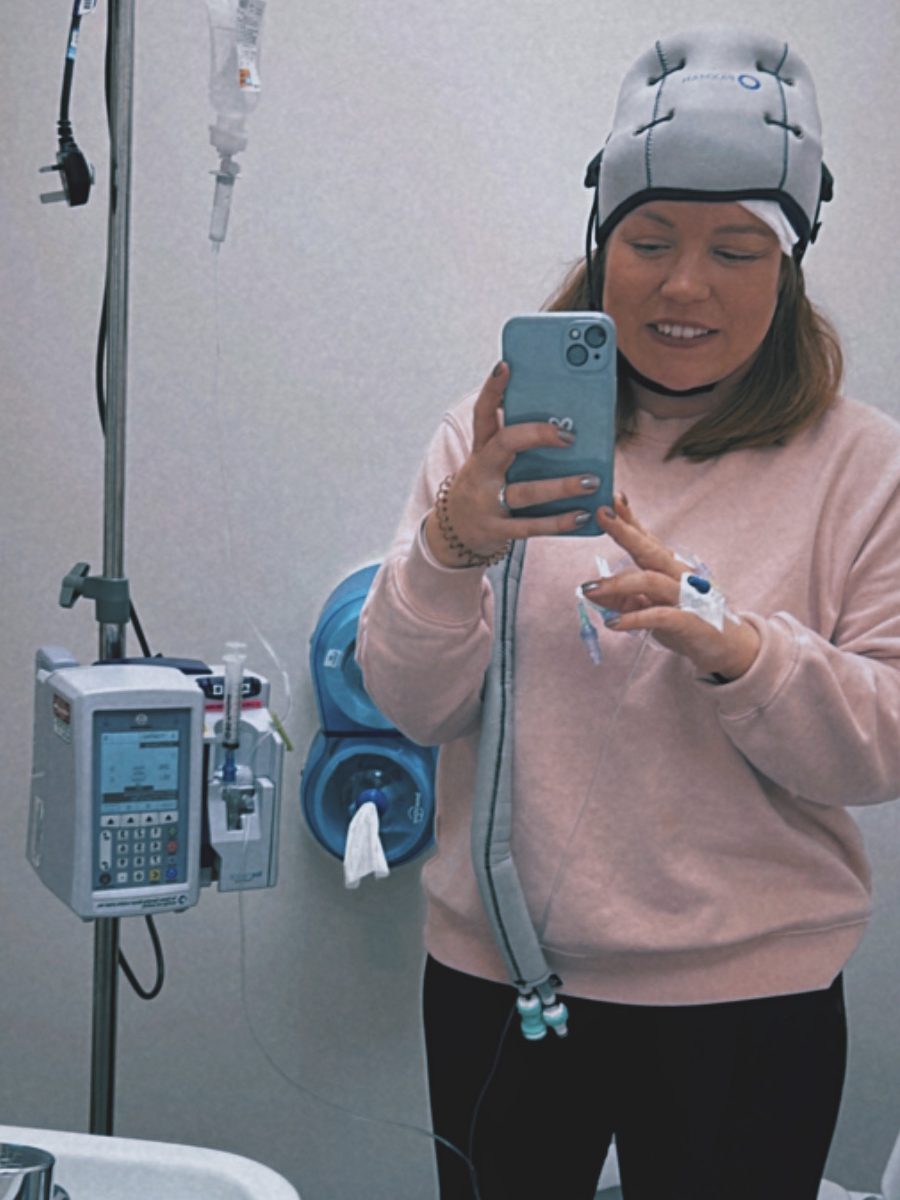
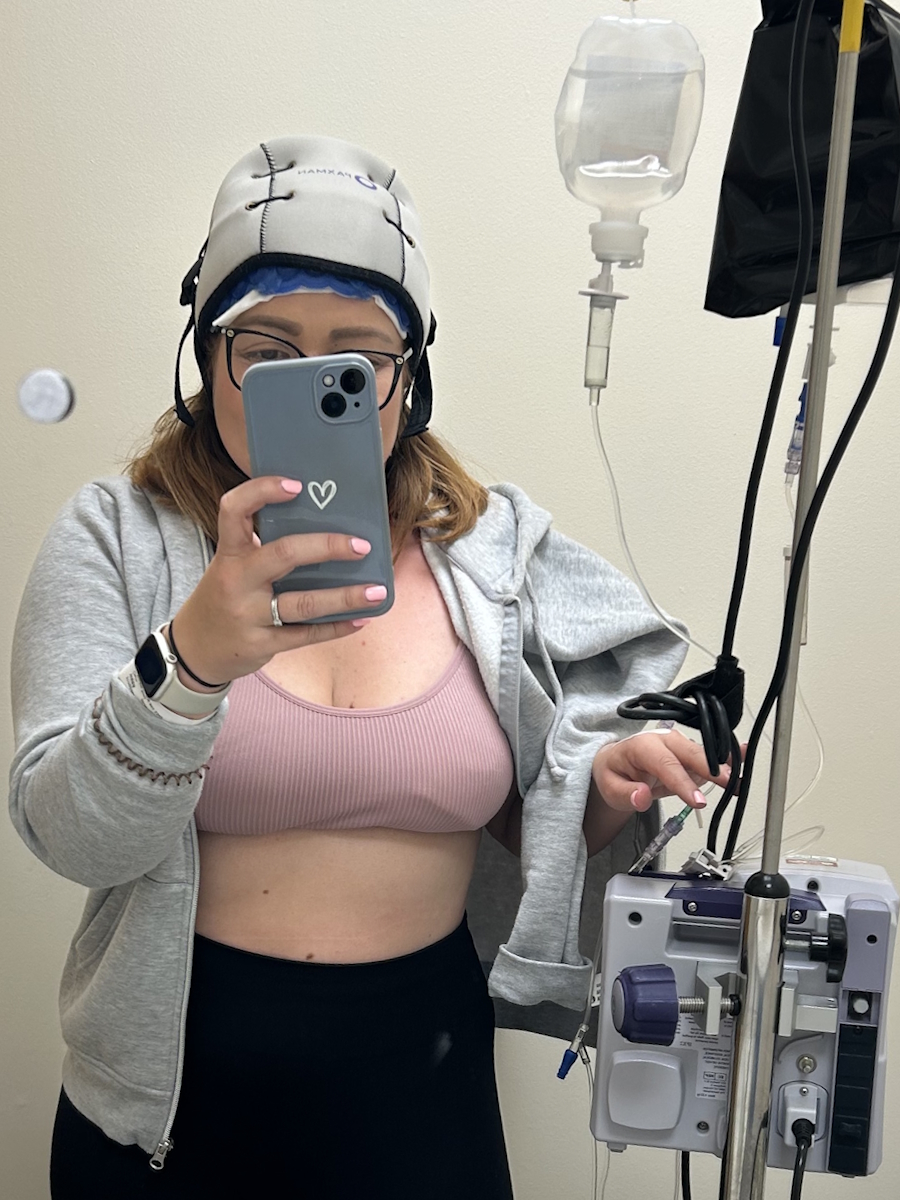
I didn’t lose my hair. I used a cold cap, which you can get on the NHS if the hospital has the machine. People told me the cold cap is worse than the chemotherapy itself, but it wasn’t. It’s cold enough to make your head numb, so you don’t feel much, and the longer you keep it on, the better it is for your hair. I loved that I didn’t have to wash my hair for about two weeks at a time. I didn’t lose my hair, but I did get a fairly bad skin rash, almost like acne, though I’d never seen acne like it before. I had little white-headed blisters all over my chest and arms, and it was so itchy. I took antihistamines, which cleared it up.
The food aversions were a lot like being in the first trimester of pregnancy. I remember one night telling my husband that I desperately needed sausages and mash with gravy. He went out, cooked it, put it in front of me, and I said, “No, I’m going to be sick.” He was so patient about it. You get bad food aversions.
The strangest side effect for me was losing my nose hair. You don’t realize how important it is until you’re sitting in front of people with your nose streaming and you’re apologizing, explaining you have no nose hair left, and they’re probably wondering if you’re okay. I also had this odd feeling that my nose was constantly swollen. I kept asking my doctor if he’d heard of that before and he said no one had ever mentioned it.
I didn’t get the more typical side effects people warn you about. I was never sick, not once. Even though there were times I felt sick, I never had to use my anti-sickness medication. I put on three to four stone (42 to 56 pounds), even though I was told I’d lose weight, which was annoying.
The fatigue was absolutely crazy. On the days I felt good, I’d put on a full face of makeup and go to work. People would say, “Is she joking? Does she just want time off? Because she looks pretty good.” When I was first diagnosed, I asked my nurse if I had to quit my job now that I had cancer. She said some people choose early retirement, some people quit, and some people don’t, so it was entirely up to me. I love my job, so I decided to keep going. My manager and I worked out a plan, and he was phenomenal about it. It never stopped me doing anything I wanted to do. I would still go for a walk every single day, even though I couldn’t run or go to the gym.
Staying Ted’s mom through it all
I would take Ted to swim, football, and cricket — everything. The parents on the sidelines probably thought something was going on, but didn’t want to ask because I looked okay and hadn’t lost my hair. Hair loss is big, especially for younger people who get cancer. That’s what hurts the most, because it’s your hair. People say it’s just hair and it’ll grow back; never say that to someone with cancer. It isn’t just hair and it doesn’t grow back the same. Mine grew back curly, and it’s annoying because I can’t style it. I lost some hair around my hairline, but I was to have very thick hair to begin with.
On the whole, I coped with it reasonably well, though I don’t like saying that to a lot of people, because it can come across as though I didn’t have it as badly as everyone else. I understand that when you’re not dealing with it as well, you don’t necessarily want to hear about someone who dealt with it well. I also needed to hear from people who’d coped well and people who’d been given the all clear, but I couldn’t find that anywhere. That’s part of why I’m so vocal about my experience now, and what it means.
I’m not saying everyone will get through it or that it will be wonderful, because a lot of people don’t get through it, but I needed a tiny bit of hope to hold onto. That’s what I’m trying to give other people: the sense that maybe you won’t lose your hair, maybe you won’t have to quit your job, and maybe you can still take your child out. The way cancer treatment gets portrayed to us is that you’re going to lie in bed for six months, get sick, and wither away. It’s not always the case, though it’s very rough.
With surgery, I barely noticed I’d had it. The drains came out within 24 hours, and I had no complications whatsoever. Radiotherapy was the same. I know some people struggle with it, but I had nothing from it. It was over before it had begun.
Responding well to cancer treatment and then having surgery
You get scanned halfway through chemo to check it’s doing what it’s supposed to be doing. At my three-month scan, they told us everything was gone. There’s a tiny bit of tumor left in my breast, but it’s completely dead. The strangest thing was that after each round of chemo, my breast, which had been swollen and hard, would go back to feeling like a normal breast again. It was the oddest thing. I remember thinking, it must be working, because the swelling is going down.
At the three-month scan, there was nothing on my lungs, a tiny bit of dead tumor left in my breast, and nothing on the lymph nodes in my armpit. Because I’d had such a good response, they said they were going to do surgery after all, which was the best news I’ve heard in months. I had a single right mastectomy with full lymph node clearance. They’d initially predicted that every one of my lymph nodes was cancerous, so they took all of them.
What I learned afterward is that lymph nodes work almost like a chain. Out of all the ones they took, three were affected: one had microcancer cells in it, which would have grown, and two had dead cancer cells. Out of all of them, only three were affected. I have no lymph nodes now, but that result felt amazing. Then I had radiotherapy. My initial treatment plan had been changed because of the stage 4 diagnosis, but because I’d responded so well, we went straight back to something closer to the original plan.
The truth about curative intent
About a year and a half in, my oncologist sat me down and told me they had been treating me with curative intent the whole time. They hadn’t told me, because they had to get me to sign the palliative care paperwork, but they had treated me as if it had been caught early. He said that on this occasion, it had paid off, because clearly, my body could take everything they threw at it. I’m still on my trastuzumab now, which I get every three weeks. That’s all I’m on, nothing else. I get scanned regularly. I have regular heart scans as well. I’m living the life I lived before, minus the body part.
What cancer taught our family
As a family, we’re a lot closer now. You find the person you love, get married, and have a baby. You’re both working, and there’s a lot of financial pressure, especially with the ordinary stresses that come with a newborn. It’s easy to get caught up in comparing who’s doing more, who gets to go out with friends, and who doesn’t.
My husband and I had a genuinely great relationship, but we had those small tensions that come with being new parents. Then, as soon as I was diagnosed, we thought, “Why are we doing this to ourselves? Life’s so short. We should be enjoying the family and home we’ve built together. We don’t need to worry about money, so why put that pressure on ourselves?” We stripped it all back, got rid of the background noise, and decided to focus on our little family. It’s been one of the best things we’ve ever done.
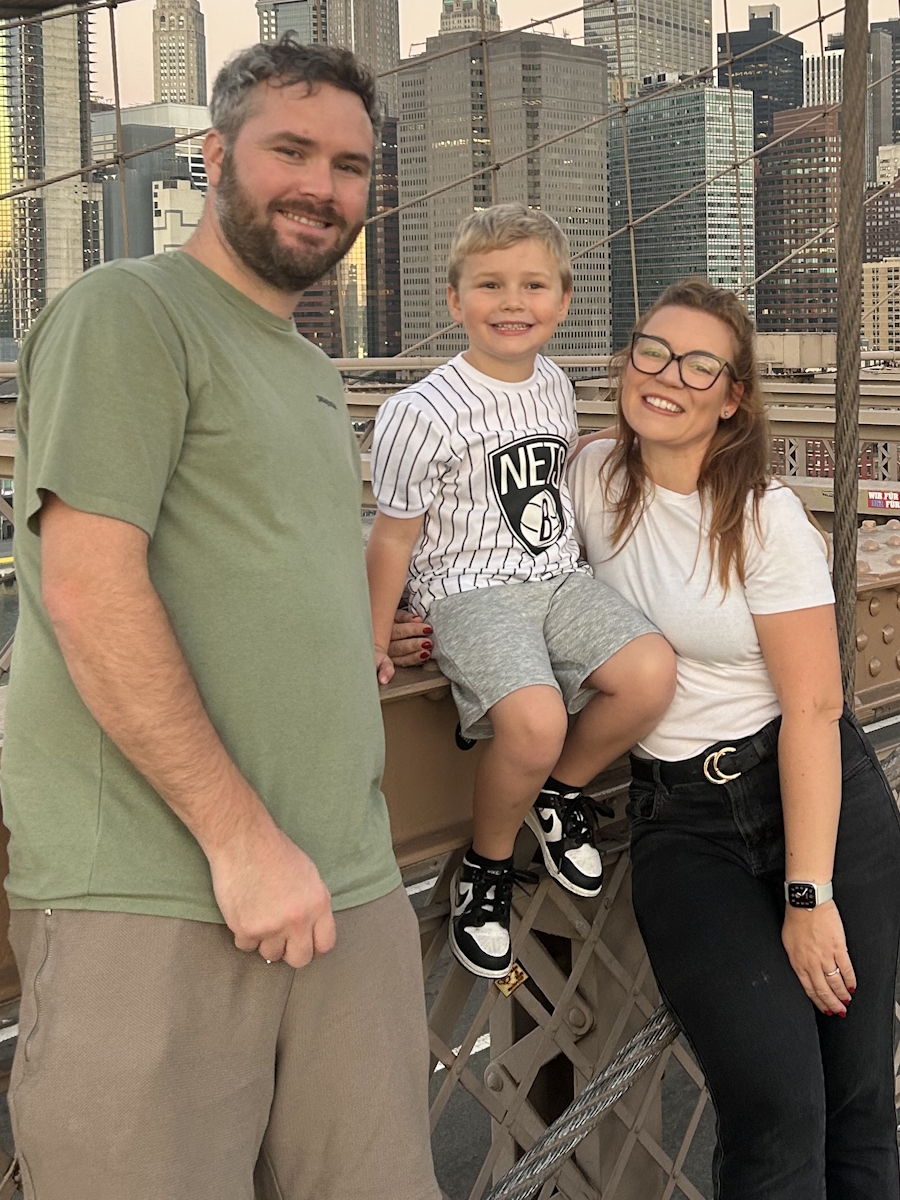
It’s Mike, me, and Ted first, and everyone else comes second, including our parents, siblings, and friends. If people want to be involved, they’re welcome, but we’re not forcing anyone into our unit. We spend far more money now and go on far more holidays than we ever did before. When I was given the all clear, I said I wanted to book a holiday somewhere crazy. We ended up going to Mauritius, on a trip that cost more than the Maldives would have, with a two-year-old, in business class, booked with two weeks’ notice. I don’t regret a bit of it. Now every time we fly economy to Europe, Ted asks where his bed and his TV are.
We honestly see it in other people every day: little arguments and niggles getting in the way of a life they chose and built for themselves. You start to see life differently, and it doesn’t have to be as stressful as we make it. A lot of the time, we put that stress on ourselves. We want to give our children the best life we can, and sometimes that simply means spending time with them rather than working more.
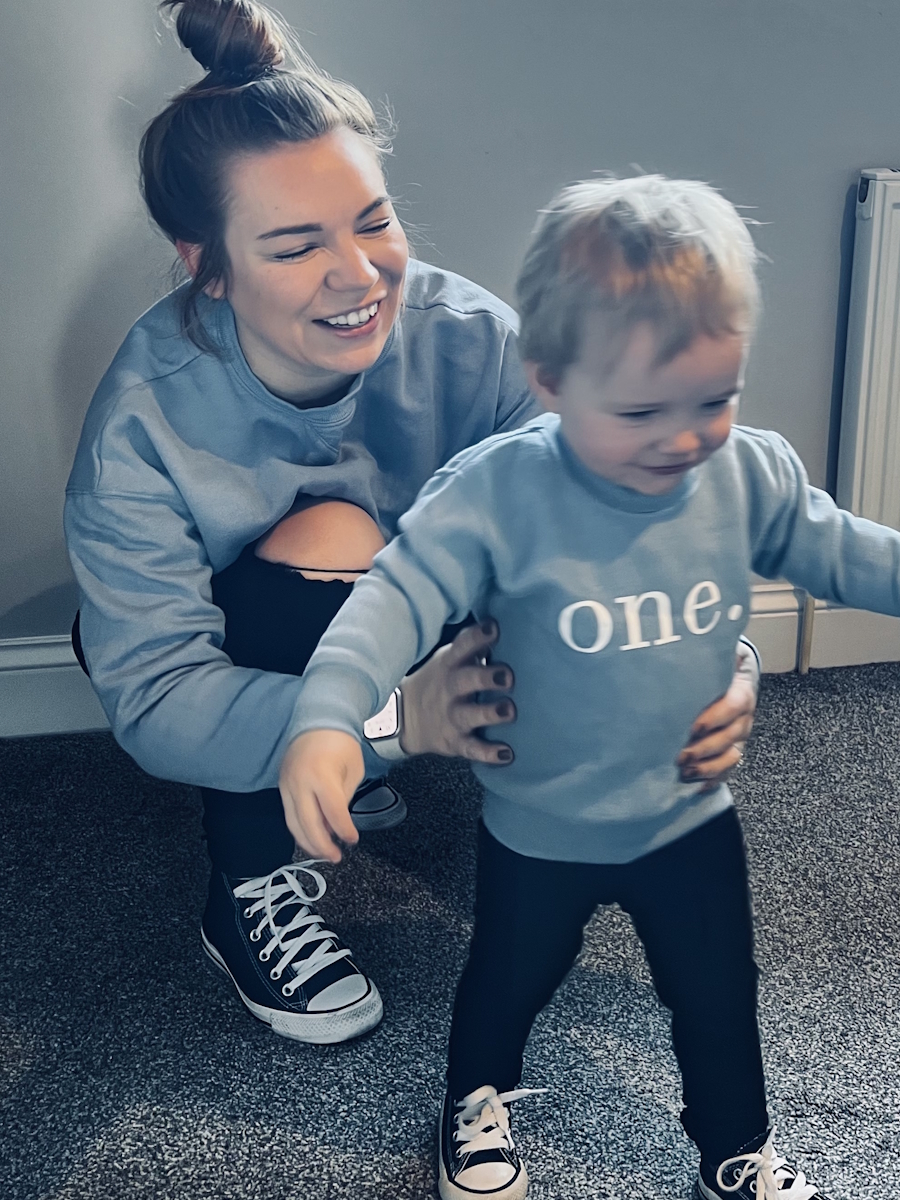
We never kept the word cancer away from Ted. He was only two, but we explained it in a way he could understand. Mommy’s tired, so you can’t jump on her; mommy’s had an operation, so you can’t launch yourself onto her chest. We’ve never whispered the word to him the way some people do. People are starting to get more comfortable talking openly about things like this, the same way they’re starting to talk more openly about miscarriage. I’m not embarrassed about having had cancer, and I’m not ashamed of it, which is why I’m so open about it with anyone who asks. I’ll talk about it, about checking yourself, and advocating for yourself, for as long as anyone wants to listen. Never let a doctor tell you that you don’t know your own body.
Why I’m passionate about advocating for yourself
I’m passionate about this because so many people message me saying they’ve been to their general practitioner (GP) three times about a lump and been told it’s just breastfeeding. If you don’t feel comfortable pushing back yourself, take someone with you who will stand there and say, “No, this needs to be checked. This needs an ultrasound.”
If you’ve received a diagnosis and feel like you have no time, you do have time. Cancer doesn’t work like a heart attack, where it just happens all at once. Unfortunately, it’s a slow-moving disease, so even if you’ve received the worst possible news, the chances of something happening tonight are slim. You have time to research, advocate for yourself, and ask questions. Don’t assume that what your medical team is telling you is the only option, and don’t be afraid to think outside the box.
When I was first diagnosed, before they knew I was stage 4, the paperwork said I’d receive two chemotherapy drugs together. Once it changed to palliative, it said I’d only receive one. We rang my oncologist. We didn’t argue — you don’t have to argue — but we challenged him. We asked why he would take that away from me, when I was 32 and healthy apart from cancer. He said, “Fair enough.” He understood what we were saying, and he’d have to do some internal admin, but if that’s what we wanted, he’d do it. We had evidence to back up what we were asking for.
I have a friend whose cancer had spread from her breast to her liver. Her team told her it was game over for that part of her body. She told them she wanted them to remove that part of her liver, because she knew it could grow back. They initially said no, because of her stage 4 diagnosis. She told them if they wouldn’t do it, she’d take it further. They did. She’s about six years out from diagnosis now, and has since had another baby naturally, with a regrown liver. Don’t ever be afraid to think outside the box.
If you’ve just been diagnosed, take a minute and research. Put your efforts, your anger, your sadness, and your heartbreak into research. Don’t Google your prognosis; that will only leave you thinking you’ve got a week left. Research as much as you can. Remember that different hospitals offer different treatments, so you have to advocate for yourself.
Even when you’re on the other side of it, when I got the all clear, my immediate thought was to not get too happy, because it’s going to come back. My team even told me that in the first two years, recurrence was likely, given how aggressive mine was. Don’t dwell on that. Just live, put everything into life, and do everything you’ve wanted to do. Buy the shoes. Get the car. So what if the lease outlives you? That’s not your problem. Make every day count. It’s true what they say: Life is what you make it. Once you go through something this traumatic, it puts everything into perspective, and you wonder how you ever thought some of your old problems mattered as much as they did.
Finding my people
I struggled with the idea of support groups at first, because the ones my nurse pointed me toward were full of older women in their 60s and 70s, who were retired with grandchildren. I walked in and they all looked at me like I was lost. One of them even said, “If you’re here for a job interview, it’s over there, love.” When I said I was there because I’ve got cancer, the room went silent. I quickly realized this was no reflection on them or on me; we were just in very different parts of our lives.
I went online instead, looking for people who could give me a bit of hope, who understood what it’s like to have a two-year-old while going through chemotherapy. I found a lot of women on Instagram, and we have a little group now where we talk all the time. One of the women in that group has an Instagram account dedicated to younger women who are stage 4 and long-term survivors, who are five, 10, and 20 years out from being told they were going to die within a couple of years. When I message her before a scan feeling like the cancer is everywhere again, she’ll send me one of those stories, and it helps.
I find it frustrating that stage 4 cancer support in the NHS is generally aimed at older people, which makes sense, since it is mostly older people who get it, but it leaves out a lot of people. I can’t go to a craft club at noon on a Wednesday because I’ve got to be at work. I can’t go to an afternoon tea on a Saturday morning because Ted has cricket. We have to find these things ourselves and advocate for ourselves.
My nurse now sends younger patients my way. She recently asked if she could give my number to a new patient, only 35, so I could bring her into our group. It’s a place where we can talk about things an older support group wouldn’t necessarily understand, like whether it’s safe to be intimate with your husband while going through chemo. Someone in the group will have already asked their oncologist and can share the answer. It’s about finding people who are relevant to your specific life, which I think is true of any illness, honestly, not just cancer. But you often have to go looking for your support group. Once you find it, it’s invaluable, and no one judges you.
Fertility preservation
We were trying for our second baby and we weren’t getting anywhere. We were on the verge of seeing a fertility specialist. The night before my breast unit appointment, my period was late, so I took a pregnancy test, thinking they’d probably ask about it the next day anyway. It came back positive, and I thought it was why my boob was swollen. I told my husband I was going to cancel the appointment, and he said, “Absolutely not. Go to the appointment.” I went in and told them I already knew why I was there, but to check me over anyway.
The day after, my period came, which was strange, so I took another test, and it was completely negative. I think it may have just been hormones, or wanting it to be positive so badly that I convinced myself. Looking back, I’m grateful it turned out that way, because we’d already been told there was a chance we’d need to terminate a pregnancy given the treatment ahead. I don’t think I could have gone through that after everything we’d been through trying to conceive.
We decided to go ahead with fertility preservation. We couldn’t do it on the NHS, so we had to go private. I was at work when a doctor called and told me we needed to start the next day, because it would take two weeks of injections before they could retrieve the eggs. He told me to go to the Oxford Fertility Clinic at noon the following day, and that it would cost around £10,000 (around $13,500), which needed to be paid before the appointment. I called my husband and told him a random man called and said he wanted to take my eggs for £10,000. Neither of us knew what was happening or where the money would come from, but we went.
At the clinic, they ran a full round of tests. By that point, I’d had hundreds of needles, but Mike fainted after a single blood test. We decided to do embryo freezing instead of egg freezing, which cost about £2,000 (around $2,700) more, but seemed less risky than having to thaw eggs later to refreeze them as embryos, especially since we weren’t sure if either of us had any underlying fertility issues. I went through two weeks of injections, and they retrieved 23 eggs from me. Eleven of those became embryos, and we still have 11 embryos on ice.
Having those embryos on ice was our quiet dream. I never thought in a million years we’d get to use them. I thought of it more as an expensive kind of insurance.
Embryos on ice
In 2025, I hit two years cancer-free, and my oncologist was the one who first asked whether we’d thought about the embryos. I said, “Yeah, but I don’t think we’ll ever use them, will we?” He said that if it’s something we’re still interested in, it’s worth starting to explore, since our chances of recurrence had dropped the longer I stayed clear.
We decided to give it another year. We spoke to a specialist and she said that if it’s what we wanted, we should go ahead, but her advice was to wait until I was three years cancer-free. She explained that the data on recurrence is generally tracked at two years, five years, and 10 years. At two years, I was still considered high risk of recurrence, and that risk doesn’t drop to less than 50% until around the five-year mark. Her advice was to wait another two years, and if I was still cancer-free at that point, to go for it.
We decided to take her advice and live our best life with Ted for those two years first. I’ll be 37 by then, which isn’t old. The fertility clinic told us that the majority of our embryos are graded A+, and that if we do decide to use them, we should absolutely expect to get a baby out of them.
It’s another area where support groups can fall short, since a lot of the women in them already have grandchildren and don’t always understand why you’d want to come off treatment to get pregnant, why you can’t get your full body scans done while pregnant because of the radiation, or why you’d want to bring a baby into the world at all if you might not survive. I’ve heard of other women in support groups being asked exactly that, and I think it’s incredibly judgmental.
If you don’t have children and receive this diagnosis, I can’t imagine how that must feel. There’s a point in a lot of women’s lives when they decide they want to be a mother, and to have that taken away from you through no fault of your own must be one of the worst things in the world. To then be told by people who should understand you that you’re being selfish for wanting it is another layer entirely.
People say to us, “You’ve already got Ted, why do you need another one?” But having one child doesn’t mean our family doesn’t feel incomplete. I always thought we’d have three. Mike is one of three, I’m one of two, and Ted is at the age now where all his friends have siblings and he’s starting to ask why he doesn’t have one.
If I want to try for another baby, I’m going to try for another baby, and if I want to tell the world about it, I’ll tell the world about it. When I’m 37, if everything’s still okay, we’ll move forward with a pregnancy that will be very closely monitored. That’s fine by me. Ted will be the best big brother in the world.
A lot of people’s instinct is to ask why you’d come off a drug that’s keeping you alive for the sake of a baby, but when you’re the person who wants that baby, it’s hard to explain why you would. I love babies. They’re the best things in the world — after the screaming. Ted was a good baby, which is part of why I feel this way. If he’d been more high-maintenance, I might feel differently. That chapter of our story isn’t closed yet. It’s not closed at all.
Fertility preservation and self-advocacy
We haven’t needed IVF because either of us can’t conceive; if anything, we’ve been told we’re both very fertile, which made me ask my oncologist why we weren’t getting pregnant for so long before my diagnosis. He said he thinks I had a guardian angel looking over me, telling me it wasn’t the right time, because something else was happening in my body. Going through chemotherapy is one thing; going through chemotherapy while pregnant is a completely different thing, though plenty of people do it.
My surgeon raised fertility preservation with me before I could even ask. I went to bring it up, and he said, “You probably want to know about fertility preservation,” and I said absolutely. He told me there was a fertility doctor in Worcester, on the NHS, who would sort us out, and that turned out to be the same doctor who called me wanting to retrieve my eggs for £10,000.
It was one of the first things on my mind when I was diagnosed. I couldn’t let that dream go. Whether people think that makes me selfish, I don’t know, but they haven’t had their dreams taken from them the way I did, so I don’t put much weight on what they think unless they’ve lived it themselves.
Know your rights at work
The other thing I talk about a lot is how you’re protected at work once you have cancer. I didn’t find out until I’d been diagnosed for two years that you’re automatically considered to have a disability and covered. I remember thinking, “Why would that be covered? Why is cancer classed as a disability? I’m okay.” In the UK, it doesn’t matter whether you were diagnosed yesterday, 20 years ago, or are currently in treatment: You’re considered to have a disability, which opens up a lot of protections.
By law, you’re entitled to time off from work for appointments, and your employer has to make reasonable adjustments for you. If your fatigue gets worse on certain days, they can adjust your hours, or let you work from home. You can ask for those things, and while your employer can say yes or no, if they say no, you’re still covered and can challenge that through other channels.
My employer learned a lot through my situation, because most people in this position take early retirement, but at 32, I wasn’t ready to do that. It’s something I talk to younger patients about a lot. Where do you stand with work? What are you doing about it? With the cost of living, most people need two incomes, and it’s a genuine luxury to be able to drop to one. Life doesn’t stop because you have cancer. The bank isn’t going to skip your mortgage payment, and the council isn’t going to waive your council tax because you’re sick. You’re just another person to them, so it matters to know exactly where you stand.
Making space for the hard days
I went through some counseling while I was going through treatment, but it wasn’t the right time for me. I’m three years post-diagnosis now and have recently gone back into it.
I found that during treatment, I had something to aim for, and coming out of it, I felt amazing and the healthiest I’d ever been. But over the last six months or so, I’ve found myself in a lower place than I expected, thinking, “I didn’t think I’d still be here. I’ve spent all this money I thought I’d need for other things, and I don’t quite know what to do with that.” You almost have to deal with a strange kind of trauma around the fact that you’re not dead yet, when you were told you would be, and that’s a strange thing to sit with.
There are so many services out there that people don’t take advantage of. I encourage people to explore what’s available to them, especially when you’re younger. We’ve already talked about the lack of age-appropriate support groups, so you need someone to talk to, whether that’s your husband, your mom, or your dad. The people who love you most, if they’re a generation or two removed from your experience, aren’t necessarily going to understand what you’re going through the way someone closer to your age and stage would. Find out what’s available in your area, and think about what you need.
This interview has been edited for clarity and length. The views and opinions expressed in this interview do not necessarily reflect those of The Patient Story. This content does not replace professional medical advice.
Inspired by Claire’s story?
Share your story, too!
Hear from people living with metastatic breast cancer
Real experiences with diagnosis, treatment choices, side effects, and life beyond stage 4 breast cancer — in their own words.
Leave a Reply