
How ALK‑Positive Targeted Therapy Changed Nancee’s Life with Lung Cancer
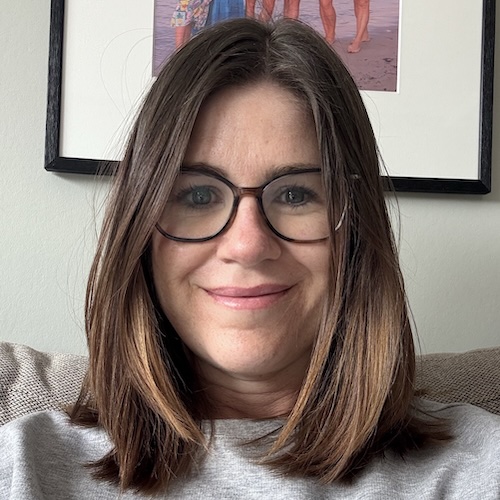
Nancee’s ALK‑positive lung cancer experience began almost a decade ago with what looked like recurrent bronchitis. She was under 50, routinely handed inhalers and antibiotics, and reassured that her lungs were fine. Only after an X‑ray revealed innumerable nodules in both lungs and further testing confirmed ALK‑positive non‑small cell lung cancer did Nancee learn there was a genetic driver behind what she’d assumed was a simple respiratory issue. She had never heard of ALK‑positive disease and carried the common misconception that lung cancer only happens to people who smoke.
Edited by: Katrina Villareal
Her oncologist started her on targeted therapy. Within days, she felt a remarkable shift, something she didn’t even know was possible with cancer, where a pill could so quickly change how her body felt.
About a year later, an MRI revealed brain metastases, a complication she hadn’t realized was common in ALK‑positive lung cancer and, importantly, treatable. She has been on a targeted therapy for nine years, with therapy keeping her brain metastases well controlled.
Alongside the medical details, Nancee speaks openly about the emotional weight of phrases she still hears, like being told she “won the lottery” by having a targetable biomarker. For her, it’s still lung cancer, and there’s still a long way to go.
Nancee is equally candid about side effects and quality of life. She describes severe neuropathy, fatigue, and the complicated feelings that come with considering dose reductions when scans look stable. She stresses how easy it is to minimize symptoms out of gratitude that the cancer isn’t growing, and how important it is instead to speak honestly with clinicians about what treatment is doing to the body and mind. For Nancee, quality of life is her number‑one priority, and learning to advocate for that priority is a defining part of her ALK‑positive lung cancer experience.
Watch the video or read the edited transcript to find out more:
- ALK‑positive lung cancer can be missed at first, especially in younger people without a smoking history and everyday symptoms, like recurrent bronchitis.
- Targeted therapies can work quickly and powerfully, sometimes improving symptoms within days and can keep disease controlled for many years.
- Being told you’ve won the lottery with a targetable mutation can feel invalidating. It’s still lung cancer and emotional realities deserve as much attention as the medical facts.
- Over time, Nancee’s experience shifted from shock and fear to informed self‑advocacy, where she weighed side effects, dose changes, and quality of life as central parts of living with ALK‑positive lung cancer.
Nancee’s Diagnosis Facts
- Name: Nancee Pronsati
- Age at Diagnosis:
- Under 50
- Diagnosis:
- Non‑Small Cell Lung Cancer
- Staging:
- Stage 4 (Metastatic)
- Biomarker:
- ALK
- Symptom:
- Recurrent bronchitis over several years
- Treatments:
- Tyrosine kinase inhibitors: crizotinib, alectinib
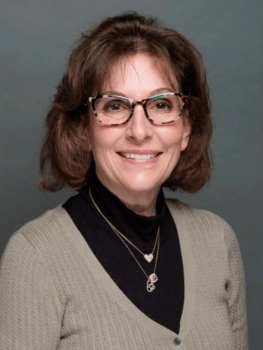

Thank you to ALK Positive for their partnership. Learn more about ALK Positive’s patient support, educational resources, peer mentoring, and clinical trial programs. ALK Positive is a global patient-driven nonprofit dedicated exclusively to improving the lives and outcomes of people living with ALK-positive cancer through research, education, advocacy, and peer support.
Story Sponsor

Thank you to our sponsor for their support of our independent patient education program. The Patient Story retains full editorial control over all content.
This is not medical advice. Please consult with your healthcare provider to make informed treatment decisions.
- Nancee’s Diagnosis Facts
- The lottery no one wants to win
- Meet Nancee: 10 years after her ALK+ lung cancer diagnosis
- How ALK+ works (in plain English)
- Which drug and why it took years to know
- When lung cancer reaches the brain
- Side effects are real and here’s how to manage them
- The one thing every patient needs to do
- Hear from people living with ALK-positive lung cancer
I was one of the people who lived in an ignorant bubble that thought that only people who smoked got lung cancer.
Nancee Pronsati, Stage 4 ALK+ Lung Cancer Patient
The lottery no one wants to win
Dr. Ross Camidge: Some oncologists will say, “You’ve won the lottery. You’ve got ALK‑positive lung cancer,” and you go, “Dude, you’ve still got lung cancer.” Amongst the bad‑news lottery, maybe you got a slightly less‑bad ticket. But no one should pretend this is good news.
Nancee Pronsati: I hear daily, “You won the lottery,” directed at somebody who was just diagnosed. It’s still lung cancer and there’s still such a long way to go.
Meet Nancee: 10 years after her ALK+ lung cancer diagnosis
Nancee: I was diagnosed almost 10 years ago. I had never heard of ALK‑positive lung cancer. I was one of the people who lived in an ignorant bubble that thought that only people who smoked got lung cancer.
At that time, I was under 50 years old. I had recurrent bronchitis for a couple of years and my general practitioner (GP) kept saying, “You’re fine. Here’s an inhaler. Here are some antibiotics.” Finally, I got an X‑ray, which showed innumerable nodules in my lungs.
We did another test and it came back ALK‑positive. Once again, I had no idea what that meant. He just said, “This is good,” and I started on crizotinib (Xalkori) right away. Miraculously, it started to impact me within a matter of days. It wasn’t something I even knew was possible with cancer, that pills could do that for you.
The big change over the last 15 years is recognizing that lung cancer is not a uniform entity.
Dr. Ross Camidge, Thoracic-Oncologist and Stage 4 Lung Cancer Patient
How ALK+ works (in plain English)
Dr. Camidge: When someone emails me and says, “My relative has just been diagnosed with lung cancer,” there are two or three questions I need answered before I can offer any opinion, which are the questions that the patient needs to know.
First: What type is it? Is it non‑small cell or small cell? Squamous or adenocarcinoma? Second: How far has it spread? That’s the stage, usually determined by a PET scan and a brain MRI.
Third: Has this cancer been tested for a specific genetic driver? This one takes the longest: molecular testing. It can take as long as two weeks for results to come back. Before you jump into first‑line treatment, if you can, wait for that molecular test result.
The big change over the last 15 years is recognizing that lung cancer is not a uniform entity. About 40% of non‑squamous non‑small cell lung cancer cases have a specific gene that has gone wrong. You’re not born with it. Your other cells are fine, but there’s an abnormal gene in those cancer cells.
When you know what’s driving the cancer, you can personalize the therapy.
Dr. Ross Camidge, Thoracic-Oncologist and Stage 4 Lung Cancer Patient
For ALK‑positive, there’s a gene involved in your development when you’re a little ball of cells. It gets turned off once it’s done its job. When this cancer‑causing change happens, that gene wakes up again. It’s called an ALK fusion or rearrangement, and it turns those cells into cancer.
People throw around terms like mutation, fusion, and rearrangement, but what they all mean is there’s one dictator sitting in the driving seat of your cancer. You can do something about it because there are different medications that can shut down the orders coming from different dictators.
When you know what’s driving the cancer, you can personalize the therapy. If you know who the ringleader is, we have treatments that can specifically silence the noise being shouted out by that abnormal gene. It’s not a cure, but it can make the vast majority of cells die off, often very quickly.
One particular pill, lorlatinib (Lorbrena), emerged as the one that controlled the disease longer than anything else.
Dr. Ross Camidge, Thoracic-Oncologist and Stage 4 Lung Cancer Patient
Which drug and why it took years to know
Dr. Camidge: In ALK‑positive lung cancer, we have an embarrassment of riches. There are five or more different licensed ALK inhibitors. But what changed in the last few years is that a single dominant first‑choice pill has emerged.
You don’t know who’s going to win the marathon in the first 10 minutes of the race. You have to see who actually has the legs. That took something like five years of follow‑up in the clinical trial, and that’s when one particular pill, lorlatinib (Lorbrena), emerged as the one that controlled the disease longer than anything else.
When the first data came out, it looked about the same as the other drugs. It had more side effects. I was certainly one of the people who said, “I don’t know that this is any better.” But then, when I saw data with five years of follow‑up, I changed my tune.
We look at something called progression‑free survival, which is the time before the cancer grows or the patient passes on. After about five years of follow‑up, the number of patients whose cancer was progressing started to plateau. For something like 60% of people, their cancer has not yet progressed on the drug. It’s quite incredible.
You walk through the door and you don’t know if you’re going to be in the 60%, but those are the best odds you’re going to get. There’s a 60% chance that in five years, your cancer will still be controlled.
If it does metastasize to your brain, it’s not the death sentence that you think it is.
Nancee Pronsati, Stage 4 ALK+ Lung Cancer Patient
When lung cancer reaches the brain
Nancee: After approximately a year, I had an MRI and I had brain metastases. I did not realize how common that was. When I had the brain progression, I thought I now had brain cancer, which I know now is not accurate. It was lung cancer that had metastasized to my brain.
I want people to realize that if it does metastasize to your brain, it’s not the death sentence that you think it is. I thought that was the end. It’s been nine years, and alectinib has kept it under control. It isn’t that different from progression somewhere else, as I thought it was.
There is a certain tendency for ALK‑positive lung cancer to go to the brain more than other forms.
Dr. Ross Camidge, Thoracic-Oncologist and Stage 4 Lung Cancer Patient
Dr. Camidge: It all depends on how you calculate it. More than 30% of ALK‑positive patients have brain involvement when first diagnosed, which is roughly 10% higher than most forms of lung cancer. There is a certain tendency for ALK‑positive lung cancer to go to the brain more than other forms.
The drug Nancee first started on has an Achilles’ heel. It was very bad at getting into the brain, so it left that area unprotected. That’s exactly what happened with Nancee. Now all of the new drugs have activity in the brain.
When I first looked at my scans, I had a 2‑centimeter lesion in my brainstem. For those who don’t know, the brainstem is only about 3 centimeters across. I shouldn’t be alive with that, but I am.
We started in 2018, and every year since then we’ve taken a picture of everyone who is at least five years out from their diagnosis. We get them in the room together, give them a birthday cake, take a picture, and stick it up in the clinic.
When I’m talking to newly diagnosed patients, you can see panic and withdrawal on their faces. I break the fourth wall, take them out into the corridor, and show them the pictures. I tell them, “I’m not guaranteeing this is going to be you. But I am showing you that it’s possible. There are real people and not just statistics.” You can see people gather themselves and say, “Okay. I can do this.”
This isn’t supposed to be punishment. Our aspirational goal is perfect control of the cancer and perfect quality of life.
Dr. Ross Camidge, Thoracic-Oncologist and Stage 4 Lung Cancer Patient
Side effects are real and here’s how to manage them
Dr. Camidge: Even though it’s a pill, it’s not benign. It’s a powerful medicine that just happens to be available in pill form. For lorlatinib (Lorbrena), about 80% of people will end up needing medication to lower their cholesterol or triglycerides. You don’t feel any different; it just shows up in blood tests.
The biggest thing in the short term is that it can affect your thinking in the broadest possible way. It affects your mood, memory, speech, and sleep. Most people don’t volunteer that they’re feeling a little off, so we have to learn what questions to ask and to ask the caregiver who came with them.
Contrary to the company’s recommendation, what many of my colleagues and I do is start at a lower dose and increase as tolerated. The prescribed starting dose is 100 mg. I actually start people at 50 mg. Many colleagues start at 75 mg. Then you escalate. But it can take time for neurological side effects to manifest, so you don’t escalate quickly. You’re going to be on this for years, so there’s no rush.
Don’t be afraid to lower the dose. This isn’t supposed to be punishment. Our aspirational goal is perfect control of the cancer and perfect quality of life. Maybe we don’t achieve either, but that’s still what we should aim for.
It’s so important for people to take side effects seriously… I have a great quality of life, but there are side effects that wear on you some days.
Nancee Pronsati, Stage 4 ALK+ Lung Cancer Patient
Nancee: I hate to speak to lorlatinib (Lorbrena) since I’m not on it, but in our focus groups, cognitive effects and rage came up many times from those on 100 mg. Another is weight gain. I know it sounds easy to say, “Oh, I’m alive. It’s fine if I’m fat.” Gaining 40 to 50 pounds very quickly is very emotionally distressing.
It’s so important for people to take side effects seriously. Watch what’s happening to the brain and body. Talk to their doctor. It can impact people’s relationships and it can be managed.
Dr. Camidge: The reason why weight gain happens is because of the NTRK pathway. It’s involved in controlling hunger and satiety. If you inhibit it, you feel hungry.
Nancee: I have not been the greatest about sharing side effects. In part because I think, “Well, my cancer’s not growing. I need to be more grateful.” When I compare myself to others who are doing so much worse, I feel like a whiner.
I’ve had really terrible neuropathy. It has gotten so much worse over time. I had a dose reduction a couple of years ago that helped for a while. The neuropathy now goes from my feet all the way to my hips. I also experienced fatigue, but I convinced myself it was just because it’s 10 years later.
We could take the same dosage, but the levels in our blood might be completely different.
Dr. Ross Camidge, Thoracic-Oncologist and Stage 4 Lung Cancer Patient
I did a very scientific test and didn’t take my alectinib (Alecensa) for a week. I will say, even after one week, I felt better. It wasn’t a test to see if I should keep taking it. It was more to know if I should be doing something different. I feel there’s a cumulative effect of this medicine over time. I have a great quality of life, but there are side effects that wear on you some days.
Dr. Camidge: It’s not unusual for me to raise the idea of dose reduction and not put it into action straight away. I plant the idea in someone’s head. They go away, think about their side effects, and come back in three or six months and say, “Yeah, let’s try it.”
What’s important is exposure, which is the level in your blood and not the dose you put in your mouth. It has to be absorbed, metabolized, and excreted. We could take the same dosage, but the levels in our blood might be completely different. Sometimes, what the side effects are telling you is that you already have too much in your blood.
Try to learn as much as you can, so that you know the right questions to ask.
Nancee Pronsati, Stage 4 ALK+ Lung Cancer Patient
The one thing every patient needs to do
Dr. Camidge: People always get excited when there are new inhibitors. Fourth‑generation ALK inhibitors are coming with the promise of the same efficacy for fewer side effects. But as people move through therapies, they recognize that their cancer can evolve in different ways. It doesn’t always stay addicted to one pathway. The phenomenon of second drivers is something to ask your doctor about.
I want people to be able to go to their doctor with the expectation that they should have a perfect quality of life. Write down what you feel and remember to tell the doctor. Maybe the doctor can do nothing about it, but tell them about it.
Nancee: Quality of life is my number one desire through this path. Try to learn as much as you can, so that you know the right questions to ask. If your oncologist is not testing for another driver when you have progression, try to be aware so you can bring it up. Local oncologists are not going to know every single thing there is to know about ALK‑positive lung cancer.
Story Sponsor
Thank you to our sponsor for their support of our independent patient education program. The Patient Story retains full editorial control over all content.
This interview has been edited for clarity and length. The views and opinions expressed in this interview do not necessarily reflect those of The Patient Story. This content does not replace professional medical advice.
Hear from people living with ALK-positive lung cancer
Real experiences with diagnosis, treatment choices, side effects, and life beyond ALK+ lung cancer — in their own words.



Leave a Reply