Categories
Chemotherapy Colorectal fertility preservation Immunotherapy Liver Resection Metastatic Monoclonal antibody drug Ostomy Patient Stories Surgery Targeted Therapy Treatments Tumor excision

Life Changed Overnight: Rylie’s Experience with Stage 4 Colorectal Cancer

Life Changed Overnight: Rylie’s Experience with Stage 4 Colorectal Cancer

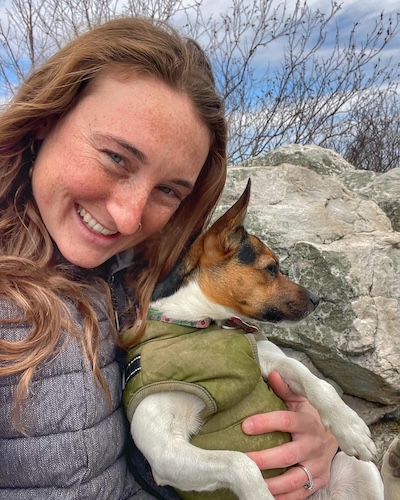
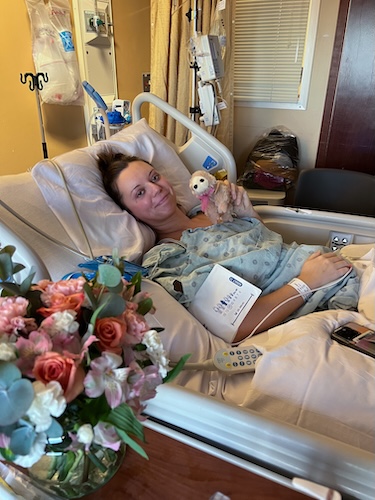
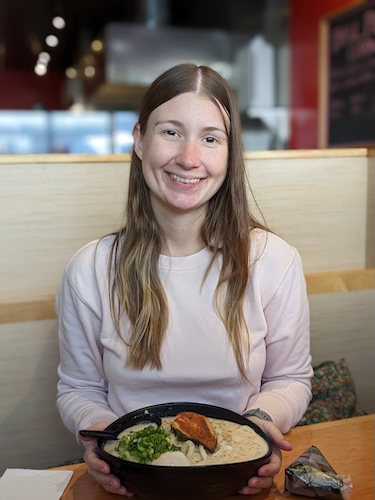
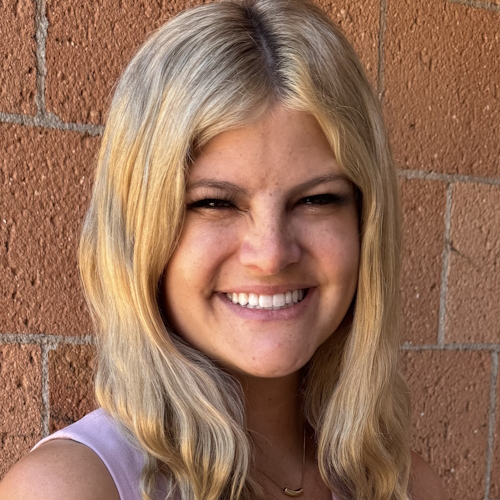
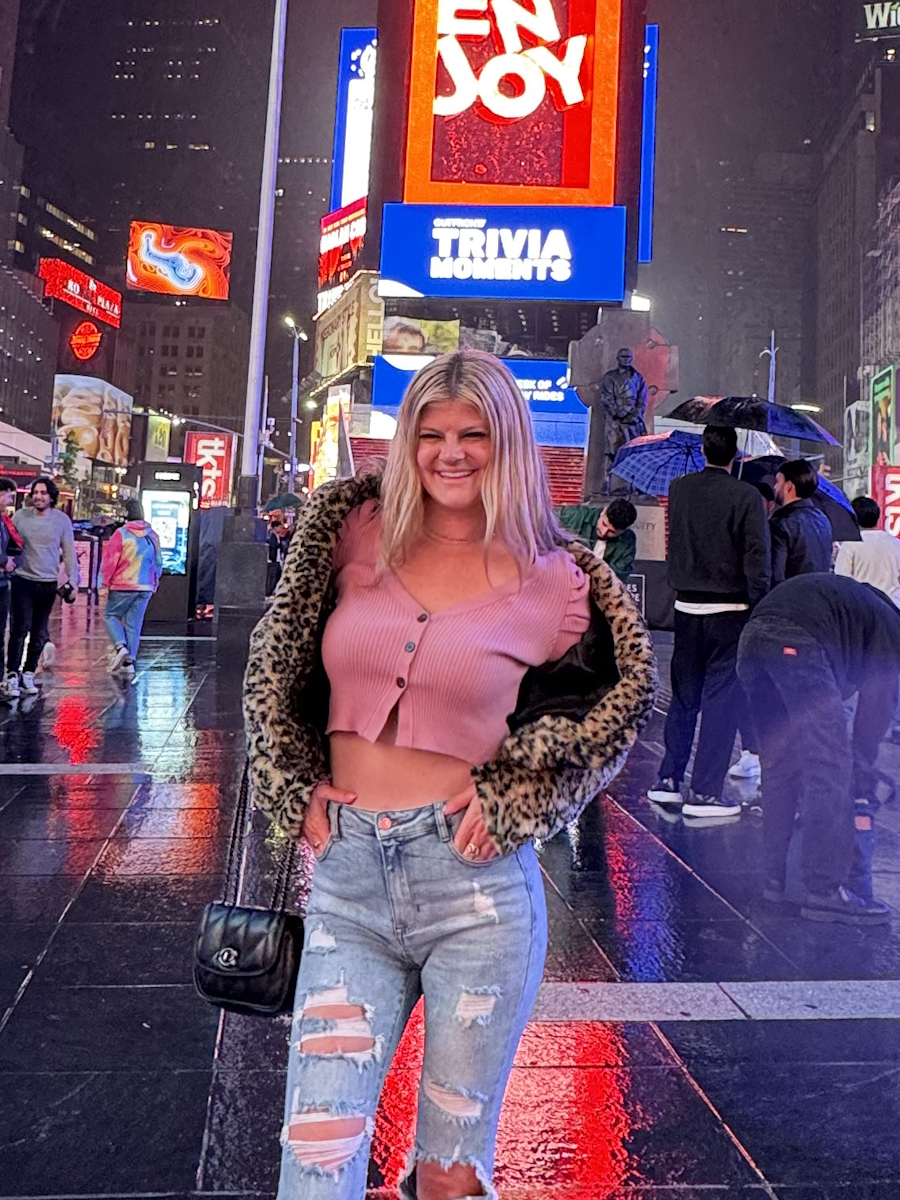
Rylie is someone whose life has always revolved around her family, home projects, and being outdoors. She enjoys gardening with her mom, cycling with her fiancé, and caring for her chickens and dogs. In April 2025, the joys of that routine were interrupted when persistent abdominal pain and bloating kept sending her back to the ER, where she was told it was constipation. Trusting her intuition and refusing to ignore what her body was telling her, she pushed for answers. That persistence led to the discovery of a mass and a diagnosis of stage 4 colorectal cancer.

Interviewed by: Taylor Scheib
Edited by: Chris Sanchez & Jeff Forslund

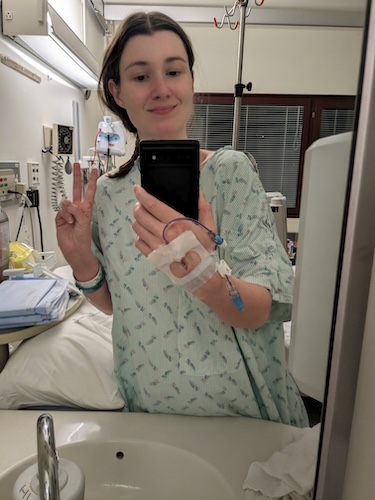
Rylie had to have emergency surgery. Her surgical treatment was extensive, involving the removal of a tumor in her colon, a liver mass, and parts of her small intestine. She also received an ostomy, which she had reversed.
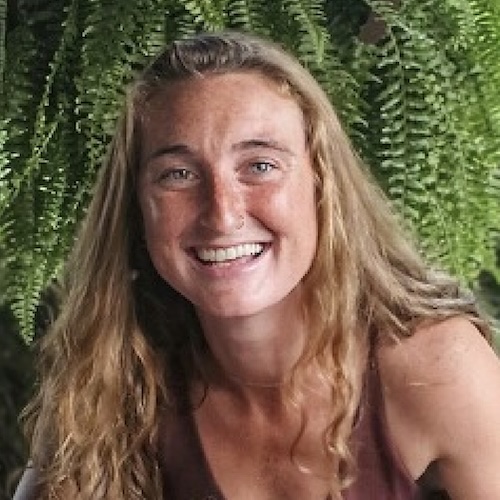
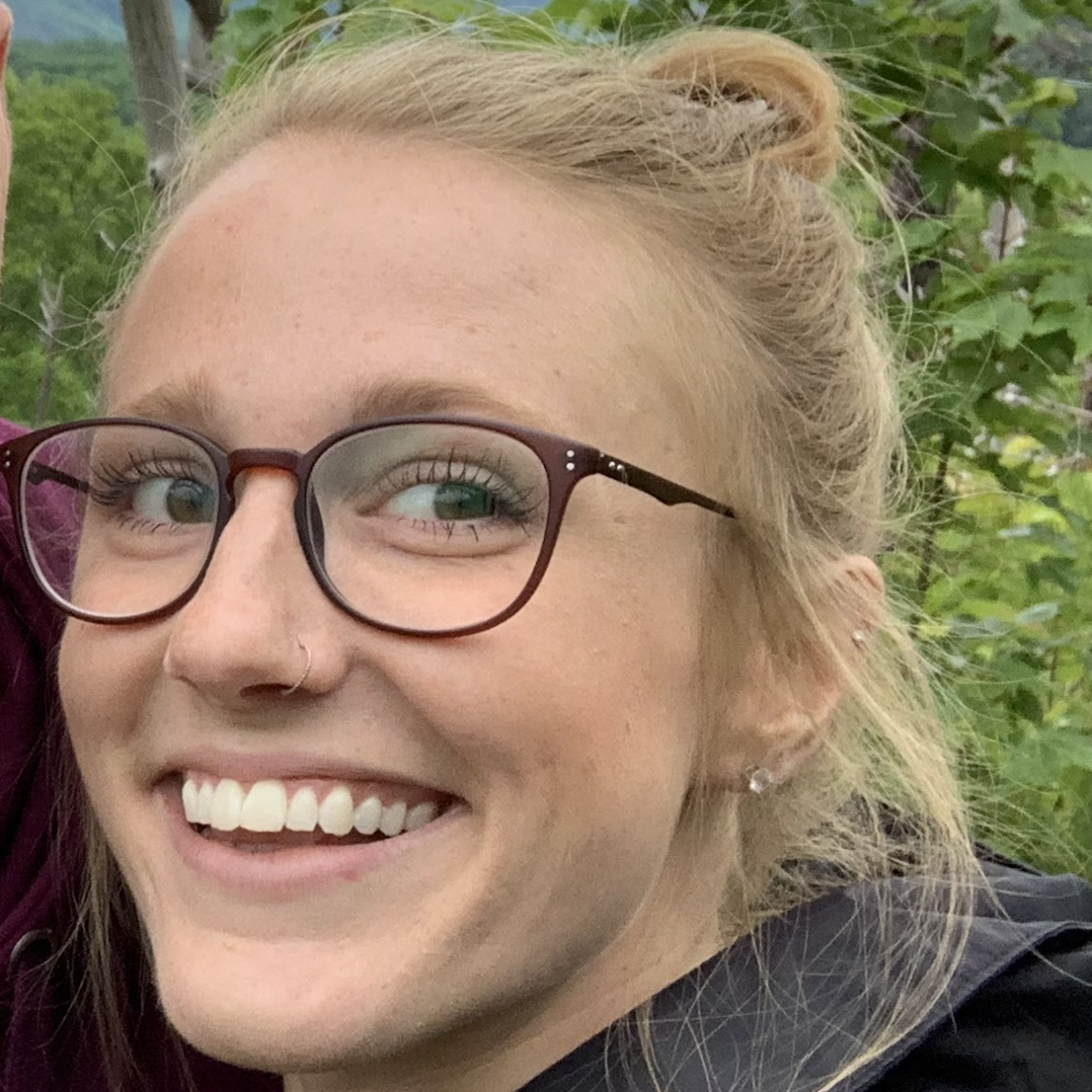
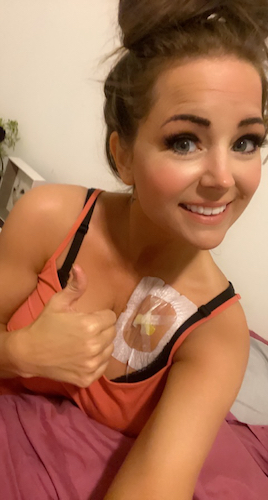
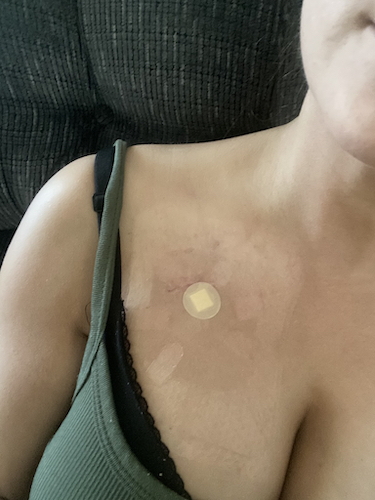
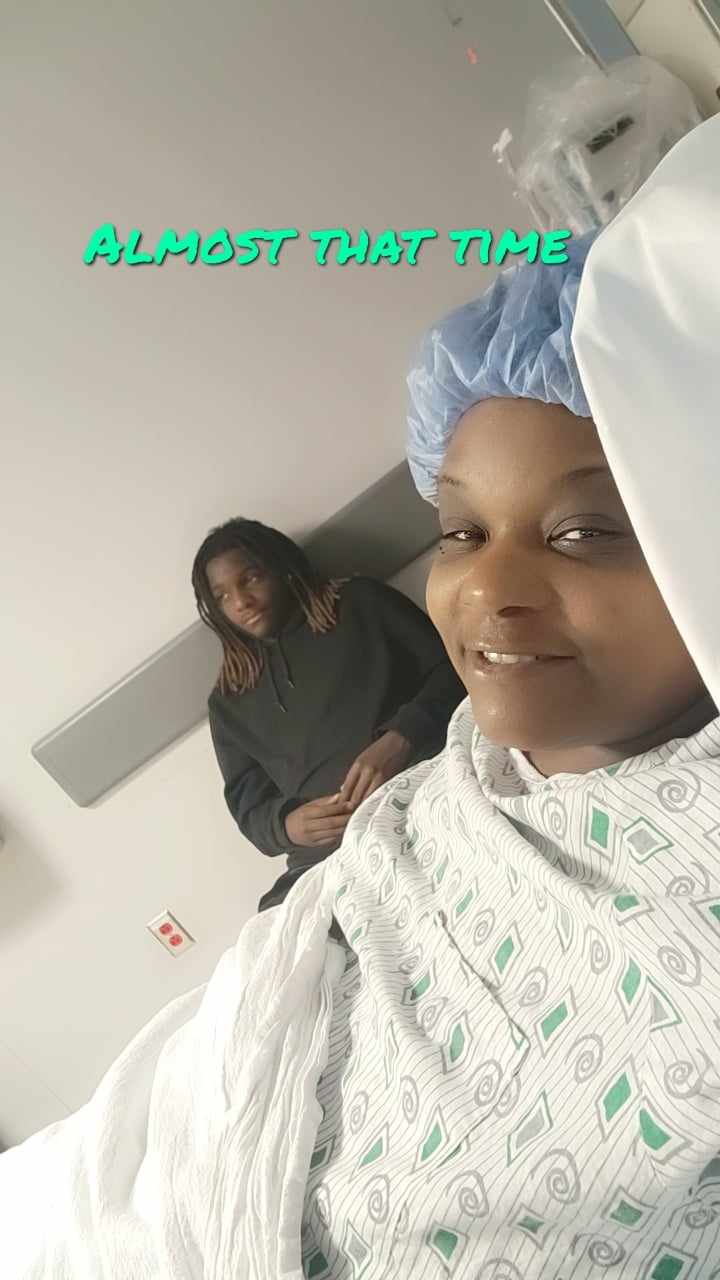
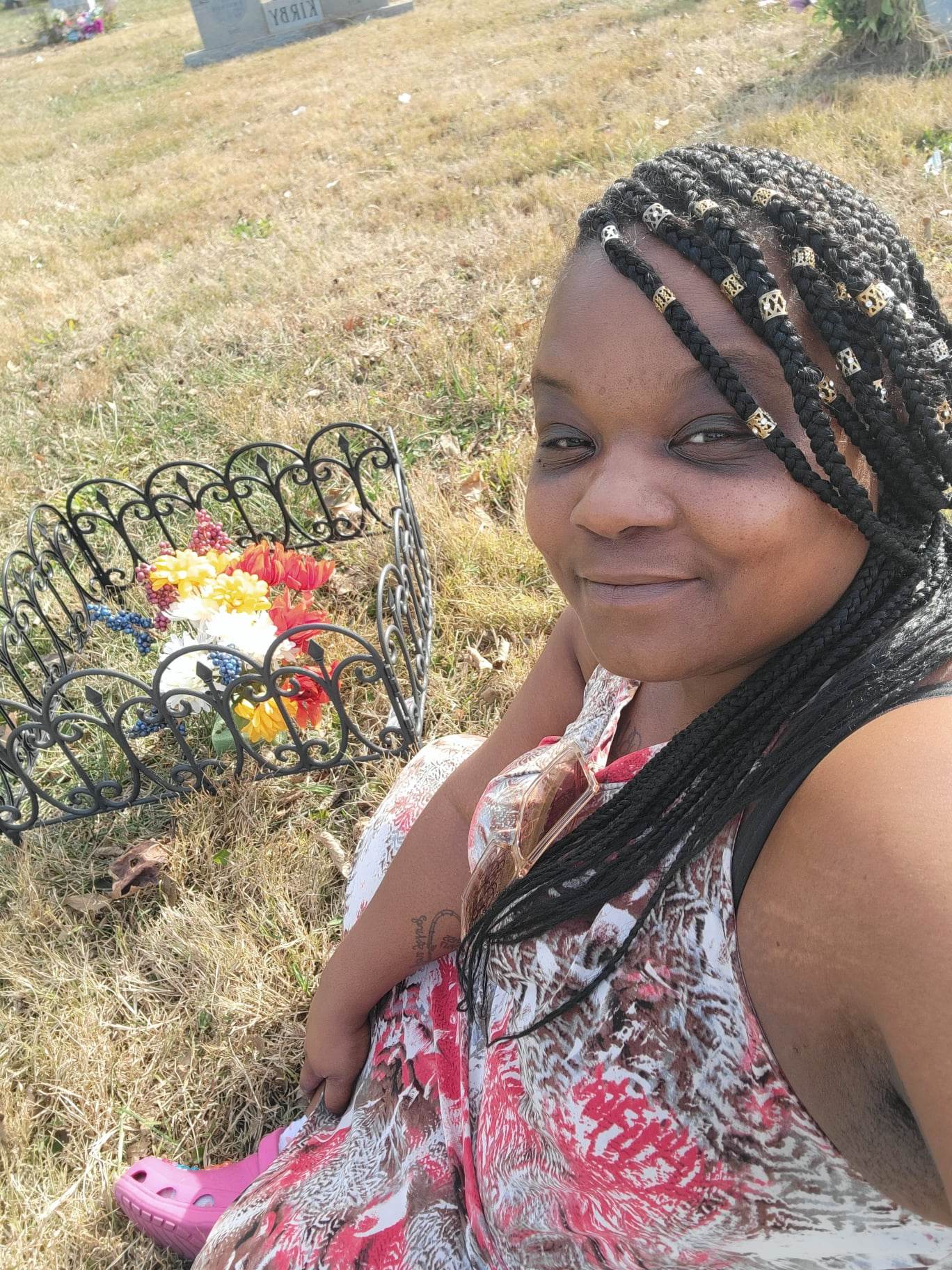
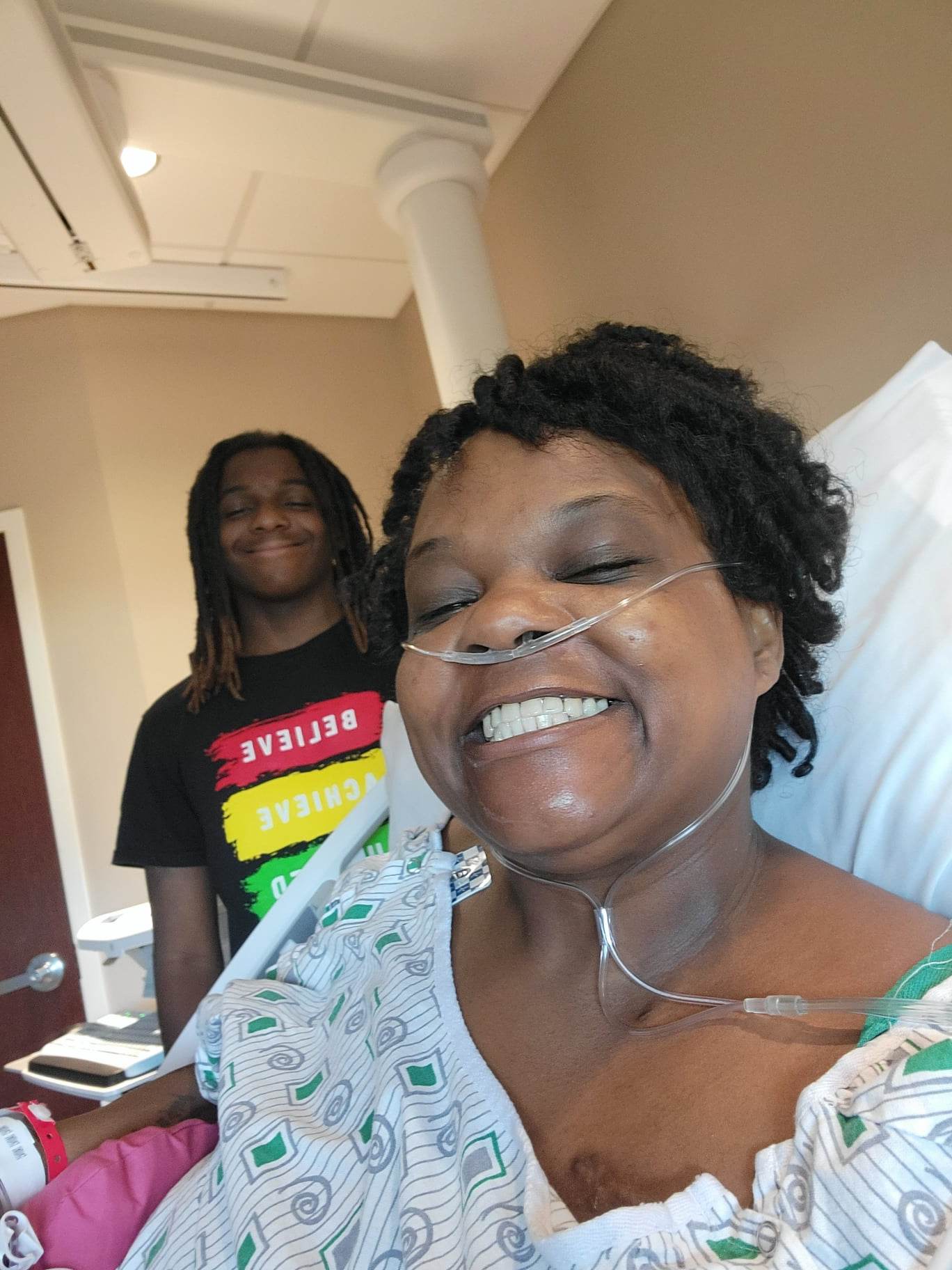
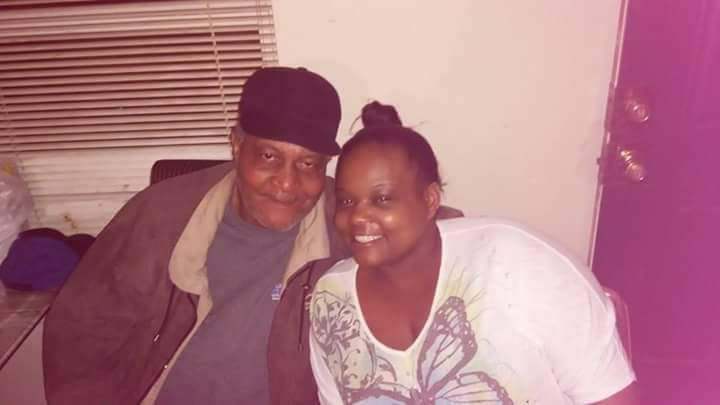
Rylie T. colon cancer

Her cancer treatment involved chemotherapy, immunotherapy, and targeted therapy, but not before Rylie underwent fertility preservation, a major decision made quickly after surgery. Her care team involved multiple institutions, and she and her family sought out the best specialists for her treatment.

Throughout her experience, Rylie relied deeply on her faith and the support of her family, especially her mother, who she describes as her role model. She openly shares the emotional challenges of postponing her wedding plans and adjusting to physical changes, but remains grateful for the unwavering support of her fiancé and family. 

Rylie encourages patients to advocate for themselves and stresses how important it is to connect with others facing similar diagnoses. Her experience exemplifies the importance of self-advocacy and persistence when navigating symptoms that don’t fit typical expectations.

Rylie’s story is a testament to transformation, from shock and fear after diagnosis to hope and empowerment with treatment and community support. Her experience offers vital lessons for young adults and others about listening to their bodies, seeking quality care, and approaching cancer treatment with resilience and faith.

Watch Rylie’s video above and read through her edited transcript below to learn more about how:
  • Early symptoms may be misunderstood or misdiagnosed; trusting your own body and seeking persistent evaluation is crucial
  • Cancer treatment affects every part of life, including the physical, emotional, and relational parts, and requires strong support systems
  • Fertility preservation is an important consideration, even amid urgent cancer treatment
  • Seeking second opinions and specialized care can significantly improve treatment experience and outcomes
  • You know your body best. Advocate for yourself, no matter what

  • Name: Rylie T.
  • Diagnosis:
    • Colorectal Cancer
  • Staging:
    • Stage 4
  • Age at Diagnosis:
    • 27
  • Symptoms:
    • Sharp lower abdominal pain
    • Severe bloating
    • Fecal impaction
  • Treatments:
    • Surgeries: colon, liver, and small intestine tumor resection; ostomy surgery; ostomy reversal surgery
    • Chemotherapy
    • Immunotherapy
    • Targeted therapy: monoclonal antibody
    • Fertility conservation treatments
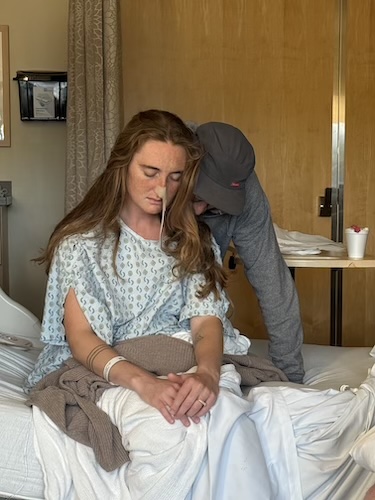
Rylie T. colon cancer

This interview has been edited for clarity and length. This is not medical advice. Please consult with your healthcare provider to make informed treatment decisions.

The views and opinions expressed in this interview do not necessarily reflect those of The Patient Story.


My name is Rylie

My name is Rylie. I was diagnosed with stage 4 colon cancer in April 2025.

Family is my main priority. I love being with my family and spending time with them. 

I got engaged two years ago. We were supposed to have our wedding in June, but that was derailed. We’re now planning for this next June. 

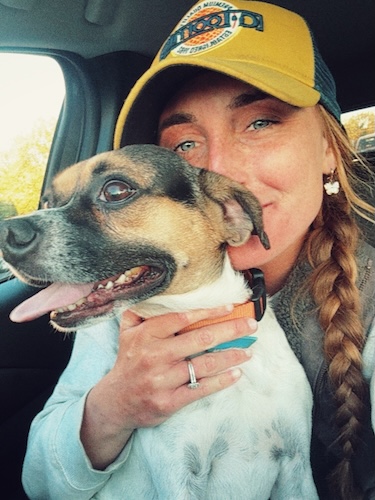
My fiancé is my best friend. We love doing house projects together. We have chickens and two dogs. I enjoy working in the garden. I also like road cycling and am just an outdoorsy person, so I love being outside.

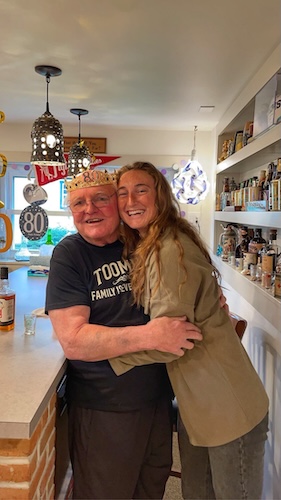
I wouldn’t have been able to get through this without my mom or my dad. They’re my number one supporters and have been with me every step of the way. My mom is my role model. She loves the outdoors and flowers. I try to mimic what she does, but I’m the little version of her.

How we navigate cancer as young adults and a couple

It’s been tough. It was a life-changing experience for both of us. 

We used to be active every single day, but with me in the hospital for ten days at a time, my fiancé has had to support me and put house projects on hold. Pushing the wedding back was sad because we put so much work into planning, and we thought 2025 would be the happiest year of our lives, but it ended up being the worst. 

Still, it’s awesome that he stuck by my side through it all. Our lives have completely changed, but we are committed to each other, and that will never change. My body completely changed, and he still loves me for who I am, and I’m so grateful for that.

After our wedding, I thought we’d have a child right away. Being a mom is all I want in life. We’ll eventually get there. Luckily, I had fertility treatments and got my eggs frozen.

My first symptoms: when things felt off

It all started in October 2024. I went to the emergency room with severe lower left abdominal pain and bloating; something just didn’t feel right. The ER staff said I was backed up and sent me home. I accepted that explanation for a while. Six months later, the pain got worse. Over three to four ER visits, I was eventually admitted.

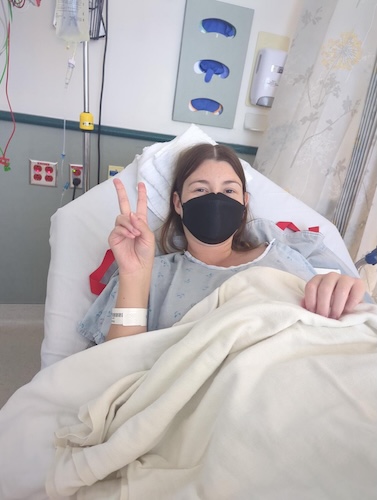
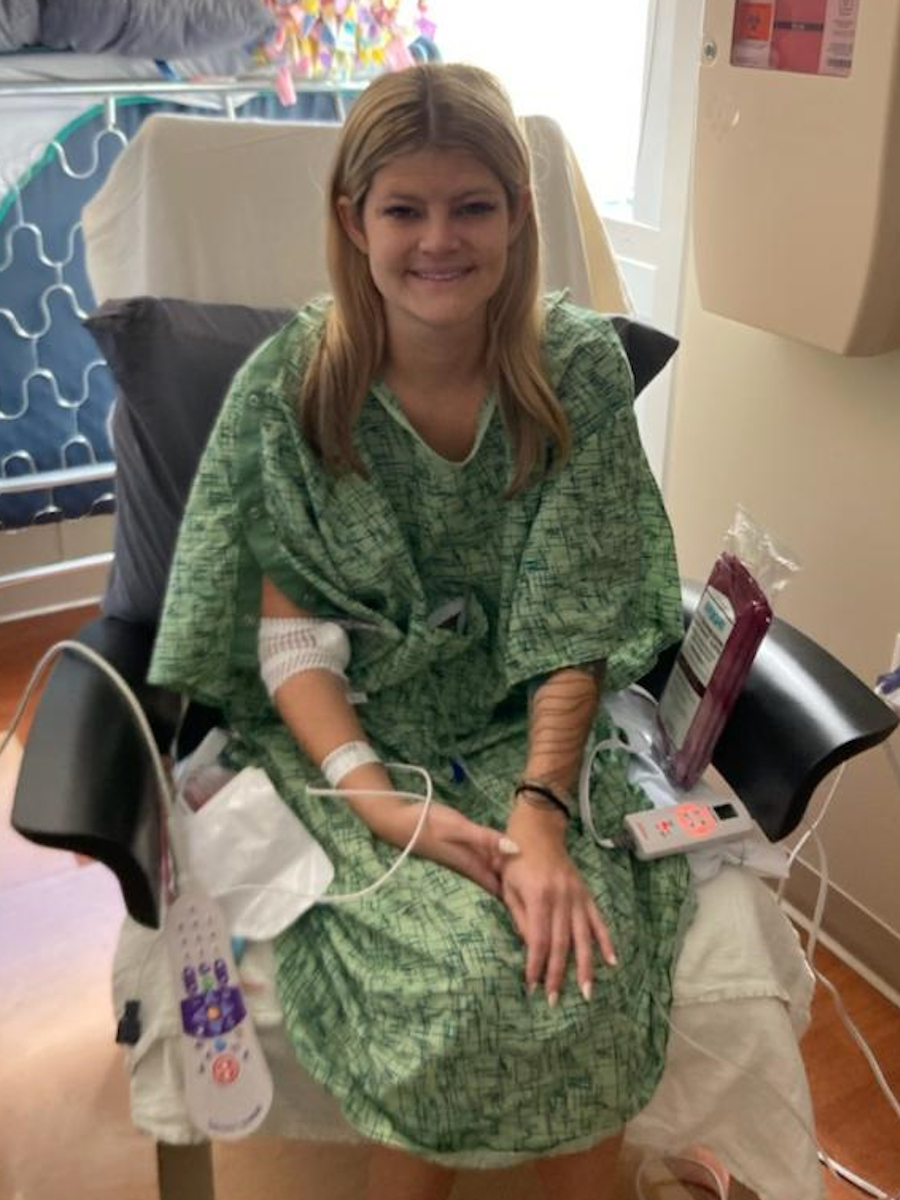
Before the final ER visit, I saw my family doctor because I had a fever for a week and felt unwell at work. She did a check-up, but said I was just backed up. That weekend, I went to the ER three times. Two of those times, I was sent home with pills, but the third time, they kept me, saying I might have a small perforation in my bowel. I stayed for seven days and couldn’t eat or drink. When my belly went down a little, they hoped the perforation would heal on its own and sent me home. 

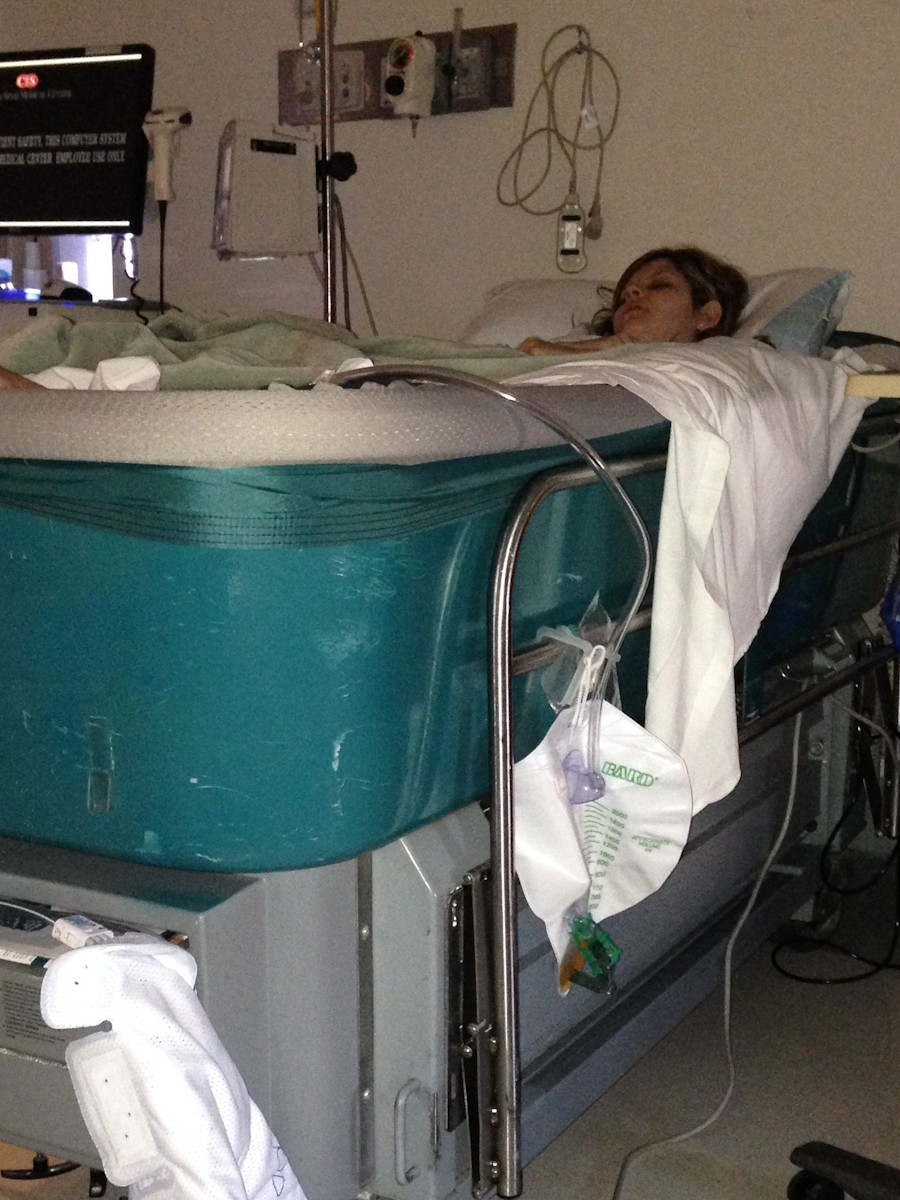
That Sunday night, I told my fiancé something was very wrong, and he rushed me to the ER. That CT scan was totally different and showed a mass in my bowel and a mass on my liver. They rushed me into emergency surgery that night. Everything happened so fast; I had zero time to process anything.

The main symptoms were sharp pain in my lower left abdomen, severe bloating, and being backed up. I struggled to go to the bathroom, and even when I could, it wasn’t much. Those symptoms just continued to worsen.

Advocating for myself and the challenge of getting diagnosed

It was crazy… You know your body best. Doctors can run scans and tell you things, but only you know how you’re actually feeling. 

I knew something was wrong. Being sent home with a diagnosis of constipation was embarrassing. I was raised with two brothers; I was built to be tough. Still, it was demoralizing.

I had several CT scans. The doctor said that it’s actually easier to read CT scans for a heavier person because their intestines are more spread out, but I have a smaller frame, so everything is squished together. All the scans showed I was backed up, but they couldn’t see underneath the congestion.

My reaction to my stage 4 colon cancer diagnosis

Originally, when they performed a biopsy on my liver after seeing a mass, it came back as scar tissue. One doctor said, “If there’s a mass on the liver, it’s stage 4 colon cancer.” He called it from the start. 

The biopsy showed scar tissue, which was strange. They suspect it was a false negative, or it may have been a different mass. Other than that, no one mentioned “cancer” until a few days later, after more tests.

I was in complete shock. I asked doctors not to share results until my parents were with me. When he said stage 4 colon cancer, the first thing I thought was, “I’m going to die.” Everyone was in shock.

I had emergency surgery

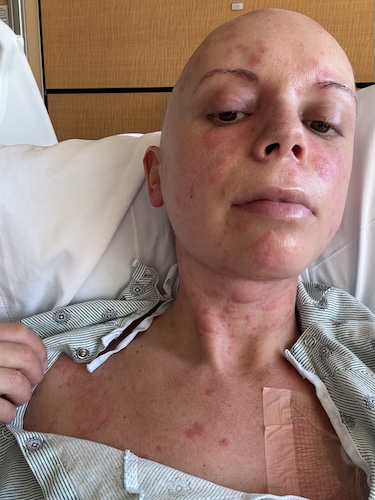
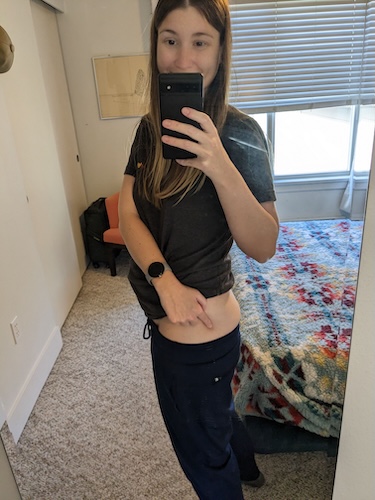
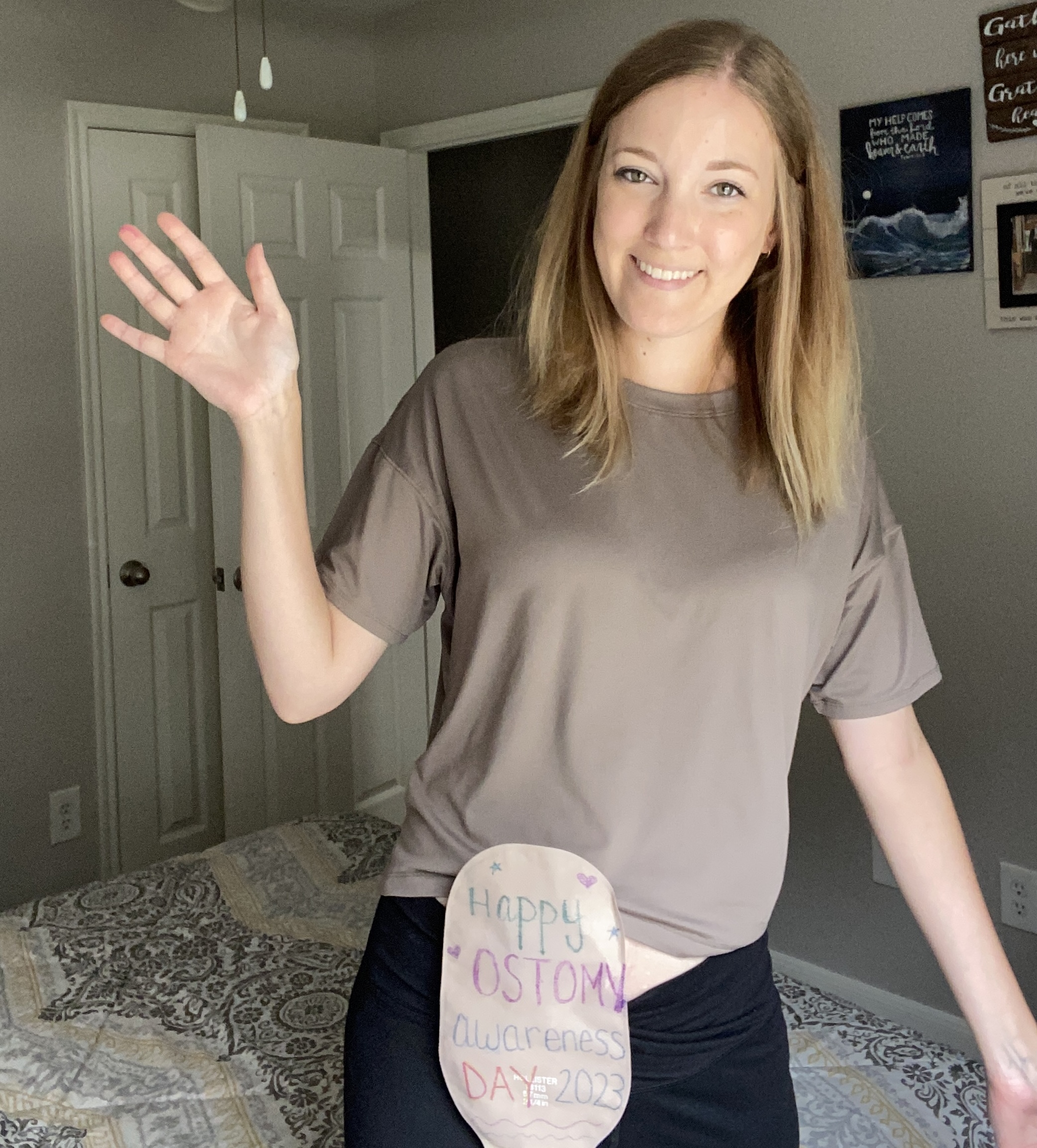
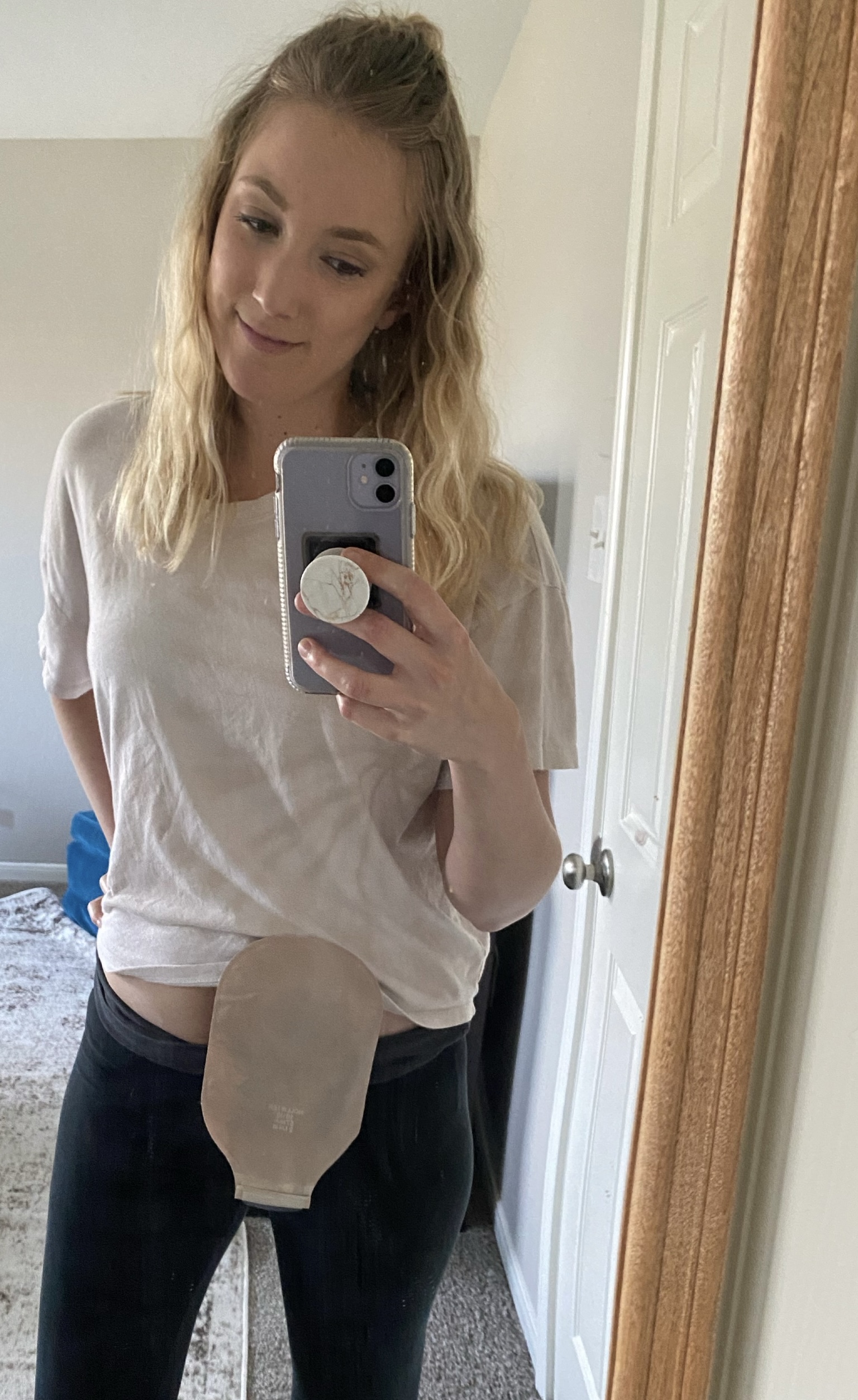
For the emergency surgery, they sliced me from my sternum down to my pelvic area. They took out the tumor on my colon and removed a mass from my liver and parts of my small intestine. They also gave me an ostomy, which was a huge life change. It’s something I’ll never fully get used to.

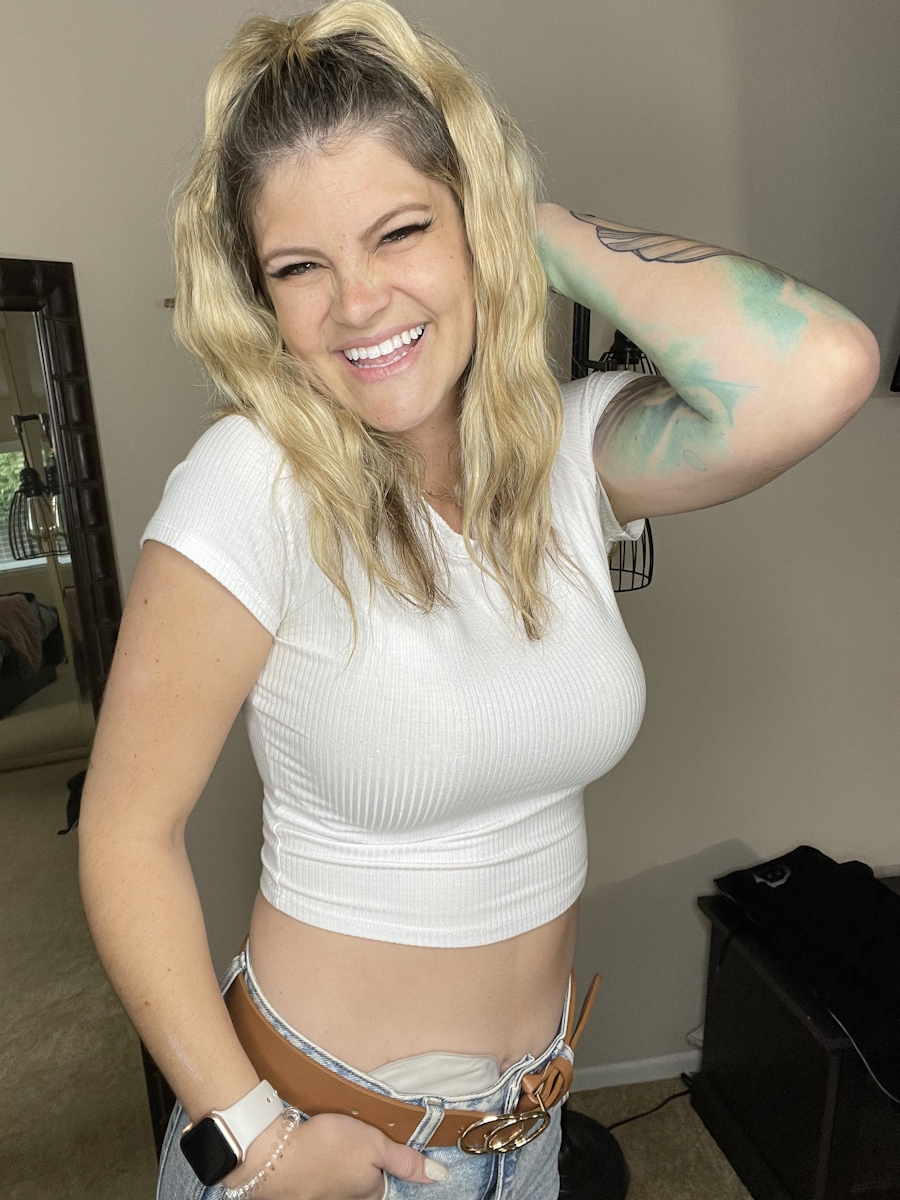
I still have my ostomy, but am having it reversed on November 18th. I cannot wait to have my body back.

Living with an ostomy

It’s wild to see something on my stomach and learn that it’s my bowel. I’m grateful because it saved my life, but I don’t like it and hate it. 

I feel bad saying that because it did save my life. I had a great nurse who taught me how to take care of it. I couldn’t wear the same clothes; I had to wear baggier clothes to hide it. I’m very self-conscious, so it was hard not being proud of it, but I got semi-used to it and am happy I’ll get a reversal soon.

A doctor was honest with me and said some people never get used to an ostomy. For some, it’s okay, but it’s not my lifestyle. I’m thankful for honesty.

Finding the right care team

My surgeon was amazing, and the nurses at UPMC West Shore were great. We met an oncologist there, but we wanted the best care possible, regardless of cost. We contacted several cancer centers, and Memorial Sloan-Kettering resonated most; they’re in the top two in the nation. 

Their team was easy to reach and supportive, unlike the original oncologist team, which lacked good bedside manner. Bedside manner is critical, as I want to feel cared for.

Don’t be afraid to reach out to multiple cancer centers and get a second opinion. Memorial Sloan-Kettering was our first choice because of its track record. Doing this research is a lot of work, and my family was an incredible support team. I couldn’t have done it without them.

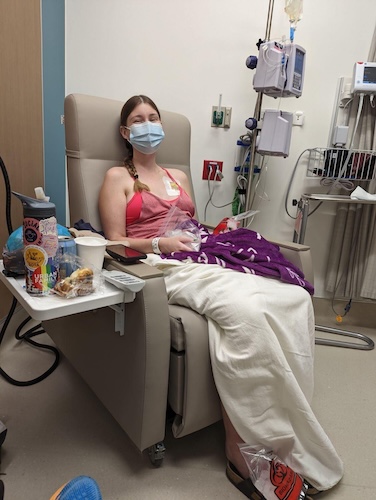
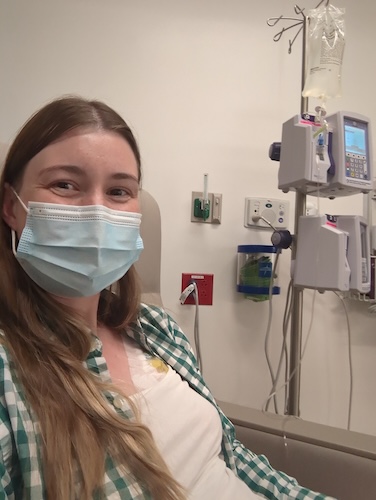
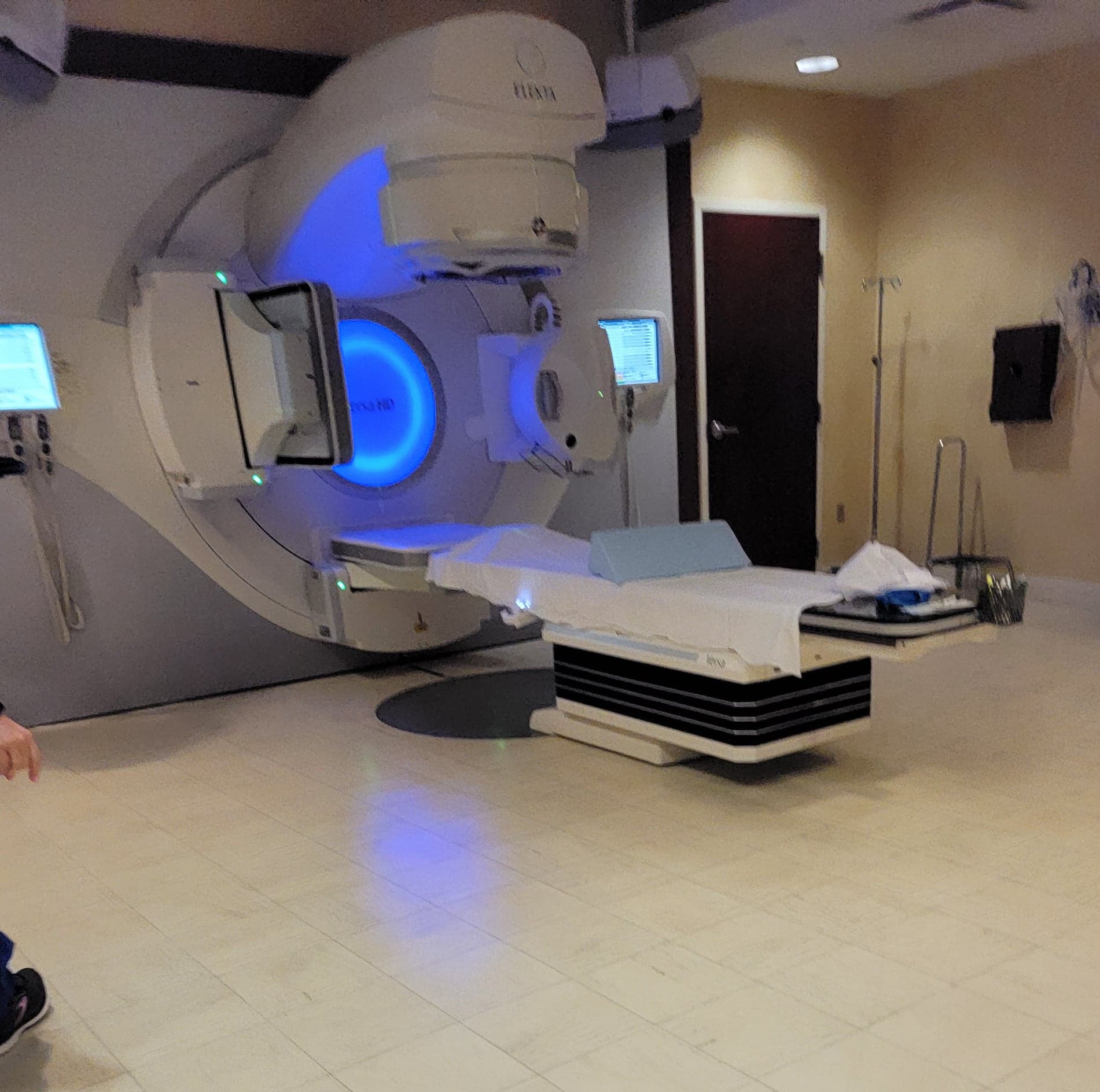
Traveling to Memorial Sloan-Kettering takes 2.5 hours; I’d go every other week for infusions. It’s a whole day affair. It’s worth it, and not too bad.

What my treatment has looked like

My treatment included chemotherapy and targeted therapy with panitumumab. Memorial Sloan-Kettering called it immunotherapy, but technically it was targeted therapy. 

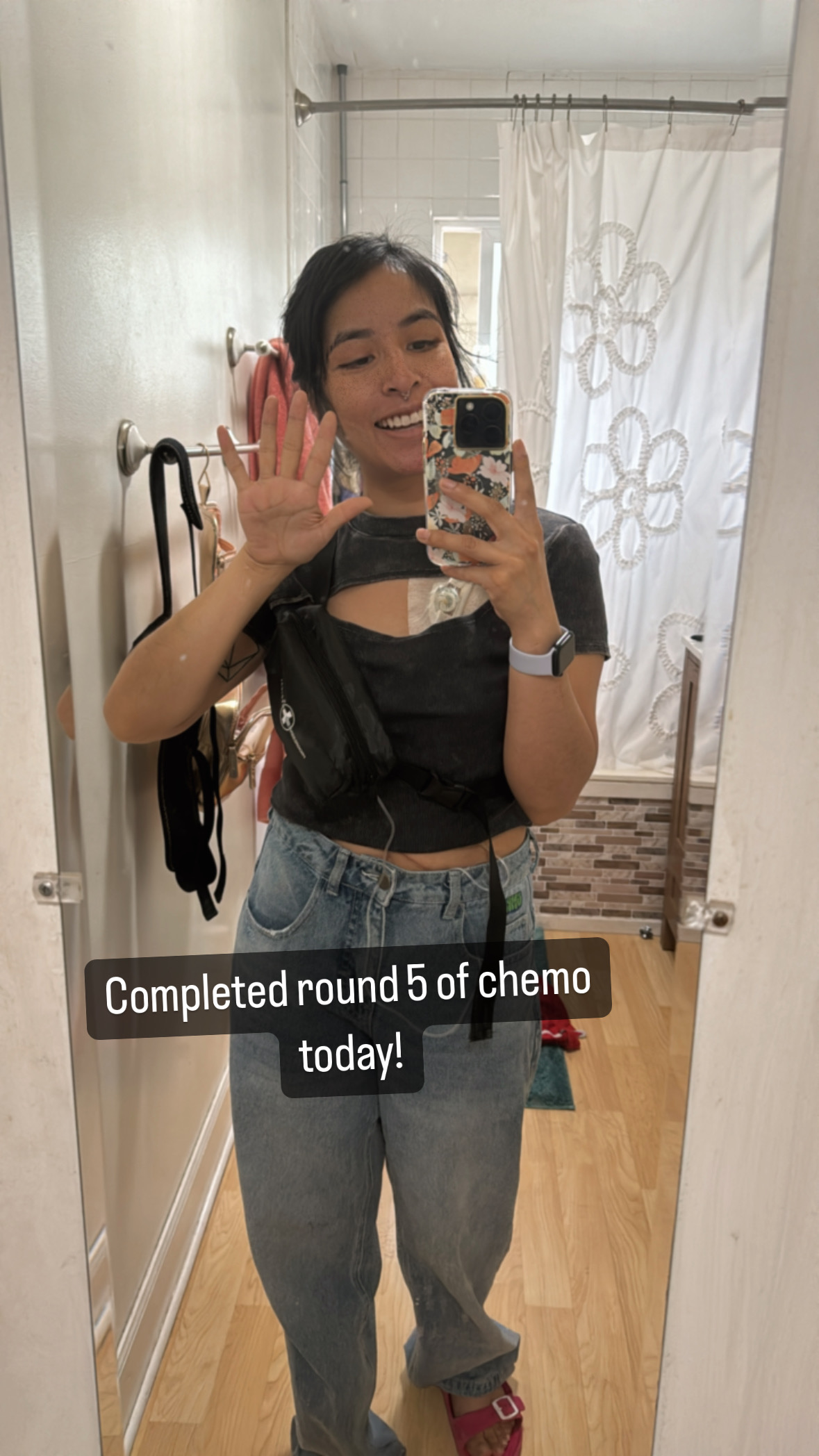
The targeted therapy changed my cells to kill bad cells. I received chemotherapy every other week. I just finished my last pump today.

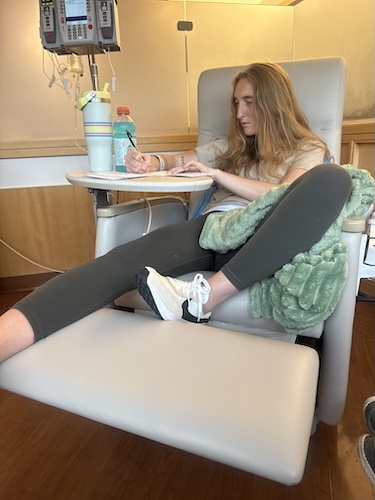
For each cycle, I’d have an infusion for about 2.5 hours, then go home with a pump for two days.

My treatments, including fertility treatment, and their side effects

The beginning was rough because after surgery, I immediately started physically overwhelming fertility treatments, four shots a day and no time to heal. 

Two days after surgery, the team asked if I wanted to preserve my eggs. I had zero time to process what that meant. After hospitals explained it, I started shots for fertility treatments right after discharge, four shots a day for two weeks. The extraction yielded 40 eggs, with 36 viable. It was rough but worth it.

And then after egg extraction (Monday), I started chemotherapy (Wednesday). My body was still in recovery mode, and the first infusion landed me in the hospital because it caused severe pain. My ovaries were enlarged, causing pressure on my urinary tract, and a mass was pulled out, which was benign. 

The first two treatments were rough due to back-up and pain, but after that, the treatment went well. I had some tiredness and a facial rash, but it was manageable overall.

Scans, communication, and no evidence of disease

Two weeks ago, we were in a different emotional space due to miscommunication between surgery and cancer treatment. I had a scan, and the oncologist said the masses on my ovaries were shrinking. That was news to us. 

After investigating, we learned these were cysts from fertility treatments, not cancer. 

After an MRI and a CT scan, the team scheduled liver resection and ostomy reversal, and afterward, I’ll be in remission. 

Hope and faith through cancer

I leaned heavily into my faith this year. God is the one who got me through this. He tested my strength but rewarded me in the end. 

Without faith and my parents, I couldn’t have made it. 

I try not to use the word “hope.” I want to be positive and manifest certainty that this isn’t coming back.

Support from the colorectal cancer community

It was hard to accept having cancer or an ostomy, so I avoided reaching out or telling people. 

My mom sent me an article about a young woman going through the same thing: stage 3 colorectal cancer, has an ostomy, and runs marathons. I reached out. We quickly became best friends. 

It made a huge difference to have someone who understands. I can always talk to my parents, but only she truly gets it.

What I want others to know

At first, I didn’t want to relive my journey, but I realized how important it is for young people to hear this. Colorectal cancer is often seen as an older person’s disease, but young people should still advocate for themselves. 

I never would have been given a colonoscopy at 27, but if you have concerning symptoms, pay for the colonoscopy. It’s your life. 

Lastly, you know your body best. Always advocate for yourself, no matter what.


Rylie T. colon cancer
Thank you for sharing your story, Rylie!

Inspired by Rylie's story?

Share your story, too!


More Metastatic Colon Cancer Stories

 
Raquel A. feature profile

Raquel A., Colorectal Cancer, Stage 4


Symptoms: Frequent bowel movements, pin-thin stools, mild red blood in stool
Treatment: Chemotherapy

Steve S., Colorectal Cancer, Stage 4


Symptoms: Blood in stool, changes in bowel habits, feeling gassy and bloated

Treatments: Surgery, chemotherapy, monoclonal antibody, liver transplant

Jessica T. feature profile

Jessica T., BRAF Mutation Colon Cancer, Stage 4


Symptoms: Severe stomach cramps, diarrhea, vomiting, anemia (discovered later)

Treatments: Surgery (hemicolectomy), chemotherapy
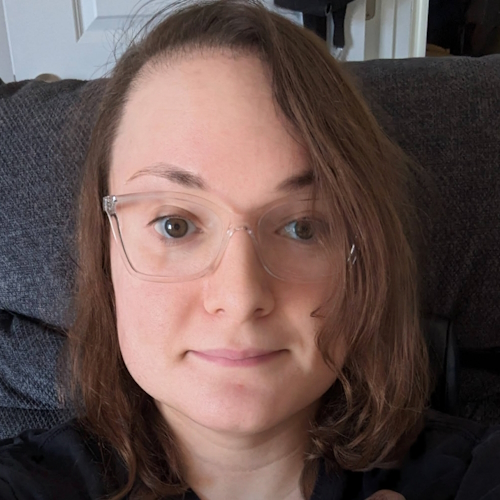
Jennifer T. feature profile

Jennifer T., Colon Cancer, Stage 4


Symptoms: Weight loss, coughing, vomiting, sciatica pain, fatigue

Treatments: Surgeries (colectomy, lung wedge resection on both lungs), chemotherapy, immunotherapy

Kasey S. feature profile

Kasey S., Colon Cancer, Stage 4


Symptoms: Extreme abdominal cramping, mucus in stool, rectal bleeding, black stool, fatigue, weight fluctuations, skin issues (guttate psoriasis)
Treatments: Surgeries (colectomy & salpingectomy), chemotherapy
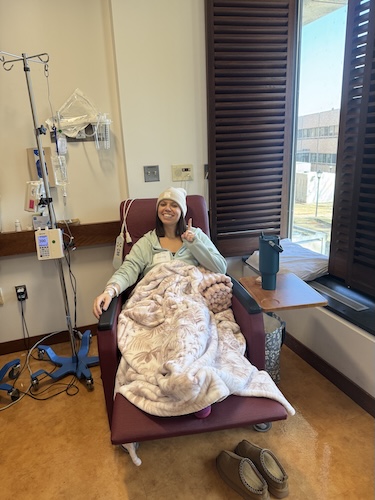
Categories
Chemotherapy Hysterectomy (full) Low-Grade Serous Ostomy Ostomy reversal Ovarian Patient Stories Surgery Treatments

Advocating for Yourself: Kacie’s Experience with Ovarian Cancer

Advocating for Yourself: Kacie’s Experience with Ovarian Cancer (Stage 3 Low-Grade Serous Ovarian Carcinoma)

Kacie was diagnosed with ovarian cancer (stage 3 low-grade serous ovarian carcinoma) just after her 30th birthday. But her experience began years before with persistent, misdiagnosed symptoms, including painful periods and pelvic pain, that were repeatedly attributed to endometriosis. It was only after a 14-cm pelvic mass was discovered that she learned that her symptoms were really due to an uncommon, aggressive form of ovarian cancer.

Interviewed by: Taylor Scheib
Edited by: Chris Sanchez

Support from her wife, Hayley, and family helped Kacie through the daunting series of treatments. Surgery brought both physical and emotional loss: the ovarian cancer had spread, resulting in a full hysterectomy and a devastating blow to her hopes of carrying a child. Post-surgical hurdles included bowel blockages, an ostomy, and a long, difficult recovery. Kacie’s resilience never faltered, though; she drew strength from her passions, especially photography, and documented this raw chapter in striking “rock the bald” portraits that would ultimately empower and encourage others facing similar diagnoses.

Kacie K. ovarian cancer

Kacie’s experience with chemotherapy and an ostomy came with unexpected challenges. She found chemotherapy less punishing than surgery, but adapting to life with an ostomy took time and self-compassion. As she healed, Kacie and Hayley pursued IVF and embraced a new vision of family. Connection with both Hayley and her grandmother, who would later undergo an ostomy herself, became a source of mutual healing and understanding.

Although her scans are now clear, the knowledge of a high recurrence rate, especially after a tumor rupture, lurks at the edges of each new day. Still, Kacie remains hopeful and honest. Through social media, she provides rare insight, advocacy, and practical guidance for others affected by low-grade serous ovarian cancer. Her story highlights the importance of self-advocacy and community.

Watch Kacie’s video and scroll down for her interview transcript. You’ll learn more about how:

  • Fertility challenges and loss may arise, but new paths to parenthood, like IVF, can bring hope and connection
  • Adjusting to life with an ostomy takes patience and experimentation, and sharing personal experiences can help others adjust
  • Joy and hope can coexist with fear of recurrence. Living authentically and embracing support is vital for long-term healing
  • Kacie transformed her most vulnerable moments into empowerment, helping both herself and others
  • No one should undertake the patient experience alone; support networks and openness are powerful tools

  • Name: Kacie K.
  • Diagnosis:
    • Ovarian Cancer (Low-Grade Serous Ovarian Carcinoma)
  • Age at Diagnosis:
    • 30
  • Staging:
    • Stage 3
  • Symptoms:
    • Pelvic pain
    • Sharp pains during menstrual periods
    • Inability to urinate normally
    • Bleeding
  • Treatments:
    • Surgeries: full hysterectomy, ostomy surgery, ostomy reversal surgery
    • Chemotherapy
Kacie K. ovarian cancer

This interview has been edited for clarity and length. This is not medical advice. Please consult with your healthcare provider to make informed treatment decisions.

The views and opinions expressed in this interview do not necessarily reflect those of The Patient Story.


My name is Kacie

I was diagnosed with stage 3 low-grade ovarian cancer. It’s a very rare cancer. I was diagnosed when I was 30 years old in December 2024.

Life before diagnosis: my family, work, and passions

When I’m not working, I travel to see my family and friends in Chicago and Michigan. My dad passed away from cancer a couple of years ago, so going home can be tough. But I recently got married; my wife Hayley and I were married last year. Her family has surrounded me with so much love during this whole experience. My mom has been able to visit a few times, but it’s not quite the same. I’m so grateful for them.

I enjoy photography, mostly weddings and engagements. Right after my clear scan, I even shot a wedding after chemo. I was weaker, but I did it, and it felt amazing. I also love cooking for my wife and exploring the outdoors. We recently hiked the Grand Canyon.

We just love little adventures together. That’s what makes me happy.

I did a photo shoot to “rock the bald.” Some shots included scarves and wigs, but that plain one was my favorite.

It was important for me to document that time. A photographer friend invited me to her favorite studio. We just had fun with it, and I wanted something to look back on. I knew I’d never look like that again, so why not show it to the world?

When I got the photos back, I was in love. She captured them beautifully. Fun, candid moments and even the bald ones looked powerful. But sharing them publicly was scary at first. It’s a little bit exposing myself to social media, like fully bald for the first time, which is a scary thing to do.

My early symptoms were misdiagnosed

I had symptoms for years; really painful periods, severe pain during sex, and stabbing pelvic pain. At 21, my doctor told me it was probably endometriosis. For years afterward, I believed that and blamed every new symptom on “my stupid endometriosis.”

Then I developed urinary problems. I had to press on my pelvis to pee. During our honeymoon, it got worse. By December, my gynecologist couldn’t even do a Pap smear because of a large mass. She comforted me, saying, “You’re not crazy.”

An ultrasound showed a 14 cm pelvic mass. MRI scans couldn’t tell what it was connected to; maybe GI or ovarian. I was referred to a gynecologic oncologist who said I’d need surgery, but wasn’t sure which specialty needed to operate. Eventually, a colorectal surgeon joined the team.

I met them on my 30th birthday. The surgeon said I’d need major surgery with about two months of recovery time. The wait for surgery was long, and my symptoms got worse — urinary retention, bleeding, and pain.

I had to be such an advocate for myself because my symptoms were getting worse each day.

The moment everything changed

Days before surgery, I told my doctor it was really important to try to save my ovaries. I wanted to carry a child someday. She promised to try but couldn’t guarantee anything.

Surgery lasted eight hours. An hour and a half in, my wife got the call: “It’s definitely cancer.” They had to do a full hysterectomy because the cancer had spread through my pelvis and abdomen.

I woke up to everyone crying, but I didn’t yet know why. A nurse accidentally mentioned I’d had a hysterectomy, and my mom confirmed over the phone. I was in shock, but more sad about the hysterectomy.

The tumor had ruptured during surgery, spreading cancer cells. I spent 10 days in the hospital with complications like bowel blockage, an NG tube, and fainting during tests. 

I didn’t eat for 12 days. It was the worst pain of my life.

Coping with fertility loss and IVF hope

Hayley and I decided to move forward with IVF. She offered to carry our child. We’re using my sister’s donor’s sperm, connecting both sides of our family.

I feel so connected — even though it’s not genetically my child, it still links our families.

We’re currently doing IVF treatments and preparing for a transfer soon.

Chemotherapy and adjusting to an ostomy

Once I healed, I started six rounds of chemo every three weeks. Chemo was easier than surgery. Chemo was more of a breeze for me because surgery was the worst pain I’ve ever felt.

After my second chemo, I developed a mysterious allergic reaction and spent five days in the hospital.

The toughest part was adjusting to my ostomy. I cried often trying to change it. My skin was raw, and I had to experiment with supplies. Eventually, I found what worked.

When my July scan came back clear, I sobbed with relief. Still, low-grade ovarian cancer carries a 70% chance of recurrence, especially since my tumor ruptured.

You’re filled with relief after a clear scan, but the fear of recurrence never fully disappears.

Living with the fear of recurrence

I get scans every six months, but I’m already feeling symptoms again. It’s hard not to wonder.

I stay busy, but sometimes fear creeps in. A friend’s cancer returned soon after chemo, and she couldn’t be treated. “That’s my worst fear.” Still, I stay outwardly positive, not fake; just hopeful.

I’m not faking it. Some people don’t know the tough stuff. They just see what I show on social media.

Navigating marriage and my mental health

We got married right before all this, and it changed everything. But I stay focused on positivity; our house, our dream of having kids, hiking, and traveling.

I see us making friends with the neighbors, traveling with my flight benefits, and raising kids. I’m not negative all the time; just real.

When dark thoughts come, Hayley gets me outside to hike or enjoy the sunshine. Being outdoors brings peace. I haven’t felt this much joy in a long time.

Ostomy reversal and helping others

I recently had my ostomy reversed and healed quickly. I was only in the hospital for two days. It felt incredible to no longer have the bag.

I’ve shared ostomy videos on TikTok — how to change it, which supplies helped. After my reversal, my grandmother got an ostomy, and I was able to help her.

That was full-circle. I could help her the way I wished someone had helped me.

My social media advocacy

I share my diagnosis on Instagram and TikTok because low-grade ovarian cancer is rare. When I was diagnosed, I searched for people like me online. I want to be that person for someone else.

I posted a lot during chemo, but less now. Hayley keeps telling me to post more, but I’m figuring out how to share again.

I want to use my story to educate and connect with others facing the same rare cancer.

What I want people to know

If you take one thing from my story, it’s this:

Take things day by day. Don’t get overwhelmed by the big picture. Focus on what you can do today.

And if you’re going through chemo, don’t feel bad about doing nothing, because your body literally can’t.


Kacie K. ovarian cancer
Thank you for sharing your story, Kacie!

Inspired by Kacie's story?

Share your story, too!


More Low-Grade Serous Ovarian Cancer Stories


Maurissa M., Low-Grade Serous Ovarian Cancer


Symptoms: Pressure on bladder, throbbing pain, could feel growth on right side of abdominal area
Treatments: 5 surgeries (official diagnosis after 3rd)
...

Alisa M., Low-Grade Serous Ovarian Cancer


Symptoms: Occasional rectal pain, acid reflux, bloating, night sweats
Treatments: Debulking surgeries, chemotherapy, immunotherapy
...

Cheyann S., Low-Grade Serous Ovarian Cancer, Stage 4B


Symptoms: Stomach pain, constipation, lump on the right side above pubic area

Treatments: Cancer debulking surgery, chemotherapy (carboplatin & Taxol, then Doxil & Avastin)
...
Kacie K. ovarian cancer

Kacie K., Low-Grade Serous Ovarian Cancer, Stage 3


Symptoms: Pelvic pain, sharp pains during menstrual periods, Inability to urinate normally, bleeding

Treatments: Surgeries (full hysterectomy, ostomy surgery, ostomy reversal surgery), chemotherapy
...

Categories
Chemotherapy Colorectal Metastatic Ostomy Patient Stories Radiation Therapy Rectal Surgery Treatments

Devon Confronted Stage 4 Rectal Cancer at 30

Devon Confronted Stage 4 Rectal Cancer at 30

Devon found out she had stage 4 rectal cancer in March 2023, when she was only 30 years old. She started to experience her first symptoms a month before that: frequent bathroom visits (up to 20 times a day), discomfort that became pain, and, in some instances, passing mucus instead of stool. She initially thought she had irritable bowel syndrome, but her gut feeling (literally and figuratively) convinced her to look for medical advice.

Interviewed by: Taylor Scheib
Edited by: Chris Sanchez

Devon took a proactive approach to her diagnosis. This included closely tracking her symptoms and how they progressed, as well as persistently communicating with doctors. Thanks to her approach, she was able to land a quick appointment with a gastroenterologist. Within just 20 minutes of meeting her and conducting an exam, the doctor detected something amiss and recommended that she undergo a colonoscopy immediately. The diagnosis? Stage 4 rectal cancer.

Devon B. stage 4 rectal cancer

Devon was shaken by her diagnosis. Because she had neither a family history of rectal cancer nor any of the typical risk factors, it felt surreal. However, she didn’t fixate on asking, “Why me?” Instead, she asked, “What’s next?” 

Devon’s doctors conducted a flurry of tests and scans and referred her to other doctors, but she ended up returning to Seattle for comprehensive care. However, her symptoms worsened while she was making her way back, resulting in an emergency ostomy surgery in San Francisco. It was a painful procedure, but she felt better afterwards.

After surgery, Devon’s stage 4 rectal cancer treatment plan included six weeks of daily pelvic radiation, low-dose chemo pills, and four months of traditional chemotherapy. Although she initially responded well to these treatments to the point of being declared no evidence of disease, the cancer returned. She then started a more intense second round of chemotherapy. But Devon has refused to buckle despite this setback and has managed this new phase of her treatment with courage and support from her loved ones.

Devon and her doctors now rigorously and closely monitor her health. She offers simple but powerful pieces of advice to others: listen to your body and find your community. Because the adolescent and young adult cancer community played such a crucial role in her emotional recovery as a young adult who faced cancer, thanks to offering understanding and solidarity that’s hard to find elsewhere, she recommends that other patients find their people, too.

Watch Devon’s video and:

  • Learn how the “small” but ominous symptoms she struggled with led to a big discovery
  • See what it’s like to face stage 4 rectal cancer, which is usually associated with older people, at just 30
  • Rethink what you think you know about rectal cancer — Devon has neither family history nor risk factors for it
  • Find out how she navigates life with rectal cancer: from symptoms to survival

  • Name:
    • Devon B.
  • Age at Diagnosis:
    • 30
  • Diagnosis:
    • Rectal Cancer
  • Staging:
    • Stage 4
  • Symptoms:
    • Pain when trying to move bowels
    • Increased frequency of bowel movements, alternating with periods of constipation
    • Passing mucus instead of feces
    • Narrow stools
  • Treatments:
    • Surgery: ostomy surgery
    • Radiation therapy
    • Chemotherapy
Devon B. stage 4 rectal cancer

This interview has been edited for clarity and length. This is not medical advice. Please consult with your healthcare provider to make informed treatment decisions.

The views and opinions expressed in this interview do not necessarily reflect those of The Patient Story.


Devon B. stage 4 rectal cancer
Thank you for sharing your story, Devon!

Inspired by Devon's story?

Share your story, too!


More Rectal Cancer Stories

Kalei M. stage 4 rectal cancer

Kalei M., Rectal Cancer, Stage 4 (Metastatic)


Symptoms: Presence of mucus and tissue-like substance and blood in stool, stomach cramping

Treatment: Radiation therapy, chemotherapy, surgeries (two lung resections)
Jessica A. rectal cancer

Jessica A., Rectal Cancer, Stage 4 (Metastatic)


Symptoms: Changes in bowel movements, blood in stool, abdominal pain, back pain, difficulty sitting comfortably, constipation, feeling of incomplete evacuation (as if some stool remained after bowel movements), mucus-like stool consistency, bloating

Treatment: Immunotherapy under a clinical trial
Shiva S. T2 rectal cancer

Shiva S., Rectal Cancer, T2, and Renal Cancer, T3


Symptoms: Pressure and urgency of bowels, back pain
Treatments: Chemoradiation (for rectal cancer), surgery (ileostomy, combined bowel and kidney surgery), immunotherapy (for kidney cancer)

Jeanine B. stage 3 rectal cancer

Jeanine B., Rectal Cancer, Stage 3 (T3bN0M0)


Symptoms: Long history of bleeding that was blamed on hemorrhoids, pain in the tailbone, urgent need to use the restroom, unusually narrow stools, presence of mucus in stools, fatigue

Treatments: Chemotherapy, radiation therapy
Devon B. stage 4 rectal cancer

Devon B., Rectal Cancer, Stage 4


Symptoms: Pain when trying to move bowels, increased frequency of bowel movements alternating with periods of constipation, passing mucus instead of feces, narrow stools

Treatments: Surgery (ostomy surgery), radiation therapy, chemotherapy
James K. rectal cancer

James K., Rectal Cancer, Stage 3C/4


Symptoms: Occasional rectal bleeding, increasing fatigue

Treatments: Chemoradiation, surgeries (coloanal pull-through, temporary ileostomy, ileostomy reversal, permanent colostomy), adjuvant chemotherapy
Load More

Categories
Chronic Diseases Colectomy Colostomy Crohn's Disease Inflammatory Bowel Disease Patient Stories Proctectomy Surgery Treatments

What Does Crohn’s Disease Look Like? Kristin: Body Positivity!

Kristen Opens Up About Crohn’s Disease, Her Ostomy, and Owning Her Story

Kristen was diagnosed with Crohn’s disease at just 12 years old. For anyone wondering what does Crohn’s disease look like, her story offers a vivid picture. Living with this chronic illness so young meant navigating growing pains and medical challenges simultaneously. She talks about how her world shifted from being a sports-loving, active kid to someone grappling with daily pain, blood in her stool, and emotional isolation. Her story is a heartfelt reminder that chronic illness changes more than your body — it affects how you relate to the world.

Interviewed by: Taylor Scheib
Edited by: Katrina Villareal

Throughout her teenage years, Kristen faced mounting symptoms and emotional struggles. By high school, her condition had worsened significantly. She bounced between treatments and doctors, often feeling let down. When she was in college, everything changed during an appointment when a doctor told her she needed an ostomy.

With her health deteriorating, Kristen agreed. That surgery, though overwhelming and unknown to her at the time, saved her life. She had no prior education about ostomy care and struggled initially, but she and her mom figured it out together.

Kristen F. Crohn's disease

Kristen is honest about the mental health toll of chronic illness, including medical PTSD and anxiety. She didn’t always advocate for herself, but she learned how to speak up. That shift empowered her. She realized that her voice mattered, especially when navigating multiple surgeries, including a total colectomy that made her ostomy permanent. While that decision was emotionally heavy, especially after being told it would be temporary, she eventually accepted it as necessary for her well-being.

Instead of letting shame or misinformation define her, Kristen started sharing her story online to educate and empower others. She uses Instagram as a blog, breaking stigmas around ostomy bags and showing the reality of life with one. She answers common questions about intimacy, product use, and body image. Kristen keeps it real but is always supportive, encouraging others to ask questions and never feel ashamed.

Body positivity plays a huge role in Kristen’s story. She’s chosen to love and appreciate her body for all it has endured. Even with an ostomy, she’s traveled the world, held full-time jobs, enjoys paddleboarding and rollerblading, and continues to thrive. She’s all about hope, mental health awareness, and creating inclusive spaces for people with invisible illnesses. Her message is clear: don’t be afraid to advocate for yourself, embrace your body, and know that even in the hardest moments, you’re not alone.

Watch Kristen’s video to find out more about her story:

  • What products she swears by for stoma care, and which ones she skips.
  • Her reaction when she found out that her ostomy, which she was initially told would be temporary, was going to be permanent.
  • What does Crohn’s disease look like and life with an ostomy, and how she lives fully and freely.
  • From hospital anxiety to medical PTSD, how Kristen’s mental health was impacted and how she’s healing.
  • How a single doctor changed Kristen’s entire life trajectory.

  • Name: Kristen F.
  • Age at Diagnosis:
    • 12
  • Diagnosis:
    • Crohn’s Disease
  • Symptoms:
    • Fatigue
    • Abdominal cramps
    • Blood in stool
    • Loss of appetite
    • Frequent, painful bathroom visits
    • Perianal disease (open wound)
    • Mouth sores
    • Joint pain
  • Treatments:
    • Multiple medications
    • Surgeries: Temporary ostomy, total colectomy (permanent ostomy), Barbie butt surgery (proctectomy)
Kristen F. Crohn's disease

This interview has been edited for clarity and length. This is not medical advice. Please consult with your healthcare provider to make informed treatment decisions.

The views and opinions expressed in this interview do not necessarily reflect those of The Patient Story.


Kristen F. Crohn's disease
Thank you for sharing your story, Kristen!

Inspired by Kristen's story?

Share your story, too!


More Crohn’s & Colitis Stories

Kristen F. Crohn's disease

Kristen F., Crohn’s Disease (IBD)


Symptoms: Fatigue, abdominal cramps, blood in stool, loss of appetite, frequent and painful bathroom visits, perianal disease (open wound), mouth sores, joint pain

Treatments: Multiple medications, surgeries (temporary ostomy, total colectomy and permanent ostomy, Barbie butt surgery or proctectomy)


Jess G. Crohn's disease

Jess G., Crohn’s Disease (IBD)


Symptoms: No appetite even when offered a favorite dessert, weight loss

Treatments: Steroids, blood transfusions, biologics, surgeries (colectomy, small bowel resection, colostomy)

Ariel D. ulcerative colitis

Ariel D., Ulcerative Colitis (IBD)


Symptoms: Overactive bowel, heavy cramps in stomach area, abdominal pain

Treatment: Surgery (ileostomy)

Alli R. ulcerative colitis

Alli R., Ulcerative Colitis


Symptoms: Blood in stool, unexplained weight loss, stomach pain, constant defecation

Treatment: Surgery (ileostomy)

Sarah A.

Sarah A., Ulcerative Colitis


Symptoms: Bowel irregularity, severe stomachaches, blood in stool

Treatments: Surgery (ostomy surgery), steroids, anti-inflammatory medication (mesalamine), biologic therapy

Dana D., Crohn’s Disease (IBD)


Symptoms: Abdominal pain, diarrhea, blood in stool

Treatments: Surgeries (colon resection, total proctocolectomy with end ileostomy,
abdominal perineal resection, myocutaneous flap), steroids, biologic therapy
Load More

Categories
Chronic Diseases Colectomy Colostomy Crohn's Disease Patient Stories Small bowel resection Surgery Treatments

Ending Stigma with Confidence – My Crohn’s Disease (IBD) Story

“Positivity Breeds Acceptance”: Jess’s Crohn’s Disease (IBD) Story

Jess was diagnosed with Crohn’s disease, a kind of inflammatory bowel disease, when she was just eight years old. She began experiencing unexplained stomach pains and a noticeable loss of appetite, even when offered desserts that she loved. A sudden weight loss signaled to her family that something was seriously wrong. After a series of tests, especially with a family history of Crohn’s, the diagnosis was confirmed. Now, 22 years after receiving an ostomy bag, watch Jess’s story.

Interviewed by: Nikki Murphy
Edited by: Chris Sanchez

Initially, Jess managed her condition with standard medications and a highly specific diet — her mom even peeled strawberries to make them safe to eat. Life seemed relatively stable until an unrelated bout of stomach flu sent her health into a downward spiral. Her body couldn’t keep up despite steroids, biologics, and even total parenteral nutrition, a process of delivering nutrients intravenously, skipping the digestive system. Eventually, Jess developed toxic megacolon, a life-threatening complication from her Crohn’s disease that left no option but emergency surgery to remove her colon and part of her small intestine.

Jessica G. Crohn's disease

Facing ostomy surgery as a teenager was daunting. But Jess vividly recalls the moment her surgeon’s wife, who also had an ostomy, visited her in the hospital. Dressed in stylish black jeans, she challenged Jess to find the ostomy bag, and Jess couldn’t. This encounter shattered the stigma Jess had unknowingly built up, showing her that life with an ostomy could still be full and vibrant.

Recovery wasn’t easy. Jess had to relearn basic functions, from swallowing food to walking. She also navigated the complexities of ostomy care, experimenting with different products to find the perfect fit. Adjusting to a new body image during her teenage years, especially with 2000s fashion trends like low-rise jeans, added another layer of challenge.

But Jess was resilient. By the time she graduated from high school, she had found her confidence, made meaningful friendships, and even taken bold steps in Crohn’s disease advocacy. Her senior PR project on ostomy awareness laid the groundwork for Uncover Ostomy, a campaign that continues to educate and support countless individuals today.

Jess wants everyone to know that positivity breeds acceptance. She believes that approaching life and her ostomy with confidence has not only empowered her but also influenced how others perceive it. Her courage to share her authentic experience has made her a beacon of hope for many facing similar health challenges.

Watch Jess’s video and delve into:

  • How she found her confidence after life-altering surgery
  • The unexpected moment that changed Jess’s view on her ostomy
  • From hospital bed to advocacy: her inspiring Crohn’s disease story
  • How Jess relearned to eat, walk, and live fully after surgery
  • The real challenges and triumphs of living with Crohn’s disease

  • Name:
    • Jess G.
  • Age at Diagnosis:
    • 8
  • Diagnosis:
    • Crohn’s Disease (a type of inflammatory bowel disease or IBD)
  • Symptoms:
    • No appetite even when offered a favorite dessert
    • Weight loss
  • Treatments:
    • Steroids
    • Blood transfusions
    • Biologics
    • Surgeries: colectomy, small bowel resection, colostomy
Jessica G. Crohn's disease

This interview has been edited for clarity and length. This is not medical advice. Please consult with your healthcare provider to make informed treatment decisions.

The views and opinions expressed in this interview do not necessarily reflect those of The Patient Story.


Jessica G. Crohn's disease
Thank you for sharing your story, Jess!

Inspired by Jess's story?

Share your story, too!


More Crohn’s & Colitis Stories

Kristen F. Crohn's disease

Kristen F., Crohn’s Disease (IBD)


Symptoms: Fatigue, abdominal cramps, blood in stool, loss of appetite, frequent and painful bathroom visits, perianal disease (open wound), mouth sores, joint pain

Treatments: Multiple medications, surgeries (temporary ostomy, total colectomy and permanent ostomy, Barbie butt surgery or proctectomy)


Jess G. Crohn's disease

Jess G., Crohn’s Disease (IBD)


Symptoms: No appetite even when offered a favorite dessert, weight loss

Treatments: Steroids, blood transfusions, biologics, surgeries (colectomy, small bowel resection, colostomy)

Ariel D. ulcerative colitis

Ariel D., Ulcerative Colitis (IBD)


Symptoms: Overactive bowel, heavy cramps in stomach area, abdominal pain

Treatment: Surgery (ileostomy)

Alli R. ulcerative colitis

Alli R., Ulcerative Colitis


Symptoms: Blood in stool, unexplained weight loss, stomach pain, constant defecation

Treatment: Surgery (ileostomy)

Sarah A.

Sarah A., Ulcerative Colitis


Symptoms: Bowel irregularity, severe stomachaches, blood in stool

Treatments: Surgery (ostomy surgery), steroids, anti-inflammatory medication (mesalamine), biologic therapy

Dana D., Crohn’s Disease (IBD)


Symptoms: Abdominal pain, diarrhea, blood in stool

Treatments: Surgeries (colon resection, total proctocolectomy with end ileostomy,
abdominal perineal resection, myocutaneous flap), steroids, biologic therapy
Load More

Categories
Colon Colorectal Cystectomy Hysterectomy Oophorectomy Patient Stories Surgery Treatments

Colon Cancer at 36: How Crystal Faced Diagnosis and Found Connection

Colon Cancer at 36: How Crystal Faced Diagnosis and Found Connection

Crystal’s account is a heartfelt narrative about confronting colon cancer, grappling with mental health, and letting in support.

Interviewed by: Taylor Scheib
Edited by: Chris Sanchez

For years, Crystal noticed blood in her stool, but dismissed it as hemorrhoids. Fast forward to 2022, when symptoms she couldn’t shrug off, including excruciating abdominal pain and recurring urinary tract infections (UTIs), finally pushed her to seek medical help. A CT scan revealed something alarming — an abnormal mass intruding into her bladder. After several tests, the diagnosis was confirmed: colon cancer. The news, while devastating, wasn’t entirely shocking to Crystal, who had long neglected her health habits. Yet, the emotional weight of hearing, “You’ve got cancer,” hits differently, no matter how prepared one thinks one might be.

Crystal W. colon cancer

Getting on with life after a colon cancer diagnosis was far from easy. Crystal underwent surgeries to remove her bladder, right ovary, and uterus. She also endured the placement of both colostomy and urostomy bags. Adjusting to life afterward was daunting. The urostomy bag, in particular, brought anxiety about potential leaks in public, often triggering feelings of vulnerability and self-consciousness. However, Crystal realized that survival and quality of life trumped these fears.

Crystal’s mental health took significant hits throughout her experience with colon cancer, which weighed heavily on her. But it was during these dark times that she discovered the strength of her support system. Friends showed up, both emotionally and physically, breaking through the walls she had built around herself for years. She realized that accepting help wasn’t a sign of weakness but a testament to the deep connections she had with her loved ones.

Crystal’s story is a beacon for others facing similar challenges. She shares that while living with an ostomy bag can be tough, it’s not the end — it’s just another chapter. Her advice? Let people in, lean on your support system, and never underestimate the power of sharing your story.

Take a look at Crystal’s video to get into:

  • How she found strength after her devastating colon cancer diagnosis.
  • Why accepting help changed Crystal’s mental health for the better.
  • Living with a urostomy bag: her real talk on the challenges and triumphs.
  • The signs Crystal missed — could you recognize them?
  • From isolation to connection: How colon cancer reshaped her relationships.

  • Name:
    • Crystal W.
  • Age at Diagnosis:
    • 36
  • Diagnosis:
    • Colon Cancer
  • Symptoms:
    • Blood in stool
    • Intermittent severe lower abdominal pain
    • Urinary tract infection (UTI) with strong odor
    • Fistula
  • Treatments:
    • Surgeries: cystectomy, oophorectomy, hysterectomy
    • Chemotherapy
Crystal W. colon cancer

This interview has been edited for clarity and length. This is not medical advice. Please consult with your healthcare provider to make informed treatment decisions.

The views and opinions expressed in this interview do not necessarily reflect those of The Patient Story.


Crystal W. colon cancer
Thank you for sharing your story, Crystal!

Inspired by Crystal's story?

Share your story, too!


More Colon Cancer Stories

 
Briana H. stage 3 colorectal cancer

Briana H., Colorectal Cancer, Stage 3


Symptoms: Periods of constipation initially lasting one week and then extending to two weeks, nausea, pain in lower left abdomen, lack of appetite, vomiting and inability to keep fluids down

Treatments: Surgeries (colon resection, tumor removal, colostomy placement, colostomy reversal), chemotherapy
Kailee O. stage 4 colorectal cancer

Kailee O., Colorectal Cancer, Stage 4 (Metastatic)


Symptoms: Sensitive stomach sometimes leading to vomiting after eating, bleeding during bowel movements, persistent fatigue, back pain, abdominal pain, anemia, significant symptom flare-up during second pregnancy

Treatments: Surgery (colectomy), chemotherapy, targeted therapy
Starr S. colon cancer

Starr S., Colon Cancer, Stage 4 (Metastatic)


Symptom: Abdominal pain

Treatments: Chemotherapy, surgeries (colectomy, hepatectomy, lymphadenectomy), targeted therapy
Jackson L. stage 4 colon cancer with BRAF mutation

Jackson L., BRAF Mutation Colon Cancer, Stage 4


Symptoms: Severe stomach pain, fatigue, lack of motivation, anemia, blood in stool, thinning stool

Treatments: Surgeries (emergency bowel obstruction surgery with temporary colostomy, possibility of HIPEC in 2026), chemotherapy, immunotherapy

Heather C. stage 4 colon cancer

Heather C., Colon Cancer, Stage 4 (Metastatic)


Symptoms: Severe bloating, indigestion, vomiting, rectal bleeding

Treatments: Chemotherapy, surgery (liver transplant, upcoming)
Nicole S. stage 3 colon cancer

Nicole S., Colon Cancer, Stage 3


Symptoms: Dull lower abdominal pain that sharpened and was focused on the lower left side, appearance of dark blood in stool, difficulty retaining food due to near-complete blockage of sigmoid colon

Treatments: Surgery (colectomy), chemotherapy

Categories
Chemotherapy Colectomy Colon Colorectal Hepatectomy Hysterectomy Patient Stories Radiation Therapy Surgery Treatments

Life Despite Stage 4 Colon Cancer: Albita’s Honest, Hopeful Story

Living Fully with Stage 4 Colon Cancer: Albita’s Honest, Hopeful Story

When vibrant Albita noticed symptoms like stomach pain and blood in her stool back in 2019, she brushed them off, attributing them to stress, diet, and an active lifestyle. It wasn’t until 2024, at the age of 32, that she received the life-altering diagnosis: stage 4 colon cancer.

Interviewed by: Nikki Murphy
Edited by: Chris Sanchez

Albita’s path to diagnosis was filled with delays due to fear, financial concerns, and misattribution of symptoms to conditions like irritable bowel syndrome (IBS). She experienced persistent weight gain in her midsection, fatigue, and worsening digestive issues. Despite hesitation, she eventually scheduled a colonoscopy, which revealed a tumor. Further scans showed metastases in her liver, confirming stage 4 colon cancer.

Albita G. stage 4 colon cancer

Albita’s reaction was a mix of shock and an odd sense of relief. Finally, there was a name for the mysterious health issues she had been facing. As a pharmacy technician, she understood medical jargon but found the reality of cancer overwhelming. Yet, her oncologist offered hope, emphasizing that stage 4 isn’t hopeless. Treatments are available, and many people continue to live full lives.

Albita underwent multiple treatments, including several rounds of chemotherapy, liver resections, and a colon resection with a hysterectomy. That’s when Stella entered her life — her ileostomy, which she’s learned to embrace. Living with an ileostomy has been an adjustment, reshaping her relationship with food, body image, and self-care. She now pays attention to her hydration, nutrient intake, and manages the daily logistics of having a stoma.

Despite the physical toll and side effects of her treatments — fatigue, brain fog, hair loss, and skin issues — Albita’s mindset remains her strongest asset. She acknowledges grief for the life she had before but finds strength in her growth. “I feel stronger as a human being,” she shares, highlighting how facing stage 4 colon cancer has revealed an inner resilience she never knew she had.

Albita’s message to others is clear: listen to your body. Don’t dismiss symptoms like persistent stomach pain, unusual weight changes, or blood in your stool. Early detection can make a significant difference. She also advocates for mental health support, therapy, and maintaining a positive mental attitude, which helps her navigate the emotional waves of living with cancer.

Watch Albita’s video to find out more about:

  • How important it is to listen to our bodies.
  • How a diagnosis of stage 4 colon cancer changed everything — and nothing — for her.
  • Albita’s powerful take on living with an ileostomy.
  • Why she named her stoma Stella, and other inspiring insights.
  • The symptoms Albita initially ignored that you shouldn’t.

  • Name:
    • Albita G.
  • Age at Diagnosis:
    • 32
  • Diagnosis:
    • Colon Cancer
  • Staging:
    • Stage 4
  • Symptoms:
    • Blood in stool
    • Pain during defecation
    • Constant constipation
    • Steady weight gain in the midsection despite exercising
  • Treatments:
    • Surgeries: colectomy, hepatectomy, hysterectomy
    • Chemotherapy
    • Radiation
Albita G. stage 4 colon cancer

This interview has been edited for clarity and length. This is not medical advice. Please consult with your healthcare provider to make informed treatment decisions.

The views and opinions expressed in this interview do not necessarily reflect those of The Patient Story.


Albita G. stage 4 colon cancer
Thank you for sharing your story, Albita!

Inspired by Albita's story?

Share your story, too!


More Metastatic Colon Cancer Stories

 
Raquel A. feature profile

Raquel A., Colorectal Cancer, Stage 4


Symptoms: Frequent bowel movements, pin-thin stools, mild red blood in stool
Treatment: Chemotherapy

Steve S., Colorectal Cancer, Stage 4


Symptoms: Blood in stool, changes in bowel habits, feeling gassy and bloated

Treatments: Surgery, chemotherapy, monoclonal antibody, liver transplant
Jessica T. feature profile

Jessica T., BRAF Mutation Colon Cancer, Stage 4


Symptoms: Severe stomach cramps, diarrhea, vomiting, anemia (discovered later)

Treatments: Surgery (hemicolectomy), chemotherapy

Jennifer T. feature profile

Jennifer T., Colon Cancer, Stage 4


Symptoms: Weight loss, coughing, vomiting, sciatica pain, fatigue

Treatments: Surgeries (colectomy, lung wedge resection on both lungs), chemotherapy, immunotherapy
Kasey S. feature profile

Kasey S., Colon Cancer, Stage 4


Symptoms: Extreme abdominal cramping, mucus in stool, rectal bleeding, black stool, fatigue, weight fluctuations, skin issues (guttate psoriasis)
Treatments: Surgeries (colectomy & salpingectomy), chemotherapy


Categories
Chemotherapy Colon Colorectal Patient Stories Surgery Treatments

Chloe’s Stage 3 Colon Cancer Story: It Started with Bloating

Living Boldly After Stage 3 Colon Cancer: Chloe’s Empowering Message

In early 2024, Chloe was unexpectedly diagnosed with stage 3 colon cancer (adenocarcinoma of the colon) after suffering from symptoms of bloating and other stomach issues. Later on she began to experience weight loss, fatigue, lack of appetite, and abdominal swelling. However, these symptoms were dismissed as effects of her pre-existing anemia. She regularly consulted her general practitioner throughout December to have tests conducted. They only revealed minor infections but didn’t uncover the underlying issue. Moreover, her health continued to worsen.

Interviewed by: Taylor Scheib
Edited by: Chris Sanchez

Chloe paid a visit to the local infirmary, where doctors subsequently discovered and were concerned about high ketone levels in her urine. However, she was still treated for gastroenteritis. Her symptoms persisted, leading her mother to realize that her condition was far more severe than everyone thought and insist on a hospital visit. Significantly, a CT scan revealed a mass in her large bowel and multiple perforations. Doctors accordingly performed emergency surgery, and Chloe woke up afterward with a stoma bag, an unexpected and significant adjustment for her.

The diagnosis was shocking: Chloe’s condition was stage 3 colon cancer. Furthermore, these findings were exacerbated by a rare genetic disorder, familial adenomatous polyposis (FAP), which had gone undetected until that point. This gene caused polyps to clump together and form a large tumor. Following her surgery, Chloe subsequently underwent four rounds of chemotherapy over three months, with sessions involving both IV and oral forms of treatment. Thankfully, post-treatment scans showed no remaining cancer cells. By June 2024, Chloe was finally declared in remission.

Emotionally, Chloe found the process challenging. She consequently had to grapple with the stigma of having cancer as a young individual and adjust to life with a stoma. She concurrently navigated the mental health impacts of her stage 3 colon cancer and bloating, including PTSD and anxiety, around hospitals through counseling and support from loved ones.

Watch Chloe’s video to learn more about:

  • How to embrace a bolder outlook on life and seize opportunities that you may once have feared.
  • The importance of listening to your body.
  • Why it’s crucial for you to persist with medical inquiries if you suspect stage 3 colon cancer and bloating.
  • How to avoid letting feelings of embarrassment stop you from seeking help.

  • Name: 
    • Chloe W.
  • Age at Diagnosis:
    • 25
  • Diagnosis:
    • Colon Cancer (Adenocarcinoma of the Colon)
  • Staging:
    • Stage 3
  • Symptoms:
    • Severe abdominal bloating due to stage 3 colon cancer
    • Weight loss
    • Lack of appetite
    • Fatigue
    • Vomiting
    • High ketone levels in urine
  • Treatments:
    • Surgery
    • Chemotherapy

This interview has been edited for clarity and length. This is not medical advice. Please consult with your healthcare provider for treatment decisions.


Thank you for sharing your story, Chloe!

Inspired by Chloe's story?

Share your story, too!


More Colon Cancer Stories

 
Briana H. stage 3 colorectal cancer

Briana H., Colorectal Cancer, Stage 3


Symptoms: Periods of constipation initially lasting one week and then extending to two weeks, nausea, pain in lower left abdomen, lack of appetite, vomiting and inability to keep fluids down

Treatments: Surgeries (colon resection, tumor removal, colostomy placement, colostomy reversal), chemotherapy
Kailee O. stage 4 colorectal cancer

Kailee O., Colorectal Cancer, Stage 4 (Metastatic)


Symptoms: Sensitive stomach sometimes leading to vomiting after eating, bleeding during bowel movements, persistent fatigue, back pain, abdominal pain, anemia, significant symptom flare-up during second pregnancy

Treatments: Surgery (colectomy), chemotherapy, targeted therapy
Starr S. colon cancer

Starr S., Colon Cancer, Stage 4 (Metastatic)


Symptom: Abdominal pain

Treatments: Chemotherapy, surgeries (colectomy, hepatectomy, lymphadenectomy), targeted therapy
Jackson L. stage 4 colon cancer with BRAF mutation

Jackson L., BRAF Mutation Colon Cancer, Stage 4


Symptoms: Severe stomach pain, fatigue, lack of motivation, anemia, blood in stool, thinning stool

Treatments: Surgeries (emergency bowel obstruction surgery with temporary colostomy, possibility of HIPEC in 2026), chemotherapy, immunotherapy

Heather C. stage 4 colon cancer

Heather C., Colon Cancer, Stage 4 (Metastatic)


Symptoms: Severe bloating, indigestion, vomiting, rectal bleeding

Treatments: Chemotherapy, surgery (liver transplant, upcoming)
Nicole S. stage 3 colon cancer

Nicole S., Colon Cancer, Stage 3


Symptoms: Dull lower abdominal pain that sharpened and was focused on the lower left side, appearance of dark blood in stool, difficulty retaining food due to near-complete blockage of sigmoid colon

Treatments: Surgery (colectomy), chemotherapy
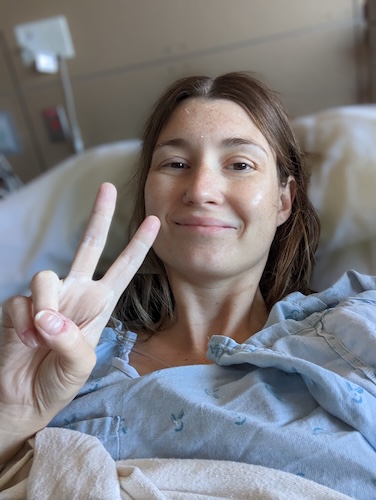
Categories
Chronic Diseases Crohn's Disease Patient Stories Proctocolectomy Surgery Treatments

Dana’s Path to Living with Crohn’s Disease (IBD)

Resilience and Recovery: Dana’s Path to Living Fully with Crohn’s Disease (IBD)

In 2010, at the age of 15, Dana was diagnosed with Crohn’s disease (IBD) after experiencing severe gastrointestinal symptoms and significant weight loss. Initially mistaken for a minor issue following wisdom tooth surgery, her symptoms later on escalated, leading to a referral to a gastroenterologist. The diagnosis was ultimately confirmed via a colonoscopy after hospitalization due to severe anemia.

Interviewed by: Nikki Murphy
Edited by: Chris Sanchez

Dana’s experience with Crohn’s disease has been complex and difficult, involving various medications and surgeries. Early treatments began with corticosteroids to manage immediate symptoms, followed by oral immunosuppressants and, later, more intensive IV medications. While one of these medications induced remission for a few years, side effects later made it necessary to try different medications. Unfortunately, some of these proved less effective, resulting in her symptoms progressing.

Dana’s condition then developed a complication known as stricturing disease or colon stricture, during which the intestines narrow and scar during the healing process. This led to her first colon resection surgery in 2014. Despite trying newer medications called biologics, she faced increasing complications, requiring a visit to Mayo Clinic. There, specialists recommended another biologic similar to her initial successful treatment, but it also failed to deliver the desired results.

Dana subsequently faced fibrosis and severe narrowing throughout her colon and rectum. Her doctors then decided to perform an ileostomy, removing her entire colon and rectum. This significant surgery, involving a proctocolectomy and reconstruction of her pelvic floor, was daunting but ultimately transformative for Dana. It alleviated years of pain and allowed her to reclaim much of her life. However, adapting to an ostomy accordingly presented new challenges, including managing supplies and preventing leaks while dealing with skin reactions to adhesives.

Dana acknowledges the lifelong changes and planning necessitated by Crohn’s disease, impacting spontaneity but ensuring she can continue participating in life fully. She emphasizes the importance of community and support networks, both online and locally, to combat the isolation that can accompany living with a chronic illness. Her relationship with her husband stands as a testament to resilience and ability to adapt, as it has grown stronger through their shared challenges.

Despite the difficulties she has faced, Dana remains hopeful, advocating for a positive mindset and the benefits of connecting with others in similar situations. She encourages those also facing Crohn’s disease and similar conditions to understand that life can continue meaningfully and fully, with even greater appreciation for health and connections.


  • Name: 
    • Dana D.
  • Age at Diagnosis:
    • 15
  • Diagnosis:
    • Crohn’s Disease (a type of Inflammatory Bowel Disease or IBD)
  • Symptoms:
    • Abdominal pain
    • Diarrhea
    • Blood in stool
  • Treatments:
    • Surgeries: colon resection, total proctocolectomy with end ileostomy,
      abdominal perineal resection, myocutaneous flap
    • Steroids
    • Biologic therapy

This interview has been edited for clarity and length. This is not medical advice. Please consult with your healthcare provider for treatment decisions.


Thank you for sharing your story, Dana!

Inspired by Dana's story?

Share your story, too!


More Crohn’s and Colitis Stories

Kristen F. Crohn's disease

Kristen F., Crohn’s Disease (IBD)


Symptoms: Fatigue, abdominal cramps, blood in stool, loss of appetite, frequent and painful bathroom visits, perianal disease (open wound), mouth sores, joint pain

Treatments: Multiple medications, surgeries (temporary ostomy, total colectomy and permanent ostomy, Barbie butt surgery or proctectomy)


Jess G. Crohn's disease

Jess G., Crohn’s Disease (IBD)


Symptoms: No appetite even when offered a favorite dessert, weight loss

Treatments: Steroids, blood transfusions, biologics, surgeries (colectomy, small bowel resection, colostomy)

Ariel D. ulcerative colitis

Ariel D., Ulcerative Colitis (IBD)


Symptoms: Overactive bowel, heavy cramps in stomach area, abdominal pain

Treatment: Surgery (ileostomy)

Alli R. ulcerative colitis

Alli R., Ulcerative Colitis


Symptoms: Blood in stool, unexplained weight loss, stomach pain, constant defecation

Treatment: Surgery (ileostomy)

Sarah A.

Sarah A., Ulcerative Colitis


Symptoms: Bowel irregularity, severe stomachaches, blood in stool

Treatments: Surgery (ostomy surgery), steroids, anti-inflammatory medication (mesalamine), biologic therapy

Dana D., Crohn’s Disease (IBD)


Symptoms: Abdominal pain, diarrhea, blood in stool

Treatments: Surgeries (colon resection, total proctocolectomy with end ileostomy,
abdominal perineal resection, myocutaneous flap), steroids, biologic therapy
Load More

Categories
Chemotherapy Colorectal Patient Stories Radiation Therapy Rectal Surgery Treatments

Roshonda’s Stage 4 Rectal Cancer Story

Roshonda’s Stage 4 Rectal Cancer Story

Roshonda shares her story as an “ostomy warrior” after she was diagnosed with rectal cancer in 2022. Her initial symptoms included blood in her stool and a sensation of incomplete bowel movements in 2021. When she first visited a doctor, she attributed the symptoms to hemorrhoids. As her symptoms progressed, including seeing blood after sexual activity and worsening discomfort, she switched to Medicaid and a new healthcare provider, eventually leading to a colonoscopy in March 2022. The procedure revealed a mass and 3 polyps in her rectum, resulting in a rectal cancer diagnosis that devastated her, as memories of her late father’s battle with cancer resurfaced. She also had a spot on her lung which brought her diagnosis to stage 4.

Interviewed by: Taylor Scheib
Edited by: Chris Sanchez

Following her diagnosis, Roshonda met her team of specialists and began 6 weeks of daily radiation and oral chemotherapy. Despite the challenges, including burning pain, skin darkening, and intense discomfort, she persevered. Unfortunately, she lost her longtime job, and her unemployment benefits ended shortly after her diagnosis, complicating her financial situation. Thankfully, her mother and grandmother provided support, covering bills and easing some of the burden.

Despite the intense treatment, Roshonda’s tumor did not initially shrink enough. Her oncologist advised further treatment with intravenous chemotherapy, which involved 8 sessions over 4 months. These sessions were grueling, leaving her nauseated and exhausted. Reflecting on the mental toll, Roshonda stresses the importance of maintaining a positive outlook, which she believes helps many cancer patients manage their journey.

Facing surgery to remove her rectum and anus due to the tumor’s location, Roshonda had to decide between keeping the anal area, risking potential recurrence, or opting for a complete removal with a lifelong colostomy bag. She chose the latter, enduring significant pain after the procedure, with limited mobility and initial difficulty sitting.

Roshonda joined an online ostomy support group before surgery, learning from others’ experiences and finding comfort in a community of people facing similar challenges. This network has been invaluable, especially since she is the only one in her family with an ostomy bag.

Sharing her rectal cancer journey on TikTok and Facebook, Roshonda aims to raise awareness about colorectal cancer, particularly within the Black community, which faces higher incidence rates. She encourages early screenings and prompt medical attention for symptoms. Gospel music and faith have helped her find peace, especially a song that resonated deeply with her, helping her surrender her worries before surgery.

Adjusting to life with a colostomy bag, Roshonda emphasizes listening to her body and finding what works best for her. Though the journey has been painful and challenging, she remains grateful for her support network, faith, and the resilience she’s developed throughout her battle.


  • Name:
    • Roshonda C.
  • Age at Diagnosis:
    • 37
  • Diagnosis:
    • Rectal cancer
  • Staging:
    • Stage 4
  • Initial Symptoms:
    • Blood in stool
    • Blood from rectum after intercourse
    • Sensation of incomplete bowel movements
  • Treatment:
    • Chemotherapy
    • Surgery
    • Radiation

This interview has been edited for clarity and length. This is not medical advice. Please consult with your healthcare provider to make informed treatment decisions.

The views and opinions expressed in this interview do not necessarily reflect those of The Patient Story.


Thank you for sharing your story, Roshonda!

Inspired by Roshonda's story?

Share your story, too!


Related Cancer Stories

More Rectal Cancer Stories
Kalei M. stage 4 rectal cancer

Kalei M., Rectal Cancer, Stage 4 (Metastatic)


Symptoms: Presence of mucus and tissue-like substance and blood in stool, stomach cramping

Treatment: Radiation therapy, chemotherapy, surgeries (two lung resections)
Jessica A. rectal cancer

Jessica A., Rectal Cancer, Stage 4 (Metastatic)


Symptoms: Changes in bowel movements, blood in stool, abdominal pain, back pain, difficulty sitting comfortably, constipation, feeling of incomplete evacuation (as if some stool remained after bowel movements), mucus-like stool consistency, bloating

Treatment: Immunotherapy under a clinical trial
Shiva S. T2 rectal cancer

Shiva S., Rectal Cancer, T2, and Renal Cancer, T3


Symptoms: Pressure and urgency of bowels, back pain
Treatments: Chemoradiation (for rectal cancer), surgery (ileostomy, combined bowel and kidney surgery), immunotherapy (for kidney cancer)

Jeanine B. stage 3 rectal cancer

Jeanine B., Rectal Cancer, Stage 3 (T3bN0M0)


Symptoms: Long history of bleeding that was blamed on hemorrhoids, pain in the tailbone, urgent need to use the restroom, unusually narrow stools, presence of mucus in stools, fatigue

Treatments: Chemotherapy, radiation therapy
Devon B. stage 4 rectal cancer

Devon B., Rectal Cancer, Stage 4


Symptoms: Pain when trying to move bowels, increased frequency of bowel movements alternating with periods of constipation, passing mucus instead of feces, narrow stools

Treatments: Surgery (ostomy surgery), radiation therapy, chemotherapy

James K. rectal cancer

James K., Rectal Cancer, Stage 3C/4


Symptoms: Occasional rectal bleeding, increasing fatigue

Treatments: Chemoradiation, surgeries (coloanal pull-through, temporary ileostomy, ileostomy reversal, permanent colostomy), adjuvant chemotherapy

Load More