
The Lump She Dismissed for Months Turned Out to Be Stage 3C Melanoma: Marie’s Story of Self-Sacrifice, Survival, and Reclaiming Her Identity
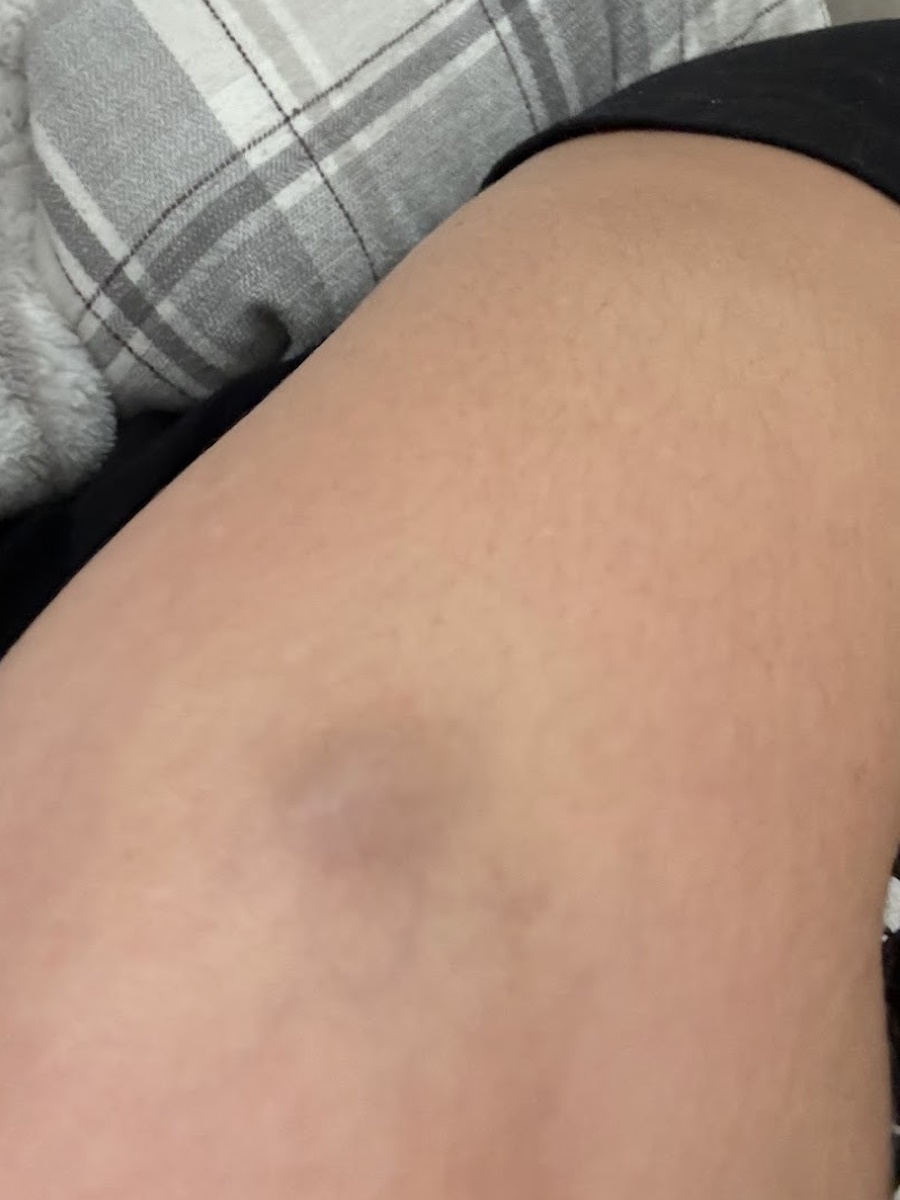
When Marie was diagnosed with stage 3C metastatic melanoma, she was a driven, working mom in the middle of the most promising stretch of her corporate career. At the same time, she had been quietly dismissing some warning signs for months. Her diagnosis arrived not with a dramatic mole or visible skin lesion, but with a small, moving pebble-sized lump beneath the skin of her elbow that grew slowly, persistently, while she kept canceling her dermatology appointments whenever a high-stakes work meeting took priority.
Interviewed by: Taylor Scheib
Edited by: Chris Sanchez
For nearly two years before her diagnosis with melanoma, a kind of skin cancer, Marie’s body was sending distress signals she had every reason to dismiss as burnout. These included plummeting energy, nerve issues, unexplained vision loss in her right eye, irritable bowel syndrome (IBS) flares, joint pain so severe that she couldn’t lift her toddler, and an inability to maintain a pregnancy. Each symptom was chalked up to the relentless pace of corporate life and new motherhood. It wasn’t until she had a miscarriage, combined with a practitioner noticing that blood wouldn’t draw from the arm where the lump had been growing, that the pieces began to click into place.
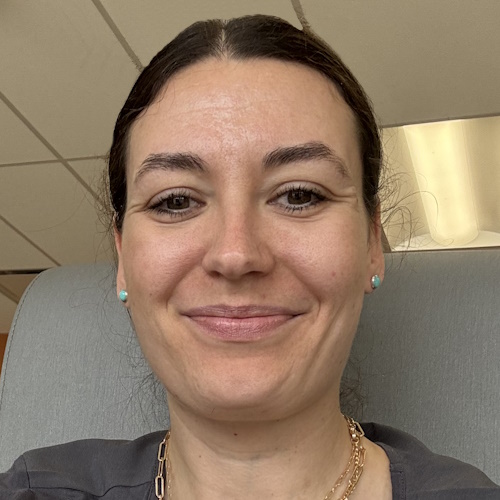
After the lump was removed in October 2024, it traveled through four separate pathologists before the Huntsman Cancer Institute in Utah identified it as consistent with metastatic melanoma. Marie didn’t receive the diagnosis until January 2025, three months after the biopsy. The call came while she was finishing a work email. She went downstairs, put the phone on speaker with her husband, and whispered, “I have cancer.”
Surgery followed quickly, revealing the disease had spread to three of the eight removed lymph nodes, confirming stage 3C metastatic melanoma. Dr. Kuncewitch with Intermountain Health performed the surgery. Marie then began immunotherapy, completing seven rounds before her body developed severe adverse reactions, including debilitating arthritis requiring prednisone and immunotherapy-induced colitis. These required that her treatment be stopped early.
What followed the physical experience was something Marie describes as a complete identity shift. She let go of the corporate mask, the performative worthiness, and the self-erasure that had quietly fueled her for years. She emerged not diminished, but clarified. “It shifts you to the identity you were born to be,” she says, “because it strips all the other layers and you’re just you.”
Today, she creates on her own terms, fights for herself without asking permission, and measures nothing against a corporate target. She is, simply and powerfully, enough.
Watch Marie’s video or read the edited transcript of her interview to find out more about her story:
- Uncommon symptoms of melanoma can be dangerously easy to dismiss. Marie’s melanoma appeared as a small, mobile lump beneath the skin with no visible mole and no identifiable primary site, a presentation that confused physicians and required four pathologists to identify.
- Systemic symptoms before diagnosis deserve serious attention. Two years before her diagnosis, Marie experienced vision loss, nerve issues, joint pain, IBS, and an inability to maintain a pregnancy. None of these were connected to cancer until after her biopsy.
- Societal pressure on women to do it all can directly cost them their health. Marie’s experience is a powerful illustration of how deeply internalized worthiness tied to professional performance can delay a person’s care. Canceled dermatology appointments, dismissed symptoms, and deferred self-advocacy were all woven into the same pattern.
- Stopping treatment early is not failure; It’s the disease’s response to treatment. Listening to your body is essential. When immunotherapy’s adverse reactions became severe, Marie’s care team made the decision to discontinue. Her oncologist reframed it clearly: her body had responded and was able to fight.
- A cancer experience can force an identity transformation that, for many patients, leads to the most authentic version of themselves. Marie’s story is shared by many patients: the stripping away of external roles and expectations can reveal, rather than destroy, who a person truly is.
- Strong caregiver support can set the emotional foundation for healing. Her husband’s steady voice: “You are a warrior. You will see your son grow up,” is a cornerstone of Marie’s resolve. Care partners matter enormously, both emotionally and practically, throughout a cancer experience.
Marie’s Diagnosis Facts
- Name:
- Marie R.
- Age at Diagnosis:
- 34
- Diagnosis:
- Skin Cancer (Melanoma)
- Staging:
- 3C (Regionally metastatic)
- Symptoms:
- Unexplained fatigue
- Vision loss in the right eye (similar to uveitis, a form of inflammation affecting the middle layer of the eye)
- Nerve issues
- Severe joint pain
- Irritable bowel syndrome (IBS) flares
- Difficulty maintaining pregnancy
- Growing subcutaneous lump on elbow
- Difficulty drawing blood from affected arm
- Treatments:
- Surgeries: wide local excision, lymphadenectomy
- Immunotherapy


This is not medical advice. Please consult with your healthcare provider to make informed treatment decisions.
- Marie’s Diagnosis Facts
- Life before my melanoma diagnosis: Career, motherhood, and the corporate grind
- My early warning signs: Fatigue, vision loss, and a growing lump
- The dermatologist visit that changed everything: Getting the lump removed
- Receiving the metastatic melanoma diagnosis: The phone call that changed everything
- The stage 3c melanoma diagnosis: Surgery, lymph node removal, and what came next
- Immunotherapy for metastatic melanoma: Treatment plan and side effects
- The identity shift that cancer forces, and why it leads you to become who you were meant to be
- What hope looks like after a metastatic melanoma diagnosis
- Hear from people living with melanoma
Life before my melanoma diagnosis: Career, motherhood, and the corporate grind
I had recently started a new job at a company that I liked, where I also liked my leader and my manager. I was a mom to a very busy two-year-old, who was the light of my life. My husband was climbing up his career ladder as a commercial airline pilot, so we would intermittently schedule trips. I was living life, but I was also doing the corporate grind. I was working a lot, but that was okay because I worked hard to be in the corporate world and climb that ladder.
How a cancer diagnosis forced a life reckoning
My melanoma diagnosis truly made me reflect on what was important. Back in 2020, we were all developing different hobbies. I was thinking, maybe I’d write or try making candles. We would try things and then say, “Oh, but we can’t do that because we have to focus on this.” I bring that up because once I was diagnosed, I thought, “Do I have enough time to do everything I want to do?” Two weeks before my surgery, I didn’t know if I did. I thought, “I want to be that author. Does work matter? Do they truly care about me? Will being a leader in the tech world validate me? Will it make me worthy?”
Then I thought about my craft. I like making candles. I like things that smell good, but there are toxic things out there, and you go down all the rabbit holes. Honestly, I went down a lot of rabbit holes, and it was eye-opening to truly see what was important. But besides all of that, honestly, it came down to: Do I get enough time with my son? That was it.
My early warning signs: Fatigue, vision loss, and a growing lump
About two years before my melanoma diagnosis, I started to feel unwell. I thought, “It’s been a year since I had my son, and I went back to work after three months. Maybe I’m super burnt out.” My energy was decreasing, I was having some nerve issues, and I lost sight in my right eye for many months. My eye doctor and no other doctors could figure out why. It was like uveitis, almost. They said, “We don’t know why it’s triggering so badly. Maybe you’re just stressed.” I work in corporate, and I’m a mom; of course, I was stressed.
I went down multiple rabbit holes. I saw a doctor for some blood work to look into Lyme disease and to try to put the puzzle pieces together. I started doing different therapies, hoping they would help. I was doing ozone therapy because they thought I had Lyme disease. The blood markers indicated that I did, because my sisters do.
I was trying to do an ozone treatment, and the doctor couldn’t get the blood out of my arm. That was kind of the first red flag — and it was the same arm that had cancer in it. She couldn’t get the vein. The blood couldn’t come out; it was clotting. She was like, “This is really weird.” And then the bump was there. It was just a tiny little pebble, but I thought, “I did fall running about six months ago — maybe I got a pebble underneath my arm.” That’s kind of what struck me. And then I was just like, “Oh, it’s fine.” I forgot about it. It kept growing and growing, and my nanny honestly said, “Marie, maybe you should get that looked at.” I thought, “Yeah, it looks like a zit. I will — I’m too busy. I’m a mom, and I have a corporate job.”
I made so many excuses. It’s just like putting yourself last. “Oh yeah, no, it’s fine.” And I think it just got to the size it did because I neglected myself. I was giving excuses and blaming my work for tiring me out. I didn’t truly look at it until I had a miscarriage the month before they removed it. There was no reason for me to really have one. And that was kind of like, “Okay, yes — we need to get this removed.” That’s when the story really started to unfold. But in the grand scheme of things, how it started was a little bump. I thought it was nothing. I gave myself excuses, didn’t listen to my intuition, my gut. I also canceled a lot of my dermatology appointments. I would schedule them, and then a meeting would be booked over it. “Oh, this is a very important meeting, Marie — the CEO is going to be on the line. You need to be there.” So I’d cancel and tell myself I’d reschedule later.
What did the melanoma lump look and feel like?
It was small — it looked like a ganglion cyst that people get on their wrists. It started like a pin-pebble; so, so small. I was even showing my friends: “Hey, look how weird this is — and it’s moving.” It started underneath the skin, which is not really common for melanoma. There’s usually a mole or a primary site. To this day, six of my doctors still cannot find a primary. It was just baffling to them to have it present underneath the skin already. They were like, “What?”
So it was a small pebble. I truly noticed it around April 2024 — that was about six months after I had stopped the ozone therapy when they couldn’t do anything with my IV. Six months later, I started noticing that little pebble. By October, it had grown to about the size of a fingertip, but at that point, it was really hard. It was a lump. I thought it was a cyst or a zit because it was right on the elbow — I thought, “Is it from the joints or something?” Looking back, it grew so fast from a tiny pebble in April to October. I know it was April because my friend came to visit and she said, “What is that little thing?” I told her it was a little pebble, that I might have gotten something underneath my skin from when I went running and fell a few months before. She said, “Maybe you should get it looked at.” I said, “Yeah, I will — later.” Another person telling me to go seek help, and I still didn’t do it.
The body’s cry for help: What it feels like when you know something is seriously wrong
Physically, my body was failing in all aspects. I was losing my sight for no reason. I couldn’t lift my son. I was dropping things. I couldn’t remember basic things. No matter what vitamins or routines I had been on for years, when my body was failing to function at basic things — just getting out of bed, my joints suffering — when my body can’t move, I can’t logically think. My body couldn’t maintain a pregnancy. I was like, “Okay, something is not right.”
I think a flashback of all the things — from IBS to my friend saying something — made me realize: I need to get this removed, and something is really, really wrong. Honestly, I feel like I got slapped in the face with a book — slapped in the face with reality. Life is worth living, and this isn’t the life I had a year ago.
Masking pain at work while falling apart at home: The emotional toll of melanoma
At work, I maintained the profile of being a very dominant account manager — always on it. I put the mask on. I say that specifically because I wanted to be that person who was strong, couldn’t be intimidated easily, and got her work done. But the people who suffered after that mask came off were my husband, my friend, and my son — because I had no patience left. I put that mask on for 8 to 10 hours a day and got no reprieve. I still had to be a mom. I still had to be a wife. I still had to be a caretaker. The house had to be taken care of. So I would melt down. My emotions were all over the place, and even my friends and neighbors would say, “Are you okay?” They were worried too. They’d see me snap about dropping something because my hand physically couldn’t hold it — mad that my body was failing me and couldn’t keep up in the most promising moment of my career, when I had a leader I loved, a CEO I liked, and a manager I respected, and I couldn’t perform.
So honestly, I was on a roller coaster. Pick a day, pick an emotion — I experienced those 15 times a day, plus.
Why women feel they must do it all: Worthiness, society, and self-sacrifice
I believe it’s because we feel that’s what makes us worthy of existing. And to piggyback on that, society has put it in place for us to do it all. Given all those books out there — the whole “balancing act” — we are doing this to feel worthy, to be worthy enough to exist, to get love, and to get validation in this world. That is why. It also stems from people who say, “Yeah, you can do it all — I did it, you can too.” And look at all the praise, love, and worthiness they get. “You can too, but you have to do it all.” And the reality is: no, you don’t.
The people who say they can do it all have to give something up — and for me, at that moment in time, it was my health. It was me. I was doing it to be worthy enough to get love and validation. And in reality, that was not enough. Myself — I am enough, just by myself.
The dermatologist visit that changed everything: Getting the lump removed
I’ve seen my dermatologist for many, many years, and I love him — he is phenomenal. So I went in. This was October. We were about to leave for Costa Rica; a dear friend and neighbor of mine was getting married there, and my son was in the wedding. The doctor was checking out the bump and was about ready to take it out, but I told him I was going to Costa Rica. He said, “I don’t know if I should be taking this out because we’re going to be very far from any doctors.” I also told him I had just had a miscarriage and an emergency D&C a few days prior. He said, “I’m not comfortable with you having this wound in a place not close to a hospital in case it gets infected.” He asked if I could come back after Costa Rica. He told me, “Marie, I really need you to come back.” He tells me to this day he was very nervous I wouldn’t. I said, “I will be back the very next day as soon as I get back.”
And I did. I kept that promise. He removed it, and he was looking at it — examining it in the vial before sending it off to biopsy — and he said, “Regardless of what happens, you need to make sure you hear from me. This is very abnormal. I’m sending it right away.” At that moment, I think my gut kind of shrank. I thought, “Oh, okay. So what I was feeling about my body this past month — this is something.” I honestly didn’t think it was going to be cancer. I thought it was something else that serious, but I didn’t think it was a tumor.
He removed it. That was in October. It took until January to get results — it went through four pathologists. They couldn’t identify it until the Huntsman Center here in Utah, which I’m so beyond grateful for. The cutting-edge technology there literally saved my life. Whoever that pathologist was — I thank them every day. They are the ones who found it was consistent with metastatic melanoma. I didn’t find out until January 13th. My dermatologist got the results back on January 13th. A very long time.
Three months of waiting for a diagnosis: Burying emotions in work
Do you want to know something really sad? I prioritized my work. I thought, “Okay, it’s out, it’s done. Trust that process. Trust the doctor, and it’ll be fine.” I buried my head in work because that’s where I got the dopamine hit of being worthy. So I was head-deep into work — and it was to forget, it was to hide from it.
I would check in occasionally: “Hey, have you heard anything?” “No, we haven’t heard anything.” Okay. Part of me was also a little naive, thinking, “If it were truly an emergency, wouldn’t they call me?” But it was the holiday season. Everything was busy. I didn’t know it was going through multiple pathologists until my dermatologist called me — he was so apologetic about how long it took. But honestly, we just continued the grind.
Receiving the metastatic melanoma diagnosis: The phone call that changed everything
I was working late. I was wrapping up a meeting with my manager when my dermatologist called, and I thought, “Hey, I know I need to deal with this — can I call you back?” But my manager let me go, so I took the call. I was busy typing an email when he called, and he said, “Hey, Marie, it’s Scott. I know it’s late — it’s almost 6:00 p.m. — but I need to talk to you. Do you have a moment?” I said yes and kept typing as he was talking.
Then I went numb. He said, “Marie, I got your results back from pathology. It came back as cancer.” I was like, “Wait — what?” He said, “Marie, I don’t know what you’re doing — I need you to get your husband. We need to have a serious conversation. Is Anders around?” My husband was in the basement at the time. My son was with the nanny. I said, “Hold on one second,” went downstairs, put him on speaker, and I was shaking. I thought, “Did I just hear that?”
He said, “Marie, I’m sorry it took so long — but the Huntsman Center at the University of Utah found that it was consistent with metastatic melanoma.” I said, “Is it bad?” And he said, “Marie, you need to stop. This is serious. Let’s talk about the result.” I just remember looking at my husband — holding the phone like this, looking at him — and we were both like, “What? What did we just hear?” And I whispered, “I have cancer.”
I don’t remember much after that. I just remember hearing that it was serious. He said, “I need to see you tomorrow so we can discuss your protocol. Moving forward, you’re going to be getting a call from the Huntsman Center. You’re going to be seeing a surgeon. They’re going to have to remove more. They’ll probably get you scheduled for a scan to see how far it’s spread.” And I thought, “Wait — it spread? What are you talking about?” He said, “Yes, it was found underneath the skin.” And what shook me more was when I asked, “Scott, I’m going to live, though — right?” And he said, “Marie — I just don’t know. You need to see these doctors. You’re in their hands now. This is where my care stops. I’m confident I got it all, but I just don’t know where the spread is.”
He said, “Let’s schedule a time — I’ll see you first thing in the morning.” And when he hung up — it was about a ten-minute conversation — I just cried. And then my husband whispered, “You are a warrior. You’re going to make it. You are strong. You’re going to fight this. You have a lot of reasons to fight. You will see your son grow up. You’ve got this.” And then once we were in the initial shock of it — you have cancer, you don’t have a lot of answers, but you have enough to know what you’re facing — there was no pressure yet. There was no additional pain. I was just in solace for a little bit.
My husband’s support after the melanoma diagnosis: Building a foundation to fight
We went upstairs, and our nanny, Abby — who has been with my son since he was a baby — could tell we were both crying. We said, “Abby, we need to take a walk. Can you stay later?” She said yes; she could tell something was wrong.
We just took our walk around the neighborhood, and he was holding my hand, kissing my hand. He said, “You are going to beat this. You are the toughest person I know. Regardless of your odds, regardless of what they tell you, you’re going to defy them and beat this.” He said, “You’re not allowed to leave me this quickly. We’re supposed to grow old — you’re stuck with me until we’re both gray.” And I think just that was setting the stage: regardless of what I was told, I was going to beat this. And I think it was because of my husband telling me, “You’re strong. You’ve got this.”
The stage 3c melanoma diagnosis: Surgery, lymph node removal, and what came next
The melanoma had spread to the lymph nodes. I had eight removed, and three had cancer in them. It was stage 3c because of the way it protruded — it wasn’t pushing too far up against the lymph nodes. I’m incredibly grateful for Dr. Kuncewitch at Intermountain Health. He went in, got it out, and was just so diligent.
Right after my appointment with my dermatologist, things moved quickly. However, there was a lull where we didn’t have all the answers — I didn’t know it was in my lymph nodes until after the surgery. They said, “Yes, we did this test; these are the nodes that fired up, so we removed them.” I got the scan the day before my surgery, and then it was just boom, boom, boom — you just get whiplash with it all.
They took them, they got them, and I’m beyond grateful. I’m also grateful for my plastic surgeon. Something I really learned is that oncology is oncology and plastic surgery is plastic surgery. I had to go back a week later for another surgery to close me up because I had a pump on my arm to keep the wound from getting infected while they were testing to make sure they had gotten it all, or whether they would have had to go back in.
Immunotherapy for metastatic melanoma: Treatment plan and side effects
Metastatic melanoma is kind of interesting as a cancer because it locks the cell from your immune system attacking — that’s what can make it deadly. The oncology team told me, “Since it was able to spread from your elbow already up to your lymph nodes, we don’t know if there are more. It didn’t go into any organs at that point, but at this rate — since it was able to spread already — we need to be proactive, so you don’t have to have another surgery.”
I love my oncology doctor. She totally meets me where I’m at, and I’m very transparent with her. She said, “We’re going to do immunotherapy once a month for a year to a year and a half, if your body can take it — there are a lot of risks.” At the time, I thought, “Let’s beat this — let’s get my immune system so strong that I’m like a superhuman.” About three weeks after my surgery, I started immunotherapy.
Gosh — I just have so much grace and empathy for those chemo patients, those immunotherapy patients sitting in that chair. When you see videos of people who look like they’re there but not — I get it now, because your body is just devastated. It’s your body, but it’s not. It puts you in a completely different state.
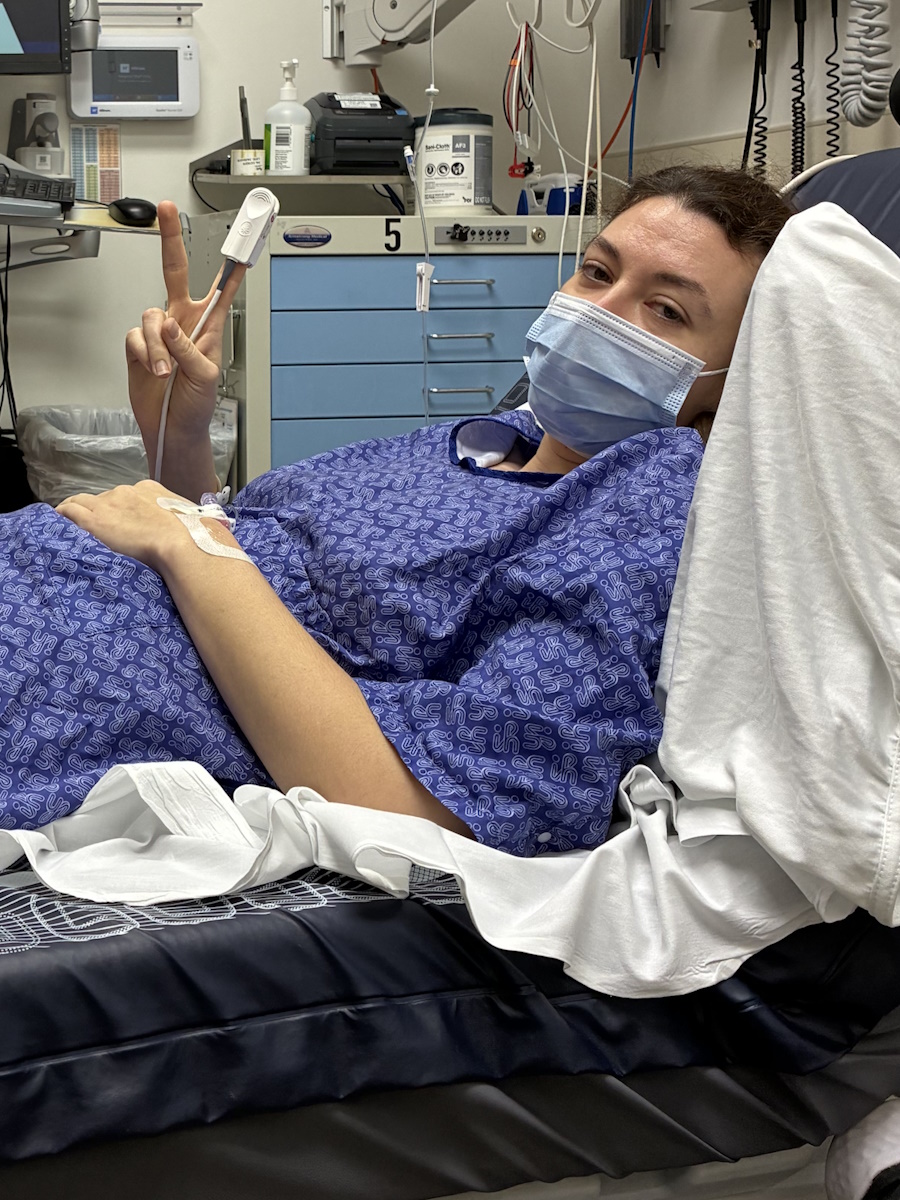
I did seven rounds of immunotherapy. I was unfortunately part of the 10 to 15% of patients who had adverse reactions — they developed ulcerative colitis or their immune system started reverting. That did happen to me. I also had the worst arthritis throughout my entire immunotherapy — I had to be on low-dose prednisone for a year. I couldn’t twist the cap off a milk jug by myself. I couldn’t even put my clothes on without help. That’s how bad my joints were. I fought against taking prednisone for three months until my oncologist said, “Marie, life needs to be worth living at this stage. Can we make it worth living for you?” So I caved in and took it for quite a long time.
After having gut issues on my last infusion — I felt really, really sick, was immediately hit with gut pain, and was very nauseous, down for the count for at least a week — my doctor said, “I think we need to check your gut. We need to schedule you for a colonoscopy. We’re not going to do another treatment. I need to see what’s going on, and we need to shut off immunotherapy right away. We’re going to put you on an immunosuppressant.” That was also rough.
What stopping immunotherapy early taught me about cancer, goals, and letting go of corporate thinking
Honestly, I felt like I lost. I thought, “No, I can do this — let me push.” But this wasn’t something I could push through the way I did in corporate. I couldn’t put someone else’s mask on first. I even said that to my oncologist, because I think she could tell. She said, “You’re not failing. This is actually a good thing — your body can do this and is able to fight. Let’s continue.” At that moment in time, I was extremely weak. I was extremely thin. I was not eating. I had lost over 20 pounds, and for my figure and height, that wasn’t boding well. She was saying, “You didn’t fail. This isn’t the end. This is just your body telling me it can do it and it’s okay.” I still felt like I didn’t reach 12 or 15 rounds — the max was about 15 — I didn’t hit the goal.
But nobody tells you that the goal isn’t the goal, isn’t the target. You can’t relate that to cancer. There is no bull’s-eye you need to hit with cancer. People do think that — I thought being cancer-free was that bull’s-eye. But it’s not, because you still have the fear of just daily life. You can’t measure based on a target. That was a hard lesson to learn coming from corporate.
Fighting for my family: The ring, the scar, and the reasons to keep going
They are my constant. My husband made me a custom ring with his birthstone, my birthstone, and my son’s. At the end of immunotherapy, he gave it to me and said, “Every time you look down, please remember why you’re fighting. You’re the reason — because you’re worthy enough to fight for yourself.” That ring is so, so powerful. When I look down at it, I’m reminded. But it’s also my birthstone too — I’ve got to fight for me.
Early on, even when my sisters came to rally with me, I knew this wasn’t my end, because I thought, “There is so much more to life. I want to do something.” Now, if I want to be that author, if I want to make candles, if I want to go visit the world — I do it, and I don’t ask for permission.
The biggest loss was the identity shift that had to happen with cancer. My son and my husband were always a priority — with my old identity and my new. But now it’s my health and them. My identity completely shifted. Now I couldn’t care less about a meeting or a job. What I do care about is my story, my voice, and giving meaning to life again. Life is just so beautiful. Gratitude — it’s every single day. I’m just beyond grateful for everything, even the snow, the leaves, the sunshine.
I have my scar — it’s going to remain a part of me for the rest of my life. Every time I see it in the mirror, or feel it — because right now I’m having a lot of pain in my arm and it doesn’t function the way it used to — I’m reminded of how far I came.
The identity shift that cancer forces, and why it leads you to become who you were meant to be
I am very proud of my younger self. I hug her every day. My younger self — I’m like, “Heck yeah — look at what you’ve done.” I’m trying to reflect on the passage my sister always told me: you can’t miss what’s meant for you. I’m proud of the person I became, but I had to become her because I got lost in who I was. And I think that happens to a lot of us with expectations and pressure.
I have a whole other respect for cancer now. My sister also had breast cancer — Stage 1 — and it hurt. But until you actually go through that transformation, that identity shift yourself, you have no clue. It’s completely different.
It’s an identity shift — but I think it shifts you to the identity you were born to be, because it strips all the other layers and you’re just you.
What hope looks like after a metastatic melanoma diagnosis
I think a big thing is: believe in yourself and believe in your ability. There’s only one you. You’re uniquely you — let yourself shine.
But the biggest one is: you are worthy enough. You are worthy enough to live this life, to live the life of your dreams, regardless of time. So go and live it. Nothing else matters.
The biggest takeaway is feeling that you are worthy enough yourself. It took melanoma for me to realize I was worthy enough of everything I deserve in my life — and I don’t think I’m the only one.
And I appreciate the team for doing this and hearing us as patients, because this is what changes the world. Research — but it’s us.
Inspired by Marie’s story?
Share your story, too!
Hear from people living with melanoma
Real experiences with diagnosis, treatment choices, side effects, and life beyond melanoma — in their own words.

Leave a Reply