
How a Repeat PSA Test Caught Mike’s Prostate Cancer Before It Was Too Late
Mike had spent years managing his health proactively, even asking for a follow-up prostate cancer screening, or PSA test, that his doctor didn’t think he needed. Mike’s past experiences and his insistence on the screening are how, at 59, they found his prostate cancer.
Interviewed by: Tory Midkiff
Edited by: Katrina Villareal
This started years earlier, when Mike was treated for an enlarged prostate (benign prostatic hyperplasia), with a procedure that resolved his symptoms and dropped his PSA score to nearly nothing. Everything looked fine until an April 2025 PSA test came back at 3.7 ng/mL, which was higher than normal for him. [Editor’s Note: According to UT MD Anderson, generally speaking, PSA levels for men who are age 59 or younger should be at or below 2.5 ng/mL.]
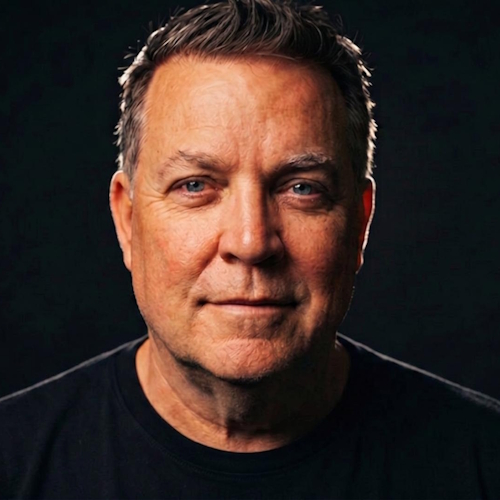
Mike wasn’t alarmed, but he didn’t let it go either. When his primary care doctor didn’t think a repeat test was necessary that November, Mike asked for one anyway. It came back just over 5 ng/mL. A follow-up test six weeks later climbed to nearly 6 ng/mL. A biopsy followed in early January 2026, and the results showed a Gleason score of 9, grade group 5, among the most aggressive prostate cancer classifications, with all 12 biopsy cores positive for cancer.
Mike and his wife Sue weighed two paths: a radical prostatectomy, surgery to remove the entire prostate, or a combination of radiation therapy and hormone therapy. A PSMA PET scan, a specialized imaging test used to check whether prostate cancer has spread beyond the prostate, showed the disease appeared contained, so they chose surgery.
During the operation, the surgical pathology told a different story. The prostate cancer had reached a lymph node, nerves, and other areas, and it was now multifocal, meaning it showed up in more than one place rather than one contained tumor. Since surgery, Mike’s PSA has not returned to undetectable levels, meaning some cancer remains somewhere in his body. He starts hormone therapy the day after his 60th birthday and has radiation treatment scheduled for the end of October 2026.
Today, Mike manages ongoing incontinence, prepares for hormone therapy side effects, like hot flashes and fatigue, and has started documenting his experience on YouTube to help other men understand the value of pushing for one more test.
Watch Mike and Sue’s video or read the edited transcript of their interview to find out more about Mike’s story:
- Mike’s primary care doctor didn’t think a second PSA test was necessary. Mike asked for one anyway, and it came back high enough to lead straight to a biopsy and a Gleason 9 diagnosis. Trusting his own read of his numbers over routine reassurance changed the timeline of his care.
- A PSMA PET scan showed Mike’s cancer appeared fully contained in the prostate before surgery. The surgical pathology afterward showed it had already reached a lymph node, nerves, and nearby structures.
- Choosing between surgery and radiation with hormone therapy meant weighing incontinence risk, years of hormone side effects, and the odds of getting everything in one operation. Mike and Sue chose surgery hoping for a clean, contained removal, and are now navigating hormone therapy and radiation because the cancer had already spread beyond what the scans showed.
- Mike turned his paused retirement plans into a new project. Instead of documenting cross-country RV travel, he’s documenting his prostate cancer experience on YouTube, hoping it helps even one other man decide to get a PSA test.
Mike’s Diagnosis Facts
- Name: Mike Jones
- Age at Diagnosis:
- 59
- Diagnosis:
- Prostate Cancer
- Gleason Score:
- Gleason 9
- Grade Group:
- Grade Group 5
- Symptoms:
- None; found through PSA testing
- Treatments:
- Surgery: radical prostatectomy
- Hormone therapy
- Radiation therapy (scheduled)




This is not medical advice. Please consult with your healthcare provider to make informed treatment decisions.
- Mike’s Diagnosis Facts
- Thirty years of marriage and an ordinary life
- Noticing an elevated PSA and refusing to let it go
- Choosing to advocate for a second PSA test
- Understanding the Gleason score and learning to ask the right questions
- Weighing surgery against radiation and hormone therapy
- Waiting for results in a state with only one PET scan machine
- Feeling nervous and scared facing surgery day
- Getting the news that surgery didn’t get it all
- Post-surgery PSA tests and a canceled anniversary trip
- Confronting survival statistics and reworking retirement dreams
- Preparing for hot flashes, fatigue, and muscle loss on hormone therapy
- Turning my prostate cancer experience into a YouTube channel to help other men
- What I wish someone had told me on day one
- Remember that the caregiver is going through the cancer journey too
- Hear from people living with prostate cancer
Thirty years of marriage and an ordinary life
Mike: My name is Mike and this is Sue, my wife. We’ve been married for 30 years. We’ve had two kids and two grandkids. Life’s pretty normal and pretty good. We’re like anybody and everybody. We’ve had our challenges, but never necessarily specifically medical for us. It was taking care of elderly parents, dealing with the loss of my mom, and occasional medical-related things that would pop up, but nothing like this.
Noticing an elevated PSA and refusing to let it go
Mike: In 2018, I was diagnosed with benign prostatic hyperplasia (BPH). I was going to the bathroom a lot and was miserable in that respect. I went to the urologist, who diagnosed it, and they did a loop procedure or a transurethral resection of the prostate (TURP) where they do an ablation and hollow it out. I felt immediate relief, both in the frequency and the urgency. My PSA level then went down to next to nothing, so everything was great.
Then during a typical exam with my primary care physician in April 2025, I got my annual PSA test done, as I normally do, and it came back at 3.7 or 3.5 ng/mL, which was high for me. I know that there are other things that can cause an elevated PSA and it wasn’t over the threshold, but I was concerned.
It wasn’t until I went back to see my PCP in November that I told him I wanted to get another PSA test done. He didn’t see a need for it, but I said, “No, I want another PSA because that one in April was high for me, and I wanted to make sure that it wasn’t still high, that it wasn’t trending upward, or that it had gone back down because it was something else.” We did it and sure enough, it came in at just over 5 ng/mL. I immediately knew then that something wasn’t right.
Now, with all that being said, there were no physical symptoms. I was going to the bathroom the same as I always have. The urgency wasn’t there. I was able to do everything I’ve been doing. There were no outward signs. My initial thought was that whatever they took out came back and was causing that number to pop up.
I immediately wanted to go back to the original urologist who performed the procedure, because I knew he’d be familiar with what was going on. When I went to talk to him, at first he didn’t seem alarmed, considering my age. He said it could be this, it could be that. We did another PSA six weeks after and it was 5.98 ng/mL. At that point, he knew that something wasn’t right.
This was literally two weeks before Christmas 2025 and the earliest I could get back in to do a biopsy was the week after New Year’s. They went straight to biopsy at that point. A few days later, they found out that it was a 5+4 on the Gleason, equaling a 9, Grade Group 5, and all 12 cores were positive for cancer. That’s when it became smacking in the face.
At that point, he brought in his colleague, the surgeon, and we talked about all the different options. What added to the layers of complexity for us was, two days after I went in for the original visit — which was the Friday before Christmas — Sue, who was walking our dogs, fell and shattered her left shoulder into six different places. For the next eight weeks, she was pretty much incapacitated, unable to use that arm, couldn’t drive, couldn’t dress, and couldn’t do any of the normal things you would do. I was taking care of her.
By the time the surgery rolled around — the radical prostatectomy, which is the path that we chose, and I can explain why we went that way — that was literally the first time she had driven since the fall. It was when we drove to the hospital for that surgery, and she had to drive home while I stayed in the hospital.
Physically, and still to this day, there are no symptoms. There’s nothing that I would say, “Oh, that’s why I feel this way,” or, “Oh, that’s why this is doing this.” No, none of that, and that’s what is hard to process. Because you feel fine, but you’re not fine.
Choosing to advocate for a second PSA test
Mike: We’re both very good at being engaged and being involved. We’re not passive participants when it comes to doctors or medicine in general. We’re not anti-doctor or anti-medicine; we just want to be involved, so we’re not afraid to ask additional questions. In this case, even though my doctor was right to say that there’s nothing to worry about — and you hear a lot of doctors and medicine in general say every man at a certain age gets a prostate issue, but very few get cancer — that’s not necessarily the case, now that I know a little bit more about what I’m dealing with.
What I did know, which is when I went back and looked at my history, was that 3.7 ng/mL in April of 2025 was high for me. I also knew that it could easily be something else, whether an infection or who knows what, but I wanted to know. Six months later, when I went in, I said, “You’re going to give me another PSA test. You’re going to order it one way or the other.” I don’t want to say he didn’t want to, but he didn’t think it was needed.
Had I not asked that question or demanded that test, we’d be sitting here right now, today, waiting to go back in for another test, and then see it. Lord knows where the cancer that was in there would be at this point had it not been detected when it was. Let’s be honest: It’s already not great now, so I could only imagine it could have already metastasized by that point had that question not been asked. And it would be a very different picture. It’s not all rosy right now, but it certainly could be a lot worse had that not happened.
When talking to family and sharing this, my cry to them has been to ask the question. You have to play an active role in your rescue. You have to be an advocate for your body, because you know it better than anyone. Even though I didn’t feel bad, I knew the number enough. But if you’re going to go in blind, if you’re going to bury your head in the sand or whatever you want to call it, then stuff can happen, and it can happen quickly, without you even realizing it.
The worst that happens is that PSA comes back at 1.5 ng/mL and we’re all like, “Ooh great, nothing to see here,” and move on. That’s the worst it can be. But what did happen is the best it could have happened in this situation, because it allowed me to get treatment sooner rather than later.
Understanding the Gleason score and learning to ask the right questions
Mike: He explained it on the first visit. He explained what the Gleason score meant. Now, to be honest, it went very quickly and went right over my head. That’s a lot of stuff.
Sue: A lot of numbers.
Mike: This is what we’ve said from the beginning: You go in to each appointment looking for answers, and you come out typically with more questions than you started with. You feel like you’re getting hit with a fire hose of information. That was the learning curve. I would get the results in our portal, and I wouldn’t know what any of that stuff meant because of the abbreviations and the terminology that I’m not familiar with. I’m not looking at Doctor Google for a diagnosis, but to get an interpretation of what’s being said in the results, so I had an understanding going in.
A lot of times when you go in and the first time you hear it is the explanation, you go blank and freeze. A lot of stuff is being thrown at you, and generally speaking, at least in this case, it wasn’t a lot of positive information. You get caught by cancer and then everything else after is a blur. Knowing some of the context ahead of time was helpful for me. But yes, they were very good about going through all the terms and the explanations. I don’t want to say it was comforting, but it was reassuring that what I had learned on my own was validated.
It’s so much to process. There are so many words you haven’t heard before, and it’s so overwhelming. I wanted to ask questions that made sense and needed to be asked, and I was never going to be able to formulate them on the fly if this was something I’m hearing for the first time — or at least I didn’t think I could, because I would be so caught off guard or overwhelmed.
I wanted to go in with at least some notes, if you will, whether mentally or physically written down, based on what I’m hearing and assuming I hear the same thing from the physician: what do I ask, what do I need to know, and what do we need to refer to. Same with Sue. We discussed it before we went, and then she would bring up things that maybe I didn’t consider asking. We partnered on that. If I did freeze or forget in the moment, for whatever reason, she was there in the room to ask the same way.
Weighing surgery against radiation and hormone therapy
Mike: Once they did the biopsy and we came in for the results, what they explained before is that in many cases, prostate cancer, because it’s slow-growing, usually turns into surveillance. There’s nothing to do if it comes in at a grade 5 or grade 6. Now, based on my age, that was the expectation going in.
But when the biopsies came back and all 12 cores were positive for cancer, and they saw how advanced it was, there was an immediate change in concern. We were no longer in a surveillance or watchful-waiting mode. The two treatments were, of course, the radical prostatectomy or the radiation and hormone therapy. Those were the two options. We seriously looked at both. Obviously, they each have their pros and cons, but we didn’t decide after the PSMA PET scan was done. I wanted to know whether or not it was fully contained in the prostate. We felt that would make the decision easier, or at least more deliberate.
For what it’s worth, the PSMA PET scan said it was fully contained. We thought that was good news, so in our mind, doing the surgery and getting out the culprit, if it’s fully contained, would be one and done. We weren’t naive, so we knew and had been told there was always the possibility that something could pop up or recur later; at that point, we could opt for radiation and hormone therapy.
But we felt this was more of a clean, get-it-in-and-get-it-out approach, rather than going through seven to eight weeks of radiation combined with two to three years of hormone therapy and all the side effects and all the hoopla. We thought, if given a choice, taking out what is contained is what we felt was the best choice. There was only one problem: That wasn’t the case.
Sue: She didn’t know that was there. And it went outside the prostate.
Mike: Yeah. The PET scan, although being the gold standard as they say, did not catch it.
Sue: She didn’t know that. No.
Mike: The pathology came back and indicated that it had gone to a lymph node. It had gone to the peroneal nerves. [Editor’s Note: According to Mayo Clinic, the peroneal nerve is on the outside of the fibula just below the knee.] It had gone through the seminal vesicles. [Editor’s Note: According to Cleveland Clinic, the seminal vesicles are coiled pouches or sacs behind the bladder, but in front of the rectum, and help with fertility.] It reached the bladder neck. It was multifocal.
Now, the surgeon got out as much as she could, but she was very transparent, and said, “They’re still stuck there. We fully expect that there’s going to be further treatment.” That’s where things have led to this point.
Waiting for results in a state with only one PET scan machine
Mike: Actually, again, we have no benchmark, but I didn’t consider them to be very long from a waiting standpoint, either to get in or to get results back on the PET scan or even on the pathology post-surgery. It wasn’t very long, maybe a matter of a few days, at best — two, three, four days, maybe, depending on whether it was a weekend.
The biggest challenge was that there was only one PET scan machine in the state where we live and it was an hour-long drive. It wasn’t earth-shattering, but I found it very interesting that within the network that we’re using, there was literally one unit.
Feeling nervous and scared facing surgery day
Mike: I was nervous and scared. Being who I am, I did as much research as I could and tried to read up on what to expect and ask all the right questions. But as I know now, this is unique, or almost unique, for every individual. Prostate cancer in general is very person-specific, so I was trying to focus on the surgery itself.
I felt confident with the team, and that they knew what they were doing. I felt confident they were going to take good care of it. Was I nervous about what I was going to feel like when I came out and in the next few days, weeks, and months? Yes.
Honestly, for Sue, and for any caregiver, it’s probably even worse. While I’ve got people around me walking and talking me through it, she’s by herself in a waiting room, and nobody’s talking to her until hours after the procedure is done and the doctor has come out. It took about six or so hours, at least. It was a long procedure, so she’s sitting there in her own thoughts.
Sue: I read a book, so that was good.
Mike: But for me, it was more about how I was going to feel coming out. I didn’t feel great, to be honest. I got ill. I vomited. I had to stay a second night and I think it was because it took a little longer than anticipated. I was under general anesthesia longer than they anticipated, because of what they were trying to do to get everything out. But it was more about how I was going to recover and what that was going to look like.
I woke up with a catheter, being ill, with five incisions across my abdomen, and with an enormous amount of gas. One thing that I wasn’t expecting was the constipation. But the doctor told me, “The large intestines don’t like us poking around in there, so they go dark, go to sleep, and go silent. Then combine that with the gas and everything else.” How do you wake them up? You walk. I couldn’t walk very far, because I still had incisions and I was still getting over everything, plus I also have a buddy of mine called the Foley catheter bag that I’m dealing with. It was all about trying to figure out how to process it. But I was very confident in the team itself.
Getting the news that surgery didn’t get it all
Mike: Late in the same day, the surgeon came in. She had already talked to Sue and told her everything. She didn’t tell me everything that she told Sue, which I obviously learned later, but she told me enough for me to know that they didn’t get everything. It was much more multifocal than they initially thought. It was out of the prostate, which we didn’t know based on the scan we had available.
You could tell that she was concerned. Procedurally, it went exactly as it was supposed to, so that wasn’t the issue. The issue was that she knew she hadn’t gotten everything that needed to be gotten, which ultimately was going to lead to an extremely high likelihood of additional treatment.
Is it possible that on the other side of that edge, which of course we don’t know or see, that there’s nothing there or it’s so microscopic that it dies on its own? Yes. Is it likely? No. That’s where that landed. It was relief in a sense that they were able to get as much as they got, but it was also sobering to hear that there could be more ahead.
Post-surgery PSA tests and a canceled anniversary trip
Mike: We’ve had follow-up appointments with the surgeon and the urologist. We got my first PSA test post-op on June 7th, which was nine weeks out.
For our 30th anniversary, we had already booked and planned, a year in advance, an Alaskan cruise, which was a bucket list item, and it was going to happen in the middle of August. We were contemplating whether this was going to be a reality, because we didn’t know where we were going to be in treatment or recovery, or how I would respond. We wanted to get a PSA test as soon as possible. If it came back undetectable, we would go ahead; the doctor said as much. If it didn’t come back undetectable, then we would cancel. The first PSA, nine weeks out, which was the earliest we could get it post-op, came back at 0.08 ng/mL, so not undetectable. We had to cancel the trip.
After that, I started scheduling oncology visits, because I knew that’s where this was headed, so I wanted to get ahead of the game. Again, I’m not a passive participant. We reached out and made appointments. In late June, I met with a hematologist-oncologist. The week after, I met with a radiation oncologist, who spent literally an hour and a half with us, which we thought was amazing.
Afterwards, I said, “In my life, I’ve never sat in front of a doctor for an hour and a half talking.” But he was absolutely phenomenal, thorough, and left no stone unturned. Ultimately, we scheduled a PSA test for mid-July, which came back at 0.1 ng/mL. He also scheduled an MRI for the same day.
The good news is, at least from what the MRI showed in the prostate bed specifically, that there was nothing that gave him any cause for concern. Now, that’s great and very positive, but obviously, it’s still a 0.1 ng/mL, and it’s trending up. There’s disease somewhere, but it’s either not visible by scan in the prostate, or it’s somewhere else other than the prostate that we don’t know about yet.
My concern was the incontinence related to the surgery. What we were trying to do was give ourselves as much runway as possible to allow for as much healing as possible, without compromising anything on the cancer side. The fact that the MRI came back clean and that we were still at 0.1 ng/mL, even though it was slightly rising, bought me a couple of months before starting radiation, which was scheduled at the end of October.
However, I’m scheduled to start hormone therapy. That was the other question I asked: Can you do one without the other? Let me get on the hormone therapy to help tamp it down. We’ll take some other PSAs to see what’s going on. Assuming nothing dramatic changes, we’re going to keep that couple of extra months before we start radiation. He agreed with that. He thought it was a very practical and good plan.
I’m scheduled to start hormone therapy the day after my 60th birthday. It was funny, because he said, “Let’s start hormone therapy,” and I said, “I’m not doing it on the 27th.” He’s out with the nurse and goes, “We’re going to start him on hormone therapy,” and she says, “I have something available Monday,” and as he’s walking by, he says, “No, it’s his birthday.” It was funny that he remembered that, because I’m sure he’s pulled in a million directions and sees so many different people, but when you have that interaction, it means something on that level. It adds to the level of confidence, comfort, and care, quite frankly. That’s what we’re doing. He’s giving me more time to work on the incontinence through the exercises and all the different things we’re trying to do.
Confronting survival statistics and reworking retirement dreams
Mike: It’s been a rollercoaster ride and a mixed bag of emotions. We were told early on about the survival rate of eight to 10 years and a 70 to 75% recurrence likelihood, from what I have. At age 59, you’re thinking, “Wait a minute. That’s not how this movie is supposed to end. We had been planning for years what retirement was going to look like and what we were going to do. We were going to sell it all, buy an RV, travel the country, see everything we wanted to see, do what we wanted to do, and do it on our terms and our time.” I like to call it chasing 70 degrees: no more snow, no more nonsense, just be where we want to be. If we don’t like it, we’ve got wheels, so we move. But then when you’re faced with this, you’re like, “That wasn’t in the brochure.” I’m not sure where we go from here. All of a sudden, everything you ever thought about planning-wise and life-wise comes to a screeching halt for a moment — for a long moment.
I’m still trying to process. Even under active surveillance, you’re getting a PSA test every three months, at least for the first year or two or more, depending on what the test shows. The concern is: How do you plan anything? When we couldn’t go on the cruise, we were going to Florida where I had family. We were there last year, so we said, “Maybe we have a chance to go back again.” Now, based on the treatment, that’s a nonstarter anytime soon, not knowing what that treatment is going to do to me physically, how I’m going to respond, and how I’m going to feel.
We said, “Look. There’s no sense doing it for the sake of doing it if I’m going to feel like garbage.” Trying to process how to plan a life in 90-day windows is very interesting, and I’m still learning that. The best way I’ve come up with it is: I’m okay until I’m not okay. I’m okay right now, and that’s okay. If it gets to a point where I’m not okay, then we’ll worry about it. I don’t want to live in fear only to find out five years from now that it’s gone, and now I’m in the clear; then I just wasted the last five years. It’s too much energy and too much time, and I don’t have the luxury of either. I need to go forward and I’m still learning how to do that, quite honestly. But it’s been a lot in a very compressed amount of time.
Preparing for hot flashes, fatigue, and muscle loss on hormone therapy
Mike: We went through what to expect on hormone therapy in granular detail: the hot flashes, the irritability, which I know she’s very thrilled about, and the fatigue. We’re not talking about, “I need to take a nap;” we’re talking bone-deep fatigue, where I can’t get up on my feet. The muscle loss and the potential weight gain, which is not something I need more of. Then there’s the bone density, which he didn’t seem to be as concerned about, but he said we would look at that toward the end of treatment to see if there’s been some deficiency, though he doesn’t feel it’s anything to be concerned about early on.
I asked him if I should be taking a calcium supplement, if there were any treatments or medications, or if there were things I can prepare for. The biggest ones were, which is ironic, exercise and weight-resistant exercise to offset the muscle loss —great when you’re bone-deep fatigued, right? It’s all walking that you can do to help offset. I asked, “What do I do about the hot flashes?” She said, “You’re going to be miserable.”
Sue can power through. She has a great pain tolerance and I don’t. She has great fortitude when it comes to powering through. I don’t say that I whine; she might, but I don’t. But I think I process it differently in the way I feel.
I have enough problems getting up to go to the bathroom. The last thing I need is more getting up because I’m drenched in sweat. But that can happen. What’s the alternative? Is the alternative to allow this to metastasize because I chose not to go through a hot flash?
I went through all of the fun stuff to some degree. It wasn’t something that was necessarily as intrusive to day-to-day life. But, sometimes you do what you have to do to get it done.
Turning my prostate cancer experience into a YouTube channel to help other men
Mike: I always had the idea that when we did our retirement and our travels, we would document it to have it for when we’re too old to be on the road and have come off the road. Then we can sit and watch our videos and say what we did, and be able to share it with family as well. I didn’t have the channel, but I had the idea. I thought that it would be fun.
When this happened, it brought that dream to a temporary pause in how we look at it, because this was planned to the 10th degree. We had budgets, we’d already started purging, and we were on a two- or three-year runway getting ready to go. Because that’s what we are: We’re planners. We’re very methodical. So when it came to a pause, I thought, “We’re still on a journey; it’s not the same journey, and the cohesiveness of the two coming together might be something that somebody might want to watch.”
Let’s be honest: Who’s affected by this is right in that demographic, which is older men and their partners or family. We also thought it was a good platform to talk about caregivers, family members, and advocacy. When I had a conversation with my brother, he mentioned something about his PSA level and his doctor being hesitant, not wanting to go through one. I begged him and said, “If you do nothing else for me, get the PSA test. It’s not going to hurt anything.” He did and he’s fine. But I said, “At the very least, you’ll have that reassurance. At the very worst, you’ll know something that will allow you to do something. You don’t want to do it, but you need to do it to make an informed decision, and you can’t make life-altering decisions on simply one piece of information. You have to have it collectively, but you have to have it.” That made me feel good, and it made me think: Maybe other men out there need to hear that same thing.
Being who I am, I went on YouTube to try to find stories and that’s how I came across The Patient Story. I found some websites; most of them were about prostate, and the vast majority were by doctors, so they were very clinical. The Patient Story had stories about it, but there weren’t individual channels that documented the journey from beginning to end.
I remember there were doctors giving statistics and all that, but they weren’t giving the day-by-day, the how-it-made-me-feel kind of mentality, so I thought that maybe there was something here. At the end of the day, we can go through this exercise and nobody cares or watches, and I would be okay with that. When you get faced with this kind of deal, you lose all sense of control. You have no power, no say, and no input in what your body is doing and what’s going on. By me having this and doing this together, it gives us something that we can control, manage, and have a say in how it happens. It’s also a distraction.
I know it sounds weird, because you’re talking about cancer, so how is that a distraction? Because there’s functionality to it that you have to do and keeps you busy. The hardest were the quiet moments where you’re sitting by yourself, having a cup of coffee, and your mind starts going to the dark place, so you go down the rabbit hole. I didn’t want that for Sue. I didn’t want to project that onto her, and I also didn’t want to feel that way myself.
I’m generally a pretty positive and happy person. I’m pretty optimistic when it comes to problems. If there’s one, let’s fix it. This is one of those problems I can’t fix, but I can do something similar: I can hopefully help someone. Does it go anywhere? Does it do anything miraculous? That’s not the goal. The goal is to be there as a way to document, as a distraction, and as something that we can gain control over and do together, perhaps a positive in this very negative outcome.
I’m not looking for the accolades for it. I like to think that it can help somebody somewhere. According to the American Cancer Society, one in eight men will be diagnosed with prostate cancer during their lifetime. There are a lot of us out there. To be honest, I didn’t know anything about this disease before, so there’s been a huge learning curve over for my wife and me.
What I wish someone had told me on day one
Mike: I wish I had heard that I didn’t have cancer. I’m being completely honest. But the biggest thing is to understand that you’re not alone. Whether it’s a caregiver, which is wonderful, which is what I have here, if it’s your own spouse or partner, other family member, if it’s a support group, if it’s a website where you can go and get answers and ask questions, your healthcare team, develop that safety net around you, so that you don’t live in the unknown. When we live in the unknown, we as humans put our own spin on the what-could-be and what-might-be, and they’re generally not positive; they’re always the worst case.
I’ve learned that there are men who haven’t necessarily been diagnosed the same, but maybe very similar, who have lived not just 10 years, but 15 to 20. Some of the things that were sobering for me were the fact that a doctor said, “I would have never guessed the biopsy would have been that bad based simply on the PSA. That one piece of information did not tell the whole story.” I also had the surgeon tell me that based on my age, I shouldn’t have what I have, so because of that, we got genetic testing, because they thought there was a mutation. That came back negative, which was very good news for my family.
This disease is so personal and unique, like many cancers are, but don’t be afraid to ask one more question. Don’t be afraid to lean on your support system and your safety net. Don’t think you have to walk this alone ever, because there are people and places out there. I learned about the ZERO Prostate Cancer website and the wonderful work that they do, and obviously the American Cancer Society itself. I’m learning about all these organizations, what resources they provide, and what opportunities are there to advocate as well as participate in the conversation. That’s all you have to do.
You don’t have to know what’s through the next door; you just have to walk through it, and the one after that, and the one after that. You don’t have to know what the next task is going to be; just take it. It leads where it leads, but perhaps by doing it, it opens up additional doors that you would not have otherwise known were available, and that’s the key.
When you do hear those words, it’s probably the loneliest feeling. You feel like it’s like in a movie, where the tight shot comes in, and you’re in this ball, but you’re in this space all by yourself. It is the absolute most isolating feeling you can imagine, because in your head, your mind is going a million miles an hour. That’s the most important thing that someone can share: I know where you’re going, because I’ve been down that road, and it’s not pleasant. You’re not alone. You don’t have to travel it by yourself. There are resources.
Remember that the caregiver is going through the cancer journey too
Mike: Part of the reason I wanted to bring this up is that sometimes, the forgotten one in all of this is the caregiver. Before this, we were full-time caregivers for elderly parents. We learned very quickly that if we didn’t take care of ourselves and got burned out, then we weren’t going to be very good to anybody else. There’s a certain sense of resentment and guilt that is tied to caregivers in general, because you resent having to do some of the things you have to do, or the fact that it disrupts your life the way it does. At the same time, you feel guilty and ask yourself: Are you doing enough? Are you enough? What can you do better or differently?
Caregiver burnout is real. We need to make sure that we are mindful of the fact that caregivers have an absolutely critical role. But more importantly, they need to be considered and remembered and taken care of as well. They may not have the same disease, but they’re still going through it in the same way.
This interview has been edited for clarity and length. The views and opinions expressed in this interview do not necessarily reflect those of The Patient Story. This content does not replace professional medical advice.
Inspired by Mike’s story?
Share your story, too!
Hear from people living with prostate cancer
Real experiences with diagnosis, treatment choices, side effects, and life beyond prostate cancer — in their own words.




Leave a Reply