
From Exhaustion to Answers: Daniel’s Metastatic Prostate Cancer Story
Daniel, a Colombia-born graphic designer, was 42 when a routine visit for extreme fatigue led to a diagnosis of metastatic prostate cancer. He heard this phrase over and over as clinicians remarked on how “very young” he was for this disease. Before cancer entered the picture, life was simple and often exhausting for Daniel. He had moved to the United States and juggled physically demanding jobs in construction and warehouses. Feeling drained at the end of each day and dealing with nagging joint discomfort felt like part of working hard, so he brushed off the symptoms as normal tiredness for years. It wasn’t until his fiancée, Christine, encouraged him to raise his exhaustion during a routine checkup that a PSA test flagged a problem, and the workup began.
Interviewed by: Nikki Murphy
Edited by: Chris Sanchez
Scans and exams soon revealed what no one expected: the prostate cancer had already spread to Daniel’s lymph nodes and bones, making surgery no longer an option and confirming that he had stage 4 prostate cancer. Hearing the words left him numb, more focused on what this might mean for his mother and fiancée, both of whom had recently experienced profound losses, than on treatment decisions. He describes sitting in his car, crying and trying to breathe before driving home to share the news.
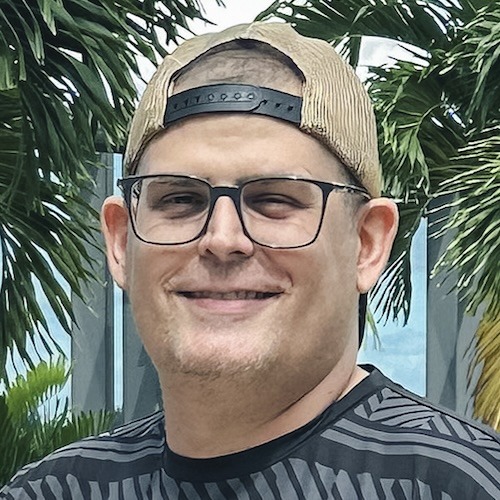
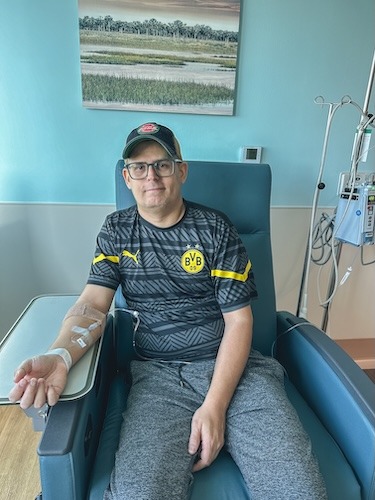
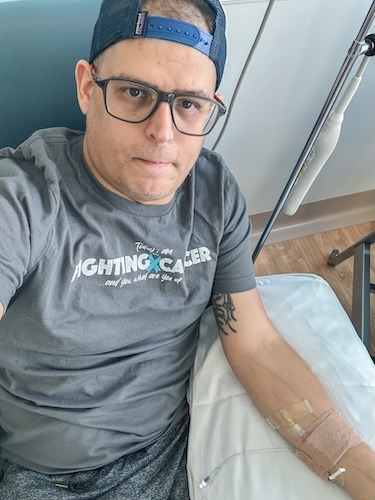
At Memorial Cancer Institute in Florida, Daniel started hormone therapy, followed by six cycles of chemotherapy and then 28 sessions of radiation. This aggressive plan drove his PSA down to undetectable levels. Along the way, he endured side effects like hair loss, cracked and bleeding nails, bone-deep pain, hot flashes, and days when he could barely get out of bed. But he continued to work, learning to slow his pace and listen to his body.
Today, Daniel continues on daily hormone medications with follow-up labs and PSA checks every three months. He lives with the uncertainty that comes with facing metastatic prostate cancer at a young age, while also reshaping his life. He is more intentional about his health. He is building a design studio with Christine, taking more photos, and embracing small moments of joy. Perhaps the biggest change is internal: before cancer, he says he wasn’t afraid to die; now, after cancer and meeting Christine, he’s not afraid to live.
Watch Daniel’s video and read the transcript of his interview for more about his prostate cancer story.
- Listening to persistent exhaustion and joint discomfort, and mentioning them at a routine visit, led to the PSA test that uncovered Daniel’s metastatic prostate cancer.
- A stage 4 diagnosis at 42 brought shock, grief, and fear, but also clarified what mattered most: protecting the people he loves and finding reasons to keep going.
- Combination treatment with hormone therapy, chemotherapy, and radiation dropped Daniel’s PSA to undetectable levels, even as side effects like bone pain, nail changes, and hot flashes disrupted nearly every part of daily life.
- Accepting help from a partner who insists on doctor visits to a compassionate care team can quite literally save a person’s life.
- Over time, Daniel transformed from someone who rarely saw a doctor and pushed through pain to someone who shares his emotions openly, respects his limits, and intentionally builds a life he wants to live.
Daniel’s Diagnosis Facts
- Name: Daniel D.
- Age at Diagnosis:
- 42
- Diagnosis:
- Prostate Cancer
- Staging:
- Stage 4 (Metastatic)
- Symptoms:
- Unusual exhaustion
- Joint discomfort
- Treatments:
- Hormone therapy: abiraterone acetate, relugolix
- Radiation therapy
- Chemotherapy
This is not medical advice. Please consult with your healthcare provider to make informed treatment decisions.
- Daniel’s Diagnosis Facts
- Introduction
- My first symptoms: Extreme fatigue and joint discomfort
- Hearing I had stage 4 prostate cancer
- Being a man with cancer, pain, and vulnerability
- How prostate cancer changed my life, health, and work
- What hope means to me after prostate cancer
- My message and advice for others hearing my story
- Hear from people living with prostate cancer
Introduction
My name is Daniel. I am from Colombia, and I am 44 years old. My diagnosis was prostate cancer. That was two years ago, when I was 42. All the doctors who saw me said, “Oh, you’re very young for that.” I almost got a tattoo with that because everybody was like, “Oh, you’re very young,” or, “Are you coming with someone, or are you the patient?” So it was a weird feeling.
Life before my prostate cancer diagnosis
When I arrived in the US about nine years ago, I was working on everything. I didn’t have a plan, so I was working in construction, I was working in warehouses, I was working with all kinds of work. I was living a very relaxed life, just working and enjoying the weekend when I had something to do, nothing out of the ordinary.
I didn’t feel like I had this energy that everybody normally has, so I was ignoring that. For me, it was normal. That’s how a human is: you work a lot, you’re tired. I didn’t pay attention to that for a long time. Life was like that: I would work and come home. I didn’t have a big plan at that moment.
My first symptoms: Extreme fatigue and joint discomfort
Because I had a very physical job, I was feeling exhausted, and I was finishing my day with zero energy. I didn’t want to do anything. I just wanted to relax, take a bath, and chill. I didn’t feel anything else in me, like any pain or weird stuff. It was just exhaustion. I was drained every day.
On Fridays, I could not even move. I didn’t want to go anywhere. I just wanted to sit down, relax, and lie down. It was difficult for me to do something. Other than that, nothing else with my body felt weird. I had a little discomfort in my joints, so I was thinking, “I walk a lot every day, so that’s probably it.”
I told the doctor, “I need something. I need some vitamins. I need energy for my day-to-day. I need something to boost me up.” That’s how everything started. That’s when I started to feel something weird—something that, in the beginning, I thought was normal—but then I thought, “This should not be normal. I’m very exhausted. Something is happening to me.”
So I asked the doctor, “Give me something, some vitamins or something,” and he said, “Let me do some blood tests to see what I can give you because I cannot give you whatever. I don’t know how you are.” That’s how they started. They found the PSA elevated, and that’s how everything began.
Raising fatigue with my doctor at a routine visit
I felt tired for a long time, and that tiredness became exhaustion. I thought, “I have to do something because it’s too much.” I see people go, “I’m tired, I’m tired,” but those people are doing stuff. I didn’t want to do anything. I just wanted to lie down and take a nap or something. It didn’t feel right.
I went to a yearly appointment. I told my fiancée, Christine, “Ask at least every time I go to the doctor, because I forget everything.” I went there with my list and asked about everything. I didn’t feel any pain. It wasn’t that I had to rush to the ER or something. I just decided, “Let’s do it that day.”
My PSA test led to a prostate cancer workup
The doctor looked at me and asked, “What are you feeling?” So I told him about the joint discomfort and tiredness. He said, “Okay, let me do some blood tests, and whatever your levels are, I’ll look for something to give you.” One of those tests was the PSA.
That was the first test, and it was 0.76. Normally, it’s around 0.4 or something like that. I had 0.76, so it was very elevated. He said, “Make an appointment with a urologist because you have a very high level. Go see him right away.”
Finding a urologist and initial scans
We were trying to find a urologist with an appointment nearby because everybody was saying, “Three months, two months.” It was difficult to find someone. When we finally found someone, the first thing he did was a CT scan. He saw something weird.
He then did the traditional prostate exam that nobody wants to do. It is uncomfortable, but you have to do it. He told me, “You are inflamed and irritated,” or something like that. I don’t remember the exact word. From there, he was a little bit worried, and he said, “We have to do a biopsy and look for a PET scan.”
So that’s what happened: the PET scan and the MRI were the other scans that I had to do. The results started coming back, and they saw that it had spread. It had spread to the lymph nodes and the bones. I had spots in my arm, in my back, and on one of my ribs. It had spread quite a bit. They told me surgery was not an option because it was already past that.
Hearing I had stage 4 prostate cancer
That day, I went to the urologist to receive the results, not thinking it was something bad. I thought, “You have to do this,” or, “Take this medicine and that’s it, go home.” I never expected to receive that news at that moment.
I went there, and I had to wait a while before the appointment, so I became very anxious waiting in that room. I was thinking, “It’s nothing. He was probably already here.” When he started talking to me, he started telling me all these technical medical terms, and I was blocked. I didn’t understand in the beginning what it was.
He was looking very sad, like he didn’t want to give me that news. I felt that. It was not the mood that I knew from him. He gave me the results. He told me it was very aggressive. He gave me a number; he didn’t say “stage 4,” but they number prostate cancer differently. He told me, “The reality is that it is stage 4.”
He gave me the results, told me to try to find an oncologist, and started seeing what they were going to give me. I was blank. I didn’t react at the moment. I was trying to read the letter, the results. I didn’t understand anything — technical medical terms.
I got out of the doctor’s office, sat in my car, and waited, trying to process everything — what just happened. I remember at that moment, I started crying.
Telling my fiancée and my mother
I remember thinking of Christine and my mother. My mother lost my brother about three years prior, and Christine lost her father at the same time. I was thinking, “They’re going to lose someone else.” That was the only thing I was thinking of.
I wasn’t thinking, “I have to do something, I have to go to treatment, I have to find a doctor.” I was only thinking of my mom and my fiancée. That was the main thought I had. I had to breathe because I had to drive. On my drive home, I thought, “I don’t want to go home. I don’t want to give that news to anybody. I don’t want to say anything.” I was very sad at that moment.
I composed myself, drove, and came home. I remember when I came home, I started crying again. I just fell on the floor. When I opened the door, Christine was super happy: “Oh, hello, how was it?” and I was like, “It was bad.” I fell on the floor and started crying again. She was very supportive, trying to lift me and get me up, saying, “Everything’s going to be all right. Everything has a solution.”
She made me feel better at that moment because I had to call my mom. That was the second part of the bad news. At that moment, my mom was living in Colombia. I had to make the call, and you know how moms are. She was very scared, too. She asked, “Are you sure? Do you want to go to another doctor?” I said, “I’m pretty sure they are pretty sure. We have the scans, and we have the results. That’s what it is.”
Choosing a cancer center and setting a treatment plan
We had a friend whose mother was in treatment at Memorial Cancer Institute here in Florida. It’s a new building; it’s very good. She said, “Try to go there. Try to find an oncologist there.” Fortunately, we found one, and they treated me so well there. They spoiled me. They were wonderful.
In the beginning, they started seeing the results, the test results. They said, “We’re going to start with chemo — six chemo sessions — and see what happens with that. Probably we will have to do radiation next, but that’s up to you and up to whatever the results are.”
Before the chemo, I started taking medication — two medications, actually three medications. That was part of the treatment: those medications before starting chemo, because chemo was another thing. We started with chemo. I remember in the second chemo, the numbers dropped a lot. By the third chemo, they said, “The cancer now is undetectable. We recommend you do all six to finish the chemo treatment, but it’s up to you. If you want to stop now, it will be okay, and you continue with the medication, and we follow up every three months, or you can finish the chemo.”
I thought, “Well, I’m already here. I’m already doing this. We scheduled six chemos. Let’s do it. Let’s hit it. Let’s hit it hard and try to take it out. Let’s do it.” So we did six chemo sessions. The numbers were fantastic. We did all the scans and saw the difference between the scans. It was perfect. You didn’t see anything. The numbers now were undetectable. The minimum that the test shows is 0.04, and it was below that. So the numbers were fantastic.
At the end of the chemo, they gave me the option: “You can do radiation. It’s up to you. Or you just continue with your life and your medication, and if something changes in the future, you can do radiation — or you can do it now.” I thought, “Let’s do it now. Let’s continue with the treatment right away. Don’t give the cancer a chance to come back, or maybe in the future I’ll regret it, like, ‘Oh, I should have done the radiation, and I didn’t.’” So I said, “No, let’s go: 28 sessions of radiation.”
I thought, “Let’s do this. I don’t care. My body is already used to chemo.” The radiation was not that bad. That was what we did immediately.
Chemo side effects: Hair loss, nails, skin, and bone pain
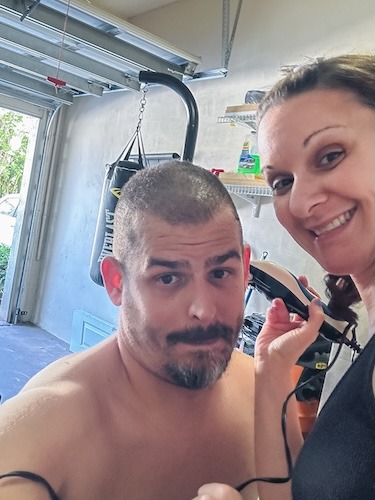
I had a lot of side effects. With chemo, obviously, the first thing we always think about with cancer is the hair loss. By the second chemo, I was grabbing my hair, and it stayed in my hand. I thought, “I have to cut it off. I have to shave it because I’m leaving hair everywhere I lie down.” That was the first thing.
The second thing was my nails. They were loosening. They were weird. They cracked and bled. I work with my hands. I work as a graphic designer, and I work in a warehouse, so everything is done with my hands. I had bandages. I was bleeding all the time. I was hitting myself all the time. Any little hit meant blood. It was complicated.
I was also very dry. My hands were peeling all the time. I had rashes all over.
The doctor was surprised that I continued working because my job was very physical. I was still working, and I said, “Yeah, I have to.” When you do chemo, they give you a lot of medication, and the next day you feel great, like nothing happened. So the next day, I went to work thinking, “Chemo is easy.”
But by the second day, all those medications wear off, and it’s like hitting a wall. You just drop into your bed, and everything hurts. During chemo, I experienced bone pain that I had never experienced in my life. It was bad. When you have this new, hard pain, you don’t know how to describe it.
Christine was asking me, “What is it? How can I help you?” but my brain was still processing the pain. It felt like it was from inside the bone, like a pinch all over, and like an electric current in your body. It’s awful. That was very uncomfortable, but it had a solution with more medication. That one was easier to control.
After the first day, you feel okay. The second day, you have to go to bed: “I cannot do anything.” You feel very weak, and you barely go to the bathroom or stand up. You are very hit by all the medication and everything. It was two or three days like that, and then again, back to work.
Chemo was every three weeks. So it was a couple of weeks working normally, and then the whole process started again. It interrupted everything. It interrupted life: almost the whole weekend, part of the week in bed, and then it started all over again. Then all these weird symptoms in your hands and nails and bone pain.
You have to stop. You cannot lift things with the same strength or go up and down the stairs the same way. You have to keep it slow. That was difficult for me because when I’m working, I get in the zone and I start moving fast. That hit me a bunch of times. I had to stop and breathe because I felt like my heart wanted to get out of my body; it was beating very fast. That was another side effect. They told me, “You’re probably going to feel that,” and yeah, I felt it.
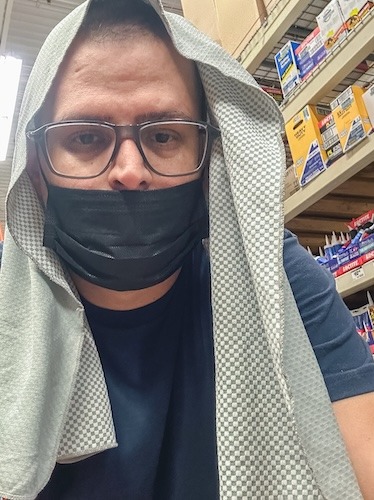
Another thing that still affects my life is the hot flashes. The medicine they gave me, which I have to take every day for probably the rest of my life to control the cancer, gives me hot flashes. I have fans everywhere — small ones, everything. Whatever I find, even a piece of cardboard, I use it because it is awful.
I understand my mom now. Everybody says, “Hot flashes, that’s nothing.” It’s awful. It hits you anywhere, anytime.
Working through treatment and day-to-day impact
These side effects affected my day-to-day life a lot. I kept working, but the doctor was surprised because it was very physical. The cycle was always the same: chemo day, next day feeling okay, then the crash, the bone pain, the weakness, staying in bed, then slowly going back to work until the next chemo.
All the symptoms — the nails, the bleeding, the rashes, the bone pain, feeling my heart race — forced me to slow down. But my personality at work is fast; I get in the zone. So I had to learn to stop, breathe, and listen to my body.
Hot flashes and long-term side effects of hormone therapy
Another thing that still affects my life is the hot flashes from the hormone medication. I have fans everywhere. I use anything — even a piece of cardboard — to cool myself because the hot flashes are awful.
I understand my mom now. People say, “Hot flashes, that’s nothing,” but it’s awful. It hits you anywhere, anytime.
Being a man with cancer, pain, and vulnerability
When I was young, I never went to the doctor for anything — flu, whatever. I thought, “You don’t have to go to the doctor every time.” I started going to the doctor when I met Christine; she has the habit of going to the doctor. She found me a doctor and everything, so I said, “Okay, let’s start doing that.”
I’m not a person who likes to share feelings or how I’m feeling daily. I’m very closed, very quiet, and very shy. But after this, I had to express everything — whatever pain I’m feeling, whatever emotion. I don’t know if it’s because of the medication or everything, but you become very emotional, and everything affects you.
I cry a lot now. I never cried before. Now I cry for everything. I cannot watch a movie because I cry. Sometimes I think a lot about my brother. That hits me even more now. Sometimes, when you start feeling pains that probably are not related, you assume or think, “This pain has to be something about the cancer.” Then you start worrying about nothing.
Sometimes I feel, “Oh my God, the cancer is coming back.” I remember pains I felt before, and I think, “Oh my God, this is the same thing.” So sometimes I worry without any reason. But it’s more about the people who surround me and care for me.
That’s how I did all that treatment and everything. I didn’t want them to lose someone. That was the push, the energy I found every day. Any moment that I feel sad, I just remember those people or look around, and they are there. That reminds me, “This is why you’re doing this. Keep going.”
My current treatment: Daily medications and monitoring
I had to change my care team because of the insurance. This new team took over, and they are continuing with the same treatment and the same medication.
What I’m doing is taking the medication daily, and I have follow-ups every three months. I have labs and tests, and then the next week I have a visit with the doctor. He reviews all the results and asks, “How are you feeling?” It’s a normal checkup. From there, we decide: “Okay, everything goes great, the numbers are good, we can review in three months.” That’s where I am.
The daily medications I’m taking are abiraterone acetate and relugolix. They explained to me that one is a hormone treatment, and the other eliminates testosterone or blocks it, but I don’t remember all the details now. In between those, I take prednisone.
Living without testosterone: What hormone blockade feels like
It’s weird. It’s really weird. You don’t feel the same. You have these “animal thoughts” that you don’t think about any longer. You think less about the physical sexual part. You are a little bit more sensitive.
Obviously, I’m going through a lot, but the rest is normal. The rest is the same thing. It doesn’t make me less of a man. I feel very normal in that sense.
Ongoing PSA monitoring and scanxiety
They look at that number, the PSA number — the levels. If they start moving, they say, “They may go up, go down, so don’t worry. Only worry if they constantly start going up.” If they start going up, we may do another PET scan, for example, and check if it’s moving or growing.
We have the option of changing medication. They say they have different options. The main thing in this moment is the PSA, so they base the treatment on those numbers. Whatever that number’s alteration is, we move forward. But if the number doesn’t change, we don’t change the treatment.
They say cancer never goes away, but at this moment, it’s undetectable — or very minimal or microscopic — or it’s not there. For now, it’s just that: everything is based on that number.
I’ve gone to so many labs and had blood tests that it is now a routine thing to do, the same thing. At that moment, I didn’t feel fear. I just go and do it. But then, when I start receiving the results, I don’t want to open them. I just received them, and I don’t want to look. I’m scared of the number.
I wait a little bit more. Over a couple of days, they send one result each day. When I have everything there, the first one I look at is the PSA. I don’t care about the sugars; I just go for the PSA. If that number is low and undetectable and whatever, then I’m relaxed, and I can see the rest of the results.
The fear is only at that moment when I receive the notification: “PSA results.” At that moment, I didn’t want to see that.
How prostate cancer changed my life, health, and work
Physically, there is obviously a change. Sometimes I feel older. But I try to maintain being physically active. I do exercise, so I feel good with myself, and the rest of my health is fine. I just focus on the cancer and forget about everything else.
In that part, I’ve changed. I am more careful about what I’m eating and what I put in my body. We are on a diet, and the whole family is joining the diet because it is good for everybody. In that part, we’ve changed.
Now I want to enjoy life more. Before, I was work, rest, work, rest, and I was not doing something extraordinary with my life. Now I’m trying to leave my job, which is paying in this moment for my insurance and my treatment, but I created my own business. I’m a graphic designer. I said, “Let’s do this.” Christine is helping me a lot. She’s building this business from the ground up, and we are trying to do what we like and what we enjoy, and not be working in an awful job that is still paying for the insurance and paying me. It’s keeping me alive, but it’s killing me at the same time.
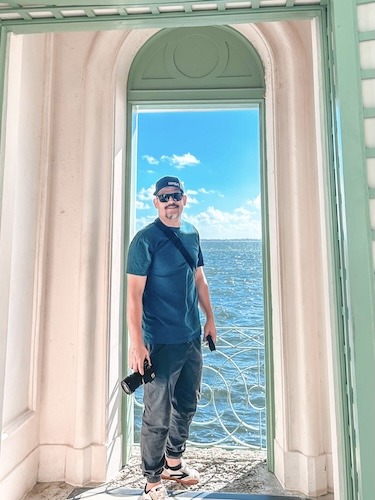
So we decided to start this design studio and start doing it by ourselves. We are doing things every time we can, adventures everywhere, going out. I love to take pictures. If you see a photo of me, I always have my camera in my hand. When I’m in a picture — because normally I am not in the picture, I’m the one taking it — you see me with a camera in my hand.
We’re going out and doing fun stuff all the time. Or if it’s not fun, we make it fun. If it’s a normal place, we’re going to take pictures, so that makes it different. We’re trying to enjoy those little things. They say the cheesy thing, “Enjoy the little things,” but it’s true. You really try to enjoy it. That changed.
What hope means to me after prostate cancer
Hope is big now. Before Christine — before her — I was thinking, if I had cancer and I never met her, I would probably already have been dead. I didn’t have that hope of getting better. I was living a very lonely life.
I was thinking at that time, “I’m not afraid to die. If I have to die, I’ll die.” After the cancer and after meeting her, I’m not afraid to live now. So that changed. That’s hope.
I want to enjoy this life with her and with my family and make my mom happy. All these things that I didn’t think about before. I thought, “If I’m dead, I’m dead. I don’t care.” I didn’t think too much about anything else. Now that has changed.
For me, that’s hope. I didn’t have hope before. I don’t know if that’s something bad or makes me a bad person, but I didn’t expect too much. If something bad happened, that’s life. “I don’t care.” But now I know that has changed.
My message and advice for others hearing my story
I think sometimes you think you know everything and that you don’t need help, that you know yourself more than everybody else, more than anything. Sometimes complaining helps. Sometimes saying something helps.
I never went to a doctor, so listening to someone who loves me and who told me to go to the doctor — that’s not bad. Go do it. I started with that, and it saved my life.
My advice is: don’t be stubborn. Let yourself be helped by others who love you. I don’t know — everything has a solution and everything happens for a reason. I’m not the most religious person, but I believe in someone who is guiding us to a better life, and I’m following that life. I needed help from someone else, and I’m grateful to have her by my side.
Gratitude for my care team and ringing the bell
The Memorial Cancer Institute is great. They always made me feel great every time I went there. From the security guy to everybody, they were very nice to me.
I remember the nurse who started my first chemo was the one who did the last chemo because they rotate the nurses. I remember I was nervous and scared: “What is this going to be like? How do you do it? Where are you connected? How is it?” She was very nice, very calm, and helped us go through the process.
At the end, when she finished the process, and I was already going with the flow, and I knew how the chemo process was, she was there to ring the bell — the gong — and to finish the whole therapy. That was a very good thing to have.
By the end of the radiation, in the last session, my mother was here. It was very nice to have her hit the gong again and have her by my side, too. It was very nice because she wasn’t part of the chemo process, but then she came for the radiation process. That was very nice.
This interview has been edited for clarity and length. The views and opinions expressed in this interview do not necessarily reflect those of The Patient Story. This content does not replace professional medical advice.
Inspired by Daniel’s story?
Share your story, too!
Hear from people living with prostate cancer
Real experiences with diagnosis, treatment choices, side effects, and life beyond prostate cancer — in their own words.
Leave a Reply