
Twice Diagnosed, Fully Empowered: Ali on Stage 4 Cervical Cancer, a Radical Hysterectomy, and the Pap Smear That Could Save Your Life
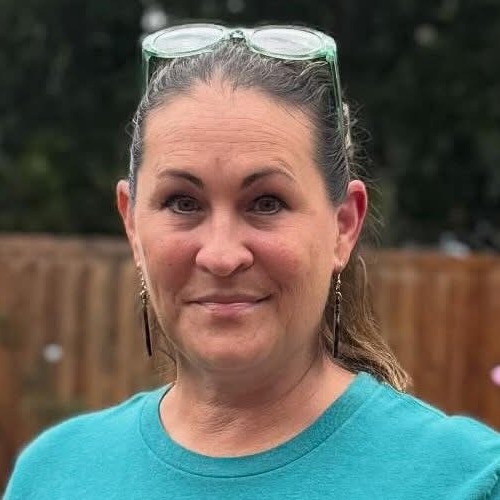
Ali’s cervical cancer recurrence story is unlike most. Her first diagnosis came with no symptoms at all. Ali was 29 when an abnormal Pap smear during her pregnancy led to a cone biopsy and, ultimately, the word she never heard directly from her original doctor: cancer. Diagnosed in 2006, she underwent a radical hysterectomy performed by a gynecologic oncologist she describes as the doctor that every woman deserves. The surgery was scheduled for the day after Mother’s Day, her second one as a mom.
Interviewed by: Taylor Scheib
Edited by: Katrina Villareal
What followed was not a clean ending. In late 2008, Ali began experiencing persistent nausea, fatigue, urinary incontinence, and a vague but unrelenting sense that something was deeply wrong. It was her chiropractor who palpated her abdomen and found a tumor on her left ureter. The disease had returned as a metastasis, compressing her ureter, backing up her kidneys, and sending her toward renal failure. This time, the cervical cancer demanded chemotherapy and radiation.
Treatment for her recurrence was grueling and unconventional in its scheduling: weekly overnight hospitalizations for cisplatin-based chemotherapy from midnight to 8 a.m., followed directly by radiation — all while Ali continued broadcasting her morning radio show six days a week. At the advice of her oncologist, she kept working. She shared her diagnosis openly on air. Years later, strangers still stop her to say they got a Pap smear because of what she said on the radio.
Beyond the physical experience, Ali also navigated profound grief over losing the ability to have a second child and the isolating silence around gynecologic cancer that she has spent years dismantling.
Today, Ali is years out from treatment, an advocate who talks to strangers in grocery stores, champions tools like Teal Wand for trauma-informed cervical screening, and pushes for annual Pap smear access for every sexually active woman. Her message is direct: you are the most important person in your healthcare story, and you have every right to say so.
Read with Care
This content includes discussions of reproductive trauma and mental health crises. Please read with care.
Watch Ali’s video or read the edited transcript of her interview to find out more about her story:
- Cervical cancer can be entirely asymptomatic. Ali had no symptoms at either diagnosis. Her recurrence was discovered during a routine chiropractic visit, not a scheduled oncology follow-up. Regular Pap smears are not optional; they are life-saving.
- Patients always have the right and agency to seek a new doctor. When Ali’s doctor avoided saying the word “cancer,” she calmly removed him from her care team.
- The “hero cancer patient” myth can be a heavy thing to carry and isn’t for everyone. Ali is candid that there were days she prayed for death, a truth that rarely fits the narrative we tend to tell about illness.
- Long-term side effects, like neuropathy, dental damage, and emotional trauma, are rarely discussed and deserve more visibility. Insurance covered Ali’s cancer care but refused her $30,000 chemo-related dental bill. These gaps are systemic, not personal failures.
- Grief after infertility from cancer treatment is real, layered, and valid. Ali grieved not just the child she didn’t have, but the future she had imagined, which is common for patients who experience treatment-related loss of fertility or bodily autonomy.
- Ali’s transformation to a vocal, community-embedded advocate. She ensures other women know their options, know their doctors, and know that no test result should be delivered over the phone with a recommendation to have a hysterectomy.
Ali’s Diagnosis Facts
- Name: Alicia (Ali) R.
- Age at Diagnosis:
- 29
- Diagnosis:
- Cervical Cancer
- Staging:
- Stage 4 (Metastatic)
- Symptoms:
- General malaise
- Fatigue
- Persistent nausea
- Urinary incontinence
- Treatments:
- Surgeries: radical hysterectomy, ureteral stent placement
- Chemotherapy: cisplatin
- Radiation therapy
This is not medical advice. Please consult with your healthcare provider to make informed treatment decisions.
- Ali’s Diagnosis Facts
- Introduction
- How I was diagnosed with cervical cancer during pregnancy
- Being told to have a hysterectomy and what no one said out loud
- Navigating grief, recovery, and life after radical hysterectomy
- The emotional identity crisis of being a cancer survivor without chemotherapy or radiation
- Symptoms return: The recurrence discovered by a chiropractor
- Hearing “You have cancer” a second time
- What chemotherapy and radiation for cervical cancer actually look like
- Going public with my diagnosis on air
- Long-term side effects of cervical cancer treatment
- Dismantling the “hero cancer patient” myth
- Living with scanxiety: Never feeling safe again after cancer
- Grieving infertility: Healing from not being able to have a second child
- Why cervical cancer awareness and education matter
- Hear from people living with cervical cancer
Introduction
I’m Ali, and I’ve had cervical cancer two times. I was initially diagnosed in 2006 and experienced a metastasis in 2009. I live in Lafayette, Louisiana.
How I was diagnosed with cervical cancer during pregnancy
I had no symptoms. While I was pregnant with my daughter at 28, I had a Pap smear that came back as abnormal. The doctor wanted to do a colposcopy, and he did. He then told me it was fine, there were no problems, and it was probably just hormonal abnormalities due to pregnancy.
Fast forward to the month before my 30th birthday, and I got a phone call that I needed to come in for a conversation about another abnormal Pap smear, but that it was no big deal, and we’d just see what happened. I went in, and they did a colposcopy in the office. The week of Mardi Gras, which is a big deal down here, he called to say he wanted to see me for a cone biopsy. He literally said to me, “Don’t worry about it. It’s not a big deal. I just want to see where these wonky cells are coming from.” I was in the middle of switching health insurance, so I asked if I could put it off. He said, “Oh yeah, it’s not a big deal. Don’t worry about it. We’ll see you in a month or two when that’s set, and then we can do it then.” His office called me pretty frequently throughout those two months, which I should have taken as a sign.
I finally had the cone biopsy done. On Good Friday 2006, I was on the air doing my morning show, and during a break, I called the office, as I had been instructed, to set up an appointment to go in for my results. The doctor himself got on the phone and said, “Oh, hey, Miss Ali, you’re going to have to have a hysterectomy.”
Being told to have a hysterectomy and what no one said out loud
As a child of the ‘80s, the big trope on television was the storyline of the wife character not being able to have kids, which had always been my greatest fear. I told him that was my greatest fear. For that to be how I got told was one of those definite signs that we don’t take women’s healthcare and feelings into consideration.
I excused myself from the rest of my show that morning. I went home. At the time, my mom was working late nights, so she was available during the day. We were farming at the time, so my husband was in the field. We went to the doctor’s office. Throughout the entire conversation, he never once said the word “cancer.” It was a lot of colloquialisms and talking around it. But what finally happened is he said, “You’ll have to go and have a radical hysterectomy. I’m going to send you to my mentor,” who was the only gynecological oncologist at LSU at the time. He was sending me to an amazing doctor: Dr. Giles Fort from Baton Rouge.
Meeting my gynecologic-oncologist and making the hardest decision
Being that he was my doctor’s mentor, I was a little worried. But I set the appointment with Dr. Fort, and my doctor said, “I’ll help with the surgery,” all the stuff you normally hear from your personal physician when you get referred to a specialist. That happened on Friday and I was in Dr. Fort’s office by Tuesday.
We had just started discussing having another baby. Our daughter was two. We wanted one more. Dr. Fort was amazing. He didn’t baby me. He didn’t talk down to me. He wasn’t condescending. He’s the doctor that every woman deserves, to be honest with you. He’s kind, intelligent, and supportive, but also honest and straightforward.
I asked him, “We want another baby. If I were to get pregnant tomorrow, what would happen?” He flat out said, “You can do whatever you want, but if you decide to get pregnant now and put off treatment, your survival rate goes from 90% to 40%.” I realized in that moment that it wasn’t fair of me to expect my family to tolerate that kind of risk.
I had a two-year-old that needed me, a husband that wanted me to be around, my mom, and all of those people. I made my decision at that point.
The night before surgery: A Mother’s Day moment
My surgery was scheduled for the day after Mother’s Day in Baton Rouge. We were staying with friends who lived across the street from the hospital, and my daughter had just finished breastfeeding within the last couple of months. The night before the surgery, people were trying to be super kind and supportive, but as you can imagine, it’s a pretty rough way to spend Mother’s Day, especially since it was only my second one.
I was ready to go to bed. I went upstairs to the room I was staying in, and my daughter came upstairs and asked to nurse, which she hadn’t done in about three months. Of course, I wasn’t going to say no, especially that night. She nursed on one side, pulled back, nursed on the other side, and pulled back. She pulled my shirt down, patted me, and said, “All done, Mama.”
I loved being pregnant. I had an amazing pregnancy. I loved my delivery; it was exactly what I ever wanted. It was a dream come true. Nursing my baby for two years was perfection. In that moment, for it all to be gone was rough.
Navigating grief, recovery, and life after radical hysterectomy
It took me a long time to let go of the resentment toward other women. I eventually stopped going to a regular gynecologist because I couldn’t be in an OB-GYN’s office anymore. I sat next to too many women who were complaining about being pregnant, talking about how miserable they were, and how much they hated the experience. I couldn’t do it anymore. Luckily, I found a good provider.
That year was rough. A few months before my surgery, we moved in with my mom. Hurricane Katrina had hit New Orleans, so we sold our house to somebody who had moved to our area. We were living on a futon in my mom’s living room at the time, so recovery was a little tricky. We spent the entire summer shopping for a house, found a house, and renovated it — all in that year.
Surgery, recovery, and the catheter lesson in trusting experts
Dr. Fort was so wonderful. Because I was having some minor complications, I stayed in the hospital for an entire week, which is unheard of for a hysterectomy, but it was a radical hysterectomy. Everything’s gone.
I went home with a catheter because this specific doctor sends his post-hysterectomy patients home with a catheter for two weeks. I felt like it was inhibiting my healing because I didn’t feel like I could get up and walk around. I called his office and talked to his nurse.
Bless her. She listened to my complaints and said very plainly but very kindly, “You are not special. He does this because this is what he does, and he knows what he’s doing. This is what’s going to happen. You’re going to keep that catheter in for another week and a half, and when you come to see him, when your body has healed, he will take it out.” Honestly, as much as we do talk about and do need to focus on being listened to, sometimes we have to take a breath and realize that the experts are experts for a reason.
The emotional identity crisis of being a cancer survivor without chemotherapy or radiation
They decided that no medical follow-up was necessary. The margins were good, and that was fine. I had this very weird existential crisis after that. I didn’t consider myself a cancer survivor because all I had had was surgery. I didn’t have chemotherapy. I didn’t have radiation therapy. I didn’t have anything. I wasn’t even getting follow-ups. Nobody was tracking any of my labs.
People were always asking me, “Nobody is having you come in on the regular. What’s going on?” I was like, “I don’t know. I’ve never done this before. I don’t know what I’m supposed to do.” I learned to be happy with what you’ve got. Don’t tempt fate.
Symptoms return: The recurrence discovered by a chiropractor
Fast forward to the end of 2008, and I started not feeling well. I was experiencing general malaise and wasn’t feeling good. I was tired all the time and nauseous. I worked less than two miles from my home, but I had to pull over between my house and the office to be sick on the side of the road.
It kept getting worse. I’m going to be 100% transparent, because these are the things people need to hear. I was wetting the bed. I was having trouble sleeping through the night. My poor husband never expected that to be a regular occurrence. I was at a chiropractic appointment, talking to my chiropractor about what was going on and how I was feeling, and he said, “When was the last time you talked to your doctor?”
To backtrack, I did not have any chemotherapy or radiation after my first surgery. I was told by Dr. Fort that my margins were clear enough and that they didn’t see the need to do any kind of post-operative treatment. After my six-week checkup, he was like, “Bye. Hopefully, I’ll never see you again,” which was something that was very weird to me, because you always hear about people getting tested regularly.
My chiropractor palpated my abdomen and found the tumor on my left ureter.
Hearing “You have cancer” a second time
Immediately, when Dr. Fort said I had a metastasis, I immediately imagined Rizzo from Grease as a cancer cell, hanging out in her pink lady jacket, smoking a cigarette, being like, “Ha! We’ve been here this whole time.” That was my initial reaction. My secondary reaction was, “S***. What next?” At that point, I shut down emotionally and went into it pragmatically. What’s the next step?
There was a lot of, “Well, we can talk about it in a month,” and I was like, “No. We’re going to talk about it now. This is my second rodeo. You were apparently wrong the first time about it not being as invasive as it was. It’s back and it’s making me very sick right now, so we’re not going to wait. We’re going to take care of it now. It’s Thanksgiving. You have a week to make appointments. Let’s get this on the road. I don’t want to be waiting at all.”
I started owning my experience at that point.
Kidney failure, a new diagnosis, and starting chemo before Christmas
I didn’t understand at first. I could understand why it was making me wet the bed, but why was I getting sick? He said, “I’m guessing that it’s crushing your ureter.” Dr. Fort did a biopsy. I had a stent placed. Basically, what was happening was it was causing my kidneys to back up and sending me into kidney failure, so I was getting sick because I wasn’t able to process urine and get rid of all the waste.
I was paired with a urogynecologist, went back to Dr. Fort, and was also paired with a radiation oncologist and a medical oncologist. This all happened between Thanksgiving and Christmas 2008, and I had my first round of chemo the week before Christmas.
It’s crazy how getting sick makes the people in your life go crazy. The first time I was diagnosed, I lost several friends because they couldn’t handle me being sick. It was too much for them. Some of them didn’t know how to handle it because it wasn’t something they were accustomed to. And some of them wanted to be the savior and the star of the show when it came to taking me to treatment, picking me up, or getting me things.
What chemotherapy and radiation for cervical cancer actually look like
Cervical cancer responds to different chemotherapy drugs than other types of cancer. My particular chemotherapy regimen was cisplatin, and the other additives that were in my regimen work in conjunction with radiation. My chemotherapy and radiation treatments had to be done within a certain amount of time of each other each week.
Once a week, I was admitted to the hospital and stayed overnight. I would receive chemotherapy from midnight to 8 a.m., and then go directly to radiation after.
I was still at work every day on the air from 6 a.m. to 10 a.m. I get my radiation and I go back to the office to do my promotional stuff, including events and public appearances. I was still working full-time.
I asked Dr. Fort if I should stop working, and he said, “No.” People who do that don’t survive. They basically stay home, and they’re sick all the time. I followed his advice and still worked my 10- and 12-hour days.
Going public with my diagnosis on air
I’m so glad that I was doing the job I was doing while I was sick. Even now, 12 years out from that job, I do a lot of stuff in the community. I still have people come up to me and say, “I remember listening to you when you were sick. I went and got a Pap smear because you told me to. I went and got a colonoscopy because you prompted me to. I went and got this checked out.” And that’s just the people I’ve talked to.
I was so open about it on the air as much as I could be. I’m super grateful for that experience and that I was able to do that. I think it’s important because we don’t talk about that stuff. Especially with gynecological cancers, there’s a stigma when it’s potentially related to a sexually transmitted infection (STI) or anything like that. I’ve had several friends tell me that they didn’t want to get a Pap smear because they didn’t want to know. And I have told every single one of them: your kids are not going to be happy about that. Go and get a Pap smear.
What cervical cancer treatment was like
Chemotherapy and radiation were hard. I remember being in radiation one day and they were asking how I was feeling. Pelvic radiation is the worst experience ever. One of my radiologists asked, “What does it feel like? Tell me about your pain.” I said, “It feels like somebody took a bottle brush and rubbed my undercarriage raw, then poured gasoline on it and set it on fire.” She looked at me and said, “So, a ten?” Yes, a ten.
It was also very weird being in a public job at that time. I’m in super vulnerable positions, literally wearing nothing below the waist with a robe on, with people poking, prodding, lifting, separating, and looking, and then talking to me about what they heard me talk about on the air that morning. It was very weird to have people that intimately in my life and also in my job.
During the winter months, I was hospitalized quite a bit, beyond the weekly hospitalizations for chemo. I got the bird flu during that whole experience. I felt worse than I usually felt. We went to the ER, they took my temp and I was at 104°F. I had to have several blood transfusions. Now I can say I’ve survived the bird flu as well as COVID.
Cisplatin doesn’t cause you to lose your hair, so while I was going through all of these things and still going to work every day, nobody knew I was sick.
For me, the worst part was losing so much weight that my 150-year-old family heirloom Tiffany diamond engagement ring disappeared. I lost it somewhere because it was cold and I had lost so much weight. I went to fiddle with it one day and it wasn’t there. Those are the little things that people don’t think about. Nothing fits. Your jewelry doesn’t fit. Your clothes don’t fit. Your shoes don’t fit. And then after everything, you’re left with the long-term side effects that nobody talks about either.
Long-term side effects of cervical cancer treatment
I have neuropathy in my feet and fingers, and one that nobody ever talks about: dental issues. Insurance covered my entire healthcare for cancer, but chemotherapy also damages your salivary glands, so further down the line, you have substantial tooth decay and dental issues. I was looking at a $30,000 dental bill that insurance said, “We don’t do that. That’s not our problem.” We went out of the country and took care of it for a much lower cost.
But the fact is that those are things that nobody talks about: neuropathy, dental work, and how your hair grows back differently. My hair grew back coarse and curly. A very dear friend of mine had dyed and permed her hair her entire life, and then when she was recovering from breast cancer, it grew back blond and curly on its own.
Dismantling the “hero cancer patient” myth
It’s frustrating to watch the media we’re trained by socially about the hero cancer patient and how she never complained. It’s so unfair, especially to women, because we have to have that space. We have to have the ability to say, “This is not a good day. This is not a good experience. This is not fun or easy.”
When we build that expectation, women don’t feel like that is a real reality of it. They don’t feel like they can talk about how much pain or discomfort they’re in. We’ve created this idealized cancer patient.
There were days when I prayed for death. Having a support system is important. Having a sense of humor is important. But also giving yourself grace is important because, again, we specifically as women are trained to do it all, support it all, and push through it all.
If I were the age I am now, I wouldn’t have pushed myself as hard. I would have worked my regular eight hours and gone home. I would have taken care of my body more. I would have said no to more things. But I did what I knew how to do at that time.
Read with Care
This content includes discussions of reproductive trauma and mental health crises. Please read with care.
If you are struggling or feel overwhelmed, you’re not alone. Support is available:
– 988 Suicide & Crisis Lifeline (US): Call or text 988 – 24/7 free and confidential
– National Alliance on Mental Illness (NAMI): 1-800-950-NAMI (6264) or nami.org/help for non-emergency support
– Crisis Text Line: Text HELLO to 741741
Advocating for myself at the surgeon’s office
When I was told that I was going to have chemotherapy weekly, it was recommended that I get a port, which I expected. I went to the surgeon’s office for a 2:30 p.m. appointment and no fewer than 35 people were in his waiting room. I sign in and as I sit and wait, very few people are moving through.
At 5 p.m., his receptionist pops her head through the sliding window and says, “Okay, if you haven’t been seen today, we’re going to have to have you come up and reschedule.” I am nothing if not petty as hell. When I got up to the window and gave her my name, she said, “When do you want to reschedule?” I said, “I don’t.” She asked, “Why? Aren’t you here for a chemo port?” I said, “I am. I know there are other options. You guys are apparently way too busy to take care of me, so I will find something else.”
I took ownership, called my oncologist, and said, “This is what happened. If he’s too busy to see me for a consultation, he’s too busy to care for me. What can we do instead?” I got a PICC line and it was rough, I’m not going to lie. But at the end of the day, I don’t have a scar. I didn’t have to have a port implanted.
Managing the PICC line and caring for my care team
I had a couple of infections, but we dealt with them. I learned how to flush my PICC line and manage it myself. It was an interesting experience because all of this was before social media. When I had my PICC line placed, I had my mom take pictures of the whole process. They were like, “What are you doing?” I was into scrapbooking at that time, so I have a scrapbook somewhere of me getting my PICC line placed.
It was a super interactive experience. They put it in and asked how it felt, and then I heard a rushing sound. They’re like, “You’re not supposed to hear that,” so they had to do it again.
Because it was the holidays and my mom has worked in the health field my entire life, I’m very particular about my nurses. I made sure to take Christmas cookies and chocolates for them at Christmastime. As the holidays tapered down, I made sure to take something every night that I went to feed them. They’re taking care of me, so I want to make sure they’re cared for.
Living with scanxiety: Never feeling safe again after cancer
It’s a club I never wanted to be in. I could have gone my entire life with just surgery, so it was very jarring to get that second diagnosis. I’ve had a couple of scares since then. Every time, you think you’re fine, and then it just hits you like a truck. You never feel safe again.
After my first mammogram, apparently, I have a muscle that only 1% of humans have, right in the mediastinal area. We went on a three- or four-week process of, “You have a mass. We’re going to have to do this and this and this.” Finally, they did another mammogram and said, “Oh, that’s just that muscle. Never mind. You’re fine.” It was the most terrifying month of my life. Every time I have a migraine, every time I have a stomachache, every time something feels not right, I get terrified.
Grieving infertility: Healing from not being able to have a second child
I always wanted a career, but I always knew that I wanted to be a mom. Having kids was first and foremost what I wanted out of life. When I was pregnant, I played the “Chicago” soundtrack to my tummy the entire pregnancy because I wanted to make sure she liked what I liked. Not only did she fall in love with that, but she fell in love with a lot of the same things that my husband and I love, because we are both theater nerds.
For the first 10 years, not being able to have a second child was super painful. I’m not even going to pretend it wasn’t. It was such devastation. It had nothing to do with how much I love my husband and my daughter. But it was grief for the life I always envisioned for myself. It was grief for my daughter not having a sibling. It was grief for not being able to provide the family I’d imagined.
As we grew, as my daughter got older, and as we began to experience the things that we loved together, I realized that there were a lot of things we wouldn’t have been able to experience had we had even just one more child. There were a lot of things we wouldn’t have been able to do if we’d had the two or three more kids that we talked about.
Watching my daughter grow up and how that healed my grief
As a mom, I loved my child as a baby. She already knows this, but I was always waiting for her to be my peer. I couldn’t wait for that. I always treated her as though I was raising an adult, not a child, because I always wanted her to be independent, strong, brave, and all of those things.
Being able to see her as an adult now, as someone who is her own self, and as a human being completely separate from me brings me so much joy. She is exactly what I needed. She is every child I could have ever had, all rolled into one. She is soft, quiet, kind, and loving; she’s also bold, brash, and rough as hell. She is all boy and all girl. She is terrifying and awe-inspiring all at once.
I literally could not ask for a better child. I could not ask for a better friend. She has turned into way more amazing than I could have ever hoped for, and that has definitely eased some of that grief.
I do still grieve for her not having a sibling because I have a brother and my husband has a brother. But then at the same time, she’s gotten to be a spoiled only child, so it’s a little bit of everything.
When I was in chemotherapy, I would be knocked out, completely exhausted, sick, and obliterated. She would come in from her bedroom, touch me, and say, “Are you okay, Mama? You good? Okay, bye,” then she’d go back in her room and entertain herself.
I woke up from a nap one day and, at three years old, she poured herself a cup of milk from a gallon. She’d gotten a stool, taken the milk down, and put the cup in a bowl so she wouldn’t make a mess. It was a whole thing. She never ceases to amaze me. For me to be sad that I didn’t get to have another child seems like a waste of my energy, because she is more than I could ever have hoped for out of four kids.
Why cervical cancer awareness and education matter
When I first got diagnosed, the only people who knew anything about cervical cancer were people in medicine. Women were not talking about it. I just knew that you get a Pap smear every year. I don’t know what it’s for, but I do it.
Nobody was talking about cervical cancer. We knew about ovarian cancer. As a child of the ‘80s, Gilda Radner dying of ovarian cancer was a huge thing for me. Both of my grandmothers had cancer. I was that weird kid who was like, “I’m going to have cancer. I just know it.” Neither one of them had gynecological cancer, so I wasn’t surprised at my first diagnosis. I was just surprised by what it was.
The human papillomavirus (HPV) kept coming up in my research, and I want to be very clear: I would not have any problem disclosing my HPV status, but I don’t have HPV. I just got cervical cancer. I guess I’m special.
But I did have people talk to me about how they got an HPV diagnosis and were afraid to share it with their partner, afraid their families would judge them, and afraid that if anybody knew, it would be hard for them. That made me sad. In the post-AIDS stage of sexual health, we are still worried about stuff like that. HPV is common to everyone. There’s almost no one in the world who doesn’t have it. For people not to be accessing regular testing and treatment because they’re worried they might lose their partner or their family might judge them, it was scary and disappointing.
The case for annual Pap smears and accessible women’s health care
I want to make sure that women understand it’s important to get that Pap smear and to see a gynecologist in general. I work with a lot of Gen Z folks, and a lot of the younger women are not getting their Pap smears for a variety of reasons.
One: if you have health insurance, a lot of insurance companies are now saying to get a Pap smear every two years, sometimes even three. No, you need one every year. We should be advocating on the legislative level for women to be able to access that test every single year once they’re sexually active. It’s important to get tested, whether you’re gay or straight.
There’s also the cost issue. A lot of women access free clinics and local health clinics, and we’re seeing a lot of pushback on funding to those organizations because people don’t understand what they do. Having loud voices out there talking about that is important.
I’m also thrilled with Teal Wand and what they’re doing. I shared their videos several times because I am absolutely flabbergasted and excited about it. It puts what I would consider not just financially helpful, but trauma-informed care in women’s hands — the ability to access a Pap smear. I know for myself, having any kind of pelvic exam now is very traumatic. I know it has to be done, and I’m just traumatized from having cancer.
Pap smears and pelvic exams are traumatic for women. For women who have suffered sexual assault or difficult birthing situations, having the Teal Wand as an option is extremely important. It’s the epitome of trauma-informed care when it comes to gynecological health.
Finding gynecologists and empowering women in the community
Women don’t know about these things. Any time I talk to anybody, it’s amazing how often this comes up. I ask women all the time: “When was your last Pap smear? Who’s your doctor?”
We live in a fairly small town of only 100,000 people. For a while, I was working in the birth industry. I went to school to be a midwife, and I was working in hospitals doing doula work, working with different OB-GYNs. I’m pretty familiar with the doctors in our area. I’m able to give women recommendations. Women who don’t need an OB anymore but just need a GYN, I’m able to recommend, too, because that’s who I see. A lot of women don’t even know that a GYN exists.
A final message: Women deserve better and we have to fight for it
Having women know and giving them that information is so important, because we shouldn’t be so scared to take care of our own bodies. We’ve spent too long being bullied, ignored, or dismissed by the healthcare industry as a whole, specifically in the obstetrical and gynecological arena. It’s important to make sure that women feel empowered to say, “Hey, this is what I need.”
There should be no reason somebody has progressed cervical cancer at this point, with the available tests and the options that are out there. If somebody is scared, shoot me a message. I’ll hold your hand. I’ll find somebody where you live. We’ll go with you.
It’s so important for us to act as a community. We don’t want to ask for help. I didn’t, and I still struggle with that. But it’s important to do that, because we have to support each other. Sometimes that looks like sharing a video about Teal Wand or talking about my experience like this. Sometimes it’s me talking to somebody in the grocery store and making sure she gets a Pap smear.
Inspired by Ali’s story?
Share your story, too!
Hear from people living with cervical cancer
Real experiences with diagnosis, treatment choices, side effects, and life beyond cervical cancer — in their own words.

Leave a Reply