
Navigating Stage 4 Breast Cancer: Betty’s Experience with Bone and Liver Metastases
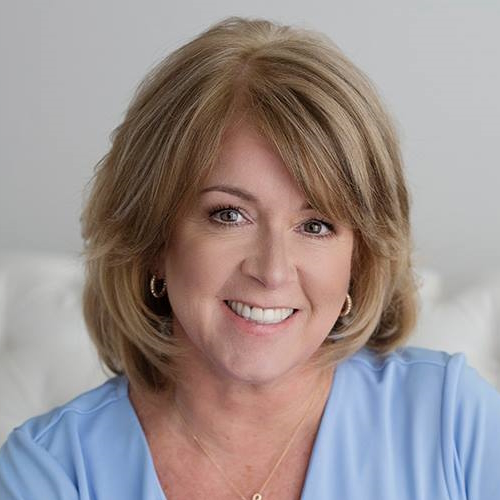
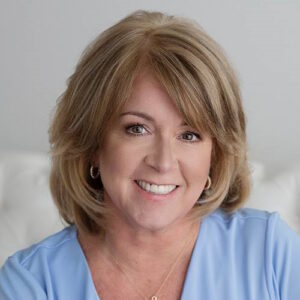
Betty Jean, a former educator, was initially diagnosed with stage 2 breast cancer in 2019 and underwent a standard treatment regimen of surgery, chemotherapy, radiation, and hormonal therapy. Believing she had reached survivorship, she returned to her active lifestyle and consulting work. However, in 2023, lingering severe back pain led to a devastating discovery: She had multiple fractured ribs and spinal lesions. She was living with stage 4 breast cancer with bone metastasis. Finding herself suddenly dealing with a terminal condition, Betty Jean had to completely reframe her understanding of what “terminal” can mean to her health, learning to view metastatic breast cancer as a chronic disease that must be managed through continuous medication.
Interviewed by: Tory Midkiff
Edited by: Katrina Villareal
Trusting her medical team, she immediately started targeted therapies, including zoledronic acid infusions to rebuild her deteriorating bones, fulvestrant shots to target estrogen, and ribociclib. For two and a half years, these treatments kept her stable with no evidence of active disease, allowing her to travel extensively and maintain a high quality of life. She embraced lifestyle changes and exercise to support her bone density, navigating the harsh realities of monthly blood work, echocardiograms, and routine CT scans.
A severe fall downstairs in 2024 fractured her spine. More challenging news followed, when her routine scans revealed her cancer had progressed to her liver. Her medical team determined that her cancer had mutated, or changed, making her previous targeted therapies ineffective. As a result, her oncologist shifted her treatment plan from targeted therapy to systemic chemotherapy, prescribing oral capecitabine.
Despite the difficult side effects of capecitabine, such as hand-foot syndrome, Betty Jean found ways to adapt, lowering her dosage under medical supervision while maintaining the drug’s efficacy. Today, she continually advocates for herself and utilizes both conventional medicine and lifestyle modifications to manage her stage 4 breast cancer. She focuses on living fully in the present, relying on her medical team, self-care, and a strong support system to navigate the ongoing uncertainties of metastatic disease.
Watch Betty Jean’s video or read the edited transcript of her interview to find out more about her story:
- Pay attention to new, persistent pain, especially in the bones. Betty Jean’s stage 4 breast cancer was discovered only after she insisted on getting an X-ray for lingering back pain, which revealed fractured ribs and spinal lesions. Do not dismiss new physical symptoms, even if your recent routine scans came back clear.
- Communicate with your oncologist about managing severe side effects. When Betty Jean developed painful hand-foot syndrome from chemotherapy, her medical team lowered her dosage and scheduled treatment breaks. Adjusting the dosage can often provide symptom relief while still maintaining the drug’s cancer-fighting efficacy.
- Embrace self-advocacy as the foundation of good health care. Whether it’s asking detailed questions about treatment plans, coordinating care across different countries, or initiating end-of-life planning, advocating for yourself is vital. No one is more invested in your health than you are, so do not be afraid to be a “questioner” in the medical system.
- Shift from seeking a cure to managing a chronic illness. Initially treated for stage 2 breast cancer with the expectation of being cured, Betty Jean had to completely reframe her mindset upon her stage 4 diagnosis. She learned to embrace her metastatic disease as a chronic condition, focusing her energy on extending her life and adapting her daily routines to prioritize joy.
Betty Jean’s Diagnosis Facts
- Name: Betty Jean A.
- Age at Diagnosis:
- 55
- Diagnosis:
- Breast Cancer
- Staging:
- Stage 4 (Metastatic)
- Biomarker:
- ER
- Mutations:
- PIK3CA
- ESR1
- Symptom:
- Lingering severe back pain
- Treatments:
- Surgery
- Chemotherapy: capecitabine
- Radiation therapy
- Hormonal therapy: fulvestrant
- Targeted therapy: ribociclib
This is not medical advice. Please consult with your healthcare provider to make informed treatment decisions.
- Betty Jean’s Diagnosis Facts
- My first breast cancer diagnosis in 2019
- “Am I going to die?”: Navigating stage 2 breast cancer and treatment plans
- A broken back and a devastating turn: Discovering stage 4 bone metastasis
- Targeted therapies and vulnerability: Embracing the new Betty Jean
- Sharing my story: From a morning blog to writing a book
- Scanxiety and game day: Celebrating two and a half years with no evidence of active disease
- When the cancer progresses: Facing liver lesions and cancelled surgery
- The Serenity Prayer: Navigating good scans, lowered dosages, and genetic mutations
- Sharing the hard news: Being sucker punched by liver metastases
- Building capacity for pink sisters: My message on living fully
- Hear from people living with breast cancer
My first breast cancer diagnosis in 2019
My name is Betty Jean, and I live in Nova Scotia, Canada. I was diagnosed with my first diagnosis of breast cancer in 2019. Before my diagnosis, I was a teacher and a principal. I also worked for the ministry. I then went on and worked for the teachers’ association of our province and built capacity within teachers. There was a lot of traveling and a lot of support for teachers in conferences and workshops. My job was to support them in their professional learning. My family was very supportive of my role. It included working with individuals who were having difficulty in the classroom.
Honestly, I can say I would go back to being a teacher and that everything I have done in my life is to build capacity within others. Whether that be a child, a youth when I was the principal of a junior high, or when I taught at university to support students, it was all about building capacity. I have very high energy and very go, go, go. One might say I have a type-A personality.
I grew up in a very big family. I learned very early on in life that conflict is inevitable and combat is optional. I bring to the attention of many that growing up in a large family actually was a blessing and taught me about the variety of people, their preferences, and their differences, but that we can always maintain communication as long as we realize that we both have a voice.
Putting cancer aside: A mammogram and a mission in Nunavut
I was diagnosed one month after I retired from my professional career. I had started a consulting business and was booked to go throughout Canada. My first trip was to Iqaluit, which is in the Northern Territory of Canada, and I was going with a colleague. I went and had a mammogram in early February. I was called back for an ultrasound and then for a biopsy. I did that, got in my car, and went to the airport.
I said to my colleague, “I think I have breast cancer, but I’m not going to deal with that or focus on that. This week, I’m going to focus on the teachers of the Nunavut Teachers Association. They are coming into Iqaluit and I am going to work with them I do not want to place that in the front. I’m going to put it to the side.” So when I went up there, I rose each day, did yoga, and asked for strength. I came home after a wonderful week, and my doctor, who is my girlfriend, called me and said that I had breast cancer.
“Am I going to die?”: Navigating stage 2 breast cancer and treatment plans
I’m a yoga and mindfulness teacher. I took both certifications to help teachers who were struggling and to support them. I went back to the breath, went to any bit of resilience I may have that I shared that week with these teachers that I work with in these remote communities. When I got up from there, I had to be the first person to tell six siblings that I had cancer. Not one of them had ever had cancer or thought that would be something in our family.
Initially, it was very shocking and very sad. I thought, “What am I going to do?” I asked my girlfriend, my doctor, “Am I going to die?” She said, “No. Worse. You’re going to actually have to stop. You have to focus solely on yourself and your health. You’re going to have to allow people to look after you, which I know is very difficult for you. But after knowing the stage level that I think it is, being a doctor for many years, you will have surgery, chemotherapy, radiation, and hormonal therapy, but you will get through it.” In all her years, she said she used to see that many years ago, unfortunately, it was very limited at this level, but she had not seen it in numerous years. I was buoyed by that.
Checking the boxes: Finding control and reaching survivorship
The next morning, my friends came. I have a very close community, so one of my girlfriends came over and said, “I do not have breast cancer and I do not know what to say,” and I said, “I get it.” She said, “But I do have a friend who is very quiet and very close to me who has it, but has gone through it successfully. Would you like to speak to her?” I said, “Please, yes.”
She was an executive in the hospital here in our area. She spoke to me and said, “I have to go into a meeting, but I can give you this website. Please go to it.” I visited the website, and it was created by an oncologist in our province. It said, “If you have cancer and you have just been diagnosed, you need to be doing these five things.” As he outlined those, I was able to go, “I’m doing that. I’m doing that.” You do not know what that means to a teacher. Yes. Check. Check. My head said, “Okay, I’m getting the exams going well. I did that.”
I had to gather my ability to allow others to support me, as I had supported them. I went through all of those stages of bringing me forward to being cured. I got through it. Then I went back to working in my consulting business after a year.
A broken back and a devastating turn: Discovering stage 4 bone metastasis
We were planning to go overseas, as it was a dream of ours. We did get jobs in a Canadian private school. I was going to be the early elementary social-emotional coordinator, and my husband was going to be a math coach, and we were excited about that. My son and his partner were going to take over our home.
We stayed for four months in Florida, which was one of our vacations as the world was opening up in 2023. We were down in Pompano enjoying the warm weather. I had a bad back. I’m athletic. I do yoga, etc. Very quickly, we did all the tests for this private school, and my sister-in-law, who is a nurse, said, “Wow, it really bothers me that your back has been bad since we have been together in Pompano, and now it is still bad. Go get an X-ray.” I said, “Oh, I’m fine. I’m 59. I’m okay. I had my mammogram and it came back clean.”
I did acquiesce and had the X-ray. This time, my girlfriend had retired, so her husband took over her practice and was my doctor. He told me, “Betty Jean, you have two broken ribs, and there are multiple lesions in your ribs and in your spine that are like craters. I have called your oncologist.” I asked, “What? Why would you call my oncologist?” He said, “Because I’m a general physician, and I do not understand why we have these fractured ribs and lesions. I’m pulling him in.” He did seven tests later in three different hospitals. Nine days before I was to fly overseas, I was grounded with the diagnosis of stage 4 breast cancer.
“Not today, not tomorrow”: Reframing stage 4 breast cancer as a chronic illness
My husband and I went down to the beach and we held hands while the call was coming through. He said, “Do you think it is going to be stage 4 breast cancer with metastases to the bones?” I said, “I do not know, but if it is, I do not know what to expect because I had lost two friends to stage 4 breast cancer.” I had so much to think about and so much to live for.
My oncologist, whom I trust and truly respect, called me. I asked the same question I asked my girlfriend: Am I going to die? He goes, “Not today, not tomorrow. There isn’t a cure at this time for stage 4 breast cancer, but I do have multiple drugs in my toolbox, as you would say as a teacher, that I’m going to use to support you in keeping you alive.”
I asked him, “How do I frame a response to my family?” I was the first one to have cancer out of everyone and now I have to tell them I’m not going away for two years. I’m grounded in Canada and I have stage 4 breast cancer, for which there is no cure. He said, “Write to them and tell them to join you in your optimism and strength, in that stage 4 breast cancer is becoming somewhat akin to a chronic disease. It’s not curable, and you are going to have to be on medications, but you can live.” That is where I began my stage 4 journey with cancer.
Living in limbo: Embracing uncertainty and researching stage 4 breast cancer
The first diagnosis was an initial shock. But when my girlfriend told me, “You will reach survivorship. You will be cured,” and we are very close, she added, “In all my years of practice, I have not buried anyone with stage 2 cancer in 20-plus years,” to me, that set forth the plan of what had to be done and what we were going to do.
I met with my close healthcare team, family, friends, and a society that was well aware of stage 2 breast cancer. I felt buoyed by their optimism and their knowledge. When I was diagnosed with stage 4, I knew we live beside uncertainty every day, just as anyone does. The only thing we are certain of is that we have this moment here together and we are breathing and talking. However, the depth of uncertainty the stage 4 diagnosis brought me threw me into a huge limbo.
First and foremost, everyone was expecting us to take our leave. “Why all of a sudden are you not going away?” I knew my response and thoughts to my stage 4 diagnosis, and I know the folks that I care a lot about also knew the people that had died of stage 4 breast cancer, who were young women and mothers. I was so worried that I would not understand and be able to handle their response, because I figured they did not know as much as I did not know. We did not know what we did not know.
My oncologist was very much a buoy. He said, “We are going to support you, Betty. We are going to get this. We have to find out what type it is for your age.” My first cancer was estrogen-positive and hormone receptor-positive, so he suspected it was in my second, which was good because it had several tools we could go to for targeted therapy. For all others, I had to say to them, “I do not know.” Even my close doctors were saying, “You are going to get through this,” but there was not that same firm stance of knowledge and awareness.
I was probably the first person in this group of friends who had stage 4 breast cancer. My personality is that I’m looked at for strength. I’m looked at as the person who went through life with polycystic ovary syndrome (PCOS) that was diagnosed late, was infertile, went through IVF twice without it working, but moved forward, adopted a beautiful little boy, and made an amazing family.
I’m always so supportive, so people look to me for strength. I thought, “How am I going to be strong when I don’t know my next step?” My husband returned to school, not full-time work, to support them. He came home one afternoon and asked, “How are you?” I thought, “I’m in limbo. I’m floating. I have no direction because I do not know how my health will be. Will I be able to work? Will I be able to continue to offer you anything? Will I return to offering yoga? I don’t know. Limbo is not a good place for any personality.”
He looked at me and said, “You researched education for over 20 years. You did not teach children, but you taught teachers for over 20 years. Why don’t you begin to look for research on stage 4 breast cancer, since there seems to be not very much awareness around it?” I thought, “Okay, maybe I can do that. I like to research, and I am a questioner.”
Targeted therapies and vulnerability: Embracing the new Betty Jean
I started, and I trusted the conventional system because of my oncologist, so I wasn’t going to study the conventional system. I was going to trust him with that. We do not have a lot of integrative functional practitioners here in our province, so I went that route. All of a sudden, I started to change out my pantry. I was always eating quite healthily, but it still could be better. I started to look at the patterns in my life that were not supporting me in my health.
I went on a targeted medication, zoledronic acid first, which is an infusion to build back my bones. I had lytic lesions, which means the cells of the bone are either building up your bone or tearing it down. My cancer and the cells were tearing it down, so the poor builders could not keep up with them tearing away at my bone. I had that infusion, which then brought my strength back. I was doing fulvestrant shots to target the estrogen because it was 100% estrogen. I was doing ribociclib, and I researched that and knew about that.
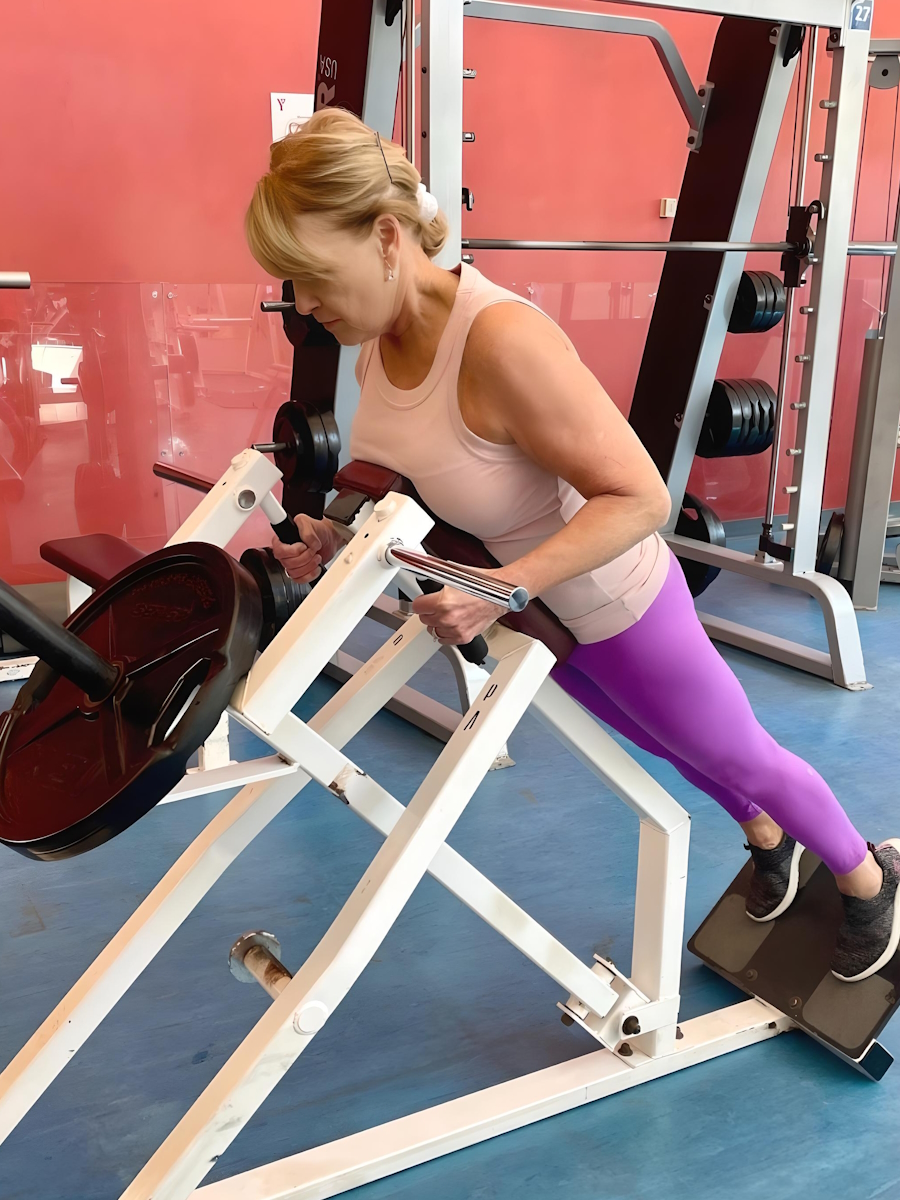
Health-wise, I was starting to come back, but I was also coming back into it as a new Betty Jean. Betty Jean was now focusing not only on what medication she should do, but what she was going to do to change her lifestyle. I’m not on a trajectory of cure. I’m on a trajectory where I want to stay alive as long as I can. I began to look at what patterns supported me. I’m athletic and working out at the gym builds bone density.
I had to sit down and become very much aware of how vulnerable I wanted to be, because I was back doing some contracts. I was standing before schools and staff, supporting them in successful leadership and supportive school climates. Did I want to note there that I have stage 4 breast cancer, because they did not know? People who did not know me did not know that, and they would never suspect it based on how I looked and how I worked. I sat with that for a week.
Brené Brown is one of my favorite women, and I start my book off with her quote that everyone has a story that, if you truly listen, will bring you to your knees. The other one was her TED Talk on vulnerability, noting that sometimes being vulnerable is one of the best medicines that we can use to enter upon that sacred area of grief, which is sometimes perceived as weakness.
Sharing my story: From a morning blog to writing a book
I started the blog and I got a lot of great responses. I had people who started to write with me and join me, and some of them had stage 4 breast cancer. I had one, God rest her soul, who passed. She was one of the reviewers of my book, and she had stage 4 and was from the Philippines. She wrote me one morning and said, “I love what you say in our group. You are so positive. Can I ask you some questions?”
We began a friendship of three years. Every morning, because we were 12 hours apart, I would wake up to her questions or her anxieties, and I would write back. I then did that for other folks. A number of my girlfriends were saying, “You know what we like? A book. We like a book.” I thought, “I’m not writing a book. I don’t have time for a book. I’m busy.” As I was going through all of that on that side of truly living and interacting with my family, my friends, and my life, I also had to go and recognize my new life was a shot every month.
Scanxiety and game day: Celebrating two and a half years with no evidence of active disease
I went to my doctor and, God bless him, he said, “Just run in here. I will give you the shots and let you go.” I had to get echocardiograms and blood work, and take drugs that reduced my neutrophils, which are part of my immune system. I had to have CT scans every three months, and I call those game days. People call it scanxiety, and they asked, “How do you deal with that?” I said, “You know what I deal with the clock does? I keep moving. On that day, I pray that I’m going to have the strength to either celebrate that it has regressed or give me the strength to deal with the progression.”
In stage 4 breast cancer, game day is our day to tell us whether we have no evidence of active disease, which means we cannot say you are cured, but we can say we do not see any active disease. Or they will say it is stable, meaning the lesions are there but they have not changed, which is a good reading. Or they will say progression.
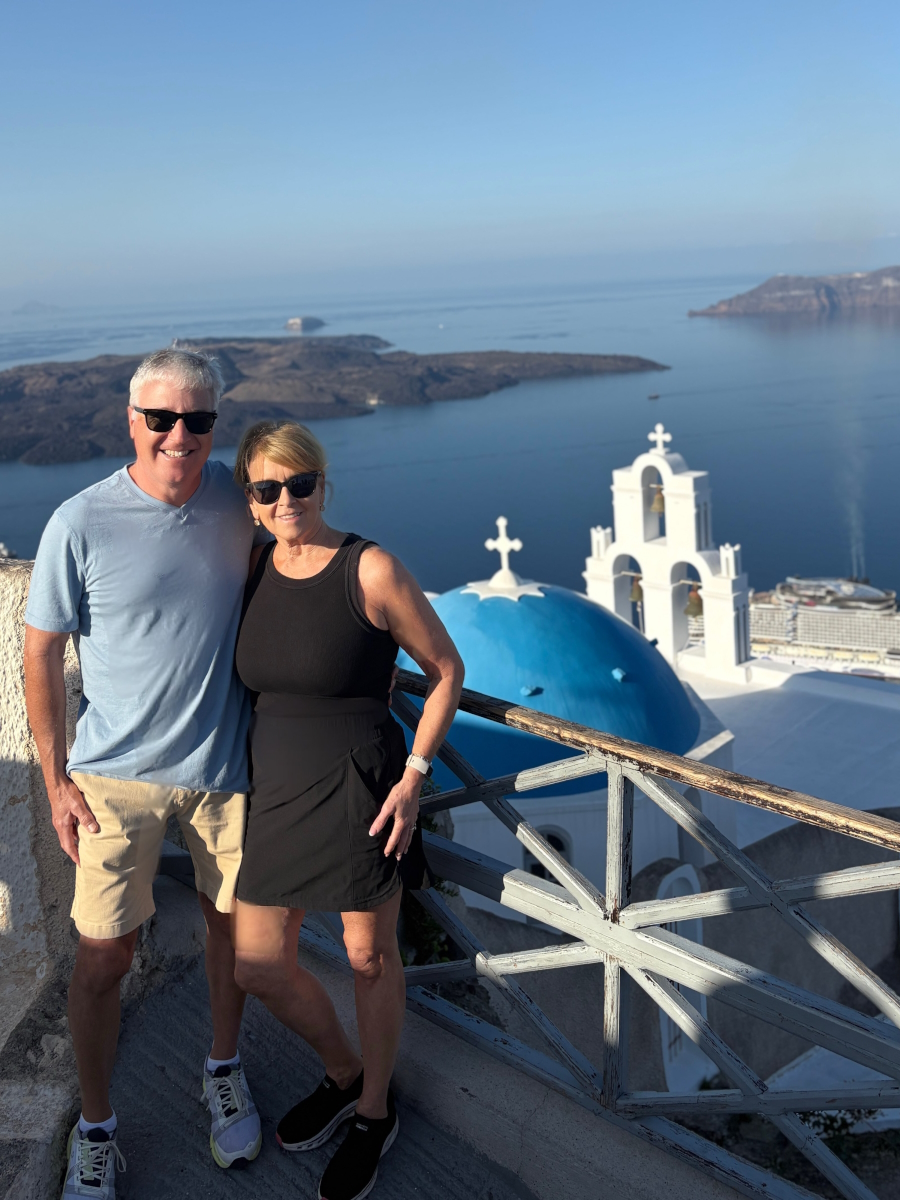
For two and a half years, I had no evidence of active disease. I was elated, and my oncologist said, “When you walk into this hospital, nobody knows; they think you are coming and bringing somebody.” He also knows my value of travel. During those two and a half years, I was able to work with him so that I could go to Antigua for five weeks in my first year. Those five weeks were for my husband and me to do stand-up paddling, yoga, and reconvene with nature.
The following year, we went back to our beloved Costa Rica, and that is where I started to write this book. I asked 10 people to join me while I wrote it and my doctor was one of them. I said, “Carmen, I want you to read each chapter when I’m done to tell me that I’m staying in my lane. I’m a researcher and a questioner, but I’m not a doctor, so I want to make sure that you watch that I stay in my own lane, which is predominantly mindfulness, resilience, recipes, foods, living life to the fullest, and dealing with all of those things I can do.”
I also asked my girlfriend, who is a psychologist and also trained in mindfulness, “Kelly, I just want to make sure that I’m staying in my lane.” I had my male cousin, who had cancer 10 years ago, to read it. I asked him if he had this book 10 years ago, as he is an educator and a guidance counselor. I also had three women who had stage 4 breast cancer read it. I told one woman’s husband that his wife was the most amazing woman, as she gave me knowledge of what it is like to live in a city with millions of people, without nature, rivers, and lakes. She said what she would tell those who live in a concrete jungle, and she gave me some of the most amazing perspectives. I also had a couple of friends who are amazing people to read it
It was therapeutic for me. I was living and blowing people away because they were now realizing you can have stage 4 cancer and not only can you live, you can travel and write books.
A fateful fall down the stairs: Fractured spine and advocating for recovery
I was doing so well. I was working out at the gym, and we were planning to go to Costa Rica on January 21, 2024. My doctor called me when my husband and I went up to Toronto and said, “Your CT scans are amazing, phenomenal, and beautiful.” I said, “Oh, okay, I’m going out to celebrate.” Two weeks later, I got up in the middle of the night to have a sleepy tea because I could not sleep. There was no moon out, and it was dark. I had taken a night light out of a wall socket to iron a tablecloth earlier. My golden retriever and I walked back to our bedroom, and I reached for a wall. I looked down, and I realized I was going down about 12 steps. I cartwheeled down the stairs, flipped over, and landed in the room downstairs.
My husband heard the bang, bang, bang. He got out of bed and looked down. We are in a ranch-style home. I thought, “What in the name of God? I don’t think I can move my fingers or toes.” I was on bed rest for two weeks. I fractured my T12 and my L4, and lost an inch and a half of my height.
Every time I get up to speak, I say there are five things we need to know to build a strong foundation for health and life. One of them is to advocate. In the U.S. and Canada, we are under siege with health care. We have people in our system who want to do their best, but they are under siege and see thousands of people. But I’m one person. I’m worthy and I want good health care.
I was able to see an orthopedic surgeon, and he said, “Wow, I cannot believe you went home that night.” I asked, “Do I need surgery? Do I need a back brace?” He said no. I asked, “What do I need to get rid of my walker?” He said, “Slowly begin to walk again.” I asked if I could go to Costa Rica in four weeks. He said, “Oh, take lots of pills, but actually, it would be good for you. It would be warm, with no ice or snow.” When I came back in April, I had my CT scan. I took the ribociclib and zoledronic acid before leaving. You can work all these things out just as you would schedule anything.
When the cancer progresses: Facing liver lesions and cancelled surgery
When I came back in May, I unfortunately heard the words from my oncologist, “Your cancer has progressed.” I asked, “Do you think it’s because my body was so busy fixing my back?” He said, “I don’t know. We’re going to find out.” It had progressed to the liver. In stage 4 cancer, bone is the one to have, not liver, lung, or brain. I had an MRI, and there were three lesions in my liver. I had another MRI six weeks later, and when I went to see him, he said, “It’s stable.”
I was looking at having radioablation, which is going to burn them. Usually, you only have three and they have to be a certain size. Mine were fine, so we waited. When I did go to have that, I was wheeled into the surgery. My oncologist was away. The surgeon was doing an ultrasound of my liver, and he said, “I’m going to call your oncologist.” I told him he wasn’t going to answer because he wasn’t around. He said, “Maybe he might get somebody else.”
He came back, looked down, and said, “I hate to tell you, we cannot go through with the surgery.” I asked why not. He said, “You have multiple lesions. There aren’t many, but radioablation is not what you need. You need systemic therapy, not targeted therapy.” I was wheeled back out of the surgery, and while I was in the waiting queue, the nurses asked, “Is there anything we can do?” I said, “Yeah, you can get me back to my room as soon as you can. I need to go inward and deal with this.”
The nurses came in, and they were so upset. I said, “There may be progression, there may even be increased progression, but until my doctor tells me there is nothing else he can do, I’m going to live. You’re going to wish me positive energy.” I went home, and my oncologist called me, very upset. He said, “I cannot believe I was not in the country when this happened. I’m so sorry.” I said, “What are we going to do?” He said, “We’re going to have to go on chemotherapy. But in stage 4 chemotherapy, we do not hit you as I hit you when you were at stage 2. We want you to live a good life and push the cancer back.”
Pivoting on capecitabine: Managing chemotherapy side effects
I asked my doctor, “I’m still going to Costa Rica, right?” He said, “Of course, you are, yes.” I asked, “How are we going to make this work?” God bless his heart, on every one of my forms when I go and meet with different folks, I would say, “Just so you know, I’m going to Costa Rica,” and they would say, “Oh, don’t worry about that, it’s right on your form: Betty Jean is going to Costa Rica. Let’s make this happen.”
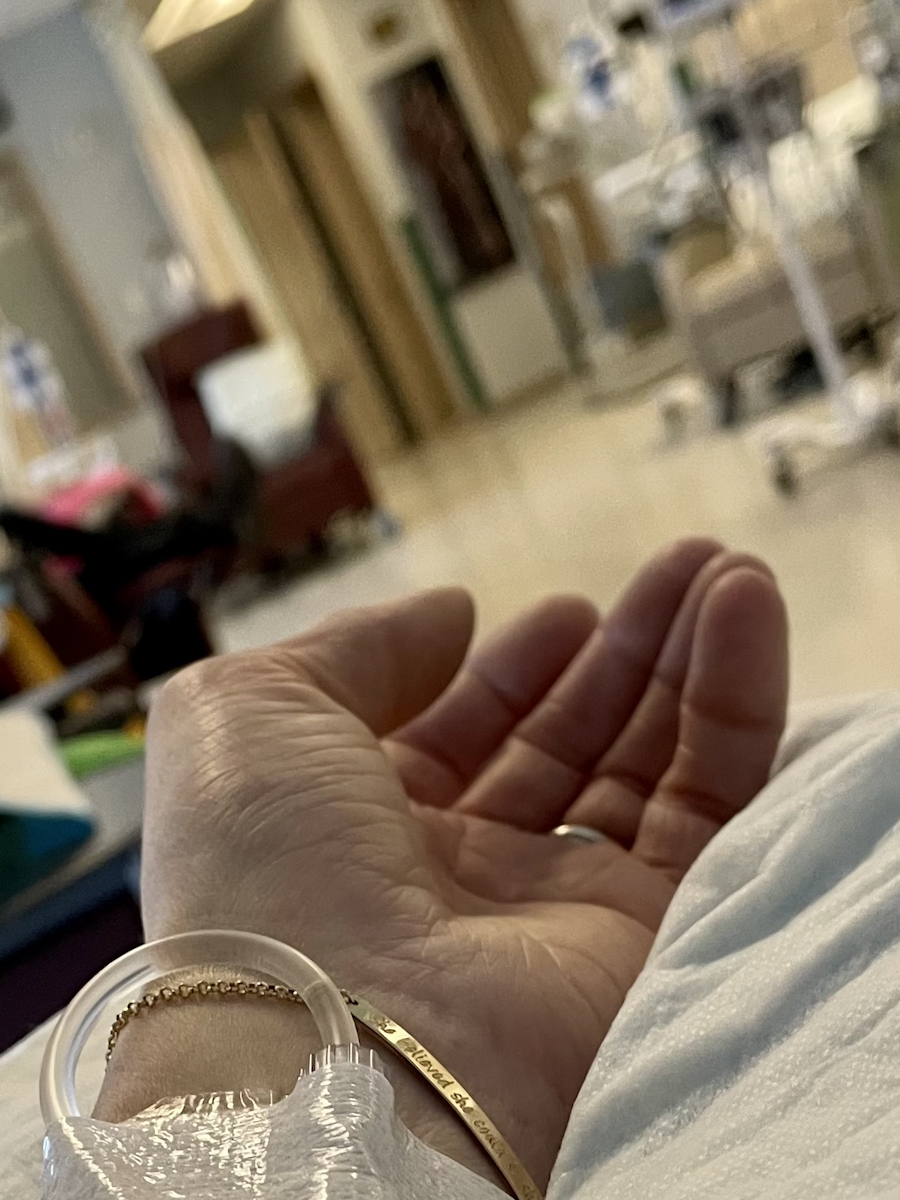
I had my first round of capecitabine, and he told me the side effects, saying, “Betty, recognize again that you do not get everything, but we are going to send you away with everything to support you in case you do have fatigue, vomiting, diarrhea, or hand-and-foot syndrome. I’m going to partner you with one of the general practitioner oncologists here where I live, and I see them every month.” I worked with a friend who lives on the same lake, a young doctor, who said, “I’m going to be your doctor, and I’m going to be the one you are going to send blood tests to.” I’ve been on treatment for two weeks and then I need to do my blood work, which helps them decide whether I can go back on chemotherapy or not.
I went to Costa Rica this past year with my husband for three months. I had family members who thought that when I broke my back, that was it, but then the cancer progressed to the liver. But in Costa Rica, could I go the way I did it before, walking 10 to 14 kilometers? No, because that would cause foot syndrome, so I joined the gym. I also had lots of cover-ups, and even though I love being out in the sun, I did not go out in the sun. The warmth was beautiful and supportive, but I sat under palm trees.
Just like in life, whatever we are given, we may have to pivot and make adaptations, but it does not have to stop us. I had a few people in the medical field tell me, “You cannot go away for three months on capecitabine. It’s chemotherapy, and you have to get blood tests.” I said, “Let me be the first. Let me lead the way and show women that they can travel if they want.”
Rejecting toxic positivity: Finding true resilience and spiritual strength
One of the things that I want to impress upon in my story is that I do not like toxic positivity. I never did. I grew up between four boys, and I have not gotten into toxic positivity. I did not shoot from the hip, but I was given strong faith by my parents. I’m very spiritual. I have an amazing spiritual counselor, and within that spirituality is the belief that I am on a journey, and we are walking each other home.
On this journey, there are going to be things that cause us to pull up on our resilience. We can ask the question, “Why me?” But someone says, “Why not me? Other people have this. I’m not that special. I’m human, and this is my journey.” My parents always said to model and mold. If you want love, you have to model love. I want to model that I can live with stage 4 breast cancer.
The Serenity Prayer: Navigating good scans, lowered dosages, and genetic mutations
When I came back to Nova Scotia in April, I had no side effects. I had my CT scan, and my physician saw it and had to call me. She said, “I’m not supposed to do this because we get them after the oncologist, but you are going to be happy.” When I met with my general practitioners, they came in and said, “Girl, oh my gosh. It’s amazing.”
My doctor and I still needed to talk about what was happening, because when I got home to Nova Scotia’s cold, damp weather, I started to get hand syndrome. I put my gloves on every night with petroleum jelly. When I went to see him, he said, “Betty, you could not have a better scan.” It’s not that I’m back with no evidence of active disease, but capecitabine, my lifestyle, and my faith pushed everything back. He said, “We’re going to have to lower your dosage.” I asked about its efficacy, and he assured me it would still work at a lower dose.
I wrote my last blog on serenity. Most people know the first four lines: to know what I can control, understand what I cannot, and the wisdom to know the difference. But the prayer goes on and says, “Do not give up your day, your moment, your life for things you cannot control. Live fully every day, live fully in the moment.” I focused on what I could not do, and yes, I have had to go on rest and lower my meds, but I still feel amazing.
I’m on capecitabine and I’m saying to my doctors, “I want to stay on this drug because in stage 4 breast cancer, you stay on a drug until it doesn’t work.” I do know that the reason the targeted drugs failed me is that I have two mutations: PIK3CA and ESR1. These mutations are only ever found if you have cancer, and what they do is render targeted therapy useless. At least I have an understanding. People say, “You are so strong,” but I have my moments when I get angry.
The five pillars of living with cancer
I just want to say to my pink sisters that if your stomach, back, brain, or lungs hurt, get it checked. The last thing I would say about my journey is that these are the five pillars. Number one: integrative care. I impress upon people the most important medicines I take daily. Number two: self-care. When we grew up, there was no discussion of self-care. As women, mothers, sisters, and caregivers, we very seldom look to ourselves, as we are out there supporting others. I press upon the young women, please take care of yourselves. My quote is, “Self-care is the new health care.”
Another pillar is a supportive group. I’m an extrovert. In Canada, when you were only allowed to have one bubble of 10 people, I had seven bubbles of 10 people each. It does not matter whether you are an introvert or an extrovert; it matters that we have a human connection. When you sit beside somebody who breathes with you and says, “I am here,” that is one of the most powerful medications out there. Seek someone who is going to see you and know you are worthy.
Using your mind as a GPS: Navigating anxiety, regret, and the present moment
The next pillar is my GPS. Our human GPS is our mind. I say to people, do not unpack mad, keep it in the suitcase, feel it, and then push it off. Your mind is so powerful that it tells your body how to feel. When we suffer regret, it’s about things of the past we cannot change. Your mind is going, “You cannot change it, why are you living with this regret?” Or anxiety of the future: You are worrying about something that probably will not even take place.
Stay in the present. I called my book “Rise” because I was brought five times to my knees. I had asked my question, “Am I going to stay down or am I going to rise?” And I pulled myself back up. It does not matter what religion, but it matters if you believe in a greater deity. At the end, when you take that final breath, it is about who you loved, how you showed love, and how you showed up loving. That mind keeps me so strong.
The power of advocating for yourself with your healthcare team
The last pillar is to advocate. Many women say, “But I am uncomfortable,” and you should not be. Those five pillars allow me to walk, work, live, and love beside uncertainty every day.
I am a questioner. Normally, in systems, questioners are not necessarily welcome. People ask, “Why are you asking so many questions. Can’t you just do it right?” My father said, “I’m going to teach you how to nudge instead of push, because they are not prepared to answer all your questions.” As an educator, I asked kids a lot, because no question is stupid, and if you ask a question, 20 other people have that question but are too scared to ask.
When I heard cancer, my first question was, “How did this happen? How am I going to make it through these next nine months?” I advocated for my oncologist, who is one of the best in our province and is a researcher. Researchers are questioners, and he does not mind a second opinion. I have somebody in Florida, a very good family friend who deals a lot with cancer, and my oncologist knows I am going to run it through him, and he is okay with that. I have a naturopath oncologist.
In the first two years, I did a lot of research, and the nurses would say, “Some of you know more about stage 4 breast cancer than we do.” I reply, “In fairness to you, it’s happening to me; you cannot know everything, but boy, I’m going to know everything about it being in the bone, and now to the liver.” I chat with my best friend and say, “Here are some life hacks for capecitabine, and here is a three-week menu that would support you.” I ask my friends, “Can you create some questions for me to ask my oncologist?” I go in there like a teacher and have a set of questions. I cannot imagine any oncologist on the face of this earth who would be prepared for all my questions. When your questions are being answered, your esteem is way up.
Sharing the hard news: Being sucker punched by liver metastases
When I went to the liver, I left the bone club where many women live for a long time. I had the unknown because I had not put a lot of time and effort into conversations in those Facebook chat groups about liver lesions. It was like, “Oh my God, it is going to travel: bone, liver, lung, and brain.”
When I first heard I had stage 4, I just wanted five years or even just a year. When it went to the liver, I felt, “Gosh. I wish I had not fallen down those stairs and put my body in lots of inflammation,” but I also thought this was the beginning of the end.
I asked my doctor, “Should I be worried?” and he said no. I wanted to tell my husband, but when you tell somebody you’ve got cancer in your liver, it goes up a notch. I needed to go inward and deal with it quietly, and then I could come out. I told my older sister, and I did not hear from her for two days. She finally said, “I was sucker punched when you told me it went to your liver. You have done everything.” At that time, I did not know it was two mutations, so it was a very big shock.
Facing the fear of dying and end-of-life planning
At that time, I asked for spiritual counseling. The counselor said, “Your psyche is amazingly strong, but how is your spirituality?” I started to cry and said, “I find it very difficult in the religion to do that, so I go to my mat. I’m hugely spiritual.” He later asked, “Have you and your husband sat down to talk about end-of-life planning?” Nobody wants to talk about that; if you say you are scared to die, they say, “You’re not going to die.” I started to cry and said, “But I do not want to leave just yet.” He said, “In the Western world, we all hate to talk about it. You plan some of the most amazing events; why would you not want to plan the best for the love of your life?”
He also said that as a hospital chaplain for 25 years, he had seen many people come to their deathbed in pain because they had not written down what they needed. “Death is not painful. Dying is. You need to be proactive like you always are, and that is not saying you are going to die today, but it is taking that extra step that this progression has brought you to that fear.” did not like him for a while, but I sat with my husband and said, “We do have to talk about this.” Thank God, once I did all that and took hold of what I could control, it made what I could not control easier.
Building capacity for pink sisters: My message on living fully
My doctor friend in the U.S. said he wishes all of his male patients had the same relationship with their oncologists that I have adopted. I have great trust. Right now, because of my recent scans, I’m in good stead. I do want to share that our country has come to know that stage 4 cancer is increasing. Let’s grow to understand it and build capacity within our pink sisters.
I also want to say that this is not just about cancer. I’m not talking about being cured of cancer or fighting for that. I want people to know they can live full lives.
This interview has been edited for clarity and length. The views and opinions expressed in this interview do not necessarily reflect those of The Patient Story. This content does not replace professional medical advice.
Inspired by Betty Jean’s story?
Share your story, too!
Hear from people living with breast cancer
Real experiences with diagnosis, treatment choices, side effects, and life beyond breast cancer — in their own words.

Leave a Reply