DLBCL Tests Explained
How Blood, Biopsy, and Imaging Tests Impact Treatment Decisions
Diffuse large B-cell lymphoma (DLBCL) is fast-moving, but often curable, especially when caught early. Blood work plays a key role throughout diagnosis, treatment, and remission, though many patients are left unsure of what their lab results really mean.
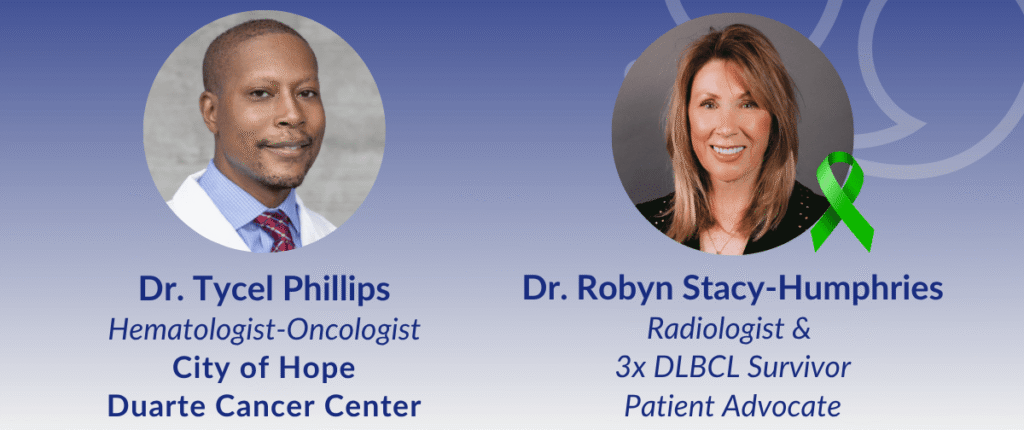
In this discussion, Dr. Robyn Stacy-Humphries, a three-time DLBCL survivor, moderates a conversation with lymphoma expert Dr. Tycel Phillips of City of Hope. Together, they unpack what blood tests can (and can’t) tell you, how biopsies and imaging are used, and what markers like LDH, neutrophils, and immunoglobulins mean during and after chemotherapy, CAR T-cell therapy, and beyond.
Program Topics
- Learn what your CBC, LDH, and metabolic panels really mean during treatment
- Understand the role of imaging, biopsies, and why blood tests alone don’t diagnose DLBCL
- Get clarity on neutrophils, immunoglobulin levels, and why some “abnormal” results are not dangerous
- Find out how often blood work is done during and after treatment like R-CHOP, CAR T-cell therapy, or bispecifics
- Hear what’s ahead in MRD and liquid biopsy research for DLBCL monitoring
Program Panel
Program Partner

Thank you to Blood Cancer United for their partnership. They are here for you with information about clinical trials, resources, and dedicated support through their Information Specialists.
This is not medical advice. Please consult with your healthcare provider to make informed treatment decisions.
This interview has been edited for clarity and length. The views and opinions expressed in this interview do not necessarily reflect those of The Patient Story. This content does not replace professional medical advice.
Hear from people living with diffuse large B-cell lymphoma (DLBCL)
Real experiences with diagnosis, treatment choices, side effects, and life beyond DLBCL — in their own words.