
The COVID Pandemic Led Straight to Ken’s Stage 4 Colorectal Cancer Diagnosis; Three Years Later, He’s Still Here
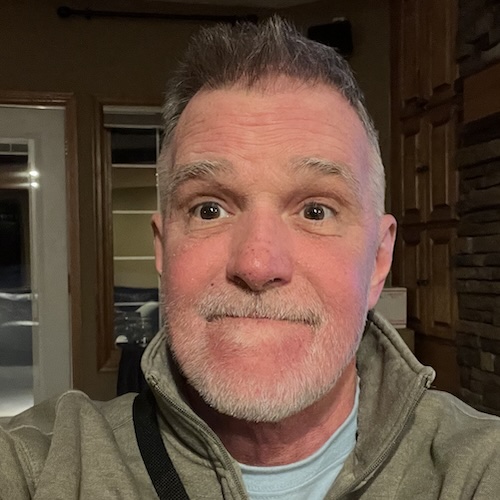
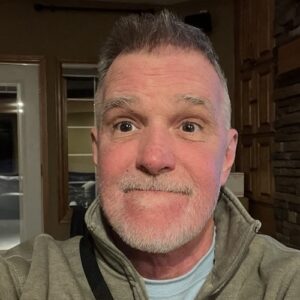
Ken is a stage 4 colorectal cancer patient who was diagnosed on Halloween 2022. After years of living and teaching in the Himalayas, the COVID-19 pandemic brought him home to Minneapolis and never let him leave. His experience with colorectal cancer began quietly, with intermittent loose stools and occasional rectal bleeding that would disappear for months at a time. It escalated in the late summer of 2022 into fever, chills, and rapid weight loss. By the time he sat down with his family’s primary care physician, he had lost nearly 40 pounds from his baseline weight. That doctor felt the liver metastases during a physical exam and ordered a CT scan the same day. Within two weeks of that Halloween appointment, Ken was in the chemotherapy chair.
Interviewed by: Taylor Scheib
Edited by: Chris Sanchez
What followed was one of the most medically complex first years of treatment any patient can face. Just weeks into chemotherapy, Ken developed a severe blood infection that traveled to his heart, causing endocarditis. Treatment had to pause. Then came a life-threatening bowel obstruction that required emergency transport in a snowstorm to Mayo Clinic, where surgeons performed a total colectomy. His weight eventually bottomed out at 118 pounds. In April 2023, he had a major liver resection, followed by ablations of additional liver and lung spots in September. In early 2024, surgeons replaced his mitral valve, which had been damaged beyond repair by the earlier infection, in open heart surgery.
Ken’s colorectal cancer is RAS wild-type, meaning that it does not have mutations in the KRAS or NRAS genes. This has enabled him to be on standard-of-care treatment with panitumumab, a targeted monoclonal antibody therapy, to which he has responded well. His approach has been short cycles of chemotherapy followed by pauses, with targeted ablations used aggressively between cycles. This strategy was made possible by his strong treatment response and consistently small metastatic spots.
More than three years after his colorectal cancer diagnosis, Ken describes his disease as minimal and manageable. He isn’t cancer-free, and he’s clear-eyed about that. What sustains him is a grounded, realistic hope, rooted in the men he’s met in the Man Up to Cancer community who are at least eight years out with the same diagnosis. He shows up for his aging parents, his brothers, and the people in his life who showed up for him when everything changed.
Learn more about Ken’s story by watching his video and reading through the edited transcript of his interview. Read his initial story here.
- Dismissing intermittent symptoms is dangerously easy. Ken’s rectal bleeding and bowel changes came and went for months, and the gaps between episodes created a false sense of security.
- Advocate loudly and persistently for access to care. Ken didn’t have a primary care physician. It took a family member calling repeatedly on his behalf to get him an appointment. That one appointment and that one doctor saved his life.
- A specialized, aggressive care team changes outcomes. Ken credits Mayo Clinic’s willingness to take on complex cases as the reason he survived a life-threatening bowel obstruction.
- Realistic hope is not the same as toxic positivity. Ken’s transformation from a man in denial about his symptoms to a clear-eyed, grounded patient advocate illustrates that honest reckoning with the odds, and not false cheerfulness, is what truly sustains people through serious illness.
- Connection is a form of medicine. Whether through family, a men’s cancer community, or faith, Ken’s ability to keep showing up for others has become one of his most powerful tools for maintaining his own wellbeing.
Ken’s Diagnosis Facts
- Name: Ken S.
- Age at Diagnosis:
- 58
- Diagnosis:
- Colorectal Cancer
- Staging:
- Stage 4 (Metastatic)
- Symptoms:
- Frequent loose bowel movements
- Intermittent rectal bleeding
- Fever and chills
- Rapid and significant weight loss
- Treatments:
- Surgeries: total colectomy, liver resection
- Ablation therapy: liver and lung ablations
- Chemotherapy: FOLFOX, capecitabine, fluorouracil
- Monoclonal antibody: panitumumab
This interview has been edited for clarity and length. This is not medical advice. Please consult with your healthcare provider to make informed treatment decisions. The views and opinions expressed in this interview do not necessarily reflect those of The Patient Story.
- Ken’s Diagnosis Facts
- Who am I? My life before colorectal cancer
- Colorectal cancer symptoms before diagnosis
- From colorectal cancer diagnosis to endocarditis to emergency surgery at Mayo Clinic
- Open-heart surgery, treatment milestones, and living with minimal disease
- Hope and realistic optimism
- Family support, caregiving, and the unexpected gift of coming home
- Hear from people living with colorectal cancer
Who am I? My life before colorectal cancer
My name is Ken. I am 61 years old. I am a stage 4 CRC — colorectal cancer — patient. I was diagnosed, strangely, on Halloween of 2022, and although I have lived in many different places over the last several years, I’m kind of back in the homeland where the rest of my extended family is — here in the Twin Cities, Minneapolis area.
I guess the first and most unique thing about me is that I’m a weather geek. That started when I was about 11 years old. My family moved from the south — we moved from Memphis up to Minneapolis — and I fell in love with blizzards and snowstorms. I just got obsessed with the weather as a young kid. Even though I tried to pursue another sort of career, something more conventional, like business psychology, the weather geek won. I ended up going to school at the University of Wisconsin, Madison, got my degree in meteorology, and I lived in Wichita, Kansas, for almost ten years. I ended up getting into television; I worked for the NBC affiliate in Wichita. I happened to be in Kansas during a period when there were a lot of tornadoes, so I chased tornadoes. I saw tornadoes a little too up close and personal.
To be honest, it kind of changed me, because it used to be sport and spectacle. Then I saw the devastation of tornadoes and what it does to communities and people’s lives, and I started to go in a little different direction. I’m still a weather geek, but that was the early part of my life — during my mid-20s to early 30s.
After that, what I thought was going to be a leave of absence led to about 15 or 20 years in North India, in the Himalayas. I took an opportunity to do some volunteer work with the Himalayan peoples, mostly in the Buddhist world.
I just fell in love with that part of the world, and my life took a major turn. I took a leave of absence from work that was supposed to be six months. I came back after six months and had lunch with my boss, the general manager of the TV station, and I was just like, “Sorry, I’ve been ruined.” I ended up backing into English teaching — adult education. A lot of Buddhist monks were my students. These were adults — mainly from their late teens, 20s, 30s, 40s. It was adult education, not for beginners, but for people who had a foundation in the English language but really needed to expand their vocabulary and become more practical. I loved it. I did one-on-one work, but I also facilitated classes where we would do topical discussions and get into great debates — even about Buddhism and politics, things that are hard to talk about. I had a great life over there. I lived at about 7,000 feet — kind of like living in Colorado Springs as far as the elevation.
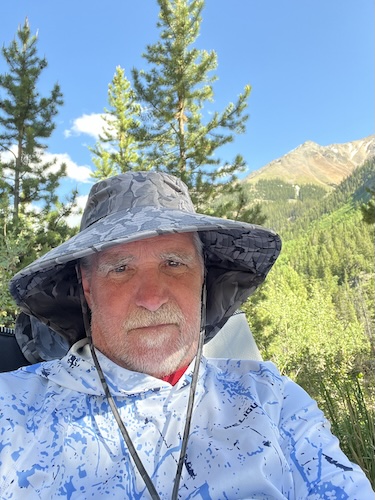
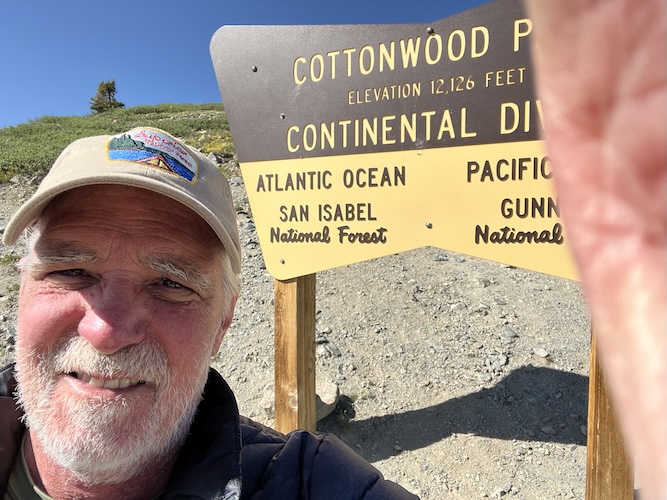
I’m an outdoorsy person. I love the mountains. I love hiking and camping. When I’m here in the States, I love to disappear to northern Minnesota and the Superior National Forest. I’m kind of a solo person that way. I love to just take my tent and get lost somewhere for a few days. Of course, that’s been a little bit harder to do because of my health issues over the last several years.
Even so, I’ve managed — I went to Colorado last summer, right after an ablation. It was only about a month after treatment. I take that back — it was in between the six cycles of treatment and a liver ablation. I went to Colorado for about ten or eleven days. I just love to lose myself in the forests and the mountains with my little tent and my camp stove.
I have a big extended family here in the Twin Cities area. My parents are still alive, in their 80s. I always say it is my great privilege and pleasure to be able to help them. It’s a whole other topic — the role of caregiver and also becoming someone who needs to be taken care of. My family is all dealing with that together, as I guess a lot of families are.
Returning to Minnesota after decades abroad
Everybody knows what happened in February and March of 2020. I had actually come back to the States for my dad’s 80th birthday, and I was planning to be here for six weeks. We all have stories — either our own personal stories or those of loved ones — about how life just took a major turn in the first part of 2020, when suddenly international travel shut down, schools went into lockdown, shelter-in-place — all of that. People’s jobs changed. For me, it really was dramatic.
The thing is, it happened so gradually. Nobody knew what was going to happen. I had to change my plans — I couldn’t fly back to India — but I had no idea how long it would last. Month to month to month, I finally — I think it was in July or August — made phone calls and let go of [my apartment]. I was leasing an apartment in a building owned by a Tibetan family. When I had left, I just put a little padlock on my door and walked away, thinking I’d be back in six weeks. I had to make that call and have them break my lock.
I didn’t want to keep paying for my space there when it had already been five or six months, and I didn’t know what was going to happen. It was very traumatic, and it still is. It’s been six years now, and I have never been able to go back, because just when things started to clear up — and people who travel internationally know what happened — different parts of the world opened up at different times. As far as India goes, they had some pretty stringent regulations. I was waiting for all of that to even out. Honestly, it was within a couple of months of my diagnosis, in the summer or fall of 2022, that I finally started to get serious about thinking about going back to India. Unfortunately, that corresponded almost exactly with my symptoms increasing, my health going down, and my weight loss.
The COVID pandemic, for me, transitioned straight into symptoms of my eventual colorectal cancer diagnosis. I got my diagnosis, and that is so dramatic and traumatic — everything changes. I knew I wasn’t going to be going back to India with stage 4. You just feel like, “I’m a short-timer on this earth. How am I going to get back to my life over there?” It’s still a process. I still have dreams all the time of being in Dharamsala, McLeod Ganj, northern India. I had Indian friends, Tibetan friends, and other expat friends that I still keep in touch with. It’s amazing how many of my dreams are oriented toward people and places. I will wake up at 4:15 a.m., and I can’t believe I’m having these detailed dreams of people and places and situations — often involving being late for a bus or trying to find my passport to get on an airplane. Those are my dreams all the time. I think that’s just my psyche still trying to process the fact that that part of my life was huge, and the page turned quite dramatically.
Colorectal cancer symptoms before diagnosis
I made it clear in the first video that I was slow to act and that I ignored colorectal cancer symptoms for a lot of different reasons. One, I was in India. Two, I was in denial. Three, I didn’t know what to do about it, and I didn’t want to freak people out. My family really raked me over the coals when this was happening — “How could you have been so slow to get yourself checked out?” It’s not a rationalization; I’m just telling you that I was in denial, I was afraid, and I thought it was temporary.
Back to the laundry list of colorectal cancer symptoms: the very first thing was bowel issues — more frequent, looser bowels. I never had pain in my abdomen. I never went through cramping or pain or anything like that. But over a period of time, I realized I was having to go to the bathroom more frequently — it got to the point where it might have been four or five times in 24 hours.
It got to the point where I would see blood, and I would be like, “Oh my gosh.” Nobody likes to see that. But then I would always say, “Let’s see if it happens again.” So many times — and this would even be separated by months — it would just go away, and I would think, “Okay, that was some fluke.” But then it would happen again. I would always say, “Let’s see if this keeps going.” For a long period of time, it would just kind of disappear, and I would forget about it, because I didn’t have problems with my appetite. I didn’t have problems with pain. At that point, I wasn’t losing weight. I was active — I lived at 7,000 feet. I walked up and down mountains every single day.
It wasn’t really until the late summer of 2022 that there started to be more frequent traces of blood that I could see, and also very loose stool, very frequent. I was probably getting up to at least five times a day, going to the bathroom.
Then September — I’ll never forget the day; I think it was September 27th. I took my car in for an oil change early in the morning, and on the drive back from the oil change, I started feeling really weird and feverish. Over the course of a couple of days: fevers, chills, fevers, chills. That corresponded with weight loss. I’ve always been someone who steps on a scale in the morning and keeps track of my weight, and I’ve always been pretty stable. But I lost — I want to say probably 15 to 20 pounds. I’m not a big person; my baseline before all this was about 158. I kind of dropped from maybe 158 to 130 or 135 in a couple of months.
I went to urgent care within a week after the fever-and-chills episode. That was 2022 — there were still strains of COVID going around. You go to urgent care and everybody just thinks you’ve got some virus. “See what happens in ten days; take Tylenol or Ibuprofen.” They did labs, but nothing showed up in the bloodwork.
I did eventually get in to see a GP — my primary care doctor — but I didn’t even have a primary care doctor because I had never really had issues. There’s a doctor who was the primary for my dad, two of my brothers, and my nephew. One of my brothers started banging on the door to try to get me in. This doctor wasn’t really taking new patients. Finally, at the end of October, I got a call, and they said, “We have an opening.” I think the appointment was scheduled for about ten days out, but they let me come in early — and that happened to be on Halloween. This doctor — I see him all the time because I go to appointments with my dad — every time I see him, I say, “You saved my life.”
Within 30 minutes, he had me on the table, asking me questions, feeling around on my abdomen, and he could feel the mets that were on my liver. I had noticed there was some lumpy stuff in my central abdomen and thought maybe it was my gallbladder or something. But right away he looked at me and said, “I don’t like this at all.” Immediately, he called and set me up for a CT. I left his clinic and went downtown to another hospital, and got a CT scan that very day.
I got home from the CT, and by the time I had created an account and logged into my patient portal — boom — there was the CT report. A lot of terminology I was not yet familiar with, but it was very clear: thickening of the sigmoid colon and numerous metastatic tumors on the liver. I wasn’t very educated back then, but I knew enough to know that I had stage 4 colorectal cancer. I understood what the word “metastasis” means.
Immediately, there was a referral to oncology. As much as it took such a long time to get to that point, once I was diagnosed — boom, boom, boom — I had a biopsy, I had a port placed, and I was in the chemo chair within about two weeks. All of that happened in the first ten to fifteen days of November.
From colorectal cancer diagnosis to endocarditis to emergency surgery at Mayo Clinic
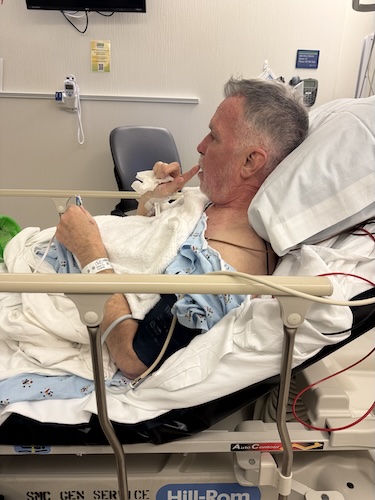
I still cannot believe it. And as you know, it went on — because then I got diagnosed with endocarditis. Only about a month later, I somehow developed an infection. We never knew where that came from — whether it was introduced through the port or whether it was something in the gut. I had strep — streptococcal bacteremia — a terrible blood infection that got to my mitral valve and started damaging it. We had to pause treatment after two cycles because I had to get on a high-powered antibiotic. I was in the hospital for six or seven days trying to get the blood infection under control. I don’t think I started chemo again until maybe February.
Then, the bowel obstruction. I had just finished all that antibiotics for the endocarditis when all of a sudden it went the opposite way with my digestion. I was suddenly constipated and ended up with a very life-threatening bowel obstruction. I ended up in a suburban hospital where — because I was so fresh off the endocarditis and the blood infection — I was being told there was no way they were going to operate on me because my heart was weak. It was going to be either a huge colon resection or a colectomy. That’s where the Mayo Clinic connection comes in.
My cousin had a connection — it was like two degrees of separation. I think it speaks more to Mayo than anything else. If they know it’s their specialty, they do the complex work.
It was a snowstorm outside, and they basically said, “Get him here now. We will take him.” The whole history is: right away, in November of 2022, I was on the standard of care — FOLFOX, panitumumab, 5-FU fluorouracil, the steroids, all of it. The basic treatment that most people start on. I had two cycles of that before the endocarditis and then the bowel obstruction.
I can’t remember the exact date I got back on chemo, but it was probably about two weeks after the colectomy. I had a total colectomy — when they took me into surgery that snowy night at Mayo, it was like 11 p.m. They told me, “We’re going to try to resect, but we may have to take it all.” When I woke up, I was told, “We took the whole thing.”
I had a couple more cycles of chemo after that. Then the initial doctor at Mayo who got in touch with me in the first place — Dr. Cleary, a liver surgery specialist — was really pushing for a liver resection. Way back at the very beginning, I had been told I wasn’t a candidate for surgery. Then all of a sudden I’m having a total colectomy, and I’m told I’m in line for a liver resection.
They took about 60-something percent, as much as they could. I think the maximum amount of liver they can take is about two-thirds, and that’s kind of what they took. Fortunately, I’ve always been someone who has responded well to treatment. Even though I had only had about three cycles of chemo, the mets in my liver had already shrunk way down. My CEA — the carcinoembryonic antigen number — had gone way down. It was over 100 in the beginning, and it was down into the 20s by then. I had the liver resection in April of 2023.
I got back on chemo. I forgot to mention this, but I had a urinary catheter from my colectomy — I wore a urinary catheter for almost a year. I had some complications. In the midst of that, I had some UTIs, so I had to get on antibiotics for urinary tract infections. The whole point is: from my initial diagnosis until basically the summer of 2023 — that first six months — was terrible. Looking back, it’s like, “How did I get through that?” My weight was down to 118 pounds.
That was right before the liver resection, when I was also battling urinary tract infections. I also had a new stoma bag from the colectomy, so I was trying to navigate that and figure out my diet. If you’ve ever had an ileostomy and a stoma bag, you know that sometimes you can deal with a lot of output, and it’s easy to get dehydrated.
So: liver resection, then chemo in the summer of 2023. I had my first ablation in September — liver ablations — because there were a couple of spots, even though I’d just had the liver resection in April. Already by September, there were a couple of little spots. This is where I talk about Mayo — and it’s not only Mayo, but I just feel like my team there has always been very aggressive and they’re not afraid to attack. Even though they could have just let those little spots go or wait until the next round of treatment, they went in with a needle and ablated a spot in my liver. I also had a spot in my lung; they did a cryoablation — the freezing method. That was my first ablation.
Open-heart surgery, treatment milestones, and living with minimal disease
I was finally healthy enough that they could deal with my mitral valve, which had been shredded from the endocarditis. In early February of 2024, I had open-heart surgery to replace my mitral valve. It was successful, and I made it through. I had a little period of atrial fibrillation (AFib) right after surgery, which is fairly common, but it self-corrected.
That February of 2024 was less than a year and a half after my colorectal cancer diagnosis. That was the hell period. But after that, when I started to recover in February and March of 2024, I went back on treatment — more of an adjuvant, maintenance chemo in the spring and summer of 2024. It was only six cycles. Then I had a chemo holiday for another six or seven months, and I was back in 2025.
The main thing has been the panitumumab. It’s not an immunotherapy — it’s a targeted therapy, a monoclonal antibody. I have responded super well to that. I always say there’s no cookie-cutter — everybody responds differently to treatment. People have different side effects. I have never had nausea or vomiting, but I’ve had skin issues.
My cycles of chemo in 2025 — I was only on for about six cycles, so about two to three months. But my fingertips split. I had fissures — splits, like canyons in my fingertips. At one point, all ten fingers. I used every cream and lotion known to mankind. I use these little finger cots. But in daily life, you have to wash your hands. I have to deal with my stoma bag. I have always had to pause my treatment after five or six cycles because of these pretty severe skin reactions.
Right now, I have some scabbing on my head because the panitumumab caused an acneiform rash. To bring you up to the present: I had a few cycles of chemo in the spring and summer of 2024; six cycles in the spring of 2025; and right now I am back on another cycle — same thing: panitumumab and 5-FU, the fluorouracil pump you take home. I’m two cycles in. We paused because I had another ablation in the midst of that — they wanted to hit a couple of spots in my liver.
All that to say: I have been fortunate that I’ve had short cycles of chemotherapy. A lot of people get on chemo for ten or twelve cycles. Two things work in my favor: I have responded well to chemo — there’s always been a very quick reduction and shrinkage of mets — and I’ve only had little spots: one- and two-centimeter spots. My lungs have been basically clear except for a couple of millimeter-sized things they watch. Every time I’ve been on treatment, they’ve cleared up.
The way we have moved through my occasional treatments — five or six cycles and then a pause for a few months, and occasional ablations — I have minimal disease. As a stage 4 patient, I am now more than three years out. I’m not free and clear. I don’t have a clean slate. But we are very on top of my disease. I realize things can change.
I’ve got colorectal cancer with wild-type RAS. I don’t have any of the mutations. With wild-type tumor DNA, I can stay on the standard of care. For a while, I was on the capecitabine pills, but they were thinking that it could have been responsible for the finger issues, so they switched me back to the 5-FU pump.
I feel super fortunate that I’m doing well. I’m not cancer-free — I’m not even really NED or no evidence of disease. But it’s a very minimal, manageable disease. Whack-a-mole, as they say. Cancer becomes like a chronic thing where you just have to watch it: surveillance, maintenance chemotherapy, the occasional ablation. I have never even had radiation. I’ve talked to radiation oncology about the possibility of, at some point, getting a targeted dose of radiation, but we have done needle ablations up to this point.
Hope and realistic optimism
Hope is an interesting thing because one of my favorite things to talk about is attitude. I have always tried to be a realist. We’ve talked about toxic positivity — rainbows and unicorns — and I’m not that kind of person. Yet I am someone who tries to be realistic. Being realistic involves being honest about the odds and the challenges and the difficulties, but then also having hope.
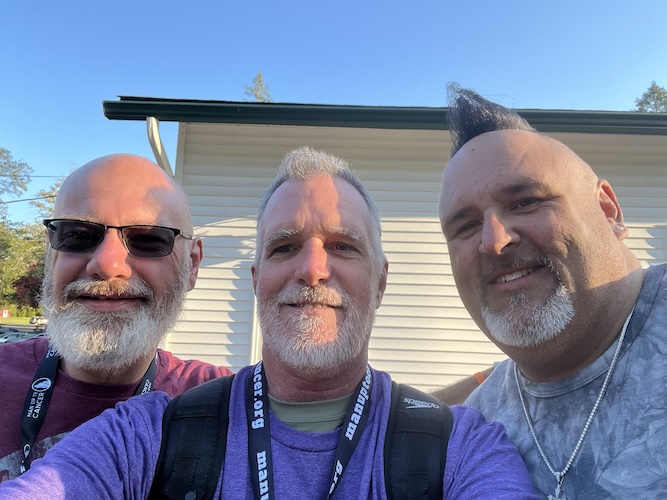
I’ve become involved with a men’s cancer group called Man Up to Cancer — been to a couple of their national conferences. I have developed friendships with some of those guys. People die every week, and that’s really hard. But there are also guys with the same diagnosis who are at least eight years down the road, so that gives me hope.
Hope is a weird thing — you don’t want it to be fake, just happy-happy-joy-joy with no tangible substance to it. My hope is centered on being realistic, but also knowing that I didn’t expect to make it this long. I do feel confident in the care that I’m receiving. But I’m also grounded enough to know that six months from now I could have scans that show things are blowing up somewhere. My cancer could mutate somehow — that’s what happens to people. It just does.
That leads into the very personal side of faith. Different people land in different places as far as their faith, their religious beliefs, or their anchor point. I have a personal faith in something beyond this particular world, which is temporal.
My point is: we don’t know. Nobody knows what tomorrow brings. You want to be upbeat, but you want to be realistic. You want to live every day, engage, and show up for the people who matter. Don’t check out. There are days when I feel low and down, and I don’t have energy, and I don’t want to show up. There are days I just want to hide. But there are people in my life — whether friends or family — that I need to show up for. And I’ve learned that it makes me feel better when I’m showing up for other people.
We all have to come to our own personal faith — our own anchor. For me, knowing that this life on this planet, whether it lasts five more minutes or 20 more years, is going to come to an end anyway — and there’s something beyond that that I’m looking forward to.
Family support, caregiving, and the unexpected gift of coming home
I am single. For whatever reason, I was too wrapped up in my adventures to ever get married and start my own family. I do not have a partner currently, and I don’t have kids of my own. But since being stuck back here around six years ago — the pandemic — I had always been the member of the family who was off at the ends of the earth. I would show up once or twice a year. That has changed.
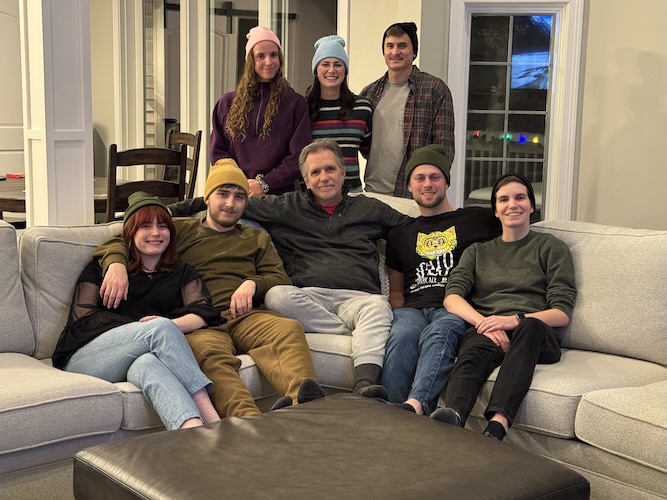
That’s one of those things where I try to count my blessings — the last six years I’ve been able to be with my aging parents, who are doing well but still have all the issues of people who are getting into their 80s and need more attention and assistance. I also have two brothers who have been there for me during this journey. My youngest brother, Jeff, was with me when I went down to Mayo. He followed the ambulance down to Mayo back in January 2023, the night of the snowstorm. He was there when I woke up — he heard me swear and say a lot of bad words, which he reminds me of. I was coming out of anesthesia; I needed Dilaudid. There was some pain.
My brother Paul has run me back and forth to Mayo and sat with me during different procedures. My sisters-in-law — I’m just very grateful. They have busy lives; they have kids, and everybody has busy lives. Even my parents, at their age, have been back and forth to Mayo. My mom always wants to sit with me or come with me when I’m having chemo. I have to talk her out of it — “I’m okay, you don’t need to come hold my hand while I’m in the chemo chair.” But my mom, if I let her, would be there all the time.
When I’ve had a procedure, a surgery, or I’m in colorectal cancer treatment, they want to take care of me. I also have a nice living space with my brother and sister-in-law about 20 minutes away — they’re empty nesters now. There’s always this balance between being at my brother’s place and being at my parents’, but my parents still want to take care of me, and I appreciate that so much.
I try to balance it — I don’t want to be a burden to them, but at the same time, I want to give them the joy of nursing me and bringing me things if I need them. And on the other side, I do a lot of their grocery shopping. There are things around the house and in the yard — snow, whatever — and I try to be there for them and help them.
I don’t mean this to sound “kumbaya,” because we’re a normal family. We fight and get mad at each other, have communication lapses — all of that. We’re not perfect by any means. But I feel like we’re pretty good at living through the hard things of life together. That’s part of caregiving — emotional caregiving, physical caregiving — showing up for each other. We all try to do that. We make mistakes, we drop the ball, but we all try.
Inspired by Ken’s story?
Share your story, too!
Hear from people living with colorectal cancer
Real experiences with diagnosis, treatment choices, side effects, and life beyond colorectal cancer — in their own words.
Leave a Reply