
Living Fully With Stage 4 Signet Ring Cell Stomach Cancer: Kris’ Story of Movement, Faith, and Community
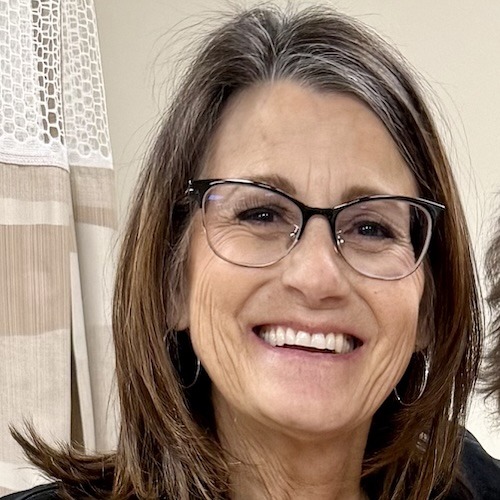
Stage 4 signet ring cell stomach cancer turned Kris’ world upside down, despite a life built on movement, eating right, and saying no to alcohol and cigarettes. What began as quiet Sunday family dinners and triathlon training became a confusing string of symptoms: vomiting after big meals, intense chest and back pain when swallowing, and a feeling that food was getting stuck. An endoscopy revealed an ulcer and a tumor at the junction of her esophagus and stomach, followed by the call no one wants to get: signet ring cell carcinoma, a rare and aggressive form of stomach cancer.
Interviewed by: Nikki Murphy
Edited by: Chris Sanchez
June 2025 became a blur of scopes, washes, imaging, and procedures. Doctors discovered that the stomach cancer wasn’t just in the visible tumor but also in her stomach lining and peritoneal lining. This discovery shifted the plan from a partial gastrectomy after four rounds of one kind of chemotherapy to ten rounds of more aggressive chemo and immunotherapy. When a second wash still showed loose cancer cells, surgery was taken off the table locally: news that crushed Kris, especially after hoping and praying for a clear path to tumor removal. She and her daughter immediately turned to research, ultimately connecting with a team at MD Anderson Cancer Center for additional opinions and options.
At MD Anderson, Kris learned about four possible approaches to treat her signet ring cell carcinoma, including a new systemic chemo regimen, intraperitoneal chemo through a stomach port combined with total gastrectomy, HIPEC (hyperthermic intraperitoneal chemotherapy, or heated chemo in the abdomen), and a clinical trial in New York. She feels both hopeful and overwhelmed: she wants the most effective plan against this cancer, but she is also weighing how much time she is willing to spend far from home and loved ones.
Day to day, Kris lives in tight two‑week chemo cycles: long infusion days, 46-hour “chemo purse” infusions at home, and lingering nausea, neuropathy, and exhaustion. Yet her personal plan is rooted in mindset, movement, nourishment, faith, and encouragement. She walks her wooded paths in short loops, relies on prayer walks, leans into help from family, colleagues, former students, and even strangers, and shares practical chemo tips, like cinnamon toothpaste and nipple cream for mouth sores, on TikTok. Kris knows she may never hear the word “cured,” but she holds on fiercely to the hope of more time: to see her daughter marry, to welcome her grandchild, and to one day care for her own grandchildren.
Watch Kris’ video and read through the edited transcript of her interview. You’ll find out more about her story.
- Listening to your body matters: Kris took vomiting after large meals and painful swallowing seriously, pushing for an endoscopy when symptoms did not improve.
- Cancer does not follow “rules”: even with a long-term healthy lifestyle, Kris developed an aggressive signet ring cell stomach cancer, challenging assumptions about who “looks” like a cancer patient.
- Options can be both hopeful and overwhelming: multiple treatment paths, clinical trials, and potential surgeries offer possibilities, but also force difficult choices about travel, risk, and time away from home.
- A universal truth: every patient deserves to be their own advocate: asking questions, seeking second opinions, and insisting on explanations in plain language.
- Transformation through community: once Kris opened up about her diagnosis, she went from a small private circle to feeling “an entire world” behind her, shifting from quiet processing to public encouragement, TikTok tips, and the “Moochi Strong” community.
Kris’ Diagnosis Facts
- Name: Kris M.
- Age at Diagnosis:
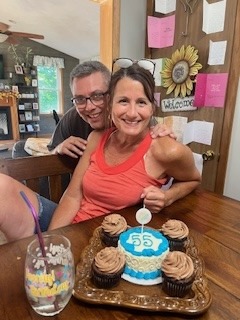
- 55
- Diagnosis:
- Stomach Cancer (Signet Cell Ring Carcinoma)
- Staging:
- Stage 4 (Metastatic)
- Symptoms:
- Trouble swallowing and pain when more food was eaten than usual
- Significant weight loss
- Treatments:
- Chemotherapy
- Immunotherapy


This is not medical advice. Please consult with your healthcare provider to make informed treatment decisions.
- Kris’ Diagnosis Facts
- My name is Kris
- First stomach cancer symptoms and vomiting after family dinners
- Endoscopy, biopsy, and getting a signet ring cell carcinoma diagnosis
- Devastating news: Stomach cancer surgery was taken off the table
- Weighing four treatment options for advanced stomach cancer
- How stage 4 stomach cancer changed my outlook on life
- My advice to someone newly diagnosed with stomach cancer
- The power of community: “Moochi Strong” and sharing my journey online
- Hear from people living with stomach cancer
My name is Kris
I have stage 4 stomach cancer. It is a signet ring cell carcinoma. I am 56.
My healthy lifestyle before the stomach cancer diagnosis
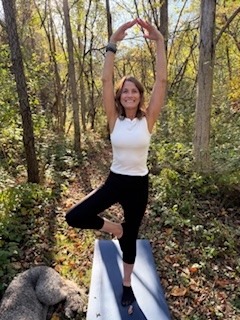
Before cancer, I was a very healthy person. I walked every single day. I have many dogs, and I walk them. I was in triathlons. I loved to swim. I love to bike, not run so much, but I do it with the triathlon piece. I love to kayak. I just love to be outdoors all the time. And I actually did not eat meat for 25-plus years. I did not eat pork or beef. I only ate chicken. I eat mostly salads. I don’t drink alcohol. I don’t smoke cigarettes. I typically am somebody who leads a healthy lifestyle, and I eat a lot of salads and fruit and vegetables, that kind of thing.
So when I was diagnosed with stomach cancer, I was really, really surprised and thought that usually that type of cancer would be associated with a poor lifestyle or poor health, someone who doesn’t take care of themselves very well.
First stomach cancer symptoms and vomiting after family dinners
I first realized that something was wrong on, and I’ll never forget this, this particular Sunday. Every Sunday we have a large dinner with our family. Everybody comes to my house, and I have my children with their significant others, my mother, and sometimes my brother and some other friends. I typically am the type of person who just nibbles on things throughout the day. I eat five or six small meals throughout the day.
On Sundays when we have a big meal, I like to eat a little bit of everything that’s on the meal. So the first Sunday, I started to eat my typical food, and I ran in and vomited. I work in a school district, so I thought, “Well, the flu has been going around. Kids might have given me some kind of bug,” and I didn’t think much of it. Then throughout the week, I just kind of had a queasy stomach, and I thought, “Oh, I’m just going to take it easy and keep nibbling my little things.”
During the week, I was okay. Then on Sunday it happened again. To make a very long story short, it happened three Sundays in a row. Then I thought, “Maybe it’s stress. I’m under a lot of stress. It’s the end of the school year.” So I just continued to think that it was that, that it was just stress and some bugs going around.
Then it was not that it was difficult for me to swallow, but when I swallowed, it hurt really bad right here in my chest and in my back, and it felt like the food was just stuck there. I was like, “There is something really, really wrong.” So I called a local doctor and thought that they would do a scope. My son said, “Oh, you just have GERD, Mom. You probably just have GERD. You’ll be okay.”
So I went in for the scope, and when they did the scope, they came back out of surgery and said to me, “We saw an ulcer, and that might have been causing some of your issues, but also right underneath where the ulcer is, there was a tumor, and the tumor was pressing on that ulcer. It’s right at the junction of the end of your esophagus and the beginning of your stomach, right there.”
I could just tell from the nurses and the doctors that it was not good. He did not say cancer at that time, but I knew that he was going to tell me that it was cancer. So the very next day I was with a friend in the car, and I got a call from the doctor, and he said, “I am sorry to tell you this, but you have signet ring cell carcinoma, and we need to get you in for several appointments and get things going because it’s a pretty aggressive cancer, and we need to get you going on some treatment.”
So that’s how it all started, just with vomiting and then that pain. It wasn’t that I couldn’t swallow. It was just that it felt like it was stuck right here, and it hurt really, really bad.
Endoscopy, biopsy, and getting a signet ring cell carcinoma diagnosis
When they went in, they took a biopsy, and they sent that away. The very next day, I got a call. It was late in the evening, and the doctor said, “This is very, very serious. You need to come to my office, and then we’re going to get you set up with a whirlwind of appointments.” After that, it was crazy. That was the very beginning of June, and I have to tell you, every single day in the month of June of 2025, I had at least one appointment, if not two or three.
They went in and did another scope. They did a look‑see in my stomach and other areas. They were checking that out. They did a wash where they put fluid in my stomach, slosh it around a little bit, pull it out, and then they look to see if there’s cancer in your stomach. There were just so many appointments with so many different doctors. They had to obviously put my port in. Unfortunately, when they put my port in, they nicked my lung, and my lung collapsed, so then that was another procedure.
Something that I decided to do when I was first diagnosed — I really struggled with it — because I thought in my lifetime I might hear the word “breast cancer” because my mother and my grandmother both had breast cancer. Or I thought that I might hear “skin cancer” because I love the sun, and I taught swimming lessons for years, and I was a lifeguard. I was out in the sun. But when he said “stomach cancer,” it really, really threw me for a loop because, like I said, I’ve lived a healthy lifestyle, and we didn’t have stomach cancer in our family. It was just something that I did not expect. So it was quite a punch to me.
In June, as I went through all of these appointments, it was not something that I wanted to share with people, yet it was something that I needed to process myself. I obviously shared with my immediate family: my mother, my brother, my son, my daughter, my husband, and my best friend. But while I was going through all these appointments, no one else knew. So I think for me, if I had to do it over again, I might share that just so I had some more support at that time, because once I did tell everyone in August, after I processed it and thought about it myself and had kind of a plan in place, then I received so much support that I probably needed in June. I just wasn’t ready to share that.
Early stomach cancer symptoms mistaken for stress and GERD
I wasn’t treating the symptoms with anything. It really only happened when I ate what I would consider a big meal. For most people, it’s probably not a big meal, but when I would eat a large amount of food, that’s when it seemed to happen.
I was like, maybe it’s stress. I was thinking a lot of things might contribute to that. I wasn’t really thinking that it was cancer. My son said, “It might be GERD because I was struggling with that. That’s what mine was like, Mom.” I thought, okay, maybe I just have an ulcer or something from some of the stress that’s happening. But unfortunately, that was not the case.
Hearing “You have stomach cancer” while driving to a funeral
The only friend who knew in June found out because she happened to be driving the car. Unfortunately, we were going to another friend’s house; it was her husband’s funeral. When the doctor said “cancer,” I was just like, “What?” And he said, “Yes, it’s cancer.” He explained where it was. Then he said, “It’s a rare type of cancer. It’s very aggressive. It’s called signet ring cell carcinoma.”
In my mind, I’m thinking, where is this coming from? What am I going to do? What’s going to happen to my kids? He’s saying it’s very aggressive. I was anxious to get home and do a little research, but then you know the flaws of that, too, because you don’t want to just read what you find on the internet. There’s a lot of misinformation out there as well.
I’m a planner, and I like to take things and tackle them, and that’s part of my job. So when he said “cancer,” and I came home, and I shared that with my family — because, as I said, I was in the car with my friend — when I came home and shared that with my family, then I was like, “Okay, I have to hit the ground running.” I need to set this up and this up and this up. I started making appointments and started trying to figure out what our next steps were going to be and what we needed to do to start treatment, because my immediate thought was, “I need to start treatment right away.” If he says this is super aggressive, and then I did a little peek‑see on the internet and you find out it is, I’m like, okay, I need to be treated ASAP, and I need to get going and see how we can get things started quickly.
Scopes, washes, and learning that the stomach cancer was in my stomach and peritoneal lining
The first thing that they did was to do another scope just to see. They took me in and did another scope at a different hospital with a different physician. This physician, this surgeon, works closely with the surgeon at the Cleveland Clinic main campus. They sent me to Hillcrest.
I had the scope. He looked at everything, and he said, “I think it is just isolated to the juncture right at the esophagus and stomach. The ulcer is there, but the tumor is also there, and we think that that is the case.”
After that, they put in the port because they were going to start the FOLFOX treatment. They originally said, “We’re going to do four treatments, and then what we’re going to do is a partial removal of your stomach.” At that point, that was what I thought the plan was. They said, “You’re going to have this aggressive chemo. You know you’re going to lose your hair. We’re going to take part of your stomach, and then we’ll have to just see after that.”
Then they decided that they probably should do a wash just to see if there was cancer anywhere else. When they did the wash, as I said before, they put little holes in my stomach, put this fluid in my stomach, slosh it around a little bit, pull it out, and look to see if there are cancer cells anywhere else. Unfortunately, the cancer cells were not just isolated to that tumor that was in my esophagus and the beginning of my stomach. The cancer was in my stomach lining, and they also found it in the peritoneal lining.
At that point, I had not had any chemo. I had just had the prep with the pump to get ready for chemo because they were thinking the four doses of FOLFOX. Then they said, “Okay, we’re going to put you on a different chemo treatment. We’re going to give you ten treatments with the new chemo, and then after the ten treatments, we’ll do a wash again.” So from June until mid‑December, I had ten treatments. It was immunotherapy and chemotherapy, and it was pretty aggressive.
I had quite a few side effects. I had a lot of numbness and tingling. I had cold sensitivity. I did not lose my hair, but it thinned. I had really, really thick hair, and my hair thinned quite a bit. In December, I went in and had a second wash. The doctor called me a couple of days later after the wash and said, “Unfortunately, there are still loose cancer cells in there.” This was right before Christmas. He said, “Surgery for us is really off the table at this point.”
So my daughter and I started thinking about maybe there are clinical trials out there, maybe someone is willing to do some kind of surgery when you still have some loose cells in there. We started doing some research. This was December 16th. We started making some calls to different facilities. A day later, I had filled out an application for MD Anderson in Houston, Texas, and I got a call from them, and we started getting the ball rolling for me to go to MD Anderson. So I went there in January.
Devastating news: Stomach cancer surgery was taken off the table
When I received the call from the surgeon, and he told me, “I’m really, really sorry. Surgery is off the table,” I was crushed. I was absolutely crushed. It was right before Christmas, and I was crushed because when I was first diagnosed, I was told that I was only going to have four treatments, and then I was going to have the partial removal of the stomach. I was looking forward to that.
Then, when they did that first wash in June, they said, “Oh no. Because you have it in other places, we’re going to have to do a different kind of treatment, and then we’ll see.” Actually, the night before my second wash in December, I had a group of people who follow me, and we had a prayer Zoom meeting. I had all of these people on there praying for me and saying wonderful things, and I was so sure that he was going to call me and say that there was no cancer anywhere else, and that we could do the removal of the tumor and the partial stomach.
I was certain of that. So when he called and said, “We can’t do that,” I was absolutely devastated. I think I was angry — not angry at the doctors, just angry that that was the case, that that had happened, and it wasn’t what I had expected. That is why that day my daughter was here, and my mother was here. We were actually baking Christmas cookies when he called. We got the computer out and started looking. We said, “Let’s see if there’s someone else somewhere, somewhere in the world, that would consider doing some kind of surgery with my situation, where there were still some cancer cells in there.”
MD Anderson consultation: New scans, biomarkers, and four treatment options
In December, I had to take a few weeks’ break before the wash, and then I needed a couple of weeks to heal before they would allow me to start chemo again. At the end of December, I started chemo, but they had me on maintenance chemo. I was on that for December and then January. Towards the end of January, I went to Houston, Texas, to MD Anderson.
At that time, I met with an oncology team, an entire team of people. We talked about my cancer and where I was currently. Then they ordered several scans and several blood tests. They did the biomarkers. They ordered all of that while I was there. I spent about a week in Houston and had all of those tests done.
They noticed with the CT scan that the maintenance was not working because there was still a lot of fluid in the peritoneal lining, and they also noticed that there was some stranding. They suggested four different options for me. I met with a surgeon as well at MD Anderson.
Option one was a new line of chemo, where they were going to add another aggressive kind of chemo to try to kick this cancer out of me. That was option one: a new line of chemo.
Option two was the procedure where they would put a port in my stomach. They would put something in my stomach. They would give me chemo directly in the stomach port. They would do three treatments of that, so I would have to go down every two weeks to Texas, and they would do three treatments of chemo directly into my stomach. Then they would do a removal of the stomach. After the removal of the stomach, I’d have a little rest period, obviously, because you can’t just go into chemo right after having your whole stomach removed. Then I would go back and have three more treatments of chemo directly into my stomach, and then they would see with scans where we stood with the cancer. So that’s option number two.
Option number three is a heated chemo option called HIPEC. They were going to do a surgery, looking to see where that tumor is themselves, because they have not done any surgery at MD Anderson. He said he would go in as a surgeon, look at that, look at my peritoneal lining, and then they would put some hot chemo in my stomach. If I’m understanding it correctly, they kind of slosh you around up and down for a couple of hours in the operating room, and then they close you back up. They’d send me home after a few days. Then I would go back and have the complete removal of my stomach.
I didn’t know that people can live without their stomachs, but they can, and I found that out from your platform. They would have me go in, they would take my stomach out, they would do the hot chemo again, the HIPEC again, and then hopefully we would see less cancer or no cancer. So that’s option three.
Option four is at a hospital in New York, and that is a random clinical trial. What I mean by “random clinical trial” is that half of the people would get the chemo through their chest port, if they have a chest port, and half of the people would get it through their stomach, and you’re just chosen at random. You’d have the three treatments, you’d have the removal of your stomach, and then you’d have three more treatments.
That’s where I’m at right now. I’m going back down to MD Anderson to speak with them in April, so I will know a little bit more in April, but that’s where I’m standing right now. They did start a new line of chemo for me. I’m on treatment number 16. This is my second treatment with this kind of chemo. I’m having that right now. They want to do at least four treatments of that chemo to see if it’s working before I go down to Texas and have all my scans. That’s why I’m waiting until April to go to Texas to have my scans, because they want to give that chemo a chance and an opportunity to start reducing the amount of cancer cells that we see. That’s our hope.
Weighing four treatment options for advanced stomach cancer
So I guess having four options, I feel hopeful. When I got the call on December 16th, I didn’t know if there were any more options other than just keeping on doing chemo every two weeks. From my original diagnosis, my goal was to have surgery. I know that sounds crazy to some people — why would you want to go through a surgery like that to have your entire stomach removed? But that has been my hope from the beginning: to get as much of the cancer out as we can and, if it’s possible, to do some type of surgery.
I am hopeful because there are other options, but it’s also confusing. I am not in the medical field; I’m in education, but I have done a lot of research. I do need to clarify that option two, where they would do chemo through my stomach, is a clinical trial. I don’t know of other hospitals that are doing it, but MD Anderson is doing it. It’s in Texas; I live in Ohio. So we’re talking about, if that’s the case, three trips down before the removal of the stomach to have chemo every two weeks. I’d lie down and have that, then I’d have the removal of my stomach, where I’d probably be down in Texas for at least a month, and then three more treatments after.
To me, it’s a little overwhelming just because it’s a lot of travel. It’s a lot of weight. It’s a lot of time away from my home. To be completely honest, my family hates it when I say this, but if you don’t know how much time you have, how much time do you want to spend away from loved ones? I know that somebody can go there with me, but I’m not going to have everyone there with me. That part of it weighs heavily on my mind. It’s just because there are so many options, and I’m not sure what the best option is. They always have the end note of, “Whatever the patient decides.” They may give you a little bit of an opinion, but they’re not going to sway you one way or the other.
I am very fortunate. I have another physician working at another major hospital locally, and I have met with him as well. He said, “I think you want to go with whatever they can throw at the cancer. You want to go with it.” I’m really looking at, hopefully, if I’m a candidate, option two, where they would do the chemo in my stomach and I’d have all those multiple treatments, or option three. I really want to go down to Texas again and have a conversation with the surgeon, because my original meeting with the surgeon was just by phone. I really want to meet him in person and talk about the data that they have on the ones that they have done, the clinical trials, and such.
So option two is a clinical trial, and option four, the randomized trial, is a clinical trial. Option three, with the chemo, the HIPEC, is something that they have already done as a clinical trial, and there are other places that are doing it now, so it’s not considered a clinical trial.
The physical side effects of stomach cancer and chemotherapy
So physically, I think the hardest thing was when I was finally diagnosed. I didn’t see it in myself, but other people started noticing. I had gone from about 145 pounds to about 117, 118. So I was very, very thin. It was very difficult for me, like I said, to eat. It hurt when I ate something. Once I started treatment in late June, nothing tasted right. It tasted terrible.
Physically, what was hard for me was just to see myself that thin. People see me all the time, and they say, “Kris, you look great,” but I don’t look or feel like I did before because I was a very active person. I did triathlons. So I think physically, my lack of strength is something that weighs heavily on me. I am a person who really pushes herself quite a bit. Every day, I do things physically, like I walk my dogs. I make myself do that.
I have property here where I live, and we have several acres and paths through the acres, paths through the woods. If I can only walk the path once, that takes me maybe ten minutes, and then I come in, and I have to rest. Then I walk it once, and then I set a timer, and in an hour I go walk it again. I may not be able to walk the hour and a half, two hours that I used to take, the long, nice walks, and the hiking, but I’m still trying to do that. Physically, I’m still trying to push myself. The nausea really is hard, that you’re nauseous all the time after the chemo treatments.
What my chemotherapy days are really like: Alone in the infusion room
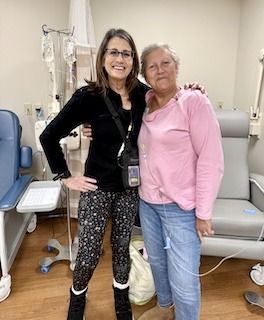
I think one thing is — I don’t know about other people and where they’re at — but where I am getting chemotherapy, since COVID, people are not allowed to come in there with you. So you’re in there by yourself. I typically see the doctor, and my husband or my daughter might be with me, my son might be with me. I’m with the doctor, and then they’re like, “Okay, now you’re going to treatment. You go that way,” and your family goes the other way. So you’re in there by yourself, and you’re in your own thoughts as you’re getting this poison put in your body.
I think that’s something that’s really, really hard, that you’re in there and you’re in your own thoughts. I asked myself, “What can I do to make it a little bit better for me?” I pack a chemo bag the night before, and it’s like I’m going on a fun trip, but I’m not going on a fun trip. It’s like I’m going on a flight somewhere fun. It will have a book that I may or may not read because you can’t always concentrate when you’re in there, because you’re getting chemo, but so are a whole bunch of other people. There are beeping noises, nurses coming in, and doctors coming in. The receptionist comes in with your next appointments. There’s a lot of constant coming and going.
So I have a book in there that I may or may not read. I have my AirPods that I can use to listen to something. I have something to drink while I’m there, something to eat while I’m there, but you really don’t feel like eating or drinking, or at least I don’t. One thing that I like to do while I’m there is talk to people and make friends, and that has helped tremendously. I have what I call my “chemo best friend.” Her name is Lisa, and we are on the same cycle, but she actually just switched her cycle, so I hope that we can still stay together. We’re there, and we talk to each other because it’s a very long day.
The other thing that people don’t tell you is that, with my treatment, they first give you a steroid. I say that that steroid makes you “wired but tired.” Your mind is going, and you just want to go, go, go. This actually lasts me for several days, where my mind is super active with ideas and things, and I want to do all this stuff, and everything’s racing in my mind, but physically I am tired, and I can’t sleep because of the steroid. That was something that was really, really hard for me. The first time that I got that steroid, I thought, “This doesn’t work well with me,” but it might not affect everyone that way.
How stage 4 stomach cancer changed my outlook on life
Cancer has really changed the way I look at life. It’s not just me, and it’s not just with a cancer diagnosis. Anyone — you don’t know when your last day is going to be on this earth. So what do you want to do with the time that you have left?
I have really looked at my job, my friends, and my family. The big thing that drives me a little bit crazy is that everyone says, “You can’t let cancer win. You want to live.” I do want to live, but it’s really hard to live day to day and take vacations and do fun things when you have chemo every other week. I bring a chemo purse home with me, so I don’t just have the one infusion day. I have the one infusion day, and then I have Tuesday and Wednesday. I always have infusions on Monday, and I’m usually there six to eight hours. Then I bring home a chemo purse, which runs for 46 additional hours. So all day Tuesday and most of Wednesday, I have this chemo purse.
You don’t want to go somewhere with a chemo purse. I can’t work in a school with a chemo purse because I have an actual line of chemo. A kid could pull it, or something could happen. Then you don’t really feel that great on Thursday. I typically go to work on Thursday, but you don’t feel that good. Then you just have the next week, where you can do something. So you can’t plan big, extravagant plans and go a lot of places because you have to be back by next Friday for your blood work for the following week of chemo.
I take every day as I feel it. I’m blessed every single day that I wake up, and I’m happy to be alive, and I do things that I like to do. I tell people I love them. I go hang out with my nieces and nephews. I still go to work because that’s good for my mental health. It makes me happy to be there. I feel like I’m doing something. I feel like I’m making an impact. Because I work in a school, I see kids all day, every day. People say, “Kris, why would you work right now? You have a stage 4 diagnosis.” I say, “Because it’s good for me here. The kids help me feel happy, and I feel good about what I’m doing every single day.”
What keeps me going through stage 4 stomach cancer
There are a lot of things that keep me going: my family, my friends. Behind me, those are just a few of the cards. I have a huge tote of cards and little trinkets. People will send me things. It’s close to Saint Patrick’s Day, so they’ll send something like a four‑leaf clover, just little love notes and text messages and silly videos that people send you. My family and friends really keep me going.
Movement is huge for me. I know a lot of people say, “You say you want us to move, but we can’t move. We just feel awful.” I am a person who needs movement in my life, and that’s the way I’ve always been. Movement helps me. Regardless of what my day is like, no matter how sick I’m feeling, I try to get up and move. I try to walk. I try to do simple things. I don’t go and run a marathon, but I try to walk. Sometimes it’s a slow walk. Some days, my legs feel so heavy, I feel like I can’t even trudge forward, but I do. I like to do yoga. I like to stretch. I like to swim. I like to spend time in nature. I go outside and walk through my woods with my dogs.
I go down to the beach. We have a beach nearby, and I look at the sunset. And faith and encouragement from people — I just didn’t realize how many people would pray for me. I have strangers reaching out, saying that they are praying for me. An example is at school. One day I came, and there was this beautiful quilt and a note from this women’s quilting club. They pray over the quilt, they make the quilt, and then they give it. I did not know a single person in that quilting club. They had heard about me.
In my position in the past, I was a building principal, and I always left my teachers what I called “love notes.” In that note, I would say something that I saw that I really liked when I walked into their classroom, or something special that they did for a student. I have an entire bin filled with love notes from people that I sent love notes to years ago. Now they’re sending love notes to me.
The greatest medicine is not one that comes from a pill or through my IV or through my port. It’s through the faith and encouragement of all those people who love you, and sometimes it’s people who don’t know you. My daughter encouraged me, when I was brave enough to share with everyone in August that I had this stage 4 diagnosis, to start a TikTok. I’m not a social media person. I said, “I am not getting on TikTok and doing goofy things.” She said, “Mom, even for people that don’t have cancer, you can encourage them and give them little positive nuggets of you.”
I was so surprised when I did that at the number of students — now adults, not little kids — following me. Kids who were in my son’s graduating class, they’re 23‑ and 24‑year‑olds now. My daughter’s class, they’re 20‑ and 21‑year‑olds. Those are kids sending me notes over Christmas break, kids who were on their college break. They wanted to come and see me and make sure that I was doing okay. These were students that I had when I was a building principal or a classroom teacher. All that love and encouragement is really keeping me going, keeping me going for sure.
What hope means to me with stage 4 stomach cancer
My hope for the future is that cancer will someday be cured for everyone, and that they find a cure for all kinds of cancer. Unfortunately, right now, and I know that there are several people on your platform in the same boat, there is not a cure for my type of cancer, and so I will never be what they say “cured.” Hopefully, at least, we will find a way to reduce the amount of cancer cells in my body.
I have so much to look forward to. I hope that I have more time on this earth, and that’s what I talk to God about all the time. When I take those walks, I take something called a “prayer walk” a lot of times. Sometimes those prayer walks are when I’m mad, and I’m talking about that to God. Or I’m thankful for another day here on this earth. It depends on the mood that I’m in. But I take those walks.
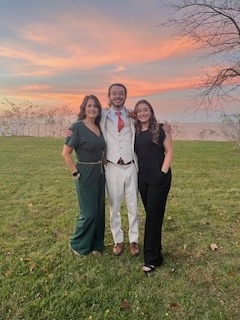
I have my daughter’s wedding in September, and my son is getting married, and he is expecting a child. I have so much to look forward to.
I have spent so much of my life taking care of other people’s children in my position that I want an opportunity to take care of my grandchildren. That’s my hope — that I’m here to take care of my grandchildren.
My advice to someone newly diagnosed with stomach cancer
I would tell them that they have to be their own advocate. If you are diagnosed with any kind of cancer — it doesn’t even have to be cancer — if you’re diagnosed with anything, you have to be your own advocate. You need to do your research. You need to talk to people. You need to look at platforms like yours, where there are people who are experiencing different things. Because, as I said before, I didn’t know that you could live without a stomach. I had never had a stomach issue, so I didn’t know that.
You really have to be your own advocate. You have to always put yourself first. Ask a lot of questions. If you don’t understand, just say, “Excuse me. Can you speak English to me? You’re talking medical jargon. I want to hear something in English. What exactly are you saying?”
The other thing that I had to realize is that I’m a person who likes to care for others. I like to do, do, do. As I said earlier, I’m an action person. What I have learned is I have been humbled that I have to accept the help of others, and I have to accept their love. When they want to do something for me, I can’t just say, “Oh no, I’m fine. You don’t need to do anything for me.” I need to say, “Hey, that would be great. Yes, can you bring this over for me? Or can you do this for me?” That was really hard for me, very, very hard. So, I guess, accept people’s help.
Considering life without a stomach after gastrectomy
Originally, when I talked to the first surgeon, before they realized that it had gone to other places in my body, he was going to just do a partial removal. He had explained some things that I was going to have to do and some things that would be different for me: eating small meals, realizing what foods you can eat and what foods you cannot eat, sleeping upright a little bit so you’re not lying down flat, just things like that.
When I spoke to the surgeon at MD Anderson, and we talked about my lifestyle, he said that he felt I would be a good candidate for the removal of my stomach and that that would not be a huge life change for me because I am somebody, like I said, who eats small meals. He said, “You’re not going to be able to eat a large meal. You’re not going to be able to eat a cheeseburger, French fries, and a milkshake.” That wasn’t what I usually did before, anyway.
He said, “It is a long recovery. You will have to sleep upright because you won’t have the flap that helps keep your acid reflux from coming up. You will have to sleep tilted.” I do that now, anyway. He said, “Once you realize what foods work for you, you have to stick to that.”
That is not an issue for me at all because that’s the way I’ve always been. I’m a picky eater. I eat the same thing all the time. I eat the same thing for breakfast. That’s what has helped me. I have gone back up from 118 pounds to about 130‑some pounds now because I set a timer on my phone to remind me to eat, and I eat a little something to nibble on in between when I’m going to classes or whatever.
I think that’s what life is going to be like if I get the opportunity to live life without a stomach. I think mindset is huge. I said from the beginning, I had the mindset that I wanted to have that surgery. I think that I’m mentally prepared for that. A lot of times, when you have a major surgery, it’s because something has happened or you’ve had an accident, and you don’t have time to prepare for it. You have your leg amputated or something; you don’t have time to really process that. I’ve had time to process the idea of a partial stomach or no stomach at all now, and so I’m going in with the right mindset too.
A day in the life on chemo: Treatment cycle at home
I just want to say that for fellow cancer people or people who are also going through it, the day in the life of a treatment cycle for me is all about what happens once I’m home. I had that packed bag. When you’re in treatment, you have a packed bag. Another thing is you have a chilly room, so you might want to bring a blanket or a pillow because it’s always cold in there.
Once I’m home, I’m surrounded by family and friends. I have that chemo purse on me that’s humming for the next 46 hours. I have a timer on my phone that reminds me to eat and when to take a walk. For anyone who is going through this, you just have to try things because things sound really good, and then somebody goes to make it for you, and you get the smell of it, and you can’t tolerate it. I have an entire pantry full of food that, when I’m at the grocery store on my off weeks, sounds really good. I think, “Oh, this sounds good, this sounds good,” and then I can’t eat it.
I have an entire pallet of drinks out in the garage because everything at first, with the first treatment that I had, tasted like metal. I have an entire pallet of different drinks that I can’t drink. So you just have to keep going back to trying different things, tasting different things.
I’m not a person who eats out a lot. But what I have noticed is that on treatment days and certainly the days that I have the chemo purse at home, if somebody’s cooking food, then I can’t eat it. But if somebody brings something to me — like a salad or something that was not cooked or not prepared in my house — then I can eat it. For somebody going through it, keep trying. Keep trying everything. If it doesn’t taste good one time, it might taste okay the next. Food that doesn’t taste good or food that you might not have had a liking for before might taste good.
My perfect example is, I told you that for 25 plus years, I had not had red meat. My son was grilling steaks one day, and I said, “Oh my goodness, those steaks smell so good. I want one of them.” I tried a few little bites because I wasn’t sure how my stomach was going to tolerate it. It had not had red meat in it for 25 years. It was delicious. It was delicious. So now I’m trying to eat a little bit of red meat every week or so, trying to get a little bit. That was something that I would not have ever even touched, and I had not touched it for 25 years.
Try things. Be willing to be open to things that you have not had before and see. Chemotherapy and immunotherapy might be the medical plan for me; those are what we’re doing right now, and possibly surgery. But I feel like mindset, movement, nourishing the body both inside and out, and faith and encouragement are my personal plan. Those are the things that I hope will help me control the situation a little bit because I’m a bit of a control freak. It helps me control it, and these pieces that come together that are just as vital to my survival as the chemotherapy and immunotherapy. All those other pieces are huge.
Practical chemo tips: Lips, mouth pain, deodorant, and smell changes
I didn’t know if you wanted just a few tips that I had put in there, like nipple cream for your lips. I know that sounds bizarre — who would think of nipple cream? But somebody told me, “You need to get this.” That worked because with my first ten treatments, the chemo they had me on made my mouth get sores around it, especially in the corners of my mouth. It was summertime, and I would put that on, and it worked great.
Another thing is, before chemotherapy, I was a mint person. I love mint gum, love mint tea, and would suck on the circle mints all the time. Candy canes at Christmas were my favorite. But mint really hurt my mouth and my tongue during the first ten treatments. It was horrible. It would burn, and I was rinsing my mouth out. Somebody said, “Get cinnamon toothpaste.” That’s what I got. I got cinnamon toothpaste, and it works wonders. I can tolerate it much better.
It’s just crazy things. Another one — this is some people’s favorite TikTok — is when I talk about deodorant. Who would have guessed that deodorant would be part of your conversation when you’re going through chemotherapy? Sometimes the chemo — I don’t think other people can smell it the way the person getting the treatment can smell it. When they’re pushing certain drugs in you, I’ll say to the nurse, “Can you smell that?” She’ll say, “I don’t smell anything, Kris.” I’m like, “Oh no, it really stinks.” The same thing with deodorant. I can smell the chemo coming out of me. It is disgusting. So I’ve tried a million different kinds of deodorant.
It’s not just trying different kinds of food and drinks. You have to try different kinds of lotion, chapstick, toothpaste, deodorant, whatever, because your body changes so much and so many things are getting put in you.
Hidden chemo realities: Bathroom rules, separate laundry, and staying home
The other thing that no one ever told me is, with the chemo — and I think it’s with chemo, but also with the chemo purse — is that I need to use a different toilet. No one in my house can use that toilet. When I come home, and I have the chemo purse on, I need to use just this one toilet. I have to wipe it down with disinfectant wipes, then flush twice.
That’s one of the reasons why on the days that I have my chemo purse on — number one, I can’t go into a school with it, like I said, because I have that chemo, and we could have a chemo radioactive disaster. The other thing is, I don’t want to go anywhere and use a public restroom because I don’t want to put anyone else at risk. When you get chemo, and you’re living in a house, we’re fortunate enough to have more than one bathroom. But what if you have one restroom, and every single time you have to run to the bathroom, you have to double flush and wipe it down with disinfectant? It’s crazy things like that that I had no idea were part of chemotherapy, that those are some of the things that you have to do.
With that first treatment, I had a lot of cold sensitivity. They said I might get it, but I didn’t know I was going to get it for sure. It was summer when I was having that chemotherapy, and I had to wear gloves — winter gloves. Then, if I was going to touch food, I put rubber gloves on top of the winter gloves. Even to reach into the refrigerator to get an egg — I didn’t know I was going to have that cold sensitivity. I wanted an egg for breakfast. I went in and touched it, and when I touched it, I dropped it immediately because it felt like lightning shocks going through my fingers. I still have the side effects of that with my fingers and my feet. I have a lot of neuropathy.
Laundry detergent was another thing. I’ve always used the same laundry detergent. I love the way it smells. I cannot stand the way it smells now. My family still uses that detergent, but I have to use a no‑scent laundry detergent. Not only do I have to use a separate toilet, but I also have to wash my clothes separately. I can’t wash my clothes with anybody else’s clothes.
I’m trying to be very careful. I don’t want to expose anyone in my family, obviously, and I don’t want to expose anybody in public either. That’s why I try not to go places, because you might be somewhere and you might have to go to the bathroom and you have that chemo purse, and you really don’t want somebody else going into the bathroom after you. I usually stay home on those days, and you don’t feel really great on those days either.
The power of community: “Moochi Strong” and sharing my journey online
When I was talking about family and friends, another example that I should mention is my staff. They didn’t tell me. I came in one Friday, and they all had periwinkle — that’s the color of my cancer — and their shirts said “Moochi Strong.” All the staff were wearing shirts that said “Moochi Strong,” and the kids were all dressed in either purple or light blue. The teachers had talked to them, and the kids don’t know what it is, but even kids that I don’t know say, “Hey, you’re the Moochi Strong lady.” There is so much support from so many people. It’s insane. I’m so fortunate and so blessed to have that many people behind me.
You think that in June, July, August, before I shared with anybody, in those beginning months, I just had this small shell of people supporting me. Once I was brave enough to open up and let people know what I was going through, I felt like I had an entire world helping me, looking out for me, and praying for me. That’s huge. So even if you’re a very private person and you don’t want to open up, take the time to process it. That’s what I did. I took some time to process what I was going through. I think I wanted to have some things to tell people. I didn’t know anything in the beginning. I just knew that I had this cancer, but I didn’t know what they were going to do. Then we changed from four treatments to ten treatments. I wanted to have an idea of what my course of action was going to be before I shared it with the world. Once I shared it with the world, I had strangers reaching out to me.
Be brave to get out of your comfort zone. Never in a million years — I don’t have Facebook — I thought I would be doing this. My daughter said, “You have to do this, Mom. People need to know your journey and that it might help them.” That’s my goal. That’s my goal for doing this right now, and that’s my goal for my TikTok too: to help anyone who might need to learn one thing. You’re going through treatment, and your mouth is burning, and you’re like, “I don’t know what to do.” I hope you watch my TikTok on cinnamon toothpaste. Or if your mouth is so dry, I hope you look on Amazon for nipple cream. Just things like that.
This interview has been edited for clarity and length. The views and opinions expressed in this interview do not necessarily reflect those of The Patient Story. This content does not replace professional medical advice.
Inspired by Kris’s story?
Share your story, too!
Hear from people living with stomach cancer
Real experiences with diagnosis, treatment choices, side effects, and life beyond stomach cancer — in their own words.


Leave a Reply