
Stage 4 Melanoma Experience: Chris on Faith, Scanxiety, and New Treatments
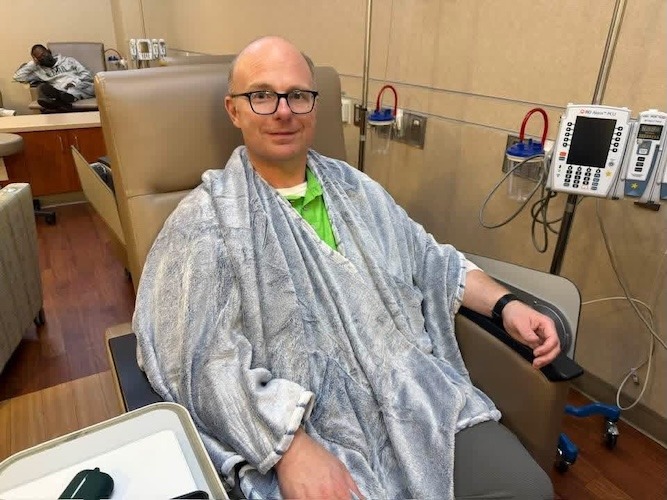
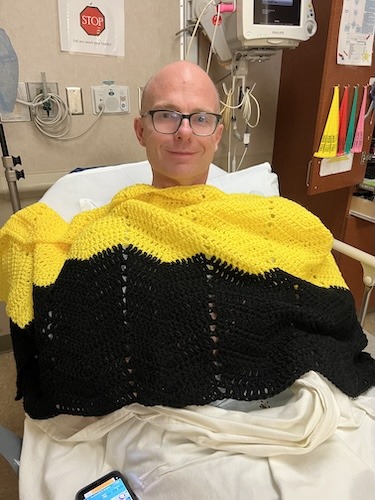
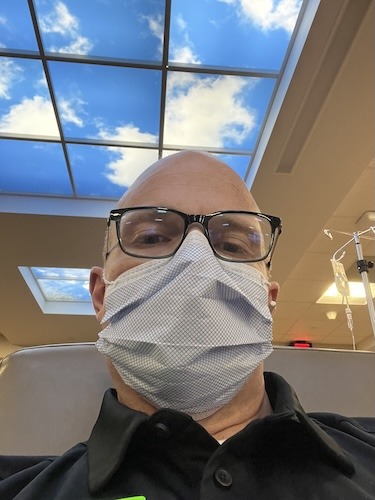
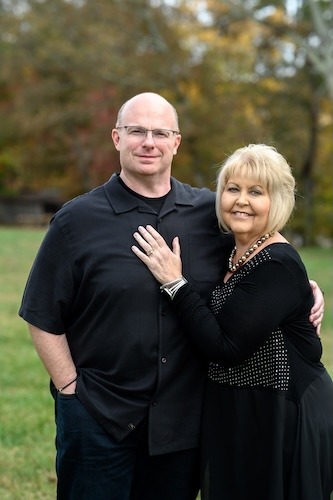
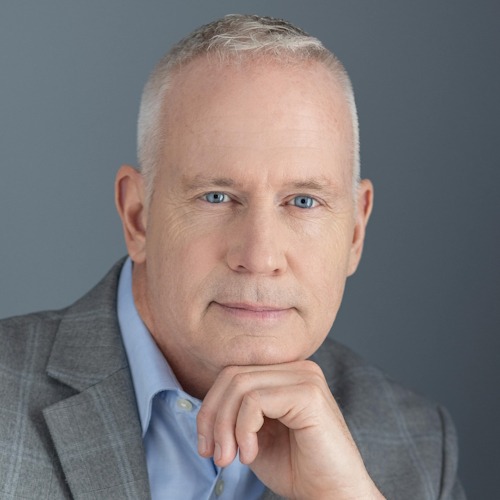
Chris never expected a stage 4 melanoma experience to be part of his life’s story. In his early 50s, he describes his first 45 years as “storybook”: a loving marriage, membership in a strong faith community, stable work, and no major health issues. That sense of security was shaken when he woke up one night in late 2022, felt a swollen lymph node in his neck, and eventually learned it was metastatic melanoma. The diagnosis was especially shocking because Chris had long avoided the sun and had a long-standing, non-suspicious mole on his scalp that multiple clinicians had checked over the years.
Interviewed by: Tory Midkiff
Edited by: Chris Sanchez
Once the skin cancer in his neck lymph nodes was confirmed, imaging showed no other visible disease, and the melanoma was staged at 3C. His team recommended immunotherapy before surgery, followed by lymph node dissection and removal of the spot on his scalp. Surgery went smoothly, but the pathology showed the treatment had not meaningfully affected the melanoma. Rather than continue a drug that hadn’t worked and had already caused colitis and thyroid damage, Chris, in close partnership with his oncologist, chose a watch-and-wait approach with frequent PET scans and brain MRIs.

Over the next two years, the cancer progressed to stage 4 as new subcutaneous spots appeared in his arm, chest, and back. Each time, the tumors were surgically removable, a fact Chris calls a “blessing,” but he and his doctor agreed they could not keep “playing whack-a-mole.” He enrolled in a clinical trial using a newer immunotherapy regimen for metastatic melanoma. After some initial mixed scan results that might have reflected pseudoprogression, Chris eventually reached no evidence of disease on imaging.
Even with that response, the experience remained complicated. Elevated eosinophils (immune cells) and a likely immune-related capillary leak syndrome forced him to stop treatment after eight months instead of the usual 18–24. Today, Chris lives “three months at a time,” planning life around his scan schedule, navigating scanxiety, and leaning into his faith, marriage, and work family. He is clear that the unpredictability of stage 4 melanoma is real. So is his hope that ongoing advances, like his immunotherapy regimen and tumor-infiltrating lymphocyte (TIL) therapy, will keep opening new doors for him and others living with metastatic melanoma.
Watch Chris’ video and read the edited transcript of his interview below for the details of his stage 4 melanoma story.
- Early melanoma signs can be subtle, such as a long-standing mole that never looked suspicious and a single swollen lymph node, making persistent self-advocacy and follow-up crucial.
- Treatments may not always work as expected. When the initial treatment plan did not change Chris’ cancer on pathology, his team focused on changing the plan rather than blaming him.
- Systemic therapy decisions are complex, and sometimes “watch and wait” with close surveillance is an active, thoughtful, and better choice rather than inaction.
- A universal truth for patients: scanxiety is real, and it is okay to change how you interact with test results, including portals and notifications, to protect your mental health.
- Chris’ transformation shows up in how he lives “three months at a time,” intentionally being kinder, more present, and more vocal in advocating for his own care and for accessing major cancer centers and second opinions.
- Name:
- Chris K.
- Age at Diagnosis:
- 47
- Diagnosis:
- Skin Cancer (Melanoma)
- Staging:
- Initially 3C; progressed to stage 4
- Symptom:
- Swollen lymph nodes in the neck
- Treatments:
- Surgeries: lymphadenectomy, wide local excision, reconstruction
- Immunotherapy: neoadjuvant immunotherapy (ipilimumab and nivolumab),
- Clinical trial with PD-1/LAG-3 combination (nivolumab and relatlimab-rmbw)
This interview has been edited for clarity and length. This is not medical advice. Please consult with your healthcare provider to make informed treatment decisions.
The views and opinions expressed in this interview do not necessarily reflect those of The Patient Story.
- My storybook life before melanoma
- The first sign: Swollen lymph nodes in my neck
- Metastatic melanoma diagnosis and the hidden scalp mole
- Staging with a PET Scan and immunotherapy BEFORE surgery
- Second opinion and choosing watch-and-wait
- Melanoma recurrence in my chest and back, and “whack-a-mole” surgery
- Treating melanoma after the first line fails
- Enrolling in a melanoma clinical trial ( PD-1/LAG-3)
- My cancer is undetectable, now I’m living scan to scan, three months at a time
- Unpredictability of stage 4 melanoma and finding support
- The emotional impact of watch-and-wait
- Swollen lymph nodes, family history, and not living with regret
- The “benefit” of weight gain and scanxiety
- Why a major cancer center and second opinions matter
- Advocating for yourself and avoiding “Doctor Google”
- Advances in melanoma treatment: Opdualag, TIL, and hope for a cure
- Learning to handle patient portals and results
My storybook life before melanoma
My name is Chris. I just turned 50 about two weeks ago. And I would say the first 45 years of my life were storybook, almost perfect.
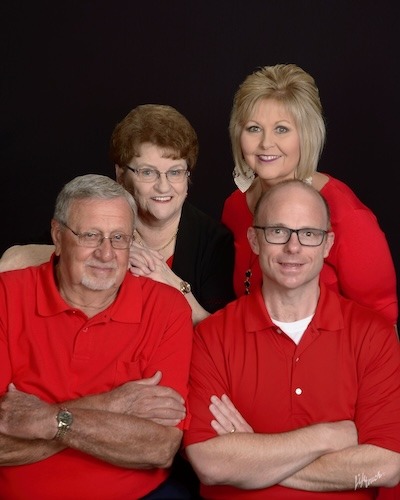
I’m very religious, and I was very blessed. I have a wonderful wife. We have been married for 25 years in May. I call her the Queen Cougar because she’s 14 years older than me, but we are a perfect match. We just fit so well together. I love her dearly. I have a great life. So up until about age 45, everything was absolutely perfect. I had a good job. I worked for the health system here in Charlotte, North Carolina. We’re very active in church. My wife is the music director at the church. So lots of friends and family. Probably the only thing in our life that was a little bump in the road is that we weren’t able to have children.
Other than that, my parents were still married after 60 years. My mother passed away recently, but in that first 45-year period, parents were still married, no financial troubles, friends and family, no major sickness. Everything was great.
Then, around age 45, the wheels fall off of everything.
So we struggled with our faith just a little bit. But I did tell my wife we can’t ignore the 45 fantastic years we had because we’ve had a pretty rough four or five.
Her sister had a disability and was bedridden. We had a niece pass away from cancer. My mother developed some dementia. So a lot of things like that were going on on top of things.
The first sign: Swollen lymph nodes in my neck
It just so happened that, as we’re in that period, in November of 2022, I woke up in bed one evening, maybe to use the restroom or something, and felt my neck. There was a lymph node in my neck that was swollen. I mean, pretty swollen. You could definitely feel it. And I thought, “Well, that’s odd. Is that something?”
So I had my wife feel it, and she’s like, “Yeah, I feel something there.” So I went to my primary care doctor, who felt it and said, “Well, it moves, it’s not necessarily hard. It’s probably nothing. Let’s watch it for a month and take some antibiotics. Probably an infection. Maybe you had Covid or something. In a month, we’ll reevaluate it.”
So I go back in a month, and it was still there — and had even grown slightly. A week later, I noticed another lymph node beside it. This was right around the holidays, right around Christmas. So about a week before Christmas, he ordered an ultrasound on that lymph node. The ultrasound came back suspicious.
Ultrasound, fatty hilum, and suspicious findings
I’d never heard of a fatty hilum or hilum or whatever that term is. But guess what? You want one in your lymph node. You don’t want it not there if they do an ultrasound. So it was not there — no fatty hilum. Because of that, it was suspicious. So he ordered a CT scan. I got that done, and it showed that both of the lymph nodes were swollen. So it was definitely swollen lymph nodes. The question was, from what?
The holidays passed, but there were no other lymph nodes in my neck that had any problems. So we were hopeful it was some inflammation because they were beside each other. I got referred to a head and neck surgeon at Levine Cancer Institute here in Charlotte, for whom I have nothing but high praise.
I went in to see the surgeon. He felt the lymph nodes and did some work with his portable ultrasound. He’s like, “Yeah, this probably isn’t anything. It could be, but it’s probably not. We can either watch it, or we can go ahead and biopsy it.” My wife, who was with me, said, “No, you biopsy it today.” So he said, “Okay, no problem.” He biopsied it and again said he didn’t really think there were any major concerns.
Metastatic melanoma diagnosis and the hidden scalp mole
When the pathology came back about four or five days later, we were shocked that it was metastatic melanoma. Shocked for several reasons. The provider — and the provider was awesome — even said, “Look, I’m so sorry I did not prepare you for this. I did not think this was anything serious.” And I said, “Look, you’re not God. You do the best you can. We all know that things happen.”
The surprising part about it being melanoma: I am Casper the Ghost. I never get in the sun. When I go to the beach, I’m the one that lays by the indoor pool with my book and my towel. I’m not a sun or heat person. So it’s very unusual, but it turned out I had had a mole on my scalp, my very bald scalp. I’ve been bald probably since I was 25, and it has been there probably 20 years, maybe even 25 years. As far back as I can remember, it’s been looked at by physicians. It’s been looked at by dermatologists. Nobody ever thought it was anything serious. It was not discolored. It was not misshapen. But after they identified the melanoma in my lymph nodes, the question was, “Okay, where did it come from?” And I said, “I bet I know exactly where it came from. I bet it was the spot on my head.”
So I went back about two days later, after the pathology came back, for them to biopsy the spot on my head. Sure enough, that was the primary melanoma spot.
Staging with a PET Scan and immunotherapy BEFORE surgery
The provider ordered a PET scan. We had the scan, and at that time, everything else was clear. That was a relief because it was a very anxiety-producing time. Everything else was clear.
Then I met my oncologist. He staged me out, and I was stage 3C. He said, “We really need to do neoadjuvant therapy. That’s kind of the latest and greatest in melanoma care — where we’ll do ipi-nivo immunotherapy for two doses before surgery.” By doing it before surgery, they can then see if it was effective in the pathology when they take those lymph nodes out. That was pretty cutting-edge at the time. That was three years ago, and they had just started taking that approach. It’s moving into the standard of care.
So I had my surgery. Everything went well. No real complications from the surgery. They removed 39 lymph nodes, with three of them having melanoma: the two we knew about and one that had some microscopic melanoma. They took the spot off my head.
Scalp surgery and plastic reconstruction
I actually had a plastic surgeon close that scalp wound with what they call a star move, where they move some of the skin together and sew it up to try to make the scar — as little as possible — less noticeable. So I had that done and recovered well. Everything was going great.
Then the pathology came back, and that was a body blow because it was not effective. It just wasn’t effective. It did not have any effect on the cancer. So that brought up the question, “Okay, what do we do?”
The standard of care potentially would have been to continue the nivolumab. But my doctor was very much like, “It may come back, it may not. We don’t know.” I also had some colitis with the nivo. He said, “You had side effects that were not insignificant. Maybe we just wait and see.” He totally left it up to me.
Second opinion and choosing watch-and-wait
Around that same time, in the April–May timeframe, I got a second opinion in June, just because — you know, I’ve got potentially incurable cancer and was supposed to get a second opinion.
They totally agreed with everything that was being done in Charlotte. They actually seemed surprised that we were on the cutting edge like that. I told them, “My care team is great. They’re on top of it.” Fortunately, I can drive an hour away, so I don’t have a super long commute to see these excellent doctors who are taking care of me.
We decided to watch and wait. We said, “Okay, no point in taking something that could cause problems.” So we’ll just watch and wait. That was April–May of 2023 when I had the excision.
Surveillance scans and first stage 4 melanoma metastasis in my arm
We go all the way to February of 2024. I had clear skin exams. Every three months, I’m getting a PET scan. Every six to eight months, I get an MRI of my brain. We make it until about February 2024, and a spot shows up in my arm, kind of in the arm fat here on the right side.
We watched it for three months. It continued to grow, but it’s in a place where it can be removed. So I have surgery to remove it.
I’m hopeful maybe it’s not melanoma, but it comes back as melanoma. From this point forward, I try not to get my hopes up when these things happen, to avoid being disappointed.
Since it was melanoma, that made me officially stage 4. That was around June 2024. I got it removed, and the next PET scan was totally clear.
For the rest of the year, things were totally clear.
Melanoma recurrence in my chest and back, and “whack-a-mole” surgery
Then February 2025 rolls around. February, by the way, is my birth month, but it is not a good month for me in terms of my PET scans. Everything was pretty clear until February 2025. Then another spot shows up in my chest, in my chest fat at the front. I could feel it. This one was very close to the surface, and it actually bruised on the surface. So I thought, “Oh, I’ve hit myself or bumped something. This isn’t melanoma,” because the other ones didn’t bruise. Although this was the one other than the lymph node that was closest to the surface.
We go in, they surgically remove it, and unfortunately, it turns out to be melanoma as well. But up to this point, I tried to look at the blessings in this. As serious as it is, up to this point, every occurrence I had had was in a surgically removable spot. That was the blessing in it. So far, it has not been on any major organs. These were all pretty much subcutaneous in the skin and could be removed.
At the same time, they identified this spot, which they removed because it was close to the surface. A really small spot showed up in the back of my shoulder, still in the fat near my shoulder blade. We watched it. The May scans come around, and it has grown. It’s glowing brighter on the PET, and there are two other very small spots in the fat of my back. Again, the blessing is that this is all in potentially removable places. But at this point, my doctor was of the mindset that “… there’s no point in continuing to play whack-a-mole. We’ve got to try something systemic to see if we can get a handle on this. Yes, we could cut those spots out, but at the rate they’re coming back every six months or so, that’s probably not going to end well. So we need to figure this out.”
He wanted to enroll me in a clinical trial, which I did get into.
Treating melanoma after the first line fails
“Ipi-nivo” again was not effective for me. That was my first line of treatment.
The doctor lays out my options. Again, he is fantastic. He studies this stuff. He says, “Okay, we can go with the next level immunotherapy — the nivolumab-relatlimab combination — it’s not the name brand, which was just approved in 2022. It works a little differently because it’s a LAG-3 inhibitor instead of CTLA-4. We can try that. Or we can go ahead and get you in the pipeline for TIL therapy. Your spot on your shoulder is big enough; it would qualify. Or we could try targeted therapy.”
Now back to not winning the lottery on some of this stuff: I do not have the BRAF mutation as most people would think of it. They test for BRAF, and I want to say maybe it’s K and E — certain letters are more susceptible, and they consider you BRAF-positive, and it opens up a whole other line of therapy, which is pretty effective, just maybe not for a long time. That wasn’t really on the table for me because I’m BRAF with a less common variant. There are some studies that say for about 20% of patients, it can be effective with the R variant, but that’s not one of the ones they typically target. But he said that was an option to try. He did not recommend it.
He also said there were a few people who had some luck with chemo. He just laid it all out. As we talked through it, my choice was to try the newer PD-1/LAG-3 immunotherapy since it was a newer option.
Enrolling in a melanoma clinical trial ( PD-1/LAG-3)
The option would have been the approved drug, Opdualag, but there was a clinical trial that is still ongoing today where they had another PD-1/LAG-3 combination in trial, which supposedly has the potential to have slightly better results and fewer side effects than Opdualag, which was approved in 2022.
So I got into the clinical trial. Back to having such great luck with all this stuff: I was randomized to the normal group, so I didn’t get the clinical trial drug — I got Opdualag — but that’s okay because that’s what I would have gotten anyway.
We had prayed — again, we’re very strong people of faith. We had prayed that I would be assigned to the group for the right treatment for me. And I ended up in the group that is getting the Opdualag. That started in June. I had been getting PET scans; the study requires CT, so I got baseline CT scans and started the treatment in June. At first, no side effects, no problems. Treatment was going great.
Early scans on trial and pseudoprogression
We get to August, and I have my scans. Two of the spots — the two spots in my back fat near my hip — had decreased in size, but the one in my shoulder had still increased in size. My doctor was very hopeful it was pseudoprogression, where the cells rush in, and it grows before it shrinks because your immune system is fighting the cancer. That was the goal; we hoped that was the case. He was optimistic, but we didn’t know that for sure. My overall tumor burden was lower because the other two spots shrank more than that one spot grew. So three more months of treatment. I’ve had six treatments once a month.
We get the scans in November: no evidence of disease. Fantastic. I’m ready to cut a flip. It’s so exciting. The spot in the shoulder is gone — or it’s still there, but they say it’s more scar tissue, that it’s basically melted away. The ones in my back/hip area are gone. We’re thrilled about that.
However, they noticed a lymph node under my arm that was unusually large. Also in this November visit — this was November 2025 — my blood work showed that my eosinophils were extremely high. I was having no side effects, no problems, but my white blood cell count, my eosinophils, were higher than my physician was comfortable with to continue treatment.
Is this good or bad? Enlarged underarm lymph node, and holding treatment
He decided to hold treatment during November to see if that came back into line. We were going to monitor this lymph node, but he thought it could be inflammation or something. I go back in December and have another chest CT. That lymph node had grown. At this time, I’m concerned. We got rid of all this other disease, but now there’s this lymph node.
My provider, who is always very direct and honest — he’s seen a lot in all his years — does not make false promises, but he did say it would be unusual for that lymph node to be growing with cancer while my other spots disappear. It’s possible, but unusual. There are some mixed responders, but that’s not typical.
So in January, after the December scan showed it had grown, they got me scheduled in January and basically took that lymph node out. They did a one-day surgery and took it out, and actually took out a cluster of five lymph nodes that were clustered together.
We waited for the pathology. Again, I’m trying not to be overly optimistic because every time I get my hopes up that it’s not melanoma, it has been melanoma. This time, when the surgeon took it out — Dr. Squires, great surgeon — he said, “It’s not black, it’s not discolored, but that doesn’t necessarily mean anything.” He was hopeful it might not be melanoma, but of course, he couldn’t promise that.
It came back that it was not melanoma, which is fantastic. It was inflamed lymph nodes, which could be a potentially good sign because it means my immune system is revved up trying to fight this cancer. It had revved up these lymph nodes in my armpit area.
My cancer is undetectable, now I’m living scan to scan, three months at a time
Then we get to the February scans. I got a full set of scans in February last month, and everything is basically non-detectable, no evidence of disease. So that’s great. The lymph node wasn’t anything. I’m on cloud nine, feeling as good as you can feel.
The one thing I will say about this entire process that takes real adjusting to — especially in these early stages with continued recurrences — is you live, I live, my life three months at a time, which is very odd to say. I don’t mean I live only three months at a time; of course, even if something shows up three months from now, I’m still going to be here. But it affects how you plan your life, how you try to live your life.
I try to be better to people than I used to be, because it really does impact the way you look at life when you know that we’re all going to go, but you might be seeing your stop sign sooner. Maybe if you see your stop sign coming a little sooner, it makes you think about how you try to live your life and be a good person and whatnot.
Of course, through this entire process, my wife has been great support, but she is so upset, especially back at the initial diagnosis. I didn’t really talk about that much, but I’m more worried about her than I am myself just because she’s so upset. Again, we don’t have children. We just have each other. We’re like the perfect couple — at least in my mind, we’re the perfect couple. We have our moments, but still. So there’s all of that emotion every three months. “Scanxiety” is a real thing when they talk about that.
Ongoing melanoma treatment, weight changes, and prednisone
Back to right now and current. Last month, I went back to treatment. I had the seventh treatment in January because my blood work came back in line, and I had my eighth treatment in February. All is well. We’re moving down this course. I’ll get new scans in May to see if things are still no evidence of disease.
You people that are watching this have not seen me before, so you don’t know this, but I had lost about 130 pounds back when I was age 45 — talking about how everything was great, best shape of my life. I’d always been overweight, but I was not much overweight at that point. I exercised every day and was in great shape. Then, back at 45, when everything went off the track, as part of some of this cancer treatment, at different points, I had to take prednisone. I had made it to 47 years old and never took prednisone a day in my life.
Well, guess what? If you lose 130 pounds and then take prednisone, about half of it’s coming back. So that happened. I’ve got to get back on the wagon with that as a personal goal.
Sudden facial swelling and shortness of breath
About two weeks ago, I woke up, and my face was swollen. It’s still swollen now, not as bad as it was two weeks ago. That’s why I’m a little bit hoarse. My face was swollen, my eyes were swollen, and they were weeping. It was tremendous swelling. My first thought was, “My gosh, I’ve got to quit eating. Look how much weight I’ve gained.” My wife said, “You didn’t develop three chins overnight. Something is going on here.”
Sure enough, a day or so later, after that swelling, I started getting short of breath upon exertion. I’d been very blessed with very few side effects other than the colitis from the initial ipi-nivo. Even when I had the issue, it wasn’t something that I felt. I had no symptoms. From that perspective, things had gone really well.
I started swelling up like a balloon. I went to see my provider while short of breath. He did the normal blood work he would do, held the infusion, put me on some prednisone and some Lasix to get some of that fluid out. Very high-dose prednisone. My wife may want to kick me out of the house because I’m not always the cheeriest on that high-dose prednisone, but I’m on it. He also ordered a cardiac workup and blood work and sent me to a cardiologist.
The cardiologist evaluated me and did an echocardiogram. Everything looks good. I still have one more test upcoming next week, a cardiac MRI, for them to keep looking because they know this fluid is on me. Interestingly enough, the fluid is not in my ankles or legs, where you typically see fluid accumulate. It is all between my waist and head. The cardiologist explained that when your immune system is activated, one of the adverse events that can happen — it’s rarer, but can be serious — is capillary leakage, where some of your fluid just starts leaking into your tissues. He said it’s different from normal heart failure-type fluid retention because it’s more in your tissues, and that’s why it concentrates up here.
Capillary leak syndrome and stopping immunotherapy
He’s ordering the test, and basically what he’s looking at is: are the steroids working? The swelling is starting to come down slowly but surely. I gained about 15 pounds in two weeks; about six or seven pounds of that is now coming off. The cardiac MRI’s purpose is to determine whether we stay the course with the steroids and let this take care of itself, or whether we need to do something more aggressive.
I’m still short of breath if I exert myself, but not so much at rest anymore, so that’s resolving. That was not fun. Not being able to catch your breath is not fun.
What that means, as we get to where my treatment plan is today, is no more treatment. I’m coming off the clinical trial, even though I was in the normal medication group, because that could be a pretty severe side effect if it continues. Given that I had the eosinophilia and now this, they feel it’s best to come off for now.
Of course, that brings up all kinds of questions for me. There’s a school of thought — and I’ve discussed it deeply with my oncologist — about whether I continue therapy even at the risk of side effects because, I mean, are these side effects better than the cancer coming back?
Unpredictability of stage 4 melanoma and finding support
It is so unpredictable with stage 4 cancer, particularly melanoma. I’ve had a complete response according to radiology. The last spots I had disappeared on imaging. They weren’t biopsied to see if there was actually a pathological response, but logically, you would think there would be, since they disappeared. There’s a chance with that response — with just eight months of therapy — that I may have a durable response for years and not have a recurrence for some time, or I could have a recurrence in May. It is so unpredictable.
I think the odds favor some durability with this, given that it went away and it worked. I would feel better because they originally like for you to take 18 to 24 months of treatment if you can tolerate it. I made it eight. But again, maybe it just did such a great job of jacking everything up that it’s going to continue to work. So that’s where my treatment journey has taken me and where I’m at now.
My supportive work family and hospital culture
A few things I’ll mention as well that happened along the line. I have a tremendous work family. I love my team at work. I will tell you, I love my work family. They are so supportive, and we truly are a family. We have fun and try to do a lot of things together. I always tell my team we’re going to work hard and play hard.
I’m the person responsible for all of our front-end registrations in our hospitals. If you come to one of our hospitals, the folks who check you in and get you registered — that’s our team. I really try to promote a culture of work hard, play hard. We’re going to work hard. We’re going to meet our goals. But we’re going to have fun doing it because life’s too short. When you have fun going into a work environment like a hospital, the patients feed off that. They see that. They don’t want to go into a facility where the people at the front desk are just sitting there. They want some interaction. That’s why I try to promote that culture.
I want to make sure I mention that because they’re supportive, and that’s great. I’m very blessed with my job.
Faith, “why me,” and wrestling with God
The other thing I would say: a lot of people, when they get cancer, say, “Why me? Why did this happen to me?” I kind of look at it as, “Why not me?” I’m not any better than anybody else. Things happen. It is what it is.
Where I think it’s challenging for people of faith — because I’m very much a Christian — is back to what I said earlier. You can’t just believe in the good times and then throw your faith aside when things get bad. It is a challenge, and we just keep going back to, “Man, the first 45 years of my life — most people would want that. Nobody wants the last five years.” But anyway, that’s some background on that.
Misconceptions about “just skin cancer”
I’ll mention a couple of other things.
One is that the only thing about melanoma for people who truly don’t understand is: people will say, “Well, that’s just skin cancer.” But they don’t understand — once it metastasizes, it’s a whole different ball game.
People may not always understand, but people mean well. That’s a piece that has come up that I focus on.
Humor, the “Best Day Ever” cake, and community support
Another funny example — because I also have a sense of humor about this. I have my days, I have my depressed days, but you have to go on living life. I may now be free from this cancer, in remission for ten years. That would be fantastic. But you also have to be prepared; it may be back after six months. There are other treatment options if it does come back.
When I first got the cancer, back to the sense of humor: a friend of ours brought a cake over to the house because I love cake and birthday cake. She brought a cake over, but the only saying they had on the cake at the store was “Best Day Ever.” So she brings me a cake that says “Best Day Ever” on the day I found out I have cancer. We laugh about that to this day because that was a lot of fun.
I would say that it is very daunting to have cancer. It is very challenging, but it shows where your support is. The community has rallied around me. There have been prayer rallies for me, prayer meetings. I couldn’t tell you how many cards I’ve gotten from people at work who have been supportive. It has been tremendous and humbles you to see the support system that can be there.
I don’t hide from it. Some people don’t want their business out there, and they’re secretive. I lay it all out there. All the prayers, all the help, anything I can get, I will take. That’s my perspective. That’s my 30-minute spiel to start with.
The emotional impact of watch-and-wait
The watching and waiting was tough, because I’m an active person. I want to get it done, knock it out. It was tough. But I will say with the nivo, the colitis I had was not life-altering, but it was not fun.
After discussing it with my oncologist, the thought was: if this comes back or something more serious happens, the cancer may or may not come back; we don’t know. So the treatment — and of course, had the treatment worked when they did that initial pathology, it’d be a no-brainer. Of course, we would do it. But given that it didn’t, he said, “It’s totally up to you.”
It was tough to watch and wait. Even now that I’m going to be discontinuing treatment again, the thought of just waiting every three months and getting a scan is, in some ways, terrifying because it goes back to that three months to three months. It was really tough. But I trusted my oncologist. Knowing now what I know, I don’t think anything would have changed other than the anxiety. I think treatment or not, I would have had that recurrence. I think it worked out for the best, but it was definitely anxiety-provoking.
Swollen lymph nodes, family history, and not living with regret
That was an adjustment. When I found those lymph nodes in my neck, I’d never had a swollen lymph node I could feel that I knew of. I really did not anticipate cancer. Every male in my side of the family typically has issues with their heart, so I’ve always told people that when I leave this world, it’s probably going to be from a heart attack. I never expected to get cancer. I don’t have a huge history of cancer in my family. My mother did have breast cancer. My father, now at 80, has prostate cancer. But still not a large history.
So I never anticipated getting cancer. Back to the initial surgeon, saying he really didn’t think it was anything, my primary care provider had looked at the spot on my head, had even sent it visually to a dermatologist for referral. Even my primary care provider came back and said, “Oh my God, we should have biopsied that.” I said, “You offered to biopsy it, but we discussed it and thought it probably wasn’t anything. You just do the best you can. Nobody knows for sure.”
From the time it was identified as cancer — once the lymph node biopsy came back, which was January of 2023 — and up until recently, this fluid retention has been the only “new” issue. I’ve not felt sick other than that colitis. Yes, I’ve had some fatigue, but I also just turned 50 years old, and I’m overweight, so I’m probably going to have some fatigue anyway.
The “benefit” of weight gain and scanxiety
One thing I’ll tell anybody who sees this: the one benefit to having cancer is that oncology is the only specialty in the world where you can gain as much weight as you want and they will not fuss at you. They will not say anything to you because they don’t want you to lose weight.
I’ve been trying to get some weight back off. I said, “I’m the only cancer patient I know that keeps gaining weight instead of losing weight.” From that perspective, some of the fatigue and whatnot was an adjustment. But even now, thankfully being no evidence of disease, I’ve really not had a hard time compared to a lot of people. It’s not been easy, but it’s been a lot more mental and anxiety-provoking because there were no physical symptoms.
Along the way, I probably had a couple of panic attacks. I’ll be fine for three months, and the week before a scan, I’m just not in good shape. It’s the nature of the beast. That’s where it really hit me — my nerves and anxiety. It did move fast. That’s the other thing I’ll say about my care. I’m very blessed here in Charlotte. We have the Levine Cancer Center.
Why a major cancer center and second opinions matter
If somebody is in a very rural area, I would recommend — if it’s feasible — going to a larger center for treatment. The system I work for is the largest health system in North Carolina, and they are on the cutting edge with clinical trials and things like that. It makes a difference versus being in an area where they don’t have the specialization. If you can’t travel for treatment regularly, at least get a second opinion.
When I say things went fast: three years ago, in January of 2023, I had a primary care doctor, and that was about it. Now I have an endocrinologist, a hematologist, a gastroenterologist, and I just started with a cardiologist. I’m sure there are a few more ‘-ologists’ in there.
One thing I forgot to mention: after my initial ipi-nivo, I had colitis, and my thyroid went out. So I’ve been on levothyroxine for three years. It totally killed my thyroid. I take a full replacement dose. That was also a side effect of the ipi-nivo. When we had that discussion about watch and wait, there was also a discussion around, “Could it be the adrenal gland next? Could it be the pancreas?” Since we weren’t seeing effectiveness, was it worth the risk?
That’s the discussion I had with my oncologist last week. If — and I’m hopeful and prayerful that it won’t — this recurs, then we have to have the cost-benefit discussion. Do we start this again and risk fluid retention again, but accept that it’s worth it if they might retreat and get some response? Do we move on to another form of treatment? Do we watch and wait until things get to a certain size and then try something? Although I don’t think watch and wait would be the recommendation.
Advocating for yourself and avoiding “Doctor Google”
That’s the other thing about your team. You want to work with a team. I feel like my doctor and my team are brilliant, but they also listen to what I have to say. I think you have to advocate for yourself. I think he gets a kick out of every time I go in — I tell him what I want to do, and I’m like, “Okay, do you agree?”
My opinion on this, for what it’s worth: Doctor Google is not your friend. In this stage 4 melanoma situation I’m in right now — I’m three years and three months into this. Let’s say I’m 39 or 40 months into this cancer journey. Stage 4 melanoma patients in 2010 lived six months. That was the average. Some did better, but about 5–10% survival. Five-year survival was not good. Most people did not make it six to eight months. Of course, I wasn’t stage 4 until 2024, but most people didn’t make it. The advances since then are why, not that you ever want to have cancer, but if you’re going to have it, in some ways, now is the time to have it.
Advances in melanoma treatment: Opdualag, TIL, and hope for a cure
Take this Opdualag with the LAG-3 inhibitor that was only FDA approved in 2022 — and it worked for me. How long it will work, I don’t know, but it worked.
Here I am in 2026. Had that not been approved in 2022, that wouldn’t be an option. TIL therapy was just approved in, I think, 2024, another option for melanoma. There are new frontiers in medicine. My thought is: if I can stay in remission for a few years, who knows what the next big invention is? It might be a cure. “There are new frontiers in medicine. If I can stay in remission for a few years, who knows what the next big invention is? It might be a cure.”
Right now, they say my cancer is treatable, not curable. Some people do get a durable response from immunotherapy, which is kind of a functional cure that lasts for many years. Fingers crossed, prayers up that that happens with me, but we’ll have to see.
Learning to handle patient portals and results
The other thing I’ll say — I was talking about Doctor Google — is MyChart and online portals. I have gone 180 on that. At the beginning, I opened that portal as soon as any result would hit, and I would read it. After that first recurrence, my oncologist is very good about trying to schedule everything together — PET scan in the morning, labs at lunch, see him in the afternoon — so it’s all done together, which is awesome. But a couple of times, scheduling didn’t work out that way. I had a PET scan and didn’t see him for two or three days. That’s when I had the recurrence, and I was in pieces, upset about it.
After my next one, I looked at MyChart. I have now turned off the notifications from MyChart. I wait and talk to the doctor about it, whether it’s pathology or scans. I will still look at bloodwork and some things, but for any major scans, I just wait. I let him give me the news and talk to me about it. If it’s good news, we can celebrate it. If it’s bad news, he can go right into what the plan is. It’s your personal information, your business, how you want to handle it, but you can really freak yourself out with your online portal results.
Inspired by Chris’s story?
Share your story, too!
More Melanoma Stories

Patient Stories
Hear from people living with bladder cancer
Real experiences with diagnosis, treatment choices, side effects, and life beyond CLL — in their own words.
Leave a Reply