
“I’m Going to Beat This”: Rich’s Stage 4 Pancreatic Cancer Experience
When Rich, a 41‑year‑old father of two young boys, walked into the ER with stomach pain and constipation, he had no idea he was on the verge of a life‑altering stage 4 pancreatic cancer experience. For years, he’d told his wife he didn’t feel right, and cycled through blood work, hormone testing, and lifestyle changes without clear answers. His life had been full, with hockey three times a week, a thriving real estate career, and a busy home with a 4‑year‑old and a newborn. Then one Sunday morning, after playing dirt bikes just days before, he sensed something was about to change.
Interviewed by: Nikki Murphy
Edited by: Chris Sanchez
At the hospital, an initial episode of acute pancreatitis and “benign” liver lesions led to reassurance rather than alarm, and months passed with on‑and‑off upper abdominal pain. When Rich returned to the ER, scans and tumor markers finally pointed to pancreatic cancer, and a biopsy confirmed malignancy in both the pancreas and liver. Hearing “pancreatic cancer” made the room spin, but after the shock, he experienced an unexpected calm and resolve. He called his wife from recovery to say, “Don’t Google statistics… I’m going to beat this.” This statement set the tone for how he would move through his diagnosis.
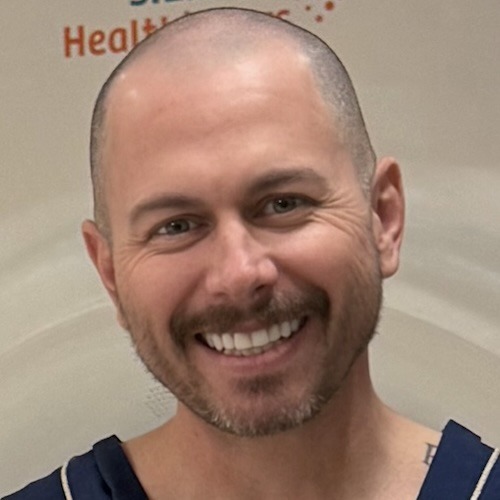
Rich’s pancreatic cancer story quickly became about relentless self‑advocacy. He started chemotherapy within days to “buy time.” He and his wife methodically contacted top pancreatic cancer centers across the country, from California to Arizona, Texas, and ultimately New York. Along the way, he encountered rigid clinical trial rules, discouraging prognostic comments, and even a financial scam involving repurposed medications. Each setback reinforced his commitment to trust his instincts and keep searching for a team that believed in his potential.
That team eventually came together with surgeon Dr. Christopher Wolfgang at NYU and oncologist Dr. Eileen O’Reilly at Memorial Sloan Kettering Cancer Center. After nine rounds of chemo, Rich saw dramatic tumor shrinkage, about 90% in some liver metastases, and tumor markers that dropped to near‑normal levels. He then began targeted liver radiation designed to clear remaining disease and potentially open the door to Whipple surgery on the pancreas.
Throughout his pancreatic cancer experience, Rich has leaned on faith, his family, and close friends with cancer for strength. He continues to plan for the future, including buying a horse ranch and imagining the day he can get his chemo port removed and return to the ice.
Watch Rich’s video above and scroll down for the edited transcript of his pancreatic cancer story.
- Self‑advocacy can change options. Rich and his wife kept calling and traveling to multiple cancer centers until they found a team aligned with their goals and hope for aggressive treatment.
- Standard of care is a starting point, not the end. Beginning chemotherapy quickly helped control the cancer and later opened doors to targeted radiation and potential surgery.
- It is normal not to hear what you want at the first appointment, and patients often need to ask questions, seek second opinions, and protect their emotional well‑being along the way.
- Support networks matter. Faith, family, and friends going through cancer alongside him helped Rich cope with fear, sepsis, surgery, and long treatment days.
- Transformation through perspective: Rich describes coming to see life differently, focusing on love, community, and long‑held dreams like buying a horse ranch, and he now feels called to be there for others diagnosed with cancer.
Rich’s Diagnosis Facts
- Name: Rich N.
- Age at Diagnosis:
- 41
- Diagnosis:
- Pancreatic Cancer
- Staging:
- Stage 4 (Metastatic)
- Symptoms:
- Week-long stomach pain and constipation
- Treatments:
- Chemotherapy: FOLFIRINOX
- Targeted radiation therapy
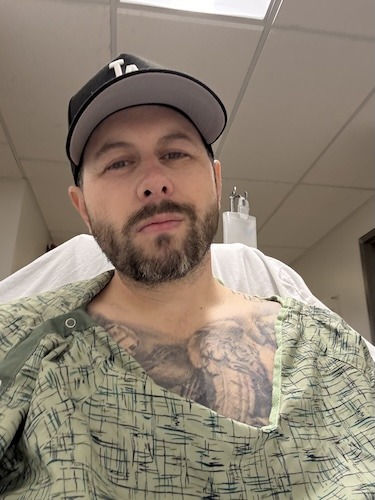
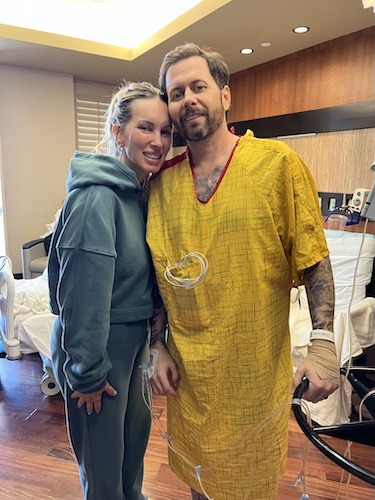
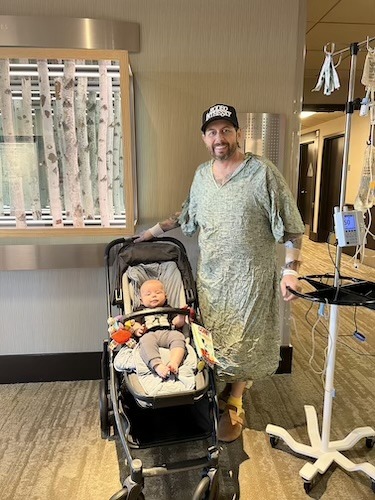
This is not medical advice. Please consult with your healthcare provider to make informed treatment decisions.
- Rich’s Diagnosis Facts
- My life before pancreatic cancer
- Early symptoms and initial ER visit
- The day of my official pancreatic cancer diagnosis
- Biopsies, tumor markers, and hearing, “It’s malignant”
- Early chemo, Mayo Clinic visit, and starting the second opinion journey
- Building the team: Surgeon Dr. Wolfgang and oncologist Dr. O’Reilly
- Dramatic response to FOLFIRINOX chemotherapy
- Targeted radiation to the liver, and Whipple surgery plan
- The emotional toll of pancreatic cancer on my family
- Faith, coping, and refusing to dwell on fear
- Waiting after radiation and coordinating surgery timing
- What people don’t realize about living with stage 4 pancreatic cancer
- Genetic testing and the Galleri blood test
- My advice for someone newly diagnosed with cancer
- The importance of self-advocacy, and not settling for the standard of care alone
- My hopes for the future, and no evidence of disease
- Hear from people living with pancreatic cancer
My life before pancreatic cancer
Hi. My name is Rich. I am from La Quinta, California, and I was diagnosed with stage 4 pancreatic cancer in 2025.
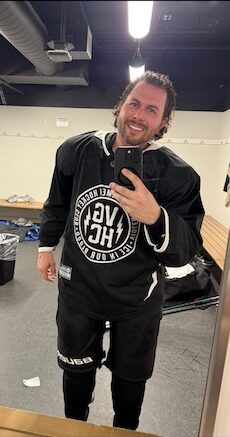
Before I was diagnosed, life was really amazing. I was super active with the company and family, a father of two. I was super active. I played hockey three times a week, I had a business, and I was married. I had just had my second son, Callum, who is three months old, and I had a four-year-old. So, needless to say, it was very hectic in such a good way.
Early symptoms and initial ER visit
When I was diagnosed, I was 41 and about a month out from my 42nd birthday. I felt very mentally on top of my game, but for probably the last at least three years, if not four years, I would complain to my wife and I would say things like, “I just don’t feel right. I don’t know what’s wrong with me, but something’s not right.”
She would say, “Sweetie, this is part of getting older. You’re trying to be active and younger, and time’s catching up to you.” And I said, “There’s no way. I’m not even 40 yet. This can’t be happening.” I just didn’t feel right. I was constantly doing blood work, tests, hormones, and testosterone replacement. I thought it was all these different things.
Finally, I started getting closer to figuring out what the issue was, but it was overlooked. In January 2025, I went to the ER for stomach pains. I’d been constipated. I’ve never had that happen in my life. I was constipated for over a week, and I had upper stomach pain. Before that, I didn’t have any traditional symptoms that I’ve heard people with pancreatic cancer carry. I didn’t have back pain or shoulder pain. I literally just had this episode of upper stomach pain that was kind of dull, and constipation too.
When I went to the ER, they asked me, “Do you drink?” I don’t drink alcohol. Before even going to the ER, I quit drinking alcohol entirely. Before that, I was a social drinker. But I broke my heel playing hockey and asked the doctors. I didn’t want to do surgery. I asked, “How can this heal quicker?” They said, “Alcohol leads to inflammation.” So I just simply cut it out.
Fast forward, I’m in the ER, and they’re asking me questions like, “Are you drinking?” They said, “This is really unusual for someone to have acute pancreatitis, but basically drink this activated charcoal, go home, and go on a clear liquid diet for a couple of days. If it doesn’t go away, come back.” So they sent me home. It did go away, but for the next nine months, the pain would come periodically.
I followed up. I got another scan where it just showed narrowing of the pancreas, which the doctor noted as common with acute pancreatitis. They noted some liver lesions that they thought were possibly fatty liver. The doctor said, “Oh, it’s benign. You’re probably born with these. Nothing to worry about.” Then three months later, in September, I went back to the ER, thinking maybe at that point I had ulcers or something stress-related from work. That’s when I got the final diagnosis.
The day of my official pancreatic cancer diagnosis
So I had played hockey that week. Friday, I was riding dirt bikes, and Sunday, I was lying in bed with my two boys and my wife. It was about 9 a.m. I told my wife, “I’ve got a really busy week, and my stomach’s starting to bother me again. I hope that the pancreatitis isn’t flaring up, or maybe it’s ulcers. I’m just going to pop down to the ER really quick and have them look at it.”
I remember lying in bed that day and looking at my two boys, and it just felt different. I thought, I’m so blessed. Life is amazing. But I felt like something was wrong, like it was going to change. I went to the ER by myself and did the scans. I was sitting in the ER, and I could see it was taking a while. I could see doctors talking, discussing, and looking over at me.
One of them started to walk over to me. He goes, kind of upbeat, “How are you feeling?” I said, “I’m feeling okay, but I have a feeling right now I’m about to not be based on what you’re going to tell me.” He said, “Yeah. It looks like you have pancreatic cancer.” The room started spinning. I thought, This can’t be happening. I’m a sole provider. I just had my second child. I immediately thought of Steve Jobs. I knew the odds were bad for pancreatic cancer.
I stood up and told the doctor politely, “I can’t hear any more right now. Can you do me a favor and call my wife and just tell her to come down here?” He got on the phone. There are so many things that God played a hand in my journey that I look back on now and reflect on. It’s clear to me that He was walking along this path with me.
One of my really dear friends, who is a nurse, happened to just randomly stop by the house that day, which was not common for her to do unannounced, but she just stopped by and was visiting with my wife. When the doctor called, she was there. My wife, of course, broke down. Then she got on the phone and said, “Hey, I’m a nurse practitioner. What’s going on?”
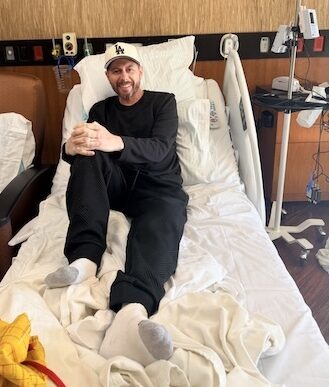
They said, “We’re thinking about discharging him. We don’t know if we’re going to keep him or whatnot.” She knew it could take a while for me to get back in medically. She basically told the doctor, “He wants to be admitted right now. We’re coming down there. Admit him to the hospital.” That’s what they did. They admitted me to the hospital, started running tests, and scheduled a biopsy.
Biopsies, tumor markers, and hearing, “It’s malignant”
The doctor didn’t give a definitive answer. He just said, “We’re pretty sure.” He mentioned one thing that was unusual for them. They wanted the biopsy to clarify that my CA 19-9 was slightly elevated. It was at 60, and normal levels I was told are 35 or below, so I was about double.
Now, knowing more about the pancreatic world, I’ve heard of people in the thousands with very high elevated numbers. What was unusual and not necessarily typical, I guess, for pancreatic cancer was my CEA tumor marker number, which was extremely elevated at 1,800. There were a couple of doctors coming in and out when they moved me to the oncology floor. By that time, my mom, my mother-in-law, and my wife had shown up. We’d been at the hospital for the latter part of the day.
One doctor was trying to be optimistic, saying it was really unusual. Another doctor was almost arrogant, saying, “There’s no way you could not have cancer with these tumor markers.” So we were going back and forth with doctors, waiting for the biopsy.
I remember I was freaking out. I was arguing with them, saying, “This can’t be possible. There’s no way.” No one in my family had a history of cancer, so it was completely out of left field. I remember praying to God, saying, “I’m not ready to go. I need to be there for my family.”
They ended up doing the biopsy. They basically did two procedures on me. They said, “We’re going to put you to sleep, do a pancreas biopsy, and intubate you. We’re going to put a stent in to open your bile duct, so you’re not jaundiced. We want to prevent that from happening.” Then they did a liver biopsy.
I remember praying before. I remember waking up and freaking out throughout this duration. There was nothing macho or strong about me in that moment. When I woke up, the doctor was standing over me with his arm on my shoulder. He said, “It’s confirmed. It’s malignant. You have pancreatic cancer.”
I heard them, and I was fine with it. This sense of peace came over me like nothing I had experienced. I just felt like I was going to be okay. I had my cell phone with me. I was downstairs in their operating room, and I called my wife. I said, “Hey, they’re going to tell you I have cancer. I don’t even know what stage it is. I’m guessing it’s later, but whatever they tell you, don’t Google statistics. Don’t freak out. I promise you right now, no matter what they say, I’m going to beat this.”
I went up to the room, and I told everyone, “I just need them to be strong around me.” I remember thinking in my head, and I was telling her, “Let’s f***ing go.” I was pissed off. I thought, “The nerve of this cancer. It thinks it’s going to show up right now in my life. Not a chance, buddy. We’re going to battle.” I told my mom, “There are no tears. We’re going to stay positive, and we’re going to get through this.”
Learning at Mayo Clinic that the pancreatic cancer was stage 4
At that point, they had not officially told me it was stage 4 yet, but they confirmed that the liver was malignant and the pancreas was malignant. It wasn’t until a little bit later on that I actually heard “stage 4.” We right away started researching hospitals and clinics.
When they released me from the hospital, very quickly, within about two days, I had scheduled the chemo port to be put in within four days. Right after that, before I was even going to start chemo, I scheduled chemo within seven days — extremely fast. I didn’t know if that was the right direction, but I felt like it was popping up in my head, and someone was guiding me spiritually. I thought, “Just do this and buy yourself time until you figure out the direction you want to go.”
I did that. Then I went to the Mayo Clinic in Arizona because it had been recommended as a big cancer hospital. It was probably the closest in proximity to us in La Quinta, California. When I went in, that was the first time I realized that with doctors, you’re going to have to advocate a lot for yourself and believe in yourself. They’re not necessarily going to pull you up and boost your confidence. You’ve got to really protect your emotions.
The doctor was literally sitting across from my wife and me, and he said, “Wow, I don’t know how you’re so calm and composed, having stage 4 cancer.” That was the first time I heard a doctor say stage 4. He said, “I don’t know that I would be able to keep it together as well as you.” I said, “What are my options?” That was the first time I heard the confirmation that it was stage 4 cancer.
Choosing not to hear a prognosis
I specifically remember when I knew that it was stage 4 and I’d watched videos and things of that nature; I would tell doctors in advance, if they were ever going in that direction or felt like they may give me a timeline, “Please, respectfully, I don’t want to hear any type of timeline conversation. If you feel like you’re not the right doctor to help me, that’s fine. You can just let me know. But as far as a timeline, I never wanted someone to say anything to me that would mentally be stuck with me that I’d have to get over.”
Not a single doctor told me two years, five years, six months — none of that. I avoided that conversation, and I never asked because it didn’t matter to me.
I was convinced in my head that I was going to beat this.
Early chemo, Mayo Clinic visit, and starting the second opinion journey
For some reason, when I got to Arizona, I was in a lot of pain, especially after the liver biopsy. It was really incredible how, on Sunday, I was essentially in the ER, and within that week, how quickly things had turned and how much pain I was in from the liver biopsy.
I went with my two boys, my wife, and my mother-in-law. We were there, and I just remember being sick in the car going up there. I thought, “Okay, this is not where I’m going to be.” They basically said standard of care, and I thought, “Okay, I can get that at home. I don’t need to drive all the way to Arizona for that.”
One of my buddies, who had a Sprinter van, offered to come pick my family and me up because I couldn’t sit in the car. I was in so much pain. He came and got me, and I lay down to get home. I was really weak and sore and felt sick.
My wife now has this three-ring binder that’s this thick. She started calling and researching every hospital. We would literally Google “top pancreatic cancer clinic.” We went down the list and scheduled appointments with pretty much all the top clinics that you can think of.
We started with UCLA. There were UCLA, Loma Linda, City of Hope, and MD Anderson in Texas. We took appointments with all of them. We had reached out to Sloan Kettering, but we thought, “We’re on the other side of the continent. We’re in California; New York is going to be really hard.”
We had started chemo in Rancho Mirage, California. Then we would have appointments. One of the things I think is so challenging within the cancer world that I hope they find a way around is that some of the clinics in California, like UCLA, we were able to do Zoom calls. Some other clinics that were out of state, we had to go there just to find out if there was something they could offer me. Unfortunately, like the Mayo Clinic or certain things, these are great hospitals — there’s nothing against them — but we had to go there just to figure out there wasn’t an option for me.
A lot of these hospitals, like some at UCLA, have great programs. Again, they were kind of like, “You’re stage 4, but you’re doing really well for that.” I thought, I don’t know what that means.
Barriers to clinical trials, and “Call us back if things get worse”
They said, “We don’t really have anything to offer you right now because you’ve started chemo. Since you’ve started chemo, we can’t put you in a trial. But if things get worse or the chemo doesn’t work, then call us back.” I was dumbfounded by that. I was pleading with them. I said, “Look, I’m a father. I’m 41 years old. What do I do in this situation?” They said, “We’re sorry. Call us back if things get worse.”
I asked, “So if I’m on my deathbed and at my weakest point, then that’s when you’re basically going to throw a Hail Mary out there?” The answer was yes. We kept going to clinics — UCLA, then City of Hope. We would drive to these in California. We booked one for MD Anderson in Houston, Texas.
They were phenomenal on the phone. They said, “We have so many options for you.” They were so caring, just amazing. They told us to plan on being out there for a week, but it was about a month away. During that time, I was on my second round of chemo.
Life-threatening sepsis and emergency gallbladder surgery
One Saturday night at home, all of a sudden, I was shaking violently to the point where I thought I was going to have a seizure. My body was literally shaking uncontrollably, and then I was vomiting. I had seen movies and thought, “Oh wow, this is what chemo is like.” During the first round, I thought, “That’s not too bad,” and I was on FOLFIRINOX, which is the strongest regimen they could do. I thought, “Okay, round two chemo, this is tough.” I assumed these were side effects.
My wife said, “This is not normal. We need to go to the emergency room.” I said no, then finally thought, “Okay, something is probably really wrong.” Around 11:30 that night, we went to the emergency room. I was vomiting outside the emergency room. They checked me in and asked, “Are you okay? Does it feel like your heart’s racing?” I said, “No, why?” They said, “You’re sitting here, and your heart’s going 187 beats per minute right now.”
I just remember being in excruciating pain on my right side. Things were starting to feel really bad, really fast. They were going back through everything. I went in and out of it. I remember praying in that moment, thinking, “This is how people die of secondary issues or something to that effect.” It felt like my body was letting go.
I prayed to God, “If you want to take me, let my kids know that I fought, that I fought cancer.” At that point, it had been two months, and I thought, This can’t be happening this quickly. I prayed, “Let me show my kids that I was strong, that I fought cancer.”
Doctors were coming in and out. A friend of mine who is a cardiologist worked at the hospital. My wife called him and explained what was going on. He got on the phone with another doctor. They said, “We’re really contemplating doing surgery on him because his heart rate’s so elevated. It could be a major risk that he might die in surgery.”
He got back on the phone and said, “His heart’s strong. He’s young. But if you don’t do surgery, his gallbladder will rupture. He’s going to die from that.” They found out that I was septic and, I think they said, borderline gangrene or something to that effect. At that point, I was very in and out of it. They did an emergency surgery to remove my gallbladder.
When I came out of that surgery, they told me, “You have a bile duct leak somewhere, and we don’t know where it’s at. We removed the gallbladder. You had tons of fluid in your stomach that we had to remove as well. You’re septic right now. We’re going to give you these antibiotics and hope that we gave you the right one and that it clears.”
Thankfully, the doctors at this time weren’t telling me directly, but they told my mom and my wife later on, “He’s very sick. This is very challenging for him.” In the nicest way possible, they were saying, “This is life or death, and we need to clear this sepsis.” They gave me antibiotics, and miraculously, within 24 hours, all my cultures and everything were coming in line and showing that the sepsis was going away.
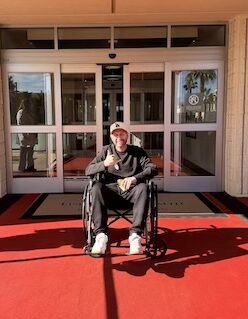
I stayed in the hospital for about 10 or 11 days. I went from 180 pounds to 140 pounds. When I got out of the hospital, you couldn’t see any veins in my hands. I was incredibly weak, incredibly skinny, and my eyes were black and sunken in. I got out of the hospital literally three days before my 42nd birthday, and I thought, “This is brutal.”
Regaining strength and traveling to MD Anderson
We talked to MD Anderson again. They said we had to wait to get my strength back a little bit. I had to wait a couple of weeks after the antibiotics to do chemo again. I did another round of chemo, and MD Anderson kept in contact. They would follow up with us and check in on us. I got my strength back, did another round of chemo, and then took my whole family to Houston, Texas.
When we got there — and this is nothing against the hospital because it’s a phenomenal hospital, it really is. But certain things happen, and we have to advocate for ourselves. If you feel something’s wrong in your gut, listen. We were supposed to do a bunch of labs, testing, and scans, and then meet with the doctor. They flipped it. They scheduled me to meet the doctor first, and then the next day, they were going to do these scans and tests.
The reason was that this doctor, when I met her and sat down, said, “Okay, you’re stage 4 pancreatic cancer with mets to the liver. You’ve done this…” She recited what I had done and said, “I’m sorry. By the way, I wanted to meet with you because I’m headed off to a pancreatic cancer conference in two hours.”
I said, “Okay.” I was asking questions like, “What about down the line if this happens?” I would use words like, “If this miracle happens, like I clear the liver mets, what about the Whipple and these different things? What about clinical trials?” She said, “You’ll never be a candidate for surgery. We just don’t recommend that for stage 4.”
I said, “There are always exceptions to every rule. I’m only asking if I’m the 0.001%, best-case scenario, then what?” There was just no hope whatsoever offered by her. It was frustrating. I thought, “Why did I come here? We booked a place for a week. We’re here now in Texas. Time is so precious. I’m having a meeting with this person who doesn’t have updated scans and is leaving for a conference in two hours.”
We stayed. We tried to switch doctors because this doctor wasn’t going to be there to review the results. They said, “We really have to go through a board approval for that. It’s very challenging to switch doctors at this point.” Immediately, my wife was online searching, “Who’s a great doctor at MD Anderson?”
In short, we couldn’t do it. We were treated very well there by the staff and everybody else, but we just didn’t get the result we were looking for.
Getting scammed on repurposed medication
We didn’t stop. We even looked into protocols for repurposed medication and things of that nature. Again, this is where I say, by the grace of God, I think he was with us this whole journey. We had sent money to someone we thought was a particularly well-known doctor in the repurposed medication world. We sent $3,000 for this medical protocol to this doctor in Canada, who we thought was the doctor. It was someone impersonating him.
We were actually ripped off. We were calling and saying, “Our medication never arrived.” They said, “Oh, it’s at customs. Send another $1,800, and we’ll refund you $1,600.” I thought, No, this doesn’t feel right. I said, “Can you just please refund me the money?” Then the email was blocked.
We tried to call the bank to get the wire back. They said, “There’s nothing you can do. The money is gone.” That happened. I took that as a sign: Maybe that’s a road I’m not supposed to go on.
Building the team: Surgeon Dr. Wolfgang and oncologist Dr. O’Reilly
My wife then, at that point, had reached out to a doctor I kept seeing — Dr. Christopher Wolfgang. He’s at NYU in New York. He’s a surgeon who does a lot of Whipple procedures. We met with him, and he said, “You’re young. You look good. You’re strong, you’re healthy. You can beat this. Your tumor is in the head of the pancreas. It’s not wrapped around any arteries or veins. It would be pointless to do surgery on you now because you have liver mets, and we don’t want to stop the chemo because the chemo is working. Let’s work on clearing those liver mets. If we do kill those liver mets, then surgery can definitely be an option for you, but we’ve got to get through this first.”
I said, “Okay, we have our surgeon in play.” It was like building our team. We had this surgeon in play now. I kept seeing Doctor Eileen O’Reilly at Sloan Kettering. I’m Irish; she’s from Ireland, so I thought, “Okay, instant connection.” I would see these videos where she would take really complicated cases, and I would send them to my wife.
She had actually reached out early on in the beginning — I didn’t even know this — so we were already in their system. Then she contacted them, and they said, “We can actually get you in next month,” or something to that effect. We booked that appointment. My wife and I came out and met with her. She was very matter-of-fact. She was fair. I don’t think she was overly hopeful. She gave very realistic answers.
I would always look at things in the best-case scenario. I’d say, “If I can achieve this, then what do you think would be next?” Never worst-case scenarios. She gave me realistic expectations of everything. She said, “Go back home.” So I kept doing chemo. I finished nine rounds of chemo. I came back to New York, got rescanned.
At that time, MD Anderson was calling, offering me a radiation clinical trial. Sloan Kettering had something they were already using that was not part of a trial. It would be specific to me and not part of a group trial. I chose to stick with Sloan Kettering and do the radiation route.
Dramatic response to FOLFIRINOX chemotherapy
I had finished nine rounds of chemo. At the last round, I started getting a little neuropathy, which they had talked about, in my hands and feet. I explained that to Doctor O’Reilly.
My numbers had really plateaued. My CA 19-9 in the beginning was at 60 and had remained at 1, which they would consider undetectable or below normal levels of 35. My CEA, which was at 1,800, had come all the way down to 16 or 18, I believe. So it was a dramatic reduction.
My pancreas tumor, which was about 3.5 cm by 2.5 cm, was down into the 1 cm range. Some of my liver mets that were 4 cm were below a centimeter. We saw about 90% shrinkage in some scenarios. I responded really well to the chemotherapy. That’s where I think Doctor O’Reilly felt confident to move to radiation.
I’m currently in New York right now. Tonight I’m scheduled for my third session of targeted radiation. I’ll do six sessions in total.
Targeted radiation to the liver, and Whipple surgery plan
The doctors agreed they didn’t want to do the radiation to the pancreas. They said there’s a high success rate for liver lesions or liver tumors. They are very confident that through this radiation, they can kill the cancer in the liver.
If that goes well, that would make me a surgical candidate for the Whipple procedure on the pancreas.
I’m on six radiation treatments. Basically, every day for six days, I’ll have targeted radiation.
Side effects: Neuropathy, weight loss, and food aversions
I had other side effects due to my treatment. A major one is definitely weight loss. Taste was also gone. Everything that was my favorite meal no longer became my favorite meal. To this day, I don’t know why, but I never ate waffles; I never had a strong dislike or like for waffles. If I smell waffles, it almost makes me violently ill. I can’t explain it.
I think it happened when I was in Texas. We drove past an ice cream shop or something in the middle of my chemo, and I smelled waffle cones. Even thinking about waffle cones makes me sick right now. I had weird things like that.
The weight loss was big. I went down from 180 to 140 pounds. In the beginning, because you hear things through the cancer world and everybody’s a medical expert, I really just listened to everyone — I’m very spiritual, so I prayed and listened. In the beginning, I would literally eat blueberries or fruit. We eat pretty healthy in general, like farm-raised chicken and things of that nature. I was eating everything you would get in a cancer book: no glucose, no sugar, because “sugar feeds cancer,” and all these things.
I’m not saying it’s wrong or right, but at some point I felt: I’m not putting on weight. I’m getting to a point where I’m so weak that if I get sick again, I’m not going to survive that. I thought, “I need to put some weight on and adjust later on.” So I started loosening my diet. I would have pizza or ice cream at night or certain things, and I’d try to find the best versions of those things.
For me, I was able to put weight back on, and I didn’t notice any shift in my numbers elevating or changing. I was still getting the response from the chemotherapy. Everything was still moving in the right direction. The good thing was that I was able to go from 140 pounds to about 158 pounds. That was a positive win for me.
The emotional toll of pancreatic cancer on my family
I think the toll that I know this is putting on my family has been the hardest part of the entire experience. There have been things that — after I prayed that day — I had this sense of strength that was not my own. I’ve been really good throughout this whole process. But there was a day that my oldest son, who is four, said something that broke me.
He sleeps with us in the middle of my wife and me. His name is Pierce. He looked over and said, “I have something to tell you. I’m telling you the truth. You have to believe me.” I said, “Okay, Pierce.” He said, “I was on the swing set with this girl, and she said that Daddy’s sick and that he’s probably going to die.”
It just broke me. I was gutted. Through this journey, I knew what the odds were, but I felt like I was going to be okay. Hearing him say that — and knowing my wife, my mom, and all my family — I think the hardest thing is knowing that when you’re going through cancer, yeah, the chemo is hard and what your body goes through is hard, but it’s so hard for those around you as well.
Just like I look at it, you’re going to war, and they’re going to war with you. That’s been the hardest part.
Faith, coping, and refusing to dwell on fear
This is what keeps me going and fighting in the hard moments. For me, when those things happen, I just pray. I say, “I’m going to give this to you, God. This is bigger than I can carry. I’m dropping this off on your doorstep. This is for you to handle.” When I have those moments, that’s what I do. I mentally walk away from it because I’m not going to sit there and dwell there.
By the way, every hospital I mentioned, as good as they are, wasn’t like they were giving me the best news. That’s why I kept going to different hospitals and kept pushing for myself. I thought, “I will find someone who believes, just like I do, that I’m going to beat this.”
We’re human, but if we dwell in those moments of weakness, we can spiral really fast.
Waiting after radiation and coordinating surgery timing
They recommended waiting after my radiation is done before getting scans. They said, “You might see things like your numbers flare up because the cancer is fighting, dying off, but it’s trying to survive. Don’t panic. Normally, you’ll see these elevated numbers.” They want me to wait about eight weeks to do a scan.
Somewhere around that eight-week mark — and this is still what’s unclear to me because I’m dealing with Dr. Wolfgang from a surgery perspective, and Dr. O’Reilly and Dr. Crane for radiology — once we have that, it could be eight weeks or so that Dr. Wolfgang wants to do the surgery on the pancreas.
That’s what I need to figure out on this trip: when that timing will be, if we’ll be waiting for the scans, or if he plans on doing the surgery somewhere in that duration. No matter what, I was told at least six weeks after the radiation before the Whipple surgery on the pancreas.
Limited access to clinical trials once standard chemo started
If surgery won’t be an option, have we talked about going for a clinical trial? This goes back to some of the challenges that we all face if you’re going through a cancer diagnosis — how they choose to offer those clinical trials. That was one of the frustrating things when I called other hospitals or went to meet them. Because I had started what they consider standard of care chemotherapy, I felt like, “Why not throw everything we can at this, within reason, if they would complement each other?”
The doctors told me, essentially, that because I started standard care, I wasn’t really eligible for a lot of clinical trials until the chemo stops working or if my condition worsens. They would use words like, “If you get into a spot that’s really dire, then it opens up more possibilities from a clinical standpoint.”
I’ve done really well on the back end of this diagnosis. My biggest challenge was getting sepsis and my gallbladder removed, and the hospitalization from that. Other than that, I’ve responded really well to the chemo treatment. For me, the FOLFIRINOX really worked in shrinking my tumors.
In fairness, it makes some sense that they say, “We don’t want to take you off a winning game plan and put you into a clinical that’s unknown.” So if FOLFIRINOX and some of these other standard cares work, or if someone wants to skip that, then clinical trials really open up more. I found that they were really closed to me because I had started chemo right away.
Living life while waiting, and buying a horse ranch
So while I’m just waiting, I’m planning and living my life. I’m still working. I enjoy that. It put things in perspective — how short life could be. Sometimes we wait for these perfect moments in life to do certain things: “I’m going to switch jobs,” or “I’m going to move.” There really isn’t a perfect timing.
We’re literally right now in the middle of buying a horse ranch property that I’m going to move my family to. It’s always been a dream. Initially, we were thinking of Tennessee or out of state. I said, “We’re not waiting.” We found a ten-acre spot closest in California, and we’re in escrow right now on that.
As soon as I can, I want to get back to playing hockey. I keep telling the doctors, “When can I take this port out?” That’s going to be my next battle with them — to get this chemo port taken out. I’m living as if I don’t have cancer. I tell myself that I’ve already been healed, that at this point I’m arrogantly trying to prove to the doctors that I don’t have cancer. That’s my mindset. I’m living life, and I’m just going to keep living as best as I can.
What people don’t realize about living with stage 4 pancreatic cancer
Since I haven’t done chemo for a month, I’m starting to feel a lot better, like my normal self. “Chemo brain” is the term people use to refer to that befuddled state. I’ve had those moments where I walked into a room and thought, “What was I doing here?”
I think the hardest thing about living with stage 4 cancer is being around some people. You need to treat stage 4 cancer patients like normal. Be hopeful and not discouraging. Sometimes I had to, in the beginning, tell people around me — my very close friends — we’re not talking statistics, we’re not talking anything negative.
Every once in a while, you get around someone who says, “Oh, Steve Jobs didn’t make it, and he had all the money in the world,” and you hear that. It’s hard to unhear it. Every time I’d hear something like that, I’d have to walk away from the conversation.
The bummer is now we go to family events or things like that, and instead of my personality — I’m always kind of a jokester and goofing around — every conversation now is, “Hey, how are you? How are things going?” So I’m constantly repeating the story. I’m really looking forward to putting this behind me and not having those conversations.
One thing I do feel will be forever changed about my life is being there for other people who get diagnosed and figuring out some way to give back. There have been very close friends of mine through this cancer journey — two friends who were diagnosed with different forms of cancer before I was, but are still going.
We were all going through chemo, all going through things. We really leaned on each other for support. That made a huge difference. When I first got diagnosed, I thought, “Oh my gosh, I’m alone on this island.” Then I realized how many people are truly affected by cancer. The first time you go to chemotherapy, you see how many people are sitting there for various cancers and getting chemo in those chairs. It’s mind-blowing.
I think the hard part is some of the conversations — people say certain things that they don’t necessarily know may have an impact on you. To them, it doesn’t, but to you, it can turn a switch and make you question things. You might be feeling really confident that day, and then they say the wrong thing, and you’re stuck at a dinner party or whatever for an hour thinking, “I wish I hadn’t heard that.”
Genetic testing and the Galleri blood test
I had genetic testing done. It came back as negative. Nothing came back for genetic mutations. That was somewhere early on in my diagnosis, within the first couple of months. They had done it to make sure it wasn’t anything that I would pass down to my boys.
I had taken a blood test that scans for cancer, which the doctor had prescribed. I think they mail it in. I had taken that exactly a year before my diagnosis, and it came back with no risk factors, no cancer, nothing. On that particular test, it’s very accurate, and I would recommend that people do it — do any type of testing you can. But for whatever reason, it wasn’t picked up on my test.
My advice for someone newly diagnosed with cancer
You have to know going into this, unless you’re very lucky, you’re probably not going to hear what you want to hear at your first meeting with the doctor. These doctors deal in statistics and data. Some are faith-based, and some aren’t. You’re going to have to push for yourself and have that will to want to survive and just not accept it.
I mean this as bluntly as I can: I don’t care what stage you’re at — if you want to live, give it everything you’ve got. Throw it all out there. Talk to every doctor. Then figure out what you want to do that you’re comfortable doing and go with that plan. This is your life on the line.
If a doctor wants to do something that you don’t feel is right, talk to another doctor. Whatever it might be, just keep pushing. We went through a lot of doctors. For some reason, in the beginning, despite people reaching out to me about “Don’t do sugar,” and “You’ve got to eat this wild berry from Siberia and do this and do that,” I just had visions and biblical dreams.
I had a dream that I had opened a Bible at night. Basically, I saw a Bible with no scripture in it whatsoever. In my dream, it said in the right-hand corner, “Daniel.” If you know Christian or biblical prophecy, Daniel was thrown to the lions, and God spared him and saved him. I had actually forgotten that scripture. I grew up in the church. I was afraid — it was the night before I was having surgery to get my chemo port in — and I had that dream.
I didn’t look it up until later on to find out what it meant because I was afraid it could be something else biblically, like “Come to terms with life and death.” You just have to listen to yourself. You are the deciding factor, the captain of your ship, and you keep pushing through until you find something you’re comfortable with.
It took us going from California to New York to find the doctors that we were like, “Hey, this is part of our team.” We went to the top clinics in the United States, and they’re all amazing in their own right. But sometimes it’s that doctor at that hospital who’s going to make the difference by wanting to advocate for you as well.
The importance of self-advocacy, and not settling for the standard of care alone
A lot of people just accept the standard of care, whatever’s closest to them.
That’s what’s heartbreaking, because I could have had a dramatically different outcome if I had just accepted what the first person I spoke with told me. Who knows?
Thankfully for me, the chemotherapy really did work well enough to get me to this point where these other options could open up.
My hopes for the future, and no evidence of disease
My goal for this year is to prove to these doctors that I have no evidence of disease, to get this chemo port out of my chest because it annoys the heck out of me, and to put this part behind me.
As hard as it would be — and this may sound cliché — but I was talking to my wife today, and I said I wouldn’t change what I’ve gone through because it’s put life in perspective for me. Whatever you’re looking for in the world will be magnified. There are a lot of amazing people out there. The way people have supported me in my community, through my church, my friends, my family — I can’t explain the love that I’ve felt.
For that, I’m forever grateful. It puts life in perspective that there are so many beautiful things out there. It just depends on what we choose to focus on. I’m grateful for that part of the lesson in this journey.
Two “miracle boys” and the IVF journey
We went through IVF to have our “miracle boys.” We went through eight years of trying and not succeeding, and things happening.
We had my first son, Pierce, who is four years old. Later on, we said, “Okay, we have one. We’re going to try this, and if it works, then it’s in the cards for us to have two boys. If not, we already felt like we were good. We had our ace, we had our one son. We’re good.”
We were blessed with the second boy, Callum, through IVF too. These two boys in themselves — my life was fulfilled with that.
Message to my sons about adversity
I hope that my boys will see that we are all going to be faced with adversity throughout our lives. That is guaranteed no matter what, no matter who we are. You can have all the money in the world — whatever it is — you’re going to be faced with problems.
You try to do your best with dignity to overcome those problems. You push through and understand that life isn’t fair.
Life is beautiful, but you’re going to be hit with challenges. Just do your best to overcome and get through those challenges.
This interview has been edited for clarity and length. The views and opinions expressed in this interview do not necessarily reflect those of The Patient Story. This content does not replace professional medical advice.
Inspired by Rich’s story?
Share your story, too!
Hear from people living with pancreatic cancer
Real experiences with diagnosis, treatment choices, side effects, and life beyond pancreatic cancer — in their own words.


Leave a Reply