
“I Was Weeks Away from Not Being Here”: Yvonne McClaren’s Stage 4 Head and Neck Cancer Diagnosis, and the Life She Built Afterwards
When Yvonne McClaren noticed a persistent one-sided sore throat, she was in the middle of one of the biggest transitions of her life: packing up her home in Australia to relocate to Vietnam. For a woman who had lived with tonsillitis her entire life, the symptom felt familiar enough to dismiss. It wasn’t. That one-sided sore throat was the only outward sign of a cancerous tumor growing on her left tonsil. A diagnosis eventually revealed 30 cancerous lymph nodes in her neck and a tumor that had spread down the back of her tongue. The type of head and neck cancer is known as oropharyngeal cancer.
Interviewed by: Taylor Scheib
Edited by: Chris Sanchez
Yvonne spent months in Vietnam seeking answers, receiving explanations ranging from pollution to lifestyle changes, before finally returning to Australia. There, in a system that moved quickly, the truth surfaced. Within a month of seeing an ear, nose, and throat specialist, she was in surgery. The procedure, a seven-hour robotic operation using the da Vinci system, was far more extensive than anticipated. It was followed by six weeks of concurrent chemotherapy and radiation at the highest grades. Yvonne describes the aftereffects of her treatment, including the loss of her ability to swallow, her speech, and her ability to taste, as equally brutal as the treatment itself.
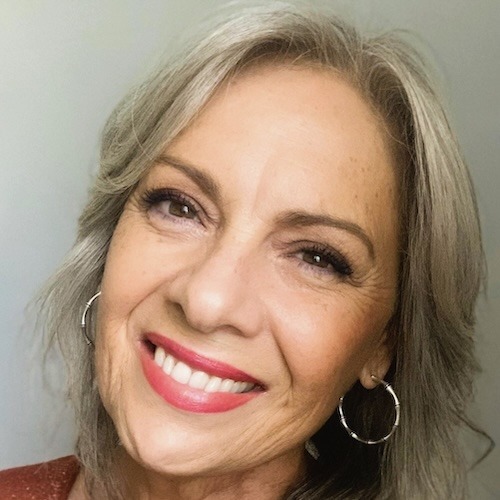
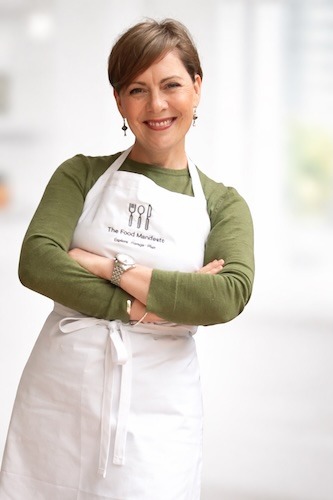
What makes Yvonne’s head and neck cancer story remarkable isn’t only what she survived, but how she chose to respond to it. A qualified chef and passionate food lover, she went from being invited to audition for MasterChef to not being able to swallow water. She relied on a PEG tube for 15 months and had to relearn the most basic human functions from the ground up. Rather than retreating, she channeled her experience into advocacy. She recognized that the head and neck cancer community lacked the resources, documentation, and peer guidance she desperately searched for from a hospital bed.
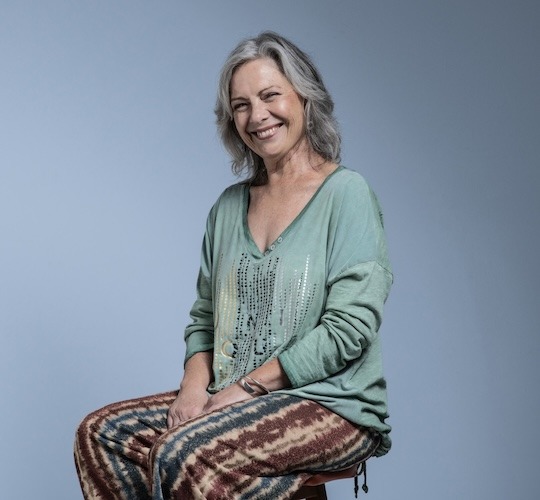
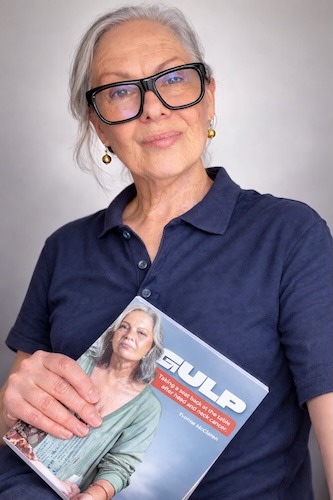
Today, seven years out from her oropharyngeal cancer treatment, Yvonne hikes across countries, navigates life with dysphagia, and has written a book called GULP. It’s designed to help patients, caregivers, and clinicians better understand what happens after the treatment ends, and when real life and the real work begin. Her story is a testament to what becomes possible when a person refuses to let a diagnosis write the final chapter.
What we can learn from Yvonne’s story
- A one-sided sore throat is a red flag. Yvonne’s only symptom was a persistent, one-sided sore throat with no visible lump or any other dramatic warning signs.
- Trusting your body matters, even when doctors don’t have answers. Yvonne was told it was severe tonsillitis. She suspected it wasn’t. Her decision to return to Australia for a second opinion, driven by her own instinct, led to a diagnosis that saved her life.
- The real experience begins after treatment ends. Yvonne is clear: for head and neck cancer patients, the profound challenges of relearning to eat, speak, and engage socially don’t end when treatment does. That phase deserves as much clinical and emotional support as the treatment itself.
- A PEG tube is a bridge, not a barrier. One of Yvonne’s most powerful contributions is reframing the PEG tube, something widely feared in the head and neck cancer community, as a life-sustaining resource that enabled her recovery, not a symbol of permanent loss.
- Loss of food confidence and social isolation are real side effects. Yvonne identifies the loss of shared meals as a source of profound grief. This gap in care conversation deserves urgent attention.
- Transformation is possible. Yvonne went from a corporate career she had outgrown to a life centered on advocacy, writing, and purpose. She describes it simply: “I don’t know whether I changed, or whether I became the real me — maybe.”
Yvonne’s Diagnosis Facts
- Name: Yvonne McClaren
- Age at Diagnosis:
- 53
- Diagnosis:
- Head and Neck Cancer (Oropharyngeal Cancer)
- Staging:
- Stage 4 (Metastatic)
- Symptom
- Persistent one-sided sore throat
- Treatments:
- Surgeries: bilateral tonsillectomy, partial tongue resection, neck dissection
- Chemotherapy
- Radiation therapy
This interview has been edited for clarity and length. This is not medical advice. Please consult with your healthcare provider to make informed treatment decisions. The views and opinions expressed in this interview do not necessarily reflect those of The Patient Story.
- My first symptoms: A one-sided sore throat before a life-changing move
- Dismissing symptoms under stress
- Returning to Australia and recognizing that something was seriously wrong
- Getting a head and neck cancer diagnosis, and learning it was stage 4
- The surgery: Da Vinci robot, neck dissection, and 30 cancerous lymph nodes
- Chemotherapy and radiation: Six weeks of treatment, and the mask
- The PEG tube: Why it’s a resource, not a last resort
- Relearning to eat, speak, and breathe after my head and neck cancer treatment
- Adjusting to life after treatment: Finding your seat and comfort at the table
- Three key takeaways from my book GULP: What head and neck cancer patients need to know
- Living with dysphagia: Getting the PEG tube out and learning to eat again
- Getting back to living: Life after head and neck cancer
- What head and neck cancer patients and clinicians need most
My first symptoms: A one-sided sore throat before a life-changing move
I had just done a motorbike trip through Laos, through the mountains, and that was a bit of a life-changing experience for me. So when I got back to Australia, I decided I would pack up my life and relocate to Asia — to Vietnam, specifically. At the time I noticed this one-sided sore throat, I was packing up my house. I’d resigned from my job. I was putting tenants in my house and farming my pets out for care — packing up a house and moving to a completely foreign country from the other side of the world, basically.
So I put that initial soreness down to stress. I say it’s one-sided because I didn’t recognize that a one-sided sore throat is the issue. If you’ve got a sore throat across your whole throat, apparently that’s not so much of an issue. Who knew? So I just put it down to being under an enormous amount of pressure and life changes. My elderly mother, who also happened to be my closest and best companion and friend, wasn’t doing so well, and I was going through the guilt about that. I just put it down to life, really — I’ll be alright. It’s winter. Once I get out of here, I’ll be fine.
As it turned out, it didn’t become fine at any point. I continued to see a doctor in Saigon, in Ho Chi Minh City, and it got put down to pollution, to change, all sorts of things. I just thought, “This isn’t right.”
Dismissing symptoms under stress
I wasn’t particularly happy in my life with what I was doing professionally. So this was a big life decision for me. I was single, doing it solo — another layer of pressure. And I had an entire life of sore throats. I was very prone to tonsillitis. I knew that was a weak part of my body. The antibiotics didn’t work, and my doctor was — I’ll say concerned, not angry — that I didn’t tell her the antibiotics hadn’t worked. It never occurred to me. I try not to take antibiotics too much, but no, they didn’t work either. And that was the lightbulb moment for her.
When I finally came back to Australia because I could not get rid of this sore throat — and I never went back to Vietnam after that — it was bang, bang, bang, in the medical system. I think I was in the hospital within a month, having full treatment. Thankfully, I had kept my private health insurance. I was literally weeks away from not being here, with stage 4.
Describing my sore throat: What a cancerous tonsil actually feels like
I had no visual indication. I had a tumor on my left tonsil. I’d never had my tonsils removed as a child — I probably should have in hindsight. There was no physical lump. There was nothing there that indicated anything was wrong.
I remember the only thing I really recall is that I was doing a sponsorship dinner for the job I was in. I was in the restaurant, and I remember asking them for sorbet. I had all my sponsors — it was a high-end silver service dinner. I remember asking them to bring out sorbet or ice cream, because I had been talking to sponsors at the table. It was one of those big, massive tables with about 15 of us around it. I asked them to bring sorbet out just to find a way to, you know, freeze over this relentless sore throat. I remember that because it was Valentine’s Day, or the day before that, or something.
The only reason I know it was one-sided is that by the time they got me to the ear, nose, and throat specialist, he took one look and went through the motions, but he obviously knew by looking at it that it wasn’t good. There are two things I remember any medical person ever saying to me. One was: don’t take this as gospel, but you only worry if it’s on one side, because, generally, sore throats are on both sides. And the other thing was a nurse who said to me during radiation, “Make sure you keep your water levels up because dehydration can cause depression.” Those are the two things I remember.
Returning to Australia and recognizing that something was seriously wrong
There was a bit of that pushing to return. I had a love interest in Vietnam, and that all fell on its face pretty quickly — and that was alright. But it also meant I had to relook at how I was going to set myself up. I’d been in Vietnam about three months, doing a visa run. At that visa run time, I had just landed a really good opportunity to work in an educational sense at a university in Vietnam. And one of my siblings had had a heart attack, and I thought, “Good opportunity to go home, check on my mum, and just get a second opinion on why none of the doctors here can seem to work out what’s going on.”
I had been told it was severe tonsillitis, and I knew that wasn’t the case. I knew what tonsillitis was, and this wasn’t tonsillitis. So I started to listen to my own body. The other thing I noticed I was doing, which was a catalyst for me getting going, was that I was about to go to India to see the Taj Mahal, and I just thought, ”On the way, I’ll go home to Australia.” And I noticed I was taking painkillers. I was waking up in the middle of the night, taking a painkiller — and I’m someone who never, ever took painkillers. I thought, “Something’s really wrong.” And I was getting frightened of the dark. That was the other thing I noticed about myself. I went, “Oh, what’s this weirdness?” So that was the catalyst. I kind of went, “Yeah, I might go home for a while and just get this checked out before I go to the Taj Mahal.”
Getting a head and neck cancer diagnosis, and learning it was stage 4
At the time, I had to go through the checks, the biopsies, the specialists — but that process all happened very quickly for me. Because of our health system here, I got through very quickly, and I had some brilliant people involved in my care.
The day I knew something wasn’t right was at the first ear, nose, and throat specialist. They put me in for a biopsy. I had my mother with me. Once the biopsy had been done, I went back to see my surgeon — that timeframe was probably about a month. I took my brother and my closest girlfriend with me to the appointment. I said to my doctor, “I don’t really care what it is.” I just wanted them to get rid of this sore throat because it was really doing my head in. And he said, “Yeah, it’s stage 4. We think it’s cancerous,” it’s this and that. He told me a range of things, and I didn’t really react or respond to that.
I just remember thinking: “Oh, right. Okay. Well, now at least we know what we’re dealing with.” Whereas before I didn’t get any of that. And I know within myself, I went, “Okay, I’m with people who know what they’re doing now.” And this is a good place to be — home, with my friends and family, going through this process.
They didn’t really know the full extent until they got in there. I was one of the first patients to use the Da Vinci robot, which looks a little like R2-D2 out of Star Wars. They come in and do that, and they didn’t know how bad this was until they actually got in there. It was much larger than they had thought.
I didn’t have any feelings about it. I didn’t have any feelings about cancer. It didn’t occur to me to have any emotion about it. It was a job to get through, to get sorted. And this is just me — this is how I operate as a human. I just took it on as a challenge. Okay, well, if this is it, then let’s get through this and let’s get back to Vietnam. Obviously, I never went back, but that was my thinking at the time.
It wasn’t until much later that I actually asked my oncologist, after all the treatment had finished, “How bad was it?” And I was told, “If we hadn’t done it then and there, you wouldn’t be here now.” I was literally weeks away from not being here. So with that bit of news, I went down to the car park in the hospital, sat there, and just howled — just cried. But that took me six months to get to that point. I was too busy getting through it.
The surgery: Da Vinci robot, neck dissection, and 30 cancerous lymph nodes
I’ll start by saying I fainted when I had my ears pierced — I had no pain threshold at all. I’d never been in a hospital. I’d never had an operation. I had no clue about the entire medical setup. I’d never been overnight in a hospital. So I went from that to — the first bit was the surgery. I remember being wheeled into the operating theater and joking with my surgeon. I wanted to take a photo of the robot, and he looked at me. I said, “Because it looks like R2-D2.” They started to work out my sense of humor at about that point.
It was about seven hours of surgery. When he finally got in there, he realized that not only was it on my tonsil, it had gone down the back of my tongue. That’s where I’ve had all of that part of my tongue removed. He took both tonsils in the end. I had a neck dissection. I had 30 lymph nodes in my neck that had cancer. There was a range of things that, once he got in there, he kind of went — “We’re going to get rid of a few more bits and pieces.”
I know that I was one of the first patients, and using this robot, the nursing staff didn’t know how to manage me. Because of the cancer and the things that were happening to me, they’d never seen anyone spitting up constant saliva and mucus. It was just awful. I didn’t leave intensive care for about two weeks, and I was right opposite the desk. You know you’re bad when you’re opposite the desk.
The only comment I remember is my surgeon coming in to see me one morning, and he said, “Oh, you haven’t pressed the blue button.” I said, “What do you mean by the blue button?” He said it was morphine, and he added, “You’ve been like this for days.” No one told me about the blue button! So I started pressing the blue button.
And I think it just went to show how mentally strong I was at that point, because I got out of bed and started walking with the IV pole. I was going back to Vietnam, for sure.
Chemotherapy and radiation: Six weeks of treatment, and the mask
So they do the surgery, and then give you a couple of weeks to get your stuff in order, and then they start chemo and radio. They do that through a multidisciplinary team meeting and decide collectively about what has to happen to you. My understanding is that this differs worldwide in terms of how different countries deal with this.
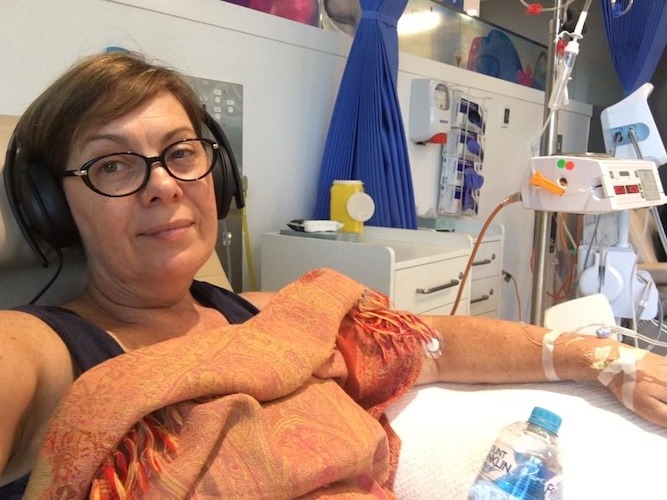
They threw everything at me. I had six weeks of radiation and chemo, and the radiation was pretty high. They do it in grades — I was right up at the top end. I didn’t really want to know anything about it. I didn’t have any questions. I just thought, “You guys know what you’re doing. Let’s do whatever we have to do.”
The mask — that didn’t really bother me. I’m a yoga practitioner, so I just kind of chilled out through that process. But it is pretty brutal being pinned to any kind of board, so you can’t move. They targeted the site, ground zero as I’d call it, with a laser, and it is a very, very tough and brutal treatment. It was six weeks of both chemo and radiation. I had them together, every Monday, from memory. It wasn’t sugar-coated. It was sold to me as a marathon, and it would be very, very hard — and it was. It was just brutal.
The radiation, of course, killed anything that might have been lingering. And it went on to kill what I used to remember as my swallow, my speech, my ability to breathe. The after-effects of this whole treatment, in my mind, have been equally as brutal as the process and the diagnosis. The prognosis was better, but I also have osteoradionecrosis — the dying of the jawbone back there. I have a brilliant specialist dentist who manages that. I’ve also had hyperbaric treatment. We use that a bit here for submarines and divers, and it’s also very good for head and neck cancer patients. It also improves vision — sadly, it doesn’t last.
The biggest issue for me with the chemotherapy was the cannulas — getting blood drawn. I’m a bit of a code-blue princess in that I don’t like having cannulas put in my arm. That was probably one of the most challenging parts for me.
The PEG tube: Why it’s a resource, not a last resort
I’m pretty sure my surgeon made that decision for me — the PEG tube went in before chemo and radiation. I didn’t get an option. They just said, “It’s going in,” and I went, “Okay,” because I didn’t know what a PEG tube was.
PEG tubes get a bad rap, and they shouldn’t, because I think they should be framed as a good resource, not an end resort. I know from this community of head and neck cancer patients that pegs are seen as the nasty option. And I get it. But for me, that was the driving force — PEG tube feeding was not going to be my life. The thing that had helped me get to where I was, I was in the process of getting rid of it. But without it, I wouldn’t be here. I just would not have lived without that PEG tube. I lost 25 to 30 kilos. I couldn’t swallow water. I couldn’t swallow my own saliva.
I literally had a life-flash-before-my-eyes moment when a speech pathologist said to me — and I talk about language in my book — I was told I may have a PEG tube for life. And I remember thinking: “No, no, no, no, no, no.” That’s not the way this story goes. And it really motivated me.
I had to put my faith in my team, and they did the right thing by me.
Relearning to eat, speak, and breathe after my head and neck cancer treatment
I went from being asked to audition on MasterChef — from a food point of view — to not being able to eat. The two are diametrically opposed ideas. And that process became my driving force, because my life up until that point had been cooking food, entertaining, traveling, and enjoying wine. That was my career and my job. I went from that to not being able to eat, speak, breathe, or taste anything. It just went from total, total mountaintop to nothing.
I recognized a lot of things in that process that the head and neck cancer community misses out on, simply because no one had documented the stages that we go through and continue to go through, even though we are alive. The basic human functions of eating, breathing, and talking are gone. And when you’re a 50-year-old woman, I had to relearn to respect myself, love myself, and forgive myself for what happened to me. The grief I felt — I recognized — wasn’t about “why me.” It was about: wow, I can no longer eat and do the things I loved. That life has left the train station, and it isn’t coming back. So all of that became a big part of the healing journey.
I started to recognize that this was happening to us as a global group, and no one was talking about it. No one was really helping anyone. All the multidisciplinary teams were doing different things at different stages, and none of the dots were being connected.
I remember the day I finally ate half a piece of — I reckon it was ravioli. Half a square of ravioli and half a mug of Milo to drink. I took photos of it and sent it to my family. “Look what I managed to eat.” By that point, life had changed. I’d gone from flying all over Australia, going to wine cellars as a job, to celebrating the fact that I’d eaten half a piece of ravioli.
Adjusting to life after treatment: Finding your seat and comfort at the table
There are some silver linings in a lot of this. As a daughter of a creative artist and a fairly senior educational father, I got the best of both worlds. It’s about having a high emotional intelligence — an understanding of being kind to others as well as yourself, and using the skills that you have, little by little, to build something bigger and better to manage your life.
I recognized I had to stop being fearful of everything. I’ve been on a motorbike riding through Laos on my own in the middle of a hurricane — I’ve done some crazy stuff in my life as a solo female. I have a bit of a risk tolerance. One of the biggest, scariest things for me was being honest about it on a professional social media site like LinkedIn, and actually owning up to what had happened to me. Because for 30 years people had known me as the person I was professionally, and now I’m deaf, among other things.
I had to really come to terms with that and own it. And as I said earlier, forgive myself for what has happened, and make the most of what I have. Using the skills I had — how can I create this environment to help other people who I know are going through this? Because I see them asking the same questions that I asked when I was lying in a hospital bed, googling anything to find anything about what I was going through. There was nothing. Cue the crickets.
The whole thing pointed to my passion for creativity, writing, and philosophy. Basically, I’m a Buddhist. I’ve been doing yoga all my life. So all those things I had been doing in the background as hobbies became my reason for being. They all came to the forefront of my life, and the corporate, political advocacy career — corporate girl — just doesn’t compute with me anymore. And writing that book was like — I had to do it. It was not going to be written.
Three key takeaways from my book GULP: What head and neck cancer patients need to know
The better-known cancers (breast, prostate, lung) get the publicity, the funding, the media, and so on. Head and neck cancer doesn’t get that kind of media coverage.
The first thing I need people to understand is: this journey really starts after diagnosis and treatment. That’s when the real journey starts. There’s a whole healing process after that, which other cancers may not have.
And this doesn’t get hidden under clothing. Particularly if you’ve had your voice box removed — a laryngectomy — you don’t hide it. It’s there for the world to see.
The second thing is the loss of social eating, because it’s isolating. People lose food confidence. I know I did, and I fixed that by hiking — but we can talk about that. Head and neck cancer has the highest suicide rate of any cancer in the world, and I totally understand why. This discord between not being able to share meals with people is really a significant issue. So all of that is really important.
The third thing is incorporating something in your life after treatment that ensures you are sitting at a table. I don’t care what table it is. I don’t care what you’re eating, but you must be at a table with your tribe, with your people, sharing those meals — because it’s incredibly important from a psychological point of view.
And the underlying theme throughout the book is learning how to transition off a PEG tube back to oral eating. There’s an assumption that people know how to do that. I’m a qualified chef. I’m a foodie. I had no clue how to do this.
Living with dysphagia: Getting the PEG tube out and learning to eat again
The PEG tube fell out — actually, it fell out three times. I had it for 15 months. So I didn’t eat orally at that time. From a mental standpoint, that was really difficult. Through that time, I bit my tongue, and I exercised. I had an outdoor fitness group, I was doing weights, and I started to hike. But I was always putting pregnancy belts on to keep the PEG tube in my stomach, because it would just fall out. And that would make me faint.
One morning, I ended up calling an ambulance because I fainted. I’m on my own, and I fainted in the bathroom. My PEG tube was coming out of my abdomen, and I couldn’t put it back, and I couldn’t drive to the hospital. So I rang the ambulance, they came and picked me up, and put me into emergency. And apparently, there’s something where if you can get the thing back on track within 15 minutes, it works. And I’m lying in there, and I just said to them: “Don’t put it back.”
The adage is that they wouldn’t take it out unless you could maintain your weight without it. But it fell out anyway. I just decided for them in the end and said, “Don’t put it back — I’ll take my chances.” And that little kick up the backside for myself was good, because then I started working out how to eat. And that’s when I started hiking properly. How do you hike across a country, in a foreign language, with dysphagia, not knowing the food, burning maybe 3,000 calories a day? How do you maintain that with dysphagia? So there was my project. So I did it. Well, you can eat Portuguese custard tarts and drink a lot of beer. Not terribly calorie-dense, but you know.
That’s really the basis of the book — to give a bit of help, motivation, and some real-life stories about how I did it. And it’s written for clinicians, for caregivers, and for others going through this.
Getting back to living: Life after head and neck cancer
I think that comes back to having an understanding — I do write about this in the book — about knowing where you are on your pathway. Not only in life, but when life throws crappy stuff like this at you. You’ve got to know where you are, what your choices are, how to pivot, when to pivot, who to trust, and how to dig deep and find purpose for getting you to the next stage. Because this cancer is really, really challenging.
I just wouldn’t let it beat me. I was very fortunate that I had an education that enabled me to think outside the square and be a bit creative — due to my mother — and be a bit stoic, because of my father. I don’t know who I am exactly, but I guess I’m living proof that you can do it. And that’s not to say I don’t have my bad days. I do have my bad days. I try not to let it define me.
I try to go: alright, I’ve got some background in food, in wine, in communicating, talking, and writing. How can I use those things for a higher purpose? And that all sounds very grand and religious, and I’m not, but I think it’s become my legacy — a little bit — because I don’t have children. I chose a very different path. So maybe there are some answers in that, too, as to why I found this process of getting myself back to living. And in many ways, I’m living a better life now than I lived before. I have no fear.
People say to me, “Oh, do you go hiking on your own?” Yeah, I do. I don’t have to talk. I can eat when I want, and I can stop when I feel like it. There’s a whole bunch of things that I can do.
What head and neck cancer patients and clinicians need most
Having a sense of purpose is really important. And caregivers can’t help people find that purpose — you have to know what your boundaries are, what you’re prepared to put up with, and what you’ve got to fight for.
From a clinician and multidisciplinary team point of view, I think it’s really valuable to understand — not just my story, but what happens around this space once patients get through the treatment and all the “fluttering care,” as I call it. What happens when you get home to your own kitchen and real life starts? That’s when the real challenge happens, I think, for head and neck cancer patients.
And the third thing: don’t underestimate the loss of food confidence on this journey. It’s real, and it never gets mentioned. It should be part of that initial consultation and ongoing care plan.
Inspired by Yvonne’s story?
Share your story, too!
Hear from people living with head and neck cancer
Real experiences with diagnosis, treatment choices, side effects, and life beyond head and neck cancer — in their own words.

Leave a Reply