
LeeAnn Found Meaning in Her Adult Diffuse Intrinsic Pontine Glioma (DIPG) Brain Tumor Diagnosis
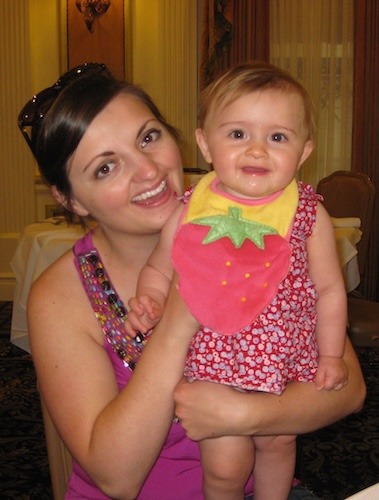
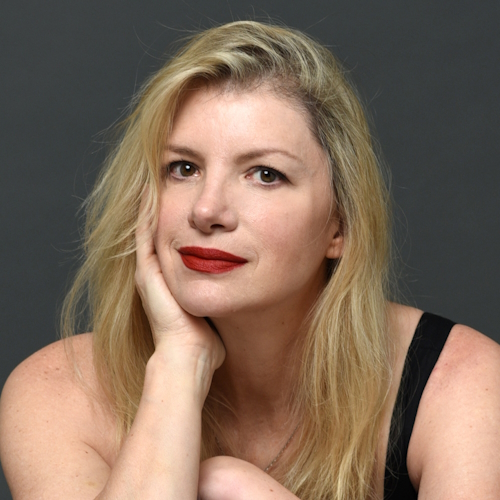
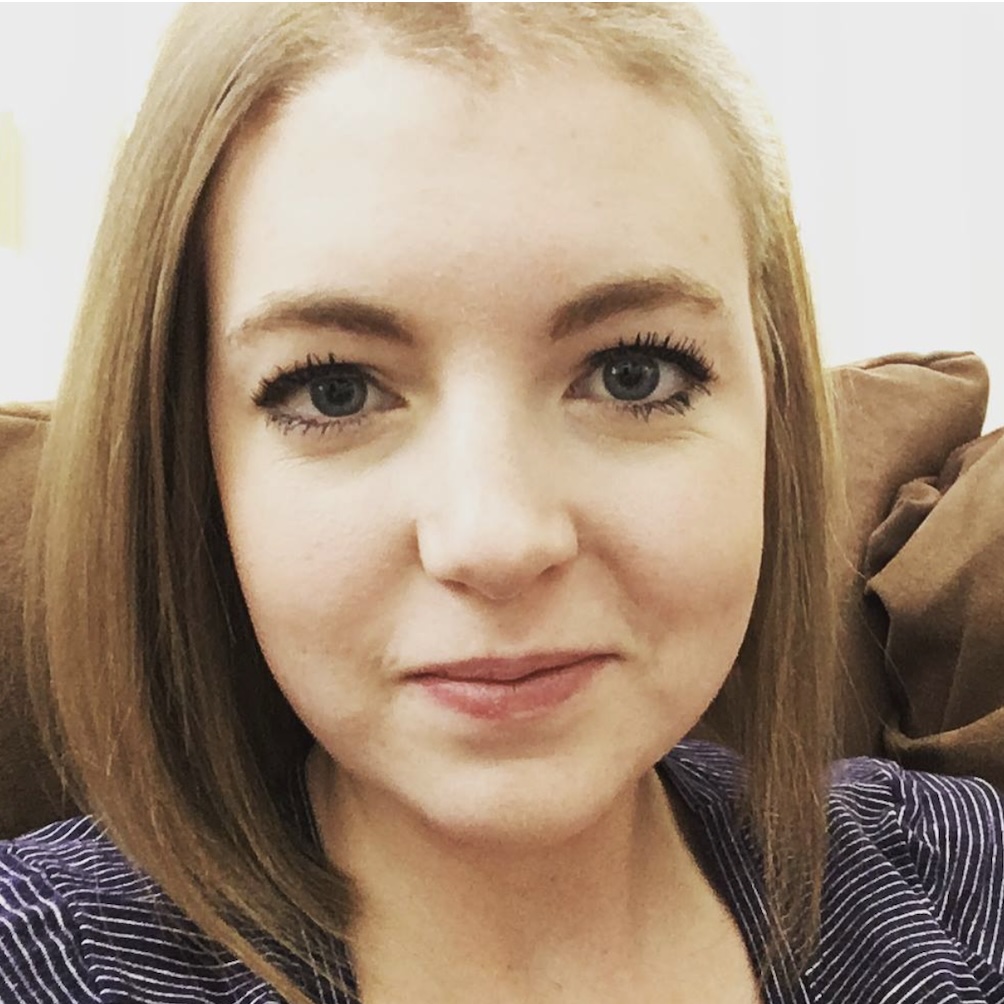
When LeeAnn was diagnosed with an adult diffuse intrinsic pontine glioma (DIPG) brain tumor at 44, she was a mom juggling a five-year-old daughter and a newborn son. What started as subtle facial tingling and hard-to-describe vision changes during pregnancy was initially brushed off as a normal part of being in her mid-30s and pregnant, too. Only after she drove herself to a postpartum appointment and realized she was seeing the road through a “kaleidoscope” did her OB-GYN recognize the seriousness of her double vision and urgently refer her to a neurologist. An MRI the day after Christmas revealed a tumor on her brainstem, and suddenly LeeAnn’s world shifted.
Interviewed by: Tory Midkiff
Edited by: Chris Sanchez
The first phone call about the MRI results came from a physician she had never met. It was short, clinical, and transactional, delivered without checking if she was alone, had support, or could write down unfamiliar medical terms. Soon after, an oncologist explained that DIPG is a very rare and aggressive kind of brain tumor that’s usually seen in children. A second-opinion visit at a major cancer center left her feeling even more devastated; the physician told her the tumor would “kill” her and that she might have about five years with treatment. She walked out feeling robbed of a future with her children.
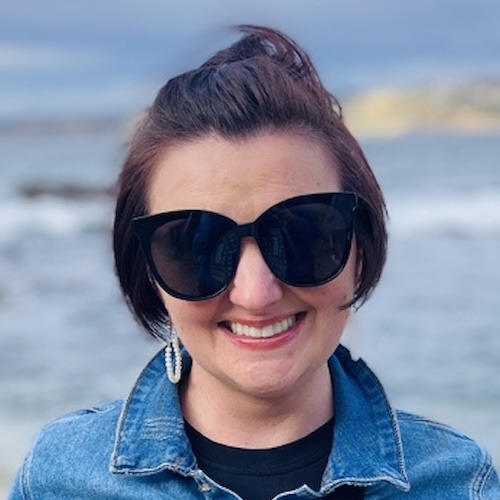
Instead of accepting that timeline, LeeAnn pushed for more information about her brain tumor. She sought out a neurosurgeon experienced in brainstem biopsies, despite being warned about the risks. The biopsy confirmed a grade 2 astrocytoma and a DIPG in her brainstem, and a local tumor board recommended radiation. LeeAnn underwent 36 radiation treatments to her brainstem, and follow-up imaging showed her tumor had shrunk significantly. She then entered observation mode and, eventually, remission with regular MRIs.
Surprisingly, remission was when she struggled the most. LeeAnn describes bitterness and fear as she tried to “re-assimilate” into a life that would never be the same. She focused on what cancer taught her: slowing down, staying present with her kids, writing down life lessons for them, and becoming more compassionate toward other people’s invisible burdens.
Now more than 11 years out from her adult DIPG brain tumor diagnosis, LeeAnn has watched her son grow into an 11-year-old and her now-16-year-old daughter approach high school graduation. She moved from healthcare marketing into higher education marketing, launched her own consulting business, and wrote a book, Finding the Rainbow: The Other Side of a Cancer Journey. Hearing a doctor finally say her prognosis is “unknown” once felt terrifying, but she has come to embrace it as a leveling truth: none of us has an expiration date. For LeeAnn, that “unknown” has become permission to live fully in the present.
Watch LeeAnn’s video above or scroll down to browse the edited transcript of her interview to learn more about her story.
- Subtle symptoms like facial tingling and double vision during pregnancy can signal something serious, and trusting your instincts when things feel “off” can be lifesaving.
- A rare, typically pediatric diagnosis, DIPG does not define a person’s worth or limit their right to advocate for more information, second opinions, and safer treatment options.
- How a diagnosis is delivered matters: patients deserve compassionate communication, time to process, and clear guidance (including when not to Google) rather than rushed, transactional phone calls.
- LeeAnn’s experience shows that remission does not necessarily mean “back to normal”; many people struggle after treatment, as they live with long-term uncertainty, fear, and both visible and invisible scars.
- LeeAnn describes a powerful transformation from asking, “Why did this happen to me?” to asking, “What can this experience teach me?” This was a mindset shift that helped her find meaning, deepen compassion, and rebuild a life that feels more aligned with what makes her come alive.
LeeAnn’s Diagnosis Facts
- Name: LeeAnn T.
- Age at Diagnosis:
- 33
- Diagnosis:
- Brain Tumor (Diffuse Intrinsic Pontine Glioma or DIPG)
- Grading:
- Grade 2
- Symptoms:
- Facial tingling
- Double vision
- Treatment:
- Radiation therapy
This is not medical advice. Please consult with your healthcare provider to make informed treatment decisions.
- LeeAnn’s Diagnosis Facts
- Introduction
- My DIPG brain tumor diagnosis while I was pregnant
- Choosing a brainstem biopsy and radiation for my brain tumor
- Going into remission and the hidden emotional toll
- Finding meaning and gratitude after cancer
- Redefining purpose and what it means to come alive
- Life 11 years after my DIPG brain tumor diagnosis
- Hear from people living with brain cancer
Introduction
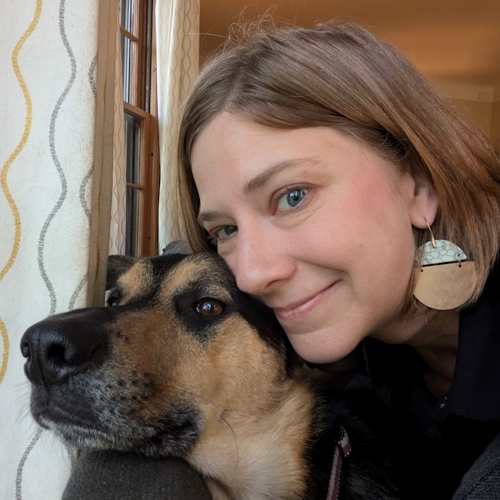
I’m LeeAnn. I am 44 years old. In 2014, I was diagnosed with a type of brain tumor called a diffuse intrinsic pontine glioma (DIPG).
Central Pennsylvania life and work
I’m in central Pennsylvania. I lived in Ohio before this.
I work for Penn State. That’s why I live in central Pennsylvania.
My DIPG brain tumor diagnosis while I was pregnant
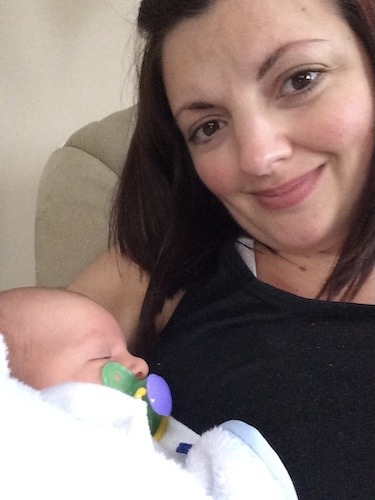
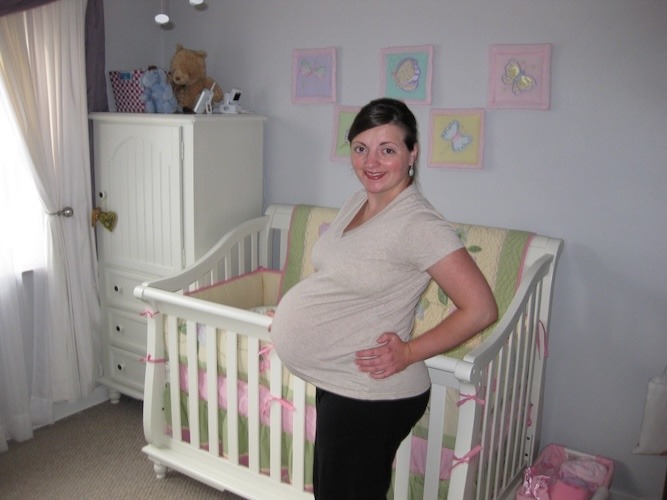
So my story really begins, I like to say, with my children. At the time this all started, I had a five-year-old daughter, and I was about seven or eight months pregnant with my second child, my son, who is now 11. But toward the end of my pregnancy, I noticed two things were happening. One was that I had a really specific tingling sensation on one side of my face, and it felt like water kind of dripping on the inside. That was unusual. I hadn’t experienced that with my pregnancy with my daughter. So I remember talking to my OB physicians about it, and they said that it could be common in pregnancy. I was considered a late or an older pregnancy because I was in my mid-30s at that point, but they weren’t too concerned about it.
The other thing that I noticed in my second pregnancy, around the same time, was a little bit of a vision change, and I noticed it enough that I went to the eye doctor just to see if anything was changing. It was really hard to describe. It was subtle, but it was noticeable enough that I went to the eye doctor, and that exam showed that everything seemed fine. They said, “If it gets worse, you can come back and see us.”
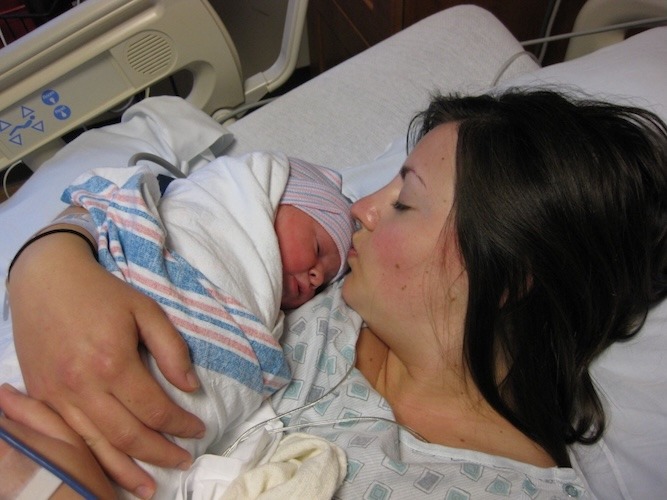
I hadn’t put the tingling sensation and the vision changes together. For some reason, I just didn’t say anything to my OB-GYN doctors about the vision changes. After I had my son, I remember driving myself to my postpartum checkup with my OB-GYN. As I was driving, it felt like I was looking through a kaleidoscope. It was very strange and concerning, and I hadn’t noticed it until I made the drive to that appointment, because I was at home taking care of my son, who was a newborn, and so I wasn’t driving, and I wasn’t really leaving the house much. Around the house, I was fine, but when I left home and went to that appointment, I noticed that something was really wrong with my vision.
I went to that OB-GYN appointment, and she said to me at the end of the appointment, “Everything looks great. You look good, and it sounds like the baby’s all good.” I said, “Yes, there is this one thing that I’m noticing: my vision seems off; something seems wrong.” She said, “What does it seem like?” I said, “It feels like I’m seeing double.” Her face just kind of fell, and she said, “We need to get you to a neurologist now, because that is not good if you’re seeing double.” That led me to a neurologist later that week, I think it was, and that individual still couldn’t tell what was really going on with me.
He did a physical exam, and everything seemed fine, but he said, “Because of this vision change, you really need to have an MRI.” The day after Christmas that year, I went to have the MRI. I was really thinking that this was nothing, that this was maybe something left over from pregnancy or some weird hormone stuff. But I got a call about an hour after I had the MRI at the hospital, and the neurologist on call told me over the phone that the MRI picked up what looked to be a glioma on my brainstem and that she thought it was very treatable, but that I would need to see an oncologist really quickly. That led me to the oncology appointment the following Monday. That oncologist said, “Based on the MRI, this is a very rare type of brain tumor. It is more often diagnosed in children, and when it is diagnosed in children, it is often a very aggressive tumor. Brain tumors in children are often given, sadly, months or possibly years with treatment to live. DIPG is the name of that tumor.”
Getting a life-changing brain tumor diagnosis by phone
After the MRI, when I had it done, I really wasn’t expecting anything to come back that was serious. I really thought this was just something related to the pregnancy. To have the physician, whom I had never met, call me and give me that news over the phone was very jarring. I tell people now, “If you’re waiting for results after having any type of scan and the phone rings, before that moment happens, really try to brace yourself for any type of news that a physician may tell you over the phone after any type of imaging that you may have done.”
I like to advise people to have someone with them if the phone rings, and they are getting some news. I would advise them to take their time with the phone call, write down any terms that you’re not familiar with, ask them to spell everything for you, and see if you can have someone with you in that moment. Because when I got the phone call, I didn’t have any of those things. I wasn’t expecting to get a call, much less one that was really life-changing news. That physician, in that moment, looking back now, I think there were a million ways that physician could have given me that diagnosis. She could have asked me, “Do you have someone with you? Do you need to sit down? Do you have a piece of paper and a pencil or a pen handy, or a computer that you can type these words down? They’re not going to be familiar to you.”
I wish she had told me to stay off the internet, because the phone call was very short. It was all business. It was, “There seems to be a glioma on your brainstem. I think this is treatable. You are going to need to see an oncologist. I can help you get a referral there. Do you have any questions for me?”
I was really floored by the whole conversation. I didn’t know what a glioma was. I didn’t understand the gravity of that news. I knew it was serious when she said “oncologist.” I knew that word, and I knew that was serious. But I was so stunned at hearing this that it kind of stunned me into silence. Looking back on this, this was a physician whom I had never met, and I never saw that physician after that phone call. That was the only time that the physician had communicated with me. Looking back, there were definitely some things that I think the individual got really wrong with giving that news. I hope other physicians do a better job. I’m sure that they do, but I have to believe that some still see it as very transactional and don’t really think about the impact that could have for someone who’s receiving that news.
A rare adult DIPG brain tumor, and a devastating second opinion
My oncologist told me that this is a very rare type of brain tumor. It’s often diagnosed in children, not adults. He was recommending that I meet with a neurosurgeon locally to get his thoughts on this tumor type. I met with that individual. He agreed that this is very rare and that it’s often diagnosed in children, very rarely in adults. He recommended that I get a second opinion, and he helped me get an appointment at one of the best cancer centers in the world, actually. Maybe a week later, I took the out-of-town trip to go see this state-of-the-art, innovative, best-in-class cancer center.
I have to tell you that when I went for that second appointment, the physician walked in. She didn’t look at me. She washed her hands, and she asked me, “What brings you here today?” I was confused at the question because my neurosurgeon made it sound like he had had a whole conversation with her about my case and that he worked with her to get me in in a really short period of time. So when she asked me what I was there for, I felt really thrown by that question. I thought she would know me better or understand why I was there.
When I explained, “I’m here for a second opinion on a DIPG diagnosis,” she caught up pretty quickly and said, “Oh, okay, I remember, I understand.” Again, that visit felt very cold. It felt very sterile. It actually felt kind of rushed. She told me that I could go home and have radiation therapy. I did not have to go to that center for therapy. My local hospital had the same linear accelerator that they had. There was no clinical trial at the time that I would be eligible for. So really, my best shot at this was to go home and get my treatment.
I asked the physician, “What do you think my prognosis is?” I remember her biting her lip and saying, “Not good.” I said, “Will this kill me?” She didn’t hesitate. She said, “Oh my, yes.” I must have looked stunned because, of course, I went on the internet, and, of course, I Googled this. But I also knew not to really trust what I was seeing on the internet, that every patient is different, every case is different. I tried very hard not to focus on the worst possible outcome for myself. I was really hoping that she would tell me, “Actually, it’s hard to predict your outcome,” or, “We just don’t know enough about this tumor type,” or, “It’s so rare altogether.”
And it’s even rarer for adults that it’s difficult for us to say. But for her to definitively say, “This is going to kill you.” My next question to her was, “When? How much time do I have? Is it months? Is it years?” She said, “It’s hard to say. You might have five years with treatment. I’ve seen that happen.” I said, “What about ten years?” She said, “Ten, I can’t guarantee that. I don’t have a crystal ball. It’s hard to say.”
For me, as the patient, when you start putting timelines on things, and you start thinking about milestone moments, in my mind, I was thinking, “Okay, in ten years, my daughter won’t even be in high school. I won’t get to see her graduate, let alone get to high school. My son, who is a newborn, will be finishing up elementary school.” You start going through these milestone moments that you may not get to see. In that moment, when I heard that this was terminal and it likely would only be five years for me, the best way I could describe that feeling was that it felt like I had just been robbed blind. I had no idea that that type of prognosis was coming. I did not expect to hear it from a physician at one of the best cancer institutes in the world. I felt really defeated in that moment. I remember sinking into that exam chair, with the terrible neon lights above, and just feeling so defeated already, and I hadn’t even started this battle yet.
Choosing a brainstem biopsy and radiation for my brain tumor
Somehow, I got myself together, came home, and really just had a shift in my attitude. I thought, “I’m not going to go by what that physician told me. That’s one physician. I’m one person. I don’t think that I have an expiration date. I certainly don’t feel like it’s going to be on that timeline. Maybe it will be, but I feel like I need more information.” We were going by an MRI, and MRIs are very accurate, I understand that, but that’s when I started looking into biopsy options for the tumor, because I really wanted to make sure, before I went ahead with radiation — which you can’t undo — and you really only have one opportunity with my tumor type to have radiation therapy. You cannot go in and keep radiating that same area.
For me, it was very important to have all the information I needed to move forward with the decision for radiation therapy. I found another physician who was doing biopsies on the brainstem regularly. He was doing them regularly with success. I moved forward against the advice of a lot of people who told me that it’s just way too risky, it’s way too dangerous, the brainstem is highly sensitive, and we really don’t advise that you have the biopsy. But I felt personally that I needed that information. I did have a brainstem biopsy done.
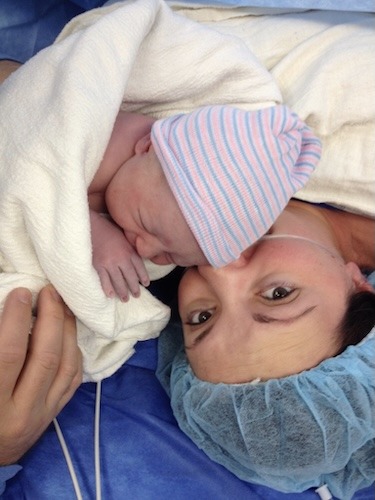
The biopsy confirmed what was in the MRI. It told me that it was a grade two astrocytoma, and it was a diffuse intrinsic pontine glioma, meaning it was in my brainstem. I presented that information to my local hospital. The tumor board at the hospital met, and they decided, “Yes, the next best step for you is radiation therapy.” In the spring of 2015, I had 36 radiation therapy treatments to the brainstem. I had a follow-up MRI, and the MRI mercifully showed that it had helped shrink the glioma significantly. From there, I was placed in observation mode, which meant that I would have to go every six months to have an MRI to see if there was any change in the tumor.
Going into remission and the hidden emotional toll
After months and then years of this, eventually a physician told me that I was in remission. This is now in remission. Now I have an MRI every two years to monitor the glioma. But I have to say that in my journey, that period of remission was actually when I struggled the most, and I did not expect that.
People think that the hardest part of the battle is getting through treatment, and that is a very significant part of the cancer journey. But for me, I wasn’t expecting to struggle as much as I did in remission. When you think of the word remission, you often think of celebration and that it’s all behind you. But I realized quickly that it was never going to be behind me. It was now a forever thing in my life, and it was really hard for me to navigate and re-assimilate back into my old life, knowing that it would never be the same as it was before this, and learning to live with having this every day and managing all of the anxiety and the fear that you carry as a cancer survivor.
Finding meaning and gratitude after cancer
I think what really helped me — like I said, in remission, I still felt very bitter — I was asking myself a lot, “Why did this happen to me? Why did I have to go through this as a young mom with two children at home? Why me?”
I started asking the question differently. I started asking, “Why did this thing happen to me?” — with the emphasis on “this.” What was this meant to show me that my everyday living wasn’t teaching me? When I started really thinking about that question, that changed my outlook completely. I started realizing that one thing cancer will do for you, for sure, is slow you down. It will command your attention like nothing else can in your life, because you’re fighting for your life.
When I look back now at that period, I realize that I did things that I probably would never take the time to do, but I did them because I was really trying to stay present and trying to ground myself in the blessings of my life. I took time to think about who made an impact in my life up until that point and why.
What did they teach me? I also thought a lot about what I could share with my children now that I want them to know, in case I’m not here someday to teach them — whether it’s this is how you cook, this is how you make friends, this is what to look for in a future partner, this is what to do when you’re having trouble with your friends or your family, this is how you manage conflict. I know for sure that I would not have thought about those things as much as I did had I not been facing my mortality, thinking about what would happen if I weren’t here for them someday. That was actually a great blessing that I found that cancer gave me that probably nothing else would.
I also realized that cancer made me become a much more compassionate individual. I already considered myself to be an empathetic person, but it changed entirely for me. Now I feel like I’m someone who lives with this invisible scar. To meet me, you probably would have no idea that I had a brainstem biopsy, that I went through brain surgery, that I went through radiation to my brainstem, that I’m a brain tumor survivor. But one of the lingering symptoms for me is that I still struggle with my vision.
Living with lingering vision changes and invisible scars
I have now gone through two rounds of vision therapy. It’s gotten better, but it’s one of those symptoms that will just never really change for me. It might get a little better, but it will never be back to where it was. I feel like now, if I’m carrying this, then I can only imagine what other people are carrying — that everybody has something, something deeply painful, because we’re all human and we can’t escape life without, unfortunately, some deeply painful moments.
Knowing this now, I really try to think about what other people might be carrying and not worry so much if they’re rude to me or if they’re unkind. I now know that everyone’s carrying something invisible about them because I know that for myself, and I can only imagine that that’s true for other people.
Redefining purpose and what it means to come alive
The other great lesson that stayed with me is a quote by Howard Thurman, because I really think he said it best. When you’re thinking about your purpose in this life — what you’re meant to do, what you’re called to do — he says, “Don’t ask yourself what the world needs. Ask yourself what makes you come alive, because what the world needs are more people who have come alive.” Truly, I strive to do that every day. I think about what lights me up and what fills me up.
It doesn’t have to be big, extravagant things. It could be something as simple as just taking a break and getting outside for a walk or a jog, or connecting with my kids, or taking time with my pets. Simple things can really fill your cup. I really try to spend as much of my time doing those things and being around those people that give me really good energy and light me up and make me come alive.
Surpassing milestones I thought I would never see
When I think about the milestones that I was afraid I would miss, and I see myself now meeting those milestones, seeing those things happen — seeing that my daughter now will be a junior in high school next year, she graduates in two years — that’s a moment that I thought I would not get to see. It’s all extra blessings. It’s all extra special to me because those were moments that I thought I would not get to see, that I would not live to see. It makes them even more special.
Embracing an unknown prognosis and focusing on the present
One of the things that really changed my attitude toward all of this was when I was in observation mode and having the MRIs. I would always ask the physician, “What is my prognosis?” They hated that question because they didn’t know how to answer it. They really, truly didn’t know. At one point, one of my physicians said, “Your prognosis is unknown.”
At first, that felt very scary, to be unknown. But when I reflected on it, I thought, “Actually, I like that, because in a sense we’re all unknown.” That puts me on the same playing field as everyone else. Now I don’t feel like I have an expiration date. I really believe that I could have worried about that, or I could continue to worry about this tumor all day, every day, and it still may not be the thing that kills me. I still may have it be a car accident; any number of things could happen to me. It still may not be the thing that defines my life.
I choose to see it that way — that we’re all unknown. None of us really has an expiration date. We should be joyful for the time that we do have, because that’s the only thing we own for sure, the present moment.
Life 11 years after my DIPG brain tumor diagnosis
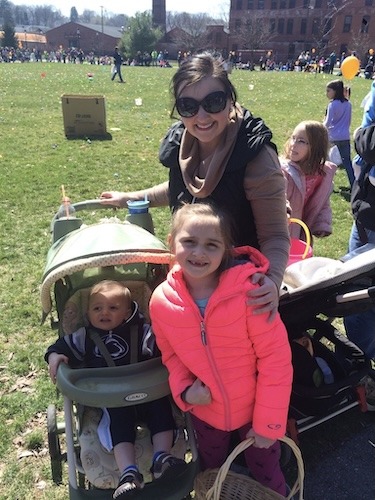
So looking back now, 11 years later, it is really amazing to me to see all of the things that have happened to me that I never thought would have been possible 11 years ago. Seeing my son, who is now 11, and my daughter, who is now 16, is really remarkable.
Since my diagnosis and since my treatment, other amazing things have happened for me. I was working in healthcare marketing at the time of my diagnosis and during the treatment and for a few years after that. I now work in higher ed marketing, so I changed industries completely, and that has been an amazing journey. I also published a book, Finding the Rainbow: The Other Side of a Cancer Journey, which talks a bit more about my lessons learned after the cancer diagnosis and treatment. I also started my own company, so I do marketing consulting as well. It’s been an amazing, incredible journey that I never would have expected for myself, and I probably never would have ventured into had I not faced this challenge and this unique journey.
This interview has been edited for clarity and length. The views and opinions expressed in this interview do not necessarily reflect those of The Patient Story. This content does not replace professional medical advice.
Inspired by LeeAnn’s story?
Share your story, too!
Hear from people living with brain cancer
Real experiences with diagnosis, treatment choices, side effects, and life beyond brain cancer — in their own words.
Leave a Reply