
Every Symptom Had an Explanation: One Young Mom’s Burkitt Lymphoma Experience
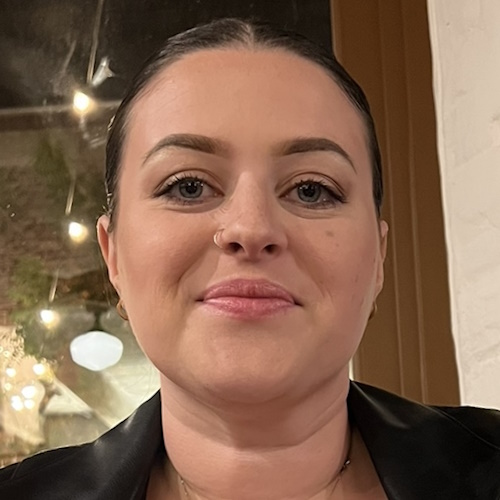
When Jessica received a blood cancer diagnosis of Burkitt lymphoma after having her first baby, she learned that every symptom she had had a plausible postpartum explanation: extreme fatigue, back pain, tooth pain, and even lumps on her head. Initially, her doctors were reassuring, until a proactive general practitioner ordered a CT scan, and the picture became clear. Within eight weeks of her symptoms increasing, her life had changed completely.
Interviewed by: Taylor Scheib
Edited by: Katrina Villareal
What makes Jessica’s Burkitt lymphoma experience so unique is how it all happened so quickly after her baby’s birth. She was a first-time mother, with her daughter only weeks old, and suddenly she could barely walk, couldn’t lift her baby, and was being asked whether she had a will. The disease had progressed so rapidly that her medical team said they couldn’t believe she was still able to speak. Treatment began immediately, with no time to think and no time to plan for fertility. Her only question in that moment was whether she would be able to have kids afterward.
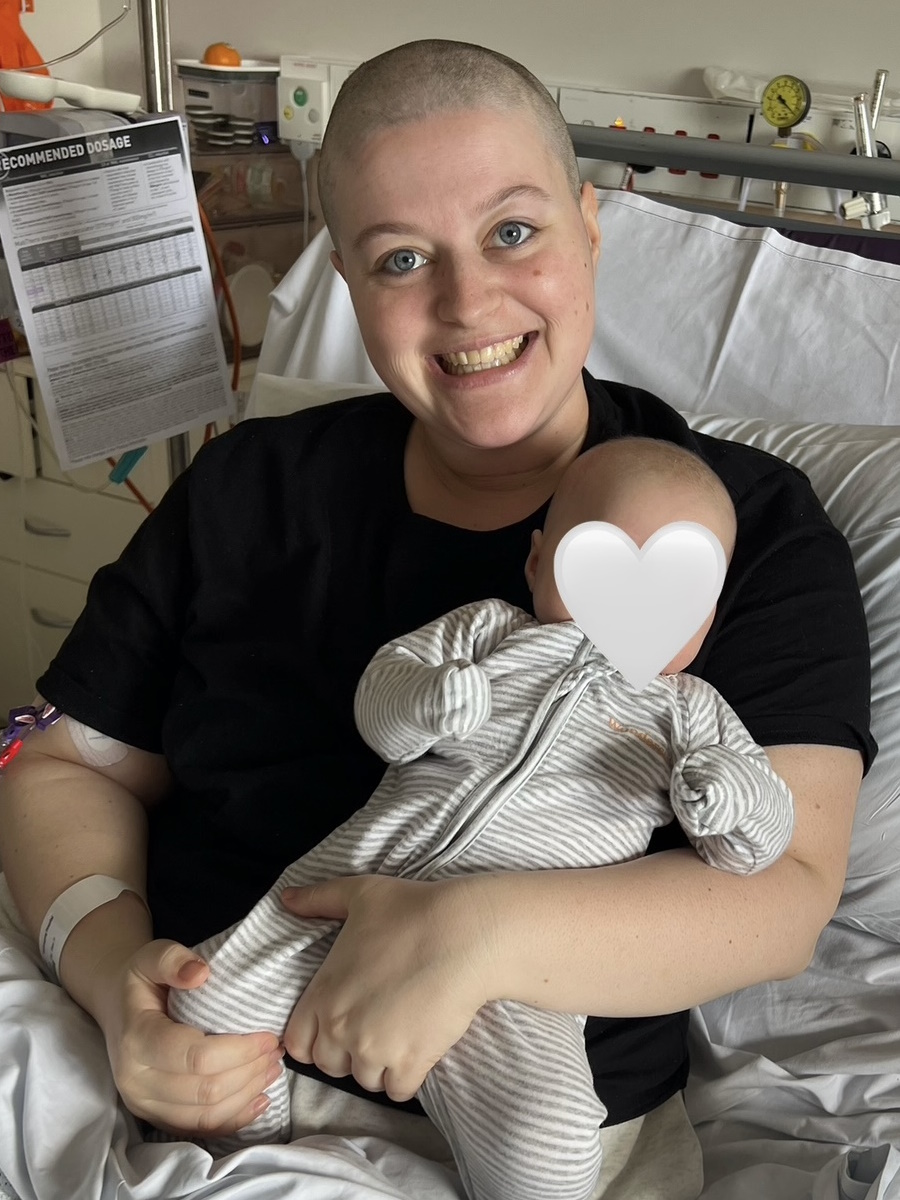
Through four hospital stays, each lasting two to four weeks, she kept her daughter close. Jessica’s father brought her baby to her every day, her family preserved every milestone so she could witness it herself, and her support system rallied around her in a way that still moves her to tears. She found humor where she could, control where she could, and moments of genuine joy even through the hardest stretch of her life.
What happened next stunned even her medical team. Two months after finishing treatment for Burkitt lymphoma, before she’d even had her final scan after treatment, Jessica discovered she was pregnant. She had been told for months she would likely never conceive again. Her second pregnancy brought its own frightening chapter: a suspicious scan result, a failed awake biopsy, and ultimately a surgery under general anesthesia while pregnant. She came through all of it.
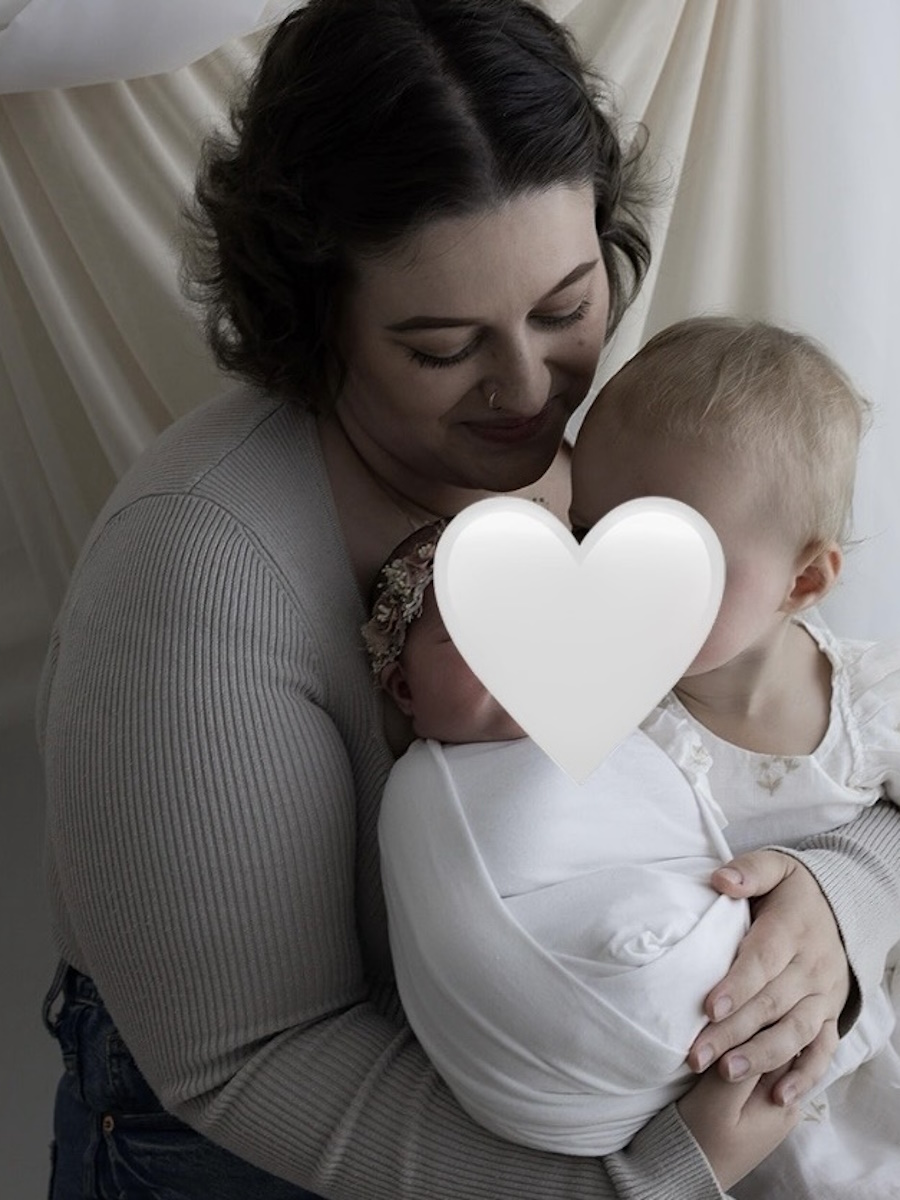
Today, with two daughters and a blood cancer experience behind her, Jessica is living exactly the life she always wanted. She shares her story online not to dwell on what she went through, but to show other young patients that life goes on simply, beautifully, and fully.
Watch Jessica’s video or read the edited transcript of her interview to find out more about her story:
- Postpartum symptoms can mask serious illness. Every one of Jessica’s early blood cancer symptoms had a reasonable postpartum explanation, underscoring how difficult a blood cancer diagnosis can be.
- One proactive doctor can change everything. Jessica’s GP ordered a CT scan saying, “You’re too young for anything too terrible, but let’s test it anyway.” In her opinion, that decision was lifesaving.
- Control over small decisions matters deeply during treatment. Shaving her head before a single hair fell out gave Jessica a choice, something she desperately needed in a time of radical uncertainty.
- You don’t have to choose between fighting your illness and living your life. Jessica went to concerts. She snuck to a convenience store when she hated the hospital food. She attended family dinners hours after her diagnosis. Holding onto normalcy wasn’t avoidance but survival.
- Transformation after cancer doesn’t have to be dramatic. Jessica’s growth wasn’t a reinvented identity but a quieter shift from perfectionism and anxiety to a steadiness she credits with making her a calmer, more present mother and partner.
- Shared support networks are a form of medicine. Jessica’s family coordinated care for her daughter with military precision so she wouldn’t miss a single milestone. That network not only helped her survive but also kept her tethered to her reason for fighting.
Jessica’s Diagnosis Facts
- Name: Jessica S.
- Age at Diagnosis:
- 23
- Diagnosis:
- Burkitt Lymphoma (Non-Hodgkin Lymphoma)
- Staging:
- Stage 4
- Symptoms:
- Extreme fatigue
- Back pain (sacroiliac joint area)
- Severe tooth pain
- Growing lump in the jaw
- Multiple lumps on the head (that initially appeared as hematomas)
- Difficulty walking
- Inability to lift the baby
- Treatment:
- Chemotherapy
This is not medical advice. Please consult with your healthcare provider to make informed treatment decisions.
- Jessica’s Diagnosis Facts
- The early symptoms I had after giving birth and why I initially dismissed them
- Why cancer was so easy to miss when every symptom has an explanation
- The role of a proactive doctor and how their decision changed everything
- The emotional moment of telling my family that I had cancer
- Being a mother and a cancer patient simultaneously
- Confronting mortality: When the doctor asked me to write a will
- What I knew and didn’t know about my Burkitt lymphoma diagnosis
- Staying connected to my baby during treatment and how my family made it possible
- Choosing control when everything felt out of control
- Knowing I was cancer-free before the scan results came back
- An unexpected pregnancy after being told I’d never conceive again
- A suspicious scan and a surgery under general anesthesia while pregnant
- Reflecting on two babies and a cancer diagnosis in 18 months
- Moving forward after cancer and choosing normalcy
- How cancer changed my perspective and helped me become calmer
- Health and fitness after cancer and getting my body back
- My advice for others going through cancer
- Hear from people living with Burkitt lymphoma
The early symptoms I had after giving birth and why I initially dismissed them
I ignored a lot of the first symptoms because I literally just had a baby. I was extremely fatigued, but I thought, “I’ve had a baby. Of course, I’m going to be tired.”
My dad had a lot of his teeth taken out, so when I started to get bad tooth pain, I simply thought it was hereditary, but I had that checked out. Then my back started to get sore and increasing in intensity, but they were telling me that it was my sacroiliac joint, which is a common issue after having a baby.
After the first root canal, I got two massive lumps on the back of my head. I had an ultrasound and they looked like hematomas, like I had hit my head from being scared during the root canal. Then the lump on the jaw kept getting bigger and bigger. I also got more lumps on my head. Plus, I could barely walk.
How my Burkitt lymphoma diagnosis unfolded
I couldn’t pick up my baby, so I couldn’t look after her. It got to the point where, as my partner would leave for the day, my dad would come so I had somebody.
By the time they performed a biopsy, CT scans, and MRIs, and realized how many lesions there were, it was an emergency. And it all happened in the span of about eight weeks.
We honestly thought everything had an answer. It was annoying that all of these things were happening at the same time, but we’ll get it sorted and move on.
I was upset because I wanted to look after my daughter, but I was in so much pain. Our days were full. I had about four appointments a week with different healthcare professionals, and my dad would have to drive me. I felt bad for taking up all of his time, for them doing everything for the baby, and for not doing enough.
Why cancer was so easy to miss when every symptom has an explanation
Before you have a baby, everyone tells you, “You’re going to be so tired. Sleep when the baby sleeps. You’re going to be exhausted.” So when I was starting to feel extreme fatigue, I thought, “Whoa. This is way worse than I thought it was going to be,” but I kept thinking, “They weren’t joking.”
For the other symptoms, I was seeing doctors and they were confirming, “No, it’s all good. This is common.” The pain happened to be in spots that made sense for what I had gone through with birth. The sacroiliac joints are right at the base of your pelvis and it is very easy to have them thrown out while having a baby. It was easy to dismiss everything because there was an answer for literally everything.
The role of a proactive doctor and how their decision changed everything
Because it was such a short amount of time, things moved so quickly because we had so many appointments and I had the baby. By then, it snowballed to the point where my GP recommended a CT scan. She said, “You’re too young for anything too terrible, but let’s just test it anyway.” I’m so grateful that she did, because of what we ended up finding.
I was going to physiotherapy and a chiropractor, but it was getting worse. I was thinking, “At what point do I leave an appointment feeling as if I can walk again?” It kept getting frustrating. I ended up having two root canals because they kept draining it. The lump looked like an abscess and presented like one.
What it felt like to be young and not suspect anything serious
Ignorance is bliss. It never crossed my mind that there could be something seriously wrong. I was 23 at the time, so I was fairly young, and I thought there was a reason for all of this. The signs were pointing to it being a bad coincidence that everything was happening all at once.
I was still enjoying my life. We were still doing family activities and living our normal lives. I was hopping through those days, thinking, “Oh, it’ll get better soon; it’s fine.” Not being afraid probably made it a lot easier. I thought, “It’ll get better eventually. We’re sorting it. I’m going to all the appointments. It’ll be fine.”
I’m grateful for that because I didn’t waste the first eight weeks with my daughter. I wasn’t super stressed about myself. I was just happy to be a mum. It was still a nice time.
Receiving my Burkitt lymphoma diagnosis through a phone call
My GP ordered the imaging. My mum always said, “Don’t look at what they write. Just go and get the appointments,” but I couldn’t help myself. I read the referral, looked at what she was testing for, and thought, “Hold on. This might be bad.”
I ended up having a CT scan, a mammogram, and an MRI all in the same appointment. They did everything in one go. I was in the MRI machine for 45 minutes when they said it would take about 5 or 10 minutes. At that point, I thought, “Okay, something’s not right. Please be okay. Please just have nothing, so we can move on.” That very afternoon, my GP called and said, “We think you have cancer. We think it’s this kind. You need to get a biopsy and present immediately to the hospital after.” It snowballed from there.
The emotional moment of telling my family that I had cancer
I was devastated. My partner was at work and my dad was looking after the baby. I was in the other room trying to take a nap, but I could barely sleep because the pain was terrible. After my doctor called, I had a moment. I didn’t cry right then because it didn’t feel real. It felt like a dream I was going to wake up from.
I’m very blunt with my parents, so I hobbled out to my dad and said, “The doctor rang and I have cancer.” He was shocked. But my parents are very calm. He said, “Okay. Do you want to ring your partner?” I said I’d wait until he got home, because he drove trucks and I didn’t want to give him that news on the road.
Dad took the baby to their house so my partner and I could sit and talk it through. A couple of hours later, I’d agreed to go to dinner to celebrate a family friend. We went to dinner and I didn’t say anything to anybody because I didn’t want to ruin that for them.
It wasn’t until a couple of days later, when I was going to the hospital, that it started to sink in. I thought, “Okay, this is real. This is life-changing. And I have such a small baby.” It was crazy.
Being a mother and a cancer patient simultaneously
The full weight set in a couple of weeks after I started getting treatment. I tend to be quite practical and in the moment. I was having meetings with my family, trying to figure out: Where is the baby staying? Is she going to sleep at your house? My partner and the baby ended up staying at my parents’ place for quite a few days for that support.
I was more concerned about her. She needs to be okay. I need to look after her. Because she was so little and I didn’t know the extent of my illness, I thought, “Was I sick when I was pregnant? Has this affected her? Is she okay? Do we need to test her?”
It didn’t set in until later that I was going to be away from her for so long. Then it hit me. We live very close to the hospital and I’m very grateful that my dad brought her literally every single day for the majority of the day. I was allowed to have her overnight, but it would have been too hard, so she would go home.
Starting chemotherapy immediately
When I checked in first thing in the morning, they all rushed in and said, “We technically can’t treat you because we’re waiting for your biopsy. However, this is an emergency. You’re getting chemo today.” Then they started saying, “We can’t believe you can talk. We can’t believe you’re not paralyzed. If we wait any longer, we can’t fix this for you. It has to be today.”
There wasn’t time to think. I immediately said, “Am I going to be able to have kids after this?” My doctor said, “I don’t have time to talk about fertility. We have to fix this now. We will talk about it later.” It was such a whirlwind that I accepted it. I said, “I’ll do whatever they say. This is what it is.”
Confronting mortality: When the doctor asked me to write a will
In the coming days, the biopsy results came in. Some of my nurses came and said, “Have you seen your skin? Do you want to see it?” When they sent me the photo, I almost died.
A couple of days later, the doctor came and said, “You need to sort out your superannuation,” which is like a 401(k). “You need to sort out who that’s going to. You need to sort out all your things. Do you have a will?” That’s when I thought, “Oh. They’re not actually sure if this is even going to work.” Then I had to process. Is my daughter going to grow up without me? That was the most upsetting thing.
What I knew and didn’t know about my Burkitt lymphoma diagnosis
Cancer hadn’t even been on my radar. I researched everything. They were telling me it was so fast and there was no way I had it while I was pregnant. I thought that when you got cancer, you got treatment once a week and got through it. A few of my grandparents had cancer here and there, but they were resolved. My pop had cancer at the same time. I didn’t realize how serious blood cancers were. It didn’t occur to me.
Chemotherapy cycles, spinal chemo, and hospital stays
They knew it was a blood cancer, so I was placed in the hematology ward straight away. Once they confirmed exactly what it was, the doctor said the jaw tumor is extremely typical of the type of blood cancer that I have. She had a strong suspicion but had to wait for confirmation.
When it came through, they had to consider the treatment approach. Typically, Burkitt lymphoma affects young children or people over 60. I was in this weird middle ground, and because of that, they could probably increase the dose of certain chemotherapies because I would be able to handle it. They started to tell me, “You’ll be here for two to four weeks at a time, go home for a week, and then come back for two to four weeks again.” I started to get scared.
I was terrified of the intrathecal chemotherapy. I was up for 10 of them. For the infusion, I got wheeled down straight away. I had a PICC line inserted, so I was glad I didn’t have to have needles. But when they started to explain how long I was going to be in there, I got so scared. My main concern was my daughter. “How am I going to look after her while I’m here?” But I’m grateful for the support I had because she was fine.
Staying connected to my baby during treatment and how my family made it possible
I was very concerned that I was going to miss everything, but everyone around me was so good. If my dad were unavailable, a family friend would take the day off work and bring the baby to me. From 8 a.m. to 4 p.m., she was with me.
I used to laugh a lot and try to make jokes not just for me, but also for the people around me. I would say, “I’m the most well-rested newborn mum because I get a full night’s sleep when she’s not here.” Everyone around me was thoughtful. If the baby said a new word, they would say nothing and wait for me to see it myself. When starting her on solid foods, they would bring everything to the hospital so I could do it. I wasn’t missing those milestones.
The initial concern was definitely there, but everyone made sure that I didn’t miss anything. We were also worried that I would never have children again, so everyone was very concerned about preserving the experience of motherhood for me.
The side effects of chemotherapy that I experienced
Because I didn’t know a lot about cancer, I didn’t mention certain things to the doctors straight away. When I had cold sores, I thought they didn’t matter. After the first week, my entire mouth was covered in cold sores. They asked, “Do you have cold sores?” I said yes. They said, “Okay, we need to give you medication for that because chemotherapy is going to make it worse.”
Other than that, I was lucky. I was fatigued, but I napped during the day. I didn’t experience any nausea. I had a few random spurts of a rash all over, but the side effects were minimal. I had a great team giving me preventive medications, so I didn’t have to experience many of the side effects. I was lucky in that regard.
Choosing control when everything felt out of control
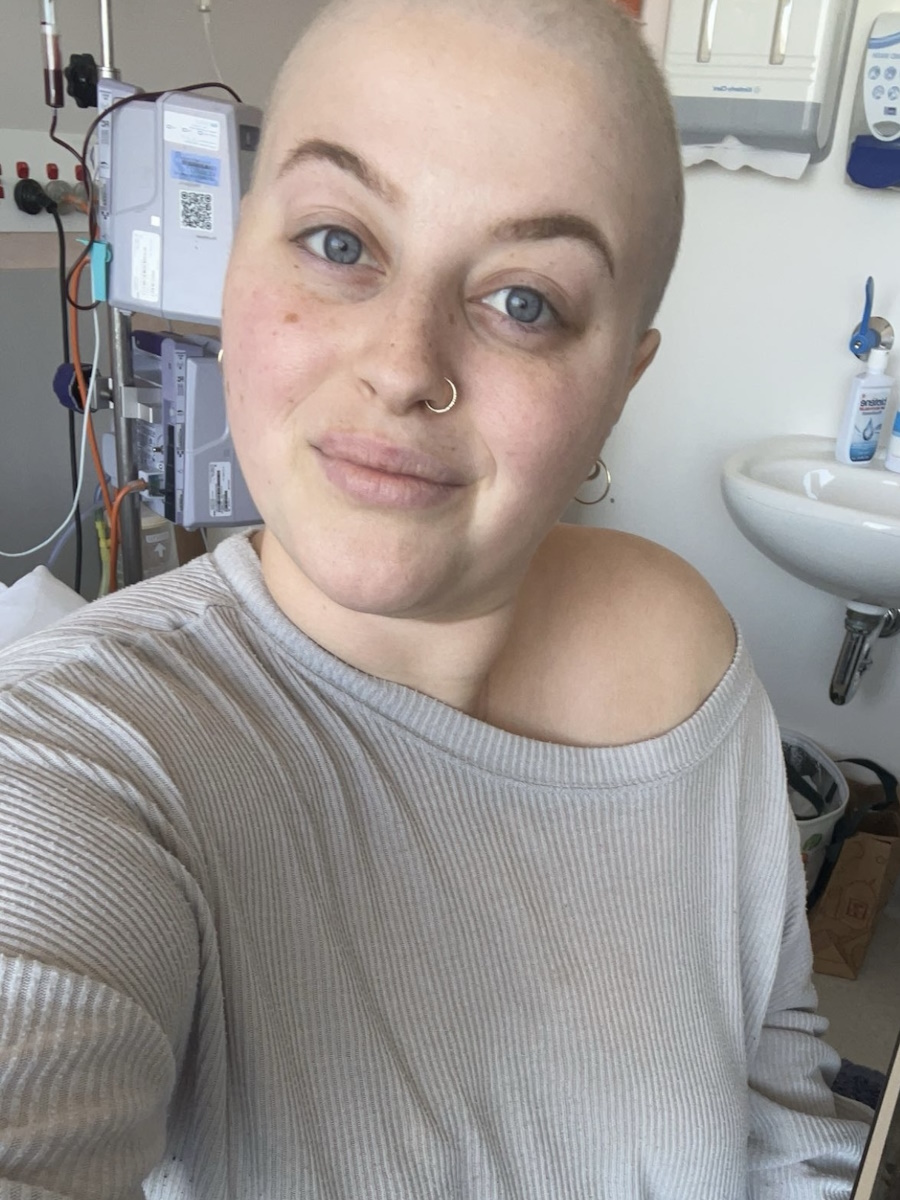
I ended up shaving my hair off on day three. I was in the ward; another patient was making his breakfast, and he said to me, “Oh, you must be a visitor. I can always tell because we don’t have hair.” I thought, “I’ll show you I don’t have hair.” When my mum arrived that day, I said, “Shave it off.” It was a control thing. I got to choose.
At that point, not a single hair had fallen out. I asked, “Is it 100% going to fall out?” They said yes, “You don’t have a chance of your hair staying in,” I thought, “Okay, then it’s got to go.” Mum washed my hair in the shower. We made it like a salon. I sat in the chair; she washed it, plaited it, and chopped it off. Then my partner shaved the rest.
We tried to keep it light. I said I matched my daughter because she didn’t have hair either, and she didn’t grow hair until I started growing hair. We tried to look at the other side of things. If I had been waking up with clumps of hair falling out, I would have been much sadder. There were little specks, easy to brush off and ignore. I let it go.
Knowing I was cancer-free before the scan results came back
When I had the second scan at around the halfway point, they scanned me again, and there was the tiniest speck in my spleen. They said, “Great. This is going well.”
I remember when I woke up one random morning towards the end of my third visit, I rang my mum and said, “They haven’t said anything, so don’t get excited, but I’ve just woken up and I’m certain there’s no cancer left.” My mum said, “You’re odd.” But I said, “No, I’m sure. I know.” I never got a chance to be tested straight away after I finished my treatment, because while they were waiting to schedule it, I got pregnant. I didn’t get to have that final confirmatory scan at the time.
An unexpected pregnancy after being told I’d never conceive again
My second baby arrived two months after I finished treatment. I was meant to get a scan, but I had to ring my nurse and say I was pregnant. I had been told for months that I would never have children again. I asked my doctor every week and she would say, “Jessica, you need to let it go. We can discuss it when you’re done.” Then it happened spontaneously. They couldn’t believe it.
It was difficult for the first four months of my second pregnancy because the medical team said, “We haven’t checked for cancer yet. What do you want to do?” I had spent months being told I would never have kids again. I thought, “I’m going to take any chance I can to have this baby.” But we also had a lot of discussions: If I’m still sick, I have a daughter who’s here. As much as I want more children, I can’t risk my life trying to have another baby and then leave both of them without their mum.
A suspicious scan and a surgery under general anesthesia while pregnant
During the pregnancy, I had a PET scan, and something was showing around my thymus area. My mum said, “Don’t look at the portal before they ring you.” I looked anyway, then I started crying. I said to my mum, “This is bad. This is bad.” When they rang me, they said, “It doesn’t look like a typical lesion, but we don’t know what it is.” They said they were going to have to biopsy it.
I was already flustered and upset from having had a PET scan while pregnant. It had only been passed as safe a couple of weeks before mine. I had a biopsy done while I was awake, and it didn’t work, so I had to be scheduled with a heart surgeon to put me under general anesthesia while pregnant.
I found out about the suspicious area in November and I had the surgery around mid-March. I was freaking out the entire period. I thought, “If this comes back positive and I’ve already gone this far, what then?” It was scary. But I made it through all of it. Then I got to be excited, because I thought, “Okay, I’ll at least make it to the other side. It’s only a couple of months away.”
Having cancer treatment without surgery and how blood cancer is treated differently
My treatment was entirely chemotherapy. The only significant procedure was the intrathecal chemotherapy. There’s no real surgery involved. With blood cancer, they have to get rid of it systemically, so I didn’t have any oncological surgeries. The thymus biopsy during pregnancy was the only surgical procedure I had, which was only because they couldn’t reach it any other way. I was in the cardiovascular ward. I was in and out pretty quickly. It was a heavy surgery, but I was glad it was done. The test results came back quickly, and we were all happy. I could finally be excited.
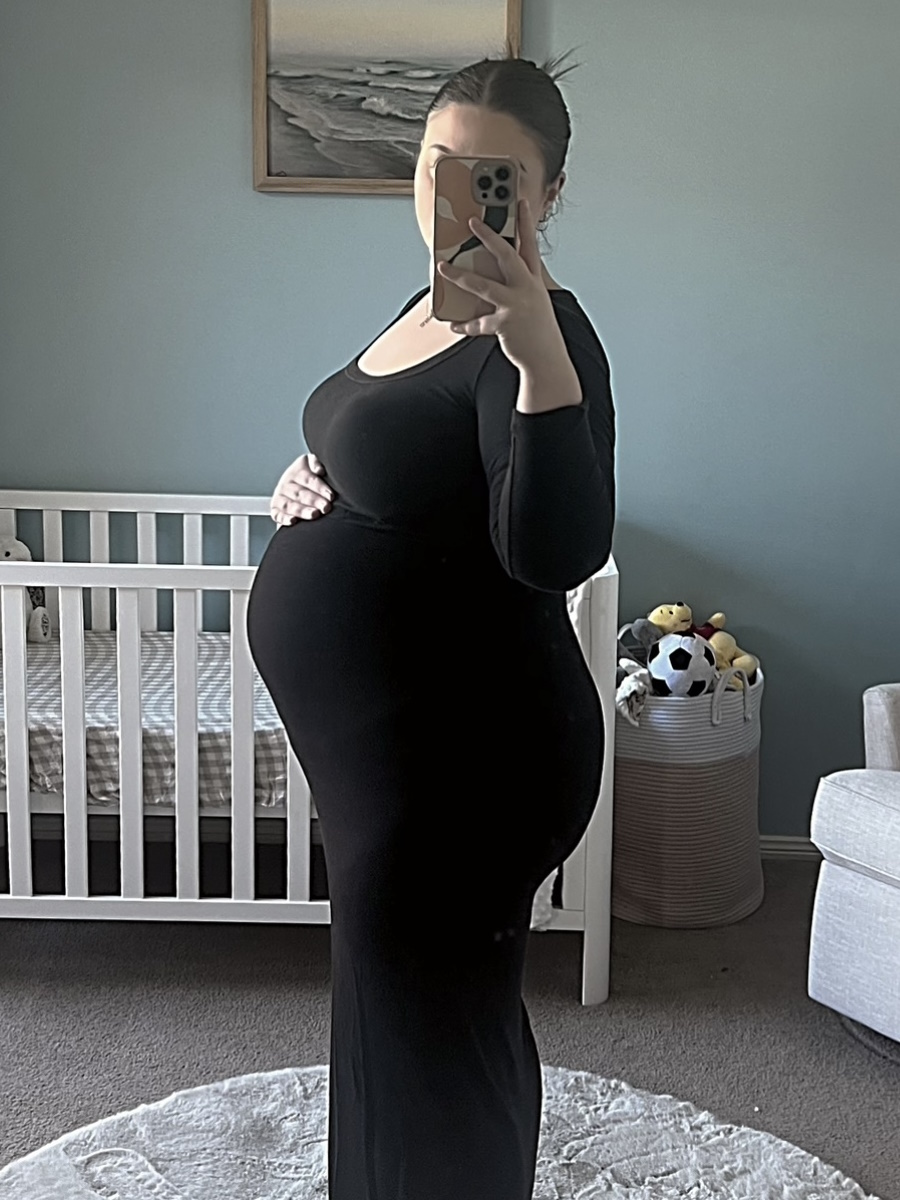
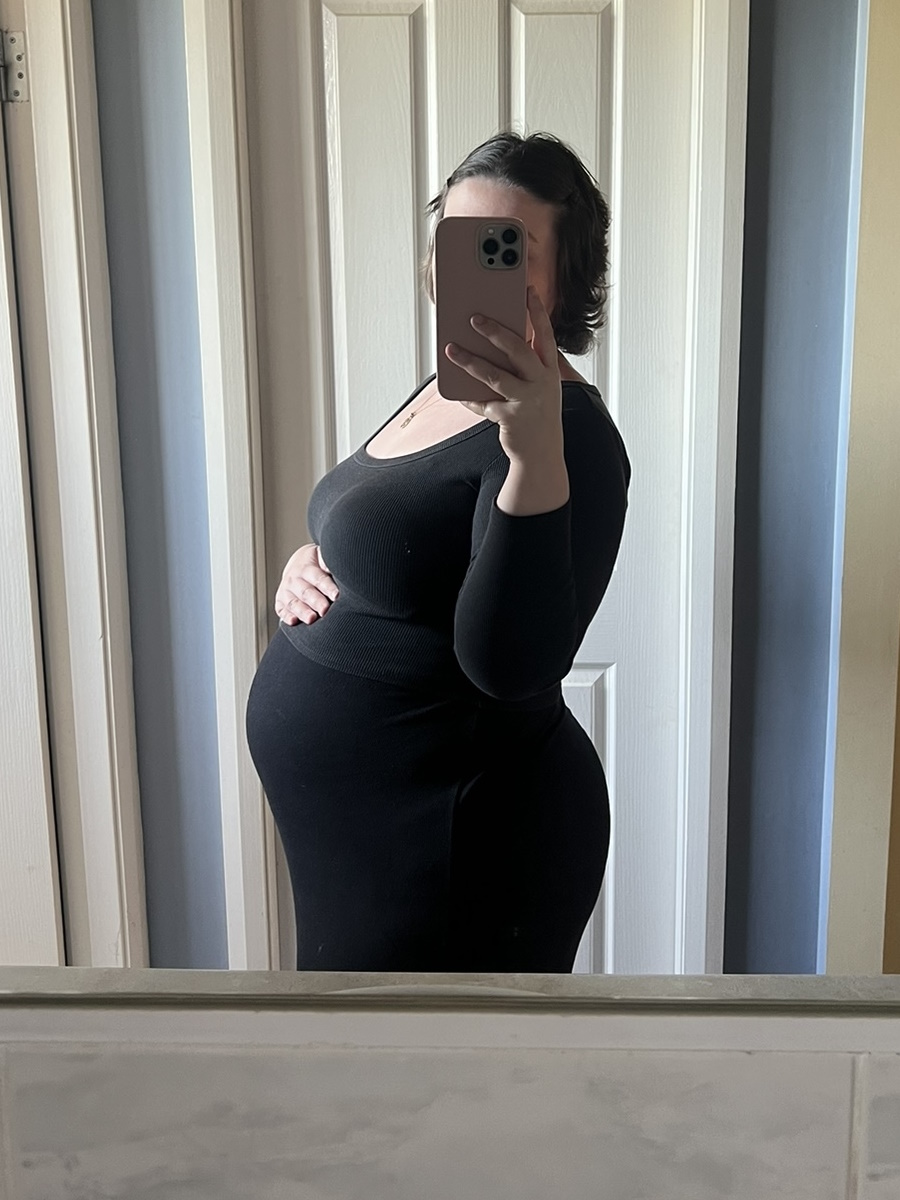
Then it set in. I thought, “Okay, this is happening. My first daughter is going to be one and a half when the next baby is born. Oh my God, I have two tiny kids.”
Feeling myself again and how a second pregnancy shifted the conversation away from cancer
It’s the nicest thing to be able to do things that other people do, especially something I had accepted was never going to happen for me. I had always wanted more children. When I was very young, I wanted to have six kids. Having to settle on the fact that I would have one child was hard, but it had been months, and I had fully accepted it.
Then, to find I was pregnant, I couldn’t believe what my body was able to do. It’s already incredible to have a baby in the first place, let alone two so quickly together with everything in between.
It was nice when the questions shifted from how I was feeling regarding my cancer to how I was feeling because I was pregnant. It made me feel so much more human. People weren’t focusing on the fact that I had been sick. Because I was pregnant, everyone was excited. We’re planning a baby shower again. We didn’t have to dwell on the cancer anymore and we could move past it.
Reflecting on two babies and a cancer diagnosis in 18 months
My youngest daughter is eight months old. It was only in the past two months that I sat down and realized that I had two babies and beat cancer in a year and a half. When you tell people, they don’t believe you. If people knew I was sick after my first baby and then you tell them how close in age my daughters are, they get confused. It’s incredible. It honestly feels unreal.
At the time, my pop had also been sick, and he passed away before I finished my treatment. We were in the same hospital, so I’d go down and see him at his ward. Maybe he had something to do with the pregnancy happening, because he knew I was meant to have more children.
It took a lot to process. There were so many blows: I’d had this baby, I was missing out on her, I was sick, my pop was sick, then my pop passed away. It kept hitting. Then I had this new baby. It wasn’t until I fully dragged myself out of the postpartum fog that I sat back and thought, “Okay, I can breathe now. What just happened? What actually just happened?” It honestly feels like a week in my mind. That year and a half went so fast.
Long-term follow-up care after blood cancer and what ongoing monitoring looks like
I see my hematologist once every three months or so. She does my blood tests and things, and everything has been good. She’s keeping on top of things and making sure I get checked if I feel anything. I see my GP often anyway, so we’re good.
Moving forward after cancer and choosing normalcy
I have no long-lasting side effects that are going to remind me of what I went through. I have this scar, but that happened during the pregnancy surgery, so it doesn’t feel attached to the cancer experience. It feels like it didn’t even happen to me and like I dreamt it.
My hair came back different, but I had it fixed by my hairdresser. It was part of trying to go back to how everything was before cancer, because I don’t want my life to be defined by this. As incredible as it is that I survived, I want to be me. I can be me, a mum, and a partner. I get to be normal.
How cancer changed my perspective and helped me become calmer
I’m a lot calmer and less stressed about things. I used to have a mentality where everything had to be perfect. I would get stressed if things didn’t go how I thought they were supposed to go. Now it’s more of it is what it is. It’ll work out and it’s not a big deal. That’s also been good for parenting the girls, because I’m a lot calmer. I was very tightly wound before, but there are bigger things in the world. Nothing is that big of a deal.
Finding strength through cancer
I can’t even fathom that was me. People always say, “I’m not strong.” I still think that about myself. I look at the women around me and think, “They’re strong. Not me.” I have to remind myself that I went through these things. I’m proud of myself that I didn’t waste the time. I made the most of it.
I still went to events. I went to concerts with my brother. I did all of the things I still wanted to do. In the hospital, I would sneak out to the convenience store down the street because I hated the hospital food. I’d think, “I’m not sitting here and wasting my day.”
I’m prouder of myself that I carried on and trying to be normal, that I didn’t wallow, and for letting myself enjoy life as it was still happening all around me. There were a lot of good memories.
Why I’m sharing my story on social media
I’m in a unique position. I recently had a baby and I was so young. When I was going through it, I was searching on TikTok and there weren’t a lot of people like me. I was trying to look up hair regrowth to know what I would look like, but I couldn’t find anything. So I said to myself, “When I’m done, I need to document a few things.” At the time, I didn’t feel like I could document the journey. I wish I had, even in drafts, so I could look back. But I was very in the moment.
People need to see that life can still go on. Your life doesn’t have to be just about cancer. Once you get through this, you can be you. It doesn’t make you any less or any more than anybody else. You show up and move on.
I do touch on the cancer topic here and there because it does come up. But a lot of my content is my normal life. I would have loved to find someone who had been through something like that, go to their page, and see that they were living a very profoundly normal life.
Health and fitness after cancer and getting my body back
Before I had kids, I was a gym person. With kids, I don’t have that time, but I want to feel healthy. I spent so long feeling unhealthy and convincing myself it was normal before I found out. I want to feel lighter and healthier.
Once you’ve been through something like that, you focus on your health a little bit more. If I’ve been through that, I can just do anything. I’ve run twice because with the kids, I can’t just go whenever, but maybe I’ll run more. Maybe I’ll run a marathon. Who knows?
My advice for others going through cancer
It’s such a scary thing. If you can try to snatch those random normal moments, it helps — whether it’s someone coming to visit you and having a very normal conversation that’s not centered around what you’re going through.
I was so fortunate. I had my absolutely amazing partner. I had my parents, who we cannot thank enough. They even let us move in with them. We stopped paying rent and started living with them, so everyone was together and it was easier to look after everything.
Everything was about my daughter and not about me. I told my family that it has to be about her. We have to sort things out for her. I have to get better for her. That made it easier to try to be normal and focus on those things, rather than wallowing and being sick, which is easy to do. I did plenty of wallowing, sitting there, eating snacks, and feeling sorry for myself. But when you can, grasp at any sort of normalcy that you can.
Inspired by Jessica’s story?
Share your story, too!
Hear from people living with Burkitt lymphoma
Real experiences with diagnosis, treatment choices, side effects, and life beyond Burkitt lymphoma — in their own words.
Leave a Reply