
From Crohn’s Flare to Incidental Kidney and Appendix Cancer: 30-Year-Old Mom Emily’s Experience
When Emily walked into the emergency room for a Crohn’s disease flare, she never imagined she would be told she had kidney cancer. At 29, with a few-month-old baby and a three-year-old at home, she was suddenly facing an aggressive cancer, young-onset renal cell carcinoma with clear cell and papillary cell features. Two of three imaging tests suggested the mass might be benign, but the MRI pointed to cancer, and a later biopsy confirmed the diagnosis.
Interviewed by: Nikki Murphy
Edited by: Chris Sanchez
Because her Crohn’s disease was so active, Emily was initially too sick for any kidney surgery and spent weeks in the hospital on infusions to get well enough just to have the mass biopsied. When she finally met with the urologist, she learned she was the youngest patient he had ever seen in her county with this type of renal cell carcinoma, a kidney cancer typically found in men decades older. Doctors emphasized that it was a “fluke blessing” that her Crohn’s had sent her to the ER early; if the tumor had reached her lymph nodes, her prognosis and time with her children could have been very different.

Once she was stable, Emily had a kidney-sparing cryoablation procedure under CT guidance, with a specialist brought in because the approach was still relatively new at her hospital. Surgeons mapped her back, moved her in and out of the scanner, and placed a balloon to protect a major nerve near the tumor. The probe slightly injured the nerve, leaving her right hip and thigh numb for about a year and a half. But the operation was a success; the tumor was destroyed, and she was able to avoid chemotherapy and radiation while keeping her kidney.
Since then, Emily has lived with intensive surveillance, including MRIs, CT scans, and bloodwork, as well as another surgery that revealed a second malignant tumor in her appendix and led to the removal of her entire large intestine and an ostomy bag. She describes profound health anxiety, grief over missing chunks of her young children’s lives, and the ongoing worry that something else could appear, even though her genetic testing has been normal and there is no family history of cancer.
But Emily also talks about transformation. Cancer and chronic illness have pushed her to reflect deeply on who she wants to be, to focus on what truly matters, and to be a mother who stays positive, makes jokes in the hardest moments, and chooses to make the most of the experience rather than letting it define her.
Learn more about Emily’s kidney cancer story by watching her video above and reading the edited transcript of her interview below.
- Early detection of kidney cancer, including young-onset renal cell carcinoma, can come from unexpected places, like an emergency visit for Crohn’s disease. It can also dramatically change outcomes.
- Coordinating care across specialties — urology, oncology, gastroenterology, hematology, and primary care — helped Emily become healthy enough for biopsy, cryoablation, and ongoing surveillance.
- Living with renal cell carcinoma, Crohn’s disease, and an ostomy bag brings long-term physical and emotional challenges, including health anxiety and grief over missed time with young children.
- As Emily’s experience shows, patients cannot control every medical outcome, but they can choose how to respond emotionally, leaning on positivity, humor, and support to get through uncertainty.
- Emily describes a clear transformation: from shock and disbelief at being “too young” for kidney cancer to a stronger, more grounded person who focuses on what really matters and aims to be a positive, memorable presence for her children and community.
- Name: Emily R.
- Age at Diagnosis:
- 30
- Diagnoses:
- Kidney Cancer (Renal Cell Carcinoma with Clear and Papillary Cell Properties)
- Appendix Cancer
- Staging:
- Stage 2
- Symptom:
- Incidental discovery during treatments for Crohn’s disease
- Treatments:
- Ablation therapy: cryoablation
- Surgeries: colectomy, ostomy surgery


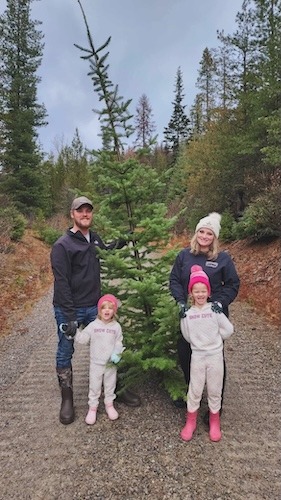

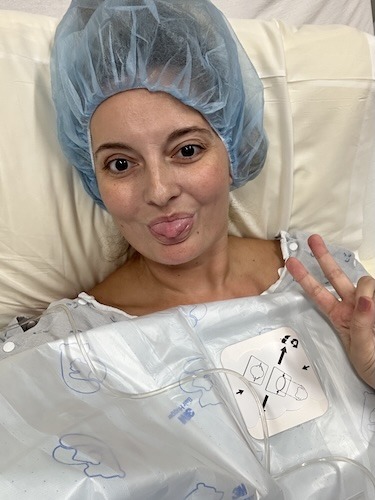


This interview has been edited for clarity and length. This is not medical advice. Please consult with your healthcare provider to make informed treatment decisions. The views and opinions expressed in this interview do not necessarily reflect those of The Patient Story.
- Introduction
- How kidney cancer changed my outlook on life
- Crohn’s disease, ER visit, and the incidental discovery of a kidney mass
- Delays due to my severe Crohn’s flare, and waiting for biopsy
- Hearing the official kidney cancer diagnosis
- My kidney cancer treatment plan, including kidney-sparing cryoablation surgery
- A second cancer: an appendix tumor found during Crohn’s surgery
- Ongoing kidney cancer surveillance: Scans, MRIs, and bloodwork
- Recovery after surgeries and living with an ostomy bag
- Health anxiety and the emotional impact of a young-onset kidney cancer diagnosis
- The shock of having had two cancers before age 32
- Genetic testing, no family history, and coping with the unknown
- Life after my cancer experiences — identity, motherhood, and living with an ostomy
- Advice for others facing an unexpected cancer diagnosis
- Closing thoughts
Introduction
My name is Emily, and I was diagnosed in 2022 with renal cell carcinoma, with clear cell and papillary cell findings. I am from North Idaho.
How kidney cancer changed my outlook on life
I think it just really makes you stop and reflect on life and how you want to live your life and how you want others to perceive you, and decide if you want to make a negative impact or a positive impact. And if you are going to have a bad attitude or a good one.
So it really helped me self-reflect on how I am going to start living my life after my diagnosis.
Crohn’s disease, ER visit, and the incidental discovery of a kidney mass
I did not have a lot of symptoms. I have Crohn’s disease, so it would have masked all my symptoms. It was actually a blessing.
I ended up in the emergency room for Crohn’s, and they did a CT scan, which obviously is protocol. The doctor came back in, turned white in the face, and he said, “Hey, we found something on your CT scan,” and I am in the emergency room, and I am thinking, “Yeah, I have Crohn’s, nothing shocking.” He said, “I found a mass on your right kidney,” and he said, “I am not allowed to say anything, but it looks like it could potentially be cancerous.”
With my age and having a baby at home — having a few-month-old baby and a three-year-old at home — he said, “I want to get to the bottom of this, and since you are here, we are going to run more tests.” I was with my grandma, and we just looked at each other and started crying because we were just not expecting that. Normally, my husband would have been with me, but he was home with the kids. My grandma said, “I will go with you. I just have a bad feeling about this visit.” So we were just crying.
They ran an MRI and an ultrasound. Two of the three tests came back as probably benign, but the MRI came back as most likely malignant. Because of that, he said, “We need to get you into a urologist ASAP.”
Delays due to my severe Crohn’s flare, and waiting for biopsy
The problem was that my Crohn’s disease had flared so badly. I was so sick. I ended up in the hospital for about three weeks after that. Even after that, I was put on infusions and everything because I was not healthy enough for surgery for them to even find out if it was cancerous or not.
So I had to wait months until I could physically go through the procedure to have it biopsied. Finally, after getting somewhat healthy, months and months later of stressing out if it was cancerous, I had the biopsy procedure — and it came back as cancerous. It came back as kidney cancer, a renal cell carcinoma with clear cell and papillary cell.
I went and saw the urologist, and he said, “Honestly, you are the youngest person in the entire Kootenai County to get this.” He said he had never seen someone so young who had clear cell and papillary cell. He said there are people out there who have it, but it is very rare in the country. So I thought, “Okay.” I was like, “What do I do? I have a baby who is a few months old. I just had a C-section. They must not have noticed it during the C-section a few months prior. What do I do?”
He said, “Well, you are lucky they found it so early because of your Crohn’s disease, because otherwise, if they had caught it months later, it would not have been good at all.” So I was very fortunate that they caught it early. Otherwise, this would have been a completely different story.
Hearing the official kidney cancer diagnosis
I think I knew it was cancerous. Deep down, I just knew. For some reason, I just knew. But everyone around me was like, “No, two of the scans said that it could not be cancerous, so we are just going to go with that.” Everyone was trying to be positive, but deep down, I just knew.
We walked into the room. He did not have to say anything. I looked at him and said, “It is cancerous, isn’t it?” And he said, “Yeah, we really need to talk about this.” I was still at a point where I was not even healthy enough for surgery. He said, “We need to gather a team together: the oncologist, the hematologist, your GI doctor, and your primary. We need to get everyone together to get you as healthy as possible because we need to get this thing out. The longer it is in, we do not want to risk anything at this point.”
I think I teared up a little bit in that appointment, but in my mind, I had mentally prepared myself for the worst.
My kidney cancer treatment plan, including kidney-sparing cryoablation surgery
Because they caught it so early, I was able to avoid chemotherapy and radiation, but I was put on heavy steroids that mimicked that and a very strict diet. I was very fortunate they caught it early. As we went into surgery, a couple of things: they wanted to try a cryoablation to freeze it off. They said if that did not work, they were going to have to go in and cut it out, and if it was looking like things were just a mess in there, they were just going to remove my right kidney.
The cryoablation was fairly new. They had to have a specialist come in and do it because they had not really done a lot of those at the hospital I was in. I had to do my surgery under a CT machine, which was weird for me because they literally had to put a map on my back of where it was, and then constantly put me in and out of the CT to make sure that they were hitting it properly with their probe to reach the tumor on the kidney. It was small, but it had enlarged, and it had not reached my lymph nodes at this point. If it had reached my lymph nodes, it would have been a very different situation. They wanted to double-check that it had not reached my lymph nodes.
So I was going in and out of the CT machine. I was still alert at this point, but then they put me under, so I am sure they put me through it a few times, but they went through and did the freezing. They had to put a balloon next to my kidney because where the tumor was, it was sticking out of the bottom right of it, and it went through a major nerve, which is hard to see on scans. They had to put a balloon there to try to avoid the nerve. Unfortunately, they did nick the nerve a little bit while they were in there, so I had temporary numbness on my whole right side — my whole right hip through my right thigh. That area was numb for about a year and a half, and then I finally started getting feeling back.
Honestly, they were able to get the tumor, so the numbing was the least of my concerns at that point. Now I just go in twice a year and get MRI scans, see my urologist, and get blood work, and they monitor it because it was such an aggressive form. Because of the clear cell and the papillary cell, it is such an aggressive form that I am constantly being monitored to make sure it does not come back and go into my lungs.
A second cancer: an appendix tumor found during Crohn’s surgery
Recently, they did find a similar tumor in my appendix. That is when I had my whole large intestine and my appendix removed recently to avoid that. But I still have my kidneys, so the chance of it coming back is possible, but we are just being heavily monitored at this point.
They did a biopsy it. They did not even know it was there. My Crohn’s flared up again, and I ended up getting my ostomy bag. I ended up getting an ostomy bag, so after every surgery, they biopsy the organs they take out. After they removed my whole large intestine and the appendix, they opened up the appendix, and they found a small tumor in there, which was very similar to the tumor in my renal cell, where if it had hit the lymph nodes, it would have been a very similar experience.
I do not remember the exact type. It was not clear cell or papillary like my renal cell, but I cannot remember the name of it. It was definitely malignant. I went back to the oncologist, and they ran a full panel of genetic testing to see if I was susceptible to any other tumors because at this point, I am thinking, “This is two tumors in a few years that are both cancerous,” and fortunately, out of a fluke thing because of my Crohn’s, we found it early.
Now that my Crohn’s is under control with my bag, I am wondering, “Is something else going to pop up, and am I not going to find out about it until later?” They said the tests looked good, and they are just going to keep monitoring me. They said the thing they are most concerned about is the renal cell not coming back. So we are just taking it day by day at this point.
Ongoing kidney cancer surveillance: Scans, MRIs, and bloodwork
I get blood work done about every three to four months at this point. I get an MRI done twice a year and a CT scan done at least twice a year to keep an eye on everything. I meet with the urologist at least once a year at this point, if not more, if we need it.
For now, we have gone down to once a year unless they notice something on my scans.
Recovery after surgeries and living with an ostomy bag
Honestly, I think the hardest part of recovery has been the mental part, the thought that I could go through that again, or it could come back and I would not know about it until later on. Having two young kids is really hard, and I think that is why they approached it so aggressively so fast. They were like, “She is a young mom. Her kids will not even remember her at this point.”
I think just reminding myself where I was and where I am today, and reminding myself that at the end of the day, no matter what happens — whether it comes back or not — just to be the best mom I can be and be such a positive influence that people around me will remember me for being a very positive, strong person who made a difference.
Health anxiety and the emotional impact of a young-onset kidney cancer diagnosis
Definitely health anxiety. You do not just go into the hospital for one thing and then leave, finding out you have something you would never in a million years think you would get, like renal cell carcinoma. They were telling me that it is a cancer typically for men in their 60s to 80s or older. So to see someone — at the time I think I had just turned 30 — having that was definitely a shock.
Now I definitely have some health anxiety where I am like, “Oh, I have a headache, what is going on?” I try to remind myself it is rare, but that has been a challenge for sure: the unknown. Knowing something crazy that you would never expect to happen could happen.
Also, going through all the surgeries, because the last few years between the cancer and the ostomy, going through all that, I have not been fully present with my kids because I have been in and out of the hospital. There were times I spent weeks in the hospital, times I spent months in the hospital. Just not being there for my kids and not having that structure has been really hard. Now that I am back home, I took time off work because it is just too draining, and now I can focus more on raising my kids because I missed so much of their lives because of everything I went through.
The shock of having had two cancers before age 32
I think what I did not see coming was cancer in general, because cancer does not run in my family. It was just a complete shock — how did this happen, where did it come from? Then, having cancer twice back-to-back with the tumors is definitely scary and definitely not something I would expect to have before I turned 32.
You have two little kids, and you plan out their lives, including their graduation and so on. You do not plan on going to the hospital one day for bleeding ulcers and finding out it is a very serious cancer that, if they do not handle it right away, you have just a few months left with your kids. That was the hardest part, the doctor telling me that if it had progressed into my lymph nodes, I might have had only a few months left. My youngest daughter was a few months old, about seven months old at the time. Just the thought of her not growing up and not knowing who her mom was, and only seeing pictures, was the hardest part for me during this whole experience.
Genetic testing, no family history, and coping with the unknown
I did have genetic testing done. Everything came back normal. The doctors are completely baffled about how this even happened. They do not know how it happened, how it started. There is no family history, which is a complete shock. The tests came back fine for the genetic testing.
That is what is very uneasy for me to this day, not knowing. I am like, “If that can happen so easily, what else can happen? Is it going to come back? What is causing this?” They do not have any markers to go back on to say, “Oh, this runs in your family,” or “You have this DNA.” They do not have that.
A couple of things popped up on my genetic testing, but they said they were not concerning. It is hard to explain. They had some numbers that popped up that could be really bad, but because I had these other numbers, it offset those numbers. Someone in oncology would know what I am talking about, but I do not. It is still confusing to me to this day, and it is just bizarre. You do not just go to the hospital one day and hear, “Oh, you have renal cell carcinoma,” and then the oncologist and the doctor say, “We do not know why this happened. You do not fit the profile. You are the absolute youngest in the county. This does not happen.”
I was 29, almost 30, when I was diagnosed, so they said it was really rare. I think that is what still haunts me today: the unknown.
Life after my cancer experiences — identity, motherhood, and living with an ostomy
I feel like this experience has redirected me as a person and challenged me as a person in a positive way, where I have really buckled down and focused on what is most important in my life. It has really helped me get my priorities straight.
At the same time, I miss my daughter’s first seven weeks of preschool. I missed the first seven weeks of her school. There are so many things I missed out on because I was in the hospital getting surgeries, or even when I was home recovering and too sick to get out of bed from medications and being weak. There is just so much I missed in their early development, and that is something I will never get back. So I just have to make the most of it now and keep moving forward, because I will never be the same as I was before.
Especially with my bag now, I cannot do things I was able to do before. It is comforting knowing that because of my bag, they got another tumor out that was cancerous. But at the same time, I am like, “Okay, let’s not have any more pop up now.” It has definitely changed me as a person; positively, I think. Even though it is hard, I think it has made me a stronger person and made me care less about what people think and be less shallow and more in-depth about what really matters.
Advice for others facing an unexpected cancer diagnosis
You do not know what tomorrow brings, and something can be so shocking. You can go to the doctor and get renal cell carcinoma at a young age, which you thought only people in their 80s got, and men specifically. The unexpected can happen. I would tell them that if the unexpected does happen, it is okay. Everything is going to be okay. You just stay as positive as you can.
That is honestly what got me through it: staying positive, making jokes, and having a great team of doctors and nurses. Even through all the testing and the surgeries, I would make jokes out of it and stay positive because you are not going to get around it. You cannot get out of it at this point. You are in it, so once you are in it, you have to make the most of it. People are going to be watching you and seeing how you react and how you are dealing with it.
For me, I did not want them to see me being negative and letting this take over my life, so I just kept going out there and fighting and being strong and staying happy. Despite the hardest situations, I still put a smile on my face. Honestly, that helped me get through so much mentally and physically. I think it made the recovery faster. Mentally, it helped me a ton because I did not go into a depression over it. I just stayed positive and took it day by day because I did not know what the future held. I wish I knew, but you do not. So in the moment, you just have to find something funny to laugh about.
Closing thoughts
I cannot think of anything else, honestly. As I said, it has been such a whirlwind, especially with everything happening so close together.
Inspired by Emily’s story?
Share your story, too!
More Kidney Cancer Stories
Maria F., Kidney Cancer (Wilms Tumor)
Symptom: Back pain
Treatments: Surgery (nephrectomy), chemotherapy, radiation
…
Mia H., Kidney Cancer (SMARCB1-Deficient Renal Cell Carcinoma, Non-Sickle Cell Trait), Stage 4
Symptoms: Bad cough, fatigue, nausea
Treatments: Chemotherapy, radiation, immunotherapy
…
Alexa D., Kidney Cancer, Stage 1B
Symptoms: Blood in the urine; lower abdominal pain, cramping, back pain on the right side
Treatment: Surgery (radical right nephrectomy)
…

Bill P., Kidney Cancer (Papillary Renal Cell Carcinoma), Stage 3, Type 1
Symptoms: Kidney stone, lower back pain, sore/stiff leg, deep vein thrombosis (DVT) blood clot
Treatment: Nephrectomy (surgical removal of kidney and ureter)
…
Burt R., Pancreatic Neuroendocrine Tumor (pNET) & Kidney Cancer
Symptom: None; found the cancers during CAT scans for internal bleeding due to ulcers
Treatments: Chemotherapy (capecitabine + temozolomide), surgery (distal pancreatectomy, to be scheduled)
…
Bill P., Kidney Cancer (Papillary Renal Cell Carcinoma), Stage 3, Type 1
Symptoms: Kidney stone, lower back pain, sore/stiff leg, deep vein thrombosis (DVT) blood clot
Treatment: Nephrectomy (surgical removal of kidney and ureter)
…
Laura E., Type 2 Kidney Cancer (Papillary Renal Cell Carcinoma), Stage 4
Symptoms: Profound fatigue, hypertension, high red blood cell count, severe back pain, badly swollen legs
Treatment: Chemotherapy (Cabometyx (cabozantinib) assigned under S1500 PAPMET clinical trial)
…

Nina N., Kidney Cancer (Chromophobe Renal Cell Carcinoma), Stage 2
Symptoms: Blood in urine, blood clots, intense abdominal pain
Treatment: Partial nephrectomy (surgical removal of right kidney)
…
Leave a Reply