
Diagnosed at 15 with Stage 4 ALK+ Lung Cancer, Jake Chose to Put Life First and Never Looked Back
When Jake received a stage 4 ALK-positive lung cancer diagnosis at just 15 years old, the world he knew, including basketball practice, chemistry tests, high school hallways, disappeared almost overnight. What followed was one of the most extraordinary patient experiences in modern oncology: a teenager in Chicago who, against statistical odds and with no peer to relate to, began a 13-plus-year path through brain surgeries, radiation, proton therapy, chemotherapy, clinical trials, and ultimately, ALK inhibitor targeted therapy that gave him back what cancer could have taken: his life.
Interviewed by: Taylor Scheib
Edited by: Katrina Villareal
The road to that diagnosis was anything but straightforward. For nearly 30 days, Jake endured debilitating migraines that made standing up from bed feel like the floor was shifting beneath him. He said nothing to anyone, pushing through basketball practice and gym sessions on nothing but Advil and determination. It was his mother’s insistence on an MRI that revealed a golf ball-sized tumor on his cerebellum and a post-surgical finding that would change everything: the tumor had metastasized from his lung. PET and CT scans confirmed lesions in his lung and ankle bone, and the stage 4 lung cancer diagnosis followed.
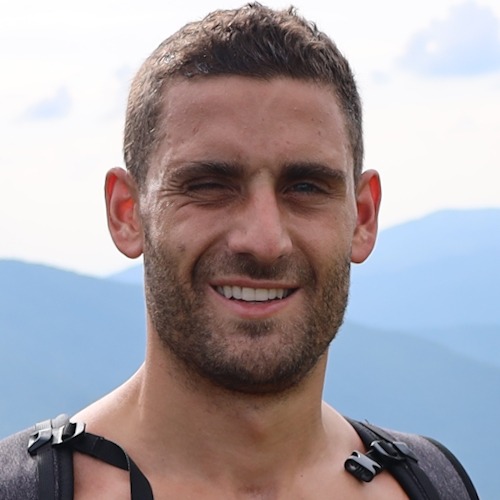
What saved Jake from a lung resection or aggressive radiation at 15 was biomarker testing. A lead oncologist at the University of Chicago took a different approach, tested the resected tumor tissue, and found the ALK-positive mutation, a targetable driver that made Jake eligible for oral targeted therapy. Instead of losing half a lung, Jake took a pill every day and went back to high school. He looked like every other teenager in the hallway. No one knew.
Over the next 13 years, the disease did not stay quiet. Jake underwent three brain surgeries, five rounds of brain radiation (including four Gamma Knife procedures), proton therapy at UT MD Anderson in Houston, radiation therapy to his ankle bone, and seven total rounds of IV chemotherapy. He also participated in two clinical trials, most recently enrolling in a trial at Vanderbilt University in November 2024 when all other ALK inhibitor options had been exhausted.
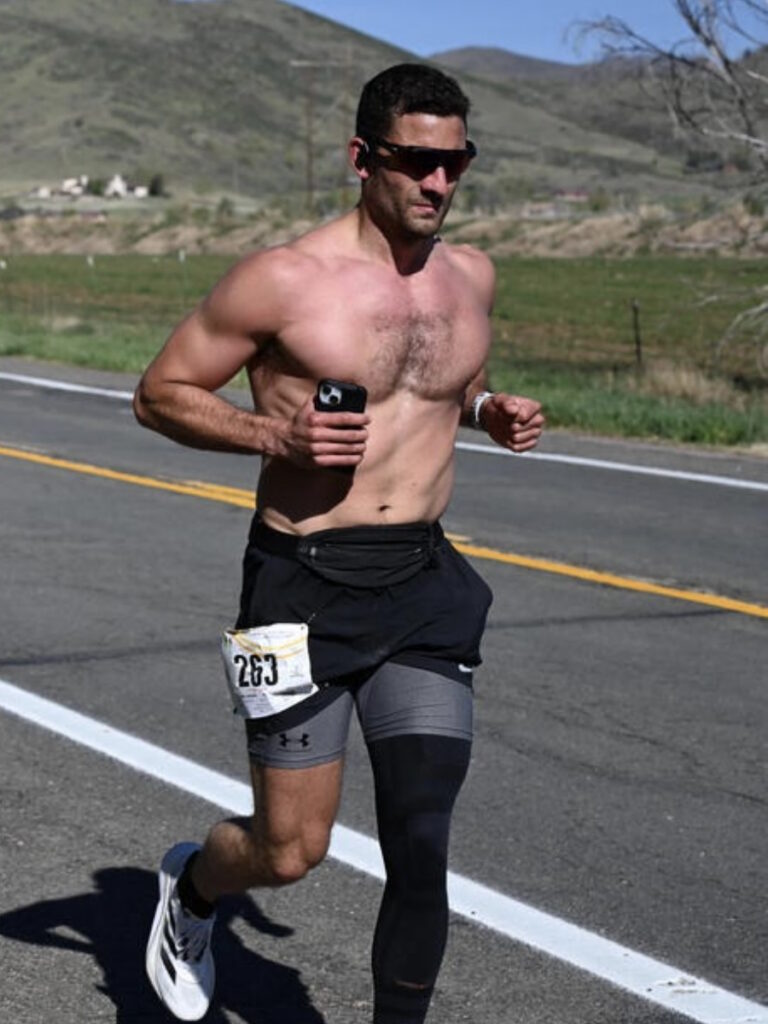
Today, Jake runs marathons, including the Chicago and New York marathons, both fundraised for Lurie Children’s Hospital of Chicago, where his first brain surgery took place. He has launched a podcast to bring hope to patients who are now where he once was: alone, scared, and unable to find a single person who understood what it meant to be a teenager with ALK-positive lung cancer. His message is clear and hard-earned: this disease does not define you, and it does not have to stop you from anything.
Watch Jake’s video or read the edited transcript of his interview to find out more about his story:
- Biomarker testing can be life-altering. Demand it. Jake’s path from “lose half your lung” to “just take a pill” was made possible entirely by a single oncologist who tested the tumor for genetic mutations. Without that biomarker result, targeted therapy would never have been an option. Patients who have had a tumor removed should ask their care team: What are the components of what was just taken out of my body?
- A second, or even a third or fourth opinion, is not optional; it’s essential. Jake never accepted the first treatment plan offered. Every major decision in his care was made only after gathering multiple medical perspectives. This approach directly led to biomarker discovery, proton therapy access, and clinical trial enrollment.
- Living with a serious illness requires a support team, not a solo performance. For the first decade of his experience, Jake kept his diagnosis almost entirely private. He now identifies that isolation as one of his greatest regrets. The turning point in his emotional health and quality of life came when he began involving his community.
- You are your own most important advocate. No physician, however skilled, is as close to your body, your goals, or your life as you are. Researching your condition, asking uncomfortable questions, and refusing to be treated like a statistic is not being difficult; it’s self-preservation.
- Transformation: from patient to purpose. Jake spent the first decade of his experience hiding his diagnosis, fearing pity and protecting his identity. In the years since, he has built a public platform, which includes a podcast, marathon fundraising, and patient advocacy group engagement, specifically to be the person he never had: someone 13 years out, still running, still living, still here. The disease did not change what Jake is; it clarified it.
- Physical activity is a pillar of longevity, even during active treatment. Jake ran a marathon during his clinical trial. He went for a run the day after his most recent chemotherapy treatment. Movement, competition, and community gave him something to live toward, not just away from.
Jake’s Diagnosis Facts
- Name: Jake L.
- Age at Diagnosis:
- 15
- Diagnosis:
- Non-Small Cell Lung Cancer (NSCLC)
- Staging:
- Stage 4 (Metastatic)
- Biomarker:
- ALK
- Symptoms:
- Note: Jake’s symptoms were a result of the lung cancer spreading to his brain
- Severe, persistent migraines
- Throbbing headaches upon transitioning from horizontal to vertical
- Balance disruption
- Treatments:
- Surgeries: multiple brain resections
- Radiation therapy: traditional, Gamma Knife radiosurgery, proton therapy
- Chemotherapy
- Targeted therapy: ALK inhibitor
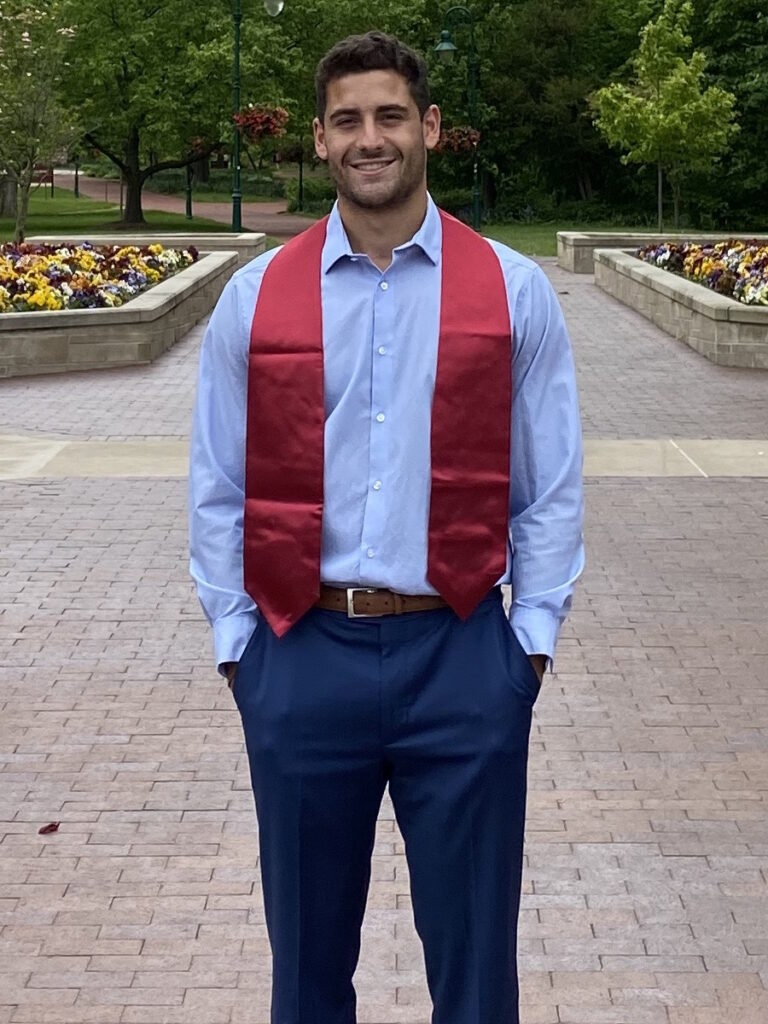

Thank you to ALK Positive for their partnership. ALK Positive is a patient-driven organization that seeks a cure for ALK+ cancer and works to improve patients’ quality of life and life expectancy worldwide. Their mission goes well beyond raising awareness by driving research, funding clinical trials, and demanding better treatment options.
Story Sponsor

Thank you to our sponsor for their support of our independent patient education story. The Patient Story retains full editorial control over all content.
This is not medical advice. Please consult with your healthcare provider to make informed treatment decisions.
- Jake’s Diagnosis Facts
- Introduction
- Diagnosed at 15: How my life changed overnight
- The biggest lessons I learned in 13 years with cancer
- Why I kept my diagnosis private and what finally changed
- My early symptoms: Migraines, a golf ball-sized tumor, and a mom who pushed for an MRI
- The shock of a stage 4 lung cancer diagnosis at 15 and being a statistical anomaly
- Discovering the ALK+ mutation: When biomarker testing changed everything
- Why an ALK+ mutation is actually good news in lung cancer
- The importance of biomarker testing and being your own advocate
- Entering a clinical trial: How I was recruited and why I said yes
- The mental and emotional weight of 13 years, and when fatigue almost won
- Finding the ALK Positive community and the power of patient advocacy groups
- The man I have become
- My final message: Learn to love and embrace your journey
- Hear from people living with metastatic ALK+ lung cancer
It’s totally different dealing with cancer at 15 versus at 28. You have such a different perspective on life overall.
Jake L., stage 4 ALK+ lung cancer patient
Introduction
I like to go on adventures. I love to travel. I love to be outdoors. Fitness is a huge part of my life. I love running and weightlifting. And I love spending time with family, friends, and neighbors.
Diagnosed at 15: How my life changed overnight
I was diagnosed with stage 4 lung cancer when I was 15 years old, a freshman in high school. I’m about to turn 29, so it’s been 13 1/2 years.
From basketball practice to fighting for my life at 15
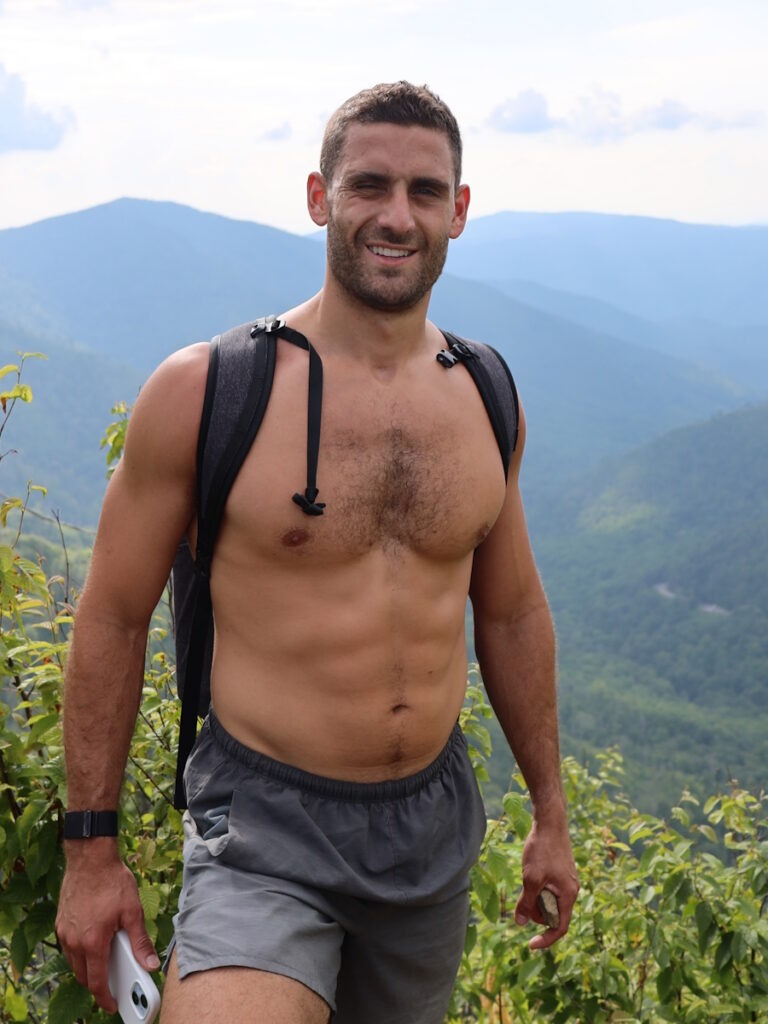
My life changed in December 2012. It went from going to basketball practice, playing sports, worrying about chemistry and math tests, and high school drama to not caring about any of that. High school didn’t matter. Sports didn’t matter. It was a full-on press to try to survive. And that all happened at 15.
It was a mixture of me coping with it, but also my parents. At that young age, you don’t fully grasp a situation. You’re going through the motions, being told what to do. Everyone looks at you as a minor, as if you don’t have an opinion. But at 15, you might not. As I progressed throughout this journey, it’s totally different dealing with cancer at 15 versus at 28. You have such a different perspective on life overall. It’s a totally different ball game.
I learned to always ask for help. No one is in this alone. I learned that life is precious. There’s no reason not to be living your life to its fullest potential.
Jake L., stage 4 ALK+ lung cancer patient
The biggest lessons I learned in 13 years with cancer
I’ve learned so much, honestly, just in the last five years. I felt like I was going through the motions: going to hospital visits and treatments and whatnot, and everyone was telling me which direction to go. In the last five years, I felt like I was always too proud to ask for any help. I wouldn’t involve my friends. I wouldn’t tell my friends what was going on. I wouldn’t tell my neighbors, my community, my high school teachers, anyone, the full extent of what was going on.
My mentality has changed so much because when you’re dealing with cancer for over a decade, it takes a team. It’s not just you versus cancer. You need a whole support team. You need to involve your community and your friends. Not involving my friends is one of the biggest regrets I probably have.
I learned to always ask for help. No one is in this alone. I learned that life is precious. There’s no reason not to be living your life to its fullest potential. Who knows what’s going to happen tomorrow? I don’t care if you’re the healthiest individual ever. You could be hit by a car the next day. You have to live in the moment. Regardless of cancer, it’s a reminder that life is precious and you have to live in the moment as best as you can.
Looking back at my journey, there were so many times when I didn’t do things because I thought, “I have no idea where I’ll be in eight months.” I didn’t want to sign up for a marathon because my cancer might progress, or I might have side effects. I didn’t want to take a trip because I might have to get treatment during that time. It took me so long to learn to live my life. Live the life you want to live in the best way you can. Enjoy every second, and everything will fall into place.
I was living in three-month increments… That’s no way to live.
Jake L., stage 4 ALK+ lung cancer patient
The chemotherapy doesn’t have to be done this week; it can wait two weeks. There were so many times when scheduling almost made my life harder. I wanted to put my life first and cancer second. I didn’t want to be known as someone whose life is dictated by cancer. That’s never how I’m going to be.
I went through a period of a couple of years where it felt like that. I was living in three-month increments, getting brain MRIs every three months, and holding my breath. I’d think, “All right, I can live my life for two months. And then the last month before the scan and right after it, I’ll only worry about cancer.” That’s no way to live.
The sense of urgency I have is that I want things done now. I want to take that trip today. I want to plan things now. If I were completely healthy, I’d probably just be flowing through life, not worrying about “I don’t have to do this in my 20s because I’m going to live 60 more years.” I could write a whole book about the lessons I’ve learned and what cancer has done for me.
Why I kept my diagnosis private and what finally changed
I was the youngest of three boys. I always had this gritty mentality where I could do everything myself. I thought I was invincible; clearly, I wasn’t. I played this tough-guy card to everyone. I guess I never fully realized that asking for help makes your life easier. It was my ego that got in the way. I was too proud to open up about it.
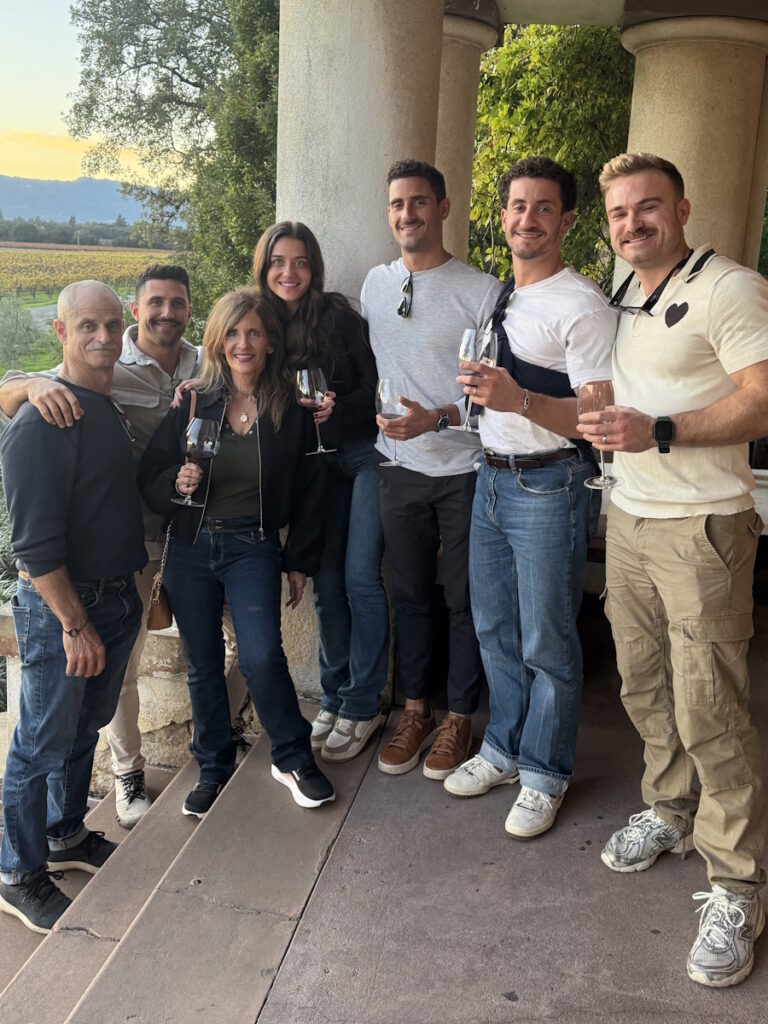
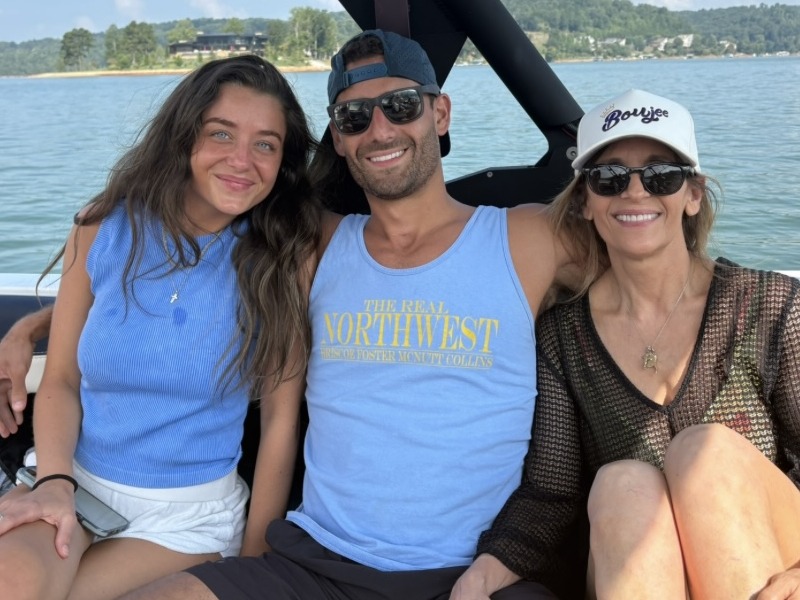
In the first decade of my diagnosis, I didn’t involve anyone. It was me, my mom, my dad, my brothers, and my girlfriend. I wouldn’t say a word to anyone else. It took me maturing to be able to talk about it and not have that anxiety of talking about it, of bringing yourself back to those dark days. I had a ton of mental health issues, too, during a couple of those years. It was a dark spot. I never want to go back. And the way you get out of that is by involving your community.
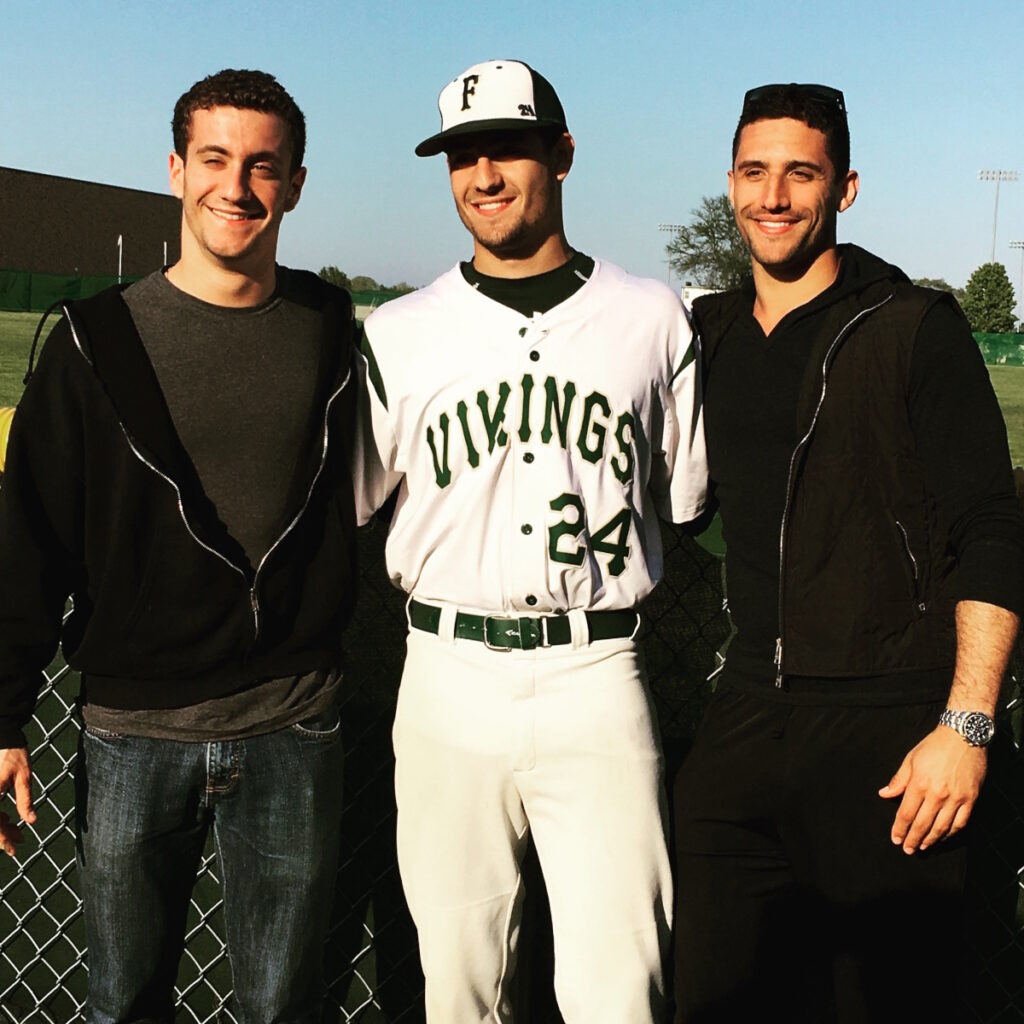
I wanted to cook, because that’s something I like doing. It means I don’t have to think about the things I don’t want to think about.
Jake L., stage 4 ALK+ lung cancer patient
Fear of pity: Not wanting to be treated like a cancer patient
That’s probably one of the biggest drivers of staying private. I didn’t want any special treatment. During the first years after I was diagnosed, throughout high school, I got a lot of special treatment. Teachers would be forgiving about my grades or homework if I didn’t get it done. Coaches were the same, too.
Honestly, my neighbors did so much for me. They even started a fundraiser for me and raised $100,000 toward my diagnosis to help me get specialized treatment that was out of network. My community did so much for me. It was almost like airing out your dirty laundry. Everyone had to know about it because that’s the only way people are that supportive of everything.
I had so many people reach out about bringing food over. “Oh, we don’t want you guys to cook because you have cancer.” But I wanted to cook, because that’s something I like doing. It means I don’t have to think about the things I don’t want to think about. People were bringing over signed sports jerseys and all these gifts.
It got to the point when I thought, “These gifts are great, but what am I going to do with them? You can’t take anything when you’re gone.” I value experiences over things. Having those memory dividends over nice stuff that brings you joy for a couple of days. I’d rather have experiences that bring me enjoyment.
We had to go to the hospital immediately. This was a major issue and needed to be addressed right away.
Jake L., stage 4 ALK+ lung cancer patient
My early symptoms: Migraines, a golf ball-sized tumor, and a mom who pushed for an MRI
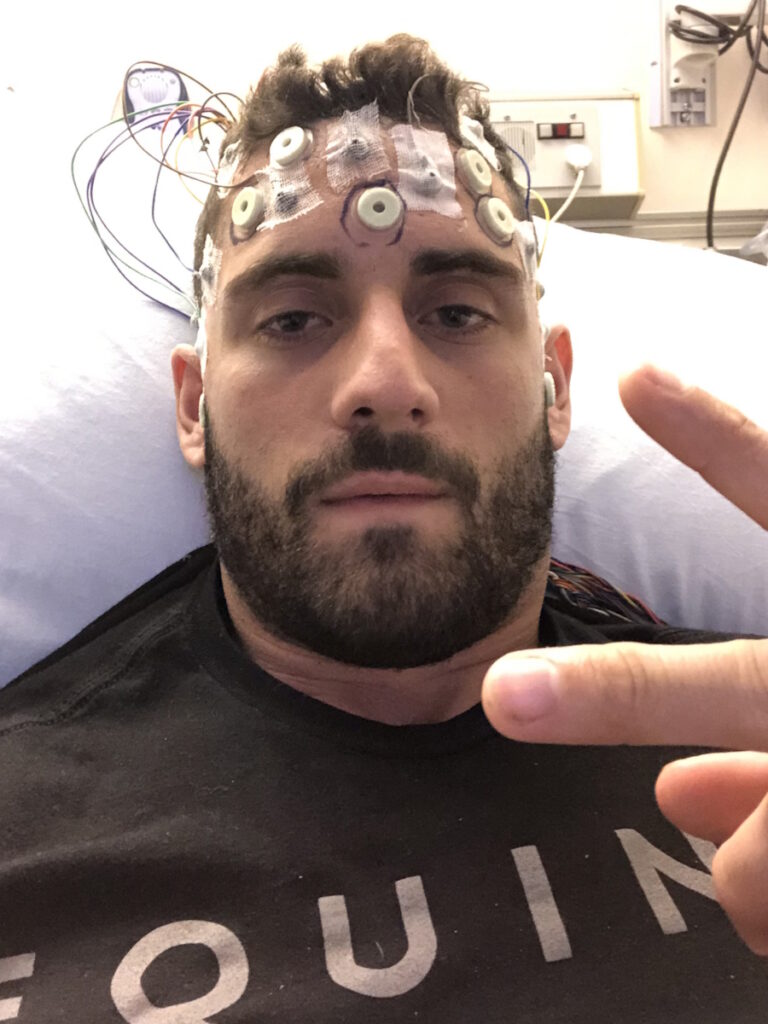
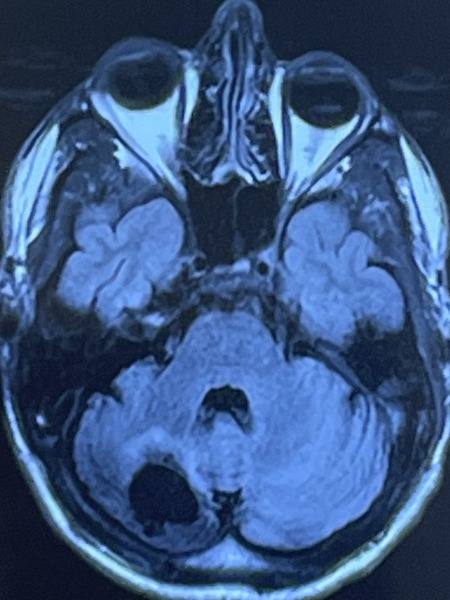
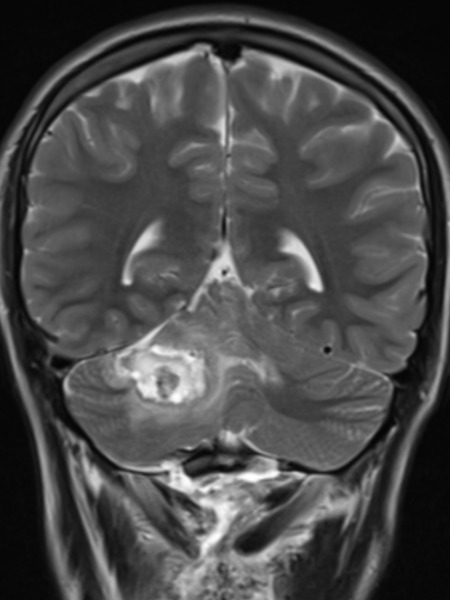
The early signs of a brain tumor were terrible migraines. The migraines started in November 2012, and I didn’t find out about my diagnosis until later in December. From November to December, about 30 to 40 days, every single time I got up, it was like a throbbing headache where something was rattling around in my brain. It’s something I’ve never experienced since. Every time I went from being horizontal to vertical, I would have to hold on to the walls, because something was clearly not right.
Again, I was 15, a freshman in high school, so I thought nothing of it. I didn’t tell my parents. I didn’t tell a soul for the first 25 days. I went 25 straight days playing sports, going to the gym, and going on runs by taking ibuprofen every day. My headache would subside for a couple of hours, and then I’d take another one. I didn’t tell a soul. Looking back, that was a huge mistake. First off: If you have any symptoms, anything health-related that seems off — I don’t care what age you are; speak up.
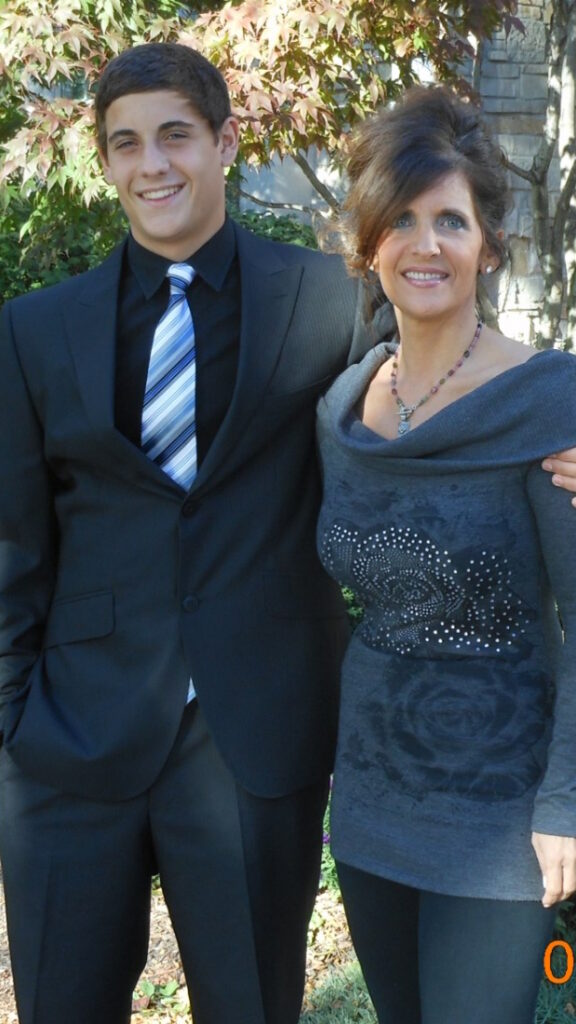
It was another instance of my pride getting in the way. I didn’t want to inconvenience myself by going to the doctor. I didn’t want to miss basketball practice. It took me about 25 days. Eventually, I told my parents. We saw three different doctors in urgent care and primary care. I had blood work done and physicals. There was nothing visible on the outside that was wrong.
Thank God for my mom’s intuition. She demanded an MRI. She said, “If your head’s hurting, we have to get an MRI.” I got one in early December, which revealed a golf ball-sized tumor in my brain, right on my cerebellum, which is the very back of your brain. It’s responsible for all your cognitive functions, memory, balance, and coordination. Having that big of a lesion and a tumor in your brain is an emergency.
I remember being in that MRI room, thinking nothing of it. It was a Saturday in December. I had basketball practice later that day. The plan was to get an MRI and go to basketball practice; obviously, that didn’t happen. I vividly remember the radiologist pulling up my image on a monitor, and it was as clear as day. He told us very urgently that we had to go to the hospital immediately. This was a major issue and needed to be addressed right away.
My parents honestly did a good job of being that first line of defense… They tried to make it as easy as possible for me so I just had to physically show up.
Jake L., stage 4 ALK+ lung cancer patient

First emotions: Denial, fear, and “Am I going to die?”
It didn’t feel real at all. My first reaction was, “No way.” It’s typical denial. I was like, “There is no way that’s happening. I ran two miles yesterday. There’s no way I could be doing all this, playing basketball, and have that going on.” Then the second thought was, “Holy s***, am I okay?” I just kept asking my mom, the doctors, everyone, “Am I going to be okay?”
I remember that 40-minute car ride from getting my scan to the hospital in Chicago. I couldn’t stop thinking, “Am I going to die?” That was the only thought that crossed my mind. It was a scary time. The thought kept replaying in my mind, and it wouldn’t go away.
My parents honestly did a good job of being that first line of defense for the doctors, filtering my emotions and taking the majority of what was being relayed to us. They were the gatekeepers. They handled the scheduling of my scans, appointments, and doctor’s visits. They took a lot of the emotional burden off my shoulders. They tried to make it as easy as possible for me, so I just had to physically show up, do the procedure, and do the doctor’s visit. Outside of that, be a normal teenager.
We did a PET scan and a CT scan, and found little lesions throughout my body… That’s how we found out I was diagnosed with stage 4 lung cancer.
Jake L., stage 4 ALK+ lung cancer patient
The path to diagnosis: Brain surgery, a metastasized tumor, and stage 4 lung cancer
We got an MRI and treated what was directly in front of us: the immediate issue causing the headaches. The first step was to undergo a brain surgery, a resection of the tumor in my cerebellum. The neurosurgeon was a veteran. We did a bunch of research and found this was the guy we wanted to perform the surgery. We checked into Lurie Children’s Hospital of Chicago and got the brain surgery done. It took seven hours. I probably woke up eight hours later and had all my cognitive functions, mobility, coordination, and memory.
The doctor checked in on me post-op and told us, “I’m glad the recovery is going great. I think I resected everything that I could. In my 20 years of doing this, I don’t think this is a brain tumor.” I thought, “What does that mean? Where did it come from?” He said, “This is a metastasized tumor. In my experience, this is not just your average brain tumor. This started somewhere else, moved to your brain, and then formed this cancerous tumor.”
We did a PET scan and a CT scan, and found little lesions throughout my body, including my lung and my ankle bone. Those lit up right away on the PET scan. That’s how we found out I was diagnosed with stage 4 lung cancer.
It’s a funny story looking back. I was 15, right on the line of being too old to be in a children’s hospital. I was 5’8” or 5’9” and about 170 pounds. I was getting close to being an adult. But I had pediatric oncologists delivering the news of stage 4 lung cancer like I was a 10-year-old — almost with a frowny face, like they were going to give me a lollipop after. That’s not how you communicate with me. I’m a pretty straightforward person. I want you to be direct and tell me: What does this mean? What are my options? How do I go about this?
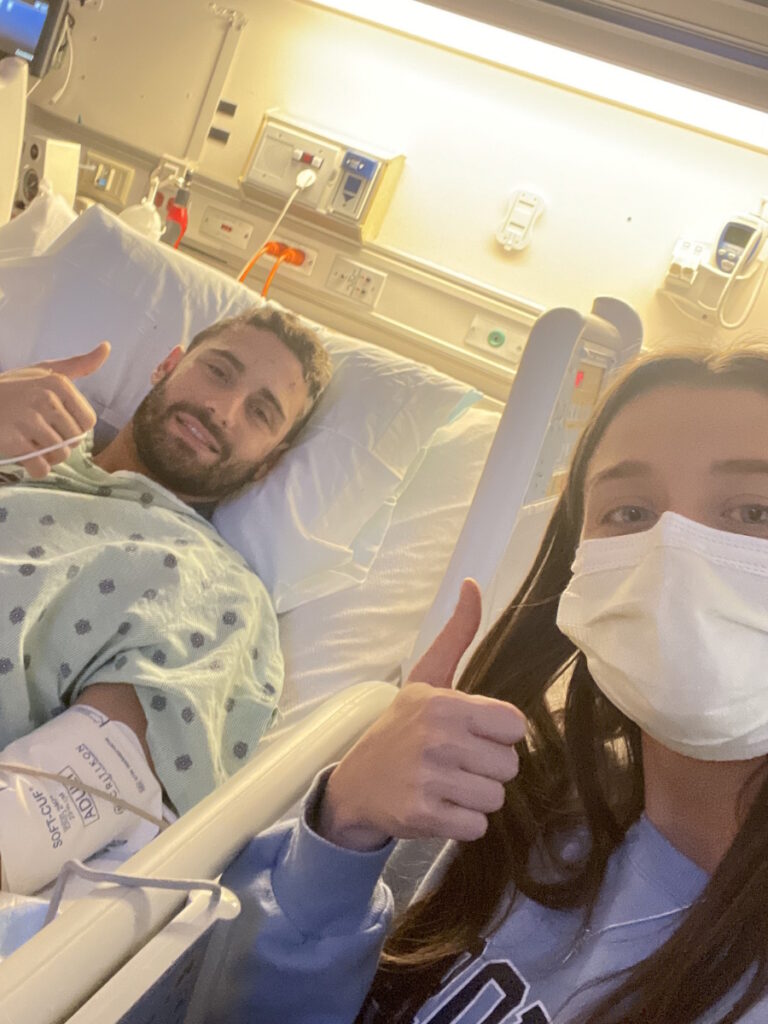
I had no one to relate to back then… There was no one I could reach out to who would know what I was going through.
Jake L., stage 4 ALK+ lung cancer patient
The shock of a stage 4 lung cancer diagnosis at 15 and being a statistical anomaly
Back in 2012, the stigma was 100% what it still is. The first thing that comes to mind when you hear someone has lung cancer is obviously someone smoking for 15 or 20 years, doing something to get lung cancer, or inhaling something daily. That’s what you think of with lung cancer. There were only a handful of cases in the Chicagoland area where someone under 18 had been diagnosed with stage 4 lung cancer. I was one of zero patients at the Children’s Hospital, and I was told there were only a handful across the entire US.
The shock of it was again: “I don’t believe this is real. That’s not my scan up there. There’s no way.” The same thing was going through everyone’s heads. I looked up some statistics and found out that nonsmokers are diagnosed with lung cancer. I’m in that group. And then to have the mutation I had, ALK positive. I talked to a ton of oncologists and no one was aware of another case being so young. I 100% feel like a statistical anomaly. None of my friends knew the rarity of this, much less my community. I never told my story to anyone and was so afraid to let all that out.
In that moment, I obviously felt like it was the most tragic thing ever. But today, if you ask me, I’ll give a totally different answer. I’m so grateful that I was blessed with that mutation and got to experience that at such a young age, because it made me grow up so fast. I learned so much about myself and the harsh reality of the world.
I’m so grateful to have been blessed with this disease. I feel so much better about talking about it now and seeing the hope that it provides other people. I started a podcast recently, and the whole driver behind that was giving everyone hope and putting myself in a 15-year-old’s shoes. I had no one to relate to back then. No one could get on the same level as me and let me know, “Hey, I was diagnosed with cancer as a child, too.” There was no one I could reach out to who would know what I was going through.
If someone were to go through that now and see me 13 years later, see how I’m living life and how it hasn’t held me back from anything, it would give them so much hope that cancer is not a death sentence. It’s an aspect of your life, but it doesn’t define you. It doesn’t have to stop you from anything. It doesn’t have to stop you from relationships, a family, marathons, adventures, or travel. It shouldn’t even be a thought to hold you back.
I will always get a second opinion, no matter what… I’m going to see what’s on the table, weigh all the options, think outside the box, and then make a strategic move forward.
Jake L., stage 4 ALK+ lung cancer patient
How proud am I of the 15-year-old who kept fighting?
I’m extremely proud. That kid went through a lot. He put his head down and kept pushing. He did all the treatments, the clinical trials, and the doctor’s visits. He never let that affect him at school or in sports. It became one thing in his everyday life. I was so used to MRI scans, CT scans, doctor’s visits, and missing some half days of school and some practice. But I’m so proud of that kid because you can easily let that get to you. You can have a victim mentality and it’s warranted. It’s 100% validated for you to feel that way. But it’s never the way I felt.
That kid was so mentally strong, and I’m so proud that that’s how I dealt with everything. It gives me hope today, honestly, the mental aspect of pushing through everything. It wasn’t just getting through it. Even if there’s a doctor’s visit this week, it’s not going to stop me from doing homework in the car, studying in the waiting room, or whatever it is. I became so adaptable. I’m so proud that that’s how I dealt with it.
He did every test… and found the ALK mutation… It let me take a pill every day… It gave me my life back.
Jake L., stage 4 ALK+ lung cancer patient
Discovering the ALK+ mutation: When biomarker testing changed everything
My team, which included my parents, my brothers, my girlfriend, and me, did a ton of research. Whenever I have a visit with an oncologist, a neurosurgeon, or a radiologist, I have never in my entire experience taken the advice of just one doctor. I will always get a second opinion, no matter what. It usually ends up being three or four opinions before I have all the data to make a decision, because this is my body and my life. I’m not going to take the first option. I’m going to see what’s on the table, weigh all the options, think outside the box, and then make a strategic move forward.
After I found out I had stage 4 lung cancer, the options given to me were: one, let’s resect half of your right lung; two, let’s do radiation to your right lung. Both options sounded like a nightmare to me. At 15 years old, I have plans to live until I’m 80. Everything was done with a long-term solution in mind. I feel like so many times, we just get the quick fix. I was at the age where I’m worried about 60 years down the line. What’s the least invasive thing I can do? The whole mindset was not having chronic issues for my entire life.
We went to different oncologists. At the University of Chicago, we got in touch with the lead oncologist. He was the out-of-the-box thinker we wanted. One of the first things he said was, “Before we do anything, before we put you through radiation or chemotherapy, let’s freeze your sperm. We want you to at least have the possibility of having kids later.” He was the only oncologist who talked to me like I actually had a future. That’s one of the things that got me. So many oncologists didn’t treat me like I had a future. They treated me like an 80-year-old patient.
He took a holistic approach. He did every test on my brain resection and the tumor, and found the ALK mutation. He was overjoyed when he told us the results in person. I didn’t grasp the situation at the time. I didn’t know what that meant for me. But I am so damn grateful that I have that mutation. It let me take a pill every day and just go back to high school. I was doing targeted therapy every single day, just taking a pill. No side effects. It was a lifesaver. It gave me my life back. It gave me freedom. It was honestly a miracle.
They wouldn’t have known what was going on because on the outside, I fit in with everyone. I didn’t look like I had cancer.
Jake L., stage 4 ALK+ lung cancer patient
From the possibility of losing half my lung to taking a pill: The mind shift because of the ALK+ biomarker
It was life-changing. We had the mindset that I was going to have to go through rounds of chemotherapy, lose my hair, be extremely fatigued all the time, and have all these side effects. Recovering from removing half of your lung takes years to get your full lung capacity back, to be able to run and play sports. We had the mindset of, “Wow, this is going to be tough. We’re going to have to go through a lot emotionally and physically. It’s going to be a long road.”
Then we got this solution of being able to take a pill that fights back the mutation I have. It was an absolute miracle. It allowed me to live my life. It allowed me to play sports without a hiccup, without many challenges. I lived my high school life pretty normally. You could ask any of my friends or family. They wouldn’t have known what was going on because on the outside, I fit in with everyone. I didn’t look like I had cancer. I had all my cognitive functions and my hair. I looked like a normal teenager.

What is ALK+ lung cancer? How I explain my mutation
The first thing I would say to a 15-year-old is, “We got some good news for you.” But describing it now, it’s a mutation of how your cancer is growing. It’s basically a channel that your cancer cells are growing from. Typically, cancer cells grow from glucose and glutamine, the two main channels. But with the mutation, your cancer is growing through a different channel. I would think of it as a third channel where you get to block all these channels, and it’s another avenue of growth for cancer.
Targeted therapy gives you a sniper rifle… It works better. It’s more efficient and more convenient.
Jake L., stage 4 ALK+ lung cancer patient
Why an ALK+ mutation is actually good news in lung cancer
Good news is a strong statement. I wouldn’t say great, but if you’re going to be diagnosed with lung cancer, it’s the best way to go about it and have longevity, in my experience. It gives you your life back and allows you to fight back. You go through targeted therapy and still mount the same attack against this cancer as someone who’s doing chemotherapy, but you don’t have any of those side effects. From a convenience standpoint, it’s just popping a pill every day. You don’t even have to think twice about it.
It’s a targeted way to attack cancer cells. It’s not killing healthy tissue. It’s taking a targeted approach where it’s only going after these bad actors and not the entire area. Radiation kills tons of healthy tissue and cells while going after that cancer cell. Chemotherapy destroys a lot of your immune system. The typical treatment of cancer is like taking a sledgehammer to kill a fly. Targeted therapy gives you a sniper rifle to target and kill the middle of a cell. It works better. It’s more efficient and more convenient. There are so many good things to come of these drugs.
No one is as close to your situation as you are. No one is going to care as much as you do.
Jake L., stage 4 ALK+ lung cancer patient
The importance of biomarker testing and being your own advocate
You need to have that mentality if you’re looking for longevity. You have to do your research. You have to think of every crazy out-of-the-box idea to help yourself out. Biomarker testing is so important because it’s not the typical way that oncologists or doctors are thinking. They’re thinking, “Okay, I see what’s in front of me. I see the scans. Let’s address those issues.”
Biomarkers are something my mom researched and found out about. There are so many ways to go about it and have that discussion with your oncologist. I would hate it if your oncologist wouldn’t talk about it, but sometimes it’s on the patient. No one is as close to your situation as you are. No one is going to care as much as you do. You have to do as much research, gather as much data and as many opinions, and make your educated decisions while you also get professional advice.
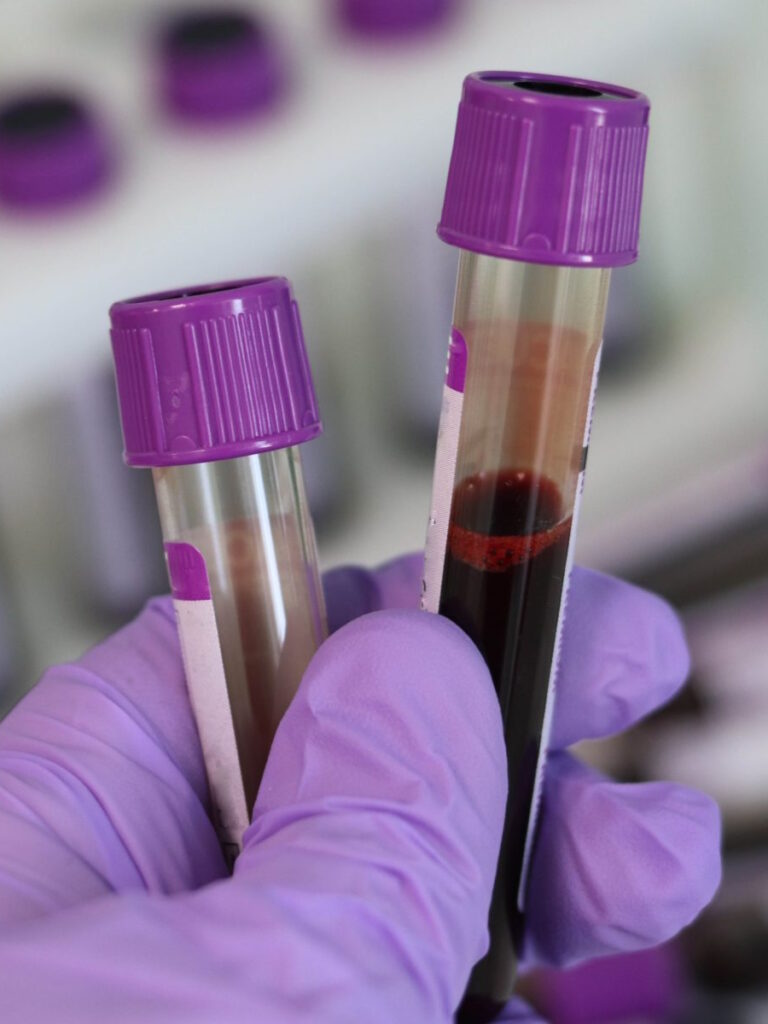
If someone has already had a tumor resected from their body, let’s see what the components of that tumor are. It doesn’t hurt to ask. So many times, a doctor will tell me, “Okay, this is what we do.” No. Give me all the options, everything on the table, and then let’s see what would work best for me long-term.
You want to know the details of what was just taken out of your body. You will never receive pushback from doctors. No one who has ever told me, “That’s a terrible idea.” They’re always receptive to out-of-the-box ideas and what’s working for you specifically, not treating you like every other patient. At some point, you’ve got to be your biggest advocate.
We had to move to Houston, Texas, to be at UT MD Anderson for about four months… We would get the best treatment done regardless of location.
Jake L., stage 4 ALK+ lung cancer patient
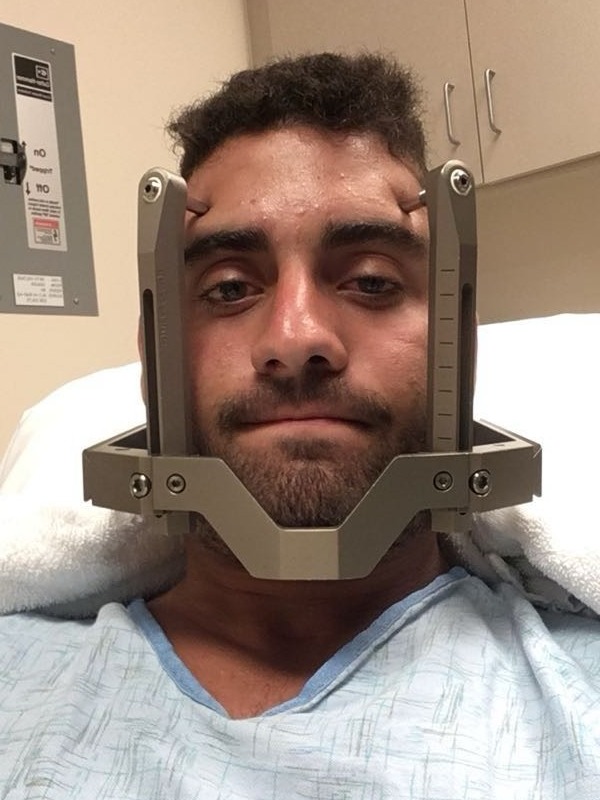
A full treatment history: 13 years of surgeries, radiation, chemotherapy, and clinical trials
It’s definitely a laundry list. I had three brain surgeries. I had one when I was 15. Then I had another one when I was 23 and another one at 24, in the same spot as the surgery 12 months prior. Basically, it was a resection done in an area that was previously radiated.
Radiation was out the door. We didn’t want chronic side effects like radiation necrosis down the line, so we opted for brain surgery. I had back-to-back brain surgeries 12 months apart in the same spot on the very top of my head, almost on the dura, the very outside lining of your brain.
I had five different treatments of brain radiation. One was traditional radiation therapy, right after my brain resection at 15, to kill microscopic cells around the area. Then I had four more Gamma Knife radiosurgery treatments, which is a more targeted radiation that doesn’t kill as many healthy cells as traditional radiation.
I also had radiation treatment to my ankle bone, and proton therapy over 12 weeks to my lung, which was how we addressed the lung tumor instead of getting it resected or doing normal radiation. That’s another crazy story: Proton therapy was only available in five hospitals back in 2013. We had to move to Houston, Texas, to be at UT MD Anderson for about four months. Another nuance to the story: again, not taking the first opinion, going nationwide. That’s how much we cared. We would get the best treatment done regardless of location.
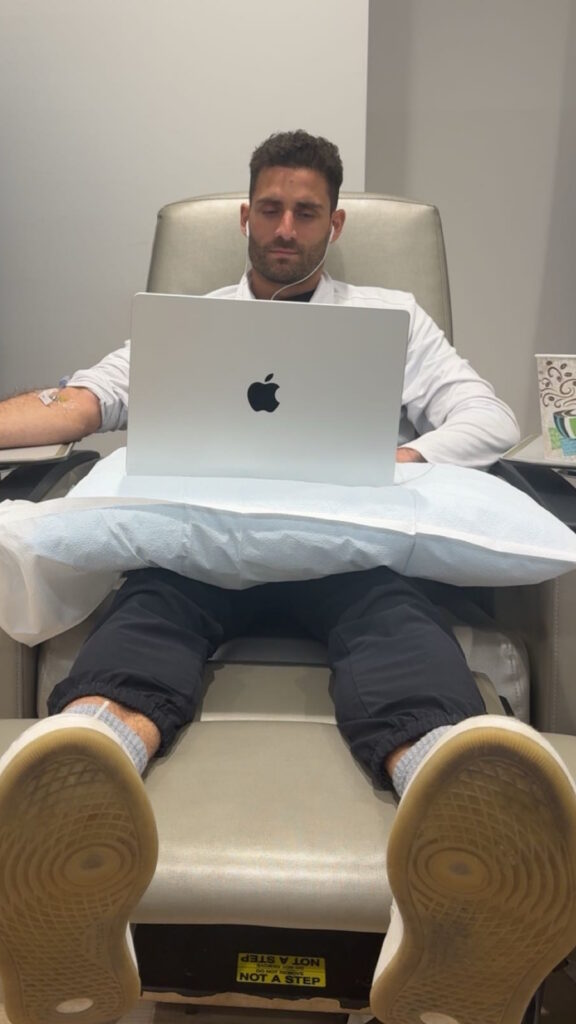
Then I had IV chemotherapy. I think I’ve had seven different rounds of chemo. Most recently, I had five different rounds of chemotherapy and had my last treatment in April 2026. I haven’t lost any hair, and I don’t have chemo brain or side effects. It hasn’t been too bad.
I was also part of two different clinical trials throughout those 13 years. Obviously, I was on ALK inhibitors for 13 years. Right now, I still take a very low dose of an ALK inhibitor.
The phrase clinical trial is extremely positive in my mind. It’s cutting-edge science. I was always happy to do it.
Jake L., stage 4 ALK+ lung cancer patient
Entering a clinical trial: How I was recruited and why I said yes
One of my oncologists at Vanderbilt University here in Nashville, Tennessee, told me about this new clinical trial being conducted at a local hospital. The oncologist told me about the trial and said I would be an outstanding candidate. I had to go through a whole interview process for them to make sure: Do we have measurable disease? Is this person suitable for the trial and willing to follow all the rules and regulations? That’s how I found out, through another out-of-the-box thinker at Vanderbilt.
When I heard the term clinical trial, my first reaction was, “Oh yeah, this is awesome. This is innovative, cutting-edge. There are new drugs, new things we can try to go after this cancer.” The phrase clinical trial is extremely positive in my mind. It’s cutting-edge science. I was always happy to do it.
As for what made me say yes in November 2024, that’s an easy one: I didn’t have any other options. When there are no bullets left in the clip, you have to start thinking outside the box. I had gone through four or five different ALK inhibitors. This was the newest drug and it wasn’t even on the market yet. It wasn’t FDA-approved.

The alternative was more radiation for the sixth time. We’ve already done so much radiation that I thought to myself, “There is no way I’m going to keep going through radiation and surgeries, and not start losing some motor function, coordination, memory, and processing skills.” I will sign up for an ALK inhibitor 10 times before I sign up for any radiation or chemotherapy.
But I didn’t remember how much work it was to be on a trial. When I started this trial in November 2024, I was living in Nashville with my girlfriend. It wasn’t like I had my parents taking me to doctor’s visits anymore. I had to schedule everything myself, be on every call, and go to every visit myself or with my girlfriend. It was all on my shoulders. That, plus a full-time job and training for marathons.
Clinical trials are important. They’re huge for research and for advancing the field.
Jake L., stage 4 ALK+ lung cancer patient

The clinical trial is not that convenient. For the first three or four weeks, I had to go to the hospital three times a week for two hours at a time, taking the pill in person and then getting blood work two hours later to see how it worked in my system. You’re signing up for a lot.
I was getting scans every eight weeks, and then it was spread out to every 10 weeks. Doctor’s visits were every week, and then every two weeks. Blood work was still multiple times a week. That was just for the first cycle. It’s a full-time job. You have to make sure the hospital is close and convenient enough to fit your lifestyle. Funny enough, I actually ran a marathon during the trial. I wouldn’t recommend doing that, but I did. It’s a scheduling headache for sure.
The upside of being monitored: Clinical trials give you real-time data on your body
Clinical trials are important. They’re huge for research and for advancing the field, and they’re cutting-edge solutions. The positive side is that it’s great to see all your blood work. You see your cholesterol levels and your vital signs. It gives you, in the back of your brain, some validation: “Okay, I am okay. I know exactly what’s going on in my body. It’s not a guessing game.” It’s not me guessing over a couple of months at a time. I’m being monitored every week. That part is extremely positive. I’m a very data-driven person. I like as much data as possible, so I can check every level of everything.
It’s always been my mentality that this is not going to define me. This is never going to get in my way.
Jake L., stage 4 ALK+ lung cancer patient
The mental and emotional weight of 13 years, and when fatigue almost won
I’m not going to lie. There were plenty of times when I felt like giving up. I was so exhausted doing radiation after radiation and having surgery in the same spot in my brain. It’s so mentally fatiguing. There have been so many times where it’s been so exhausting to think, “Oh, here we go again.” This is the 13th time now where we have progression in the brain or somewhere else. It’s extremely exhausting.
But the mentality is: You have to have a purpose to live. You have to have things to look forward to. You have to live your life. The will to live has to be so strong because if you lose that, then you’re going to stop trying. You’re going to stop researching so much. You’re going to stop getting the second opinion. It’s not being lazy. It’s, “I’m so tired. Let someone else handle this.” But my mentality was always: This is us versus cancer.
I’ve never stopped believing that I’m going to live until 100. That’s been my overarching mentality, and I’m willing to do anything for it. The cancer community as a whole needs more of that. There have been so many support groups I’ve sat in on. I even had someone ask me if I ever had plans to have a family because it’s something that has never even crossed their mind.
You can’t think like that. That’s no good for you or anyone around you to have the mentality that it might be over soon. No one’s getting out of this game alive. Everyone’s time is going to come. But have the mentality of not assuming it’s going to be soon. I shouldn’t start a family or start dating because “What’s the point?” I did have that mentality for a bit. In college, there would be times when I’d think, “What’s the point? I don’t care if I fail this math test. In the grand scheme of things, I’d rather have fun with my friends.” It’s always been my mentality that this is not going to define me. This is never going to get in my way.
I was dealt this hand for a reason. God wouldn’t put this in front of me if he didn’t think I could handle it.
Jake L., stage 4 ALK+ lung cancer patient
Finding the ALK Positive community and the power of patient advocacy groups
There would be times when I was searching for answers. One of those times was when I was getting off anti-seizure meds. I was having seizures for over a year, so I was on anti-seizure meds and was weaning off them with no answers. No one told me how to do it. My doctor kept telling me to stay on them long-term and that I was now epileptic when I clearly was not. My mentality is: Less medicine is always better. I was scrolling through Facebook groups, “Is anyone going through something similar?” That’s when I stumbled upon the ALK Positive group.
I also got to the point when so many oncologists were telling me, “Holy cow, your story is amazing. Why aren’t you talking to someone about this or telling your story?” It took a couple of those conversations for me to think, “Okay, maybe I should. Maybe this is the path forward. Maybe this is what my purpose is.” I was dealt this hand for a reason. God wouldn’t put this in front of me if he didn’t think I could handle it. I started trying to find answers, and oncologists kept telling me, “You need to share your story. This is going to give everyone hope.”
When I first joined these groups, they were so intrigued by my talking and sharing my story. That was awesome to see, how inspirational it felt for other people. That gave me fulfillment. But other times, when I’d listen, it felt like there was almost a dark cloud over everyone else’s mentality. They didn’t have as much hope or willingness to live as I have, like a fire burning in me. I try my best to convey that message.
It cultivated some real relationships with people I talk to one-on-one. “You can give me a call. We don’t even need to be in a support group.” There were definitely some stories where I thought, “Wow, this gives me hope. I’m no longer the person trying to give everyone else hope. This story is inspiring to me.” It was awesome to have people with the same mutation, to talk about the same drugs and side effects. That part validated some of the things I was going through with these ALK inhibitors.
I write things out, write down plans, and am strategic about how I want to live my life.
Jake L., stage 4 ALK+ lung cancer patient
The man I have become
I don’t take that much time to step back and realize how far I’ve come. I journal a decent amount and read back through it every once in a while. I’m extremely proud of that. But it feels like high school, college, and a handful of marathons; it’s all part of who I am. It’s not, “Oh, I’m so proud I did this.” It’s more like it’s part of the job. The job’s not finished. That’s always been my mentality: on to the next thing. I’ve never stopped pushing.
I did five rounds of chemotherapy in 2026 and took off two days of work. I’ll work through anything. I’ll work out through stuff. I’m a disciplined person overall. If there’s a task in front of me, it’s going to get done. I write things out, write down plans, and am strategic about how I want to live my life.
I was never a runner. All through high school and college, I’d go on an occasional run here or there, but never long-distance. But I’m extremely competitive. I want to find a way to compete at all times. I started seeing people running marathons, 5Ks, and 10Ks, and I wanted to find a way to compete. Sports were a huge part of my life growing up. Competition has always been in my DNA.
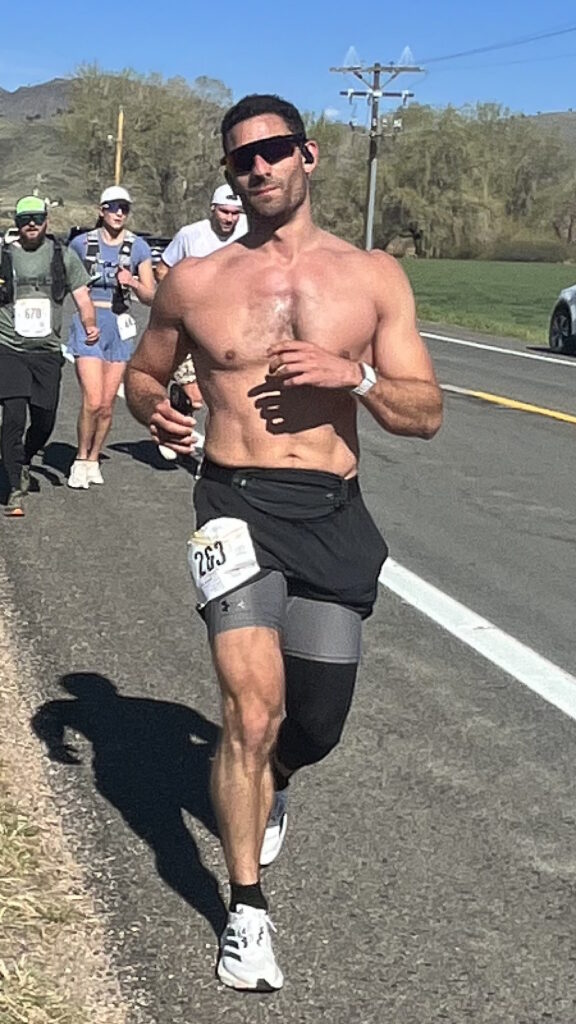
I also read a bunch of books and listened to podcasts and motivational videos during some of the darkest times of my life. One of those books was written by David Goggins. I know it sounds cliché, but I read his books, and they gave me so much hope. He faced all of his demons in his darkest times by going through runs. It’s a great way to clear your head and put some sanity back in your life. It’s also an avenue for me to compete.
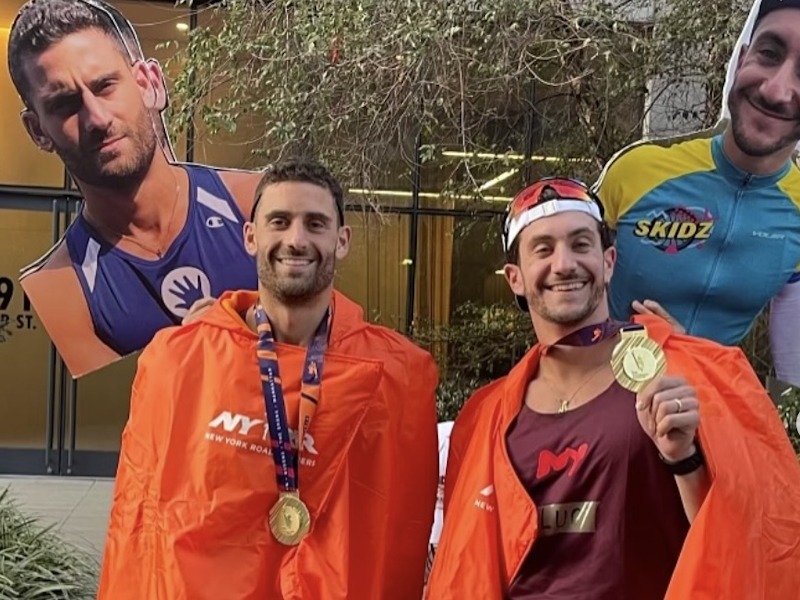
I got my friends involved with me. None of them were runners before. I loved the running community. But honestly, it can be anything, like competing in pickleball, paddleball, tennis, or whatever. It’s finding a way to be active. I think that’s a huge component of longevity: physical fitness, mental health, and combined with your doctors and your treatment plan. Those are all pillars of longevity.
My brothers have been so supportive… But I have no idea how they felt.
Jake L., stage 4 ALK+ lung cancer patient
Funny enough, Goggins called me after one of my marathons. He said, “I heard your story. I want to check in on you.” He called me the night before the marathon and said, “Hey, I heard your story, man. It’s so inspiring. I’m so glad I was able to inspire you. The stuff you’re doing, keep doing it.” We talked for about 10 minutes. Then he called me after the race and said, “Hey, I saw you finished. You should be proud of yourself.”
My dad had shot him an email out of nowhere. He didn’t even respond to the email. My dad included his number in the email and Goggins, out of nowhere, called my dad at 8 p.m. the night before the Chicago Marathon. My dad answered. He said, “Is this David Goggins?” My dad was like, “Holy s***.” He was on the phone with one of his buddies and said, “I’ve got someone on the phone for you.” I asked, “Who is it? Your mom? My grandma?” He said, “I’m not going to tell you. Just answer the phone.” I said, “All right, whatever. Who is this?” He said, “It’s David Goggins.” It was hilarious. It was electric. I’ve never had so much energy thrown throughout my body. That whole 24 hours, I was like, “I have to run a two-hour marathon now.”
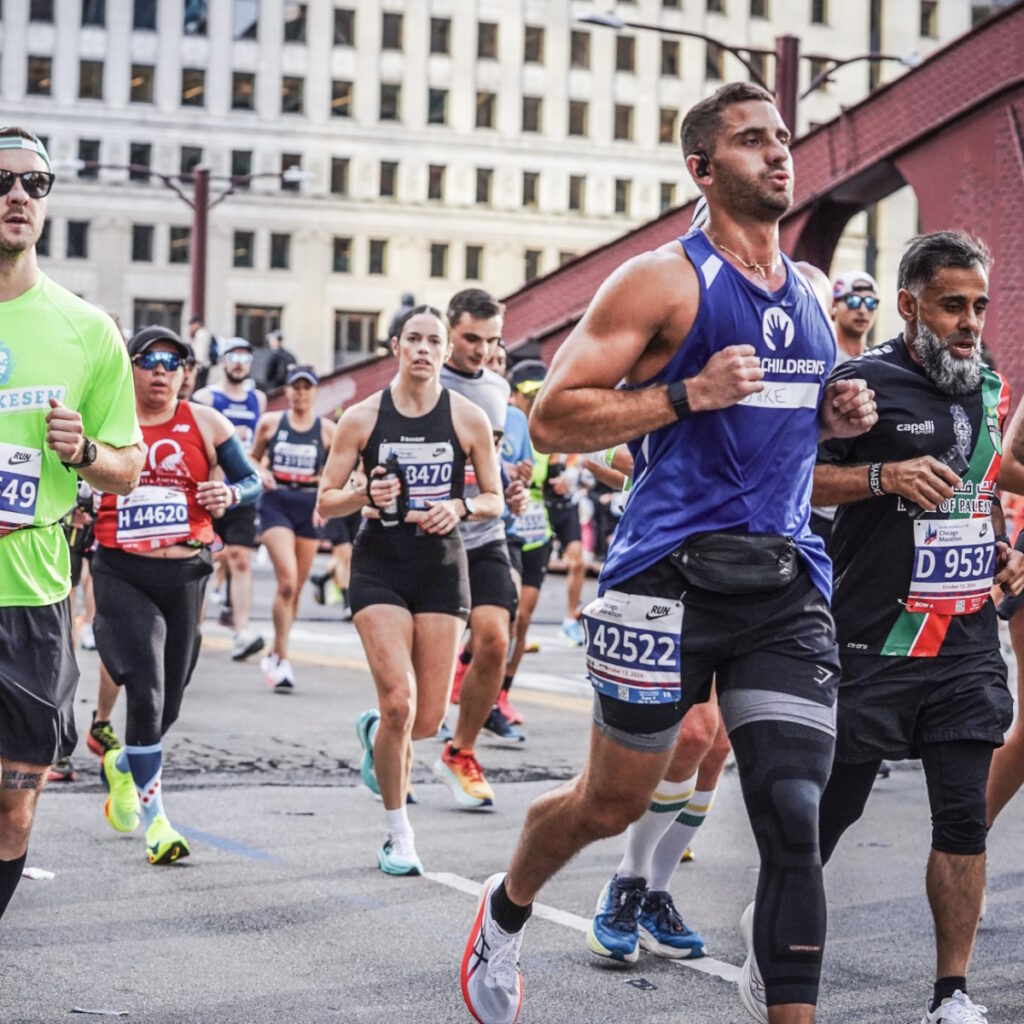
My brothers have been so supportive. My brother and I ran the New York Marathon together, and he’d never run a marathon before. He’s also a fitness guy like me. He lives in New York, so we decided to do it. In the last two marathons I ran, I raised funds for the Lurie Children’s Hospital of Chicago, which is where I got my first brain surgery as a 15-year-old. It was a full-circle moment for me. We ran almost 21 of those 26 miles together, side by side. It was one of the coolest moments I’ve ever experienced.
On my podcast, I want to interview my brothers and ask, “What was your perspective?” I know my story and how I felt, but I have no idea how they felt. It’s something we haven’t had a conversation about. I love my brothers and would do anything for them, and that’s reciprocated, but it’s not like we sit down and have deep conversations about it. That’s another reason I want to start the podcast: to have deeper conversations.
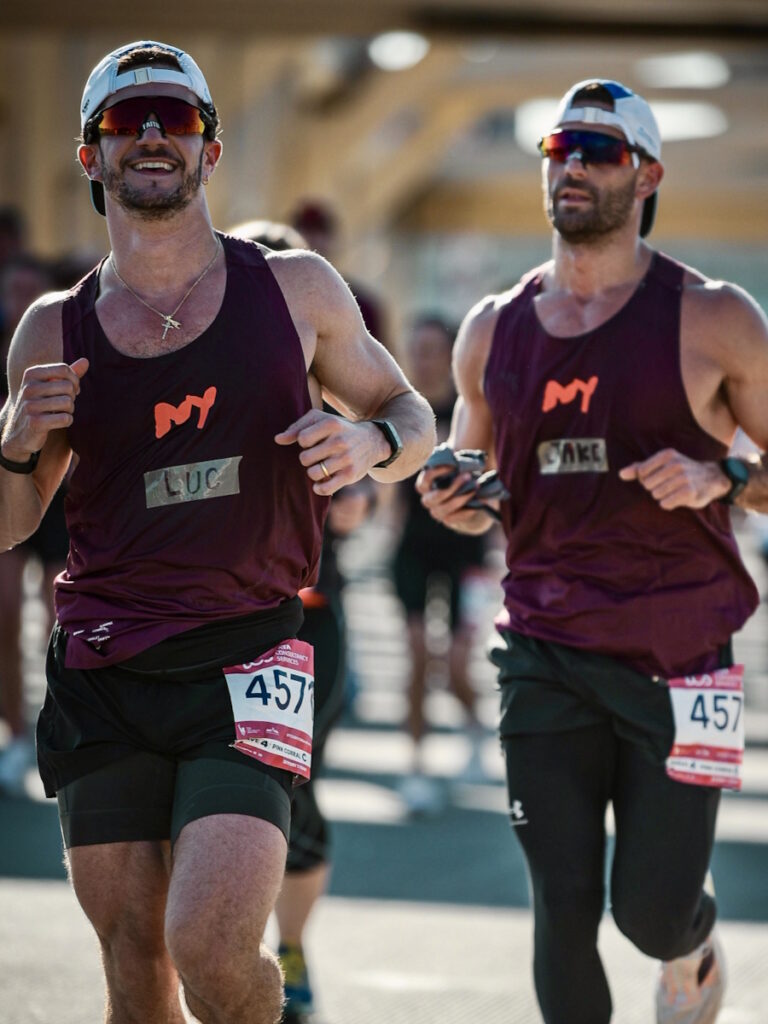
Everyone’s story is going to be different… Learn to love the journey and embrace it all.
Jake L., stage 4 ALK+ lung cancer patient
My final message: Learn to love and embrace your journey
One of the lessons that took me a long time to understand and realize was to learn to love and embrace your journey. Everyone’s story is going to be different. Everyone’s got a beginning, a middle, and an end. You have to find the ways that your journey brings joy to your life. If you don’t like the direction your life is going, do something about it. Learn to love everything you are doing. If you’re not loving it, do something else and make that change.
Learn to love the journey and embrace it all. Live in the moment. Live your life as best as you can and live the life that you want. Tell the story that you want. When you’re done on this planet, be proud of the story that you wrote. Whatever you’re doing, whatever avenue that is, live with passion, fulfillment, and drive, and learn to love your life.
Thank you to ALK Positive for their partnership. ALK Positive is a patient-driven organization that seeks a cure for ALK+ cancer and works to improve patients’ quality of life and life expectancy worldwide. Their mission goes well beyond raising awareness by driving research, funding clinical trials, and demanding better treatment options.
Story Sponsor
Thank you to our sponsor for their support of our independent patient education story. The Patient Story retains full editorial control over all content.
This is not medical advice. Please consult with your healthcare provider to make informed treatment decisions.
Inspired by Jake’s story?
Share your story, too!
Hear from people living with metastatic ALK+ lung cancer
Real experiences with diagnosis, treatment choices, side effects, and life beyond stage 4 ALK-positive non-small cell lung cancer — in their own words.

Leave a Reply