
The After: Kelly on Stage 3 Colorectal Cancer, Survivorship, and Her Daughter’s Own Cancer Diagnosis
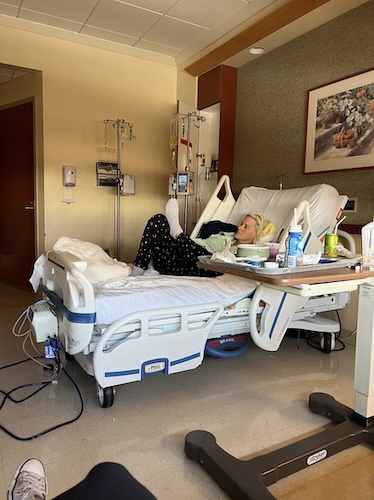
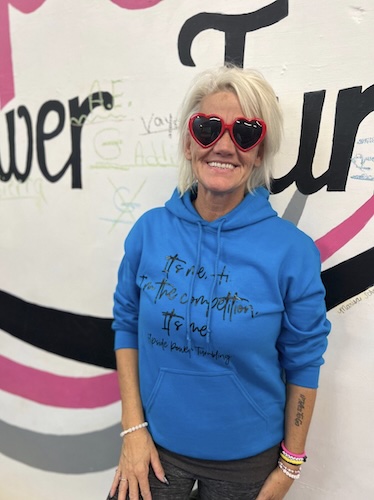
Kelly’s stage 3 colorectal cancer experience began with symptoms many people are too embarrassed to talk about: blood in her stool and stomach pain. She later learned how critical it is to speak up and push for a colonoscopy, even as screening guidelines evolve to screen earlier. After having surgery to remove a large tumor and 12 rounds of chemotherapy, she now has no evidence of disease a year and a half later, a milestone she calls “phenomenal,” even as she admits some days she’s still consumed by it.
Interviewed by: Taylor Scheib
Edited by: Chris Sanchez
Kelly describes how the “after” phase of colorectal cancer has been more complicated than she expected. As she transitioned into survivorship, her appointments and bloodwork spaced out, and she suddenly felt unanchored after spending a year focused entirely on treatment, getting back into running, and practicing self‑care. She talks openly about financial fallout: being uninsured at diagnosis, facing a $35,000 surgery, and having to return to a full‑time job in her 50s. This turned what she had envisioned would be a two‑year recovery plan into a five‑year one.
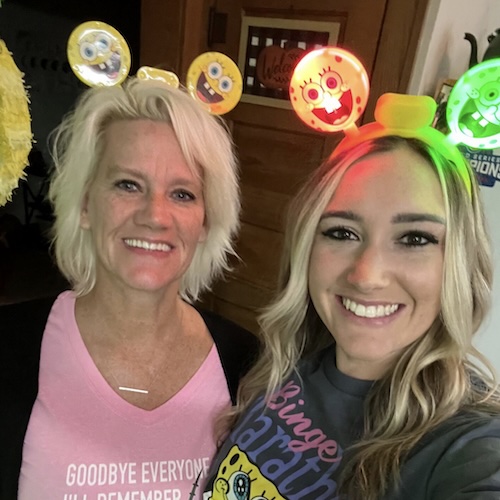
Kelly also shares the emotional weight of being in a cancer support group, then feeling she no longer “fit” there once she had no evidence of disease. Survivorship guilt runs through her story. She has lost others to colorectal cancer and says it doesn’t make sense why she made it through and they didn’t. She is also navigating new lung nodules, a diagnosis she had before cancer, but now comes with a new level of concern and anxiety. She is currently in a “wait and see” plan, with repeated blood tests like Signatera. For her, there is no “normal sick” anymore. Every ache or cold can trigger fears of recurrence.
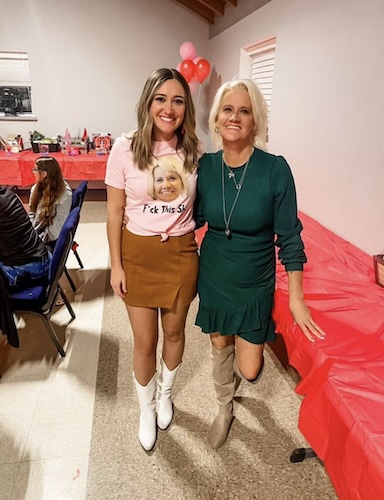
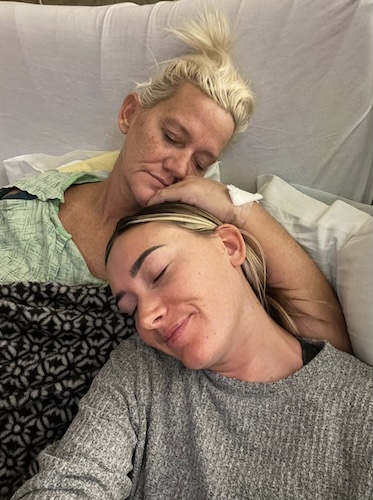
Layered into her colorectal cancer experience is the shock of her daughter Taylor’s thyroid cancer diagnosis, almost exactly as Kelly reached her own one‑year mark. Kelly describes the helplessness of hearing her child say, “I have cancer,” and the deep, private bargaining she did with God to “take me and keep her.” Still, she keeps choosing motion and meaning. She paints her hallway, is training for another half-marathon, plans her son’s wedding, and talks frankly with students and friends about colonoscopies and symptoms. Sunrises, French fries with friends, and small acts of kindness have become daily reminders that she is, as she says, eternally grateful for one more day.
Watch Kelly’s video and read the edited transcript of her colorectal cancer story below. Read her initial story here.
- Speaking up about colorectal cancer symptoms like blood in the stool and stomach pain, and getting a colonoscopy, can lead to life‑saving diagnoses and earlier treatment.
- The “aftermath” of a stage 3 colorectal cancer experience can be emotionally harder than treatment, with survivorship guilt, financial strain, and a constant fear that every new symptom might signal recurrence.
- Self‑advocacy, from pushing for specific scans or blood‑based monitoring tests to seeking care at a comprehensive cancer center, is a critical skill Kelly continues to practice.
- Her story shows that there is no one “right” way to find support; formal groups, online sharing, and quiet inner‑circle conversations can all be valid ways to process a cancer experience.
- Kelly’s transformation shows up in how she talks about time: cancer slowed her down enough to notice sunrises, invest in therapy, return to running, and live with more intentional gratitude, even while acknowledging ongoing vulnerability.
Kelly’s Diagnosis Facts
- Name: Kelly B.
- Age at Diagnosis:
- 50
- Diagnosis:
- Colorectal Cancer
- Staging:
- Stage 3
- Symptoms:
- Blood in stool
- Cramping
- Bloating
- Treatments:
- Surgery: colon resection
- Chemotherapy
This is not medical advice. Please consult with your healthcare provider to make informed treatment decisions.
- Kelly’s Diagnosis Facts
- How our family handles major life changes
- My stage 3 colorectal cancer diagnosis and treatment journey
- Navigating the aftermath of colorectal cancer treatment
- Why the “after” phase can be harder than treatment
- Lung nodules, scans, and pushing for more testing
- Fighting for a Signatera test, and living in a holding pattern
- Watch and wait, anxiety, and “living in the gray zone”
- Projects, running, and planning a future in the “gray”
- “Doing cancer” alone while my kids live across the country
- Mother–daughter boundaries and navigating Taylor’s thyroid cancer
- Setting boundaries to protect my mental health
- The phone call when I learned Taylor had cancer, too
- How colorectal cancer forced me back into a full‑time job in my 50s
- Doing “20s and 30s stuff” in my 50s: Finances, cancer, and dating
- What colorectal cancer awareness means to us
- What I’ve learned from the last two years
- Hear from people living with colorectal cancer
How our family handles major life changes
Taylor Scheib: It’s a little crazy that we’re doing this again.
Kelly Brooks: It is. It’s a little surreal that we’re doing this again.
Taylor.: A lot has changed.
Kelly: A lot has changed. Wow. A lot has really changed. What a roller coaster.
Taylor: I don’t know if “changed” is the right word. It might be that things have happened. A lot has happened.
Kelly: Yeah, a lot has happened. A lot has happened. I’d like to take that back a little bit and “unhappen” some of the things that have happened, but we can’t do that.
Taylor: No. Everything happens for a reason. I think that’s something you’ve taught me from a really young age and taught my siblings Mitchell and Jade as well, that everything happens for a reason, and we just have to continue with our lives.
Kelly: Yeah, we’re very roll‑with‑it kind of people. You guys have been raised that way. We’re rolling with it.
Taylor: Cancer isn’t the first big thing that’s happened in our lives. I feel like we’ve gone through a lot as a family, and cancer was very serious, of course, but things leading up to both of our diagnoses… diagnoses. Plot twist. I feel like those things prepared us to go through cancer. All the things.
Kelly: All the things. There are so many things. But it definitely prepared us. Basically, our lives have prepared us for what’s coming next. So yeah, I’d kind of like to get off the ride.
Why 2026 is our “year of happiness”
Taylor: I know 2026 needs to be the year of calm, but then Mitchell decided to get married, so that’s going to be fun.
Kelly.: We’re going to start after that.
Taylor: It’s going to be crazy. It’s going to be so much fun. I’m grateful that…
Kelly: He did bring in some happiness. We’re doing something happy.
Taylor: Exactly. That’s the difference. It’s going to be a really busy, crazy year, but it’s a happy year. So maybe it’s more like the year of happiness, not really calm, because we’re not really calm people.
Kelly: We’re not calm people. We’re tornadoes. I don’t know. I do thank him for that, though. For bringing happiness back into our lives and giving us something to focus on other than the cancer.
How we’re working on our mental health and self‑care
Taylor: We’re both working on ourselves. I have started taking anxiety medication, which was a big step for me. You went back to therapy?
Kelly: I’m back in it. Deep in the thick of things. Back to running normally and routinely. Started Pilates. Those people, wow. They’re fun. I have a different perspective on those girls. Wow. I have a lot of respect for those Pilates girls. I never thought that exercising for me would be good for my mind, but it is fantastic. So yeah, I took a new job, doing some things. Moving forward.
Taylor: Moving forward. But before we move forward and talk about those things, let’s back it up a bit, because, like we said, a lot has happened since the last time we had sat down and had the conversation, beginning with where you were at that point. So, how about you give a summary of diagnosis to treatment to tell people who might not have watched your previous story with us what you’ve gone through?
My stage 3 colorectal cancer diagnosis and treatment journey
Kelly: It was fast, but slow at the same time. I had stage 3 colorectal cancer. I am a year and a half out, and I have no evidence of disease, which is phenomenal. I had a large tumor, and they took that out with surgery.
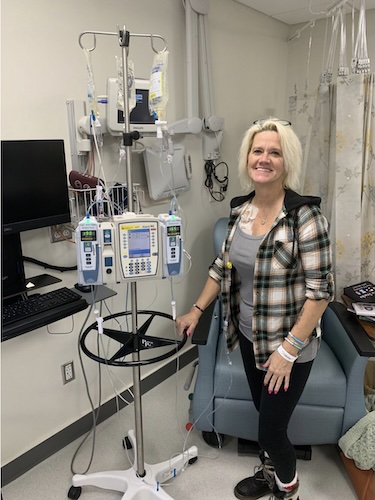
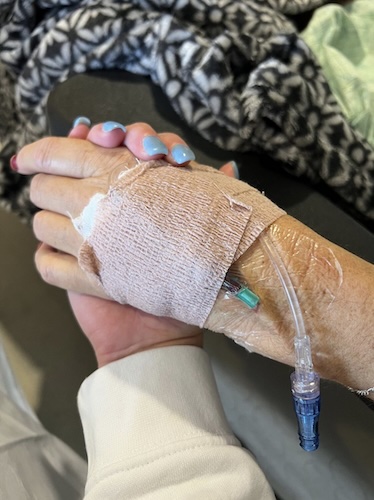
And then I was given choices to do six rounds of chemo or 12. Twelve is the max preventative care. I did 12 rounds. Whew. That was rough. That was a tough time for me. I didn’t fare well, but looking back, I have to give myself some grace. Took it like a champ. Now, like I said, a year and a half out, no evidence of disease.
But after my initial diagnosis and transitioning into no evidence of disease, I focused wholeheartedly on getting through that first year. I put a lot of pressure on the first year of getting out and maintaining no evidence of disease, getting back to running and self‑care. I had people tell me that I was never going to be the same after chemo. Well, I’m here to tell you, I am quite the same physically as I was before.
I pushed myself really hard to get back into running. It wasn’t easy. I made that first year all about my appointments, and blood work slowed a little bit. So that was kind of a mental issue for me, because I had focused so much on the first year that after I got through the first year, I kind of felt like I didn’t really know what to do with myself now. Because as you progress out of it, it’s still there. But there are some days I don’t think about it at all, and then there are other days I’m consumed by it.
How did this happen to me? My life is not the same financially. That’s been a big hit. I don’t think enough people talk about what happens after, the aftermath. And with that being said, you went into your diagnosis with thyroid cancer as I was coming into celebrating my first year. The timelines crossed each other at the same time. So I bartered a lot with God to take me and keep her. Those are conversations that are dark and deep. But I do have a strong faith, and we do believe that everything does happen for a reason. So here we are, doing well.
Taylor: You brought up a great point: the aftermath isn’t talked about enough, because, you’re right, you’re so consumed by it, especially with a stage 3 diagnosis like yours. Mine was stage 1 thyroid cancer. You’re in the thick of it for a long time. I’d say about a year. Same with me. It’s been almost a year since my diagnosis.
You’re consumed by it for so long, but then when you are no evidence of disease — and for you, I’m so grateful that you are; for me, it’s tough with thyroid cancer. They don’t ever really tell you you’re no evidence of disease, because thyroid cells could still be in my thyroid bed, even though radioactive iodine hopefully took care of those things. So it’s still a weird place. But for me, I get six‑month follow‑ups as of right now.
It’s a complete whirlwind, and I’m grateful to be in the places that we are, but the aftermath truly is something that’s not talked about enough. How have you navigated the aftermath? Is that what we are pegging it to be?
Navigating the aftermath of colorectal cancer treatment
Kelly: The aftermath of the destruction. What I have been thinking about, honestly, is that while I was going through this, I was in a cancer support group, and they were phenomenal. It’s a fantastic community.
But after I went to no evidence of disease, I didn’t feel like I fit in with them anymore, but I was so connected with them. It’s a group you never want to belong to, but it cuts deep in those meetings. We were making some prints and putting them in a beautiful pot to put in the centerpiece of the table where we met. When you come into those meetings, you realize that some of those people aren’t there anymore because they’ve passed on.
So I found myself in a really weird place. I didn’t belong with them, but I still wanted to stay with them. Then it was brought up to me that I could go into the survivorship part of cancer, which is the guilt that comes with that. I know everybody who has cancer and who survives it has guilt. I’ve lost people to cancer battles in the last year, and that has selfishly rocked me a little bit because it doesn’t make sense as to why I’ve made it through and they didn’t.
With stage 3, I literally could go either way. To get people to understand that, I could stay in stage three for a very long time, and it could shift into recurring. So yeah, I personally need to dig more into the survivorship support groups. But after I hit that year mark, I just felt like I needed to be done for a minute and take a breath for my own sanity and my own mental health, even as you were stepping into your experience. I didn’t want to continue to surround myself with that. I needed a minute.
Why the “after” phase can be harder than treatment
Taylor: That’s completely understandable. Needing to take a breath. I feel like a lot of people can relate to that. Finding support and finding community mean many different things to many different people, especially when you have cancer. Some of us join support groups. Some of us share our stories online. Some of us don’t share at all, and we just keep it in our inner circle. Every way is the right way — doing it however you’d like to do it.
For you, you did join a support community, and I’m really glad that you did. For me, I did not join any thyroid cancer support groups. I think that is twofold. For me, the people I interview at The Patient Story every single day are kind of my community support group in a way. Then I go through things, unfortunately, like you went through and other people go through, where people pass away, and it’s incredibly heartbreaking, and the guilt can overtake you.
But I also think, at the same time, for me personally, I did share my story online through The Patient Story and through my own personal Instagram page, and I would have people messaging me and asking for advice or asking what I do, how I got a second opinion, things like that. The individual messaging, for me personally, has been best for me.
When you shift into survivorship, that is difficult because for some people — and for me as well — the cancer part was hard, but this part’s been harder. After I got radioactive iodine treatment in September, it’s been the after, since September, that’s been harder than those first six to seven months because of the mental battle.
Kelly: I agree with that 100%. It’s the after, and that is what I think people miss: what’s happening after. Everybody who was around isn’t around as much. People aren’t checking in. People have moved on, but you’re still in it, and that is difficult. I wish there were a better place for us to all go or to meet and find something to do together, and maybe that will come.
I will think about doing the survivor part of the cancer groups. I just feel like it’s always over here or it’s over here, and I’m the type of person who’s going right through it. So I’m stuck in the muck. I don’t like it there much. I have to continue with getting blood work.
There’s no normal sickness anymore after cancer; I don’t feel like there’s a “normal sick” anymore for people who have been diagnosed.
Taylor: I think my mind goes to it more than yours does. You’ll tell me what you’re feeling, and I’m like, oh, no.
Kelly: That’s it. That’s it for sure. That’s it.
Taylor: I might freak you out more, and I apologize for that, but I’m just looking out for you.
Kelly: Well, yeah. It goes back to the fact that I’m a very whimsical creature, where I’m aloof about it a lot of the time, but then sometimes I’m not. And I go into fear, and that is your fault. Sorry.
Two months ago, I was like, “Oh, I think I only have five or six nodules.” And then I’m like, “Oh, I have a new one.” Then I realized I actually have fifteen, and I’m like, “Oh, should I be more concerned about that?” But I don’t have to be that concerned about it because you evidently are.
Lung nodules, scans, and pushing for more testing
Taylor: I want to make sure that we’re giving context to this. So my mom had, at the beginning of her diagnosis, nodules in her lungs for who knows how long. She’s had nodules in her lungs since the beginning of her diagnosis. These did not pop up through her diagnosis. They did not go away when she had chemotherapy.
They’re too small to be biopsied or essentially get picked up on a PET scan. She’s never actually had a PET scan, which is a whole other discussion. I’m trying to advocate for her to get a PET scan, but who knows if those nodules are cancer, if they’re active, if they’d even be picked up on a PET scan. The reason why this has become such a topic between us is that she had a new nodule pop up in a recent scan, and that prompted me to have anxiety. Why is a new one popping up?
I was telling you, Mom, to go to your oncologist, make sure that you are getting the correct testing, and you ended up getting — now you’re doing a regular test. Tell us about that.
Fighting for a Signatera test, and living in a holding pattern
Kelly: Now I’m doing a regular Signatera test. I had to push for this, though. That’s the thing. Because you were advocating for me. I’m a middle‑of‑the‑road girl. I will normally do the right thing when it comes to my health, but I’m also like, I think I’m good. So you pushed a little bit, and then I pushed my oncologist back.
I went in for my scan, and the new nodule popped up on my scan. I’d been having side pain for weeks on my left side, right underneath my rib cage. I wouldn’t say months; maybe that was a six‑week mark where it’s just constantly there, like a toothache. Then the new nodule popped up. Then I had a couple of things on my blood work that were a little high or a little low. I’m like a detective, looking at all the things.
My oncologist was not concerned. So I pushed for the PET scan. They wouldn’t give me one. They do not think what’s going on with my lungs is a concern… It’s a wait-and-see kind of situation. Well, when you tell somebody who has cancer that we’re in a wait-and-see situation, I didn’t like that at all. I felt like I was just being disregarded.
I even went to my primary doctor and asked them what could be causing the pain in my side, and to give me a urine test so we could find out. They did. I had things show up in my urine, but nobody was concerned, and it wasn’t a UTI. So it’s a lot of back and forth, and no one’s giving me the answer.
Every three months, I’ve been scanning my blood. That’s how I’ve read into it a little bit, to see if there’s any evidence of a recurrence. It’s come back negative. All’s well with the world. So I’m 75% trusting that, but as for the remaining 25%, I really would like to get a PET scan. I do have the past nodules, for whatever reason, and now I have the new one popping up.
As far as the disregard for my side pain, the doctor says I’m fine, or the oncologist says I’m fine, so I’m going with that. I just have to. I’m going with it. My friends and my child thought it would be a good idea to pack up and head to Mayo’s, but I am okay right now. I’m in a holding pattern.
I guess that’s what cancer is all about, really. You’re in a holding pattern. You’re not in your past anymore, but you’re not necessarily moving forward in all aspects of your life, because I don’t think “the normal sick” is ever going to be a thing for me again.
Watch and wait, anxiety, and “living in the gray zone”
Taylor: You just put an extra cautionary hat on. We should just be a walking caution cone at this point. That’s kind of how it feels.
You brought up so many great points. One being that you are currently at a comprehensive cancer center, which is something that I’ve always wanted you to do and be at, and we did that from the start of your diagnosis, which is great. But we are from the Midwest. You live in Illinois. We aren’t far from the Mayo Clinic in Rochester, Minnesota. So that led to a conversation about whether you needed to get another opinion on the lung nodules. That will, I think, come with time.
At the same time, think about all the people who are in watch and wait in the cancer world. I know there are a lot of people who are either on active surveillance or in watch and wait. It happens a lot in blood cancers. It happens in solid tumor cancers, but it’s still not a fun place to be. It’s just this gray zone; that’s how I describe it. You’re just kind of sitting there, and you’re still trying to live your life, but it’s really hard to do so when you are in those gray periods.
So, how have you tried to still live your life? I know you. You truly don’t let anything stop you, especially cancer. You are truly living. But describe to people how you’re living your life, even though you’re in a little bit of a gray zone.
Kelly: Can we touch really quickly on the holding pattern? You’re in a wait-and-see mode, but they have also pulled me back to doing blood work every three months. So are we moving forward? Are we in a holding pattern? Or are we concerned enough to pull me back into the every‑three‑month schedule instead of an every‑six‑month schedule? That’s what’s confusing.
Taylor: It is confusing. But I will say, taking that a step further, we should be grateful that they’re taking the precautionary steps to move your blood work up. But it is absolutely still scary. I understand. I just had blood work the other day for a lingering side effect. Even though it’s because I’m experiencing a side effect from treatment, I still had to get my thyroid levels checked. They were a little low. Then I was like, “Oh gosh, what does this mean?”
It’s nice to have a care team that is being cautious and is just like, “Hey, let’s move up your blood work.” But it doesn’t stop us from spiraling.
Kelly: No. And you have to self‑advocate for the push, a little bit of the pushback. Some oncologists aren’t really happy about that, but I’m a pushy girl.
Projects, running, and planning a future in the “gray”
Kelly: The way that I’m doing that is: I have a lot of different projects going on. I am getting ready to paint my hallway because I just feel like it on this really nice 65‑degree weekend. Next Saturday night I’m going line dancing by myself. I’m going to go to the movies and do all the things. And I’m running. I haven’t really told you this, but I am going to do a half-marathon one more time in September.
I’m also focusing on Mitchell’s wedding. I’ve tried on maybe eight dresses, because I can’t find one that I love. Another one’s on its way. I’m taking it day by day, but I’m also trying to do some planning for the future, which is fun for me because for two years I hadn’t really done that.
Financially, I’m taking some steps forward to get my finances back in order. I’m peeling back some layers, as my therapist would say. She’s peeling back some layers. I’m getting back to being who I am, and that is spunky and feisty and spontaneous and so cool.
Taylor: And you are all of those things. She might have just been hiding for a little bit, but she’s back, and I’m really thankful that she’s back.
I will say that this is a really important topic: that you are essentially doing this “alone.”
“Doing cancer” alone while my kids live across the country
Taylor: Perspective for everybody: I live in Spokane, Washington. My brother lives in Omaha, Nebraska, and my sister lives in Texas. So we are thousands of miles away from our mom, and that’ll make me emotional, too. That has been one of the hardest parts of this whole thing. Her diagnosis. My diagnosis.
But it’s never been a new thing for us. You always taught us, Mom, to chase our dreams and to get out of the small town. We all literally did that.
Kelly: I watched you guys. I didn’t just launch you. I catapulted you guys across the way.
Taylor: You put us in a rocket, and the rocket just blasted off. We are all individually creating our own lives, and you’re so proud of that. We are who we are because of you and the way you raised us. But it’s still really heartbreaking to know that you’re there and you have your incredible friends, and I love them so much. They’re your family. They’re our family. But I’m sure this hasn’t been easy for you, for us being away.
Kelly: No, I never anticipated this. I knew that I raised you guys to go and to be the best humans. But with that being said, I didn’t think about what it was going to look like after you guys did leave the nest. Of course, traveling and doing all those things, we all love that. But with the cancer diagnosis, it hits different with having you guys so far away.
As you said at the beginning of this interview, I set you guys up to go. I also set myself up for my entire life to be able to do things on my own. It’s sad, but it is the reality of my situation. I’m not close to my family. You guys are gone, and my friends have stepped in to be that way for me.
But at the end of the day, I am alone. For anybody out there going through any of life’s things other than cancer — and just life being life — after 50, or in your 30s, when you’re alone, it is disheartening. But I’m also super proud of myself for doing it and doing it with some grace.
I will lose myself sometimes in the rabbit hole of being alone and doing cancer and you and all the things. But I have steadied myself with accepting being alone. And it’s okay. I’m okay.
I’ve had you guys, and I wanted to raise you knowing that I wasn’t always going to be here. Cancer kind of drove that home a little bit. But you have to be able to survive life without me and survive it successfully.
Be good and empathetic to what other people are struggling with. I raised you guys that way. You open the door for people. You thank the veterans. You treat the custodians at the school the same as you would treat the principal or the superintendent. I drilled that into you guys.
And that also you would be okay. You’re going to be okay whether I’m here or I’m not here. And right now I’m here.
Mother–daughter boundaries and navigating Taylor’s thyroid cancer
Taylor: I think this has also put an interesting dynamic between the two of us, because you wanted to be here every step and second of the way of my diagnosis, and I was so grateful for that. But I have a husband, I have a partner. I’m 30 years old. I’m sure that dynamic was difficult to navigate.
We’ve had this conversation of, all right, what’s too much, what’s too little? How can we get to a middle ground here? I feel like we’ve done that well since my diagnosis. You came out for that second surgery. You spent a week out here. It was amazing.
You have been there for every phone call, every text message, making sure I’m okay, asking me too much about how I’m doing. But I’m so thankful for that, because I know not everybody has support in general, but a mom who is so invested still and just really cares.
I do go to a lot of my appointments by myself, but that’s only because I travel 4.5 hours away.
Financially, for my husband and me, it makes more sense for an hour‑long appointment that I’m just spending the $250 on a plane ticket, doing a day trip by myself, than spending $500 for both of us to come, or having you fly out and meet me in Seattle.
It’s a balance. It’s not an easy balance. But I also feel like we were so close before cancer. Now we’re even closer because we’ve both heard that word. And if it’s even possible for us to be any closer, we are. We are really bonded in so many different ways.
I tell everybody, you are truly my best friend. You are everything to me. It’s been hard to be put in the same group as you, the same thing on our resume with cancer, but I feel like we’ve done okay.
How I let Taylor “do cancer” her own way
Kelly: I think we’ve done great. You flipped things on me a little bit because I did my cancer treatment and diagnosis exactly the way that I wanted it, and you have done the same thing. So me trying to infiltrate your circle and just fly out there and come out there — I’ve asked five times in the last two weeks, “Should I just come out for your next set when you go to Seattle at the end of March, March 20th?” And you’re like, “No, I’m good. No, I’m good.”
I said this to you the other day: “I don’t really like my kids telling me what to do.” And you’re like, “That’s too damn bad.” You were like, “Well, how do you think it feels?” Like, haha, now we’re back at you.
But I respect that. I respect your choices on how you’ve done it, and I’m not catching the next flight out, but I’ll be there soon.
Setting boundaries to protect my mental health
Taylor: I know. It’s tough because you do have to put up boundaries. I think boundaries are something you can absolutely talk about as well. It’s putting up boundaries, not only with your parents but with your friends and with people you’re super close with. It’s tough. It’s really hard to put up those boundaries.
I feel like you’ve had to navigate that a lot, especially because I’m not the only one in your life who has been diagnosed with cancer. We will not say those other patients’ names to be respectful, but others close to you have been diagnosed with cancer in the last two years, which is so messed up and so sad. But you have to put up boundaries for yourself and what you’ve gone through, while also being there for the people you’re closest to.
How have you had to put up boundaries for yourself, for your mental mindset, while also being there for those who have been told they have cancer as well? Because it’s hard.
Learning to say “no” and respect different choices
Kelly: Hard is an understatement. Boundaries. Love that word. When you find out that you have cancer, whether you’re in it still or you have no evidence of disease, or your friends are being diagnosed with cancer, everybody has an opinion about what they should and shouldn’t do.
You graciously have to remind people that what they would do in their circumstances may be different than what you would do. Your treatments may look different. I have friends who say they would never do anything, but when you’re outside looking in, it’s apples to oranges. You do not know which direction you’re going to go. You have no idea until you actually have someone say to you, “It’s 100% cancer.”
Then you’re like, maybe I should do chemo, maybe I should do radiation, maybe I should not do anything at all. I have an amazing group of friends, but we are all so different. One says she’ll never do anything. I have one that’s going to do whatever she can. I’m kind of the middle‑of‑the‑road girl.
But you have to respect people’s thoughts and feelings. With that, that’s where you put up the boundaries. I’m pretty good at putting those up for the most part. That’s not going to work for me. Keep your opinions to yourself, respectfully. Thanks, but no, thank you.
Being empathetic friends without losing ourselves
Taylor: I think this is also where our empathetic nature comes in. You said something before we started recording, and that was, “Oh, I don’t feel like I’ve been there enough for this particular friend.” I don’t think that’s true at all.
I feel like we put a lot of pressure on ourselves to constantly be there for people. My husband Justin and I will compare how many text messages we’ve sent in a day. He’ll be like, “Okay, so who have you sent text messages to today?” and it’s probably like ten people to his one. That’s because we are so well‑connected with our friends.
For me, as you know, I have my best friends all over the country, and so I’m very invested in my friends’ lives. I want to stay in the know and let them know that I am there for them. You’re the same way. But it’s that empathetic nature that we have. We care a lot, and we want people to know that we’re reliable.
That also comes with its own challenges of needing to take a step back and just focus on my life, or Justin and my life. Sometimes I feel like I get so ultra‑consumed in other people’s lives that I forget about myself or I forget about my relationship with Justin, and that brings up some very interesting conversations between my husband and me.
Kelly: I know. We’re very invested in people. It’s our nature. I really want to know how people are doing, or feeling, or why they feel that way, or what got them to this point.
I’ve always held myself accountable for what my role is with just about everybody that I see daily, or how my decision affects them. I don’t like people to feel lonely or sad or disappointed, so I’m always trying to make sure everybody’s okay.
But with that being said, I spread myself very thin.
The phone call when I learned Taylor had cancer, too
Taylor: I want to backtrack just a second, because I want to make sure I ask this question very straightforwardly. It is on the line of empathy, too. The way I describe it, when I was diagnosed, was: you were the first person I called, the first person Justin and I called when we found out that I had thyroid cancer.
How I describe it to others is that my mom had just gone through cancer, and now I have to call her and tell her that I have cancer again. I want to hear from your perspective when you got that phone call from me — take me through that.
How it felt to hear my child say, “I have cancer”
Kelly: First of all, I was in disbelief that it was happening. How is it okay for you to be diagnosed at the best part of your life? You just turned 30, and you’re doing all of the things, and you advocated for yourself, but nobody would listen.
That phone call was extremely difficult for me. I felt helpless. Cancer is something you cannot control. It’s going to do whatever it’s going to do, and it’s going to take whoever it’s going to take, and it doesn’t matter. It is ruthless.
Knowing your child was getting ready to embark on her own journey and not knowing what that looked like, when the phone call came in, I literally lost my mind for a minute or two. Then I zoned back into being the mom. What can we do? How are we going to tackle this?
You also have a lot of strength from me, I hope. You were like, “Okay, this is going to hurt, and it’s going to take me a minute, but you’re going to get through it.” In that moment, there were so many emotions in that phone call. I was devastated because I knew now that you were a part of a group where you were never going to be the same person you were 24 hours before that.
That’s the hardest thing that I’ve had to deal with, because people are like, “You’re not going to be the same. You’re going to have to mourn the girl that you used to be.” I was like, “That’s not true. Only parts of that are true.”
So now I knew you had to find your truth in your journey and what you were going to do, and I couldn’t help you. I couldn’t save you. Conversations with God: bring it back to me and take it from her. I was very angry that you had to go through that.
Helplessness is the most overwhelming feeling when it comes to your children. You should never have had to deal with this. I, as a mom, coming out of my first year of no evidence of disease — which we were ready to celebrate all that and go run the Seven Mile hometown race thing — and then you were about to start your own experience.
I was like, “I don’t really think I should be celebrating my one year when you are not.” I think my therapist would call that… I was grieving. I was grieving for you. I was grieving for myself.
What I’ve learned about grief is that it’s a mixed bag. There are a lot of ups and downs, and I am and will forever be sad for you to be a part of this club. Period.
Taylor: You talked about me advocating for myself, which I did, but you also were one of the people who were like, “Hey, when are you going to get that lump out of your neck?” You did advocate in a way for me to go and get surgery, or at least have surgery be an option to get it removed. It was time to get it removed, and thank goodness we did.
I just can’t imagine being on the flip side of that, and if we have kids someday, I would never want to go through that. But you said it — I didn’t deserve it. No one deserves cancer. No one. No one deserves this. It sucks. Let’s be honest, it just sucks. It sucks to be in the cancer club.
But I feel like we are people who can flip it and make it into a positive thing, and not everyone can do that, and I wouldn’t expect everyone to do that. It’s not easy. It’s not easy.
Kelly: Everyone has their own individual way of feeling about all of it, and I am very respectful of those different ways.
How colorectal cancer forced me back into a full‑time job in my 50s
Taylor: Speaking of positivity, this is kind of an interesting way to segue into this topic. The way that cancer impacted you was on multiple levels. But one big thing was that you had to go back to a full‑time desk job.
Financially, I never thought I would see you be a full‑time desk girl. Which, granted, I know you are bopping around all the time, and you’re hanging out with kids. She works in a school, everybody.
So how has that dynamic been, to go from someone self‑employed — you had a house‑flipping business, you owned a gymnastics gym for 20 or 25-plus years — you weren’t flipping houses anymore, you sold the gym, and then you went and got a job in an actual place, and you weren’t your own boss anymore?
Kelly: I know. It’s terrifying.
How has that affected me? Coming out of the financial debacle that happened, because, backstory, I didn’t have insurance at the time of my diagnosis because I was self‑employed, and I never got on board with whatever was out there for me to choose a plan. I was like, I’m good. Nothing’s ever going to happen to me. And then it did.
I was facing a $35,000 surgery, and I was, what, eight days out? So that flipped things for me, because I had just put a new roof on the house, and I was doing things.
I’m grateful for the job that I have now. I’ve kind of found my niche, but it boxed me in financially. It boxed me in, and the two‑year plan post‑cancer that I was so excited about has now become a financial five‑year plan. I thought I would work really hard at the desk job, working with children at the Y, doing all the things, and in two years, I would have a handle back on my finances.
Now the two‑year plan — I’m a year and a half in — has turned into a five‑year plan. I feel like the cancer just pushed me back financially, and I wasn’t prepared for that at all. I am so financially responsible, it’s ridiculous.
The diagnosis made me not be, because I had to pay for things. For example, I just jumped into my first year, but I have a deductible I have to get to. I have to pay that $3,000 out of pocket. Well, the water heater has been out for a while, so we’re going to push that back. Then the car breaks down, and it’s $2,000.
It’s insane. One of my good friends messaged me the other day and said, “Hey, such‑and‑such, they’re going to mail you a $90 gas card for you going back and forth to appointments.” I almost started to cry. I was like, “Oh, they didn’t forget about me.”
We’re still in it after we’re in it. Whether it’s physically, emotionally, or financially, we’re still in it. I’m a little boxed in, but I do have some freedom with my position to get out and bebop around. I have an amazing relationship with my coworkers now, and my students at the high school where I am. It’s phenomenal.
I believe I’m exactly where I’m supposed to be. Everything does happen for a reason. So this is where I’m at right now. I’m good.
Doing “20s and 30s stuff” in my 50s: Finances, cancer, and dating
Taylor: One thing you always tell me is, “I didn’t expect to be doing this in my 50s.” It’s been the reverse of the “normal” life you would expect. You do this in your 20s and 30s, and you’re navigating these things — maybe not cancer, more so these days, unfortunately, for people in that age range — but it’s still just such an interesting shift to be doing this in your 50s.
That includes finances. That includes cancer. That includes dating.
Kelly: Dating in your 50s is a whole other topic that more people need to be talking about.
As my therapist says, it’s a mixed bag. I am in a mixed bag of stuff right now. We’re doing one thing at a time. I like to do everything at the same time, but we’re picking, we’re going, and we’re moving forward.
What colorectal cancer awareness means to us
Taylor: When you look at colorectal cancer, and you look at the many, many people that unfortunately continue to be diagnosed, people who have lost their lives to colorectal cancer, recently, James Van Der Beek from Dawson’s Creek. When you think about colorectal cancer awareness, what do you want people to know, and what does awareness mean to you?
Kelly: Awareness to me is telling everybody my story. I’m an open book. But as I said in my original interview, it’s not something that people really want to talk about.
For example, I had a group of high school students in my office yesterday, and we were talking a little bit. They asked me if I had colon cancer. They’re like, “What were your symptoms?” I’m like, “There was blood in my poop. There’s blood in my stool.”
They were like, “Oh.” Nobody really wants to talk about it, but this girl, I am talking about it. Those were my first symptoms, along with stomach pain.
Awareness to me looks like: Have you gotten your colonoscopy yet? Have you gotten your colonoscopy yet? Where are you in your life with your colonoscopy? I talk about it. I talk about it all the time. Sometimes I think I talk about it too much.
But if it changes just one person, and I know that it has because somebody had gotten a colonoscopy after my diagnosis and they caught some things early, then I did what I needed to, wanted to do.
They’ve lowered the age. They need to lower it further, but I can’t be in charge of everything.
We’re definitely talking about it. People are talking about colon cancer. How and what does it look like? But it’s still hard. It’s still hard for people because it’s the colon, the rectum, the private parts. They come together.
What I’ve learned from the last two years
Taylor: My last question is: when you reflect on the last two years — what you’ve been through, what I’ve been through, what your friends have been through, just life — what are your reflections on these last two years?
Kelly: I’m grateful. I’m honestly grateful, and I’m humbled. And I’m also not invincible. I had that mentality that nothing was going to happen to me other than the normal happenings.
I’m truly grateful to have the friendships and the family. Honestly, I’m grateful that cancer kind of stopped me in my tracks and slowed me down a little bit. That was God’s way of saying some things needed to change in my life, and I’m fully aware of that now.
The little things — I’m telling you, I stop on the side of the road and take pictures of the sunrise. When I’m running in the morning, whether it’s early in the morning or it’s the afternoon or it’s at night, I am eternally grateful for having one more day, because some people didn’t get that day, and I don’t ever want to dishonor their memories. Ever.
So that’s kind of how I live my life. Sunsets, sunrises, and grabbing some French fries with my girls. I’ve only done that once.
Taylor: True. I feel like we’re so blessed to have the people we have in our lives. We’re so blessed to have each other. For me to have my husband. To have the friends that I do. To have the friends back home. Your friends who truly are our family.
And then, of course, my siblings; we’re all just very, very close. We have a very tight‑knit family, very tight‑knit friend groups, and I couldn’t be more grateful to be able to have these open and honest conversations with you.
I hate that we both had cancer, but I feel like it opened up so many different avenues of conversation for us and to have with our friends and family. I’m just always so grateful for you.
Kelly: Grateful for you, too. Thanks for doing this.
This interview has been edited for clarity and length. The views and opinions expressed in this interview do not necessarily reflect those of The Patient Story. This content does not replace professional medical advice.
Inspired by Kelly’s story?
Share your story, too!
Hear from people living with colorectal cancer
Real experiences with diagnosis, treatment choices, side effects, and life beyond colorectal cancer — in their own words.

Leave a Reply