
Jay’s Path to Self-Advocacy and Healing Beyond Stage 4 Colon Cancer
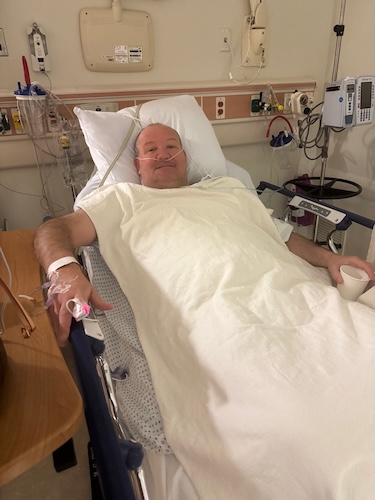
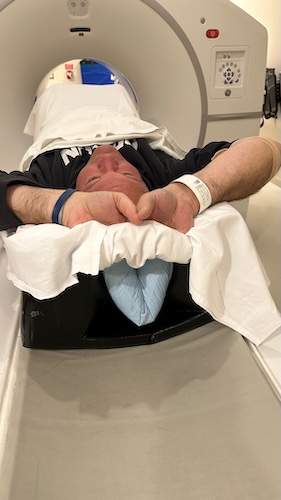
Jay, an ex-athlete and father of three, was diagnosed with stage 4 colon cancer when he was 43. It all started with a symptom many might overlook: intermittent blood in his stool. But rather than dismiss it, Jay consulted his doctor. This touched off a series of medical tests. A CT scan and colonoscopy revealed a mass, marking the beginning of his life-altering experience.
Interviewed by: Nikki Murphy
Edited by: Chris Sanchez
Despite the shock, Jay embraced the process with resilience, navigating surgeries, chemotherapy, and countless medical procedures. His ordeal wasn’t just physical. The mental toll of living with stage 4 colon cancer reshaped his identity. He describes feeling like the sole survivor of a plane crash, grappling with survivor’s guilt as he watched fellow patients succumb to the disease.

This emotional weight prompted Jay to seek mental health support, helping him process not just survival but the loss and changes around him. He discovered that PTSD doesn’t only follow traumatic events like war — it can also stem from enduring a significant illness.
Throughout his treatment for stage 4 colon cancer, Jay focused on self-advocacy. He actively participated in treatment decisions and opted for advanced tests like the KRAS test to personalize his care. This approach to self-advocacy also meant embracing help from family and friends, acknowledging that support isn’t a sign of weakness but an integral part of healing. Jay noted that in his view, his wife and close family bore emotional burdens just as heavy as his own.
Physically, the long-term side effects of treatment linger. Jay describes his fatigue, altered taste sensations, and sensitivity to cold drinks— all reminders of what his body has been through. Yet, his mindset remains empowered. He stresses the importance of being active and cherishes the people who walked beside him, whether offering physical or emotional support.
Jay’s story isn’t just about surviving stage 4 colon cancer — it’s about what he did starting at his diagnosis. From the moment he received the news, Jay became a fierce advocate for his own care. He asked questions, sought out advanced testing, and made sure his voice was part of every treatment decision.
Watch Jay’s story and discover:
- The importance of listening to your body
- The role of self-advocacy in shaping a treatment path
- The unexpected mental hurdles that can come from beating stage 4 colon cancer
- Why accepting help is one of the strongest things you can do
- How it might be possible to turn an unsettling diagnosis into a life of gratitude and self-awareness
- Name:
- Jay W.
- Age at Diagnosis:
- 43
- Diagnosis:
- Colon Cancer
- Staging:
- Stage 4
- Symptom:
- Occasional presence of blood in stool
- Treatments:
- Chemotherapy
- Surgery: installation of port and liver infusion pump, colectomy, hepatectomy, liver ablation, removal of liver infusion pump


This interview has been edited for clarity and length. This is not medical advice. Please consult with your healthcare provider to make informed treatment decisions.
The views and opinions expressed in this interview do not necessarily reflect those of The Patient Story.
Inspired by Jay's story?
Share your story, too!
More Colon Cancer Stories

Meagan M., Colon Cancer, Stage 3C
Symptom: Appearance of blood in stool
Treatments: Surgery (partial colectomy), chemotherapy (FOLFOX)

Joe C., Colon Cancer, Stage 4 (Metastatic)
Symptoms: Loss of appetite, fatigue, malaise, severe pain in the abdominal/liver area, back and shoulder pain, lightheadedness
Treatments: Surgery (colon resection), chemotherapy (FOLFOX, capecitabine, FOLFIRI), targeted therapy (panitumumab, a monoclonal antibody), radiation therapy, immunotherapy through a clinical trial

Sydney S., Colon Cancer, Stage 4 (Metastatic)
Symptoms: Constant stomachaches that only went away after bowel movements, pain after eating, changes in bowel size and shape
Treatments: Surgeries (colectomy, temporary ileostomy, ileostomy reversal), chemotherapy (FOLFOX, FOLFIRI, trifluridine and tipiracil), monoclonal antibody (bevacizumab), radiation therapy, hormone therapy

Kristie C., Colon Cancer, Stage 4 (Metastatic)
Symptoms: None per se that she noticed; she experienced constipation and passed narrow stool, but had been experiencing constipation most of her life, and thought that these digestive issues could also have resulted from perimenopause
Treatments: Chemotherapy (including adjuvant chemotherapy), radiation therapy, ablation therapy (liver ablation), surgeries (colectomy, temporary ileostomy, ileostomy reversal, scheduled liver resection)

Briana H., Colorectal Cancer, Stage 3
Symptoms: Periods of constipation initially lasting one week and then extending to two weeks, nausea, pain in lower left abdomen, lack of appetite, vomiting and inability to keep fluids down
Treatments: Surgeries (colon resection, tumor removal, colostomy placement, colostomy reversal), chemotherapy

Kailee O., Colorectal Cancer, Stage 4 (Metastatic)
Symptoms: Sensitive stomach sometimes leading to vomiting after eating, bleeding during bowel movements, persistent fatigue, back pain, abdominal pain, anemia, significant symptom flare-up during second pregnancy
Treatments: Surgery (colectomy), chemotherapy, targeted therapy