Categories
Chemotherapy HER2 Lung Cancer Metastatic Non-Small Cell Lung Cancer Patient Stories Targeted Therapy Treatments

Anyone with Lungs Can Get Lung Cancer: Ashley’s Stage 4 HER2+ Lung Cancer Story

Anyone with Lungs Can Get Lung Cancer: Ashley’s Stage 4 HER2+ Lung Cancer Story Challenges the Stigma

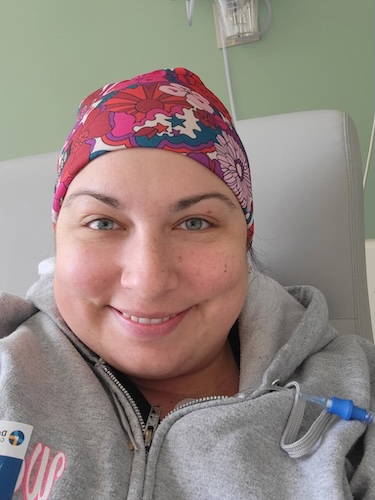
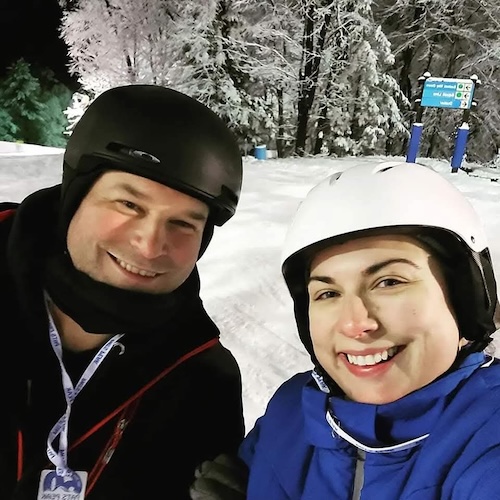
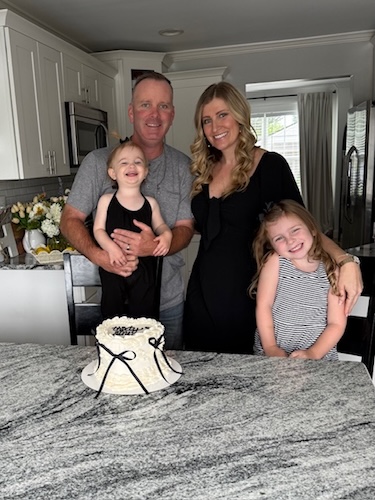
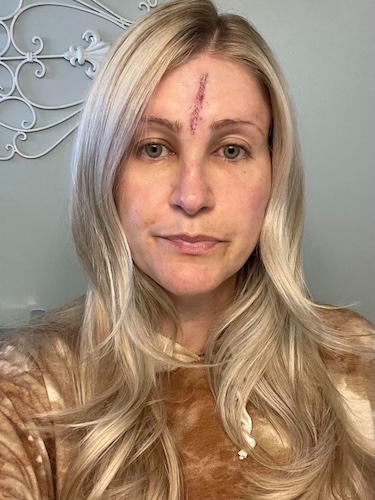
Ashley was diagnosed with stage 4 HER2+ lung cancer in August 2023. At 32, she was enjoying an active, healthy life, practicing yoga, hiking, and learning to ski, when she began to experience subtle but ominous symptoms. Over several months, she began to struggle with fatigue, breathlessness, and back pain. She went to see several doctors, but they thought she had bronchitis or musculoskeletal issues, mostly because she had no history of smoking.

Interviewed by: Nikki Murphy
Edited by: Chris Sanchez

The stigma surrounding lung cancer often links it to smoking, which can lead to delayed diagnoses in non-smokers like Ashley. She was asked time and again about her smoking history, and learned to emphasize that lung cancer isn’t only something that smokers get. Eventually, thanks to her physical therapist’s persistent advocacy, she ended up having an MRI that revealed that cancer was at the root of her symptoms. Later on, she had a bone biopsy, which confirmed that she had stage 4 HER2+ lung cancer. (Editor’s Note: HER2, short for Human Epidermal Growth Factor Receptor 2, is a protein that regulates cell functions, including cell growth and repair. HER2 mutations tend to be more common in non-small cell lung cancer patients with little to no smoking history.)
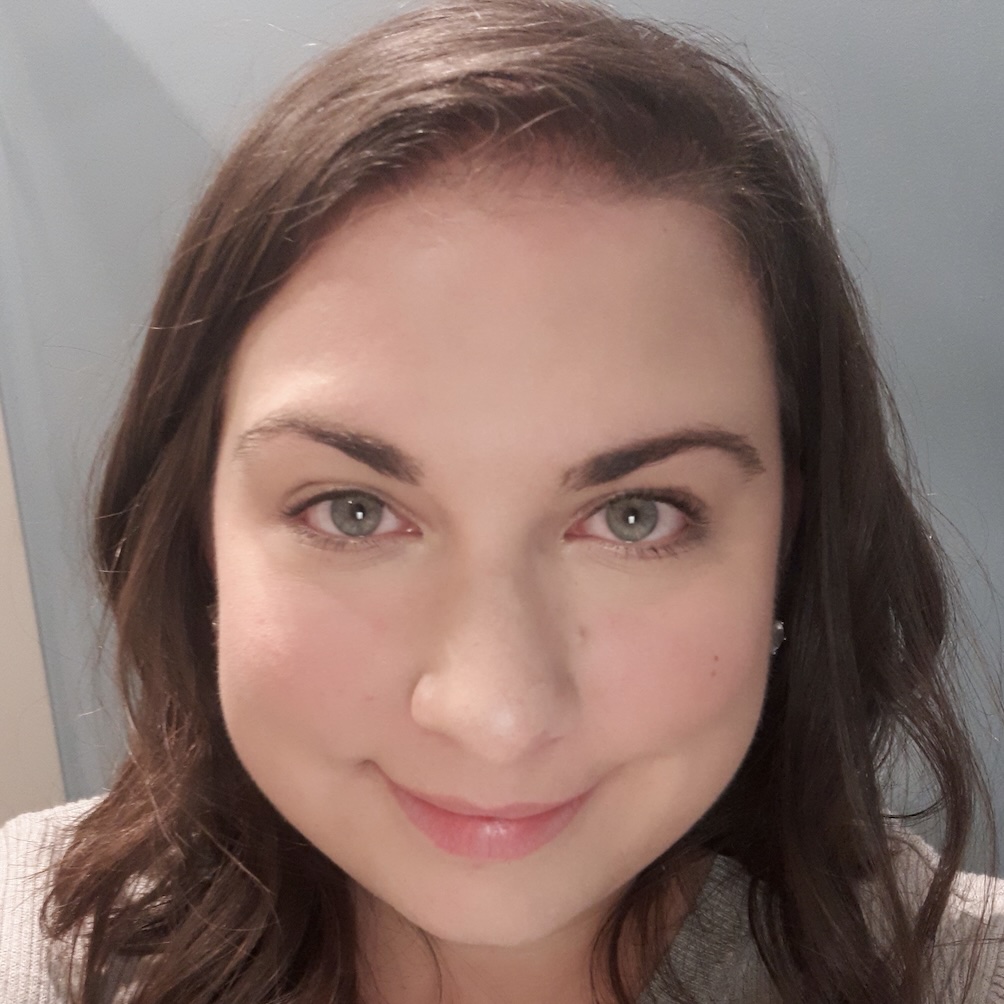
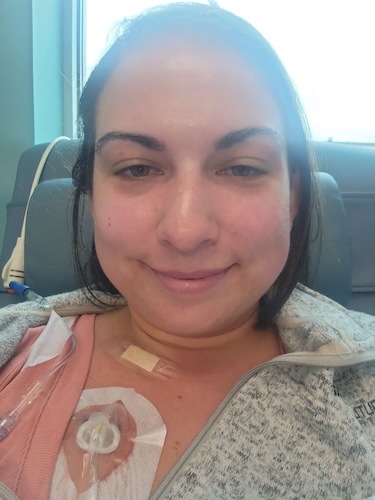
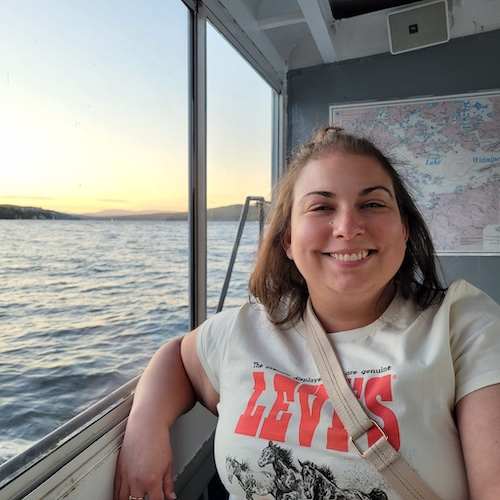
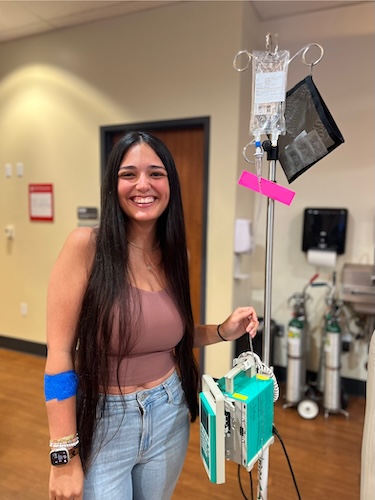
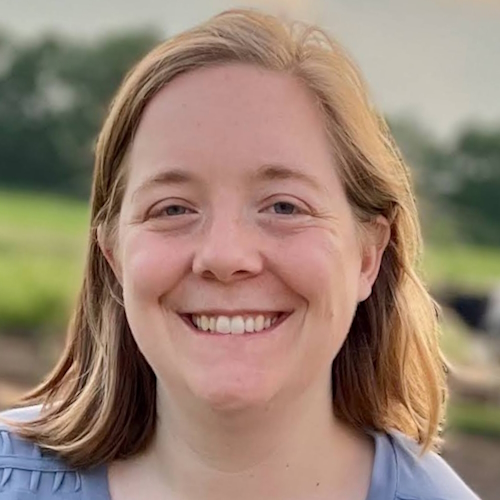
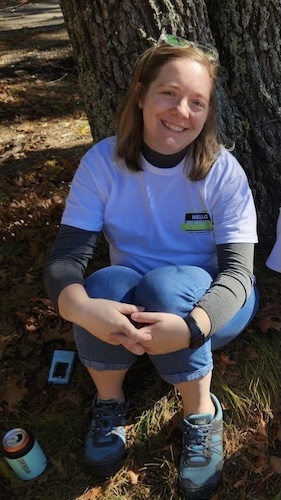
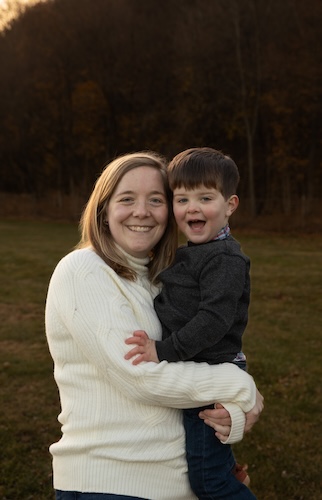
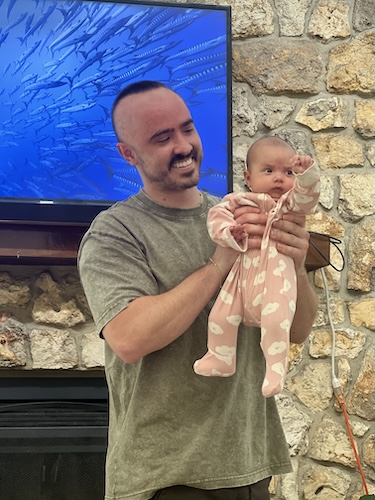
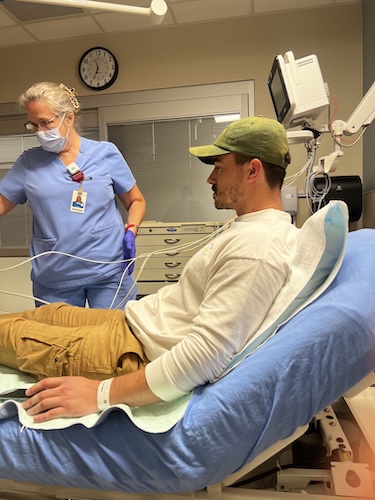
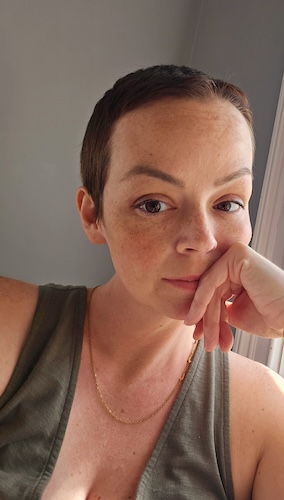
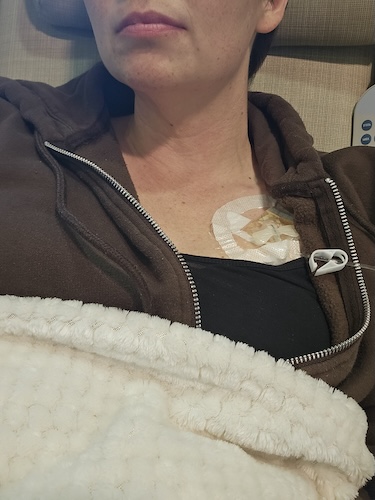
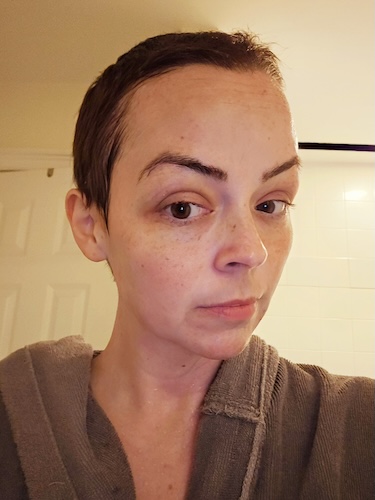
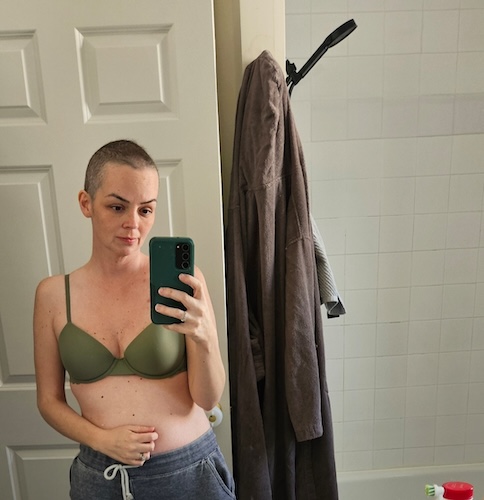
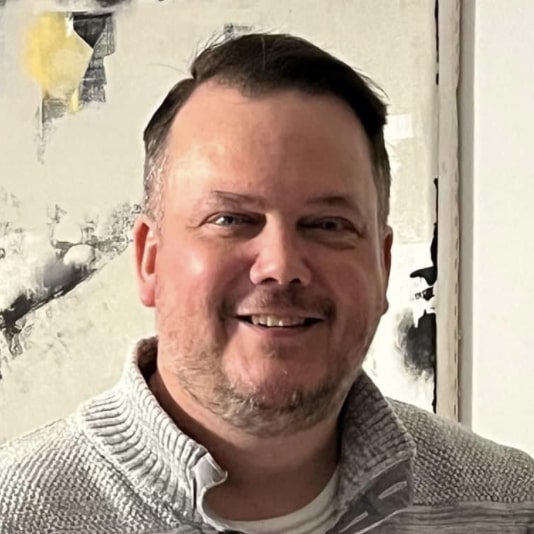
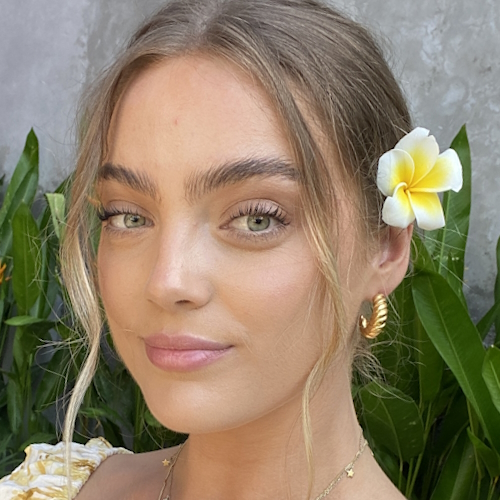
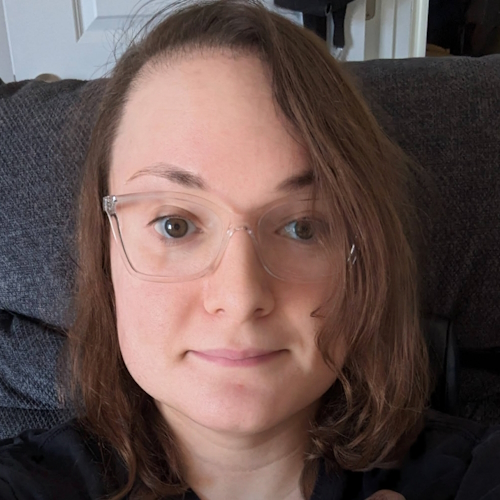
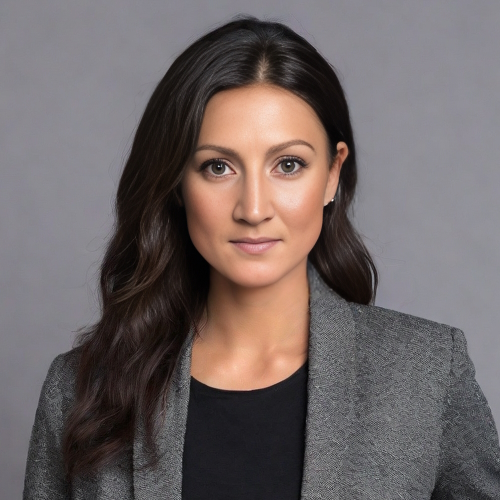
Ashley C. stage 4 HER2 lung cancer

Ashley’s experience highlights the challenges young cancer patients, especially women, can face. She was hit hard by the diagnosis, and it was all the more agonizing because she and her husband had to shift abruptly from thinking about starting a family to confronting the reality of lifelong treatment for lung cancer. But in the face of these challenges, Ashley’s spirit was buoyed by her support system, her abiding love for teaching, and the quickly evolving landscape of targeted therapies to treat cancer.

The HER2-targeted therapy Ashley is currently on, which was approved shortly before she needed it, has proven effective in controlling stage 4 HER2+ lung cancer. Although she sometimes struggles to deal with tough side effects like fatigue and nausea, Ashley is still very thankful for the quality of life her treatment affords her. She also wants to emphasize that palliative care isn’t necessarily the same thing as end-of-life care; it’s about enhancing one’s comfort and well-being alongside active treatment for cancer.

Ashley’s story is a reminder of the importance of self-advocacy, the need to challenge lung cancer stigma, and the hope that advances in medical research offer. Watch her video and scroll down to read her interview transcript for more about:

  • How she lived an active and healthy life, yet was diagnosed with stage 4 HER2+ lung cancer — how her story challenges the stigma
  • Why palliative care isn’t just about end-of-life
  • How Ashley’s symptoms went unnoticed for so long
  • The question she’s tired of hearing: “Are you a smoker?” Her story reveals why it matters
  • From teacher to lung cancer advocate — Ashley’s resilience is truly inspiring

  • Name: Ashley C.
  • Age at Diagnosis:
    • 32
  • Diagnosis:
    • Non-Small Cell Lung Cancer (NSCLC)
  • Stage:
    • Stage 4
  • Mutation:
    • HER2
  • Symptoms:
    • Fatigue
    • Breathlessness
    • Persistent back pain
    • Multiple rounds of bronchitis
  • Treatments:
    • Chemotherapy
    • Targeted therapy
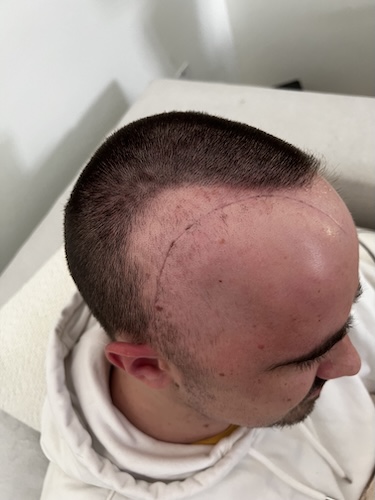
Ashley C. stage 4 lung cancer
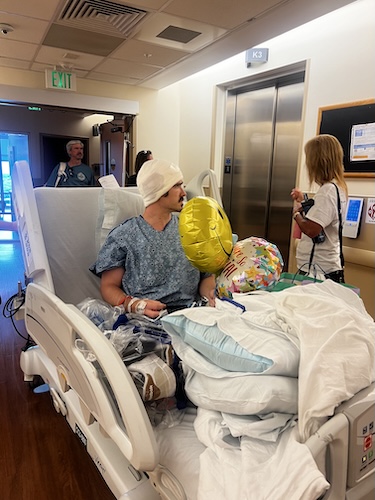
Ashley C. stage 4 HER2 lung cancer

This interview has been edited for clarity and length. This is not medical advice. Please consult with your healthcare provider to make informed treatment decisions.

The views and opinions expressed in this interview do not necessarily reflect those of The Patient Story.


Hello, I’m Ashley

My name is Ashley. I have stage 4 non-small cell lung cancer. I was diagnosed in August of 2023.

My husband, in particular, tells me all the time that one of the things he loves about me is my compassion and empathy for others. It’s partly why I’m a teacher. I really care about others and helping my community. And I think that’s what all my friends and family like about me.

When I first noticed something was wrong

I’ve always been a relatively healthy person. I remember in the winter of 2023, I got really sick for like a month, and that was out of the norm for me. And eventually, I went to the doctor because I was just having trouble breathing. Going upstairs was difficult. And I was in really, really good shape at the time. So that was just weird to me. And they were like, Oh, yeah, like no pneumonia. We took an X-ray. It’s clear. It’s probably just bronchitis. Take some antibiotics. Here’s an inhaler. You’ll be fine. And then it got a little bit better. And then, in April, the same thing happened, where I just got sick for about a month. Really out of breath. It was very out of the norm for me. Even if I got a cold, usually I would be over it very quickly. And then around the same time, I was sitting at work, and I just readjusted myself, and I felt this weird, like, popping sensation in my back. And then over the next few days, it just felt like I had thrown my back out or like there was a muscle issue. Eventually, I went to the doctor and got it checked out. And because I was a pretty active person, I did yoga multiple times a week, I went hiking, and I was learning how to ski. They just figured I had just done something to mess up my back. And they said, Go to PT and get back to us if anything changes.

And while I was doing physical therapy, it just progressively got worse, to the point where we weren’t even able to actually like get into doing stretches or exercises because every appointment was just about sort of managing pain. And it was my physical therapist who finally reached out to my primary care doctor, saying, We need to do some more imaging because this is not normal. I’ve never seen someone my age in my condition without a really good explanation as to why I was experiencing the amount of pain I was in. And so that was when that kind of prompted my primary care to say, “Alright, well, let’s at least get an MRI, and we’ll set you up with a neurosurgeon because they deal with facts, and we’ll take it from there.” And that’s when it started to snowball into not necessarily a neurosurgery issue, but an oncology issue. It was pretty quick, right after my initial MRI, that the radiologist reached out to my doctor’s office, saying, “This is serious. This isn’t just an injury. This is something that needs to be biopsied and dealt with quickly.” That was the initial result before I underwent all sorts of tests. It was like they knew it was probably cancer, but what type of cancer? Everybody was really confused at that point. And I just looked everywhere because nobody seemed to have a great explanation as to why, without many other symptoms. I had already had signs of bone metastases. 

I have no smoking history

They looked at breast cancer. I had mammograms done. They were looking at different blood disorders like leukemia, lymphoma, and things like that. They were doing tests for all of that. They weren’t looking for lung cancer. I didn’t have a CT scan until after they had already known it was lung cancer. And then in my initial diagnosis, I remember being asked multiple times by my oncologist, So you didn’t smoke, you weren’t a smoker. And it was pretty frustrating. And I remember my husband and I going, “No, I’m not a smoker. I don’t know how many times I can tell you.” They almost didn’t believe me at first. My parents were smokers, but they never smoked in the house or the car with us. It’s not like I was exposed to all this secondhand smoke either. I had pretty much the same exposure most people do, which is occasionally the people in your life are smokers, but not anything significant day in and day out. 

What happened next

I was actually in the car going away for the weekend because it was my birthday. So we had planned a long weekend with some friends. I got a call from my primary care office, and the doctor said, “This is serious. They found a tumor.” Generally, he said, “In my experience, when we see this kind of imaging, it’s cancer somewhere else. So we need to find that.” And he was great because he reached out to the oncology practice associated with my primary office and said, “I want her to have an appointment next week.” He ordered a bunch of blood tests. In the meantime, he told me, “If you can get up to date on preventative vaccines and things like that, regardless of where this goes, I want you to be protected against things.” He put things in motion very quickly. I was very thankful for that. Once we met with my first oncologist, she had ordered a biopsy of the tumor that they had found in my back. And then other things like bone scans, blood tests, things like that. The biopsy of my bones was what revealed that it was lung cancer. 

The bone biopsy was the hardest part of this whole process. It’s probably one of the worst medical procedures I’ve had in this whole process. Thinking back to it gets me all flustered again because it was a really sort of traumatic day. I had no idea how difficult it was going to be. And up until this point, I had been really healthy. It was the first time I’d ever really been in the hospital for a procedure. At that point, we didn’t know what to expect. I just wasn’t thinking that it was going to be a big deal. Neither was my husband. And I remember calling him afterwards and telling him, “You need to come back now.” And now with that experience, he’s pretty much always with me because we just never wanted to experience that again.

I ended up with, I think, a total of seven vertebrae that have tumors in them. I have a fractured rib that just won’t heal because of all of this. The crazy part is I only had one tumor in my right lung and a couple of nodules in my left lung. It had already spread to other parts of my body. I was lucky that it was just bones and lungs. Two years later, it’s still just bones and lungs, which is great. I’ve never had issues with my liver or my brain, which are two common places for lung cancer to spread. I have had more nodules pop up in both lungs. But for the most part, it’s been pretty well controlled. The confusing part for me was that I had chest X-rays done. And they didn’t see it, but I guess my tumor was small enough. It’s only when people have really large tumors and lung cancer that X-rays pick them up, which was not something I knew. They said, “Your tumor is small enough that a few months ago it was probably even smaller. We’re not surprised they didn’t see it on an X-ray. That was my big question, I asked, “I had a chest X-ray four months ago. Wouldn’t you have seen it?” And they said, “Not necessarily. Your tumor is really not that big.”

“You’re going in, you’re doing the right thing. You’re getting looked at. And the easiest, most basic test isn’t sensitive enough to pick it up. I’m sure if you looked at it knowing where the tumor was, I’m sure you know, knowing what we know now, you might be able to see it, but if you’re not looking for it, I guess it’s just not that obvious.”

The moment everything changed

I laugh because I feel like the media, like movies and TV shows, has put this perception in our head that, you get to a moment where you’re told, “Okay, you have cancer,” and it’s the first time you’ve ever heard it. In my case, it was more like drips and drabs. After my first MRI, we were pretty sure that I had cancer. It was more like, What kind of cancer? After the bone biopsy, that was when I knew it was lung cancer, because the bone biopsy had shown it. Basically, they can tell where the primary tumor is. And I actually got that through MyChart. And I remember I was sitting, I was out on vacation with my husband and several of our friends, and I got the notification on my phone. And we were out at dinner. And that’s when I pulled up the report and saw what the report said, took a deep breath, put my phone away, and then just tried to continue with dinner and having fun. And later that week, we went in for an appointment. And that’s when they started to explain what it all meant. I didn’t realize the full severity of my diagnosis until about a month later, when I was getting a second opinion at Dana-Farber. And my oncologist really kind of laid it out for me that my cancer wasn’t curable. It was very serious. That, although it would probably not be my case, because I was young and I was otherwise healthy. 

It’s a 6 to 12-month survival type diagnosis. He was confident that that wasn’t going to be my situation. But, he’s also very much a data-driven provider. He said, “I can’t make any guarantees. This is just what we see in the data. But the vast majority of people are much older than you. They’re smokers. They have other health issues. You’re young, you’re not a smoker. The rest of you is perfectly healthy. I have faith that we’ll be able to give you a lot more time.” But we were really angry that this severity wasn’t stressed to us by my first oncologist because they were they were still talking to me about wanting to have kids, wanting to freeze eggs, things like that, which sends the message of, you’re going to get beyond this. There’s going to be a day after treatment. Which is not the case. I mean, hopefully, there’s some breakthrough, but realistically, that’s not what’s going to happen. That was really tough. It was kind of sort of like drips and drabs of learning I had cancer and what my diagnosis meant. 

My family’s history of cancer led me to a new cancer center

My father had gotten care at Dana-Farber, and they were amazing. And my sister in law had breast cancer, and she had gotten care at Dana-Farber too. So we already knew several people who had gone there. And we always knew that, at a minimum, we wanted a second opinion there. We were willing to give my local hospital a chance. And we also didn’t want to delay initial treatments or anything like that. I did start chemo locally. But then, once we kind of realized that they were downplaying my diagnosis, we decided to make the switch. For anyone who is reasonably close to Dana-Farber, I always say call them because they know how difficult it is with insurance and scheduling, and appointments. They know how challenging that can all be. And they do work hard to streamline it. All I had to do was make a phone call, and they took down my basic information and who my doctor was. And next thing I know, they’re calling me and they asked, “ Do you have an appointment on this day?” And I was like, “Do I have to do anything else? Do I have to send you things?” They went, “No, no, no, we got it.” They did all the heavy lifting. And now to this day, whenever I have scans, appointments, anything like that, they’re great at scheduling things. And really doing a lot of the heavy lifting. It was definitely more challenging. At first, before I was getting my care there because I was having to do a lot of that. I was having to do a lot of calling and follow-ups, and trying to make all the appointments work, and making sure I was getting to the lab on time, and making sure I was getting this done in time.

Now that I’m in the Dana-Farber system, they just do a great job at scheduling all that. I’m thankful that I’m part of a healthcare organization that tries to put patients first and helps us navigate that easily.

How I learned about my biomarker

They did a blood biopsy pretty much right away once they knew it was lung cancer. And then they also once took a biopsy of my actual tumor. They did additional testing because I guess sometimes there are some tests that on the physical tumor, it’s a little bit more sensitive than the blood biopsy. I saw that it was HER2, but at my time of diagnosis, there were no approved treatments for lung cancer. This will be good in the future, either for clinical trials or if things do get approved. About four months before I saw progression on my first line of treatment, the FDA approved a HER2-targeted therapy. So I’ve been on that now for almost a year. It’ll be a year in August. And I still have no progression. We’re hoping that more HER2 treatments get approved before I see progression. Unfortunately, because of where my tumors are, it’s hard to measure tumor growth in bones. I’m just not a great candidate for clinical trials, because with clinical trials, you need to be able to really measure bone growth, our tumor growth. And in bones, it’s not the same as if it’s in your liver or your brain or things like that. So while I’m thankful I don’t have tumors there, it is also nerve-racking because I’m worried about progression without other HER2-targeted treatments available.

I trust my doctor’s treatment decision

It’s crazy how fast the cancer space can change as new drugs come online. My current treatment, which is a targeted therapy for HER2, is now being considered part of the first-line treatment. Whereas, for me, it’s been my second line. My first line was a more traditional chemotherapy. And I did four rounds of heavy chemo before my body started showing signs of not being able to handle it anymore. I was having a lot of liver enzyme issues and things like that. We dropped one of the drugs I was on and then just stayed on basically a maintenance chemo dose, and that was able to keep me progression-free for about a year; that was my whole treatment regimen. We made the switch to the targeted therapy when I had two PET scans in a row, six weeks apart, showing a lot more activity, not just in the bone metastases, but there were also multiple nodules popping up in my lungs. And that’s when we made the decision. My oncologist has been really good about being like, “If we’re just seeing a teeny tiny bit, we can probably hold off switching.” He always uses the expression, we only have so many tools in the toolbox. So we want to use all the tools till they’re not useful anymore. We have talked about radiation on individual spots, particularly the bone metastases. But again, we’re holding off on that because you can only do so much radiation. And then, through all of this, I did find out I have a rare genetic disorder that makes me predisposed to cancer. Radiation is very highly discouraged for individuals with this genetic disorder. It’s kind of like a last resort option. Because I’m at just such an elevated risk for developing additional cancers, we don’t want to set that off.

What life has been like on a targeted therapy

I’m going into my 18th round in a couple of weeks of my targeted therapy. I did have to take a break for a while because I was experiencing some lung inflammation, which is a known side effect of this particular drug. And we were trying to suss out whether it was due to the drug or just due to being sick and having lung cancer. My lungs are just more apt to experience inflammation. Eventually, we determined that it was more likely than not just being sick and my body trying to heal, and not the drug. Luckily, that was proven to be true. Because if it were the drug, then I wouldn’t be able to continue on the drug, because the lung inflammation is such a serious issue. The guidance is that once you experience this kind of inflammation, you have to discontinue the treatment. I think there’s a perception that because it’s targeted, it’s somehow going to be easier. And it’s actually been a really challenging drug to be on.

I’ve had multiple dose reductions. And I’ve also had to add in a bunch of extra things like extra fluids and stronger nausea medicines than I had been taking before. That’s been challenging. I’ve had to take off a little bit more work after treatments than I had in the past. Because I’m just very fatigued and nauseous. And that’s been challenging. Luckily, I have awesome nurses who work hard to make sure I’m in the best shape possible, leaving there and then. I now work with a palliative care team that has been good about adjusting medications and finding sort of different routines for me to help make that post-treatment week a little bit easier. But overall, I’m grateful that this drug was approved when it was, because had it not been, I would have had to go to a harsher, older chemo that is less effective. And I might have been in the position where I might have had to stop working or things like that because, as difficult as this drug is, I know it’s not as difficult as some of those older ones.

I’m living my life in three-week increments

Sometimes you get invited to things and you have to tell people, “Hey, it’s really going to depend on where my treatment is and if I’m feeling up to it. And I’m really not going to know until we get a lot closer.” And that’s been really challenging, I think, to kind of get used to being comfortable saying that to people. Totally unrelated. I happened to change jobs right when I was getting my cancer diagnosis. And I always joked, “Who quits their job and then finds out they have cancer?” And it actually has turned out to be a great thing. Not that I didn’t love my current or my former teaching position. But the position I’m in now is so great, and my administration and school district are just amazing at making sure I have everything I need and the time off that I need. So professionally, that was just like a change unrelated to my cancer, but it has actually been a great move for me. They’re just very open and supportive of everything I need. Professionally, I think I need to get used to taking time off. I was just not someone who ever really took a lot of time off. So being comfortable doing that and not feeling guilty and not feeling like I’m letting my students down by being absent has been a big growth opportunity for me. And that was really challenging at first to be comfortable taking the time that I needed.

The decision to have biological children was taken from me

I was getting to the point where even things like going to the bathroom were difficult because I was just in that much pain. So the idea of delaying treatment to freeze eggs or embryos — I quickly was just like, “No, this is crazy. If we get on the other side of this, there’s always adoption and foster care and other options out there.” When I realized, though, that this is going to be sort of a lifelong treatment, that was hard because even though we had gone back and forth about having kids and hadn’t really made a decision yet, it then felt like the decision was taken from us, but it still does make me sad sometimes to know that I won’t have that opportunity. It gets exhausting sometimes. I find that I’ll go several months where I’m feeling good, and life is good, life is great. And then usually it’s around a week when treatment hits me really hard. I’ll get pretty down. And, you have those thoughts of, “How can I keep doing this?” I think mental health is a huge part of treatment. And I’m lucky that through my treatment at Dana-Farber, I’m able to get mental health counseling.

My message of hope

My mom passed away from cancer when I was a toddler. And when I talked to family about what she went through, the drugs were so harsh.

The fact that we’re living in an age where you can have these really serious diagnoses and still have a quality of life. And still work, still participate in your hobbies and things like that, that to me is amazing. And that’s what keeps me going. I remember all the people that we’ve lost in the past who weren’t able to have the quality of life that I have. Because the drugs have just gotten so much better, and treatments have just continued to improve every single day. So even if I never get cured, I’m hopeful that the next drug that comes on the market is going to be that much more effective and that much more able to be easily tolerated and will give me that much better quality of life.

What I want others to know

While you’re young and healthy, do the things that you want to do. If you want to go visit a country, figure out how to make it happen. If there’s a restaurant you’ve always wanted to go to, save up the money and go to the restaurant. Don’t wait because you might be too incapacitated to do that. The only other big thing in my story is just through the testing that we had done. And then my personal family history of cancer. I found out I have a genetic condition called Li-Fraumeni syndrome. And through that, I’ve told people that it’s not normal for there to be multiple people in your family tree having cancer. And if that’s the case, even if you are okay, I encourage people to talk to their doctors to look into genetic testing. Because if it’s not, it’s not normal to get cancer young, and it’s not normal to have multiple aunts, uncles, grandparents, and parents with cancer. If you’re going through your family tree and several people have had cancer, it’s definitely worth the conversation. Because even compared to ten years ago, what they know about cancer genetics has definitely grown. And if I had known that I had had this genetic condition years ago, I would have been getting screenings that would have been able to catch my cancer.


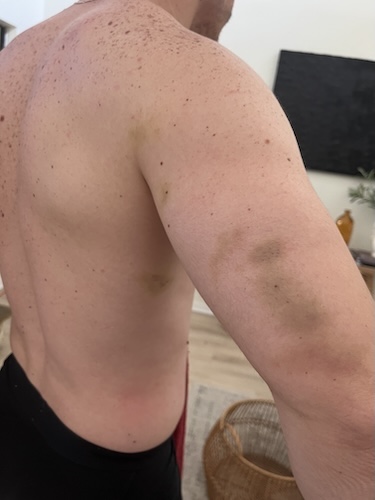
Ashley C. stage 4 HER2 lung cancer
Thank you for sharing your story, Ashley!

Inspired by Ashley's story?

Share your story, too!


More Metastatic Lung Cancer Stories

No post found

Categories
Cancers Immunotherapy Lung Resection Melanoma Metastatic Metastatic Patient Stories Pericardiectomy Skin Cancer Surgery Treatments

From Persistent Cough to Stage 4 Melanoma: Jennifer’s Story of Taking One Day at a Time

From Persistent Cough to Stage 4 Melanoma: Jennifer’s Story of Taking One Day at a Time

Jennifer was recently diagnosed and treated for stage 4 melanoma that had spread to one of her lungs. Looking back, she recalls the months leading up to her diagnosis with a mix of clarity and disbelief. It all started with a lingering cough after a bout of flu in April. The cough interrupted her nights, worried her family, and slowly escalated to chest pain. She shrugged it off as a seasonal allergy until her aunt, a melanoma survivor, urged her to get a chest X-ray. That step was pivotal. It led to the discovery of a large mass and a life-changing diagnosis of metastatic cancer.

Interviewed by: Taylor Scheib
Edited by: Chris Sanchez

Hearing those words triggered a flood of fears, mostly about her husband and two young daughters, and the thought of not being there for them as they grew up. However, Jennifer quickly learned to surround herself with a good care team and to access accurate information. Instead of spiraling through online worst-case scenarios, she leaned on her doctors, who immediately set her up for scans, immunotherapy, and ultimately, an emergency surgery that removed her entire left lung and part of the pericardium. (Editor’s Note: The pericardium is the protective, fluid-filled sac that surrounds the heart.) Her voice was impacted, too, because the tumor had intertwined with her vocal cord, but she began exploring treatment options with patience and optimism.

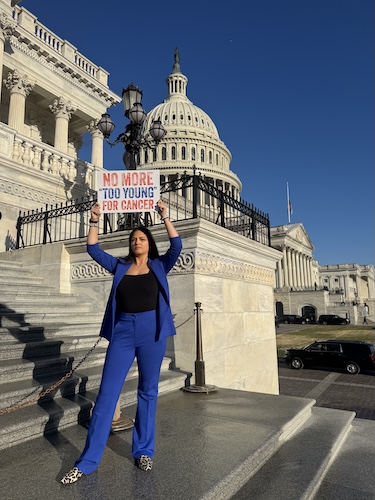
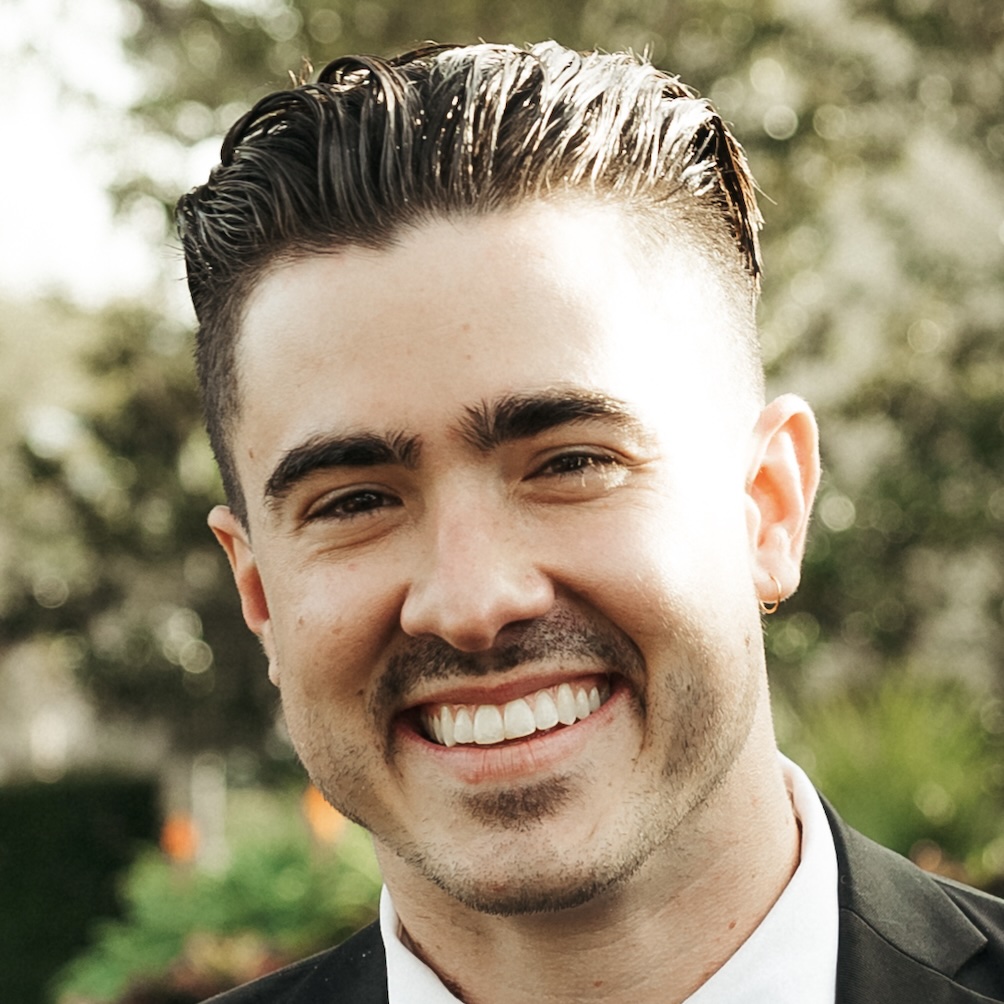
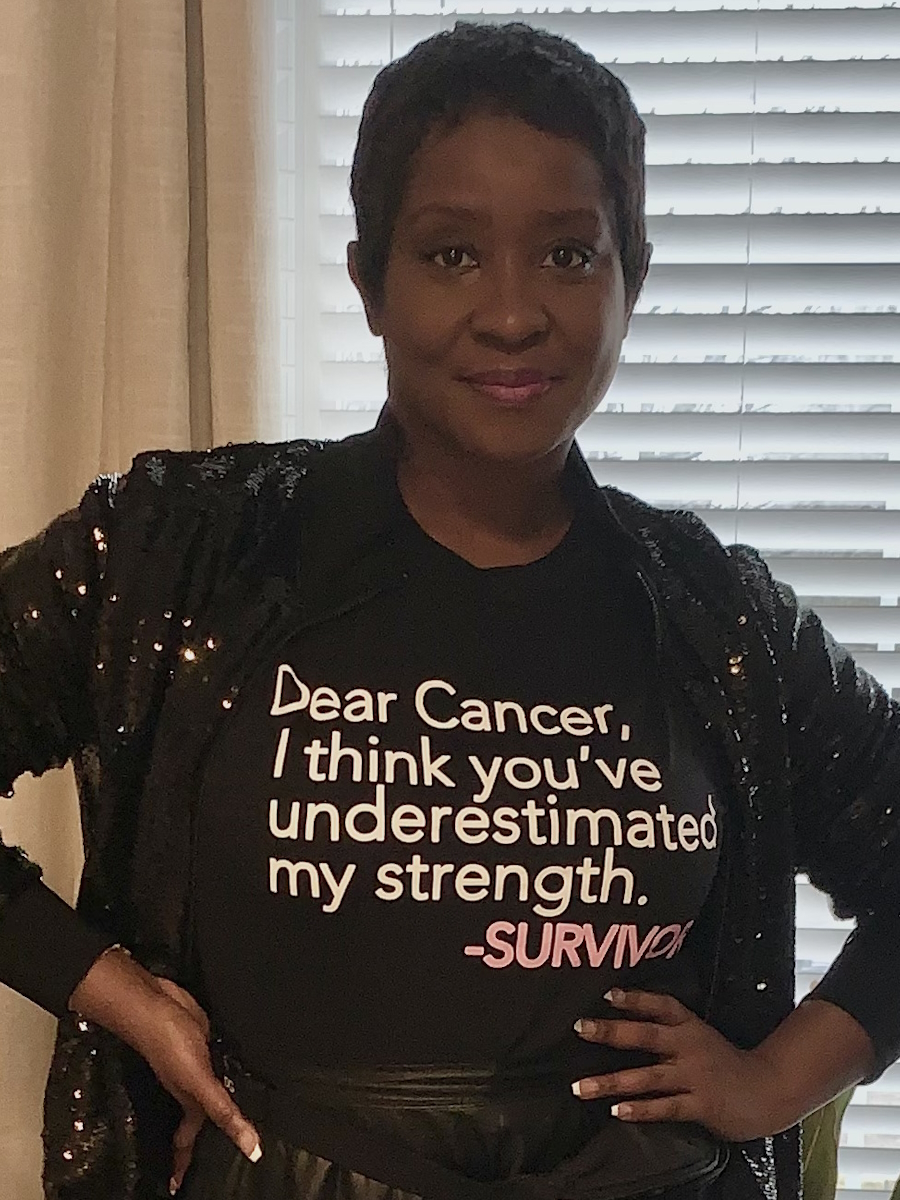
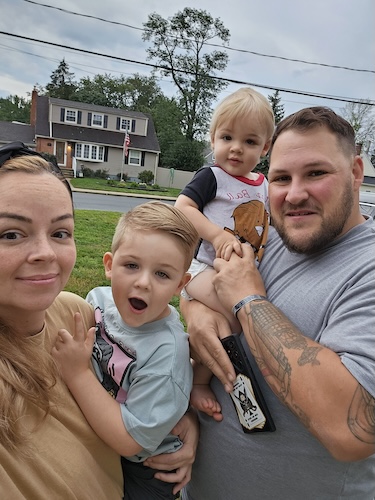
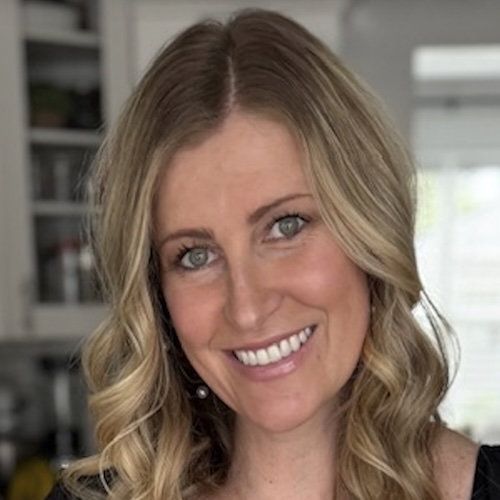
Jennifer M. stage 4 melanoma

Throughout this process, Jennifer has discovered that managing mental health is just as important as the physical side of cancer care. She allows herself to cry, openly shares her fears with her husband, and is very grateful for her extensive family support system. Leaning on others hasn’t come naturally to her, but she now sees it as a powerful act of self-care.

Prevention has also become an anchor in Jennifer’s life. Growing up, she spent years in the sun without protection, even using tanning oils during her teens. After her first brush with melanoma in 2021, she became vigilant, wearing hats, sunblock, and UV-blocking shirts, and making sure her daughters are always protected. She hopes others will take sun safety and the risk of skin cancer seriously long before it becomes a necessity.

Looking ahead, Jennifer embraces each day as a chance to grow stronger. She has regular scans done, continues immunotherapy, and plans fun family activities that remind her that staying hopeful matters. She urges others to understand that a stage 4 melanoma diagnosis is frightening, but it can’t erase who you are or overcome the love that surrounds you.

Watch Jennifer’s video, and scroll down to read the transcript of her interview. You’ll learn more about her heartening story:

  • How a simple chest X-ray changed her life forever
  • How Jennifer parented two little kids while navigating stage 4 melanoma
  • What she wishes she’d known about sun safety in her 20s
  • The emotional impact of learning to rely on others for support
  • How Jennifer continues to find hope, strength, and joy every day

  • Name: Jennifer M.
  • Age at Diagnosis:
    • 38
  • Diagnosis:
    • Melanoma
  • Staging:
    • Stage 4
  • Symptoms:
    • Persistent cough
    • Body and chest aches and pains
    • Night sweats
    • Fatigue
  • Treatments:
    • Immunotherapy
    • Surgeries: lung resection, pericardiectomy
Jennifer M. stage 4 melanoma

This interview has been edited for clarity and length. This is not medical advice. Please consult with your healthcare provider to make informed treatment decisions.

The views and opinions expressed in this interview do not necessarily reflect those of The Patient Story.


Hi, I’m Jennifer

I’m 39 years old and I was diagnosed with stage four metastatic melanoma on July 1st, right before my 39th birthday.

When I first felt like something was “off”

This past April, I got the flu. I went to my family doctor, and she said, “The flu in April. How does that happen?” But I did have the flu, and I was treated for it.

Months went by, and I still had this persistent cough. I would have these coughing fits. I would wake up in the middle of the night, constantly coughing. I would wake up my husband and my daughter, and I would be like, “What is going on? Why do I have this cough?”

So I thought that it was maybe just a cough from the flu. I ended up going to my family doctor, and some tests were done. I didn’t have the flu or strep throat or anything like that. We just chalked it up to seasonal allergies. So I left, I bought some Claritin, and hoped that that would resolve the issue. 

Well, as time went on, I still had the cough, and then at that point, I was starting to get some chest pain. So, I was at a family barbecue and my aunt, a melanoma survivor,  said, “You know, Jen, I had a conversation with my dermatologist, and any time that someone has melanoma or a history of melanoma, a lot of times they would recommend a chest X-ray. Why don’t you get a chest X-ray and see what happens, just to rule out anything significant?” That was at the end of June, July 1st. I called my doctor right away. I said, “Why do I still have this cough? Can I have a chest X-ray, please? Let’s find out what this problem is.”

It was the next day. My doctor called me up. She said that the X-ray came back, and it was abnormal, and she wanted to order a CT scan right away. I freaked out. The next day, fortunately, I was able to get in for a CT scan. At that point, she brought me right into the office, and that’s when she said that they had found a mass. It was very large already, 11.4cm. I was like, “How did that happen? How did that grow inside of me? For a long time, and I didn’t know it?” Everything happened so quickly. So, we had the X-ray first. The next day was the CT scan, and then they referred me to MD Anderson for treatment. “You have an appointment next Tuesday. You’re going to go in for a consult, and then they’re going to basically take over.”

Looking back, I had other symptoms

Looking back, I feel like I should have noticed other symptoms.

I was definitely tired. I was more tired than usual. My daughter had just finished school at that point, and I just felt tired from looking back. It was her first year of preschool, so I felt tired. She was in school. I had my little one at home, and I would get in this routine where my husband would come home and I’d be on the couch watching TV. So I wasn’t getting out as much as I normally do. 

I’m always on. I’m always on the go. Always outside. I took my first daughter out shopping and just out for walks and things like that. And with my second daughter, I just felt really tired, and I just chalked it up to being a tired mom. I didn’t think anything of it. But now looking back, I should have known that my body was telling me that something was going on. Aside from the cough, I did have slight chest pain around my heart. And that came a little bit later. But it wasn’t normal. I wish I had done things differently, but I can’t think that way because what’s done is done at this point.

The moment everything changed

Right away, you just think, “How long do I have?” You know you have to stay off Google because when you go on Google, you read the words and immediately think, “I don’t have much time left.” My immediate thought was, “Am I going to be able to see my daughters grow up? Is my husband going to have to raise them alone?” 

Initially, that was the scariest part, trying to navigate the feelings of what their future might look like without me. But I went back to the doctors because they were just such a great team. They give you options, the different treatment plans, and it makes things a little bit easier to know that you have those options. And you try to read success stories about the different medications and what’s available to you. 

Finding the right care team

The team of doctors there has been nothing short of amazing. I mean, I’m really blessed. Right away, they did an MRI of my brain. They did a PET scan. Fortunately, the MRI did come back clear, but the PET scan basically revealed what they had already seen in the CT scan. The melanoma had metastasized to my lung and was basically a huge mass taking over my entire left lung.

The thoracic surgeon that I met with, I can’t say enough good things about him. So aggressive, but in a good way. Not pushy. Smart. Just really brilliant. They all had a plan. There was a team of oncologists and pulmonologists. They had this plan, and they executed it very quickly.

My diagnosis progressed quickly

After those big tests were done, it was decided that I was going to go through with immunotherapy. So, I had my first round of immunotherapy on July 28th. Only a couple of weeks had gone by between the time that I had the X-ray and the immunotherapy. 

I had my first round, and the following day, a nurse called and asked how I was doing. And I was really out of breath and having a hard time speaking, and she went, “You don’t sound too good.” And I said, “Yeah, I was trying to take a nap and I’m just having a hard time breathing. She advised me to go to the emergency room. 

So I did, and my heart rate was very high. They saw that something just wasn’t right. So there were a couple of different plans. They were going to do a couple of different procedures to maybe open up my airway a little bit more. I had a thoracentesis to remove some fluid in my back, and there was no relief with any of that. 

That Friday, my doctor came into my hospital room. He said, “We have to get this thing out now. We can’t wait any longer.”

We had to do surgery immediately

The initial plan was to go through with the immunotherapy to shrink the tumor, because it was just so large. They didn’t want to go in right away because it was like sitting on my diaphragm. It was intertwined with important nerves that they didn’t want to have to touch. So the plan was to go through the immunotherapy and then get some scans done and see if it’s shrunk, and then at that point remove it. But because I ended up in the ER, and because my heart rate was just so high and they couldn’t bring it down, they decided that they had to go in to remove it. 

When the thoracic surgeon came in, he said, “This surgery is very hard, very complex. It’s a huge tumor. There’s a 10% chance that you might not make it. And that’s a very high number for surgery. We don’t like to see 10%. But if we don’t do the surgery, there’s a chance that you may not make it two more days.” 

So I said, “Well, let’s do it, let’s remove it.” I had to call my husband, my mom, and my dad, and tell them there was a change of plans. “We have to have surgery tonight.”

Navigating the emotions of going through emergency surgery

My husband is very stoic. He put on this strong front and pretended that everything was fine. But I know that it was super hard for him. Just because, again, a life without our girls’ mother. Who wants to think like that? But that’s where we went. That’s where my mind went. And he saw how upset I was. But he was just so supportive. And I’m so grateful for him. 

During this past month and a half, I’ve cried a lot. I’m super emotional about the whole situation. He just lets me cry, tells me it’s going to be okay, and pushes me to be positive. Anytime my mind goes to that dark place, he kind of brings me back and just tells me, “We’re going to be okay. We’re going to fight this, we’re going to beat it. You’re going to be here for a very long time.” So I’m grateful for his mindset. But yeah, it’s hard not to go to the dark place.

I only have one lung now

So they took out the whole lung. And the cancer was actually creeping up to my heart, so they actually had to take out the outer layer of the heart, too, the pericardium. That’s why my breathing was such a struggle, because it was aggressively moving up to my heart. That’s why they had to go in so quickly. To remove the lung and the tumor.

Once they got it all, I was told that my margins are clear, which is excellent. But there’s always that chance that there could be small cancer cells and fluids in there, and that it could come back. So the hardest part is being fearful of the future. 

Moving forward, every three months, I’ll get PET scans to monitor me. And it’s going to be scary every time I have to go in, because I’m fearful of the cancer returning. But I’ll continue with immunotherapy, I believe, for up to a year for preventative purposes. And I’m all for that. 

I’ll do whatever I have to do to make sure that this doesn’t come back.

How the surgery impacted my voice

Of course, before the surgery, the nurses and doctors come in and tell you about the risks of the surgery. And there are just so many things that could have gone wrong. Fortunately, none of them did. But when they were inside, they found that the tumor had wrapped itself, not only around the lung, but also around the nerves and all kinds of veins. I guess it was just intertwined. So they told me that they might have to cut a certain vein, artery, or nerve if it came down to it. 

After the surgery, when I woke up and tried to talk, I was very raspy. And that’s understandable because they had tubes down my throat. But the doctor did let me know that, unfortunately, because the left vocal cord was wrapped around the tumor, they did have to sacrifice it. So he informed me that the left nerve was cut. But the right nerve was still fine. So basically, my voice actually sounds a lot better. It was really raspy and really low for the first couple of weeks. 

But what’s going to happen is, because the left vocal cord is now paralyzed, I have several options. I can get an injection in my nerve of the vocal cord, and that will plump it up so the right one doesn’t have to do all the work. And that could temporarily give me my voice back. For a more permanent option, there are two surgeries I could go through that I’m researching and considering what I think is best. One involves inserting an implant behind the vocal cord. The other involves wrapping a good nerve around the bad nerve and moving my voice box. 

I don’t know if I want to go through that right now. I’m going to try just the injection, the temporary fix, and see how that goes. And then maybe down the road, I’ll consider one of the two surgeries to hopefully restore my voice.

How I’m adjusting to having one lung

I mentioned before that I’ve always been like a go, go, go person. I’m very type A. I like to do everything myself. I’m very independent. If I can do something myself, I’m going to do it and not rely on someone else to do it for me. So I’ve just had to really shift my mind and lean on others. I’m grateful I have a wonderful support system.

I mentioned that I’m an only child, but my husband is one of six, and he has a huge family. His mom was one of 11, and his dad is one of six. So there are just tons of aunts and uncles and cousins. His siblings have just been so wonderful. They did a meal mail train and prepared meals for us. They sent gift cards. They came and watched our girls for us, babysat for us, gave them baths when I wasn’t here to do it for them. So just turning my mindset, you know, leaning on others and letting them help.

It’s been a challenge, but I’m doing it because they’re there and they want to help, so I’m so grateful for that. We couldn’t ask for a better support system. 

Fortunately, I’m now kind of getting back in the swing of things. I’m getting outside more. The weather’s getting cooler. I can breathe again. So it’s nice to be able to start doing those things again that I used to do. It’s only been a few weeks, but I’m getting around, and every day I’m getting stronger.

I’ve dealt with melanoma before

2021 was a big year. In 2021, I got pregnant with my daughter. But after I had her, that’s when I went to the dermatologist for my regular follow-up, and a couple of spots were biopsied. I ended up having a basal cell on my forehead and a basal cell on my right arm removed. That was done right in the office. And then I had to go to Cooper Hospital. I had a melanoma spot on my chest, on my left breast. It was tiny, a small little spot. But if I scratched it by accident or got out of the shower, it would start to bleed. And the doctor said if a mole is bleeding or itchy, then that’s a sign that something isn’t right. So sure enough, that spot ended up being melanoma.

Once they removed the melanoma, I went for a follow-up, and all margins were clear. They did the genetic testing with that one as well. And after that, that was it. That was in So I continued with my regular follow-up with my dermatologist every six months. And then it went to a year. So at that point, it was annual visits with my dermatologist. But nothing since then had come up. So four years later, what happened was that the melanoma spot metastasized, and it went to my lung.

My family has a history of melanoma

Melanoma runs on my dad’s side. It was my dad’s sister who advised me to get the chest X-ray. It also runs on my mom’s side. So my mom has had melanoma. My aunt on my mom’s side has had melanoma, too. And then my other aunt and my grandfather have had it also. 

I had genetic testing done because I was so worried about my daughters and whether this could be passed on to them. And there was a ton of mutations within the tumor when it was tested. But genetically speaking, the doctors said that it’s unlikely I could pass it on to them. 

Of course, there are concerns. They have to be protected from the sun; they’re light-skinned. And of course, we’re going to take the necessary precautions for them. But genetically speaking, it doesn’t sound like that’s where it came from.

I spent my teenage years, my early 20s, up until probably my early 30s, not really protecting myself in the sun, laying out in baby oil, and going to tanning salons back in high school for prom. And I look back and I wish so much that I knew the effects of, you know, the sun, sun damage, UV rays, and all of that. I can’t change the past. But as soon as I found out back in 2021 that those spots were skin cancer, that changed everything. From then forward, I’ve never lain out in the sun. I always make sure that when I go out, I wear a hat and sunblock. It’s the same for my girls; I load them up with sunblock every time they go outside. I’m just taking the necessary steps going forward. That’s all I can do. 

Those sun-protecting shirts aren’t very flattering, but at least I’m covered, you know. We do go outside, but we try to do a lot of indoor activities, just enjoy the colder months.

What I want people to know

Don’t let the diagnosis scare you too much. Obviously, when you hear the news that you have cancer, it’s very scary. Just try to focus on the fact that you have it now, and it can be addressed. I don’t want to say focus on the future because you really want to take it one day at a time. And I know that’s easier said than done. But if you want to be here and you want to live a long life, then hope for that and pray for that and wish for that.

I take things one day at a time. But I also like to plan. For example, I like to plan fun trips for the future, because I want to think that I’m still going to be here, you know? So just don’t let the cancer diagnosis define who you are. Be grateful that you know it’s there and do what you can to get yourself healthy again.


Jennifer M. stage 4 melanoma
Thank you for sharing your story, Jennifer!

Inspired by Jennifer's story?

Share your story, too!


More Melanoma Stories

No post found


Categories
Clinical Trials Colorectal Immunotherapy Metastatic Patient Stories Rectal Treatments

Shattering Stereotypes: Jessica’s Stage 3 Rectal Cancer Experience at 29

Shattering Stereotypes: Jessica’s Stage 3 Rectal Cancer Experience at 29 Through Self-Advocacy

Jessica was devastated when she found out that she had stage 3 rectal cancer in 2024, when she was just 29. Her experience challenges perceptions of what cancer looks like and helps redefine survivorship on her own terms.

Interviewed by: Taylor Scheib
Edited by: Chris Sanchez

Jessica’s story began in 2023 when she noticed unusual symptoms, including bright red blood in her stool and persistent abdominal pain. Doctors attributed her symptoms to irritable bowel syndrome, but she felt deep down that something wasn’t right. Armed with the knowledge that she had Lynch syndrome and a strong sense of self-awareness, she pushed for and ultimately got a colonoscopy that revealed a six-centimeter mass in her rectum. Her determination to advocate for herself likely saved her life. (Editor’s Note: Lynch syndrome is the most commonly inherited cancer syndrome. It increases a person’s risk for colorectal cancer.)

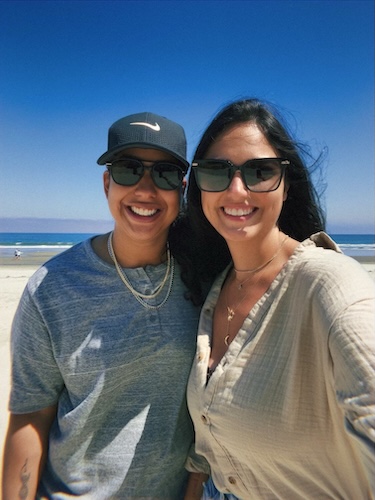
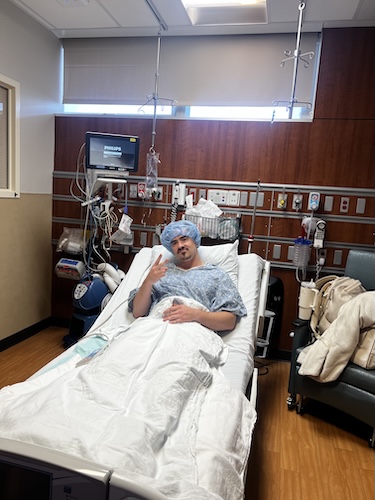
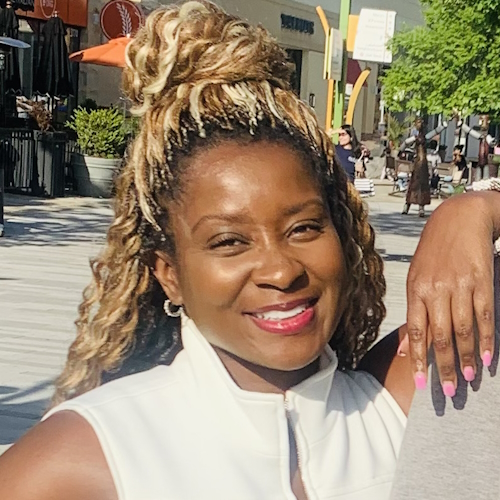
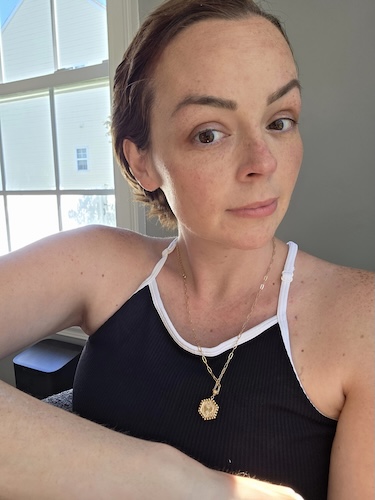
Jessica A. rectal cancer

A striking aspect of Jessica’s experience with stage 3 rectal cancer is how she defies the typical “sick” stereotype far too often associated with cancer. She didn’t lose her hair, appear frail, or show any visible signs of illness. She credits immunotherapy, which she took through a clinical trial rather than traditional chemotherapy, for her well-being during treatment. Jessica’s body responded extraordinarily well to immunotherapy, with the mass disappearing entirely after just a few infusions. This alternative treatment not only preserved her physical health but also helped her maintain a sense of normalcy.

Jessica’s experience highlights the mental and emotional complexities of living with rectal cancer. From the anxiety of waiting for biopsy results to navigating survivorship, she learned for herself that the mental toll of cancer often outweighs the physical challenges. Her story emphasizes the importance of supportive relationships. She notes how her wife became a key part of her care team, and shares heartfelt moments when people in her life stepped up in meaningful and sometimes unexpected ways.

Survivorship isn’t a return to normal life for Jessica. It’s a brand-new chapter filled with intentional living. She now prioritizes experiences that bring her joy, like attending women’s soccer games and spending time in nature. Jessica’s philosophy is simple yet profound: live with purpose, advocate fiercely for your health, and cherish the connections that truly matter.

Watch Jessica’s video and scroll down to read her interview transcript. You’ll delve into her story:

  • Cancer doesn’t always look like what we expect. See how her health and appearance defied stereotypes
  • Self-advocacy can be life-saving. Jessica’s story shows how you should trust your intuition and speak up when something feels off
  • Find out how immunotherapy can be a powerful alternative to chemotherapy
  • Learn how mental health support is crucial during both active treatment and survivorship
  • Jessica’s strong relationships with her wife, friends, and family prove that authentic connections grow stronger through vulnerability and support

  • Name: Jessica A.
  • Age at Diagnosis:
    • 29
  • Diagnosis:
    • Rectal Cancer
  • Staging:
    • Stage 3
  • Symptoms:
    • Changes in bowel movements
    • Blood in stool
    • Abdominal pain
    • Back pain
    • Difficulty sitting comfortably
    • Constipation
    • Feeling of incomplete evacuation, as if some stool remained after bowel movements
    • Mucus-like stool consistency
    • Bloating
  • Treatment:
    • Immunotherapy through a clinical trial
Jessica A. stage 4 rectal cancer

This interview has been edited for clarity and length. This is not medical advice. Please consult with your healthcare provider to make informed treatment decisions.

The views and opinions expressed in this interview do not necessarily reflect those of The Patient Story.


Hey, I’m Jessica

I’m currently 30 years old, living in San Diego with my wife.

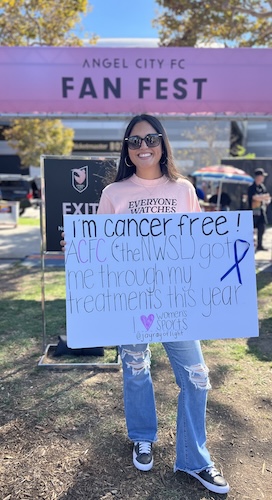
I’m really big on women’s sports. Women’s soccer, women’s basketball. My wife and I, those are our hobbies. We got women’s soccer. Got me through cancer last year, watching the games every weekend after treatment.

I think cancer helped me to find those things that I like to do again and find a new appreciation for them. So, painting on the beach and writing poetry and all of those things. 

I was diagnosed with Lynch syndrome

I was diagnosed with Lynch syndrome in February of 2023, and I didn’t know what that meant. I was getting mixed reactions from doctors about it. So I said, “I’m not paying attention to this right now.” Very typically millennial of me.

So my wife and I started talking about family planning, and when I went to my gynecologist, she went, “Okay, you have a history of cancer in your family. Let’s just do genetic testing. Get that out of the way.” My mom had breast cancer at 36. My father had prostate cancer really early. I have grandparents who had cancer. So, I went into it thinking I was going to come back with the BRCA gene. So I was like, breast cancer. My mom was 36. How else do you explain that? Then I have this paper come back, and it’s telling me I have Lynch syndrome, and this counselor is telling me, “Oh, just get a colonoscopy at 30,” and I thought, “I don’t even know what any of this means.” There was so little information about Lynch syndrome. There are multiple genetic mutations associated with Lynch syndrome. So it’s kind of like this umbrella of information. So, if it wasn’t for talking about family planning and my gynecologist, then I wouldn’t have known to do genetic testing.

I was getting all of these mixed reactions. I don’t feel any kind of stability, and so having the Lynch syndrome diagnosis earlier, before my symptoms had really started ramping up, I always tell people that the genetic testing is what saved my life, because I knew I needed to advocate for more. I knew that Lynch syndrome put me at a higher risk for colorectal cancer. Those were the things I did read out of all of the information I was given. So, it was like, if I didn’t know I had that, all right, well, the doctor doesn’t think it’s that, and I remember hanging up the call with my primary and saying out loud like, “Oh, she doesn’t think it’s cancer,” but that was already on my mind because I knew I had Lynch syndrome. So, it was one of those things that if I didn’t have it, I don’t know that I would have advocated for myself the way that I did.

When my first symptoms started

I’ve always had tummy problems, you know? That was the cute, trendy thing that everybody has. Certain things just bother my stomach, and then in the summer of 23, I realized that this is more than just that. I had changes in needing the bathroom, like going more often or feeling like I needed to go more often. I always had a trace of blood in my stool, but that summer, it was bright red. So everyone was like, “Oh, that’s hemorrhoids,” and I was like, “Okay.” And then it kept happening more consistently, and I realized that it couldn’t be a hemorrhoid all the time. That doesn’t make sense, but abdominal pain, all of your stereotypical colorectal cancer symptoms, were worrisome.

So I went to a primary doctor. She was like, “Oh, it sounds like IBS, but you can go to a gastro if you want.” I was like, well, I don’t want to live with it even if this is IBS, this is terrible. I don’t want this.”

So the gastro didn’t have anything open until November in person, so I waited until November, and then by the time I got to that appointment, I thought, “Something is really wrong.” I no longer cared what anyone was going to tell me. I went into that gastro appointment and she said, “Yeah, it does sound like IBS,” and I responded, “Okay, I have Lynch syndrome. I have blood in my stool all the time. I’m constipated, and I can’t go to the bathroom.” I listed everything out. And then I went, “I need a colonoscopy.

I have a family history of cancer. I’m not comfortable leaving here knowing that I feel this way and not checking anything.” She went, “Okay, I think I should be able to get you an early colonoscopy. I think insurance will approve it.” I went, “I don’t really care. I need to know. I will figure out the insurance part of it somehow.” But the guidelines for Lynch syndrome are to have your first colonoscopy at 30, and I was 29 at the time. “This needs to happen. I need answers.” I have medical anxiety, so I knew that about myself going into it. 

At that point, I wasn’t even passing stool anymore. It was like a mucus-like consistency. Nothing was moving. I’m not getting an answer, but at the same time, it was like, “If I had gone earlier and my symptoms hadn’t been that bad, if she had told me it was IBS, would I have been at that point in November, where I was feeling that something was horribly wrong. I can’t even if it isn’t cancer, I can’t live like this. I can’t even go to the bathroom. I couldn’t even sit down at that point in November. Well, I was on a pillow all the time. I had lower back problems. There was something very wrong, and so I was able to say to myself at that point, “I can’t just walk out of here and be like, sure, it’s nothing,” because I know it’s not nothing.

Preparing for the colonoscopy

I went through the whole holiday season, and I don’t know. I guess I thought, “I’ll do it when I’m back.” But at the same time, things still were progressing, and it was like, I have all of these like experiences where I’m like, “Oh my gosh, this is getting worse.” It was still time for symptoms to keep evolving.

And so I think that was a really odd experience. Moreso because I had to do the prep. I think my mindset most of the time was like, “The only way out is through. I have to do this.” I drink the terrible stuff, and that was, I mean, my first ever colonoscopy, but I remember saying to myself when I was doing the prep, “I can’t be naive enough to think that this is nothing like I’ve lived in this body long enough. There’s no way that I can go into this thing.” I think it’s going to be fine, because I think in my head I knew, but it was one of those things. If I said it out loud, it made it real, you know? I just kind of kept that to myself, but kept saying to myself, “Don’t go into this,” blissfully ignorant of anything.

The moment everything changed

So I had the colonoscopy on a Friday.

I got dressed, and they were like, “Okay, you need to sit here and wait,” and I was like, “That’s weird.” But then again, I’ve never had a colonoscopy before; maybe that’s just how it goes. So, I was sitting there waiting, and the gastro came over to me and she bent down at my level on the chair, and I was like, “Oh, this isn’t good.” I looked at her, and she showed me these pictures, and I’m like, “Oh my God, what am I looking at? Those are my intestines.” She said, “So I found a mass. I’m 99% sure it’s cancer, but I’m going to send it in for pathology.”

In that moment, I realized, “Oh, self-advocacy works.” Because had I not pushed for this, I would be living with this mess. There was a six-centimeter mass in my rectum. And I went home with the imaging, and she was like, “You can’t do anything until Monday.”

It’s one of those things where it’s like they say the C word and then everything else is like, womp, womp, womp, you know? I don’t know if she said anything else to me after. I don’t know if she explained. I vaguely remember getting a surgeon’s business card, but it was really just kind of like, what’s next? Where do I go from here? And being on a Friday, it forced me to think about it over the weekend. I think for me it was: How do I move forward? You gave me this information. What’s next? I didn’t not permit myself to feel things, but it was like, in this moment, right now, I need to figure something out. I’m a fixer. That’s me. I’m a get-this-figured-out kind of person. So that was very much myself, and I think a lot of that.

How I navigated how to tell people about my stage 3 rectal cancer diagnosis

Then, after that, it was, “How do I tell people this? How do I tell my parents and my in-laws and my family, my friends?” You don’t just drop this into a text message.

Some people knew I was getting the colonoscopy. So these people were like, “How’d it go?” I think that’s really hard when you’re now somewhat responsible for letting down the people in your life. It’s not that you’re letting them down, not that you did anything personally, but you’re dropping this huge thing on them, and then you’re dealing with their reaction to it.

I think a key reminder that I would tell myself is that I’m not responsible for their feelings. They can be upset and feel that for me, but I’m not responsible or obligated to sit in conversations where I have to listen to how they feel about the fact that I have cancer, and that’s something that I didn’t even realize in the beginning. I wish that somebody had said to me in the beginning, because I very much took that on myself. I was like, “Oh my God, all of these people feel this way about it, and I can’t do anything about it.” You blame yourself in a way, even though you logically can probably talk yourself out of it, but it’s still, if you’re hearing people continuously, even strangers, going, “I can’t believe it, how did this happen?” This reaction of trying to make themselves feel better, they’re not going to be me. I think being realistic about expectations of other people, I think finding out that somebody young in your life has cancer, will affect people differently, and so that might mean support looks different than you thought it would.

When I finally got the results back

I was just waiting, and as soon as it came back, I went, “What’s the stage?” That was my focus. It wasn’t so much, was it cancer or not? It was, what stage was it? Because that affected treatment, everything that I could look at for the next step. And I think that waiting for that was the hardest thing. I think my doctors were like, “Jessica, we will tell you.” I’m like, “Okay, but you don’t understand. How do I sit and live with this? How do I not know what’s happening? How do I just throw caution to the wind and wait? That’s quite a thing you’re asking me to do.” It was that, it was the staging, it was what I would have to prepare for. 

So, I think that was probably my biggest thing I held my breath for, the stage, which I think I waited like two weeks for, probably because then we needed to do like an MRI and a CT.

What my treatment plan looked like

So, she said to me, but knowing that I would like to do it, we’re going to follow the clinical trial that they did at Memorial Sloan-Kettering here in San Diego. She said, immunotherapy — a word that was new to my vocabulary. “What does that mean? What is that?” And so she really explained immunotherapy for me, broke it down, told me about why that versus chemo and all of this, and she said to me, “You can do some more research on the clinical trial yourself, but they announced this back in 2022, I believe it was the first round, that 100% success rate.”

I was like, “Sign me up.” I grew up in New Jersey. Memorial Sloan-Kettering was the hospital that everybody went to. So I was like, “Cool, I’m in,” and she was like, “I just need to tell you, I’ve never had a patient on this kind of medication before. I’ve had patients on immunotherapy, but this exact drug I’ve never administered before, so we’ll be learning together.” I was like, “Cool.” She was straight up with me. She looked me dead in the face and said she didn’t have all the answers. To me, that was more comforting than her saying, “I have all the answers and I’m going to do it my way,” because that meant there was room for collaboration. There was room for me to come back and say to her, “This feels this way. I’m feeling this. I’m worried about that. Have you read about this?” There was an open dialogue there. Everybody is taking care of me, but self-advocacy taught me I need to be part of my care team. My wife needs to be part of my care team, and so I think while all of those things might be red flags to someone else, they were more of a reason for me to stay because she’s straight up. I don’t have all the answers.

So I was on immunotherapy for six months. My oncologist said to me that it would be seven infusions over those six months. So, we did the first three months, and then we would do a midpoint check to see how things were going. If my body didn’t respond, we would pivot to chemo, radiation, and surgery. So, when we started, we started with the first four single doses three weeks apart, and then after the midpoint check, we doubled the doses. Actually, right around the same time we started the double dose, we ended the midpoint check, and did it every six weeks. It was over the summer. So it kind of stretched that out for me, where I didn’t have to go to the infusion center so often, but it really wasn’t a big deal going to the infusion center because it was a 30-minute infusion. It took an hour total, but between waiting in the waiting room and getting to the chair and somebody getting me this, the infusion was shorter than any of the other stuff. So, we did the seven 30-minute infusions over the course of six months, and when we did the midpoint check, that was in May, we did a colonoscopy as well as an MRI, and when my gastro went in for the colonoscopy, she said to me that she had never seen anything like it, that the mass was entirely gone.

I was like, “Oh my God. What do you mean?” She’s like, “It’s just scar tissue.” So I talked to my oncologist afterwards, and I asked if we should stop. She was like, “No, we’re going to finish it out. It’s working like your body is working.” 

I kept a symptom tracker in my journal. I would say by the fourth infusion, I was like, “Wow.” Going to the bathroom, I didn’t see any blood in my stool. That was the one that lasted the longest, but when they went in for the midpoint check, everybody was like, “I’ve never seen this before, ever.” We finished it out, and then in September, I was NED.

What my reaction was to being on a clinical trial

Any medication that anybody ever takes started as a clinical trial. I wasn’t scared of it because everything has to be trialed.  After getting the background of Lynch syndrome, immunotherapy, chemo, and how that works, and the fact that people with Lynch syndrome typically don’t respond well to chemo. Everybody has that picture in their head of a cancer patient and what they look like and what. So, for me, it was like with immunotherapy, I was like, I’m willing to challenge that. I’m open to trying something that isn’t what everybody else is doing because of advancing science. It doesn’t scare me. I never thought about myself as a guinea pig or whatever. People do think that ends up happening with a clinical trial. It was more so for me, having Lynch syndrome, and being able to be part of something. Advancing treatment for people like me was really important.

What surveillance looks like for me

So, for colorectal cancer screenings, I do a yearly colonoscopy in January, and then I do a sigmoidoscopy every four months for the first two years. Since it was in my rectum, my surgeon just goes in, looks around, checks to see that the site of the cancer is fine, and I’m awake for that. After those two years, we’ll talk about keeping the yearly colonoscopy, but then stretching the sigmoidoscopy to every six months. Again, assuming there’s no recurrence or anything, and because of the Lynch syndrome, we do a yearly skin cancer check. We do MRIs every six months for endometrial cancer because Lynch syndrome increases the risk for endometrial cancer. We also do the CTS to check lymph nodes that were impacted, and then we also do breast screenings every six months. There’s no direct correlation of Lynch syndrome to breast cancer, but my mom had breast cancer at a young age, and my oncologist was like, “This is something we need to really keep an eye on.” So, I do a breast MRI and then six months later I do a mammogram, and we alternate that all year. I tell people that I have spring break in March. I have no scans or appointments. June and July are summer break because I don’t have any appointments or scans, and then I have the winter break, which is November and December, but otherwise, every other month of the year, I have a scan or an appointment of some sort.

How my partner and I have navigated this

You have a lot of hard conversations very early in your relationship. We had been together for ten years, so we knew each other. This wasn’t awkward in that sense. But it’s a lot of conversations about us and our anxieties going into it. Just like I have anxiety. She has anxiety too, going into scans and appointments, and she was at every treatment with me. I think the beginning of it was just blacked out for a while. It wasn’t until I was into survivorship and able to look at the beginning part of the year, but once the midpoint check happened, we could breathe like it’s working. We’re not worried about whether I’m going to have to pivot to chemo, radiation, and surgery. So, I think that was a point where the two of us could then talk about other things going on. 

We’ve gotten a lot closer. We’ve gotten a lot more open and vulnerable, and it’s really a team effort.

Cancer shifted my mindset

I’ve always wanted to do that. Why haven’t I done it? Why don’t we go to more soccer games? Why don’t we go out to dinner when we want to go out to dinner? Yeah, I know money exists, but who’s going to spend my money when I’m not here? Like this idea of, you can’t do things that are enjoyable or leisure things because you have to be saving for this very specific thing, but at any point in time, life could just change drastically. We have zero control over any of it. Well then, fine, I can control doing what I want to do, and that whole making the decisions with myself and my wife in mind rather than like, “Oh, well, everybody else wants me to do all of these things,” or I’m maintaining this relationship, not because anybody gives it back to me, but because I feel like I have to have this relationship and then it’s like, well, it’s not working. So, just admit it’s not working. There’s no hard feelings, but it’s just not working right now. Intentionally keeping the people with whom your relationships are working, and I think every time I think about it, I’m like, intention. Why am I doing something? Who am I doing it for? Just kind of going from there. I think that’s a really big mind shift that comes with cancer.

What I want others to know

Be your biggest advocate. You know your body the best. You’re the only person to ever live in your body, and that goes beyond cancer. That goes outside of it. That’s how you’re feeling regularly. We don’t talk about the menstrual cycle enough. Things that are off there, or things that don’t feel right, or advocating for yourself for genetic testing. Knowing more about your family history. Asking those questions, and it’s not just advocating with a doctor either. That’s talking to family, that’s having hard conversations with family, and being able to say, I need to plan this. I need to know this information to build my life, and when I tell people about genetic testing, I always tell them, “Yes, it could come with a diagnosis, but it’s a roadmap.” Medical care is not one size fits all. What works for me isn’t necessarily going to work for you, and vice versa. So, the only way to know that is to get that information, and the only way to get that information is to advocate for yourself. I think that’s the bottom line, whether it’s within cancer or not, being your best advocate.


Jessica A. stage 4 rectal cancer
Thank you for sharing your story, Jessica!

Inspired by Jessica's story?

Share your story, too!


More Rectal Cancer Stories

No post found

Load More

Categories
Bladder Cancer Patient Stories Surgery Transurethral resection of bladder tumor (TURBT) Treatments

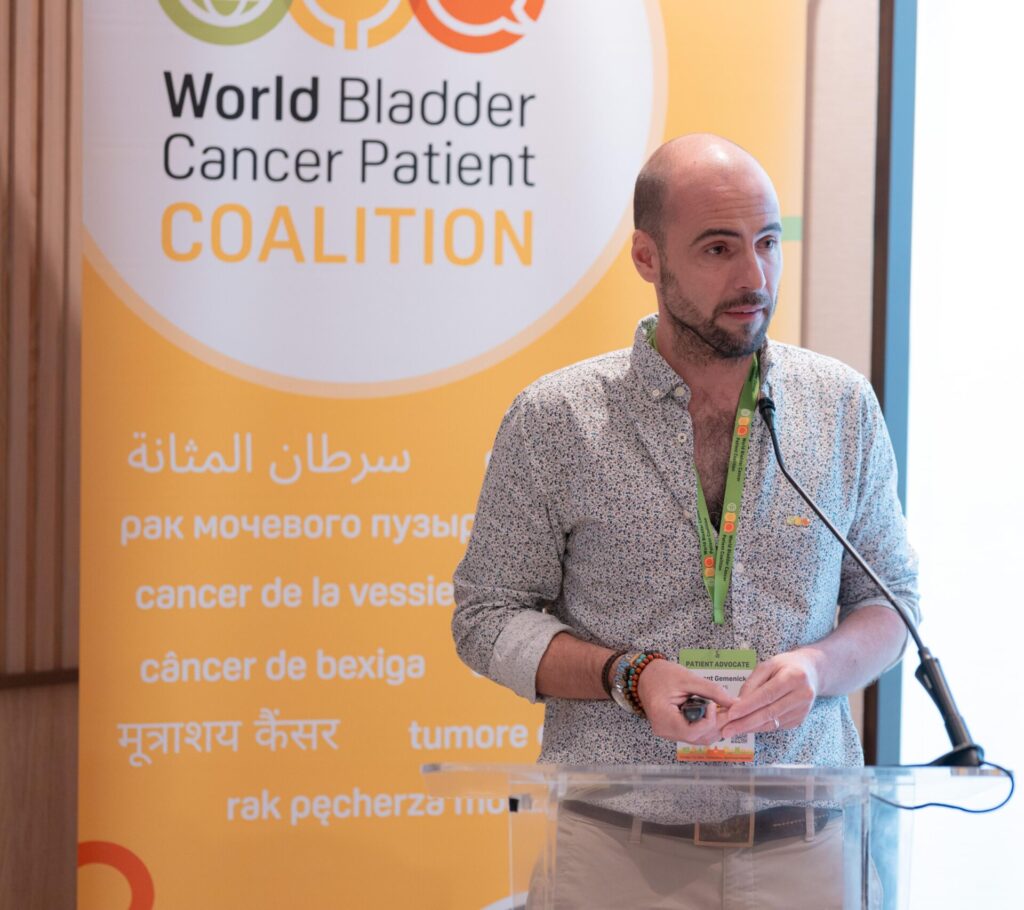
Laurent Gemenick’s Bladder Cancer: A Story of Second Opinions and Self Advocacy

Laurent Gemenick’s Bladder Cancer: A Story of Second Opinions and Self Advocacy

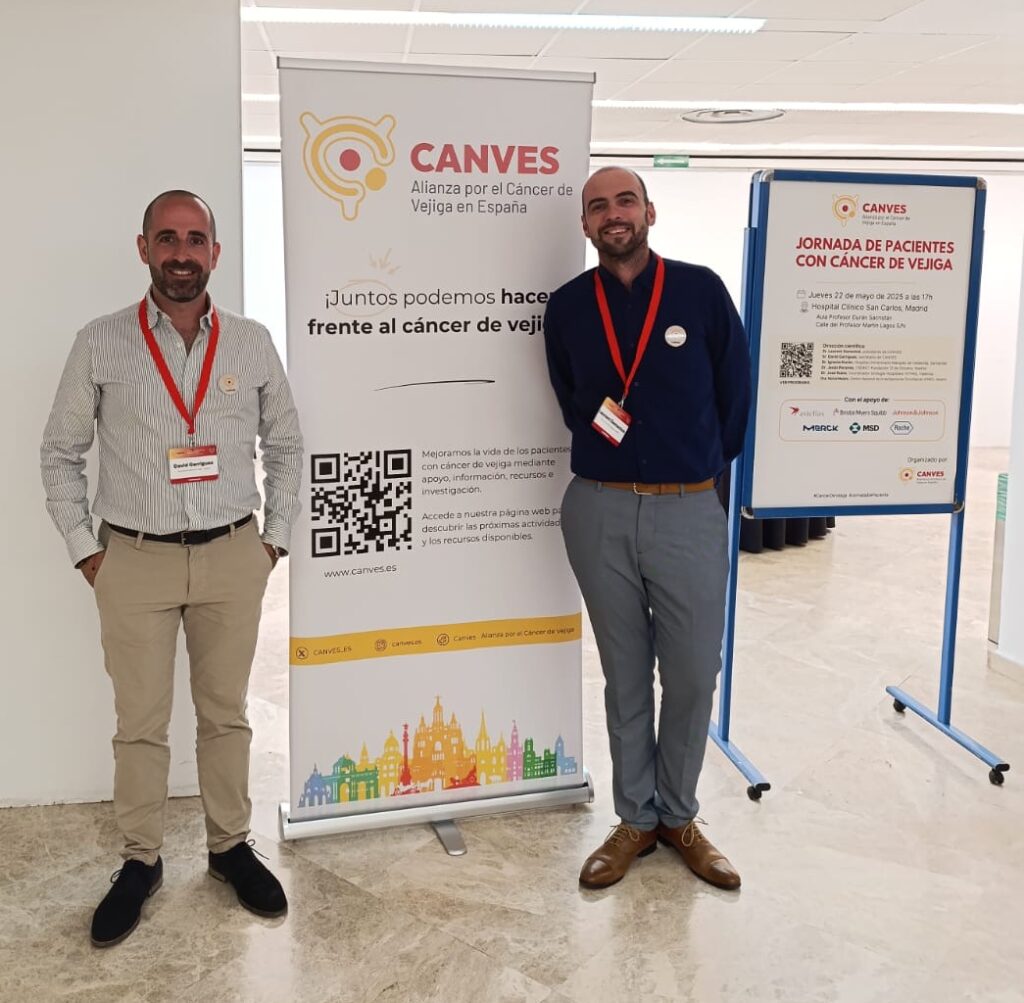
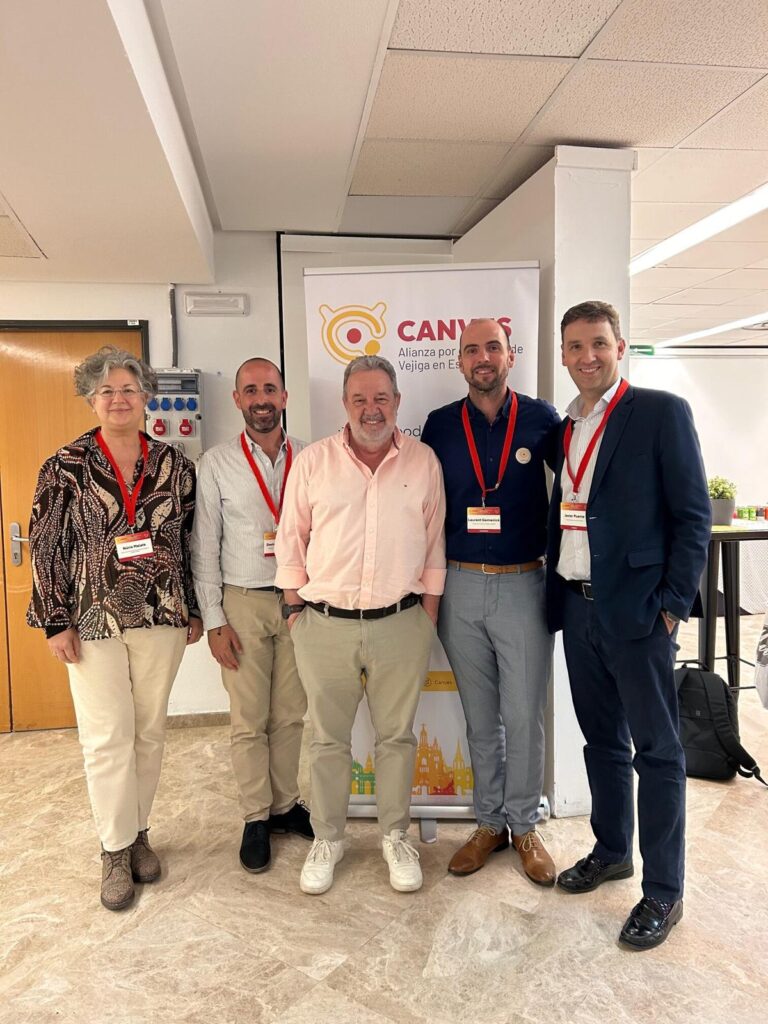
Laurent’s story is a reminder that, as overwhelming as it is, living with bladder cancer can be filled with hope and learning to advocate for yourself can lead to opportunities to help others. This inspired the birth of a national organization to help bladder cancer patients across all of Spain.

Laurent was relatively young and didn’t fit the usual profile of a bladder cancer patient. So when he first noticed blood in his urine, urologists assumed an infection, but the blood in his urine continued. He then had an ultrasound which came back negative, but the blood in his urine continued. So he had a cystoscopy, which allowed them to look at the bladder from the inside and this procedure was what led to a bladder cancer diagnosis in October 2022. 

Getting the right diagnosis had proven tricky, but his need to advocate for himself was just beginning as an even bigger turning point was just around the corner. After a difficult surgery to remove the bladder tumor, Laurent received a rushed recommendation for bladder removal. He and his partner, David, decided to seek second opinions. Five second opinions. Visiting five specialists gave them clarity and hope, as four of the five encouraged bladder preservation, proving how vital self-advocacy can be.

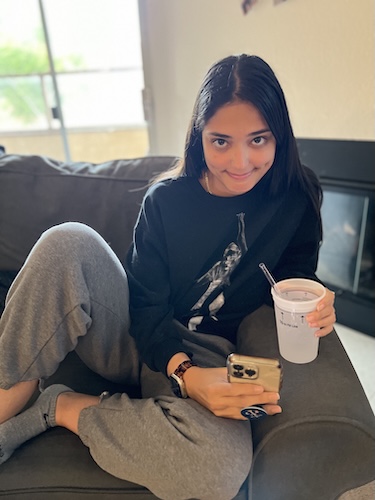
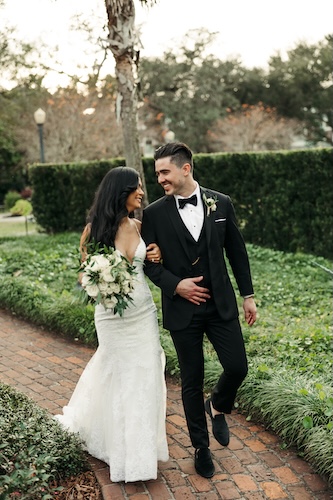
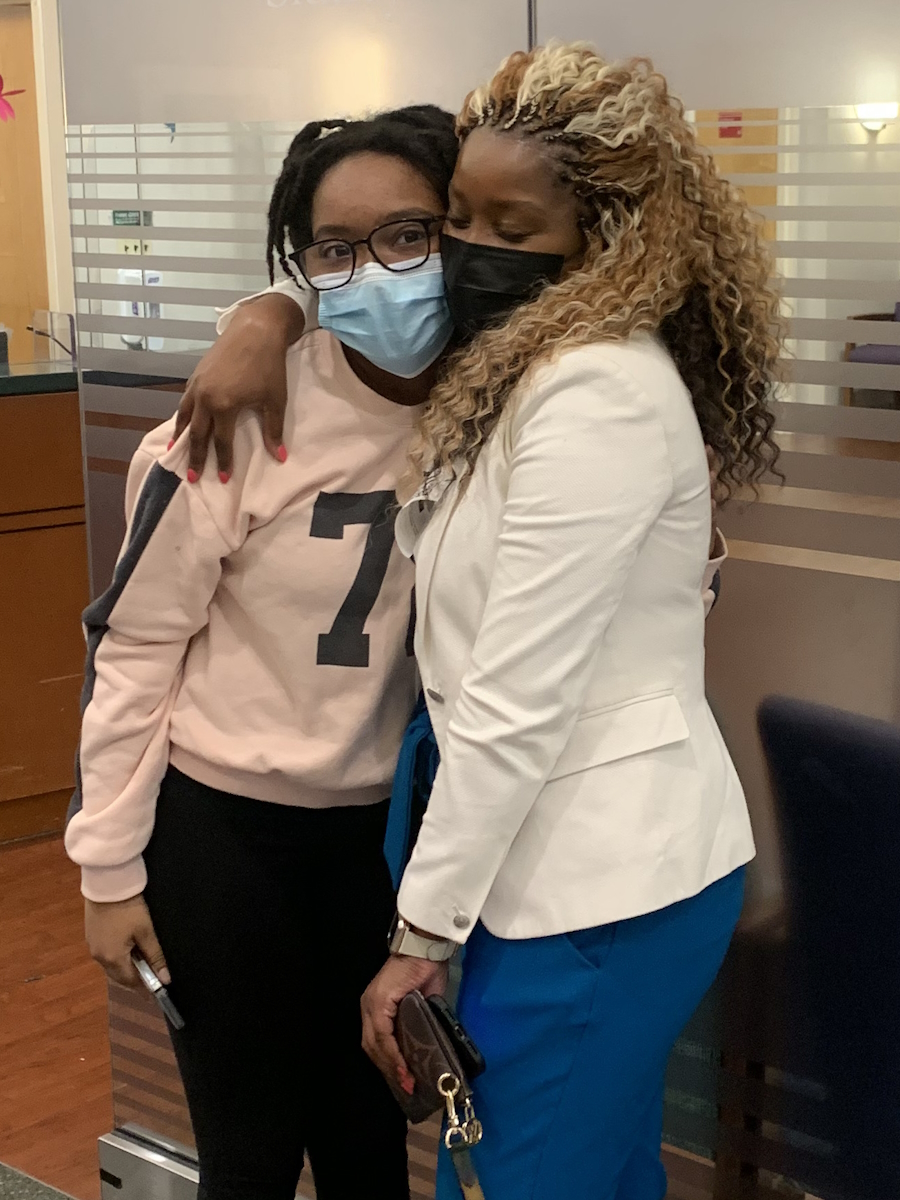
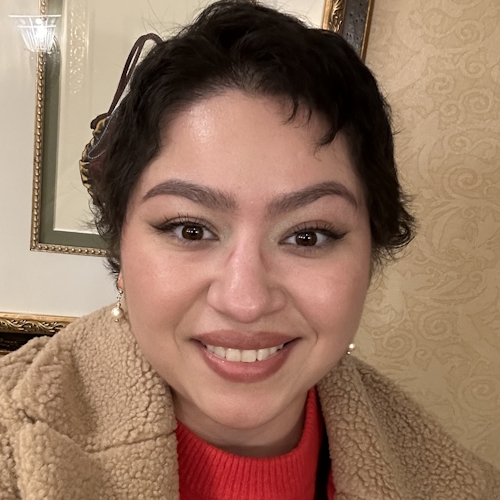
Laurent G. bladder cancer

Throughout this experience, Laurent realised how isolating bladder cancer can feel. He struggled to find patient-friendly information and supportive communities. That’s why he joined a French support group and eventually co-founded CANVES, Spain’s first bladder cancer patient group, to help ensure that no one faces bladder cancer alone. By sharing experiences, hosting events like Spain’s first National Bladder Cancer Patients’ Day, and advocating for early detection, he empowers patients to ask questions, connect with others, and make informed decisions. 

Laurent wants every patient to know that life doesn’t stop with a diagnosis, and that reaching out for support and timely access to reliable resources can make all the difference. Watch his video and read his interview below for more on:

  • How second opinions changed one bladder cancer patient’s life
  • Why Laurent believes no patient should ever feel alone
  • A candid look at life after a harrowing bladder cancer diagnosis
  • The inspiring birth of CANVES
  • Practical tips for self-advocacy and early detection

  • Name: Laurent Gemenick
  • Diagnosis:
    • Bladder Cancer
  • Symptom:
    • Presence of blood in urine
  • Treatment:
    • Surgery: transurethral resection of bladder tumor (TURBT)
Laurent G. bladder cancer

Johnson & Johnson - J&J

Thank you to Johnson & Johnson for supporting our patient education program. The Patient Story retains full editorial control over all content.

This interview has been edited for clarity and length. This is not medical advice. Please consult with your healthcare provider for treatment decisions.


Interviewed by: Taylor Scheib
Edited by: Chris Sanchez and Jeff Forslund

There is no need to be afraid. When you get this news [that you have bladder cancer], you just have to keep going and keep living.

Laurent Gemenick – Bladder Cancer Patient Advocate

About Me

I’m Laurent. I’m from Belgium. I was diagnosed with bladder cancer.

I’m a happy-go-lucky person, always smiling. My friends and family describe me as talkative and positive. I love to garden. 

When I was diagnosed with cancer, my world, my life, fell apart.

Laurent G. bladder cancer

My First Symptom Was Blood in My Urine

The first symptom I had was blood in my urine. In my case, it was different, because it only became obvious at the end of urination. It wasn’t easy to see with my naked eye.

That’s what first made me go to the doctor.

Trying to Get My Diagnosis

At the appointment with the urologist, I discovered that I didn’t fit the age for having bladder cancer.

This kind of cancer usually affects older men or people with a family history of cancer. Neither was true in my case. So my doctor said that the blood in my urine could’ve been caused by a strain instead. He told me to come back another time. 

But then I produced bloody urine again. I went back to the doctor and got an ultrasound. They suggested that I get an ultrasound because it can reveal if there is a tumor in the bladder. 

Still, nothing came out, but I continued to have blood in my urine. This time, they did a cystoscopy. This procedure places a camera into the bladder and lets doctors confirm the patient’s diagnosis for sure. 

That’s how they ended up diagnosing me with bladder cancer at the end of October 2022.

My relationship with the doctor wasn’t great. I was in the ICU for three days because of a procedure called transurethral resection of bladder tumor (TURBT). It didn’t go well, which is why it took three days. 

Then the doctor took a sheet of paper out and said they would have to remove my bladder. He told me to “sign here” on the paper, and they’d do the surgery in 10 days. 

I didn’t even know at the start that you could get bladder cancer, and I went from that to the point that this doctor was telling me, “I’m going to need to take out your bladder.”

Luckily, I had David by my side. He was always by my side. 

We started looking for second opinions. We went to five specialists and got five opinions. 

Four of those five specialists presented the same thing. They agreed that for treatment, they recommended preserving the bladder because of my young age, and that you don’t remove the bladder from a young patient.

They actually didn’t even use the word “cancer.” They kept saying “polyps.” The doctor I’m seeing now, who’s treating me, even took a long time to say the word “cancer.”

Laurent G. bladder cancer

I didn’t even know at the start that you could get bladder cancer, and I went from that to the point that this doctor was telling me, “I’m going to need to take out your bladder.”

Laurent Gemenick – Bladder Cancer Patient Advocate
Laurent G. bladder cancer

It’s So Important to Get a Second Opinion

The issue of second opinions is very important. 

The patient may forget to get one because they go into shock after hearing the diagnosis or because of the mindset that the doctors are always right, and “what the doctors say is what we should do.”

But this is life-changing surgery. If they take out this organ, it’ll change your life because you’ll need to have a colostomy bag put in. 

It requires seeing more than one doctor and getting more than one opinion so you can make an informed decision. If they are on the same path or not, if they have the same ideas.

My Treatment and Follow-up

I get follow-up appointments every six months. I get a urinalysis and cystoscopies. 

The first resection surgery during the ICU stay in the beginning removed most of the bladder cancer. Since my biopsy results have been good, I have the check-ups every six months.

I Found it Hard to Find Information For Patients

We tried looking for information on the internet. You will find everything online — including the worst-case scenarios. David was my filter because he kept me from searching online. 

On Facebook, I found a group of bladder cancer patients, but they were from France. Luckily, my first language is French. They welcomed me to the group and supported me. I joined at the same time as four other patients. Three had their bladders removed. One has passed away.

It’s a support group — they live what I live with bladder cancer. We discuss treatments. We experience anxiety at every appointment. We know the shared pain.

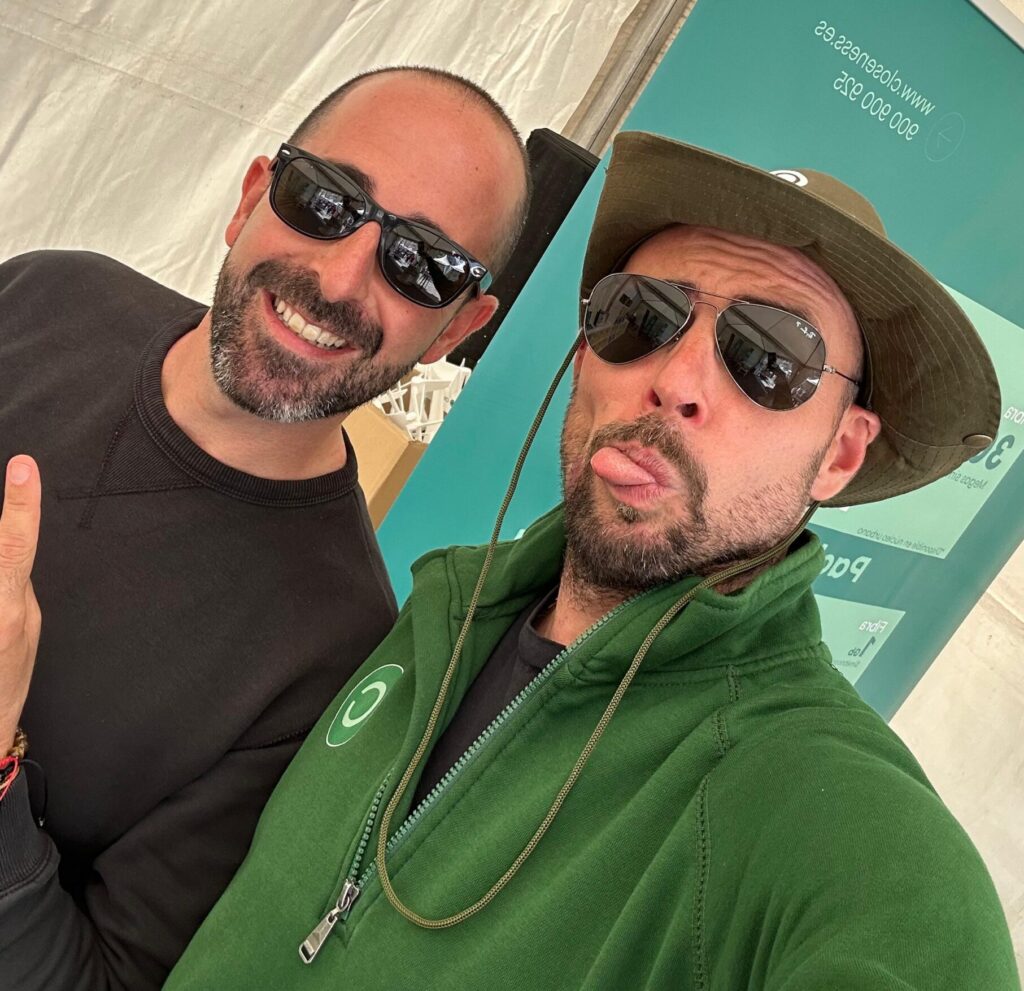
We were introduced to the World Bladder Cancer Association in Madrid, and that’s how we started CANVES.

Why I Decided to Start a Patient Organization

I don’t think what happened to me happens to all patients —  being told that they would need to have their bladders removed, and “sign the paper here.” I think it has to be nuanced, and it depends on the experience and empathy of the doctor who’s taking care of you. 

In Spain, there are two healthcare systems. You have the public healthcare system and the private healthcare system.

The private healthcare system works well. The public system does, too, but it takes more time to get things done there. You can’t get an appointment as quickly or often. Doctors usually don’t have more than five or ten minutes to talk to each patient. That’s actually a Europe-wide problem. In Belgium, the same thing happens.

That’s why we created CANVES. We understand that doctors don’t have a lot of time to dedicate to their patients, to give them the explanations or support they need. So we want to give the patients the information they need.

That’s our motivation. To make sure no one has to be alone with this.

Laurent G. bladder cancer

That’s our motivation. To make sure no one has to be alone with this.

Laurent Gemenick – Bladder Cancer Patient Advocate
Laurent G. bladder cancer

Fighting the Stigma in Bladder Cancer

There are 22,000 cases of bladder cancer each year in Spain, which makes it one of the most frequently diagnosed cancers here. There was no patient association here. Nothing. Resources? Nothing. Support? Nothing. 

Most patients who have bladder cancer are indeed men, and those who are older. But we have to consider that more and more young people are getting diagnosed with bladder cancer. Patients used to be 70 or 80 years old, but they’re getting younger, 60 or maybe even younger. 

And men don’t talk; they don’t go to the doctor. 

It seems different for women. Starting when they are little, we tell them to go to a gynecologist as soon as puberty starts, to get tested. We don’t have similar conversations with boys to see a urologist for testing until they are typically 40 or 50 years old. 

A milestone — this year, we organized the first National Bladder Cancer Patients’ Day. This was so important because we had the support of the Spanish scientific societies. This was huge because it happened in a short time, and united all these professionals to help people in one room. 

That’s the most important thing for us: helping people. We get emails, and we talk and speak to people every day. This is the best thing we can do. This is why we exist.

We hope to have better information and build a faster line of detection, so if a patient goes to the emergency room with blood in the urine, we can help implement a protocol of tests to see whether it’s bladder cancer. Most of the time, if it’s caught early enough, bladder cancer is curable.

My Message of Hope for You

There is no need to be afraid. When you get this news, you just have to keep going and keep living. That’s the most important thing. 

Many people think, “Why me?” Cancer diagnoses are becoming increasingly common.

You have to keep on living because life is short.

Laurent G. bladder cancer

You have to keep on living because life is short.

Laurent Gemenick – Bladder Cancer Patient Advocate

Johnson & Johnson - J&J

Special thanks again to Johnson & Johnson for supporting our patient education program. The Patient Story retains full editorial control over all content.


Laurent G. bladder cancer
Thank you for sharing your story, Laurent!

Inspired by Laurent's story?

Share your story, too!


More Bladder Cancer Stories

No post found

Load More

Categories
Antibody-drug conjugate Chemotherapy HER2 Lung Cancer Metastatic Non-Small Cell Lung Cancer Patient Stories Radiation Therapy Treatments

Lung Cancer in Young Adults: What Loryn’s Stage 4 HER2+ Lung Cancer Story Can Tell Us

Lung Cancer in Young Adults: What Loryn’s Stage 4 HER2+ Lung Cancer Story Can Tell Us

Loryn found herself in strange and unwelcome territory when she was diagnosed with stage 4 HER2+ lung cancer at 34 years old. Because she doesn’t have any known risk factors for lung cancer, her story is a powerful reminder that anyone with lungs can get lung cancer, even those who are young, healthy, and active.

Interviewed by: Nikki Murphy
Edited by: Chris Sanchez

Loryn’s experience started with symptoms that seemed easily explained: exhaustion, back pain, and later, chest discomfort. As a busy mom to a toddler, she chalked these initial symptoms up to lack of sleep and parenting fatigue. After multiple visits to the emergency room, she was diagnosed with pneumonia, which didn’t raise any red flags with her doctors. The small nodules discovered during her scans were dismissed as too minor to worry about, especially given her clean health history.

Loryn F. stage 4 HER2 lung cancer

For four long months, Loryn went back and forth between specialists, was tested for autoimmune conditions, and endured intensifying pain. It wasn’t until a final ER trip that she learned that her cancer had spread to her bones and liver. This diagnosis was all the more unsettling because she was alone when she received it.

What followed was a crash course in self-advocacy. Biomarker testing, which wasn’t even mentioned at her original hospital, turned out to be crucial. A second opinion at Massachusetts General Hospital made all the difference. There, she finally felt seen and heard. Her new oncologist jumped into action, ordering a liquid biopsy to expedite treatment planning.

That’s when HER2 entered the conversation. While HER2 mutations are rare in lung cancer and don’t yet have as many targeted treatments as others, Loryn found hope in research, clinical trials, and the growing HER2 support community. She’s now receiving targeted therapy through infusions every three weeks and, despite the challenges, her quality of life has significantly improved.

Loryn is passionate about spreading awareness. Young, healthy people with no risk factors can get lung cancer. She encourages everyone to push for biomarker testing and get second opinions. She wants patients to feel empowered to say no to what drains them and yes to what preserves their health, dignity, and identity.

While her condition is incurable, Loryn views her cancer as something she can live with meaningfully. With support from her care team, loved ones, and online HER2 groups, she’s focused not on the what-ifs, but on each good day she gets to live fully.

Watch Loryn’s full interview and scroll down to read the transcript of her interview to find out more about her story:

  • Why having no risk factors didn’t protect her from a stage 4 HER2 lung cancer diagnosis
  • How repeated delays and overlooked symptoms kept her from answers, and what finally led to the truth
  • The moment one ER visit turned into life-changing news
  • What she wishes everyone knew about biomarker testing and second opinions
  • How she found strength in saying no to what drains her and yes to what matters

  • Name: Loryn F.
  • Age at Diagnosis:
    • 34
  • Diagnosis:
    • Non-Small Cell Lung Cancer (NSCLC)
  • Staging:
    • Stage 4
  • Mutation:
    • HER2
  • Symptoms:
    • Extreme fatigue
    • Persistent back pain
    • Chest pain
    • Joint pain in the feet, hips, legs, shoulders, and elbows
  • Treatments:
    • Chemotherapy
    • Radiation therapy: foot and elbow to help with mobility
    • Antibody-drug conjugate
Loryn F. stage 4 HER2 lung cancer

This interview has been edited for clarity and length. This is not medical advice. Please consult with your healthcare provider to make informed treatment decisions.

The views and opinions expressed in this interview do not necessarily reflect those of The Patient Story.


Hi, my name is Loryn

I live in Massachusetts. In November 2024, I was diagnosed with stage 4 non-small cell lung cancer with a HER2 mutation.

My friends would probably describe me as very loyal, consistent, and reliable. I’m pretty unchanging. I’ve been the same way my whole life, so I feel like I’m a go-to person, even by my parents, for thoughts and opinions.

When something first felt off

The first time I started experiencing symptoms that I can point to and say that it was definitely the cancer was in June 2024. I was experiencing extreme fatigue and back pain. I attributed it to working too hard and not sleeping well. I have a three-and-a-half year old, who was two at the time, so I thought that every parent was this tired and I probably pulled a muscle picking him up.

It wasn’t until the back pain started getting worse and I was having chest pain that I decided to go to the emergency room. At the time, all they saw were some small nodules, nothing big or concerning, so they diagnosed me with pneumonia, prescribed antibiotics, and sent me on my way.

Two weeks later, the pneumonia still hadn’t resolved, so I went back to the ER. They said it still looked like pneumonia, but the fact that it hasn’t resolved is concerning, so they referred me to a pulmonologist. The pulmonologist said that it wasn’t concerning as well and I didn’t have any risk factors to indicate that I needed further testing. They were on the path of wondering what could be causing the pneumonia. They thought it may be an autoimmune disease or something viral.

Then I was sent to a rheumatologist and while I was waiting for that appointment, I started experiencing joint pain pretty much all over my body. I felt it in my feet, my legs, my hips, my shoulders, and my elbows. After calling my doctor, I went back to the ER and that’s when they saw that my cancer had metastasized to my bones.

The reason my symptoms were dismissed

My doctors and I didn’t think the symptoms I had were serious enough to warrant doing more. I knew I didn’t feel good, but I was trying to toughen up and thought I was being dramatic. My husband said, “The doctors are saying you’re fine, but you can’t get out of bed and you’re struggling to keep up with our family.” We love to hike and go for walks, so it was odd that I changed so quickly.

I made a million excuses for why I was feeling the way that I was. I also tend to be an optimist, which definitely worked against me in that maybe I didn’t take myself seriously enough. I’m the type of person who’d say I’m fine, I’m okay, and I can work through it. Maybe I didn’t advocate for myself as strongly as I could have or should have.

My doctors only saw the small nodules. They were all smaller than 2 mm at the time. They described them as ground glass nodules (GGNs). They definitely had some bias as well because I was a nonsmoker and didn’t have any other risk factors.

During the first meeting with the pulmonologist, he ran through so many different questions about my work history, where I grew up, and if I had a wood stove at home. I think he was trying to find a reason to do a biopsy, but there was nothing that he could point to and say that could be something, which I think why the autoimmune route made the most sense.

Unfortunately, one of the tests came up positive. It didn’t necessarily mean that I had an autoimmune disease, but because I got a positive result, he said, “Let’s go this route and see what happens.” It definitely delayed things. It was four months in between my first ER visit and the last one when I was diagnosed.

The moment everything changed

On the day that I went to the ER and they gave me the news, I was by myself. Again, I downplayed it. At that point, my ribs were hurting a lot. I coughed and thought that I broke a rib. I texted my husband while I was at work and said, “Hey, I’m in a ton of pain. I’m going to the ER again and see if they can give me some pain medication.”

My husband even asked if I needed to go to the ER again because the bills were stacking up. I’ve had multiple CT scans and X-rays at that point, and they hadn’t found anything. I said, “Even if it’s just to get pain medication, I think I should go and get checked out.” I was even smiling and laughing through the whole visit. Even the ER doctor thought I probably bruised something and that I didn’t have a broken rib.

I did a chest X-ray and when he came back, he looked shocked. He said, “I hate to have to tell you this, but we’re seeing evidence of metastatic disease on your X-ray. We can see it in your ribs, shoulders, and liver. We’re going to do a CT scan, but we’re going to have to send you to another hospital because it looks like something more serious.”

I texted my husband immediately and said, “Whatever is happening looks like it’s getting worse. They mentioned metastatic disease.” My mind immediately went to cancer. My husband called my mother-in-law to watch our son then he came down to the hospital.

They transferred me to a larger hospital and kept me in for a week to do a biopsy of one of the lesions that they saw. They said they could have discharged me, but I would have had to wait a month for the biopsy. I wanted to know what this is and I didn’t want to lose my place in line, so I stayed inpatient for a week waiting for the biopsy.

The whole process took a while. They were afraid to call it anything. What they saw in my lungs still wasn’t huge. The nodules were still pretty small but because they were seeing it everywhere, they said whatever it is looks like it’s something that’s possibly stage 4, but they don’t know where it’s originating from.

We did the biopsy a week later and I was called with the news two days after. We knew the news was coming, but we weren’t sure how it was going to come, so I was home alone when I got the phone call. It was very quick and cold. The person said, “Hi, this is so-and-so from the cancer center. I’m calling to let you know that the results of your biopsy show that you have stage 4 lung cancer.”

It was pretty shocking. At that point, I had a full emotional reaction to what I was going through. I called my husband and told him to come home. Because in my mind, when I heard stage 4 lung cancer, I thought that I had weeks to live. I thought I was going to end up on oxygen.

The picture of lung cancer that I had was a very basic one. I had never known anyone with lung cancer, so I knew what I knew from TV and thought that I was going to deteriorate quickly. It was pretty devastating news to get because I didn’t know what lung cancer was.

There was no cancer center at the original hospital whose ER I went to. They were limited in what they could do and didn’t have any oncologists or any specialists on staff, so they transferred me to a sister hospital with a cancer center. But even then, the wing that I was at was pretty small. The week-long stay was a little scary. Everyone else who was being treated was much older and much sicker than I was. It felt like, “Why am I here? What’s happening that warrants me being in this position?”

How I learned about biomarker testing

They didn’t talk to me about it, at least not that I remember. While I was at the hospital, they talked about the biopsy and why they were doing it. They did the biopsy from my liver. They said that from that, they could tell where the cancer had originated from to be able to properly stage it and diagnose. But they never mentioned any gene testing.

It wasn’t until that phone call that I received then I called my husband to come home right away. I was in such an emotional state that I couldn’t do anything.

My husband called the surgeon that did my biopsy to get more information. When they originally called me, I tried to ask questions and they told me I would have to wait two weeks to see an oncologist to ask any additional questions. I shut down at that point, but my husband said, “No, we need some answers. We can’t sit here for two weeks with no information.”

I know now that they didn’t want to do anything for two weeks because they were waiting for the results of the gene testing, but I didn’t know that then because they didn’t mention it to me. When my husband called the surgeon, he brought up that they already sent the sample out for gene testing. He sent my husband a PDF file with information on lung cancer, which included what biomarker testing was, what the biomarkers could be, and what the next steps could be from there.

I read through that file before I heard anything further. It didn’t go into too much detail about HER2, which was what I ended up being diagnosed with. There was one quick mention of HER2 in the section that talks about what to do next and that there aren’t any targeted treatments for HER2.  There’s traditional chemotherapy and that was it.

At that point, we felt that we weren’t getting the attention that we needed or the answers to our questions, so we decided to seek a second opinion at another hospital.

My husband’s brother is a doctor at Massachusetts General Hospital in Boston. After the experience that we had, my husband texted his brother, even though he’s not an oncologist, to ask him where we should go. His brother told us to come to Mass General and that they could get us in as soon as possible. He knew someone in their young adult cancer program and he reached out to that person for an introduction, and they were able to get me in in two days.

We lucked out that we had a connection there. Although from my experience, they are very quick at that hospital I had known about the Dana-Farber Cancer Institute, so I was in-between the two hospitals. I hadn’t connected with any support groups. I didn’t know anybody else yet.

In the first meeting at Mass General, we had a positive connection with the oncologist, so I was encouraged. We connected on a very personal level, so the decision to stay at Mass General was easy. I wanted to be somewhere where I trusted the doctors who I was working with, who I felt comfortable talking with, and where I felt that they had a personal connection with us as well.

How getting a second opinion helped my diagnosis

At the first meeting that I had with my oncologist, she talked in depth about biomarker testing, even though we didn’t know yet that I had HER2. She opted to do a liquid biopsy as we were waiting on the tissue biopsy because she wanted to get the ball rolling as quickly as possible after she looked at my scans and saw how advanced the disease was.

She did let me know that the liquid biopsy isn’t always as accurate as a tissue biopsy so if the liquid test came back with nothing, then we would wait for the tissue biopsy results. Luckily, the liquid test did come back with the HER2 mutation.

We had another meeting the day after the results came back where she went through HER2 and what that meant. She was very honest that there aren’t as many options for HER2 right now, but that there are many clinical trials available and that she was going to make sure that I had access to as much research and science as she could provide.

We moved very quickly into the treatment stage. I did a little bit of research about biomarkers and hoped that I had one that was a little more prominent, so I didn’t know as much about HER2. She answered all the questions that I had about HER2 and I felt comfortable with her answers.

She even let me know that she was part of a research project that was happening on HER2, which was encouraging. It made me feel a lot better about having a HER2 mutation, but it was shocking when I first heard that that was what I was going to be dealing with.

Learning more about my biomarker

I made the mistake of Googling HER2, which, looking back, I wish I hadn’t done. The information out there about HER2 is pretty dated. The first thing that Google told me was that it’s very rare, that the prognosis isn’t as great because there aren’t as many options, and that it tends to be a more aggressive mutation.

I was disappointed and scared. I still didn’t know as much about lung cancer. I was trying to learn as fast as I could, but I still had the mindset of not having much time left. With this rare and aggressive mutation, it felt like everything was stacking against me and that there was no good news coming in. Everything that we were hearing was negative.

But I trusted what my oncologist was telling me. She told me, “Don’t Google anything,” but it was already too late. Looking back to those first weeks from diagnosis until I started treatment, it was pretty depressing. I was holding off on some information from extended family because I didn’t want them to know how dire things felt. Everyone was feeling it, though, not knowing what was going to happen.

What my treatment plan looked like

The first treatment felt like it was the only option. My oncologist let me know that in order to be eligible for other options, I had to do this chemotherapy regimen first as it’s the only first-line treatment option. I’m sure if I pushed a little bit, maybe there could have been something else there, but it was presented in a way that made it seem like this was the only option. Then once this fails, we could talk about the next steps.

I was put on traditional chemotherapy. She was very honest that she wasn’t expecting it to last for very long. Optimistically, I would get six months on that treatment line. I was trying to mentally prepare for that.

Trying to explain that to family was a little tricky. Once you start cancer treatment, most people ask how long you’re going to be on treatment until you could stop. They look for the end goal. For me, it was just a necessary evil to get to something better. 

We were able to start treatment pretty quickly. I started about a month after my initial ER visit. They moved quickly.

My advice around biomarker testing

I lucked out because I was in a place where they took biomarker testing seriously. At my first hospital, they weren’t as good about communicating that with patients, at least not in my case. It might be a lack of information or the doctors whom I was working with.

As I’ve been in this community, I’ve seen patients who are not offered any biomarker testing and put right on chemotherapy, so it’s still happening. I wish more people knew about how important biomarker testing is to knowing what your treatment options are and to have a full view of what the future might hold for the specific cancer that you have.

Even when you Google some of the cancer types, biomarker testing doesn’t come up most of the time. I try not to Google anymore, so maybe it’s getting better, but it certainly didn’t come up in my initial research.

Some of the larger hospitals are starting to push that information. People are getting better about getting second opinions, too, which is great. It’s part of your right as a patient. If you don’t feel that what you’re hearing is helpful, pushing for that second opinion is important.

My treatment was the standard of care for HER2 and the only option at that time. Since then, other options have started to become more standard of care. I was on that regimen for two and a half months before I had progression, so I didn’t get as far as the six months that my oncologist had hoped. The conversation then went to what the other options were and I was presented with more directions that I could go.

I’m currently on a targeted therapy

I started my targeted therapy in March 2025, which is an infusion every three weeks. A lot of oral targeted therapies are starting to come out, which is amazing. I’m excited for that to hopefully become a more standard option for HER2 in the future.

Right now, I’ve learned to manage having an infusion every three weeks. The first week after an infusion is a little rough with fatigue and nausea. I get some body aches as well, particularly where my lesions are.

I’ve gotten so much better from when I first started. My quality of life has improved so much between infusions. I feel more like my old self before any of my symptoms started. My bone pain has gone away. The liver pain is much better, as well as my blood work. For a long time, my liver enzymes were elevated. They were worried about my liver function, but that has since improved.

I live my life normally for two weeks and then I go back for my infusion. We plan our lives around the one week that I’m not feeling well. We get childcare and still have family and friends who reach out to help us as much as they can. It feels like I hibernate for a week and then I’m back to my old self, which is great.

I’m grateful for this treatment option that I’m on and, hopefully, I get to be on it for as long as I can. My oncologist is hoping that I get a year on this treatment and has prepared for what that next step after would be.

How I’m navigating life with stage 4 cancer

It’s tricky. For a while, I was dealing with other health issues. After I’d given birth to my son, I had to have an emergency gallbladder removal and dealt with digestive issues for about two years before my cancer symptoms started.

It felt like everything bled into one another, which I think contributed to why it took so long for me to be diagnosed. My primary care doctor probably had that in the back of her mind and felt that everything was an extension of my gallbladder removal from three years prior. The last time that I was truly healthy was in 2020 and I’ve been having health challenges since then. One day, I’d feel good; the next day, I’m not.

If I dwell on it too long, it gets to me. Typical 30-something-year-olds are planning their lives, building their families, and have these goals that they’re trying to attain, whereas my goal sometimes is to just get through the day. I try to look forward to vacations and hobbies, but it’s certainly not as it used to be five years before. Things have changed so drastically.

The perspective that cancer has given me has been to enjoy the day-to-day things that I have the privilege of having. For a time, I wasn’t sure that I was going to have those things anymore. I was barely walking when I was first diagnosed. I had so much pain in my hip and my leg. I thought I was going to be in a wheelchair, if I even made it that long.

I feel grateful for all of the mundane things that I get to have, but it can be challenging being in circles with parents of small children who are making these big plans for their kids’ future. I’m just hoping to make it to the point where I see my son get to do those things. I certainly don’t have some of the complaints that parents have. I might have them deep down, like the stressful days and temper tantrums, but I try to be grateful instead of being brought down. 

It’s weird to say that, but I am grateful to the illness that I’ve been diagnosed with for giving me that perspective. Before I was diagnosed, things were just hard and I didn’t have a title to put on the pain that I was feeling.  My husband and I struggled because I didn’t have energy and I was always going to the doctor. It was affecting our marriage, my relationship with my son, and my working relationships.

Finally getting to call it cancer and start treating it opened everything up for me and has changed my attitude. It’s changed me mentally. It’s weird to say that you’re grateful for cancer. I try not to dwell on the hard parts and the disappointing parts. I try to be grateful that I can move forward. Hopefully, research keeps up with me so that I can keep living the life that I have.

Where I’ve found support

We have a Facebook support group for HER2 patients. It’s not a huge group, but I have formed strong friendships with other HER2 patients. We check in with each other and have little group chats to talk about what we’re feeling. We’re watching the clinical trial field and being excited together for the things to come. I try to keep the cancer support within those support groups.

The friends that I have in my personal life came to me early on and said, “What do you need for support? How can I best support you?” I told them that I wanted to keep living my life normally as a 34-year-old. I want to hear about their lives and the things that they’re going through. It was important to me for them to ask me about the non-cancer parts of my life to maintain that normalcy.

Early on, I told my oncologist that I wanted to fight my cancer as hard as I could, but I didn’t want to lose myself in cancer treatment. I didn’t want to just become a cancer patient and the side effects to change who I am. She assured me and connected me with palliative care and other support resources to make sure that I could maintain the same quality of life that I have.

I’ve come to terms with my cancer pretty well. Having it described as a chronic illness and managing it like any other chronic illness, where you’re on treatment and you’re going to have good days and bad days, was helpful. Having to explain that to other people has been difficult, though.

People like to have goal posts, whether they’re someone who prays for you or someone who wants to support you in some way. People have asked, “How long are you going to be on treatment for?” When I have to tell them that it’s indefinite, you see the disappointment in their face, which affects me too.

In the beginning, we had so many people who came out to help us. We had people who were cooking for us, helping us financially, and helping watch our son for us. Everything was thrown at us to help us through this tough time. We had to tell everyone that these “tough times” are going to continue. It’s going to get easier in the sense that we manage it better. Hopefully, my health improves to a point where I can contribute to things again and I can walk again.

Cancer is always going to be a part of my life, so we’ll need consistent support from our network. Some of that support has died down quite a bit, but people have learned to support us in ways that are useful long-term. The struggle is trying to manage other people and their expectations of cancer. I don’t think people see it as like a long-term illness. They see it as short-term. Either the cancer is resolved and you’re healed or it doesn’t and you pass away. They don’t see the in-between of cancer.

Why there’s hope around clinical trials

I’m so encouraged by clinical trials. At night is when the cancer thoughts sink in. It’s usually hardest when I’m trying to fall asleep and those thoughts swirl around. I tell myself that there’s someone alive right now who’s working on medications that are going to keep me alive or working on a cure for lung cancer. Those keep me going, whether or not it’s happening and going to be here tomorrow. The fact that it could be here in my lifetime keeps me going.

Even if I don’t get to see the cure for lung cancer, it’s feeling more attainable. Research is making lives for cancer patients easier, longer, and improving their quality of life. It makes me so happy for the future of lung cancer. I’ve heard the same from people who have been dealing with lung cancer for five or 10 years. Things have changed so much just in the last five years. To see where things might be five years from now is where I’ve put my goal post.

We’ve only had access to the drug that I’m on now for the last two or three years. Things can change so rapidly. I try not to get stuck in all of the things that we don’t have and focus on the things that we do have. That’s where I find my hope in research.

What I want others to know

Advocate for yourself. If I’m feeling any pain or extreme nausea, I immediately bring it up to my doctors. A year ago, despite being in so much pain, so tired, and suffering, I was afraid to bring those up and be seen like a baby or a wimp. I can safely say that I’m not that way anymore. If anything is getting in my way of being happy and healthy, I bring it up with my care team. They’re always more than happy to help and to adjust my drugs or offer other treatment options.

Be honest about how you’re feeling, how it’s affecting you, and the things that you can and can’t do. Our medical system is not built in a way that people are going to check in with you, so you have to check in with them.


Loryn F. stage 4 HER2 lung cancer
Thank you for sharing your story, Loryn!

Inspired by Loryn's story?

Share your story, too!


More Non-Small Cell Lung Cancer Stories

No post found
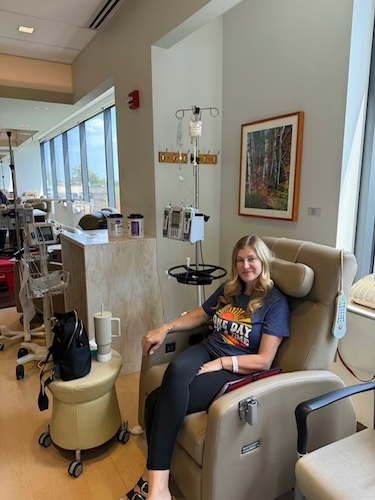

Categories
Astrocytoma Brain Cancer Brain Tumors Chemotherapy Craniotomy Glioma Patient Stories Radiation Therapy Rare Surgery Treatments

Building a Family While Facing Brain Cancer: Edward’s Grade 3 Astrocytoma

Building a Family While Facing Brain Cancer: Edward’s Grade 3 Astrocytoma (IDH mutation)

Edward has always loved art, film, and storytelling, which led to a thriving career in television. But his life took an unexpected detour when he was diagnosed with brain cancer in 2024. In the fall of 2023, after a full day’s shoot, he had a seizure while alone in a hotel room and woke up disoriented and sore. He shrugged it off as an isolated incident, but later started to experience persistent headaches, light leaks in his vision, and brief episodes of confusion.

Interviewed by: Nikki Murphy
Edited by: Chris Sanchez

The doctors Edward consulted suggested that he change his lifestyle and said he didn’t need thorough testing. It wasn’t until his honeymoon in Spain, after he had an episode during which he felt completely disconnected from reality, that he sought a second opinion. An MRI revealed a mass in his right frontal lobe, and it was diagnosed as a grade 3 astrocytoma with an IDH mutation, a form of brain cancer. (Editor’s Note: An IDH-mutant astrocytoma develops from astrocytes, a type of star-shaped supportive cell in the nervous system. Mutations in the IDH gene, which normally encode enzymes that help with cell nutrition, result in byproducts that promote tumor growth instead.)

Edward H. brain cancer

The news that he had a rare cancer hit hard, especially as Edward was preparing to welcome his first child. Just days later, he underwent surgery that successfully removed 99.8% of the tumor. The rest of it was treated through chemotherapy and radiation to spare his motor and speech functions.

The emotional aftermath of these treatments was challenging, too. Edward was overwhelmed when he tried to process a prognosis of 10 to 12 years alongside becoming a new father. He also struggled with anxiety and mood swings due to his surgery. He leaned on therapy, which helped him develop coping mechanisms to support both himself and his family.

Edward now knows that managing brain cancer isn’t just about getting the right treatment. It’s also about mental resilience. He emphasizes the importance of mental health, acknowledging how therapy and the support of loved ones have helped him and his family. He’s also developed healthier habits, including clean eating, exercise, and mindfulness.

Despite the challenges he’s faced due to brain cancer, Edward is filled with gratitude. He’s learned to love simplicity, cherishing every moment with his daughter and family. He now works to help others by spreading hope and advocating for awareness about brain cancer.

Watch Edward’s video and scroll down to read the transcript of his interview. You’ll gain more insights into: 

  • How an unsettling one-time seizure led him to his life-changing brain cancer diagnosis
  • Why early symptoms of brain cancer are often dismissed
  • The hidden challenges of balancing new fatherhood with brain cancer treatment
  • How mental health and therapy became Edward’s pillars of strength after surgery
  • The ways brain cancer reshaped his life’s purpose and perspective

  • Name: Edward H.
  • Age at Diagnosis:
    • 30
  • Diagnosis:
    • Brain Cancer (Astrocytoma with IDH Mutation)
  • Grade:
    • Grade 3
  • Symptoms:
    • Seizure
    • Eye aura
    • Persistent headache
    • Numbness in hands and arms
  • Treatments:
    • Surgery: craniotomy
    • Radiation therapy
    • Chemotherapy
Edward H. brain cancer

This interview has been edited for clarity and length. This is not medical advice. Please consult with your healthcare provider to make informed treatment decisions.

The views and opinions expressed in this interview do not necessarily reflect those of The Patient Story.


My name is Edward

I had a glioma. Astrocytoma, grade 3, with IDH mutation. I am now 32 years old.

My passion has always been art, movies, film, and anything in that realm. And I’ve turned that passion and hobby into a career. For the last five years, I’ve been filming for Educational Television for PBS and CNBC.

The first red flag that warned me that something was wrong

My first and only seizure was in the fall of 2023. I was in Houston, Texas, and I had just finished a full-day shoot. I get back to my hotel, and I’m dumping footage from my hard drives for the day. And all of a sudden, I wake up on the floor, throwing up in the hotel room trash can, and I don’t know where I am. My entire body feels super sore, like I’ve just been working out for days and days. 

I call my wife, and I tell her I don’t know what happened, but I just woke up on the floor. And that I don’t really know where I am, I’m super disoriented. When I get home, I notice that the back right of my right arm has bruises all over it. I realized then that I had fallen onto my camera case in the hotel room. I don’t remember standing up. I don’t remember moving anywhere. 

After the first seizure, there really weren’t a lot of symptoms. It was a slow burn into what I was feeling. I started to have a slight head pressure in my temples that would throb. If I leaned down to pick up something or got up too fast, simple movements that we do every day, my head would throb right afterwards. It would go away in about 30 seconds to a minute. I also started getting light leaks and light tears in my vision. I look them up on the internet, and everybody says it’s like a migraine with aura. And so I thought, “Maybe I’m just getting small migraines.” 

My primary doctor at the time and I talked about some things, like getting an MRI, but since I didn’t have a history of anything, they just told me to eat healthier and go on walks. That seemed like a cop-out.

My symptoms got worse on our honeymoon

I got married and we went on our honeymoon. I had an episode in Spain where I could see, but I couldn’t really comprehend what I was seeing. It doesn’t seem like it makes any sense, but I wasn’t really there. I could still move and function, but I didn’t really know what I was doing. I was just disoriented. 

I found out later that it could have been a conscious seizure, which is strange. After that, I switched primary doctors. I felt that something was off, and I just wanted to make sure that everything was good. So I found a new primary. They set me up with an MRI, but I almost didn’t go through with the MRI because I was feeling better. But my wife said, “No, you should still go and check, make sure everything’s good.” I went, “Maybe, we’ll see.” 

One day, when I was working from my house, my hands and my arms went numb. It convinced me to have myself checked to see if I was okay. Which, at the end of the day, I wasn’t.

I finally went in for an MRI

I’ve never had an MRI. So they told me what to do, and it was super casual going in. But they helped me out of the MRI when I was done, which I thought was strange. And then I saw the radiologist standing in the doorway of the MRI. He asked me, “How’d you get here today?” And I told him that I drove. He hesitantly said, “Okay. We found a pretty significant mass in your brain, your right frontal lobe. You should go to the ER. 

The denial phase set in really fast. And I started asking questions there. I get on the road and I’m driving my way to the hospital, and all I’m thinking about is the fact that my wife is pregnant and that my daughter is coming in the next few weeks. 

I get to the emergency room. I’m there for around five hours. They admitted me. That entire time, my new primary was talking to the hospital. The radiologist was talking to my primary, which is wonderful communication. And they showed me the MRI scan of a tumor the size of an orange in my frontal lobe. And they tell me that we’re going to be doing surgery in the next four days. 

What surgery was like

I got admitted to the hospital after the ER on a Wednesday. I stayed the night and went home Thursday. And then from Friday to Sunday, I had all my friends over at my house. We went out and hung out at a local spot. Everybody was in shock, but very supportive. And come Monday, I got to the hospital at around 9 a.m. and they pulled me back to pre-operation, and hooked me up with all the the bells and whistles.

My buddy, Joey, a firefighter, got off shift at 8 a.m. after working all night, and he came straight to the hospital to see me and my wife. After about 45 minutes in the pre-op, they wheeled me back to the operating room, shot liquid Xanax into my veins, and put whatever they put on my face to make me go to sleep. And I woke up on the 11th floor seamlessly.

The surgery was super successful. They got out 99.8% of the tumor, because if they had gone any further, they could have affected my motor movements and speech. So the surgeon made the executive decision to just kind of hold off the rest, and we’d zap it with chemo and radiation. 

I had a gnarly scar and a ton of hair, too. It was pretty impressive. They shaved just where they were doing the incision. Not my whole head or anything. From there, recovery took about two months. I had to lie in bed upright to sleep. I couldn’t bend over and pick anything up. I also couldn’t pick up more than five pounds. I had a little grabber claw walking around my house. 

After those two months, I started six weeks of chemo and radiation. 

The moment everything changed

Once the surgery was completed, I stayed five days in the hospital recovering. My oncologist at the time came in to speak about what this thing was, and my entire family was there too. My mom was probably the one asking the most questions. The oncologist told us that it’s a glioma astrocytoma, grade three. But I also have an IDH mutation, which almost makes it like a 2.5. So having an IDH mutant tumor is actually a good thing, because it kind of dumbs down its strength. 

I’m still in a daze because nothing like this has ever happened to my family. And, of course, I’m the guinea pig of getting something new in the family. 

The prognosis came either on the first or the second visit after the hospital. That time, it was just me and my wife in there. I didn’t really know what a prognosis was. My oncologist said, “Do you want to know the prognosis?” I said, “Sure.” He told me in front of my pregnant wife that I might have a 10- to 12-year lifespan based on the research that they have and after the treatment that they do on people who have what I have. 

I could tell that my wife was not in the right state of mind to receive this prognosis. But I’ve always been the one to go, “Okay, what do we do now?” 

I don’t dwell on a lot of stuff. But that prognosis was eye-opening, especially because in three weeks, our daughter was going to be born. And I was thinking, “Right now, I’m battling this thing.” It was very hard to handle those emotions, because I just wanted to focus on my daughter. 

My treatment plan

Unfortunately, for what I have, the options are very limited: radiation and chemo together. They need to cooperate to get the rest of that cancer out. So that was a no-brainer. 

But then, after the six weeks of chemo and radiation together from November to April, I did six months of just chemo. Five days a month for six months. And my new oncologist told me, “There’s really no research or science behind whether you should do chemo for a year or six months.” With how it was messing with my body and what little research they had, I decided to do the six months because my quality of life was just not great. 

And when it comes to radiation, now it’s September. It should be weaning out of my body now, but it stayed in my body for a year. And the chemo was kind of fighting with it, because they’re like a team. 

I knew a little bit about chemotherapy, but not much. The good thing about what I did is that I took pills orally at home, and so I had to eat a healthy dinner by 6:30 p.m. every night. I couldn’t snack or eat after 6:30 because my body needed to digest all my food, and my stomach would need to be as empty as possible when I would take the chemo at 8:30 every night. And so that was every day. 

When the radiation started, I had to get fitted for a mask. And every day, five days a week, for six weeks, I would go in, I would lie down, they would put the mask over my face and lock it to the table. They would then send a laser back and forth over my head. It would probably take around seven minutes. And after about three weeks of radiation, I started losing my hair right where the radiation was going. Not from the chemo. 

Each month, I would have about a day or two where I’m just down and out. I have to sleep. I have to rest, I can’t work. It would just kind of smack me in the face with being so tired. And due to the chemo, I couldn’t drink any alcohol — my diet had to be super, super clean. The chemo would work best around midnight or 1 a.m. when I was in REM sleep, and on an empty stomach. But I would wake up with stomach aches or a sensation I could just feel in my chest or whatever, due to the poison that’s in those pills working. But towards the end of my six-month chemo cycle, I did start getting actually sick on the midday of the following day. It started accumulating in my body. 

The plan moving forward

After my six weeks of chemo and radiation, I got to ring the bell. 

So that was fun. But after the six months, it was — oh my God, it was a breath of fresh air. It was the realization that I don’t have to do this every single night anymore. I don’t have to have that one week out of my month where I feel terrible. 

But it’s also been sort of good to me, because it taught me better and healthier eating and diet. And I also got to learn that exercise is so important. Vitamins, too. 

I lost a decent amount of weight, but it was weight that I wanted to lose. And now it’s just about maintaining that healthy lifestyle and exercising. And obviously, I had to seek therapy. No person can do this alone. But it’s been good. 

Now, my daughter is everything, and I want to be everything for her. 

It’s given me a new perspective on life.

If anything does come back or whatever, it’s chemo or surgery.

Facing my prognosis

The biggest challenge, honestly, was coming to terms with my prognosis. I think it’s really weird as a human being to practically have a ticking clock on your shoulders, so to speak. Nobody I know has anything like that.

I feel like what I’m going through is different. But I’m also challenged to not get people to pity me. I’m still trying to be the same.

Another challenge is dealing with my heightened emotions ever since surgery. All of our emotions are plugged into our frontal lobe, and now I have half of my frontal lobe left.

Before my surgery, I was really just kind of carefree. Whatever happens, happens. I’d just laugh it off. But now, it’s like the littlest things can set me off. I can now be anxious and anticipate bad stuff. That’s a big challenge — trying to battle all that stuff while learning to navigate the new me. My therapist helped me a lot. She’s given me methods and tips for when I do feel a certain way. 

I’m learning to be strong for my daughter and for my wife, so that my wife isn’t stressed out being around me because of my new mood. I’m well aware of what I need to do to be a good dad and husband, and I’m focusing on that. 

And if I do get super angry, I’ll just go outside for a little bit, do some yard work. I recently got a bike, and I do early morning bike rides. Anything I can do to distract my mind from what triggered me. That’s a new tricky task.

Where I’m finding support

I’ve actually been thinking about joining some sort of support group. I’ve been in talks with one of the pastors at my church who does small groups for men. 

But I’m really privileged to have a village behind me when it comes to my family, my friends, including the ones I grew up with, and my parents. They did a meal train for months. They donated to help us financially. I’ve been lucky that everyone around me has been incredibly supportive. What do I need? What does my family need? What does my daughter need? And I am forever grateful for that. 

My perception of life has definitely changed. It feels weird to say it, but I feel grateful to have had this happen to me. Now, what will fulfill my life is a lot simpler than I thought it was going to be,  if that makes sense. The things that I want now have changed. The person I want to be has changed. And I’ve found that one of my biggest goals now is just to help other people.

What I want others to know

You need hope. But hope can come in different forms. And I think keeping that idea of hope and positivity goes a really long way. 

Being positive and hopeful can heal you. That’s my opinion. And having that positive outlook can heal you and can heal people around you. 

You don’t really know what people are going through. We all put up fronts. Just be courteous. Be generous. 

It’s weird to say, but life is short. Do things more for others than for yourself.


Edward H. brain cancer
Thank you for sharing your story, Edward!

Inspired by Edward's story?

Share your story, too!


More Brain Cancer Stories

No post found
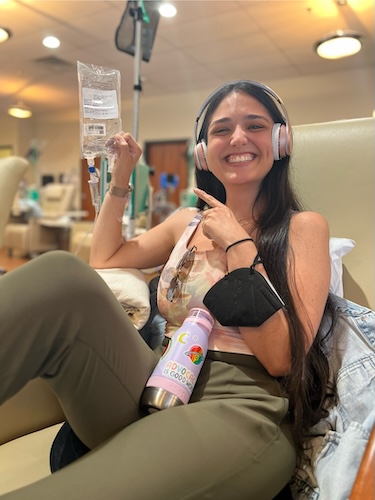

Categories
Gastric MALT Lymphoma Non-Hodgkin Lymphoma Patient Stories Radiation Therapy Treatments

Antoinette’s Gastric MALT Lymphoma Story of Gratitude, Meditation, and Support

Gratitude, Meditation, and Support Carried Antoinette Through Gastric MALT Lymphoma

Antoinette’s story with gastric MALT lymphoma is a powerful reminder that listening to your body can make all the difference. For years, she experienced severe night sweats, unexplained bloating, and persistent gastrointestinal discomfort. Despite living an active lifestyle and maintaining a clean diet, nothing seemed to explain her symptoms. Doctors suggested she was just a “hot sleeper.” But Antoinette kept seeking answers.

Interviewed by: Taylor Scheib
Edited by: Chris Sanchez

Eventually, a colonoscopy revealed the shocking diagnosis: gastric MALT lymphoma, a rare form of non-Hodgkin lymphoma. She felt numb, overwhelmed, and worried about how to share the news with her family, especially since her father was in the last stages of his own cancer experience. The emotional toll was heavy, and the reality of facing a rare cancer came with anxiety, isolation, and what she now recognises as survivor’s guilt.

Antoinette N. gastric MALT lymphoma

Antoinette’s medical team offered options, and while initial discussions left her discouraged, more testing confirmed her cancer was at stage 1E. Radiation therapy became her path forward. The treatment was far from easy, bringing side effects like intense abdominal pain and physical exhaustion. She leaned on her “treatment tribe,” a supportive circle of friends, family, and even acquaintances who stepped in with meals, rides, and encouragement. Moments of gratitude and daily prayer gave her strength, and meditation helped her breathe and get through radiation sessions.

Two years after her gastric MALT lymphoma diagnosis, Antoinette reflects on the mental and emotional impact of living with a rare cancer. She highlights the unseen struggles: depression, anxiety over test results, and the sense of being alone despite having support. She’s learned to advocate fiercely for herself, trust her instincts, and build a life centered on joy and purpose. Through starting a nonprofit and creating empowering merchandise like “Cancer Conqueror,” she now channels her experience into something uplifting and inclusive for other women, particularly those who face disparities in healthcare.

Antoinette wants to remind us that living well isn’t about waiting for happiness. It’s about designing a life that feeds the soul. She encourages others to stay active, eat well, listen to their bodies, and partner with their healthcare teams with mutual respect.

Watch Antoinette’s video and browse her interview transcript to take a deep dive into:

  • How she knew her body was telling her something, even when tests didn’t
  • Why the unseen mental health side of many cancers is as real as the treatments themselves
  • From night sweats to diagnosis: the path to finally being heard
  • Why Antoinette calls herself a ‘Cancer Conqueror’ and not a fighter

  • Name: Antoinette N.
  • Diagnosis:
    • Gastric MALT Lymphoma
  • Staging:
    • Stage 1E
  • Symptoms:
    • Gastrointestinal issues that didn’t make sense due to her healthy diet and lifestyle
    • Significant night sweats
    • Unexplained bloating
  • Treatment:
    • Radiation therapy
Antoinette N. gastric MALT lymphoma

This interview has been edited for clarity and length. This is not medical advice. Please consult with your healthcare provider to make informed treatment decisions.

The views and opinions expressed in this interview do not necessarily reflect those of The Patient Story.


I am Antoinette

I was diagnosed with gastric MALT lymphoma.

How I knew something was wrong

One of the symptoms I was experiencing was significant night sweats, to the point where I said to my gynecologist, “Hey, I don’t think I’m there yet, but could I maybe be there? Am I peri- or pre-menopause?” The sweating went on for some years, actually. The gynecologist said, “Oh, maybe you’re just a hot sleeper.” I got a cooling mattress, which was wildly expensive. I got cooling sheets, I got all these other things, too. We did all these tests and couldn’t find anything wrong. I was having gastrointestinal symptoms that didn’t make any sense. Even during the years that I spent being a vegetarian, I experienced severe bloating despite being physically active. I work out quite a bit. I wasn’t able to eliminate the way that you should when you eat clean. I don’t eat pork. I hardly eat fried food. Drive-thrus are few and far between. So I have a pretty clean diet, which is why the gastrointestinal symptoms weren’t making sense. And then after I did manage to eliminate, I would look like I’m five months pregnant. 

I cut out different things in my diet. I replaced white sugar with coconut sugar, which has a low glycemic index. I tried all these to see if it was a lifestyle issue or if I just had gut sensitivity.

None of it was making sense. And again, this all went on for years.

The testing I was doing

Finally, I went to the gastroenterologist and I said, “Look, something’s wrong.” We did a five-day, six-marker test. At the end of the test, at the end of the five days, I still had three markers left. 

I went back for a follow-up appointment. I went, “Well, why would I have three markers left?” And she said, “Oh, some people just have a slow-moving colon.” I went, “No, the researcher in me says no. Everything has a root cause. Why would I have a slow-moving colon despite not having any lifestyle issues? I don’t have any dieting issues. There has to be a reasonable explanation.” 

We were scheduled to do a SIBO test. The kit arrived. She said, “Well, we can do a colonoscopy, too.” And I said, “What will the colonoscopy show you?” She said, “Oh, it shows us everything.”

The moment everything changed

I called my family doctor and said, “Listen, I had a colonoscopy back in, I think on December 22nd or 20th, and it’s now January, it’s weeks later. Will you please help me get my results?” They were saying that Hopkins is not returning their phone calls, which I just didn’t believe. 

I’ll never forget the street I was driving on. The doctor called. I answered, and she found out I was driving and said she’d call me back. I said, “Nope, what do you have? Just tell me whatever you need to tell me.” So she said, “What has your gastroenterologist told you?” “I said, “Nothing. That’s why I had to ask you to help me because you’re a part of the Hopkins network.” 

She then said, “Well, I’m going to tell you because you asked me to, I won’t dance around it. Unfortunately, you have a form of lymphoma called gastric MALT lymphoma. I’ve never heard of it myself, I’m going to be honest with you. I went on our intranet to research it.” She told me what the MALT acronym stands for. She added, “I am not in a position to discuss it with you because that’s not my expertise, and I don’t want to misspeak. But I’ve already put in the referral with oncology. They’ll reach out to you today or tomorrow. Antoinette, I’m just so sorry.” 

I was numb. I remember getting home, and I sat in the car for a little bit. I couldn’t move. I just sat in the car. I was able to finally grab my briefcase, my purse, and my keys, get into the house, and just sit on the floor. 

Then thoughts of my kids started flooding into my mind. I thought, “Oh my God, how am I going to tell my parents this? How am I going to tell my family?” I was just numb. 

I don’t think anyone thought it was cancer. I certainly didn’t think so. I had no idea what was wrong, but I certainly didn’t think the colonoscopy would come back with that diagnosis. I didn’t just have cancer, I had a rare form of cancer. I wouldn’t have thought that.

My dad and I both had cancer at the same time

Unfortunately, we had been informed just two weeks before my diagnosis that my father only had two weeks left to live due to cancer.

I was diagnosed on January 31st, and my father passed on March 7th. So my father fought hard for 18 months after he was diagnosed.

I was the one who was something of a pillar of strength to carry my father through his treatment and his battle. I would drive him three hours away to all his appointments, and so on. So, as we were preparing to bury my father, it was quite something to hear that I had cancer too.

What the doctors were telling me

When I went to see a medical oncologist, he was using the verbiage of “We can watch it, we can monitor it,” and so on. And I was like, “I don’t understand, why would we just watch and monitor it. And he said, “It’s up to you to decide whether or not you want to treat it.” I said, “Why would I not want to treat it?”

And that’s when he mentioned, “This type of cancer has no cure; you can only treat it.” And I remember looking at him and looking at the resident and saying, “Well, this was a waste of my time, because if I’m here talking to you today about just treating it and not curing it, I’m not real sure,” so I left that appointment frustrated and defeated. 

That same medical oncologist called me up and said, “We got all the results back. I wanted to ask you if you want to go ahead and do oncology. It looks like your staging is 1E. If you want to go ahead and get rid of it, we can get you scheduled for the radiation and get rid of it.” I said, “Wait, what did you just say?” Because I left that last appointment with him when I was clear that this cancer can’t be cured, it can only be treated.

He said, “Yeah, if you want to do the radiation, we’re confident that 12 rounds of radiation should get rid of it. We did say it was incurable initially, but with it being 1E, we can do the radiation and get rid of it. Maybe you want to think about it, because I know how you feel.” And I said, “Well, yeah, give me the day to think about it.” We also talked about options if I decided not to treat it. What would happen if I let it get to stage 2 or 3, or, God forbid, 4? And he explained that if it got to 2 or even at 1, it started to metastasize, then my only option would be chemoimmunotherapy. 

How my body handled radiation

It was awful, actually. I was scheduled to do 12 rounds. Two units per session. I had to go every day, and after the third session, I was just having significant abdominal pain, and I’ve had two children. When I tell you the pain was like giving birth, it was awful. I went ahead and went to the fourth session, because it’s radiation. I wasn’t expecting it to be a walk in the park, but finally, by day four, I said something.

 I was like, “Hey, I’ve been in a lot of pain, and just overall, I don’t feel well.” I didn’t look good. I didn’t feel good. The oncologist called, and he’s like, “Hey, you’ve been having stomach pain?” I was like, “It’s more than stomach pain, it feels like.” He’s like, “Let’s take a break for a couple of days. Don’t come Friday, don’t come Monday, let’s take a break. Maybe your body is just trying to adjust to it. Let’s reconvene on Tuesday.” 

So on Tuesday, I was feeling better. The pain had gone away. We were able to do the sessions again. He said as well, “I’ll reduce the dosage from 2 to 1 and a half.”

I was supposed to have 24 units total. I think we got to about 16.5. I said, “Well, what’s the probability of that being enough?” And he said, “There’s been enough studies to show that with other MALT lymphomas, people can even have single-digit treatments, and they’ve been sufficient. There’s just not enough research to support a single-digit number of treatments for gastric MALT lymphoma. But I’m sure that the research will come and will say that we didn’t actually need to do 12 treatments with you; we probably could have done 4 or 5.” And I trusted him.

Nothing’s guaranteed. But when he felt confident that the 16.5 was sufficient and that he was more concerned about what my life would look like afterward, that made me feel that much more secure.

The treatment was bad, but I was humbled that it could have been worse and that a lot of people have it worse. And that some, like my dad, don’t make it. So I’m really, really grateful that the 16.5 units was sufficient. I’m grateful that I’ve had a great medical team. That’s one of the things that I did during this entire journey.

How I got through the hard days

I recite gratitude every day, of course, I pray every day, and I pray a lot. I know sometimes God might be like, “You again.” But gratitude is what helped keep me sane during this entire ordeal. The machine that I had to use. There’s a series of appointments as well, leading up to the radiation, because you have to hold your breath while you get the treatment, while the machine is going around your body. And they literally stop your breathing, like you can’t breathe if you wanted to. And I remember one of the technicians came out. He said, “You have really long breath strides, some of the longest we’ve seen. And I was like, “Perhaps that’s the meditation.” I meditate every day. 

I was so happy when I got back to ring the bell. My treatment team was there, and I was able to see them, and when they cried, I cried. We were in the hallway. Everybody was crying, and people were walking by. It was a mess, but a good mess, a good, positive mess.

I had an amazing support team

What I recently found for myself was survivor’s guilt, survivor’s remorse. And that’s something I’m dealing with. But again, I just stay in gratitude with that, and I use that as my power and as my armor to do things like this, to spread the awareness. I’m starting a nonprofit foundation for black women with cancer. Of course, it’s open to all women, but in particular, those who have a more disparate impact. 

I’ve also started a line of merchandise because one of the things that I started to say to myself during this journey was that I have to have positive language, and somebody was like, “Oh, you’re fighting cancer,” and I was like, “No, that feels so heavy, that feels so negative. It’s too much for me to carry. I’m conquering cancer. It feels empowered. It feels empowering.” I’ve aligned merchandise for cancer patients that says “Cancer Conqueror.” And then even for the people who were taking me to treatment again, I didn’t want to feel needy, I didn’t want to feel disabled. I was like, “No, you guys are my treatment tribe.” The people who brought me food, the people who sent flowers.

I got so much love from people that I don’t even like. They don’t even have my phone number, but they know me or know of me. 

How I’ve navigated my diagnosis

The last two years have been emotionally and mentally tough, like I’m still trying to find my footing. And I think that’s the part of cancer that many people don’t get to see. You see it when patients lose their hair, you see when they’re not feeling well, but you don’t see the depression, you don’t see the anxiety, you don’t see them say, “Oh, gosh, I have a cold, now they want to do another scan.” Yeah, it’s in remission, but maybe not. You don’t see the feelings of isolation. You can have people like I did, a treatment tribe, but you’re really in it alone. It’s you and God. Especially when you have a rare cancer. 

Despite my diagnosis, I still went to work every day; that is the only thing I regret. I should have taken that time to take care of myself. 

Some of my symptoms came back

We agreed that I would see him once a year. But then the night sweats came back. So he’s like, “I want you to see medical oncology.” And I’m like, “Medical oncology can only do one thing for me, which is chemoimmunotherapy, and I don’t want to do that.” But again I said, “But I trust you, so if you feel like you want me to go back to see medical oncology, I will do that because I trust you and I trust your expertise, you haven’t steered me wrong yet, and so I agreed.”

Those same spots have been there; they haven’t grown in size, they haven’t changed shape. Maybe those are just two areas that will just always be hotspots of some sort in my body. Maybe that’s just my body’s anatomy, because for two years and all these CT scans with contrast, they haven’t changed. 

We did a ton of lab work. All the labs were clear.

I had to advocate for myself

So I will see medical oncology in six months, and then six months from there, I’ll see radiation oncology. I’ve accepted, if you will, my fate. I’ve accepted that this is just what it is. But they know I’m not a hypochondriac. How I got here is because I know my body, something’s not right here. I don’t take any supplements, and I’m not on any medication. There was nothing else to point to. Why would I be having these gastrointestinal issues? It’s not a lifestyle issue, it’s not a supplement issue, it’s not a medication issue. There was no other reasonable explanation. And so with that said, they know I’m the first one to advocate for myself, and so if something starts to feel like it’s going awry, I’ll be the first one to say, “Guys, we might have a problem here.”

How cancer has changed me

My immune system now is not as strong. I have never had so many colds over the last two years that I’ve had in my life. But what’s interesting, though, is this conversation I had with both medical oncology and radiation oncology. They both mentioned the same thing — that normally people with radiation, and certainly the low doses that I had, normally don’t experience compromised immune systems during the time of treatment. Maybe, but not two years removed, and I’m like, “Well, I did have a rare cancer, so there you go. 

I’m grateful to be a part of any research and information that Hopkins can get and give to the cancer community to help them see increased survivorship. 

What I want others to know

Do what brings you joy, not happiness. Happiness is a fleeting emotion. Do what feels good to your soul. 

Live your life by design. If you know you have no desire to commute to work every day, then build a business or hire a driver. That can go several different ways. Live your life by design, because by doing that, you’ll have an inherent level of joy. But do what? Do what feels good to your soul. Do what brings you joy. Pay attention to your body. Get healthy. Stay healthy. Because when you get and stay healthy and you stay active and you have a good diet, when you do come across health issues, they’re easier to find and easier to explain.

Advocate for yourself. Ask the hard questions. As I told my oncologist, “You may be a Hopkins oncologist, but this is my life and this is my body, so we’re partners in this.” And that is also why I, as a patient, have to treat him like he’s human, too.

Be nice. Be good to your providers, and I’m fairly confident they’ll be good to you, too. As we like to say in the south, you get more bees with honey than vinegar.


Antoinette N. gastric MALT lymphoma
Thank you for sharing your story, Antoinette!

Inspired by Antoinette's story?

Share your story, too!


More Non-Hodgkin Lymphoma Stories

No post found

Load More

Categories
Chemotherapy Colon Colorectal Liver transplant Metastatic Patient Stories Surgery Treatments

Devoted to Motherhood, Heather Now Navigates Life with Stage 4 Colon Cancer

Devoted to Motherhood, Heather Now Navigates Life with Stage 4 Colon Cancer

Heather, devoted mom to two energetic, young boys discovered she had stage 4 colon cancer in May 2024. It shifted her world in ways she never imagined possible. With all that’s been thrown her way, she staunchly stuck to her priorities, being present for her children, so that she could watch them grow into kind-hearted men.

Interviewed by: Taylor Scheib
Edited by: Chris Sanchez

Heather’s symptoms began subtly in the summer of 2023 and then worsened. Severe bloating after meals, a distended abdomen, and, later, rectal bleeding became impossible to ignore. Like many busy parents, she brushed off these signs, thinking they were just dietary issues. She tried to manage them by changing her diet, but they persisted, so she finally saw a gastroenterologist. A series of tests, including an ultrasound, uncovered lesions in her liver and a diagnosis of stage 4 colon cancer. This set in motion a whirlwind of appointments and evaluations.

Heather C. stage 4 colon cancer

The news of metastatic cancer was surreal and disconcerting. Heather recalls the disbelief, the constant urge to “fix” things, and the emotional waves that followed. Hearing “stage 4 colon cancer” was jarring, not just because of the diagnosis itself, but also because it’s rarely associated with young, otherwise healthy women in their 30s. Because she had to process this reality while caring for her young sons, her emotional journey became more convoluted.

Heather’s treatment began with chemotherapy. While the side effects were challenging, including severe rashes, blurred vision, and hair loss, her determination never wavered. Encouragingly, her scans showed significant improvement, with tumor markers dropping to zero. However, her oncologist determined that a liver transplant might be her best chance for long-term health.

After facing delays and uncertainties with initial transplant centers, Heather found hope at NYU Langone Health, where the process moved swiftly. Her candid doctor emphasized the need for a living liver donor due to the scarcity of cadaver livers for patients like her.

Heather’s strength is amplified by her powerful support network. Her husband, who balanced his work life and parent-teacher association roles, became her rock. Her friends and family stepped in, too, managing school runs and childcare so that Heather could focus on her treatments. Social media became a surprising source of hope for her, as she was able to link with potential liver donors and rally her community of supporters.

Despite the physical toll of treatments for stage 4 colon cancer, Heather prioritizes her quality time with her sons. Whether attending school events or simply sharing bedtime stories, she cherishes these moments. Even on tough days, her desire for her children to live normal lives shines through.

Heather’s advice is heartfelt: “Don’t ignore your body’s signals. Prioritise your health because your loved ones depend on you.” Her story isn’t just about stage 4 colon cancer; it’s about the power of advocacy, community, and unwavering love.

Watch Heather’s video and scroll down to browse through the transcript of her interview for more insights:

  • “I just thought I was bloated, until I wasn’t.” Discover Heather’s surprising first symptom
  • How 47 strangers (and counting) have stepped up to save one mom’s life
  • Parenting while battling stage 4 colon cancer
  • “I didn’t think it could happen to me.” What Heather wants every young woman to know
  • The emotional rollercoaster of waiting for a liver transplant and staying hopeful

  • Name: Heather C.
  • Age at Diagnosis:
    • 35
  • Diagnosis:
    • Colon Cancer
  • Staging:
    • Stage 4
  • Symptoms:
    • Severe bloating
    • Indigestion
    • Vomiting
    • Rectal bleeding
  • Treatments:
    • Chemotherapy
    • Surgery: liver transplant (upcoming)
Heather C. stage 4 colon cancer

This interview has been edited for clarity and length. This is not medical advice. Please consult with your healthcare provider to make informed treatment decisions.

The views and opinions expressed in this interview do not necessarily reflect those of The Patient Story.


Hello, my name is Heather

I was diagnosed with stage 4 colon cancer in May 2024. 

I have two boys, James and Lucas. They’re six and three. I’m obsessed with them. Whatever I do, my number one reason is to make sure I’m there with them. 

I want to see them grow big, and I want to see what kind of men they become. Hopefully, good men. It’s important to be kind. 

When things first started to feel “off” 

I let things go on longer than I’d like to admit, but I can remember as far back as the summer of 2023. Lucas was just about a year old by then. I remember going to a wedding and looking in the mirror, thinking I looked six months pregnant. I thought, “This should not be the case.” That was my main symptom, severe bloating. I’d eat the smallest thing and just look enormous, and I would show my husband. I’d go, “This isn’t normal,” and he would agree. Something was going on. 

I let that go on a bit longer, obviously. By 2024, I started noticing rectal bleeding. It wasn’t like normal rectal bleeding. It was a little bit heavier. I was concerned. So I remember being at an urgent care one day and mentioning it to them. I was there for something totally different, like a cold, but I did mention it to them, and they were like, “It’s probably internal hemorrhoids.” I continued for a couple more months, but it wasn’t going away. The bloating and indigestion were really bothering me.

I gave up gluten and dairy. I was just trying to heal myself instead of just going and getting this looked at. But I finally decided, “Okay, I’m going to find a gastroenterologist and I’m going to get to the bottom of this.”

So, I saw the gastroenterologist and he was good, he didn’t do wrong by me. He said, “Okay, we’re going to schedule an ultrasound of your abdomen, a colonoscopy and endoscopy, and we’re going to get to the bottom of this.”

The moment everything changed

We had the ultrasound done first, and that’s where they found lesions throughout my liver. They called me and said, “We want you to come in.” I said, “No, no, you have to tell me right now. I’m alone with my children, and I can’t wait till tomorrow. I’m going to be freaking out all day.”

I put up enough of a fight that they did a Zoom with me and told me that they’re suspecting I have metastatic cancer. They’re just not sure where it’s coming from. So they said, “We’ll move up your colonoscopy, and in the meantime, go to your dermatologist, go to your gynecologist, go to your eye doctor if you’ve ever had a freckle in your eye,” which I did. So for the next couple of days, I did that. 

Then, of course, it was the colonoscopy that found the mass. 

I don’t think I even believed them still. I’m always trying to fix whatever is going on, whether it’s something small or big, or something with the kids. I need to get to the bottom of it right away. I just need to fix this.

I don’t think I was able to just sit down and really soak it in. I think that’s what I’m doing a lot nowadays. Now, everything still feels so surreal that it’ll hit me every once in a while, and I’ll just start crying. But yeah, I don’t think I really knew the severity of it in the first few months. As strange as that sounds, I was just like, “I’ve just got to do things. I’m just going to do whatever they tell me to do, and we’ll fix it. We’ll be out of this in the next couple of months,” which definitely was not the case.

I guess I never thought it would be colon cancer. I thought it would be something treatable, and it’s not really something heard of in people my age, especially young women. You hear a lot of breast cancer and ovarian stuff. You never really hear of colon cancer in young, pretty much healthy women in their 30s. 

Finding the right care team

As soon as I woke up from my colonoscopy, I was sitting in my driveway on the phone,  calling oncologists and making appointments. I found a doctor who was interested in my story because I was young and had stage four cancer. He wanted to pull me in right away. So I moved fairly quickly. My oncologist, Dr. Cohen, has been great. Aggressive in a good way. 

So I made three different appointments, with Sloan Kettering, another doctor nearby, and that oncologist, who was actually referred by a colorectal surgeon I saw first and told me, “You don’t need surgery. You need chemo.” He referred me to that oncologist. He was the one who wanted to see me right away, and the other two had open appointments really far out. I wanted to get this done quickly. 

At my first meeting with the oncologist, he said, “Okay, you have scans scheduled for these dates that aren’t going to work for me.” He called them all up and went, “No, she needs to come in now. She’s 35.” I liked that about him right away. I think I met with him maybe at the end of May or June, the month of my son’s birthday. I had my first treatment. Everything moved quickly, and I liked that. I absolutely felt like he wanted to help me.

What my stage 4 colon cancer treatment plan has looked like

Originally, I was put on two different chemo drugs, and one of them caused a rash. I was only able to tolerate seven rounds of the first drug, which was a good day at the seventh round. I was just looking around and noticed that my vision was getting very blurry. My heart started racing. I told the doctors, “I don’t know if this is anxiety, but just letting you guys know that something’s wrong.” 

So they came over and took my blood pressure. They’re like, “Okay, disconnect her and pump her with Benadryl.” They said that this usually happens around the seventh round. Not everyone can tolerate it. So, then I was switched to another drug, but still with back-to-backs. So I’ve been on that for 18 rounds, I think I had 25 or 26 so far. So that would be like probably 18 rounds of that new drug. 

It causes hair loss, which, luckily, I have not been experiencing lately, which is nice. I mean, just my eyelashes and my eyebrows. I had such a severe rash on my scalp that my hair just thinned so much. I ended up just shaving it off. 

Exploring options for my liver

Ever since the start of June 2024, everything has been shrinking. I’ve been seeing improvement. Every scan is better than the last.  My first Signatera test was around 3000, and then by around August of 2024, it was zero. So I walked in for my appointment with the oncologist, and everyone was celebrating. 

So, in my head, I was like, “Does that mean I’m done? What does this mean?” But no, I wasn’t done yet. Every Signatera since then has been negative. So all the lesions except for maybe two or three were so small that they weren’t even lighting up on a PET scan anymore. So everything seemed to be improving to the point that the oncologist said, “Okay, let’s talk about an ablation. We have a surgeon here upstairs. You can see him later today, and you could talk about what’s next.” 

So I had that appointment, I went upstairs, I met with him, and I was ready to talk about an ablation or resection or whatever was needed to finish this off, and then we could move on with our lives. He walked in and he said, “You are not resectable. There are numerous lesions throughout your liver, and yes, they’re small, but I can’t say that they’re not cancerous. So, I think your best option would be a transplant or a pump that pumps chemo directly into the liver.”

“Oh, my gosh,” I thought, “What do you mean? That’s not what I thought they were going to say.” So I went home. I cried and thought about it for a while, and I was like, I don’t know if I want this hepatic artery infusion or HAI pump. I’m reading more and more about it. If I did need a transplant, having a HAI pump could potentially damage my liver, and I wouldn’t be eligible for a transplant any longer. So I said, “I think I want this transplant.”

It took me a couple of months to hear from the transplant coordinator at this particular hospital. I kept emailing the surgeon and saying, “When am I going to hear back from him?” And he was like, “I can’t believe you haven’t heard from them yet. Let me reach out again.” And then another week or two would go by, and I would be like, “Hey, it’s me again. Still haven’t heard from the transplant coordinator,” and they were getting angry because I guess it wasn’t happening on their end. I finally heard from them in maybe January.

I got an appointment for February of 2025, and I went to this hospital. They didn’t seem too familiar with my history, and they just went over it quickly, like, “Okay, yes, you should get a transplant, but because you’re otherwise healthy, you would not be anywhere near the top of the list for a cadaver liver. I said, “Oh, okay.” With colon cancer, liver transplants are so new. It’s not really something that helps you get there faster. So I said, “Well, what about a living donor transplant? Because I have a sister. We all have the same blood type. Is that something I can consider?” And they were like, “Absolutely, but we don’t do that here.” 

So I left that appointment and cried a lot the whole ride home. But when I got home, I started googling hospitals that do living liver transplants, and found a ton of them. I made appointments at three of them on my couch in the middle of the night, just scheduling them on their websites. NYU was one. They all called me the next day and asked for my scans. NYU got back to me first and said, “We have a surgeon who would like to meet you, so let’s get you in here.” I met that doctor at NYU, and it’s been going pretty fast ever since.

Meeting my transplant doctor

So, the doctor came in, and he was very tall, first of all, and very serious, but candid. Tough, like I want in a doctor. So he said to me, “Look, there are always going to be go spots, and this is something that’s going to go everywhere. So, what you need is a liver transplant, and you’re the perfect candidate for it. It’s nowhere else in your body aside from your liver, and you’re young. This is something I want to do for you, but I’m going to need a donor. So, I told him about my sister, and he was like, “Okay, but, well, I need backup. I want you to go on social media. I want you to get out there.”

So that’s what we did. We went on social media. My husband’s made a lot of connections through being in the military and in our school community. He’s taking care of me, becoming a PTA dad. He works in the movie business, so he made a lot of connections that way. So, he just went on social media and started posting it. I think in a matter of days, I had 47 applicants for a liver transplant, and the number’s been growing since then. I have been really blessed in that way. 

I think people started going in for evaluations in April, this past April, and they really can’t tell me anything about it. It’s anonymous, so I don’t know who’s going in and who’s getting nicked. They’re still screening people. My sister was one of the first to go in, and she unfortunately can’t donate to me, but she’s going to help me in so many other ways, so she doesn’t beat herself up about it.

How I’ve navigated my emotions about the liver transplant

It’s scary. I’m scared, impatient sometimes, because I’m just so tired of chemo, and I know I can’t stop chemo until this happens. But mainly afraid, because it’s not a guaranteed cure. It could come back after this. It’s a lot of unknowns. 

I don’t know anything. I don’t know when this could happen. I don’t know what life’s going to be like afterwards. I’m hoping that I’m strong enough to bounce back from this and live a nice, long, healthy life.

I don’t want anyone to be without me. I think I worry about them more than myself. Yeah, sure, I’m scared of dying and not being here, but I’m scared of what that would do to them. 

Staying present with my kids

I do want to be there for them, I definitely do, especially when I’m feeling good. I want to be there. I want to be at the school pickups and drop-offs, and whatever activities they have going on. So when I feel good, I do it, and then when I don’t feel good, I still try to do it, and then I get yelled at about doing it. So, I just try to rest the first couple of days after treatment, kind of stay away from them a little bit because they’re always trying to drink my water and kiss me and be all over me, and I just feel like, “Stay away from this stuff. It’s poison.” That’s the time they get to spend more time with their dad. They need normal childhoods, and they need to just be kids and not worry about what I’m doing. 

We’ve had such an amazing community behind us and helping us in a lot of ways. Friends who are doing pickups and drop-offs, and family who are coming to watch them while we do our treatments. I just want my kids to have fun. So whoever’s with them, I’m like, “Oh, good, I know they’re gonna have a good time,” or they’ll be outside or they’ll be playing, like they won’t just be sitting there watching TV all day long while I’m getting something done, because that’s more important. I still want them to be kids.

Staying optimistic about my diagnosis

I’ve always kind of been this person, and I think it helps me shake off the serious talks.  My nurses always say, “Oh my gosh, she’s smiling. She’s back, smiling again. I don’t know why she’s so happy to be here.” 

I don’t know. It just makes me feel stronger, I guess. Maybe it’s a defense mechanism. A coping mechanism to get me through it. It definitely helps, and my husband has a similar humor, too. We all have sad stuff, so it helps us get through it. It really is helpful. You can’t have those sad eyes looking at you all this time; we need to talk about other things. So every time people ask me about it, I’m like, “Oh, aren’t you sick of talking about me?”

What my biggest advice is 

I want people, especially people my age, or people starting families, big careers, or getting married, to not brush off any abnormal symptoms that they may be having. I want you to take care of your bodies.

I know, we put ourselves aside to take care of our children, and then it takes us months, sometimes years, even like go to the dentist. I don’t want you to do that because you are important to so many people. You need to be there, because like I said, the people who depend on you wouldn’t survive without you. Had I taken care of this sooner, maybe we wouldn’t have been talking today. But I also can’t think about that too much. Just take care of your bodies. Don’t go to Doctor Google. Call a physician and tell them everything. Even the stuff you’re embarrassed to say. Tell them what’s going on. Because sometimes it’s not normal. Just do the best you can.


Heather C. stage 4 colon cancer
Thank you for sharing your story, Heather!

Inspired by Heather's story?

Share your story, too!


More Metastatic Colon Cancer Stories

 
Raquel A. feature profile

Raquel A., Colorectal Cancer, Stage 4 (Metastatic)


Symptoms: Frequent bowel movements, pin-thin stools, mild red blood in stool
Treatment: Chemotherapy

Steve S., Colorectal Cancer, Stage 4 (Metastatic)


Symptoms: Blood in stool, changes in bowel habits, feeling gassy and bloated

Treatments: Surgery, chemotherapy, monoclonal antibody, liver transplant
Jessica T. feature profile

Jessica T., Colon Cancer, BRAF+, Stage 4 (Metastatic)


Symptoms: Severe stomach cramps, diarrhea, vomiting, anemia (discovered later)

Treatments: Surgery (hemicolectomy), chemotherapy

Jennifer T. feature profile

Jennifer T., Colon Cancer, Stage 4 (Metastatic)


Symptoms: Weight loss, coughing, vomiting, sciatica pain, fatigue

Treatments: Surgeries (colectomy, lung wedge resection on both lungs), chemotherapy, immunotherapy
Kasey S. feature profile

Kasey S., Colon Cancer, Stage 4 (Metastatic)


Symptoms: Extreme abdominal cramping, mucus in stool, rectal bleeding, black stool, fatigue, weight fluctuations, skin issues (guttate psoriasis)
Treatments: Surgeries (colectomy & salpingectomy), chemotherapy


Categories
Caregivers Spouse

Perspectives from a Lung Cancer Caregiver: Stephen and Emily Huff’s Candid Conversation

Lung Cancer Caregiving: Stephen and Emily Huff’s Candid Conversation

Edited by: Chris Sanchez

When Stephen Huff was diagnosed with stage 4 non-small cell lung cancer, the world he and his wife Emily had envisioned together seemed to fall apart. But Emily stepped into the role of cancer caregiver with grace and determination. They were both overwhelmed and frightened, but Emily’s quiet strength became Stephen’s anchor.

Stephen and Emily navigated the emotional turmoil of his lung cancer diagnosis together. Hand in hand, they took on tough decisions and conversations about life, family, and their future. Emily gently encouraged Stephen to consider fertility treatments despite his initial hesitation because he didn’t see fatherhood in his future and asked her, “What if I die?” Emily’s simple yet profound response, “What if you live?” This helped Stephen shift his mindset from preparing for death to embracing life and their dream of having a family together.

Stephen and Emily H. cancer caregiver

Stephen’s and Emily’s experience wasn’t just about surviving cancer; it was about growing together. Their bond deepened and strengthened through hospital visits, sleepless nights, and emotional hurdles. Today, as proud parents of their kids, Owen and Violet, they celebrate parenthood and cherish the family they once thought was beyond reach.

Stephen calls Emily the glue that holds their family together. Her selflessness, compassion, and belief in better days ahead empowered Stephen to fight, not just for survival, but for a life filled with love and purpose. Watch their video and read their raw, honest conversation for more:

  • Discover the simple but powerful question that changed Stephen’s outlook on life.
  • Learn how Emily’s role as a cancer caregiver made all the difference.
  • Find out how Stephen and Emily defied the odds to start a family.
  • See how love and support can be life’s most potent medicine.
  • Be inspired by their resilience and hope.

  • Name: 
    • Stephen Huff
  • Age at Diagnosis:
    • 29
  • Diagnosis:
    • Lung Cancer
  • Staging:
    • Stage 4
  • Symptoms:
    • Lingering shortness of breath
    • Persistent cough
    • Lump in collarbone
  • Treatments:
    • Targeted therapy
    • Radiation therapy
Stephen and Emily H. cancer caregiver

Pfizer

Thank you to Pfizer for supporting our patient education program. The Patient Story retains full editorial control over all content.

This interview has been edited for clarity and length. This is not medical advice. Please consult with your healthcare provider for treatment decisions.


Stephen: “… you’re the biggest reason why we have a family right now… You’re the number one reason why we’re able to hold our kids. They’re miracles.

About Stephen

Stephen Huff: Hi, my name’s Stephen. I got through stage 4 lung cancer thanks to my doctors, family, and my wife and cancer caregiver, Emily.

Stephen and Emily H. cancer caregiver

When We Found Out That Stephen Had Cancer

Emily Huff: I remember being in the doctor’s office, waiting for the doctor to come in and praying it wasn’t the worst-case scenario. I remember when the doctor said those words, “stage 4 non-small cell lung cancer” — that was the worst-case scenario. My heart sank.

Stephen: Oddly enough, I remember that my mom was there before on the first appointment, and that was before we had done the biopsy. But we had asked a lot of questions, and we were asking him, “Based on the imaging, what did you think? What was your best guess?” And he said, “It looks like adenocarcinoma.”

And then it seemed like forever. The waiting was so hard. We weren’t sleeping at all, and I wasn’t really eating, and I was so consumed with fear.

After the appointment, we stood in the parking lot, and it was just you, my dad, my mom, and me. I remember saying, “It’s all going to be fine. I’ll be okay. I’ll get through this. Guys, what are we all worried about?” That was really just the denial. It was so surreal.

You think about living a long life. It’s like it’s a forethought for most people. People think, “Oh, yeah, when I’m retired, I’ll do that. Or when I have grandkids, I’ll do that. Or when my kids are old, I’ll do that.” And then in an instant, literally in an instant, you have stage 4 lung cancer, adenocarcinoma, non-small cell, there’s no cure, thinking like, “I’m going to die.” I was in shock and denial.

Emily: “… I remember when the doctor said those words, “stage 4 non-small cell lung cancer” — that was the worst-case scenario. My heart sank.

We Now Have the Family We Always Wanted

Emily: I had always planned to have a family. I always wanted to have a family with you. That felt like it was stripped away when we received that diagnosis. But I’m so grateful that we’re here on the other side now with two beautiful children.

My hope for them, for Owen and Violet, is that they know how loved they are, that love brought them into this world, and it’s the most important thing. Family is the most important thing to me, and I want them to know they’re so loved.

Stephen: Before our diagnosis, I was thinking that we would have at a minimum three, maybe four kids, because I honestly love the idea of family, especially around the holiday times. I love getting together and the feeling of seeing your cousins, your aunts and your uncles, and your brothers and your sisters, the closest people that you have, and sharing all the good times in life with your loved ones.

I envisioned us having four kids and them having husbands and wives and having kids of their own and having 20 people over for Thanksgiving and Christmas. When we got the diagnosis, all that changed immediately, and the immediate thought was I need to get my affairs in line with the fact that I’m going to prepare to die here soon. I didn’t think about it. It’s not that I still wouldn’t want those things. I just didn’t think it was a reality for me.

You probably even remember the night or the day we talked to our doctor, and she went, “You should go to the fertility center and bank sperm in case you want to start a family.” I literally remember thinking, “I’m not going to do that.”

Stephen and Emily H. cancer caregiver

We got home that night, and you never pushed me. You never fought me or got mad at me. You never said, “You have to do this.” We talked, and I remember saying, “What if we have kids and what if I die?” And you were like, “What if you live?” And that changed my perspective on what survivorship looks like. You’re either preparing yourself for death or you’re living life to the fullest.

It was a defining moment for me, and I’m so grateful that you had that feeling. You had that conscious hope that we were going to survive and that we were going to be able to get through this together. I needed that. You would get mad if I said this, but you’re the biggest reason why we have a family right now.

Emily: You think so?

Stephen: I know so. You’re the number one reason why we’re able to hold our kids. They’re miracles.

Emily: All these things had to line up for this to happen for us. We had to hear from our doctor that that was even a possibility. That never would have crossed our minds to seek fertility treatment at the start of this journey. You responding so well to treatment, and our mental state going from, like you said, preparing to die to preparing to live and enjoy our lives and enjoy this time we have together, and that shift. Then it naturally evolved into getting back on track to what we want for our lives.

I’ve been in awe of how strong you are. You’re mentally so strong and able to get up every day and keep pushing through with your life. We’ve started new careers and moved houses. We’ve obviously started a family. We’ve been able to push through. You’ve been so strong through it all, and I look up to that.

Emily: “I always wanted to have a family with you. That felt like it was stripped away when we received that diagnosis. But I’m so grateful that we’re here on the other side now with two beautiful children.”

“You’re the Glue that Holds Us Together”

Stephen: There are so many different traits that I love about you. You’re strong. You’re kind. You’re absolutely the most selfless person that I know. You think about everyone else except yourself. You put everyone else forward. You wake up early to take care of the kids when I can’t. You take care of me when I can’t. You take care of our family. You put us in front of yourself, and you’re the glue that holds us together.

Emily: I would say that it’s you. 

Stephen: I don’t think so. When I’m wrestling with Owen at 9 p.m. when he should be going to bed, I’m not the glue. You are truly the most perfect person for me.

I have never said this to your face, but what I would say is that you inspire me to be a better version of myself, to be the best dad and the best husband.

You hold me accountable. You keep me in check. Your selflessness and your ability to always think about what’s best for everyone else and and then your hope, too. I love your hope. You’re the one who keeps me up when I’m down. You have always been able to keep me in check and to keep my eyes on the end game.

I don’t know where I’d be without you today. Probably not alive, but I’m just very glad and grateful to have you in my life.

Stephen and Emily H. cancer caregiver

Stephen: “We talked, and I remember saying, “What if we have kids and what if I die?” And you were like, “What if you live?”

Stephen and Emily H. cancer caregiver

Pfizer

Special thanks again to Pfizer for supporting our patient education program. The Patient Story retains full editorial control over all content.


Stephen and Emily H. cancer caregiver
Thank you for sharing your story, Stephen and Emily!

Inspired by Stephen and Emily's story?

Share your story, too!


Cancer Caregiver Stories

No post found


Categories
Antibody-drug conjugate Bladder Cancer Chemotherapy Patient Stories Surgery Transurethral resection of bladder tumor (TURBT) Treatments

Relying on My Faith and Family to Get Through Bladder Cancer: Jon’s Story

Relying on My Faith and Family to Get Through Bladder Cancer: Jon’s Story

Jon spent decades as an expert in developing tech for cancer detection. He never imagined that his work would one day help unveil his own bladder cancer diagnosis. Jon’s story is both eye-opening and inspiring. His experience shows the significance of self-advocacy and risk-adapted treatment, and the evolving landscape of bladder cancer care.

Interviewed by: Keshia Rice
Edited by: Chris Sanchez

It all began with him noticing darkening urine and visible blood, which prompted a visit to his GP. The doctor conducted a CT scan, which revealed muscle-invasive bladder cancer, and later confirmed that it had already spread to nearby lymph nodes. 

Jon T. bladder cancer

Rather than feeling overwhelmed and agonizing over worst-case scenarios, Jon chose to be proactive. He harnessed his natural curiosity as a researcher, focused on potential solutions, and delved into bladder cancer treatment options.

Navigating the healthcare system had its twists, including a referral to the University of Tennessee Medical Center, a development Jon views as a “God wink.” There, he experienced top-notch care and learned about promising new treatments that could potentially double survival rates. Jon’s story highlights the potential of bladder-sparing approaches if a complete response is achieved with first-line treatment, offering hope for improved quality of life.

Active in patient advocacy, Jon attends cancer conferences, championing the importance of patient voices in medical discussions. His journey exemplifies resilience, faith, and the power of informed decision-making.

Watch Jon’s video and read his story to find out more about:

  • How his career in cancer tech paved the way for his own diagnosis
  • The “God wink” that altered his treatment path
  • What Jon’s story reveals about bladder-sparing treatments
  • Why self-advocacy is crucial in bladder cancer care
  • Jon’s inspiring role as a patient advocate at major cancer conferences

  • Name: 
    • Jon T.
  • Diagnosis:
    • Locally Advanced Muscle-Invasive Bladder Cancer
  • Symptoms:
    • Darkening urine
    • Blood in urine
    • Dull right flank pain
  • Treatments:
    • Surgery: transurethral resection of bladder tumor (TURBT)
    • Antibody-drug conjugate
    • Chemotherapy
Jon T. bladder cancer

Johnson & Johnson - J&J

Thank you to Johnson & Johnson for supporting our patient education program. The Patient Story retains full editorial control over all content.

This interview has been edited for clarity and length. This is not medical advice. Please consult with your healthcare provider for treatment decisions.


Interviewed by:
Edited by: Chris Sanchez

My journey had many twists and turns, but I look at them as “God winks” that guided me in the right direction.

About Me

Hi, my name is Jon. I’m a bladder cancer survivor. I was diagnosed in 2023.

My journey has had many twists and turns, but I look at them as “God winks” that guided me in the right direction.

Jon T. bladder cancer

How I Found Out I Had Bladder Cancer

I actually spent decades working on technology to detect cancer. I never imagined that technology would one day help me detect that I had bladder cancer.

I had some darkening urine. I was on a business trip at the time. And on my return, I started to see blood. My wife prompted me to go see my GP, and I went to see him. He did a urine culture, but he saw the blood in my urine, and he immediately had me in for a CT that afternoon.

That’s how I discovered I had muscle-invasive bladder cancer.

I had anatomic imaging done, an MRI and a CT, which indicated that there was no spread. But here in Knoxville, I helped develop the PET/CT, and I wanted one done. So my oncologist ordered a PET/CT, and that found that the disease had spread to four local lymph nodes.

How I Reacted to My Diagnosis

Unfortunately, the way that managed care works, I discovered my urologist was going to have me in for a transurethral resection or TURBT the next day. But it turns out, I got a call that evening, and he was out of network.

He referred me to a colleague at the University of Tennessee Medical Center. Again, I look at that as a God wink, because the care that I’ve received at the University of Tennessee Medical Center has been fantastic.

In early 2023, when I was diagnosed, the outlook for muscle-invasive metastatic bladder cancer was bleak. I was given a prognosis of 16 months.

I guess for the first time, I was looking a bit at my mortality and thinking about getting my affairs in order. 

I actually spent decades working on technology to detect cancer. I never imagined that technology would one day help me detect that I had bladder cancer.

My Treatment Options

I’m a researcher by nature. So I was looking at my options, and I spent a lot of time just figuring out, spending more time on what I would be doing and less on what might go wrong. 

So that kept my mind occupied while the process continued.

I went to this doctor, prepared to ask for a specific type of treatment. But little did I know, at the same time, a top doctor was sharing news about a new treatment option for bladder cancer at a major conference. 

He had a standing ovation because essentially the overall survival had doubled with that systemic treatment. 

That would change everything.

I Started My Bladder Cancer Treatment

New research like this is increasingly giving bladder cancer patients like me more options.

I began treatment on December 11th, 2023.

Jon T. bladder cancer
My Bladder Cancer Story Continues Below

Program Highlight: Bladder Cancer Breakthroughs 2025: New Treatments & Bladder-Sparing Advances

Jon T. bladder cancer

The Patient Story spoke with Dr. Ashish Kamat from MD Anderson Cancer Center. Dr. Kamat is one of the world’s top bladder cancer specialists.

Bladder cancer care is evolving rapidly, with new treatments offering the potential for longer survival and better quality of life — including the possibility of preserving the bladder.

In this expert-led discussion, Dr. Kamat breaks down the latest in research, emerging therapies, and what patients and care partners need to know now to make informed treatment decisions. He wants patients and their families to speak up and ask more questions of their own doctors.

Jon T. bladder cancer

Dr. Kamat: Patients will come in and say, “This is what I was told. I have no choice. I have to do this.” And first off, every patient has a choice. So when I hear that, that itself makes me not very happy because patients always have a choice. Our role is to guide them.

I really encourage patients who are faced with the paradigm or the conundrum of having muscle-invasive disease to ask their physician, “Hey, I know that this is standard of care for me, but if it doesn’t work, what else do you have available?” Because there’s a lot of stuff that’s available.

So there are biomarkers that people have developed trying to help us understand which patients may respond so well to the systemic therapy that we don’t have to take the bladder out. Again, this is being studied. It’s not something that I can say a patient should go to their physician and say, “Hey, I have this biomarker. I don’t want my bladder out.” No, it’s not ready for prime time. But we’re looking at those.

The advantage of taking part in the clinical trial for every patient is that they are at the forefront of the research, but also, they get better care, right? Because if a patient is on a clinical trial, by definition, they are being followed very, very closely.

It’s very, very important for us to reach out to patients, but if we don’t do that, and we don’t get patients and their carers to be educated and involved and actually understand the disease process, then we can’t get them the best chance of a cure. It’s not just the surgery, it’s not just the medication. It’s not just the radiation, but it’s a true partnership. And in some ways, it’s a selfish motive to get patients more educated because it helps me give them the best results.

For the rest of this interview, watch our program replay ON DEMAND.

Learn what’s changing, how it impacts treatment decisions, and what it all means for patients today.

Bladder Cancer Breakthroughs 2025: New Treatments & Bladder-Sparing Advances
Hosted by The Patient Story Team
In this expert-led discussion, MD Anderson’s Dr. Ashish Kamat breaks down the latest in research, emerging therapies, and what patients and care partners need to know now to make informed treatment decisions.
Powered by
Powered by
Back to My Bladder Cancer Story

More needs to be done to increase survival rates for bladder cancer. I believe this is on the horizon. 

Jon T. bladder cancer

I Attended Cancer Conferences as a Patient Advocate

At the American Society of Clinical Oncology (ASCO) Annual Meetings, you have 40,000 oncologists gathered, all working on all the different cancers. So you see all these incredible scientists and doctors working for you. But you also see how patient care is thought about. 

That aspect of including the voice of patients in these major meetings was a revelation to me. And so working as an advocate has been very rewarding.

I Look Forward to Many Breakthroughs in Cancer Care

More needs to be done to increase survival rates for bladder cancer. I believe this is on the horizon. 

I’m not quite two years in yet. I’ll be two years in this September, so who knows what’s coming down the road. But I believe that this is an exciting time. 

Bladder Cancer Helped Me Feel and Appreciate the Love Around Me

You don’t appreciate all the love that’s actually there for you until you go through a situation like this. So I definitely am more sensitive to the love around me, and what I consider the love of Christ as well. 

Meeting all these people on their cancer journeys has been a real pleasure.

Jon T. bladder cancer

I definitely am more sensitive to the love around me, and what I consider the love of Christ as well. 

Jon T. bladder cancer

Johnson & Johnson - J&J

Special thanks again to Johnson & Johnson for supporting our patient education program. The Patient Story retains full editorial control over all content.


Jon T. bladder cancer
Thank you for sharing your story, Jon!

Inspired by Jon's story?

Share your story, too!


More Bladder Cancer Stories

No post found
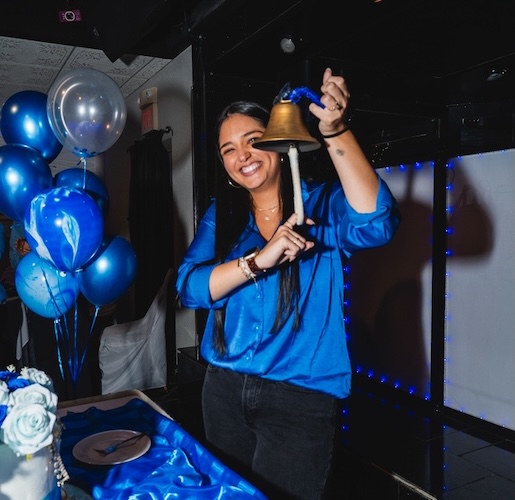
Load More