
“Cancer Can’t Take Your Mind”: Carly’s Rare Vulvar Cancer Story
Carly was diagnosed with stage 3 vulvar cancer in 2014 and experienced a recurrence three years later. Throughout her experience, she faced an array of medical and personal challenges, including persistent and increasing pain, loss of fertility due to aggressive radiation, and two and a half years of bladder and bowel control issues.
Interviewed by: Taylor Scheib
Edited by: Chris Sanchez
Carly’s vulvar cancer experience had an impact beyond the physical part: she had to make hard decisions about parenthood, confronted the stigma associated with “below the belt” cancers, and redefined what recovery looks like. She describes her acceptance of a colostomy bag not as defeat, but as a means to regain quality of life and independence. Supportive doctors and care teams gave her vital emotional and practical care at each stage.
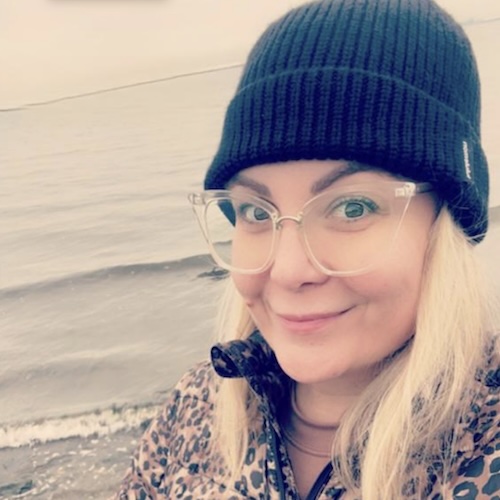
Transformation and advocacy are at the heart of Carly’s experience with this rare cancer. Early on, she coped by shielding loved ones from her pain; later on, she empowered others by sharing her journey on social media and at patient conferences. By communicating openly and honestly, she not only helped break stigmas around gynecologic cancers, but also helped many others accept the realities and possibilities of life after the major surgeries she underwent, namely lymphadenectomy, hysterectomy, total pelvic exenteration, protectomy, and colostomy, as well as chemotherapy and radiation therapy. Her story shows that no one should feel shame about their diagnosis or condition, and that making connections through shared stories is vital to emotional healing.
Today, Carly continues regular monitoring and discusses the practical aspects of living with vulvar cancer, including managing pain, organizing support systems, and focusing on self-compassion and legacy. Her resilience and advocacy offer reassurance and guidance to all those navigating similar paths.
Watch Carly’s video for more about how:
- Finding personal advocacy can help patients navigate difficult and rare diagnoses like vulvar cancer
- “Below the belt” cancers carry a unique stigma, making open conversations and connection essential
- Acceptance and adaptation can restore quality of life, even after major treatment
- No one should feel shame about their diagnosis
- Proactive symptom awareness and self-advocacy help ensure timely diagnosis and care
- Name: Carly A.
- Age at Diagnosis:
- 38
- Diagnosis:
- Vulvar Cancer
- Staging:
- Stage 3
- Symptom:
- Intensifying pain in the pelvic area
- Treatments:
- Surgeries: lymphadenectomy, hysterectomy, total pelvic exenteration, proctectomy, colostomy
- Chemotherapy
- Radiation therapy
- Hormone replacement therapy
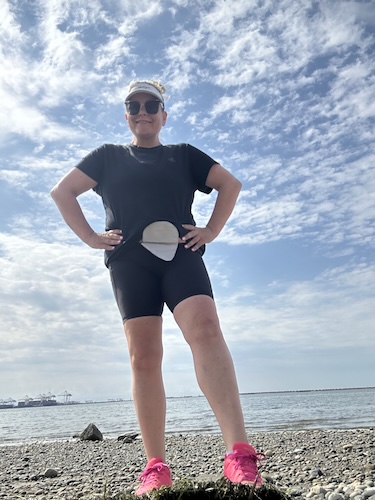
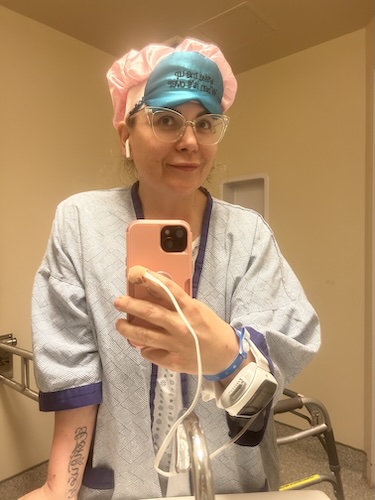
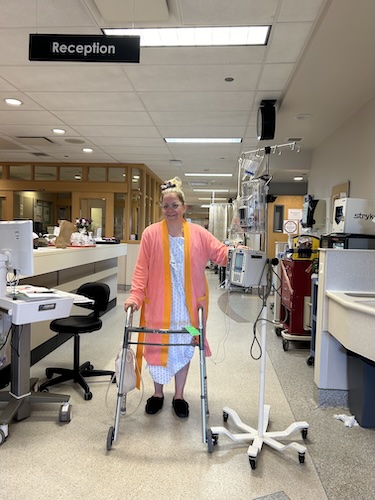
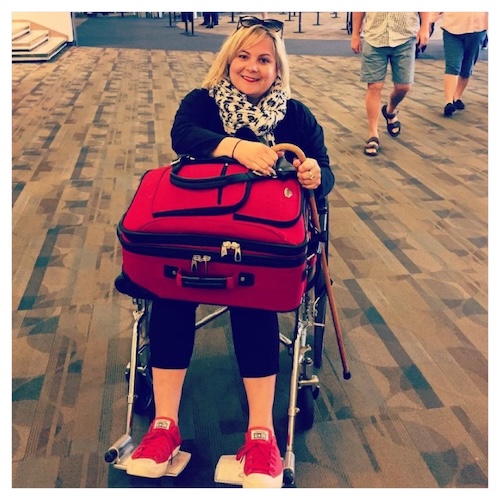
This interview has been edited for clarity and length. This is not medical advice. Please consult with your healthcare provider to make informed treatment decisions.
The views and opinions expressed in this interview do not necessarily reflect those of The Patient Story.
- My name is Carly
- What 11 years of my life have been like with a rare cancer
- My first symptoms
- Learning how to self-advocate
- The moment everything changed
- How I reacted to my rare cancer diagnosis
- My initial vulvar cancer treatment
- The cancer went away, but came back
- Life with a colostomy bag, surgery, and recovery
- The mindset around my ostomy bag
- How social media helped me
- Monitoring and living — not just surviving
- Understanding the cause, and breaking stigma to talk about “below the belt” cancers
- What I want people to know
My name is Carly
I am a two-time stage 3 vulvar cancer survivor. I was first diagnosed in 2014, and my recurrence was diagnosed in 2017. I live in the Greater Vancouver area in Canada.
Since I was a young girl, I have been a sports enthusiast. I was the firstborn, and my dad loved hockey and football. He would take me to hockey and football games as a young girl, and that’s just come with me into adulthood. On a Sunday, Thursday, or Monday, the nights that sports are on television, you will either see me at a game or in my living room watching some sort of athletic game. Go, Birds. Go, Canucks! Those are my two teams.
I am not a mother, but I love animals, photography, entertaining, and having friends around me. That kind of vibe is always in my house. Doors are open for anybody who wants to come over.
What 11 years of my life have been like with a rare cancer
Tough. In one word, really tough.
I had heard of people having cancer before being diagnosed, but nobody in my family had gone through a major battle. When mine was diagnosed, and I found out how extreme and scary it was going to be to try to save my life, I didn’t really have anyone to look up to. So it was just really hard.
I think it was hard on my family and my friends, too. I often shielded them from some of the pain I was going through because I was more concerned about their feelings than my own most of the time.
I tried to put on a really tough exterior. Early on, I said to myself, “Listen, cancer is going to change your body for the rest of your life if you survive. But I told myself, “Cancer may take your body, but it’s not going to take your mind.” I stuck to that.
It doesn’t mean I didn’t have days of darkness. I moved on from those emotions quickly because I didn’t have it in me to mentally and physically be down in the dumps. I wore lipstick to treatment because I love lipstick; anything I could do to give myself a little light in such a dark time.
My first symptoms
There was nothing extreme in my vulvar cancer case. Unlike certain cancers where people lose weight quickly or their skin gets pale, for me, it wasn’t like that. I had pain; that was basically the way I was first alerted, because my cancer was in my vulva.
It’s not something you see every day, like your breast or your arms. It wasn’t something I was regularly checking on my own. When I started to have pain, it kind of felt like I was sitting on a pebble, then a rock, then a golf ball. It got to the point that I thought, “This is not going away.”
In the early 2000s, I had Bartholin gland cysts, which is a drainage problem; you have to have surgery, and they do something called marsupialization, turning the gland inside out. So, I just thought I had another cyst, but it was larger and wasn’t going away. I went to the emergency room, and people just said, ‘Oh yeah, it’s probably a cyst, here’s some medication.’
But there was no confirming it was a cyst. The pain just got worse and worse. My family doctor put in a referral, but it took time. More ER visits, but still nobody found out what was wrong. I called in sick to work. I was in extreme pain; standing or sitting was agonizing.
Finally, I saw a gynecologist who said, ‘I’m not trying to scare you, but I think we need to take a biopsy. I think you have a tumor.’ She said that within five minutes of looking at me, whereas others had looked at me for almost a year and didn’t see it. That was on a Monday. The results came back Friday: it was vulvar cancer.
Learning how to self-advocate
I didn’t know how to advocate for myself then. Today I’d say, “Listen, doctor, we need to do ABC right now,” but back then, I just listened a little too much.
At one point, a doctor said, “Maybe you have genital warts.: I knew that wasn’t the case; I got really frustrated. Once everything was confirmed by a woman who was about the same age as me, we both cried when she gave me the diagnosis.
I told myself, “You, Carly, have been going through this for almost a year. You need to step up your game, make sure the next doctor you see doesn’t take you lightly. Ask more questions and take notes.’ That was the start of a big book with many chapters.
The moment everything changed
I was 38 at the time. I had just been at my cousin’s wedding the week before, and I couldn’t sit in the chair or stand in the photos; I was hunched over.
Looking back, I was paler than usual. I look back at that photo and think, “Man, I looked pretty pasty.”
The doctors told me I had stage 3 vulvar cancer. They actually put my mother in a separate room, where another physician told her. Not being married and not having a partner to support you is different than having a parent.
When my mom and I were reunited in the same room, the tears were flowing. We called my brother and father on speakerphone and told them, and everybody was just a mess. Everything was happening so fast because I was advanced stage.
That moment when mom and I were reunited still brings me to tears today. She was hearing about her daughter, her eldest child. I’m her only daughter, so I can be her favorite daughter. We were both dealing with very hard emotions.
We’re both tough cookies, but it was a really hard moment I don’t think either of us will ever forget.
How I reacted to my rare cancer diagnosis
As much as we think we know our bodies, sometimes we don’t. I was like, ‘Vulva? What are you talking about?’ You think vagina, or clitoris; those are words you hear more often, not so much vulva. Especially since I had never had a child. I needed clarification.
I’ve learned a lot about the vulva over the years. Being so rare, I thought, “What did I do to myself?” I did not have HPV or any other disease that made this happen.
We didn’t find out what caused it for a few years, which I can touch on later. At that time, I wondered, ‘Did I not go for my checkups soon enough? Did I sit in a perfumed bath?’
Ultimately, that was not what caused it.
My initial vulvar cancer treatment
I didn’t really know what vulvar cancer would look like for me. The only image I had was super frail, no hair, pale as a ghost. I had a friend who survived leukemia, but her cancer was so different.
Immediately, I was in for some kind of scan. Soon after, I met with the oncology team; within a week, they told me I’d have chemotherapy and radiation, but more radiation because of the location.
I underwent 39 pelvic radiation treatments. Before that, tattoo markers that looked like freckles were placed for the laser alignment on my hips. Five days a week of radiation, chemo once a week.
My chemo cocktail wasn’t as aggressive as some other types. My hair didn’t fall out, but it got very thin. I was in agony from treatments and the tumor, but looked kind of like everyone else. I struggled because people said, “Oh, you have stage 3 cancer? I had no idea.” I know they didn’t mean harm, but I had that image in my head, too.
I started saying, “Not all cancer is pink, because it’s not all pink. And pink is my favorite color, but… I would have, not that I would have loved breast cancer, but that would have been more up my alley than a purple. And cancer as a whole falls under the purple ribbon.”
The cancer went away, but came back
I did chemo and radiation, had about a month off, and then went to the pub with girlfriends, just to get out in the world again. My pelvis did not have a good time, but I needed to get out.
A month later, I had surgery to remove what was left of the tumor.
Radiation took away my fertility. Not only was I told I have cancer, but that unless I chose to attempt to retrieve eggs immediately, I would lose the ability to have children. I had to decide within 24 hours. At 38, not being in a serious relationship, I accepted that parenthood was not in my path and mourned that loss.
After surgery, they didn’t get massive margins, which meant they couldn’t take enough tissue to be sure all the cancer was gone; otherwise, I would have lost more of my anatomy. So they watched and waited. I had a hole in my vulva needing hyperbaric treatment to heal, which helped.
I didn’t have good control of my bladder or bowels because the radiation was so aggressive. For two and a half years, I struggled with bladder and bowel control, wore adult diapers, and couldn’t work much or leave the house due to anxiety from fear of accidents.
When the cancer was confirmed to have returned, one of the first things I asked was, “If you cut more and I lose things, does that mean I’m not going to soil myself anymore?” They said yes, and I would need a colostomy bag.
Life with a colostomy bag, surgery, and recovery
One of the biggest reasons I accepted the colostomy bag was that I never wanted to soil myself again. My quality of life before that was terrible. I had accidents at work all the time. They never got the margins, so the cancer came back. Because I had been treated so aggressively, they couldn’t repeat previous treatments. Instead, I needed pelvic exenteration surgery.
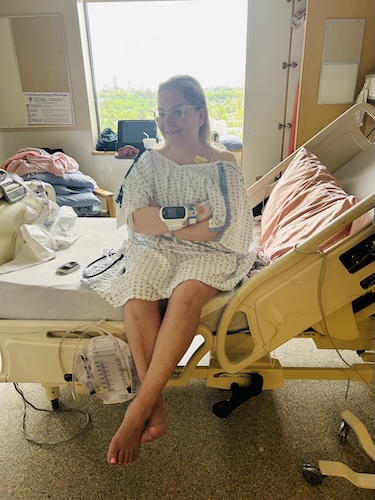
Basically, they cut me from bra line to bikini line; they opened me up “like Humpty Dumpty.” They did a complete hysterectomy, removed and closed my rectum, and placed my colostomy on my left side, connected to my sigmoid colon. I’ve had more epidurals than people have had babies.
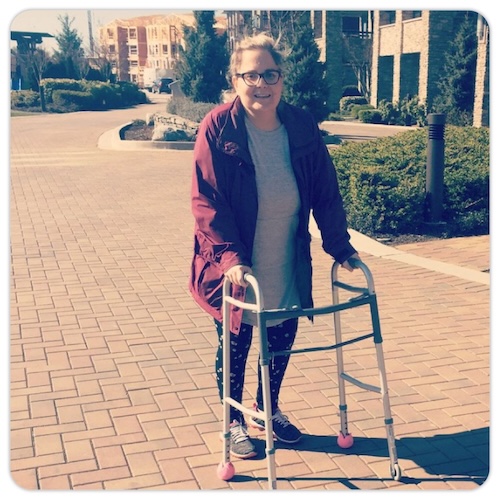
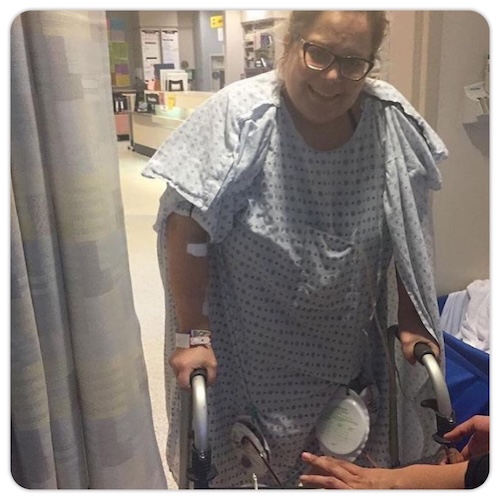
When I woke up, I was covered in over 67 staples. Learning to walk again was incredibly difficult. My core was rebuilt, and I ended up with hernias later.
The mindset around my ostomy bag
The colostomy was not hard for me, because I used it as a shield.
It’s much harder to talk about having a rebuilt vulva that’s very narrow and hard for intimacy, or about not having a rectum. We jokingly call it a ‘Barbie butt’ in the ostomy community. I still hide behind the bag, because it’s easier to talk about. Every year, I think about being more transparent about my vulva journey. The ostomy was the easiest thing for me. I’ve never really had any major mishaps, and when meeting people, I just get it out there: ‘I’m a cancer survivor and have a colostomy.’
When it comes to dating, my digestion is much the same as anyone’s, thanks to still having a colon. About two and a half years in, I learned I didn’t have to empty my colostomy; I just wear a closed pouch and replace it. In six years, I haven’t put stool in a toilet. I can’t just be intimate the way others can, and if I overdo things, my body tells me to rest.
She’s my crutch, but she’s my bag, and I love her. I name her Winnie, like Winnie the Pooh.
How social media helped me
Cancer made me a better person. Pre-cancer, I was self-conscious and worried too much about what others thought. Cancer forced me to fight. Not working for six years gave me time to know myself differently.
I took to social media. Instagram in 2014 wasn’t what it is today. I started sharing my story; my cousin helped me pick the handle “Ostomate and the City.” Over the years, I’ve built relationships and a strong community.
It’s easy to look at the ostomy bag and hate it, but we need to hate cancer, not the bag.
In August, I attended the United Ostomy Association of America conference. Women came up to me, saying that I had helped them. This journey has been a boomerang; someone helped me, and now I help others. If I just sat at home with my anxiety, I’d never be where I am today.
There was nothing I could do to change it. Accepting and carrying on really helped me get to where I am today.
Monitoring and living — not just surviving
After surgery in 2018, the doctors said they had done everything possible.
Monitoring began monthly, then was spaced out to annually. Now, I go in once a year.
My team is great; if I feel something’s wrong, they’ll get me in. My pattern is pain, so as long as I’m not in pain, I’m okay.
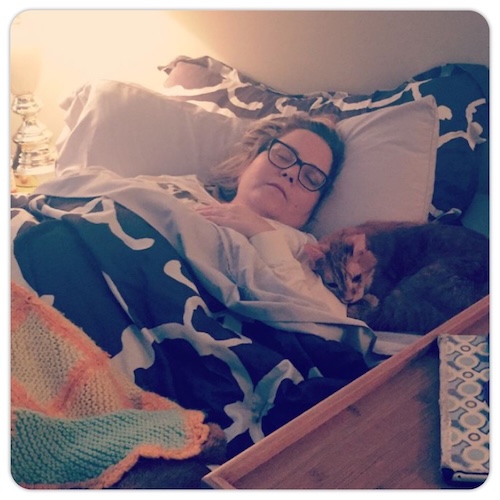
For a while, I lived in fear of cancer returning, but eventually tried to focus on just living. There’s living, and then there’s living. I’m not living some high-flying, traveling-everywhere lifestyle. I spend time with people I want to be around, and I’m okay spending time alone. My cat is snuggly.
I do get some anxiety in large crowds, preferring assigned seating. I choose who to be with and where to go. As a cancer survivor, you feel like you have to do everything, but I learned I only need to do what’s right for me. If I could be hit by a bus tomorrow, would my friends and family know what to do? I wrote a will before my 2018 surgery. I’m always organizing, trying to make sure that, if something happens, people can find what they need.
It’s easy for darkness to overtake us, but I’ve built support around myself. If something bothers me, I move on.
We’re never free of cancer because cancer has changed us emotionally and physically. But I don’t want cancer to control me, so I just try to control my life, to make it easier.
Understanding the cause, and breaking stigma to talk about “below the belt” cancers
For years, I didn’t know. Neither did the doctors. I’d ask: ‘Why me? What did I do? What did I eat?’
It turns out that I had colon tissue in my vulva, due to tissues not separating properly in utero. That eventually led to aggressive fighting between tissues, and ultimately, cancer. So it’s essentially been in me since conception.
As girls, we’re taught not to even say ‘vagina,’ let alone ‘vulva.’ Boys can be open, but not girls. Today, my young niece’s generation is more open, but when you get cancer below the belt, you feel shame, disgust, and dirty. Having cancer in your private parts is hard to talk about.
Breast cancer is socially accepted; gynecological cancers are not as easy to discuss. But you should never feel shame.
What I want people to know
It’s never really over. Even if someone says they’re cancer-free, you’re not free of what you’ve been through.
People say time to move on, but sometimes you just need time in the depths of despair. There is no timeline for recovery.
I mourned not being a parent, but what gets me now is thinking about legacy. What’s left of me when I’m gone? I used to mail everyone birthday cards; before my big surgery, I wrote out a year’s worth of cards just in case I didn’t wake up.
Legacy can be left in many ways, even if it’s not through children.
Inspired by Carly's story?
Share your story, too!
Related Cancer Stories
- 1
- 2