Categories
FAQ Medical Experts Non-Hodgkin Lymphoma Oncologist Patient Events Waldenström’s Macroglobulinemia

Waldenström Macroglobulinemia FAQs: Expert Answers with Dr. Stephen Ansell

Between Visits: FAQs with Experts: Waldenström

Demystifying Waldenström Macroglobulinemia (WM)

What You’ll Learn: A Patient-Led Guide to Waldenström

Move from overwhelmed to empowered. Dr. Stephen Ansell answers your pressing questions on WM diagnosis, “watch and wait,” and the latest treatment options.

Topics:

  • The WM Identity: Understand why Waldenström’s is a “hybrid” cancer—sitting right between lymphoma and multiple myeloma—and why that matters for your diagnosis.
  • The “Watch and Wait” Strategy: Discover why doing nothing is sometimes the most powerful treatment choice, especially if you have MGUS (an asymptomatic protein abnormality).
  • Managing the Daily Impact: We break down how “thick blood” (hyperviscosity) affects your vision and thinking, and what you can do about it.
  • Partnering with Your Team: Learn how to use biomarker results—like MYD88 and CXCR4 (genetic markers that guide treatment)—to have more informed conversations with your oncologist.
  • Your Actionable Future: Get a clear look at the choice between time-limited infusions and long-term daily pills (BTK inhibitors) so you can choose what fits your lifestyle best.

Expert:

Stephen Ansell, MD, PhD
Professor of Medicine, Department of Hematology
Mayo Clinic, Rochester, MN

Thank you to Blood Cancer United for their partnership. They are here for you with information about clinical trials, resources, and dedicated support through their Information Specialists.

Move from Overwhelmed to Empowered as you listen in to leading experts answer patients’ most pressing questions.


Categories
Acute Myeloid Leukemia FAQ Medical Experts Oncologist Patient Events

Understanding MPNs: Expert Answers to Your Most Pressing Questions with Dr. Kristen Pettit

Between Visits: FAQs with Experts: MPNs

Demystifying Myeloproliferative Neoplasms (MPNs)

What You’ll Learn: A Patient-Led Guide to MPNs

Navigating a rare blood cancer diagnosis like an MPN can feel like being lost in a thick fog of medical jargon and “what-ifs.” Whether you are struggling with the relentless fatigue of Myelofibrosis or the anxiety of “watch and wait” with ET or PV, you deserve answers that make sense. In this “Office Hours” session, we sit down with a leading specialist to translate complex science into actionable steps for your daily life.

Topics:

  • Understanding the “Why” Behind Your Symptoms: Discover why your bone marrow’s “thermostat” is stuck in the “on” position and how that leads to common challenges like fatigue, “brain fog” (difficulty concentrating), and that classic “hot shower itch.”
  • Expert Answers on Your Diagnosis: Get the facts on why certain tests—like Next-Generation Sequencing (a highly sensitive genetic test) or bone marrow biopsies—are essential to identifying the specific “driver mutations” (genetic changes) like JAK2, CALR, or MPL that guide your care.
  • Managing Your Daily Life & Wellness: Learn the “middle ground” of weight management—why losing weight can be a red flag in Myelofibrosis, while maintaining a healthy weight is vital in PV to reduce the risk of blood clots.
  • Getting What You Need from Your Care Team: Master the use of “Symptom Assessment Forms” to track how you feel, ensuring your doctor sees the full picture of your quality of life, not just your blood counts.
  • Actionable Next Steps for Specialized Care: Walk away with a clear plan on how to access an MPN specialist via telehealth, even if you live far from a major medical center, to ensure you are receiving the most “state-of-the-art” guidance.

Expert:

Dr. Kristen Pettit
Assistant Professor of Hematology and Oncology
University of Michigan, Ann Arbor, MI

Thank you to Blood Cancer United for their partnership. They are here for you with information about clinical trials, resources, and dedicated support through their Information Specialists.

Move from overwhelmed to empowered as you listen in to leading experts answer patients’ most pressing questions.


Understanding MPNs: Expert Answers to Your Most Pressing Questions with Dr. Kristen Pettit
Hosted by The Patient Story Team | 31m 34s
Tackle the complexity of MPNs with Dr. Kristen Pettit. Discover a grounded, honest approach to managing your condition and partnering with your care team.
Categories
FAQ Medical Experts Multiple Myeloma Myeloma Oncologist Patient Events

Multiple Myeloma FAQ: Expert Answers to Your Most Pressing Questions with Dr. Brandon Blue

Between Visits: FAQs with Experts: Multiple Myeloma

Multiple Myeloma FAQ "Office Hours" with Dr. Brandon Blue

What You’ll Learn: A Patient-Led Guide to Myeloma

Demystify Multiple Myeloma with Dr. Brandon Blue as he shares expert insights to help you understand your diagnosis and feel better equipped to engage in your care.

Topics:

  • Spotting the Silent Signs: Learn why multiple myeloma is often found “by happenstance” and what to do if persistent bone pain or fractures just aren’t healing as they should.
  • Deciphering the “Doctor Speak”: Get a clear explanation of the difference—or lack thereof—between “myeloma” and “multiple myeloma,” and learn how to read your labs when terms like immunoglobulins are abbreviated as IG.
  • Maintaining Your Quality of Life: Understand how myeloma is managed as a chronic (long-term ) condition and why keeping up with your heart health and general wellness is vital for a lifelong journey.
  • Partnering with Your Care Team: Discover why you should never go to an appointment alone and how to establish a rapport (a close and harmonious relationship ) with a doctor who makes you feel heard.
  • Closing the Care Gap: An honest look at why Black patients face higher mortality rates and how standardizing access to high-quality treatment can eliminate these disparities.

Experts:

Dr. Brandon Blue, MD
Multiple Myeloma Expert
Moffitt Cancer Center, Tampa, FL

Bryon Daily
Multiple Myeloma Patient Advocate
Blood Cancer United

Thank you to Blood Cancer United for their partnership. They are here for you with information about clinical trials, resources, and dedicated support through their Information Specialists.

Move from Overwhelmed to Empowered as you listen in to leading experts answer patients’ most pressing questions.


Making Sense of CBC Test Results & More
Hosted by The Patient Story Team | 31m 34s
What do your blood test results really mean — and how do they help doctors detect or monitor cancer? In this empowering session, hematopathologist Dr. Kamran Mirza joins cancer advocate Stephanie Chuang to break down the most common diagnostic tests, including the CBC.
Categories
DLBCL FAQ Leukemia & Lymphoma Medical Experts Non-Hodgkin Lymphoma Oncologist Patient Events

DLBCL Explained: Practical Answers with Dr. Tycel Phillips

Between Visits: FAQs with Experts: DLBCL

DLBCL Explained: Practical Answers with Dr. Tycel Phillips

What You’ll Learn: A Patient-Led Guide to Diffuse Large B-Cell Lymphoma (DLBCL)

Our “Office Hours” are designed to feel like a conversation with a well-informed friend who actually listens. We dive deep into the questions patients actually ask, translating complex clinical data into actionable steps for your care.

Topics:

  • Understanding Your Diagnosis: Why DLBCL is the most common non-Hodgkin lymphoma and how its “aggressive” nature actually makes it more treatable and curable.
  • The “Alphabet Soup” Decoded: An expert breakdown of standard frontline treatments like R-CHOP and the newer Pola-R-CHP—and what they mean for your daily life.
  • Fueling Your Recovery: Why “calories are king” during treatment and how simple movement (like walking) can help you overcome chemo-fatigue (extreme exhaustion caused by treatment).
  • Advocating for Your Future: How to talk to your care team about advanced options like CAR T-cell therapy (using your own immune cells to fight cancer) if the first treatment doesn’t work.

Experts:

  • Dr. Tycel Phillips, MD
    Associate Professor, Division of Lymphoma
    City of Hope, Los Angeles, CA
  • Dr. Robyn Stacy-Humphries, MD
    DLBCL Patient Advocate & Radiologist

Thank you to Blood Cancer United for their partnership. They are here for you with information about clinical trials, resources, and dedicated support through their Information Specialists.

Move from Overwhelmed to Empowered as you listen in to leading experts answer patients’ most pressing questions.


Categories
FAQ Medical Experts MPNs Myelofibrosis Myeloproliferative neoplasms (MPNs) Oncologist Patient Events

Navigating AML: Practical Answers to Everyday Questions with Dr. Alice Mims

Between Visits: FAQs with Experts: AML

Demystifying Acute Myeloid Leukemia (AML)

What You’ll Learn: A Patient-Led Guide to AML

In this informal “Office Hours” session, Steve Buechler takes your questions to Dr. Mims, translating complex leukemia concepts into actionable knowledge.

Topics:

    • The “Acute” Reality: Recognizing Symptoms Early
    • Decoding the Lab: Why Your Genetic Profile Matters
    • Living Through Treatment: Protecting Your Health
    • Finding Your Voice: How to Align Care with Your Goals
    • Actionable Next Steps: Preparing for Your Next Appointment

Speakers:

  • Dr. Alice Mims, MD
    Professor and Physician; Associate Director of Clinical Research
    The Ohio State University Comprehensive Cancer Center – James; Columbus, Ohio
  • Steve Buechler
    AML Patient Advocate
    8-year survivor and author of “How Steve Became Ralph”

Thank you to Blood Cancer United for their partnership. They are here for you with information about clinical trials, resources, and dedicated support through their Information Specialists.

Move from Overwhelmed to Empowered as you listen in to leading experts answer patients’ most pressing questions.


Navigating AML: Practical Answers to Everyday Questions with Dr. Alice Mims
Hosted by The Patient Story Team | 31m 34s
Get clarity on your AML journey. Dr. Alice Mims shares expert insights to help you understand your diagnosis and feel better equipped to engage in your care.
Categories
FAQ Follicular Lymphoma Medical Experts MPNs Non-Hodgkin Lymphoma Oncologist Patient Events

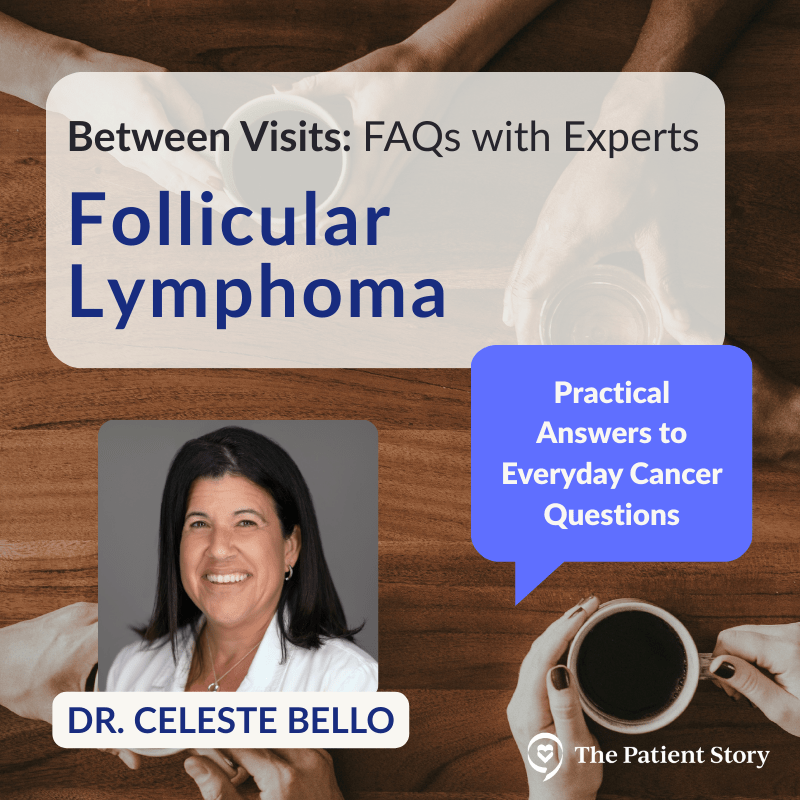
Follicular Lymphoma FAQs: Reassuring Guidance from Dr. Celeste Bello

Between Visits: FAQs with Experts: Follicular Lymphoma

Demystifying "Incurable but Treatable" Follicular Lymphoma

The transition from a follicular lymphoma (FL) diagnosis to a place of confidence can feel overwhelming, especially when faced with terms like “slow-growing” and “incurable.”

What You’ll Learn: A Patient-Led Guide to Follicular Lymphoma

This session of informal “Office Hours” is designed to bridge that gap, moving you from confusion to becoming an active agent in your own care. We tackle the common anxieties surrounding staging, the “watch and wait” period, and the timing of advanced therapies.

Topics:

  • Why Staging Isn’t Everything (And What Actually Matters) Discover why the specific type of lymphoma and how you actually feel are often more important indicators for your care plan.
  • The Truth About “Incurable” vs. “Manageable” Hear an expert explanation of how many patients live normal lifespans while managing FL like a chronic condition.
  • Finding Peace in “Watch and Wait”  Understand the clinical reasons behind waiting and why “hitting it hard” early isn’t always the best path for your long-term health.
  • When to Introduce Advanced Therapies (CAR T & Bispecifics) Gain an actionable understanding of the “treatment ladder.” 
  • The Essential Step: Securing a Specialist Review Walk away with a clear plan on how to get a second opinion on your pathology (the laboratory study of your tissue) to ensure your diagnosis is 100% accurate before you begin treatment.

Experts:

  • Celeste Bello, MD
    Hematologist-Oncologist, Senior Member of the Malignant Hematology Program
    Moffitt Cancer Center, Tampa, Florida
  • Stephanie Chuang
    Non-Hodgkin Lymphoma Patient Advocate
    Founder of The Patient Story

Thank you to Blood Cancer United for their partnership. They are here for you with information about clinical trials, resources, and dedicated support through their Information Specialists.

Move from Overwhelmed to Empowered as you listen in to leading experts answer patients’ most pressing questions.


Demystifying "Incurable but Treatable" Follicular Lymphoma
Hosted by The Patient Story Team | 31m 34s
Facing a Follicular Lymphoma diagnosis? Dr. Celeste Bello provides a calm, structured guide to help you feel less alone and more informed.
Categories
CLL CLL FAQ Medical Experts Oncologist Patient Events

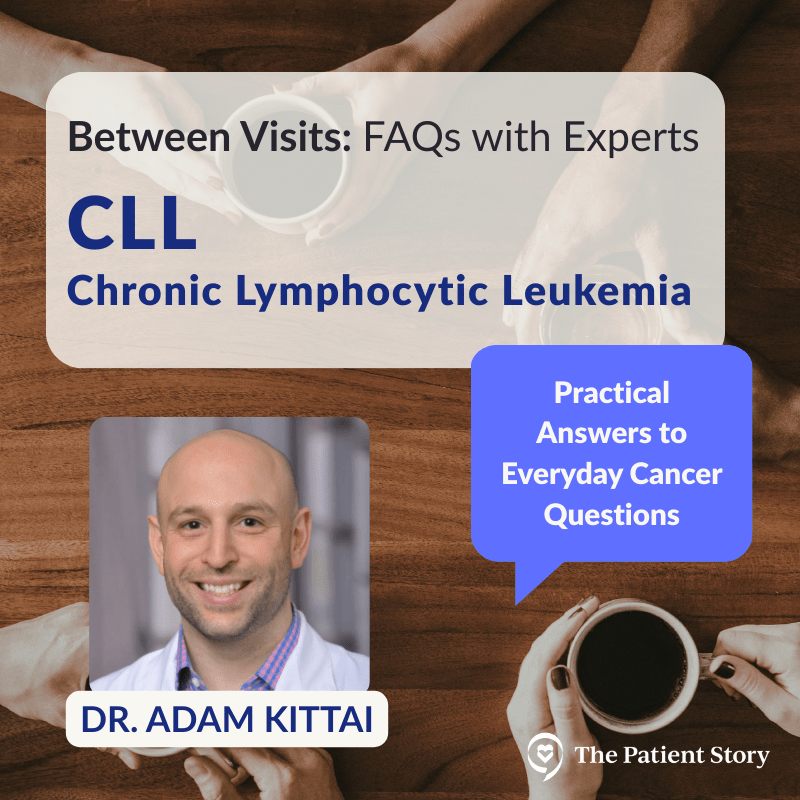
CLL Expert FAQs: Bridging Lived Experience and Medical Insight with Dr. Adam Kittai

Between Visits: FAQs with Experts: CLL

Demystifying Chronic Lymphocytic Leukemia (CLL)

What You’ll Learn: A Patient-Led Guide to CLL

Our “Office Hours” bridge the gap between clinical expertise and lived experience. In this program, we tackle the topics that matter most to your daily life:

  • Understanding Your Diagnosis: Learn exactly what CLL is—a cancer of the immune system—and why it often acts more like a lymphoma than a traditional leukemia.
  • The “Watch and Wait” Strategy: Get an expert explanation on why “active surveillance” (monitoring without immediate treatment) is often the safest, most effective path forward.
  • Daily Living & Wellness: Discover how simple lifestyle adjustments, from vitamin D to regular exercise, can help manage common symptoms like fatigue and keep you “treatment-ready.”
  • The Power of Second Opinions: Understand why seeing a CLL specialist—especially when transitioning from surveillance to treatment—is a vital step in your advocacy toolkit.
  • Your Actionable Roadmap: Walk away with a “Shower Check” routine for monitoring lymph nodes and a clear understanding of the genetic tests (like FISH and IGHV) that define your personalized care plan.

Expert Panel:

  • Dr. Adam Kittai, MD
    Associate Professor of Medicine and Hematology/Oncology; Assistant Director of Lymphoma Clinical Research
    Icahn School of Medicine at Mount Sinai, New York
  • Michele Nadeem-Baker
    CLL Patient Advocate & Oncology Host

Thank you to Blood Cancer United for their partnership. They are here for you with information about clinical trials, resources, and dedicated support through their Information Specialists.

Move from Overwhelmed to Empowered as you listen in to leading experts answer patients’ most pressing questions.


CLL Expert FAQs: Bridging Lived Experience and Medical Insight with Dr. Adam Kittai
Hosted by The Patient Story Team | 31m 34s
Join Dr. Adam Kittai for practical answers to everyday CLL questions. Learn how to translate complex medical topics into human-centered understanding.
Categories
FAQ Resources Treatment Info

Genetic Testing For Cancer

Genetic Testing For Cancer


You or someone you know may have heard about genetic testing. Maybe you are preparing to get genetic testing done and are wondering what to expect. Rest assured, it’s a fairly straightforward process, and we’ve spoken to some experts who break it all down for you. Read on to learn about who should get tested, how the process works, and other important information about genetic testing.

What is genetic testing?

Genetic testing analyzes your DNA to determine whether you have genetic mutations linked to cancer. Doctors will typically ask for a blood or saliva sample to perform these tests.

Who should get genetic testing?

Certain factors like your personal cancer diagnosis, family history, age and personal medical history are extremely important in determining whether you need genetic testing.

Julie Solimine, MGC, CGC of Mercy Medical Center in Baltimore says that the best candidates for genetic testing include:

  • People with early onset cancers
    • Such as breast, colon, or uterine cancer diagnosed under the age of 50
  • Individuals with more than one primary cancer diagnosis in their lifetime
    • Such as bilateral breast cancer, or a diagnosis of both colon and uterine cancer in the same person
  • Individuals with a family history of multiple diagnoses of the same cancer type, especially if early onset
  • Individuals diagnosed with ovarian cancer, male breast cancer, or pancreatic cancer at any age
  • Ancestry that increases your risk, such as Ashkenazi Jewish ancestry.

Additionally, you may be a candidate for genetic testing if you have:

  • Relatives that have similar types of cancer that could be linked to one particular genetic mutation (i.e. if your aunt has ovarian cancer and your mother has breast cancer, both of which could possibly be linked to a BRCA2 mutation). 
  • Relatives with multiple different cancer diagnoses.
  • Physical symptoms that prompt your doctor to recommend testing.
Who in my family should pursue genetic testing?

Once you’ve identified an individual or family who would benefit from genetic testing, how do you know to test? Do you test everyone? Here’s what certified genetic counselor Angela Brickle says:

“We typically recommend that an individual who has been affected by a particular suspicious cancer or the youngest person who has been diagnosed in the family get tested.

That’s simply because they would be the most likely candidates to find something helpful rather than testing someone in the family who hadn’t had cancer.”

Angela Brickle

Just because someone has cancer doesn’t necessarily mean that it’s due to a genetic factor and they need testing. In fact, “approximately 90% of cancer is sporadic, meaning it is due to random chance, aging, or environmental causes,” according to Solimine.

That’s why it’s so important to give your doctor all the information they need, including family and personal medical history. That way, they can offer you the best, most beneficial testing and treatments.

How do I ask for genetic testing?

If you think you may need genetic testing, first speak to a genetic counselor. A genetic counselor can help you determine whether genetic testing is right for you and can help you figure out payment options, including insurance coverage and low-cost testing.

Your healthcare provider can help you find a genetic counselor. Some healthcare providers also provide genetic counseling. 

How does the genetic testing process work?

“There are two parts in the process: genetic counseling and genetic testing. Ideally, genetic counseling happens before the testing. 

With counseling, I meet with the patients. We go over all their medical history and family history, and then I explain everything to them. I tell them how genetic testing is done (through a blood draw), what we’re looking for, and all the different types of results. 

The next part is actual testing. They get their blood drawn, get the testing done, results take maybe a few weeks, and then I follow-up with them about the results. Depending on results, if there are any additional appointments, screenings, or anything needed, we walk through that with them as well,” Brickle says.

Getting genetic testing results back

So, then what are the types of results you can receive from your genetic testing and what do they mean? Your results can come back positive, negative, or variant of uncertain significance (VUS).

Your genetic counselor will go over these results with you in their office after testing. Before testing, your counselor will brief you on what your results could mean.

As a refresher, a positive result means there was a change or mutation detected in a gene.

“A positive result does not mean that a person has cancer or was born with cancer, and it doesn’t mean it’s a guarantee that they will get cancer, but their risk might be higher,” Brickle says.

A negative result means there were no detected changes or mutations in specific genes covered by the test.

“A negative result may reduce suspicion of a hereditary condition, but it doesn’t necessarily eliminate every genetic possibility. In that case, I always make sure to let patients know we want to continue to follow them based on their personal and family history,” Brickle says.

A variant of uncertain significance shows a change in a specific gene, but it’s one that we’re still learning about.

“We don’t treat them like a positive, but it’s one that the lab will learn more about and try to clarify. If they can learn more about it, they will update us,” Brickle says.

How does genetic testing shape treatment?

Genetic testing results for an individual can change their treatment and/or screening options. If someone tests positive, they might consider getting more frequent screenings, or they may consider a surgical option like a double mastectomy.

Genetic testing results not only change the treatment options for a current patient, but they may also change the lives of that individual’s family. Just ask Shirley Pattan, an ovarian cancer thriver:

“Throughout all this, I did genetic testing, and it came back that I was BRCA1+. I had prophylactic surgeries for breast cancer. I had a double mastectomy and reconstruction. My sisters got tested and had preventative surgeries as well. One sister actually found out she had stage 1 ovarian cancer, so she caught it early and went through treatment.”

Shirley Pattan, Ovarian Cancer

Brickle calls this a “downstream effect.” Genetic testing can help your family members be proactive, and in some cases, it might save their lives.

Does insurance cover genetic testing? 

Most insurance plans will cover genetic testing, but each plan’s rules vary. Many plans will require genetic counseling first. FORCE provides a detailed overview of payment options here

Under the Affordable Care Act (ACA), women with a family or personal history of cancers linked to the BRCA genes can get genetic counseling and, if recommended, genetic testing covered with no co-pay. People with other genetic mutations are not entitled to zero co-pay testing under the ACA.

How do insurance companies treat genetic testing?

“A lot of insurance companies follow typical National Comprehensive Cancer Network (NCCN) guidelines. Those are just established guidelines for who might be appropriate for testing. If a patient meets that criteria, testing is usually covered,” Brickle says.

If your insurance doesn’t cover testing, you can always reach out to your social worker or navigator with questions about financial support and programs.

Luckily, cost has come down in recent years if you’re paying out of pocket. Many labs charge around $250.

Can genetic testing affect my insurance?

“Genetic testing can have important insurance discrimination implications, which should be taken into account before an individual sends in their sample. The Genetic Information Nondiscrimination Act of 2008 (GINA) is a federal law that protects people from genetic discrimination in health insurance and employment.

Genetic discrimination is the misuse of genetic information. However, GINA does not apply to life, disability, and long-term-care insurance, and also has other limitations. A genetic counselor can help patients determine potential risks to future coverage at the time of their consultation,” Solimine says.

Keep insurance concerns in mind when you see your genetic counselor before testing. They’ll be able to answer any questions you may have.

The future of genetic testing

“Genetic testing is always changing, and we’re always learning more. Our evaluation one day might be different down the road. We also recognize that families change. As time goes by, there may be new diagnoses. It’s a continual discussion. 

It’s always important to make sure that you update your doctors about your family history and just that you know the family history. Talk to your family about those questions,” Brickle says.


Cancer Treatment FAQs and Resources

Top Cancer Blogs

Sometimes the content we need is to read journals from patients and caregivers, themselves. Here’s a list of wonderful blogs by cancer type curated by The Patient Story...

Genetic Testing For Cancer

Read real genetic counselors and patients explain how genetic testing works, how it affects treatment and outcomes, and other important information to know...

Cancer Organizations

Choose from over 40 cancer organizations and nonprofits for any cancer type and location Find where to get help for financial, housing, transportation and more...

Health Literacy

October is Health Literacy Awareness. Health literacy is when the information and health services you need align with your ability to process, understand, and use that information and those services. Why does it matter?...

Hereditary Cancer: Is Cancer Hereditary?

Read information and FAQs about hereditary cancers...