Categories
Breast Cancer DIEP Hormone Therapies Invasive Ductal Carcinoma Mastectomy Patient Stories Surgery tamoxifen Treatments

Krista’s Stage 1A IDC Breast Cancer with ATM Mutation Story

Krista’s Stage 1A IDC Breast Cancer with ATM Mutation Story

Interviewed by: Taylor Scheib
Edited by: Katrina Villareal

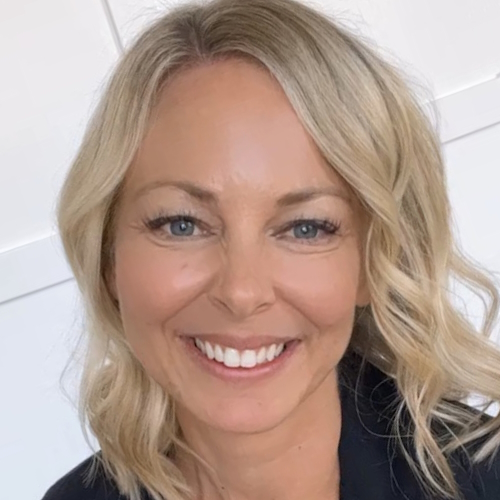
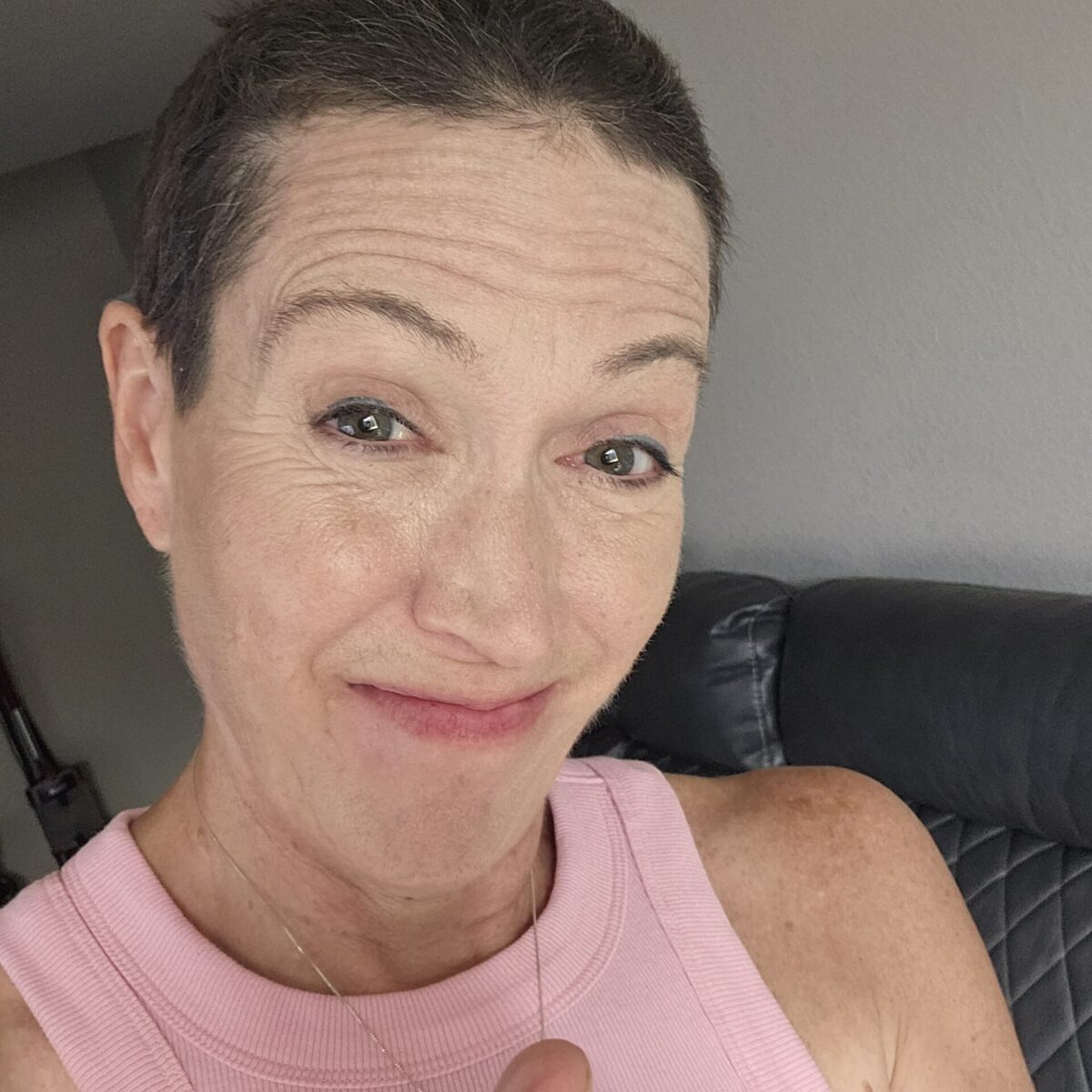
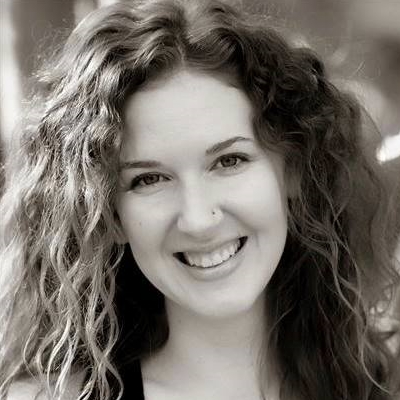
Krista B. feature profile

Krista’s stage 1A breast cancer journey is deeply connected to her family’s history. Her mother was diagnosed with stage 3 breast cancer at 48 and underwent various treatments like chemotherapy, radiation, and hormone therapy. She tested positive for a mutation in the ATM gene, which raises the risk of breast cancer. This finding led Krista to get genetic testing, revealing she also carried the same mutation, giving her a 69% risk of developing breast cancer.

Krista began following a rigorous screening schedule, alternating between mammograms and breast MRIs every six months. Despite a normal mammogram, her MRI detected an abnormality. Though specialists initially dismissed it as non-cancerous, Krista felt uneasy and insisted on a biopsy. This confirmed her breast cancer diagnosis just two weeks before her scheduled preventative surgery.

She chose to undergo a double mastectomy with DIEP flap reconstruction, using tissue from her abdomen to reconstruct her breasts. The process involved an initial eight-hour surgery followed by a revision surgery. After the procedure, Krista was relieved to avoid chemotherapy due to her low Oncotype DX score. Instead, she began a five-year course of tamoxifen, experiencing minor side effects like sleep disturbances and fatigue.

Her treatment plan also included daily exercise, which helped manage the side effects. Krista’s nutrition strategy focused on a plant-heavy diet, aiming for 8 to 10 servings of fruits and vegetables daily with a balanced intake of high-quality, low-quantity meat.

Mentally, Krista dealt with stress by spending quiet time, running, and leaning on her husband’s support. She emphasizes the importance of making informed, personal treatment decisions and encourages others to consider genetic testing and explore all their options.

Krista’s motivation to share her story comes from a desire to empower others with the knowledge she has gained. She hopes to help others make informed decisions and potentially prevent cancer. She advocates for taking one’s time to navigate the overwhelming journey of cancer, stressing the importance of making decisions that bring peace of mind.


  • Name: Krista B.
  • Diagnosis:
    • Breast Cancer
    • Invasive ductal carcinoma (IDC)
    • HR+, HER2-
  • Staging:
    • Stage 1A
  • Mutations:
    • ATM
  • Symptoms:
    • None; abnormality detected in breast MRI
  • Treatments:
    • Surgery: double mastectomy with DIEP flap reconstruction
    • Selective estrogen receptor modulator (SERM): tamoxifen
Krista B.
Krista B.
Krista B.
Krista B.
Krista B.
Krista B.

This interview has been edited for clarity and length. This is not medical advice. Please consult with your healthcare provider to make informed treatment decisions.

The views and opinions expressed in this interview do not necessarily reflect those of The Patient Story.

Expand to read the AI-generated YouTube Video Transcript

[00:01] Hi, I’m Krista, and I am a nurse and a patient advocate and a breast cancer survivor. My story really begins with my mom’s cancer diagnosis. She was diagnosed at age 48 with stage 3 breast cancer. At that time, she was only tested for two gene mutations linked to breast cancer, which were the BRCA1 and BRCA2 mutations. She was negative.

[00:36] Fast forward, she did every type of treatment—chemo, radiation, hormone therapy, everything. She put up a strong fight for about 12 years. Shortly before she passed away, she was unfortunately offered expanded genetic testing for other genes linked to breast cancer. She did test positive for a mutation in her ATM gene, which was a pathogenic mutation and higher risk than the average ATM gene.

[01:15] She shared that with all of her children because we then had a 50% chance of inheriting that from her, so we had the option to also test for that mutation. A few months after she passed away, I decided to move forward with my own genetic testing and found out I was also a carrier of the same mutation. So, I had a 69% risk of breast cancer, a 5 to 10% risk of pancreatic cancer, and also a 2 to 3% risk of ovarian cancer.

[01:56] Because I was at high risk for these cancers, I started to follow the recommendations for more thorough and frequent screenings, which meant on top of mammograms, I was also doing breast MRI, alternating every six months. I started that process and also began considering different surgical options for preventative surgeries.

[02:20] During this time, my mammogram was normal, but my breast MRI showed an abnormality. We did some follow-up testing—ultrasound and diagnostic mammogram. At that time, they said that it did not look like cancer. I was nervous about that with my risk, so I followed up and had three specialists tell me that it was not cancer. They advised me to take my time, make my decisions, and move forward with the surgical plan that I had in place.

[03:01] So, I did that, but because it started to have a possibility of affecting the process of my surgery, I requested a biopsy. It came back two weeks before my preventative surgery and showed a diagnosis of breast cancer. It was a little bit of a shock. I went into my biopsy thinking, “Oh, I’m good. This is just a routine check to make sure it’s okay to move forward with my surgery in the order we had planned.” So, I was really surprised at the diagnosis, but I was grateful to have that plan in place already and that I wasn’t scrambling to make decisions.

[03:42] I had my first surgery, a double mastectomy with flap reconstruction, on January 30th of this year, followed by a second surgery in April. Luckily, I really believe that I owe this all to my mom and advances in genetics. I’m grateful every day for the fact that she did genetic testing because, to this day, at this point in time, I don’t think I would still have a diagnosis based on my screening schedule. I’m very grateful I was able to avoid chemotherapy and a lot of the other things that I watched her go through. I’m grateful for that every day. It saved my life.

[04:36] If you’re interested in doing genetic testing, the first step would be to talk to your medical provider. This can sometimes be your primary care provider, an OB-GYN, or any specialist in the field of cancer that you may or may not have a family history with. You’re going to want to request a hereditary cancer panel, which screens for somewhere around 79 different genes that are now linked to cancer. The first step would be to request that from your provider, and most of the time, they’ll recommend that you see a genetic counselor, which is a great idea in my opinion. They’re amazing and have the most up-to-date information on the different genes and the risks associated with each. They do a deep dive into your family history and then make recommendations for different testing.

[05:31] From that point, it has really changed my life. I have three little girls, and I just think how different it’s going to be for them and how much they can avoid. But when it comes down to choices for reconstruction, there are typically three main choices that are offered to patients or should be offered to patients. One of them is esthetic flat closure, the second one is breast implants, and the third is flat base reconstruction. Flat base reconstruction is one that’s a little less known. It was my choice, and rather than having an implant, they take tissue from a part of your body and basically transplant it with all the vessels and use that in place of the implant for your reconstruction.

[06:26] It’s pretty amazing the way that they do it, and there are different places that they can take the tissue from. One of the most common is the one that I chose called deep flap reconstruction. They take tissue from your abdomen and use that for the reconstruction. It’s a little bit of a longer surgery upfront, and it was a two-phase surgery for me. That’s very common for patients who choose this reconstruction option. It is around an eight-hour surgery usually, so a little longer.

[07:06] My advice to anyone who is facing these choices is that they’re very hard choices, right? They’re life-changing decisions that you have to make. Sometimes you aren’t given a lot of time, but the thing that I hope everyone understands is that there are different options out there. Regardless of what anyone else thinks—whether it’s your provider, your family members, or someone who has been through it—ultimately, it’s your decision, and it’s what you have to live with. It should be the choice that makes you feel the most at peace moving forward.

[07:50] I have a lot of patients who I talk to who get very frustrated because they were not offered all the options. That’s one of the reasons I like to share my story because even for me as a nurse, in the beginning, I did not have a clue that this was an option. My biggest advice would be to take your time. Even with a cancer diagnosis, you have time to make an informed decision. Consider all of your options and choose the one that makes you feel the most at peace moving forward.

[08:25] The recommendation for me, treatment-wise moving forward, was that I had a very low risk of recurrence. My Oncotype score was one out of 100, so no chemo was recommended. But I was hormone receptor-positive, HER2-negative. The recommendation for me was tamoxifen, and that would be over a five-year period. I am at this point only three months in, but very happy to say that my side effects have been very minimal so far. I know that can change, but so far, not bad—just a little bit of sleep disturbance and fatigue, but nothing that is not manageable.

[09:10] One of the things that my oncologist, who I love, recommended was making sure you exercise every day. That was going to make the biggest difference in my side effects on that medication, so he said, “Don’t stop.” So I increased it, and I’m going to keep doing that and hope for the best moving forward. I know that side effects can be really hard sometimes, and it’s always a hard choice. It was something that I never wanted to do, which is why I chose the preventative surgery. But here we are. Just try to make the best of it and take it day by day.

[09:52] I think I tend to carry stress well somehow, but after everything was finished, I felt this huge weight lifted off my shoulders. I remember saying to my husband, “I didn’t even realize how much I was carrying until I was done with the surgery part.” It’s a huge stressor, but I did try to do a few things during the last year as I was going through all of this that helped a lot.

[10:31] For me, I’m not necessarily a meditation person, but that is very helpful for a lot of people. For me, I have a swing on my back porch, and that’s kind of my space where I spend a lot of time. I guess it could be similar to meditation, but that was very helpful to me. I would just go out and have quiet—turn off the phone, have time to just kind of process things, and swing on my swing. Grounding is also really good.

[11:10] Having somebody to talk to is important. I’m very lucky. My husband is very supportive, and he listened to me. I’m an out-loud processor, so he listened as I made all these hard decisions and changed my mind 500 times. Just the back-and-forth, talking about all the things I’m learning about food—you have to have a person who is willing to listen and not necessarily give advice. That was very helpful.

[11:42] I’m also back to the exercise, but running is a huge stress relief for me. That was one of the things I also tried to focus on—making sure I was getting in running and doing some deep breathing.

[11:55] One of the biggest things that feels overwhelming to a lot of people who have just been diagnosed with cancer or are at high risk is, “What do I eat?” That was one of the first things that I said to my doctor, “What should I eat? Is there a specific diet that I should be on?” I talk to women every day who are asking the same questions. It is one of the most impactful things that we can do, but also one of the most overwhelming, especially if you’re trying to navigate all of these things being thrown at you with a new diagnosis and high-risk genes.

[12:34] I am in a Master’s of Medical Nutrition program right now, which I love. I get to focus a lot on the research with cancer prevention and all of the new studies that are coming out. I love it. I’m very passionate about it, but I will also say that there is no perfect plan. There’s no perfect diet that we can all do to prevent cancer, right? There’s no 100% guarantee with anything when it comes to cancer. It does what it wants.

[13:10] Some of the best recommendations I can give are to eat a lot of plants. One of the best things you can do is eat lots of fruits and vegetables. I think the recommendation is 5 or 6 servings. I try to go for 8 to 10 every day, which sounds like a lot, but once you start incorporating them and finding different ways to do it, there are so many things—fruits, vegetables, nuts, legumes, whole grains—that have so many benefits for cancer and trying to prevent cancer and reduce your risk as much as possible.

[13:47] The reason that I like to share this kind of information is because, for me personally, moving from this place of overwhelm and trying to navigate everything into a space where I felt more empowered was huge for me. I remember thinking, “I’m a nurse, and how much of this did I not know from the start, and how much have I had to learn?” I felt very fortunate to have access to a lot of courses and certifications that not everyone has.

[14:26] I feel like I owe my life to my mom and genetic testing, and I would be in a very different place without that. After I went through all of this, I felt this huge responsibility to share with others because I know there are so many people who could benefit from this information. Even if it makes a difference for one person or helps one person feel more empowered in their decision-making and informed about the options that are available, even genetic testing—if it helps one person or prevents one cancer diagnosis—it’s totally worth it.

[15:12] No matter what phase you’re going through, it’s scary, and it’s overwhelming. Whether you have been diagnosed with cancer already or are a provider who is just starting out on your journey, just know that it’s not always going to feel like it feels right now.


Krista B. feature profile
Thank you for sharing your story, Krista!

Inspired by Krista's story?

Share your story, too!


More Breast Cancer Stories

Amelia

Amelia L., IDC, Stage 1, ER/PR+, HER2-


Symptom: Lump found during self breast exam

Treatments: TC chemotherapy; lumpectomy, double mastectomy, reconstruction; Tamoxifen

Rachel Y., IDC, Stage 1B


Symptoms: None; caught by delayed mammogram

Treatments: Double mastectomy, neoadjuvant chemotherapy, hormone therapy Tamoxifen
Rach smiling against fall leaves

Rach D., IDC, Stage 2, Triple Positive


Symptom: Lump in right breast

Treatments: Neoadjuvant chemotherapy, double mastectomy, targeted therapy, hormone therapy
Caitlin

Caitlin J., IDC, Stage 2B, ER/PR+


Symptom: Lump found on breast

Treatments: Lumpectomy, AC/T chemotherapy, radiation, hormone therapy (Lupron & Anastrozole)

Joy R., IDC, Stage 2, Triple Negative


Symptom: Lump in breast

Treatments: Chemotherapy, double mastectomy, hysterectomy

Categories
Abemaciclib (Verzenio) Arimidex (anastrozole) Breast Cancer Chemotherapy Clinical Trials Hormone Therapies Invasive Ductal Carcinoma letrozole Lumpectomy Patient Stories Radiation Therapy Ribociclib (Kisqali) Surgery Targeted Therapy Treatments

Samantha’s Stage 4 ER+ PR+ HER2+ IDC Breast Cancer Story

Samantha’s Stage 4 ER+ PR+ HER2+ IDC Breast Cancer Story

Interviewed by: Taylor Scheib
Edited by: Katrina Villareal

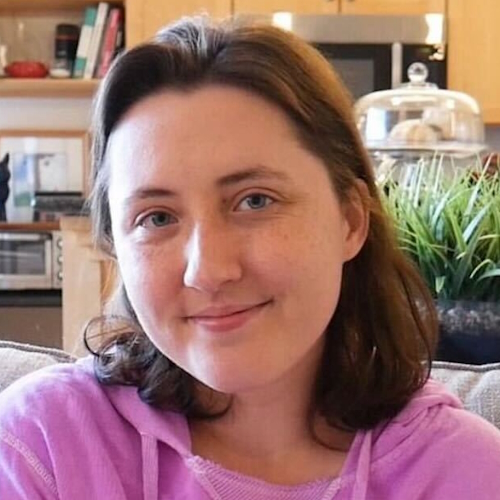
Samantha L.

Samantha’s journey with stage 4 breast cancer began in March 2019 when she was 22. Living in Virginia with her husband and young daughter, she first noticed a lump in her breast. Initially dismissed by her primary care physician and an ultrasound tech as an infection, a biopsy eventually confirmed her cancer diagnosis. Despite the initial belief that her cancer was at stage 1, further tests revealed it had spread, making it stage 4 breast cancer.

Her treatment plan involved chemotherapy, which she had to stop early due to severe neuropathy, followed by a lumpectomy, radiation, hormone therapy, and targeted therapy. Despite significant side effects, she managed to maintain no evidence of disease (NED) for some time. After two years of hormone therapy, Samantha decided to take a break to try for a baby, which led to a successful pregnancy in April 2022.

However, during her pregnancy, she and her family moved to Alaska. While there, Samantha’s cancer recurred, causing severe back pain due to lesions in her spine and pelvis. Unable to travel back to Virginia without stabilizing her spine, she underwent surgery and later radiation before returning to her oncologist for a new treatment plan. She joined a clinical trial involving a new radium drug for bone metastases but had to leave it due to mixed results.

Samantha then resumed hormone therapy and targeted therapy with different drugs than before. Throughout her treatment, she emphasized the importance of careful decision-making, the support of her family, and maintaining a positive outlook.


  • Name: Samantha L.
  • Diagnosis:
    • Breast Cancer
    • Invasive ductal carcinoma (IDC)
    • ER+
    • PR+
    • HER2+
  • Staging:
    • Stage 4
  • Initial Symptom:
    • Lump in breast
  • Treatment:
    • Chemotherapy
    • Surgeries: Surgery: lumpectomy, spinal surgery (fractured vertebrae)
    • Radiation
    • Hormone therapy: anastrozole & letrozole
    • Targeted therapy: abemaciclib & ribociclib
Samantha L.

This interview has been edited for clarity and length. This is not medical advice. Please consult with your healthcare provider to make informed treatment decisions.

The views and opinions expressed in this interview do not necessarily reflect those of The Patient Story.


I went to my regular doctor who said it was nothing. I was so young that it couldn’t be breast cancer.

Introduction

My husband and I live in Virginia and have a 1-½-year old daughter. I was diagnosed with stage 4 breast cancer at 22 in March 2019.

Pre-diagnosis

Initial Symptoms

It was the day after Valentine’s Day. My husband and I weren’t married yet. He was my boyfriend at the time. My mom loves to celebrate Valentine’s with the family. The celebration had ended and we were watching TV. He hugged me from behind and squeezed me tight. When he did, I felt some pain in my left breast. I realized there was a lump.

Samantha L.
Samantha L.
PCP Appointment

I went to my regular doctor who said it was nothing. I was so young that it couldn’t be breast cancer. They told me to put a warm compress on it, but that didn’t do anything. They put me on antibiotics thinking it was an infection and, of course, that didn’t help.

They finally sent me for an ultrasound and the ultrasound tech looked at it and said, “This looks like an infection. You’re 22 and I’ve never seen breast cancer in a 22-year-old, so that’s not what it is. But just in case, you can get a biopsy if you want.”

Getting a Biopsy

I almost left the hospital and went home without doing anything about it. He said it wasn’t urgent, but there was an opening so I got the biopsy done.

When you’re 22 and recently graduated college, cancer is not on your mind at all.

Diagnosis

Biopsy Results

The results revealed abnormal cells, so I had to go in for a second biopsy. That was the one that told us that I had breast cancer.

Reaction to the Diagnosis

When you’re 22 and recently graduated college, cancer is not on your mind at all.

My breast surgeon called me on the day the abnormal cells came back and said, “You need to come in again.” I went in and that’s when she started to prepare me that it could be cancer. She ended up calling me when she found out that it was.

She told me she cleared out an appointment for me at the end of the day and that we should get more information about the hormone receptors at that point. She scheduled an appointment so that I could talk to my family and get all of our questions written down before the appointment.

Samantha L.
Samantha L.

Treatment

Discussing the Treatment Plan

I didn’t know anything. I thought it was stage 1. I went through it in stages, always thinking that it was the least concerning thing. I don’t think there’s a big shock. It came about over time as we had more questions and learned more about it.

She was suspicious right when I walked in. She wanted to check the lymph nodes under my arm because that’s the first place cancer spreads. My boyfriend, my parents, and a friend who’s a doctor came to the appointment with me. They all had questions and wanted to help me and know everything. They went into a separate room and she took me back and did the biopsy under my arm.

When we went back, she laid out a plan. It was March and she said we should be done with all active treatment by Christmas. She said the standard is chemotherapy and then surgery, which was going to be a lumpectomy or a mastectomy, and then radiation. Since my cancer was hormone-positive, I would be on hormone therapy for some years after.

The spot was more contained. They said it was probably cancer because the chemo shrunk it. Then we realized I was stage 4 breast cancer.

Chemotherapy

There were a few hiccups. I had to stop chemo early because Taxol (paclitaxel) was causing neuropathy in my fingers. It got too bad and my oncologist didn’t want permanent nerve damage to happen. I was a little bummed about stopping Taxol early because it made me feel like I wasn’t doing everything that I could, but it’s what happens when your side effects get too bad.

Originally, all of my doctors wanted me to do a double mastectomy because I was young. Younger women tend to choose a double mastectomy because it gives people peace of mind to make sure all of the breast tissue is removed and there’s no place for cancer to grow.

I had a scan where they saw a spot in one of my ribs. They weren’t positive it was cancer and it was in a weird location that they wouldn’t be able to biopsy it. We talked to neurosurgeons about removing it, but we weren’t sure if it was cancer.

When I had chemo and scans again, the spot was more contained. They said it was probably cancer because the chemo shrunk it. Then we realized I was stage 4 breast cancer.

Samantha L.
Samantha L.
Lumpectomy

At this point, mastectomy isn’t going to matter too much because the cancer has already spread past the breasts. If I do a lumpectomy, the recovery time is shorter so I could get started with radiation immediately after. They wanted to do radiation on the rib to target the spot that was seen in the scan since it couldn’t be removed with surgery.

I ended up doing a lumpectomy, which is weird because when you think about cancer when you don’t have it, you think you’d do the most drastic option possible. But when you’re faced with your options, you’re not always picking that for yourself and your situation.

Radiation

After the lumpectomy, I did radiation and finished that in November.

My case wasn’t as bad of a stage 4 breast cancer case, so we were hopeful that I was cured at that point and that getting pregnant would be fine.

Hormone Therapy & Targeted Therapy

I started hormone therapy and targeted therapy after radiation and did that for two years. Since I had radiation on that tiny spot on my rib, I had no evidence of disease (NED) on scans.

I was having a lot of side effects with hormone therapy and targeted therapy. Being NED for so long, I didn’t even know if these therapies were doing anything or just making me miserable. It was causing a lot of physical and mental side effects that were the hardest time in my life so far. Way harder than chemo, radiation, and the rest of it.

I wanted to stop early. My oncologist wanted me to get to three years, but I could only make it two.

Samantha L.
Samantha L.

Fertility Post-Treatment

I wanted to try having a baby so I asked him. He cited some recent studies about women who had breast cancer, stopped hormone therapy after two years, took a break, got pregnant, and then went back on treatment. The chances of their cancer reoccurring didn’t increase. Some people had their cancer come back and some people didn’t, but getting pregnant didn’t affect that.

However, the study was for stage 3 and below and not stage 4 breast cancer. Since I only had a tiny spot of cancer and it wasn’t in multiple places throughout my body, my case wasn’t as bad of a stage 4 breast cancer case, so we were hopeful that I was cured at that point and that getting pregnant would be fine.

I got off hormone therapy and targeted therapy. I started in November 2019 and ended in October 2021. I wasn’t having periods the whole time and then my cycles returned to normal. I felt amazing. I think it was because I wasn’t on hormones anymore. Then I got pregnant in April 2022.

You can’t let the fear of cancer coming back control your life. You can’t make every decision based on whether your cancer comes back or not.

Pregnancy was great. I still had all of the same pregnancy side effects, like nausea, but I was so used to being nauseous from treatment that it didn’t affect me. I just felt good that I wasn’t on medication. There were lingering side effects from both chemotherapy and targeted therapy. I still have hot and cold sensitivity in my fingers, toes, ears, and teeth. I have dry eyes.

It can be difficult because people don’t want their cancer to come back. They don’t want their child to be left without a mother. That’s the main worry people have. My philosophy on it is that you’re not a statistic. You don’t know what could happen in your life and you can’t let the fear of cancer coming back control your life. You can’t make every decision based on whether your cancer comes back or not.

If I can, then I will. If I feel good, then I’m going to do this or that. It’s not a decision that I made easily. My husband and I talked through it and we spoke to our doctor about it. We did what was best for him and what was best for our family specifically. It’s not for everybody. You have to figure it out for yourself.

Samantha L.
Samantha L.

There are all these medical questions that you need to ask your doctor, but it can be a good thing and possible. There’s a lot of new research coming out. You don’t have to be afraid of having hormones in your body after having hormone-positive cancer.

Moving to Alaska

In the middle of my pregnancy, we moved to Alaska, so we were away from my oncologist for a while. I was still keeping in touch with him, but we were hopeful that I was cured since I had scans that showed no evidence of disease for so long after my daughter was born. I was breastfeeding, so we didn’t do a lot of monitoring because I was still feeling good and there were no new symptoms.

Several lesions throughout my spine and pelvis were found on the MRI.

Cancer Recurs

We were on a mountain one day taking family photos when I collapsed to the ground. My back hurt so bad that I couldn’t get up. Five guys had to carry me to the car. I went to the ER that day and eventually had a scan. The results showed a fracture in my spine because there was cancer growing in it, crushing the vertebrae, and causing the pain. Several lesions throughout my spine and pelvis were found on the MRI as well.

I couldn’t get on a plane to fly back to Virginia because they were worried that if something shifted, I could be paralyzed, so I needed to have surgery to stabilize my spine before moving back. We couldn’t even think about treating the cancer until that happened. It was scary because we weren’t doing anything to address the cancer.

I had surgery in the middle of August followed by a very painful recovery. I was already in a lot of pain beforehand, but I needed two weeks of recovery. When we got to Virginia, I met with my oncologist and came up with a new plan.

Samantha L.
Samantha L.

New Treatment Plan

They thought I needed radiation on the vertebra that had the fracture because there were other spots throughout my spine and pelvis, but that was the biggest and causing the most problems. We did three rounds of radiation on that first.

My oncologist knew that hormone therapy and targeted therapy made me miserable, so he gave me three options. He said I could go on hormone-targeted therapy, I could take a chemo pill called Xeloda (capecitabine), or I could get on a clinical trial.

I couldn’t start the trial until 14 days after my last radiation, so for two weeks, I wasn’t doing anything and I could feel things getting worse.

Joining the Clinical Trial

He was excited about the clinical trial because it used a new radium drug targeting bone metastases. It was already an approved treatment for prostate cancer with lots of success and this trial was testing it on metastatic breast cancer patients. We went with that because he said it could eliminate what’s in my bones.

The problem was that I didn’t know which group I would be in. They were going to tell me, but I was either going to be in the group getting chemo or in the group getting chemo and the radium drug.

That was a stressful time because there was a period when I had to wait to get approved for the trial. I couldn’t start the trial until 14 days after my last radiation, so for two weeks, I wasn’t doing anything and I could feel things getting worse.

I ended up in the radium arm of the trial, which was good, and I did that for a while. It helped with my pain a lot and decreased some of the markers in my body.

Samantha L.
Samantha L.

I ended up having to go off the trial because my scan showed mixed results. Some areas were better, but some areas were worse. I think it’s because my original scan was in September and not right before I started the trial. There was that two-week period when things got worse, but there’s no way of knowing if that was it or not.

Hormone Therapy & Targeted Therapy

After the trial, I talked with my husband and my family and decided that I was going to give hormone therapy and targeted therapy another try. My oncologist recommended trying a different drug than what I was on before, so that’s what I’m doing now. I’m on anastrozole and abemaciclib, which is slightly different from the letrozole and ribociclib that I did in 2019.

The whole point of stage 4 treatment is to find a treatment that you can tolerate for the rest of your life.

Treatment Decision-Making

People don’t realize how much thought is put into treatment-decision making. You think about it for days, weeks, and months, talking it through and talking to doctors. I think that experience was good because it led me to my decision and made me realize that I’m exactly where I should be.

Having a Strong Support System

I have a supportive husband and family who help talk through things with me. I think about things a lot, pray all the time, and try to get the wisdom to make all these decisions in a way that’s going to be the best for myself, my husband, and my daughter.

It’s not just about patience. It takes a lot of work and it’s not something that you make a split-second decision about. There’s a lot of thinking and praying.

Samantha L.
Samantha L.

The whole point of stage 4 breast cancer treatment is to find a treatment that you can tolerate for the rest of your life. When we went to a new center, found out all the information, and talked with my oncologist more about whether this was realistically going to be the best option for me, that’s what made us think that this is what’s going to be good.

It wasn’t just me. My husband was so afraid of me being on it again. He knew how much I suffered when I was on it. It affects both of us. Going on it for the second time around was nice. It was working better. I don’t know if it’s because I went through a pregnancy, I’m older, it’s a different drug than before, or if I have a different mental attitude towards it.

If I didn’t have a baby who was so dependent on me, I don’t think I would’ve even considered going back on hormone therapy.

Everything happens for a reason. Some people thought it was a dumb decision for me to get pregnant, but having her is what made me do this treatment in the first place. If I didn’t have a baby who was so dependent on me, I don’t think I would’ve even considered going back on hormone therapy. I would’ve done the chemo pill. It could have worked, but it could not have worked. Having her around gave me this huge drive to live for as long as possible. It’s what made me even try it again in the first place. I wouldn’t have even known that it would be better this time around.

A cancer diagnosis is harder on the family than on the person going through it. Your family loves you. A lot of family members feel like they’re being pushed away and that they’re not wanted. My instinct is to do that because I don’t want to put a burden on them. But at the end of the day, it’s important that they’re there. The best thing that a family member can do is be there and listen. What to say and do is going to be different for everybody, but being there is a good place to start.

Samantha L.
Samantha L.

Words of Advice

Don’t wait. If you want to do something, do it. You never know when your life is going to dramatically change. I didn’t realize how much I enjoyed picking up my baby and rocking her to sleep then all of a sudden, it’s taken away from me.

When we moved to Alaska, people asked why we were going. We had an opportunity, so we’re going to move to Alaska for a year. We probably could never do that again because now I need all this treatment so I’m back in Virginia where my original team is.

If you want to do something, do it while you can because you never know when you’re physically not going to be able to do it.

Don’t wait. If you want to do something, do it. You never know when your life is going to dramatically change.


Samantha L.
Thank you for sharing your story, Samantha!

Inspired by Samantha's story?

Share your story, too!


More Metastatic Breast Cancer Stories

Dana S. invasive ductal carcinoma breast cancer

Dana S., IDC, Stage 4 (Metastatic)


Symptom: Appearance of large lump in left armpit

Treatments: Targeted therapy, hormone blockers, bone infusions
Maria S. stage 4 breast cancer

Maria S., Breast Cancer, Stage 4


Symptoms: Intermittent but severe pain including a burning sensation on the side of the breast, appearance of a cyst and a lump, abnormally warm and pink-colored breast, nipple inversion, strangely liquid menstrual periods, unusual underarm odor, darkening and dimpling of the nipple, severe fatigue, night sweats
Treatments: Chemotherapy, surgeries (mastectomy, lymphadenectomy), radiation therapy, targeted therapy
Elissa K. stage 4 HER+ breast cancer

Elissa K., Metastatic Breast Cancer, HER2+


Symptoms: Swollen and numb feet, discomfort while wearing shoes, severe fatigue

Treatments: Surgeries (lumpectomy, hysterectomy), chemotherapy, antibody-drug conjugates, targeted therapy (monoclonal antibody), radiation therapy
Maggie C. feature profile

Maggie C., Triple-Negative Breast Cancer, Stage 4 (Metastatic), PD-L1+


Symptoms: Bruising sensation in the breast, soft lump

Treatments: Chemotherapy, clinical trial (antibody-drug conjugate and immunotherapy)
Nina M. feature profile

Nina M., Metastatic Breast Cancer


Symptoms: Hardening under the armpit, lump & dimpling in the left breast

Treatments: Chemotherapy, surgery (lumpectomy), radiotherapy, hormone-blocking medication, targeted therapy
Sherrie shares her stage 4 metastatic breast cancer story
Sherri O., Metastatic Breast Cancer, HER2+ & Colon Cancer, Stage 3
Symptoms: Shortness of breath, lump under armpit, not feeling herself
Treatments: Chemotherapy, Transfusions
April D.

April D., Triple-Negative Breast Cancer, Stage 4 (Metastatic), BRCA1+


Symptom: Four lumps on the side of the left breast

Treatments: Chemotherapy (carboplatin, paclitaxel doxorubicin, surgery (double mastectomy), radiation (proton therapy), PARP inhibitors
Brittney shares her stage 4 breast cancer story
Brittney B., Metastatic Breast Cancer
Symptoms: Lump in the right breast, inverted nipple

Treatments: Surgery, chemotherapy, immunotherapy, radiation

Categories
AC-T Breast Cancer Chemotherapy Hormone Therapies Lupron (leuprorelin) Mastectomy Patient Stories Radiation Therapy Surgery tamoxifen Treatments

Kelsey’s Stage 2B ER+ Breast Cancer Story

Kelsey’s Stage 2B ER+ Breast Cancer Story

Interviewed by: Taylor Scheib
Edited by: Katrina Villareal

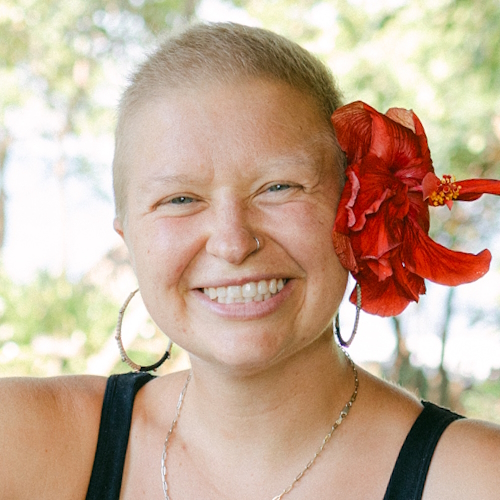
Kelsey H. feature profile

At 27, Kelsey was diagnosed with stage 2B estrogen-positive breast cancer in May 2023. When she felt a slightly tender lump, her primary care physician initially thought it was a cyst. However, an ultrasound and mammogram revealed otherwise. The diagnosis left her in shock and unable to process the information. All she could think about was her fear of dying.

Until her diagnosis, Kelsey had considered herself healthy. Cancer made her realize how precious health is. Being a mother to a toddler during treatment was challenging, but her child brought her joy and gratitude, giving her something to fight for.

Kelsey’s treatment began with AC-T chemotherapy (Adriamycin, cyclophosphamide, and Taxol) to target the fast-growing tumor. However, an allergic reaction to Taxol caused anaphylactic shock, leading to a switch to Abraxane. This experience underscored the importance of self-advocacy. Despite severe fatigue and nausea, she learned to accept her limitations rather than push herself.

A month after finishing chemotherapy, Kelsey underwent a double mastectomy with axillary lymph node removal on the left side and immediate reconstruction. Recovery was challenging, with constant nerve pain and cording, taking almost six months for her to raise her arm above her head. Nearly two months after surgery, she began 16 radiation sessions on the left side.

Currently, Kelsey is on tamoxifen, a selective estrogen receptor modulator (SERM), and will take the CDK inhibitor Verzenio (abemaciclib) for two years. She also receives Lupron shots to protect her ovaries from chemotherapy, as she couldn’t undergo fertility preservation.

Kelsey emphasizes the importance of self-advocacy, prioritizing medical concerns, and being more aware of one’s body. She hopes to inspire others and live a life of greater appreciation and gratitude, having gained a unique perspective from her cancer journey.


  • Name: Kelsey H.
  • Diagnosis:
    • Breast Cancer
    • ER+
  • Staging:
    • 2B
  • Initial Symptom:
    • Slightly tender lump
  • Treatment:
    • Chemotherapy: Adriamycin, cyclophosphamide, Taxol switched to Abraxane
    • Surgery: double mastectomy with axillary lymph node chain removal
    • Radiation
    • Selective estrogen receptor modulator (SERM): tamoxifen
    • CDK inhibitor: Verzenio
    • GnRH agonist: Lupron
Kelsey H.
Kelsey H.
Kelsey H.
Kelsey H.
Kelsey H.
Kelsey H.
Kelsey H.

Kelsey H. feature profile
Thank you for sharing your story, Kelsey!

Inspired by Kelsey's story?

Share your story, too!


More Breast Cancer Stories

Amelia

Amelia L., IDC, Stage 1, ER/PR+, HER2-


Symptom: Lump found during self breast exam

Treatments: TC chemotherapy; lumpectomy, double mastectomy, reconstruction; Tamoxifen

Rachel Y., IDC, Stage 1B


Symptoms: None; caught by delayed mammogram

Treatments: Double mastectomy, neoadjuvant chemotherapy, hormone therapy Tamoxifen
Rach smiling against fall leaves

Rach D., IDC, Stage 2, Triple Positive


Symptom: Lump in right breast

Treatments: Neoadjuvant chemotherapy, double mastectomy, targeted therapy, hormone therapy
Caitlin

Caitlin J., IDC, Stage 2B, ER/PR+


Symptom: Lump found on breast

Treatments: Lumpectomy, AC/T chemotherapy, radiation, hormone therapy (Lupron & Anastrozole)

Joy R., IDC, Stage 2, Triple Negative


Symptom: Lump in breast

Treatments: Chemotherapy, double mastectomy, hysterectomy

Categories
Breast Cancer Chemotherapy Cold Caps Combination Types Cytoxan (cyclophosphamide) Mastectomy Patient Stories Surgery Taxotere (docetaxel) Treatments

LaShae’s Stage 2B Multicentric ER+ IDC & DCIS Breast Cancer Story

LaShae’s Stage 2B Multicentric ER+ IDC & DCIS Breast Cancer Story

Interviewed by: Taylor Scheib
Edited by: Katrina Villareal

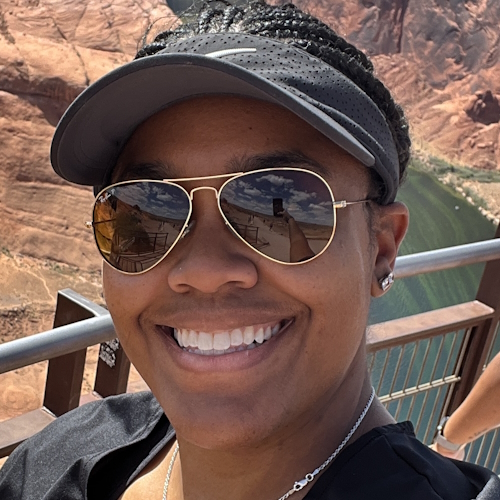
LaShae R.

LaShae, a PhD student in cancer prevention research, shares her journey with breast cancer. She initially dismissed a small, movable lump she found in her breast due to her busy schedule, but when the lump grew and she felt pain, she sought medical attention.

Her doctor referred her for a breast ultrasound and mammogram, revealing multiple masses and widespread calcifications. A biopsy confirmed cancer with a high likelihood of malignancy and a breast MRI revealed the spread in her breast and lymph nodes.

She had a mastectomy on her 27th birthday. Currently undergoing chemotherapy, she continues her fitness routine despite the side effects. Her experience has deepened her commitment to cancer research, particularly for adolescents and young adults (AYAs), highlighting the importance of self-advocacy and support groups.


  • Name: LaShae R.
  • Diagnosis:
    • Breast Cancer
    • Invasive ductal carcinoma (IDC)
    • Ductal carcinoma in situ (DCIS)
    • ER+
  • Staging:
    • 2B
  • Initial Symptom:
    • Lump in breast
  • Treatment:
    • Chemotherapy: TC (Taxotere and cyclophosphamide)
    • Proton radiation (scheduled one month after chemo ends)
LaShae R.
LaShae R. timeline

This interview has been edited for clarity and length. This is not medical advice. Please consult with your healthcare provider to make informed treatment decisions.

The views and opinions expressed in this interview do not necessarily reflect those of The Patient Story.


I found a small lump about a centimeter in size… I thought I had nothing to worry about.

Introduction

I live in Miami, Florida, but I was born and raised in Nassau, Bahamas, so I am a Caribbean girl.

I’m currently doing my PhD in cancer prevention research.

LaShae R.
LaShae R.

Pre-diagnosis

Initial Symptoms

I found a small lump about a centimeter in size. I didn’t think much of it. I did some research and found out that if the lump was movable, it had a lower likelihood of being cancerous. At that time, mine was movable so I thought I had nothing to worry about.

I hadn’t been doing much cancer research yet. I was looking at obesity research and now I’m at a parallel where we’re looking at exercise and diet and how they can impact cancer outcomes. I was still a baby when it came to cancer research, so that’s a big reason I pushed it to the side.

When my PhD started, a lot was thrown at me at once. Anyone who has done any graduate degree knows. I wanted to be the best student that I could be and the best person I could be for the new lab that I was in, so I prioritized those.

Sadly, like a lot of us, health was put on the back burner, so I forgot about the lump. I’m also a powerlifter. I bench press close to 300 lbs, so if I feel any tension or pain in my chest area, I attribute it to that.

In late 2023, I felt a lump again and wondered if it was the same lump. To this day, I don’t know if it was, but it grew in size so I thought that something was wrong.

I felt pain and that was what alerted me. I scheduled a wellness exam, but I had to keep postponing it because I had a lot of things coming up for my degree. I finally got in to do it in early January 2024 at the student center.

She said they were only going to schedule the ultrasound because I didn’t need a mammogram. I was too young.

Breast Exam

The doctor did a pap smear, vitals, and all the basic things done at a wellness exam, but she didn’t perform a breast exam. When she was about to leave, she asked, “Is there anything pressing that you want to discuss or want me to do for you?” I mentioned the lump and she immediately took it seriously. She put on gloves and performed a breast exam.

She wasn’t sure what it was, but she put “Mass?” on the paper and said, “I’m going to go ahead and be extra cautious. I’m giving you a referral to get an ultrasound and a mammogram.” She gave me instructions on the things that I needed to do and told me where to call, which was very helpful. To this day, that visit and that doctor were a part of the team that saved my life.

LaShae R.
LaShae R.
Breast Ultrasound

I called to schedule my ultrasound and mammogram. The person on the phone said I was young to be scheduling a mammogram and ultrasound. She asked if I had any symptoms. When I listed them off, I mentioned that I had a palpable mass and pain. She said they were only going to schedule the ultrasound because I didn’t need a mammogram. I was too young.

I’m very persistent and cautious. At this point, I was taking this seriously. You might think that I’m wasting your time because I’m too young and you probably think I can’t get cancer, but I’m going to waste your time.

When I went in for my ultrasound, I was filling out a form and it asked if I was of Bahamian descent. Women from the Bahamas have a higher likelihood of getting breast cancer and having more aggressive cancers due to the BRCA mutation, among other mutations.

They said it would probably going to take about 15 minutes. When the tech started the ultrasound, the moment she put the wand on, her eyes became wide and the same with the person assisting her. I knew that there was something there because it was palpable, but what was going on?

The radiologist came in and said, ‘You have multiple calcifications throughout all four quadrants of your breast.’

Every time they see something, they would take a picture and measure it. They did about 10 of those. Then they asked, “How long have you had these masses?” I replied, “Masses? Plural? As far as I know, I just have one lump.”

Before the ultrasound ended, they brought in someone to do the 360° view because they said they hadn’t done that. As someone who knows about cancer and who’s pursuing cancer research, I knew it meant that it’s spread all over the place. It’s in four quadrants.

When they went over to the left, there was nothing there. It was quick. Then they came back to the right and got another person to come in and help. What was supposed to take 15 minutes is taking 45 minutes now.

I started to gather my stuff to leave and they said, “No, no, no! You can’t leave. We’re about to do a mammogram now. You need to do a mammogram.”

LaShae R.
LaShae R.
Mammogram

I immediately got pushed to the top of the line and had a mammogram that same day. When I was done, I started gathering my things again and they said, “No! You can’t leave. The radiologist is going to talk to you right now. They’re going to talk to you today before you leave.”

They took me to a quiet room. The radiologist came in and said, “You have multiple calcifications throughout all four quadrants of your breast.”

I couldn’t believe what I heard. I started to get dizzy. I power lift daily. A couple of weeks prior, I bench-pressed 292 lbs, squatted 440 lbs, and deadlift almost 500 lbs that I had to get drug tested.

They start looking at you with that look of pity. After that, I asked what the next step was and they said I needed to do a biopsy.

When I found out the results, I felt a little better than having all of that anxiety trying to figure out what I had.

Biopsy Results

MyChart popped up and I saw the notes from the ultrasound and mammogram. It said fine calcifications throughout all four quadrants of the breast spanning 12.7 cm. Then it said it was in my lymph nodes and that I was BI-RADS 5. I looked it up and it meant at least a 95% chance of having cancer. I’m waiting for the biopsy results and now I’m stressed out.

Diagnosis

Getting the Results

Three days later, I got a call. They said, “Hi, I’m calling about your results,” and asked if I had a place to sit. Every time, they give you hints. I said, “Let me try to find a place,” and then they said, “We can call you back if you like.” I’m like, “No, no, no, no, no, don’t call me back. You already just made my brain explode. What’s going on?” Then the doctor lets me know that she doesn’t have good results. It was malignant.

LaShae R.
LaShae R.
Reaction to my Stage 2 Breast Cancer Diagnosis

When I found out the results, I felt a little better than having all of that anxiety trying to figure out what I had. Hearing that was a relief. After I got the phone call, the surgeon’s office called and I made an appointment.

Breast MRI

The breast MRI was very uncomfortable. Based on the results, they let me know that it was confirmed. I do have widespread, cancerous-looking things throughout my breast and in my lymph nodes.

I had my mastectomy on my 27th birthday. At first, I was upset, but I think it’s good because I would always celebrate when they took the cancer out of my body.

Mastectomy

After the MRI, the surgeon let me know that I didn’t have that many options because it was in all four quadrants of my breast. Usually, people can do a lumpectomy or certain types of mastectomies, like skin-sparing or nipple-sparing. I had to do a simple mastectomy, so it’s a flat closure along my sternum to my underarm or axilla. I think that was better than having to make a bunch of decisions.

She also told me I would be doing a PET scan. When I got the results, it was localized to my breast and nearby lymph nodes, so that was a big relief.

LaShae R.
LaShae R.
Pre-surgery Tests

I did a chest X-ray, EKGs, blood work, blood typing and cross-matching, and other tests before surgery.

I also worked out a lot because I wanted to prepare my body for the battle. One of the things I learned is that as you go through treatment, your body goes through a lot and you can lose muscle, which is detrimental to your outcome. I kept powerlifting and retaining muscle right up to the surgery.

I had my mastectomy on my 27th birthday. At first, I was upset, but I think it’s good because I would always celebrate when they took the cancer out of my body. After the mastectomy, my surgeon came in and explained that she removed the cancer. Two lymph nodes were positive and from what I know, that’s a hit or miss. Based on the final pathology, I can either have chemo or not, but I would definitely need radiation.

When I got home, that’s when the side effects kicked in. Fatigue was number one. I immediately had to shower and then I fell asleep for 18 hours.

Treatment

TC Chemotherapy

I was passed off to the medical oncologist. I met with her after my surgery and she’s the one who’s going to be spearheading the chemo, radiation, and hormonal treatments.

She let me know from the get-go that I would need chemotherapy and that’s the standard of care. I also would need radiation and hormone treatment because my stage 2 breast cancer was ER+, so I’m going to need to be on hormone treatment for 5 to 10 years.

It was a toss-up between A-CT (Adriamycin, cyclophosphamide, Taxol) or TC (Taxotere and cyclophosphamide). I needed chemo because of the lymph node involvement and my age. The longer you live, the higher the likelihood of recurrence simply because you’re around longer.

I’m currently undergoing chemo. We decided to do TC based on the results from additional testing. We did a MammaPrint® and I was found to be at high risk for recurrence.

Chemo was what I feared the most from the beginning. I had to get to my first chemo appointment early because I was doing scalp cooling. It didn’t take that long and it wasn’t as scary as I thought. They give a lot of pre-medications. I had never taken Benadryl at that dose so I was dizzy and sleepy. It knocked me out.

LaShae R.
LaShae R.
Side Effects of Chemotherapy

Less than 24 hours after chemo, I went to the gym and power lifted because I wanted to keep doing what I do. I felt solid, but when I got home, that’s when the side effects kicked in. Fatigue was number one. I immediately had to shower and then I fell asleep for 18 hours. It was brutal.

I had GI side effects. It wasn’t good. I got a headache and my whole body felt sore. I work out a lot, so I know what soreness feels like, but it had nothing to do with my workouts. It was a general, full-body soreness that even my bones were hurting. I had to take Zoladex to preserve my ovaries so that I’m able to have children after this. A lot was going on.

The side effects lasted for about five days. Over a week after chemo, I feel great. I was able to do a workout and not crash afterward.

This has opened my eyes to a new group that I had no idea was part of a disparaged group: AYAs or adolescents and young adults.

Cancer Research

I’m in a unique situation as somebody who wants to do cancer research for their entire career and is in the middle of a PhD focused on cancer prevention. It was very surprising, but it helped me get to my diagnosis. I would not have taken this seriously or even known I had alarming signs if I didn’t have that base knowledge.

When I think about what has happened, all I think about is how I’m going to be a much better researcher. I knew I wanted to work with marginalized and disparaged communities to help those who needed help the most. I’ve always believed in doing that and helping the less fortunate.

This has opened my eyes to a new group that I had no idea was part of a disparaged group: AYAs or adolescents and young adults. I’m going to include them in anything that I do in research and want to do community work with that group because being a part of that group, I understand now that these are unique circumstances.

LaShae R.
LaShae R.

When you’re a young adult, you are just starting your life. When you go to the doctor’s office, you’re the youngest. When I went to one of my appointments, the medical assistant asked where the patient was. I was right there, but she didn’t expect me to be the patient. Sometimes I go with my mom and they think she’s the patient.

This is very emotional and very isolating. Cancer in itself is isolating, but you may also be the only one in your age bracket going through this. When you go to the doctor’s office, people feel sorry for you more because of your age.

My experience is going to make me a much better researcher. It’s going to make me more invested and make me an advocate. I used to want to be an advocate, but now I want to be a research advocate and living proof.

Cancer is very emotional from when you get the diagnosis and throughout the whole process. This is a journey. You go through different emotions. I deal with it by taking deep breaths. That helped a lot.

I joined my AYA support group. Joining support groups is vital because they are going through the same thing. They’re at different stages of the journey, so they’re able to guide you and help you get on track because you’re pulled in so many directions and it’s overwhelming.

Caribbean people tend to have more aggressive cancers when it comes to certain types and they’re diagnosed at younger ages.

Genetic Mutations

Caribbean people tend to have more aggressive cancers when it comes to certain types and they’re diagnosed at younger ages. At the Sylvester Comprehensive Cancer Center in Miami, they asked me ahead of time if I was of Bahamian descent because they’re aware of this.

We’re known to have the BRCA mutation and other mutations. I got the comprehensive panel done and it turned out negative for all. I didn’t have all the common risk factors. I’m the first person in my family to ever get breast cancer, so I could not tell you at all why I got this.

LaShae R.
LaShae R.

Words of Advice

For patients undergoing chemotherapy, come in with an open mind. You’re going to be scared, but don’t stress out because stress is not good for you. It won’t help with your outcome.

Get some ice compression for your hands and feet to prevent neuropathy, depending on the type of chemotherapy that you’re going to have to get infused. Taxotere has been linked to neuropathy, so I did that.

Try to eat bland foods when you’re going through chemotherapy. If you don’t eat, you’re going to feel terrible. I know all these things are going on, but you’ve got to eat something. Whenever I didn’t eat, I would feel terrible. I started to feel better when I did. Nutrition is so important.

Advocate for yourself because only you know your body.

When you feel good enough, go outside and take a walk. I’m not saying do what I did 24 hours after chemo, but go out and move because it’s been linked to way better outcomes.

Advocate for yourself because only you know your body. There are a lot of professionals who are trained to diagnose. I do research and I know the statistics. But if we rely solely on the numbers, I’m not supposed to have cancer. I’m not even supposed to get screened.

No matter how young you are, make sure to go to your physical exam every year. Be in touch with your doctors. Eat well and exercise to be the strongest you that you can be.

LaShae R.

LaShae R.
Thank you for sharing your story, LaShae!

Inspired by LaShae's story?

Share your story, too!


More Breast Cancer Stories

No post found


Categories
Breast Cancer Chemotherapy Colon Colorectal Metastatic Patient Stories Treatments

Sherri’s Stage 4 HER2+ Metastatic Breast & Stage 3 Colon Cancer Story

Sherri’s Stage 4 HER2+ Metastatic Breast & Stage 3 Colon Cancer Story

After retiring from the Air Force, Sherri became a mental health therapist and ran a private practice while being a mother to her three children. Feeling burnt out, she took a week’s trip to Costa Rica and noticed feeling out of breath. 

This feeling continued when she returned home which led her to the ER where doctors discovered her oxygen levels and blood count were extremely low. After many tests and exams, a mass was found in her breast. Soon after, she was diagnosed with stage 4 metastatic breast cancer

Sherri was put on 12 rounds of Herceptin chemo and began transfusions. Three months after her breast cancer diagnosis that had spread to her bone marrow, Sherri was no evidence of disease. However, doctors wanted her to undergo a colonoscopy after finding blood in her stool. The colonoscopy revealed early stage 3 colon cancer unrelated to her breast cancer. 

Today, Sherri is currently undergoing Oxyplatin chemo and transfusions for colon cancer. She shares her story with us, including how she deals with anxiety, how cancer has catalyzed inner healing, her experience with chemo and its side effects, starting a podcast to spread hope, and her advice to those on their own cancer journeys.

Sherri shares her breast cancer symptoms, treatment and side effects
  • Name: Sherri O. 
  • Diagnosis (DX):
  • Stage: 4
  • 2nd Diagnosis (DX):
  • Stage: 3
  • Symptoms
    • Shortness of breath
    • Lump under armpit
    • Not feeling herself
  • Treatment:
    • Chemotherapy
      • Pertuzumab
      • Herceptin
        • 12 rounds
      • Oxyplatin
        • Every 3 weeks
    • Transfusions
Sherri's breast cancer timeline
Sherri's colon cancer timeline

There’s not enough hope and inspiration. That’s what I want to give to the world.

Sherri O.

This interview has been edited for clarity and length. This is not medical advice. Please consult with your healthcare provider for treatment decisions.


Symptoms & Diagnosis 

Tell us about yourself
Sherri has 3 children

My name is Sherri and I am a single mom. I have 2 adult children, which is so weird to say. I have a daughter who just turned 21 in August, my other son is 19, and I have one left in school. He is a senior this year and he’s 17. 

I served in the Air Force for 23 years and retired in 2017. I’m not really active in this now because of everything that happened in the last 9 months, but I became a mental health therapist. I went back to school in my 40s, got my master’s in clinical counseling, became a therapist, and ran a full private practice for about 5 years. 

I have a dog named Chief and we also have a bird my daughter named Pickles. We have a cat named Maui. I had a house built a couple of years ago. We’re living in a farming community in Colorado, which I love.

What were your first symptoms? 
Sherri began experiencing shortness of breath

Hindsight is 2020. I was having signs of some things that were off that I was downplaying. I thought I was healthy. I was working out, I was running my business, and I was feeling a little bit burnt out so I decided to take a trip to Costa Rica. I thought this was going to be great. I’ll take some time away from my business, settle down, and do some unwinding in a beautiful place. 

I went for about a week. I did notice when I was there that I was out of breath a lot more. I was like, it’s probably the shift in altitude or maybe it’s jet lag. I went on a little bit of a hike and I was out of breath and it wasn’t too bad. 

I didn’t really have anything significant happen until I got back, which is a blessing in disguise. I was walking up to the post office and I was carrying a couple of boxes and I thought I was going to pass out. My heart started beating really fast and I was like, okay, there is something really going on here. I might have a virus or something. 

Taking a trip to the ER

I met one of my friends for brunch and I said, I just don’t feel right. I feel off. I’m not sure what’s going on. I came back home and I called the nurse triage line and I was telling them my symptoms. She was like, “You need to go to the ER,” so I went. I drove myself to the ER because I thought that I picked up a virus or something from Costa Rica. 

I got to the ER and they were like, “Your oxygen is at 70. You have to stay here.” It was very weird. It was a whirlwind of things going on. They did blood tests and they they said that my platelets and my hemoglobin were tanking. I needed a blood transfusion. I need a platelet transfusion. It was very weird for me. I was like, What? This is insane. I felt fine two days ago. 

Sherri went to the ER after her nurse recommended it

I started getting transfusions, they admitted me to the hospital, and they were like, we don’t really know what’s going on. They did find a mass under my right breast because they were turning over everything and they were testing me for everything. We needed to do a mammogram and sent me to another hospital. 

Sherri was diagnosed with metastatic breast cancer
What was your diagnosis? 

I got transferred to an ICU in Denver and they ended up finding out that the mass under my right breast was cancerous, and the reason why my blood was tanking was because it had metastasized to my bone marrow. After Thanksgiving, they diagnosed me with stage 4 metastatic breast cancer. That was the beginning of the whirlwind story. This was November of 2022.

Did you suspect you had cancer? 

It’s not anything that crossed anybody’s mind. In fact, the doctors were very focused on a parasite, on a virus, because I’m pretty healthy. I’m 52 now and I’ve always been in good shape. They were very perplexed as to what was going on. They did a really good job though of turning over everything. They tested me for everything you could think of. That’s what it ended up being, unfortunately.

Did you ever feel a lump?
Sherri didn't suspect at the time she was diagnosed that she had cancer

They ended up finding out that the mass under my right breast was cancerous, and the reason why my blood was tanking was because it had metastasized to my bone marrow.

No, I didn’t feel anything. In fact, my last mammogram, they were like, “Your breasts are very dense.” I guess the older you get, your breasts get more dense and I never felt anything. I also had a swollen lymph node in my armpit and I just didn’t recognize any of that. 

Again, hindsight is 2020 and it’s really important to check those things and to pay attention to your labs. That was one of the big things I’ve learned is that I was anemic. I had been anemic for a really long time and I just didn’t do anything about it because I just listened to what the doctor said. They’re like, “You’re fine as long as it doesn’t go below this number.” However, I think it’s really important to look at those things and to go, okay, what could I do differently to get out of anemia? It is possible to not be anemic, because I’m not anemic now, which is crazy because I was anemic almost all my life.

Processing A Cancer DX

How did you react to your cancer diagnosis

I didn’t. My sister was with me at the time they said that. I knew it wasn’t good, and they also said it was aggressive. They use that actual word. I just left my body. I think that being in mental health, we can go into fight or flight or freeze. I totally froze. I don’t think I was even in my body, to be honest with you. I left the building, basically. 

My sister cried, and she said, “You didn’t even have a reaction.” It wasn’t hitting me. It didn’t hit me until way later. I think it took me a couple of months to really get out of the fog. Part of it was I had low blood count, so I had no energy. I was tired, I could barely walk from the couch 5 feet to the kitchen, that’s how tanked I was. I think part of that was why I didn’t have a reaction is, I was in a fog and I only wanted to rest and everything was wearing me out. 

It wasn’t until a couple of months later that I attended a support group, which I wasn’t ready for. It was people that had been going through cancer and they were all younger than me. Very young. They were all at different stages. I was the only stage 4. I’m listening to their stories and I’m like, I’m doomed because they had all gone through all these things. I’m like, well, what about me? I’m stage 4. I don’t even have a chance. That’s how I was taking it. What I learned from that was, that my story is different than their story. We don’t all have the same story. 

Sherri froze when she discovered she had cancer
Sherri assumed she was doomed when she learned she had cancer
It took Sherri a while to process her diagnosis

I totally froze. I don’t think I was even in my body, to be honest with you.

Learning to accept a cancer diagnosis 

I had a massive breakdown, which I think needed to happen. Coming out of that, that was when I came into acceptance. I was accepting that this was what was happening and what can I do now. 

The other important piece is that I’m still alive. I’m here, I’m not dead yet, so what can I do now that I’m here in this moment? I can succumb to it. Or I could just live. I started to put one foot in front of the other and go, I’m alive and I’m going to make it count. I believe that mentality has been so crucial to my healing. I don’t think I would be healed if it wasn’t for that piece of it and the attitude.

Sherri learned to accept her breast cancer diagnosis
What were the first steps in your cancer treatment? 

The first part was I had to have my blood levels at a certain point before they would do anything with me. They wouldn’t treat anything, they wouldn’t do surgery, nothing. They didn’t want to touch me because my blood counts were so low. To put it into perspective, my platelets were about 20,000 and to be at a healthy level, you need to have 150,000. I wasn’t even close and they were not going up very fast. 

I started to get really diligent about seeing the numbers go up in my mind. I asked, what number do I need? You need at least 90,000. I started to picture 90,000 and then it happened. Then every time I would ask, what do I need next? I would visualize it and then it would happen. 

Pretty soon they put me on a targeted treatment and pertuzumab and I started to get better. I kept getting better and better. Even the blood transfusions helped me to get better as well. I ended up transferring from VA in Denver to Banner MD Anderson and then they started me on Herceptin and I was on that for 12 rounds of chemo. I lost my hair. I had really long hair, and now it’s growing back, which is great. 

Reframing a cancer diagnosis 

I’ve had such great care from VA to Banner, everybody has been so good to me and so supportive. Sometimes the language would get to me. One of the doctors said, “It’s aggressive, you’re really sick.” She kept using those types of words and I was like, I have to switch that in my mind because if I focus on that, I’m going to be depressed. I started saying, that’s an opinion. A diagnosis is an opinion also. What can I do differently within my body, myself, and my mind? I started visualizing myself healthy and on that track, and I just kept getting better and better. Language is everything. Your words, the things that you say, really do matter. 

Sherri experienced hair loss after chemo
Sherri shaved her head after her hair began to fall out
Sherri learned to reframe her cancer diagnosis to be more positive

Realize that stage 4 is not the end. I think when you hear cancer, at least when I used to hear the word cancer, I’m like, that person’s just done. It’s just not true. It’s a misconception. I’ve learned that you can still live a long time. 

There’s so much misinformation. When I was first diagnosed, I was like, I got to figure this out. I started going on all kinds of crazy diets and supplements to have some sense of control. I let go of that and realized I didn’t need to do all this crazy stuff. I’m going to be okay. I’m going to live in the moment as much as I can. The truth is that nobody knows our timelines, even a doctor doesn’t really know. They can speculate. I think the most important thing is listening to yourself, and listening to what your body is saying to you, is key to the whole thing.

I’m here, I’m not dead yet, so what can I do now that I’m here in this moment?

Healing the heart
Sherri healed heart wounds during her cancer journey

One of the things that has come up for me with all of the cancer stuff is that there were things in my body that needed to be healed. It sounds a little weird. However, I will ask my body, what does this mass mean to me? What is it wanting to tell me? 

I’ve healed so many mother wounds and nurturing that I was missing. The breast is all about nurturing yourself. I wasn’t taking good care of myself like I thought I was and giving myself what I needed. I remember somebody asked, “Well, what do you need?” I automatically was like, I don’t need anything. I didn’t even check in with myself to ask myself what I needed. 

Remission

Taking a sabbatical to focus on health
Sherri took a sabbatical to focus on her health

That’s been a whirlwind too, all the appointments. At the beginning of it, I was looking at my calendar and I was like, there are so many appointments. How is this going to work? I decided to put myself on a sabbatical, which was one of the best things I could have ever done for myself, to just stop everything else and really focus on my health.

Did your body have a positive reaction to cancer treatment?
Sherri went into remission after her chemo treatments

For stage 4 HER2+ breast cancer that I have, I have to do an infusion every 3 weeks. I’m still on that every 3 weeks. I’m not done with the chemo for the breast cancer and I have had 3 PET scans since November. 

I will tell you the good news, which is that the first scan was awful. They said that my bones were riddled with cancer and that it was not going away. That was in November. Then I had a scan 3 months later, in February I believe, there was no evidence of disease in my body. In that short amount of time, I have no evidence of disease in my body. Even I was like, are you sure? I was questioning it. 

I had the same reaction I had when I got the diagnosis. I was numb. I didn’t have a reaction because I just didn’t believe it. I was like, how is that even possible? Two weeks later, I brought a friend with me and I said, “Can you listen for me? Be my ears?” That’s one thing I’ve also learned is you need to have an advocate. Because as a patient, you hear things totally differently than somebody outside of it. I think that’s important. 

Becoming NED

I asked the nurse, “Do you call that remission? What do you call this?” She said, “No, there’s no evidence of disease.” They showed me on the scan that the mass and the swollen lymph node were gone. It still blows my mind. Those scans are every 3 months. I just had another one a couple of weeks ago and that one is also clean. There’s no evidence of disease on that one. 

I had a fractured rib in January. They showed a fractured rib and they had some other stuff on the bottom of my ribs and those are completely healed as of this last scan. So the doctors are like, “You’re doing great. Your body is healing.” My infusions are every 3 weeks, which at first I was like, that sucks. However, I don’t have a lot of side effects from that infusion at all. It’s just like going and getting vitamins to me. I’m not going to lose my hair from it or anything like that.

Sherri became NED
Did you have side effects from chemo?

The chemo that I got, Herceptin, the side effects were feeling very heavy and I did a lot of resting. I didn’t have any nausea or anything like that. I didn’t have a lot of side effects. It was mainly just heaviness and wanting to lay down a lot. I didn’t do a whole lot during those 12 rounds. They were every week, so I was pretty tanked. When you do chemo, your blood levels tend to go down. I was in and out of anemia, like a roller coaster. I rested a lot during that time. I didn’t do a whole lot of anything. It wasn’t bad, it was just a blah feeling.

»MORE: Cancer Treatment Side Effects

2nd Diagnosis 

Sherri received a second cancer diagnosis of colon cancer

A couple of days later, the doctor who did the colonoscopy called and said that it looked like I had cancer. That was really shocking.

Receiving a second cancer diagnosis 

The good news about the [breast cancer] diagnosis is that I’ve had 3 scans. The last 2 scans showed no evidence of disease, I didn’t have to have any sort of breast surgery, the mass that was under my right breast disappeared, and I had a swollen lymph node in my armpit that is gone. The last scan was 2 weeks ago, so this is about 9 months after diagnosis, which is incredible. I was no evidence of disease on the last round of chemo treatment that I had for breast cancer. I got to ring the bell, which was awesome. 

When I first went into the hospital for breast cancer, they tested my stools. They were testing everything. In January, they found traces of blood in my stool. The oncology team didn’t want to do a colonoscopy because I was in a very vulnerable state, body-wise. They wanted to wait until after I had done the 12 rounds of Herceptin. I did all of that and I waited a little bit. Then I got scheduled for a colonoscopy and did that procedure. A couple of days later, the doctor who did the colonoscopy called and said that it looked like I had cancer. That was really shocking and I did have a breakdown right away. I reacted a lot differently than I did the first time.

The first time, I was very numb. The second time, I was really mad and upset. I did have a meltdown. Then I came out of that and I was like, okay, I don’t know where it is exactly. I didn’t have a stage yet. They wouldn’t have been able to tell me that until after the surgery. They scheduled surgery. I had a polyp that they had to remove, and I also had something in my rectum. However, they wanted to break it up into 2 different surgeries. The one in the rectal area was not cancerous at all. They took the polyp out, they tested it and it was cancerous. They also tested 35 lymph nodes. Out of the 35 lymph nodes, 2 of them were positive for cancer. They classified me as very early stage 3 colon cancer, which is totally separate from the breast. Now I’ve got the breast cancer under control and have been diagnosed with colon cancer.

Sherri rang the bell after finishing cancer treatment

»MORE: Cancer Surgery Treatments 

How long after your first diagnosis did you receive your second diagnosis?

I was diagnosed in November with metastatic breast cancer, then I was diagnosed with colon cancer in July.

Did you suspect you had cancer again?

I kind of suspected it. Again, when you’re looking back at something, it’s easier to see it. When you’re in it, you don’t really see it. I had downplayed some of my symptoms. During pregnancy, I got hemorrhoids. I have had those off and on. A lot of times there’s a little bit of bleeding that happens when you go to the restroom but I was like, it’s just hemorrhoids. It’s no big deal. It wasn’t, it was actually colon cancer. 

If I don’t do it, it’s a 50% chance that it will come back. If I do the treatment, then it’s a 10% chance. It’s better if I do the treatment even though I don’t want to do it.

Sherri ignored symptoms of colon cancer such as blood in her stool
Sherri downplayed symptoms

I just kept downplaying my symptoms. It was a good thing that they did test that and caught it when they did. There’s a test that I highly recommend people get. It’s a Signatera test where they actually test if there’s any residual cancer in your bloodstream. I did the lab, and I did the blood test prior to the surgery and it was positive. That means that there’s cancer in the bloodstream. Then they said, “We’ll test you again afterward.” They tested me again after they took it out and it was negative, which is really a good sign that it’s not going to come back.

Did you go back on chemo after your colon cancer diagnosis? 
Sherri went on chemo again for his second cancer diagnosis

To prevent reoccurrence, they wanted to do more chemo, which I wasn’t really happy with because I was like, I just got through this thing. I don’t want to do this again. I was in complete resistance to it. I had to really listen to my doctor. I said, “I don’t want to do this. What’s the risk-reward?” Basically, it’s 50/50. If I don’t do it, it’s a 50% chance that it will come back. If I do the treatment, then it’s a 10% chance. It’s better if I do the treatment even though I don’t want to do it. I made the choice to do it. I started it 3 weeks ago and it’s added to the infusion that I’m doing. The good news about this is that it’s only 3 months. I’m currently on that now.

Do you have a family history of cancer? 

I don’t have anything genetic. I did the genetic testing and I don’t have the BRCA1 gene for breast cancer, so I don’t know. I’ve been investigating it a little bit and I’m convinced that it’s environmental. However, I don’t really know. I don’t know how to prove that. I don’t have any idea. 

It is very odd that they’re 2 different separate cancers. I asked, “Is it because of the breast?” They said, “No, it has nothing to do with it.” I’m not a doctor, so I don’t know how they know all this. My instinct is that it’s environmental. I was in the military for a long time and I was exposed to fumes and asbestos and different things like that. It could be that, but I don’t know.

Sherri doesn't have a family history of cancer

Quality of Life

Have you experienced side effects from your current chemo treatments?

I’m on Oxyplatin and that will be every 3 weeks. I did the first round not that long ago and my side effects are a lot different. I wasn’t expecting that. I was like, I got it. This will be a piece of cake. No, it’s actually way different. I have a lot more nausea with this drug. I have one of the things that Oxaliplatin does when you touch something cold, it burns or stings like frostbite. I do have that tingling in my fingers. I have a sensitivity to my jaw when I eat anything, it has to be very warm. Anything remotely cold sends a shock to my jaw. Sometimes I’ll have tingling in my hands and feet. That’s not too bad. The biggest thing is the nausea. It doesn’t feel great. 

Sherri is now eating plant-based since being diagnosed with cancer

I eat a lot differently than I used to. I eat a lot more. I’ve actually gained weight this time, which is great because when I started the breast cancer treatment, I was 145 and I dropped to 120. When I found out that I needed to go into another round of treatment, I was like, I got to get my weight back up. I started eating differently. I went plant-based. However, I ate a lot more rice, potatoes, and carbs so that I could gain weight. 

I started working out more, which has helped me tremendously get through this chemo. I’m going into this one a lot stronger. I think that the side effects are like 2 or 3 days. I haven’t had the tingling, the cold stuff doesn’t stay around. That’s been a good sign I can do this, I can get through this. I’ll be on this treatment for 3 months.

Yogurt and bananas helped Sherri with her nausea
Has anything helped with the nausea? 

Bananas and yogurt, for some reason, seem to be my thing. Walking and exercise actually really help with it as well. There’s an app called Couch to 5K, so I’ve been doing that. It’s basically interval training. It’ll be walk 5 minutes, run 1 minute, walk 2 minutes. It has really helped me a lot. I’ve been running a little bit more, which has been really great. I have more energy because I do that. The weight training has helped me gain weight back.

»MORE: Managing Nausea and Vomiting from Chemotherapy

Describe prep and recovery for your surgeries

The first one, the prep was that I had to do 5 days of Ensure shakes, and that was a little rough for me because I had eliminated sugar from my diet. I didn’t eat a lot of sugar because sugar just caused my body to be more inflamed. I had to drink those for 5 days. It was 2 drinks a day and so many calories. That was the prep for the surgery. I had to do some fasting before. That surgery went really well. 

Sherri discusses her surgery prep and recovery

I was in a lot of pain coming out of it because it was a colon resection. They took out part of my colon and resected it, put it back together. I had a very non-invasive surgery. They did robotic laser surgery. You can’t even hardly tell that I have scars, which has been really nice. I am so grateful for technology now because, if this had been in the 80s, I might not be here. We’ve come a long way in science and how much we’ve advanced. The recovery time, I was in the hospital for 5 days after that one. 

Then they did the other rectal surgery separately because they just thought that doing both of them wouldn’t be a good idea. I agree because the second one was very painful to go to the bathroom. That was only a day’s procedure. I was in and out of the hospital the same day. However, my recovery time for the second one was a lot longer because of where it was. That one was a little tough for me.

I bounce back pretty fast. I think part of that was because I had gone into it with my body a lot stronger. I had gained more weight. I was exercising. I bounced back quicker because of that. They told me, “It’s going to take 6 weeks [to recover] for both,” and it was really minimal. It was maybe 3 weeks for both, so half the time.

Sherri did not need a colostomy bag after colon cancer
Did you have a colostomy bag? 

No colostomy bag, Nothing like that. I do have to go back and get a scope just to make sure they got everything in a couple of months. I did the blood test again, the one that I did prior to when they found out I had it. It was positive for cancer. I just did it again and it’s negative. It’s a really, really good sign and now we’re on treatment to keep it from reoccurring.

How often are you receiving scans? 

I just recently did the PET scan. I’m not sure if they’re going to move me to 6 months since the last 2 were clear. With scans, you’re putting yourself in radiation, so you have to be mindful of that. I don’t know if I’m going to be every 6 months or not. I’m assuming that’s what’s going to happen. I’ve had to have some brain scans just to make sure that breast cancer doesn’t metastasize to my brain. I probably have one of those coming up. Those are every 6 months. The more you’re healing, the less you have to do.

Reflections 

Sherri reflects on her journey with cancer
Do you ever experience scanxiety?

I did go through that this last time, actually. I went through it more this time than I did the last time. The last time I was like, it’ll be what it is. I just didn’t really think about it too much. This time, I just really want a clear scan again. When you get your labs done, they look at all the cancer markers and everything has been good. 

I did have a lot more anxiety come up this time, which was very interesting for me. I was walking it out and I’m like, I don’t know what I’m afraid of. I just started to ask questions. I think to alleviate anxiety is to face it versus running from it. A lot of times with anxiety it’s like, I have anxiety, I’m so anxious, take a deep breath. Well, that doesn’t really get to the root of it.

Facing anxiety 

To alleviate anxiety is to face it versus running from it.

What helped me was asking really good questions like, what are you afraid of? I’m afraid it’s going to come back. If it’s going to come back, then what are you afraid of? I’m afraid I’m going to die. If you die, what else are you afraid of? I’m afraid my kids are not going to know what to do with themselves because they don’t have their mom here. Why are you afraid of that? The root of it was guilt that I hadn’t prepared them for life. 

The thing that you think you’re afraid of is really not the thing. It’s important to ask those types of questions to get down to the root of it so you can pull the root out and go, okay, it’s guilt. I didn’t have any clue it was guilt. It really helped me alleviate that anxiety. Then I got a clean scan.

»MORE: Cancer and Mental Health 

Sherri emphasizes facing anxiety rather than running it from it
Sherri recommends pulling out the roots behind anxiety
Finding gratitude in one’s cancer journey

I say that things don’t happen to you, they happen for you. It’s a weird thing to say that I’m grateful for cancer. It’s so true though, because I have healed so many things in my body and I have more inner freedom and peace than I ever have had in my life because I started to face it versus running from it. Fear happens. It’s like, what’s going to happen to me, and what’s going to happen to my kids? All of that is real. It comes up and it’s like, I have a choice. I could either face it or I could run from it. 

Another thing I heard a long time ago was, get to know fear. If you get to know it, it dissolves. It starts to melt away a little bit and it’s like, okay, I could do this. There isn’t anything to be afraid of. We’re all going to die at some point. We don’t know when. For me, it was switching to, I get to live today. I’m so grateful to be alive because, in November, I could have been dead. I appreciate that I’m alive. That’s key. I’m breathing today, so I get to live today. 

I started a podcast to help other people and that’s helped me because it’s like, I’m back to life. I realized that one of the big things for me was realizing how disconnected I was spiritually. That has totally changed. I feel so much more connected to God and my faith. It wasn’t something I think I would have had with all of these things. Again, the key for me is living, being appreciative and grateful for where I’m at, and also giving. This is one of the reasons why I wanted to do this story is because I do think that we need a lot of hope and inspiration in the world, especially around cancer and people having a disease. I think this could help lots of people have hope and faith in themselves.

Sherri discusses being grateful for cancer

It’s a weird thing to say that I’m grateful for cancer. It’s so true though, because I have healed so many things in my body and I have more inner freedom and peace than I ever have had in my life.

What advice do you have for someone on a cancer journey?

The message of hope I would give is that you have to remember that your story is different than everybody else’s. I think a lot of cancer patients go into comparison – this person did that, and this person did this, and this person died, and this person didn’t. The most important thing is that your story is your story. It’s not the same as everybody else. Your body is different than everybody else’s as well. That’s why it’s so important to listen to yourself. 

I had dense breast tissue and I didn’t investigate it. Look at your labs and ask lots of questions. When COVID happened, I didn’t get a physical because they wanted to do it virtually. I asked questions like, well, what am I going to do? I need a colonoscopy, I need a breast exam, and I need all these things. “Don’t worry,” they said. “Everything was fine last time, so you’ll be fine.” It can change very fast. It’s really important to investigate yourself and definitely get your exams done on time every time and ask lots of questions, especially if you’re feeling like something’s off now. 

Sherri shares her advice for others on their cancer journey
Sherri has learned to be hyper-vigilant about her health
Sherri emphasizes surrounding yourself with people who support you

My hemoglobin was off for a long time and the doctors downplayed that. I trusted what they were saying. I think that you should trust it to an extent and also ask lots of questions because it sure helps. Now I’m very hyper-vigilant. My labs, I know exactly what they mean.

Have a lot of people around you to support you. I’ve had so much support and I have really good people in my corner where I’m like, “Hey, I need you to come with me because I don’t know how I’m going to hear it.” That’s really critical because there’s been so many times on this path where I’ve heard something and it’s not what was said. Even with the clean scan, I just heard it’s getting better. I didn’t hear that there was no evidence of disease. When my friend went with me, I asked, “Did they say what I think they said?” She said, “Yes, that’s what they said.” Having that person in your corner is really, really important.

Spreading hope and inspiration 

There’s not enough hope and inspiration. That’s what I want to give to the world.

In life, we’re going to go through ups and downs anyway. Just because I have cancer doesn’t mean I’m different than anyone else. We still all go through things and we’re all going to have ups and downs in life. The only guarantee about life is it changes all the time. We’re all going to go through something. 

I think that it’s important to be kind to yourself and give yourself what you need. That’s one thing I’ve learned, I have to check in with myself and go, what is it that you need? Don’t dismiss what you need. If somebody asks you what you need, tell them because people want to give you what you need. I think that’s really helped me to navigate this. 

Sherrie makes spreading hope and positivity her mission

A really good attitude has been appreciating where I’m at. I could make the choice to be in a corner and curl up in a ball. By giving back to the community, by sharing my story doing the podcast and videos, or whatever I can do to get the message out, I’m going to do it. Because there’s not enough hope and inspiration. That’s what I want to give to the world is more of that versus doom and gloom. 

Wherever your focus is, if you’re looking at all the train wrecks, that’s what you’re going to get. Look at where all the miracles are happening. I would prefer to see that.

More Metastatic Breast Cancer Stories

Dana S. invasive ductal carcinoma breast cancer

Dana S., IDC, Stage 4 (Metastatic)


Symptom: Appearance of large lump in left armpit

Treatments: Targeted therapy, hormone blockers, bone infusions
Maria S. stage 4 breast cancer

Maria S., Breast Cancer, Stage 4


Symptoms: Intermittent but severe pain including a burning sensation on the side of the breast, appearance of a cyst and a lump, abnormally warm and pink-colored breast, nipple inversion, strangely liquid menstrual periods, unusual underarm odor, darkening and dimpling of the nipple, severe fatigue, night sweats
Treatments: Chemotherapy, surgeries (mastectomy, lymphadenectomy), radiation therapy, targeted therapy
Elissa K. stage 4 HER+ breast cancer

Elissa K., Metastatic Breast Cancer, HER2+


Symptoms: Swollen and numb feet, discomfort while wearing shoes, severe fatigue

Treatments: Surgeries (lumpectomy, hysterectomy), chemotherapy, antibody-drug conjugates, targeted therapy (monoclonal antibody), radiation therapy
Maggie C. feature profile

Maggie C., Triple-Negative Breast Cancer, Stage 4 (Metastatic), PD-L1+


Symptoms: Bruising sensation in the breast, soft lump

Treatments: Chemotherapy, clinical trial (antibody-drug conjugate and immunotherapy)
Nina M. feature profile

Nina M., Metastatic Breast Cancer


Symptoms: Hardening under the armpit, lump & dimpling in the left breast

Treatments: Chemotherapy, surgery (lumpectomy), radiotherapy, hormone-blocking medication, targeted therapy
Sherrie shares her stage 4 metastatic breast cancer story
Sherri O., Metastatic Breast Cancer, HER2+ & Colon Cancer, Stage 3
Symptoms: Shortness of breath, lump under armpit, not feeling herself
Treatments: Chemotherapy, Transfusions
April D.

April D., Triple-Negative Breast Cancer, Stage 4 (Metastatic), BRCA1+


Symptom: Four lumps on the side of the left breast

Treatments: Chemotherapy (carboplatin, paclitaxel doxorubicin, surgery (double mastectomy), radiation (proton therapy), PARP inhibitors
Brittney shares her stage 4 breast cancer story
Brittney B., Metastatic Breast Cancer
Symptoms: Lump in the right breast, inverted nipple

Treatments: Surgery, chemotherapy, immunotherapy, radiation
Categories
Breast Cancer Chemotherapy Invasive Ductal Carcinoma Mastectomy Patient Stories Surgery Taxotere (docetaxel) Treatments

Nikki’s Stage 3 HER2+ Inflammatory Breast Cancer Story

Nikki’s Stage 3 HER2+ Inflammatory Breast Cancer Story

Trouble breastfeeding her newborn son led Nikki’s doctor to investigate previous health concerns, where she discovered a stage 3 tumor in her lymph nodes and bowel

Years passed after overcoming bowel cancer and new symptoms arose that Nikki assumed were symptoms of menopause until she awoke one morning with an inverted nipple. This led to a secondary diagnosis of HER2+ inflammatory breast cancer.

Nikki shares her double cancer story shortly before undergoing single mastectomy surgery and reveals her side effects from chemo, how she advocates for herself as a patient, the effects cancer has had on her marriage, and how she explained her diagnosis to her 7-year-old.

Nikki shares her stage 3 HER2+ inflammatory breast cancer story
  • Name: Nikki M.
  • Diagnosis (DX):
  • Staging: 3
  • Symptoms:
    • Centralized pain around the nipple
    • Inverted nipple
    • Swollen breast
    • Differences in nipple color
    • Warm-feeling breast
  • Age at DX: 47
  • Treatment:
    • Chemotherapy
      • Red Devil for 3 rounds
      • Docetaxel for 4 rounds
      • Epirubicin and Cyclophosphamide
    • Surgery
      • Single mastectomy 
    • Radiotherapy
Nikki's cancer timeline

Try and find joy, as daft as it sounds, because it’s not going to harm you and it might help…When it comes to laughter and joy, I try to find a little bit every day.

Nikki M.

This interview has been edited for clarity and length. This is not medical advice. Please consult with your healthcare provider for treatment decisions.


Symptoms & Diagnosis

Tell us about yourself

I’m Nikki and I’m a mum of 2. I’ve got a little boy who’s 7 and a daughter who’s in her 20s, so massive age gap. I’m also a teacher, which is a job that I love. My hobbies tend to revolve around the outdoors, so lots of walking and exploring the countryside. I live in Norfolk, which is beautiful. I also love to garden, cook, and read as well.

What led to your cancer diagnosis? 

In a way, this treasured son actually saved my life because if I hadn’t been trying to breastfeed him, the doctor wouldn’t have done the investigations.

The very beginning was 2016. I was breastfeeding my son and he was a son that I’d waited a decade for. We were told we couldn’t have children. When he arrived, he was a miracle baby. My daughter used to joke, it was like the coming of John the Baptist. He was a much-treasured, wanted baby and I wanted to do everything right.

Nikki was diagnosed with cancer after being seen by a doctor due to breastfeeding issues

I was trying to breastfeed him and he wasn’t putting on weight. I went to the doctor and asked her if I could have some help to increase my supply. She looked at my medical records and said to me, “I’m willing to help you, Nikki, but I’ve looked at your medical records and there are lots of bowel complaints, IBS, and stomach issues. Will you let me investigate further?” 

I’d been going to the doctor for years and was told I had IBS, to improve my diet and it would solve itself and it never had. That GP saved my life because she uncovered that I had a stage 3 tumor that was in my lymph nodes and my small bowel. It was a neuroendocrine tumor, which is incredibly rare. I think it’s 1 to 2% of cancers and it’s often mistaken for IBS. Although it’s very slow growing – my tumor was the laziest tumor in the world – they think that it had been there for years and we just ignored it or had been told it was something else. 

In a way, this treasured son actually saved my life because if I hadn’t been trying to breastfeed him, the doctor wouldn’t have done the investigations.

I look at that now and think it was a baby cancer because all I needed was keyhole surgery. 

How did you react to your cancer diagnosis?

It was scary, particularly in those first few weeks after you get your initial diagnosis where you don’t know how far the cancer has spread. It was scary and it was emotional, particularly because I was diagnosed on my son’s first birthday, which was heartbreaking. I was really angry at the world for a very long time in terms of what I’ve gone through.

Since it was a baby cancer, because of keyhole surgery, it was gone and I’ve been free of that cancer now since 2017 and I have yearly checks. 

Years later, new symptoms arose

You would think that would make me more likely to go to the doctor. But in August of 2022, I started to develop a pain in my right breast that went around mainly the nipple. You’re always told cancer doesn’t hurt so I ignored it. I feel really silly that I ignored it, particularly because in my family there was a lot of breast cancer. If you go back 2 generations, that’s how most of the women in my family sadly have passed away or they’ve had it, and it’s been a factor later in life.

What did you think was causing your symptoms? 
Nikki began experiencing pain around her nipple

I spent that summer holiday moaning about the fact that my boob hurt and my husband, probably to shut me up, Googled and said to me, “It’s just a menopause symptom.” That’s what I wrote it off as because I had it in my head, there’s no lump and there’s pain. That can’t be cancer. 

Nikki assumed her breast pain was caused by menopause

This pain continued through the holiday and got really sharp. Again, I thought maybe it was an ill-fitting bra. Your boobs do hurt when it’s coming up to your period or just after. I found lots of excuses to ignore it and I feel really silly. 

What made you see a doctor?

I woke up and my nipple was completely inverted and I had a panic.

Towards the end of November, that’s how long I left it, I woke up and my nipple was completely inverted and I had a panic. I was supposed to be doing something big at work and I emailed work this morning and said, “This has happened. I’m not coming to work. I’m going to the doctor.” 

I went to the doctor and she said the same as me, there’s no lump. She said, “All I can see is the nipple inversion and that could be a cyst or something. I really don’t think this is cancer, but I can see how worried you are so I’m going to do an urgent referral.” I went home and felt a little bit silly, but I was also convinced that it was cancer. 

Getting a secondary cancer diagnosis

Within 2 weeks into mid-December, I had a whole-day appointment at the hospital. The type of cancer I have is inflammatory breast cancer, so it does come with pain. It often comes without a lump. Usually, you also have lots of red rash on your boob and I didn’t have any of that. My only symptom to this day has been the inverted nipple and the pain. 

I had a mammogram, but that doesn’t pick up my sort of cancer which is why the risk is so high with my sort of cancer. I had to have a CT contrast scan and I had a biopsy as well. The doctor who did the biopsy said, “Do you want to know? I don’t like knowing things that you don’t know because it’s your body. It’s cancer.” 

We didn’t know it was inflammatory, although I think he did know because another symptom is that you get almost what looks like cellulite, that kind of texture on your boob. I’m a plus-size woman of 47. I have cellulite in other places on my body, so I didn’t think anything of it but he pointed that out to me. He said to me, “I can’t be 100% certain, but looking at what we’re taking out of the biopsy I want you to know that I think it’s cancer.” 

The doctor who did the biopsy said, “Do you want to know? I don’t like knowing things that you don’t know because it’s your body. It’s cancer.” 

Early scans showed that Nikki may have breast cancer
Experiencing guilt for not going to the doctor sooner

My whole world fell apart because I was scared, but also haunted by guilt. After your initial diagnosis, you have a few weeks where you don’t know how far it spread. I had read enough and thought that it was inflammatory breast cancer before anybody told me and I knew that it was super aggressive. I knew that most women who had it had cancer somewhere else. I knew that the survival rates were scary. You shouldn’t Google them, but of course, I had. 

The guilt that by ignoring something, I could possibly leave my children and husband without a mother and a wife. I was also thinking to myself, “How stupid are you that you’ve had cancer? You should be better at this. You should have followed it up.” 

I have been incredibly lucky in that it has not spread anywhere else. Whenever I’ve shared these feelings with the cancer team, they have said to me that my symptoms were so slight that I did really well to get it picked up because I was so insistent. But my whole world just fell apart that day.

Did you get yearly mammograms? 
In the UK, Nikki is considered too young to get a yearly mammogram

I’m too young in the UK to get a yearly mammogram. So no, I hadn’t. I will now. But I’m too young, which again, is something that annoys me.

We know our bodies and I knew back in August that there was something wrong and I should have pursued that straight away. 

Expanding what we know about breast cancer

Although looking for lumps is important, we need to get rid of that narrative of lumps and no pain [means cancer], and then going to our doctors and being quite insistent because again, it’s my second rare cancer. 

When I looked up inflammatory breast cancer and saw it was 1% or 2% of people, I thought to myself, “I can’t have another rare cancer.” It’s like I’m winning the cancer lottery. Cancers that are rare, someone has to get them. I have checked and they’re saying that there’s no link between the 2 [cancers I’ve had]. I’m just incredibly lucky. 

Although looking for lumps is important, we need to get rid of that narrative of lumps and no pain [means cancer].

Nikki didn't believe she had cancer because her symptoms were atypical for common types of breast cancer
Advocating for inflammatory breast cancer

Unfortunately, we have to educate ourselves because when we meet a GP or even an oncologist who doesn’t specialize in inflammatory cancer, we have to advocate for ourselves more than we should. I do that in my appointments where you have to act really fast with this cancer because it’s aggressive. 

When I’ve had to wait longer for chemo than I wanted, I did question that. When I worried that my gap between surgery and radiotherapy is going to be longer than it should be, I questioned that and raised it as a concern. We, unfortunately, have to educate ourselves. 

There is an Inflammatory Breast Cancer Network that has really good information. That’s really helped me understand my treatment journey because sometimes oncologists talk in jargon and I come away thinking I’m quite intelligent. But sometimes I come away and I say to my husband, “Not quite sure what she said,” so I check and then I understand.

We have to educate ourselves because when we meet a GP or even an oncologist who doesn’t specialize in inflammatory cancer, we have to advocate for ourselves more than we should.

Describe being told about your secondary cancer diagnosis

I was with my husband when they told me. There was the surgeon who was doing the biopsy and a nurse. I think the nurse picked up that I’m not really into physical affection from strangers. If people hug me, I’m like, “Oh, God, get off me.” As the doctor told me that it was cancer, she said to me, “Do you mind if I hold your hand?” She gently stroked my hand and I had tears rolling down my face, but she knew that I wouldn’t want her to wipe the tears away. 

That was me processing it in the room and my mind just went to really dark places. I told my husband immediately because he was in the hospital with me. 

Quality of Life

Sharing a cancer diagnosis with family and children

[My husband] let immediate family know because telling people was the thing that I found hardest. As selfish as it sounds, I don’t want to have to deal with your reaction because I’ve got it all going on in my head. When you tell someone, you have to deal with their reaction, and I totally understand that. But for the first few months, I couldn’t tell people. At work, I just sent a very flat email. 

Nikki explained to her young son that she had breast cancer with the help of a book
Nikki chose not to use the word cancer with her son
It was difficult for Nikki to share her diagnosis with others

With my son, we took some advice because I didn’t know how to tell him. He’s 7. He was 6 back then and he’s not a particularly mature age 6. My nurse gave me a book that’s called “Mommy Has a Bubble in Her Boob,” and that’s how we explained it to him. We said that Mommy’s got a bubble in her boob and it’s making her very tired. It’s going to make her hair fall out because that’s the thing they notice. I was going to be tired for a while, but then I’ll be okay. 

We let his school know that it was aggressive, that it was unsettling the family, that we were going to be struggling with homework and that just us functioning as a family was enough. We couldn’t do all the other stuff. But he seems to have handled that quite well. 

We haven’t used the “cancer” word in front of him because he doesn’t understand the word. He could go into his school and say it to an older child and they would say – not being unpleasant – “Is your mummy going to die?” I’m not going to die, so he doesn’t need to hear that.

»MORE: How to Talk to Kids About Cancer

How has your husband adjusted to your cancer diagnosis?

We need to get better at supporting the partners of people who have cancer.

Nikki shares the importance of asking after one's spouse when dealing with a cancer diagnosis

He’s been wonderful, but he’s found it really hard. He had quite a formidable wife who had a very full life, lots of hobbies, and was very into her career. He’s watched a lot of that spirit drain out of me. I was also very independent and I’ve become dependent and I don’t like that. 

He doesn’t begrudge helping me, but I think he doesn’t like that because that wasn’t the kind of wife that he married. So we found it hard. I think there’s this sort of fairy tale that illness brings couples closer together. I’m not quite sure that’s true. It’s tested our marriage and we will survive because we love each other a lot, but we’ve had to renegotiate our relationship like lots of couples had to in COVID. 

We also found COVID difficult because we had to renegotiate how we lived our lives. We’re probably a little bit stuck in the mud. So it’s been really hard. 

Also, nobody asks after the partner. They do ask after my children. They do ask after me. Nobody asks how he’s doing. He’s working full-time. On my bad days, he’s cooking all my meals, tidying up, and doing more for our son. He’s stuck with me if I’m crying in the night and then getting up in the morning and doing a full day’s work. It’s been really hard. We need to get better at supporting the partners of people who have cancer.

»MORE: 3 Things To Remember If Your Spouse Is Diagnosed With Cancer

What happened after you were diagnosed with breast cancer?

I was sent to another specialist who was really guarded and he wouldn’t answer many questions. I said to him straight away, “I’ve Googled. This is inflammatory breast cancer, isn’t it?” He said, “We can’t say that until we have all the information.” I respect that, but at the time I found that really frustrating. 

Then they collect information from all the scans, and I had a letter within a few days that confirmed that it was inflammatory, hormone positive, in my lymph nodes, grade 2, and they laid out what my treatment plan would be. 

I was told that because it’s aggressive they have to get it as small as they can before they do surgery. So I don’t have a single lump. The cancer is diffused through my breast. That makes it harder to treat when it’s harder to see. It can be really tiny. 

What cancer treatments were you on?
Nikki was on the Red Devil and docetaxel chemotherapy

Initially, they said 6 rounds of chemotherapy. I had what is known as the Red Devil for 3 rounds. I didn’t find that that bad. Then I’ve had 4 rounds of docetaxel, which I found really hard. Then I will have roughly about 3 to 4 weeks off to recover from chemo. I’ve got a surgery date of the 9th of June and I’m going because I’ve had such a good reaction to chemo.

They gave me a seventh dose because, although I’m currently no evidence of disease, the cancer is so tiny that it is likely to be there. They said because we know it’s battling the cancer, we might as well do it again. So I’ve had 7 rounds of chemo and then I have recovery time. Then I’ll have a single mastectomy.

I won’t have a reconstruction for at least a year because the surgery can make the cancer angry. They want to make sure before they do anything else that it’s cancer free. You don’t want to rebuild the breast and then find the cancer is in there. 

After surgery, I’ll have recovery time. Hopefully, within about a month I will then have radiotherapy, which will be every day for 3 weeks and then I will be on hormone therapy for years after. 

What’s your doctor’s outlook on the surgery?

They’ve said to me they’re really confident that the cancer is going to go, so a lot of what we’re doing now is making sure it doesn’t come back because it’s got a high remission rate. I am incredibly lucky because, as I said, for most women, it’s gone somewhere else. I’ve had 2, maybe 3 PET scans, and there’s no sign of cancer anywhere else in my body. It can spread in weeks and go elsewhere in the body. That’s how aggressive it is.

Nikki after her single mastectomy surgery
How did doctors respond to you feeling guilty about not being seen sooner?

They were very careful with me because they knew that I had all these feelings about not going to the doctor when I should have. Once they knew that [cancer hadn’t spread], then they said how lucky I was.

Chemotherapy & Side Effects

Describe hair loss after chemo

With EC, I completely lost my hair after the second treatment. I think it started to go within 2 weeks of me having the first chemo. 

I’m quite vain. I had silvery gray hair that I was incredibly proud of because I thought it was a bit of a feminist statement. I stopped brushing my hair and my husband used to laugh. Everywhere I went, I left hair behind me. I said, “Look, I’m keeping a hold of my hair.” I wasn’t. I just wasn’t brushing my hair so none of it was coming out. 

I went to the hairdresser for a chemo cut and she cried. I didn’t cry. She did because so much came out in the sink. I then took control and shaved it and that made a massive difference because my head was sore. 

Nikki's chemo haircut
Nikki after shaving her head due to chemo
Nikki trying on a new wig

It’s really distressing to lose your [hair]. I’d have a bath and it would all be in the sink. It was just horrible. So that would be a recommendation from me, to shave it. Even if you do what I did, where you get a really short chemo cut and then you shave it 2 weeks later. I don’t think I could have gone from quite long hair to shaved. 

In terms of my eyebrows, I didn’t lose them until I started docetaxel and I thought I was going to keep them, but docetaxel saw the back of those. 

How did you feel after chemo?

With EC, it was mostly nausea and tiredness but not much else. Docetaxel, that’s a completely other beast. 

I’ve had what they call hand and foot syndrome. I’m on top of it now because I’m taking a steroid cream, but basically, your hands peel and blister as well as your feet and get really sore. There was a time when my feet were covered in blood blisters. It made me not want to walk and then you walk funny. You walk on the side of your feet and then that blisters the side of your feet. I wish I’d told the oncologist about that sooner because they gave me hydrocortisone cream which sorted my hands. 

Nikki was able to help heal hand and foot syndrome thanks to her doctor giving her hydrocortisone cream

My feet haven’t been too bad this round. I kept on top of that though. My husband bought me a foot spa so I would ease the pain in my feet. I had foot creams and balms that softened my feet. If I did that every day, I could just about keep on top of it. But when you’re tired, it’s quite hard to keep up that sort of routine. 

Do you still have your nails after chemo?
Nikki's doctor recommended she paint her nails a dark color

I haven’t lost my nails. I’ve still got them. My top tip that my oncologist told me was to paint my nails a dark color, so I haven’t lost any. I’ve done the same with my toenails. as well. It makes you look and feel better when they look nice. My nails are very sore at the moment. I’m hoping I’m going to keep them, but I am a little bit worried. 

How do you cope with pain?

I have really bad pain in my bones and part of that is to do with the injections I have to boost my neutrophils because your immune system takes a real dive after chemo. I take an antihistamine, which is Claritin every day. That helps. 

I also take codeine. I try only to take it in the evening because it makes me sleepy and drowsy and it also makes me feel a bit nauseous and the chemo makes me nauseous. I have learned that there will be 3 or 4 days where I have to be ahead of the pain and I take the codeine 4 times a day. For the rest of the difficult bit of the cycle, I try to take it before bed because it helps me sleep. 

Describe how chemo changed your sense of taste 

I have the most awful taste in my mouth all the time. I brush my teeth obsessively because my teeth feel odd. You can get Difflam, a special mouthwash that prevents mouth ulcers, but the corners of my mouth crack. If I have a sandwich, I have to make the sandwich really flat because I can’t open my mouth very wide to eat it. 

I have lots of boiled sweets just to take. It’s like a metallic taste, a bit like morning sickness, but I’m not going to get a nice baby. Sometimes I have mint ones, but any kind of boiled, fruity, sweet, or mint sweet – it doesn’t really matter. You just want something that takes the taste away. 

Nikki with her daughter
Nikki eats boiled hard candy to get rid of a bad taste in her mouth caused by chemo

You probably want to avoid things like lemon sherbet or anything that could be a bit abrasive in your mouth. I made that mistake once. I’ve been told that pineapple can be quite good for your mouth as well. We have a drawer full of ice lollies for when my mouth feels a bit sore or to get rid of the taste.

What other side effects did you experience from chemo?

My sleep patterns have been ruined by steroids and pain at night…I have such a long list…I also have, constant pins and needles in my hands and feet. I think that’s to do with the hand and foot syndrome. When your feet are really cold and they hurt, that’s what it feels like. I have an electric blanket that I put at the bottom of my bed. I think that helps a little bit. 

I’m losing my fingerprints. My mum Googled today and apparently, they will come back. But the tips of my fingers are really smooth and I can see that my fingerprints are going and then a pain in the joints of my fingers as well. 

Nikki's sleep has been negatively affected by medications

My energy levels are really low. There were days I struggle to get out of bed and get dressed. There are days when I can’t walk more than 100 yards. 

»MORE: Cancer Treatment Side Effects

My temperature is all over the place. I think that’s menopause. Because my cancer’s hormonal, they were worried about it jumping to my ovaries so I’ve been plunged into early menopause. I’ve got really bad hot flashes. If I do anything, my temperature goes up and I’m supposed to go into hospital if my temperature goes up. I’ve learned to just wait before I take the temperature. That keeps me awake at night and adds to that tiredness…It’s a long list.

Another one is my eyes water constantly. I can see them doing it now. People are always saying to me, “Are you crying?” I’m like, “No, it’s just my eyes water.” I think that’s because my eyelashes have gone and so things get in your eyes. I don’t think my eyesight has been affected, but my eyesight looks quite blurred because it’s always a little watery. 

Being A Patient Advocate

Nikki shares the importance of speaking up

Speaking up means that, you’ve done all that you can…I learned from not going to the doctor when I should have that I regretted not speaking up. That inspired me to speak up and ask questions.

Describe how self-research helped you advocate for yourself

I like to read and research, so I did lots of research. I write things down before I go in because I’m likely to forget them. I try to take my husband to my appointments with me because he will remind me, or if I’m not feeling very brave, he will say, “Nikki, there was a question you wanted to ask. Why don’t you ask it?” Because sometimes you do feel overawed by doctors. 

On Facebook, there’s an Inflammatory Breast Cancer Network that I think is mostly women in the UK. They have representatives from the inflammatory breast cancer charity, so being able to ask them questions has been useful. 

Also if something worries me, I go on there and search for what it is. Sometimes just seeing that other women are having the same symptoms as me makes me feel a bit braver to then say, “Actually, I’m really struggling with this. Can I have some help?” 

Nikki shares the importance of advocating for yourself as a patient

For example, when there was a delay with my chemo, I said, “Is there an unreasonable delay?” They said, “Yes, there is” and linked me to research papers or articles. I could then go back to the oncologist and say, “I’ve looked this up and I’ve read this. This isn’t just a quick Google, and I think I should be having chemo quicker.” I’ve done the same with radiotherapy as well – I’ve let them know that I have researched this. 

»MORE: How To Be A Self-Advocate As A Cancer Patient

I do want to say that no one’s deliberately delaying treatment, but because my cancer is very different from other breast cancers, I think you do have to keep reminding people of that.

Why did doctors delay your chemo treatments? 

Partly because of the time of year. I had my proper diagnosis in mid-December, and then we went into Christmas. I was unlucky at the time of year. People were going on holiday and the NHS in England is struggling so that has been an issue. The care I’ve had I can’t criticize at all, but I have had to wait for that initial chemo longer than I would have wished.

The importance of advocating for yourself 
Nikki says that speaking up means that you've done all you can to advocate for yourself

It did make me feel like I’ve spoken up. I wouldn’t have liked to have waited and then be at home thinking, “You haven’t spoken up again, Nikki.” Speaking up means that, you’ve done all that you can. I learned from not going to the doctor when I should have that I regretted not speaking up. That inspired me to speak up and ask questions. Having a little notebook and writing the questions down is a good thing to do when you go to the doctor anyway, particularly for this.

Reflections

How has humor helped you?

I have a small group of female friends that I’m more open with than my husband because we can do dark humor. My husband struggles a little bit with the dark humor. That has been really valuable, being able to make “cancer’s getting on my tits” kind of jokes or, laughing at “something else has fallen off my body.” That kind of humor has been really good. Female friends, close friends, are really important.

Nikki finds dark humor helpful
Continuing to work through cancer
Nikki continued to work from home during her cancer treatments

Listen to your body and do what works for you, not what you’re told to do. For example, I’ve kept working through most of my treatment which my husband hasn’t really agreed with, but that helps me remain mentally strong. I think we know ourselves and we can, within reason, navigate a path that works for us. 

What works for one person doesn’t work for another person because their cancer will be different or their job, or their lifestyle. I’ve possibly done things in quite an unorthodox way, but I wanted to prioritize my mental health as well as my physical health. I think now that I’m almost at the end of my chemo journey, I made the right decision.

Checking breasts more thoroughly

We need to take pain seriously…If our body hurts, there’s a reason for it.

Even looking for a lump, I don’t think we really know how to do it. My oncologist said to me, “Did you check your breasts, Nikki?” I said yes because I did. She showed me how to do it and said, “Was that what you did?” I said yes, thinking no. It’s a lot more of a thorough process than we’re [told to] do. 

She said to me, do it both lying down and sitting up, whereas often we’re told to do it in the shower. We don’t lie down in the shower, so I think we need to be more relaxed around our bodies and look at our bodies. Then you will notice the changes. Even my change, which was little, I did notice it. 

Nikki encourages people to check their breasts more thoroughly

Also, we need to take pain seriously. I think women because we give birth and it hurts underplay pain and we just take a painkiller and say, “Oh, it’ll go away.” If our body hurts, there’s a reason for it. Not just feeling for lumps, but properly looking at your boobs. 

The other thing that can happen is your boob can swell. It can also feel quite heavy and warm. Looking back, mine did. Again, I just thought that was a period or menopause [symptom] but that was happening as well. [We need] more education about non-typical breast cancers because they’re more deadly at the moment.

What did your breast pain feel like? 

Anything that doesn’t look quite right we need to take seriously.

Sharp, piercing pain. A little bit like when you’re breastfeeding wrong is exactly what it felt like.

It was very focused around the nipple. I had times when my whole boob felt a little bit achy and that might be the menopause, period kind of feeling. If it’s a pain that’s focused on the nipple, that is one that I would take very seriously. 

The other thing that can happen is your nipple can change color and mine had slightly. Because I didn’t pay much attention, I hadn’t noticed that. Again, when the oncologist did a physical exam, she said to me, “Can you see that one is a slightly different color, Nikki?” Anything that doesn’t look quite right we need to take seriously.

Difference in nipple color was a sign of breast cancer in Nikki's case
Swollen, warm, heavy-feeling breast was a sign of breast cancer
Centralized pain around the nipple was a sign of breast cancer
How do you deal with scanxiety?

Scanxiety is awful. I know you’re told not to Google, but we’re human and you do. Remember that the advancements in cancer over the past 3 to 5 years have been huge, particularly with inflammatory breast cancer. If you’re looking at something that’s more than 3 to 5 years old, close it. 

Go to reputable sites like Macmillan or the Inflammatory Breast Cancer Network, because we are going to look for that information. That’s how I cope with scanxiety and I try to plan some nice things. 

Remember that the advancements in cancer over the past 3 to 5 years have been huge, particularly with inflammatory breast cancer. If you’re looking at something that’s more than 3 to 5 years old, close it. 

Surgery worries me. It’s a big surgery that I’m having and also I’m having a bit of my body removed that I’m quite attached to, and I don’t think I’ve quite dealt with that yet. I have booked some counseling because I think I’m in denial about how hard that’s going to be. Having someone to talk to who is someone I don’t know that I can be really honest with, I think is going to help me process that a little bit.

What is your top advice to someone on a cancer journey?

Try and find joy, as daft as it sounds, because it’s not going to harm you and it might help. I’m not a woo-woo person at all, but when it comes to laughter and joy, I try to find a little bit every day. 

I often sleep in the hammock, in my garden, in the sunshine, and that’s better than sleeping in my bed because I can hear the birdsong and I get some fresh air. 

I try every day to save a little bit of energy to do something nice with my son. We do lots of arts and crafts and baking. Baking with a 7-year-old, something is going to go wrong and it’s funny. Or making time to chat with friends and laugh and do inappropriate humor. Doing fun stuff so you’re not just an ill person I think is really, important.

Nikki recommends everyone find joy in their cancer journey
Nikki enjoying the sunshine

Try and find joy, as daft as it sounds, because it’s not going to harm you and it might help…When it comes to laughter and joy, I try to find a little bit every day.

More Breast Cancer Stories

Amelia

Amelia L., IDC, Stage 1, ER/PR+, HER2-


Symptom: Lump found during self breast exam

Treatments: TC chemotherapy; lumpectomy, double mastectomy, reconstruction; Tamoxifen

Rachel Y., IDC, Stage 1B


Symptoms: None; caught by delayed mammogram

Treatments: Double mastectomy, neoadjuvant chemotherapy, hormone therapy Tamoxifen
Rach smiling against fall leaves

Rach D., IDC, Stage 2, Triple Positive


Symptom: Lump in right breast

Treatments: Neoadjuvant chemotherapy, double mastectomy, targeted therapy, hormone therapy
Caitlin

Caitlin J., IDC, Stage 2B, ER/PR+


Symptom: Lump found on breast

Treatments: Lumpectomy, AC/T chemotherapy, radiation, hormone therapy (Lupron & Anastrozole)

Joy R., IDC, Stage 2, Triple Negative


Symptom: Lump in breast

Treatments: Chemotherapy, double mastectomy, hysterectomy
Categories
Breast Cancer Patient Stories Uncategorized

Sarah’s Stage 3 ER/PR+ HER2- Breast and Salivary Gland Cancer Story

Sarah’s Stage 3 ER/PR+ HER2- Breast and Salivary Gland Cancer Story

Sarah McDonald was recently married and promoted to an executive role at eBay when she noticed a lump in her mouth. Despite doctors assuming the lump was not a concern, she pushed to have it examined and removed. Test results revealed the lump was salivary gland cancer.

This led Sarah to reexamine a lump she discovered in her breast 6-years earlier, which doctors had said wasn’t cancerous. She and her doctors discovered that she had stage 3 breast cancer, thus catalyzing her double cancer journey. 

In the midst of her cancer battle, Sarah grappled with her father’s prostate cancer diagnosis and dreams of having a baby. Her treatments led to the heartbreaking news that she may not be able to get pregnant. But after her doctor discovered new research about pausing treatment for IVF, Sarah delivered her daughter at age 48.

Sarah shares her incredible cancer journey with us, as well as in her book, The Cancer Channel: One Year. Two Cancers. Three Miracles. and at medical conferences and corporations. She hopes to give cancer patients a voice, to help them feel seen, and to get people to talk more about cancer. 

Sarah and her husband Jeff
  • Name: Sarah M. 
  • Diagnosis (DX):
    • Salivary gland cancer
    • Breast cancer
      • Invasive Ductal Carcinoma
      • ER/PR+, HER2-
  • Staging: 3
  • Symptoms:
    • Lump in mouth
  • Age at DX: 44
  • Treatment:
Sarah's Timeline

Life was very black and white for a while there, and it went back to Technicolor when we started to believe that I would live.

Sarah M.

This interview has been edited for clarity. This is not medical advice. Please consult with your healthcare provider for treatment decisions.


Table Of Contents
  1. Symptoms & Diagnosis
  2. Being A Patient Advocate
  3. Processing A Cancer Diagnosis
  4. Fertility & Pregnancy
  5. Survivorship 
  6. Reflections

Symptoms & Diagnosis

Tell us about yourself

I’m a people person, fully engaged in life, and an extrovert. I am into food, reading, hiking, and music. I’m a singer, a former athlete, a mama, and a wife.

I sing in a vocal jazz group, it’s a women’s acapella group, and I sing alto 1.

What would the summary of your cancer journey say?
Sarah's life trajectory changed when she discovered she had cancer

The summary says, at age 44 Sarah was newly married, newly promoted at work, and considering pregnancy. Then, all of that was blown up when I received my first cancer diagnosis which was an incurable cancer diagnosis, followed 2 months later by a second unrelated cancer diagnosis. 

The book is about my fertility journey that was cut short, being diagnosed and then treated for 2 separate unrelated cancers. At the same time, my father’s cancer which had been in remission for 10 years, came back. He and I actually went through cancer treatments until his death that year together. It made for a very interesting time and made our relationship even tighter. 

Two years past treatment, I was able to carry a child and give birth to our little girl. The name of the book is The Cancer Channel: One Year. Two Cancers. Three Miracles. I had a whole bunch of different titles for the book, but Cancer Channel is where I landed.

What were your first symptoms? 

I had just been promoted into a new role. I went from managing a very large team to being an individual contributor. I had some extra time so I thought I would go do all of those doctor’s appointments that I had been putting off, which is always an ominous beginning to a story. 

I went to the dentist and had a deep cleaning of my teeth. A week later, I noticed a lump in the floor of my mouth. I had never noticed it before and I thought it was probably an infection. That was the first symptom, a lump.

I guess the tumor finally reached a size where I would notice it. It was a very slow-growing tumor. The doctor said it had probably been there for a while. There was no pain. I wasn’t having dry mouth. There was no other indication other than a lump that didn’t hurt at all. It was just a weird lump.

Getting the lump examined and diagnosed 

The dentist said it could be somewhere on the spectrum of just an infection to a rare form of cancer. She said, “You should go see a specialist.” So she referred me to a specialist who referred me to another specialist. I had a number of scans and I think it was the second or third specialist who said, “I’m not really knowledgeable in this kind of oncology, but I think I might see a malignant growth in your mouth so I’m going to refer you to another specialist.” 

I had an indication that there might be a malignancy, but I honestly didn’t believe it. I said, “He doesn’t really know that much about these things. I’m sure it couldn’t be a malignancy. It couldn’t be cancer.” But I did pursue it with another specialist who eventually had me do a fine needle aspiration (FNA). That was when they said it sure is cancer.

What were you thinking before your diagnosis?
Sarah's doctor gave her incorrect information

He called me on the phone and said, “I know I told you that it wasn’t cancer, but I was wrong. It’s cancer. And it’s this really rare form of cancer that’s incurable.”

I was not worried because when I would see specialists they would palpate the tumor and say, “I’m not sure what it is but it’s not cancer.” The specialist that called me to diagnose me was the one who had ordered the FNA.

When he had seen me in person, he said, “This is definitely not cancer.” He made me out to be a hypochondriac. He said, “You’re just making a really big deal out of this.” I thought, okay great. I’m glad that I’m making a big deal out of it and that it’s not going to be cancer. 

But then he called me on the phone and said, “I know I told you that it wasn’t cancer, but I was wrong. It’s cancer. And it’s this really rare form of cancer that’s incurable.” I started asking him questions and he said, “I don’t know anything. I’m on the internet looking it up.” So he was going to refer me to another specialist. I said, “Can you and I call that specialist right now?” He said, “No, I’ll write a letter of recommendation for you.” 

Being A Patient Advocate

There’s no one who’s going to care more about your health than you, so you need to be an advocate for yourself and speak up even when other people are not trusting or are questioning you.

How did you feel about your doctor disregarding your concerns? 

He didn’t use those words, but research says that communication is 7% the words we use and 93% is body language and tone. So it’s very clear to me in speaking with him that he thought that I was just making too big a deal out of it. Then it turned out to be cancer. 

Even though I didn’t believe it was cancer, I wanted to understand what it was and I thought we should get it removed. So I kept pursuing everyone. Each time I would approach a specialist, they’d say, “I can see you in 6 weeks to 3 months.” I kept having to push it in order to get an answer, and when I finally did, the answer was cancer.

How important is it to advocate for yourself?

That is one of the top things. When I do corporate talks or when I go speak to patients, I often say, your health is most important to you. There’s no one who’s going to care more about your health than you, so you need to be an advocate for yourself and speak up even when other people are not trusting or are questioning you. It segues nicely into my second cancer diagnosis. 

Addressing a previous health concern 
Sarah received radiation in her mouth
Sarah underwent radiation for salivary gland cancer

I had the surgery to remove the tumor in my mouth and I was speaking with my head and neck oncology surgeon about the treatment options. I was going to have radiation to treat the salivary gland cancer. 

I said, “I have a whole list of questions. Six years ago, I found a lump in my breast and I showed my OB-GYN. She sent me for a mammogram. We ended up biopsying it. I was told it wasn’t cancer. But given that I have this cancer diagnosis, could it be that it is metastatic salivary gland cancer in my breast and they just missed that? Is that possible?” 

He said to me, “Sarah, you already have one of the most rare forms of cancer there is. When it metastasizes, it likes to go to your brain or your lungs. So if you have a lump in your breast, it wouldn’t be salivary gland cancer. It would be another primary source cancer. And frankly, we just don’t see it in someone so young. But if it’ll make you feel better, you should pursue it.” So that’s what I did. 

Getting a secondary cancer diagnosis

I had to advocate for myself to get the second diagnosis and in a weird kind of world, the salivary gland diagnosis actually saved my life

Sarah reexamined a lump in her breast which led to her being diagnosed with breast cancer

I walked out once again feeling like, I’m making too much of this. But I thought, let me just check back in and put my concerns to rest. I went back to my OB-GYN and she said, “I know you’ve been doing mammograms every year, but you have really dense breasts, and sometimes tumors don’t show up in mammograms. Maybe we should do an MRI.” I thought, why am I just hearing about this now? 

Secondarily, I showed her where we had biopsied the lump in my breast and she said, “Have you ever noticed that the surgical mark and your lump are nowhere near one another? I don’t think they biopsied the lump.” I said, “Oh my God, I have breast cancer.” 

We did another biopsy and at that point, I had stage 3 breast cancer. I had to advocate for myself to get the second diagnosis and in a weird kind of world, the salivary gland diagnosis actually saved my life because it caused me to go back and question the lump in my breast.

What type of breast cancer were you diagnosed with?

Estrogen and progesterone positive HER2 negative. 

On, the aggressive scale, both of my cancers were in the teens. I got super lucky that both were relative.

Processing A Cancer Diagnosis

How did you feel about your diagnoses? 

It seemed ridiculous that there were now 2 cancers. It seemed improbable like cancer was coming to get me. In a way, I relaxed and it accelerated my acceptance of having cancer.

It felt improbable to Sarah that she would have 2 cancers at once

With the first cancer diagnosis, initially, I was numb. I was having trouble processing it. I was diagnosed on a Wednesday. I don’t think I cried until late Thursday afternoon. I was stunned and wasn’t sure how to react and went into project management mode immediately. Like, let me try to control the situation. 

»MORE: Patients share how they processed a cancer diagnosis

Once I recognized it, I was terrified. I felt like I was in fight or flight all the time, in a panic. I call the book “The Cancer Channel” because it switched on a channel in my brain that was playing all cancer all the time. That’s all I could think about. “Oh, my God, I have cancer. Oh, my God. I have cancer.” I was terrified. 

I was strangely ashamed. Still trying to figure that one out. I’m not the only one who has said that. I didn’t do anything to cause this cancer, but there was some sort of embarrassment for having a body weakness. Or maybe it was the embarrassment of talking to people about my mortality or various bodily functions. I was terrified and I wanted to be super private. I wanted to get all of the treatments done, get back into my life, put it behind me, and ignore it. 

With the second cancer diagnosis, there was a certain amount of gallows humor that my husband and I developed. It seemed ridiculous that there were now 2 cancers. It seemed improbable like cancer was coming to get me. In a way, I relaxed and it accelerated my acceptance of having cancer. 

I was very aware that this [could be] the last year of my life. It was highly likely. And if so, what do I want that to look like? How can I live as gracefully as I can? I decided to become a lot more public. After the second cancer diagnosis, I was telling anybody who would listen to me that I had 2 cancers. I started a blog on CaringBridge to keep people up to speed on what was going on and that really became an outlet for me.

Recognizing the importance of relationships

What became very clear to me, is there is nothing more important than our relationships. Maybe everybody knows that. But when I thought I was dying, the only thing that was important was being with my husband, my closest friends, and my family. Nothing else mattered. My to-do list, which had always been as tall as I was, was reduced to, to live. In doing so, I just wanted to be with the people I loved most. 

The most important thing in Sarah's life became her relationships

»MORE: 3 Things To Remember If Your Spouse Is Diagnosed With Cancer

I had been living in San Francisco for 10 years at that point but had been commuting down to Silicon Valley every single day. There were parts of San Francisco I hadn’t explored, so I decided to spend the year exploring the museums, the restaurants, and the little neighborhoods. I did it with friends and my husband. I leaned into all of that.

I haven’t spent a lot of time focused on regret. I just accepted. I had done a lot of things prior and maybe I was coming to the end of being able to do things. 

My to-do list, which had always been as tall as I was, was reduced to, to live. In doing so, I just wanted to be with the people I loved most.

As an executive of a major company, how did your views on work change?

What was interesting to me is the cancer diagnosis was very freeing at work. When I eventually went back after a year of cancer treatments, I returned to work in the chief of staff role to the president of eBay, which was the role I had taken on prior to the cancer diagnosis. 

I didn’t care as much about getting ahead. I still wanted to do an excellent job, to be valued, to be listened to. I wanted a seat at the table. But having stared at my own mortality, I recognized it wasn’t that important for me to continue to push at work.

It wasn’t that I wasn’t still hard driving. It softened my edges and I was now leaning into how people felt about things rather than how efficiently or effectively can we get things done. I cared much more about how people felt about decisions and how we would take care of people in the decisions that we made as the leaders of eBay.

»MORE: Read more on how others dealt with work after a cancer diagnosis

Was there any difference between your rare and non-rare cancer diagnosis? 

When I was diagnosed with salivary gland cancer, I was told it’s super rare, it’s incurable, only 1200 people a year are diagnosed with it, and we don’t have good data. We know that 5 years out, 80% of people are still alive. Ten years out, only 30% of people are still alive. They only had 2 treatments – cut it out with surgery, and then radiate the crap out of it. I leaned in on both. I said, let’s get rid of it and then let’s radiate. 

Sarah received chemo for her cancer treatments

My doctor said it might leave me with dry mouth. I said I can deal with 6 weeks of dry mouth. And he said, “For the rest of your life.” I thought, Oh God. And there are people who have been treated for oral cancers whose reality is now dry mouth for the rest of their lives. I do experience dry mouth, but it’s not extreme. 

With breast cancer, when I received that diagnosis they said, “You have a garden variety type of breast cancer. It’s the most common kind of breast cancer. We have a number of treatments for it and we think we got you. We can cure you of it. We’d like to do our favored protocol. We will start out with about 6 months of chemo in the breast. Chemo erases the footprints of cancer in your body. I just want to make sure it hasn’t gone anywhere else and we’re going to make sure by giving you chemo. It’ll also break down the tumor and make it smaller for us to remove so we’ll have better breast preservation.” 

What treatments did you receive for your cancers?
Sarah was treated for salivary gland caner and breast cancer at the same time

A lumpectomy was an option for me and I decided to go with that option. We did 2 kinds of chemo for 6 months, and then I had 2 different breast surgeries because we didn’t get clean margins after the first one. Then I went through 6 weeks of radiation. 

They treated me for both [cancers] at the same time, so I was getting radiation to the mouth at the same time that I was getting chemotherapy to my body for the breast cancer. 

Chemotherapy intensifies radiation, so after 2 weeks of both radiation and chemo, I said, “I seem to have a little bit of bleeding. Is this normal?” And they said, “It’s normal for 6 weeks in. This is pretty early.” I ended up with 20 cold sores in my mouth and my mouth felt like it was sunburned.

I had a 3 to 4-week period where I couldn’t eat. I would do some chicken broth with truffle salt because it made it better. 

How long did you receive treatments?

I [received] surgery to the mouth, started radiation and chemo at the same time, radiation finished after 6 weeks, chemo goes on, and then surgery and the other radiation. So treatments went over a year. It was a full year.

How did you face your anxiety? 

The cancer battle is as much mental and emotional as it is physical. At least it was for me. I have, a pretty high threshold of pain that was certainly tested by the chemo and radiation.

I was in so much emotional and mental pain and anguish out of all of my fear, that after the second cancer diagnosis, I went to my breast oncologist and said, “I need help. I’d really appreciate it if you could prescribe an anti-anxiety medication for me because I’m so stressed out. I’m in such a high fight or flight that I’m not convinced I won’t have a heart attack before either one of these cancers is able to kill me.” 

So I got an anti-anxiety medication that I would take every day. I called it the “get-the-fuck-over-it-you-have-cancer pill.” I would take the pill every day around 3:00, which seemed to be the witching hour for me. I would hold it together till about 3:00 and then I would just start losing my shit. 

One of my best friends was a yoga instructor and I never felt like I had time to go to her classes and certainly didn’t have the mental headspace to be able to do meditation. She said to me, “You have some of the best Western doctors out there. We’re going to call them Team 1. I’m going to be in charge of Team 2, and you and I are going to lean into Eastern practices.” 

This friend of mine, Tripti, I started taking her yoga class. I started doing meditation. I did guided imagery. I did energy work and she recommended an acupuncturist. I started doing all of those things to try to relax my body and mind so that I could best accept the treatments. 

Sarah discusses the mental challenges of a cancer diagnosis

The cancer battle is as much mental and emotional as it is physical. At least it was for me.

My working theory is that, when I relaxed, the medication was able to work and help save my life. The most important thing was, I relaxed and I didn’t have fight or flight. Then it just became about putting one foot in front of the other. I knew what the plan was. I knew when I had to drive down to Stanford and go for my treatments, and I just did it until I was finished.

Feeling grief over the future

I was 44. I met my husband when we were 38, and I felt like I was busy having a fabulous life. I was so thrilled to have met my life partner, we were pursuing fertility, working with a fertility doctor, and I was so excited about what was to be in my life. I had just gotten promoted into this great role at eBay. I felt like there was so much possibility. Everything was going so right. 

I fell in love with this dream of what my future was going to be. I think part of a cancer diagnosis is the death of a dream. I don’t think that that’s too hard or too dramatic a comment to make. I think it’s the death of what you believe the future is going to be. Similar to mourning the death of a loved one, in this case, I was mourning my potential death. 

I went through all of the stages of grief. I didn’t have the anger – that’s one of the stages – and I never had the “why me?” I unfortunately watch a lot of news and I understand tragedy happens every day. I was a little surprised that it was me, but I didn’t say, “Why me? This is unfair.” It’s no less fair than anybody else getting cancer. But I was in mourning, I was sad, and I was scared.

Grief is non-linear, and what is surprising is how it will catch us. It will catch us. It’s not surprising that a year or 2 after, you can find yourself talking to somebody about it and tears come quickly to your eyes. I have often described it to people as having a wound on the skin that you keep touching, and it just comes back and shocks you and you’re like, “Oh my God, it’s still so close to the surface.” 

Sarah grieved over her future dreams during her battle with cancer

I think part of a cancer diagnosis is the death of a dream…the death of what you believe the future is going to be.

I’m now at the point where I can talk about it and laugh. I’m also 10 years out, so that’s a different perspective as well. With breast cancer, the important years are 2 years out, 5 years out, and 10 years out. And generally, they will declare you cured of breast cancer if in 10 years you haven’t had a recurrence. Salivary gland cancer doesn’t have the same type of thing, but I’m in the 30% of people who are surviving that cancer.

Can you reflect on surviving two cancers?

I really think it comes down to being lucky. I also had terrific treatments and I don’t mean to downplay that the doctors were amazing at Stanford. They coordinated my care and both teams of doctors were checking in regularly with one another. They also checked in with me as a whole person, so I felt comfortable talking with my breast oncologist about getting anti-anxiety medication. Every time I talked to her, she would walk into the room, she would grab my leg, she would look in my eyes and she’d say, “How are you doing?” It was amazing. 

When you are so stressed out, you think, “Oh my God. I’m going to lose it in front of her. I’m going to cry.” I think the only time I cried in front of her was when she told us we couldn’t have a baby. Other than that, we had very open, honest conversations. 

Fertility & Pregnancy

Did you discuss fertility with your oncologist? 

After getting the second cancer diagnosis, my breast oncologist called my husband and me back and said, “I understand you were going through fertility treatments here at Stanford when you received your cancer diagnoses. Can you tell me what you’ve heard about your fertility?” She always speaks this way. I try to remember to always ask people “What have you heard?” Because it’s what my understanding is.

I said, “In the event, I live past this year and we get through all the treatments, my fertility doctor said maybe in 2 years’ time we could take the embryos and we could do IVF.” I was 44, so I would have been 46. My breast oncologist looked at me and said, “Sarah, once we finish this year of cancer treatment for the breast, I’m going to put you on hormone therapy. A medication that suppresses your estrogen and progesterone that we’re feeding your cancer, and you need those for pregnancy. I’m going to have you on that for the next 10 years. You’ll be 54 when I take you off those medications and you will no longer be a candidate for IVF.” I looked at my husband and he had tears welling up and he said, “It’s too much.” 

Sarah believed her dreams of fertility to be cut short

He and I often talk about it. We were pretty sure I was going to die. How it is that we thought we were going to have a baby 2 years after I would die, I’m not really sure. But we still held out hope that somehow I was going to survive and that we would have a baby. Then to be told, “You have not 1 but 2 cancers and you will not be able to carry a baby” was devastating for us. 

A new study reopened fertility discussions 

The great news was, 2 years after we finished cancer treatments and I was feeling optimistic that I might live, I went back for my 2-year check-in with my oncologist. I told her, “We’re feeling bullish and we’re looking into surrogates for the embryos that we have on ice.” 

She said, “Sarah, I’m so glad you remind me of this because there’s just been a study done in Europe on Belgian and German women who have breast cancer, who willfully took themselves off the same medication that you’re on. They got pregnant, had babies, and then went back on their medications and we haven’t seen a higher incidence of recurrence. So if you want to have a baby, let’s do it.” 

That was pretty amazing news. I went home to tell my husband and he said, “I don’t think this is a good idea.” I said, “Are you kidding me? We’ve just been told we can have a baby.” He said, “But can they guarantee that your cancer won’t come back?” I said, “Sweetie, we never have a guarantee that either of these cancers won’t come back. So really the question is, how do we want to live our lives knowing that? I want to have a baby, I want to experience that.”

So we did IVF and miracles of miracles, I got pregnant and at 48 I had a little baby girl.

Tell us about your daughter

She’s almost 7. Or she would tell you, 6 and 5/6th right now. Her name is Rory Elizabeth MacDonald. I love the name, Jodie. Geoff [my husband] was not into Jodie. 

We decided we were probably only going to get to do it once, so we thought it would be most fun if we didn’t know the gender, so we wanted a name that would go either way. We’re not the only people who have thought of this. A lot of people go for the gender-neutral name. I said to him, “Here’s another idea. What about Rory?” And he said, “Oh my God, I love it.” Because our last name is McDonald, all of his cousins and brothers have named their children very Scottish-sounding names. So she is Rory McDonald.

Survivorship 

How did you get through your cancer diagnosis and treatment?
Sarah found solace in breath work and meditation

We weren’t sure anything was going to be good. It was just one foot in front of the other. I’m going to sound very much like somebody who does meditation, but I focused on breathing. When I find myself getting sad and convinced that I’m going to start crying, the only way I can stop is by breathing through it. 

We focused on the everyday, and I went through the treatments as I could. My breast oncologist said to me, “The chemo is doing everything we need it to. Your tumor is breaking down.” Once it had been removed and I did the radiation, she said, “I think we’re good here.” It started to feel like the future could be bright again. 

Life was very black and white for a while there, and it went back to Technicolor when we started to believe that I would live.

What’s your advice to someone struggling with anxiety?

A lot of people experience mental anguish and anxiety. I think there’s shame associated with it. Recognize when you need help. At what point is there no going back? 

How did I know it was bad enough to ask for help? I could never relax. I couldn’t get a break, and I had trouble going to sleep at night. I woke up early. Some people, when they are stressed out, they go to sleep. I am the opposite. I stop sleeping, so I wasn’t getting rest. Then you get into a spiral because you’re exhausted all the time and you’re crying all the time. I said I need a break from this. 

I was beyond embarrassed because I was now, negotiating the end of my life. I thought I don’t want to be this stressed out during this. So my advice for people is you have to take care of yourself just like you would a child who you want to protect and support and nurture. When they are in pain and you want to alleviate that pain, you need to do the same for yourself. I recognized, that if I was going to get through, I needed to smooth out some of the sine waves. I needed to have less of a roller coaster.

[My doctor] gave me the lowest dosage. I would have upped it. There are a lot of people self-medicating with CBD now, and I suggest, if that is what you need to help you get through the tough time, do it. 

I also believe in spending some time on Eastern practices. I personally am not a big medication person. I like to believe that my body can take care of things, but sometimes you do need them. I got into the breathing and the meditation and I found guided imagery super helpful to accelerate the mourning process. 

Sarah found relief from anxiety in guided imagery
What is guided imagery and how did it benefit you?

Guided imagery, for people who are not aware of it, is like meditation but someone’s talking you through it. You don’t have your brain running off like so often you do in meditation, where you have monkey brain and it’s doing all sorts of other things when it’s supposed to be meditating. With guided imagery, someone talks you through a story or a journey. I was blown away by the connection of the head and the heart and the head and the body. 

This woman is talking about me walking on the beach and I was sobbing. I did that every day for 6 weeks. I was able to mourn the loss of the future I had envisioned and that’s when I was able to start relaxing.

Tell us about your dad

His name was Paul Brubaker. Dad was an introvert but loved people. He was the guy that was, in a non-threatening way, flirting with the bank teller. He knew everybody’s name and really enjoyed being involved in his community. 

He did a lot of fundraising. He coached my brother in sports. My mom coached my sister and me. He was big, loving dad and was horrified when I was diagnosed with cancer. He said, “Oh my God, Sarah. Did I give this to you genetically?” I said, “No. As far as I understand, there is no relationship between prostate cancer and salivary gland cancer or breast cancer. We’re just very lucky people.” 

»MORE: Breaking the news of a diagnosis to loved ones

He loved to joke, loved to sing. Big tennis and sports fan. Very competitive, not always in a nice way. He went to the University of Michigan to get his Ph.D. and he loved Michigan sports. So much so, that when we were having the conversation about chemo, he said, “It might be worth extending my life just to see if Michigan can have another winning football season.” And he was serious. A couple of years ago, Michigan won the Rose Bowl, or something like that. We all said, “Dad was looking down on that one.”

What was it like being diagnosed with cancer at the same time as your dad?

He was diagnosed at 64 with prostate cancer, which is a really awkward age to get diagnosed with prostate cancer. They often won’t even treat men in their 80s or 90s. They say that you’re going to die from something else before you die from prostate cancer because it’s so slow growing. 

They were recommending surgery that could have side effects, including incontinence. Dad was pretty focused that he didn’t want to be in a diaper. Or he could just do radiation and pulverize the cancer. He spoke with a couple of oncologists and chose radiation. 

Unfortunately, 10 years later he came to visit us in San Francisco right around Christmas. He’s in Southern California, so it’s warmer down there. It’s a cool, wet December and he couldn’t get warm. He kept saying, “I can’t get warm and my bones are aching.” I said, “You need to go talk to your doctor and see what’s going on.” The cancer had metastasized to his bones, so he had prostate cancer in his bones. Then I was diagnosed. We were quite a pair. 

How did your dad react to his cancer diagnosis? 

I said with my first cancer diagnosis, I was really private. But with my second I wasn’t. I also knew that I was going to be going through chemotherapy and that I would be bald for a period of time so it was going to be public. 

Sarah experienced hair loss with her second cancer diagnosis
Due to hair loss, Sarah had to be public about her cancer
Sarah and her dad took different approaches to their diagnoses

My dad was super private about his cancer and didn’t want anyone outside of our immediate family to know. And when the cancer had metastasized, his oncologist said, “We should talk about chemotherapy.” My dad said, “No. I’m not going to do it.” I said, “Dad, what do you mean you’re not going to do it?” He said, “I don’t want to be bald and I don’t want people to know that I have cancer.” I said, “Dad, it might save your life.” 

»MORE: Dealing with hair loss during cancer treatment

He probably turned down chemo for 6 or 7 months before he finally agreed to do it. By that time, the cancer had progressed more and he felt so lousy every time he got chemo. 

Sarah was not debilitated by chemotherapy

I did not have huge side effects from chemo. I was dry. They talk about how everything becomes dry, and I would get really flushed and I had some nausea, but some bodies are really debilitated by chemo. That was not my case. I could do chemo and go running the next day. I know that’s unusual. 

My dad went from playing singles tennis to not being able to walk around the circumference of his house. He was using a walker and just feeling lousy all the time. Eventually, he stopped chemo and said, “With the time that I have left, I don’t want to feel lousy all the time.”

To be clear, I was still living in Northern California and he was in Southern California. I would go visit. I wasn’t working. I was on long-term disability so I could do my chemo and then fly down south to spend a couple of days with him, which I was prioritizing. 

Did your relationship change with your dad after your diagnosis? 

What was remarkable was the change in our conversations. We could have much more open conversations about the failings of our bodies, but also, how we were feeling about our mortality. I don’t think he was having those conversations with my mom, not wanting to give a voice to his eventual death. But we could have conversations about it and about his frustration that his cancer was spreading, his frustration that the medication was no longer working. 

He said, “Why is it working for you and it’s not working for me?” He was my father, so we should have very similar bodies. But we do have different bodies. We had different cancers, different ages, different stages of cancer, and different aggression levels, and he had delayed his treatment. 

Sarah beginning radiation
Sarah completing radiation
Sarah with her radiation certificate
Describe what it was like making different cancer care decisions than your dad

It was remarkable to make different decisions from someone that I love, like his decisions on chemo and his decision to delay. I had to do a lot of accepting that we were doing cancer differently and that it wasn’t up to me to tell him how to do it. I learned the hard way. 

I suggested because he was having heart issues as well, “Your doctors are coordinating your care? Your oncologist is talking to your cardiologist, right?” He said, “I don’t know.” I said, “Doesn’t it seem like they should know about the medications that one another is giving you? A lot of medical centers have something called a patient advocate who can go with you to all of your appointments and help coordinate your care.” My father was furious with me for suggesting that. “How dare you question my doctors? If I were to bring somebody else into the room, that would be so disrespectful to the doctors. Who am I to question their care?” I said, “I was misdiagnosed. I could have died. I understand that doctors are human and they make mistakes and I would bring out anyone and everyone who could advocate for me.” Very different approaches.

I had to get comfortable with the fact that his approach was different than mine. That was his right. I said to him, “I want you to do chemo because I want you to be here as long as you can be here. I’m afraid of being without my dad. But I don’t wish that sickness on you. I don’t wish that shame that you think you’re going to have. I don’t want any of that for you and you get to make the choice.”

Reflections

What inspired you to write your book?
Sarah was inspired to write a book that helped the newly diagnosed understand their diagnosis

I originally set out to write a guidebook for the newly diagnosed because, what I discovered when I was diagnosed, there’s a whole language around cancer that I didn’t know or understand. Once you’re in the cancer ecosystem, you get it. But there’s such a steep learning curve, so I originally wrote a guidebook for the newly diagnosed. 

When I tried to get it published, I was told, “No one will ever read a guidebook by a patient. They will only read them from experts and doctors.” I said, “I strongly disagree, but I guess you’re in the publishing industry.” They said, “You have a good voice. You should write a memoir.” I said, “That sounds arrogant and self-absorbed, and I hope I am neither of those things, but let me lean into that.” 

I wanted to write a book for people who had cancer and were having trouble articulating what it is like to have cancer. I hoped that they would read the stories, see themselves and their experience and they could share it with the people they love and work with and say, “This says what I can’t say.” That’s what I hoped and that is the feedback I am getting. I am so grateful. I have a number of current cancer patients who have reached out and said, “Thank you. I feel a little less alone. I feel like, in the dark tunnel of cancer, maybe there’s some light.”

It is a love letter to people who have cancer, and it can also be a love letter to friends, family, and co-workers. I’ve had people say to me, “My mother and my best friend both died of cancer. Had I read your book, I would have shown up differently.” Those are the reasons I wrote the book. 

The importance of talking about cancer

It’s really hard to talk about it. But we can do hard things and we need to practice having those hard conversations so that we become more practiced and more relaxed. So we can actually show up for one another and help people feel a little less alone.

Sarah recognizes that talking about cancer is hard, but we need to support cancer patients

I would be remiss if I didn’t remind your audience that the American Cancer Society tells us that 1 in 3 women will be diagnosed with cancer during her lifetime. For men, it’s 1 in 2. So it’s not a matter of if you will know someone with cancer, it’s a matter of when

Now I am using my book to get people to talk about cancer. I’m talking at a lot of corporations and a lot of medical conferences. I tell the audience who says, “I don’t know someone who has cancer” or “I don’t know how to talk to someone who has cancer.” I say, “It’s really hard to talk about it. But we can do hard things and we need to practice having those hard conversations so that we become more practiced and more relaxed. So we can actually show up for one another and help people feel a little less alone.” That’s my message when I am on the corporate speaking track.

Keeping humor in conversations about cancer 

My mom’s book group refused to read it because they said, “We don’t want to read a cancer book.” I do make it funny because there’s some ridiculous stuff that goes on and you have to laugh about it. I had a number of people say, “Oh my God, you had me laughing and crying at the same time.” I said, “Awesome!” You have to laugh in order to get through. 

In my blog, I turned to humor while I was going through cancer. In the for-profit world and the not-for-profit world, we set up key performance indicators that we hold ourselves to. So I set up key performance indicators for my cancer treatment, and I would report to the audience every time I did a blog, sharing with them how I was doing on my KPIs. That’s my kind of humor, and if that’s not funny to you, don’t read the book.

What’s your biggest advice for cancer patients?
Sarah encourages everyone to talk about cancer

Stop whispering about cancer. Let’s talk about it in full voice. Let’s all practice so we can show up for one another.

We hit on some of my biggest insights, which were, you got to be your own best advocate, take care of yourself in this, and ask for help. The most important things are the people in our lives, our relationships. 

The biggest thing that I want to shout from the mountaintops is, we’ve got to stop talking about cancer in a whisper like, she has cancer. We need to talk about it in full voice. People say, “I don’t want to talk about it because it’s scary and I’ll give power to cancer.” But by keeping it in the shadows, that’s where we give it power. 

I have found now that I’m less afraid to talk about cancer. I’m less afraid to talk about mortality. I’m able to talk with people who are in crisis in other ways because all I’m doing is asking the question that is in the mind of the person going through the crisis, and I’m able to hold space for people that way. So my encouragement is to stop whispering about cancer. Let’s talk about it in full voice. Let’s all practice so we can show up for one another.

Where can people purchase your book?

It’s on Amazon, but you can go to your local bookstore and order it. I always love to give a little plug for Book Passage. It’s a San Francisco-based independent bookstore, and that’s where I buy all of my books.

Where can people find you?

At TheCancerChannelBook.com. If they wanted to email me, I’m sarah@thecancerchannelbook.com. You can go to my website, you can read about the book, you can read excerpts, and you can listen to me reading excerpts.

More Breast Cancer Stories

Amelia

Amelia L., IDC, Stage 1, ER/PR+, HER2-


Symptom: Lump found during self breast exam

Treatments: TC chemotherapy; lumpectomy, double mastectomy, reconstruction; Tamoxifen

Rachel Y., IDC, Stage 1B


Symptoms: None; caught by delayed mammogram

Treatments: Double mastectomy, neoadjuvant chemotherapy, hormone therapy Tamoxifen
Rach smiling against fall leaves

Rach D., IDC, Stage 2, Triple Positive


Symptom: Lump in right breast

Treatments: Neoadjuvant chemotherapy, double mastectomy, targeted therapy, hormone therapy
Caitlin

Caitlin J., IDC, Stage 2B, ER/PR+


Symptom: Lump found on breast

Treatments: Lumpectomy, AC/T chemotherapy, radiation, hormone therapy (Lupron & Anastrozole)

Joy R., IDC, Stage 2, Triple Negative


Symptom: Lump in breast

Treatments: Chemotherapy, double mastectomy, hysterectomy
Categories
AC-T Adriamycin (doxorubicin) Breast Cancer Cancers Chemotherapy Cytoxan (cyclophosphamide) Lumpectomy Radiation Therapy Surgery Taxol (paclitaxel)

Christine’s Stage 3 Triple-Positive Breast Cancer Story

Christine’s Stage 3 Triple-Positive Breast Cancer Story

Christine E. feature profile

While in her early 30s, Christine discovered a lump under her left arm and breast area, eventually leading to a stage 3 triple-positive breast cancer diagnosis. Committed to her healing journey, she embarked on a comprehensive treatment plan that included chemotherapy, radiation therapy, and a lumpectomy procedure.

Throughout her breast cancer experience, Christine faced challenging decisions regarding family planning, seeking guidance from her dedicated healthcare team. She drew strength from the support of her loved ones, finding comfort in their presence and encouragement.

Christine faced the difficult decision of preserving her fertility before starting cancer treatment. Learning that chemotherapy could potentially render her infertile, she opted for embryo freezing to safeguard her chances of having children in the future.

Despite the emotional challenges and time constraints, Christine underwent the fertility treatment process and successfully obtained two healthy embryos. She insisted on completing the embryo transfers before starting chemotherapy, balancing the urgency of her cancer treatment. Within a month, she underwent fertility treatments and began chemotherapy, demonstrating remarkable resilience and determination.

Transitioning from fertility preservation to treatment, Christine embarked on a five-month journey to combat her breast cancer. Her treatment plan consisted of AC-T chemotherapy followed by paclitaxel. Initially hesitant about chemotherapy, she underwent a powerful shift in perspective, viewing it as essential for her survival.

In parallel with conventional treatment, Christine also incorporated integrative therapy for additional support. Despite the challenges of hair loss and physical side effects, she showed remarkable resilience, facing the mental and emotional struggle of redefining her identity and embracing her new path toward healing.

In addition to Christine’s narrative, The Patient Story offers a diverse collection of breast cancer stories. These empowering stories provide real-life experiences valuable insights and perspectives on symptoms, diagnosis, and treatment options for cancer.


This interview has been edited for clarity and length. This is not medical advice. Please consult with your healthcare provider to make informed treatment decisions.

The views and opinions expressed in this interview do not necessarily reflect those of The Patient Story.


  • Name: Christine E.
  • Diagnosis:
    • Breast Cancer
  • Staging: 3
  • Initial Symptoms:
    • Lump in her left breast
  • Treatment:
    • Chemotherapy: AC-T (doxorubicin, cyclophosphamide, paclitaxel)
    • Lumpectomy
    • Radiation
Christine E.
Christine E. timeline


As difficult and ugly as cancer was, there was still so much beauty. And what that beauty was is that I’ve become 100% present in my life.

Introduction

I’m married to a wonderful man. We don’t have children yet. We live in a small town just outside of our largest city in Saskatchewan. It’s very peaceful here.

We love to walk. We love to get together with friends. We’re really social.

The rest of the time, I’m working. I work at home. I’m currently working with cancer survivors.

Christine E. with husband

Pre-diagnosis

Initial symptoms

I was feeling quite tired, stressed, [and] pale. I was told by quite a few people that I looked quite pale. I just chalked it up to the stress of COVID and being at home. I didn’t really think much of it, to be honest. But I did find my anxiety was rising and didn’t feel very well overall.

When I was laying on my side, I noticed that the tissue in my breast had been pulled straight while the rest of the tissue was falling to the side. That was really [the] only major tip-off that told me that there was something wrong.

You could see a very distinct divot in that spot. Instantly, I felt my breast and realized that there was a very large, very hard, very stationary lump.

I wasn’t doing self-breast checks. Of course, we should be doing them, but I was so young that I thought, There was no reason for me to do this.

Reaction to feeling a lump on the breast

As soon as I felt the lump, I knew that it wasn’t benign. It was too large. It was too hard. It was too stationary. I knew nothing about cancer because of my age. I had never researched it or thought about it, but I just knew that it was cancer.

I’m up all night trying not to worry my husband. I’m staring at the ceiling, crying, and just thinking, What’s my husband’s life going to be like without me? How am I going to say goodbye to my parents? What’s going to happen here? These dark thoughts really intruded my mind for eight hours. I didn’t sleep a wink.

Family history of cancer

There [are] varying degrees of cancer in my family. We had one with stomach cancer. My great-great aunt had breast cancer. Nothing to really tip us off that a 31-year-old should be watching for it.

Appointment with the family doctor

The next morning, I got to work right away. I got a hold of my family doctor and said, “Something isn’t right.” She was able to get me in just a few days later.

She really put my mind at ease. She said, “This probably is just a cyst with your age. It’s probably nothing,” so I felt okay, but she said, “We’ll give you an ultrasound and a mammogram just in case.”

Christine E. group
Christine E. in the hospital
Breast ultrasound and mammogram

Two days later, I was there for the mammogram and ultrasound. The tech started off with the ultrasound and said, “We need to do a mammogram.” 

We did the mammogram. The tech came in and in a very somber voice, he said, “This isn’t benign,” and that’s really all he could say.

I remember the whole room zoning in on his mouth. I could see him speaking. Everything went fuzzy. I felt out of [my] body at that moment. I don’t recall what he said after, “It isn’t benign.”

I’m grateful that she decided to go forward with these tests. I really was very fortunate.

Diagnosis

Biopsy

After that, I was sent for a biopsy. I met with the breast health center very quickly. We decided to do a needle biopsy of the axilla as well as the breast. They took samples from each spot.

I met with the surgeon and my husband came with me. However, because of COVID, he wasn’t allowed in so that was heartbreaking. He was sitting in the car.

I’m being told by the surgeon that this biopsy is truly just for protocol purposes, that we can discuss my treatment plan, [and] how long I’ll be in chemo without having any MRIs or biopsies coming back. He knows for certain that this is cancer because of [its] size.

He wasn’t able to give me an exact staging, but he did say, “I do not believe this is an early stage.” I, of course, burst into tears. I’m by myself and I’m told that this isn’t early.

Next, I asked, “How long do I have?” You don’t know how cancer works until you’re faced with it. He stopped and said, “Oh, breast cancer is curable. You’re going to be fine.” I was like, “Oh my God, really? Oh, thank God.” That was really a positive moment.

I was very fortunate. I had a very kind surgeon who really was trying his best for us and for our family.

Christine E.
Christine E. with husband
Getting the test results

The biopsy was taken with an MRI the next day. The MRI took about two weeks to come in and the biopsy took about three/four weeks so you can imagine that period of time was absolute torture.

We’ve got all these blood tests, MRIs, biopsies, waiting, unsureness, and everything. Telling your family that you don’t really know what’s wrong, but something’s bad.

The MRI results came back as a stage 3 breast cancer tumor coming in at nearly 8 cm with at least two lymph nodes involved from what they could see from the scan, [with a] suspicion of four.

Reaction to the test results

I was unaware of what all of that meant. I spent a disgusting amount of time on Google learning what BI-RADS means, what stage 3 means, do people survive that, and all these types of things.

I did feel somewhat left in the dark in that way. The doctors were doing their best. They were moving as quickly as they could, but they were forgetting to tell me what it means.

Fertility preservation before cancer treatment

He mentioned fertility [and] the potential loss of both breasts or the nipple. Those things were really traumatic, but he just kept saying, “Let’s wait and see. Let’s see what we can do for you. We’re going to do our very best.” I was really grateful for that kindness and humanness.

We needed to do treatment. But like many 31-year-olds, I waited and intended to have children at about 31. We were in the beginning stages of trying. My husband and I were unsuccessful. Looking back, thank goodness that we were unsuccessful at that point.

When this came up, he asked, “Do you have [the] intention of having children?” I said, “Yes, I do. We were, in fact, actively trying.” He said, “Okay, chemotherapy often renders you infertile.” That was probably the biggest blow.

My husband and I were meant for children. We put all of our time in our 20s traveling, experiencing, and being with friends. We were finally ready so that was a big blow.

I asked, “What are my options?” He said that a lot of people will do embryo freezing so they’ll take your current eggs, freeze them in the embryonic state, and then should you survive this and should there be no further damage, you should be able to have those babies in the future. That would be the eggs of a 31-year-old.

Because it takes time to be able to try again, we launched straight into that.

Christine E. with husband
Christine E. medications
Talking about fertility preservation options with your spouse

We were very comfortable [doing] that right away. It was a do-or-die sort of situation. We knew that we had a choice. Do we want to try to have our own babies? The answer was yes.

I was a little leery of the process because there’s estrogen involved. I had estrogen-positive cancer, but nothing was going to stand between me and my future babies. The decision was made and we decided to move forward with it.

Talking with my husband was difficult. We both really wanted to just live normally. We didn’t want to be facing cancer. We wanted to be having babies with our friends and with our families.

My friends and families are living their lives. They’re starting their careers. They’re having babies. And I’m facing this. It did feel unfair to both of us. It was a difficult conversation.

Fertility treatment process

There [are] daily medications, daily needles, lots of blood work, which I’m historically quite scared of because I have really difficult veins so that wasn’t fun, and lots and lots of appointments.

It’s a very heavy-duty time when you’re going through fertility treatments and you add in the stress of [a] stage 3 diagnosis.

It feels like a distant memory thinking back to it now because it was just so full-on for two weeks that I don’t know how I hacked that.

We have extraordinary strength inside of us that gets pulled out in periods like this. I don’t know how I got through, but we did, one step at a time.

We got to the point where I had lots of eggs. They were strained and I assume it’s because of stress. We were able to combine them and successfully come out with two healthy embryos.

One of the advantages of having later-stage cancer is that things happen quickly. A few doctors pushed back on me going through the fertility treatments. They said, “You need to get in now.”

I was so firm that I was going to finish these embryo transfers before I begin so it postponed the whole process by two and a half weeks. A few doctors were quite concerned about that, but the moment I was ready, they were ready and we moved forward.

From the time I was officially diagnosed to the time that I started chemotherapy was approximately a month’s time. That was getting the doctors in place, getting the oncologists in place, doing all of the fertility treatments, and then actually entering into the chemotherapy stage of my treatment.

Christine E. injectable medication
Christine E. treatment

Treatment

AC-T chemotherapy

I did two months of heavy-duty chemo called AC-T, which is doxorubicin and cyclophosphamide. We did that for four rounds and then we did 12 rounds of paclitaxel every week. Altogether, it was a five-month treatment plan.

Reframing personal view of chemotherapy

It was difficult for me to wrap my brain around [it]. You don’t know until you’re faced with it.

I truly believed if I was diagnosed [with] cancer, I would never touch poison with a 10-foot pole. I would leave, go someplace where I never ate sugar again, live with the monks, and heal myself. That’s what I believed that I would do.

Now you’re facing this diagnosis and the doctor says to you, “If you do what I tell you, you’ll live. But if you don’t, you’ll die.” That was such a paradigm shift for me.

I had a difficult time feeling that this was the best way. I tried my very best to reframe what I had previously said was poison. I tried to reframe it as medicine. I did lots of meditation because that spoke to me and that’s really who I am as a person.

Integrative therapy in conjunction with chemotherapy

I decided to do integrative therapy. I did a naturopathic version of cancer care in conjunction with my cancer therapies because, for me, that was how I could see this as something valuable.

Whether or not it’s for anyone is up to them. But I spoke with my oncology team and we decided that because of the way that I feel as a naturalistic person, this was going to be the best way for my mental health.

The first conversation I had with my naturopath was saying, “I hate chemo. I don’t want anything to do with it. I just want to do naturopathic, but I’m scared.”

Because it was COVID, we had to talk on the phone. It was beautiful because, on the other side of the conversation, she said that their clinic believes in an integrative approach. They believe that you should throw everything at it and they are not against chemotherapy.

Hearing that from a naturalistic doctor was so encouraging. I really think it’s what transferred me from a non-believer of chemotherapy to a believer because someone who I respected said, “Hey, this is a good thing.”

Christine E.
Christine E.
The experience of going through chemotherapy

Undergoing chemo was difficult, but there were breaks and I really appreciated that. You’d go in, have this really difficult experience for days, and then have a little bit of a break and a piece of normalcy. That really helped me a lot.

Between chemo, radiation, and surgery, the most difficult part of my journey was chemotherapy. The combination of losing your hair, puffing up because of steroids, [and] gaining weight because of the steroids really robs you of this femininity that we as females attach to.

Side effects of chemotherapy

One of the more difficult parts of my journey was [the] loss of hair, which is crazy but also not crazy because [as] women, we identify with that. I would say it felt lonely, it felt difficult at times, and no one could truly understand how hard this was for me mentally.

They could see that I was physically ill, nauseous, and tired. They could see that I looked pale. No one could truly tell what was more difficult, which was breaking down paradigms — fear of poison, fear of losing my hair, fear of long-term side effects, and who I really was now. That was probably the harder part.

Mental health support

Some really big things for me were my naturopathic appointments. I loved speaking to an oncological naturopath. Those 45-minute sessions where they explained everything back to front really helped me to understand what these were.

The doctors just don’t have time. They’re overrun, especially in Canada. They have 15-minute appointments and they have to get to the next thing.

When I was able to have those 45-minute appointments where they would speak to me about every nook and cranny, that really empowered me. That really made a big, big difference during that process.

Surgery

We finished chemotherapy after five months and then we took a one-month break in preparation for a lumpectomy.

I had a very extraordinary result; that was the term my oncologist used. My tumor shrunk from nearly 8 cm down to 1.2 cm so we were thrilled. We were so pumped.

We were able to make the decision for [a] lumpectomy as opposed to a mastectomy because that is what I wanted.

Christine E.
Christine E.

I had done a lot of research on the differences between mastectomy and lumpectomy, whether or not it is more helpful, and the grief stage that a lot of women go through in the loss of their breasts.

I already lost my hair and body size, and I knew the grief that that was giving me so I opted for a lumpectomy because I wasn’t willing to add that on.

Lumpectomy vs. mastectomy

A mastectomy, whether unilateral or bilateral, is where you remove one or both of your breasts. All of the tissue is removed. Some people get reconstruction. They’ll have expanders. There [are] different ways that people can re-enhance their chest again.

The difficult part is no nipples present unless they opt for that surgery. There can also be a loss of sensation, loss of equilibrium, [and] things like that.

It’s up to the woman what feels right for her. I don’t discourage a mastectomy [from] anybody who decides that that’s what’s right for them. But I opted for the lumpectomy because the lumpectomy was removing just the tumor.

In my case, I was lucky. I didn’t have to nick or disturb the nipples in any way. I was able to just remove the tumor. Because it was only 1.2 cm, I was left with a very small divot, which filled in with fat over [the] years. I have a very large scar, but I still have my breasts exactly as they are.

Preparing for the lumpectomy

Because of my naturopath, I had lots of preparation. I did lots of protein before. There [were] lots of supplements that were meant to help with pain, with not disturbing the cancer cells and having them spread to different parts of the body.

I also did a lot of meditations to help calm my nervous system and to help [me] believe that this was going to be a smooth transition. Of course, I had my fantastic surgeon who just had the most wonderful bedside manner and was so nurturing. I was feeling quite confident going into that surgery.

Survivorship

I do feel that there are times I’m still processing and this is three years from my diagnosis.

I had a difficult time with burns from my radiation [and] scarring from my surgeries, but the really difficult thing was the weight gain. That was so hard. It really felt like salt in the wound.

A lot of trauma around how quick the whole process was. The very definition of trauma is too much, too fast and that’s really what happened. I believe that I sustained post-traumatic stress from all that happened.

Christine E. in the hospital
Christine E. with husband

It was interesting. While I was in the process, I felt like, “I can do this.” I felt almost invigorated in a lot of ways and very positive.

But afterward, in the survivorship role, I found myself very low, very disconnected from myself and my body. I felt depressed really in a lot of ways. All of that trauma came flooding back. I didn’t expect it, but mentally, the survivorship stage was more difficult than the journey itself mentally.

Words of advice

When you’re choosing your treatment path, it truly is a difficult road. You need to be able to persevere from what you feel is right for you because it’s going to be hard.

If you align your treatment plan in a way that speaks to you, you can always draw from that and say, “I’m doing my best with what I know.” On those difficult moments, you have something to look back on and say, “I was true to me.”

Cancer teaches you a few things. It teaches you how to be self-compassionate because you have to be. It teaches you how to ask and allow people to help you because you have to.

It can be the beginning of something beautiful. I know that, for me, as difficult and ugly as cancer was, there was still so much beauty. And what that beauty was is that I’ve become 100% present in my life.

I don’t fear anything anymore because I know what fear really looks like. I’ve become completely unapologetic about who I am and what I need.

Cancer is not inherently a blessing, but I believe that you can make a choice to make this trauma mean something to you and bring you into the type of person that you’ve always wanted to be.


While still very much in her cancer journey, Christine was shocked to get diagnosed with a second cancer. She shares her story of finding out she had stage 2 lung cancer.

Read Christine’s stage 2 lung cancer story here »


Christine E. feature profile
Thank you for sharing your story, Christine!

Inspired by Christine's story?

Share your story, too!


More Breast Cancer Stories

Amelia

Amelia L., IDC, Stage 1, ER/PR+, HER2-


Symptom: Lump found during self breast exam

Treatments: TC chemotherapy; lumpectomy, double mastectomy, reconstruction; Tamoxifen

Rachel Y., IDC, Stage 1B


Symptoms: None; caught by delayed mammogram

Treatments: Double mastectomy, neoadjuvant chemotherapy, hormone therapy Tamoxifen
Rach smiling against fall leaves

Rach D., IDC, Stage 2, Triple Positive


Symptom: Lump in right breast

Treatments: Neoadjuvant chemotherapy, double mastectomy, targeted therapy, hormone therapy
Caitlin

Caitlin J., IDC, Stage 2B, ER/PR+


Symptom: Lump found on breast

Treatments: Lumpectomy, AC/T chemotherapy, radiation, hormone therapy (Lupron & Anastrozole)

Joy R., IDC, Stage 2, Triple Negative


Symptom: Lump in breast

Treatments: Chemotherapy, double mastectomy, hysterectomy

Categories
AC-T Adriamycin (doxorubicin) Breast Cancer Cancers Chemotherapy Cytoxan (cyclophosphamide) Invasive Ductal Carcinoma Mastectomy Radiation Therapy Surgery Taxol (paclitaxel)

Bethany’s Stage 2 ER+ Breast Cancer Story

Bethany’s Stage 2 ER+ Breast Cancer Story

Bethany W. feature profile

When Bethany was in her late 20s, she used to find lumps in her breasts that turned out to be either swollen lymph nodes or cysts and would eventually go away. But when she was 33, she neglected to get one lump checked and it turned out to be cancer.

She shares her journey of how she went from not believing in medicine to blending the natural healing world with Western medicine and how the fear of recurrence pushed her to make big life changes.

  • Name: Bethany W.
  • Diagnosis:
    • Breast Cancer
    • ER+
  • Staging: 2
  • Initial Symptoms:
    • Lump in breast and armpit
  • Treatment:
    • Adriamycin (Doxorubicin)
    • Cytoxan (Cyclophosphamide)
    • Taxol (Paclitaxel)
    • Double mastectomy
    • Radiation

Here I am studying all these ways to be present, to be mindful, to embrace life, to learn, [and] to grow. What if that’s cancer? What if cancer is something that can be a teacher in some way and even improve my life or maybe help me appreciate life more?

Bethany W. holding book
Bethany W. timeline

This interview has been edited for clarity. This is not medical advice. Please consult with your healthcare provider for treatment decisions.


Pre-diagnosis

Tell us about yourself

I live in a small town just outside of Boulder, Colorado. I’m pretty obsessed with nature and adventure. Colorado just offers so many options for that. I’m so excited [about] ski season, hiking, nature walks, kayaking, [and] paddleboarding. It’s a new life for me out here. I’ve been here [since 2019]. I love anything outdoors. I love movement. I love life and the people in it.

I enjoy whatever is in front of me, whether it’s [a] delicious cup of coffee and chatting or sitting in the infusion chair for treatment.

[I’m] a lover of life and an inquisitive person as well, someone who challenges traditional belief systems, ways of living, or ways of looking at things. I get a little extra excited when someone’s like, “Oh, this is the only way.” I’m like, “Hmmm. Really? Okay, well, maybe we can challenge that a bit and see how there are just so many ways to live life, to enjoy life, to heal, [and] to be with people.”

I was [previously] in Texas. I was in Dallas and a little bit in Austin. Before that, I grew up in Florida. Florida, Texas, [and] Colorado are my three main homes.

Bethany W. outdoors with dog
Bethany W. aerial yoga
When did you start to feel something may be off?

I found [the] first lump in my late 20s. At that time, I had a career as a yoga therapist, worked in wellness for many years, studied mindfulness and ate organic. I consider myself a really healthy person. I have no family history of cancer. But I did find a lump in my breast [so] I went and got it checked out. It was just a swollen lymph node or a cyst and it went away. I had very dense breast tissue. I had maybe four or five of those.

The first one [was] very scary. I didn’t realize there could be lumps that weren’t cancer. When you have dense breast tissue, it means it’s lumpy. Over time, those lumps would change and work themselves out so I learned how to monitor them, take them in and I felt I [had] a pretty good rhythm.

Fast forward to 33 [years old]. I found another one and decided not to get this one taken in and checked out. By that time, I already had enough of them and it’s always turned out to be nothing. I [didn’t] feel like going through that [whole] ordeal. I didn’t have health insurance at the time either. I was paying out of pocket for anything doctor related. I wasn’t very motivated to get that one checked out.

I first found the lump [in] November 2014. Over time, I noticed that it did start to grow. I talked myself out of it. I told myself that it was possibly a fibroadenoma. It’s just another swollen cyst. I’m so healthy. I don’t have a family history.

It wasn’t until the following summer [that] I felt another lump in my armpit and I’m like, Hmmm, that’s different. I had a really good girlfriend who was also a yoga teacher. Very healthy, lives a healthy lifestyle, has a great attitude about life, and she was diagnosed with a really aggressive form of sarcoma — stage 4 right off the bat — and it started as a pain in her hamstring, which she just thought was something from yoga. When she got diagnosed, that was definitely the wake-up call of, “Hey, you’re not immune to this. Young bodies get cancer.” I didn’t know much about it. I didn’t know many people. That really prompted me to get things checked out.

How much time had passed before you had the lump checked?

It was about eight or nine months in between. I found that lump, didn’t take it in, and then finally I did.

I considered myself a natural person. I would use nature to heal. Medicine was something I didn’t believe in at the time and [I would think to myself], “Oh, even if it was something serious, I wouldn’t use Western medicine to heal me. Are you kidding? That’s Big Pharma and I had all these beliefs about it.”

Getting the initial scans via thermography

When I did decide to get that lump checked out, I actually went for thermography. I was with a naturopath. I was in Texas at the time and had used it in conjunction with ultrasounds prior to that time. The results matched always. I was told with thermography that “there’s no radiation so it’s healthier for your body. It detects cancer six years earlier than mammograms.” It was just toted as kind of the better, healthier way to detect what’s going on in your breast tissue.

Those scans showed no signs of cancer in my breast or in the armpit so I was elated. The doctor gave me some homeopathic remedies, some other treatment options [to] flush my lymphatic system, and cleansing.

But in my time working with him, the lump started getting bigger in a matter of weeks. I asked him, “Are you sure I shouldn’t maybe get a mammogram? I don’t know. This feels weird.” We repeated [the] thermography scans two more times. Again, no signs of cancer.

Bethany W. hospital gown

You are not too young [or] too healthy to get cancer. It can happen to anybody.

Bethany W. diagnostic testing period
Finally getting an ultrasound and mammogram

I still felt off. Finally, I was like, “I think I need an ultrasound or a mammogram.” And he said, “Okay, but just remember that mammograms cause cancer.” That’s a big story out there that prevents a lot of women from just going to a doctor and getting things checked out. I said, “Screw that. Maybe. I don’t know, but I have some big lumps here and I need to know what these are.”

I’m so happy I listened to that inner voice. I would have loved to turn her on nine months before when I first felt the lump, which is a big part of why I tell my story now. You are not too young [or] too healthy to get cancer. It can happen to anybody. Cancer loves bodies. It is just looking for a place to grow and thrive.

I did go the route of an ultrasound and a mammogram, which showed very suspicious activity. By that point, the lumps were protruding. You could see it coming out [of] my breast. A biopsy is what confirmed it.

What was that moment when you said you needed to see what this is?

I was driving home from my third or fourth appointment with the naturopath and I expressed my concern one last time. “I don’t know. I don’t feel comfortable with this.” His answer: mammograms cause cancer. I did respond, “I already have the lumps. Do you think they’re going to magically turn into cancer if I get my first mammogram? Do you think that that’s the case?” He [got] startled and [said], “Well, you do what you need to do.” I’m like, “I am.”

I actually kind of stormed out of that office, got in the car, and got my mom on the phone. My mom has a background in nursing. The whole time she’s like, “Go to the doctor. Who is this guy? Seems like a quack. Go to a doctor.”

I also felt really lost at that time, too. I knew I wanted one. I had no idea how. Here I am, I’m 33. I don’t have health insurance. I feel like an idiot. I’m beating myself up about not having health insurance in this situation. This was [at] the beginning of Obamacare. Health insurance for someone who is self-employed was so expensive. It was half my income for the month and I just couldn’t afford it.

Luckily, my husband at the time, his mother worked in a doctor’s office in Dallas. I reached out to her and I’m like, “Is there anything you can do to help? I need to get these lumps explored.” I’m so, so, so lucky because she just jumped right in. She got me [an] appointment with her PCP. I qualified for a charity grant for a mammogram and ultrasound.

Now, did I think it was cancer? No, but I wanted to rule it out. I need to know what this is just for my own peace of mind.

Luckily, with the Affordable Care Act, I was able to get health insurance in the middle of the year because I had just moved so I qualified for special enrollment. It was just this magical thing all coming together.

Bethany W. blood extraction

It really started dawning on me: Oh my god, this could be cancer. What if this is cancer?

Getting the biopsy

My insurance hadn’t kicked in yet. I could have waited a few weeks to get the biopsy, but I got a quote for it. I think it was $825 or something. Cue naivety. I thought, I can do that. That’s worth my peace of mind right now, honestly. I’ve just been in this already for weeks and I just need to know what this is.

Bethany W. yoga
Dealing with “scanxiety”

At that point, I just got trained in this mindfulness practice of inquiry called The Work of Byron Katie so I have all these tools for dealing with stress. That’s literally my career at that time. During the diagnostic phase, when I still couldn’t figure things out, it really started dawning on me: Oh my god, this could be cancer. What if this is cancer?

I completely spiraled downhill. My mind was full of worst-case scenarios and all I could think was I have cancer. My life is over. All my dreams are done. My relationships are over. This is going to absolutely crush my family. I couldn’t see any kind of good or positive outcome in this situation.

I was just torturing myself for not getting things checked out sooner. Thoughts like, It’s my fault. I did something wrong to create this in some way. Obviously, I wasn’t healthy enough or good enough or a good enough person. I had all this self-blame going on and with my mind full of all of those beliefs, all those emotions, I just spiraled down and didn’t want to leave my bed. I was depressed. I was lashing out at people that were trying to help me. I’m like, “You don’t understand. You don’t know what this is like.” It felt so lonely.

I knew the mammogram and ultrasound were suspicious. I had a biopsy scheduled. The interesting part now is that that time period was so important to me and my journey because I really got to see the cause of [my] suffering and the cause of my pain [at] that moment because I had no idea if it was cancer.

Cancer could not have been the problem [at] that moment. We didn’t even know if it was real or not. But what was real was everything that was going on in my mind. My mind was full of it — not of cancer [but] just worst-case futures. I believed them and I went downhill.

I hit this moment where I was like, “Enough! This is enough! I can’t do this anymore.” I hit a level of suffering where it was just, “I have to try something else.” That moment,  just like that inspiring moment to go get a mammogram, that inner voice kicked in again and it’s like, “Girl, you have tools for this. Let’s go back to them.”

I reached [into] my little healing toolbox and pulled out The Work of Byron Katie, which was the practice that I was just certified in. It’s a way to take those thoughts [and] get them all out of the mind. Write them down on paper. Beliefs like, “My life is over. Cancer will ruin everything. I’ll die young.”

I just started writing. Writing, writing, writing. Then I started questioning those beliefs and asking myself: “Is it true that my life is over? Can I really know for sure?” I’m like, “I can’t know for sure. It feels that way, but I don’t know. I don’t even know if it is cancer. Even if it is cancer, does that mean my life is over right away? I don’t know [the] cancer world well. Actually, there are people that are still around that have been diagnosed.”

Bethany W. aerial yoga
Bethany W. close up

Then another question of that process is, “How do you react when you believe that your life is over?” And that’s the depression, that’s spiraling down, that’s the lack of motivation to even take a walk around the block or eat [healthily]. I wasn’t motivated to do anything and [was] angry, rageful, and just lost.

Then I asked myself the final question of that process: “Who would I be in this same situation?” I have a biopsy scheduled at that point. Who am I in this situation? I don’t know what it is, but who am I without the thought my life is over? I had to sit and meditate in that space for a bit. Another thought would come in. I’m like, “Put out that thought. Who am I without that thought?” It slowed down my mind enough to come back to reality.

[At] that moment, [the] reality was there’s no proof there’s cancer at that moment. I have the next step, which is the biopsy scheduled. How grateful I am that I’m able to do that. I’m breathing. I actually felt really good physically without the thoughts. I have more energy. I’m not so tense. I’m seeing I have a lot of support around me.

Then I move into turning these thoughts around — My life is over → My life isn’t over — and looking for some examples of that. In reality, I’m alive. I’m speaking. I’m looking at this body. I’m moving. I’m breathing. I’m eating. I’m digesting, I’m showering. I’m alive. My life is not over. It’s happening right now. Then I started to look at even if it was cancer, how could it be true that my life isn’t over, you know? Or maybe my life is just beginning?

I started entertaining this possibility of, “Let’s play with this worst-case scenario, and how could that even be good.” I sat in that question, journaling, writing, and some really neat answers came out. I was like, “You know what? This could be a really amazing adventure. Here I am studying all these ways to be present, to be mindful, to embrace life, to learn, [and] to grow. What if that’s cancer? What if cancer is something that can be a teacher in some way and even improve my life or maybe help me appreciate life more?” That was already starting to happen.

Going in for the biopsy

When I went in for the biopsy, the nurse, her name was Joy and I just thought it was perfect. She was so sweet. I watched her walk me through all the details, put on the cozy socks, and she had a warm blanket for me. I’m just like, “Wow, there’s so much kindness here.”

The doctors came in. They explained everything and held up the giant needles that were going to be going [into] my body. They’re like, “Do you want to watch the procedure on the screen?” I was like, “Hell, no. Please put something over my eyes and thank you.”

I was really mindful through all of it and it was kind of fun. I talked with everyone and I was grateful that it was happening because these tests are what’s going to tell me what’s going on in my body. Therefore, I can know, stop living in that land of the unknown, and then know how to deal with it.

Bethany W. smile

Diagnosis

Official diagnosis

The official diagnosis of breast cancer was September 16, 2015. I had done a full body PET scan [and] brain MRI just to confirm it hadn’t spread to other places. Getting those results that it hadn’t was very nice to hear. Very relieving.

I had hormone-positive cancer, ER-positive. It loved estrogen. My body was really good at making it in my young 30s.

Bethany W. treatment
What was your reaction to the diagnosis?

By the time I heard those words, “You have cancer,” it was a few weeks after my 34th birthday. I was at home sitting on the couch, watching TV. I had known the results could come in any time. While I say I could find peace with cancer, I was still stalking my phone like crazy. I remember thinking, Should I get a car wash? Eh, no, I’ll just stay. I’ll just stay here.

My husband had just come home. I saw the number on the phone. [It] was the PCP’s office and it was just like, “Oh my god. Oh my god. This is it!” [My] heart rate goes up and he’s sitting next to me.

She was so kind. She said, “You know, I wanted to tell you as soon as possible. I know you’ve been waiting on the results and this is the part of my job I really don’t love. This is the hard part of my job.”

They found cancer in both breasts and the lymph node. Hearing those words, it was just like time stopped. I think I could have described every nanosecond. My hand was on the couch, the other one was on the phone. We had our foreheads touching, just leaning over, and we were just frozen.

Then she went on to share, “People get through this. I just had a patient who’s in her late 20s. She made it through. She just had her first baby.” I love that she was being a human on the phone with me and very caring. I still was like, “Are you… Really? Cancer? This is cancer?” It took moments to settle in. I was like, “What?”

We hung up the phone and I looked at my husband. I was like, “What do I do now? What do we do?” Then he just grabbed me, pulled me in, and we just started sobbing. While that was such an intense moment, I felt so much love, too.

I stood up and got really hot. My body started sweating. I had to take my shirt off. I was just pacing. I’m looking down and I’m like, “That’s cancer? What?”

Then it began — meeting with the breast surgeon [and] oncologist, and getting more tests done. My insurance kicked in finally and that biopsy bill turned out to be $8,000 instead of $825.

Bethany W. hospital bed

It was so much all at once. Just the emotions of my life just changed forever. With all the mental practice I was doing, I was trying to stay present with it. “Okay, it’s go time.”

It’s also heart-crushing how quickly your life changes. In my 30s, everyone else is growing careers, growing babies, and I’m growing cancer. I’m just like, “What? What the heck?”

Bethany W. treatment

Treatment

My first chemo was [at] the beginning of October. Within mid-October, I was bald.

They staged it at a late stage 2, early 3. There was a large mass in my breasts, a few little satellite nodules, and my left armpit had a tumor [that’s] 4.8 cm. That was the one that I felt. Some other ones were looking positive as well.

I asked — of course, Miss Natural Me, was very naive — and I’m like, “Oh, so we could just scoop that out in a little surgery and I’ll be cancer-free by the end of the year, right? That’s how this works.” And no, that was not how that worked.

I showed up to the office and again, my breast surgeon — so kind — is looking at me like a human. I know not everybody gets that experience and I was just so grateful. She’s holding my hand. She’s walking me through everything.

We couldn’t do surgery right away. She said, “If we did [the] surgery, it would be very mutilating to your body, especially in the armpit area, because you might lose the use of your arm. With that, I think we should do chemotherapy first with the goal of shrinking everything and then be able to have less invasive surgery.” That sounded like a great plan because I’m like, “I love my arm. I very much would like to use it.” So that was clear.

Then she said, “Five to six months of very aggressive chemotherapy, then surgery, then six weeks of radiation, and then five to 10 years of hormone therapy.” And that’s where I was like, “Are you kidding?” I just looked at her stunned.

I remember her drawing the graphs of how cancer cells multiply and divide in the breast ducts. I just was like, “That’s my body? You’re talking about my body right now? This is so confusing to hear all of this because I feel so healthy. If I didn’t have those lumps, I just felt on top of my health, on top of the world. I felt great.” 

I love this moment. She grabbed my hands, looked me right in the eyes, and said, “You feel healthy because you are healthy.” I was just like, “Dang, you’re awesome.” Because that’s true. You think, “Oh, now I’m a cancer patient and now I’m sick.” No, I’m also a really healthy person. I just happen to have some cancer growing in my body. And that’s a totally different perspective than what we hear out there. Very empowering to hear as well. I am healthy. I am strong. And then you know what? I got this.

Starting chemotherapy

I dove right into that treatment plan. I thought of it in phases. It was too much to wrap my head around everything.

[I got] Adriamycin and Cytoxan, so AC. Four treatments every other week and that’s known as more aggressive, go after it really quickly, so a little bit more intense on the body. Then 12 weeks of Taxol so that took me into finishing in March. There were some times [when] my numbers were too low to be able to continue treatment so I’d have to take a break and come back so it extended it a little bit, which is normal in the process, too.

Bethany W. masked up during chemo
Bethany W. treatment

The stories I heard about chemo [and] what I saw in movies are my reference points of chemo being poison. I actually challenged some of those beliefs, specifically that chemo is poison to my body and that it’s poisonous to me. I found the opposite. Chemo is healing my body when I took it through that process.

You read the side effects, it’s terrifying. Imagine this future of bald, vomiting, gray skin. No quality of life is where my mind was going at first. Then as I started walking through it in inquiry, it was like, “I don’t know if it’s poisonous to me. I’ve never had it. I don’t know how’d my body react. I’m young, healthy, and strong. There’s a lot of complementary natural ways to support side effects and I’m actually pretty excited to learn more about that stuff.”

I started blending the natural healing world with this Western medicine world. [I] also looked at my other beliefs about Western medicine. You hear, “Oh, Big Pharma is only in it for money,” or “Doctors aren’t human. They’re just trying to make you sick.” These were the things I was hearing at the time in the natural world. I laugh at a lot of it now. Maybe that’s true in some cases but I’m looking at my doctors holding my hand, looking me in the eye, and crying with me. That’s a human right here. And you know what? They want what I want: to be cancer-free and live a good life. It doesn’t really look good on them if I’m dying next week. They’d run out of patients really quickly. It was just seeing this other world of medicine.

I became so grateful. It became a privilege. I’m so lucky I have treatment options.

Here’s this thing I’m going through. How can I make it better and more fun? Because whether I like it or not, I’m going through it.

When I went in for chemo, I nicknamed it. I changed the name to see love. I did this for a lot of things. I changed the name to something super cheesy, but it made me feel better.

I’d go and get all plugged in with my port. I’d see the kindness in the nurses. I’d make friends with my neighbors. I’d bring all my movies, coloring books, or whatever to entertain myself and I would have fun. There was this baseline of here’s this thing I’m going through. How can I make it better and more fun? Because whether I like it or not, I’m going through it.

How did you deal with hair loss from chemotherapy?

I loved my hair. My hair and my breasts, I considered my two best assets. I love them. My hair was touching my butt — long, curly mermaid hair — so that was really emotional. I hadn’t had a haircut in forever either so I knew that would be hard.

Bethany W. c-love
Bethany W. bald is the new beautiful

I decided to throw a hair party. I had a friend, a yoga client, who had a hair studio. He opened it up on a Sunday. I brought friends and family in and we had champagne and sushi. It was a really fun day and a special moment.

I had so much hair come out. I also was able to donate it. I found an organization that makes wigs for young children who have been affected by cancer. I just thought if I can’t have this hair, the thought of little kids running around playgrounds wearing it just made me smile. So I did that.

I started chemo with a little pixie cut and I really thought that I would bypass any emotions about actually losing my hair. I was like, “Yeah, I got this.”

Day 16 was the morning I actually did. It was exactly when they told me it would be. I started feeling like my scalp was really tender. I woke up at 6 a.m. I looked [at] the pillow and there were clumps of hair. I had heard about that when I was starting to read books. I was like, “Okay. This is it. It’s happening. Okay. Okay. We can do this.”

I leave my husband in bed and I go to the shower. I had read that you could rub it out when it was wet in the shower so I’m rubbing it out more and more. I’m looking at the floor and [there are] clumps. They look like little wet hamsters all over the shower floor. I’m trying to build myself up like, “Okay, okay, you’re good. You’ve got this.”

The steam got to be so intense that I thought I might pass out in the shower so I stumbled out. The moment that I was not prepared for was looking in the mirror. These patches of hair and zigzags. I had no idea who was looking back at me in the mirror.

I lost it, just started screaming. My husband came in and I was just like, “Get it all out now! Get your shaver!” And he’s like, “But my shaver won’t work on heads. It’s only for faces.” And I was like, “Go buy one!” I grabbed scissors. I started cutting this part [in front]. I was a disaster. I can laugh about it now because it’s one of the funniest stories but at the moment, it was so dramatic. Finally, a few hours later, he had gotten the shaver. I charged it and just shaved it all off.

It was so interesting to look at the pain behind being bald [and] eventually, losing my breasts or having my breasts replaced. I did have a double mastectomy. These are what make me a woman and beautiful. Those are my beliefs. I looked at them, like, “Is that really what beauty is?” In reality, I know it’s what I think it is but is it? Can I find it anyway?

I started loving being bald. It’s so freaking easy after having hair down to my butt for years. Warm things like the shower felt so good on my head, like a little scalp massage. All senses were heightened. Then it was fun. I’d walk around really proud. I would go to fancy restaurants in Dallas, totally bald but with a really cute dress on. I was like, “I’m going to own this. Whatever. It’s happening. I’m going to own it.”

Bethany W. shaved head
Bethany W. angel wings

I think I have this pattern of “It’s so hard” right in the beginning, I freak out, and I let myself freak out. Those emotions are natural and they’re meant to flow. Then eventually, I’ll make peace with it and be like, “How can I make this fun? What can we do here?” I took that mindset to each phase of treatment.

Deciding on breast cancer surgery options

After chemo, then the surgery decision. Chemo shrunk my tumors. It was amazing. It was like magic. It shrunk them down to microscopic level. [There were] barely signs of cancer come Christmas that year. 

I had all surgery options — a lumpectomy, a single, or a double. I completely tortured myself [during the] decision-making process because I loved my natural breasts. But, at the same time, I saw that my breasts are very dense. They’re very good at growing lumps. Now, would I have cancer again? I don’t know, but I’d have a lump again and that would mean I’d have to go through ultrasounds, mammograms, and biopsies over and over.

I also had very large breasts for my body. They yanked on my neck and shoulders and I had headaches frequently [so] I was entertaining the idea of what might it feel like to not have [them]. After torturing myself for a long time around the decision, I did choose a double mastectomy for my long-term peace of mind and that felt good for me.

I know it’s always a personal decision. All treatment really is so I don’t judge people. Everyone’s just doing what’s right for them. I’m really happy that I made that decision.

I had my double mastectomy and had tissue expanders put in place. Those are like temporary breasts that go through radiation better than implants. They hold their place better because when you go through radiation, your skin will tighten and shrink.

That surgery was my cancer-free date. They got clear margins. They removed some lymph nodes as well.

Remission

I didn’t hear the news right away. I heard the news in the car with my mom. We were on our way to a park downtown to have lunch. We had just gotten some vegan pizza. The doctor called and [we] pulled over right away. It was funny. She said it in a very sterile voice. She’s like, “The pathology results came back and there is no evidence of disease.” I was like, “I’m sorry, what? What? What are you saying? Are you saying that… Is the cancer gone?”

It was really weird. As soon as I got around, we hung up the phone. We’re sobbing and then we went to the park. [At] that time, I was still healing from surgery. I had drains hidden in a fanny pack underneath my clothes and my breasts were taped up — literally a bra full of tape holding everything together. I’m sitting there at this park in downtown Dallas eating pizza with my mom.

It’s exciting to get that news but, at that point, I still had so much more treatment, too, so you don’t feel cancer-free. I had so much more to come at that point.

Bethany W. hospital bed
Bethany W. CT scan
What was the next step?

I had some complications [during] healing. I had this thing called cording in my armpit that showed up after surgery. It was weird. I did not read it in the very long list of side effects. These strings developed. Literally, they look like piano chords and they would go from [the wrist] all the way down through my armpit to my breast. I couldn’t lift my arm and it really hurt.

When I first brought it to the attention of my breast surgeon, she’s like, “You’re going to physical therapy right away. We have to resolve this before radiation.” Because when you’re in radiation for breast cancer, you have to hold [your arms up] for 10 minutes and be really still. She goes, “First of all, the cords? They don’t really know the cause of it.” They don’t know. They could last forever. They could be gone soon. There could be more. It was just very unknown. Of course, I freaked out about that.

I went into physical therapy and just loved my physical therapist. She was wonderful. It was like private yoga therapy for healing after surgery. I have a background in yoga therapy, but healing from a double mastectomy, I felt really nervous to push my body. This was unfamiliar territory to me. I tell everyone now, “If your insurance covers physical therapy, do it. Don’t wait for a complication.” I didn’t understand why everyone wasn’t just recommended to do it. I felt it was awesome.

I started healing really quickly. She would massage the cords. They would pop and break apart. It was creepy.

By the time I did have radiation, I had full use [of my arms] and range of movement. That took me into the summer. My tissue expanders were getting filled with saline every week and I literally watch my boobs grow a half size. That was hilarious. And painful as well as they would stretch.

I chose to do reconstruction. Some people choose to go flat. I still wanted to have breasts in some way. They stretched the pec muscle over on top of the implant or, at this point, the tissue expanders so it was painful. It was really intense.

They had to blow me up to a certain size before radiation and they had to blow me up [to] a bigger size on the radiation side. [In] the summer of 2016, I had a lefty super boob. It was just huge because it would eventually shrink more. The tissue expanders don’t move at all. It was weird, but it was nice to know they were temporary.

I had radiation that summer. That went great. As expected, your skin does peel and blister. It’s a really intense sunburn. Underneath was this baby butt-soft, brand-new skin that totally healed.

[The radiation] did some weird stuff like pulled [the] breast up and my nipple to the left a bit. Some women have their nipples removed with a double [mastectomy]. I was able to keep mine because there wasn’t any cancer near it. I got the set of googly eyes forever, but that’s okay.

Bethany W. expanders
Bethany W. hospital
Maintenance treatment

After radiation, all the big parts of cancer therapy were over. I got on a hormone pill called Tamoxifen, which is to basically block if there were remaining cancer cells floating around, microscopic ones. It would ideally bind the cancer cell’s mouths closed so [they] couldn’t feed on estrogen. That was a daily pill. That actually went great. It was very easy for me.

There I am just kind of released and they’re like, “See you in three months.” I had to wait about a year for that final reconstruction surgery, which is a big deal but it’s also not really cancer treatment. It’s working with a plastic surgeon.

It was a really interesting moment for me because here I am, physically cancer-free. I made it through the biggest parts of treatment and at first, it was exciting. Elating. Then I just got bombarded with so many emotions again: fear of recurrence.

I’m making friends in [the] cancer world and some of them aren’t here anymore. I’m just seeing these other possibilities. Big emotions were coming up.

That was a big lesson. Caregivers or partners have their own cancer journey, too. And to be honest, I think it’s harder at times.

How did cancer affect your marriage?

I was having a really hard time in my marriage. Cancer was connecting us in the beginning and then it started tearing us apart.

We had different views on healing. He was very much into the natural, alternative world and he saw chemo as poison. He thought it would kill me. He doubted everything the doctor said.

He also wouldn’t get help either. I was begging, “Please go to therapy.” It was about a year and a half into the process [when] he finally said yes.

That was a big lesson. Caregivers or partners have their own cancer journey, too. And to be honest, I think it’s harder at times because we’re all dealing with [the] unknown. Cancer is going to do what it does so that’s out of all of our control. But at least with me, I can be empowered in how I treat my cancer, how I choose to live, [and] how I react to things. I can affect that. But he can’t affect that either so it’s like [a] double loss of control. And of course, what’s underneath all of that is fear of losing me. What happened was he emotionally checked out a bit and I felt very unsupported.

Luckily, my mom, with her nursing background, was flying out. She lives in Florida so she was flying out for all the big parts of treatment. She was amazing. My partner was also amazing but he could not show up for me fully with the treatment part so I was just full of so much grief.

Bethany W. with her mom

I was having a really hard time in my marriage. Cancer was connecting us in the beginning and then it started tearing us apart.

Bethany W. dancing

Here I was, cancer-free. And that birthed my whole philosophy of cancer that being cancer-free, true freedom from cancer, it’s a state of mind. It is not a diagnosis. It’s not a physical condition so I had to find cancer-free again in my life. That involved letting these emotions flow, letting the grief come out, and then questioning [the] thoughts [that] cancer will come back [and] the beliefs about my relationship. 

Making life changes after achieving remission

I made huge changes in my life. I use the fear of cancer coming back in a different way where I don’t have to live in this constant fear.

It was really clear to me that I was done living in Texas. I’d actually been done 12 years earlier and just didn’t [leave] for many different reasons. But I was ready to go.

I had started spending summers in Colorado. I’ve always loved Colorado. I started writing. I wrote [at] the beginning of my journey. I shared my whole journey on a blog and on social media. It felt really good to write and that was very healing for me, so was sharing, and that connected me with so many amazing people in the cancer community as well.

Some answers became clear. I want to write a book about this experience. I want to help others. I could have fun in cancer. And so I did that.

My relationship was not working for me anymore. [In] the summer of 2019, I’m done treatment, in remission, feeling good, and I’m making big changes. I packed all of my belongings into my [car], separated from my partner, and drove to Colorado to start a new life to put [myself] first and see what I really want.


Bethany moves to Colorado to start a new life. There, she begins experiencing lower back pain. After being told that she didn’t need a scan, the pain worsened until she finally insisted on one. A lower back MRI revealed lesions all over her bones. She shares her story of finding out she had metastatic stage 4 breast cancer.

Read Bethany’s metastatic stage 4 breast cancer story here »


profile image placeholder
Thank you for sharing your story, Bethany!

Inspired by Bethany's story?

Share your story, too!


More Invasive Ductal Carcinoma Stories

Amelia

Amelia L., IDC, Stage 1, ER/PR+, HER2-


Symptom: Lump found during self breast exam

Treatments: TC chemotherapy; lumpectomy, double mastectomy, reconstruction; Tamoxifen

Rachel Y., IDC, Stage 1B


Symptoms: None; caught by delayed mammogram

Treatments: Double mastectomy, neoadjuvant chemotherapy, hormone therapy Tamoxifen
Rach smiling against fall leaves

Rach D., IDC, Stage 2, Triple Positive


Symptom: Lump in right breast

Treatments: Neoadjuvant chemotherapy, double mastectomy, targeted therapy, hormone therapy
Caitlin

Caitlin J., IDC, Stage 2B, ER/PR+


Symptom: Lump found on breast

Treatments: Lumpectomy, AC/T chemotherapy, radiation, hormone therapy (Lupron & Anastrozole)

Joy R., IDC, Stage 2, Triple Negative


Symptom: Lump in breast

Treatments: Chemotherapy, double mastectomy, hysterectomy


Categories
Breast Cancer Cancers Invasive Ductal Carcinoma Metastatic

Abigail’s Stage 4 Metastatic Breast Cancer Story

Abigail’s Stage 4 Metastatic Breast Cancer Story

Abigail was a busy lawyer and mom of 2 when she found a lump in her breast. After her first mammogram and a biopsy, she was diagnosed with breast cancer.

What was originally thought to be stage 2A turned out to be stage 4 metastatic, meaning it had spread throughout her body.

Abigail talks about parenting with cancer, the transition from a busy career to going through treatment, patient advocacy, and the exciting breakthroughs in treatment.

Thank you for sharing your story, Abigail!

  • Name: Abigail J.
  • 1st Symptoms:
    • Back and leg pain
    • Lump in left breast
  • Diagnosis (DX):
    • Metastatic breast cancer (MBC)
    • Node negative
    • HER2-low
    • PIK3CA mutation
  • Staging:
    • Initially staged at 2A
    • Stage 4
  • Tests for DX:
    • Mammogram
    • MRI
    • Biopsy
  • Treatment:
    • Lumpectomy
    • Chemotherapy
      • 4 rounds of Adriamycin & Cytoxan
    • Hysterectomy & oophorectomy
    • Ibrance & letrozole (8/17 – 8/19)
    • Piqray & Faslodex (8/19 – 3/20)
    • Piqray, Faslodex & Kisquali (3/20 – 10/21)
    • Verzenio & Faslodex (10/21-1/22)
    • Taxotere & Xeloda (2/22 – 5/22)
    • Xeloda (2/22 – present)
Table Of Contents
  1. 1st Symptoms and Testing
  2. Breast Cancer Diagnosis
  3. Processing Cancer and Finding Community
  4. Undergoing Treatment
  5. More Metastatic Breast Cancer Stories

This interview has been edited for clarity. This is not medical advice. Please consult with your healthcare provider for treatment decisions.


1st Symptoms and Testing

Introduction and Symptoms

Who are you outside of cancer?

I style myself a recovering lawyer. I have had a legal license for 20 years. I’m a mom. I have 2 boys — they are now 7 and 9 — and a husband as well. 

I have a very supportive husband. He’s had to make a whole heck of a lot of adjustments since [I went] from healthy to not so healthy. He has weathered all of those adjustments with a lot of grace, which I appreciate. 

I love the Enneagram. It’s is a personality type [or] way of understanding motivations. I very much resonate with type 8, which is sometimes called the challenger. I tend to challenge systems and definitely have learned a lot in the last 20 years about being an advocate. It’s kind of in my DNA. If something is wrong, I have to fix it, which is challenging at times with the amount of energy I have during the day. 

Justice is something that’s very important to me. It’s probably why I ended up going to law school. My husband is black. He’s from Jamaica, so I’m understanding a whole lot more about the experience of people who are marginalized. That really pisses me off. I tend to get into the weeds with people about fixing those things.

What led to that first diagnosis?

I was 38 when I was diagnosed. Typically they don’t begin mammograms until 40. Because my mother is a breast cancer survivor, I could have gotten mammograms beginning at 36, but I was pregnant and nursing. 

The mammogram itself doesn’t see as well into the breast when the milk is there. It clouds the image, so it wasn’t recommended by my primary care physician. Looking back, in 2016 I began having a lot of pain in my back and in my legs. Now I understand that was the metastasis that had spread to my bones. 

I was a mom. I was tandem breastfeeding at that point. My kids were 1 and 3. I had a million things going on. I was running my law firm. You don’t prioritize yourself, I think, as a mom. [You don’t prioritize] your health, that sort of thing. It’s so important for us moms to listen to our bodies, to go to the doctor when things are wrong, and to ask the questions that need to be asked. 

I don’t know if things would have been different if I had been diagnosed sooner. Certainly, by the time I was diagnosed, it had progressed to a very significant disease load. I don’t know if things would be different if I had said something sooner. Anyway, at the end of 2016, I was in a fair amount of pain.

Finding a lump in the breast

Then in January 2017, I felt a lump in my left breast. Because I was tandem nursing and pumping every 2 to 3 hours and had been doing that for 4 years, I was certainly very familiar with my breast tissue. But because of all of the nursing, I also had more tissue than I would normally. Even though the lump was relatively close to the surface, I didn’t really fully grasp what was going on.

I thought it was a clog and went to my lactation consultant. Interestingly enough, the cancer in my body happened in my breast exactly where I’d had clogs, and the same thing happened to my mom. The areas where the tumors were that they found when she had her DCIS diagnosis almost 20 years ago now were exactly in the places where she had clogs. 

Definitely something to think about if you’re a nursing mom. Pay attention to those areas of your body and make sure that your doctors are paying attention to them as well. No one really treats your breast when you’re breastfeeding. 

Your PCP might know something. The pediatrician knows some things. The OB-GYN knows some things. There’s not somebody who’s really talking about your breasts, especially when you’re nursing, except for lactation consultants. Not every medical practice has those.

Testing for Cancer

Is there a way to have a baseline to understand changes happening?

Absolutely. It’s so important to understand that. With lactation consultants, you would want to see an IBCLC, International Board-Certified Lactation Consultant. There are different certifications, but that’s the most important one that has the most medical knowledge. 

Those professionals are so important, even with things like latching and different things as you go through your breastfeeding journey. Having that resource is so important. I had that. 

We were also part of a milk-sharing organization, so we were able to share about 25,000 ounces during the 4 years that I was nursing and pumping. Ironically, the very first person that got milk from us was someone who had been diagnosed with breast cancer while pregnant. She literally had her baby and was wheeled into the chemo suite. She was unable to breastfeed, and everything just came full circle.

What was that feeling of being able to help someone who wasn’t able to breastfeed?

We had to go through fertility treatment to get pregnant. In a lot of ways, my breasts did what they were supposed to do when the rest of my body didn’t want to. I had a lot of hormonal imbalances that we were able to correct with medications. We didn’t have to get IVF or any of those things, but we struggled to get pregnant. 

In a lot of ways, my breastfeeding experience was really redeeming in that my body was doing what it was supposed to do, and it was really doing what it was supposed to do. I had an overabundance of milk, and it was something that was a huge part of parenting. We had to adjust once they were weaned because everything could be fixed by saying, “Let’s nurse.” While tandem nursing, I got to see my boys just bond so tightly because they were nursing at the same time. 

I don’t know [if] there’s any experience as good as meeting somebody who was just so grateful for the gift of something that was easy for me. A lot of the children that got the milk from our organization were children who were adopted. A lot of them were drug addicted at birth, and that nutrition — what we called “liquid gold” — was still very important to them. 

We didn’t supply the NICUs because we didn’t pasteurize or do any of the things that the larger organizations do. I would take my bags and hand them to someone else. It was an amazing time. I was so grateful to be able to help as many people as we were able to during that time.

What happened at the lactation consultant?

She touched the area and said, “It’s probably nothing.” This is something that was consistent across the medical providers that I saw. “But I’d really like you to just go to your primary care physician and ask her.” 

I had actually picked a primary care physician who not only personally tandem breastfed her children, but also had an extra lactation certification. Again, there aren’t those doctors that treat you when you are nursing. It took a bit for me to find somebody, but I had. 

This was literally my second appointment with this particular doctor. She said, very similarly to the lactation consultant, “95% sure this is absolutely nothing, but since you’ve never had a mammogram…” Because of my mother’s history of cancer, she sent me for my very first mammogram.

How genetic testing for cancer has changed

My mother had breast cancer when they really only knew about the BRCA1 and 2. She did genetic testing immediately because [she was very concerned about her daughters]. I’m the oldest of 6, and there’s 3 girls. Because she was BRCA negative, we thought, “Oh, we’re in the clear.” 

In 2013, they updated the panel of genes that they know to look for to 40. Now, almost 10 years later, we’re at 92. If anybody has had genetic testing prior to 2013, you really should get it redone. Honestly, my mother doesn’t remember being prompted to redo it in 2013, [so] she didn’t. 

We later found out in my breast cancer experience that we carry a germline mutation ATM, literally like you get money from the ATM. ATM is part of your DNA that’s responsible for repair. If there’s a mutation in the part of your DNA that’s supposed to repair mutations, clearly that can be an issue. We didn’t find that out until later. 

I am so grateful. For a lot of young women under 40, their doctors say, “You’re too young to get breast cancer. It’s probably a cyst; it’s probably this. Don’t worry about it.” Instead, my doctor said, “Let’s double-check.” 

Mammogram appointment

I went for that very first mammogram appointment. They were very unhappy with me because, of course, as soon as they squished my breast, milk went everywhere. The machine [was] covered in milk. They did a mammogram, and they did a diagnostic ultrasound.  

I didn’t really connect to how serious it was. The radiologist came in and wanted to do a biopsy right then. To me, I was like, “Oh, you just want to follow up right now.” My doctor had said that she wanted me to go to a specialist if they wanted to do a biopsy. The specialist that ended up doing my biopsy was both a breast surgeon and a radiologist. She was able to do all of it and then did my surgery.

That was my first experience leaving somewhere against medical advice. Looking back, the social worker came in to talk to me, [and] there were like 12 people that talked to me before they let me leave. I think they thought I wasn’t going to follow up on it. I think they thought maybe I wouldn’t take it seriously. 

I’m pretty sure they knew pretty definitively right then that it was something very serious. I was just like, “No, my doctor told me to do something different.” Because I tend to be a bit stubborn when I decide I’m going to do something, I left. 

That was a Thursday. The following Monday, I was in the surgeon’s office getting a biopsy, which was a very interesting experience. I’m very thankful my husband went with me. 

I got a primary care physician [right] after we got married. I’d never had a primary care physician. I went to urgent care if I had something serious, and I had my OB-GYN that I went to every year. I really just didn’t engage with the medical system all that much. Thank God I was healthy. 

My first introduction to medical things was the fertility experience, which was terrible because it was so emotional. It was invasive, and having vaginal ultrasounds every other day for weeks on end was so not fun.

I think one of the big things that was interesting about the biopsy experience is it was done in my doctor’s office, so I didn’t have to go to a surgery center or anything like that. It was ultrasound guided, so I was lying on the table fully exposed, which then was kind of an issue. Now it’s totally not an issue. 

There was a person holding the ultrasound wand, and then the doctor had [something] like a long needle with a little grabber thing on the end, where it sounds like a click when they grab the piece of tissue. There was some pain. They used lidocaine to numb the area, and lidocaine shots are not fun to get either. 

I felt so vulnerable, probably for one of the first times. [I was] in a doctor’s office, doing [the] procedure right there, where I hadn’t had time to prepare. All of the other testing that I had, somebody explained it to me, and then I made the appointment. I had time to assimilate to what was happening.

This was like, “No, we need to do this biopsy right now.” Oh, okay. Then I leaked milk and blood from the site of the biopsy for about a week afterwards. She had to biopsy a couple of my lymph nodes. The lymph nodes turned out to be full of milk. Not cancer, just milk. 

I got to watch on the ultrasound screen as she was doing it and she narrated. It was a very different experience, different from anything that I had ever experienced previous to that. I think I was still in denial at that moment. 

My father-in-law just passed away, but my husband and I had cared for him. On our third date, I met him in the nursing home. He had just transitioned into a nursing home. My husband had been his caregiver as a young professional for about 10 years before he went into the nursing home. He had 3 strokes. 

I’m so thankful that my husband was much more in tune with, “Okay, this is serious. Yes, we need to do this right now.” I had meetings. I had client meetings, and I wanted to leave. He was like, “No, no, we have to do this now.” 

He was very good at knowing that it was serious enough to do something. I think I was a little emotionally disconnected from the experience at that point. Mostly because I had no idea what was going on.


Breast Cancer Diagnosis

Testing Results

Insurance issues and waiting for results

This was all [of] January, February, but it was April 8th of 2017 when I went back to get the results of the biopsy and they confirmed that it was breast cancer. 

Yes, it took a while. One of the reasons it did was because my insurance company was only contracted with one lab, and they were significantly backed up. It was across the state, so there was mailing things back and forth and all of that. 

One of the very big lessons I learned right at the beginning was it is not our doctors that run our medical care; it is the insurance companies. [I had to understand] early on what my insurance covered, what it didn’t, and how we had to handle the things that insurance didn’t cover. Fighting with my insurance company — it seems like that’s a full-time job in and of itself, because insurance is ridiculous.

When did you realize this was something more serious?

April 8th of 2017 was when we found out it was breast cancer. I think then, we still thought [I would] go through treatment and be done. I had my mother’s experience to compare with. She is amazing and worked all the way through chemo and radiation and everything else. She had a double mastectomy and did all the things that you need to do. 

My mother still [has] no evidence of disease now, almost 20 years later. I had her experience to think about. We really thought in April of 2017 that it was going to be a situation where I went through treatment, and then we could put breast cancer in the rearview mirror. 

When we found out it was cancer, I left that appointment with an appointment with the medical oncologist, an appointment with the radiation oncologist and plastic surgeon, etc. I had all these appointments to learn about [and] all of the people who were going to be on my team. 

I am so thankful that my introduction to this whole experience was [with] someone who said, “I have other doctors I work with very closely. We text each other.” She was texting different doctors to get me in the next day and to talk about treatment options. How amazing!

Genetic testing

The only fly in the ointment, looking back at that initial experience, is that we did genetic testing, but she only did BRCA1 and 2. Here we go again. My mother didn’t get retested, and then this surgeon was only looking at BRCA1 and 2 [and] did not do the full genetic panel. 

I understand that it is hard sometimes to get those things covered by insurance, especially when you’re at the very beginning of these breast cancer experiences. Now when I talk to newly diagnosed people or people who are beginning the process, [I tell them] to insist on the full genetic panel, because BRCA1 and 2 are not the only genes that are associated with breast cancer. There are now 93 that they look at and that can change your treatment. 

There’s literally an algorithm where they plug in all the different details. Your risk changes when you have cancer that’s associated with a genetic mutation, which is still only 12% of breast cancer. The vast, vast, vast majority of breast cancer has no genetic or discernible basis for it. Our genes just go haywire, or our cells go haywire at some point. 

Being connected to other patients

We went into all of the appointments. I remember the radiation oncologist literally spent 2 hours with us, [and] the medical oncologist spent about an hour. All the doctors were so kind and caring, and it was a good introduction to something terrible. 

I had my lumpectomy. We decided on a lumpectomy versus a mastectomy. Legally, an insurance company is required to cover a mastectomy if the patient wants it, as well as reconstruction. No insurance company can refuse to cover those things. My doctor was like, “All of these options are yours.” 

She also connected me with a couple of her patients who had different surgeries, which I thought was amazing. I haven’t heard of other doctors doing this, but she connected me with somebody who had a lumpectomy, somebody who had a mastectomy, and somebody who had a double mastectomy. That was very helpful because I could compare and contrast their different experiences.

How did you decide which option to pursue?

There’s always pros and cons. Everybody is an individual. My mother had a double mastectomy and then did reconstruction. She had a couple of issues where they had to go back and redo things. One was a whole surgery where she got the scar tissue tightened up, and they had to go in and loosen it.

Honestly, my biggest issue at that point in time was recovery time. I didn’t want to have to have multiple procedures. Typically, when you have reconstruction, they put an expander in. Then you go in over time, and they inject more and more saline into that expander. You’re actually stretching out the skin to make room for the implant. Then you have surgery to put the implant in. The whole reconstruction process can take up to a year.

At the time, I opted for an oncoplastic reduction because we didn’t know I was stage 4 and we thought this was going to be an experience [of] go through it, be done, and it would be in our rearview mirror. 

They did the lumpectomy to remove the cancer. They took tissue from my right breast to fill in the hole, or the divot, because it was a pretty big area that they had to remove. Then I got a lift and all of those fun, good, nice things to have everything look aesthetically the same. 

That was important to me then: the aesthetic, how much I would have to be in various surgeries, how long it would take. I really wanted to be finished as soon as humanly possible with the medical side of things, because I thought, “Hey, I got to go back to work. I got to get back to doing the things that we’re doing.” 

Preparing for the lumpectomy

I had my lumpectomy in June of 2017. It was pushed off a little bit because that particular surgery, there were only 2 plastic surgeons that knew how to do it with my surgeon, and I had to dry out my milk. My doctor handed me a paper with 2 or 3 things to do, and she said, “In about a week, you’ll have no more milk.” 

I had been nursing and pumping every 2 to 3 hours for 4 years straight, and it took a lot longer than 1 week for my milk to dry up. One of the things that they needed to do was do an MRI to be sure that there was no cancer in my right breast. We had to get the milk out of the way so those images would be effective and reliable.

Scans and recovery from lumpectomy

I hadn’t had a lot of scanning, but I get PET scans every 3 months. I’m radioactive for at least 24 hours, depending on which isotope and the half-life and all of that. I typically have to stay away from my kids overnight after a PET scan because they don’t know how radiation affects a growing body.

[According to] the picture that they pulled out, the lumpectomy went great. It was a 7-hour or something surgery. I got to go home the same day. It was a great recovery. It was a big change. I went from DD to A. That was a very big change. I was normally an A, almost a B cup. Nursing definitely gave me more tissue than I had normally.

That was a big adjustment, too. Clothes fit differently. You have to wear those awful compression garments for the first [couple of] weeks. It was a big adjustment, but I was still working, still trying to have as much normalcy as possible. 

Receiving the Diagnosis

When you received the diagnosis, what staging and details were you given?

My doctor was perfect for me because she was very direct. There wasn’t a whole lot of packaging or hemming and hawing. It was, “Okay, it came back. It’s breast cancer. It’s hormone positive, strongly hormone positive.” At that point, we didn’t have the HER2 status because they had to do the extra testing. 

I still have the paper where she drew where it was. I had a tumor and then an empty spot, and then it would look like the cancer was developing a second tumor. It was kind of this weird, almost 2 tumors. At that point, she said most likely I was stage 2 because of the size of the tumor. 

At that point, I had not talked about any of the other symptoms I was having. There wasn’t any sense that it had spread anywhere at that point. When we did the lumpectomy, they took 4 lymph nodes. 

This is one thing that I learned from my mother. When they do lymph node dissections and they take 26 or 30 lymph nodes out of your body, that compromises your lymphatic system in such huge ways. My mom is a physical therapist. At that point, they were already going to do chemo, and she said, “If you take all those lymph nodes, will that change my treatment plan?” They said no, and she said, “No, thank you.”

Node negative

They injected dye around the nipple in the 4 quadrants. I think it was an ultrasound, or it might have been a different type of imaging. They watch to see the first 4 lymph nodes that the dye went to. Those are called sentinel nodes. Those are the first lymph nodes that would be processing any kind of fluid that came from the breast area. 

They took those 4 during my surgery, tested them, and they were determined to be node negative. The typical spread of cancer is from the breast through the lymphatic system into other areas of the body. In about 5% of us — of course, I always fall in these weird percentages — it has spread through the blood before it ever really recruits the lymphatic system. Nobody knows why that is. 

Statistically and generally, if you are node negative, [typically] doctors then say, “Okay, you don’t have to worry about the cancer having metastasized.” Because I was node negative, they initially staged me at 2A. 

Then they sent off the tumor cancer tissue from my lumpectomy to have genomic testing done. I talked about genetic testing. That’s your DNA, your blood, and what you get from your family. Genomic testing is to look at the characteristics of the cancer to see what kind of mutations it has, etc.

Oncotype test results

It’s called an Oncotype test. There’s Oncotype and MammaPrint. They’re basically the same thing, just 2 different companies. They’re able to score, based on your different markers, your risk of recurrence. 

My risk of recurrence came back in the gray area, which is super weird, knowing now that I was already stage 4 at that point. At the time, the gray area for me at my age was 27, and 25 to 30 was the gray area. That’s no longer the gray area. Now over 25 is recommended for chemo. They keep learning, which is so good. 

My doctor said I wasn’t at 30, which would have made me in the high-risk area, but his personal, “definitely get chemo recommendation” began at 25. Because I was 27, he said, “You should consider chemo.” The report that we got said if I did chemotherapy, it would reduce my risk of recurrence by a little over 20%. For my husband and I, that was enough of a percentage that it made sense to go through chemo.

We scheduled chemo, and that was Adriamycin and Cytoxan. Adriamycin is often called “the Red Devil.” I would do 4 rounds of Adriamycin and Cytoxan and 12 rounds of Taxol and then radiation. That was the treatment plan. 

The nurse in my doctor’s office made a mistake and checked the box for them to check my tumor markers at my first chemo session. Tumor markers are various proteins that are given off and are in the blood when cancer is spreading. It was a mistake. It’s not standard of care. A lot of doctors don’t even look at tumor markers.

»MORE: Read patient experiences with doxorubicin (Adriamycin) chemo

Blood work, scans, and a strange phone call

In June, I had my first chemo session. My doctor called me the day after and said, “There’s something amiss with your blood work. We want you to do a bone scan and a CT scan.” I was hopped up on Benadryl and all of the other pre-meds they give you. Again, I didn’t freak out. I was like, “Okay, sure. More tests. More scans.” 

I had asked about the PET scan. He said, “It’s hard to get them approved by insurance, but we’ll do it if you want it.” He didn’t seem very concerned about doing scanning, so I was like, “Oh, okay,” and didn’t push it. I don’t not push it anymore, because I think my intuition was telling me we needed to get more information. 

I went in for the bone scan and the CT scan. It was a whole day at the hospital. I vividly remember having client consults, drafting pleadings, and doing all these things from the waiting area. Then we got the call June 22nd of 2017, and the nurse who called said, “You just need to come in. It doesn’t matter when. Just come.” 

I was in the middle of preparing for a hearing and was totally distracted. I called my husband and said, “I had a weird phone call. They’re not even making me make an appointment. You don’t need to go. I’m sure it’s nothing.” 

Thank God my husband had the presence of mind, because of his experiences with his father. [He said], “Doctors don’t say, ‘Just come whenever you can get here. We’ll see you.'” 

Receiving the stage 4 diagnosis

My husband took me to the last hearing that I conducted as a practicing attorney, and I won. Of course, you have to include that. My husband took me to the hearing, and then we drove up to my doctor’s office.

What’s funny is I didn’t really like the medical oncologist the first time we met him. He has a daughter that’s very close to my age, and he was just very paternalistic. [It was different] going from my breast surgeon, who was like, “Let’s talk about it. All the details. Let’s make the best decision.” 

He was very like, “You’re going to do X; you’re going to do Y.” I kind of bristled at that. It’s kind of like, “What, you’re going to tell me what to do?” In hindsight, he was the perfect doctor to have broken that news to us. 

He brought us back into his office. He put his hand on my knee. We were talking about how breast cancer was going to be something that was going to be an experience, a season, and you would die of something else. He said, “You’re stage 4. This is going to kill you.” 

That was extremely sobering. It was totally out of the blue. Totally not expecting that. I had a 5-centimeter tumor in the middle of my right femur. My breast tumor was only about 2.4 centimeters. It was bigger in my leg than it was in my breast. They were worried that my bone was going to shatter. 

Processing the Diagnosis

Initial response to the diagnosis

My first thought after he said this was, “My kids aren’t going to remember me.” They had turned 2 and 4 at that point. He started giving some statistics, and he was very careful to say, “You are not a statistic. Statistics are not everything. I have patients that have been living for 10, 15 years with metastatic disease. But this is a serious situation.” 

I had bone-only metastases at that point; it only spread to the bones. There was some data that was a longer life expectancy than if cancer was in your organs. He shared that with us. He was very kind, and he let us ask all the questions. 

Of course, I tried to pin him down onto, “What is the timeline? I get 10 years, right?” He’s like, “Well, some people do.” It was a very good balance of hope and reality. He was going to manage me being on tamoxifen, which is typically a hormonal medication that you’re on after you finish chemotherapy when you have early-stage breast cancer. He said, “Now, we’re going to be talking about totally different medications.”

How did you process your second diagnosis?

I think partly because of my training and partly because of my personality, I tend to think about something first, and then the feelings come later. At the time, it was much more of a project management type of, “Okay, how are we going to fit all this in?” I was thinking much more about the nitty-gritty. “This was going to be the plan, but now that’s all blown out of the water.” 

It was a lot of trying to assimilate and understand what’s going to happen now. I vividly remember he sent in his social worker, who was 22, right out of college, and she was trying to talk to us about how we felt about things. We were both just like, “Now is not the time. We’re overwhelmed with all of this.” 

We got into the car. I told my husband, “I can’t drive. You have to drive.” My brain was just whirling, and we both cried all the way home. A lot of it was about the kids. A lot of it was that they’re going to lose their mom at such a young age. One of my first thoughts was, “I have to protect them against the crazy stepmother that my husband is going to marry, this other woman, and there’s going to be other kids.”

»MORE: Patients share how they processed a cancer diagnosis

Mental health support

Your brain goes to so many weird places when you have a trauma like that. I don’t think that my executive functioning was fully online. I think [I was] just kind of bouncing all over the place. It took about a week, I think, for things to really marinate and for us to really wrap our heads around things. 

Of course, I was in surgery within a week to get titanium rods put in both femurs, and so there were a ton of appointments as well. We had a business, my law firm. We had employees. I had a roster of clients. There was a lot of, “Okay, I have to take care of all these different pieces before I can even focus on what’s going on with me.” 

It was about a week or so, maybe 2 weeks after the diagnosis. I started seeing a psychiatrist because I realized very quickly that the coping mechanisms that I had developed over my 38 years of living were not up to the task of dealing with this huge diagnosis. 

[I] sought out mental health treatment and got on medication pretty much right away to manage anxiety. There was depression, those dark nights of the soul, when you are just thinking about the end of your life. That’s what I obsessed over for the first couple of weeks.

Getting all those different pieces of support. My parents came up. We lived in Orlando when I was diagnosed. My parents were in Miami, so they came up. My mom was with me in the hospital, spending the night after surgeries.

Realizing how serious things were?

I didn’t fully grasp how serious things were. I did on some level, but it became so real when we were in the orthopedic surgeon’s office. He pulled up my scans. I had not looked at my scans. Now, I look at everything, but at that point, I was relying on the doctors to tell me what was going on and what was in the scans. He pulled it up, and it was a picture of my right femur. 

On an X-ray, your bone is supposed to be white. That’s the color it’s supposed to be. Mine was mostly black, or it looked that way to me, because there was so much cancer. If you think about your bone being round or 3-dimensional, much of the bone was full of cancer. In that area where the tumor was concentrated, it looked like there was only really one area of the bone that was still solid. 

Reacting to the X-ray

One of the nurses wouldn’t make eye contact with me through the whole appointment. She told me later that it was because, of course, I had started chemo. I was bald. I did not look healthy. She told me later that it was just really triggering for her because her sister had just been diagnosed with cancer. She made me this bracelet. It was very kind. 

I did not fully connect with how serious it was really until that moment. I didn’t fully understand even some of the conversations that were going on among my doctors. One of my friends actually saw my radiation oncologist recently, and she expressed some amount of surprise that I was still alive. 

I think [it was because of] the disease load. It was in every bone, and every bone was liberally sprinkled with cancer: all through my spine, it was in [my humeri], but my legs were the worst. Obviously, you need your femurs to walk and to remain upright. Those are kind of important bones. That was the focus. 

I found out on a Friday about my diagnosis. The following Friday, I was in surgery to have the titanium rods put in both femurs. We decided to finish the Adriamycin and Cytoxan, save the Taxol for later, and then we scheduled my hysterectomy, too.


Processing Cancer and Finding Community

Processing the Diagnosis

When did you allow yourself to grieve?

There’s a lot of grief when it comes to any cancer diagnosis. I think that you go from being a healthy person generally. It’s a betrayal, right? Your body has betrayed you in a lot of ways. I think that really resonated with me a lot at the beginning. 

I did what a lot of people tell you not to do, which is I went online. Certainly there was Google, but then through some of the ladies that I talked to that my surgeon had sent me to — and my mom because she had been through treatment as well — [I found] different support groups and other people to talk to.  

[There was] one thing that was extremely traumatizing. One of the support groups I joined probably 2 or 3 weeks after I found out I was stage 4, 3 of their members died in the week that I joined. That was so sobering and overwhelming. I don’t know that I really did process things very well initially. It was not until things died down a little bit. 

We transitioned my clients and a lot of my staff to the firm of some dear friends of mine. It was a good transition. They practiced very similarly to me. It was a lot to undo all of the contracts. We had actually just signed a contract to move into a new office. 

Once the logistical stuff was done — because again, I think first and feel second. I focused on doing all of that. I had so much downtime. [I went] from working at a million miles an hour with my hair on fire to having all that downtime. My kids were in a Montessori school, so I had all that time during the day. 

What helped with your emotions?

That is when a lot of the emotions started coming, and I found a lot of relief in writing. I have a literature undergraduate degree, so writing, journaling, and that sort of thing has always been something that has been helpful for me. I found a lot [of] release there. The psychiatrist that I saw did talk therapy, as well as the medication. That was helpful, certainly. 

Connecting with other people who are going through the same thing, I think, has probably been the number one thing to alleviate some of the intensity of those feelings. The ability to say, “I’m going through X,” and there’ll be 20 people who respond, “I’m going through the exact same thing.” 

That was such a weirdly comforting thing that we’re all going through something so awful at the same time, but it was. It was really helpful outside of the place where all the people were dying. I got out of that group because that was too much at the beginning for me. 

I now moderate a Facebook group that is specifically geared toward the newly diagnosed. We take the people in the first 2 years of MBC diagnosis and really mentor and model for them. We’re kind of onboarding them into the MBC community, and then we get them into other groups and let them graduate. [We do this] because of those initial experiences that a lot of us have had, because death is such a constant in the MBC community. 

Coping with cancer and loss

Finding the coping skills and finding the ability to handle that, I’m still not good at it. It’s been 5 years. I’m still not good at it, but I have more coping skills now. A lot of it has to do with these key people that have the same disease that we can really just talk frankly about what’s going on. Support groups where that’s facilitated [have] helped, in addition to the direct connection. 

I started CaringBridge sites pretty early on just to keep everybody informed. Things were changing every day, and that made a lot of sense to keep everybody informed that way. I think writing and talking with other people have really been the best things.

All of them understand. It seems like the intensity happens at night. The amount of times that I’ve texted friends of mine in the MBC community — I’m always thankful for people in different time zones because it’s not the middle of the night for them. 

[I’m thankful for] being able to talk things through and just really say that this what I’m feeling at this moment instead of stuffing it. I was a very good stuffer before this. Again, coping mechanisms that do not work for a terminal diagnosis. Stuffing is not good. That’s not a good thing.

Parenting while dealing with cancer

Being open with your children

Our parenting style has always been to be as open and honest as possible with our kids on the correct developmental level. One of the things has just been to talk to them, to make sure that they’re equipped with information generally. We’ve done a lot around helping them to name their emotions. 

We have a whole lot of books that we read. “The Invisible String” is a big favorite, talking just about how whether you’re at school or somebody is not around anymore, that love connects you to the person that you are connected to. 

I think that one of the things that I read when I was a new mom was just this concept of how we’re always the ones behind the camera. We’re always taking the pictures, so we’re not often in the pictures. That’s for a lot of different reasons. 

I have prioritized having regular professional photoshoots. We do one for Christmas cards every year. Then I’ve told my husband, “I don’t want all the stuff for Mother’s Day. I just want a photoshoot so that we have that record of them, of me being in their life.”

»MORE: Parents describe how they handled cancer with their kids

Making memories with your children

Both of them are very active children. They’re both boys. I was always very active with them prior to my diagnosis. That was a huge change because I was on crutches and then a walker and wheelchair, especially after my leg surgery. 

Energy is something that is in short supply when you’re in treatment and radiation. It makes you so tired as well.. I had radiation to my legs and to my back. [I had] to adjust to not being active with them, but finding other times of connection with them. 

All the parenting stuff talks about how you’re not going to be in your children’s memories if you’re not in their lives today. Because I’ve had the ability to have more time with them, because I’m not working and running around and having a million to-do’s, I’ve been able to be a lot more intentional in spending individual time with them, putting the electronics away. 

I do a date with each of them once a week, where we go out. It’s usually for ice cream because of course they want ice cream, although my older son is now quite obsessed with the French bakery and croissants and lava cakes and all of that. 

Every week, and now we’ve done this for years, I’ve taken them out and just had an individual conversation with them about whatever it is that comes to their mind. I’m just trying to be very intentional about being in the moment with them, about listening to them, trying to consider very carefully the lessons that I want to pass on to them. I also have memory boxes for them. 

Leaving letters for the future

Our niece got married. Her husband was there dancing with his mom, and I about lost it. Of course, I immediately thought, “I’m not going to be able to do that.” The likelihood of me being here, although we hope so, when they get married is low. I’m not going to be able to have that dance with my son at his wedding, either of them. 

What I have tried to do in terms of channeling that emotion, channeling that energy, is I sit down and write them a letter to open on their wedding day. I have a box full of letters for different times. I don’t even know where I came across it, but I came across a list of all the times that you want to hear from your mom. 

You come back home after your first binge drinking or wake up with your first hangover, break up with your girlfriend for the first time, buy your first car — all those milestones and moments that it is unlikely that I’ll be here for. I’m trying to have a card for them to open with my handwriting, with my reassurances and those kinds of things.

Saying the important things while you can

I have realized over the last 5 years — not just with my kids, but with everybody — that you have to say the things that are important. You have to say that you love people. You have to say that you care for them. You have to verbalize those things because we have no idea what’s going to happen tomorrow. 

For so many of my friends in the MBC community, once the cancer gets out of control, it’s a very short time period between finding out there are no more treatments and death. We typically don’t get a lot of time in hospice. I have friends in the last month that passed away, and they literally went out of the hospital into home hospice and died the next day. That is the trajectory of this disease. 

This is my legal training. I try to look at the worst possible thing that could happen, plan for that, and then everything else is taken care of. We tried to look at those kinds of things unflinchingly, but saying the things that you need to get off of your heart, I think, is one of the big things that we’ve tried to do with the kids. 

I’ve just tried to do with relationships in general because you don’t know what’s going to happen. I think those of us dealing with a serious illness, we have a little bit more of a sense of that, just because we have a serious diagnosis. Somebody can die at any point.

Preparing financially

We also redid our trust. I am thankful that as a young professional, I got a good private disability policy. I also signed up for probably more life insurance than I really needed to because I practiced a little bit in personal injuries, so people who get into car accidents. 

Ever since then, even though I despise insurance companies, I have every type of insurance you can think of because I’ve seen what happens when you don’t have the coverage. It’s a domino effect of losing things — your house, your car, your job, etc. — when something serious happens. 

Thankfully, we had planned for that. We redid the trust that we have set up for the boys. One, I was trying to protect the money from the evil stepmother. See, it’s still a theme. It’s still something I think about. Also, just thinking I’m not going to be around to help them figure out what to do with money with these kinds of decisions. 

My husband’s a banker. He’s obviously very well equipped with that. We have a few more restrictions on what they’re going to be able to do with that money, like not being able to get the principal until they’re at least 30. I just tried to be very intentional about those things, about my legacy, and about what I’m going to leave behind.

Living with Cancer

Jolting changes to life

I think the average age of breast cancer diagnoses is still 60. It’s still mostly people who are either retired or heading in that direction. But when you’re diagnosed in the middle of your career, the middle of what’s supposed to be your productive years, it’s jolting on so many different levels. 

I talked about all that time that I had on my hands after things got wrapped up with the firm. When you have a career versus just a job — maybe it’s not as much for women as it is for men — I think a lot of our identity becomes wrapped up in what we do for a living. 

I love the spoon theory, where we wake up with less energy or less spoons than a healthy person. We can’t just drink a cup of coffee and get more energy. Once the energy is gone, it is gone.

For me, anyway, the idea of advocacy has always been something that permeated my entire life. I think I identified with helping people and advocating for people. That sort of thing is a big part of who I am. When you are deprived of that purpose or the thing that gave your life purpose, then you start looking around and saying, “What am I supposed to do now?” 

For me, it was a lot of boredom. You can only read so many books and watch so many videos or movies on Netflix. I very quickly found that sense of restlessness. Certainly, I also had a lot of physical impairments, having to really work at getting mobile and being able to walk better. At the beginning, there are cognitive deficits that come about because of chemo. 

Managing self-expectations with low energy

A lot of what I struggled to figure out was, okay, I have these expectations of myself. I have this knowledge of myself as a healthy person. What is this now? What can I do now? That was where I found my way into patient advocacy. I’m not just advocating for myself, but working with nonprofits to advocate for others in the community. 

[I] very quickly found that there is a hole when it comes to the people getting good legal advice. I had great legal advice because all my friends are attorneys, and all I had to do was call up a friend of mine and ask a legal question. Most people don’t have that access. 

[I] started to delve into the ability to use my experience and use the things that I had already done to do that, but then still struggling with this adjustment of, “I can’t think of the word.” I love the spoon theory, where we wake up with less energy or less spoons than a healthy person. We can’t just drink a cup of coffee and get more energy. Once the energy is gone, it is gone. I would literally sit there and fall asleep sitting talking to somebody.

That’s a huge adjustment from being very high functioning. I think that those of us who go from a 90-miles-an-hour career to a cancer diagnosis, that’s a much bigger change than those people who are either already retired or kind of winding down in terms of the things that they’re doing. Plus, I have young kids, versus people who have adult children. 

Being diagnosed with cancer at a young age

I think the younger breast cancer experience is very different. I think that a lot of hospital systems and survivorship clinics don’t often remember that it is very different for us. That has been a bone of contention between myself and every single one of my doctors about how the general rule just doesn’t apply to me. You can’t just make an appointment for me during school pickup, because DCF gets a little upset if I leave my children at school. A lot of that has been something that I’ve had to educate people about. 

Social media has allowed me to connect with other younger women with breast cancer, because our experience is so different. We’re a minority still, but the under-40 population is the only segment of the population where diagnoses of breast cancer are growing and continuing to grow. In all other segments of age ranges, it’s declining. I don’t know why that is.

In some ways, it’s kind of a double-edged sword, but it’s kind of good that more of us are educating our doctors because I think they will be more sensitive to our experiences. It’s obviously a terrible thing to be diagnosed at a young age with something so serious. 

Complete overhaul of life

Because mine was a de novo diagnosis, I was not given the opportunity to go through treatment, have some years of no evidence of disease — and you notice that I’m not saying cured because there is no cure for cancer — and then have a stage 4 diagnosis. 

I find that the people who go through that trajectory in terms of their disease just have a very different experience. It was just a complete overhaul of our entire lives from the very beginning. Not that I think that that’s necessarily a bad thing overall. 

I think we can learn a lot from people who have serious diagnoses because we have a whole different perspective on the things that matter. How often do we get so focused on things that don’t matter in our lives because we’re just caught up in whatever it is?

Community

The importance of finding support and community

First, let me talk about finding people. Most cancer centers and doctor’s offices have either a support group that’s managed by a social worker or peer support groups. COVID changed a lot of that in terms of in-person groups, although I still think that meeting with people in person is so very important. 

Social media has become a really good way of connecting to people that have a similar disease experience. Even the people who don’t have children, I find that sometimes I can’t even connect with them as much. Yes, we can connect on the disease level or on health care experiences and insurance. But when it comes to the lived experience, the people who have young kids are probably the people that I end up connecting to the most. 

I don’t think I’ve ever met somebody who has been diagnosed with cancer who doesn’t have a story of healthy people ghosting us. What I mean is when you have somebody who has been in your life in one way or another, you have a serious diagnosis, and they do not engage in any way. They completely leave. 

Over the last 5 years, that’s happened to me. It’s happened to me with family. There were people who just couldn’t handle things. I have mostly gotten to the point of understanding and remembering and reminding myself that this is not about me. It’s about them. There are those people who don’t have the capacity to enter into the suffering of somebody else. 

I have found over the last 5 years that when we do enter in, when we sit with people, there is this whole concept of holding space and just being with people. [We’re] not trying to fix anything, not trying to change anything; we’re just connecting and being with someone else in a space, whether it’s virtually or in person.

The connections that I have made in the MBC community are the deepest that I’ve ever had in my entire life, and I mean people even that I’ve known for decades, sometimes even more than my husband. It’s because we get each other’s suffering on such a deep level. 

I hear from various people that people in other cancer communities are often jealous of how in the breast cancer community we do this community thing pretty well. Yes, there are still disagreements and whatever, but we do this connection thing in a way that I’ve never experienced in any other segment of my life. 

Making deep connections in the MBC community
Acute vs. chronic trauma

I have continued to be connected to people who don’t have cancer, but the vast majority of the people who have stuck around are the people who’ve been through trauma themselves. We have a great group of friends from Miami, where we lived for a bit, where each of them has a child with a very serious diagnosis, whether it’s autism or strokes or other syndromes. 

They get on a different level what it’s like to be in a trauma. [It’s not like] you get a diagnosis, you go through treatment, and maybe you’ve got some side effects that last. I don’t want to discount the fact that there are side effects that last after chemo. The people who are in the trauma for life, you’re in that trauma over and over and over again for the rest of your life. There’s a sense of community, and there’s a sense of connection. There’s a sense of going deep really fast that happens in no other area. 

You remember the emotions. You remember the connections with these people or with people that have made an impact on you.

The price of that is that when the people you have gotten that close to and you have connected that much to, when they die because they have a terminal diagnosis like mine, a piece of your heart goes with them. There have been several times where I’ve gotten very close to somebody, and they died. I said, “Well, forget this advocacy stuff. I don’t want to be connected to it.” 

But I keep coming back because of the genuine connection. I read a meme, something about how amazing it is when you’ve got somebody who has gone through the fire, and they’re handing buckets of water to the people entering into that same fire. That is a good visual for me of what we do in the MBC community. Sometimes well, sometimes not so well. There’s a connection there that’s just like no other connection. 

Disenfranchised grief

Some of these people I’ve never even met in person, which is a weird thing and does lead to some of the concept of disenfranchised grief, where it’s not normal or mainstream grief. You talk a lot about miscarriages or the death of a pet or somebody you’ve never met online that you’re grieving for. There aren’t great grief rituals in those contexts. You can’t necessarily go to a funeral and have the expected support and things that would happen [if] you lost your parent.

My husband just lost his father, so we just went through this. It’s that sense of being disconnected at that last piece so that you don’t get a chance to do the grief rituals. A lot of families do their funeral. It’s not necessarily public, where they invite people from the community to attend those things. It’s weird, and it’s a strange, great space to be in. That’s something that we talk a lot about, just developing grief rituals that help us. 

There are 3 deaths. One is when your physical body ceases to function, the second is when your physical body is buried, and the third death is when people stop saying your name.

One of mine — I’ll grab my bowl over here — is for the people who I’ve gotten very close with, I have a rock with their names on them. I keep it in my space. That’s part of how I remember them. I sit down, and I decorate a rock after they’ve passed. 

I’m not very artistic, so I can do little flowers. That’s pretty much the extent of some of my creativity. Some of them just have the name and a heart on them.

We’ve done a fair amount of grief circles, where we get together and talk about and memorialize that person. I keep close to me the things that people have given me. I have various little notes and a stack of cards that I’ve gotten from various people who have since passed away. 

Every now and again, especially on the anniversary of their deaths, I go back through that and just remember the things that were good about that relationship, remember the things that I’ve gotten from that, and remember that connection and that love. Because that’s what keeps bringing me back to the community.

What do you feel when you are holding the rocks with their names?

I remember them. I remember the times that we had together. There’s that saying that people don’t remember what you said, but they remember how you made them feel. You remember the emotions. You remember the connections with these people or with people that have made an impact on you. 

One of the things that we talk about our kids quite a bit about is when they’ve had different experiences with different people — especially the ones that we’ve lost, like my husband’s father — we talk about that person. I have learned over time to not stuff (because that was one of my coping mechanisms before cancer), but talk about the people. 

On Twitter and other places on social media, we talk about these people a lot. I still tag people who have passed in some of my posts when we’re talking about various things that remind us of that person. In our support groups, we talk about these people. 

I don’t remember what tradition it’s in, but I read somewhere that there are 3 deaths. One is when your physical body ceases to function, the second is when your physical body is buried, and the third death is when people stop saying your name. I think one of the things that we do in our community for each other is that we say each other’s names.

We talk about the impact that those people have made, especially the ones who have been advocates and who have been very public in what they’ve accomplished. We’re just honoring their accomplishments and honoring what they were able to do with the time that they had. 

It all helps. None of it’s easy. None of it is simple. I think everybody has different things that help them process. 

Remembering as a way to heal

There’s a podcast, Our MBC Life, that is specifically for the MBC community and is created by the MBC community. It’s through SHARE Cancer Support. Every year, we have a memorial episode, and everybody calls in to say the names of the people that we’ve lost in the last year. 

It’s a very difficult, but a very healing time to really focus on the positive impact and the things that people did that touched us. Those are the things that I want people to remember about me. 

Having that as part of the routine is helpful, and I think it’s helpful to begin talking about that with my kids. They dealt with their grandfather’s death, I think, better than they would have if we had not been doing a lot of this, talking about what happens when people die. “Yes, that’s Grandpa’s physical body, but that’s not Grandpa anymore. His spirit, the thing that makes him him is not here anymore.” 

I’m hopeful that doing some of that and having that be very natural, matter of fact — this is the part of life, birth, death, and all of that — will help my kids make that transition after my passing as well. I’m trying to be very intentional even about prepping them for that.


Undergoing Treatment

Different Treatment Options

What were your side effects from treatment, and how did you manage them?

The way I’ve learned to look at treatment is that the more information we know, the better the doctors can prescribe the right treatment. One of the challenges that we had in the first about 4 and a half years of my treatment was because I only had bone mets. It’s very difficult to get information about the metastases. 

Stage 4 is when the cancer has left the original site and gone somewhere else. For me, I think about 60% of the cancer went from my breast to my bones. When you try to get a biopsy of a met that’s in a bone, you have to decalcify it before you can actually look at it under the microscope. That process of decalcification often destroys the cancer. We had not been able to see how the cancer was mutating. 

In a metastatic cancer diagnosis, we’re basically on treatment until the cancer mutates around the treatment. Knowing what treatment to be able to target something in the cancer, to stop it and to deprive it of fuel, is why I had the oophorectomy to check out my ovaries, because that’s the main source of estrogen. 

For those of us with estrogen-positive breast cancer, that’s typically the strongest receptor, so that’s the main thing you want to take away. The cancer in my body is now resistant to a lot of the hormonal medication because it has learned, because cancer is always learning and mutating around. 

CDK4/6 inhibitors

We’re testing what we can through liquid biopsies. In January, the cancer spread to my liver, so for the first time we were able to get a met and look at it and see how it had so fundamentally changed. Unfortunately, cancer treatment is a lot about chasing. Not chasing but staying ahead of the cancer, because we don’t want to chase the cancer. Once we’re chasing it, it’s gotten out of control. We want to control it as much as possible. 

The good thing for me was that going through Adriamycin, kind of the big chemo, meant that I could stay on targeted therapy for 4 and a half years. My first line of treatment in 2017 was Ibrance, which was approved by the FDA in 2015. I was able to be on a medication that had just recently been approved by the FDA, which is huge. 

That line or that class of drugs, the CDK4/6 inhibitors, has really changed the landscape of breast cancer. Starting in 2015 with Ibrance, and then there’s now a fourth one that’s being added to that class. People are living a whole lot longer with far less side effects. My first line of treatment after I finished chemo was Ibrance and letrozole, and I was able to be on that for 2 years.

There were very low side effects. Most targeted therapy affects the bone marrow, so we had to watch for low white blood cells, or neutropenia. I was always immunocompromised and having to be careful. The main side effects were the blood counts and some fatigue. 

Switching to Piqray

The value, I think, of having gone through that misdiagnosis was that I got the big guns, Adriamycin, and then I was able to get 2 years of stability on Ibrance. Then in August of 2019, the cancer mutated, but it was still in my bone. We switched to a different targeted therapy, Piqray. 

Ibrance works by disrupting the CDK4/6 pathway, and that’s how cancer grows or can grow with the pathway that cancer often uses to grow. Piqray was targeting a very specific mutation called PIK3CA, which is actually present in about 80% of people with breast cancer. It’s pretty significant. 

In 2019, it was approved by the FDA in May, and I started it in August. I try to have those dates because that is research benefiting people directly. Now, it typically takes about 10 years for medication [to go] from concept to actually get in the clinic, although there are some new ways that drugs can be fast-tracked, and things like that that have helped. It takes a long time for medication to get from concept to actually be given to the patient.

Research and fundraising

It’s so significant. Research advocacy has been something that I’ve gotten really involved in. I go to all the big conferences. I think my medical oncologist was a little surprised, and I was like, “Hi, I’m here at the conference for all the doctors.” 

It gives me a little bit of a sense of control. You’re so vulnerable, and you are so out of control when you are in the health care system, that having even a little bit helps me. It helps me cope with the uncertainty by learning as much as I possibly can about the drugs that are in the pipeline, about what trends are we seeing (you see that in the big conferences), and where the drug companies are reporting about their data. 

One thing that has been a huge part of that is participating in the GRASP poster sessions. GRASP stands for Guiding Scientists and Advocates to Scientific Partnerships. They pick the big posters or the significant posters. I’m talking [about] an actual poster, a gigantic thing that’s full of words and really, really confusing graphs. 

We have these small groups, and it’s all on Zoom. After each of the big conferences, we have these small groups, where we talk to the poster author, we have a clinician there, and then we have patient advocates. We talk about what is happening in the science. 

Why is this thing important? When I went to the big San Antonio Breast Cancer Symposium in December of 2018, that’s when [everybody was all excited about] Piqray, which I eventually was able to be on.

The future of treatment

At the most recent conference for the American Society of Clinical Oncologists, there was a standing ovation at the news about a medication that just got approved by the FDA recently for treatment of HER2-low, and that’s [the] first one. In the last 5 years, I have seen these drugs that come [that are] the first in their class. 

They’re the first way of identifying and of attacking certain pathways in your body. It’s immunotherapy, where we’re teaching the body how to attack the cancer, which I think is the future. I think that’s the future of precision medicine, teaching our body how to deal with it versus having to stay on this treadmill of medications. 

Being in the room and hearing about these things and just hearing the excitement in terms of that. San Antonio was like 40,000 people that come to this from all over the world. These people have made breast cancer their life, their everything. They are in the lab 24/7 trying to figure these things out. 

One of the really key things that has given me a lot of hope is that there are all these really, really, really smart people who are giving their lives to figure this out, for one reason or another. For most of them, it’s not a profession. It is their life. Seeing that dedication and seeing that energy put towards finding medications…  

Unfortunately, I think breast cancer is too complicated to find a cure, but we are getting so much better at treating different subtypes. People are living so much longer. Like I said, the CDK4/6 inhibitors really changed the landscape. That’s the first line of treatment that everybody gets now, a CDK4/6 inhibitor almost exclusively. 

Patient advocacy

Over the last five years, I have seen how patient advocates can fuel and push research during the time that I’ve been diagnosed. It used to be that if you had brain meds, you couldn’t participate in clinical trials at all. Now, most clinical trials will accept you so long as the brain meds are stable. 

That has been something that has been fueled and pushed by the doctors, but also by patients speaking up and saying, “Hey, wait a minute, you’re excluding me just because of this one thing. Otherwise, I fit perfectly in your trial.” 

I think as a lawyer, I get a lot more of the limitations of our system. There are all these regulations. The drug companies have to fit in this box, which is there for a reason. We don’t want to repeat all of the horrific things that happened in Tuskegee and with all of the things that a lot of doctors did for a long time, especially in minority communities.

The importance of clinical trials

It’s still only about 3 to 5% of us that participate in trials. One area where I try to educate people a lot is the only way that we will have more medication is if people participate in trials. Trials are not for the end. It’s not for when there’s nothing else. I’ve already participated in 4 trials, and none of them have been about medication. 

It’s all been about improving algorithms to look at liquid biopsies, where we can see things in the blood without having to look at a soft tissue met. Actually, the very first genomic testing I had, which was looking at the mutations that the cancer had acquired, was done through a study. 

It’s so important that we participate in this research for the scientists to be able to discover and understand things. The fact that we enroll so few minority populations in these trials means that they’re only testing stuff on middle-aged white women. I am a middle-aged white woman, so I’m happy that they’re testing things on something that most likely would work for me. 

But then how do we know if it is going to work for somebody who’s from the islands or somebody who’s from Africa or somebody who’s from an Asian country? It’s so hard for scientists to be able to tease out all the different specifics about our bodies without having people to test it on.

What are the differences between genetic and genomic testing?

Genetic testing is the stuff that changes in your DNA, so what you get from your parents. Obviously, you get half of your copy from mom, half the copy from dad. Sometimes, if there are DNA mutations on both sides, that creates something entirely different, and they learn so much all the time. 

I do want to say one thing about genetic testing. 23andMe or Color Testing or Ancestry.com is not genetic testing. That’s information that’s available to the public. The genetic testing I’m talking about is through a lab that is FDA approved. You’re not going to get the same information from something that’s like, “Hey, do you have more susceptibility for cholesterol?” That’s different from the genetic mutations that I’m talking about. 

Like I said, now the panel is 93 genes that they’re looking at that have to do with breast cancer. I’m just talking about breast cancer. There are so many different genes that are associated with all kinds of other things. I don’t have mutations anywhere other than in this ATM gene. That has to do with breast cancer, ovarian cancer, prostate cancer and colorectal cancer. That’s the makeup of your DNA. That doesn’t change. That’s static. 

Then the cancer, as it mutates, acquires somatic mutations. That just means in the body. Genomic testing or tissue, with the cancer that they’re looking at under the microscope, gives you the genomic data, and that typically (hopefully) perfectly gives you targets. I talked about the PIK3CA mutation. That’s a target, where we have a medication that targets that.

Using genomic testing to plan for progression

One of the things that came up on my recent genomic testing is that the cancer has acquired the PD-L1 somatic mutation, which is an indication of sensitivity to immunotherapy. This is the knowledge that the doctors have [to use] to then build out options. I always insist that my doctors give me plan A, B, C, D, E, F, G, H, all the way down the alphabet, because I want to know all the different things. 

When there’s the progression and you have to change the medication, if you haven’t already selected or pre-selected some options, it’s chaos. You’re overwhelmed, and you’re having to make really big decisions. I like to make sure that I have the list ready. If there’s a big progression, we’re going to go this way. If there’s a more minor progression, we’re going to go that way. 

That genomic testing can give doctors the building blocks to be able to put together a treatment plan. That’s the science part. I’ve also been so blessed to be with doctors who have been doing this for so long that their clinical knowledge, their gut, because they’ve just absorbed all this data for all these years — and we as individuals are not statistics — that they can look at us and draw on that experience. 

That’s what I call the art of practicing medicine. You have to have both. You have to have the scientific data, the scientific research, the peer-reviewed studies, and the understanding of what kind of side effects you might be experiencing when you’re going into something, But then you also have these doctors who have this more intuitive feel. 

Experimenting with treatment

One of the things that’s happened since I’ve changed teams, since I moved from Miami to Orlando, is a lot of my new doctors are looking at my treatment plans and saying, “Oh, you did things very differently.” And we did. My doctor and I experimented. 

I talked a little bit before about Piqray. I had a PET scan after I had been on Piqray for about 6 months. All the cancer was becoming more metabolically active, meaning I was about to have a progression. We added a third drug. I was on Piqray and on Faslodex, which is the hormone suppressor, and then we added Kisqali, which is another CDK4/6 inhibitor similar to Ibrance. 

There was a study on that particular combination, or an arm of a study on that particular combination, and no one was able to stay on that combination. I was on that combination for 2 and a half years. You don’t know how your body is going to respond until you try. Some people have no side effects on particular medication. 

Piqray is known to cause hyperglycemia, so I was on glucose drugs for the entire time that I was on Piqray. Not a super easy drug, but I got 2 and a half years off of that particular rather aggressive combination. I think one thing that I’ve done in my treatment is that I have not been afraid to try something that may or may not work.

How Treatment Affects Life

Why is Piqray a hard drug to be on, and how did you deal with that?

Hyperglycemia — people mostly associate that with diabetes — can cause a whole lot of things in your body. There’s a rash that Piqray often causes as well. You have an allergic response to it, but hyperglycemia is probably the biggest thing. Pricking my finger every day and having to be on medication to manage the hyperglycemia. 

That is probably the biggest challenge that most people face on Piqray, especially just because hyperglycemia is one of those things that affects your whole body. It affects everything. Managing the hyperglycemia can actually be a really, really big lift. 

Oncologists go to school for oncology. They don’t go to school to manage hyperglycemia. The endocrinologists know how to treat diabetes, but it’s not diabetes. It’s medication-induced hyperglycemia. People were finding themselves in this very big gray area. 

I’m extremely proud to say that I’ve been working with Novartis, who is the drug company that produces Piqray. Anyway, we have a poster coming out at the ASCO session that’s coming up, and it’s all about teaching the doctors how to manage the hyperglycemia. Literally, you have a patient that comes in with this, do this. If a patient comes in with that, do this. [It has] preferred drugs and dosages and everything like that. 

This has been a huge labor of love in a lot of ways. I’m the only patient advocate on the panel. I think there were 12 or 15 doctors, endocrinologists and a medical oncologist. We had a pharmacist. That’s probably one of the most amazing things I’ve ever done, because I brought the patient experience to the table. 

Plus, I moderate a Facebook group for people on Piqray, and we have hundreds of people in the group. I was able to do some polling of the people in the group to bring some real-time data to these discussions. This is where patients can help educate, because all the doctors on this panel are all at major academic centers. The vast majority of people being treated for cancer are in rural settings, not a major academic center.

Some of the doctors that treat you in the community are not maybe a breast specialist. You may see an endocrinologist who’s not an oncology endocrinologist or [doesn’t have] some of that specific training or experience. 

The doctors didn’t know what to do, and that was such a huge issue for so many patients that Novartis put their money where their mouth is and invested in coming up with these guidelines [from] discussion and consensus among all the different specialties. 

Yes, I was very proud to participate in that, and part of it was because I was harassing Novartis about all the things that people were talking about in the group and referring them to the patient advocacy program. Their doctors were trying to figure things out. I think they finally said, “I think we need to give this person a job.”

Treatment affecting quality of life

Grade 3 diarrhea means you’re in the bathroom like 10 times a day. If you’re only doing that for a couple of days, okay. You deal with it, maybe take some medication, whatever. Then the rest of the time between treatments is not so bad. 

The difference with these oral meds is that that’s the side effect that you have every day, 24/7, for all the time that you’re on the drug. I have seen a shift in the last 5 years of researchers really beginning to understand that. You start looking at it really closely when it’s about grade 3. Grade 5 is death, just to put it in perspective. 

They’re paying a lot more attention to that and understanding that with these oral meds, you can’t live if you’re in the bathroom 10 times a day. We talk to people about literally not being able to make it to the bathroom. As an adult, actually having an accident is not something that is okay. 

We had several advocates talk about, “I think I need to wear a diaper to go to the conference because I don’t know if I’m going be able to get to the bathroom in time.” That’s the kind of quality of life stuff that I am seeing be much more focused on, thank God. Not that they didn’t want to, but I think that they needed the push, and I think they needed incentives. I’m also seeing much more of the patient voice being included in these trials. 

Designing trials with patient input

The piece that I think needs to change is getting the patient advocates involved at the time of the design of the trial. So many times the trials are designed in such a way, whether it’s transportation or parking or having to be at the doctor 3 times a week. There are things that they design that make sense to them from a gathering data perspective. It’s just not livable. 

This idea is of having trials where you don’t have to go to one place or don’t have to go to the major academic center. Maybe there’s more places, or you can get blood work yourself and bring it. COVID has helped this, too. 

They’re becoming much more aware. There are things we can relax in terms of the structure that are not meaningful overall, but it means everything to the patient. That’s huge, getting the patients in at the beginning.

HER2-low medication approval and its impact

Everybody has HER2. It’s a biomarker that everybody has. For some people who are HER2-positive, it is overexpressed. When I talked about how estrogen is the strongest receptor for people who are HER2-positive, that’s the receptor to target. 

Herceptin has been out 15, 20 years now. That was a game changer for people who are HER2-positive because that HER2-positive overexpression means that the cancer was so much more aggressive. The life expectancy of somebody who was HER2-positive was very low. 

That is about 25%-ish of the total breast cancer diagnoses, so it’s a pretty significant group. About a fourth of people are diagnosed HER2-positive. It used to be negative or positive. You either had an overexpression, which would be 6 plus, or you were zero. 

But then they started seeing that those of us — because I’m now HER2-low in my last genomic testing — that there can be zero, or you can be in this 2 to 3 category, meaning you have some HER2 expression, but it’s not overexpressed. 

Because Herceptin was such a huge game changer, a lot of the research started looking at maybe that type. If you look at your cell, you’ve got receptors, and they’re like little antennae. They’re looking for the thing that will feed them. 

What Herceptin does is it blocks that receptor and says, “Nope, you can’t get in.” Once there’s something that blocks that receptor, it’s no longer able to help fuel the cancer or help the cancer proliferate. That is my very non-scientific explanation. 

Antibody-drug conjugates

Because Herceptin was such a game changer, there’s been a lot of people who have been starting to look at that thought process of targeting that particular receptor. Maybe that would be helpful [to focus on] the people who have a smaller expression of HER2, not quite to the 6 plus. That’s where Enhertu came from. 

Enhertu is an ADC, which is an [antibody]-drug conjugate. That’s the new class. The antibody-drug conjugates is the new thing that everybody is super excited about, because it is a chemotherapy in the sense that you get it through an IV, but it is targeted like an oral so that you theoretically don’t have so many of the side effects. It goes to the cancer versus just killing all the active cells. 

Adriamycin, taxane, Taxol and Abraxane kill all the good cells and the bad cells at the same time, anything that’s fast growing. My hair is growing back. I just finished Taxol here in May. That’s why you lose your hair, because your hair is a fast-growing area of your body. So is all the good bacteria in your gut. There are so many things. Your white blood cells and your bone marrow are affected because it just carpet bombs your body. 

Being able to be more targeted, you don’t have the same overall effect. Theoretically, you don’t have the terrible blood counts, and you don’t have all of the other side effects that come along with chemo, like nausea and everything else. 

I’m not saying Enhertu is an easy drug, because I know quite a few people who have really struggled on Enhertu. Everybody’s different, and you don’t know how your body is going to react until you’re on it.

Cumulative effect of treatment

When you’ve had multiple lines of treatment, your body just gets depleted. I’m on my fourth line of treatment right now in 5 years, and that’s partially because I had multiple progressions here recently and had to change medications quickly. Once your body has been what they call heavily pretreated, your body just doesn’t respond as well. 

Those of us who are younger, sometimes we’re able to handle some of the harsher medications. It’s a double-edged sword because our immune systems are actually better, and it takes a little while for your body to adjust to some of the immunosuppressive activity of some of the medications. 

We just did an amazing presentation from Paolo Tarantino, who is at Dana-Farber in Boston, on what HER2-low means. He did a whole hour and had these amazing slides. That is something that’s available through Project Life. I’m still wrapping my head around it. He talked for like 20 minutes, and my brain started hurting.

Reflections

What is your last message to others?

When I was practicing law, I always told my clients they brought the facts, I brought the law, and we couldn’t do the case by ourselves. We had to do it together. That’s the thing that I think we all have to look at with our team. We’re on the team, because our doctors have no idea what’s going on at home. 

They don’t live in our bodies. Many of the things that we deal with on a day-to-day basis, they had a day or an hour or a little bit of continuing education about. Really understanding that when we walk into our doctor’s office, we are there to be a partner with them. We need to be an active partner in that. 

My husband, as a minority, as a black man, he’s always more worried than I am about asking questions, speaking up and challenging the doctors. I obviously have no problem with that. I think that you don’t have to do it in an aggressive or in a challenging-type way, although sometimes I get that way with my doctors. 

»MORE: How to be a self-advocate as a patient

Understanding that they don’t know what they don’t know, that you know the things. You’re an expert in your body. You bring your body to the table. They bring the scientific knowledge, plus that experiential art piece. It doesn’t work if you’re not telling your doctor what’s going on and if you’re not saying, “That doesn’t work for me,” when they run over you, as so many doctors do.

Being an active part of the team

In our support groups, we often talk to each other about, “Ask your doctor this. Ask your doctor that.” I think a secondary thing would be making friends in the community who can help coach you on the questions that you’re not even seeing. It can be huge. 

There are all kinds of people where research advocacy is their lifeblood, their thing. They’re not doing this alone. The whole idea of no man is an island, right? We cannot do this thing by ourselves. As just a consumer, we can’t just receive what the doctors are saying. We have to be active in that discussion or in that partnership. 

I think doctors are getting better about that. They’re not always great about that, but they are getting better and understanding that we patients have the same access to clinicaltrials.gov, and we have the same access to the papers and all of that, as long as they’re not behind a paywall. 

We have access to those things, and we can read. We can bring in things and say, “Well, hey, what about this?” or “I heard this thing in a seminar.” That is what gives me, again, a little bit back of that sense of control, as well as the hope of, “I’m going to take some responsibility for this.” 

This is also on me. It’s not just on my doctors, in terms of them figuring out what happens next. I’m going to take some of that responsibility, because that makes me feel empowered. That makes me feel more of an active member of the team.


Inspired by Abigail's story?

Share your story, too!

More Metastatic Breast Cancer Stories

Dana S. invasive ductal carcinoma breast cancer

Dana S., IDC, Stage 4 (Metastatic)


Symptom: Appearance of large lump in left armpit

Treatments: Targeted therapy, hormone blockers, bone infusions
Maria S. stage 4 breast cancer

Maria S., Breast Cancer, Stage 4


Symptoms: Intermittent but severe pain including a burning sensation on the side of the breast, appearance of a cyst and a lump, abnormally warm and pink-colored breast, nipple inversion, strangely liquid menstrual periods, unusual underarm odor, darkening and dimpling of the nipple, severe fatigue, night sweats
Treatments: Chemotherapy, surgeries (mastectomy, lymphadenectomy), radiation therapy, targeted therapy
Elissa K. stage 4 HER+ breast cancer

Elissa K., Metastatic Breast Cancer, HER2+


Symptoms: Swollen and numb feet, discomfort while wearing shoes, severe fatigue

Treatments: Surgeries (lumpectomy, hysterectomy), chemotherapy, antibody-drug conjugates, targeted therapy (monoclonal antibody), radiation therapy
Maggie C. feature profile

Maggie C., Triple-Negative Breast Cancer, Stage 4 (Metastatic), PD-L1+


Symptoms: Bruising sensation in the breast, soft lump

Treatments: Chemotherapy, clinical trial (antibody-drug conjugate and immunotherapy)
Nina M. feature profile

Nina M., Metastatic Breast Cancer


Symptoms: Hardening under the armpit, lump & dimpling in the left breast

Treatments: Chemotherapy, surgery (lumpectomy), radiotherapy, hormone-blocking medication, targeted therapy
Sherrie shares her stage 4 metastatic breast cancer story
Sherri O., Metastatic Breast Cancer, HER2+ & Colon Cancer, Stage 3
Symptoms: Shortness of breath, lump under armpit, not feeling herself
Treatments: Chemotherapy, Transfusions
April D.

April D., Triple-Negative Breast Cancer, Stage 4 (Metastatic), BRCA1+


Symptom: Four lumps on the side of the left breast

Treatments: Chemotherapy (carboplatin, paclitaxel doxorubicin, surgery (double mastectomy), radiation (proton therapy), PARP inhibitors
Brittney shares her stage 4 breast cancer story
Brittney B., Metastatic Breast Cancer
Symptoms: Lump in the right breast, inverted nipple

Treatments: Surgery, chemotherapy, immunotherapy, radiation