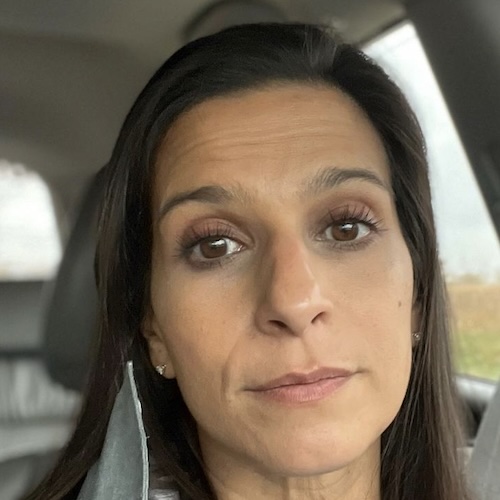
Micheal Finds Hope with an Inoperable Brain Cancer by Joining a Clinical Trial
Micheal opens up about his experience with inoperable brain cancer. His story started in early 2025, when he began feeling random waves of nausea and dizziness, often after waking up or lying flat. At first, he thought he’d eaten something bad. Even his local doctor suspected simple balance issues caused by dislodged ear crystals. But when the right side of his face gradually weakened and his eyes began to twitch, he knew something more serious was going on.
Interviewed by: Nikki Murphy
Edited by: Chris Sanchez
After several MRIs, doctors confirmed that Micheal had a diffuse midline glioma (DMG) in his brain stem, a rare, aggressive type of brain cancer that, in his case, can’t be removed surgically. Hearing the diagnosis left him numb, yet he leaned on his family, faith, and humor to cope. His mom strongly encouraged a second opinion, which led them to Mayo Clinic, where he underwent a biopsy. While the procedure left him with facial weakness, partial numbness in his left arm, and some vision changes, Micheal remains mobile and independent.
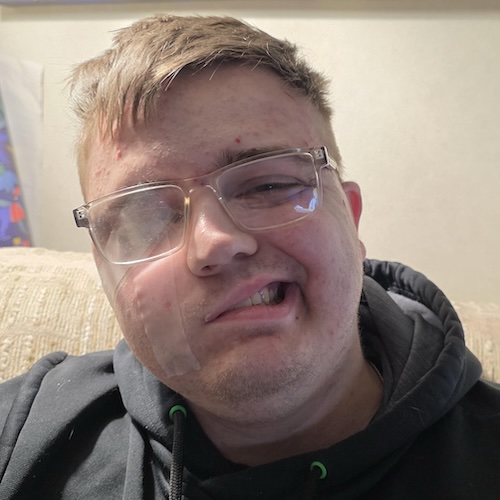
Treatment has involved Micheal joining a clinical trial that’s focused on short rounds of radiation. Instead of doing six straight weeks of radiation, he receives two weeks at a time and then goes under observation. This approach allows his body to recover between treatments, which helps him both physically and mentally. He has had to deal with side effects like nausea, dizziness, and hair loss, but he’s grateful for the chance to keep moving forward.
Thanks to his experience, Micheal’s outlook on life has grown deeper and more meaningful. He takes time to appreciate small moments, like walking and noticing the world around him. He keeps his mental health in check by staying hopeful, joking with his mom, and setting goals for the future, like finally earning a pilot’s license when his vision improves. The advice he offers others is simple but powerful: never take life for granted, help others when you can, and always be the best version of yourself.
Micheal reminds everyone that having brain cancer doesn’t erase the possibility of joy, love, and purpose. Hope, for him, is waking up each day with the belief that there’s still life to live and a future to work toward.
Watch Micheal’s video and scroll through the transcript of his interview below to:
- Learn the subtle symptoms that can signal something far more serious than dislodged ear crystals
- Understand how Micheal turned a life-changing diagnosis into a story of hope
- Find out more about the clinical trial that gave him a chance to keep moving forward
- See the small daily moments that have brought Micheal joy in the face of brain cancer
- Read his simple yet powerful advice for living with purpose
- Name: Micheal J.
- Diagnosis:
- Brain Cancer (Diffuse Midline Glioma)
- Age at Diagnosis:
- 25
- Grade:
- Grade 4
- Symptoms:
- Vertigo
- Eye nystagmus
- Weakness on the right side of the face
- Dizziness
- Treatment:
- Radiation therapy, as part of a clinical trial
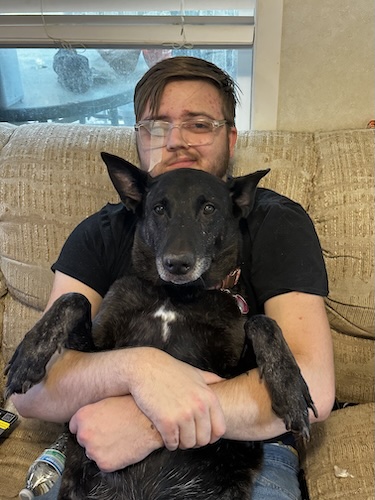
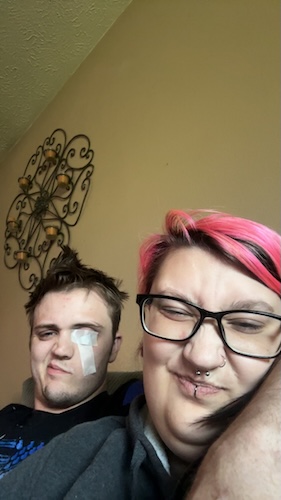
This interview has been edited for clarity and length. This is not medical advice. Please consult with your healthcare provider to make informed treatment decisions.
The views and opinions expressed in this interview do not necessarily reflect those of The Patient Story.
- My name is Micheal
- When I first noticed something was wrong
- The moment everything changed: getting my diagnosis
- How I felt when I heard “You have a mass”
- My mom pushed for a second opinion
- What my biopsy did to me
- I decided to go on a clinical trial
- The side effects I’m experiencing while on the clinical trial
- It’s hard to accept that surgery isn’t an option for me
- My biggest challenge, staying connected, and finding normalcy
- Cancer has changed my outlook on life
- Living with my eye issues and next steps
- Hope keeps me motivated
- My biggest piece of advice to others
My name is Micheal
I was diagnosed back in April of 2025, and I live in Iowa.
What I like to do is I like to play a lot of video games. I like to take my dog out for walks. Lately, I have been doing a lot of pushups. I was really big into fitness before this, and I still am.
My partner and I, I consider her my wife because we have been together for almost four years now, we do not have any kids. Before the diagnosis, we were in the process of figuring things out, getting a house, getting married, and everything. We are still thinking about getting married, but right now we are just kind of waiting on medical bills and stuff like that.
When I first noticed something was wrong
I first started noticing symptoms back in February, very early February. My family and I went out to Minneapolis, Minnesota, to go to the Mall of America, and we also saw a hockey game while we were up there. While we were there, I started waking up in the mornings and randomly feeling very, very nauseous for no reason. I just kind of marked it up as maybe I ate something bad.
We ended up getting back from Minnesota, and I want to say this was about the middle of February. After we got back from Minnesota, I ended up calling in [sick to work] for an entire week because I just could not lie flat anymore. I could not lie fully on my back without getting a really bad, dizzy spell. The best way I can describe a dizzy spell is if you were to stand still and spin in a circle, and just stop, and you just kind of let your equilibrium go crazy. It was not fun.
It was around that time that I felt I had to do something because I could not keep calling in. So I went to my local doctor down here, and they said it could be my ear crystals, the little crystals in your ear that help out with your balance and everything. They said sometimes those can get dislodged and cause these vertigo‑like symptoms.
They gave me some medication, and it helped with the dizziness, but with me being a diesel mechanic and going underneath the trucks all the time, lying flat like that on a creeper was not fun for me. I would get up off the creeper and go straight to the trash can, essentially. It was around then, when I could not stand it anymore, that I felt there had to be something more going on.
We were getting closer to March, around the end of February, when I started getting facial weakness on my right side. I could not really smile on this side, and I could not blink very well on this right side. So I contacted my doctor and said, “Something is going on.” He said, “What I am going to do is send you up to the ENT, ear, nose, and throat doctor, just to make sure that it is your ear crystals or if it is something more.”
I went through a couple of tests at the ENT doctor out in South Dakota, and that is where they ended up finding my eye nystagmus. Eye nystagmus is when, if I look completely to my right or completely to my left, my eye will bounce back and forth. They were the ones who said I should get an MRI done. I did not get an actual MRI until closer to April, which is really sad to say, but that is just how the process went.
The moment everything changed: getting my diagnosis
I went into the hospital to get an MRI, and that is where they found a mass. There are not a lot of neurosurgeons or neurologists down here in Sioux City. So they sent me from our Saint Luke’s hospital to our Mercy hospital, where they have a neurologist. That is where I did another MRI, and they basically wanted to do surgery right away to see if they could get it out of there.
I ended up staying the night there, and the next morning, they said they were going to send me up to Omaha because they could not really tell where this thing was, and they have better MRI machines up there. The doctor did not want to just go in and start trying to cut out something he could not see. So they took me up to Omaha and did another MRI there.
That is where they found that it was inside my brain stem. It is called a DMG, which is a diffuse midline glioma. Essentially, it is completely smooth and has no borders, which means it is fused to my brain stem. That is where they gave me the prognosis, and they wanted to do traditional radiation and send me back down here.
How I felt when I heard “You have a mass”
When they first walked in and told me, I honestly just felt very numb at first. I did not know what to think. What I did next scared a lot of doctors, but I basically took off the medical stuff they had hooked up to read my heart and everything, and I looked at my mom and said I was going to go for a walk.
I had my best friend, Kevin, with me, and I had my wife, Becca, with me. We walked down to the church that is in the USMC hospital. That is where it really hit me, and I broke down there. It took a lot to come to acceptance. It is not a great prognosis, but we all have a lot of faith.
My mom pushed for a second opinion
This is actually a really good part of my story, because this is where my mom comes in. I love my mom to death. She is the one who said, “No, I cannot accept this.”
After I went on my little journey, a couple of doctors had to come and find me and tell me that I could not just be walking off like that. We ended up coming back home to Sioux City, and my mom reached out to a couple of her friends who had cancer. They basically said, “Get to Rochester. Go to Mayo. Get a second opinion.”
My mom called me up the next day, a day after we got home, and said, “Let’s just go out to breakfast. I want to talk to you a little bit.” We have a little breakfast place out here called Johnny Marr’s, really good for breakfast. That is where she said, “Why don’t we just go up to Mayo? They are the best in the US right now. They are number one. What is the harm it could do?”
So we drove four and a half hours that day, went into the emergency room, and we were there for quite a while. I think we got up to Rochester around eight at night, and we did not get out of there until almost two or three in the morning.
They had a neurosurgeon in the emergency room. Her name was Sarah, a very, very nice lady. She is the one who said straight up, “I am going to help you, and I am going to send a personal message to Dr. Parney,” who was one of the top neurosurgeons there. She said, “I am going to talk to Dr. Parney, and we are going to get something figured out.”
Within days, like two days, we were already getting a call from Mayo saying they wanted to schedule a biopsy and talk to me about it and see how I felt. We ended up setting up the appointment and going to Mayo. Dr. Parney is a very, very nice man. He basically said he could do a biopsy on this.
He said there was about an 85% chance of him coming out completely normal, as if nothing happened, a 15% chance of some damage, which is where the facial weakness and arm issues come into play here, and a less than 1% chance of death. He did the biopsy, and I signed some papers. They ended up grabbing two samples. They grabbed a sample from me, and they also grabbed a sample to further research on DMGs and DIPGs, and that is basically how that went down.
What my biopsy did to me
The after‑effects, when I first woke up, were rough. I could not move the right side of my jaw very well. There is still some Bell’s palsy going on on this side of my face. It took a little bit to regain some of the movements in my face, but I can finally chomp down like normal again.
My right eye does not close very well. My eyelid goes about halfway down and then stops. I cannot really move my right eyebrow very well. My left arm, from about the pectoral muscle all the way down to my fingertips, is still kind of completely numb. I am starting to regain some feeling in my fingertips, which is really good, but the rest of my arm is still fairly numb.
I am still able to walk. I am still able to talk, swallow, all the normal things you are normally able to do. It is just my face and arm, mainly.
I decided to go on a clinical trial
With DIPGs and DMGs, the treatments are still fairly limited because there are a lot of ongoing clinical trials. Dr. Breen is my radiologist, and he said that photon radiation is the best type of radiation therapy for these types of tumors.
When we were talking about it, he basically gave me an option. He said I could do the full six weeks of radiation in one go and essentially see what happens. Or, he had been working on a clinical trial. This clinical trial includes doing my first two weeks of radiation, and then they will go on observation from there. Essentially, if this thing tries to grow or go anywhere else, then you hit it with another two weeks of radiation. The idea is to prolong the treatments.
When you do your full six weeks, you have to take, I believe, six months to almost a year off treatments just to let your body recover and heal. When he brought up those options, my mom was the one who straight-up asked him, “If this were your child, which one would you choose to go for?” He said he would go for the clinical trial, just because a full six weeks of radiation on a tumor in such a very, very, very sensitive area of the body could either grow or shrink it at a rapid pace and pull that brain stem down with it.
So we opted for the two weeks of radiation, then going in once a month for an MRI to see how the tumor is doing. If it tries to progress or get any worse, then we hit it with another two weeks of radiation. They have been talking about a pill called ONC201, but my doctor still has to talk to other doctors about it and see if I am qualified for it.
The side effects I’m experiencing while on the clinical trial
After the first two weeks, I was very, very nauseous. I was nauseous during the radiation as well. That was my main issue: the nausea.
After the two weeks were done, I got home, and they had told me this thing might swell a little bit. My doctor talked about it like training for a boxing fight: if you get hit in the eye too many times, your eye is going to swell up, and then eventually that swelling is going to go down and get better.
My first week home, I felt a lot of pressure in my head. The dizzy spells were pretty bad that first week. But as time went on, things started improving. I started getting fewer dizzy spells. My eye nystagmus has gotten better, and I have been able to move around a lot better.
Thankfully, I have never had any issues during this journey with my mobility. I have been able to keep my mobility as normal as possible. But the first couple of weeks after radiation are rough. That is when my hair started falling out in the back of my head a little bit, where they were doing the radiation. Other than that, it was pretty okay.
It’s hard to accept that surgery isn’t an option for me
It is hard. It is very hard. I am not going to lie. On Facebook, I have joined some support groups where people were able to get their tumors removed. They did not have the same thing I did, but they were able to get theirs removed.
To me, I feel like if the tumor is removed, you have a little bit more of a fighting shot because there is nothing there pushing up against the optic nerves. There is nothing there. I know that they can recur, but it is still kind of hard for me. I am slowly accepting it.
I just keep praying and keep telling myself that I have been in my body for 26 years, and this thing has been in my body for a couple of months, and I am going to make sure this tumor dies.
My biggest challenge, staying connected, and finding normalcy
Honestly, right now, it is my vision. My right eye has always been the stronger eye because I was born with a lazy eye in my left one. Without my glasses, I am practically blind. That is really my biggest issue right now.
Because of how long I have had my eye taped down, I have pretty bad double vision right now. Those are my two big issues. Other than that, everything else has been going really, really well.
Honestly, going back to work has helped a lot. I am on light duty right now. My doctors have advised me to only do about 32 hours a week because out here in Iowa, that is federal law; you have to hit 32 hours at least to be considered full-time. The good thing about being back at work is I get to keep my insurance, and we have really, really good insurance. Medical bills have been very easy for now.
Coming home and being able to be with my wife and our roommate, just being able to relax and talk and talk about different things other than what is going on with me, helps. It is hard to think about the prognosis they gave me because I am so young. But the good part about being in support groups is that you see a lot of long‑term survivors. That has helped quite a bit.
I will go on there sometimes just to see how people are doing. We all talk about how we are feeling, and that is where I get my wording out the best—through those support groups.
Cancer has changed my outlook on life
Honestly, not much in terms of who I am has changed, but I do have a better outlook on life. It is sad to say, but sometimes it takes a life‑changing event to make you realize the beauty of life in general. You get so stuck in the “go home, go to work, go home, go to work” routine and the constant list of what you have to do when you get off work.
Lately, I have just been kind of stopping and smelling the roses a little bit. Just being able to walk outside, even at work. We have a very big parking lot for our trucks out there. Every morning when I get to work, I walk that lot all the way down and walk all the way back to the shop, just admiring things, admiring the life that I still have.
It has been very, very life-changing. My goal was always that I wanted to be a pilot. Obviously, with my vision issues, that has been put on hold for a little bit. I had a lot of options for what I wanted to do. I was very big on taking things apart and putting them back together, and that is why I became a diesel mechanic. At the time, I was thinking, “I am going to do this for now, and I am going to work on getting my pilot’s license.”
Then this happened, and now I am at the point where once my vision gets back, I am going to go for my pilot’s license. A couple of things have been stepped up a little bit more in terms of urgency.
Living with my eye issues and next steps
It is hard for me to blink in general. In all honesty, they really have not said anything specific about fixing it yet.
We are all at that stage of “maybe just give it some time, and this will come back,” especially because I told them about the feeling coming back in my hand.
My next MRI is October 3rd, and that is where I am going to ask if maybe we could put something in my eyelid to weigh it down so I can start keeping moisture in that eye. With it being taped down, a lot more power is going into my other eye, which is causing the double vision.
Hope keeps me motivated
At first, before my diagnosis, hope was just a word. You hope that this happens, you hope that that happens. But now hope takes on a different meaning for me.
Hope is what brings me some joy in my life. It is what brings me the confidence to keep going. It means a lot to me right now. It is the reason why I wake up in the mornings. It is the reason why I keep fighting: the hope that I am going to live a long life, the hope that I am going to be able to spend time with my family.
It is just a joke, but my mom and I have been cracking jokes lately. I told her, “No offense to you, Mom, but I hope I bury you first before you bury me.” She said, “In all honesty, no offense, I hope the same thing.” That is what hope means to me: being able to think about the future like there is no tumor in my head.
Being able to think, “Yeah, I am going to have kids. Yeah, I am going to be able to see my grandkids grow up.” That is what hope means to me lately.
My biggest piece of advice to others
Do not take life for granted. I definitely took my life for granted. I was one of those people who always said, “Oh, I’ll do it later. I’ll do it later. I’ll do it later.”
Do not let a life‑changing event, whether it be cancer, traumatic brain injuries, or whatever it is, be the reason you stop putting life first. Do not put your life on hold just because you think you have time.
Nobody ever expects to get something like this. I definitely did not expect to get this. I was healthy, there was nothing wrong with me, my blood work was fine, and it all started just by getting dizzy, all because I could not lie flat on my back.
If you are able to help somebody, help them out. If you see that person on the side of the road who does not know how to change a tire, what is the harm in helping them? Always try to be the best you that you can be.
I lived my life by asking, “Why be a jerk? Why live your life being a jerk?” Be the best version that you can be now, and then you can take that with you. You can always take that with you. Nobody can ever take your personality away from you.
Inspired by Micheal's story?
Share your story, too!