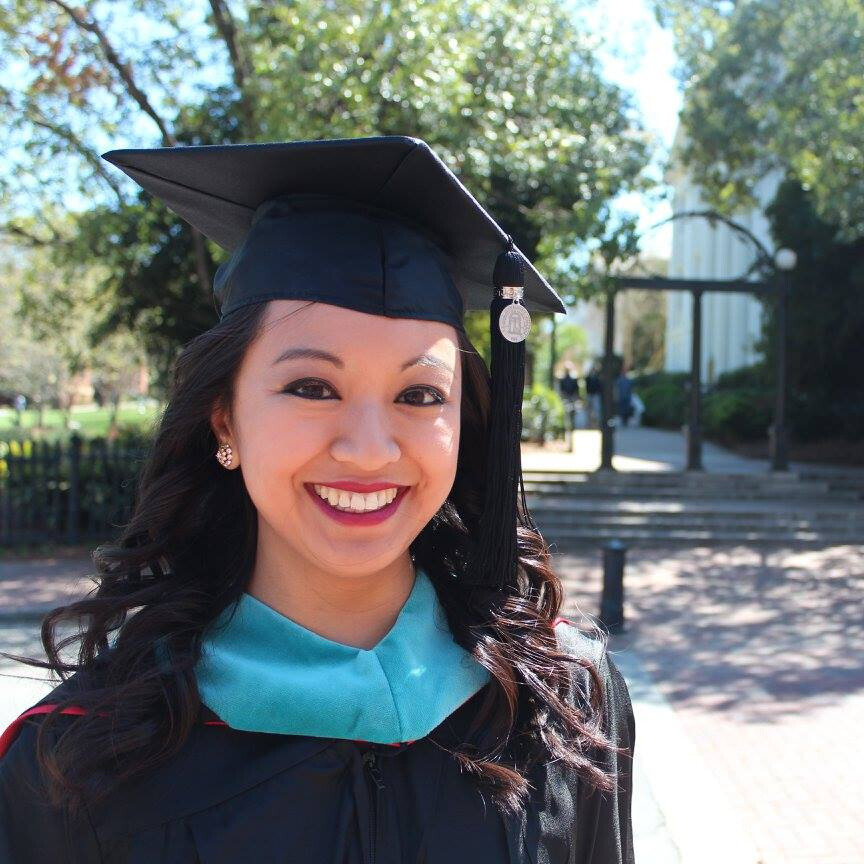
Hodgkin Lymphoma at 18: Kate’s Experience of Faith, Fertility Fears, and Finding Her Voice
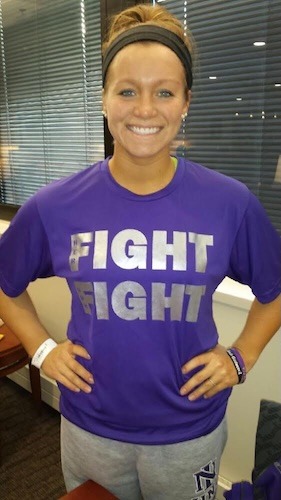
Kate’s young adult Hodgkin lymphoma experience began at 18, just months into her freshman year and Division I softball career in Iowa. A bad cough, a sore throat, hoarseness, and a lump in her neck led to an urgent care visit that revealed a chest mass and, days later, a Hodgkin lymphoma diagnosis (specifically, nodular sclerosis, the most common subtype of Hodgkin lymphoma). Instead of focusing on classes and competing for a starting spot, she was suddenly learning to navigate chemotherapy, scans, and anxiety — all while trying to stay enrolled part-time and stay known as “the softball player,” not “the girl with cancer.”
Interviewed by: Carly Knowlton
Edited by: Chris Sanchez
Kate’s care team started ABVD chemotherapy, a standard Hodgkin lymphoma treatment, with an initial plan of 12 infusions. Mid‑treatment scans looked so encouraging that the team stopped after eight infusions, and on Valentine’s Day 2014, she completed what everyone hoped would be her last chemotherapy session. Still, Kate remembers a quiet unease that the disease might not be fully gone. A few months later, on her way to run with a teammate, she found a lump under her arm. A needle biopsy confirmed that the Hodgkin lymphoma was still active — not because she had done anything wrong, but because the cancer had not fully responded to the first regimen.
What followed was ICE chemotherapy in the hospital and an autologous stem cell transplant later that year, which Kate describes as the hardest part of her Hodgkin lymphoma experience. High‑dose chemo wiped out her immune system, leaving her exhausted, isolated, and masked long before the COVID‑19 pandemic made masks commonplace. A cousin moved in to care for her during the 90 days when she needed to avoid public spaces and anyone who was sick. Slowly, her counts recovered, scans cleared, and follow‑up shifted from frequent imaging to yearly blood work and tuning in closely to her own symptoms.
Beyond the medical events, Hodgkin lymphoma reshaped who Kate understood herself to be. She eventually stepped away from college softball, re‑rooting her identity in her Christian faith rather than athletic performance. She became a nurse, working in aesthetics, and created “Naturally Kate,” where she shares about low‑tox living, honoring the body as a “temple,” and being your own advocate in the exam room. Perhaps most tenderly, after freezing just three eggs before transplant, she later conceived two daughters naturally, holding that reality as a daily reminder to keep hope alive, even when the path includes relapse, hair loss, and long seasons of uncertainty.
Watch Kate’s video and read through the edited transcript of her interview below for more about her story.
- Hodgkin lymphoma symptoms, such as a persistent cough, neck lump, shortness of breath, fatigue, and unexplained weight loss, can be easy to dismiss during busy seasons of life, but Kate’s story shows how critical it is to pay attention and seek care when something keeps nagging at you
- Fertility conversations as a teenager can be overwhelming, but options like egg freezing can create a path toward parenthood later; in Kate’s case, she now holds profound gratitude for being able to conceive two daughters naturally after treatment
- Clean eating, low‑tox products, and movement became important ways for Kate to honor her body after Hodgkin lymphoma, reflecting a longer‑term shift toward caring for her “temple” rather than taking her health for granted
- Kate describes a deep transformation: from a naive 18‑year‑old college softball player to a nurse, mother, and advocate who now centers her identity in her faith instead of her sport and uses her experience to support others
- You know your body best, and if you feel dismissed or sense something is still wrong, it is both valid and important to ask more questions, seek a second opinion, and find clinicians who listen
- Name: Kate H.
- Age at Diagnosis:
- 18
- Diagnosis:
- Hodgkin Lymphoma (Nodular Sclerosis)
- Staging:
- Stage 2
- Symptoms:
- Severe, persistent cold
- Shortness of breath during athletic activity
- Pale itchy skin
- Appearance of a lump in the neck
- Treatments:
- Chemotherapy: ABVD and ICE
- Autologous stem cell transplant
This interview has been edited for clarity and length. This is not medical advice. Please consult with your healthcare provider to make informed treatment decisions.
The views and opinions expressed in this interview do not necessarily reflect those of The Patient Story.
- My Hodgkin lymphoma diagnosis at 18
- Life in Iowa, motherhood, and daily passions
- How faith shaped my Hodgkin lymphoma journey
- I had college softball dreams before Hodgkin lymphoma
- My early Hodgkin lymphoma symptoms and an urgent care visit
- Hearing “Hodgkin lymphoma” for the first time
- I started ABVD chemotherapy within days of my diagnosis
- My ABVD chemo plan, early scan, and first remission
- Discovering a relapse: A new lump under my arm
- Second-line ICE chemotherapy and a Mayo Clinic second opinion
- I had an autologous stem cell transplant in October 2014
- Adjusting to life after transplant and immunocompromised recovery
- Losing my hair, shaving my head, and support from my brothers
- Letting go of my softball identity
- Returning to softball after transplant and choosing to quit
- Mental health, anxiety, and staying positive through treatment
- How Hodgkin lymphoma changed the way I see life
- Becoming a nurse and learning to advocate for myself
- Advice for newly-diagnosed cancer patients and caregivers
- Clean living, fitness, and honoring my body after cancer
- Fertility preservation, egg freezing, and becoming a mom
- Fertility-related advice for cancer patients
My Hodgkin lymphoma diagnosis at 18
My name is Kate. I live in Iowa, and I was diagnosed with Hodgkin’s lymphoma when I was 18. So that was in 2013.
Life in Iowa, motherhood, and daily passions
I’m a mom, and so we do a lot of different things with our children. I work part-time so I can have the best of both worlds, providing but also being with my kids. We are very active. We like to work out, we like to go on walks and runs, traveling here and there. We’re not a huge travel family, but we do like to take a big family vacation at least once a year.
We’re really involved in our church. That’s very important to us as well. I help with the kids’ room. My husband is on the sound team. We used to be youth leaders before, but that’s a bigger time commitment. We spend a lot of time with our friends as well. We get together with a group of friends once a month, and then that’s more intentional time together, and then here and there with different groups of friends.
How faith shaped my Hodgkin lymphoma journey
I would say I’ve always been a believer, but it was more of a childlike faith. I grew up in a Lutheran home, and I went to a Lutheran school until eighth grade, and I knew of Jesus. But it definitely changed when I got to college. I was seeking out the Lord more when I got to college, and my freshman year of college is when I got diagnosed.
I am thankful I already had that want and that desire to know the Lord better and grow in my faith, because it was three months into my freshman year when I got diagnosed. I knew that I needed to lean on the Lord during that time. I knew He was going to get me through, but I didn’t really know what it meant to trust Him until this time.
A lot of my faith, I would say, is strong because of my mom. She has such a strong faith, just so admirable. She really helped me through that, too, just trusting Him. She had to trust Him herself. Looking back, my mom had a huge role in my faith journey as well, going through this, but it definitely grew during that time.
There are always ups and downs, especially when you’re coming to faith and really understanding what it is to be a Christian and to trust God. Knowing that He died for your sins is all you have to know, that’s all you have to believe, and just trust Him with your life. It was a road to get to where I’m at now, but it has definitely helped me through, because I always knew, even after my diagnosis and during all my cancer treatment, that He’s not done with me. I always felt in my heart that He’s not done.
That looks like a lot of different ways for me, but trusting Him with every moment of every day has definitely been a process. It is one of those things where you just have to let go, literally let go, and let God.
I had college softball dreams before Hodgkin lymphoma
I always knew that I wanted to play softball in college. I remember telling one of my high school counselors, “I’m just going to play in college.” He asked, “What do you want to do with your life?” and I said, “I don’t know, I just want to play softball, and I’ll figure it out.” He said, “But Kate, you need a plan.” Looking back, I understand what he was saying, but at the time, I thought, “I’ll just figure it out.”
I came up with the goal that I was going to play in college. I went to the University of Northern Iowa. It was 20 to 25 minutes from where I grew up, very close to home. I always thought I would go a little farther, but everything aligned. I was very close to home and then got diagnosed.
My plans definitely changed. I had a lot of big aspirations for my college softball career. That’s one of the reasons why I chose UNI, because it was D1. I always held myself to a high standard when it came to softball, and I thought, “I can totally compete for a spot as a freshman.” I was trying to compete for a spot in the fall season because I was able to play that fall, and then I got diagnosed after that.
I didn’t have any big dreams or aspirations as far as a career goes, but I was going to figure that out along the way, and sure enough, I did. I would say most of my dreams and aspirations going into college were about softball and then creating relationships and going from there.
My early Hodgkin lymphoma symptoms and an urgent care visit
I always tell my story by looking back on my symptoms. I can tell you what they were, but there was nothing where I thought, “Wait, something’s not right.” The reason I went to urgent care one weekend was that it was our first weekend without softball games. The fall season was over, we had the weekend off, and being 20 minutes from home, I thought, “Okay, I’ll go home.” Everyone else was going home. I literally didn’t go home until about three months into school, which was hard because I was so busy, especially as a college athlete.
I went home and recalled going shopping with some friends. I was feeling sick, had a really bad cough, and was starting to lose my voice, but I didn’t think anything of it. We came home from shopping, I was hanging out with my mom, and I was coughing up a lot of gunk, just a virus-type sick. My mom said, “Let’s go to urgent care, just in case you have a sinus infection.”
I’m a nurse now, but at the time, none of us had any medical background. Looking back, it was kind of silly to go to urgent care, but it was meant to be because of what we found out there. We went to urgent care. I remember I had this cup that I was drinking hot cocoa out of, and the warmth felt good on my throat because it was so sore. It was a really cute cup from TJ Maxx. It said, “I have plans for you, declares the Lord,” and it’s so crazy how things all line up looking back.
We went through everything at urgent care. Strep was negative, and I didn’t have a sinus infection. They said, “You’re just sick.” Then I told my mom about this lump right here that would come and go. It had probably been there since the summer, but because it would come and go, I didn’t think much of it. The nurse practitioner, or maybe she was a PA, felt it and said, “Let’s get an X-ray on that. That’s way too big not to do something about.”
So I got a chest X-ray, and there was a mass on my chest. The next day, that was a Sunday, and on Monday, I remember calling my coach on the way home, explaining what was going on, a little hysterical because we just didn’t know what it was. Then I was in Iowa City the next day doing a scan. On Wednesday of that week, I had a biopsy, so I have a little tiny scar right here that thankfully is not very noticeable.
My mom apparently found out via MyChart that it was indeed Hodgkin lymphoma on that Friday, but she didn’t want to tell me. That next Monday is when we officially found out it was Hodgkin, and that Friday, I started chemo.
Looking back on my symptoms, I was very pale and losing weight, but I thought, “I’m just starting college, and we’re working out a lot.” I think two days a week, we had weightlifting and 3- to 4-hour practices in the fall heat in Iowa. I thought, “I’m just sweating a lot.” I didn’t think anything of the paleness. Looking back at pictures from the time, I was really pale.
I was short of breath a lot because there was a mass on my chest. In Iowa, we play high school softball in the summer, so we have five seasons of high school softball because you can play your eighth-grade summer through senior year. My senior year summer, I was playing for my high school, and my high school softball coach said, “Kate, stop holding your breath when you run.” I said, “I’m not holding my breath, I’m trying to breathe when I run.” I would book it over to second base and be panting, and he kept telling me to stop holding my breath. I wasn’t, so the mass was growing even then.
There was also fatigue, of course, but I didn’t think anything of that. Those were my symptoms.
Hearing “Hodgkin lymphoma” for the first time
I had asked my mom what lymphoma was. I had no idea. I had heard of cancer, but I didn’t realize there were different types of cancer. I had heard of leukemia and breast cancer, but I had no idea beyond that. I would describe myself at 18 as very naive. I didn’t know a lot about anything, and who expects an 18-year-old to know all the types of cancers?
I had no one close to me who had a blood cancer. My aunt had passed away from breast cancer, but otherwise, I hadn’t had anybody close to me who had a different type of cancer. I didn’t really understand that at the time.
I started ABVD chemotherapy within days of my diagnosis
I started chemo within about 12 days of the urgent care visit.
For Hodgkin at the time, it might be different now, but it was pretty standard. My doctor said, “This is what we’re going to start with.” I remember them saying something like, “This is a very curable cancer. Yes, it’s still going to be hard, but a high percentage of people do very well.” I think they said something like 80% of the time, after this initial treatment, people are good to go. I was the 20%.
I remember them saying they had a treatment plan if it didn’t go away after this initial treatment. That’s when they would get into the stem cell transplant, but they did not think I would have to go there.
My ABVD chemo plan, early scan, and first remission
They originally said 12 treatments. I had the ABVD treatment combination, different types of chemo. It was 12 cycles, one treatment every two weeks. They said it would be about six months of chemo. I thought, “Okay, I can do six months.”
They do a scan after five treatments, before your sixth treatment. They told me everything looked good and that I could be done after eight treatments. I trusted them and was going to go with what they said, of course, but deep down, a little bit, I felt like I wasn’t done. It was weird. I remember feeling like this was almost too easy.
I didn’t get super sick. There was one treatment where I got a little nauseous afterwards, but for the most part it was just fatigue and a little bit of nausea, mainly from anxiety, but nothing too crazy. Not that it has to be terrible to “count,” but I just expected it to be a lot worse. A part of me felt like I wasn’t done, looking back on it.
I was done after eight treatments. My last treatment was on Valentine’s Day 2014. They said, “We’ll do a scan sometime in April.” It was the end of April or something like that. They said, “Give it two months and then make sure you’re good.”
Discovering a relapse: A new lump under my arm
I still tried to stay with the team and do what I could. I went to weightlifting one morning in early April. One of my friends on the team, who is now my sister-in-law, was there. We were very close at the time, and she later married my brother, which is kind of cute. I remember I was going to run with her around the track.
On the way there, I was feeling under my arm because it was sore. I had been throwing a lot more and trying to get back into it. I was feeling under my arm because it was sore, and I found a lump. I went back to the locker room and called my mom, obviously crying. That time, they did a needle biopsy. I don’t remember the exact timeline, but it was probably pretty fast. They did the needle biopsy, and sure enough, it was still Hodgkin.
I don’t know how that works, whether they didn’t get it all the first time or if my cancer was just aggressive and needed more to knock it out, more aggressive than they thought.
Second-line ICE chemotherapy and a Mayo Clinic second opinion
I started more chemo. I think I did three rounds of a therapy called ICE. These are just chemotherapy combinations. I was in the hospital for three days and two nights to do this chemo, and then I had a three-week break, so it was three weeks between cycles. I think I did two or three rounds of this.
During this time, my mom was very involved. She had E. coli really badly when I was in first grade and almost died. She went to Mayo Clinic and loves it. It’s very close to here, similar in distance to Iowa City, where I did all my treatment. She said, “We’re going to Mayo to get a second opinion, just to make sure you’re ready for a stem cell transplant,” because when it relapses, the plan of action would be a stem cell transplant.
We went up to Mayo. The hematologist looked through my chart and everything and said, “Yes, I would say you’re good to go for a stem cell transplant.” Thankfully, it was with my own stem cells. I didn’t have to have anybody else’s stem cells, and there’s less chance of rejection that way.
I had an autologous stem cell transplant in October 2014
We kind of put the transplant off briefly because we were getting this second opinion. We ended up being able to get in. It was one of those situations where they said, “We’ll let you know when you’re able to get in,” because there are so many people who need that floor for different reasons. I was able to do my stem cell transplant in October of 2014.
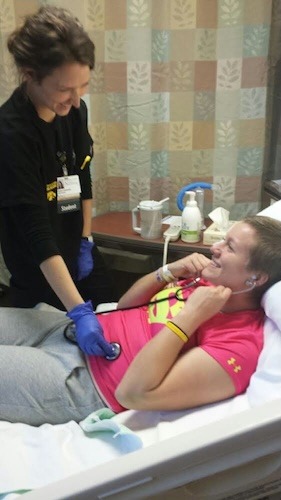
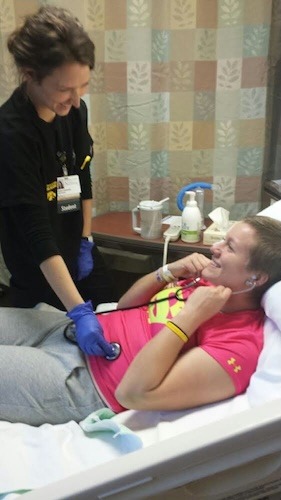
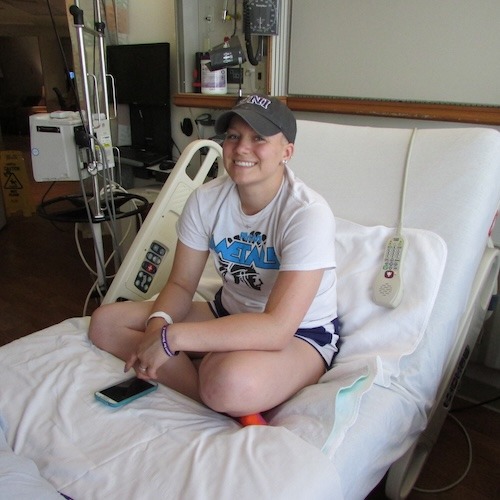
The stem cell transplant was pretty brutal. That was probably the worst part of all of it. It was two hours of chemo in the morning and two hours at night. They bottomed out my immune system. The side effects from that were by far the worst. I remember sleeping for days and having irregular GI symptoms, both ends, just very miserable. Thankfully, the worst part of that was only a few days. Then they gave me my stem cells back.
After that, it was recovery, making sure my blood counts were going back up and that sort of thing. I was able to get in and out of there in 19 days, and they said the minimum was three weeks, so that was pretty exciting.
Adjusting to life after transplant and immunocompromised recovery
After all that, all I wanted to do was be a normal 18‑year‑old, play softball, make friends, and get on with my life. But I knew that God was working in me and on me, and now I can do things like this and encourage other people.
After the stem cell transplant, I was immunocompromised, so I had to wear a mask everywhere. When the pandemic hit, masks were not new to me. I thought, “I’ve done this before.” My mom said, “We’re going to make these cute,” and she got me beads and jewels to put on them. She said, “We’re going to bedazzle your mask.” I had seven different ones I rotated through.
I couldn’t be around anybody who was sick, and they didn’t want me going out in public for about 90 days. My cousin, bless her heart, is my age, and we are very close. She stayed with me. At the time, she had jobs here and there, but nothing she was super committed to, so my mom paid her to stay with me so my mom could go back to work. I thought, this is perfect — my best friend is staying with me this whole time.
All we did was craft all day and watch movies. Looking back, I was so ready to get out because I’m definitely a busybody. I like my downtime, but this was a little too much downtime.
I finished my transplant at the end of October 2014, and my scan was in January, three months after my transplant. Everything was good at that scan. Since then, that first year, I think I’ve had a scan every three to four months, then it went to every six months, and now I just have once-a-year blood work. If anything is off with my blood work, then we look into things, but it’s also based on my symptoms. At this point in my life, I know my body very well, and if anything were off, I feel like I would know right away.
Losing my hair, shaving my head, and support from my brothers
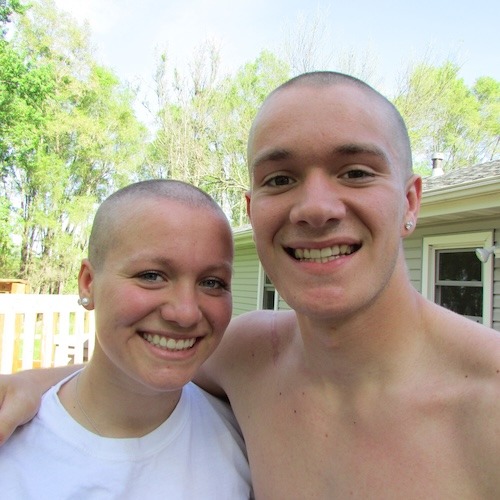
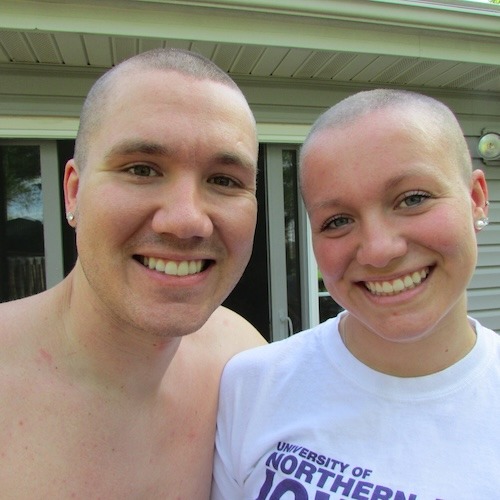
I know I have that one picture of me and my brother, both of us bald. I did lose my hair from chemo. That was after all of my initial ABVD treatment. I let my hair just fall out at first. I remember praying, “Lord, you can make me as sick as you want, but please don’t let me lose my hair.” I was new in college, still getting to know people. I didn’t want to be known as the girl on the softball team who had cancer. I didn’t want to look sick.
I stayed in school part-time, I think about nine credits. They told me to keep my life as normal as possible. I could stay in the dorm when I wanted to, that sort of thing. They were all okay with that. I just didn’t want to look sick, so I let my hair fall out. It thinned out. Thankfully, it didn’t come out in chunks, but toward the end, it got so thin. It was so gross, and I should have just shaved it.
When we got the diagnosis that it was back, I said, “All right, let’s do it. Let’s shave it.” Both my brothers said, “Yeah, let’s go, we’re going to shave our heads too.” My mom said, “I’m going to shave my head.” I told her, “Mom, you’re not shaving your head. Stop it.”
I decided to get a wig so I could feel confident walking around. I feel like if that happened to me now, I would think, whatever. But as an 18‑ or 19‑year‑old, you have a lot of vanity in your hair. So I did end up shaving it after the rediagnosis.
Letting go of my softball identity
The hardest thing for me was letting go of my identity as a softball player and as a college student. You’re so excited to be on your own, to make your life, to figure out adulthood.
The hardest thing was letting go of that and knowing it was not my time yet to move on from my old self. Hopefully that makes sense.
Returning to softball after transplant and choosing to quit
My sophomore year, I took the year off because I was still recovering. My sophomore year was when I had my stem cell transplant, in 2014, so I took that whole year off. I started practicing with the team again later. We didn’t do much for practice, but we did a lot of lifting in the mornings during the summer of 2015. I was doing some things on my own to get my strength back up.
Some girls stayed in Cedar Falls for the summer, and we got together and did sprints and lifting and things like that. I came back to play my junior year. After my junior year, I wondered, “Do I want to come back? Do I want to play?” I got a taste of life without softball and thought, “Maybe this isn’t too bad.”
I’m thankful for my cancer journey because it made me let go of my identity in softball and as a softball player. It made me root my identity in Christ. I’m more than a softball player.
I debated going back or not. I thought I would regret it if I didn’t try, so I said, “We’ll see how this season goes.” It was a long season. Maybe I should have listened to myself a little bit, but I would have regretted not trying. I went back to play, but I was very weak. I was slow; I wasn’t as strong as I had been. I had to give myself grace because I hadn’t even been out of my transplant for a year when I started playing again.
I did it, and after the fall season, I decided I was going to be done, but I stuck it out because I’m not a quitter. I thought, “I need to stick the year out, I can’t quit halfway through.” I thought, “Maybe it will get better this winter.” It didn’t. I thought, we’ll see how the season goes. The season happened, and my coaches were very surprised that I quit because I didn’t give any hints that I wasn’t happy or that I didn’t want to play anymore. They handled it very well. I caught them off guard, but they were happy for me, whatever my next steps were.
Mental health, anxiety, and staying positive through treatment
Mentally, I had my moments. I have always been a very positive person, especially during that time. I never really got mad or stayed sad or upset. I was always very positive, and I’m thankful for that because the Lord was definitely preparing me to be positive through this.
This is when my anxiety was diagnosed as well. I definitely had it in high school, mainly before games. I could feel that very anxious energy before volleyball games, softball games, whatever I was doing. Talking in front of people made me really nervous, and it still does, but it’s that adrenaline-type anxiety, plus generalized anxiety. This is when that really came out.
Mentally, the anxiety was very hard to manage. I was prescribed something for that, but eventually I learned how to manage my anxiety on my own. I had my moments of breaking down and crying, but it was never that I was hopelessly sad. I was never mad about the situation. I remember being upset that it happened at that point in my life, because all I wanted was to be a normal college student and play softball.
I don’t remember being depressed about it, thankfully. Through classes, you could tell I was going through something because I didn’t try very hard. I was just thankful to still be in my classes. My GPA wasn’t great, but I passed at least.
It was definitely a mental struggle, but that made me lean on the Lord more, because I knew it wasn’t going to last forever. It was only a season. My mom would tell me, “Pick out a few verses from the Bible and repeat them to yourself when you feel this way.” One of them was, “The Lord did not give me a spirit of fear, but of power, love, and a sound mind.” I would tell myself that over and over again when I couldn’t sleep or when I was sad about the situation.
It helped to know and to stay positive that it was only a season, and it was not going to last forever. I never really felt like I was going to die, thankfully, because they gave me a good prognosis, but that doesn’t take away from the battle that it was.
How Hodgkin lymphoma changed the way I see life
I definitely look at life differently now. Especially right when I was done with treatment, I looked at life very differently. The farther I get out, the harder it is to remind myself that it could be so much worse, and I feel like maybe that is normal.
At this point in my life, it was 12 years ago that I was diagnosed, so it feels like a lifetime ago. When things feel hard now, I tell myself, “I could be going through that again.”
I’m thankful it happened at that point in my life and not now, when I’m a mom. I’m very thankful that it was that season, because when you’re 18, things feel really important that are not actually that important. I could have had children depending on me while going through this.
Becoming a nurse and learning to advocate for myself
I’m a nurse now, and my cancer journey is why I wanted to become a nurse. I’m not practicing in traditional medicine. I’m an aesthetic nurse, so it’s more about esthetics and feeling good in your skin. That was a big thing going through cancer. I did not feel good about anything with my appearance, so I know how important it is to feel good about yourself so you can show up better.
It doesn’t have to be vanity. If you feel good about your skin, you’re going to show up more confidently, and that can be a ripple effect. That’s a huge mission at the job where I work.
Being an advocate for yourself is so important. At the time, I didn’t know how to be. I didn’t know that was a thing. I didn’t have to go through medical decisions alone at 18, but as a nurse now and being more holistic-minded, if you feel dismissed by somebody or by your doctor, get a second opinion or go to somebody who will listen. It’s important because you know your body better than anybody else, so keep going to somebody until someone listens.
Advice for newly-diagnosed cancer patients and caregivers
For anyone watching, even if it’s not cancer that you’re going through, it’s important to stay positive and be an advocate for yourself.
Things might not seem like they’re great, but it gets better.
Even if it’s not cancer, stay positive, advocate for yourself, and remember that things can get better.
Clean living, fitness, and honoring my body after cancer
I have definitely seen a difference in how I eat and work out since my diagnosis. I always enjoyed working out, but it wasn’t until probably the last few years that I really thought, “Okay, what I put into my body matters too.”
I started my Naturally Kate page about a year and a half ago. It is about telling my cancer story. I want to get more into the advocating part, but also about taking control of your health, whether that is exercising, clean eating, or the products you put on your body. I talk a lot about those things and giving your body things that are going to benefit you.
Those are the things I talk about on my page. I also talk about relating fitness to being a Christian because as Christians, we are called to honor our temple, and one way we can do that is by treating it well with the products we put on our skin, how we eat, and how we exercise. I talk about all those things, and it’s very important to me.
I adapted a low-tox, nontoxic lifestyle. I remember thinking, “They put formaldehyde in this?” These different things made me think, how can they get away with putting those ingredients in our products? A lot of people don’t realize that, and I didn’t realize it before. I got into that shortly after my stem cell transplant, because during treatment, you don’t have any mental real estate for anything else.
Then I look back and think, “What did I just go through, and how can I make changes so that doesn’t return?” I always knew I wanted to be a mom, and I thought, “I can make these changes for my family as well.
Fertility preservation, egg freezing, and becoming a mom
Before my stem cell transplant, they finally said, “This could affect your fertility.” They told me that if I wanted, we could basically do the IVF process minus fertilizing the eggs. I had eggs frozen for a while, and that was a hard pill to swallow at 18 or 19.
I had no idea what I wanted to do with my life. I just always knew I wanted to be a mom. For that to maybe be taken away from me was very hard, because I thought, I have no idea what I want to do, but I know I want to be a mom. They only got three eggs out of that, which was hard, because usually they get a lot more, especially in an 18‑ or 19‑year‑old. The reason why is that I had already had chemo for five months before that, so my body wasn’t working like it should, even though I had the injections and all of that.
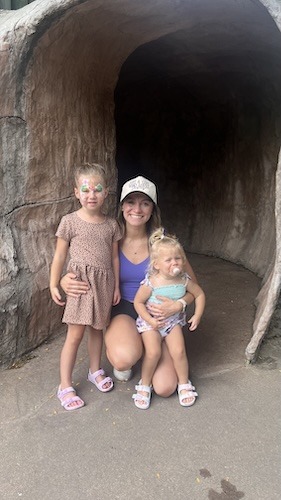
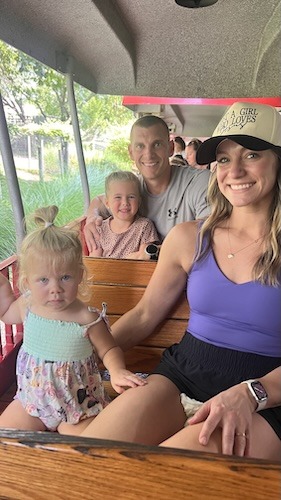
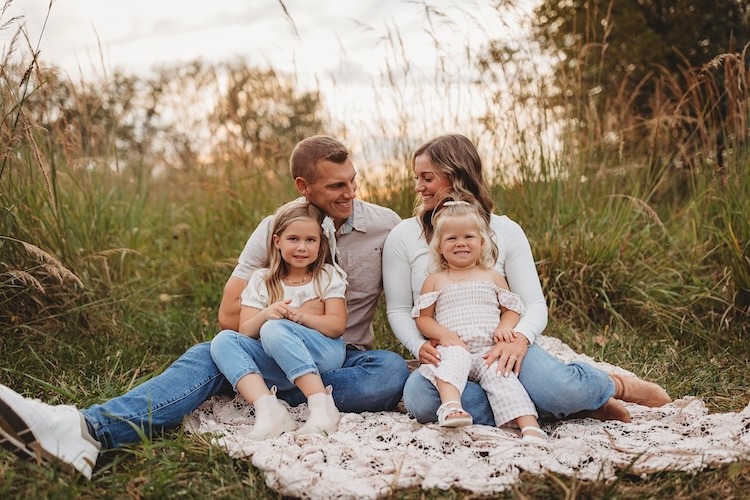
Thankfully, we didn’t have to use those eggs. That’s one of those things where you just don’t know until you’re in that stage of life where you’re trying to have children. Thankfully, the Lord has blessed us with two beautiful girls. We did not have to go the IVF route. We got pregnant naturally on our own, and I’m very thankful for that.
Fertility-related advice for cancer patients
If anyone is going through something similar, keep hope. Don’t give up on your dreams. Even if it is the IVF route, it’s okay to go that route if that’s how you become a mom or a dad, because it’s 100% worth it. Looking back, that was something that was very hard, hearing, “We just don’t know until you try.”
We want more children, and hopefully, we are blessed with more. That was one of the hard mental parts at the time, thinking about my fertility when that wasn’t the stage of life I was in. You don’t want to have to think 10-plus years ahead, but you have to. At least there is science that can help us.
Inspired by Kate's story?
Share your story, too!
More Hodgkin Lymphoma Stories
Jessica H., Hodgkin’s Lymphoma, Stage 2
Symptom: Recurring red lump on the leg (painful, swollen, hot to touch)
Treatment: Chemotherapy
Riley G., Hodgkin’s Lymphoma, Stage 4
Symptoms: • Severe back pain, night sweats, difficulty breathing after alcohol consumption, low energy, intense itching
Treatment: Chemotherapy (ABVD)
Amanda P., Hodgkin’s Lymphoma, Stage 4
Symptoms: Intense itching (no rash), bruising from scratching, fever, swollen lymph node near the hip, severe fatigue, back pain, pallor
Treatments: Chemotherapy (A+AVD), Neulasta

Brescia D., Hodgkin's Lymphoma
Symptom: Swelling in the side of her neck
Treatment: Chemotherapy: 6 rounds of ABVD