
Kalei’s Stage 4 Rectal Cancer Story: Has My Cancer Returned?
For many people, a stage 4 rectal cancer experience starts with fear and confusion. For Kalei, this is exactly what happened. After two lung wedge resection surgeries with clear margins, her care team suggested another watch-and-wait period. It was the same surveillance approach that had previously ended with lung metastases discovered on the very first scan. This time, with a stage 4 diagnosis and two young daughters at home, the stakes felt even higher.
Interviewed by: Taylor Scheib
Edited by: Chris Sanchez
When new scans in late 2025 suggested possible recurrent rectal cancer in her lung and rectum, Kalei found herself stuck in a gray zone. Radiology reports raised red flags, but multiple doctors were unsure and recommended more waiting. That disconnect pushed her to prioritize something she’d been encouraged to pursue since her first diagnosis: a second opinion. A change in insurance finally opened the door to a new hospital system and a team that took an aggressive, thorough approach to testing. They ordered fresh imaging, bloodwork, ctDNA testing, and even biopsies for suspicious lymph nodes in her neck. Some findings, like a new liver spot that later disappeared, brought terrifying lows followed by profound relief.
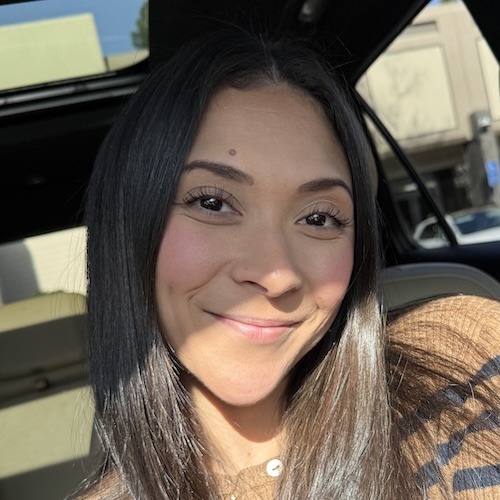
Alongside the medical maze, Kalei’s rectal cancer experience reshaped her home life and marriage. She and her husband learned to support each other on their hardest days — one would stay steady while the other was spiraling. They booked trips all across the country, choosing joy and presence amid uncertainty. At home, she kept working, parenting, and running her photography business to hold onto a sense of normalcy. As she says, “I have cancer, but I’m still a normal person, and I’m still doing normal life things.”
Kalei’s advocacy now extends online, where she shares her symptoms, treatment timeline, and faith with a growing community. Messages from viewers who returned to church, opened a Bible for the first time in years, or finally made that overdue doctor’s appointment have shown her how one rectal cancer experience can ripple outward. She doesn’t romanticize what she’s been through, but she does believe this season has grown her into a different, stronger version of herself, and she’s determined to use that growth to help fewer people feel alone or dismissed.
Watch Kalei’s video and read her edited interview transcript below to find out more about her story. Read about her initial experience here.
- Second opinions are essential in advanced colorectal cancer, especially when scan reports and doctors’ interpretations don’t align or when recommendations feel unsettling.
- Being told that you’re young and healthy does not rule out serious disease; noticing and acting on subtle symptoms like bowel changes and rectal bleeding can lead to earlier diagnosis.
- You’ll always be your strongest advocate, and you deserve testing and explanations that match what you’re feeling, not just what’s on the lab report.
- Kalei’s experience transformed her relationship, as she and her husband learned to support each other better, communicate more honestly about fears, and find joy through travel and everyday routines.
- Her stage 4 rectal cancer experience reshaped her faith and purpose, leading her to build an online community where she shares her story, encourages others to seek care, and highlights the power of prayer and connection.
- Name: Kalei M.
- Age at Diagnosis:
- 28
- Diagnosis:
- Rectal Cancer
- Staging:
- Stage 4
- Symptoms:
- More frequent bowel movements
- Presence of mucus, tissue-like substance, and blood in stool
- Stomach cramping and sharp pains
- Treatments:
- Radiation therapy
- Chemotherapy: FOLFOX
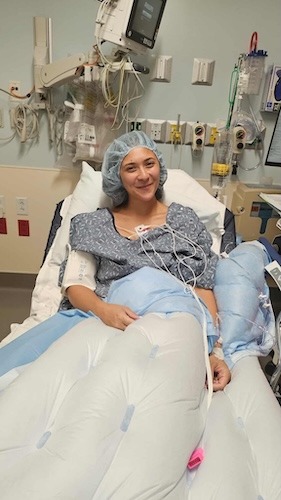
- Surgeries: two lung resections


This interview has been edited for clarity and length. This is not medical advice. Please consult with your healthcare provider to make informed treatment decisions.
The views and opinions expressed in this interview do not necessarily reflect those of The Patient Story.
- My stage 4 rectal cancer update: Scans, surgeries, and a new care team
- Why second opinions matter in advanced rectal cancer
- Navigating guilt about changing oncologists
- Coping with stage 4 rectal cancer as a young family
- Letting loved ones in and building a cancer support community
- Distractions, joy, and travel during rectal cancer treatment
- Diet changes, fasting, and anti-inflammatory eating with rectal cancer
- Early rectal cancer symptoms before diagnosis
- Being dismissed as young and healthy before a rectal cancer diagnosis
- Advice for patients who feel brushed off by doctors
- Sharing my rectal cancer story on YouTube and building a faith-based community
- Finding beauty and purpose in a rectal cancer diagnosis
- Rectal cancer treatment timeline (radiation, chemotherapy, and lung surgeries)
- Preparing mentally for possible recurrence during watch-and-wait
- What colorectal cancer patients should know about colonoscopies
- One wish for rectal cancer awareness and early detection
- What Colorectal Cancer Awareness Month means for our family
My stage 4 rectal cancer update: Scans, surgeries, and a new care team
A lot has happened. So yeah, the last time we spoke, I think it was two days after my second lung surgery. So both of those went great. They went really smoothly. We got clear margins on both pieces sent to pathology, so everything was really good. And then my doctors said it was kind of touch-and-go. They were kind of saying, “Maybe after these surgeries, we’ll discuss doing chemotherapy or some type of therapy, since now you are technically a stage 4 diagnosis.” We didn’t find any other spots within my body at that point that had any metastasized disease or anything like that.
So after the surgeries were done, they told us, “We just want to wait, we’re just going to wait, we’re going to monitor.” And I just remember my husband and I, after we had gotten off that phone call with that oncologist, we were like, “This is kind of unsettling.” I just don’t feel great about this because this is what we were told last year when I had finished chemo and radiation. They said, “We’re going to sit you on a wait-and-watch surveillance plan,” and then that first set of scans is when they found the lung mets. So we just were like, “History might repeat itself.” It’s kind of scary. Now we’re dealing with stage 4. I don’t really know, what if the next place it goes is to my brain or something? So we were just, you have all those natural fears in your mind of what could happen.
And so we went along with that. I remember I had gone back and forth with getting a second opinion. I really wanted to get my case in front of another set of doctors. I could talk about that for a long time, but I’ll keep it short and sweet. I didn’t have a good experience, and I think that it’s so difficult for people to get a second opinion when they shouldn’t. When you’re dealing with advanced disease, it should be a given that you are allowed to take your case to another set of doctors just for an opinion. But anyway, I did not get that second opinion, and we sat on the wait-and-watch surveillance plan.
In December of 2025, I had my first set of MRI, CT scans, and all of that since my surgeries. The first result that we got back was the chest CT scan of my lungs. On that report, the radiologist had noted that there was increasing soft tissue within the lower left lung, and there was a concern for recurrent disease. You read that, you get the results straight to your MyChart. I hadn’t spoken to my doctor or anything, so I’m just like, history is repeating itself.
It’s coming back. This is our biggest fear kind of happening. Then I talked to my doctor about it, and he said, “Well, I looked at it. I’m not really impressed with the area that the radiologist notated. I don’t really think that’s what it is. We’re just going to wait and see what it does.” So I’m like, “Okay, we’ll just wait some more, I guess.”
Then I got my MRI results for my rectum. There was a notation on that scan result that said there was a — I forget the measurement — but it was in the same spot my original tumor was, and there was a concern for recurrent disease. I’m like, “Whoa, what’s going on?” I spoke to my colorectal surgeon who ordered that, and he said the same thing. He’s like, “I’m not really impressed with what the radiologist is notating on there. I don’t think that’s what it is.”
So my husband and I are feeling like, “What is going on?” That’s two different test results, two different doctors telling me, we don’t really agree. So I’m like, no one’s agreeing here. That doesn’t make me feel good, and you’re all telling me, let’s just wait and watch again. So that wasn’t great.
But I had ended up switching insurance with my employer, so I moved over to the hospital that I wanted to go to seek that second opinion with. That was really fantastic, and I love my new team of doctors. They’re wonderful. They just went right in and were like, “We’re going to be aggressive with testing for everything. We’re going to order a whole new set of scans, we’re going to compare it with all your history, we’re going to do blood tests, we’re going to do [ctDNA] tests, we’re going to do all these things, the whole nine yards.” I’m like, ”This is amazing, fantastic.”
During those scans and ordering all these tests, I also noticed that my neck was a little swollen. This was another random thing. I was like, “Some lymph nodes in my neck are feeling a little weird. They’re a little swollen, they’re not going down, they’ve never been there before.” I told one of my new doctors, and he goes, “Yeah, we’re going to order an ultrasound because with your history, I just want to be more cautious.”
So I got an ultrasound and everything, and then my doctor ended up saying she wanted to order biopsies because there was a really enlarged lymph node that they had found on the other side. Our minds — mine and my husband’s — were going to the craziest places. We’re like, “Oh my gosh, has this progressed to my lymphatic system? Is this cancer just spreading like a wildfire?” It’s so scary.
Then they end up doing the biopsy that came back all clear. So my lymph nodes were clear, thank God. We were so relieved. They were very aggressive with getting these tests done and moving everything very quickly, which I’m so thankful for.
Then, one of the scans that they had ordered, a result came back on my liver, saying that there was a new spot that had never been detected before. Through all the scans I’ve ever had, I’ve never had any notation on my liver, and liver and lung are the two places that rectal cancer metastasizes to first. So I’m like, “Oh my gosh, this is it. It skipped my liver the first time, but now it’s back.”
Then I got a follow-up for that liver spot, a follow-up MRI. It turned out that the spot disappeared between my first scan and the second one. That was miraculous. So yeah, a lot of really, really lows and then really, really highs have happened. Right now, I’m in a waiting spot to see what this new team of doctors wants to do going forward. So yeah, that’s a little summary of what’s been going on.
Why second opinions matter in advanced rectal cancer
From the beginning, when I was first diagnosed, one of the first things that people who have experienced this said to me is, “Get a second opinion, get a third, fourth, fifth one; whatever you need to do, just get those opinions. Because the more doctors and specialists see your case, the more confident you’ll be in your treatment plan.”
It’s not a slight to any doctors because you don’t trust what they’re saying or anything like that. It’s for yourself, and it comes back to that place where you are your best advocate, and you really do have to push. So second opinions, especially with advanced disease, I think, are the most important thing ever.
I think that also being in a place where there’s a lot of iffy stuff going on with doctors not agreeing with radiologists and this and that, getting in front of another set of doctors, they’ve given me different perspectives that I didn’t get from my last set. Simple things that just change my perspective on my diagnosis in general. So I would 100% always encourage people to go after that second, third, fourth opinion just to help you better understand your disease, but also to give you the confidence in the treatment plan that you’re going with.
Navigating guilt about changing oncologists
I feel bad. I don’t want them to think that I don’t value them as my doctors and everything they’ve done for me, because, obviously, they’ve done a ton for me, and I appreciate them. But for my specific case, I didn’t really tell them that I was switching over. I just had my last set of appointments with them, my last set of scans, and then I just transitioned. That’s kind of where we left it.
It might have been another story on The Patient Story of someone else that you had interviewed, and this stuck with me. She said, “It is their job as healthcare providers and doctors to serve us as the sick people. That is what they are being paid for. That’s what they are there for. It’s not our job to try to tiptoe around their feelings. We’re dealing with our lives and our health.”
That is what you have to keep at the forefront of your mind when you’re seeking second opinions, maybe thinking about leaving your doctors and things like that.
Coping with stage 4 rectal cancer as a young family
It has been a ride, honestly. It’s so funny because now, where we’re at, we’re in such a wonderful place. Recently, we’ve been talking a lot about how we handle things like waiting for results, the days when we received really bad results, and the days when we were preparing for surgeries or preparing for treatment. We kind of laugh at how we handled those situations because I feel like we’ve grown so much.
I think that you don’t really have a choice when you’re faced with something like this; you have to buckle up and push through it. My husband definitely makes light of everything. He makes me laugh through it all, which is what I need. It makes everything a lot more bearable. But yeah, he’s really incredible.
We had some really tough times. I would say after the stage 4 diagnosis, that was really rough. Then, in December of last year, when we got those test results saying that there was a possible recurrence in my lungs and my rectum, it was a really tough time. He puts on a brave face. But everybody is human, and you’re faced with those dark thoughts of not being around for your family, or in his case, his wife not being here for his children, or to grow old with.
So we’ve had difficult talks, but overall, it’s done nothing but strengthen our relationship, which is kind of crazy. We’re so blessed that it went this way rather than the alternative. We’ve learned that when I’m on a high, I’ll encourage him because he’s most likely on a low, and vice versa. If I am panicking and freaking out, he’s like, “All right, let’s go, we’re going to do something to distract you, we’re going to get you whatever it may be.” It’s a good balance.
I think for any couple that’s going through health issues or things in life like that, it’s good to recognize when your partner needs your strength and vice versa.
Letting loved ones in and building a cancer support community
To the people who are a little bit more closed off and don’t want to burden their family or friends with what they’re going through, I think something that has really given me great perspective is my family and friends. I have a wonderful support system, and they’ve told me throughout the past two years, “We are here for you, anything you need, anytime you want to talk.”
I know that a lot of people can say that to you. But truly, when you let it out, and you talk about your feelings, your fears, your worries, your anxieties with the people that love you most, they will step up, and they will comfort you, and it makes it feel so much more bearable. You can really deal with everything so much easier when everybody around you knows how you’re feeling.
If you keep it inside and keep it to yourself, you’ll eventually get to a breaking point. I’ve learned that the hard way. I’ve gone through periods of time where I keep things to myself when I’m feeling really down about something, and then it just kind of explodes because we’re humans, and that’s what happens.
I really do agree with building a community of people that may not even understand what you’re going through, but they love you. That’s the number one thing. They’re there for you to get all those emotions out.
Distractions, joy, and travel during rectal cancer treatment
A huge thing we did in the second half of last year was we went on a ton of vacations. We were like, “We’re just going to get out of town, because what better way to be distracted from our reality of what’s going on than to literally leave where we are every day?”
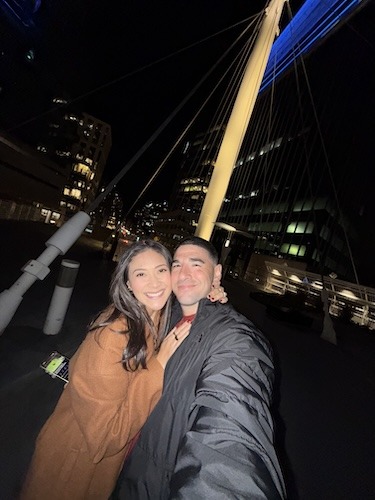
We went to a little beach town called Carmel, just the four of us — my husband and I and our daughters. We did a little weekend trip. My husband and I went to Denver, Colorado, for a trip. We took our daughters to Disneyland. We were like, “We have a new perspective on everything, we just need to distract ourselves and live our lives and do these things that are going to bring us joy.” Those were the best decisions that we made. Doing all those trips and staying distracted was great.
Another thing that really helps me is that I love to be busy. I thrive on a full schedule. I continued through all of this to do my photography business. I was working full-time, staying busy with my daughters, and things like that just help me feel like a normal person. I think that’s the best thing. Yeah, I have cancer, but I’m still a normal person, and I’m still doing normal life things, and I think that’s really important.
Diet changes, fasting, and anti-inflammatory eating with rectal cancer
Food is definitely a huge, huge factor, and I don’t think it’s really expressed enough by the healthcare industry, by your doctors, how important everything you’re putting into your body is going to affect you internally. That’s something that I really hope changes because it’s so crucial, especially with colorectal cancer rising in young adults.
It’s the majority of what’s causing these cancers, my doctors have told me, environmental and dietary causes. There’s something that’s going on that’s causing this increase. So I’m doing my own research. There’s a lot of research and information on the internet. I’ve been really focusing on an anti-inflammatory diet. I’m not perfect. Not 100% of the time am I choosing anti-inflammatory meals. But I definitely want to be very intentional about the foods that I’m bringing into my home for my daughters, because now they have a direct link to cancer. I don’t want them to be any more at risk than they already are.
So we’re being really conscious. My husband and I are cooking all our meals at home. When we have to eat out, we’re like, “Oh gosh, we’ve got to eat out, this is going against what we want.” We’ve started going to farmers’ markets, really focusing on organic, clean things. We’ve cut out — I know it’s a very hot topic — seed oils. That’s inflammatory to your gut. We’re cutting those out.
Any of the prepackaged snacks that have preservatives, I’m really steering clear of that kind of stuff, especially for my daughters. We’re trying to do basic fruits, vegetables, meat, protein, homemade bread, just very basic things. I still have a ton to learn, but that’s where we’re making progress, so it’s good.
Early rectal cancer symptoms before diagnosis
When my original symptoms started, they were really minor. I was noticing my bowel habits were changing. I was going more often than I ever did before. To me, that’s so small, but I noticed it. I thought to myself, “Maybe I’m getting more fiber in my diet, I’m drinking more water, things are just flowing better.”
Then I started to have some strange tissue and mucus coming out when I would use the restroom. That was another slight thing that I thought, “I’ve never seen this before, it’s kind of strange.” I’m just keeping it in the back of my mind. Then I started experiencing stomach pain, sharp pains, and rectal bleeding. That progressed to blood clots and all of those classic symptoms.
I just remember at the beginning, those slight changes, I was like, “I don’t really think that’s anything.” I think that in a lot of cases where people don’t get diagnosed until it’s progressed a little more, it’s because they just think, I don’t think it’s that big of a deal. Luckily, in my case, I started bleeding and experiencing pain, so it triggered me to go seek a doctor. Those were the only real symptoms that I had experienced at first.
Being dismissed as young and healthy before a rectal cancer diagnosis
I remember my first appointment, when I saw a doctor for these symptoms. She asked me about my whole history. I told her my whole history: healthy, two pregnancies were the only reason I had ever gone to the doctor. She said, “Okay, we’re doing blood work.”
I remember one of the phrases that she said to me after I got my blood test results. She said, “You’re not anemic, so there’s nothing life-threatening going on. Meaning, you’re not losing a ton of blood where it’s dangerous, your levels are normal, and you don’t have any medical history. It could be an internal hemorrhoid because you’ve had two babies; things change down there.”
Another doctor that I had seen at the ER, he ran blood work as well, and he said the same phrase. He said, “You are not anemic, there’s nothing life-threatening, you are young and healthy, just wait for your next appointment.” Those were the two things that I had heard from two different doctors. I’m like, I’m young and healthy, well, why am I bleeding? Why am I having pain? There’s something wrong.
Advice for patients who feel brushed off by doctors
Looking back on it, I feel very frustrated, more so with myself, because I wish that I had known what would be a good test to request. I know now I could have requested a simple CT scan, and the tumor would have been picked up. I had never had a CT scan before, so I didn’t even know what that was. I didn’t know how to ask these things.
I wish that I had more knowledge so that I could push back a little bit more. So I would say to people who are getting brushed aside with, “You’re young, you’re healthy, you don’t have any history,” or anything like that: truly push. “There is something wrong with my body. I know my body better than anybody else. I need the tests that are going to give me the answers that I need. I don’t know what those tests are, but can you please give me the options?”
Sharing my rectal cancer story on YouTube and building a faith-based community
The community is really incredible. I could have never imagined that this many people would be following along. One of the biggest things that people message me and comment on is that so many people are praying for my health and for my family, which is the biggest blessing because prayer is so powerful. To have that amount of people who are strangers online watching my videos, it’s incredible.
A lot of people message me about that, and then there are a ton of people who say, “Your story is very impactful, and it’s brought me closer to God.” “I’ve started attending church again.” “I’ve opened up my Bible for the first time in ten years.” I’ve had all these testimonies come through of people who are being strengthened in their faith, and that is so important to me.
Another thing is, a ton of people will message me about symptoms they’re having. They ask, “Is this what you experienced?” I’m able to help people go and push to make their doctor’s appointments and seek out healthcare because a lot of people just don’t think anything’s wrong. I’ve seen a lot of stories of very iffy people; they don’t know what they should do, and they ask. Of course, I encourage them.
A ton of people will reach out to me with — it’s actually kind of creepy — the same story as me. The timeline of everything lining up is so similar to my timeline and diagnosis. I’m like, wow, so many people are walking through this exact situation, which is crazy. Those types of people in the online community can support each other.
I’ve asked other people, “What was your treatment plan? Because I’m getting these weird answers from my doctors. Did you ever experience this, or what did you do next?” It’s so important, and it’s so amazing to talk to other people who are going through similar things as you.
Finding beauty and purpose in a rectal cancer diagnosis
I think that is the theme of my whole cancer story, honestly. Before any of this, if I had heard that somebody was diagnosed with cancer, it’s like, “Oh my gosh, what an awful situation.” I can’t even imagine how scary, and their world is probably just crumbling.
For it to be where I am now, where I’ve grown so much in my faith, I’ve grown so much in the strength that I have, confidence in myself. There are so many things: this community that I’ve built online, being able to know that I’m helping other people and encouraging other people, it’s very surreal. Being able to be a good example of walking through suffering with peace is very encouraging to me.
It’s one of the scariest things that you can go through, but I feel like cancer was supposed to happen in my life for a reason. I’m not saying that I’m thankful that I got cancer. You’re never thankful that you got sick. But there are certain things in your life that if you weren’t tested and put through a trial of some sort, you wouldn’t have grown into the person that you are today.
Rectal cancer treatment timeline (radiation, chemotherapy, and lung surgeries)
Originally, when I was diagnosed with stage 2 rectal cancer, I had a grade T3 tumor. I started with 25 rounds of pelvic radiation. During those 25 days, I also did chemo pills. Then we took a little break, and I did four and a half months of FOLFOX IV chemotherapy.
That was every other week. I did infusions for three days. Then that was that treatment. It completely dissolved my original tumor. When they found the lung nodules, I was set to do two lung wedge resection surgeries to remove those two portions. That’s all the treatment I’ve had so far.
Preparing mentally for possible recurrence during watch-and-wait
I think it’s definitely hard being in a waiting period when there are so many “ifs.” There could be a recurrence again or anything like that. I think it really helps to focus on the fact that I have overcome so much so far.
I’ve completed four and a half months of chemotherapy. It was brutal. I completed that. The radiation therapy had awful side effects. I completed that. I had two lung surgeries, and I feel completely normal. I came through that, and I was healed from that. Focusing on those things really helps me prepare myself mentally.
If there were to be a recurrence sometime in the future — it could be next month, it could be a couple of years from now — I conquered those things. Having the mindset that it’s going to be brutal, probably, but I will get through it, I’ll be stronger, and we’ll move forward. That’s something that I hold on to.
What colorectal cancer patients should know about colonoscopies
It’s the most glamorous procedure. No, but okay. It starts with the prep, and I’m sure that’s what everybody hears is the most daunting thing about a colonoscopy.
For mine, you get this giant jug, and you have to fill it up with water. There’s this solution in there, you mix it up, and you have to fast. You can’t eat, I think it’s for a day and a half or something like that. While you have nothing in your stomach, you’re chugging this gigantic bottle, and you have to do eight ounces of it every 15 minutes. You have to drink a lot of it. While you’re drinking it, you’re obviously going to the restroom a lot, a lot, a lot.
I was so nervous about it before my first one because you hear it, and you’re like, you just live on the toilet for two days. That does not sound enjoyable. It sounds awful. Honestly, it’s not that bad. It’s really not that bad. I’ve had four of them. It’s not that bad.
The hardest thing for me was not eating because I get a headache from not having coffee or food for a day and a half or whatever. But you do all that prep, and then you’re starving, you’ve been drained of everything, and then you go in for the procedure. That’s kind of nerve-wracking. You go in, and it’s like you’re getting prepped for a procedure. They get your IV in, and they’re giving you medicine to make you a little bit sedated.
I’ve never woken up in the middle of one, felt any pain, or felt uncomfortable. I just go right to sleep. They go in there, do their thing, look around, and then I wake up, and I’m in recovery. You’re a little drowsy afterwards, but then you just go home. I’ve had pretty okay experiences. They’re not as awful as they sound.
I just want to encourage, if you think that you should go get a colonoscopy, do it. I think you should do it.
One wish for rectal cancer awareness and early detection
That’s a good question. Let’s see. Obviously, the screening age for colonoscopies needs to be lowered. I know it got lowered to 45 or something now, but that’s not low enough. I’m sorry. So many young people are being diagnosed with colorectal cancer. It needs to be way lower.
My other big one would be doctors taking patients more seriously when they come to them with these symptoms, regardless of age, history, or anything. That is something that I really, really hope would change. So many people are like, “My doctor said I’m fine,” and they just move on, and their disease could be progressing. That’s my number one. I hope that doctors will be more cautious.
What Colorectal Cancer Awareness Month means for our family
Colorectal cancer awareness to me is something that will be so important in my life going forward. To me personally, I think it is a representation of the season that I’ve walked through so far.
I don’t want to get all sappy and start crying. I think that it’s really important to me, raising my daughters, for them to be aware, to know that their mom walked through colorectal cancer, walked through treatment, and is going to have this disease for the rest of her life.
I think March in general is important in my family’s story because it has changed the trajectory of our family story in regards to changing our lifestyle habits, in regards to God being at the center of our family, because of this giant trial that we walked through as a family. It’s huge for me because I don’t want other people to have to experience any of this, and spreading awareness about it, I feel like, is kind of a given job that I need to be living out, spreading awareness and sharing my story because it is important.
Inspired by Kalei's story?
Share your story, too!
More Metastatic Colorectal Cancer Stories

Lindsay D., Colon Cancer, Stage 4
Symptoms: Lump in pelvic area, funny-smelling food, weight loss
Treatment: Chemotherapy, colectomy (surgery)