
Cancer Surgery Treatments
One of the most common ways of locally treating cancer, in particular solid tumors, is through surgery. Surgeons, medical doctors, are trained to remove cancer from you body during operations.
Below, find answers to popular surgery questions and experiences of surgery shared by The Patient Story community.
How is surgery performed?
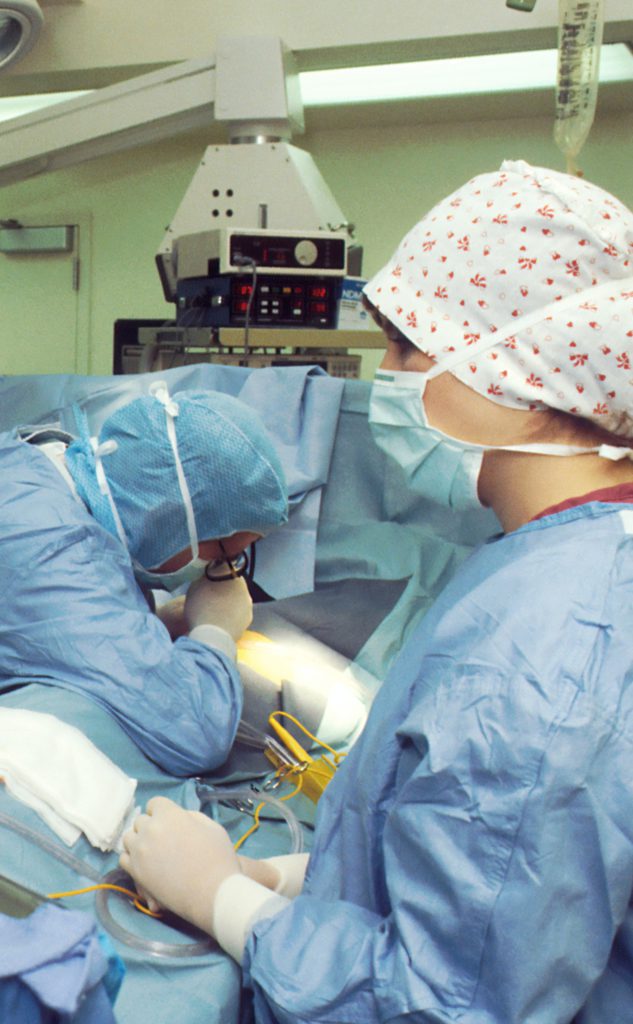
Surgery usually requires cuts that go through skin, muscles, and sometimes bone.
Waking up from the procedure can be painful and the time for physical recovery depends on the extensiveness and size of the surgery.
Almost always, you will undergo anesthesia, drugs and other substances that make you lose feeling and/or awareness. This is meant to help prevent you from feeling pain during the operation.
Types of surgery
The many kinds of surgery are assigned based on several factors, including:
- Purpose of the surgery
- Part of body that requires surgery
- Amount of tissue
- (Sometimes) Patient preference
Surgery may be (1) open or (2) minimally invasive.
- Open surgery: Surgeon makes one large cut in order to remove the tumor, some healthy tissue, possibly close lymph nodes
- Minimally invasive surgery (laparascopic): Surgeon makes a couple to a few small cuts. In one of those small cuts, the surgeon inserts a long, thin tube with a tiny camera (laparoscope).
The surgical team sees images of inside the body from the camera, which projects onto a monitor. The surgeon uses that view to remove the tumor, some healthy tissue (margins).
Less time to recover compared to open surgery.
Types of anesthesia
- Local anesthesia: Leads to loss of feeling in one targeted area of the body
- Regional anesthesia: Leads to loss of feeling in one part of the body (e.g. arm or leg)
- General anesthesia: Leads to what feels like a very deep sleep from a total loss of feeling and a loss of awareness
Non-cutting surgeries
- Cryosurgery (or cryotherapy): Use of the extreme cold created by liquid nitrogen or argon gas to get rid of abnormal tissue.
- Cancers commonly treated: Early-stage skin cancer, retinoblastoma, precancerous growths on cervix and skin
- Cancers commonly treated: Early-stage skin cancer, retinoblastoma, precancerous growths on cervix and skin
- Lasers: Powerful beams of light cut through tissue in precise
surgeries. The lasers can also shrink and destroy cancerous growths or tumors that may become cancer. Used most commonly on body surface or internal organs’ inside lining.- Cancers commonly treated: Cervical, vaginal, esophageal, non-small cell lung cancer, basal cell carcinoma, and cervical changes that might turn into cancer.
- Cancers commonly treated: Cervical, vaginal, esophageal, non-small cell lung cancer, basal cell carcinoma, and cervical changes that might turn into cancer.
- Hyperthermia: Exposing small areas of body tissue to very high temperatures in effort to damage and destroy cancer cells. Also meant to make the cancer cells more vulnerable to radiation and chemo drugs. Still heavily researched.
- Photodynamic Therapy: Using drugs reactive to certain kinds of light. The light activates these drugs to destroy and kill nearby cancer cells. Most used to treat or alleviate symptoms of cancer, including:
How surgery destroys cancer
The purpose of surgery depends on cancer type and stage (how advanced it is).
- Completely remove the cancer: Surgery can be used to remove cancerous growths and tumors in one area.
- Debulk a tumor: This is used to remove part of a tumor to help other cancer treatments, especially when trying to remove the entire tumor may cause damage to an organ or to the body.
- Alleviate cancer symptoms: Surgery used to help lessen pain or pressure caused by tumors.
Hear from people who have had surgery
Hear about different surgeries and experiences from our community of patients and survivors.
Colectomy



DIEP Flap
Gastrectomy




Lumpectomy




Mastectomy



Orchiectomy



References: