Categories
Cancers Chemotherapy Immunotherapy Metastatic Metastatic Patient Stories Radiation Therapy Stomach Cancer Surgery Total Gastrectomy Treatments

Stage 4 Stomach Cancer: Lisa Balances Cancer and Being a Mom

Living With Stage 4 Stomach Cancer: How Lisa Balances Cancer and Life as a Mother

When Lisa had trouble swallowing a hamburger on her 35th birthday, she had no idea it would be the beginning of a stage 4 stomach cancer experience that would touch every part of her life. What started as difficulty swallowing and severe acid reflux quickly escalated to an endoscopy that revealed two tumors and a biopsy report labeled malignant. In January 2021, at age 35, Lisa was told she had stage 4 stomach cancer, with disease in distant lymph nodes, and suddenly the milestones she imagined, like visits to children’s museums, kindergarten drop-offs, and 10th‑anniversary trips, felt painfully out of reach.

Interviewed by: Taylor Scheib
Edited by: Chris Sanchez

From the start, Lisa trusted her intuition and insisted that something was wrong. With the support of a proactive primary care clinician, a responsive GI specialist, and an oncology team willing to think outside the box, she pursued aggressive stomach cancer treatment: chemotherapy, immunotherapy, radiation, and, eventually, a total gastrectomy. She describes trying to prepare mentally for losing her stomach as “a crazy thing,” especially the moment surgery was initially cancelled just three days before it was supposed to happen, because imaging showed progression. Still, she and her husband weighed the pros and cons and fought to reach the point where stomach removal became possible.

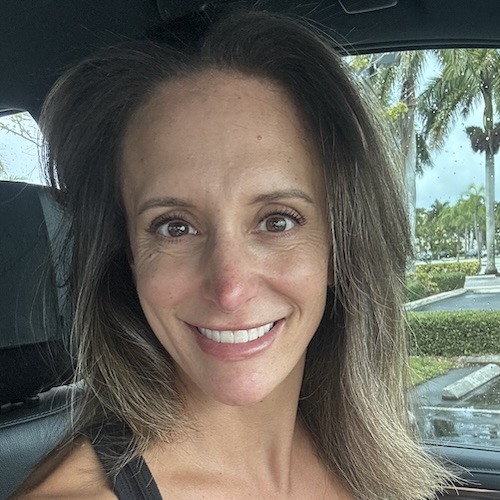
Lisa B. stomach cancer

For Lisa, living without a stomach has meant relearning how to eat: tiny, frequent meals and careful pacing, knowing that overeating or too much sugar can bring her to the point that she needs to lie down. Her first year after surgery was especially hard, yet she emphasizes that it is possible to live without a stomach and that she now eats and drinks almost anything in moderation. Maintenance immunotherapy every five weeks, ongoing scans, and Signatera blood tests are part of her “new normal” as she focuses on staying stable rather than chasing the word “cured.”

Five years into her stage 4 stomach cancer experience, Lisa has transformed from a terrified young mom who doubted she’d see her son start kindergarten into a powerful advocate. She co‑founded the Strides Against Stomach Cancer Walk in Wisconsin, travels to Capitol Hill for Advocacy Day, and proudly wears periwinkle, the stomach cancer awareness color, with her family. She urges others to trust your body, find your support system, ask for second opinions when needed, and keep living: one milestone, one walk, one day at a time.

Lisa’s video and the transcript of her interview below provide more details about her story.

  • Trusting your own body and speaking up when something feels “off” can be lifesaving, especially when early stomach cancer symptoms look like common reflux or indigestion
  • Patients deserve to ask questions, get second opinions, and seek care teams that truly listen. No one should feel guilty for advocating for their own health
  • Aggressive treatment plans, including total gastrectomy, can sometimes open options even in stage 4 stomach cancer, but they require weighing risks and benefits based on each person’s goals
  • Life without a stomach is challenging but possible; with time, support, and trial and error, many people, like Lisa, learn to enjoy food again in smaller portions and more mindful ways
  • Lisa’s transformation from “just trying to survive” to leading fundraising walks and traveling to Advocacy Day shows how living with stage 4 stomach cancer can evolve into purpose‑driven advocacy

  • Name: Lisa B.
  • Age at Diagnosis:
    • 35
  • Diagnosis:
    • Stomach Cancer
  • Staging:
    • Stage 4
  • Symptoms:
    • Trouble swallowing
    • Acid reflux
  • Treatments:
    • Chemotherapy
    • Immunotherapy
    • Surgery: total gastrectomy
    • Radiation therapy
Lisa B. stomach cancer

This interview has been edited for clarity and length. This is not medical advice. Please consult with your healthcare provider to make informed treatment decisions.

The views and opinions expressed in this interview do not necessarily reflect those of The Patient Story.


I’m Lisa

I was diagnosed in January 2021 with stage 4 stomach cancer, and I am from Milwaukee, Wisconsin.

A few of my passions: Our family really likes to stay really busy. We really like to travel. We like to see a lot of different new states. We have a state map that we scratch off when we go to a state together, which is really fun, just to help us go to new and exciting places.

We definitely like to travel. We’re the type of people who, when we’re on vacation, we are running. We’re seeing all the sights because we don’t know if we’re going to get back there. We really try to cram in as much stuff as possible. We’re not a huge lounging-around-vacation type of family.

In everyday life, it’s kind of the same thing. My son is seven right now, and we stay very busy with that. He’s really into sports. Then we each have extracurricular activities as well, so just managing all of that. I’m really into reading books and my book club, and just doing a lot of stuff together as a family and with friends.

Parenting with stage 4 stomach cancer

My son was two when I was originally diagnosed, so he’s kind of not known anything else. From the get‑go, a two‑year‑old doesn’t really understand what’s happening, but we really try to be as open as possible with him.

We’ve now done two fundraising walks, and I feel like that’s kind of a nice reminder. Even if I look okay all the time, it’s a reminder that we’re doing this because Mama still has stomach cancer. He knows when I go to the doctor — I go to the doctor about every five weeks at this point. So it’s just kind of a constant reminder of, nope, I still have stomach cancer. I am still sick. I’m still fighting this.

It’s something he’s just grown up with. To him, it’s very common. Also, just funny things: he’ll tell people, “Oh, yeah, my mom doesn’t have a stomach.” People are like, “Wait, what are you talking about?” They think he’s just saying crazy kid stuff, but he knows. He knows a lot of different things about stomach cancer that a seven‑year‑old really shouldn’t have to know.

I think when I was originally diagnosed with stage 4, it was really shocking and not what we expected. We have always been open with our son because we didn’t think we would be here at this point. We thought we’d only have a few years together.

January will be five years since I was diagnosed. We never thought I’d make it there, so I think it was really important from the start that we had to be open with him. We had to share that, just to be realistic.

Every once in a while, he gets really nervous. He’ll just say, “Well, I don’t want to die.” And I’m like, “Oh, honey, you don’t have to worry about that.” I think it has really forced him, as a young child, to have to think about those things.

He’s been really sweet, even through treatment. Every treatment has been kind of different in how it affects me, but there are some days I really can’t get out of bed. I’m just lying there, and he’ll be really sweet and come in. He’ll be like, “Good night, Mama,” and he just knows he needs to be quiet, and I’m not able to help with things and stuff.

So for him to pick up on that is awesome.

My first symptoms

In 2020, I was trying to get healthy, lose weight. I was working out a lot. I was eating healthier. Then it was on my 35th birthday in October 2020. I was eating a hamburger, and I had trouble swallowing it, which I had never experienced before. It got really stuck in my throat, and I was like, “Oh, that’s very weird.”

After that, I had about a week of really bad acid reflux, and I went to the doctor right away because, again, that’s not something I had ever had before. My primary care doctor really jumped on it right away, which was awesome. She got a lot of testing done. I started on Prilosec to try and see if that would help. It did help a little bit, but after two weeks, it still wasn’t back to normal.

I knew what my body normally was, and it wasn’t back to that yet. So we kept pushing for more testing. I did a swallow test. They thought I might have an ulcer. Ultimately, it was New Year’s Eve 2020. I had an endoscopy done.

The endoscopy changed everything

My husband didn’t come in with me or anything because this was in the height of COVID, but they called him and said, “We actually do need you to come in.” Then they told us they found two tumors in my stomach and that they had biopsied those.

It was not the news we were expecting to hear. It was not a routine endoscopy but something way worse than what we thought it would be.

After that, it felt like so long — it felt like weeks — but it was truly, I think, four days. We waited to get a call, and I received a call from the GI doctor that said the biopsies came back and they were malignant, which just kind of shattered us.

We were lucky enough to be working from home at that time because it was during COVID. That was one benefit — that we were there, my husband and I, to get the news together, process it together, have time to step away, which was helpful. 

Everything moved really quickly after that: additional testing, meeting with doctors and oncologists, and setting me up for what the next steps were.

The importance of advocating for yourself

I feel like I’ve been really lucky along the way that all of my doctors have really taken anything I’ve said seriously. But I think it comes back to, you know your body the best. I knew this was something that was not right, because they easily could have brushed this off and just said, “Oh, that’s just getting older. That’s just being a woman.”

I knew it wasn’t that because I had never experienced it before. I was very lucky to have doctors who really did support me along the way. My primary care doctor and even my GI doctor really got me hooked up with an oncologist right away because it’s a scary thing, getting a cancer diagnosis. We wanted to jump on it.

He suggested one person. It really wasn’t a right fit for me. I did find a different oncologist. But even his saying, “I know someone who can get you in right away,” was very helpful from the start, and I’ve been really blessed with my care team at the cancer center I go to.

They have been so forward‑thinking the entire time because I was young. I was 35 when I was diagnosed. Basically, they were like, “You’re young and otherwise healthy. What can we do that’s maybe outside the box and give you the greatest chance?”

Processing the diagnosis as a mom

That’s definitely the toughest part — thinking back to the beginning and looking through old pictures. It reminds you because it becomes your new norm, just living with cancer. Looking back at pictures, I’m like, “Oh, wow, he was so young.”

The biggest thing we always laugh about is that I always said, “I’m never even going to be able to take my son to a children’s museum.” This was January 2021. Things were starting to open back up, but very slowly. Then we got hit with this diagnosis, and we didn’t want to put me at risk either. So I was like, “I’m never going to experience going to a children’s museum, going on vacation, seeing him get into kindergarten” — things like that.

So it was really tough from the start.

What we were told about my prognosis

They actually didn’t put a number on it. On the back end, my husband and I were definitely looking at statistics. Back in the day, five years ago, for stage 4, it was only about 4%. That has changed since then, but seeing that number, we could read that ourselves: okay, this is not a good chance.

Basically, they said, “You need to be prepared, but also don’t stop living either. There are a lot of different treatments out there and different things we can try.” 

Research is always changing, which I feel I’ve really benefited from in the last five years. Things have advanced so much that I’ve been lucky to be able to do some of those treatments.

How we kept living

We did it in all the ways that we could, for sure. We try to — even now, whenever I’m feeling good, which is more often than not now compared to when I started. Whenever I’d be feeling up to it, we were always trying to do things together as a family, going to different things.

It’s nice that COVID kind of went away, and we could go and do more things. I was able to go to the children’s museum with my son. One of the big things when my husband and I got married was that we always wanted to go to Hawaii for our 10th anniversary. That was almost three years ago now, two and a half years ago, and we were able to do that.

When I was diagnosed, we never thought there was any way we’d be able to do that. We’ve gone on a family Disney trip. We’ve traveled all over and gotten to see a lot of great milestones with friends and family that we never thought would be possible.

We don’t stop, for sure. We are living it up as much as we possibly can because we truly don’t know. Things can change in an instant. A treatment can stop working, and I might be running out of options. We take that wholeheartedly, and we try and make the most of it.

How I balance everything

I rarely sleep. I feel like we were always a couple that burned it at both ends. Especially when we had our son, we wanted time after he went to bed to do things together or watch TV, play video games — things like that. That really has not changed.

We push it at both ends to get the most out of the time we have together, for sure. It’s still not enough time in the day. It’s very hard to balance. 

I work full-time. My husband works full-time. Our son is in every sport imaginable, so we’re always running between something. Somehow, we just make it work, and we prioritize the things that are really important to us.

What my treatment looked like

When I was first diagnosed, they found out that I also had a pulmonary embolism, and I was anemic right from the start. To start my treatment journey, I got my port placed really quickly. I received a blood transfusion. I received an iron transfusion. Then I started on a three‑drug chemo.

I did nine rounds of that. Our ultimate goal, even though I was stage 4, was to get a total gastrectomy, because my oncologist thought it would give me the best chance. After nine rounds, I had a great response. Everything was going well.

Then I did a CT scan or PET scan right before, and it showed that the cancer had progressed because we had to take a break from chemo. It was three days before my total gastrectomy surgery, and they had to cancel it, which was honestly one of the most difficult things.

Trying to prepare yourself to get a total gastrectomy is a crazy thing, because I didn’t know you could live without a stomach. I was getting excited, like, “This is going to be really good for me to survive.” Then, for that to be taken off the table was really tough. That was about July 2021. They said, “Okay, we’re taking that off the table for now.”

We started back on a two‑drug chemo with immunotherapy as well. They saw really great success with that. I did eight additional rounds. In November 2021, I was able to get my stomach removed because I had a really good response. That was in November.

After that, I started just immunotherapy, which I was on for about a year and a half. That treatment was keeping me stable. I was never cancer‑free, but I was always looking to stay stable. That worked for a long time.

I had to get off of that and took a little break. I did a full course of radiation to the abdominal area because they saw a few things they didn’t like cancer‑wise. I did a full course of radiation. Then I think it was the current treatment I’m on now. 

Just before Thanksgiving, I received my 19th round of a new immunotherapy. It’s different from the one I was originally on, and that has been keeping me stable for almost two years now, which has been going really well.

Why we decided on an aggressive treatment

Yeah, it’s kind of funny because I feel like sometimes I can just name off, “Oh, yeah, I did chemo and immunotherapy and radiation,” and it kind of loses how actually crazy that is and how many rounds I did. It has become common knowledge to me now. It is crazy when I name off all the things I’ve been through.

It was really important to me from the start to have an oncology team that was in my corner and really wanted me to get the best results possible. A lot of stage 4 stomach cancer patients are not able to get their stomach removed because it has already spread, and it’s just not possible.

I’m stage 4 because it spread to my distant lymph nodes. Their thought process was: let’s get the majority of the cancer out that’s in that stomach/abdomen region, and then work on treating those distant lymph nodes. You can’t really go in and hunt and peck and take out all of the lymph nodes because, one, they’re all over your body, and lymph nodes fluctuate even for normal people when they’re sick. That’s not possible either.

So the plan from the start was to keep those in check. My husband and I were all for it. We wanted to give me the best chance possible.

I think the hardest thing to come to terms with was the total gastrectomy. It’s such a shocking thing. You don’t know: is this going to work for me? It’s a huge surgery, a big recovery. Maybe it knocks me down too much, and I’m not able to recover enough to receive treatment after that.

But the pros outweighed the cons when we were looking at it, and that’s why we really were trying to push for that as well.

Preparing for my stomach removal surgery

The biggest way I prepared for my total gastrectomy was connecting with other people who had gone through this. I’ve been lucky enough to connect with a lot of people through a few advocacy groups. I needed to know: What did you bring to the hospital? What do I need to bring? What do I need to prepare for? How is this going to go while I’m in the hospital? What tactical things are going to happen?

I’m such a planner, and I needed that. I talked with a lot of different people and got great feedback. They were like, “Here’s a list of things to try,” like slowly eating afterward and what worked for them.

Right afterward, I received a feeding tube when I got my total gastrectomy done. Some patients do, some don’t. While I hated having it every single minute, it was a really nice safety net, just in case I wasn’t eating enough. The sheer volume of calories I could consume was so much less.

I had to constantly be eating, like every hour — “Okay, I’ve got to take two bites of yogurt, and I’ve got to drink my protein water,” things like that. So again, while I hated my feeding tube because it was such an annoyance, it was a really nice safety net to ease me back into it and not have me push it and maybe have complications.

Living without a stomach

The easiest way is that they cut out your stomach, and your esophagus is basically attached to your intestines. I really just don’t have that pouch where your food digests and sits for a bit. Things move more quickly through me, and I don’t absorb nutrients the same way. There are additional supplements you have to take when you don’t have a stomach.

Honestly, for me, the first year was really tough — learning to eat again and the amount. For me, going out and having food with friends has always been a big part of my life. I’ll go out and start eating and talking and forget about it, and then I overeat. It was something I probably did before, too, but now it’s even worse when I don’t have room for that. I know right away: “Oh, I really did push it.” Then I kind of have to go take a break or lie down a little bit, which is difficult.

It is possible to live without a stomach, which, again, I didn’t know before this whole experience. That first year was really tough, but now I’m really back to, I can eat and drink anything I want in moderation, I would say. Sugar is probably the number one thing that’s really hard on a lot of people. I love sweets, so I try and push it sometimes, but I know sometimes I’m going to have to pay the price for that.

Everything in moderation, just like everyone else, but just a little bit smaller.

Why this surgery mattered even at Stage 4

It was really big because, as I said, a lot of stage 4 stomach cancer patients are not able to get their stomachs removed. For me to have this opportunity felt like something I really needed to try and get to. 

We didn’t know if it was going to work, if there would be complications, or if the recovery would be too hard and my body would be too weak to receive treatment after that.

We didn’t know those things, but we took an educated chance and weighed our pros and cons to determine that this was really the right decision.

Helping people understand my diagnosis

I think at the beginning, there was so much support around my diagnosis and helping with things. After a while, people kind of forget. They just assume that you look great and you’re doing well, and they assume you’re cancer‑free, which is something I deal with all the time.

Especially in my job, new people will start, and you never know the right time to drop that bomb on people because it’s not the first thing I want them to know. There were people I had worked with for quite some time, and this past November, I stood up in front of everyone to let them know I had this walk happening and that I was a stage 4 stomach cancer patient. Some people were shocked. They were like, “I had no clue, and I work with you daily. I don’t understand.”

I think it’s encouraging and good that people don’t notice it, but also, you want people to understand that it is still a hardship, and going through treatment is really tough. I’m lucky I don’t have a ton of side effects, but I honestly probably have more side effects from not having a stomach — overeating, not eating enough, eating too fast — things that will put me down for the count.

It’s hard when people don’t realize it’s a daily thing. There’s not one day that goes by that I don’t remember I have stage 4 stomach cancer because of some random symptom or pain that rears its ugly head.

What I’m currently doing

I’m on immunotherapy right now, and I go every five weeks to receive that, which is nice. It’s not very disruptive to my schedule. It’s just one Wednesday every five weeks, and then I’m back to work the next day, which is great. I’m pretty lucky that I don’t have a lot of side effects at this point, and the ones I do have are really manageable.

It’s a full day that I spend at the cancer center. I go in, I get labs. They check all of my levels to make sure it’s okay for me to receive this treatment. It’s a good double check to see where things are. I go to that, I meet with the doctor, and he reviews everything. If there’s a CT scan — I get those every three months — we talk through anything new that popped up.

I also get a Signatera test, just to see where my levels are. A lot of people get Signatera, and they want their number to be zero. Mine has never been zero because I’ve always had cancer in my body, but we make sure it’s still a lower number. If that number starts to spike, we want to jump on it.

I’m lucky that I have a port, thank goodness, because my veins are so tired and small from being poked so many times. I got a port right away when I was diagnosed. This is actually my second port; I had to get it changed out. I go to the hospital and receive immunotherapy for over an hour. It’s pretty short, the treatment itself. Then I’m pretty much back to normal after that. You would never know that I received treatment that day.

I’m currently on maintenance immunotherapy. Our goal is really just to keep me stable for as long as possible. I’ll continue to do that until either the side effects don’t work for me or the cancer progresses and we need to look at other options.

Balancing a “normal” life

There’s not a lot of balance when you’re a mom, for sure. I’ve got to jump back in, and I need to parent right away — picking up my son, doing bedtime, doing laundry, doing the dishes, doing all those things. It never stops.

It gets exhausting, for sure. My husband and I would agree: our house is never in the state that we once would want it to be and have always wanted it to be. But it’s the trade‑offs. You do have to have balance, and the dishes can wait till tomorrow, and my house can look messy for a day, and it’s fine.

Sometimes it gets a little too overwhelming. Between treatment and family life and work and everything, sometimes it’s too much. We’ve kind of —  as much as we don’t like it — said, “You know what? The house can wait, or that other thing can wait, and it’s fine.”

How much I’ve learned in these last five years

Oh, I’ve learned so much over the last five years. It’s crazy. So much about cancer in general — just all the jargon and language you need to learn when you’re in the cancer world — has been a lot.

Also, I had so many mentors when I first started this experience, looking to them as inspirational stories because I thought there was no way I was going to get through this. Talking to some of those people, who have become some of my closest friends, was so inspiring. I was like, “Well, they can do it. They live without a stomach. It can be done.”

Now I’ve shifted to really wanting to give back and pay it forward.

Starting the Strides Against Stomach Cancer Walk in Wisconsin

I plan events in my job. So in 2024, one of my friends — she’s always wanted to do some kind of walk to raise money for stomach cancer because there’s really not anything local in the area. It’s a lesser-talked-about form of cancer, so we don’t have anything already set up. She said, “Let’s just start a walk,” and I was like, “I don’t think you know exactly what that means, but sure, let’s do it.”

In 2024, we started the Strides Against Stomach Cancer walk in Wisconsin. We had a pretty minimal goal. We wanted to get 100 people — everyone bring your friends and family — and raise $10,000 to support stomach cancer patients. We were blown away. We had 200 people come that first year and raised over $20,000.

We learned so much along the way, even with that. While I do events at a university, this is very different from doing a big fundraising walk, which I had never really done. We learned a lot along the way.

This past year, in 2025, we had our second year, and again, I was blown away. We had over 300 people and raised over $30,000. The support and awareness we’re bringing to stomach cancer in the local area has been so important to me.

One exciting thing this year: last year, five stomach cancer survivors came to the walk, and I knew every single one. I had talked to them all before. This year, we actually had three new‑to‑me stomach cancer patients register, which was awesome.

It’s really important to me. I want to connect with people and share my story and help them along the way if I can — just to share that not every treatment will work for everyone, but maybe there’s another option someone hasn’t thought about. I’m looking to connect with other stomach cancer patients locally and across the country.

It’s been really special to start some of those relationships and find the weird coincidences of, “Oh, yeah, my aunt passed away from stomach cancer.” Finding those little connections has been really special. When someone says they know someone with stomach cancer, I’m like, “Tell me everything.” I don’t know many people who have it.

I feel like I’ve switched gears now, and I really want to pay it forward and keep advocating, obviously for myself, but for the full stomach cancer community as well.

Why raising awareness matters to me

It’s really important to me, especially for current patients — sharing my story with them — but also bringing awareness to stomach cancer. It’s one of the most deadly cancers and definitely one of the most underfunded.

We go to Advocacy Day with an organization. We go to the Hill every year to ask for more funding for research, just to keep pushing that. I feel like treatment options are getting better and better, but they really need those research funds.

I don’t think people know about that because stomach cancer is a less talked‑about cancer. Just bringing awareness to it is definitely something that I’m looking to do.

It’s definitely a family effort, for sure. This past year, my husband was lucky enough to get a media spot to talk about the walk, and he’s so passionate about it and being such a champion for me as well.

It has become our personality, I would say. Every single day, you’ll probably catch one of us in a periwinkle color, because that’s the color for stomach cancer. One of us is wearing a walk shirt or periwinkle, or we’re talking about it. It is our lives, for sure, and we’re very passionate about it because it is so personal.

I truly never thought when I was diagnosed that I would be where I am right now. Honestly, from the beginning, my husband found an organization online and was like, “Hey, you can get a mentor through them.” At the beginning, I was not interested. I was just trying to survive. That was really what I was trying to do.

It was a slow process for me — reaching out to people and connecting with them. Then it was, okay, I’m going to participate in an online forum or an online support group. Then we decided we were going to go to D.C. and participate in Advocacy Day. It has been a slow build. I was really hesitant at first.

Now, as I said, it has become our personality. That is just what we are always talking about or doing because we are so passionate about it. I never once would have thought I would be where I am right now, five years later.

What I want others to know

I think a message I would leave with people is that cancer is a tough, tough experience. You need to find your support system, whether that be family, friends, or online. I’ve found some really deep, amazing connections with friends online. We’re always like, this is the best group to be in, but the worst group to be in because we all are affected by cancer.

Find your support system. Reach out. Make sure you’re talking to people. Make sure you’re advocating for yourself — that’s probably the biggest one. If you don’t like what your oncologist is saying or you don’t agree with them, get a second opinion. No one’s going to be offended if you get a second opinion on this because it is a rare cancer.

So definitely push for some of those things and find your support system.

I think the biggest thing for me — there were so many milestones I never thought I would reach. I uploaded a lot of photos that reflect it as well.

I talked about it at the walk this year. I never thought I would see my son going to kindergarten. He’s in first grade now. My sister told me, I think it was a year after I was diagnosed, she got engaged. They were going to have a long engagement, and I was like, “That is not good for me. I want to see you get married.” I was able to see her get married last year, which was super special.

This past October, I celebrated my 40th birthday with a bunch of friends in Las Vegas, which was so much fun. In January, it will be five years since I was diagnosed. All those big milestones are very meaningful for our family, for sure.


Lisa B. stomach cancer
Thank you for sharing your story, Lisa!

Inspired by Lisa's story?

Share your story, too!


More Stomach Cancer Stories

Andy G. stomach cancer

Andy G., Stomach Cancer, Stage 4 (Metastatic)


Symptoms: Stomach pain, back pain, chest pain, extreme exhaustion, shortness of breath after short walks

Treatments: Chemotherapy, immunotherapy
...
Alyssa B. feature profile

Alyssa B., Stomach Cancer, Stage 4 (Metastatic)


Symptoms: Fatigue, elevated resting heart rate, heartburn, difficulty swallowing, weight loss
Treatments: Chemotherapy, immunotherapy, surgeries (total gastrectomy; partial esophagus removal; bilateral oophorectomy and fallopian tube removal), clinical trial
...

Brittany D., Stomach Cancer, Stage T1b


Symptoms: Choking suddenly while eating and attempting to speak, neck and right shoulder pain, neck tightness, trouble swallowing certain food items

Treatments: Surgeries (subtotal gastrectomy, D1 lymphadenectomy, gastric bypass)
...
Camilla C. stage 4 stomach cancer

Camilla C., Stomach Cancer, Stage 4 (Metastatic)


Symptoms: Issues swallowing, swollen gland in the neck

Treatments: Palliative chemotherapy was offered but declined, nutritional changes to support her comfort and energy, meditation and mindfulness practices, self-directed healing methods

...
Emily D. stage 4 stomach cancer

Emily D., Stomach Cancer (Gastric Adenocarcinoma), Stage 4 (Metastatic)


Symptoms: Persistent postpartum stomachache, early satiety, difficulty swallowing, vomiting

Treatments: Chemotherapy, immunotherapy

...
Alyssa B. hospice update

Alyssa B., Stomach Cancer, Stage 4 (Metastatic) (Hospice Update)


Symptoms: Fatigue, elevated resting heart rate, heartburn, difficulty swallowing, weight loss
Treatments: Chemotherapy, immunotherapy, surgeries (total gastrectomy; partial esophagus removal; bilateral oophorectomy and fallopian tube removal), clinical trial
...

Categories
Chemotherapy Colorectal FOLFOX (folinic acid, fluorouracil, oxaliplatin) Low anterior resection Patient Stories Rectal Surgery Treatments

Finding Strength: Sarah’s Rectal Cancer Diagnosis

From Shock to Strength: Sarah’s Stage 2A Rectal Cancer Diagnosis and Recovery

Sarah, a 39-year-old mother of two from Boca Raton, Florida, was blindsided by a rectal cancer diagnosis in early 2025. Because of her active lifestyle and commitment to health and fitness, Sarah’s symptom, occasional bleeding, was easy to dismiss. She had always been athletic, competitive, and deeply involved in her children’s lives, making the diagnosis feel surreal. When a colonoscopy revealed a large tumor, Sarah was initially told she had stage 1 rectal cancer. However, after surgery in April, her diagnosis was updated to stage 2A, reflecting the tumor’s aggressive characteristics.

Interviewed by: Carly Knowlton
Edited by: Chris Sanchez

Sarah’s rectal cancer experience highlights the importance of listening to your body, even when symptoms seem minor. Her story began with uncertainty and disbelief, but she quickly found strength in her support system and proactive medical team. After surgery, she faced a challenging six months of chemotherapy, balancing treatment with parenting and maintaining her identity.

Sarah G. rectal cancer

Throughout her treatment, Sarah remained open about her struggles and triumphs, from managing side effects to helping her children understand her diagnosis. She shares practical advice for patients, including the importance of undergoing colonoscopies, managing side effects effectively, and finding joy in everyday moments. Sarah’s experience is a reminder that rectal cancer can affect anyone, regardless of age or health status, and that early detection and a strong support network are crucial for recovery.

Watch Sarah’s video and read through her edited interview transcript below to learn more about her story.

  • Listen to your body. Even minor symptoms, such as bleeding or constipation, can signal something serious. Don’t dismiss persistent changes
  • Seek expert care. Sarah’s proactive medical team, including a tumor board, ensured she received the best possible treatment plan
  • Self-advocacy matters. Sarah encourages patients to trust their instincts and ask questions, even if they feel healthy or young
  • Support systems are vital. Family, friends, and medical professionals played a crucial role in Sarah’s recovery
  • Stay positive and resilient. A positive mindset helped Sarah navigate the emotional and physical challenges of treatment

  • Name: Sarah G.
  • Age at Diagnosis:
    • 38
  • Diagnosis:
    • Rectal Cancer
  • Staging:
    • Stage 2A
  • Mutation:
  • Symptom:
    • Minor and inconsistent rectal bleeding
  • Treatments:
    • Surgery: low anterior resection (LAR) surgery
    • Chemotherapy: FOLFOX
Sarah G. rectal cancer

This interview has been edited for clarity and length. This is not medical advice. Please consult with your healthcare provider to make informed treatment decisions.

The views and opinions expressed in this interview do not necessarily reflect those of The Patient Story.


My name is Sarah

I am now 39 years old. I live in Boca Raton, Florida, and on January 31st of this year, 2025, I had a colonoscopy where a tumor was discovered. I was officially diagnosed in February with what was believed to be stage 1 rectal cancer. But after surgery in April, it was stage 2 rectal cancer.

About me and my passions

 My husband and I have two kids. My oldest is ten. My youngest is five. We’re big into just going out, exploring, having fun, traveling. My daughter and I do a lot of 5Ks together. She’s so into it now. We don’t quite run them because I have shin splints and she’s not a runner, but she’s starting to run them, and it’s really cute to see.

My initial symptoms

My symptoms started — well, at least started enough for me to pay attention — when I was pregnant with my son. He’s five now, so this was five and a half years ago. Towards the end of my pregnancy, I had what I chalked up to just basic pregnancy constipation and hemorrhoids. I didn’t really think much of it, but I remember distinctly towards the very end — like, two weeks before my scheduled C-section — I had an episode of bleeding. 

At the time, I didn’t really know where the blood was coming from, and I automatically assumed it was coming from the baby. So I went to the ER, and they did a full workup, and the doctor said, “Oh no, it’s just hemorrhoids or whatever.” I just kind of left it at that, had the baby, and went on with life. I never really had a recurrence of those symptoms to be consistent or to be fearful of anything. 

That was the craziest thing for me — I didn’t have any symptoms, really. When I did, when I had episodes of bleeding, it would come with constipation and would happen maybe once every two weeks, then once a month, then once every two months. It wasn’t consistent, so it wasn’t troublesome or scary for me at the time.

How I discovered that I had rectal cancer

So the symptoms actually did pick up in 2024. They weren’t scary. I didn’t have any other symptoms other than what felt like constipation with bleeding. I did have a little pain on the right side when I would digest food sometimes. I thought, “What is that?” I didn’t have an appendix, so I knew it wasn’t that. 

I thought, “I have really good insurance. Let me just make an appointment with a GI and see what he has to say — maybe it’s fiber supplements or something else.” My friend is a physician and recommended a good GI. I got in with his physician’s assistant, who’s actually my age and very proactive. She said, “It sounds to me like it’s just a little constipation, but I’m not okay with not sending you away with a colonoscopy script.” 

My appointment with her was in November. I had my colonoscopy in January.

Initial diagnosis to surgery planning

At the colonoscopy, there was a polyp described at the time, but it was 40mm, or four centimeters, like a grape. That’s what was protruding into my colon and causing the bleeding. After the official pathology, it was carcinoma. Then I met with the oncologist. Before surgery, based on the scope and initial CT scans, they said it was a stage one tumor, but after surgery, it was updated to stage two.

My pathology took two weeks to come back because my doctor sent it off to the Cleveland Clinic for testing. He kept in touch with me the whole time, which was so nice. Dr. Stern — shout out to him — was very proactive. The second he got the results, he called me at 8 p.m. and immediately got me in with a colorectal surgeon and an oncologist. The next morning, both called to set up appointments. The oncologist ended up taking my case to the tumor board, which was great — they all evaluate the best course of treatment.

Thanks to a friend who was a radiologic technician, I got in right away for scans. The best course of treatment was determined to be removing the tumor first, not chemo or radiation right away.

My surgery experience and recovery

After the initial tumor board meeting, my oncologist called regarding lung nodules found during my CT scan. With colon cancer, the lungs or liver are usual sites for spread. The nodules were small, so I saw a pulmonologist (also a friend), who got me in immediately and spent two hours exploring and taking biopsies. The pathology came back benign.

Once cleared, I proceeded with surgery scheduled for April 1st, 2025. Meeting my surgeon for the first time, I felt overwhelmed. The only previous surgeries I had were an emergency appendectomy and my C-sections. This was going to be an eight-hour surgery with multiple specialists involved, including urology for stents. I would need a temporary ileostomy. Processing all this was hard; my husband and I sat in silence for hours afterward. Initially, I hoped to avoid such extensive surgery, but less invasive options carried the risk of microscopic spread. Surgery was the safest choice.

I packed a full suitcase for the hospital, expecting a 5–7 day stay. I was fully prepared, but thanks to my active and healthy lifestyle, my surgeon discharged me the day after my surgery, which is not typical. I was up and walking; the ileostomy was manageable with the nurse’s help.

Follow-up and pathology

My surgery was on April 1st, a Tuesday; I was discharged on Wednesday. By Friday, my surgeon got the pathology back: Stage 2, no lymph nodes involved (24 taken). 

The tumor had high-risk characteristics: high tumor budding, lymphovascular invasion, and perineural involvement. It was staged as a T3 tumor. 

Due to these factors and my age (38), my oncologist recommended aggressive treatment. Chemo was the next step.

My emotional response to my treatment plan

I remember going to that oncologist appointment — I call him the Grim Reaper, because I always go in happy, expecting good news, and he brings new challenges. I went in not thinking I would need chemo, and left devastated. 

I called work and said, “I can’t come in today,” and cried for hours. Afterward, I accepted it — I had to get through six months of chemo.

Telling my kids

The little one didn’t understand much — he thought skeletons and X-rays were cool. My daughter, older, was upset because I wouldn’t be home the same day as with other surgeries. When she saw me home, well, she was okay. 

We had a “cancer” talk; for my daughter, I called it “bad cells” and explained we had to get rid of them. I still have a hard time saying the word “cancer,” even on medical forms.

Chemo: my plan and experience

After meeting the oncologist, I was set to do 12 rounds of FOLFOX. The tumor board did not see the need for radiation, thankfully. Radiation can be brutal. I received oxaliplatin and 5-FU, which was administered via a pump I brought home for 48 hours. My kids put googly eyes on the pump and called it a pineapple (it looked like a lemon).

I functioned at about 80% of my full capacity. Side effects included facial flushing, hair thinning (lost about 80% of my thickness), fatigue, mild nausea, and neuropathy. The oxaliplatin caused cold sensitivity in my throat and lingering neuropathy in my hands and feet. My tear duct in one eye constantly produced tears and mucus. Oxaliplatin was stopped after the seventh round due to a good response.

Chemo began in May, right after surgery and chest port placement April 23rd, continuing until October 13th for a total of six months.

Chemo delivery and my daily life

I’m part of the Baptist Health network in Boca Raton. The cancer institute has a chemo infusion floor where I received treatment. With oxaliplatin, I sat for 4–5 hours, then wore the pump home for 48 hours. All of my treatments were outpatient.

I was in the gym with my pump on (being careful not to lift or raise my heart rate too much). The nurse advised that if you elevate your heart rate too much, the drug can pump too quickly and cause side effects.

My hardest moments

Honestly, the beginning — before pathology, staging, or surgery — was the hardest. Not knowing was awful. So many opinions and messages from friends and family made things more stressful. Too many people were getting involved, many with unrelated advice. 

My husband tried to be supportive by talking to others, but it resulted in unhelpful feedback and pressure.

Balancing parenting and cancer

I think the hardest thing was being a parent with young kids during diagnosis. You start picturing them growing up without you — it’s terrifying. 

My life did not stop; everyone was shocked by my ability to maintain normalcy for my kids and myself. I was still social, still wore a bikini with my ostomy.

Ringing the bell and finishing treatment

I wasn’t expecting to get so emotional when ringing the bell. At the end, it hit me that I had beaten cancer. That relief—it was one of the top five moments of my life. 

We have such a great support system. My husband’s friends showed up with flowers and gifts, and the medical staff were all genuinely happy for me.

My life after chemo

Things are slowly returning to normal. Little hairs are growing back, and I finally had my port removed, a huge milestone — my oncologist trusted this part was over. I had my ileostomy reversed and had a few weeks with no medical care. Technically, though, I still had follow-up procedures. 

I’m still recovering, but looking forward to real normalcy: beautiful hair, simple pleasures like facials and getting nails done. I’ll never complain about my hair again.

I look at life differently now. Before, we were always going and doing and never stopping to enjoy things. Now, every day feels special — like a treat.

My advice to viewers

My biggest advice is: feel all the feelings. Allow yourself to be upset, grieve, but then push forward. A positive mindset really helps your outcome. 

Do your own research — Google may show you the worst-case scenarios, but it helps to be educated for your doctor’s appointments. Block out the noise from everyone else, go with your gut, and find a care team you trust. Be your own advocate.

I fortunately had good medical advocates, but many people get gaslit by doctors. For me, I gaslit myself, thinking, “It can’t be colon cancer, I’m too healthy.” 

Don’t dismiss your thoughts. Go get checked if something feels wrong.

I was terrified of colonoscopies, but honestly, it wasn’t a big deal. My advice: follow a bland diet five days prior — chicken, rice, applesauce. Stick to the clear diet and don’t panic about the prep: it does end. I looked at it like a detox, starting fresh. Now, I’ll do a colonoscopy every year if I need to, and I’m okay with that.

If you can get a Signatera test (by Natera), I highly recommend it. It’s a diagnostic tool for cancer recurrence. I had it done during surgery; if it’s positive after surgery, you may still have microscopic disease. I was negative each time, which is a good sign. Ask your doctor; it can also sometimes be done at the time of a colonoscopy biopsy.


Sarah G. rectal cancer
Thank you for sharing your story, Sarah!

Inspired by Sarah's story?

Share your story, too!


More Rectal Cancer Stories

Sarah G. rectal cancer

Sarah G., Rectal Cancer, Stage 2A


Symptom: Minor and inconsistent rectal bleeding

Treatments: Surgery (low anterior resection or LAR), chemotherapy (FOLFOX)

Kalei M. stage 4 rectal cancer

Kalei M., Rectal Cancer, Stage 4 (Metastatic)


Symptoms: Presence of mucus and tissue-like substance and blood in stool, stomach cramping

Treatment: Radiation therapy, chemotherapy, surgeries (two lung resections)
Jessica A. rectal cancer

Jessica A., Rectal Cancer, Stage 4 (Metastatic)


Symptoms: Changes in bowel movements, blood in stool, abdominal pain, back pain, difficulty sitting comfortably, constipation, feeling of incomplete evacuation (as if some stool remained after bowel movements), mucus-like stool consistency, bloating

Treatment: Immunotherapy under a clinical trial
Shiva S. T2 rectal cancer

Shiva S., Rectal Cancer, T2, and Renal Cancer, T3


Symptoms: Pressure and urgency of bowels, back pain
Treatments: Chemoradiation (for rectal cancer), surgery (ileostomy, combined bowel and kidney surgery), immunotherapy (for kidney cancer)

Jeanine B. stage 3 rectal cancer

Jeanine B., Rectal Cancer, Stage 3 (T3bN0M0)


Symptoms: Long history of bleeding that was blamed on hemorrhoids, pain in the tailbone, urgent need to use the restroom, unusually narrow stools, presence of mucus in stools, fatigue

Treatments: Chemotherapy, radiation therapy
Devon B. stage 4 rectal cancer

Devon B., Rectal Cancer, Stage 4


Symptoms: Pain when trying to move bowels, increased frequency of bowel movements alternating with periods of constipation, passing mucus instead of feces, narrow stools

Treatments: Surgery (ostomy surgery), radiation therapy, chemotherapy
Load More