Categories
Bowel Chemotherapy Colorectal Metastatic Patient Stories Surgery Treatments

Stage 4 Bowel Cancer to No Evidence of Disease: Nina’s Honest Experience

Stage 4 Bowel Cancer to No Evidence of Disease: Nina’s Honest Experience

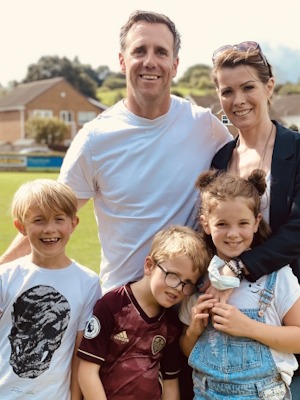
When Nina first began noticing changes in her body, she never imagined they would lead to a stage 4 bowel cancer experience. A busy mom of three in Leeds, Yorkshire, England, and a longtime hairdresser, Nina had always seen herself as “the healthy one.” She was active, into Pilates, and focused on holistic wellness. For years, her digestive issues were labeled as irritable bowel syndrome (IBS), even as her discomfort escalated and new symptoms appeared, including skin flare-ups and blood and mucus in her stool. In the middle of the COVID lockdown, she pushed through the pain, assuming it was just another rough patch.

Interviewed by: Carly Knowlton
Edited by: Katrina Villareal

Everything changed around Mother’s Day 2021, when severe, localized pain and dark stool led to an urgent trip to the accident and emergency (A&E) department. Imaging revealed a mass in her bowel that had spread to her ovaries and suspicious spots elsewhere, leading to a stage 4 bowel cancer diagnosis. Nina underwent major surgery to remove part of her bowel, both ovaries, and a section of her bladder. She was placed on chemotherapy as “mop-up” treatment, but the treatment regimen hit her hard. She lost a significant amount of weight, needed total parenteral nutrition (TPN) and fluids, and scans then showed new liver spots. One doctor told her the liver disease was inoperable and brought up palliative care.
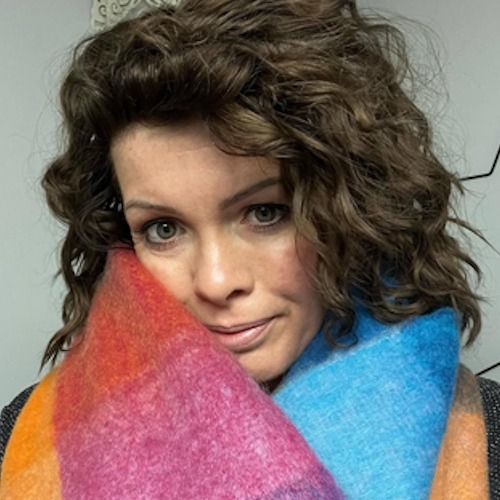
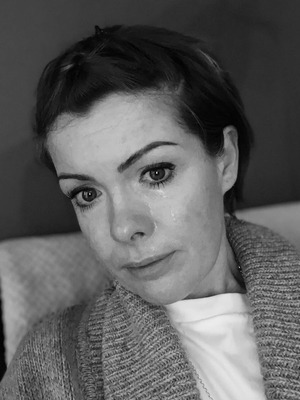
Nina H. stage 4 bowel cancer

Nina refused to accept that as the end of her stage 4 bowel cancer story. Anchored by her three children and her belief that it wasn’t her time, she focused on everything within her control — nutrition, movement, supplements, prayer, and making keepsakes for her kids in case she couldn’t be there in the future. Her oncologist adjusted her chemotherapy schedule, and follow-up scans showed the liver lesions shrinking. Surgery later revealed those lesions had turned into dead tissue, with no active cancer remaining, leading to a discussion of having no evidence of disease that felt surreal and almost too fragile to celebrate.

Today, Nina’s experience is about more than clear scans. She talks openly about the anxiety, hypervigilance, and survivor’s guilt that followed treatment, including becoming more of a hermit, fearing certain foods and products, and feeling like she has to make every moment count as a parent. Meditation, Pilates, daily movement, and making her own skincare have become part of her ongoing healing. Nina’s stage 4 bowel cancer experience may be uniquely her own, but her message is universal: hold on to hope, listen to your gut, and remember that you are not a number.

Watch Nina’s video or read the edited transcript below to find out more about her experience:

  • Early symptoms of bowel cancer can be mistaken for IBS, so persistent red flags like blood and mucus in stool or severe new pain should be taken seriously and re-evaluated
  • A “no” from one clinician, including talk of palliative care only, doesn’t have to be the end of the story, seek a second opinion
  • Asking questions and revisiting treatment options can sometimes open new paths
  • Nina describes a meaningful transformation from constantly rushing and “pushing herself” to slowing down, honoring her limits, and prioritizing peace, presence, and time with her children
  • Survivorship brings complex emotions, including anxiety and survivor’s guilt; getting support, sharing honestly, and finding a community of people who understand can make that phase more manageable
  • Every person and every cancer experience is different; you are not a statistic, and there is value in focusing on hopeful stories as well as medical care.

  • Name: Nina H.
  • Age at Diagnosis:
    • 38
  • Diagnosis:
    • Bowel Cancer
  • Staging:
    • Stage 4 (Metastatic)
  • Symptoms:
    • Longstanding IBS-like symptoms
    • Skin flare-ups
    • Blood and mucus in stool
    • Dark stool
  • Treatments:
    • Surgeries: bowel surgery, removal of both ovaries, partial bladder resection, liver surgery with removal of two liver sections
    • Chemotherapy​​
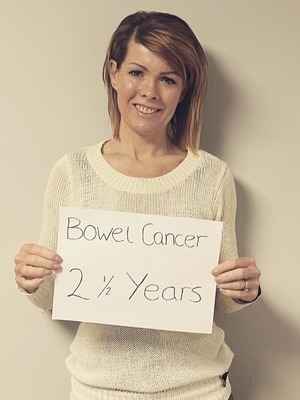
Nina H. stage 4 bowel cancer

This interview has been edited for clarity and length. This is not medical advice. Please consult with your healthcare provider to make informed treatment decisions.

The views and opinions expressed in this interview do not necessarily reflect those of The Patient Story.


Meet Nina: An Active Mom, Hairdresser, Pilates Lover

I’m Nina. I live in Leeds in England. I was diagnosed with stage 4 bowel cancer in 2021.

I have three kids, so they take up a lot of my time. I’m very passionate about my family time and all those kinds of things. I’m very into my Pilates and holistic side of things. I am a hairdresser by trade as well, so that’s what I did before. I’m back doing that part-time.

First Red Flags Before Diagnosis

I suffered with IBS for years, or what they thought was IBS. It was during the COVID lockdown where things progressively got worse, to the point where the discomfort was becoming more and more. I was having skin flare-ups and everything. Then I started having blood and mucus in my stools.

I contacted the doctors and they were like, “Come in.” It was lockdown, so it was difficult to get an appointment. I got in for some tests, but I never asked what they were testing me for or what tests they were doing. When the results came back and everything was fine, they were just very much like, “Oh, it’s just IBS. Maybe cut out certain foods and see yourself what things are bothering you,” so not much help at that point.

Then things got a little bit better. I started cutting stuff out of my diet. I did the York Test to find out what I was allergic to and what I might be intolerant to, and I cut a load of stuff out of my diet. That was in the summer of 2020, mid-lockdown. By Christmas, things did get worse.

I woke up the day before Mother’s Day 2021 in severe pain, but I got myself through the day. I thought, “It’s just a bad spout; ignore it.” But the following morning, I was very concerned, because my stool was dark. The pain was horrendous. It was down one side.

Trip to A&E and Getting the Stage 4 Bowel Cancer Diagnosis

We thought it was best to phone 111 and see what they recommended. They told us to go to A&E, and that’s where it all started. While I was in, I thought I’d be out later on and that it’s fine and it’ll be nothing.

They scanned me and everything, and the doctors came to see me and they were like, “We think it’s a twisted ovary or something like that. We’re going to keep you overnight and do a few more tests in the morning.” That was fine. The following morning is when the doctors came to see me and said, “We’ve had a better look at your scan and you’ve got a mass on your bowel that’s spread. It looks like it’s gone to your ovaries, and you’ve got two other spots that we’re concerned about,” one on your liver and one in my chest.

They said, “We think it’s cancer and we need to get looking now and get you in.” Basically, they kept me in while they did all the other tests to see what everything was. It was confirmed that what was in the bowel was cancer, and they were certain that it had gone to my ovaries. The scans on my liver and chest all came back clear at that time.

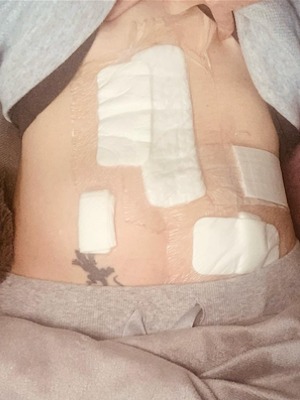
They sent me in for an operation six weeks later. I went in for my operation. They removed part of my bowel. Luckily, they were able to put it back together and I didn’t have to have a bag. Then they took both ovaries just to make sure. While they were in, they did notice something on my bladder, so they had to take a little bit of my bladder too. But they felt like they did quite a good mop-up job and thought that was it.

First Chemotherapy Plan and Sudden Liver Metastases

They decided to put me on six sessions of chemo, three weeks apart, as a bit of a mop-up just in case. But that didn’t go to plan. I fell ill on the chemo, to a point where again I ended up being taken in. I’d lost a lot of weight, and they thought I had an obstruction.

They scanned me for that and had to keep me in. I was put on TPN and fluids because I couldn’t eat or drink. The scan revealed that I had two spots on my liver.

At this point, when the guy came to see me when I was in — again, it was COVID, so we didn’t have many people that were allowed to come in — the doctor came to see me and asked if my husband could come the next day to discuss the results. So you kind of know that there’s something.

The next day, he came and the doctor told us they’d seen these two spots that, in his eyes, weren’t operable. He basically just said that he’d get the palliative care team to come and see me.

Refusing to Accept Palliative-Only Care

From that point on, it was like, “Right, I’m not taking that as an answer. I’ve got three kids. I don’t think it’s my time. I’m a healthy eater. I’m going to up my game. I looked into every bit of food that I could possibly think of that would help me heal my body and fight the cancer.”

That was my aim: to get out of the hospital and just crack on with that. I was busy making things for the kids while I was in the hospital so they had something of mine. You sit there and think about things you might say to your kids at different stages of life. I was preparing myself for things to write down, to be able to give them if I wasn’t around. I’d probably say that was the darkest point of my journey, really.

After, when I did get out, when I put a bit of weight back on and was allowed back out, they were ready to decide whether to do the chemo again. They decided that my oncologist, who didn’t see me in hospital because it was somebody else, still thought the chemo was working. But he did change how he was administering it.

Adjusting Chemotherapy Regimen and Shrinking the Liver Tumors

Rather than just going in and having the drip and then having tablets for a week, I’d go in every two weeks for a drip and then I’d come home with another little drip on. Then we’d see how I went halfway through and scan me.

The liver bits had actually shrunk, so he was happy with that. They kept me on for the rest of the program, and they were hoping that if they’d shrunk enough, they’d be able to operate. At the end of it in the October, they left me for a few months just to heal, and then they scanned me and they were right — the lesions had shrunk and they were happy to operate. There didn’t seem to be any more spread anywhere else.

It was February 22nd when they decided to remove the bits from my liver. They were very shocked by what they found when they tested it. It was all dead tissue. There was no active cancer there. It had completely died. They were basically like, “Whatever you’re doing, keep on doing it.”

That’s what I’ve been doing since and all my scans have been clear. I’ve been very lucky. I do put it down to what they did, and I put it down to my diet and all my praying and crying. I did say at the very beginning, it wasn’t my time. It will be five years next year, but it does feel like it was only last week. I don’t think it will ever fully go.

Life Before Cancer: Extremely Active and “Didn’t Fit the Box”

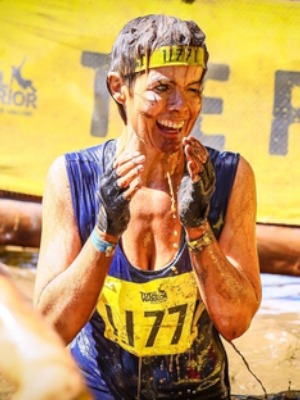
I was a busy mum of three. I worked in hairdressing full-time. Because it happened after lockdown but before things were fully back to normal, I was a busy mum with three kids. I trained. I did silly winning competitions, like the mud races and all that. I loved all that. I weight trained. I was very active and very healthy but probably pushed myself a little bit too much.

It was a bit of a shock because I was a healthy eater, I trained, I worked out, and I was very active. I had three kids, so I was constantly running around after them. It was a shock because I didn’t put myself in that bracket. I think that’s what the doctors didn’t do at first. They thought, “She’s healthy. She eats well. She trains.” I never went on about being tired because I’m a mum of three. I’m always going to be tired.

I was a very active person. I was always quite a positive person beforehand, but I do think I took life a little bit for granted. One of the positives that has come out of this is it has made me look at life a bit better and slow down and appreciate the little things.

Telling the Kids and Parenting Through Chemo

We didn’t want to name it because I’d had some problems for years. We didn’t tell them it was anything. We didn’t say cancer. We didn’t want them to hear that word and be scared, so we kept it quiet. After my operation, I lived with my parents for six weeks while I healed, but the kids could come and see me. We tried to keep everything as normal as we could.

When chemo started and I fell poorly, I think it was because I was hiding it. Every time I felt bad, I didn’t want them to see me like that, so I was dealing with it on my own. Trying to feed myself and all that was hard. When palliative care came into it, we had to tell them the truth.

They’re quite strong characters, so they never asked us the worst. You don’t want them to ever go, “Are you going to die?” They didn’t ask that. I think that’s because my husband and I are quite positive people. We don’t look for the negative. We always look for that little silver lining, and I think that helped.

With it being lockdown, they never saw me in the hospital. They never saw me poorly in a hospital bed with tubes or anything like that, so I think that helped them. I have a good team around me. The family is great.

Side Effects of Chemotherapy

I think I did two or three the first time around, and then they changed it. It was either six or eight the second time around. I think it was six. My husband thinks it was eight. I can’t quite remember. I didn’t lose my hair, and again, I think that helped with the kids because my youngest one doesn’t think I had chemo. He’s like, “You didn’t lose your hair, Mummy.” I was like, “Mummy did.”

The sickness and the tiredness got worse with each round. But I think because I had such a healthy diet, I was always in the mindset of, after every chemo, I need to heal myself for the next one. I juiced. I did everything I possibly could so that the chemo would have another good go at doing what it needed to do.

I never want to feel like that again. I dealt with it, and I do feel like I dealt with it well, but I’d never want to go back there. I had this weird cold thing. I couldn’t touch certain things. I couldn’t touch knives and forks. I don’t know what the name of that is. I couldn’t drink anything below my body temperature; otherwise it would feel like it was locking my throat. Apart from those side effects, I was quite lucky.

Anxiety, Hypervigilance, and Becoming More of a Hermit

I’ve become a little bit of a hermit. I do lock myself away a bit because a lot of things do scare me now. I felt like I was so healthy beforehand and I would not have expected anything like that, so I don’t socialize as much as I used to.

I’m too scared to drink, even though I didn’t drink before. Going out and being in that social environment, I get quite anxious. Same with the kids: whatever they eat, whatever they drink, I’m very conscious. I make all my own skincare range because I’m too scared to put anything on my skin that I don’t know what’s in it, so I have become a little bit of a nervous wreck.

Each year, I have gotten better, and every time I get a clear result, it gets a little bit easier. I’m working a bit more now, so that’s helping. But I think getting over the mental side has been the hardest. The physical side, I’m more or less back to the way I was, but the mental side is taking a bit longer. I meditate. I also don’t read or look up things too much now. I’ve cut that down a bit and just try to be a bit more present.

Finding a New Mental Balance and Avoiding Doom-Scrolling

I know I’m healthy. I’m doing everything right and just stick to the positives. We’re in a world where you can overlook stuff. The more you look up stuff, the more you see the negative than the positive.

Doing something like this is trying to put that positive out there. I’ve got a positive story. I had a positive outcome, to say how stage 4 bowel cancer had gone so many places. I’m lucky to be where I am, because we did have a neighbor who was also diagnosed at the same time as me who didn’t get through it, so it does make you count your lucky stars a little bit that I’m still here.

As much as I lock myself away, I’ve been given that chance to live again. I drive the kids potty because I want to make every second count, every memory count, and they’re like, “I just want to be a teenager.”

What I’ve found on this journey is that when you’re in the treatment and your surgeries, you’re fighting the fight. Then when you’re finished and the doctors go, “Yep, fine, see you in a year,” you feel very much left and quite vulnerable. Any little twinge or anything, I feel like I have to phone them and go, “Just please check it. Just make sure that it’s nothing.” They are understanding of that. They know that they told me I was fine before, so I don’t always take their word for it. But again, that is getting better.

Hearing “No Evidence of Disease”

I was with my mum. She came with me to the meeting to see the oncologist, for him to say, “There’s no evidence of disease and we’re just going to put you on monthly checkups.” That was it.

I didn’t want to celebrate it. I didn’t know what to do because we walked out of the meeting, and then my mum looked at me and went, “Are you happy? Are you happy?” I went, “Yeah, but I don’t feel like I can enjoy it. I feel like if I laugh in its face, it might come back,” so it was a bit of a surreal moment.

I didn’t want to go out and start screaming, “It’s gone! I’m free from it,” because there’s always that what if. I always have to mentally have it there and prepare myself to hear those words again, so I didn’t feel like I could just jump for joy.

Major Surgeries and Surgical Menopause

They removed part of my lower bowel, both my ovaries, and a section of my bladder where there seemed to be some disease. That was the first surgery. They did all that and “had a good rummage,” they said, and looked at everything else. They didn’t see it anywhere else, just those things.

They did put me into surgical menopause with that. That’s probably been another battle in itself, just getting over the surgical menopause. I thought it was going to be moods and hot sweats. I wasn’t expecting the joint problems, brain fog, and all that, because my brain does not work like it used to either. That’s another thing, but I won’t put that down to the chemo; I’ll put that down to my hormones.

The second surgery was just my liver. They took two sections of my liver, but at the same time found scar tissue that had caused the bowel obstruction. They did all that at the same time. It was a good six weeks, maybe a bit longer with the second. I don’t know why, but physically, it took a lot longer. Six weeks until I felt more like myself.

Recovery and How Long It Took to Feel Like Herself

I don’t think you realize how much you use your core. The taking of the organs didn’t seem to bother me. Everything worked fine. I was lucky because I didn’t have to have a bag, so I think that was a big help.

I heal pretty well. I do bounce back pretty quickly. The first surgery, I was six weeks and straight into chemo, so we never really knew what was causing problems — whether it was the chemo, still getting over the surgery, or going through the menopause. A lot of things at that point were masked.

The second surgery, again because it was the same kind of surgery, it was another six weeks until I could physically do the basics. I was just happy to be here, to be honest. I just took my time. I’ve got an army of people around me, so I just took my time and didn’t push myself, because they all know what I’m like. I can try and jump in too soon, hence my mum keeping me for six weeks every time.

What Survivorship Feels Like Now

It’s a strange one because you don’t want to take anything for granted. You want to live your life to the full, but at the same time, you’re scared. You’re scared of hearing those words ever again. Then you get the guilt. There’s a bit of guilt there, going, “I shouldn’t be scared. I should be going for it.”

Then there’s this survivor’s guilt. The amount of people who I knew that didn’t make it through, you do question, “Why me? Am I not doing enough? Am I not living my life? Are they going to think I’m not living my life to the fullest?” It’s a strange one. People think you should be jumping up in the air and celebrating it, but you’re just scared to hear those words again.

From the beginning, when we found out it was stage 4 bowel cancer, it was, “I’m not going to be here for my kids.” You sit and plan all the things that you might say through each milestone of their life. You never forget that feeling, and you don’t ever want to feel that feeling. So surviving it, you do want to make the most of life, but it’s hard. It’s hard.

Being “The Strong One” and Finding Community

I have a very good unit, and I am the positive person everyone comes to. They’re like, “You’re not the one who’s supposed to break. You’re the one who’s supposed to hold everyone together.” As a family, we all saw it as: if anyone’s going to get through it, it’s Nina. She doesn’t go without a fight. That’s kind of how it was.

Survivorship is one of those things you don’t understand unless you’ve had those words. I was very open on my Instagram about my story and what I was going through, just in case it reached anybody else that was fighting. I have met some lovely people and made some close friends who are either going through it now or went through it at the same time as me.

You have that little community where you’ve got a little secret wink of, “I know how you’re feeling,” kind of thing — and you need that. As much as your family love and care for you, they don’t quite understand. There needs to be support for them as well, because they don’t quite understand that being scared of what’s coming, especially when you think that that is it.

It feels like it’s just a matter of weeks or months or something. I can’t even explain that feeling. I’m not saying it’s any easier when you haven’t got kids, but when you have kids, you think you’re never going to see them do certain things in their life. You have kids because you want to see all that.

Making Keepsakes for Her Kids

I made some little knitted mice. I think one of my sisters must have bought me a kit. I made one for each of my kids. I think I did some for my mum as well. When I was in the hospital the second time round, when I was poorly in between my chemo, I made them all little bookmarks — something that I’d made and touched so they could have something.

I wanted them to have something that would remind them of me if I wasn’t there. I just wanted them to have something that I’d made. I’m not very good at knitting. They’ve still got them.

Meditation, Movement, and Lifestyle Changes After Cancer

I meditate. I’ve got better at it because I was not very good at it at first. I have a very busy head. I do lymph drainage, a body tap. I have a trampoline in my back garden that I bounce on every day.

I do Pilates. I don’t lift weights like I used to. I don’t put my body under that much stress because I believe stress was a big cause of my cancer. I do meditation, Pilates, moving my body in general without pushing myself, and walking. We have a dog now. Once I knew that I was okay, just being outside in the fresh air has helped.

I eat extremely healthily. I eat more of a vegan diet, but I just think as long as you’re eating good food, not processed, stick to that. I do supplements, but I think in general it’s just reading your body. If I’m tired, what can I do to help my body? Meditation has been great for my head because that is one thing I do struggle with.

Everything I use on my body, I make, like my own creams and stuff. My kids aren’t the biggest fans; they’re getting used to it. Pilates and meditation have been the main thing for me right now.

Advice to Others

I think all cancers kind of come to the same thing. You’ve just got to hold on to hope, no matter what the diagnosis is. We are not a number. Everyone’s unique. I always say: don’t Google.

Look for the positive stories. I was never one to go and look at negative stories. There are some great books out there. “Radical Remission” was one of the books that I read that was just a game changer for me, because it had so many positive stories and outcomes in it.

You’re not saying you look for the negative, but the negative stuff comes up pretty easily, so don’t look for that. What I tell the people that have contacted me is: everyone’s journey is different. I’m not saying the younger ones or the older ones are any different, but don’t put yourself in any kind of box.

I just had hope. I told my oncologist, I’m here till I’m 96, so I’m not that easy to get rid of. You do have to take it into your own hands a little bit. The doctors can do what they can do, but don’t just leave it to them. There are so many things that you can do for yourself, whether it’s healthy eating, meditating, or moving.

Moving is a big one. Don’t just crumble, as much as it’s so hard. Speak. Tell people how you feel. Even if you think they don’t want to hear it or they’re too scared to hear it, it’s better out than in. If you can’t speak to the loved ones about it, there are people out there that will talk to you. Macmillan is amazing.

You’re not alone, because it is a very lonely place. It is a very, very, very lonely place. That’s what I told my father-in-law, actually. He was diagnosed this year. He’s a big guy, very proud. I just remember holding his hand and saying, “You’re not alone.” I said to my husband, “I want him to know that he’s not alone, because as much as you put a brave face on, it was a very dark and lonely place, especially when you feel that people don’t understand.” You’re not alone.

Let’s have hope and just find your little community to talk to.

Final Reflections and Listening to Your Gut

It’s tricky because, like I said, we aren’t a textbook, so everyone’s different. As I’ve said to anybody who’s spoken to me about what I did or things I might have taken, you’ve got to find your own path. You can take advice from everybody, but don’t do anything that doesn’t feel right.

I always went with my gut. If something in my gut took me in that direction, I would follow that. But if people were advising all sorts and I had a doubt, I wouldn’t go down that route. Tune into yourself and figure out what’s right for you.

Do what you can do for yourself and not just leave it to the doctors, because the doctors can only do what they can do. They are amazing. I had some amazing people at the hospital. I’ll never forget their faces and their names. But at the same time, I did take control of it myself for certain things. Everyone’s journey is different.


Nina H. stage 4 bowel cancer
Thank you for sharing your story, Nina!

Inspired by Nina's story?

Share your story, too!


More Metastatic Colorectal Cancer Stories
 
Raquel A. feature profile

Raquel A., Colorectal Cancer, Stage 4 (Metastatic)


Symptoms: Frequent bowel movements, pin-thin stools, mild red blood in stool
Treatment: Chemotherapy
Steve S., Colorectal Cancer, Stage 4 (Metastatic)


Symptoms: Blood in stool, changes in bowel habits, feeling gassy and bloated

Treatments: Surgery, chemotherapy, monoclonal antibody, liver transplant

Jessica T. feature profile

Jessica T., Colon Cancer, BRAF+, Stage 4 (Metastatic)


Symptoms: Severe stomach cramps, diarrhea, vomiting, anemia (discovered later)

Treatments: Surgery (hemicolectomy), chemotherapy
Jennifer T. feature profile

Jennifer T., Colon Cancer, Stage 4 (Metastatic)


Symptoms: Weight loss, coughing, vomiting, sciatica pain, fatigue

Treatments: Surgeries (colectomy, lung wedge resection on both lungs), chemotherapy, immunotherapy

Kasey S. feature profile

Kasey S., Colon Cancer, Stage 4 (Metastatic)


Symptoms: Extreme abdominal cramping, mucus in stool, rectal bleeding, black stool, fatigue, weight fluctuations, skin issues (guttate psoriasis)
Treatments: Surgeries (colectomy & salpingectomy), chemotherapy
Categories
Cancers Chemotherapy Colon Colorectal ileostomy Patient Stories

Jason’s Stage 4 Colorectal Cancer Story

Jason’s Stage 4 Colorectal Cancer Story

Jason’s cancer journey began in 2005, in the middle of his Navy service. He began experiencing stomach issues and was diagnosed with GERD. Much later, in 2018, he was seen by his doctor when he developed severe abdominal pain and infrequent bowel movements. A scan revealed 80% of his liver was covered with metastatic disease, which led to a stage 4 colorectal cancer diagnosis

After years of fighting Veterans Affairs to prove his cancer was connected to exposure to cancer-causing chemicals during his Navy service, restitution was granted through the Pact Act – an Act that grants better healthcare and funding to veterans exposed to toxic chemicals. 

Jason shares his cancer journey, his work with COLONTOWN – a colorectal cancer support network, and how he overcame liver surgery and chemo after doctors said it couldn’t be done. 

Just this year, Jason and his wife launched Kohala House of Healing, a cancer retreat in Hawaii. The lush hideaway is designed for those affected by cancer to find hope, healing, and renewed purpose.

At the Patient Story, we feature the real voices of cancer patients to empower and offer hope. Explore more Colorectal Cancer Stories for further inspiration.

Jason Randall shares his stage 4 colorectal cancer story
  • Name: Jason R. 
  • Diagnosis (DX):
  • Staging: 4
  • Symptoms:
    • GERD
    • Abdominal pain
    • Infrequent bowel movements/ constipation
    • Belly button discharge
  • Age at DX: 35
  • Treatments:
    • Surgery
      • Hepatectomy, cholecystectomy, lower anterior resection, lung ablation, port placement, fistulotomy
    • Chemotherapy
      • Oxaliplatin (OX), Irinotecan (IRI), 5FU (FOLF)
    • Radiation
    • 2 Y-90 radioembolizations

This interview has been edited for clarity. This is not medical advice. Please consult with your healthcare provider for treatment decisions.


Table Of Contents
  1. Symptoms & Diagnosis
  2. Treatment
  3. Getting an Ostomy
  4. Post-Treatment Tests & Scans
  5. Reflections

Symptoms & Diagnosis

Tell us about yourself

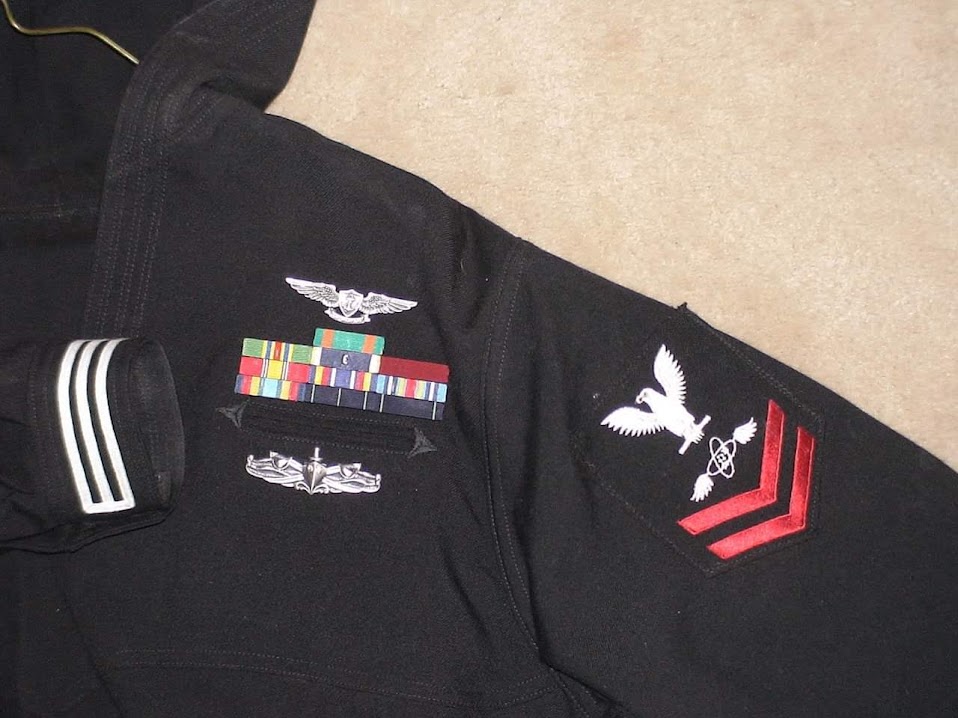
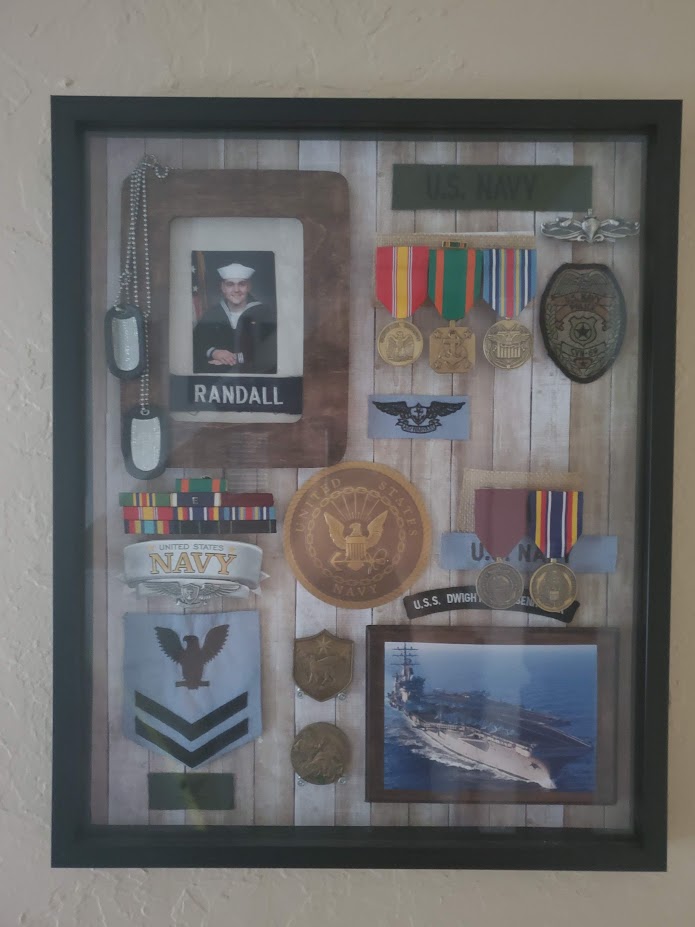
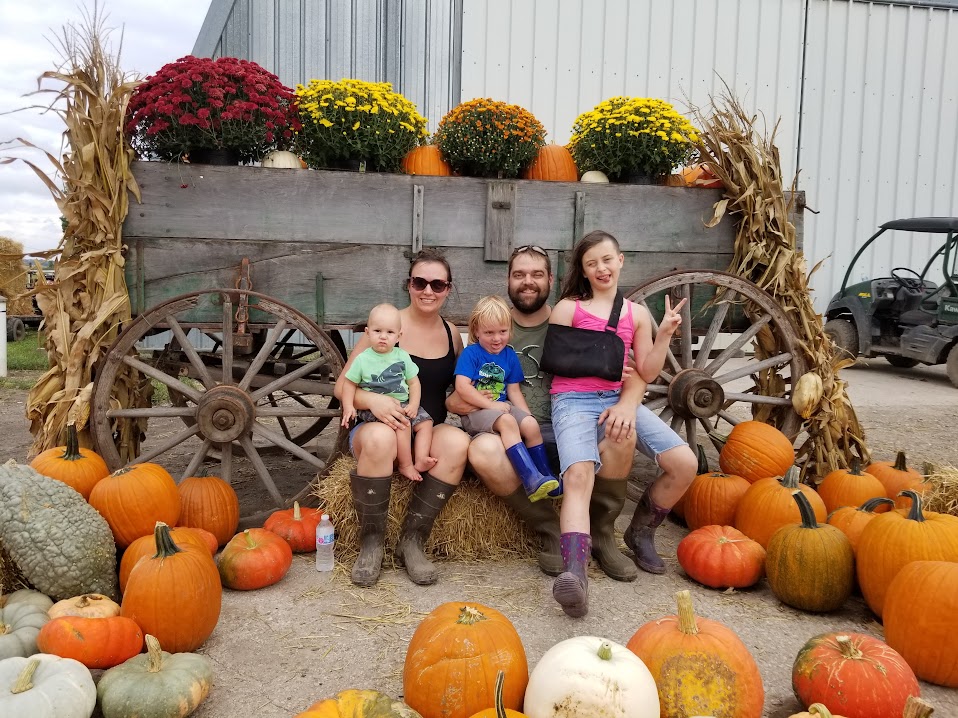
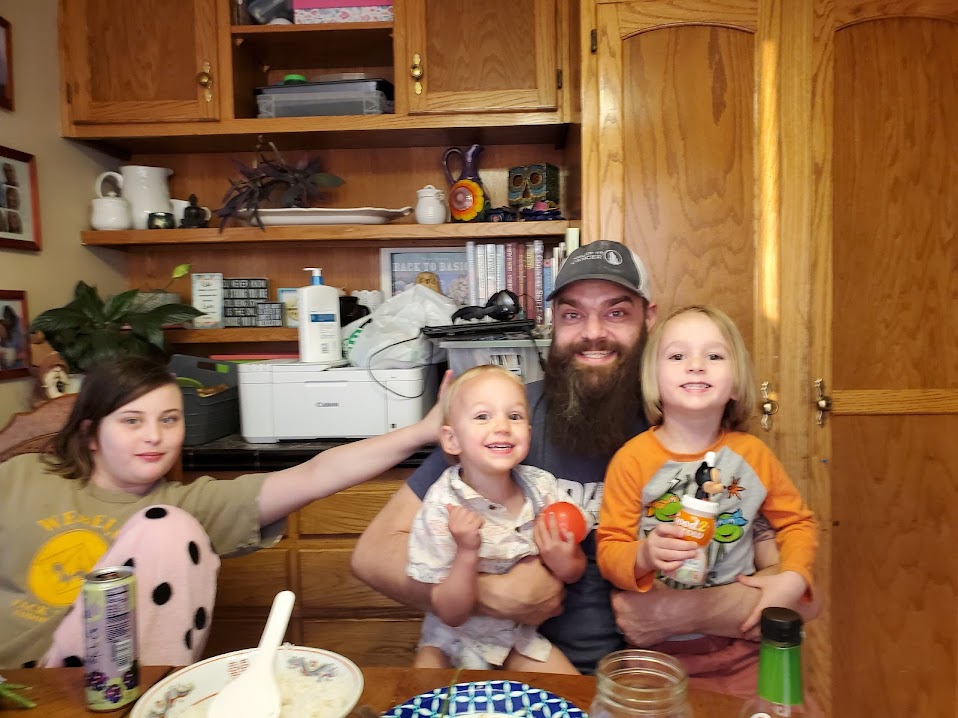
My name is Jason Randall. I live in Eudora, Kansas with my wife and 3 children. We live on a hobby farm. I was in the Navy for 5 years from 2003 to 2008. After that, I went to school. 

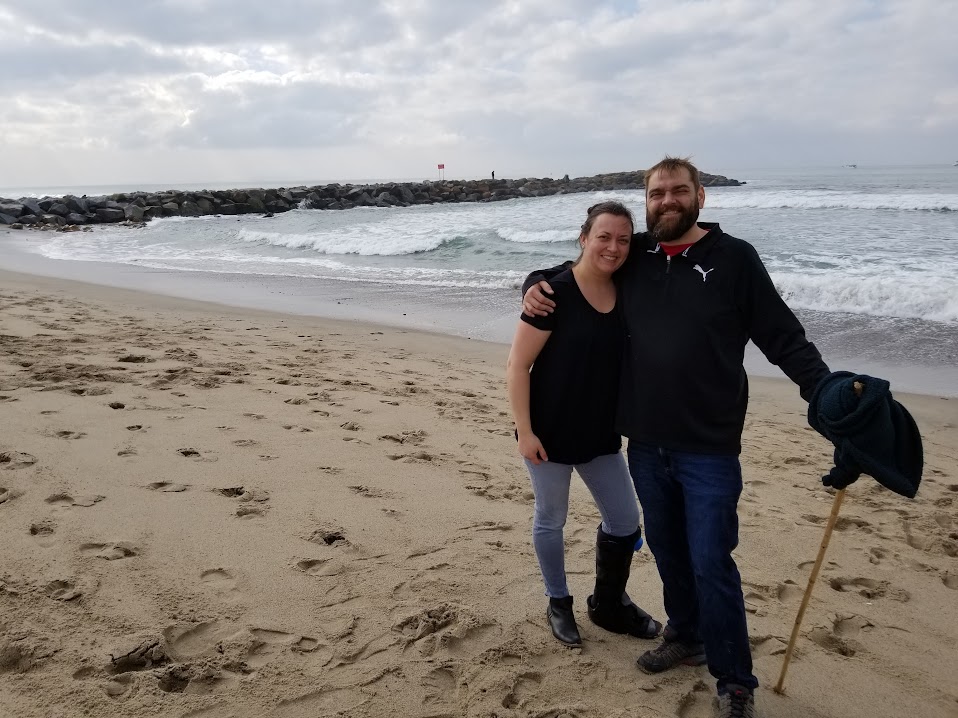
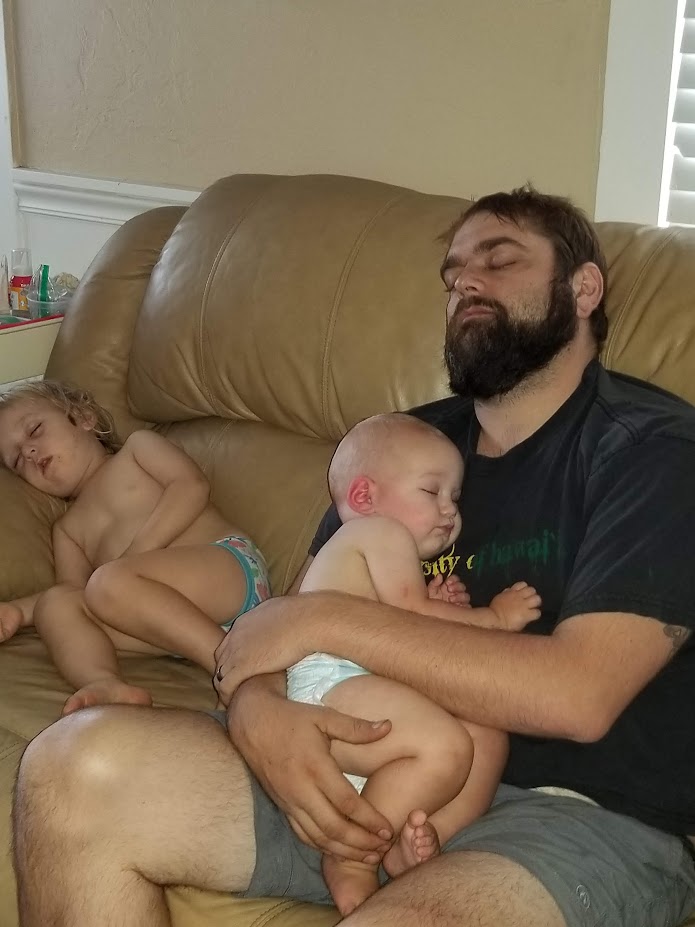
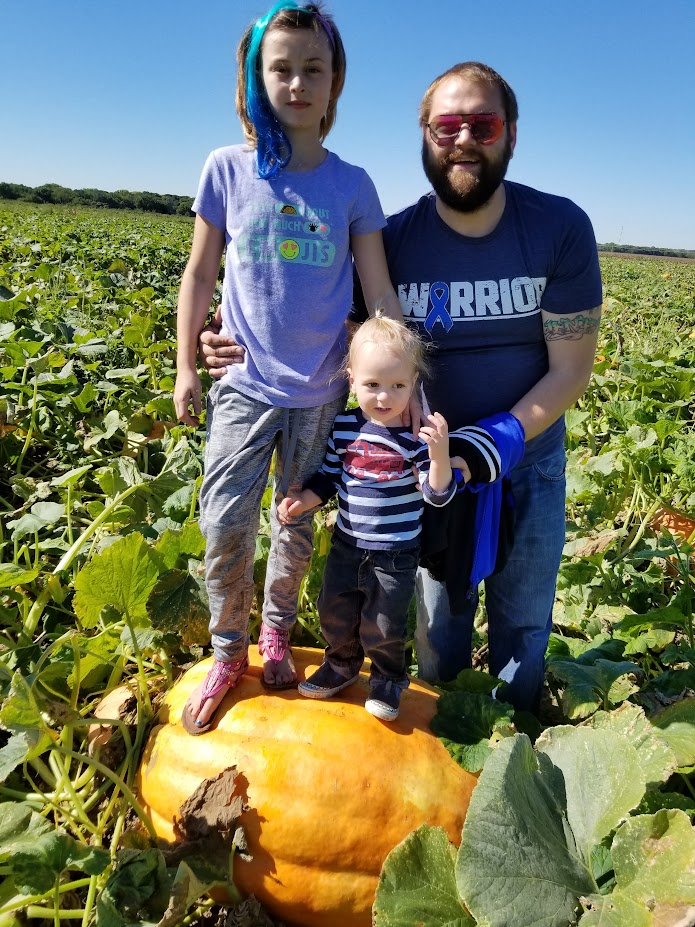
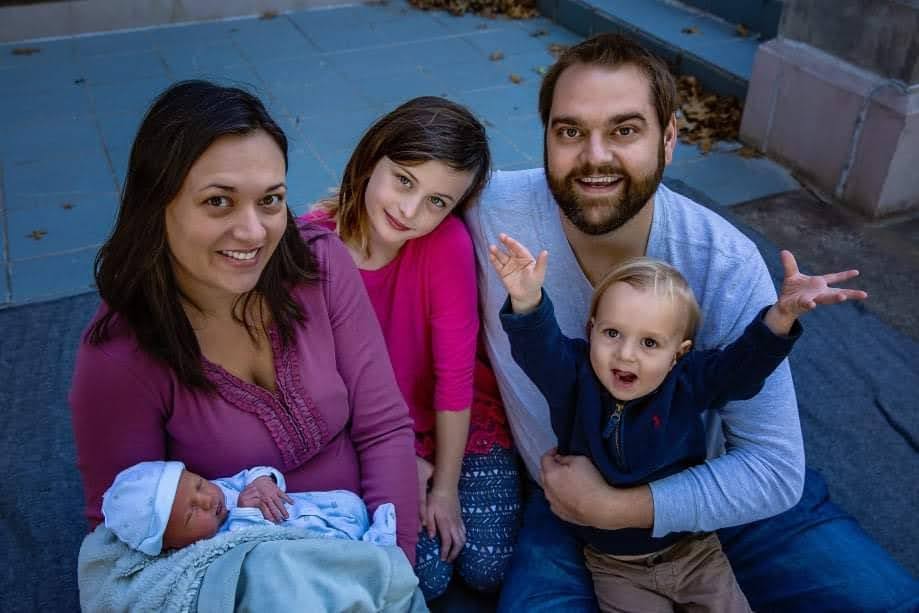
Jason with his wife and kids

My wife and I were best friends in high school. After the Navy and college, we reconnected. When I came back from Hawaii for a semester at the University of Kansas, we started dating. My wife has our daughter from a previous relationship, who I’ve adopted.

We’ve lived on this hobby farm for 10 years. I’m a cartographer by profession. Technically, a GIS analyst. We like to fish as a family. We go to the gym and swim quite a bit.

When did you first notice something wasn’t right?

In about 2005, right in the middle of my Navy service, I had some stomach issues that they tested. They came to the conclusion that I had GERD reflux disease, so they put me on omeprazole and Zantac-type medications. It was fine for years after that. 

Receiving a diagnosis

About 2018, I was diagnosed with stage 4 colorectal cancer. It blindsided us. I say us as in my family because I always include caregivers. They are often overlooked in this process. 

They saw that about 80% of my liver was covered in what appeared to be metastatic lesions…It started me in this world of advanced-stage colorectal cancer.

Jason and his family were blindsided by his cancer diagnosis
Jason's scans revealed 80% of his liver was covered in metastatic disease

Two weeks before, I had some severe abdominal pain that I’d never had before and 2 weeks before that, I’d noticed that I wasn’t going to the bathroom at a regular frequency. Then it just stopped and I started getting abdominal pain. That’s when I thought something was wrong. I need to go get this checked out. 

My mom had diverticulitis quite a bit over the last couple of decades and they said, “It’s probably that. Let’s get a CT scan just to make sure so we can put you on antibiotics for it.” 

I had that scan on July 16th. They saw that about 80% of my liver was covered in what appeared to be metastatic lesions. That prompted a PET scan on the 17th which confirmed it. My liver, the large majority of it, was covered in metastatic disease. It started me in this world of advanced-stage or stage 4 colorectal cancer.

Was there any connection between your GERD and colorectal cancer?

I brought that up along the way many times after I was diagnosed. The doctors never put them together because they generally think, anything in the upper esophagus or upper GI tract is Barrett’s disease or esophageal cancer instead of colorectal cancer. 

Jason's doctors believe his advanced cancer stage means he began developing cancer 10-15 years prior to his diagnosis

My colon, where we found the tumor was at the sigmoid part of my colon, right before the rectum. So there really wasn’t a tie to it. 

Ironically, after I had surgery to remove 30 cm of my colon, my GERD completely went away. It cued me to ask, what’s going on here? 

If you look at the history all the way back to 2005, I was on ranitidine, which is Zantac. Then when I got out of the military into the Veteran Affairs (VA) system, I was on omeprazole for 10 years. My doctor mentioned that the advanced stage of my disease and the extent of it [means] it had been in me for about 10 to 15 years at a minimum. That squarely placed it right in my military service.

Did the VA take responsibility for your diagnosis after your exposure to cancer-causing chemicals?

Not definitively. Presumptively, yes. I was fighting the VA for about 3 years, trying to tell them that everything lines up with the exposures I had while I was in the Newport News Shipyard. 

After I got out of my basic and my school training, I reported to the USS Eisenhower in 2004, in what they call an RCOH overhaul, where they take an aircraft carrier in the middle of its life and completely redo everything. They take it down to bare steel. They replace the reactor rods. I was in that environment for about 2 years. 

The Pact Act led the VA to take responsibility for Jason's cancer
Jason fought Veteran's Affairs for years before the Pact Act

We had all sorts of chemical and toxic exposures. You can use PPE and try to protect yourself, but you still inhale it once you take the equipment off. I was also within the burn pit zones in the Persian Gulf from 2006 to 2007. 

Finding help through the Pact Act

They said you need to prove to us and provide a nexus that caused this, which is impossible. Even though statistically, 25-35% of all veterans of any service have an increased risk of multiple cancer types.

The Pact Act relieved a large financial burden from medical bills

Jon Stewart was one of the biggest promoters of this law called the Pact Act for Toxic Exposures and Burn Pits. It finally connected my service to my cancer diagnosis. 

Because of the way the laws were written before, the burden of proof was on the person having cancer. They said you need to prove to us and provide a nexus that caused this, which is impossible. Even though statistically, 25-35% of all veterans of any service have an increased risk of multiple cancer types, like prostate, breast cancer, colorectal cancer, and all sorts of different things. 

The law was really good to help veterans who have been struggling to get this care and to have the military take responsibility for that within their service.

Did you have any other symptoms before your stage 4 colorectal cancer diagnosis?

The only other symptom was, before diagnosis, I had something in my belly button that would appear every 4 to 5 months. By the time I could get in [to the doctor’s office], it would go away. They’d say, come back when you can. By the time I could get scheduled, it would go away. 

It only lasted for a couple of days and it was like a little bit of discharge from my belly button and a little bit of hair follicles. It seemed like there were hair follicles that would come out. It’s hard to explain, but something wasn’t right. 

Jason and his family

It turns out that’s right where my primary tumor was, along the sigmoid colon. It was like, this could be a correlation to that. 

What happens, happens but I wish I could have got in when they could have examined that a little bit better.

Did you have bleeding?

They say the number one symptom of colorectal cancer is no symptoms at all.

You hear a lot of people with colorectal cancer say they had blood in their stool. I think I’ve only had it at one point and it’s because I ended up having an emergency stent placed shortly after diagnosis because of the situation at hand. Even then, it was a couple of times. 

They say the number one symptom of colorectal cancer is no symptoms at all.

How did you react to receiving your stage 4 colorectal cancer diagnosis? 
Like many, Jason was unprepared for a cancer diagnosis

No matter how much you think you know about cancer, unless you’ve experienced it firsthand or been a primary caregiver or even a secondary caregiver to someone, there are so many misconceptions about it.

It’s very vivid, even though in July, it’ll be 5 years now on this journey. I was diagnosed on July 17th, 2018. It was 2 days after my son’s second birthday, and my wife was pregnant with our third child. 

I remember walking into the doctor’s office after the CT scan. They called about 15 minutes later and said, we need to see you tomorrow first thing. I go in and the doctor casually says, “I don’t know another way to put this, but you’ve got cancer and it spread to your liver.” I said, okay, took a minute, and then as soon as I walked through the doors leaving the place, it was like a rush of holy crap. I’m a dead man.

No matter how much you think you know about cancer, unless you’ve experienced it firsthand or been a primary caregiver or even a secondary caregiver to someone, there are so many misconceptions about it. I thought I was dead. 

I come from a large breast cancer family. I carry a BRCA1 germline mutation. The women in my family, if they’re a carrier, they’re almost guaranteed to get breast cancer. It’s not as prominent in men. My mom had cancer, and her mother passed from cancer. I have had exposure to this, but it was emotionally devastating. 

»MORE: Patients share how they processed a cancer diagnosis

How did your wife react to your diagnosis?
Jason's wife reacts to his cancer diagnosis

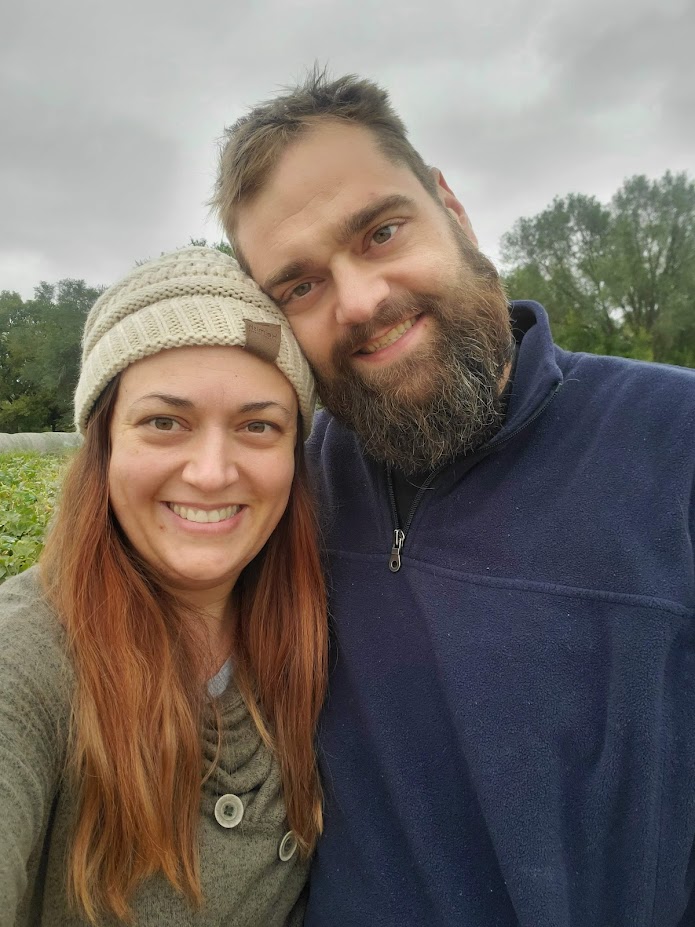
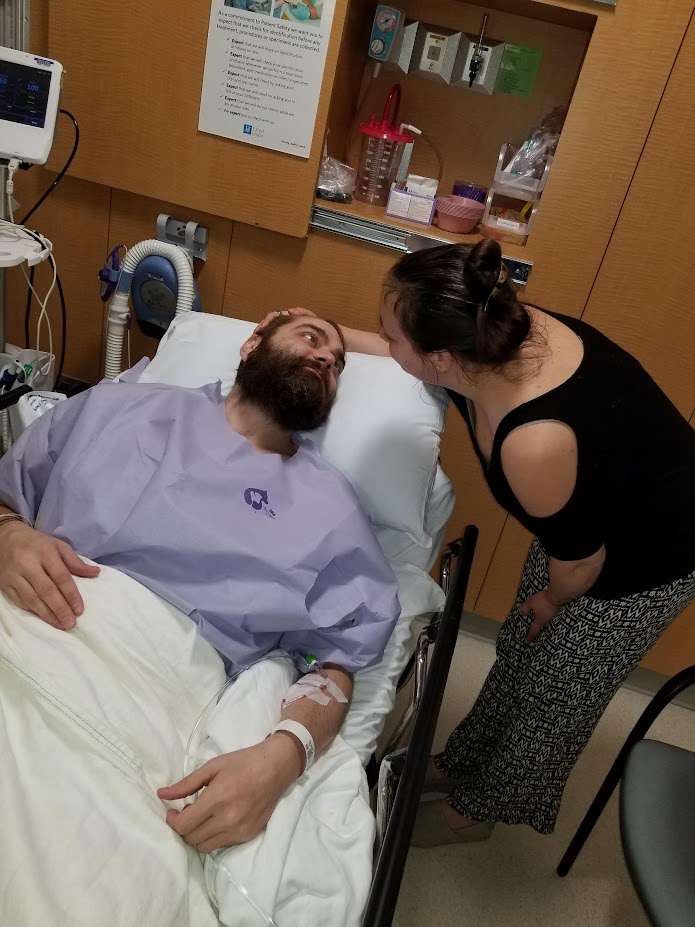
My wife was at the bowling alley with the kids and a friend. When I called her, she completely lost it. It was a bad, very dark time. We ended up coming home that night, my wife and I. We had my parents watch the kids, and we just held each other thinking, how much time do I have? 

With 80% of my liver covered, that’s not a good situation. And I had a fully blocked sigmoid colon so they couldn’t go in and remove the primary tumor. I had to have that stent open me up before I could pass stool. Everything from there was a whirlwind getting into doctors, and getting the stent placed. It was emotionally devastating.

Treatment

What were the next steps in your treatment?

That’s a little more vague to me. I do remember [the doctor] saying, we’re going to have to get you in for a PET scan, which happened the next day to confirm it was stage 4 colorectal cancer. After that, I was at my local hospital system near Lawrence. 

Getting a second opinion led to new treatment options

If you’re not used to it, it’s a lot to process, to listen to everything they’re telling you, and to absorb it.

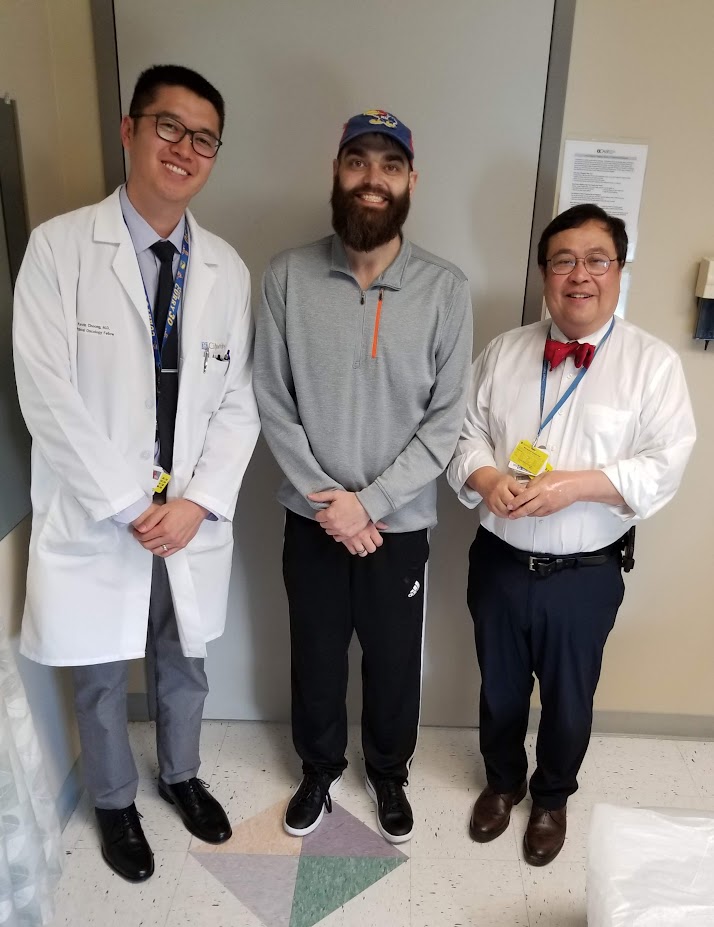
Luckily, I have a doctor cousin who took me with his training. We called him and asked, “Do you have any advice?” He said, “I want you to go see Dr. Miranda at KU Medical Center,” which is the National Cancer Institute (NCI) here in the Kansas City area. It’s the only one in the Kansas City area. 

He came with me to the appointment. That was a very pivotal moment in this. Going to one of the top centers in the area with that NCI rating, it’s important to have. 

I work in the colorectal cancer support community and advocacy, and I heard the average time for people going from symptoms to starting chemotherapy is above 200 days, which is insane. I got in within 2 weeks. I was diagnosed on July 17th and I had my first chemo on August 1st, about 2 weeks later. I’m very blessed to have that team move that quickly. 

A lot of it is very vague. It was just, go see this doctor, see this, get this scope. If you’re not used to it, it’s a lot to process, to listen to everything they’re telling you, and to absorb it.

I’m very grateful my oncologist never told me an expiration date. They did say, “You have a terminal prognosis of chemo for life and are inoperable due to your extended disease. You’ll never get off chemo and you’ll never be operated on for a curative intent. Palliative reasons, possibly, but we’ll do everything we can to extend your life.” That was a big pill to swallow

How did you come to terms with a terminal prognosis? 
It was difficult for Jason to come to terms with his prognosis

I don’t know if I ever fully digested it. I never believed I had cancer. It was all very surreal. I thought, is this happening? Did I get phase-shifted into some weird parallel universe? This has to be a bad dream. When am I going to wake up? 

It was a lot to process. Every time I heard it, I would sigh and griff and say, “No, I don’t want to hear this. This is not my fate. I don’t foresee this being me.” It was really hard to swallow, especially every time my oncologist said, “We’ll do everything we can to extend your life, but you will be on this forever.”

»MORE: A colorectal cancer oncologist shares guidance to patients

What treatments were you on?

I was put on what they call FOLFIRINOX. Sometimes they call it FOLFOXIRI. It’s basically how the drug is administered. With colorectal cancer, if you’re not a candidate for immunotherapy, irinotecan, and oxaliplatin are the 2 big drugs [that are given], and 5-FU which has been a standard since the 70s. 

I had what’s called the kitchen sink. It was a combo of those 3 drugs. I started on August 1st and I started with what would have been the first of 30 initial cycles. I did 9 of the FOLFIRINOX, then we paused to do Y-90, which is Yttrium-90. It’s a radioactive isotope of the element yttrium. 

Jason was on irinotecan and oxaliplatin

They go through your hepatic vein and your groin and they send a catheter up into your liver. It’s a liver-directed therapy where they drop millions of radioactive resin beads right into your liver where the tumors generally form based on where the blood flows. I had 2 of those in November and December 2018, then I resumed 11 more treatments of what they call FOLFOX, which is the previous one, minus the irinotecan. They wanted to drop down the irinotecan because of the 2 Y-90. It’s a lot to take on with the radiation.

It’s targeted radiation, so I ended up having 6 of the 5-FU, largely driven by blood numbers – whether my white blood cells were up or my platelets were high enough. My big issue was low platelets, something I still suffer from today, from all those treatments. 

Switching treatments due to lung spots

In September of 2019, I had some lung spots show up so we switched the drug oxaliplatin. A lot of the time, oxaliplatin causes severe neuropathy. Luckily, I never had too bad of that and I ended up taking 20 cycles with that in the mix, which is a lot. Some people dip out after 4. Usually, it’s between 8 and 12 of those. 

Then I started back on the irinotecan drug through a combo called FOLFIRI. We added a biological drug called Vectibix or panitumumab, an epidural growth factor inhibitor that prevents blood vessels from growing. I did 4 more treatments through December 2019, and then I stopped to break for Christmas. 

Getting a second opinion led to new treatment options

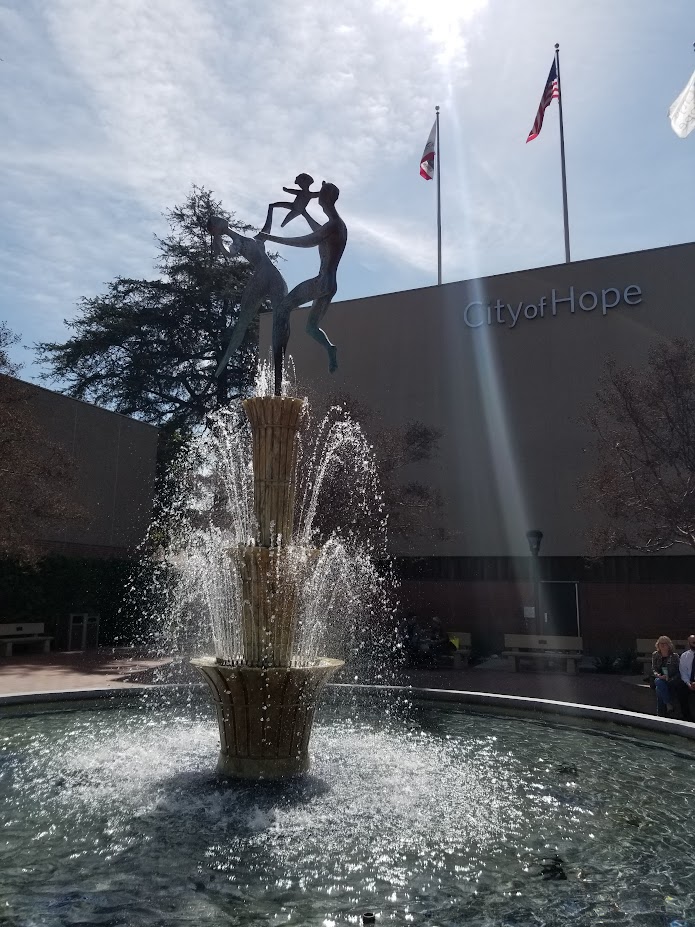
Even though they had my best interests in mind, I still sought that second opinion out at the City of Hope in California. It’s probably the best decision of my life.

My story started to change through COLONTOWN, an online colorectal cancer support community. I learned about Dr. Fong who’s a liver specialist and surgical oncologist. He doesn’t do just the liver, he does a lot of stuff in the abdomen area minus the colon itself. 

People kept saying, you need to go see him. I had scans in December at my local center. Even though I had a really good response to chemo, they told me, you’re going to be on chemo for life and inoperable. They were scared that if I did have liver surgery, the liver would grow back. It’s the only organ that does that and the disease would progress with that regrowth. 

City of Hope in California

Even though they had my best interests in mind, I still sought that second opinion out at the City of Hope in California. It’s probably the best decision of my life. It led to a surgery that was 12 hours long in February 2020. 

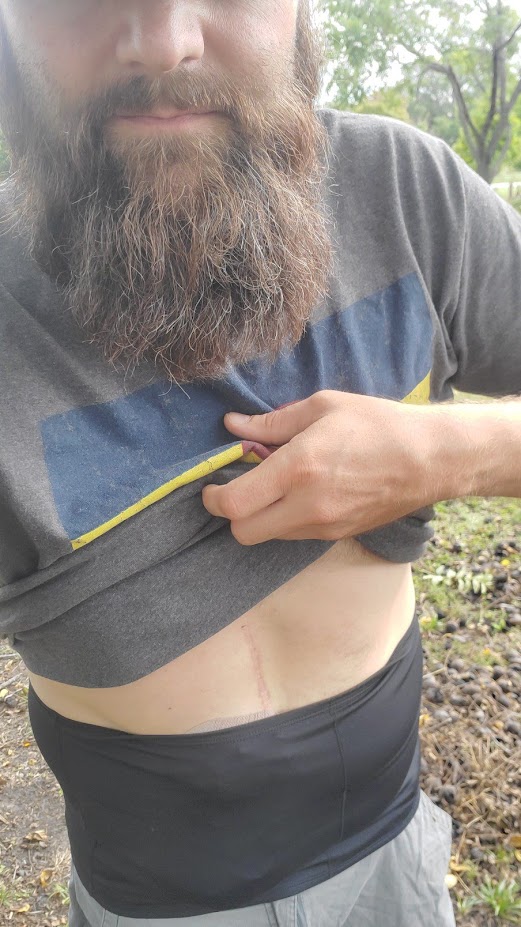
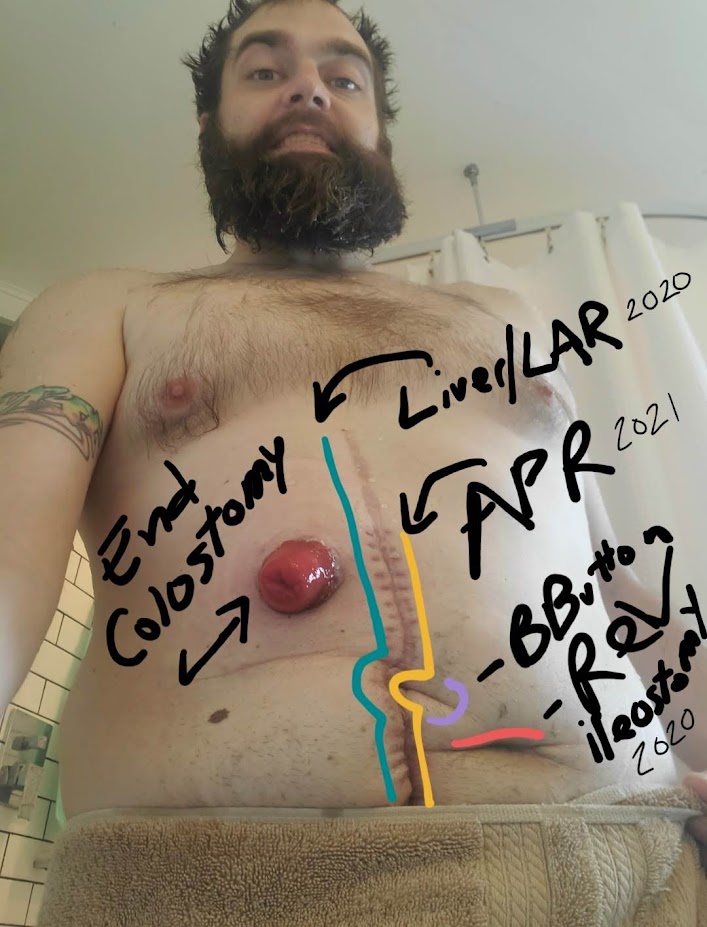
They removed my entire right side and a right hepatectomy and then a lower anterior resection (LAR). They removed 30 cm of colon and a quarter of my rectum with curative intent and also took my gallbladder. I had 5 ablations on my left side at the time. I had lost 110 pounds prior to that surgery.

What inspired you to get a second opinion?
COLONTOWN is a support network for colon cancer patients

It was the support group COLONTOWN. People kept mentioning it. I was holding out on hope at my current NCI center. I still actually see them to this day, but I was hoping that with that next set of scans, they’d say, we’re going to try. They never did. 

Ultimately it was my wife who said, “You need to go do this. Let’s go out to California. What is the worst they’re going to say? No, and you’re still the same?” I said okay, let’s rule it out. If one of the top people in the world says no, then it’s my fate. Thankfully it wasn’t.

Cancer recurrence and COVID caused changes to treatment
Cancer reoccurrence and COVID caused changes to treatment

That’s not where the treatments ended. I stopped chemo after that because I had 30 cycles and 2 liver embolizations and they said my body needed a break. About 6 months later it returned, but not in my liver or colon. It returned in my tailbone in October 2020. 

I started back on the FOLFIRI with the Vectibix for 4 more cycles. On my very last cycle, my 34th chemo, 2 days later I tested positive for COVID. That was a crazy week. COVID delayed my radiation treatment. 

In February and March of 2021, I had 28 full pelvic radiation sessions to the entire pelvic region, which destroyed my rectum. For 3 months, it was pretty rough. I was sitting on the toilet for 3-plus hours a day, not really living life, just stuck. 

Finding hope after his son’s birth

Throughout January and February 2019, I was on a lot of treatments. My son was still in my wife’s belly at the time. I caught him about 2 hours after my eighth round of heavy chemo. That gave me a lot of motivation, wanting to see my kids grow older. 

It’s a very powerful moment in my life. Seeing my son born and being able to catch him. Both my sons were born at this house. My wife did a home birth, bless her soul. I didn’t think it would work out, but it did and it really changed me. It gave me a little bit more hope in October 2018 when that happened. 

Jason's son being born gave him new hope

Then it got dark again. I had surgery in January 2019 because the chemo destroyed my anus and caused a fistula to bore through. It caused a lot of pain. 

»MORE: Parents share how they talked to their kids about cancer

Integrative medicine in cancer care

In early February, I found an integrative medicine doctor through my dentist of all people. I went to see him and he joined my team. That was one of the biggest moments of my stage 4 colorectal cancer experience. Not just diet and exercise, which are important, but he also helped mitigate the side effects, which helped get through it and process it.

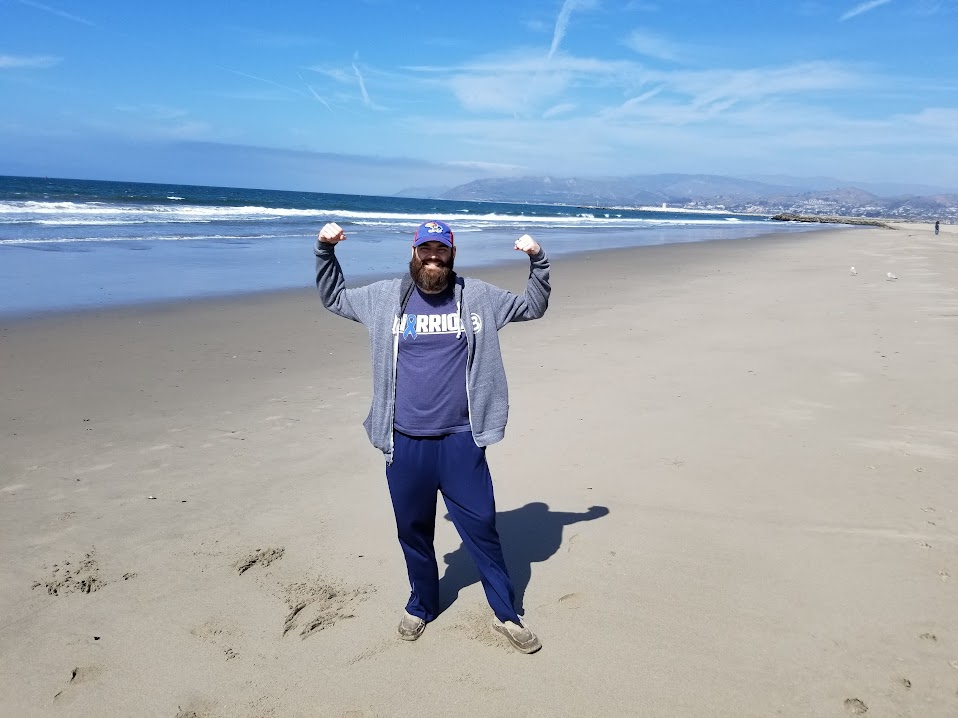
Jason stayed hopeful

I had hope, even though the hope was taken out from underneath me when they said you’re going to be on chemo for life.

One of the biggest things [he taught me] was the mind-body connection and meditation called Psychosomatic Wellness, which has a lot of science behind it. I wasn’t big into that kind of stuff. I thought, “This is heebie jeebie. This isn’t going to work.” 

About a month into it, I connected to it. I went somewhere. I still don’t know what to call it. Some people may call it universal energy, God, chi, soul. Whatever you want to call it, I went somewhere and connected with something. It really helped me process things. 

I was able to accept life, death, purpose, and what all this means. I was grateful for whatever was to come. I carried that into this second opinion. I had hope, even though the hope was taken out from underneath me when they said you’re going to be on chemo for life. What do I have to lose? I went out to California and sure enough, it happened and here I am still.

Jason remained hopeful despite being told he would be on chemo for life

Getting an Ostomy

Describe getting an ostomy bag

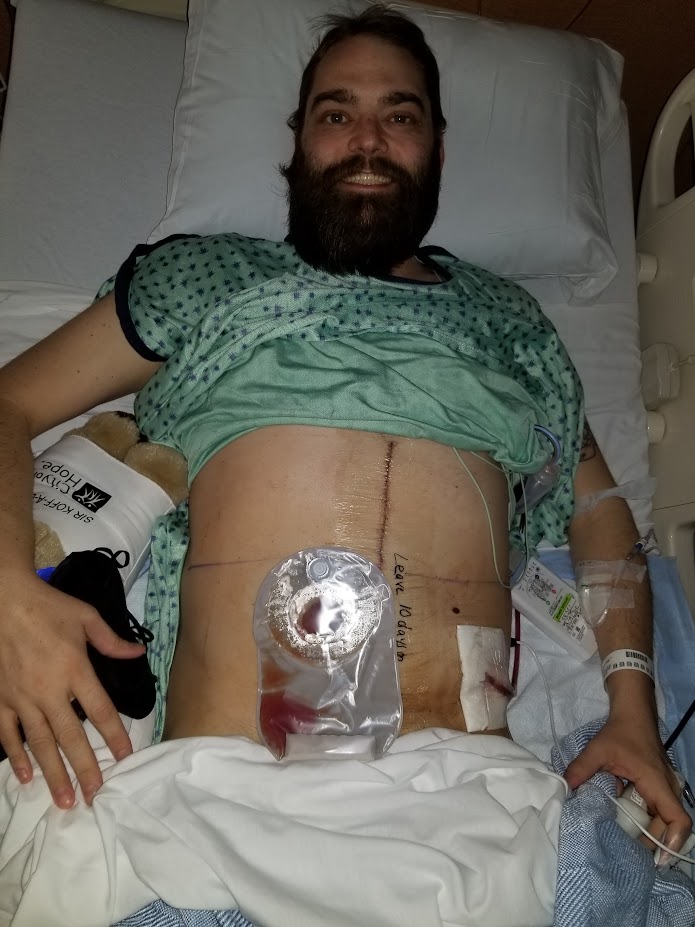
Back during the big February 2020 surgery, I had a temporary ileostomy placed which is where the small bowel dumps into a bag with a stoma. That was reversed in May 2020. 

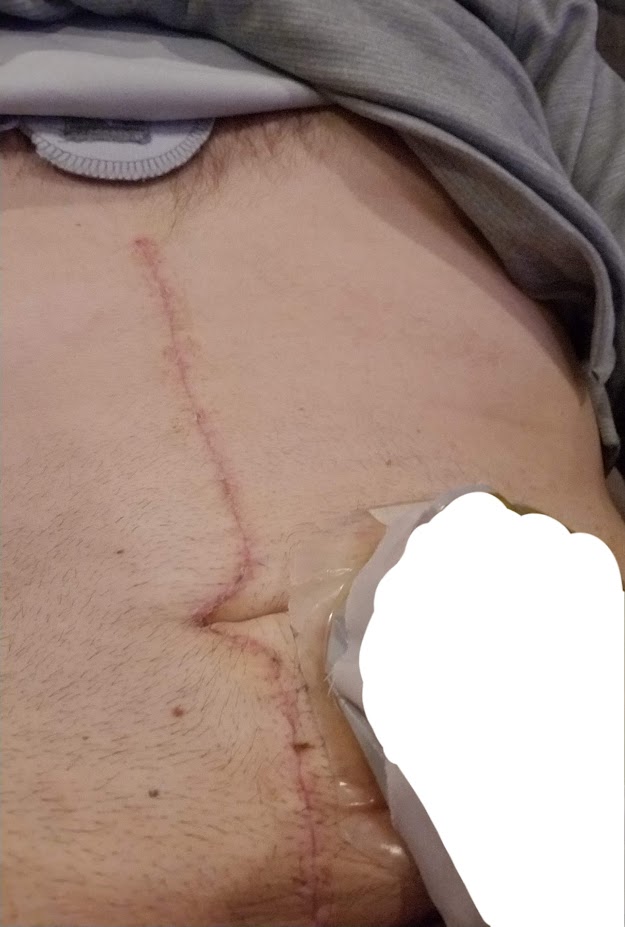
Fast forward to the radiation. In June 2021, I had an abdominal perineal resection (APR). It’s a surgery that’s known as Ken or Barbie butt. Imagine a Ken doll or a Barbie doll. They just have a straight stitch on the backside. They took my anus, my rectum, and in my case, my tailbone and part of my sacrum to get clear margins. It was successful, and it left me with a permanent colostomy bag but it’s been a blessing in disguise. 

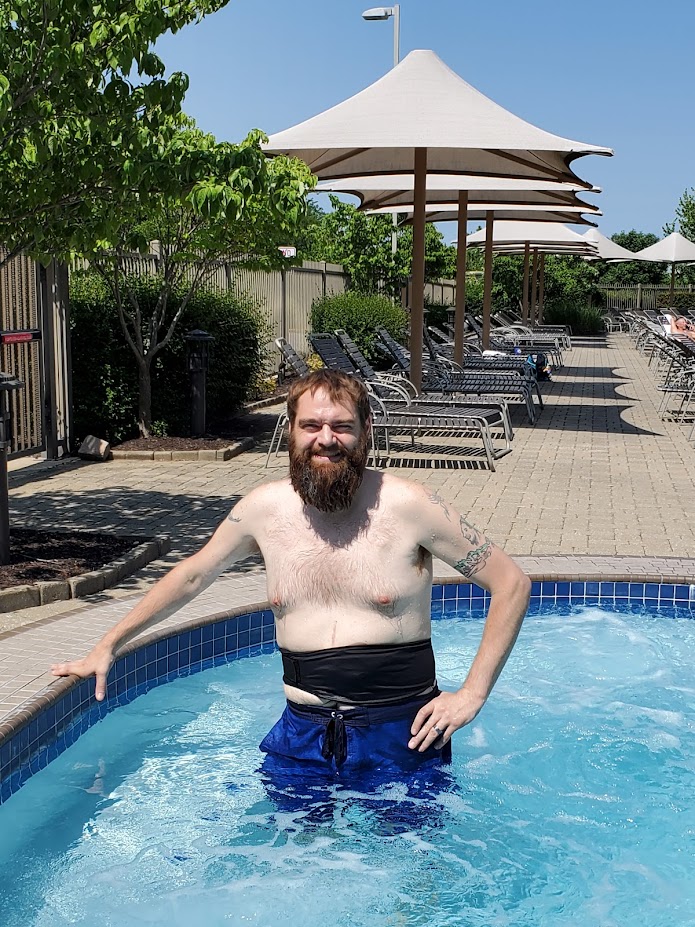
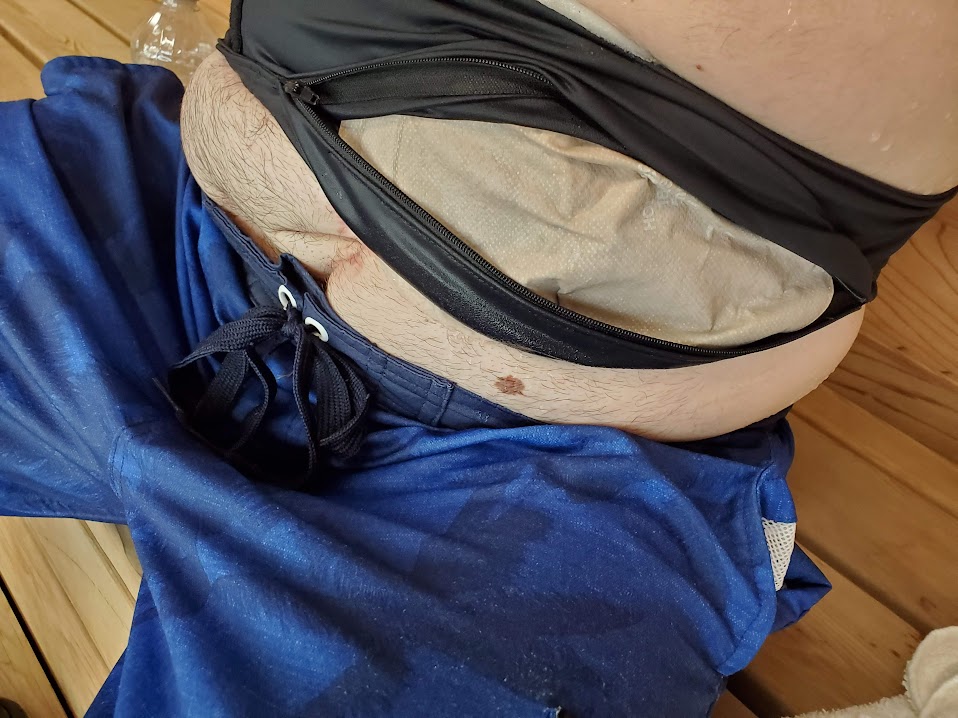
Having it removed has been great for me. I don’t sit on the toilet for 3 hours a day. I spend 60-90 seconds messing with bowel function now. I still swim 3 to 4 times a day. I get to play with my kids. I lost 110 pounds and I wasn’t sure if I’d ever gain it back, and now I’m on the other end of it. It’s been so good to me that now I need to lose a few pounds.

Jason swims 3-4 times a day with his colostomy bag
Jason is able to play with his kids with his colostomy bag
Jason lost 110 pounds during his cancer diagnosis, which he gained back in time
What types of ostomy bags are there and which do you use?

There are several types of ostomy:

  • The ostomy that comes off your small bowel and avoids your large intestine.
  • A colostomy, which can be placed along your transverse colon all the way down to your sigmoid. 
  • One-piece open bags which have a little cut-off valve that you can drain as needed.
  • Two-piece drainable bags. 
  • Two-piece closed systems in one-piece closed systems.
There are several types of ostomy bags to choose from
Jason's had success with both colostomy and ileostomy bags

I had a temporary ileostomy. At first, they tend to be more of a liquid output. They’re always on because the way the bowel works is your ileo dumps into your cecum and that’s when your stool starts to form. Before that, it’s all liquid as your small intestine absorbs nutrients. [Ileostomy is] common when people have a large surgery over a colostomy. 

If you’re removing the lower part, you tend to get a stoma. That’s the medical name for the exit point. The stools tend to be more formed, it’s more predictable. I find that [colostomy] systems are a lot easier to use than the ileostomy systems. 

Considerations when choosing an ostomy bag

Any closed system is not a good idea if you have an ileostomy, because you’d be changing it all day long. Whereas with a colostomy, it’s a little more predictable. It’s easier to manage. People tend to go with closed systems for convenience. 

I used to be a 2-piece ostomy person for both my ileostomy and my colostomy. I’ve had about 2 years of colostomy and 3 months of ileostomy. With the colostomy, I’ve gone down to a 1-piece system. 

There’s usually, a flange that adheres to your stomach. Once that gets on, a lot of people use either pastes, barriers, or protective rings to help hold that on to prevent leaking. 

Leaking is the #1 thing that gets people flustered. It’s like crapping your pants and no one wants to crap their pants. It’s one of the big anxiety drivers with an ostomy. Am I going to leak? How am I going to manage this? 

Also when you have a peristomal hernia. The creation of a stoma is a hernia in itself. That can cause more herniations so you want to be very careful with your abdominal wall and building your core back. When you get a herniation, you can feel it. It can lead to blockages. 

With an ileostomy, you have to watch your diet a lot more than with a colostomy. Things tend to get blocked more with the ileostomy. From my experience and hearing from others’ experiences with a colostomy, people can still get it.

Leaking is the #1 thing that gets people flustered…It’s one of the big anxiety drivers with an ostomy.

If you have an ostomy, make sure you have a good hernia belt. I’ve got several. I have several Stealth belts. I also have one called a Stomaplex, which is like a stoma guard for impact. You don’t want things to hit it because it can bleed. Some people also use a Nu-Hope binder. It’s like a taller binder that goes around with a hole in it to support that and push your abdominal wall together so that you don’t herniate as often.

Special belts are recommended to support and prevent hernias
Jason uses Stomaplex to guard his stoma against impact
Jason has several Stealth belts for hernias
Is colostomy irrigation an option for some?

You cannot do it with an ileostomy, but with a colostomy, not many people are aware you can do irrigation. Instead of having to worry about having a bag going throughout the day and finding a frequency, people that are more active tend to go the irrigation route. 

Imagine an enema but for your stoma. It goes all the way up your bowel track and basically gets behind the stool and you force water through it and then drain it over the next 30 minutes to an hour after that. When it drains, your bowel is empty and you can put a stoma cap on it. A lot of people are able to go hiking for 24 to 48 hours at a time [after irrigation].

Has your ostomy experience always been good?
Jason recommends trying different ostomy bags to find what works for you

Go out there and explore, call, get samples if you can, and find the system that works for you.

I’ve had a very good experience with my colostomy and my ileostomy. A lot of people do have struggles though, so if someone’s out there and they’re asking, “Why does this guy have such a good experience?” You’re not alone. 

I struggled the first couple of months with mine before I found a nice rhythm and system. Don’t be afraid to call the 3 big companies – Hollister, Convatec, and Coloplast – and request samples. It can be very good to talk to one of their reps to find out what system works for you.

Having an option between a flat bag and a convex bag can be a game changer. A lot of people get stuck and say, “This is what the hospital gave me. How do I deal with this?” Go out there and explore, call, get samples if you can, and find the system that works for you. Because what works well for me may not work well for you.

Post-Treatment Tests & Scans

A circulation tumor DNA (ctDNA) test helped catch cancer recurrence 

In June when I had the APR, I got the colostomy, and my Ken butt, I had about a year’s worth of no evidence of disease (NED). Then I had a recurrence in my lung. A spot that had been on CT scans since diagnosis, which they thought was scar tissue, initially never responded to any other thing. After all the chemo I went through, it decided to grow in May 2022. 

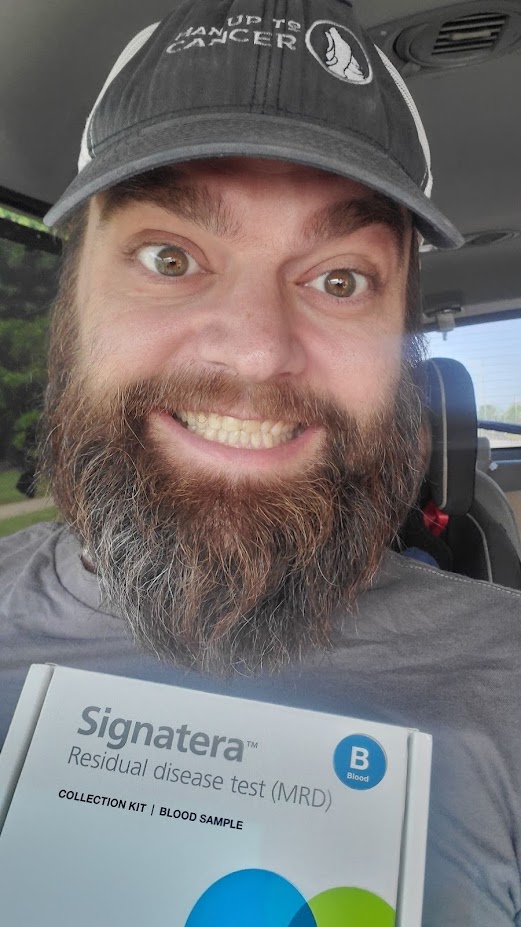
A Signatera ctDNA test detected cancer reoccurrence in Jason's tailbone

I didn’t go on treatment because we caught it very early. I’m on a circulating tumor DNA test (ctDNA) called Signatera. Another company, Guardant, has one called the Reveal. It’s the same test, different companies. They sequence the biology of your tumor, specific to the person and no one else. The signature will never pop up in anyone else. 

It can detect circulating tumor DNA in your body. It’s not cancer itself, it’s just junk DNA our body puts off, but it has that signature of your disease and they can detect if you have a recurrence. My tailbone recurrence was caught by September or October 2020. 

After I went through the radiation, the chemo and more radiation, and the second major surgery, I was about a year clear. Then I had that Signatera test which detected an extremely low amount. 

Is a ctDNA test for everybody? 

It’s still in the testing phase. Not everyone responds the same. Their bodies aren’t as sensitive to the test.

There are also different areas of the body that put off more ctDNA like the liver, whereas the perineal may not. It’s still in flux, but it can be another tool because the normal marker for me was never above. It was always within range and it still is. It’s never varied more than a point, so it was never really a good indicator. The Signatera test has been really important for that. 

COVID delayed a necessary treatment

In May 2022 when I had a spot come back in my lung that grew, COVID struck again. When I went in to get it ablated, I’d had COVID 3 weeks prior. Even though I felt better, my lungs still had some junk in them covering up the spot and they can’t ablate what they can’t see. 

Then in August 2022, I had a biopsy that confirmed it was colorectal cancer in my lung and I had an ablation the same day. I was in at 6 a.m. and I was out by noon, working at 12:30. It was the least invasive. It allowed me to skip treatments by detecting them so early. 

As of Monday, I had a negative Signatera test come back and I had my CT scans showing that I’m 9 months no evidence of disease and I’ve been off chemo for 2.5 years.

COVID delayed Jason's lung ablation
How does it feel to be done with chemo?

Surreal. They told me I’d never get off of it, and here I am. 2.5 years off of chemo.

How often do you have scans?

Right now it’s every 3 months until I hit 2 years. Then it should jump up to every 6 months. In 3 to 5 years, they’ll jump it up to either none at all or every year. 

I plan on setting records. I’m going to be the longest person NED ever. At least that’s the way I’m setting my mind up for it. 

Reflections

Describe the work you’ve done since being diagnosed
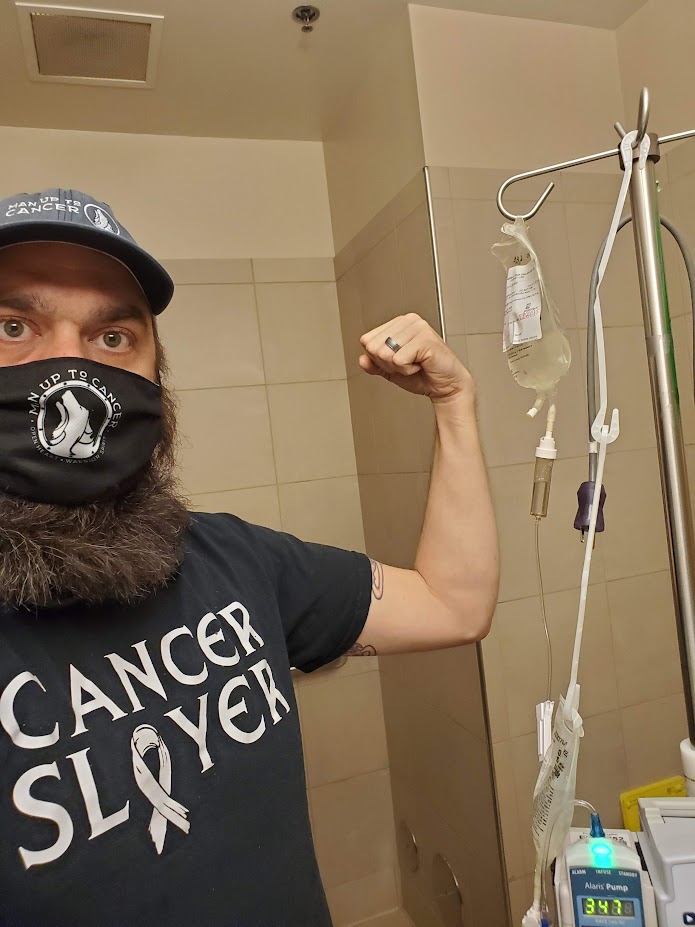
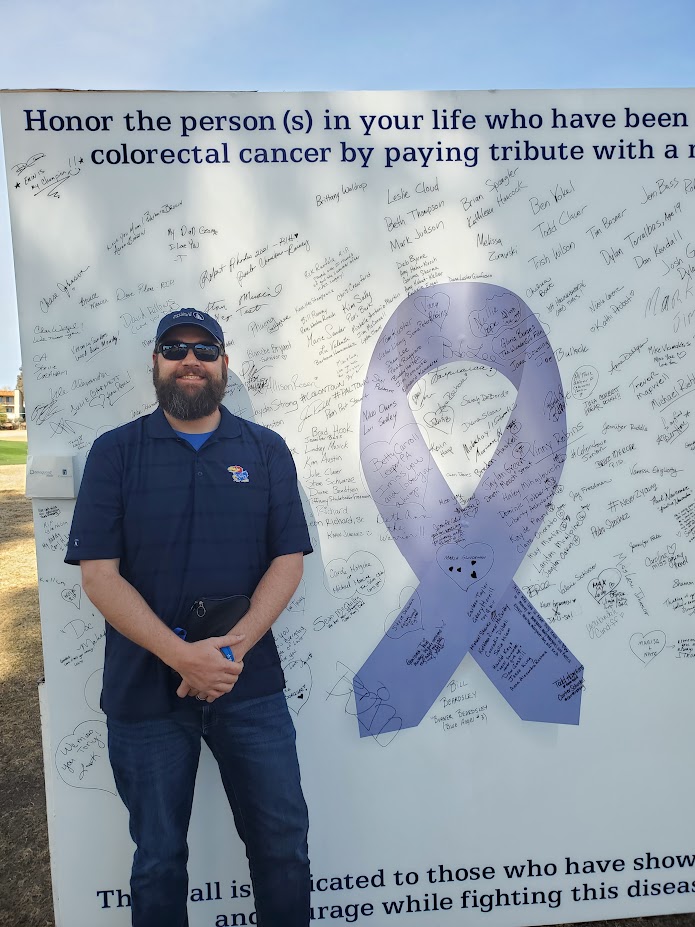
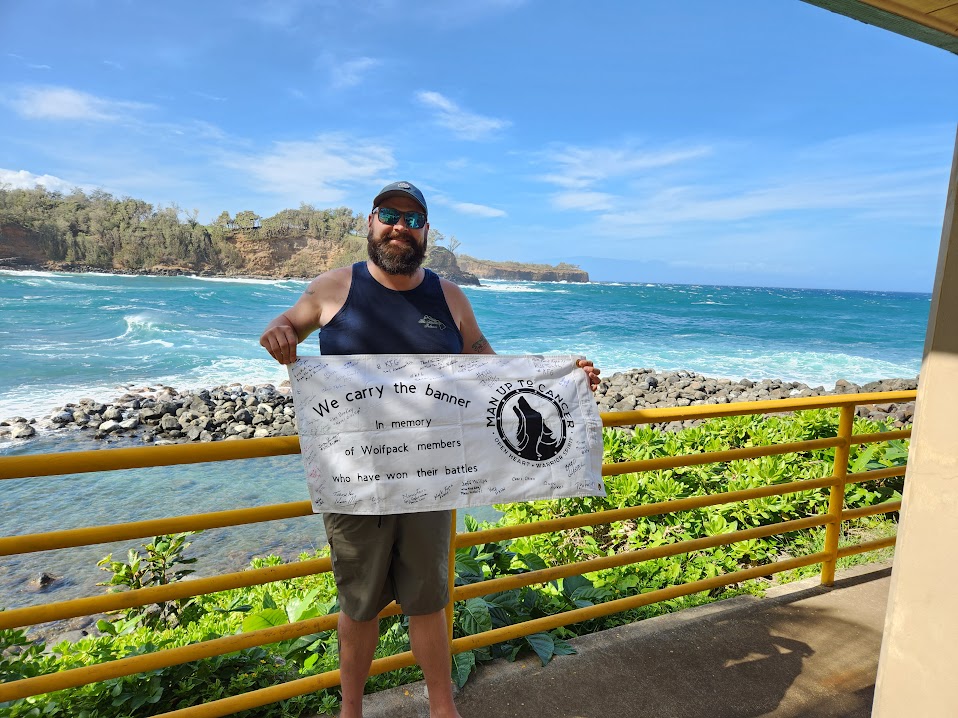
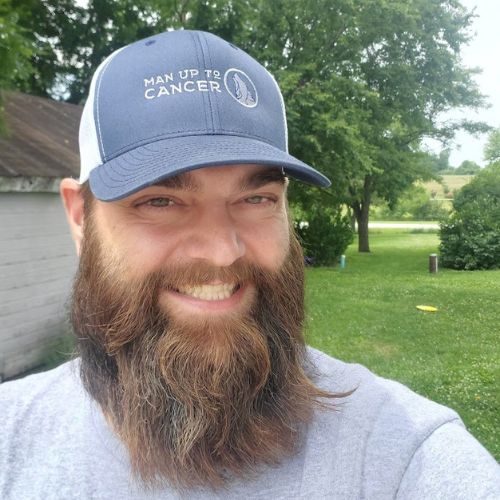
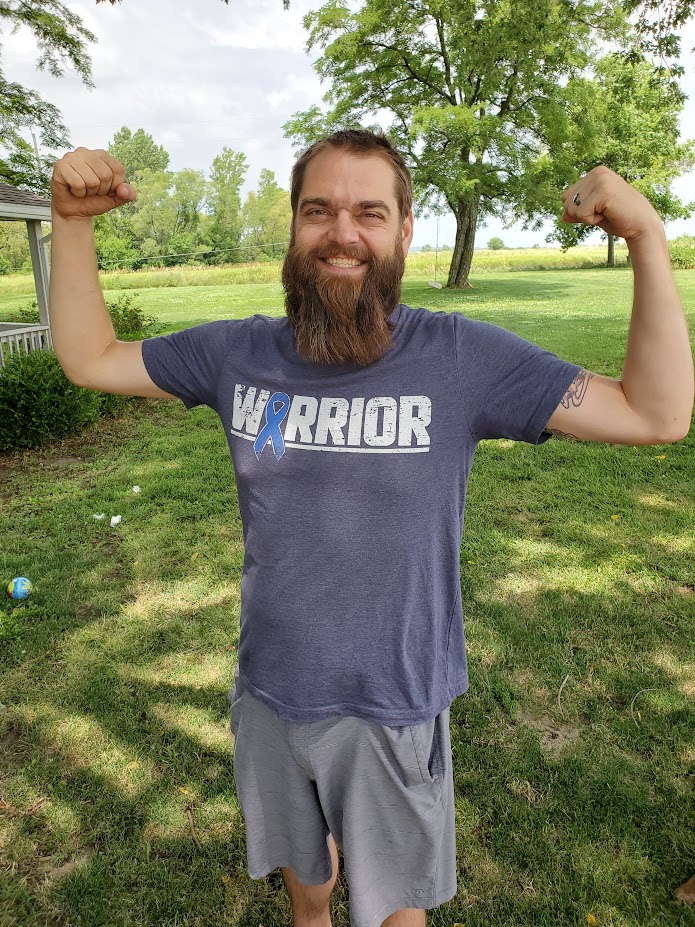
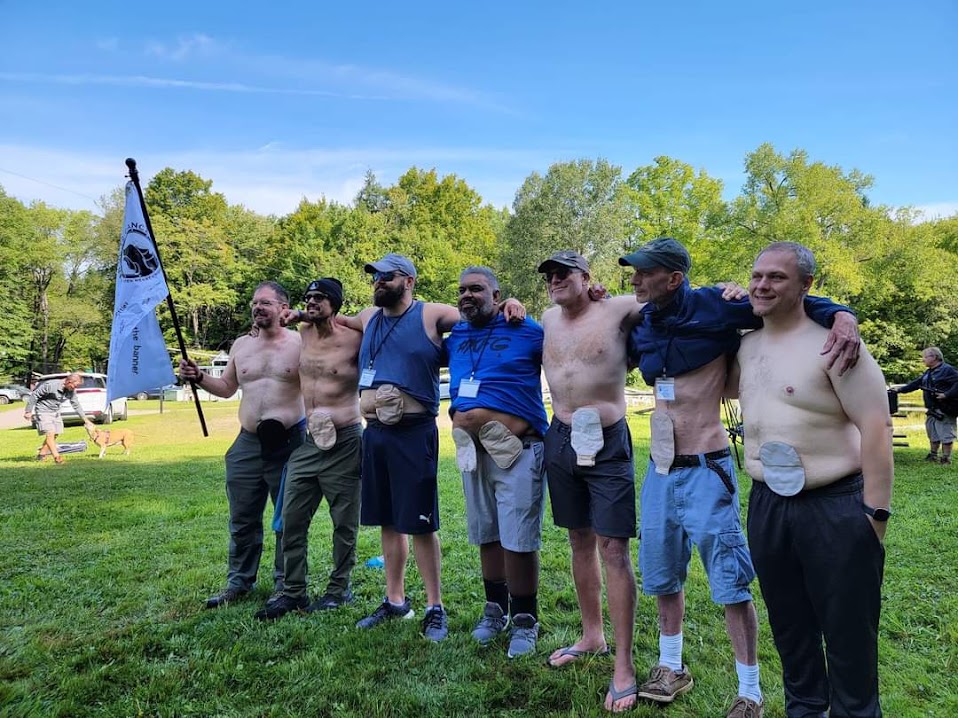
Jason and friends standing in support of Man Up To Cancer
Man Up To Cancer encourages men to not isolate after a cancer diagnosis
Jason carries the banner for Man Up To Cancer

I’m blessed to be where I am, and if I can help alleviate someone’s symptoms, give them peace of mind, or just provide some hope, I won’t be quiet.

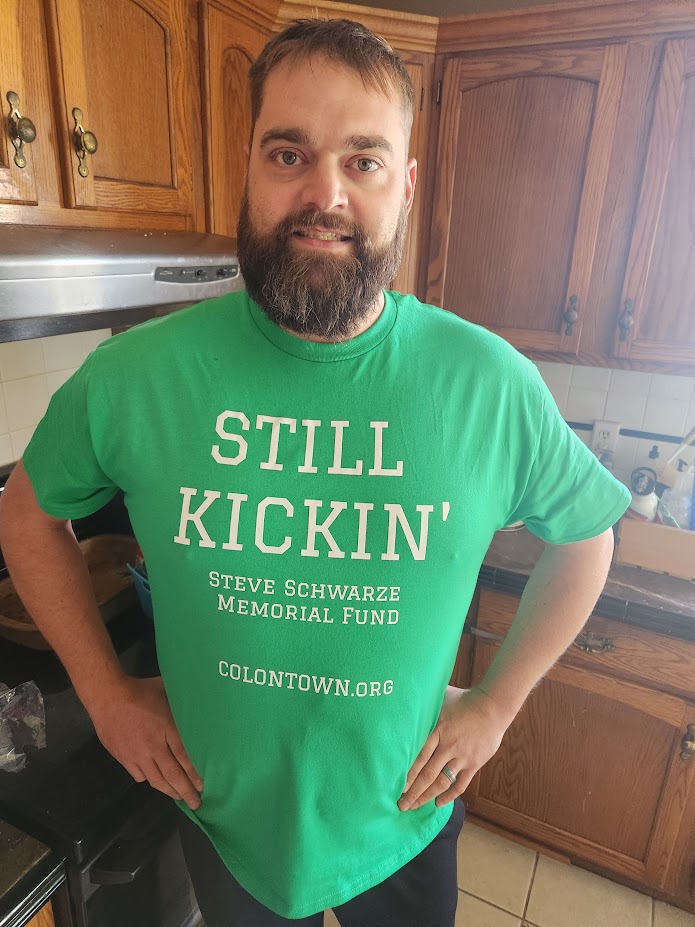
I do a lot of work within the colorectal cancer support space. I’ve worked for COLONTOWN since July 2020, after I had my Dr. Fong surgery. Dr. Kaiser was my colorectal surgeon. 

PALTOWN, which is the nonprofit for COLONTOWN, asked me to be on their leadership cabinet. They were forming a new leadership cabinet, a new model. There are 7 of us. I’ve been there ever since. 

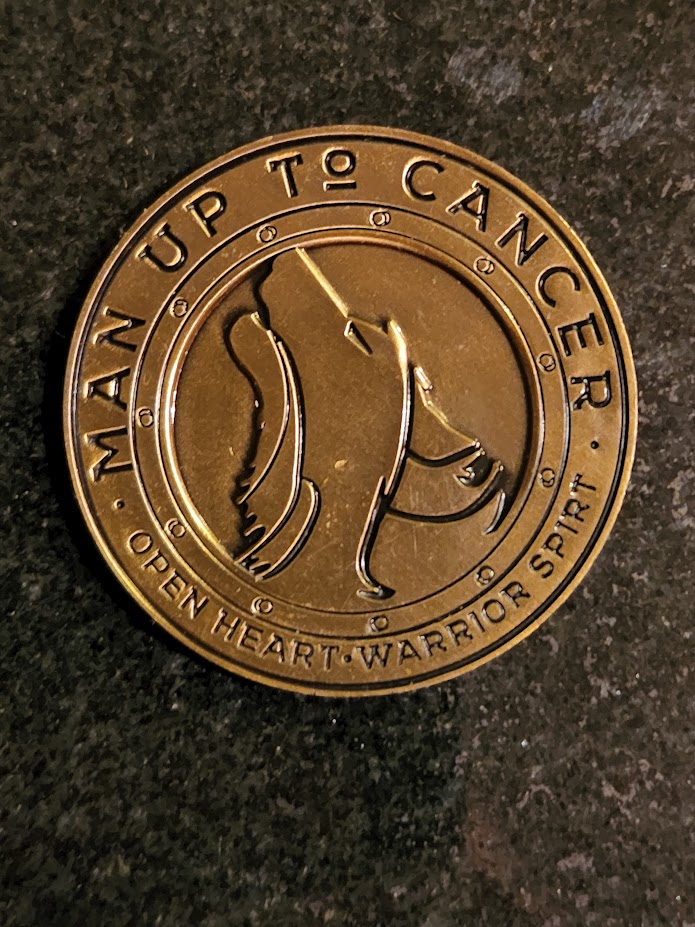
I do a lot of support work. I reach out to a lot of people. I do work for Man Up to Cancer. A primary goal is keeping men from isolating during a diagnosis. 

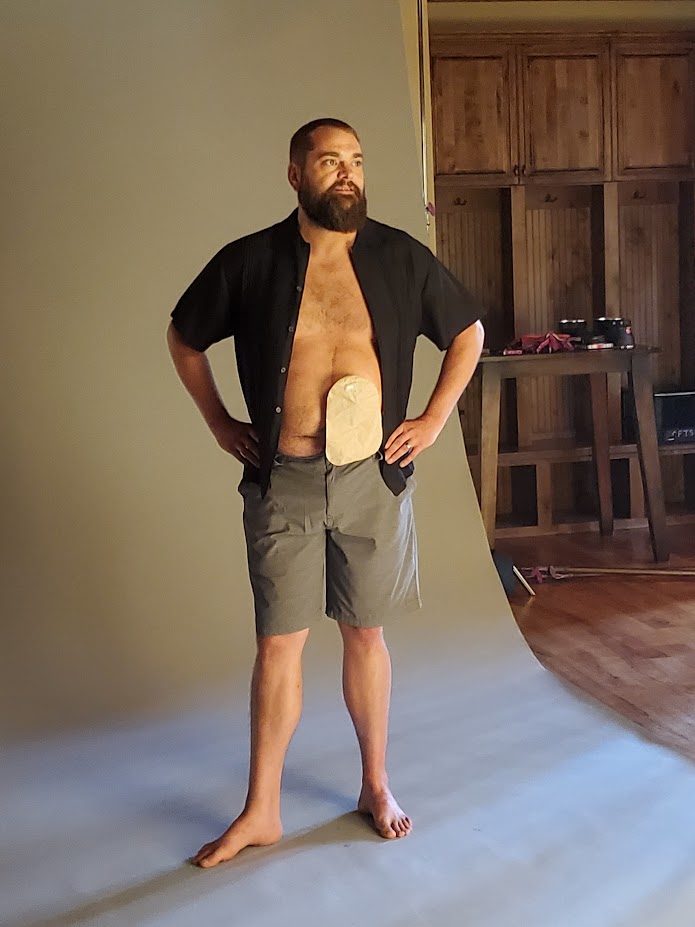
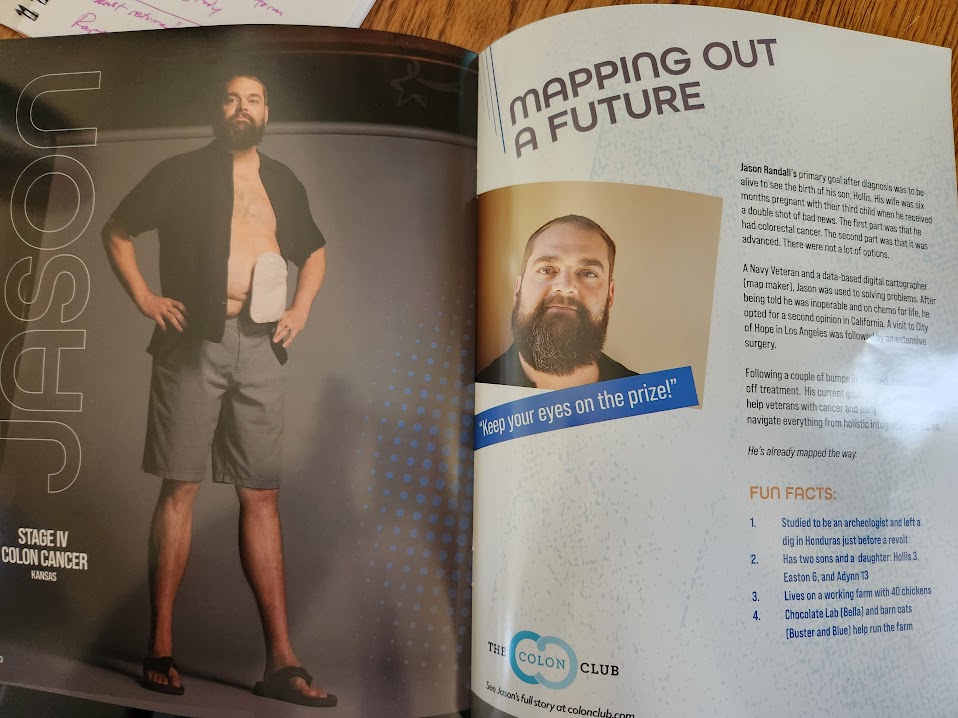
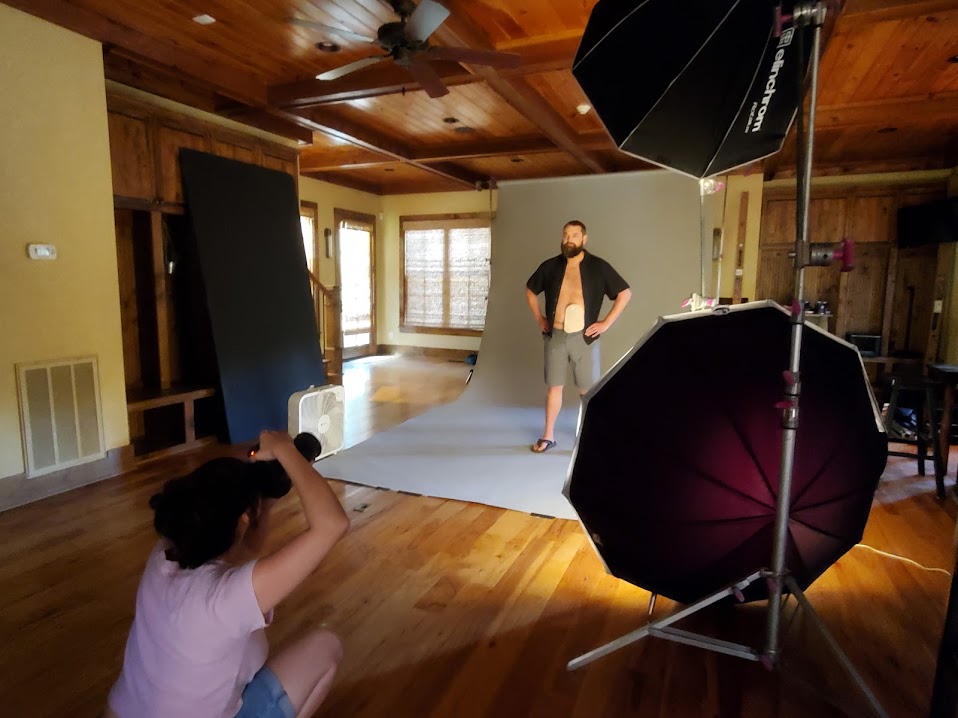
I also do early-onset colorectal cancer awareness through the Colon Club. Through that group, I was in their 2023 On the Rise magazine. It lays out where we’re at and our story to raise early-onset awareness. It came with a photo shoot. I never thought I’d become a model but here I am.

Jason modeling for On The Rise, a Colon Club magazine
Jason shares his story in On The Rise magazine
Jason poses with his ostomy bag for On The Rise magazine

I’m blessed to be where I am, and if I can help alleviate someone’s symptoms, give them peace of mind, or just provide some hope, I won’t be quiet.

The importance of expressing your emotions

Meditation, I went somewhere with it and that was my first foray into the emotional side of [my diagnosis]. I learned to accept that it’s okay to be emotional. And we should be emotional because if you push it down, it does nothing but hurt your mental health. Other people are going through this, and at this point in the game, if you have cancer, who cares? 

Jason encourages cancer patients to express themselves

It’s so much easier said than done, but you need to talk. Tell everyone how you feel. Some people are quieter than others. If you need to join a group and listen to other people do it, you don’t have to be active in those communities. Seeing what other people are going through can help your mental and emotional health more than anything. Some of us happen to be a little more vocal about it, but it helps to get people out of that bubble, that survival mode that we get stuck in. 

A trip to Hawaii led to new revelations 

In 2021, my family was gifted a vacation. During this trip, we realized that we weren’t living. We were stuck in this deep survival mode, which is mental and emotional depression. You’re living between scans. You’re stuck in survival. 

A family trip to Hawaii changed Jason's projectory
Jason was inspired to create a cancer retreat center
Jason and his wife began planning to start a cancer retreat center

It woke something up in us. We asked, what have we been doing? I’m doing all this support work, but we’re just going through the motions. We’re not really living our own lives. 

We came up with the idea of going back to the Big Island of Hawaii. Then we said, we should move back there. 

We came back [home], I looked at my wife and said, “I have this crazy idea. Would you ever move back, get a secondary house and host people to experience what we did?” I was thinking she was going to say, “You’re nuts, Jason. No.” And she said, “Yeah. I think that would be great.” So we started developing this plan. 

I went to school for a semester on Oahu at the University of Hawaii Manoa studying anthropology and geography. It’s a beautiful place. If you’ve never been, I highly suggest going. 

Jason's family realized on a trip to Hawaii that they were in survival mode rather than living to the fullest

We were stuck in this deep survival mode, which is mental and emotional depression. You’re living between scans. You’re stuck in survival.

Connecting with a cancer retreat center

About 6 months into [developing this plan], I was looking for health care on the Big Island or through the VA because I’ll always need to go see doctors. I found this cancer retreat on the north side of Hawaii on the Kohala Crater. We said, “Holy crap. These people are doing what we thought of, except it’s a whole retreat center.” We reached out to them and they agreed to become our mentors. 

Life gets busy with 3 kids and I was still worrying about that lung recurrence. Two days before or after my lung ablation, I finally had my VA claim accepted which lifted a huge medical burden off of my back because they’ll cover all my medical expenses. That freed up some resources. 

My wife and I flew out in December to visit them as a patient and a caregiver to see what they had to offer. We really bonded with the couple. We shared our story with them. She was a cancer survivor. Her husband was on chemo for 12 years before she got with her current husband. He was a disabled veteran as well, and we really bonded. 

Jason connected with a cancer retreat center in Hawaii
Jason and his wife are close to accomplishing their dream of owning the cancer retreat center they visited in Hawaii
Jason and his wife have plans of living on-site in Hawaii

We told them our dream and they offered to sell us the place. I went back for 5 weeks in April and March of this year to see what they meant by that, get more details, figure it out, and work on the farm. It’s also a sustainable farm that teaches food as medicine, and it has a temple that aligns with the integrative practices that I was doing, which was so beneficial to me.

After that trip ended, we came back and we now have a purchase agreement with a timeline to make that happen. We’ve got a little more money to raise and we have a timeline to do that. 

My wife and I want to move our family out there, live on-site, and host cancer patients. Ultimately, it would be if we can find enough funding where it’s no cost to other people, but we’ll see how it goes once we get the next steps in place. That’s pretty active right now. We’ve formed an LLC and our nonprofit to make that happen. 

>>>See Kohola House of Healing

What’s helped you stay hopeful throughout your cancer journey? 

It’s hard to think in terms of hope when you are told you have stage 4 colorectal cancer, you’re not going to have any other options or it’s a grave diagnosis. Sometimes it’s hard to remove yourself from thinking way into the future. You have to just take it day by day. Take every day, even if it’s minute by minute, hour by hour. Do what you can to help yourself get through the day. Join support groups. That’s been such a big, thing. 

The first thing you need to do is never look at Dr. Google. It’ll send you down a rabbit hole of despair. I had my first mental breakdown ever because I was looking at Google and looking at different statistics, then I started thinking about my kids. Avoid that. 

Jason encourages cancer patients to take it day by day

Find your people. Find people that will lift you up and support you. A lot of people lose their support networks, especially once they’re out of treatment. Everyone thinks, I’m cured or thinks, you’re done. You’re never really done. Whether the physical stuff is over and the treatments are over, there’s going to be mental and emotional damage. Don’t dwell on that. Everyone goes through this with a cancer diagnosis. It’s okay to not be okay.

What advice do you have for someone recently diagnosed with cancer?
Jason recommends setting future goals

If I have any advice for anyone starting a diagnosis is, once you get diagnosed, it’s going to be rough at first. But once you get through that initial despair and anxiety, start setting goals. Future goals.

Something my integrative medicine doctor told me and it’s been my mantra ever since, he said, “Jason, set a goal and reach it. And once you reach that goal, set another one. Always keep your eye on the prize.”

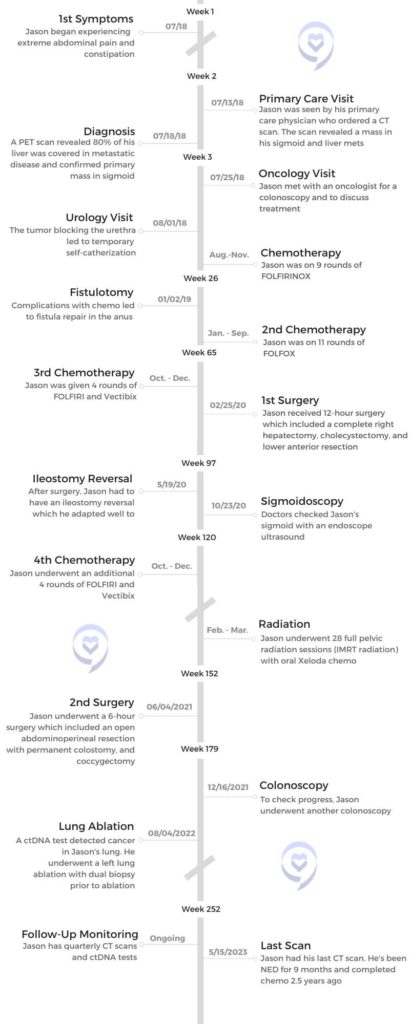
Jason's colorectal cancer timeline

More Colorectal Cancer Stories

 
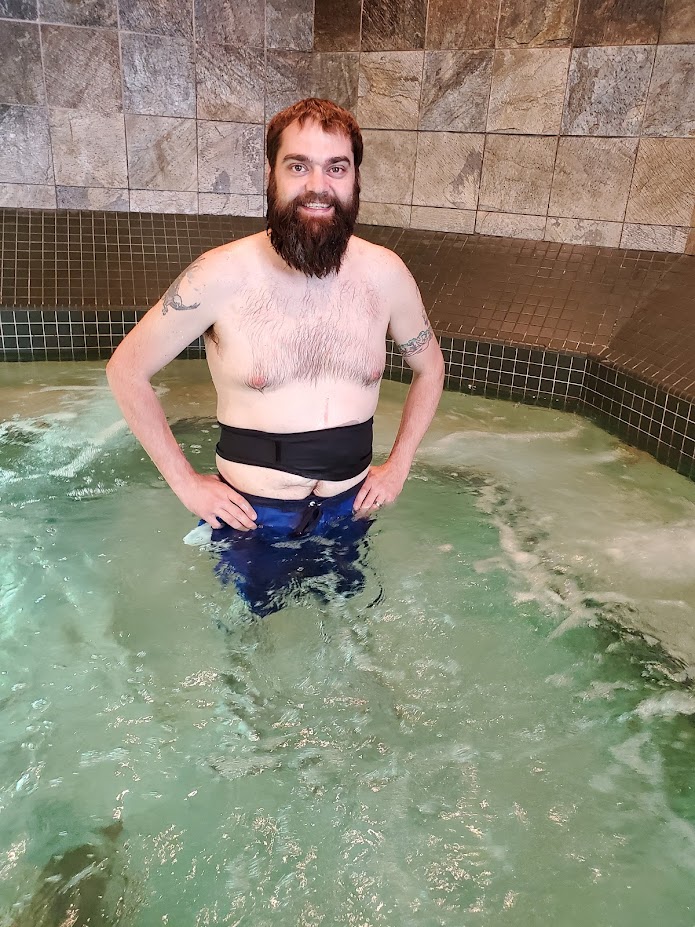
Joe C. colon cancer

Joe C., Colon Cancer, Stage 4 (Metastatic)


Symptoms: Loss of appetite, fatigue, malaise, severe pain in the abdominal/liver area, back and shoulder pain, lightheadedness

Treatments: Surgery (colon resection), chemotherapy (FOLFOX, capecitabine, FOLFIRI), targeted therapy (panitumumab, a monoclonal antibody), radiation therapy, immunotherapy through a clinical trial
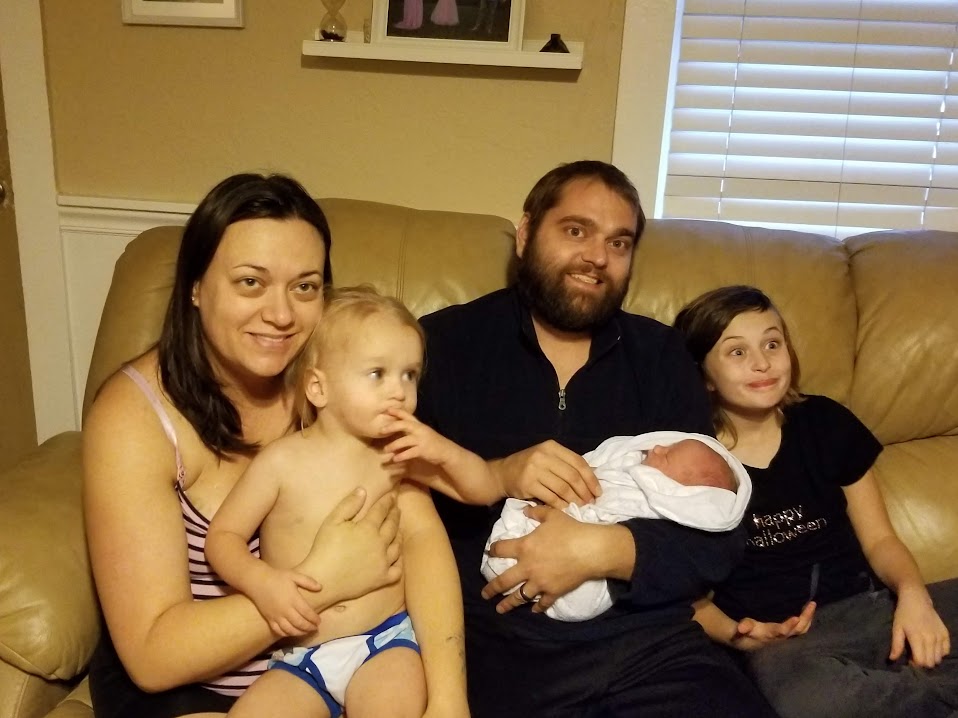
Sydney S. colon cancer

Sydney S., Colon Cancer, Stage 4 (Metastatic)


Symptoms: Constant stomachaches that only went away after bowel movements, pain after eating, changes in bowel size and shape

Treatments: Surgeries (colectomy, temporary ileostomy, ileostomy reversal), chemotherapy (FOLFOX, FOLFIRI, trifluridine and tipiracil), monoclonal antibody (bevacizumab), radiation therapy, hormone therapy
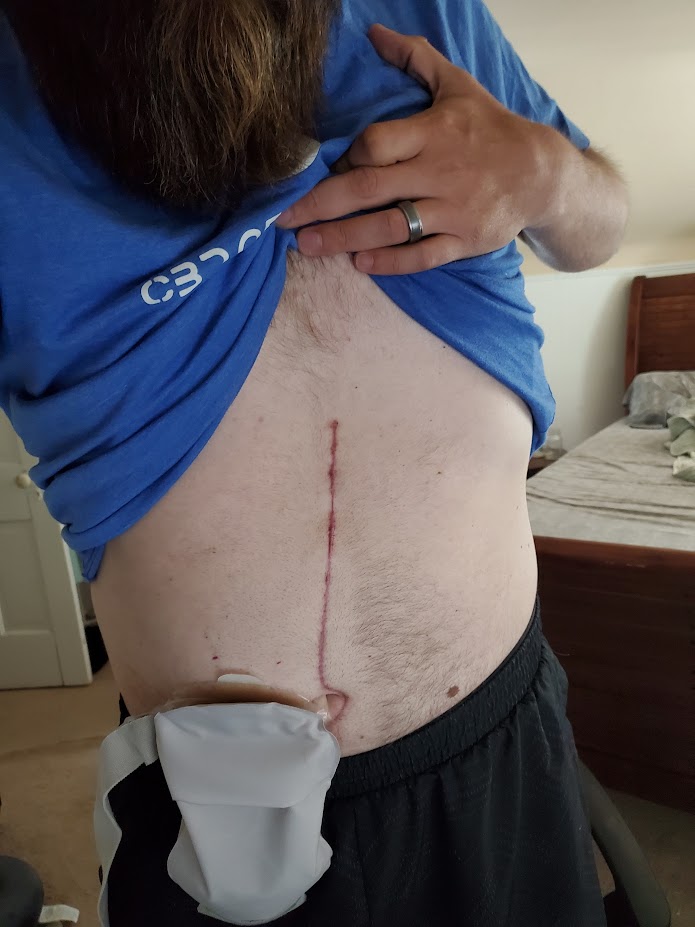
Kristie C. colon cancer

Kristie C., Colon Cancer, Stage 4 (Metastatic)


Symptoms: None per se that she noticed; she experienced constipation and passed narrow stool, but had been experiencing constipation most of her life, and thought that these digestive issues could also have resulted from perimenopause

Treatments: Chemotherapy (including adjuvant chemotherapy), radiation therapy, ablation therapy (liver ablation), surgeries (colectomy, temporary ileostomy, ileostomy reversal, scheduled liver resection)
Briana H. stage 3 colorectal cancer

Briana H., Colorectal Cancer, Stage 3


Symptoms: Periods of constipation initially lasting one week and then extending to two weeks, nausea, pain in lower left abdomen, lack of appetite, vomiting and inability to keep fluids down

Treatments: Surgeries (colon resection, tumor removal, colostomy placement, colostomy reversal), chemotherapy
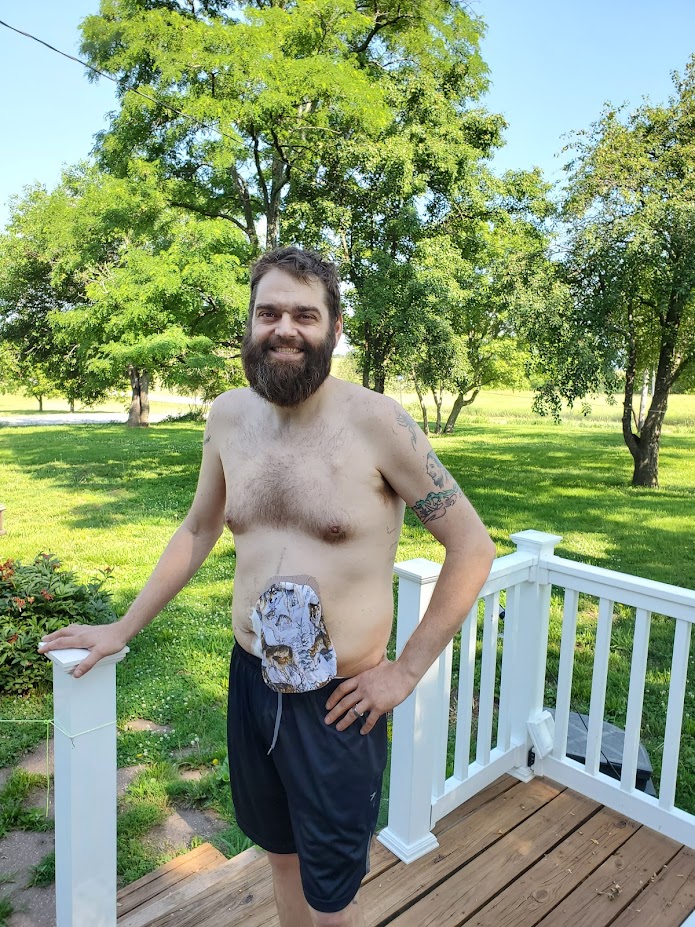
Kailee O. stage 4 colorectal cancer

Kailee O., Colorectal Cancer, Stage 4 (Metastatic)


Symptoms: Sensitive stomach sometimes leading to vomiting after eating, bleeding during bowel movements, persistent fatigue, back pain, abdominal pain, anemia, significant symptom flare-up during second pregnancy

Treatments: Surgery (colectomy), chemotherapy, targeted therapy
Starr S. colon cancer

Starr S., Colon Cancer, Stage 4 (Metastatic)


Symptom: Abdominal pain

Treatments: Chemotherapy, surgeries (colectomy, hepatectomy, lymphadenectomy), targeted therapy