Categories
Lung Cancer Lung Cancer Medical Experts Oncologist Patient Events

ALK Lung Cancer Treatments and Side Effects with Dr. Ross Camidge

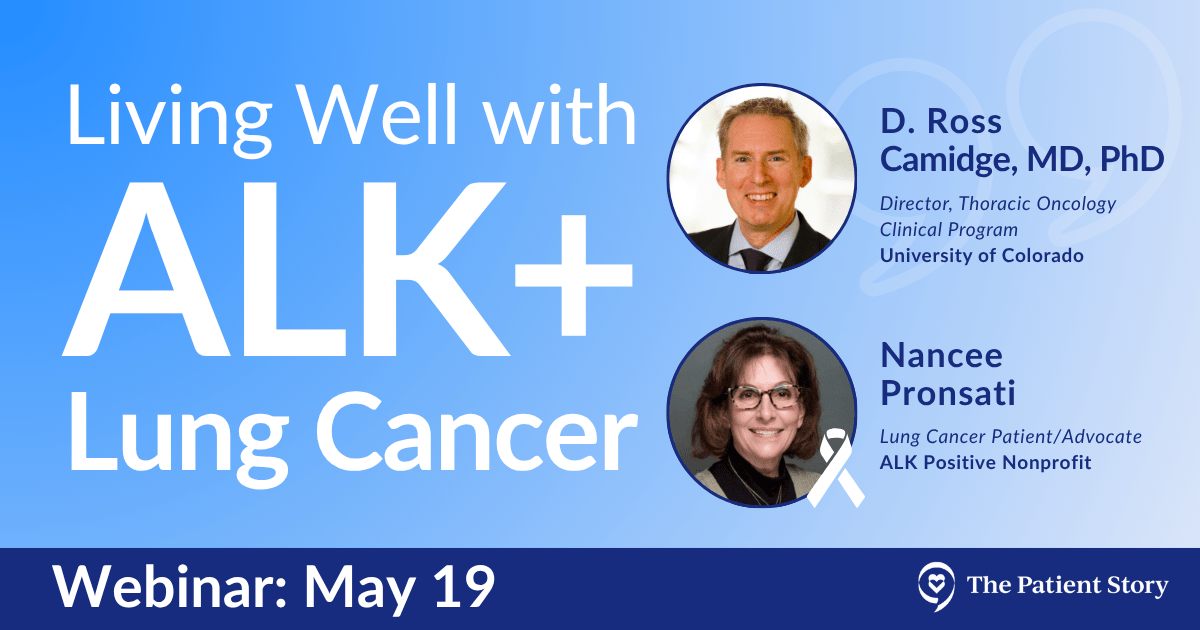
Living Well with ALK+ Lung Cancer

Finding the Balance with Treatment & Side Effects

May 19 at
4:00 PM PT / 7:00 PM ET 7:00 PM PT / 10:00 PM ET

Living with ALK+ lung cancer means constantly weighing what your treatment can do against what it does to your body. Side effects are real, dose adjustments feel scary, and it’s hard to know when to speak up. 

We meet with a leading oncologist on ALK lung cancer, D. Ross Camidge, MD, PhD from Univ. of Colorado, who’s also a Stage 4 lung cancer patient himself. Along with Dr. Camidge, we are joined by Nancee Pronsati, a stage 4 ALK+ NSCLC patient advocate with ALKPositive diagnosed in 2016 who’s helped author a research paper on this exact topic. Between them, you get the clinical expertise and the lived reality in one conversation.

You will learn:

  • Why ALK+ cancer spreads to the brain and which treatments are designed to stop it
  • How oncologists choose between today’s first-line options and what to do when one stops working
  • Which side effects to watch for on each TKI and when to call your care team
  • Why a dose reduction is a strategy, not a treatment failure
  • What questions to ask your oncologist about brain protection and clinical trials
  • How care partners can help catch early warning signs
Dr. Ross Camidge and Nancee Pronsati from ALKPOsitive

Program Sponsor

Thank you to our sponsor for their support of our independent patient education program. The Patient Story retains full editorial control over all content.

Pfizer

Can’t make it live? We’ll send you the replay link after the program airs.

Categories
Lung Cancer Lung Cancer Medical Experts Oncologist Patient Events

Lung Cancer Comprehensive Biomarker Testing

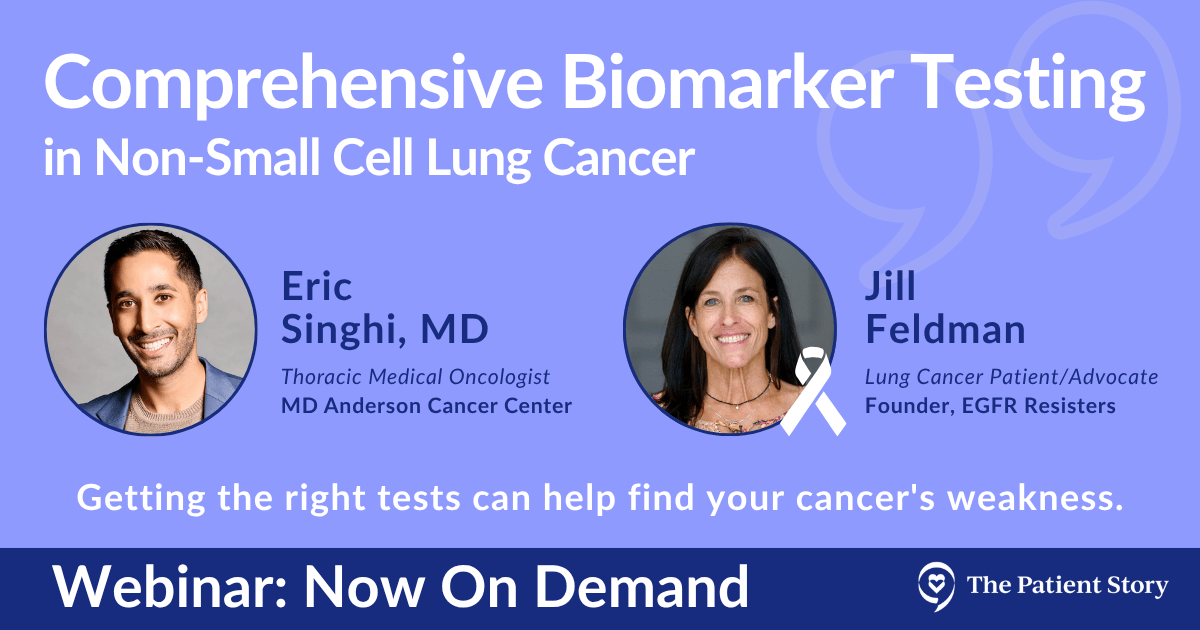
Comprehensive  Biomarker Testing

in Non-Small Cell Lung Cancer

Getting the right tests can help find your cancer's weakness.

April 21 at
4:00 PM PT / 7:00 PM ET 7:00 PM PT / 10:00 PM ET

If you or someone you love has been diagnosed with non-small cell lung cancer (NSCLC), you’ve likely heard the phrase ‘biomarker testing’ and the need to wait for resultsThis wait can feel unbearable, but the science is clear: knowing what is driving your specific cancer before you start treatment can change everything about the care you receive.

This program will explain why comprehensive biomarker testing is the foundation of the right treatment plan

You will learn:

  • What biomarker testing is and why it’s not inherited genetic testing.
  • Why waiting for test results leads to better outcomes.
  • Tissue vs. liquid biopsy: when and why both are needed.
  • Common NSCLC biomarkers (EGFR, ALK, KRAS, ROS1, MET, PD-L1) and their treatment meaning.
  • How targeted therapy, immunotherapy, and chemotherapy differ, and when to use each.
  • What cancer progression means and why retesting is essential.
  • How to advocate for yourself and be an active partner in your care.
Jill Feldman interviews Dr. Eric Singhi about Lung Cancer Comprehensive biomarker testing to guide lung cancer treatment

Visit Our Partners

EGFR Resisters is a grassroots patient-driven community, dedicated exclusively to changing EGFR positive lung cancer into a manageable chronic disease. Their community of survivors and caregivers share knowledge and connect with others who are experiencing similar journeys. Find your community.

Program Sponsors

Thank you to our sponsors for their support of our independent patient education program. The Patient Story retains full editorial control over all content.

Abbvie has helped sponsor this discussion by The Patient Story
Nuvation Bio

Discover How Getting the Right Tests Can Change Everything.


Lung Cancer and Comprehensive  Biomarker Testing
Hosted by The Patient Story Team | 53m
The science is clear: knowing what is driving your specific cancer before you start treatment can change everything about the care you receive. This program will explain why comprehensive biomarker testing is the foundation of the right treatment plan.