Hope and Self‑Advocacy: Holly’s Stage 4 Endometrial Cancer Experience
For years, Holly poured her energy into her physically demanding job at her family’s marina in northern Maine, her art studio filled with mixed media projects, and a close-knit family she adores. Her stage 4 endometrial cancer experience began long before a formal diagnosis, with severe fatigue she attributed to depression and grief after the death of a beloved niece, and with holiday meals where she suddenly felt full after just a few bites. Those early symptoms were easy to dismiss when life was busy and her priority was caring for everyone else.
Interviewed by: Tory Midkiff
Edited by: Chris Sanchez
Bleeding issues, persistent fatigue, and later, severe pelvic pain eventually pushed Holly back to the doctor. She describes the shock of undergoing a transvaginal ultrasound and biopsy, then being told she had cancer before the biopsy was even complete, alone in an exam room while she was getting dressed. The diagnosis of metastatic endometrial cancer came with a prognosis of one to three years. Holly remembers the surreal moment of asking if she might live to 80 and being told, almost casually, that she would not.
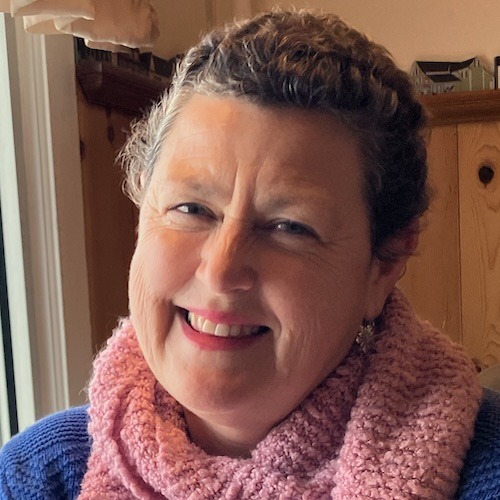
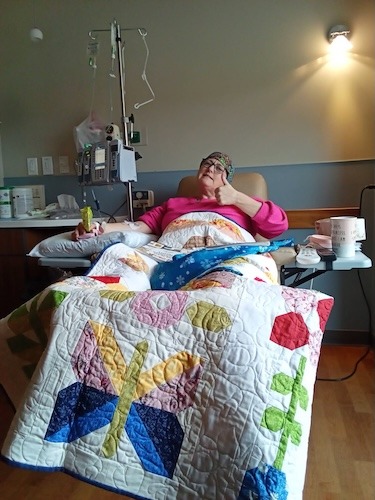
Her treatment included multiple rounds of chemotherapy and a hysterectomy. Holly talks candidly about physical side effects, one particularly rough final chemo round that brought intense nausea and a panic attack, and the emotional weight of watching her family suffer as they saw her in pain. She emphasizes how crucial her advanced cancer support group and a compassionate care team, especially the nurses and nurse navigators, have been in helping her feel less alone and more understood.
Today, Holly is in remission, a reality she is still absorbing after having prepared herself and her loved ones for hospice and the end of life. She describes a profound shift in how she lives. She now slows down, finds joy in small rituals like a good cup of coffee or doing the dishes by candlelight, rescues cats with her husband, makes art, and savors time with family and friends. Her story highlights a powerful transformation: from dismissing her own needs to becoming her own advocate, listening closely to her body, and encouraging others to value themselves enough to seek care early and often.
Watch Holly’s video and read through her edited transcript for more about her story.
- Listening to persistent symptoms like fatigue, bleeding changes, pelvic pain, and feeling unusually full after small meals can be lifesaving. Holly now urges others not to dismiss these signs.
- A universal truth: patients deserve to value themselves, ask questions, and seek care early. Your health is worth the time, the appointments, and the second opinions.
- Supportive relationships, including advanced cancer groups and empathetic nurses, can make an overwhelming medical experience feel less isolating and more manageable.
- Holly’s experience shows her strength in transforming from self‑neglect and denial to strong self‑advocacy, boundaries, and daily practices of self‑compassion and joy.
- Even with stage 4 cancer and an uncertain future, it’s possible to reclaim a sense of control by living one day at a time and intentionally seeking out moments of gratitude.
- Name: Holly J.
- Age at Diagnosis:
- 58
- Diagnosis:
- Endometrial Cancer
- Staging:
- Stage 4 (metastatic)
- Symptoms:
- Severe fatigue
- Depression
- Decreased appetite
- Feeling full quickly
- Abnormal bleeding
- Severe pelvic pain
- Persistent skin infection
- Treatments:
- Chemotherapy
- Surgery: hysterectomy
This interview has been edited for clarity and length. This is not medical advice. Please consult with your healthcare provider to make informed treatment decisions.
The views and opinions expressed in this interview do not necessarily reflect those of The Patient Story.
- Early life, work, and joy in Maine
- Family, grief, and missing the early signs of endometrial cancer
- Christmas, fullness, and worsening symptoms
- Hearing “You have cancer” and finding support
- Watching my loved ones suffer and focusing on one step at a time
- Oncologists, system gaps, and learning to self‑advocate
- Changing through endometrial cancer and looking back at missed clues
- Confronting my prognosis and mortality
- Nurses, kindness, and what’s missing in the system
- Finding joy, remission, and reframing life
- Letting go of stress and actively looking for joy
- Why I share my story and endometrial cancer risks
- Awareness beyond endometrial cancer and how cancer has changed me
- Finding happiness in small things and everyday gratitude
- Recovery takes time, and learning to give myself grace
- Appreciating life more deeply, and living at full speed
- Purpose, helping others, and not feeling alone
- Losing control, regaining ground, and taking it one step at a time
- Presence, simple pleasures, and permission to enjoy life
- Initial denial, anger, and getting the official diagnosis
- Realizing that it wasn’t my fault, and the shock of limited time
- Ignoring symptoms, infection, and the message to listen to my body
- Fear, nighttime worry, and my strategy for containing anxiety
- Not being alone and the power of group support
- Experiencing community love and everyday kindness
- My final message: Be your own advocate and value yourself
Early life, work, and joy in Maine
My name is Holly Johnson, and I have stage 4 endometrial cancer. It’s metastatic.
I got the diagnosis at the beginning of last year, 2025. For the last, I guess, eight years, I was working at a family marina in northern Maine. It was a very physical job. I worked with my mother and sometimes with my brother, so it was a lot of fun, but very hard work. But we always had fun, and I enjoyed it.
I love being outside. We’re very lucky here; it’s so beautiful in Maine. Even in the winter, I enjoy the snow. I love Christmas. I’m an artist, and so I’m actually in my art studio, and I love to play. I love mixed media. I design jewelry sometimes. I started taking classes from this woman, and she said, “Just let your inner child out and play.” And I’ve really been grasping onto that since I started this journey, and I’m allowing myself to play and find joy.
I guess the things that are most important to me have been in the past and still are, because of this journey again, my family and the support. I have nieces and nephews that I adore. I have a very close-knit family: my mother, my brother and sister, their spouses, and my husband. So I’m very fortunate.
Family, grief, and missing the early signs of endometrial cancer
As for my best friend, who I consider family, I’ve known her for so long. I just love my family, and I love doing things with them and being with them. So I think what I tended to do was to put other people ahead of me, and I always did what everybody needed.
My family lost my niece a few years ago. I’d always been so close to her, and that was so difficult. I wanted to be there for my family and help my brother and his wife, and so I think we did that for quite a while. I think I didn’t pay attention to some signs that were going on. I got really severe fatigue, and I thought it was because of depression, which I already struggle with. But then losing my niece, who I was so close to, she was my partner in crime as far as being silly goes. I love to be silly, and she was my silly partner. So, you know, that was really tough.
I worked a physical job, and I just thought that’s what it was because the fatigue was so extreme. I didn’t think anything of it. Then the following year, I was sick at Christmas, and I love to eat, and I love Christmas, and I love family. I remember that Christmas when I couldn’t eat.
Christmas, fullness, and worsening symptoms
And I thought, “That is really weird.” I felt like I was full, and I kept telling my family, “I eat just a little, and I feel like I’m full.” So that was one of those other signs that something was going on that I did not pay attention to. I just thought, “Whatever.”
Then, you know, fast forward a few months, and I had actually gone to the doctor back in the summer before that and had some bleeding issues and still had the fatigue, and nothing came of it. I didn’t do any tests, and so I was just sent on my way.
Then again, Christmas time hit, and I didn’t feel well. I got really ill right about the end of December and was in severe pelvic pain, like I’d never felt in my life. It was a very long story short, but I eventually went to the doctor, eventually got some medicine for it, and I had a — I can’t remember the name of it, but they go in and X‑ray you. I’m losing the terminology for it, but I think they saw something, and then they ordered a biopsy. That’s when I started to go, oh, something. Then, when this woman was doing a transvaginal ultrasound, I had no idea what that meant until I got into her office.
Hearing “You have cancer” and finding support
I think she saw something, but she couldn’t tell me. That’s when I just started to get that feeling that something was not right.
They eventually did a biopsy, and I was actually told by my PCP that I had cancer before they even finished the biopsy. I was left standing by myself, getting myself cleaned up and dressed after having been told that. It was very traumatic. It was very shocking.
We’ve talked about this. I belong to a cancer group through the Dempsey Center, which I’m very grateful for, and which I would tell anyone to get involved in. Mine is an advanced cancer group, so all the folks have advanced cancer. At first, I didn’t want to do it because I thought it would be difficult to hear people’s stories. But it has been my lifeline to be able to talk to people who understand what you’re going through. You know, people will say they know what you’re going through and they feel bad for you, but unless you’ve had it, you just don’t know. It’s so comforting every week to know that I’m going to talk to these people in my group and they totally understand.
I think that is probably that, and the most difficult part of it is that my family has been through so much, and that was the toughest part for me. I could take the chemo, I could take the surgery.
Watching my loved ones suffer and focusing on one step at a time
When it came to my family, to see my brother suffer — and my best friend, my sister, my mom, my sister‑in‑law, all those people, and my husband too — it was just so hard to see them see me in such pain. I can handle the pain, but to see other people, it was almost too much for me.
Another thing I think I would give as advice is that if you can, focus on one thing at a time. I told myself in the beginning that I could handle this next blood test. I had many blood tests, and I had many needles. I would just say to myself, “I don’t know what’s going on.” A lot of times with cancer and treatment, depending on where you are and who you are, it’s tough to know what’s going on. So I just tried to hang on for dear life, and whatever happened in front of me is what I was dealing with. I tried not to get too far ahead of myself.
To back up a little, eventually, when I got my diagnosis, and my doctor called me and told me that I actually had it, it just kind of went fast from there. I got one oncologist, but I didn’t click with her, and so I asked for another one.
Oncologists, system gaps, and learning to self‑advocate
And the new doctor’s been great. But I do find there’s a problem within the system with continuity.
Again, I’ve talked a lot about this in my cancer support group. People have a real problem, you know, with doctors talking to doctors and just within the same system, let alone if you’re working with a different doctor in Boston. It’s just very difficult.
As a patient, you don’t know. I’d never gone through this before. I didn’t know what this was going to be like. I didn’t know the questions I was supposed to ask. I didn’t know what the treatment was going to be. They assume, I guess, that you know these things, and I think I’m fairly intelligent, but I had no idea.
I wish I’d asked more questions. I wish that I’d spoken up for myself. That’s one good thing I’ve learned through this: being a better advocate for myself. Because if you don’t listen to yourself, I mean, it’s much like a lot of other people have said. I watched a lot of these videos when I was going through this. It was so helpful to know you weren’t alone. But like a lot of other people, I wish I’d pushed harder for myself. And I am the kind of person who just does not do that. It’s not in my nature.
Changing through endometrial cancer and looking back at missed clues
This cancer journey has changed me incredibly, because I realized what a mistake I was making in not listening to myself, pushing for an answer, or, if I didn’t like the answer I got, to go and do something else. I did not do that.
I think there were little hints all along for me. I had some problems a year and a half, two years ago. I got a really bad skin infection, and it would not go away. Later, you learn that that can be a symptom of cancer. Then all the stuff that added up. But I still didn’t get it until someone actually told me. I just wish I’d listened to myself better.
You know, I know my body. I tend to be a person who sticks my head in the sand because I just don’t have time for it. Well, now I have time. And now, you know, I can’t work. I still struggle with fatigue. I’m starting to get arthritis, I found out.
When you go through something as serious as cancer, you do what they tell you to do. You get the chemo. Because I was told that I had a year, possibly two, left.
Confronting my prognosis and mortality
I asked the first doctor, “Will I live till I’m 80?” And she just chuckled, and she said, “No, you’re not going to live to 80.” I was like, “Oh, that was harsh.” But then the second oncologist I had said, “Yeah, you’ll be here in a year, maybe two, three, possibly.” That was sobering.
But, you know, I think until you’re faced with that, you don’t think about your mortality. I mean, we do know we’re going to die, but you don’t think that you will ever die. It’s been difficult adjusting to that, as you might imagine, to know that you’re not promised. But, you know, someone told me, you may not know that you might get hit by a bus tomorrow, and you may not know what bus that’s going to be.
When you talk to people, like I said in the beginning, if they have not been through this, it’s really hard for them to sympathize. I know people want to help, and they want to understand. But, you know, it’s tough. It’s tough to get care from someone who hasn’t experienced it, like doctors. I’ve found that for me, the nurses have been the best part of this whole journey.
Nurses, kindness, and what’s missing in the system
The nurses in the chemo ward, the nurse navigators throughout the system that I was in, have been the kindest and the most helpful. We talk about it again in my advanced cancer group.
I know that it’s great to have a great oncologist who knows what he’s doing, but it would also be nice if they were more understanding. I’ve heard some terrible stories of people getting told they had cancer just right out of the blue, with no warning or no one holding their hand. Of all the people in my advanced cancer group, there was maybe only one person who had a good time of it. It makes you realize that there is something seriously wrong with the system when you can’t talk to someone like a human being, or at least try to sympathize with them.
I feel like there needs to be some sort of kindness training for people, because this is tough. It’s a tough journey, even for someone tough. I think I’m a pretty strong person, and it still really threw me for a loop. It takes away who you are, which I think has been the most difficult thing. I’ll never be the same person. But in some ways it’s been good for me.
Finding joy, remission, and reframing life
It’s enabled me to find my voice. I’m much more joyful. I feel happier, which sounds ironic, but I’m just grateful to get up every day.
The last time I went to the doctor for my three‑month checkup, I was told I was in remission, which threw me for a loop because I was headed on the journey in this direction and then was told, “You’ve completely turned around.” I was shocked. I’d been dealing with trying to get my affairs in order and dealing with the psychology of knowing you’re going to die and you’re going to need hospice, and all your people are having to go through that. Then to be told you’re in remission is just — I haven’t wrapped my brain around it, and it’s been three months.
So I’m in that place where I know that I could get cancer again, and I probably have a better chance of it than most people. But at the same time, I still just want to live my life one day at a time, which is what I’m trying to do. I hate to say it’s a blessing, because that sounds kind of strange, but I feel like it’s really helped me reframe my life. Stress is one of the worst things for cancer, and I had a lot of stress in my life, most of it self‑imposed.
Letting go of stress and actively looking for joy
But I feel like I talk myself down a lot, and I will just say, “This is not worth it,” whatever little, trivial thing it is. I found that I can get rid of most of the stress in my life just because I tell myself, “This is just not worth it. You know this is not good for you.”
I’ve really been enabled to just enjoy life and do the things that I love. I literally look for joy every day, whether it’s in a cup of coffee or — my husband and I rescue cats, and so we have a house full of cats, and we continue to rescue. Those are things that bring me joy. Art supplies, talking on the phone with my nieces or nephews.
I really honestly look for something every day to be grateful for. I think in the time we’re living in, it’s a really good time to do that. I don’t know, cancer’s just taught me so many lessons. I wouldn’t say I would wish for it, but I feel like it’s changed me in some ways. I’m not the same person that I was before it, but I’ve learned so much, and I feel like a good part of me is a better person for it.
Why I share my story and endometrial cancer risks
Yeah, I could talk about this forever. I’m one of the people in my cancer group who just talks nonstop about it. I do this because I want other people to hear these things.
I didn’t know what endometrial cancer was in the beginning. I had no idea that I had all the symptoms. I mean, I had all the dangers of it. I was obese. I’d never had children. I started my period young. I had not been through menopause yet. So it all added up to excess estrogen in my system. Again, I just didn’t know. Everywhere I go, I talk about it. So I think the reason I’m doing this is that if one person listens to me — if someone asks me, or if we just get talking — I will tell them, “Please go get yourself checked if you’re at all worried.”
My sister tells her friends, and I tell people I bump into, my friends. It’s something that I feel like I’ll share with anybody who wants to listen to me, because I just don’t want it to happen to someone else. You think, as I said in the beginning, “Oh, you’re not going to die, you’re never going to get this.” That’s not necessarily true. We just all have to be really diligent, I think.
Awareness beyond endometrial cancer and how cancer has changed me
And learn more about, if it’s not endometrial cancer, it’s breast cancer or colorectal cancer. There are just so many things that we need to be aware of and not stick our heads in the sand like I have been used to.
I just feel like it’s brought more than it’s taken from me. I think that, like I said a hundred times, I’m a changed person, and I just want to stand on the rooftops and tell people, because I just don’t want to see someone else who can prevent this and their families from going through this. After all, it is tough.
I think people who have cancer are tough. This isn’t for the weak. People will say sometimes, “You’re so brave,” and it’s like, “I’m not brave. I’m just going through this the best that I can, and I’m not always perfect.” It’s been a struggle, and sometimes I get really angry, but most of the time I think I’m happy, and I’m really just becoming more of myself.
I’ve let go of a lot of things. I’ve let go of some anger. I just feel like if I have one more day here, I’m so lucky. Not everybody gets that. You don’t realize how wonderful life is, how many joys there are. I’m one of those people who listen to the birds sing, and I love my cats and, you know, an old movie or coffee.
Finding happiness in small things and everyday gratitude
I’m a coffee junkie. It makes me so happy. That’s our joke in the family, that we just love coffee so much it’s worth getting up in the morning for. It’s just finding your thing, I think. Finding what makes you happy.
I just wish I could help more people and tell more people what it feels like so they don’t ever have to go through it. If you could just rewind and show some people, this is it. This is what we get every day. We’re so lucky to be here or to go to the grocery store. I don’t even grumble about doing dishes anymore. I make it a thing. I light some candles. I use dish soap that I like. I try to take joy in everything. It doesn’t always work, but I think I’m far better than I used to be.
It’s a huge bonus, though, not having to work. I didn’t have to struggle with that. My brother was my boss, and so I just said, I can’t do this anymore, and he was totally supportive. So I’ve been very fortunate in that. Bless the people who have children and have jobs; it’s really a full‑time job.
Recovery takes time, and learning to give myself grace
I had a discussion with my best friend not too long ago. It’s been a year since I started going through this. I just thought, “Okay, this is a new year, everything’s going to be wonderful, and I’m going to get back to normal.” My friend said, “Holly, you need this whole year to recover. You’re still recovering. You forget sometimes because you think you’re going to go back into that place that you were in, and that’s just not going to happen.”
I give myself grace. I think it’s so important. Sometimes I’ll get hard on myself when I can only do one or two things a day. I can do the laundry, and I can do some dishes, but don’t ask me to vacuum; it’s too much. I’ve slowly had to realize that there are just limits for me now that there weren’t before. I have to accept that. I have to be graceful with myself.
Other people don’t put anything upon me; it’s just that I put things on myself, and I’ve had to learn not to do that. It’s, like I said, just such a lesson to learn. It’s just such a good exercise to go through to appreciate life. I just, I can’t say it enough. I so appreciate every day being here and getting up and, you know, the sun is shining.
Appreciating life more deeply, and living at full speed
It sounds so corny, but it’s so true. I’ve always been a Renaissance woman in that I love to do everything. I love everything. I love reading. I read a lot of English literature. I love to do any craft that’s going on. I feel like I’m on full speed right now because I feel like maybe I do have limited time. The rate of mortality is higher because of the stage that I’m at.
I believe I also read that endometrial cancer is the fastest-rising gynecological cancer, and it has one of the highest mortality rates. Sometimes I wish I hadn’t learned as much as I’ve learned about things. But I also feel like after it’s happened, it’s okay for me to do a bit more digging.
I think in the very beginning, I was surviving, and I was trying not to take in too much information. But now that I’ve done that and done the research, I think I can handle more of it now. Oddly enough, I think this has kind of helped me find my purpose. I’ve always wondered what I should be doing, and I really love the thought of helping people heal or being able to talk about it.
Purpose, helping others, and not feeling alone
And so for me, I think this has given me some things to think about. So the bottom line is that I want to help people. That’s the reason I did this, that I just want to tell as many people as I can about this.
Don’t be afraid. Don’t feel like you’re alone. Again, that’s what I realized when I started watching these videos in the very, very beginning. It felt so comforting to know I wasn’t the only person. It was huge. I live in a small town, you know, and it was just nice to have someone you could think about your own story and realize that it was similar. That was a really huge help. It just made me feel like, “Oh, you’re not the only one going through this, and maybe there is some hope.”
That’s what I just hope I can bring to somebody else, this feeling. I may not have all the answers. I may not know what’s happening. I’m in remission right now, but I don’t want it to dictate my life. That’s tough too with cancer. You feel like you have absolutely no control. You have no control over your body. You have no control over what’s happening to you and what things you have to do.
Losing control, regaining ground, and taking it one step at a time
It’s really disconcerting when it’s like somebody pulled the rug out from under you. You’ve got no baseline, no anchor. It’s very difficult.
Just having faith in yourself and knowing that you can do this, if you have to say it out loud, which I probably did quite a few times, helps. Again, I would take it slowly, like I said, one blood test at a time, one surgery at a time, one chemo at a time. I had four chemos, which weren’t that bad, and then I had my hysterectomy. Then they waited a little bit, and then I had, I believe, two more chemos. It was fine. I didn’t really have any problems.
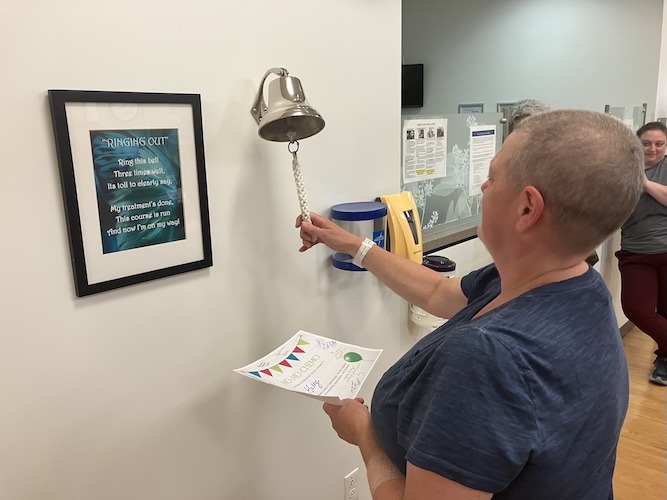
I had one allergic reaction that wasn’t a big deal, but the very final one, I will say, was difficult. I don’t know whether it’s a build‑up of the chemo, but I got really nauseous and I had a bit of a panic attack that very final day. But then I rang the bell, and I didn’t think I’d get to ring the bell. So when they let me ring the bell because I was done my chemo, I was very, very happy.
I think it’s just been such a good lesson, and it’s made me just slow my life down and enjoy it and just be happy right where I am, come what may. If it comes back, I’ll deal with it then.
Presence, simple pleasures, and permission to enjoy life
But right now I’m trying to enjoy every time my husband and I go out to eat and have fun and go antiquing, and every time my mom and I go on an adventure, or any time I spend with my best friend drinking tea and looking out the window at the ocean with her. I really try to be in those places, just to be there and not be obsessed by my phone or other things going around. I really try to just focus on the time I’m in and my happiness.
I do not have a problem with ordering books and art supplies if it’s something that makes me happy, or buying coffee. I have a husband that’s very supportive and has just told me, “Do whatever you want to do, whatever makes you happy.” That’s really what I’ve been trying to do.
It’s just unfortunate it took this to make me feel that way, to give myself that love and attention. But I’m here now, so I’m trying to practice that every day, just being happy and mindful, and again giving myself grace and not being so hard on myself.
Initial denial, anger, and getting the official diagnosis
I think I was in denial in the beginning because it seemed so surreal. I guess I’m a tough person, and so when something happens, I kind of just go, “I’ll be fine.” I think that was part of my problem, that I didn’t take it seriously. I don’t know if other people took it seriously.
When I got my final diagnosis, I was very angry and I was very upset, and I was alone actually at the time. She called me over the phone and told me that officially I had cancer. Of course, then you get all the readouts from the exams they do and the tests, the blood tests they do, and all the stuff that they look at through a microscope. You get to see that on MyChart, which I don’t know if that’s a good thing or not, because I’m a layperson; I did not really understand what any of it meant. I knew that it probably wasn’t good, but I got to that before anybody could explain it to me.
So that was difficult, because here I am trying to Google all these words that I don’t understand, and that was not helpful. I think by the time that I finally took it in that it was real, of course, I’m sure I cried, and I was hysterical, but I don’t know. I did get that feeling of, you know, why me? How could this happen to me? I’ve never done anything wrong.
Realizing that it wasn’t my fault, and the shock of limited time
It doesn’t choose you. I’d go backwards in my life and think, “I wish I’d paid attention to some signs.” I didn’t know all those things that I had listed before, which added up to having way too much estrogen in my system. I did not know that.
I really don’t remember much about the time from when I got diagnosed until I first saw an oncologist. When I started seeing oncologists, it was like a whirlwind. When they tell you that you have a year or two to live — I remember thinking I was in total shock. My best friend had gone with me to the appointment, and she’s a nurse, and that’s the reason — she had been a nurse practitioner, and that’s the reason I wanted her to go, so that she could translate for me. Even to think about it now, it was so shocking. You’re reeling because nothing like this has ever happened to me. There’s no history of it in my family. It just didn’t seem like it could happen to me.
Ignoring symptoms, infection, and the message to listen to my body
And I think that was probably part of the problem, that I’d not listened enough to myself. As I said before, I didn’t listen to my body. I didn’t know the signs — the fatigue, all the things that added up. Later, I looked back and, in reflection, thought, “Oh, that meant something.” When I was fatigued, I was bleeding a lot. And I had a really bad infection, and it would not go away. That, I think, was my body trying to fight something.
There are all kinds of little things that happen, and I think we all dismiss them. I think that if you’ve got some things going on, then you go see someone and you raise the flag and say, “Something is going on.” I know that there are a lot of people who do that, because there are some in my family who do that. You can’t tell people that, but I’m telling you, if you feel those things, take care of yourself. If my friend had told me that she was experiencing those things, I would have said, “Oh my gosh, go to the doctor.” But when it’s you, you don’t think that way. You think, “Oh, it’ll go away,” or “It doesn’t really mean that much.” But that’s not how adults handle it, which I’ve learned. Again, between the actual diagnosis and the procedures, there was this big gap of time that I don’t remember much.
Fear, nighttime worry, and my strategy for containing anxiety
I mean, I know I was upset. I know I was afraid. I’m less afraid now that I’ve got a year into it. I don’t feel the fear and the panic that I felt then.
I guess if I stop and start thinking about death again, I get a bit of a whirlwind. I talked to my counselor about this because I have a separate counselor besides my advanced cancer group. I said, “I get worried at night. My husband works nights, so I’m alone at night, and I get whirling, and I worry and worry and worry.”
She said, “Okay, tell yourself you’re going to take, say, 20 minutes in the morning, whenever — set a time and worry about what you’re going to worry about. If you need an extra ten minutes, take an extra ten minutes.” So I started doing it, and I don’t go down the rabbit hole anymore at night. I just don’t do it. I tell myself if I’ve got some stuff to worry about, I’ll worry about it then.
The fear—I don’t want to say it’s gone away, but because I’m dealing with things one day at a time, that’s helped immensely.
Growing stronger, feeling more solid, and the work of letting go
I’m not looking too far in the future because none of us can. I feel like that fear that was there initially has — well, I wouldn’t say it’s completely dissipated, but I just feel more solid and happier.
People say, “Don’t relive those things.” I’m still working on letting go of some of the anger and the fear, but I think for the most part I’ve dealt with it. It takes a lot of work.
You never know how tough you are until something happens to you, and then you realize I’m tougher than I thought I was, because I think I’ve handled things well. I’m here, and I’ve been through a lot, and I get up every day. I’ve had people say, “Oh, you look so good. You look so happy.” I’m like, “I pretty much am. I’m doing well.”
They don’t want to know about the stuff you deal with every day, or the little mini bouts of depression, or that you doubt yourself a lot and doubt your choices, and that there’s a little bit of blame that you put on yourself sometimes. I think I’ve worked through a lot of that.
Not being alone and the power of group support
It really helps just having that group that I meet with every week — when you know you’re not alone, and you know other people feel the same way. More often than not, you know, someone will start talking, and everybody’s heads are bobbing because everybody feels the same way. You think you’re the only one that feels that way, and then someone will say, “Oh, I’m so glad you said that.” That’s exactly how I feel. That’s been a huge help, to just know you’re not alone.
Again, I hope, I really, really hope this helps one person, just one person, listen to me say, “Pay attention to your body. Pay attention to things that have happened that you’ve just brushed off. Don’t brush it off, I beg you, because it’s not a fun trip.” The hospital’s not fun. It’s just not fun. If you can, just get help, ask for help.
That was the other tough thing. Asking for help has been tough. I haven’t had to ask for it much because I have friends who bring me food. Through the journey, they brought me food every week. At the marina I work at, my sister started a GoFundMe page, and I had so many people who I worked with support me. I just couldn’t believe it. One day, my brother said, “Holly, people really love you.”
Experiencing community love and everyday kindness
And I was like, “Oh.” It’s not that I didn’t know, because I had so many great people there, but it was just lovely to get the support. The people who still see me now in our little town are so happy that I’m up and around.
You just never know. You never know how much people mean and how much you mean to people until you go through something like this, and then people come out of the woodwork. Somebody gave me a piece of artwork because they heard I liked it that she had painted. It’s lovely. Just little things like that. People just come out of nowhere and say, “Oh, I heard, you know,” and that they want to do this or that. It was just incredible. People are so kind. I still, even now, get people just saying they’ve been praying for me and are so happy that I’m still here. It’s really lovely.
You know, it’s not a perfect world, but there are so many good people and so many kind people. I just really hope it helps one person, that someone listens to me, someone hears this and says, “Oh, I’ve got some stuff going on. Please, please, please get checked.” That’s my biggest message: it gives you more time here with your family and more time to do the things you love.
My final message: Be your own advocate and value yourself
I guess the thing that I just keep coming back to is that you just have to be your own advocate. You have to speak up for yourself. You have to ask the questions because nobody else is going to do it for you.
I think you have to value yourself enough to know that you’re worth it, that you’re worth speaking up for yourself. You’re worth taking that time. That’s another thing, you might not like to take time out to go to the doctor. I’ve done all the wrong things. It’s just not how we should live. You should value yourself enough to take care of yourself.
Inspired by Holly's story?
Share your story, too!