
Living With (Not Under) Follicular Lymphoma: Tawanna and Barry on Watch & Wait, Marriage, and Faith
When Tawanna volunteered to donate a kidney to a little girl she loved, she never imagined the testing would uncover follicular lymphoma. Just as surprising, she did not think her treatment plan would be watch and wait, sometimes called active surveillance, to monitor her disease and not start treatment. A routine pre-donation scan found an unusual lymph node, which led to a biopsy and a MyChart message that quietly carried her life-changing diagnosis. In a span of a few days, Tawanna went from being told she was healthy enough to live with one kidney to learning she was living with blood cancer. She describes reading the result at work, turning to her husband Barry, and asking, “Does that mean I have cancer?”
Interviewed by: Taylor Scheib
Edited by: Chris Sanchez
Tawanna never had symptoms before that moment, and her first reaction was shock, fear, and a lot of late-night Googling. Her oncologist explained that her follicular lymphoma, a kind of non-Hodgkin lymphoma. He added that while it’s not considered curable, it is highly treatable and slow growing, which is why he recommended watch and wait for now. Because her disease is present in several lymph nodes but isn’t yet causing symptoms or affecting her bloodwork, immediate treatment could do more harm than good and also limit future options. Instead, she goes in for regular scans and blood tests while living as fully as possible between appointments.
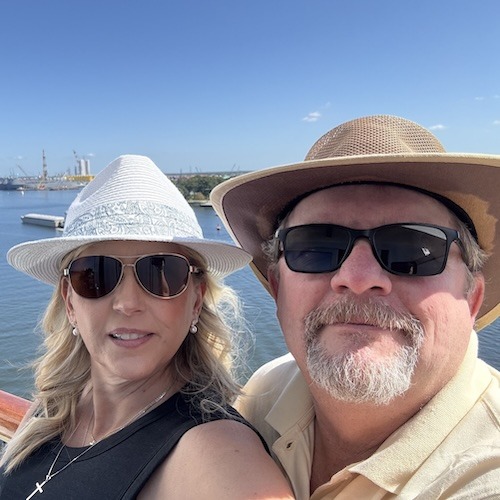
Emotionally, watch and wait has been “a blessing and a curse” for Tawanna. She leans heavily on faith and on her close-knit support system — Barry, her daughters, grandchildren, friends, and church community — to help her manage the anxiety that flares up around scan time. She talks openly about taking a week to cry and grieve the life she thought she’d have, and then deciding it was time to get up and fight in her own way. In practical terms, watch and wait also gives her time to prepare: to exercise, put legal documents in order, and check off bucket list items in case treatment is needed later.
Through it all, Tawanna and Barry say their marriage has only grown stronger. They plan small joys around each scan, like a Coke Zero waiting outside radiology and dinner at Cheesecake Factory afterward, to weave light into heavy days. Tawanna describes herself as more extroverted and open-hearted now, choosing to hug more, talk more, and support others facing cancer. For anyone newly told they’ll be on follicular lymphoma watch and wait, she wants them to know that life can still be rich, meaningful, and even more connected than before.
Watch Tawanna’s and Barry’s video and read their interview below for more about their story.
- Saying yes to kidney donation testing unexpectedly revealed Tawanna’s follicular lymphoma early, before she had symptoms, allowing her to start care with a strong health baseline.
- Her oncologist’s explanation of watch and wait, postponing treatments until the lymphoma is large enough to cause problems, helps her protect future options and avoid unnecessary side effects.
- Having cancer often means grieving the life you thought you’d have while slowly building a different, still meaningful life around monitoring, scans, and uncertainty.
- Community, faith, and intentional joy, like planning treats after scans, have helped Tawanna transform from a self-described introvert into someone who hugs, shares, and actively supports others with cancer.
- Barry’s prior experience with his first wife’s cancer makes this diagnosis uniquely painful, yet he describes watch and wait as “not a death sentence, a life sentence,” and shows how committed caregiving can deepen a relationship over time.
- Name: Tawanna T.
- Age at Diagnosis:
- 50
- Diagnosis:
- Follicular Lymphoma
- Staging:
- Stage 3
- Symptoms:
- Incidental finding during pre-kidney donation scan
- Treatment:
- Watch and wait/active surveillance
Story Sponsor
Thank you to our sponsor for their support of our independent patient education story. The Patient Story retains full editorial control over all content.

This interview has been edited for clarity and length. This is not medical advice. Please consult with your healthcare provider to make treatment decisions.
- Story Sponsor
- How we met and fell in love
- Building a life together in Kentucky
- Trust and faith are the foundation of our marriage
- Losing Barry’s first wife to cancer
- Tawanna’s experience of becoming a stepmom after loss
- Becoming grandparents
- How a kidney donation evaluation revealed follicular lymphoma
- Finding out Tawanna had cancer through MyChart
- Barry’s reaction to the diagnosis
- Learning it’s treatable and starting watch and wait
- Learning about follicular lymphoma
- Why watch and wait makes sense for Tawanna’s follicular lymphoma
- Living with the mental side of watch and wait
- Barry’s caregiver perspective: Pushing scans to one year and managing anxiety
- Talking about future treatment options
- How we communicate about the hard days
- How Tawanna describes watch and wait in her own words
- Barry’s caregiver definition of watch and wait
- Feeling prepared for future watch and wait phases
- How this experience differs from Barry’s first wife’s cancer journey
- Supporting Tawanna emotionally
- Self-care for caregivers and patients
- The hardest part for Barry: Hearing “cancer” again
- How cancer changed Tawanna
- How cancer changed Barry
- How cancer strengthened our relationship
- What motivates Tawanna most: Children, grandchildren, and Barry
… every time we have something happen, many times it would drive families apart. It drove us closer.
Barry T., husband of Tawanna T., follicular lymphoma patient
How we met and fell in love
Tawanna: I was divorced, and my daughter said that I needed to get a life. So she signed me up on PlentyOfFish.com. Barry reached out to me and said, “Let’s talk.” He stood me up the first night. So we talked for a couple of weeks, and then one night in January, it was snowing, and we met at a church parking lot. I had pepper spray in my hand, and five months later, we got married in that same church parking lot. Seventeen years in June.
Two weeks after we met, we were married five months to the day after we met.
I don’t know, it just really clicked. We hit it off from the very beginning. He made me laugh a lot.
Barry: Don’t you know what quality you like about me?
Tawanna: Too many. Too many.
Building a life together in Kentucky
Barry: I had a daughter who was five when her mother passed. I couldn’t ask for a better mother than Tawanna.
Tawanna: I had a 16-year-old who did not like Barry. But we married, and he was starting a real estate career as an agent, and I was actually working at a real estate office. There was no connection between the two. He started selling real estate. I quit that job and started in medical billing. He came and said, “I think we can cover your income if you’ll quit and help me.” And so I quit my job. And we did. We made the income work. Then, a few years later, he decided we would start our own business. So here we are, ten years later, in our own real estate company. My daughter, my 16-year-old daughter, actually likes him better now than she does me. She calls him first. And of course, the five-year-old is now 22 with kids. We’ve been through a lot.
Barry: In 2011, I had an open-heart surgery, a quad bypass.
Tawanna: But we stuck it out. And so we — that’s why we have microphones and the cameras, because of the real estate business. And that’s kind of us in a nutshell.
Barry: And every time we have something happen, many times it would drive families apart. It drove us closer.
Trust and faith are the foundation of our marriage
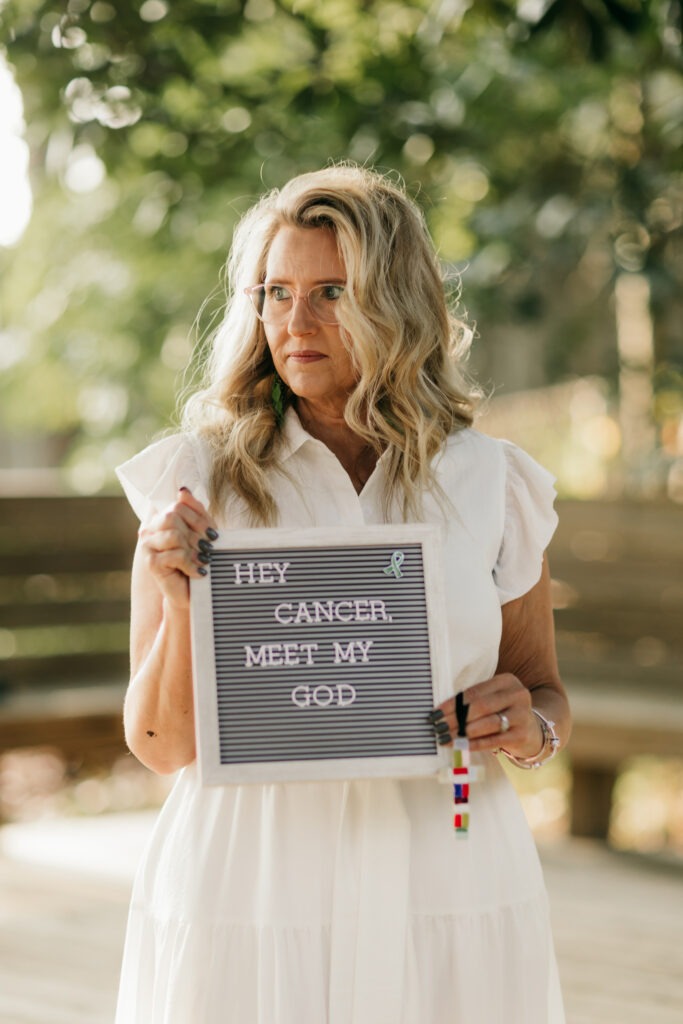
Tawanna: He comes up with these crazy ideas, and he’ll say, “You gotta have faith. You just gotta have faith. It’s going to work.” And for the most part, it has. Not everything. Not everything. We’ve been through a lot with his daughter. She had a hard time as a teenager, and we went through a lot with that, many years of counseling. I think losing her mother probably played a big part in that. But if there’s anything that will strengthen your faith, it’s cancer.
His wife, his first wife, had actually stayed at Hope Lodge. I’m not sure if you all have that in your area. So when you’re going through treatment, you can go there and stay for free and be close to your treatment center. And so she stayed there. So we gave back for many years by cooking meals there. And we were there one night cooking, and his daughter went over and picked up an album and found her mother in that photo album.
So cancer has always been something that we’ve tried to give back to — you know, organizations we’ve tried to give back to and do things with — before I knew of my diagnosis.
Losing Barry’s first wife to cancer
Barry: She had lung and breast cancer. Breast cancer was the first one they found, and she had that surgery on a Friday before Thanksgiving, and they got all of that. And she never really came out of that recovery mode. She was still sick. So the Sunday following Thanksgiving, I took her to the University of Kentucky, and they found a ping-pong-ball-size mass on the base of her skull, and it was small-cell lung cancer.
And for two days, Saturday and Sunday, she didn’t know anybody. And that Saturday night, she woke me up. We had hardwood floors and a plastic toy kitchen. She was sliding it back and forth on the hardwood floor. So I asked her what she was doing. She said, “I’m just trying to find the bathroom.” And she didn’t. She was obviously out of her mind, unknowingly. And then they did the craniotomy on Tuesday, and she woke up and was talking like we are right now. But it was a tough, tough road. And she passed away the following November.
… if there’s anything that will strengthen your faith, it’s cancer.
Tawanna T., follicular lymphoma patient
Tawanna’s experience of becoming a stepmom after loss
Tawanna: I actually joked that I fell in love with Barry’s daughter, and I married him to get her. I loved her from the first time I met her, and people thought we looked alike. We would go out, and they would say, “You look just like your mom.” And she’d say, “I feel like I’m lying, but I don’t want to tell them.” And it was just a very good relationship up until the teenage years, when things got very difficult.
But I mean, I wasn’t able to have more children than just the one, so I thought that was just God’s way of giving me something that I thought I couldn’t have. And we always really strived to make sure that she never forgot her mother. There were always pictures in her room of her mother, always reminding her of her mother and her mother’s birthday, so that she wouldn’t forget her mother, because I wasn’t the stepmother. We never went with those words. But I never wanted her to forget her mother.
Barry: It’s hard to put into words. The life we built was different than the life I’d had in the past, for various reasons and various complications and stuff. We’ve built a much stronger life on faith and trust in God. That was, I think, our foundation now more than ever.
Becoming grandparents
Tawanna: It’s kind of an unusual story. He actually has an older daughter. I think she was 19 when we married, so she had already moved out. Her name is actually the same as my daughter’s name, so we have two Ambers. So she has the boys, and they are living right now in New York, but they were in California, so we don’t see them very often. And then our daughter, whom I raised, is about an hour away, and she has the two little girls, and one is just a few months old.
Barry: There’s nothing like it.
Tawanna: It’s the most amazing thing in the world. I wish I could have done it all my life. They are just wonderful. And, actually, the boys, when we first got to meet them, they called me White Grandma. Most people think it’s because they are mixed race, but it’s because at the time, I had blond hair, and no one in their family had blond hair. So they still call me White Grandma.
How a kidney donation evaluation revealed follicular lymphoma
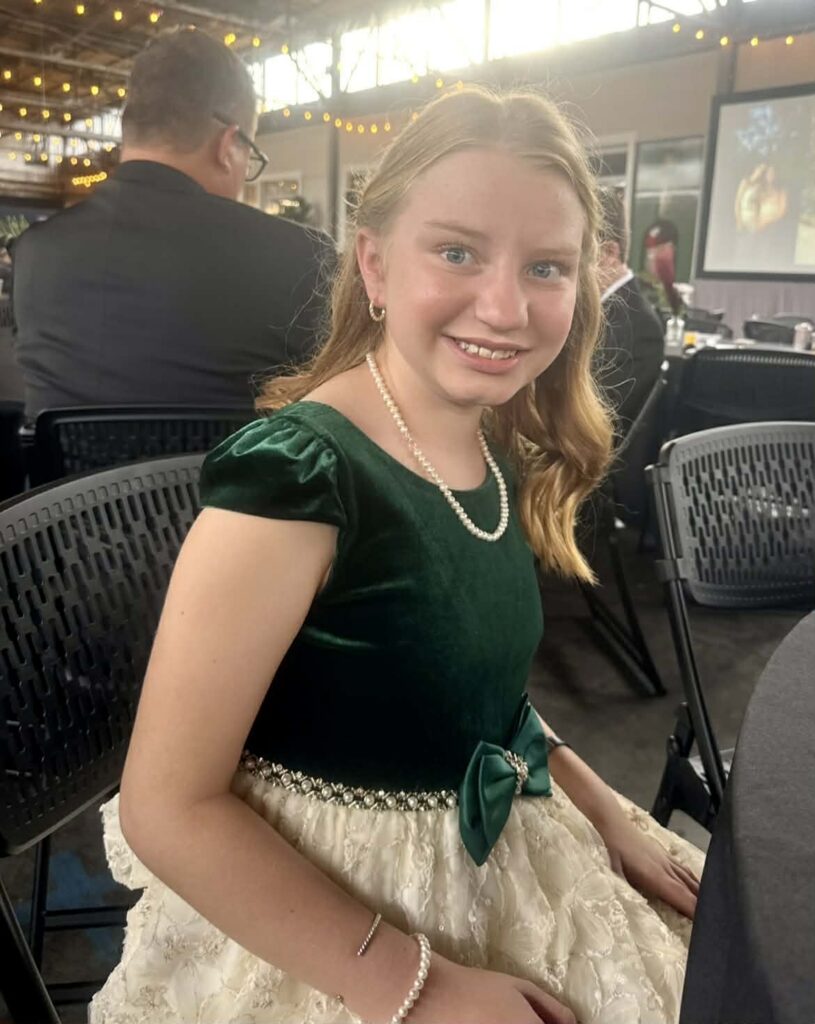
Tawanna: Many years ago, one of the agents here in our office brought her granddaughter, who was adopted, to the office to meet us. She had kidney disease. She only had one kidney functioning at the time, and it wasn’t functioning as it should. And of course, I fell in love with her. Her name was Sera, and we knew that at some point she would need a kidney transplant.
So at the time, I researched a little bit, and I thought that might be something I’d consider because I just fell in love with her. Well, fast-forward to 2023, and it was time. Sera needed a kidney, so they were taking applications, and I applied. After a lot of prayer and looking into it to see if I felt — I felt like God was saying, “You need to do this.” So I applied, thinking that they were never going to choose me. I was actually the last option because I wasn’t family or any relation. And it just so happened that no one qualified, and it came to me.
And so they called and said, “Do you still want to do this?” And I said, “Absolutely.”
So I went and started the testing, and I passed all the tests absolutely perfectly. It was just a God thing. I was elated. I had a purpose. I was going to exchange my kidney for a kidney for her because she was so young. So I started drinking tons of water. I wanted to give them the best kidney I could possibly give them.
We met with everyone. We met with the pharmacist, and I met with the psychologist and the surgeon. We were meeting with everyone. We were set. They were going to take my left kidney. It would be flown out as Sera’s was being flown in.
At the last meeting with the surgeon, she said, “You know, you have a lymph node that looks a little odd, and I would feel better if we checked it. You probably just had a little virus, but let’s check it.” So the donation lady called, and she said, “You know, you don’t have to go through with this.” It was in my stomach. She said, “You can back out now, or if you want to go forward…”
We’ve built a much stronger life on faith and trust in God. That was, I think, our foundation now more than ever.
Barry T., husband of Tawanna T., follicular lymphoma patient
So I said, “Let me talk to Barry.” And I said, “Do you think God is saying, ‘No, don’t do this’?” And he said, “I don’t think He closed the door. I think He caused a bump.”
So I did the biopsy, fully thinking, “I’m good.” I told the ladies when they were putting me to sleep, “I’m going to give a kidney. This is what I’m doing.” So they came in after the biopsy, and they said, “You’re going to give a kidney. We don’t see a problem. We think you’re good, but we need to get results.”
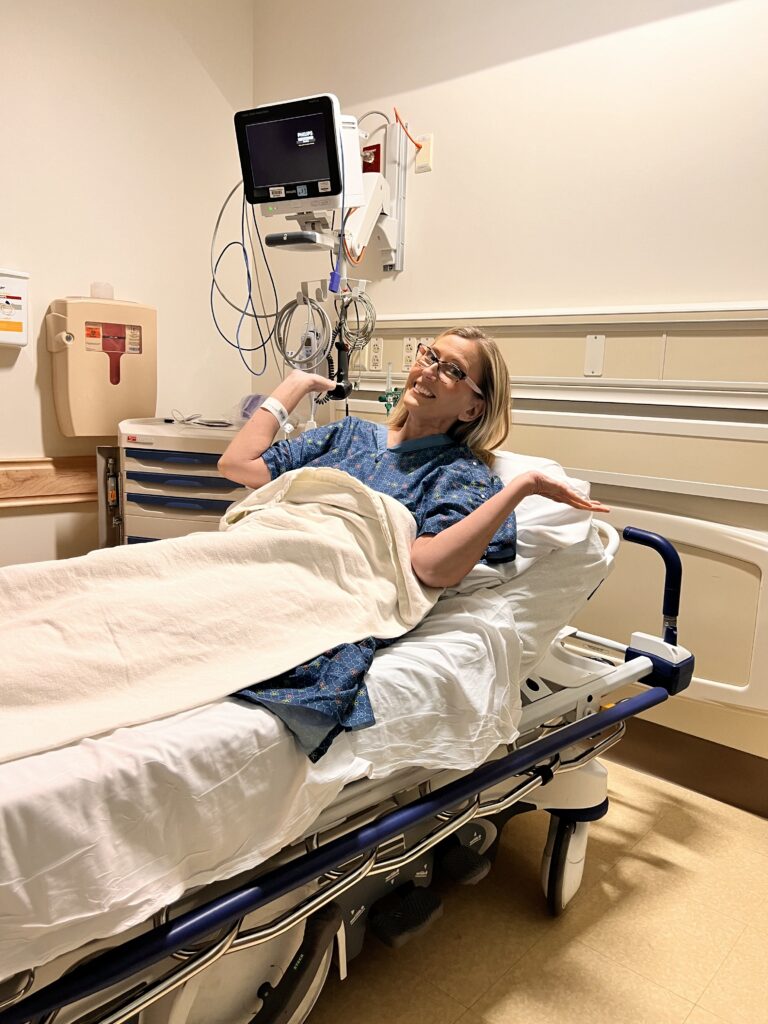
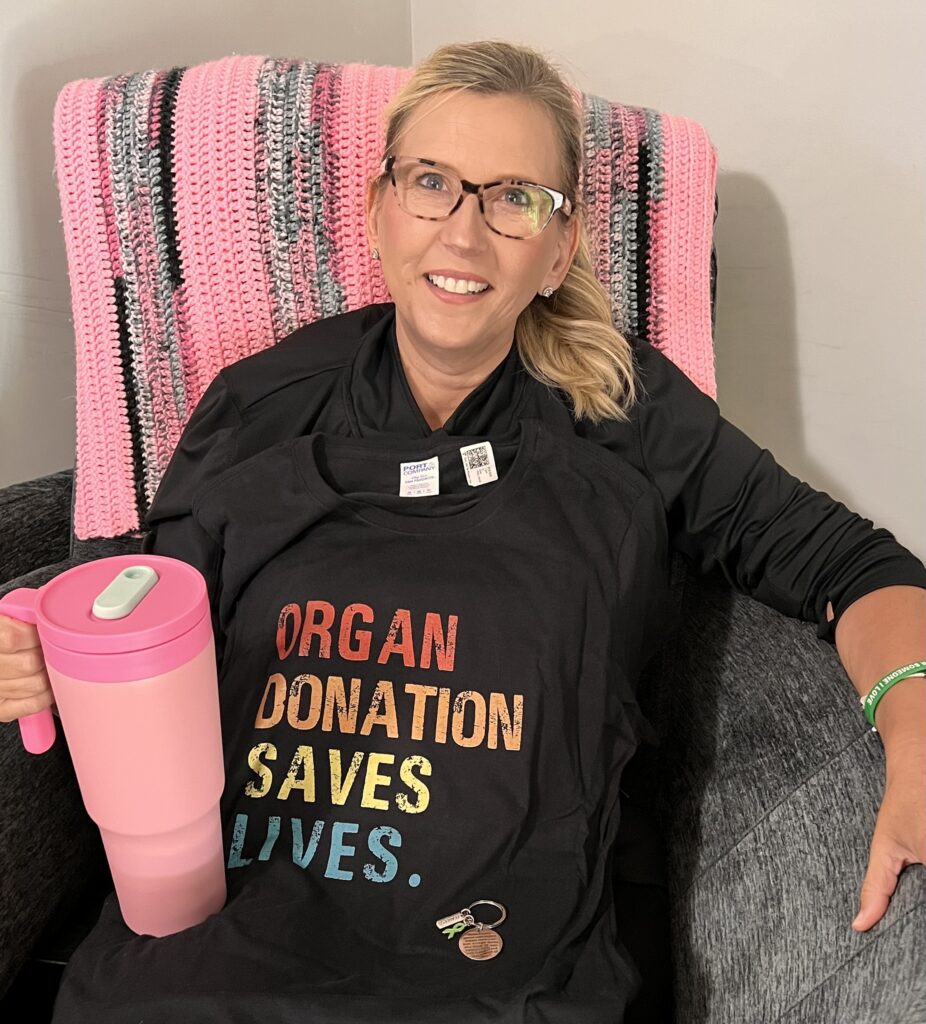
About a week later, I got the results in my MyChart and in my email, which were that it was non-Hodgkin’s lymphoma (follicular lymphoma). So that knocked me out of the donation. I was no longer able to donate to Sera. I never had any symptoms. I never had any idea. I would have never known that it was there had I not gone for the donation testing.
So Sera, at the time, said, “You know, you were trying to save my life, but I’ve saved yours.” She did. So that’s how I found out that I had cancer.
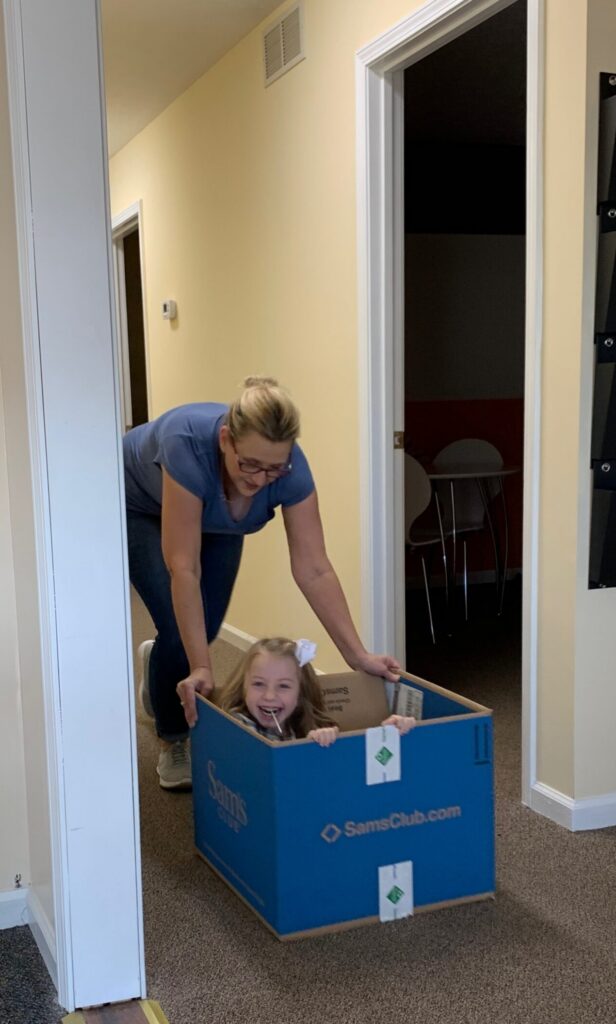
Barry: She has always put everybody else first, and this was an ultimate gift. As I said, she loves Sera. They were as thick as thieves. Anytime she was here, they were pushing up and down the hall in cardboard boxes and playing. It was very special. Our Tanya, the grandmother, was the very first agent we hired when we opened our office. So it’s always been a close, close relationship, but Tawanna always puts everybody else first. Always has, since I met her. That’s just who she is. And that’s the ultimate gift — to give a part of you to somebody. And when she couldn’t do it, it was still saving her life. So God has a funny way of working things out.
Tawanna: Sera did get a kidney. Once I couldn’t, they put out a call because she was running out of time. And a 19-year-old boy in her town was able to donate to her. She is a year and a half out, and she couldn’t be doing any better. She’s grown so much. She’s so beautiful. And she’s doing a lot now with the Children’s Miracle Network and the UK Hospital to promote kidney donation.
So He took care of her, because I was more devastated that I could not give her the kidney than I was that I had cancer. I wanted to do it so badly, but she got better than I was going to be able to provide for her.
Finding out Tawanna had cancer through MyChart
Tawanna: We had met with the oncologist, but I thought, “He’s just here to initiate the biopsy.” And actually, we were angry with him because he was certain that I was not going to give a kidney, and I was so angry with him. He knew it because he was wrong, you know?
He did not say the words “non-Hodgkin’s lymphoma.” He just said, “You know, I don’t think you’re going to be able to give a kidney, but we can take care of this. We can control this.” I thought, “He has no idea what he’s talking about.”
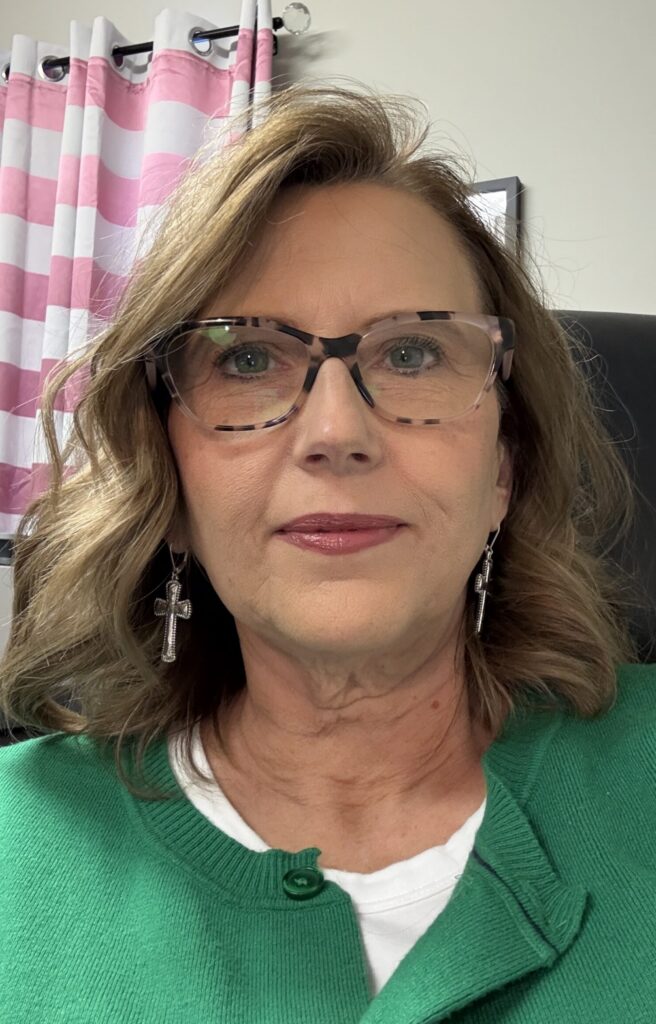
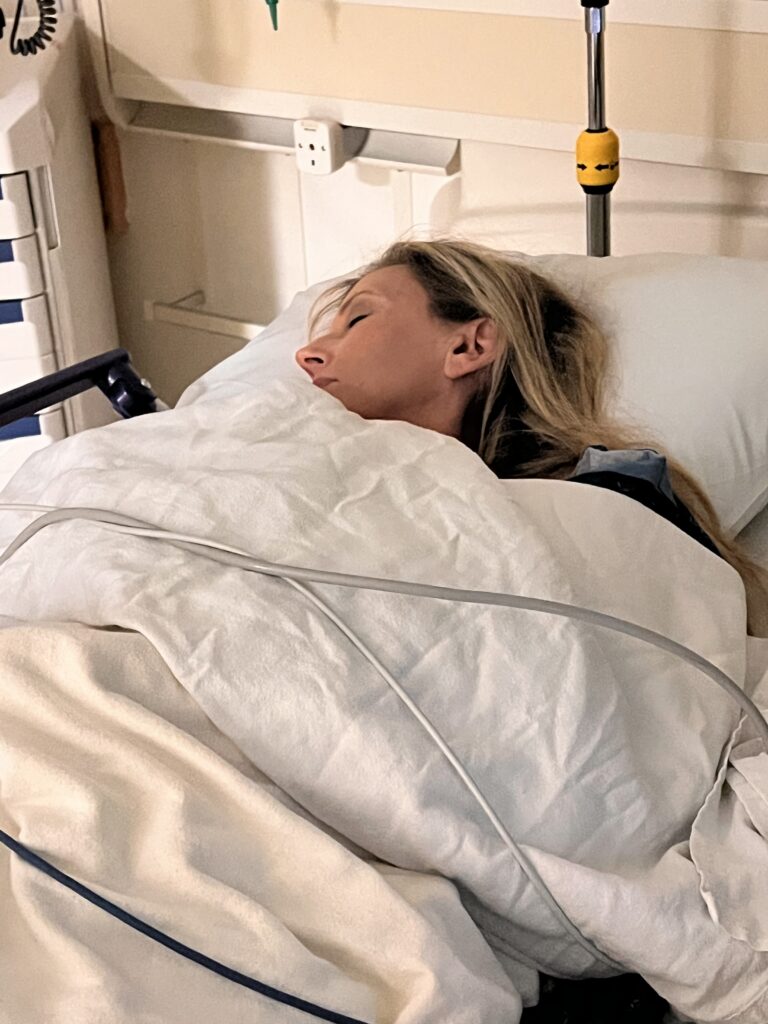
So when it came through MyChart, and I was sitting in this office, actually, and I read it, and I looked up at Barry — we were together — and I said, “Does that mean I have cancer?” And he said, “Yeah.”
So I started Googling. That’s just what you do. You just start Googling. And I was a wreck. I was a wreck until we got to get back to the oncologist, whom I had to apologize to. And I wouldn’t trade him for anyone. He’s the best.
And he said, “I knew you were mad, and I don’t blame you.” And he said, “I prayed that night — my wife and I prayed — that this would not be cancer. I wanted you to be able to give this kidney.” And so he’s my doctor. “I started Googling. That’s just what you do. You just start Googling.”
He went over things and explained things. Of course, I had to have a PET scan quickly after that. The one good thing about doing the kidney donation process was that it put me on the fast track to get into appointments with oncologists, and they took care of me and got the tests set up quickly. Then they turned me over to the other team.
But to read it on MyChart is not the way you want to find out. I actually had to meet my parents right after that, and I never said a word. I didn’t say anything. I didn’t know how to tell them. Later that afternoon, we let them know once it had kind of settled in. But it was — I was in shock.
Here I went from being told, “You’ll function with one kidney just as well as you function with two, because you’re so healthy,” to “You have cancer” within just a few days.
Barry’s reaction to the diagnosis
Barry: It’s an ultimate high to an ultimate low. It’s just a bottom. I’d already been there. So that hit a little extra hard.
Tawanna: He knew a lot of the verbiage that was being used. That helped me. It probably did not help him. I’m sure it brought a lot of bad things back. But knowing that he had been through this with someone who had had chemo, who had had radiation, who had been through this process, he knew a lot about what was coming.
Barry: Potentially coming. We’ve not been there yet. Right. And we’ve been getting good reports since then.
I went from being told, “You’ll function with one kidney just as well as you function with two, because you’re so healthy,” to “You have cancer” within just a few days.
Tawanna T., follicular lymphoma patient
Learning it’s treatable and starting watch and wait
Tawanna: I think by the time we got there — I had had the PET scan and I had seen the results of the PET scan — by that time I had really educated myself on what this cancer was. But I wanted to hear him say, “We can take care of this. While it’s not curable, it’s extremely treatable.”
He went through a lot of what my future was going to look like. So when I left there, I remember we went to a Mexican restaurant, and we celebrated because it was such a weight lifted that they can treat it. Even though watch and wait is very scary and very mentally draining sometimes, he made me feel very comfortable. I think he answered both of our questions.
Barry: A lot of questions. He broke it down very simply and was in no rush. He talked to us as long as we wanted to talk, and it was very comfortable, just like we’re talking now. He was very personable. And he takes it personally. He has a lot of empathy for what he does. He’s great.
Tawanna: He made me very comfortable with the fact that he wanted me to live my life. “I’ll worry about it. I don’t want you to worry about it. You go on, live your life. I’ll take care of this.” And I felt very good when I left. That doesn’t mean that there are days when I don’t fall apart or get nervous. When it’s time for a scan, I struggle, but I have a very good team.
Learning about follicular lymphoma
Barry: I’d heard of it, yes, but didn’t understand what it was. The kinds of cancer we typically hear about are breast cancer, lung cancer, and colorectal cancer. That’s the three biggest ones that you typically hear around here, I think. Is that right? Non-Hodgkin’s — you hear it, but it doesn’t register because you’ve not been there. You know, people now have had it for 15, 20 years.
Some people that we know had it, which we didn’t know about. A friend of mine from Northern Kentucky, who is also in the real estate business, saw our post, and he called. We’d been to class together, through training together. I didn’t know he’d had cancer, and I think he’s a 14- or 15-year survivor now.
Tawanna: There were actually two people in our church who, when I was diagnosed, came to me and said, “I have that too.” I had no idea. I had heard the word, but I didn’t know what it was, and I did not know that it didn’t always require treatment. So it’s been a lot of learning.
Why watch and wait makes sense for Tawanna’s follicular lymphoma
Barry: I think for me, the way he described it was that the cancer was so small that the chemo they’re using now is like Velcro, and it was so small the Velcro would not stick to it. It wouldn’t be any benefit. It would just make her sick, and she’d go through all those symptoms and side effects that it wouldn’t be of any benefit until later on, when it grew — if it did grow — to the size it got big enough to treat. And he makes us very comfortable, for the most part, with what he’s doing.
Tawanna: I know a lot of people don’t understand it. They’ll say, “Why are you waiting? Why are you waiting for it to grow?” I only have so many treatment options. If I use up my treatment options now, I’ll run out of treatment options. I’ve got to wait, as he explained it, till it gets to the size that it’s causing a problem.
Right now, I have no symptoms. It doesn’t show up in my bloodwork, even though I have multiple lymph nodes affected. I even have one that I can see, which is a large lump in my collarbone. It still is not enough that I need treatment. I can save those treatments. I’m going to possibly have to have more than one treatment over the course of my lifetime, because I started so young.
And the advancements they’re making right now with blood cancer are amazing, how they’re catching up with it.
I’m really pleased. I have a lot of options, but I can only do so many. You can only do one treatment one time.
When it’s time for a scan, I struggle, but I have a very good team.
Tawanna T., follicular lymphoma patient
Living with the mental side of watch and wait
Tawanna: I pray a lot. I lean on God a lot, because I can get a stomach virus, and I think it’s spread to my stomach. That’s where my mind starts going. Or if my hip hurts, “What if it’s getting in my bone marrow? What if it’s growing?”
But I have to take myself back to, you know, if God hadn’t laid it on my heart to donate that kidney, I wouldn’t even know I had it. He’s taken care of me this far. He’s going to take care of me. He’s given me the best support group that, if I had to choose to give up that support group or be cancer-free, I don’t want to be cancer-free if I have to give up this support group because they are amazing.
My church family and friends have knocked stuff off my bucket list for me in case I do have to start treatment, because at one point, I was going to have to start treatment. He said, “When you come back, if it’s growing, we’re going to have to start treatment.” I went through the whole process of finding wigs and preparing, and my scan showed that it actually shrank a little bit, which is possible. It can come up and down, and I didn’t have to have treatment.
But it’s a roller coaster. Some days are hard. Some days I struggle with it in my head, and I’ve got to try to get out of my head and think, “You’re okay. They’re watching this, and you’re okay.”
I’ve actually been bumped out now that I can go a year without a scan, as long as my bloodwork is good. I know that one day it’s possible that I could have to have treatment, but I try not to think about that. I just try to put it in the back of my mind, because he did tell me that he has lost more patients to other things than he has lost to non-Hodgkin’s lymphoma, such as COVID or those types of things.
I try to just live my life as normally as I can. My immune system is compromised. My lymph nodes — my body is fighting the cancer to keep it from growing, so I don’t want it to fight a sinus infection right now. So there are times I wear a mask. If we travel, I’ll wear a mask and try to keep from catching anything. But I try not to think about it every day.
Of course, in the beginning, it was hard. I tried to be strong and say, “I’m okay,” until I decided, you know, I’m not okay. I took about a week, and I cried. I cried, I slept, I cried. And at the end of that week, I said, “You’ve got to pick yourself up now. You’ve felt sorry for yourself. Now it’s time to get up and fight.” But there’s a grieving process. I’m sure you know. You have to grieve what life you thought you had, because my life was never going to look the same.
But it doesn’t mean I can’t have a good life. I’ve had more fun since I’ve had my cancer diagnosis than I had the entire first part of my life because — you’ve only got a short time to go, so you may as well fit everything in now. So it’s not all bad. There are blessings in that. You can find a silver lining in there.
Barry’s caregiver perspective: Pushing scans to one year and managing anxiety
Barry: I don’t miss an appointment. I don’t have to. The last appointment was pretty tough. The watch and wait part — he wanted to go, we’d been going every six months, and he pushed it off to a year. That made me really anxious.
I didn’t say anything. She knew I wanted to stay on the six-month schedule, but it’s not my body. So I support her. Whatever she decides to do, I’ll support it. He was very positive about it, but it makes me nervous, knowing how fast it can change sometimes. It makes me very nervous.
Talking about future treatment options
Tawanna: I think it will come down to, when it comes time, that decision will be made. But when I thought I was going to have treatment, it would be chemotherapy. It would be very strong. I was going to lose my hair. But then when I went back, I wasn’t going to have to have treatment.
It’s looking more like I will do an immunotherapy, which is long-term, I think, two years. But I would not lose my hair, and it’s not as harsh. Not easy by no means, I don’t think, but it’s not as harsh as the chemo would be. We’ve talked about different things. Some new treatments; there was a trial at one time that he said he thought I would be good for. So when that time comes, I’m sure that decision will be made then.
But I trust him. I trust the decisions he’s making. I do advocate for myself, but this is what he does, and this is the only cancer that he does. So it’s very specialized. So I’m comfortable.
I know Barry wasn’t comfortable with going a year, but when you’re having scans every six months, it’s almost like every six months you’ve got to go through that anxiety. It’s so hard leading up to it. I’m not a very nice person leading up to it because I’m very stressed. I get a little depressed. I don’t like doing the scans. They’re hard.
I know they don’t take long, but it hits you that it’s real. “How did I get here?” Every time you show up for a scan, I’m thinking, “How did I end up here?” So being able to put it off for a year mentally was really good for me.
I’m very careful. I try to watch for signs. I’ll have bloodwork, but there are signs, and there are symptoms, and I try to make sure that I’m being cognizant of “Am I having any symptoms?” But so far, so good.
I try to have a good sense of humor about it, and I think it helps a lot to lighten a very serious thing.
Tawanna T., follicular lymphoma patient
How we communicate about the hard days
Tawanna: Most of the time, I try to handle it and not tell him. But we work together. We’re always together, and he’ll always call when I’m crying — always. And I’ll just say, “I’m having a bad day. I’m just having a bad day.” There are fewer bad days than there used to be. But sometimes I just need to feel it. Sometimes you just gotta feel it. Feel the scare. Because I don’t want to ignore that, because then it’s going to build up.
He’ll just say, “What can I do?” I think he’s pretty good at picking up on when I’m having a bad day. But I think I’m pretty good at telling him.
Barry: She thinks she is. Yes, I have to agree with that. She thinks she is. She probably doesn’t tell me nearly as much as it happens, if I were guessing. And probably when I do call, it’s been a bad day. I pick up on it, obviously, because she’s been crying. But there are probably times that she doesn’t mention it, if she’s being truthful.
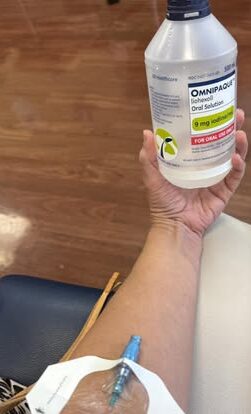
Tawanna: I think for the most part I do pretty well. Close to scans — PET scans are the worst. The first PET scan was the absolute worst because I had that fear. I had not met with the doctor yet, and I literally — my body shook — for two days. I just sat and shook. I couldn’t eat. I was just an absolute mess.
The second PET scan, I was very nervous and tried not to cry. I got in the machine, and you’re there, it seems like, for so long. I just said, “Lord, please ease my anxiety and calm my nerves.” About that time, the machine kicked off, and I had fallen asleep, and I had slept through the entire thing.
They said, “You’re done.” And I said, “I just got in there.” And they said, “No, you’ve been asleep.” Oh.
So I do very well most days. I have the most trouble closest to scans. There are days I look in the mirror, and I see this lump, and I think, “Oh, it’s bigger,” and I’ll have to come to Barry and say, “Do you think it looks bigger?” And he’ll say, “Let’s look at the picture,” because we took a picture of it in the beginning. He’ll say, “I don’t think it’s any bigger,” and talk me down. But the longer I go, the easier it gets.
Barry: The toughest times are the two weeks leading up to the scan and the week following till it shows up in MyChart, which I think should be against the law. Until you talk to your physician, results should not be in there because it creates so much anxiety each time.
Tawanna: I mean, if it’s not in simple terms, you can read it wrong. The first time I had diagnosed myself on the very first one. I really diagnosed myself completely wrong, and it wasn’t nearly as bad as I thought it was. But you know, when it comes in MyChart, who’s not going to look, you know?
But I think I do pretty well until the scan times. I try not to think about it, and I try to laugh about it a lot. I joke about it a lot. I’ll tell Barry sometimes at night that, “My lymph nodes are wanting some ice cream,” or if I want something, I’ll say, “But Barry, I have cancer,” or I’ll use it. I asked the psychologist if I could use it to get out of a speeding ticket. Which has worked.
This morning in our meeting, I told them, “You need to learn to do some of these things for yourself, because we all know I’m a ticking time bomb.” I try to have a good sense of humor about it, and I think it helps a lot to lighten a very serious thing.
How Tawanna describes watch and wait in her own words
Tawanna: It’s a blessing and a curse. It’s a blessing that you can wait, and you can put it off, and you may never have to have treatment. But the mental side of it, knowing it’s sitting in you — every day you wake up with cancer, you’re never going to be in remission — it’s always going to be there. It’s hard.
So I would say it is a blessing and a curse at the same time. There are days when I have said, “I just want to get it out of me. I just want to be done. I don’t want to think about it anymore. I just want it to be over.” But that’s not realistic with this type of cancer because it is not curable. So it’s just something I have to learn. Some days I’m happy that I don’t have to have treatment, and some days I’m like, “I just want to have treatment and get it over with and be done.”
Barry’s caregiver definition of watch and wait
Barry: To me, it’s not a death sentence. It’s a life sentence.
Tawanna: It has not grown to the size that would require treatment. It’s not affecting anything. I’m not having any symptoms. I’m living just like I don’t have cancer. So until it gets to the size that — there is a certain size, that so many of them have to be — there is no reason for treatment. It’s not affecting anything. It’s not hurting anything. It’s not spreading. It’s just hanging out with me, and until it decides to wake up, there’s no reason for treatment.
I will say that with watch and wait, one of the good things is that you can prepare yourself. When I thought I was going to go through treatment, I made sure I was exercising, and I was preparing things at home, and I prepared a living will. You have time with watch and wait to get yourself ready and to get yourself in the best condition that you can be, so that when I go into it, I can be as healthy as possible.
As I was going through the donation process, I lost a lot of weight, and the oncologist said, “Don’t gain it back. Just don’t gain the weight back. That’ll be great for when you start treatment.” So you get to plan and get your body as healthy as possible to go into it, when other people who have been sick while waiting for a diagnosis don’t have that opportunity. Their bodies are already tired when they start treatment. I have the opportunity to make myself as strong and healthy as possible and be ready when it gets here. So that is also a plus of watch and wait.
… with watch and wait, one of the good things is that you can prepare yourself.
Tawanna T., follicular lymphoma patient
Feeling prepared for future watch and wait phases
Tawanna: I have accepted it. I think he’s accepted it. It’s different from the experience he’s had in the past, and that was something that really bothered me: he’s been through this already, and here I am going to put him through it again. But it is different.
Life is just as normal as it can be. I’m not thinking about it every day. I’m not having to deal with it every day. I try not to. We do have the opportunity to do things — as my bucket list — to get things done, to do all those things I wanted to do, in case in the future I do have to go through treatment, or if, God forbid, it doesn’t go as planned. I can have all that taken care of. I can plan, and I think we have a very good understanding of it.
How this experience differs from Barry’s first wife’s cancer journey
Barry: There’s no comparison. When we found out, after she had the craniotomy, we went from having a normal life to where we, for the most part, lived in Hope Lodge for seven or eight months. We’d come home for a couple of days, then go right back. She was having chemo and radiation at the same time, so the quality of life — there wasn’t any.
We stayed at Hope Lodge. We’d drive to the treatment, we’d do chemo, go downstairs, and do radiation. Some days it was both of them. Some days it was one or the other. But we didn’t really have a life once we got that diagnosis. We lived out of a suitcase.
Hope Lodge is a great place if you need it. But it takes a toll, because everyone around you — it’s a support system, but at the same time, everybody there is fighting the same fight from various levels. There’s really no comparison because this is just totally different.
The part that helped me was the verbiage. What to look for. What to be ready for. The questions to kind of ask. And preparation that way.
Supporting Tawanna emotionally
Barry: I just want to be there. Do my best to be present. It’s hard with the business. We have to be as present as that demands I be, but when she needs me, I think she knows that when the flag goes up, I’m there. Sometimes it takes her waving it twice. But when she needs me, I think I’m always ready to be there, and everyone knows that when she needs me, that’s top priority.
Tawanna: I also have my parents, who are elderly, and I don’t want to worry them, but I can always call my parents. My oldest daughter will go to appointments with us, and she’s very involved in it, and she’s been really great through this. As scared as she’s been. I don’t know what I would have done without her.
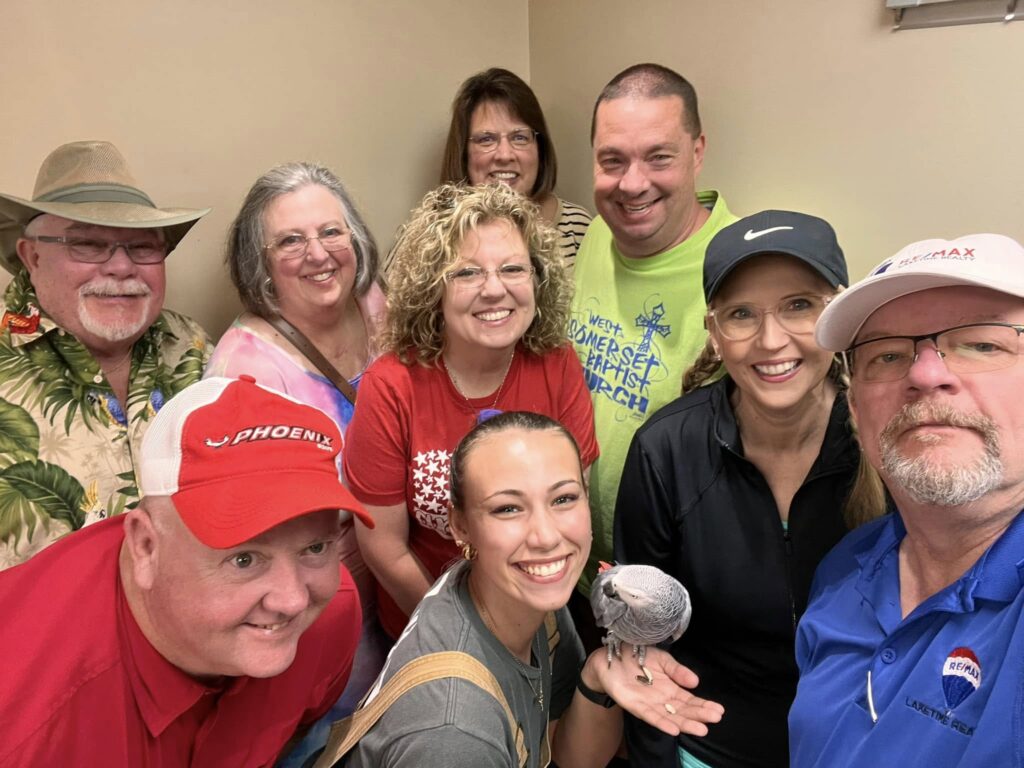
Then our group of friends that we both can lean on — several of them have been through their own cancer battles, some are going through them right now. Our church family, I’ve got so many people that I could just call. Barry’s always my first, but he’ll always cry with me or say, “We’ve got this. We’ve got this.” He listens to me whine or takes me out to eat.
Self-care for caregivers and patients
Barry: Find a couple of good friends that you can call and talk to, that’s the first tip. And talk to your preacher — find yourself a good pastor. We’ve got, I’ve got two that’s a phone call away, day or night. That’s the important thing.
Tawanna: I’m a little more bougie than he is, so I do take time. I’ve cut my hours back at the office just to enjoy hobbies. Yoga has really helped me. I can go in really down, and I can come out and I feel so much better. That’s been one thing I’ve done. Prayer is really important too.
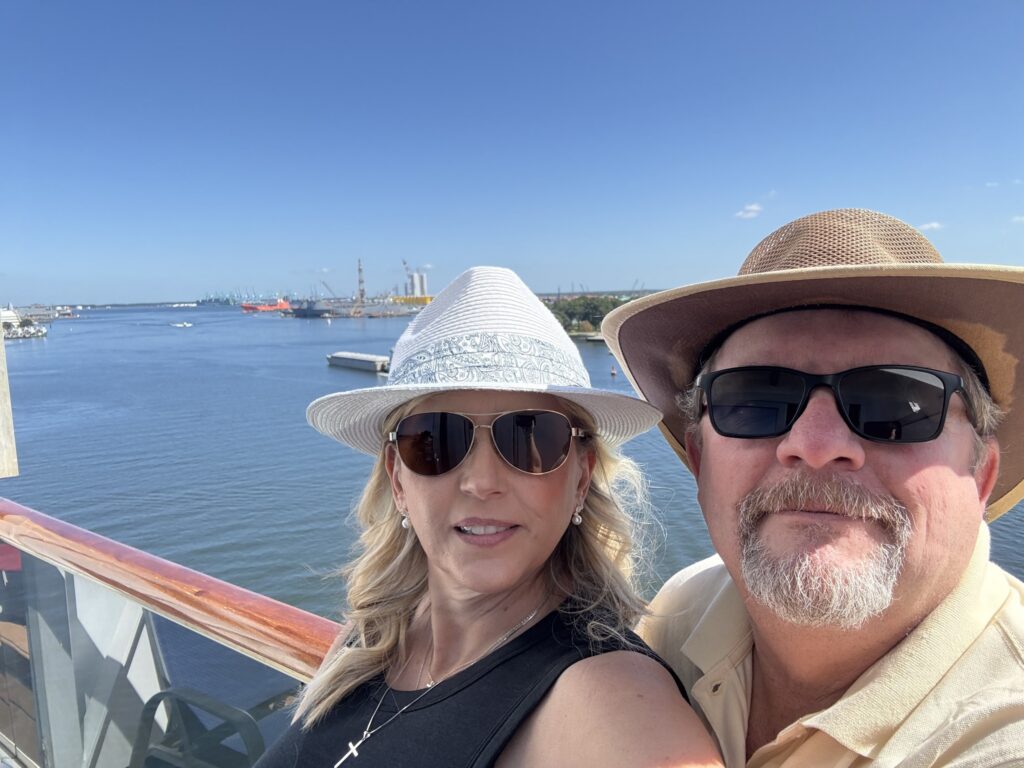
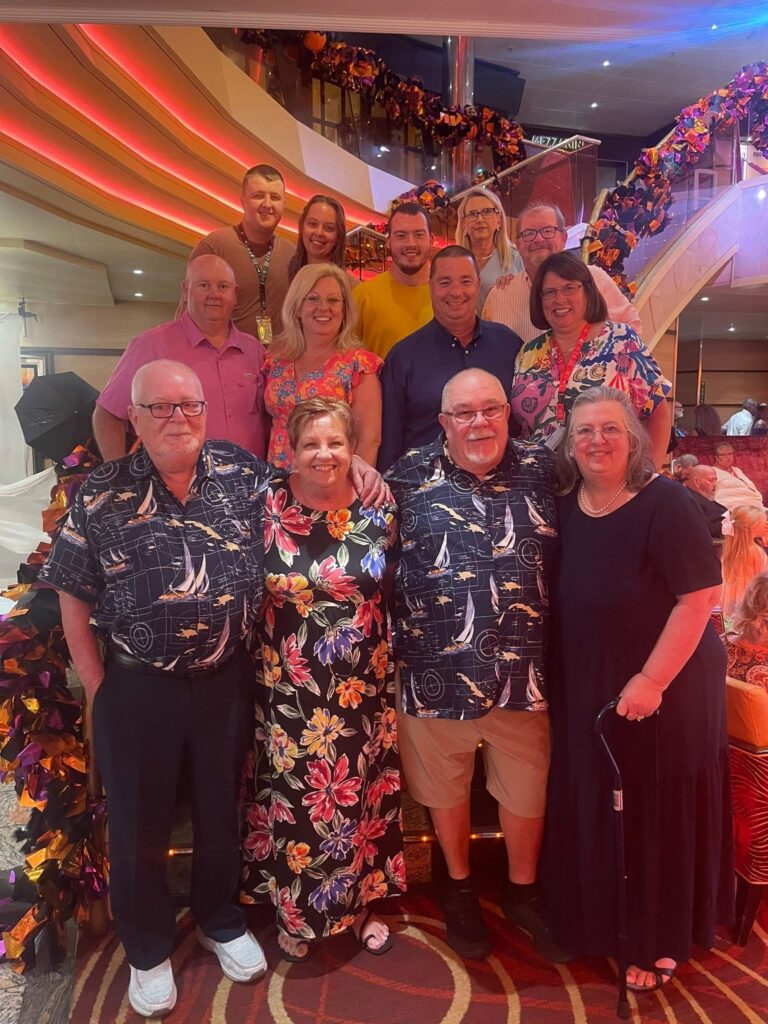
Spending time with my friends has been great. We’ve gone to the zoo, we’ve gone on weekend trips, we’ve been on a cruise — all of us together. I do a lot more. I think Barry’s self-care, if he would admit it, is work.
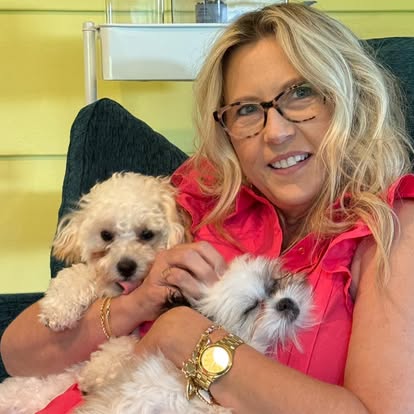
I have dogs. I love the dogs, and we just hang out. I’m not opposed to taking a day off. Sometimes I’ll tell Barry, “I just need a break. I’m going to take off.” But I take off a lot, because I can.
I read a lot. I try to learn a lot. And I think one of the best things for me to take my mind off of it is to do things for other people, or just be a blessing to someone else. It makes me feel so good. That’s my favorite thing, to take care of other people. And that’s why he’s spoiled, because that’s what I love to do.
I think that makes me feel better than anything, and can take my mind off of it.
The most important thing is I know I’ll be okay. If this doesn’t work out and it doesn’t go the way that we hope it does, I’ll still be okay. I know where I’m going. I know where I’ll be, and I know who I’ll be with, and I’ll be okay.
… one of the best things for me to take my mind off of it is to do things for other people, or just be a blessing to someone else. It makes me feel so good.
Tawanna T., follicular lymphoma patient
The hardest part for Barry: Hearing “cancer” again
Barry: Hearing it for the first time. That was by far the hardest for me. But once we heard it, we knew what the plan was, and we bounced back pretty quickly.
Tawanna: There has been some guilt. I do feel guilty. I do worry that I’ll be a burden, which I never want to be. I do feel guilty that he has to go through it. But I hope the good outweighs the bad. He doesn’t have a choice now.
I don’t want to be a burden. That’s probably my biggest fear. I really did feel a lot of guilt for him having to go through it again. But this time is different.
There’s no reason to feel guilty. It’s all part of the master plan. We don’t know what the next chapter is. We just take one chapter at a time. This is the chapter we’re in now.
How cancer changed Tawanna
Tawanna: I was very introverted. I did not like to get out around people. I did not hug people. I was not going to hug anyone. I hug a lot now. I try to share more. I’m a lot more extroverted now than I’ve ever been, I think.
And my faith has really grown because I need that. I was devastated that I couldn’t donate the kidney. I was upset because I thought that was the plan. But then I came to realize that His plan was for me to find out that I have cancer, and He took care of Sera anyway.
It’s made me more open to talking to people about things and more empathetic. I used to, at church, when they would say, “Welcome and greet your neighbor,” if I could go to the bathroom while they were doing that, that’s what I would do. But now I am hugging and talking to people. It’s important to connect with people now, because I needed people when I found out. I needed people; I needed them to surround me, and I want to do that for others.
How cancer changed Barry
Barry: I don’t know that it has changed me.
Tawanna: Yes, it has. He puts the phone down a lot more now. There was actually a cruise I went on a few years ago that I went by myself because he chose to work. But now we’ve been on two together. He takes more time, so it has changed him — to see that time is short. We don’t have a lot of time, so he takes time now.
We go to restaurants, and he’ll leave his Apple Watch and his phone in the car, and we actually have dinner, and he doesn’t work. So it has changed.
How cancer strengthened our relationship
I think this is just another one of the ways that it’s made us much closer. Most couples, when they have the situations we’ve been through — numerous ones — they would be divorced ten times over. Each time we’ve had a situation, whatever it was, it’s always made us closer. And this has definitely done that too.
We laugh our way through. We don’t argue. We’re not arguers. I can go for scans, and I’m nervous, but we always have fun. Even doing a scan, we have fun. We will plan something for afterwards to make it fun.
I am totally addicted to Coke Zero. I love Coke Zero. When you have a scan, you can’t have Coke Zero, and they always have my scans at 2:00 in the afternoon. He’ll walk across a very busy highway to have a Coke Zero waiting for me when I walk out of that scan because that makes me very happy. We always try to have something fun mixed in with the bad.
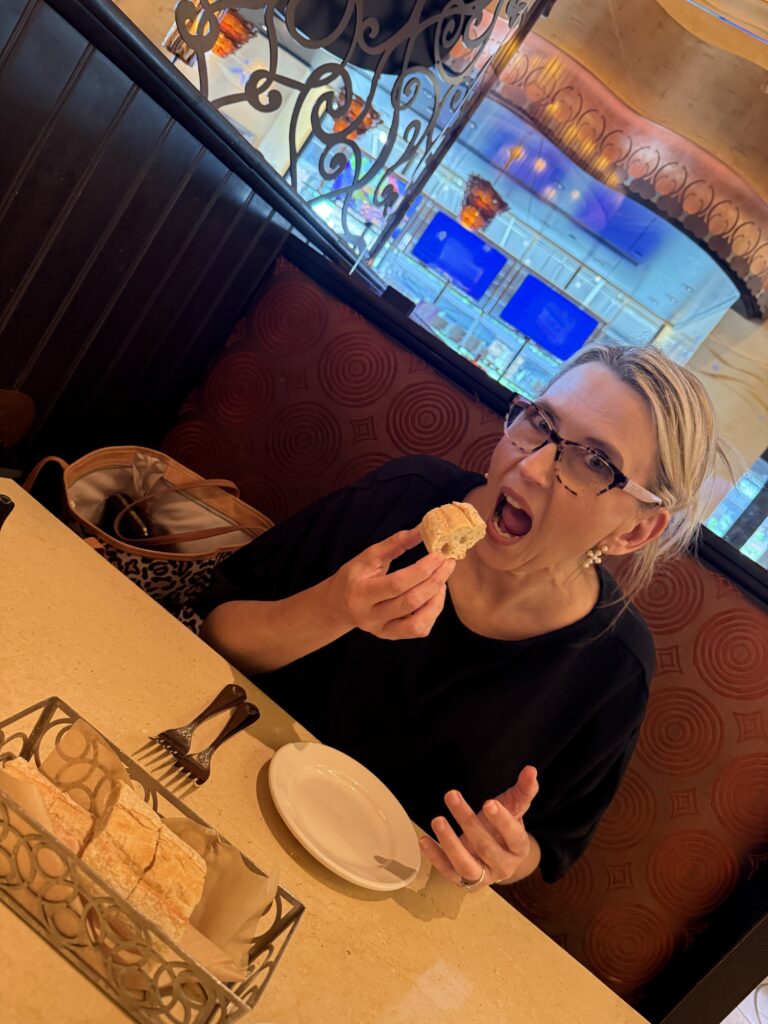
We always do Cheesecake Factory after a scan.
… if it doesn’t work out, I have peace with that too. At first I didn’t, but I can see now I have peace with whichever way this goes. I’ll be okay.
Tawanna T., follicular lymphoma patient
What motivates Tawanna most: Children, grandchildren, and Barry
Tawanna: My girls, my daughters, and my grandchildren. And Barry. I want to be here for them. I want to see my children and my grandchildren have the faith that I have. I want to see where their lives take them.
I have a 16-year-old grandson who is actually in college in New York right now. I think he’s going to do something great. He’s so smart. I want to see who they become.
And I don’t want to leave Barry by himself, because he is not going to give my shoes to another woman. So I’m going to stick around.
But as I said before, if it doesn’t work out, I have peace with that too. At first I didn’t, but I can see now I have peace with whichever way this goes. I’ll be okay.
Special thanks again to Genmab for its support of our independent patient education content. The Patient Story retains full editorial control.
Inspired by Tawanna and Barry's story?
Share your story, too!
More Follicular Lymphoma Stories
Tawanna T., Follicular Lymphoma, Stage 3
Symptoms: Incidental finding during pre-kidney donation scan
Treatment: Watch and wait/active surveillance

Laura C., Follicular Lymphoma, Stage 4 (Metastatic), Grade 1 to 2; Papillary Thyroid Carcinoma
Symptoms: Incidental finding after hysterectomy (follicular lymphoma), thyroid nodule detected on imaging (papillary thyroid carcinoma)
Treatments: Immunotherapy (rituximab and lenalidomide or R² regimen), surgery (thyroidectomy)
Hayley H., Follicular Lymphoma, Stage 3B
Symptoms: Intermittent feeling of pressure above clavicle, appearance of lumps on the neck, mild wheeze when breathing and seated in a certain position
Treatments: Surgery, chemotherapy
Laurie A., Follicular Lymphoma, Stage 4 (Metastatic)
Symptoms: Frequent sinus infections, dry right eye, fatigue, lump in abdomen
Treatments: Chemotherapy, targeted therapy, radioimmunotherapy