
Ruchira’s Stage 4 ALK+ Lung Cancer Experience, Biomarker Testing, and Breaking the Stigma
When a mild, on-and-off cough first appeared in 2021, Ruchira never imagined it would lead to a diagnosis of stage 4 ALK-positive lung cancer. Healthy, active, and a lifelong nonsmoker, she was juggling work, travel, and time outdoors in Vancouver, British Columbia, when her dad urged her to get the cough checked. An X-ray, CT scan, and ultimately a PET scan and biopsy revealed adenocarcinoma in her left lung, shattering her assumption about lung cancer.
Interviewed by: Taylor Scheib
Edited by: Katrina Villareal
The road to that first diagnosis was long and emotionally draining. In Canada’s system, it took about eight months from the initial imaging to confirm lung cancer, as Ruchira cycled through scans, bronchoscopy, and biopsies, while hoping it might be something like tuberculosis instead. “It’s not only me, but also my family that’s along this ride,” she says, recalling how her father even suggested she return to India for faster care. Surgery offered early hope; margins were clear after a lobectomy, and everyone believed the cancer had been removed.

Within months, though, new symptoms surfaced. A low-grade fever, relentless coughing, and eventually coughing up blood led to more tests, the discovery of a collapsed left lung, and the news that her cancer had not only returned but had progressed to stage 4. Ruchira describes this second diagnosis as “mind-boggling,” coming before she had processed the first. She felt exhausted, scared, and deeply aware of how little control she had, even while self-advocating and staying on top of appointments.
Biomarker testing changed the direction of her experience. Learning she was ALK positive opened the door to targeted therapy, and Ruchira began a once-daily pill that she calls a “miracle drug.” Within a week, her many symptoms eased, and within three months, she was told there was no evidence of disease.
Today, Ruchira frames her stage 4 ALK-positive lung cancer as a serious but treatable condition, one she manages while rebuilding her career, planning future travel, and investing in stress management and spirituality. She now speaks openly about biomarkers, stigma, and the importance of sharing stories so others feel less alone and know that advanced lung cancer is not always a death sentence.
Watch Ruchira’s interview or read the edited transcript below to find out more about her experience:
- How listening to subtle symptoms, like a mild intermittent cough, can lead to earlier testing and answers, even when you feel otherwise healthy
- Why long diagnostic wait times can compound fear and uncertainty for both patients and families, making self-advocacy and persistence especially important
- How biomarker testing can dramatically change treatment options, opening doors to targeted therapies that may control stage 4 ALK-positive lung cancer with fewer side effects than chemotherapy
- How a targeted therapy pill transformed Ruchira’s experience from escalating symptoms to no evidence of disease, allowing her to return to many of the activities she loved and to rethink what life with stage 4 cancer can look like
- Every person’s cancer experience is unique, but no one should feel blamed or shamed
- Name: Ruchira A.
- Age at Diagnosis:
- 53
- Diagnosis:
- Non-Small Cell Lung Cancer (NSCLC)
- Staging:
- Stage 4 (Metastatic)
- Mutation:
- ALK
- Symptoms:
- Mild intermittent cough while talking
- Low-grade fever
- Severe nonstop cough
- Coughing up blood
- Collapsed left lung
- Treatments:
- Surgery: lobectomy
- Targeted therapy
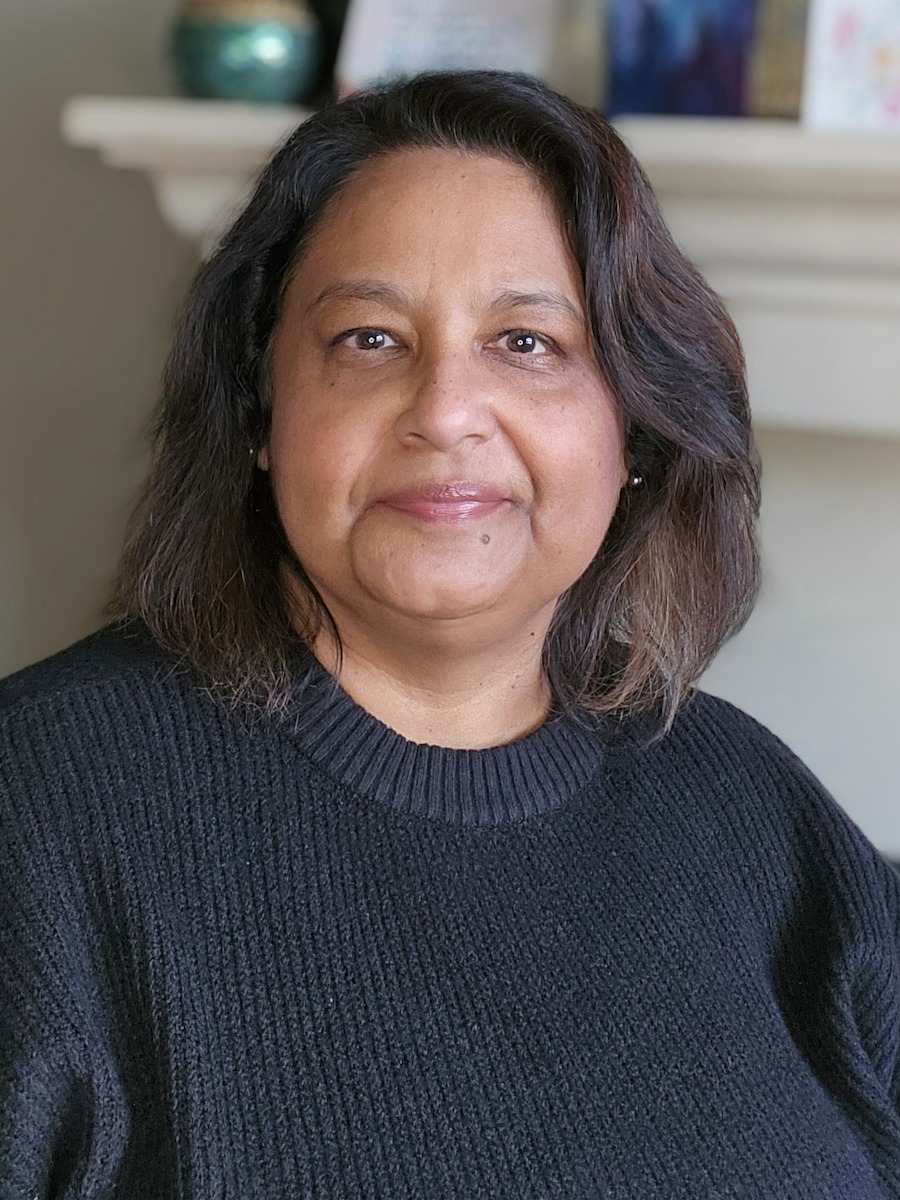

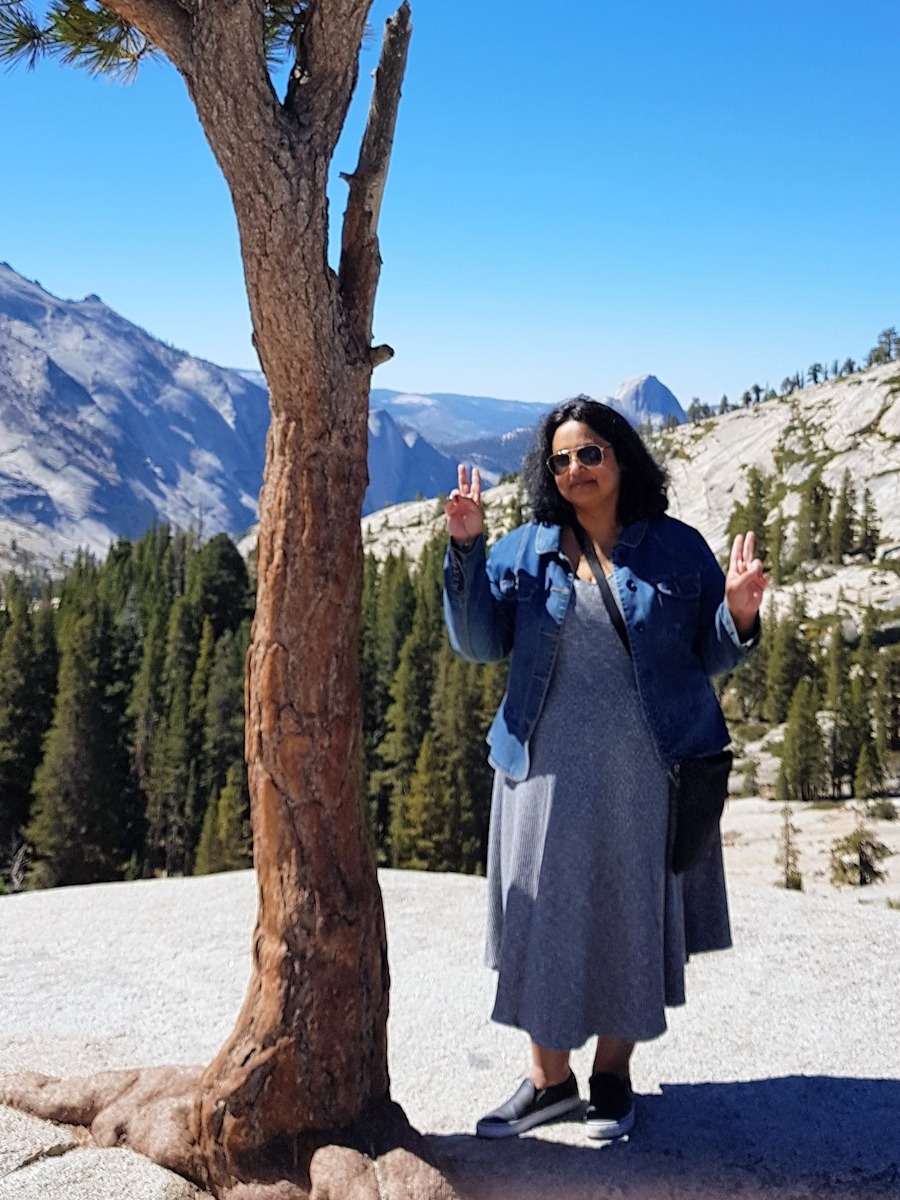
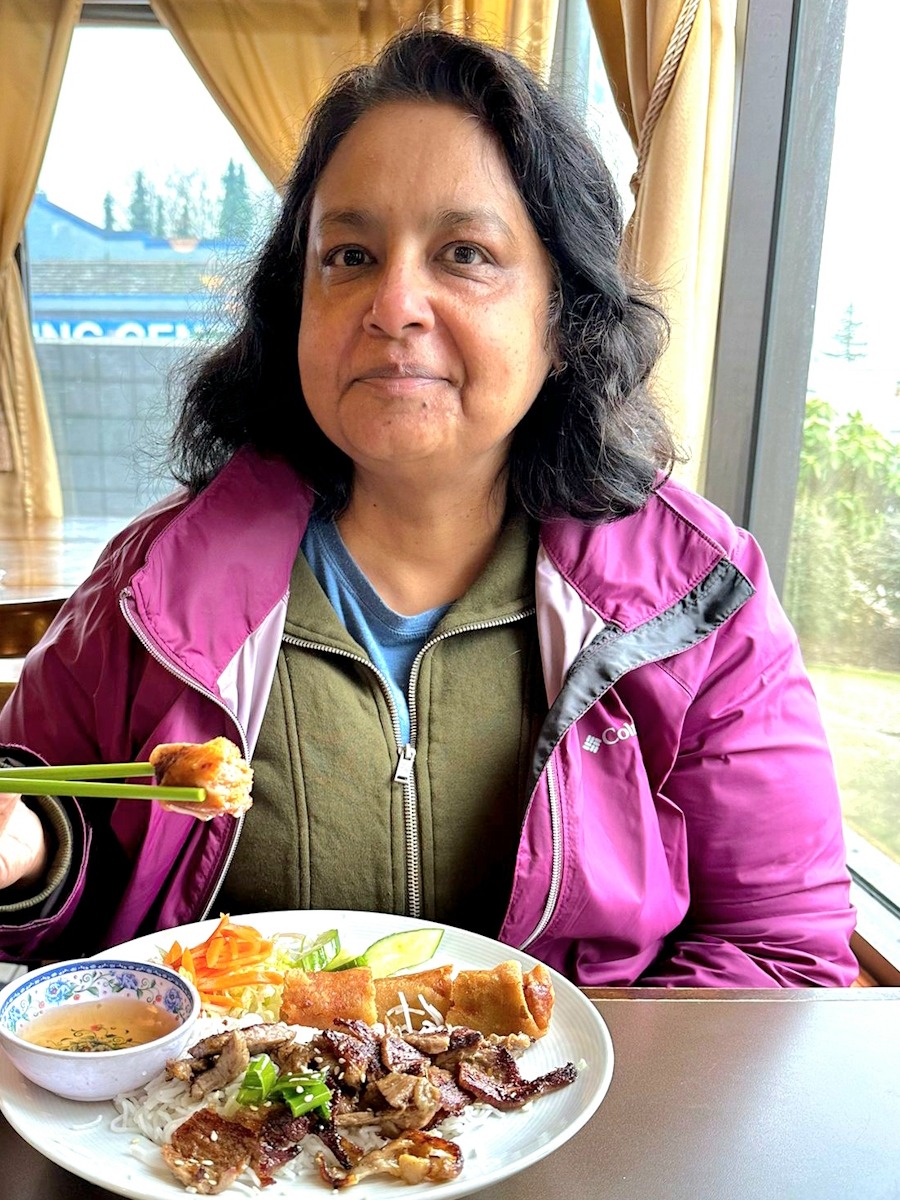
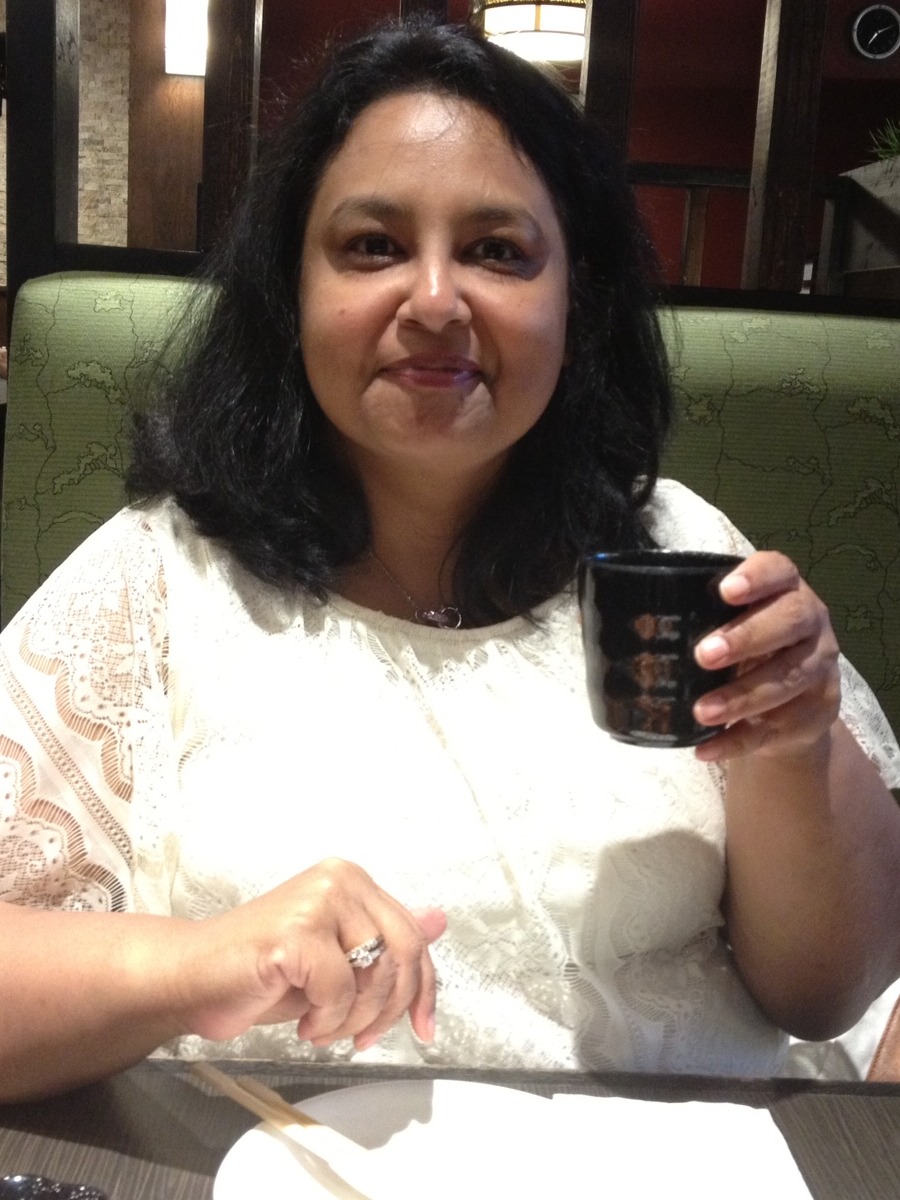
This interview has been edited for clarity and length. This is not medical advice. Please consult with your healthcare provider to make informed treatment decisions.
The views and opinions expressed in this interview do not necessarily reflect those of The Patient Story.
- Who I Am
- What My Symptoms Were
- The Shock of My Diagnosis
- The Agony of Wait Times
- I Didn’t Know Much About Lung Cancer
- The Cancer Came Back
- Processing the Second Diagnosis So Soon After The First
- Continued Waiting During the Second Diagnosis
- Discovering ALK-Positive and Biomarker Testing
- Targeted Therapy: My “Miracle Drug”
- Redefining Stage 4 and Finding a New Normal
- Becoming an Advocate and Sharing My Story
- Breaking the Stigma Around Lung Cancer
- Looking “Well” While Living with Stage 4
- What I Want Others To Know
Who I Am
My name is Ruchira. I was diagnosed with lung cancer. I’m a two-time survivor of ALK+ lung cancer. My first diagnosis was in May 2023, and my second diagnosis came the same year in October. I currently live in Vancouver, BC. I have been in North America for almost 26 to 27 years. I first lived in California and then moved to BC.
I enjoy many things. I enjoy the outdoors, nature, walking, hiking, and photography. I got into photography during the COVID pandemic. I started with food photography, then moved to landscape photography.
Traveling is about experiencing new cultures, new places, and new people. My parents were that way, and I think the love of traveling comes from them. I have traveled to quite a few places before cancer happened.
What My Symptoms Were
I was leading a normal life, a good life. I was working, traveling, and doing all of the regular things. In 2021, I started coughing a little bit when I would talk on the phone. My dad was the first person who noticed. He said maybe I should go to the doctor and have it checked.
I didn’t pay any attention to it because I was healthy. I had no health conditions. I didn’t feel any other symptoms either. The cough was very mild and intermittent. It wasn’t persistent. I thought maybe it was just a bug that I picked up and that it was going to resolve itself. A year went by and sometime in the middle of that year, the cough went away.
Another year went by and I got COVID, which is what made me go to the doctor. I told her that I had this cough and she promptly ordered an X-ray. The X-ray showed something, so the radiologist recommended that I get a CT scan done. She ordered a CT scan and they found a 3.5-centimeter mass on the lower lobe of my left lung.
After that, I was given a referral to a thoracic surgeon. I asked him if this mass was something to be concerned about. He asked me a bunch of questions and based on my responses, he thought that it was benign. I was living in the hope that maybe it wasn’t going to be anything. He ordered some pulmonary tests, a PET scan, a bronchoscopy, and a biopsy. My bronchoscopy and pulmonary tests were fine, but my PET scan and biopsy gave us the confirmation that it was adenocarcinoma and primary lung cancer.
The Shock of My Diagnosis
It was shocking. It was a long diagnostic process, but all throughout, I was hoping that it was a mistake. Maybe there was some confusion. I was traveling to India a lot, so maybe it could be tuberculosis or something else. I was hoping that. When you’re a nonsmoker, young, and healthy, you don’t think that it could be something as serious as lung cancer.
It was shocking. My first reaction was, “Oh my gosh, what do I need to do next? How do we move forward and handle this and solve this problem basically?”
The Agony of Wait Times
There is a big issue here. It took me six months to get my PET scan and another two months to get my bronchoscopy and biopsy. It was eight months in all. A lot of time went by because I was hoping that it would not be lung cancer. By the time the PET scan happened and we found out that there was this spiculated mass, we knew that it was moving in the direction of lung cancer.
It was difficult. It’s not only me, but also my family that’s along this ride. My dad even started to say that maybe I needed to go back to India and get the ball rolling there. It was very difficult.
I Didn’t Know Much About Lung Cancer
I had very little knowledge of lung cancer. We don’t have any family history of cancer. My knowledge was very limited. I had a lot to get up to speed on, not only about the disease but also about biomarker testing and available treatment options.
My original understanding was that lung cancer is one disease and it is treated by surgery and traditional treatments, like chemotherapy and radiation. As I went along the journey, I found that there is biomarker testing and the implications of that on treatment.
The Cancer Came Back
At that point, I didn’t even know about a recurrence. I had gotten my lobectomy done and was getting out of the hospital. My brother was with me and I was coughing again. He jokingly said, “This is why we went and got this surgery done in the first place, and here you are, coughing again.” I didn’t think it was anything because I was just getting out of the hospital.
When I had my follow-up with my surgeon, I told him about this. He responded that it’s something that some patients face after a lobectomy, that I should give it time and it would get better. I started focusing on my recovery and didn’t think anything of it.
In July, the symptoms, even the cough, settled down. August is when new symptoms began to emerge. I had a low-grade fever. The cough then became nonstop from morning to night. It was so bad that I couldn’t even talk to anybody. WhatsApp and emailing were my ways of communicating with people. There was also blood in my cough. I called my surgeon, of course, who began ordering tests again.
By October, I was back in the hospital. We did a bronchoscopy again and found out that I had a collapsed left lung and it would not stay inflated. We also found out that there was another tumor and the cancer was back. We did a PET scan and found out that it was stage 4.
Processing the Second Diagnosis So Soon After The First
It was so mind-boggling that it could come back so soon. You wonder what happened. I had just had the surgery. My margins were clear. The surgery was successful, so you wouldn’t think that it would come back so soon.
I hadn’t even begun to digest the shock of my first diagnosis, yet here I was dealing with a second one.
It was very scary to see blood. I was so mentally and physically exhausted by then, after having the surgery, nonstop coughing, and then seeing blood in it. It’s a lot to handle. The symptoms were the most difficult part of my journey.
I also felt that things weren’t in my control. You’re trying to do your best. You’re self-advocating. You’re on top of things as a patient. Yet the disease is progressing from stage 1 to stage 4. You think you’re curable. One minute, everything has gone fine and the cancer is out. The next minute, you find out that it’s incurable. It’s a lot to deal with mentally and emotionally.
Continued Waiting During the Second Diagnosis
The second time around still took about four to five weeks. As a patient, I was thinking that every day, something must be happening for this to be progressing that quickly, so every day matters. Four or five weeks is still a long time, so it probably contributed.
Discovering ALK-Positive and Biomarker Testing
After I got my first diagnosis, I started to read about the disease. I came across the ALK Positive group on Facebook. I was learning everything and reading everything that I could about this disease. Once I had my lobectomy and went for my follow-up, my surgeon had already ordered a FISH test, which is how I found out that I was ALK positive.
It was good that I found all this information from that Facebook group. I was reading people’s stories there as well. That is where I realized that two people can have lung cancer, but how their cancer behaves is dependent on biomarkers. I also learned how finding out about what gene mutation or fusion you have is so important because it has implications for finding the correct treatment for you.
Targeted Therapy: My “Miracle Drug”
I am currently on targeted therapy, and it’s amazing. It has been a miracle drug for me. I had so many symptoms by the time my treatment started, but within a week of taking this drug, they all went away. In three months, I was declared to have no evidence of disease (NED).
It’s pretty easy. I take one pill a day, which feels like managing some type of chronic disease. There are fewer side effects than there would have been if I had chemotherapy. It has extended my life. It’s easy to manage. Yes, there are side effects, but there are fewer, so that’s good.
Redefining Stage 4 and Finding a New Normal
When I was going through my cancer year and all these events were happening, it was scary. I didn’t know what my life was going to be. In some ways, things have changed. But in many ways, I have been able to get back to the things in my life from before. That has been remarkable.
I feel so grateful and blessed that a targeted therapy drug exists for me. It’s amazing.
Cancer changes you. You have to go through the process and experience it. You want to get back to your old life, but in many ways, you’re not going to get it back. The changes are so subtle and so deep.
As I’m rebuilding my life after cancer, I’m focusing on stress management. I took some courses on stress management and spent more time on spirituality. I took some courses in breathwork, things that I had not done before. I started to do that. You listen to yourself a little bit more. You try to live fully. The things that used to hold you back before, you don’t allow them to hold you back anymore.
Becoming an Advocate and Sharing My Story
It has taken me some time. Once I found out that I was NED, I wanted to move on. I didn’t want to talk about cancer. I was so mentally and physically exhausted. I had a lot to process, which is what I did.
Around August 2025 or so, I felt like this was an experience that happened in my life and I needed to do something about it. I wasn’t on social media before, so I started an Instagram account and started sharing my experience, what worked for me, and what did not work for me.
Now I am thinking that the least I can do is share my story and educate others. I’m sure some people were like me, who carried a lot of stereotypes about lung cancer. Things like it’s a smoker’s disease or that it’s one disease and you do not know about these gene mutations that cause cancer. You think it is a lifestyle. You think, “Did I do something wrong? How did this come about?” It’s important to realize that there are many risk factors.
Breaking the Stigma Around Lung Cancer
There shouldn’t be any stigma to begin with. It’s not a moral failure. Lung cancer is a biological disease. It can happen to anyone. There are risk factors. Smoking is the number one risk factor, but there are other risk factors, too. Sometimes it could just be a random cell change that makes this cancer happen. For example, for me, ALK-positive is a gene rearrangement that caused this.
Sometimes you don’t have to do anything at all and this can still happen. There shouldn’t be stigma. People should feel comfortable getting themselves checked and getting help. They should not feel that they need to take any blame or shame for it.
Looking “Well” While Living with Stage 4
Strangers look at me and don’t realize that I’m a stage 4 cancer patient. I’m alone all the time.
I had that thought when I got diagnosed. “Is my life over?” But that’s not the truth. It’s not always a death sentence. With all these advances that are being made in treatment options, people are living longer lives. There is nothing to fear, I would say.
Now I’m starting to live my life. The past couple of years have been about adjusting to the side effects, managing them, and getting to grips with everything that has happened. Now I feel like I want to get out there. I want to do some work around this as well.
I’m focusing on building my career and moving forward. I’m looking forward to traveling again.
What I Want Others To Know
Even if you’re a nonsmoker and healthy, listen to your body. If there’s any little sign or change, go to the doctor and have yourself checked. Do not put it off, as I did.
You need to explore your treatment options and not fear lung cancer being a death sentence.
People should also go out and share their stories. I don’t know how many people do. I read somewhere that for lung cancer, people don’t share as much or it’s not mainstream. Recognizing the importance of why every story matters is key. It gives hope to patients and makes them feel less alone. It gives data to the medical community, to researchers, and it’s important for funding. People should share their story, like I am right now.
Inspired by Ruchira's story?
Share your story, too!
Learn about Lung Cancer Biomarkers
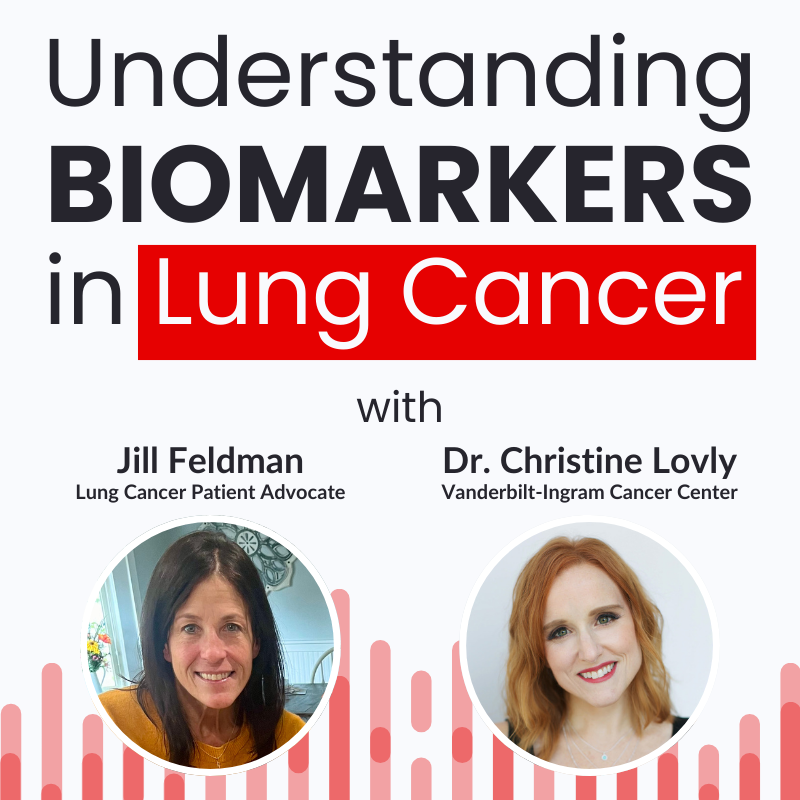
What does “biomarker testing” actually mean in lung cancer? How can it change your treatment options? Jill Feldman and Dr. Christine Lovly explain it in plain language, including tissue vs. blood testing and questions to bring to your next appointment.
More ALK+ Lung Cancer Stories
Clara C., Non-Small Cell Lung Cancer, ALK+, Stage 4 (Metastatic)
Symptoms: Pelvic pain and discomfort, bladder issues related to pelvic tumors, incontinence, pain in the lower back and hip
Treatments: Chemotherapy, immunotherapy, radiation therapy, targeted therapy (lorlatinib)
Stephanie K., Non-Small Cell Lung Cancer, ALK+, Stage 4 (Metastatic)
Symptoms: Persistent and intense cough, general feeling of sluggishness
Treatments: Chemotherapy, targeted therapy through a clinical trial, radiation therapy

Ruchira A., Non-Small Cell Lung Cancer, ALK+, Stage 4 (Metastatic)
Symptoms: Mild intermittent cough while talking, low-grade fever, severe nonstop cough, coughing up blood, collapsed left lung
Treatments: Surgery (lobectomy), targeted therapy

Laura R., Non-Small Cell Lung Cancer, ALK+, Stage 4 (Metastatic)
Symptoms: Persistent cough, fatigue, bone pain
Treatments: Targeted therapies (tyrosine kinase inhibitors or TKIs, including through a clinical trial)

Shauna D., Non-Small Cell Lung Cancer, ALK+, Stage 4 (Metastatic)
Symptom: Persistent dry cough following a cold
Treatments: Targeted therapy (tyrosine kinase inhibitors), radiation therapy