
The “Luckiest Unlucky Person”: Young Mom Laurel’s Kidney Cancer Experience
Clear cell renal cell carcinoma (ccRCC), the most common type of kidney cancer, can sound clinical on paper. For Laurel, however, it was anything but clinical. Her experience unfolded in the middle of new motherhood, sleepless nights, and Manitoba winters as chilly as -40°C (-40°F). At 33, Laurel was enjoying maternity leave with her baby when a sudden, excruciating gallbladder pain sent her to a rural emergency room. Imaging to confirm gallstones also revealed a tumor on her left kidney, leading to a diagnosis of early-stage clear cell renal cell carcinoma and a plan for partial nephrectomy.
Interviewed by: Carly Knowlton
Edited by: Chris Sanchez
Before the diagnosis, life felt full and ordinary in the best way. Laurel describes how she finally loved being a mom after a difficult first few postpartum months, and savoring simple joys like skating, building backyard toboggan slides, and tending her white picket-fenced garden. That everyday joy made the call confirming that she had kidney cancer, which she received on her husband’s 40th birthday, all the more surreal. Her family doctor was direct about the likelihood of cancer, and a network of advocates, including an ER physician, nurse navigator, and urology team, moved quickly to get her into surgery.
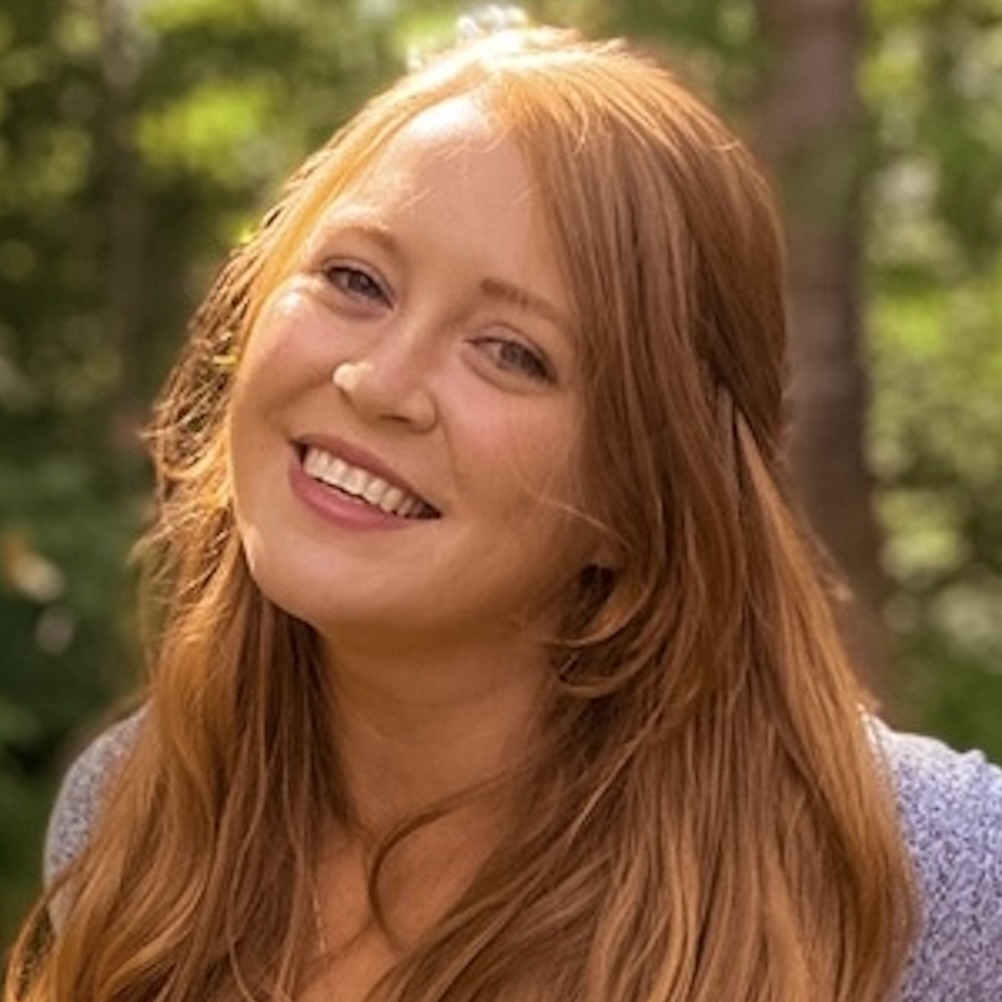
Laurel underwent a laparoscopic partial nephrectomy with the understanding that she might need to have a full nephrectomy if necessary. Pathology later showed cancer cells close to one margin, but her urologic oncologist was confident that the extensive cauterization eliminated any remaining cells. While the clear cell renal cell carcinoma was addressed surgically, Laurel required emergency gallbladder removal and an endoscopic retrograde cholangiopancreatography (ERCP) to diagnose and treat issues in her bile ducts and pancreatic ducts. She ended up spending more time in the hospital for these complications than for the kidney surgery itself.
Emotionally, Laurel describes compartmentalizing to move through crisis — delegating research to her sister in clinical research, childcare to another sister, and advocacy to a cancer nurse navigator. The most painful moment came when she realized she needed to write a will and create memory albums for her young son, in case he grew up without remembering her. Over time, therapy helped her process the experience. Hearing “no evidence of disease” on an early CT scan brought profound relief and, unexpectedly, improved mental health; she now cares far less about others’ opinions and more about being present for her child and listening closely to her body.
Watch Laurel’s video and read through the edited transcript of her interview for more about her kidney cancer story.
- Listening to new, severe, or persistent symptoms, like Laurel’s gallbladder attack, can sometimes reveal serious conditions such as early-stage kidney cancer and change the course of care
- Delegating both the emotional and logistical load to trusted people, like family, nurse navigators, and clinicians, can make complex treatment and recovery more manageable
- Taking symptoms seriously and advocating when “something doesn’t sit right” is not overreacting; it is an essential part of your health experience
- Complications from treatment and other health issues, like gallstones, cholecystitis, and pancreatitis, can be more painful than kidney cancer surgery itself, and deserve equal attention and support
- Laurel describes a powerful transformation: what she expected to be a long-term mental health burden instead became an experience that clarified her priorities, reduced worrying about others’ opinions, and deepened her focus on her son and her values
- Name: Laurel M.
- Age at Diagnosis:
- 33
- Diagnosis:
- Kidney Cancer (Clear Cell Renal Cell Carcinoma)
- Staging and Grade:
- Stage 1, Grade 2
- Symptom:
- Gallbladder attack resulting in extreme pain in sternum
- Treatment:
- Surgery: partial nephrectomy


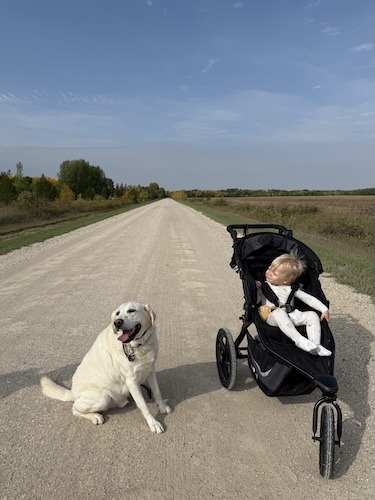
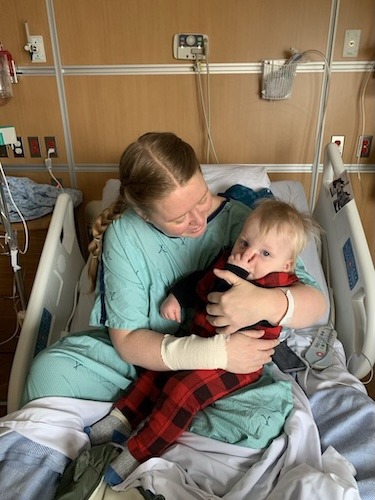
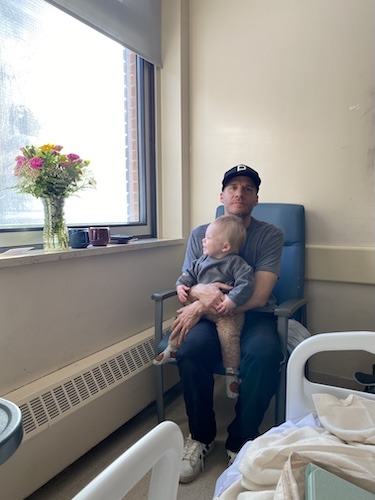

This interview has been edited for clarity and length. This is not medical advice. Please consult with your healthcare provider to make informed treatment decisions.
The views and opinions expressed in this interview do not necessarily reflect those of The Patient Story.
- My name is Laurel
- Hobbies, passions, and life in Manitoba
- I had a gallbladder attack that revealed I had kidney cancer
- Hearing there was a tumor on my kidney
- Life as a new mom before diagnosis
- Getting the exact kidney cancer diagnosis
- My kidney cancer treatment plan and surgery options
- Going in for kidney surgery
- Recovering after my partial nephrectomy and gallbladder surgery
- Comparing pain: Kidney surgery vs. gallbladder complications
- Processing a kidney cancer diagnosis after everything happened so fast
- The hardest part emotionally: Writing a will for my son
- Coping with kidney cancer as a young mom
- How cancer changed my outlook on life
- Seeing “No Evidence of Disease” on my scan
- Mental health after cancer and the role of therapy
- Advocating for myself and support from my care team
- Navigating motherhood while facing cancer and my son’s illness
- Hearing “It’s so rare” again and again
- Advice for others facing cancer or supporting a loved one
- Financial preparedness and the cost of cancer and caregiving
- Listening to your body and not delaying care
My name is Laurel
I’m from Manitoba, Canada. At age 33, I was diagnosed with clear cell renal cell carcinoma. It was stage one and grade two.
This occurred in December 2024. I had my partial nephrectomy in January of 2025.
Hobbies, passions, and life in Manitoba
I really love just being outdoors any chance we get.
We get all four seasons here. It goes from plus 40 Celsius sometimes in the summer on really hot days to almost minus 50 Celsius on cold days in the winter. Any chance we get the in-between weather, we are outside, whether it’s on the skating rink or building a toboggan slide in our backyard, or we are just in the front garden. We live on a little river. I literally built a white picket fence around the garden at my house and attempt to garden when I have time. Some years are easier than others, but even when it’s weedy, I still find a little bit of joy in it.
I had a gallbladder attack that revealed I had kidney cancer
I was home alone with my son, who at the time was around nine months old, and I started getting this extreme pain in my sternum. It almost felt like a heart attack, to the point where it got so bad that I was afraid that if I called 911, they would not get to me in time. It was so extreme that I could not breathe. I live five minutes from a hospital that sometimes has an ER open. I took a chance and drove my son and myself there, basically hobbled through the door with him in one arm, and they ran to me, grabbed my baby, and immediately got me in. They did an EKG to make sure it was not a heart attack.
Thankfully, the ER doctor who was there that day had also had a gallbladder attack when she was postpartum after she had a child. It can be pretty common after pregnancy, and she recognized the symptoms right away and said, “This is a gallbladder attack.” Because I live in a rural area, that hospital did not have what they needed to do the ultrasound to confirm it. I had an appointment at a different hospital that I went to for that.
When they did the ultrasound to confirm the gallbladder attack and find the gallstones, which they did, they also found a tumor on my left kidney.
Hearing there was a tumor on my kidney
I have a really good family doctor, and he shoots it to me pretty straight. I am the kind of person who appreciates that. I do not like sugarcoating things that are not sugarcoated. If it is bitter underneath, do not try to trick me with sugar on it. So he was pretty honest with me and said that most kidney tumors end up being cancerous.
The ER doctor from our rural hospital, when she got the report, even though I was technically not a patient there anymore, gave me a call and said she was referring me for an urgent CT scan. She went above and beyond as well. Then my own doctor was looped in, and that is how the process went once I found out it was a tumor. It was actually my husband’s 40th birthday, December 5th, when I got the call saying it was cancerous. After the CT confirmed it as much as a CT scan can, they did it with dye and were basically 99.9% certain it was cancer at that point.
Life as a new mom before diagnosis
Life was really good. The first three months of postpartum were really rough, but I was finally in that stage where I was loving being a mom.
I was getting some sleep, and I was on maternity leave because in Canada, you can take up to 18 months. I had planned to take about 14 months, so I was getting close to the end of my maternity leave. I was really enjoying my time with my son, spending more time with family, and just really loving life.
Getting the exact kidney cancer diagnosis
Once I received the pathology report, they told me what type of kidney cancer it was, how aggressive it was, and were able to confirm it did not enter the vein there as well, so how likely it would be to spread. The pathology report gave those details. My family doctor got it before I even had my appointment with my urologist–oncologist. He gave me that printed-out report, which was really good.
By the time I went to see the urologist, the student there came in to try to give the report and misinformed me, telling me my margins were all clear. They actually were not, which I already knew because I had the pathology report myself. I just said, “No, they are not.” Then my oncologist came in and explained that, unfortunately, there was a little bit missed that did not look like a tumor. They had cut a really good size around it, and there were still some cancer cells found in one of the margins. He said that with the amount they had to cauterize my kidney, it is highly unlikely that any cancer cells were left. The cancer cells were still contained within the margin, so they did not hit the actual outside. He was pretty confident that, despite the margins not being clear, the cancer cells were all removed.
My kidney cancer treatment plan and surgery options
The first option was a laparoscopic partial nephrectomy. Based on the imaging they had, they said once they were in there, they might need to do a full nephrectomy and open surgery.
I signed off on all that ahead of time as well — basically, do what you need to do to get it out. The plan going in was always surgery based on the information we had.
Going in for kidney surgery
It was really an out-of-body experience because this all happened so fast, thankfully. Here, urology is really backed up. Most people have to wait months to get even cancer surgery. I had a lot of people on my team who pushed it forward more. They do not often see young moms come in with kidney cancer, so I think they were really empathetic to the fact that I am not an 80-year-old man. I am a young mom with a child at home. I had a baby in their office with me, and I think that had an impact.
There were numerous people. I had a nurse advocate who called offices, took the time to explain my situation, and really pushed forward for me to have that appointment sooner. I found out about the tumor at the end of November, got the call on December 5th about it likely being cancer, and by January 3rd, it was time for my surgery.
It all happened so fast that I think I was temporarily emotionally paralyzed and was just so excited that I did not have to wait. The worst stage of cancer is the wait between when you find out and when a solution starts to take action. I was very fortunate that I did not have to linger in that phase as long as a lot of people do.
Recovering after my partial nephrectomy and gallbladder surgery
I could not lift my baby for six weeks. That was really hard. They had not taken out my gallbladder yet because they were just kind of like, “Who cares about the gallstones? We need to get rid of this cancer.” They hoped the gallstones would not cause me trouble. Three days before my partial nephrectomy, I started projectile vomiting again and having episodes from the gallstones. Because the surgery for my kidney was on my left side and the surgery for the gallstones would be on the right side, they did not have the capacity to tackle both at the same time, and at the time, they did not think they needed to. They thought I was just having an episode and hoped I would not go through it again during recovery.
By mid-January, I started having severe gallbladder attacks, which compromised my comfort during recovery. I ended up back in the hospital needing emergency surgery to have my gallbladder removed about two weeks after my partial nephrectomy. They had wanted to wait at least three months to put me under general anesthesia again, ideally. There was no option at that point. I could not eat or drink fluids at all without getting severely ill. Because of the wait to remove my gallbladder, I developed cholecystitis, inflammation around the gallbladder. The gallstones had traveled outside of it. I developed jaundice and started turning yellow. I was like a Simpson at one point.
This was even after my gallbladder was removed. I ended up being in the hospital longer for that than I did for my partial nephrectomy, because I needed an ERCP to remove the gallstones and then developed pancreatitis. That was the month of January. The first bit of my recovery looked like a fluke situation where, wow, thank goodness this gallbladder attack helped catch my cancer, but it was very painful and compromised my recovery. I had two surgeries back-to-back and then, as I said, developed jaundice and pancreatitis because of the stent they had to put in because of the gallstones. I was not fully pain-free until about May.
Comparing pain: Kidney surgery vs. gallbladder complications
It is a tough call. The gallbladder issues were more painful in the moment than the partial nephrectomy. When I gave birth, I had to be induced without an epidural, which was highly painful. I do not recommend it. The gallbladder pain was up there with that, but for days and days and days. I would say the whole jaundice, pancreatitis, gallstone situation was a lot more painful than the partial nephrectomy.
Thankfully, they managed to do the partial nephrectomy laparoscopically. It was still very sore, and I had to regain muscle mass, deal with scar tissue, and pain from the cauterization they had to do on my kidney. I developed a bit of a hematoma from that.
Overall, the complications I had from the gallstones were more painful than the partial nephrectomy, but the pain specifically from the partial nephrectomy lasted until about May before it was fully gone. That was because of the hematoma, they said, mostly because they had to cauterize so much.
Processing a kidney cancer diagnosis after everything happened so fast
I did not process it until afterwards. When going through a crisis, I turn off the emotional side of my brain and think, “I have to think logically.” Because it was so extreme, I had moments where that would slip, and in those moments, I thought I was going to have a panic attack. Then I would collect myself and say I needed to focus on problem-solving: how can I get this fixed as fast as possible, and who can I delegate to?
I like to research a lot and know my stuff, but my sister works in research as a project coordinator, so I knew I could rely on her to read the studies and advocate for me. She came to a lot of my appointments with me. I delegated tasks to her to take care of a lot of that for me. My other sister was basically my nanny and took care of my son a lot.
The hardest part emotionally: Writing a will for my son
The hardest part emotionally, before surgery, was realizing I did not have a will and that I had to write that out for my son. I still get emotional about it, because no one wants to write that when they are faced with a really serious situation. It is something I wish I had done when life was fine. It puts you in a spot where you are thinking, “What if something does happen to me, and he will have no memories of me?”
I put together an album on my computer of a bunch of photos and memories for him. I wrote him a letter and put together a general will as well, making sure I had all my affairs in order. That was hard to do after such a serious diagnosis.
Coping with kidney cancer as a young mom
I manage by knowing what is in my control and what is not, and knowing that once I have the information, I can problem-solve and do the best I can with the cards I have been dealt. I cannot choose those cards. I am not the dealer, but I can choose what I do with them and how I manage them. I always joke that I am the luckiest unlucky person ever, because of the number of times I have heard the word “rare” the last couple of years, but then something miraculous always happens. Getting in for my surgery on January 3rd, even though I was told it would be months, is an example.
I manage by believing that it is going to work out, not just by relying on miracles, but by finding solutions to help push it along, and making sure that if there are miracles going to happen, I do everything in my power to assist that.
How cancer changed my outlook on life
I definitely look at life differently now. It is one of those “Be careful what you wish for” things. I used to think it would be nice not to care so much what other people think. I want to be the best mom I can be, and to be that, I need to make sure I am putting my son before other people’s thoughts. When you get diagnosed with cancer, it has a funny way of suddenly making you really not care what other people think, and realizing that your life is yours and that it can change rapidly, even overnight.
Imagine it being your last day and making decisions based on the thoughts of others — not even their actual thoughts, but your thoughts of what other people’s thoughts are, which are not always accurate. We always have this narrative in our head, especially as women, of what other people are going to think if we pursue this or if we do that. Often, it is a narrative we have made up ourselves. Even if it is not, who cares?
Seeing “No Evidence of Disease” on my scan
I found out I had no evidence of disease when I had a CT scan earlier than planned. My family doctor ordered it because of the pancreatic stent. Because of all the gallbladder issues, I ended up having an earlier CT in May, and it came back showing there was no cancer. There was no evidence of disease.
It was such a weight off my shoulders. It was such a good feeling. It gives you more mental freedom. I know that can change. I have my one-year follow-up coming up in January, but I am not really worried about it. The strange thing is, I thought this would impact my life in such a negative way mentally, and it has kind of had the opposite effect.
Mental health after cancer and the role of therapy
I thought I would live my life in worry and be so paranoid. There are moments of that — anytime something happens, or you get sick, you get worried, or you have pains. Nowadays, people see things on the internet and worry like that anyway. If anything, the cancer has helped my mental health in the long run. Once I went to therapy and processed a lot of it and addressed how I felt about it, that was important.
Overall, the negatives have not outweighed the positives. The negatives really do not outweigh the positives of it mentally, because it has released a lot of nonsense from my mind that did not matter.
Advocating for myself and support from my care team
I did have to advocate for myself, but I also had a lot of help. There was my doctor, my sister, myself, and then the cancer care nurse advocate. I forget the exact title, but it is a program in Manitoba for people recently diagnosed with cancer. Those nurses help bridge the gap to make sure no one slips through the cracks. Their job is to advocate for you and connect you with resources for you or your family, mental health resources, information, and someone you can reach out to with questions while you wait. She really advocated for me.
Even the receptionist at the urology office played a role in advocating for me because she was the one who talked to the nurse. Everyone played a part. My oncologist–urologist also advocated for me. When I had my initial appointment with him, he said it would probably be a couple of months until he could get me in. I said okay. A couple of hours later, when I got home, an unknown number called. I picked it up, and he said, “Laurel, it is Dr. Sharon.” I said, “Oh, hi.” He said, “How does next Friday sound?” I think it was about a week and a half from my first appointment with him to when he booked me in for surgery. A couple of hours earlier, he told me it would be months, and it ended up being days.
He and the team really played a role. I can only imagine he had to manage his schedule, call up anesthesiologists, and not overpromise in my appointment. This was right after New Year’s. For all I know, maybe he even had the day off. There were strings pulled, and they suddenly got me in within a couple of days.
Navigating motherhood while facing cancer and my son’s illness
There have been some hard times. My son had recently been sick. He is such a happy little guy. He makes being a mom so easy. He is so funny, and I truly enjoy his company. He is such a character. On October 6th, he spontaneously stopped walking out of nowhere. He went from being a super-active, typical toddler boy to not walking, irritable, having all these issues, and not eating.
I took him to the hospital five separate times. They said it was some form of post-viral illness and eventually thought it was post-viral arthritis. Something did not sit right with me. It just did not make sense. I kept advocating and took him to his pediatrician, who assessed him and agreed it did not seem like post-viral arthritis. I called rheumatology, where he was referred, talked to the nurse, and said I needed an immediate reevaluation. They got us in as soon as possible and referred him to a neurologist. There is only one pediatric neurologist who does these tests between Manitoba and Saskatchewan.
As soon as she was back in Manitoba, she saw my son, did the tests that were required, and confirmed he did not have post-viral arthritis. He had Guillain-Barré syndrome. It is a post-viral illness that attacks the nervous system. That was five weeks of him being unable to walk on his own, and he has recently started walking on his own again. He is such a trooper. She said he should have been immediately hospitalized and treated with a drug that calms down the immune system, and we are very fortunate that, miraculously, he just started recovering.
I was back at work for two weeks. I had taken time off work to process everything from the cancer and make sure mentally I was able to take that on again. I was back for two weeks when this happened, and then had to go back on unpaid leave to take care of him. I have been off since around October 6th, just caring for him at home until he is better.
Hearing “It’s so rare” again and again
They said those words again: “It is so rare.” It is so rare, especially in toddlers.
I would prefer not to hear that phrase anymore.
Advice for others facing cancer or supporting a loved one
Delegate to people you trust. Delegate the mental load and the physical load. People will hopefully step up for you and offer, and when they do, accept that help. I do not know what I would do without the people who helped me, whether emotionally or by taking care of my son. I could not hold him for six weeks, and my husband had to go to work because I was not working. We were not expecting me to be off work that long. Accept the help.
Another thing is to try to live within your means in case this happens to you. When something like this happens, it is going to be a financial burden. Having savings or making sure you are living within your means and not stretching too thin, even if you seem healthy, is important. You just do not know. That can mean life insurance or other insurance that covers you if you get cancer or need time off work. Find a way to prepare financially for emergencies like this.
Financial preparedness and the cost of cancer and caregiving
It is important. I do not know what I would do if I had to go back to work sooner than I did, or even now. I had to prioritize my health and then prioritize my son’s health. It is bad luck that all of this happened within one year, during which I could not work again. It is mind-boggling.
Had we not been in a financially safe space, the stress that finances can cause — I cannot fathom how much worse this would have been.
Listening to your body and not delaying care
Some topics feel almost too sensitive because you do not want to scare people. You hear how rare it is in young people for this to happen, but then you are also hearing how often it is happening now in young people. Do not delay if you notice serious, consistent changes in your body. Not every cancer will have signs, but sometimes whatever else is going on in your body might be trying to point you in a direction.
In my case, it was not my kidney cancer that made me go to the hospital, but I listened to my body and went to the emergency. In the past, I was not always good at that. I would go to the doctor too late for things. The timing lined up so that it helped catch something else. Even if cancer does not produce symptoms, something else might, and it can help save your life if you listen to your body.
Inspired by Laurel's story?
Share your story, too!
More Kidney Cancer Stories
Maria F., Kidney Cancer (Wilms Tumor)
Symptom: Back pain
Treatments: Surgery (nephrectomy), chemotherapy, radiation
...
Mia H., Kidney Cancer (SMARCB1-Deficient Renal Cell Carcinoma, Non-Sickle Cell Trait), Stage 4
Symptoms: Bad cough, fatigue, nausea
Treatments: Chemotherapy, radiation, immunotherapy
...
Alexa D., Kidney Cancer, Stage 1B
Symptoms: Blood in the urine; lower abdominal pain, cramping, back pain on the right side
Treatment: Surgery (radical right nephrectomy)
...

Bill P., Kidney Cancer (Papillary Renal Cell Carcinoma), Stage 3, Type 1
Symptoms: Kidney stone, lower back pain, sore/stiff leg, deep vein thrombosis (DVT) blood clot
Treatment: Nephrectomy (surgical removal of kidney and ureter)
...
Burt R., Pancreatic Neuroendocrine Tumor (pNET) & Kidney Cancer
Symptom: None; found the cancers during CAT scans for internal bleeding due to ulcers
Treatments: Chemotherapy (capecitabine + temozolomide), surgery (distal pancreatectomy, to be scheduled)
...
Bill P., Kidney Cancer (Papillary Renal Cell Carcinoma), Stage 3, Type 1
Symptoms: Kidney stone, lower back pain, sore/stiff leg, deep vein thrombosis (DVT) blood clot
Treatment: Nephrectomy (surgical removal of kidney and ureter)
...
Laura E., Type 2 Kidney Cancer (Papillary Renal Cell Carcinoma), Stage 4
Symptoms: Profound fatigue, hypertension, high red blood cell count, severe back pain, badly swollen legs
Treatment: Chemotherapy (Cabometyx (cabozantinib) assigned under S1500 PAPMET clinical trial)
...

Nina N., Kidney Cancer (Chromophobe Renal Cell Carcinoma), Stage 2
Symptoms: Blood in urine, blood clots, intense abdominal pain
Treatment: Partial nephrectomy (surgical removal of right kidney)
...