
From Misdiagnosed Hemorrhoids to Stage 3B Rectal Cancer: Laura’s Experience
After completing multiple grueling rounds of IVF, Laura and her husband Mark finally welcomed their miracle baby. But just six months postpartum, she was diagnosed with stage 3B rectal cancer. What she had repeatedly assumed was pregnancy-related hemorrhoids turned out to be a tumor. Having already endured the heartbreaking losses of both her father and father-in-law to cancer, and navigating the new reality as a mother, Laura faced a diagnosis that suddenly threatened the very family she had worked so hard to build.
Interviewed by: Stephanie Chuang
Edited by: Chris Sanchez
Laura’s rectal cancer treatment plan was aggressive and immediate. Because her tumor had broken through the rectal wall and reached nearby lymph nodes, her medical team prescribed five weeks of daily radiation alongside an oral chemotherapy pill. This required her to stop breastfeeding her daughter abruptly, an emotionally devastating loss of control amidst her cancer experience. Following radiation, she underwent five cycles of infusion chemotherapy over 15 weeks to “clean up” any remaining cancer cells in her body, braving severe digestive side effects and a highly restrictive diet.
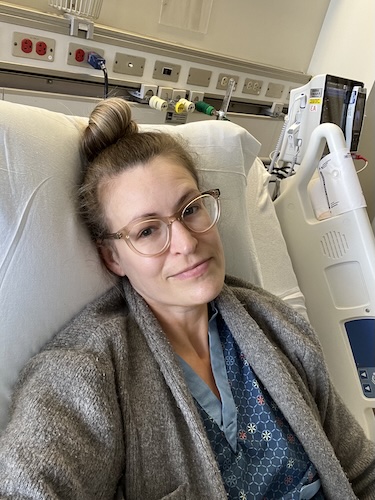
Once chemotherapy was completed, Laura faced a massive eight-hour surgery to remove the top half of her rectum, a section of her colon, and 17 lymph nodes. To allow the area to heal, her surgeon placed a temporary ileostomy, an adjustment that deeply challenged her body image and daily routine. Seven weeks later, she underwent a reversal surgery, which brought an entirely new set of physical challenges. With only half a rectum remaining and a traumatized digestive tract, Laura experienced an intense lack of bowel control, forcing her to rely on adult diapers and slowly relearn how to trust her body.
Today, Laura shows no trace of rectal cancer, but she speaks candidly about the ongoing realities of survivorship. She still navigates unpredictable bowel habits and lingering anxiety over every ache and pain. Through her advocacy, she urges young people to normalize conversations about bodily functions and never ignore rectal bleeding.
For more about Laura’s rectal cancer experience, watch her video and read through the edited transcript of her interview.
- Don’t ignore rectal bleeding: It’s dangerous to automatically attribute blood in the stool to common conditions like hemorrhoids, especially during pregnancy or postpartum. Laura’s story emphasizes that persistent bleeding requires thorough medical investigation, such as a colonoscopy, to rule out colorectal cancer.
- The reality of ileostomy reversal: Laura found that navigating the intense loss of bowel control and relearning digestive function post-reversal was actually the hardest part of her entire medical experience.
- Survivorship does not mean feeling “normal”: Just because active treatment ends and scans are clear does not mean you magically feel fine or comfortable again. The emotional weight of survivorship, including deep anxiety and fear of recurrence, is a completely valid and expected part of the healing process.
- Redefining personal success: A cancer diagnosis profoundly changes your definition of success and forces you to adapt to a new version of yourself. While Laura once defined success by her career title and salary, she emerged from rectal cancer treatment realizing that true success was simply being present to live a quiet, everyday life with her family.
Laura’s Diagnosis Facts
- Name: Laura B.
- Age at Diagnosis:
- 42
- Diagnosis:
- Rectal Cancer
- Staging:
- Stage 3B
- Symptoms:
- Rectal bleeding
- One instance of a pencil-thin stool
- Fatigue
- Bowel urgency
- Treatments:
- Radiation therapy
- Chemotherapy
- Surgeries: rectum and colon resection, temporary ileostomy, ileostomy reversal
This is not medical advice. Please consult with your healthcare provider to make informed treatment decisions.
- Laura’s Diagnosis Facts
- How others describe me: Testing my strength
- Rectal bleeding during IVF and pregnancy
- Processing a rectal cancer diagnosis as a new mother
- Rectal cancer surgeries, temporary ileostomy, and the true meaning of “in sickness and in health”
- Survivorship and the “life actually” of post-rectal cancer recovery
- Advocating for yourself: Normalizing conversations about poop
- Holding Mari: A miracle born amidst grief
- Where to connect: “The Life Actually”
- Hear from people living with colorectal cancer
How others describe me: Testing my strength
There’s the way I think I am, and then there’s the way other people think I am. My husband is my biggest cheerleader, my biggest proponent. So I know he would say that I am strong and kind and very supportive and empathetic and understanding. I guess I don’t always see myself that way, but that’s what I hear. And then people who have heard my story will also say I’m very strong, which I also have feelings about. But yeah, I’ve been through a lot, so not saying that I’m stronger than anyone else; I’ve just gotten a chance to test it.
From theater major to sports broadcasting
I actually wanted to be a theater major. I declared as a theater major my freshman year of college. I went to the University of Wisconsin. So, not exactly a theater powerhouse, but I grew up in Minnesota, so it was a very natural transition to just cross the border. I realized my freshman year that while I loved theater and while I loved acting, I was not prepared to have a life and a career of trying to get a job. I wanted a job, and I didn’t have the passion to be a struggling actor. I know how many incredibly talented people are out there who never get that big break. So I decided the summer before my sophomore year, and then at the beginning of my sophomore year, really solidified it, that I would go into the much more stable profession of journalism, more specifically, TV journalism. Not much more stable, but a little bit more. So in that case, it ended up being a very good thing that I was at the University of Wisconsin, a Big Ten school, because I fell in love with sports.
I had always been a fan of sports. I never really played. I was always doing theater, but I always loved sports. I started to realize during my sophomore year of college that there were opportunities in the sports world. At first, I thought, “Do I want to do sports marketing, or something like that?” Then I had an opportunity for a Badger football game in the fall of my sophomore year. ABC Sports, before ESPN took over everything, did college football, and they came in for one of our games. I just happened to be lucky enough through one of my journalism professors to be a runner, and I got to be with the sideline reporter during the game. I just fell in love with it. I called my parents afterwards and said, “This is what I’m going to do.” From that point on, I was laser-focused on sports broadcasting.
I had my first job out of college in a tiny, tiny town in northern Wisconsin. You just work your way up from there. After a few months there, I was in Rhinelander, Wisconsin. If anyone has actually heard of it, awesome. Go Hodags. After a few months there, I moved down to Madison, where I had gone to college, and spent a few years there, got a very big break, and moved out to Boston. I spent some very formative years in the Boston sports scene because I was 24, almost 25, right around that age when I started there. It was still very young, and there was no sports market quite like Boston. So I learned so much, really started to come into who I was as a sports anchor and reporter. Then I left Boston and went to San Francisco, spent a few years out here in the Bay Area, where I currently live, and then made it to New York City, which had always been a huge goal.
I spent seven years on-air as a weekend sports anchor in New York, in the biggest market in the country, covering some of the biggest and most exciting events and teams in the country. It was great. I loved it. For the most part, I loved it until I didn’t. There’s a funny thing that happens as you get older: you become more self-aware and have a little bit more understanding about the environment that you are in. I started to realize just how much it was not serving me. The misogyny, especially in sports, was strong. I had normalized it in my head for so long. I thought that was just the way things were. I began to realize that maybe this isn’t okay. Maybe this isn’t something that I want to be a part of anymore. I was 35, 36, 37 at the end of my career. I knew 40 was coming. I knew 50 was coming. I knew as a woman on-air, especially in sports, that I was going to have a shelf life. I was very much afraid of having to deal with that and what that would do to me mentally. I did not want my career ended by other people’s opinions. I started to really feel that this was not the place for me. After 16 years, I decided to leave. It had just become clear that I didn’t really have a future, or even the future that I had envisioned in my head, I no longer wanted. And so I left.
Leaving TV and finding real love
Well, it was very easy for me to say that I was married to my career. It was a demanding career. I worked nights, weekends, and holidays, and there was little consistency in my schedule. That was hard for people to understand, especially those you were dating. So I always liked to think I am single because of my career, but in reality, I never had a relationship. Things did not work out, usually not because of my choice, because I wanted to be partnered so badly. For as long as I can remember, I have wanted to be in a monogamous relationship, and it just never happened. By the time I was in my mid-30s, I was in New York, on television, and living in this apartment that overlooked Central Park. Who was I? I had no business being in this situation. And yet I had all of these amazing things that were happening: a family that loved me, awesome friends.
And I was miserable because I was single. Not only was I single, but I had never had a relationship. So at 35, I was facing what is going to happen in my career as I get older, but also what is going to happen in my life as I get older if I continue not having a partner. I wanted a husband, I wanted children, and I had to really wrestle with that. Because, as TV Laura, I had this intense feeling and need to be perfect. I was always so scared that the audience would think that I had screwed up, didn’t look quite right, didn’t say the right word, pronounced the name wrong, that I would lose all credibility if I was not this completely put together, perfect version of myself at all times. That is exhausting. Of course, if I’m perfect, I can’t be single. But also, not only can I not be single, but I also can’t have a relationship. We live in a society that loves to judge people by their romantic history, especially women. So I lived in fear that the secret would come out.
Finally, right after turning 35, I hit my rock bottom, where I was really unhappy in my life and terrified of what the future was going to bring. I had this series of epiphanies, moments of some clarity, that I had been holding myself to this idea of a future that centered around a husband and children. That was the only future that I was allowing myself to envision. Everything in my life, in my future, hinged on that storyline going that way. And here I was, nowhere near having those things. So any future I thought about was just this blank hole. No wonder I was terrified. I finally came to this place where I permitted myself to imagine a life without those things. What if that doesn’t happen? I might be okay. I might actually be okay. I started to give myself the opportunity to envision many different options and different paths. So when I happened to meet my husband when I was 35.5, just months after all of these thoughts started to finally fall into place in my head, I walked into that first date.
We met online, and I was giving up. I was shutting down my Match account. I was done with it. He was the last person that I corresponded with. Since I was on TV, I was doing Match without a picture, back when you could do online dating without a picture. I was that weird person. It still wasn’t cool, but I was fiercely private about my private life, so I did not want my picture out there. He responded to my random message. And here we are. When we went on that first date, I was very confident in saying he was the first person that I dated who met the actual me because I went into it, going, I don’t need this. I’m going to be okay. I might want this if he’s cool, if I want him. I was less concerned about whether or not he would like me. I was finally asking myself, “Is this what I want?” And it was. He became my very first relationship, my very first boyfriend. We got engaged, and we got married three years after we met. During that time, from when we met to when we got married, is when I left TV. Since meeting my husband, I always thought that that was it. That was the thing. Once I got him, everything would be smooth sailing from there. Every pretty difficult, challenging thing that has happened in my life has happened since I met him.
Mark: A supportive and kind partner
Mark is open, honest, and encouraging. He has this way of making people feel good about themselves and feel confident in their abilities, and drawing from a place that they might not even have really known that they had. He makes people feel comfortable. He is wonderful. We do not all have that.
A honeymoon phase interrupted by family cancer diagnoses
So I left TV in December 2017, and we got married in May 2018. I had this wedding to plan and all of these exciting, wonderful things that were happening that I had been waiting my whole life for. And yet I was also trying to figure out who I was outside of TV. I knew I needed to leave TV. I knew I wanted to leave TV. I walked out of my station for the last time. I never looked back. The weight that lifted off of me, the relief I had to no longer be in that environment, was huge, but I also had no idea who I was. I had not realized just how much of my own identity I had tied to my job title and what I did. When we got married, it was amazing. It was wonderful. It was one of the best weeks of our lives. But I also, in the back of my mind, still had no idea what I was doing. In some ways, I absolutely dreaded the wedding ending because that had been such a focus. I could focus on that and not focus on the career and moneymaking side of things, and just focus on that for a while.
Then the wedding ended, and it was like, “Oh no, what exactly am I doing?” Because I did not have a solid plan when I left, which I don’t recommend. At least the foundation of a solid plan is good. I was just so desperate to get out that I left that part behind. The wedding ended, and I had to come back to the reality of figuring out what the heck I was doing with my life. Then two weeks after we got married, two weeks to the day, I got a phone call from my in-laws. Mark is from England. I got a phone call from England, which was very strange that they would call me and not my husband. It was my mother and father-in-law, and I said, “Mark’s at work; did you call the wrong number?” And they said, “No, we needed to talk to you.” They found out that John, my father-in-law, had been diagnosed with kidney cancer, and they just didn’t know how to tell Mark. How should we tell Mark? I said, “Well, first of all, I can’t know this information before him. We have to tell him immediately.”
So I got Mark home from work, and that was the beginning of a whole new, completely unexpected chapter in our lives. We were newlyweds, true newlyweds. It was terrifying. Neither my father-in-law nor my father had been feeling well at the wedding. They both put on such an amazing face and never let Mark or me in on anything that they were going through. We knew things weren’t quite right, but the two of them were great. They hid it as much as they could, but neither of them knew what was going on. We thought that my father-in-law had kidney stones. It turns out he had kidney cancer. We were in New York at the time, so we were an ocean apart, and we couldn’t be there for appointments or updates. It was a challenging time, especially for my husband, not entirely knowing what was going on.
Right after we found out about my father-in-law, my dad had finally gotten into his doctor and was told he had a really severe prostate infection, and something was going on with his prostate. Before they could do further tests, they needed to get this infection under control. My father-in-law had just been diagnosed, and my dad was telling me he would be taking 28 days of medication, and at that point, we’d find out more. I just had this terrible feeling. I think he knew. I asked, “Do we need to be concerned? Could this be cancer?” And he said, “I don’t know.” But I think he knew because he was in a great deal of pain. Four weeks after my father-in-law was diagnosed, we found out that my dad had a very, very aggressive and advanced prostate cancer. So we went into even more of this survival treatment mode. My parents were in Minnesota, which is where I grew up. So I could go home. It was easier for me to go home. I went home for a couple of my dad’s chemo treatments to try to support my mom, almost more than anything, because caregivers go through so much.
My dad made it through chemo and some radiation as well. He seemed to be pretty stable. He was stage 4, so we knew it wasn’t going to go away, but we had every reason to believe that he had many good years ahead of him, that they could manage it and keep it under control. Meanwhile, my father-in-law started to go downhill. Again, being so far away, it was so hard to really know what was going on. Just over a year after our wedding, in July of 2019, my mother-in-law finally said, “You need to come out now.” So we got on a flight to the UK, got there just in time, thankfully. He passed a few days after that. We were in England for a few weeks for the funeral. It was actually on the day of the funeral that my dad had a meeting with his oncologist to go over his latest scan results, because while he had had a few months of everything seeming to be good at the beginning of that year, he was now starting to be in a lot of pain, and we just knew something was not right.
He started some radiation again, and they were trying to get things under control. It was the day of my father-in-law’s funeral that he was told that there was nothing that they could do anymore, that there was nothing that could preserve years in his life. The only thing they could do was offer treatment to help his quality of life for whatever time he had left. So we got home from England, and I started going back to Minnesota. He started another cycle of chemo just to try to make him feel as well as possible. He was in so much pain because prostate cancer, when it metastasizes, has a habit of going into the bones, and that’s exactly what happened. In the meantime, it had mutated. He was the 0.1%. It had mutated into other very vicious and aggressive forms of cancer. We were no longer just dealing with prostate cancer, which is rare. Usually, if it’s metastasized, it’s prostate cancer cells elsewhere. Now it had mutated into its own special brand, and there was very little that could be done.
My dad began his final chemo in August 2019, and he passed away on Christmas Day 2019, Christmas morning. That was a lot. We were still grieving my father-in-law. We were still trying to figure out our own situation as newlyweds. I still hadn’t figured out what I was going to do with my life professionally. Because I dropped everything. The one good thing about not having a career at that point, or a strong foundation of one, was that I had no problem getting up and going wherever I needed to go to be with our family. I was grateful for that. In the meantime, there was also the idea that my husband and I wanted to be able to start a family. I was 38 when we got married. At this point, now I’m 40, and my husband has a genetic condition, a very rare lymphatic condition, a rare form of lymphedema. There was a 50% chance he could pass that on. My husband is the best-case scenario, even though he lives in a constant state of chronic pain. The much worse-case scenarios would be that an infant would not survive. That was not a risk we were willing to take. My husband also did not ever want to put a child through even the best-case scenario of what he has lived through.
So we knew we were going to have to do IVF, but I needed to get him diagnosed. We knew what condition he had because the symptoms are so specific, but it’s so rare that at no point in his life had he officially been diagnosed. It took me a year after we got married, while our dads were sick, while we were going through all of this, to try to find a doctor who could diagnose him. It turns out there are really only two in the entire country, one at Stanford and one in Boston. We were in New York at the time, so we went up to Boston and had to get the official diagnosis that way. We finally had that, and we could finally start moving forward with IVF. We actually met with our first IVF doctor at our IVF clinic in New York on the Monday after Thanksgiving in 2019. Literally the next day, is when my dad was told that nothing was working and that it was time to enter hospice. So I dropped everything and left. I remember having a conversation with the IVF doctor while I was home. He said, “I just wanted to follow up. I never heard from you guys again.” I said, “Yeah, I know about that. It’s going to have to take a pause. We’re going to have to put a pin in that one.”
Compartmentalizing grief and pursuing IVF
It was a roller coaster, an understatement. There was also a lot of compartmentalizing. I could not think about everything that was going on at one time. I would not get out of bed. When I was focused on trying to get my husband diagnosed, because the condition that he has is so emotional for him. This is something he has lived with his entire life, and, because it is lymphedema, it is physically obvious. He was bullied because of it as a child. Not even fully understanding what it was, it is something that has affected his entire life. So it was really hard for him to find a doctor. He didn’t want to be diagnosed in many ways because he didn’t want to have to admit that’s what he had. So I was thinking, “I want a kid. I know you want a kid. I’m going to do what I have to do.” So I would put these things in a box and say, “Okay, I need to think about my dad right now.” “Okay, I’m going to open up that box, and I’m going to tuck the others away. My father-in-law is not doing well.” “Okay. Now that box is the one that I’m going to open right now.”
At the same time, it was our first year of marriage that all of this was happening. During that time, we had our honeymoon, and we went to the Maldives in January. We got married in May, and we waited until January to go to the Maldives. We had these absolutely beautiful moments as well. Even when we were in the Maldives, which was just breathtakingly gorgeous, and we were so happy with each other, it was just such a special, amazing trip. I woke up one morning and checked my email. At this point, I was still trying to find a doctor who could diagnose my husband. We all know the Mayo Clinic. The Mayo Clinic seems like it can do everything. I had started the ball rolling at the Mayo Clinic, hoping that they would be able to do this. I opened up an email that morning, sitting in the over-the-water villa, that said, “We can’t help him. We don’t have the resources. We are not a fit. So we are closing his case.” I just lost it. What are we supposed to do?
Even in these beautiful moments, there were still these reminders of what we were going through. But the beautiful moments were so sustaining. Our relationship was critical in all of this because we had the worst times of our lives, but we were together, which was so needed for both of us to have that support. We also had our first anniversary, and we went back to Mexico, the two of us. So that was also beautiful. It was on that trip that we spoke on the phone to his dad. That’s when we fully realized we hadn’t talked to him in a few weeks, because every time we called, he was either sleeping. That’s when we realized just how bad he was. Here we are in Mexico celebrating our anniversary. It’s gorgeous. It’s amazing. We hung up the phone, and we said, “Oh, okay, wow.”
The grueling IVF journey and finally getting an embryo
We were set to start. Our IVF journey really begins with the COVID pandemic. My dad died on December 25, 2019. We were still reeling from all of that, but knew that I’m 40. We need to be moving along with this. We were all set to begin. My cycle just timed everything up. We were most likely starting injections on March 17th, 2020, and on March 16th, 2020, is when all clinics around the country shut down because they were not deemed necessary. Our IVF doctor was sent to the ER. He was helping deliver COVID patients who were having babies, so they diverted everything away from it. So we had to wait. The uncertainty of COVID being in New York City at the time was intense. Then, not knowing if and when we were ever going to be able to start again, and if it was going to be too late, because I sit there and say, my eggs are just aging each day. They are aging. I can feel it. I know this is happening.
Finally, we only had to wait a few months. May is when we began our first round, and there were no healthy embryos. We moved to San Francisco during that time. It had been on our radar anyway, and we were ready. My family was, too. My brother was out here. My dad had passed. So we knew my mom would come out here as well if we did. It became really important after losing both of our fathers to be able to be as close to family as possible. So we made the move out to San Francisco again during the middle of COVID, found a new clinic out here, and did a second round. No healthy embryos. A third round, still no healthy embryos. At that point, we thought we were done. My husband had an incredible health insurance plan at that point, and it covered IVF at 90%, but it only covered three rounds. We thought that after our third retrieval, that was it. We could not afford the actual cost of IVF.
Thankfully, what we ended up realizing is that for insurance purposes, they break down a round into two parts. There’s the stimulation for the egg retrieval, and then there’s the actual implantation of the embryo. They consider them two different things. When they say three rounds, they assume you get to do both. So it’s actually six segments. And we had only used three. But the stress, the strain, the emotional vulnerability of going through IVF was so intense that we said, “We can do one more, we can do one more retrieval. I just don’t have the emotional capacity to do any more.” And our doctor had been telling us, after the first couple of rounds, “It’s bad luck, it’s bad luck.” Now, after three rounds where my eggs were a large part of the problem, it became, “This might not work.”
I remember our doctor telling us, “I will do this as many times as you want. I will not stop until you want to stop. But we also have to be honest and realistic about the chances at this point. And they’re not great.” He suggested an egg donor, and that was not a route that we wanted to go. We had talked about that: if it couldn’t be my egg and his sperm, then we weren’t going to be parents, and we were okay with that. That was the line that we drew. Everybody has their own, and that was ours. Also, the expense of donor eggs and sperm adds a whole other level to it. So that was the line that we drew. We decided we are going to do it one more time. And this time we are not going to tell anyone.
Because there is a wait at every step of the process. You wait, and you wait, and you wait. I was just going crazy having family and friends every time I talked to them, saying, “What updates do you have? What’s happening? Do you have any more updates?” I just couldn’t. It was hard enough waiting, myself. I could not deal with other people’s expectations as well. So we didn’t tell anybody. We started the fourth round two days after Christmas. I knew at Christmas, the first anniversary of my dad’s death. I knew that we were going to be doing another round, and it would be starting either the day after Christmas, the 26th, or the 27th. But we didn’t tell anybody. We had my family over at our house for Christmas. They didn’t know why I wasn’t drinking. They didn’t ask questions, but that was why; I was just trying to prepare myself for it.
We started, and it felt different to me because we tweaked our protocol slightly, but it felt different too because I think I was at peace with whatever happens, happens. This is it. We’re not doing it again. If it doesn’t work, it doesn’t work. I felt that I couldn’t really think about that. But also, there was nothing I could do. “I have no control over this. I have done everything that I can, and now I just have to let the process happen.” The round was different. I was progressing differently than I had been in the previous three rounds. So I was hopeful that maybe that meant something. Then they ended up retrieving not as many eggs as my doctor had thought. So he was a little bit disappointed. I was the one who said, “Well, it just takes one.” I don’t know if I was just exhausted. I just could not keep up with that worry and stress anymore. I said, “If it happens, it happens.”
Then we began the process of waiting and waiting and waiting. Once we found out how many embryos we had, they had to send them off to this special lab for testing because we had to have a special test made just for my husband’s genetic condition that was specific to him. We had to send it off to a special lab, and that took two more weeks. Finally, we were driving to have dinner with my mom. She had moved out to the Bay Area. It was a Saturday. We knew we were right around that time, but I did not expect to hear from my doctor on a weekend, and we were in the car. Thankfully, my husband was driving, and I remember exactly where we were. I remember the highway, I remember what it looked like looking out the window.
We got the phone call, and our doctor just said, “We have an embryo. You have one.” There’s the shock initially. And then, “Okay, what do we do next?” We hung up after talking to him. I remember just looking out the window, going, “I’m going to be pregnant. I’m going to have a baby.” Because that was not the part we were concerned about. For us, the biggest concern was getting an embryo, getting an egg that was healthy enough to turn into a healthy embryo. I had shown no reason to believe that I would struggle to carry. So we were hoping that would continue. We went to meet my mom for dinner and told her that there was an embryo. Then we kept the implantation secret as well. So she didn’t hear anything again until we told her I was pregnant. It was amazing. It was a relief. It didn’t entirely feel real. Even after I did my blood work at the doctor’s to find out for sure, I still took a pregnancy test at home. I need some proof that this is actually happening.
Rectal bleeding during IVF and pregnancy
It actually was a few days before our implantation. I was laser-focused on getting pregnant. We finally had our embryo. We finally had our chance. Nothing was stopping this. I did not want to delay it any longer than we had to. I noticed some bleeding, some blood in my stool. That’s not normal. I don’t have hemorrhoids. I had never struggled with hemorrhoids before. Seeing blood where you’re not supposed to see it is alarming. I was absolutely alarmed. But I also was not going to let anything derail what we were about to do in a couple of days. So I told myself, and it was pretty easy to convince myself, that I have been under so much stress. I didn’t really know much about hemorrhoids, but I knew stress couldn’t be a good thing. I knew that I strained a bit sometimes when I was going to the bathroom. I told myself that I had been injecting myself for over a year, and I had been through a lot. So I just figured that all of this stuff that had been going on in my body just manifested itself in blood in my stool. That had to be it, right?
I feel good, I feel healthy, and I have no other symptoms. I told myself, “Relax, stop straining. It’ll go away. This is a blip, and it’s fine.” So that’s what I did. And it did stop. We had the implantation. I got pregnant, went through the whole first trimester, where our biggest fear was keeping the pregnancy. Finally made it to the end of the first trimester. At that point, I remember my OB telling me, “Now you’re just a pregnant lady. Now just be pregnant.” I was no longer IVF-worrying. Then, at the beginning of my second trimester, the bleeding came back. But this time, I had a very easy way to excuse it. I’m super type A; I had the apps that would tell you each week where you are, what the size of the fetus is, what you should expect, and what you should be experiencing. I knew exactly what was going on. There’s something that happens once you hit that second trimester, and suddenly it’s like you’re probably going to get hemorrhoids. Everybody warns you of that, and hemorrhoids bleed. So clearly, I had hemorrhoids.
At no point does anybody tell you what hemorrhoids are actually like or how they should present. So I had no reason to believe that there are many different kinds of rectal bleeding, which there are. I was convinced, and when I told my OB at our next meeting, I basically self-diagnosed and said, “I’m bleeding; I’m sure I’ve got hemorrhoids.” She said, “Yep, I’m sure you do too.” We never spoke about it again. The bleeding did not stop. It continued. This is not something that hemorrhoids typically do. You have hemorrhoid flare-ups. Hemorrhoids are not constantly bleeding, or at least they shouldn’t be. In my third trimester — thankfully, I never would have thought that I would say “thankfully” about this — but at around 32 weeks, I did have an actual hemorrhoid flare-up, and it was nothing like I had ever felt or experienced before, which should have also told me something. The interesting thing that I now know, I did not know at the time, is that a hemorrhoid flare-up did not cause bleeding. I was having bleeding the whole time, but my bleeding was not because of hemorrhoids.
Continued symptoms and rectal bleeding
So what I was experiencing was bloody mucus. The blood was kind of around the stool. You could see it differentiated. Hemorrhoids typically tend to be more like drips of blood. So the whole bowl will fill, and it looks like a murder scene because blood and water are terrifying to see. I’m not a doctor; this is my own experience and what I have gathered, but typically hemorrhoid bleeding ends up looking more like that, filling the bowl, being more like droplets. Mine was contained. I never once had blood that filled the bowl. I just assumed that everything is the same and all things are equal when it comes to rectal bleeding. I had that hemorrhoid flare-up, and thankfully, it produced an external hemorrhoid. At the time, I thought that was the worst thing that could ever happen to me because I was so embarrassed by it, and I hated it. I did all the things I was Googling: how do you heal an external hemorrhoid? I tried all of the at-home remedies, all the things that might work, and nothing would work. That thing had seen the glory of being on the outside, and it was not going back in. It’s like, “This is where I live now.” I hated it. I was so embarrassed by it.
When my daughter was born, we were in the hospital, and I had this idea that once I had her, it would all fix itself. The bleeding would go away, the hemorrhoid would go away, everything would be fine. And it wasn’t. We got home. I ended up having to have a C-section, which was very, very unexpected. I was healing from that. I was adjusting to being a first-time mom. I was 42 when I had my daughter, so I was not only dealing with “Oh my God, we’re parents and what are we supposed to do to keep this child alive?” Also, I’m exhausted, but I lived my entire adult life up to 42 without this type of responsibility. So I was also very much grieving my previous life. Postpartum is a lot — we do not talk about it enough. Postpartum is a lot. Because I had a C-section, I had to go back to see my OB at three weeks. When my daughter was three weeks old, she cleared me; everything looked good. But then she also broke the news to me that the hemorrhoid was not going to go away on its own. The only way to get rid of it would be to have it surgically removed. But I’m three weeks postpartum. I’m not trying to find a colorectal surgeon at that point. So I said, I’m going to file that in the back of my head. When I can come up for air at some point, I will deal with this.
But I hated that thing. I was so embarrassed by it. My husband said, “I do not care.” I said, “I do care. This is gross.” Some women get to have breast jobs after their pregnancy. I’m going to have to have a hemorrhoid removed. Meanwhile, the bleeding is continuing. But I have this external hemorrhoid. So I keep telling myself this is what it is. When my daughter was five months old, I had my annual with my primary care doctor, and I told her all about it, too. She also believed this was hemorrhoids. I was very adamant that I wanted the external hemorrhoid removed. So she started the process of referring me to a specialist. We could get to a place where I would finally find somebody who could remove it for me. She did look at my hemorrhoids a little bit in the office. I had no idea at that point just how the medical world really works and how specialized it is. Being a primary care doctor does not mean that you know very much about colorectal health. She did a little look, and she said, “It looks fine to me”, which, again, should have been a red flag. Hemorrhoids, if they are causing bleeding to this extent, should not look okay. But again, there’s an external hemorrhoid. So that was my excuse.
At six months postpartum, I finally found myself in the office of a colorectal surgeon, and I was literally only there to schedule a surgery to have it removed. Only thought in my head, though, if I’m being honest, there was a thought in the back of my head that this bleeding is just not quite right. I knew it was not quite right, but I had so many other things on my mind. Also, how could I be sick? How could I be very ill if I had just gone through a year of IVF and then pregnancy and postpartum, when we are being monitored? I had blood drawn constantly. In my mind, that meant that if nothing came up in any of that, you had to be healthy. Well, there are lots of different blood tests out there. So many things that weren’t being monitored because they didn’t have anything to do with pregnancy. But also, in my mind, I’m thinking, how could my body just have had a perfectly healthy, normal pregnancy? How could I have just delivered this beautiful, perfect baby and be sick? How? Especially when they’re all in the same area. How is that even possible?
My surgeon thankfully knew a lot more about hemorrhoids and a lot more about colorectal health than I did or any of my previous doctors. And she knew something was wrong immediately. She started asking me all sorts of questions. I’m just going, “Can we just schedule the surgery?” She said, “Calm down, answer my questions.” And then she did a hemorrhoid exam right there in the office.
The colorectal surgeon who knew something was wrong
She started asking me questions, and it was really difficult. I still don’t know, we’ll never know, how many symptoms I actually had that were related to my cancer. The one I know for sure is rectal bleeding. That was really my only rectal cancer symptom. She started asking me questions. “Yeah, of course I’m exhausted. I’m tired. I have a newborn at home.” So yeah, I was rundown. But also, I was having an urgency to go to the bathroom. Was that because I was pregnant, and then because I was postpartum? I don’t know. Also, those things were not terrible. Those were not things that made me go, “Oh my gosh, this is not normal.” It just felt like my body had done a thing, and now it was bouncing back and having to go through a process. None of that seemed like an issue at all. One other symptom is very narrow stool, pencil-thin stool. That had happened to me once, only once. I remember thinking, “That’s really weird.” When she asked me, “Have you had pencil-thin stool?” I said, “Oh my God, yeah, but only once.“ I don’t even remember how close that was to the appointment.
She did a hemorrhoid exam right there in the office. Before I could even pull up my pants, zip up my jeans, she said, “The bleeding is not coming from your hemorrhoid.” I said, “Well, that’s strange. What do you mean?” She said, “You need a colonoscopy immediately. Right away.” Again, I’m in this state of denial. I’m healthy. I finally said to my husband that there was something about that six-month postpartum mark that I was starting to feel good. After not feeling like my body was mine for such a long time, I was finally starting to feel like myself again. I was feeling strong, and I had not really realized how not strong I had been feeling for a long time until my body was starting to actually act the way I remembered it could. I felt good. There was no way that I could be sick.
The first thought I had when she said a colonoscopy was, “Oh, I’ve heard terrible things about colonoscopy prep.” So I’m asking all these questions. “What are we going to do? What should I expect?” She was happy to answer all of them. One of the first things she did was say, “I’m going to prescribe you pills so you don’t have to drink the gross stuff.” I said, “That sounds amazing.” I didn’t even know that was a possibility. Apparently, not all insurance covers it. My surgeon said, “I’m giving you the pills as long as you can swallow big ones, because they’re big.” I’ve heard from a lot of people when I tell them pills are an option, that it isn’t always an option for people, but they do exist. She went through all of this and said, “My scheduler will call you. We’ll get it on the books.” She was about to walk; I think she had her hand on the doorknob. All of a sudden, I just said, “Wait a minute, wait a minute. Should I be worried?” She came back into the room and walked over next to me, and she said, “There are a lot of things it can be other than rectal cancer, but we need a colonoscopy to find out for sure.” And that is the first time the word cancer was uttered.
That was sobering. Because I was again telling myself, “Maybe you have a polyp.” Then she says the word “cancer.” It’s like, okay, so this is serious, but I still didn’t believe it could be. We were all set to go to England three days after that appointment. Because of COVID, we had not seen Mark’s family in a few years. My mother-in-law had not met her grandchild, her only grandchild. We were finally making the trip over there to introduce my daughter to my husband’s family and to see them for the first time in two and a half years. Mark said to me when I got home and told him what was going on, “Do we need to cancel the trip?” I said, “No, no, I’m sure I’m fine. I’m sure there is a logical explanation for this. I’m sure I’m fine. We are going to England. That is far more important.”
While we were in England, the scheduler called me and tried to actually get me in the following week. Again, that should have surprised me a little bit that they were trying to get me in immediately. I said, “We’re going to be back in a couple of weeks. It’ll have to be after that.” My surgeon was booked up through the entire month of July. By the time we got home, they called me back and said essentially that my surgeon had found a different facility that she had never worked at before that had openings on this one Friday afternoon. She opened it up for me, which again should have made me think, but I was still living in my beautiful state of denial.
We scheduled the colonoscopy. A month after my initial meeting with my surgeon, I went in for the colonoscopy. Reality was starting to set in. I think I was starting to understand the severity of the situation. As I walk into the facility, I’m the oldest person there. It’s just little curtained rooms in this big room, so you can hear every conversation that the doctors are having with everybody else. It’s all people in their 60s, 70s, and the doctors coming in and saying, “Oh, it looks good, I’ll see you in five years,” ten years, whatever. They wheeled me into the room, and the anesthesiologist I remember was kind of saying, “Well, you’re a bit young to be here.” I said, “Well, yeah, I’m having some rectal bleeding. “He said, “Well, I’m sure it’s just hemorrhoids.” I smiled and said, “Yeah, okay, no, I don’t think it is.”
Next thing I know, I’m waking up from the anesthesia post-colonoscopy, and I’m alone in my little curtained room. But I can hear my surgeon’s voice on the other side of the curtain, saying to the nurse, “I will come speak to her when she wakes up, make sure her husband is with her.” That’s when I knew Mark did not need to be sitting next to me to be told that everything was good. That’s when I knew. I just started crying. Meanwhile, my husband is sitting out in the waiting room, and he hears all these nurses coming up to the front desk staff ordering stats, trying to get phone calls made, ordering tests stat for a patient, trying to get arrangements made. That’s when he knew that it had to be me.
Twenty to 30 minutes later, we were sitting in our little room. I had gotten dressed; my husband was in there with me, and she came walking in and said, “We found a mass. It looks like rectal cancer.” Surgeons are amazing. They are amazing, but they are also very funny. She was so matter-of-fact, not jubilant, but she knew what we were dealing with. She was already 10 steps ahead of what we were going to do next. The fact that a human being was sitting in front of her, trying to process what was happening to their life, she was like, “Oh, yeah. Okay, wait, no, I have to come back here. That’s right. Okay. This isn’t just a test case study that I’m going over.” Surgeons are so funny like that, but I love them. She saved my life.
The amazing thing about colonoscopies, which I just wish people could understand, is what an unbelievable screening tool they are. Rectal cancer has got to be the easiest cancer to prevent, as long as preventative steps like a colonoscopy are taken. I truly believe, and again, I’m not a doctor, but if people started getting colonoscopies at 20, I think we would eradicate rectal cancer because it takes a very long time for it to grow. It starts as a polyp. You go in for a colonoscopy, and they find a polyp, and they snip it off. You cannot feel it. You have no recovery. Now it can’t grow into cancer. But I was 42 at the time. I had never had a colonoscopy. So this had been happening for likely 10 years. I was looking just half an hour after the procedure, at a color picture of my tumor. How many screenings can actually give a doctor a color picture of what is going on? My surgeon biopsied it, and we needed to send it off to the lab, but there was no doubt what we were dealing with. She could start making those plans about how to proceed immediately without waiting for test results to come back.
Processing a rectal cancer diagnosis as a new mother
It was terrible. It was terrible. My husband and I were sitting there. I just started crying immediately. My husband was crying. She’s showing us these pictures. She’s trying to go over the next steps in rectal cancer treatment. I still think about this moment as if it is happening right now. Where we were sitting, again, it’s this big room. It’s a center that only does colonoscopies and endoscopies. So it’s just this big room with these tiny curtained-off things. Every single person in that facility could hear what was happening. I just turned to my husband. I’m holding onto him. I just wailed into his shoulder. We have a seven-month-old, and it was shocking, the reality of it. Nothing can prepare you for hearing the words, “You have rectal cancer.” Nothing. Especially in those first moments when nothing is known, nothing is known except that it is there. You do not know the stage. You do not know the treatment. You do not know your prognosis. You know nothing.
The worst part for us was that I had my colonoscopy on a Friday afternoon on the West Coast. Our insurance company and everything are primarily on the East Coast. By the time I came out of anesthesia, it was 3 p.m. So it’s 6 p.m. on a Friday. There was nothing that we could do. We had to go home and sit for an entire weekend with zero answers. We were set to meet with my surgeon again on Monday morning because, thankfully, she said, “I’m going to go over with you everything I’m going over with you right now because you guys are not going to remember any of this. We need to talk seriously about what happens next and start actually making appointments and plans.”
We got home. My husband and I said nothing in the car on the way home. He had been talking all about what my first meal would be after, because since it was an afternoon colonoscopy, I had not eaten for so long. He had gotten me this sandwich that I wanted. I held it in my lap and just stared at it and thought, “What am I supposed to do?” We walked in the front door, and my mom, thank goodness she had moved out here, and she only lived about 15 minutes away from us. She was with my daughter, and my daughter had just woken up from her nap. My mom takes her out, and she’s at the top of the stairs as we walk in the door. My daughter’s just smiling and happy because we’re home. My mom took one look at us and knew. She handed me my daughter. We all cried a little bit. Then she said, “I’m going to leave you guys.” She was feeling all the feelings. I can’t put myself in her position. My dad died a year and a half before that. She had just lost her husband a year and a half before that. Now her child has been diagnosed. She needed to go to her support system and deal with that.
Meanwhile, my husband and I were left alone with our daughter, who is blissfully unaware. She’s just seven months old and wants dinner. Our only experience with cancer up to that point had been our dads, and I had some friends who had lost their parents, too. To us, cancer meant death. For that entire weekend, I was convinced I was going to die. It was so unfair that we had gone through everything we had to have this baby, and now I wasn’t even going to be able to be there to watch her grow up. My husband and I didn’t talk about it really until months and months later, when I was in a much better position. But he was mad at me, not really mad at me, but he was mad at me because I was the one who wanted the child before he did, who got him to a place of wanting one as well. Because of his condition, he had never thought he could have children. I was the one who made that possible. And then we finally had the baby, and now I was going to leave him.
Well, we were both angry. We both had anger about the situation, rightfully so, some anger that I’m still processing years later, after all my rectal cancer treatments. It was a lot. I remember him just saying to me, “I just want to live a boring life with you. Everything that has happened over these last several years… why can’t we just live a boring life?” I had been so focused for so much of my life on success professionally and what my title was and how much I was making and where that ranked me in the importance of the world. Those were the things that defined success to me. Now, in that moment, success was being with my family. Success was living a boring life with my family. And now that didn’t look like it was going to be possible.
It was the longest weekend. My daughter had not been sleeping ever since we got back from England. Poor thing, it was terrible. She was waking up every hour, and I could only breastfeed her back to sleep. All of this aside, I was in a bad place because of that. And then you had to add that on. We had been planning not necessarily sleep training, but we’d been planning to do something that Friday night because we figured we would have the whole weekend of trying to get her back to a place of sleeping. I remember thinking, “Well, I guess we’re not going to do that.” My husband said, “Yeah, we are because we’re going to sleep anyway after this news.” I said, “Yeah, good point, good point.” So that was the night. That was the weekend, thankfully, that we got my daughter back to sleeping through the night again. Thank goodness, because with what I was about to begin, I think for my entire treatment — my daughter was eight months old when I started, and then she was almost 14 months at my first surgery — I think she woke up during the night as many times as I could count on one hand. I needed sleep so much during that time. That little peanut, it’s like she knew.
We spent that weekend getting my daughter to sleep through the night, but also thinking that this was bad. “I don’t think I’m going to be able to be here for my daughter.” The baby stages can be really difficult for the dad. Especially since I was breastfeeding. She and I were so connected because I was providing sustenance for her. Also, she had been inside of me for almost 10 months. So we had this connection that my husband did not. She was still so little that there was no other way she could connect with somebody. The two of them did not have the relationship that they do now. They were still trying to figure each other out. My husband said, “So you’re going to leave me with a kid who doesn’t even like me?” I remember thinking the only way I could get myself to sleep at night over that weekend was because I just kept thinking, “He can’t do this. She needs me. If she doesn’t have me, I don’t know how either of them is going to survive.” The only way that I could allow myself to sleep was by telling myself, “I won’t be here to even know it.”
That Monday, we were back in my surgeon’s office, going over everything about my rectal cancer. I had a CT scan and an MRI within days, and thankfully, the tumor board met that Friday, which was after all of my scans were done. They were able to look at my case immediately and come up with their treatment plan. By the end of the week, we knew that I had stage 3B rectal cancer. The tumor had broken through the rectal wall and was in some of the nearby lymph nodes, but thankfully was not in any organs. It had not metastasized. So I was not stage 4. Stage 4 is a very different beast. So they had very high hopes and confidence that this would be a curable situation. Our first step was radiation, and then chemo, and then surgeries. I began with five weeks, 25 rounds of radiation, but it was radiation with a chemo pill. Chemotherapy.
A shift from fear to fighting: “I expect nothing but a cure for rectal cancer”
It will never fully go away. That weekend, on Sunday, my mom and my brother had birthdays in mid-July right next to each other. We had had plans because my brother has three little kids. Our plan had been to all go to the zoo on Sunday to celebrate my brother’s and my mom’s birthdays. Everyone was saying, ‘Cancel it, we’ll cancel it.” Mark and I are going, so we can just sit here and feel bad and alone? No, we’re going to the zoo. We went to the zoo, and at one point, the kids wanted to go do something, and I needed to breastfeed Mari. I found myself with Mark and Mari off to the side alone, and we were just sitting there. I said, “I’d been thinking this whole time; I’m going to die.” I still didn’t know. I still had no clue what we were actually facing. But I just turned to Mark and said, “This is not going to be it. I promise to as much as I can, I am going to do everything I can. I’m going to watch my daughter grow up. I will be here. I will be here.” I don’t think he believed it either. I don’t know how much I believed it as well.
After getting the official rectal cancer diagnosis, our first actual meeting with an oncologist was with my radiation oncologist. That was the following Monday. We were about 10 days since I had been diagnosed, and my surgeon had already gone through the report from the tumor board and the whole recommendation for my treatment, and had been optimistic about it. We sat down with the radiation oncologist, and he said, “This is what we’re going to do. This is what we think is best. He said, based on everything that we know and the way rectal cancer treatment is now, and your age and your overall health, we expect nothing but a cure.”
I think that for me, that changed everything. As soon as I heard that, I went from “I might die” to “I am going to live.” As my husband and I left that appointment, we were in the car driving home, and he said, “Well, I guess you are now going to get to add rectal cancer survivor to your resume. That’s going to be one of your titles.” I didn’t know until months later, when I was done with treatment, that he never believed it. He thought the entire time that he was going to lose me. But I had no doubt as soon as I was told that, I did not doubt that I was going to live.
When we got my clean scans after the rectal cancer treatment ended, he admitted it to me. He carried that with him. Caregivers go through so much. They do. Nobody talks about that. Nobody thinks about them. They’re worried. They’re focused on the patient. Everybody was focused on me, but my husband was going through a kind of hell that was different than mine. Because, as I said, if I got into a bad place, I could just think I’m not even going to be here. He had to figure out how he was going to have a life without me. He told me then, he said I had already decided that I would never marry again, that Mari would be my life, and it would just be the two of us. That was it. I hate that he had carried that for so long by himself. But that is a caregiver. It’s a lot.
Why I didn’t get a second opinion on my rectal cancer treatment plan
It’s such a weird time. That time, right after diagnosis, before the plan is set up, you are in shock. You are terrified. You do not have the wherewithal to really understand what is going on and to put everything into context. All we thought was that we could not let me die. Through a friend, I was connected to a woman who was a colorectal surgeon at Kaiser, a different hospital group, and she was on a leave of absence at the time. So she wasn’t actually working. But I talked to her on the phone, and she walked me through what they would do to treat my rectal cancer. I told her what the doctors were telling me as well, and she put it, which was great because she could talk to me as a doctor friend instead of just a doctor, but also not just a friend. She said, “It doesn’t really matter where you go; this is the treatment plan. This is what we have now figured out.”
“What you have, rectal cancer, is pretty straightforward.” I didn’t have any deviations. I didn’t have anything that was out of the norm. I was a pretty straightforward case. She said, “You could go to UCSF, you could go to Stanford, some of the best ones in the country, and they’re still going to do the same thing.” So getting a second opinion was never something that we considered because we didn’t think it was necessary. But also, second opinions delay everything. You are in this mindset of: I have something deadly inside my body right now that is growing; we need it gone now. In reality, it is hard for people to get second opinions for that reason. Because we figured it was so straightforward, it wasn’t necessarily something we had to do. I do remember talking to my radiation oncologist, and he said, “Feel free to get a second opinion.” I said, “How long do you think I have? How long before we absolutely need to begin?” He said, “Well, you probably have time if you want it, but I would not wait more than a month.” I wasn’t ready to wait more than a day. I wanted this to begin now. We needed to start attacking this immediately because the bleeding and the rectal cancer were getting worse. It was getting so much worse.
The heartbreak of stopping breastfeeding for chemotherapy
So we started with radiation, five weeks, 25 rounds, but with a chemo pill. So I needed to start chemo immediately. I had been breastfeeding my daughter, and my goal had always been to get to a year. Formula sustains her. Formula is incredible. It is wonderful. But I never wanted her to have formula. I wanted to go from breast milk to cow’s milk. That was my goal. We had so many difficulties with my pregnancy. Not with my birth. The only simple, easy thing that we had was our breastfeeding experience. She took to it immediately. I never had pain. From the very beginning, it was a beautiful experience for us, and I know how fortunate I am. So many women do not get that experience. That was our thing. I knew this was the only child that I would have. But as soon as you start chemo, that has to end.
Literally that weekend after being diagnosed, I knew at some point chemo was starting, and at some point I was going to have to stop breastfeeding. So we started making plans. I started pumping around the clock. I wanted to stockpile as much milk as I possibly could. My daughter was sleeping through the night, but I wasn’t. I was waking up to pump and was freezing it as much as I possibly could. Initially, I was supposed to have a super precise radiation regimen that was only five sessions, five rounds, and it would be all done. It would not have involved oral chemo. But insurance denied it and said, “No, you don’t actually need that.” What’s the point of having advanced technology if no one’s going to get approved to use it?
So instead of that, within just a couple of days, we had to go from plan A to plan B, which was the five weeks with a chemo pill. All of a sudden, I was going to have to stop breastfeeding even sooner. That was one of the most emotionally difficult parts of my entire cancer experience, having to stop breastfeeding my daughter and not have it be on my terms. That morning when I was going to start radiation, I woke my daughter, I went in, and I breastfed her for the last time. I cried through the entire thing. I thanked her. I apologized that this was it. My husband was sitting next to me. He was crying too. That part still makes me so emotional because this was the only child I was going to have. We’d been through so much, and now this was being taken away. She was absolutely fine. None of this fazed her. She took to formula like it was nothing.
Nobody likes choices being taken from them, which we experienced with our daughter. Would we even be able to have a child? For reasons that were not our choice. When something happens, especially something that emotional that you have no control over, that it’s being made for you, a decision being made for you is gut-wrenching. Then, especially to have it be made by something as terrible as cancer. It was a lot. I held her, I nursed her that morning. Then my husband took her and got her changed, her diaper, and got her set. I went downstairs, and I took my first chemo pill, right alongside a pill to start drying up my milk. It was absolutely devastating that I could not do this for my child. And so then I started radiation that day. Not only when I think of the first 10 days of radiation, but I was starting to have some of the side effects of radiation come up. But also, oh my God, I cut off breastfeeding cold turkey. My body was not okay. The pills that were supposed to help dry up the milk did not work. I was walking around with cabbage in my bra, which actually works or helps at least a little bit. But I was in so much pain. People kept asking me, “Are you okay? Are you experiencing side effects from the radiation?” I said, “No, not yet. But my breasts hurt. I am in so much pain.”
It took over a week to start to get better. My radiation oncologist had told me that at about three weeks in, I would expect the bleeding to get worse because that would be the tumor. The point of radiation is to essentially obliterate the tumor. And then chemo would be to help clean up any of the rectal cancer cells that might remain in the rectum, but also if they’re anywhere else in the body. Radiation was the big gun, going straight for the tumor. So he said, “In three weeks, you can expect more bleeding. And then hopefully after that, it’ll start to taper off.” I swear, after that first radiation, I swear it was starting to work. The bleeding intensified that night, and maybe that was in my head. I’m sure if any doctors are listening to this, they’re probably saying, “No, it doesn’t happen that fast.” But the bleeding intensified big time. My radiation oncologist said, “Really? Are you sure?” But in the second week, it stopped and never came back. That gave me a lot of confidence and faith in what we were doing and what my treatment plan was. The nice thing about the one symptom that I was having, it is very easy to track. So I could tell progress right away. But yeah, that bleeding stopped in the second week, and it never came back.
Surviving radiation diarrhea and the “Wonder Bread” diet
So I had the chemo pill throughout radiation. Then my chemo process was five cycles over 15 weeks, so it was a three-week cycle. I would start on a Friday. I would begin taking the pills that morning, and then I had an infusion. Three weeks later, I took the pills for two weeks, and then I would have one week off. Then we would start the process again five times. There was a little bit of time in the chemo where you could feel somewhat normal again. But the radiation brought about diarrhea. Terrible, horrible diarrhea. I was told by my nurses that I could not even look at a vegetable during the entire radiation. I could not eat fruit. I could not eat vegetables. I could not eat anything resembling fiber. I could not do anything that could make the diarrhea worse. I was eating white bread. White rice. Applesauce was the closest I could get to a fruit or a vegetable. She said, “If you must eat a vegetable, and I don’t recommend it, it needs to be steamed to the point of obliteration.” I did not touch any of that. The brat diet, which is fun when you’re eating Wonder Bread as a child, and it’s not fun as an adult.
Rectal cancer surgeries, temporary ileostomy, and the true meaning of “in sickness and in health”
Talk about compartmentalizing everything. I knew the surgeries were the last step. So I did not think about the surgeries at all. I took all of my focus on radiation, then on chemo. Both were terrible in their own way. When chemo ended, it was like, “Oh, shoot, now I’ve got the surgeries; okay, I need to actually start thinking about them.” My surgeon again, bless her heart, said, “Yeah, the side effects, you’re going to have an urgency to go to the bathroom. You’re going to be going to the bathroom more often for a few weeks, maybe a couple of months. And then it’s fine.” Never have I heard an understatement like that. I don’t think I ever will again. It was not that at all. My first surgery was the big one. I was under for over eight hours, and they removed the top half of my rectum, the bottom section of my colon, and then reattached them, and also removed 17 lymph nodes.
Basically, at this point, all of my scans were clean, but we decided that the safest route was to remove everything that had initially been affected so that we could give ourselves the best hope that everything was taken care of. Because I had had the radiation, that area was still very raw and sensitive. Radiation is intense. To ensure that the connection could heal properly and we would not have any side effects that could be very detrimental to a positive outcome for the rest of my life, my surgeon did the ileostomy. I had a temporary ileostomy for seven weeks, which meant I had an ileostomy bag, which I had been so freaked out about. Once I could finally think about the surgery, it was this idea that I had to have an ileostomy bag. Which is not sexy at all. It is not something that I had ever in my mind thought I would ever have to even think about or deal with. Now, knowing that I was going to have part of an internal organ sticking out of my body and a bag, that was just a lot.
I was honestly in a pretty strong state of denial until that surgery came. I woke up with the bag because there had still been a chance that I wouldn’t need it. So I clung to that. But I woke up with a bag, and that was pretty much a foregone conclusion. The bag was challenging. It is a whole new way of living with a bodily function that I had completely taken for granted my entire life up to that point. And the ease with which the digestive tract should work. Now I had to change the bag myself. I had to understand how it worked and how I functioned with it. I hated it. I counted the days, literally counted the days until the reversal. I worried so much about how it would impact my relationship. Here is my husband seeing me empty the contents of an ileostomy bag into a container on the counter of our bathroom, because in those early days, you have to measure the output so they know if everything is going well.
I remember saying to him, “I’m just so worried this is going to make you never see me the same way again or never be attracted to me.” He said that he loved the bag, that it was making sure that I could live many, many more years with them, and that I would go through all of this to be able to be with them. So it made him love me and be more attracted to me than he ever could have possibly imagined. Having that type of support was essential. After seven weeks, we were finally able to do the reversal. In those seven weeks, I wasn’t actually using my rectum the way I should have been. It wasn’t using it at all. That is when we finally had the hemorrhoid removed. So, the initial hemorrhoid that had gotten me into all of this, we were able to remove it. Hemorrhoid removals are painful. Especially if you’re actually going to the bathroom in the normal way. So we took advantage of the fact that I wasn’t and allowed that to heal a bit. It was still painful, but nothing like it would have been if I had a functioning digestive tract.
Seven weeks later, I had the reversal. Woke up in the hospital after that in a state of euphoria. They removed my port at the same time as they removed the ileostomy. So I woke up with no trace of what I had needed for cancer. It was gone. I wrote in my journal that night about the joy I felt. I was so relieved. I was so excited. I was so happy that I could finally just focus on healing. There was no next step to have to deal with. It was just healing. That was amazing. I felt so good because my digestive tract hadn’t started working again by the time I left the hospital the next day and got home. That’s when reality hit. That’s when the food that I was able to eat post-surgery started to actually make its way through the way it’s supposed to. The rectum is what holds the stool. It’s like the bladder holds urine, the rectum holds the stool until there’s enough of it to send the signal to your brain that it’s time to go to the bathroom. Well, I now had half of one. Not only did I have half of one, but it had been traumatized by surgery and radiation. Everything that had gone on, those muscles were shot. I had scar tissue.
We got home from the hospital. It had been recommended to me by somebody that I have some adult diapers on hand. Again, denial. I said, I’m not going to need that. That’s gross. I won’t need that. I had to overnight diapers the night we got home from the hospital because I had literally zero control. None. So my daughter and I were both in diapers at the same time for a few weeks until I started to get things a little bit more under control. My journal entry two or three days after I got home from the hospital was very different than the one from that night. I said, “This is the worst.” After everything I had been through, and I will absolutely stand by this now, the hardest part about my entire journey was post-reversal. Those first weeks and months after the reversal. Those side effects were the most intense. They were the most life-altering. I was afraid to leave the house. Once I could finally start walking again, I knew I needed to walk. I needed to get out. I would take my daughter and our dog. Literally, I would just circle the block because I could not go far from the house or from a bathroom. I did not trust myself. I would just walk in circles and then slowly start expanding the radius a little bit at a time.
It was the lack of control. But also because there isn’t as much rectum left to store it, I was going constantly. Also, those muscles just did not know what had hit them. They had to relearn everything. The body is so incredible. That bottom part of my colon that reconnected to my rectum over time is becoming the missing part of my rectum. But that takes time. I’m three years removed, and I still struggle on some days. I still have not-so-great days. Even on my best days, I am in the bathroom far more than I ever was before surgery. Most people might go once, maybe twice a day. Some people don’t even necessarily go every day. I go a minimum of four, five, or six times a day. So it’s a lot. It changes. Sometimes I have so much more control now, but that doesn’t mean that I won’t have moments where I’m saying, “Okay, I can take the time to find a bathroom, but we need to do it now. This needs to happen.”
Survivorship and the “life actually” of post-rectal cancer recovery
You are not alone. Everything that you are feeling is so normal, so understandable. The weight of what you are dealing with is huge. Just because you might finish treatment, just because you may have no trace of cancer in your body any longer, does not mean that you are magically fine. In many ways, survivorship is the hardest part. That has been my experience. Not only are there side effects that you may be dealing with. Everybody is different. Even people who have my exact diagnosis of rectal cancer will have a very different response and different side effects. Different cancers have very different side effects, but they all have them. Not only the physical side effects that you are left with, but also the emotional and mental side effects that come with it. The anxiety, every headache, every pain, every weird thing that’s just slightly off. That is nothing. I immediately think, “Okay, I have cancer.”
That is normal. How can we not feel that way? One of the things rectal cancer takes from you is the ability to say, “It’s probably no big deal,” because once the worst-case scenario has happened, you are painfully aware of how easily it could happen again. You take nothing for granted again. I really wish I could take some things for granted, but my anxiety will not let me. I hear it gets easier with time. But you are so not alone. All of the feelings that you have are normal. You are normal. What we have been through is hell. Absolute hell. You don’t just emerge from hell and go right back to who you were before you stepped in. You are different. You have changed for the better and for the not-so-better. But you are not the same person. I think I had to let go of this idea that I needed to be that person again, that my job was to get back to being normal, when in reality, my job was to now adapt to what normal now was for me and to who I am now. They’re not the same person, and that’s okay.
Advocating for yourself: Normalizing conversations about poop
There are two incredibly important things. The first, and I think probably the most important, is that we have to normalize and get comfortable talking about poop with our doctors. Talking about our bodily functions that have become so stigmatized as we get older, and that are so taboo. Especially as women, we don’t poop. We can’t talk about these things. We have to be comfortable. I’m not saying go to a dinner party and start detailing everything that’s happening to you, but when you see your doctor, if you have noticed anything off. If you are feeling that anything is wrong. If anything that has to do with poop is you, you need to be comfortable talking about it because I guarantee you your doctor is. They’re not embarrassed. You are, but they are not embarrassed. You might as well have low blood sugar. It is just a medical situation. It is just your body. It is just something to talk about. It just happens to be poop.
We have to be able to talk about it because I was fortunate that mine was caught at stage 3B. But I didn’t want to talk about poop. I did not want to talk about it; it was so much easier to say, “Yeah, I just think I have hemorrhoids. I think I’m just having hemorrhoidal bleeding,” instead of saying, “I am having blood in my poop.” I was embarrassed. I did not want to talk about that. Thankfully, that external hemorrhoid forced me in. I have heard way too many stories of young people who were diagnosed with rectal cancer at stage 4, which is bad. It is a very, very different prognosis than stage 3. And certainly stage 2 and stage 1. A lot of different treatment plans. But stage 4 is not where you want to be. I have heard way too many stories of people getting diagnosed at stage 4 because they did not tell their doctors that they were having blood in their stool, or that they did not talk about changes in bathroom habits because they were embarrassed by them. It wasn’t until other symptoms started to show up, which shows that it is far more advanced, that they did anything. Talking about poop could literally save your life.
You might still have rectal cancer potentially, but if you talk about it the minute you notice something, or soon thereafter, your chances of it being manageable are so much higher. Then the other element, which leads into that as well, is that you have to know your body. I know none of us wants to talk about poop. We don’t necessarily want to think about it. But I need you to look at it. I urge you, every time you go to the bathroom, just turn around and look before you flush. You need to know what a healthy, normal bowel movement looks like for you so that as soon as you see anything different, you know it’s time to talk to somebody. It’s time to alert someone.
This goes hand in hand with that point; there is no rectal bleeding, which is okay. None. Even if it’s hemorrhoids, just hemorrhoids, that’s not a thing. Even if it’s hemorrhoids, you deserve to have support in dealing with that. You should not be having to deal with bleeding. No rectal bleeding is okay. It all needs to be addressed with a doctor. If your doctor says, “I’m sure you’re fine, you’re young,” you have to push and advocate for yourself. You need a colonoscopy; you need a further exam. If they won’t do it, then you need to find a new doctor who will listen to you. Because this is way too scary to leave to the hands of screenings that begin when you’re 45. If you have any family history, talk to your doctor right now about getting screened, because this is so easily preventable if we go through the proper screenings.
Holding Mari: A miracle born amidst grief
Mari was born on December 19, 2021, just a few days before the second anniversary of my dad’s death. So there were a lot of feelings at that time. Holding her was so beautiful. I think every parent thinks this. She was just the most perfect, amazing little creature. You have to deal with so much that goes into it. It’s not all rainbows and unicorns, but having her and just this beautiful, perfect little creature that was never guaranteed for us was incredible. Knowing that she would be here, was in the world, was overwhelming in the best ways. Hormones are a crazy thing in those first weeks and months are very, very difficult. But I could not get enough of her.
Where to connect: “The Life Actually”
The best place to find me is on Instagram at Laura Behnke. I post there the most often and consistently. But I also have a Substack called The Life Actually. Because The Life Actually has essentially become my motto, my brand, because there’s the life you thought you would have, then there’s your life, actually. My Substack is called The Life Actually. It comes out once a week. You can subscribe to that. I would very much appreciate being able to connect with people there. Those are the two best places.
This interview has been edited for clarity and length. The views and opinions expressed in this interview do not necessarily reflect those of The Patient Story. This content does not replace professional medical advice.
Inspired by Laura’s story?
Share your story, too!
Hear from people living with colorectal cancer
Real experiences with diagnosis, treatment choices, side effects, and life beyond colorectal cancer — in their own words.
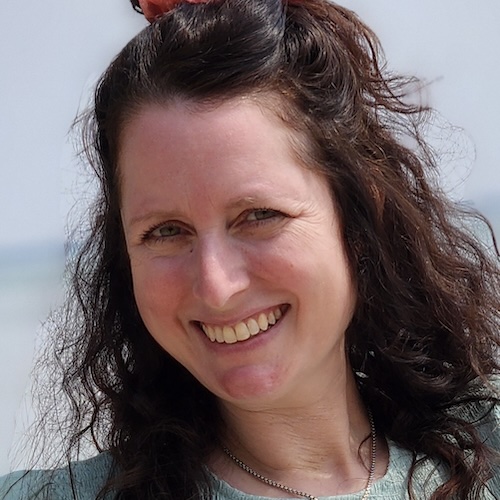
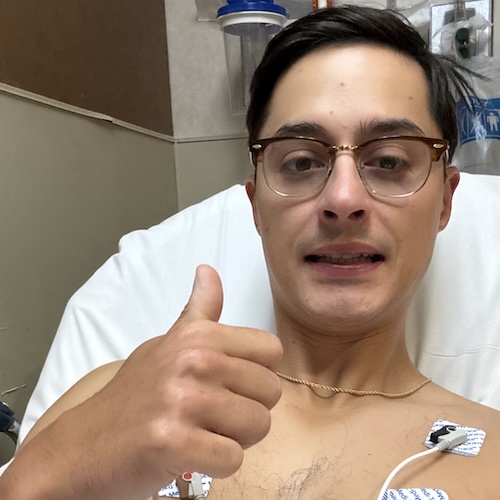
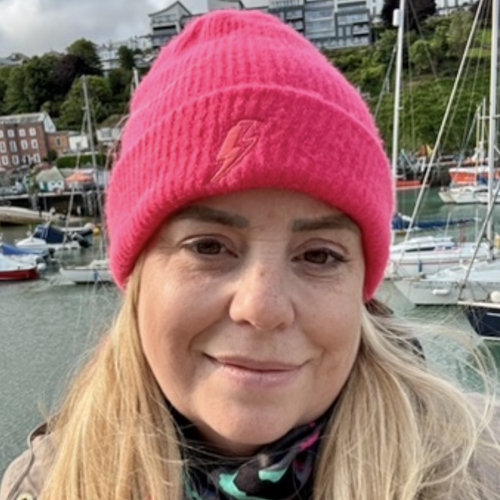

Leave a Reply