
Motherhood, Horses, and HR+ Metastatic Breast Cancer: How Joelle is Taking Her Life Back
Joelle is a 41-year-old mom who lives with HR+ metastatic breast cancer, but is determined to keep motherhood and horses at the center of her life. She was in the thick of parenting a four‑month‑old son and a three‑year‑old daughter when nagging symptoms began to surface: hip pain so intense she could barely walk, severe pregnancy nausea, and an inverting nipple that came and went. None of it initially added up to cancer. Instead, she chalked it up to being a “geriatric” pregnant woman, doing her best to keep up with young kids and a busy life in Memphis.
Interviewed by: Nikki Murphy
Edited by: Chris Sanchez
Looking back, Joelle connects the dots with both clarity and self-compassion. Milk never came in from her right breast, even with help from a lactation consultant. Mammograms during those years showed nothing, and her hip pain was treated as a physical therapy issue until imaging revealed a lesion in the bone. Eventually, a mammogram, biopsy, and PET scan uncovered the full picture: hormone‑positive (HR+) metastatic breast cancer that had quietly spread to her liver and bones.
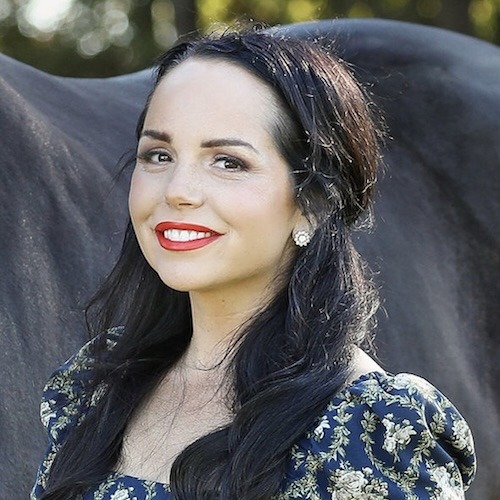
The moment the diagnosis shifted from “likely early” to stage 4, Joelle describes feeling like she had “a gun to her head 24/7” for a month. In that suspended time, she cleaned out her closet and tried to prepare her family, all while parenting a baby and a toddler. Her husband stepped in to absorb the medical details so she could protect her mental space, and her care team in Nashville built a treatment plan that included hormone therapy, targeted therapy, bone‑strengthening medication, and targeted radiation to help her walk and ride again.
Over time, treatment improved her quality of life, but the mental toll remained heavy. Joelle says she lives in three‑month increments, measuring life between scans and tumor marker labs. Travel, family photos, and a long bucket list give her something concrete to look forward to, and she leans on manifestation and positive thinking to keep fear from taking over. She aims for 95% positivity, allowing herself to fall apart the other 5% of the time.
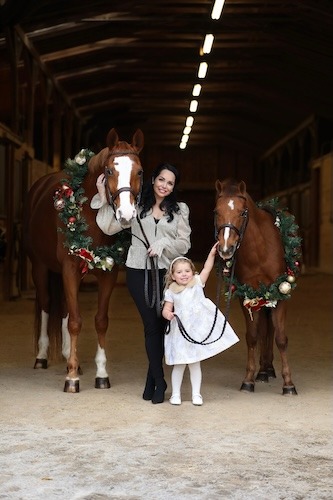
Through it all, the barn has remained her sanctuary. Joelle credits her horses with helping her breathe, quiet her mind, and remember her own strength. She still competes in national shows, jumps 1,500‑pound horses over colorful rails, and insists there’s “no other option” but to keep doing what makes her feel most alive, both for herself and for her children.
Watch Joelle’s video and read the edited transcript of her interview for more insights into her metastatic breast cancer story:
- Hormone receptor–positive metastatic breast cancer can develop and spread even when early tests look normal, and symptoms seem “explainable” by pregnancy or everyday life.
- Finding an oncology team you genuinely trust and feel safe with can transform the entire treatment experience and help you feel supported instead of alone.
- Joelle’s experience shows that quality of life can improve with treatment over time, even after a devastating stage 4 diagnosis that initially feels unbearable.
- Returning to her horses and the barn allowed Joelle to reclaim a sense of identity, power, and joy beyond cancer.
- For us all: it is okay to protect your mental health by not knowing every statistic, to live in small increments, and to still create big, meaningful memories.
- Joelle’s transformation is emotional and spiritual: from feeling like she had a gun to her head 24/7 to living intentionally, savoring the “privilege” of daily routines with her kids, and manifesting decades more life.
Joelle’s Diagnosis Facts
- Name: Joelle E.
- Age at Diagnosis:
- 39
- Diagnosis:
- Breast Cancer
- Staging:
- Stage 4 (Metastatic)
- Biomarker:
- HR
- Symptoms:
- Easily attributed to pregnancy, but when severe, can be red flags for other issues
- Severe nausea
- Very low weight gain in pregnancy
- Common in pregnancy but can be primary indicators of cancer
- Profound fatigue
- Difficulty walking
- Symptoms more suspicious of cancer
- Lack of milk production in only one (right) breast
- Intermittent nipple inversion
- Severe bone pain (right hip pain)
- Easily attributed to pregnancy, but when severe, can be red flags for other issues
- Treatments:
- Targeted radiation therapy
- Hormone therapies: tamoxifen, leuprolide
- Targeted therapy: CDK4/6 inhibitor (abemaciclib)
This is not medical advice. Please consult with your healthcare provider to make informed treatment decisions.
- Joelle’s Diagnosis Facts
- Introduction
- Early signs of breast cancer while pregnant
- Hearing “It’s cancer,” and early optimism
- The PET scan and learning that “cancer was everywhere”
- My first reaction to my metastatic breast cancer diagnosis
- My metastatic breast cancer treatment included targeted therapy
- How metastatic breast cancer changed how I see myself
- Why I choose to live for my kids
- What living with metastatic breast cancer looks like for me today
- My advice for someone newly diagnosed with metastatic breast cancer
- What induced menopause has been like for me
- Living with hope
- Hear from people living with breast cancer
Introduction
Hi, I’m Joelle. I’m 41, and I am currently living with stage 4 breast cancer.
Before my cancer was diagnosed, I was in the throes of motherhood. I had a four-month-old son and a three-year-old daughter. I was super busy being a mom, riding my horses and traveling, and just trying to live life to the fullest. It definitely threw me for a loop because there was truly no indication that something was wrong.
We had seven Airbnbs at one point, but because of my diagnosis, we scaled down to one. It’s this charming little house in midtown Memphis, and I cannot get rid of it. I love it, so that’s the one we kept.
Next to family, horses are my lifelong passion
My dad had me riding horses as soon as I could walk. One of my favorite photos with my father — he actually passed away from prostate cancer; they caught it too late, and it had spread to the bone — is this photo of me on a big white horse with him in his lap.
I guess I just got bitten by the bug, because I’ve been literally riding ever since. I was not even two when that photo was taken.
I love horses because you have to be completely honest with them. They read you, and they feed off of your energy. There’s a calmness where I forget about the rest of the world when I go to the barn. They certainly lower cortisol levels, and some studies say that, but I certainly believe it because time stops and my problems stop.
You are taking care of this 1,500-pound animal who could kill you, but they don’t because they love you, and they’re so sweet with you. There is nothing I can compare it to. My husband laughs because sometimes I’m staring into space, and he’s like, “What are you doing?” and I’m like, “Oh, I’m jumping my horse in my mind.” It’s a very therapeutic, calming, almost meditative experience.
Early signs of breast cancer while pregnant
With my daughter, I was pregnant in 2020–2021 during COVID. My husband wasn’t going with me to my doctor’s appointments, and my milk never came in once I had her. I should back up and say that I threw up every single day of my pregnancy. I only gained 7 pounds the entire time. Again, I don’t know if that’s cancer-related, but I feel like it’s worth mentioning.
I had severe nausea, and milk never came in my right breast. The lactation consultant thought it could be my inexperience, but she also said sometimes that just happens. I didn’t think too much of it. I got really frustrated, so I switched to formula. I did tell my OB about it, but she didn’t seem very concerned. She ordered a mammogram. I had shared that I wanted to have another child quickly because I was “old.” I was 36; they called it “geriatric,” and I have dense breast tissue, but nothing popped on the mammogram. I now know that it was probably already growing, and that’s why I was not having any milk production.
I had two later miscarriages — I think at 12 and 14 weeks — in between my daughter and my son. During that time, when I was pregnant with those two miscarriages, I noticed that my right nipple was slightly inverted. I asked my girlfriend something; she had two older children, and she was like, “Oh yeah, my nipples inverted. It’s just weird. They just sucked me dry.” I thought it was odd because, as I said, I couldn’t breastfeed, but I didn’t think too much of it.
As soon as the miscarriage was over, my nipple went back to looking normal.
Pregnancy with my son and worsening hip pain
When I had my son, I wasn’t nauseous like I was with my daughter, but I was exhausted and my bones hurt. If I only knew what that meant. I just thought I was a geriatric pregnant lady, and I was exhausted. I was in bed all the time. My poor husband was doing a lot of the heavy lifting with our daughter, and I thought it was because I was 39 and pregnant.
I remember not being able to get out of bed, and it hurt to roll over. I went to the hospital one day and said, “Get this baby out of me.” Fortunately, I had a dear friend who was an OB at the clinic, and she helped me get the baby out. My first daughter, I delivered so quickly — she just popped right out — and I thought that’s how he was going to be. But we didn’t know the cord had been wrapped around his neck twice, so we had to do an emergency C-section, even though he was right there. He came out with a little cone head, even though he was a C-section baby.
They make you get up and walk when you have a C-section, and that’s the first time I really noticed my hip pain. I remember thinking, “Oh my gosh, I cannot even put weight on my right hip,” and I was having difficulty walking. They said, “During labor, maybe something just didn’t pop back into place.”
It got worse and worse once I got home. I went to a physical therapist who x-rayed me, and I was doing physical therapy for my hip. It turned out it was a lesion — I had cancer in the bone. I always find it fascinating that I was pregnant, going to the doctor, even doing physical therapy, and yet, how did all of this get missed?
The mammogram, biopsy, and a friend as my radiologist
My annual exam was four months after I had my son. I mentioned the nipple thing because it hadn’t popped out like it normally had, and it was starting to feel weird. My OB was awesome and ordered a mammogram right away. They immediately said they needed a second look after the first scan.
It just so happened that the radiologist on call — this was not planned — was a girl I’d known since I was four years old. We went to junior kindergarten all the way through 12th grade together. She came in, was so lovely, held my hand, walked me through it, and did the biopsy herself. I guess normally they don’t do that. I feel very lucky that I had such a supportive, sweet friend as my doctor.
Unfortunately or fortunately, she was the one who called me. She called me from her cell phone, and I knew it was probably not good and that I had cancer.
Hearing “It’s cancer,” and early optimism
I guess my tumor wasn’t that large, so everybody thought we had caught it super early. They thought it might be scar tissue. It was very much, “We think we’ve caught this early.”
She called me and said, “I’m so sorry, but it’s cancer.” It sounded like everything was going to be okay. She said she had a great surgeon she wanted me to talk to. My husband immediately took over. To this day, I can’t tell you all of the technical terms for my breast cancer. I think that’s why I’ve been able to maintain such a positive attitude — because I’m so blessed to have the sweetest husband in the world. He has taken that medical stress off me.
Even then, when we thought everything was fine, it was like, “Oh, well, he’s going to take that part of the load for me because I just need to stay positive.”
They did a biopsy on the tumor and found out it was hormone-positive.
The PET scan and learning that “cancer was everywhere”
Everybody said, “You’re just going to do a double mastectomy and chemo, and you’re going to be fine.” I remember the surgeon being so optimistic. She said, “We’ve got some steps just to make sure it hasn’t spread.”
We did a lymph node biopsy. I guess when it’s spread to your lymph nodes, you can usually visibly tell. That was not the case with me. Apparently, it looked really great on me, but there was something in my armpit that popped, so she wanted to do a full PET scan. That’s when the bottom fell out.
She was wise and called my husband, not me, first. I feel bad he had to carry that weight, but he was the one who told me. He was on a tractor mowing the back of our farm. I will never forget the look on his face. He was just waving for me to go back to our bedroom because our nanny was there with our kids, and he just broke down and said, “It’s everywhere.”
My first reaction to my metastatic breast cancer diagnosis
I cleaned out my closet. From that moment until a month later, I felt like I had a gun to my head 24/7. I’ve since spoken to my friend’s father, who was recently diagnosed, and he said that it is the most accurate description he’s ever heard.
It was like I had a gun to my head 24/7, and I didn’t know when it was going to go off. You hear stage 4, you hear all these scary things, and you think, “Oh my gosh, what am I going to do?” So I thought, I guess I’m going to have to prepare my family. I had a four-month-old and a three-year-old. I wanted to clean my closet out so they didn’t have to do that later.
My poor husband — that night we went to sleep, and I woke up to him hysterically crying. I looked at him and said, “You’ve got to pull it together, buddy. I’m the one who is potentially dying here.” Since then, I found out that he goes to our barn and cries whenever he needs to. Things are looking good now, but for a while, he was going up to the barn and trying to hide his fear from me.
What the doctors told us about my HR+ metastatic breast cancer prognosis
I was told by my husband that the surgeon told him that people who had scans like mine, some of them live for a couple of years. Again, this is second-hand information, but we knew it had spread to my liver and my bones at this point.
It’s funny because I didn’t want to know the statistics at first. It took me an entire year before I knew that I think it’s about 20% of people with my diagnosis who live past five years. I didn’t know that for a full year, and I’m so grateful I didn’t, because my health kept improving with treatment, and I feel great.
Psychologically, if I’d known only 20% with my diagnosis live past five years, I don’t know what that would have done for me. I don’t think I would have thrown in the towel, but I do think not knowing all the nitty-gritty, scary stuff helped. The first time I met my oncologist — who I love and adore and who is so fabulous — they asked me, “Do you want to know the statistics?” and I said, “Absolutely not. Do not tell me a thing.”
Family history and genetic testing
I did get genetic testing done. My father passed away from prostate cancer. He refused to go to the doctor, and by the time he went, it had spread everywhere. He passed away within five years and was 67 when he passed.
His mother, my grandmother, died from breast cancer, but she wasn’t diagnosed until she was in her 70s. This caught everybody by surprise because I was so young.
My metastatic breast cancer treatment included targeted therapy
I started with tamoxifen and abemaciclib. They also did leuprolide, which suppresses my ovaries because they’re putting me into menopause, which is super fun. They also give me a shot every three months — it’s a bone-hardening drug for osteoporosis. I’m sorry, I don’t know the name off the top of my head, but that has been my regimen since day one, and it’s what I’m still on.
I had radiation because I could not walk, and that helped tremendously. My quality of life immediately improved once I did that.
I think I did ten sessions of radiation. It was to my hip and a spot on my back — my shoulder blade, I believe. There were other spots, but he said those areas would help me the most in getting back to my active life, because I couldn’t ride my horse, I was having difficulty walking, and I certainly couldn’t throw a saddle on my horse’s back. I’m so thankful they were able to do that.
Living with the side effects of targeted therapy
I’m still on abemaciclib and tamoxifen, and I think I just had my last round of leuprolide, because I’m officially in menopause. I’m also still getting a bone-hardening medication.
Some people have had to wear diapers — fortunately, I am not one of those people. But I’ve had to completely rearrange my diet. I have to be very intentional about what I eat because there are some horrible side effects.
The hardest part of my metastatic breast cancer treatment: The mental toll
I live in Memphis, and my oncologist is in Nashville. For a while, I was going every two weeks, then every three weeks, then every month, and now I’m fortunately every three months. But I feel like every time I go, I think, “Oh, I have three more months to live.”
People ask me how I’m feeling all the time and about side effects, but it’s really the mental toll that is the worst part of my treatment. You would think fewer appointments would be better, and it is, and I’m grateful I only have to go every three months. But every time they do a blood draw to see my tumor markers, or when I get a scan every six months, I feel like I live my life in three-month increments, and I can’t really plan past that.
How metastatic breast cancer changed how I see myself
I used to be a “get it done, whatever it takes” kind of girl. I am suddenly very vulnerable. I’m living my life more intentionally and gratefully.
I’m a mom to two small kids, and I think sometimes I used to get frustrated with the day-to-day — getting them up, cooking breakfast, taking them to school, cleaning the house, picking them up. It’s easy to get stuck in that grind and feel a little lost.
Now I have a completely different attitude: what a privilege. What a privilege that I get to do this every day. I pray, “Please God, give me at least 15 more years so I can see them through high school.” I’m much more appreciative of the small things, even the mundane. I just want to be here for them.
I never wished time away, but I was like, “Wow, I can’t wait to be past this phase.” Now I’m so grateful for every single second.
Why I choose to live for my kids
I haven’t had days when I felt like I couldn’t keep going. My kids — I would do anything for them.
I keep hearing other cancer people talking, and they always say, “People say you would die for your kids, but would you live for them?” And so, yeah.
Returning to the barn, and my horses, after my metastatic breast cancer diagnosis
When I first found out I had breast cancer, I sent an email to my trainer’s wife and said, “Hey, I’m so sorry. I just found out I have breast cancer. You need to take me off the calendar for a couple of weeks, and then I’m going to circle back.” During that discovery process, I was not riding.
When we found out how bad it was, I was going to the barn and riding because I didn’t know how much time I had left. That was also when I couldn’t really ride well or for long because of my hip, but it didn’t stop me.
During that time, I kept my diagnosis very close to the vest. I didn’t tell many people how bad it was because I wanted to feel normal. I kept telling people I was going to be fine, especially horse people, because I wanted to enjoy my time out there.
How my horses helped me through breast cancer treatment
They never asked me about my cancer, of course, and that is such a blessing. That silence, when they put their head on your shoulder or nuzzle you, is everything. Horses read people so well, and I’m sure they know something’s going on.
I think they were a lot more gentle with me than they normally are — but not too much. They just take you for who you are in that moment.
It lets me breathe again. Motherhood is why I’m fighting as hard as I can, but horses are why I’m able to breathe. Being outdoors — I love the smell of horses and hay. There’s a calmness. You forget about everything, you forget your problems, and you focus on your relationship with this horse.
Especially when you’re riding: when you’re headed to a jump, it’s a little bit dangerous, and everything else goes quiet. You’re focusing on the jump ahead of you. That’s what I love so much, because my mind is never quiet these days — except then.
They definitely lower my cortisol level. Being outside and physically active helps. It’s one thing to be on a treadmill, like, “I’m going to work out today,” but I’m cleaning out stalls, throwing hay, grooming them, and of course, riding is exercise.
Taking care of an animal — I love my kids, and I take care of them, but taking care of horses is magical. I still feel like a little girl, and I can’t believe I’m so lucky to have ponies in my backyard. It’s such a privilege to take care of them and focus on their needs instead of what I’m going through.
Our horses and show life
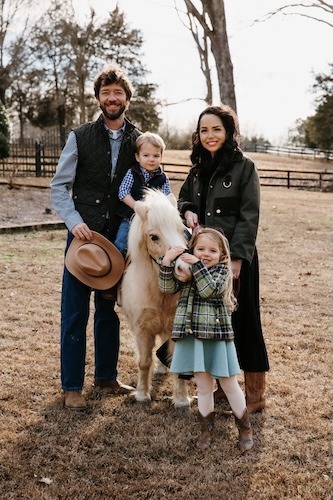
I have two ponies at home, and we don’t really ride them much. My son does lead-line stuff on one of them. I have two horses, and my daughter has a show pony down the street with a trainer, so they’re in a professional program. We have two at home, so it’s the best of both worlds.
I’ve definitely shown horses since my diagnosis. I never stopped. The year I was diagnosed, in 2024, I think I finished 11th in the nation out of about 2,000 for my division. Last year, in 2025, I think I finished 19th out of about 2,000 horses in my division. I do about 20 shows a year — maybe 16, but around there.
My horses help me take back my power from cancer
They never stopped loving me. I get so tired of, “How are you feeling? How are you feeling?” Instead, I’m riding and doing what I’ve always done. If I post a video on social media of me riding my horse and winning, people say, “You look so strong. Good for you, I’m glad to see this.”
I’m fully capable. I am strong. In some ways, I feel better than I have in years. I’m jumping a 1,500-pound animal over colorful sticks, and I feel awesome doing it. I feel like a badass again. Cancer be damned — I’m still doing it.
There’s no other option. My oncologist says, “You have a hole in your hip, so if you fall off your horse, I need you to fall off the other way.” That’s always on my mind.
But life is too short. I want to do what I love. I don’t want to be scared. I’m just going to do what I’ve got to do.
The support system beyond my horses
My husband is absolutely incredible. He’s a saint. I’m so lucky to have him. My friends are awesome. I have a tight-knit group of girls who are very protective of me, and I’m grateful for that.
People do talk. When people hear someone has stage 4 cancer, they think, “They’re going to die tomorrow,” and then they see me out riding horses, traveling the world, smiling, and feeling good. It’s an interesting time in my life.
What living with metastatic breast cancer looks like for me today
I try not to think about it. I really believe in manifestation and positive thinking. That’s why I kept it so close to me for a while, because I felt like if everybody knew and it was this big, scary thing, somehow that would impact the result. I know that sounds crazy, but I wanted people to treat me like they always had — normal — which is unrealistic.
I try not to talk about it a lot. Then, of course, I melt down one day and share something on Facebook about what I’m going through.
I’d say 95% of the time I’m positive, trying to live my life normally and make people forget, and 5% of the time I fall apart. People have no idea what I’m going through because I feel like the bottom could fall out at any time. The next time I go to the doctor, even though I’ve had great previous visits, I still think, “What if? What if?”
Balancing fear and hope
I try not to give fear a voice. I let it sit with me, and then I have this big calendar in my hallway, and I focus on what fun things I’m doing next. I always have something going on these days.
My husband and I are taking a fun trip to Vegas, just the two of us, at the end of March, and we’re going to Florida for spring break. Having something to look forward to in the next month is what’s keeping me going. If I didn’t have that and I was just sitting still and letting myself think about “what if,” I would spiral. It’s important to me — not in a morbid way — but to keep marking things off my bucket list because I want to live. I want to have memories.
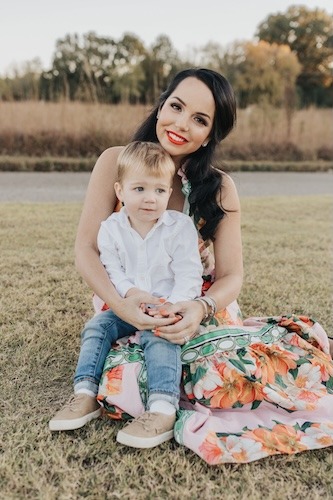
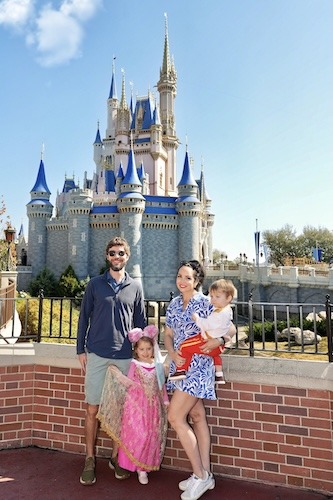
I’m driving my family crazy because I take professional photos at least once a month. If something happened to me, I’d want my kids to have these memories. We just got back from Disney World last week, and I had the photo pass. I was saying, “We’re taking another photo, we’re taking another photo,” because I’m usually the one behind the camera. If something happens to me, I want to be in those photos.
My bucket list and why travel matters so much
In my early 30s, I took a year off work and traveled for a year. I went to 25 countries. I created this bucket list because I wasn’t married yet and figured it might be my last time to have that opportunity.
My dad passed away when he was young, at 67, and I had this urgency to get out there, see life, and experience the world. I had a blog and started making lists. I probably have 2,000 things on my bucket list from 2016 when I was young and healthy. I’ve always had that in me — I want to experience everything.
I got married and had kids, and everything slowed down. But now I have that fire in me again to see and do as much as I can, because you’re not promised tomorrow. For Thanksgiving this year, we’re renting a castle in Scotland and having some friends. For Christmas, we’re taking the kids to Finland to see Santa. I’m trying to pack in as many epic things as I can because I live in three-month increments and I’m scared.
My advice for someone newly diagnosed with metastatic breast cancer
I think you should take a beat. I was really lucky. I didn’t feel lucky at the time because I felt like I had a gun to my head for an entire month, as I’ve said, but I was able to sit with the news, and everything came into perspective. I had a lot of clarity about what I wanted in my life and, if I had more time, how I wanted to spend it.
Making sure you have a team you love is the most important thing. I’ve been so blessed. All of my doctors have been incredible. I had one meeting with one oncologist that I didn’t really jive with. She was highly recommended, and some of my friends loved her, but she didn’t end up on my team. I’m so glad I recognized she wasn’t the right fit for me.
I’m at Sarah Cannon Research Institute in Nashville, and I’m blown away by how incredible every single person who works there is — their positivity and kindness. I don’t mind going because they’re so lovely and compassionate. I hear stories all the time from people who don’t have that relationship with their team, and it makes me so sad because when you’re fighting for your life, you need the right team to help you do that.
If you have any reservations or hesitation about opening up to your doctor, I think you should look elsewhere. I don’t feel there’s anything I couldn’t tell my team, or that they wouldn’t support me with. They think it’s awesome that I’m riding. At my last visit in January, they were laughing, saying, “She’s off to Florida to compete in a horse show for two weeks.” They think that’s so cool, and I’m incredibly grateful for how supportive they are.
Healing beyond hospitals
You’ve got to be kind to yourself. You need to figure out what makes you feel alive and keep doing what makes you you, and focus on that.
For me, that’s horses. I don’t think I would be here without horses. I was talking to a mental coach the other day, and she said, “I think you’re better because of your horses,” and I 100% agree. I still have goals, I’m still taking care of them, and it gives me something else to think about.
I realize I’m lucky to physically still be able to do these things with my diagnosis, and I’m not taking it for granted. That pushes me harder because I don’t know if another lesion will come back, and then I really can’t ride. So I’m trying to do it every day that I can.
What induced menopause has been like for me
I’m a little vain, and I thought my life was over — and it’s not. It seems silly when you hear you have metastatic breast cancer and they’re going to put you in menopause to potentially save your life. You should probably just be like, “Great, thank you, yes, let’s do that,” but I definitely had reservations. People talk about hot flashes and how horrible they are.
You have to focus on the fact you’re doing this to potentially save or prolong your life, however you want to look at it. In the end, the side effects were not that bad for me. I was worried about not being attractive to my husband or losing that intimate side, but I’ve made a really intentional effort to continue to put myself together and have date nights. I’m trying. That’s all you can do. I wouldn’t say it’s easy, but as long as you do your homework, that’s all you can do.
Living with hope
I hope that I live for 20 years — or decades — and not just five years. I fully believe that’s going to happen. So hope is kind of another word for what I’m manifesting.
Hopefully, I’ll still be here.
This interview has been edited for clarity and length. The views and opinions expressed in this interview do not necessarily reflect those of The Patient Story. This content does not replace professional medical advice.
Inspired by Joelle’s story?
Share your story, too!
Hear from people living with breast cancer
Real experiences with diagnosis, treatment choices, side effects, and life beyond breast cancer — in their own words.

Leave a Reply