
Alicia on Motherhood, Advocacy, and Spreading Joy Through Flowers After Her Bile Duct Cancer Diagnosis
In the months after her daughter was born, Alicia tried to push through symptoms that felt inconvenient but familiar, including nausea, fatigue, headaches, and a growing pain in her upper abdomen. Like many new parents, she put herself second. It wasn’t until just before her daughter’s first birthday that Alicia learned she was living with stage 4 cholangiocarcinoma, also known as bile duct cancer, a diagnosis that reshaped how she approached time, family, and purpose.
Interviewed by: Keshia Rice
Edited by: Chris Sanchez
Alicia emphasizes how quickly her diagnosis moved from initial emergency room visit to confirmed bile duct cancer, largely thanks to attentive physicians who did not dismiss her symptoms. She describes the emotional weight of being a young parent with a life-threatening disease, noting the compounding anxiety of wanting to protect her child from negative impacts while managing her own health. Amid appointments, chemotherapy infusions, and the adjustment to new routines, Alicia found unexpected gratitude in each day.
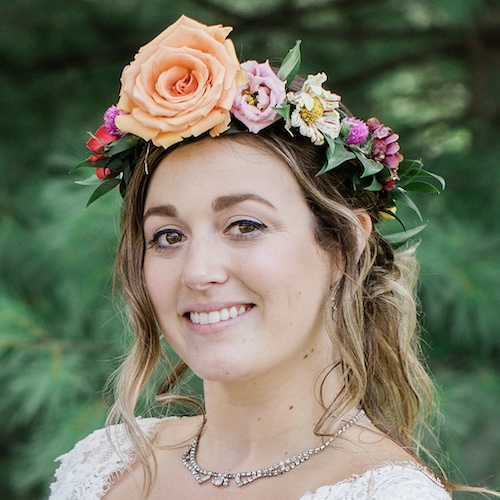
Taking an active role in her treatment, Alicia sought multiple second opinions, advocated for Y-90 radioembolization (highly targeted radiation treatment), and joined a tightly knit group of young mothers with cholangiocarcinoma. Her openness to clinical trials and collaboration with leading specialists highlights her practical approach and willingness to explore advances in care. Alicia’s experience extends beyond medical treatment into self-discovery. She speaks candidly about the evolving sense of identity that accompanies visible side effects like hair loss.
Purpose remains central throughout Alicia’s story. She channels energy into her Growing Kindness flower project, giving bouquets to oncology centers, neighbors, and strangers, and shares seed packets during winter. The joy and community she creates are gifts she hopes her daughter will carry forward, living with intention, spreading kindness, and noticing how a single act can create positive ripples. Alicia aims to help empower patients, families, and care partners to seek connection, advocate for themselves, and embrace each day’s value alongside their challenges.
Watch Alicia’s video, and read her edited interview transcript below. You’ll learn more about how:
- Self-advocacy is essential. Alicia pursued multiple opinions, researched treatment options, and credits her persistence for receiving life-prolonging therapies
- The disease, not the patient, determines treatment response; Alicia highlights the importance of compassionate care and patient effort
- Meaning and purpose are possible even after drastic life changes. Her involvement in the Growing Kindness project illustrates transformation and hope
- Community matters: Alicia found critical support in a Facebook group for young mothers with cholangiocarcinoma
- Living with intent and kindness impacts others, especially children observing their parents’ experiences
- Name: Alicia P.
- Diagnosis:
- Bile Duct Cancer (Cholangiocarcinoma)
- Age at Diagnosis:
- 33
- Staging:
- Stage 4 (Metastatic)
- Mutations:
- ARID1A, CDKN2A, CDKN2B
- Symptoms:
- Nausea
- Persistent diarrhea
- Extreme upper abdominal pain (right side)
- Treatments:
- Chemotherapy
- Immunotherapy
- Radiation therapy: Y-90 radioembolization




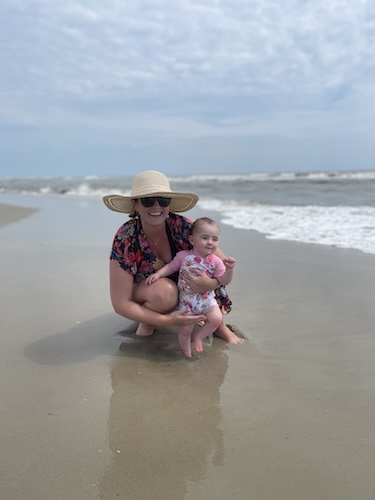
This interview has been edited for clarity and length. This is not medical advice. Please consult with your healthcare provider to make informed treatment decisions.
The views and opinions expressed in this interview do not necessarily reflect those of The Patient Story.
- Hi. My name is Alicia
- How I discovered that I have cancer
- Parenting with cancer: the emotions and challenges I faced as a new mom
- How I managed my fears and planned for the future
- From my ER visit to my diagnosis
- Learning about an uncommon cancer
- My day-to-day life with cancer and how I maintain normalcy
- Growing Kindness: how we spread joy through flowers
- How my life has changed after my diagnosis
- My body image and identity
- The physical and emotional impact of chemotherapy
- How I’ve advocated for myself
- Clinical trials and research: considering new treatments
- Understanding palliative care
- How I keep going
- What I want others to know
Hi. My name is Alicia
I reside in New England. I am 36 years old.
I was diagnosed with stage 4 bile duct cancer or cholangiocarcinoma in October of 2022, about two weeks shy of my daughter’s first birthday. I have innumerable lung lesions, and I have a grapefruit-sized tumor on my liver.
How I discovered that I have cancer
I had experienced postpartum body changes, which are absolutely normal. However, I noticed an increase in feeling nauseous, headaches, lack of appetite, even though I was nauseous, and I was trying to manage that fatigue and upper abdominal pain in the right upper quadrant. I believed these changes were due to hormonal shifts from being in a postpartum realm or increased stress from my career. I had recently taken a new job, and all those things together led me to believe it was just stress. My right upper quadrant pain increased over a couple of months before diagnosis. One day, my husband finally said, “I think it’s time for you to go to the ER and get checked out. This just doesn’t seem right.” But as most people do, especially parents, we tend to put ourselves last, and I kept pushing off my symptoms, chalking them up to stress and hormones.
One Monday morning, I worked from home until about noon, drove myself to the ER, went in, and was immediately guided into scans by physicians who believed me and didn’t dismiss my symptoms. I am really grateful for that. That’s a story we hear a lot: young, healthy individuals go to the hospital, and their symptoms are just shoved off to the side. They immediately sent me in for scans after palpating my abdominal region, and you could actually see almost a raised area over the liver. Scans led to additional scans in different types of machinery, and I could tell by how quickly things were moving and that I was being shuffled around that there was something gravely wrong. When the physician came into the room, I could tell he was really trying to keep it together.
Before he shared the information with me, he asked, “Do you want to call somebody, have them on the phone? Do you want to wait for someone to be here?” I just said, “Lay it on me. What’s going on?” Unfortunately, they had to tell me they could see three masses on my liver: one the size of a grapefruit, two smaller ones the size of golf balls, and many, many small nodules in my lungs. I drove myself home, calling my husband and my mother frantically to meet me at my house and pick up my daughter from daycare.
I’ll never forget sitting in the backyard at about 5:00, as my husband held me and we just broke down on the ground and cried.
The next few days and weeks were a whirlwind of tests, appointments, and phone calls to insurance, employers, daycare, all of the above.
Very quickly, I was given the news that I had stage 4 cholangiocarcinoma, an extremely rare and extremely aggressive cancer of the bile duct. It is considered a liver cancer, even though it comes from the bile ducts. Mine is intrahepatic, meaning it came from inside the bile duct attached to my liver and metastasized to my lungs as well. It is considered stage 4 when it has shifted to other organs, and I am considered in palliative care. They consider that I will never be cured.
I started chemotherapy within a few weeks and have been receiving chemo infusions for three years as of early October this year.
Parenting with cancer: the emotions and challenges I faced as a new mom
As a parent, I think how you handle things, especially stress, changes with experience over time. It is a learned skill, not something taught, and it takes a very long time. I don’t think you’re ever done being a parent, and I don’t think you’re ever done learning as a parent.
Learning about my diagnosis as a very new mom and new parent was detrimental. The stress, anxiety, and worry were exponential. It’s very hard to put into words. You’re not only worried about yourself anymore; you’re worried about this little human and your family, and the impacts on everyone.
With the aggressive nature of my cancer, everyone immediately goes to “Doctor Google” when diagnosed and starts reading as much as possible. It was very grim out there. Cholangiocarcinoma has historically been considered an older person’s cancer; it is usually diagnosed in people aged 50 or 60. There is a big increase in young patients, which is very scary, and hopefully, with more exposure, it will help increase funding.
Having people shed light on bile duct cancer will help increase funding and start to help younger people diagnosed with it. As a young parent, you’re so terrified of everything out there for your child; the last thing you want to do is add any negative impacts to their life.
How I managed my fears and planned for the future
Given the rarity and aggressive nature of my cancer, I did not think I would still be here today. My mental state when I was diagnosed was very bad as a parent. I immediately thought, “I’m not going to be here in a couple of years. I need to get everything settled, like wills, accounts, estates, and trusts, just to make sure that she’s all set.” Three years down the line, I’m able to tell you that tomorrow is promised to no one, and I am still here and so grateful for that. Every day is a blessing.
I live in a much different capacity, living for today. In the moment, I still have worries, and I still do a lot of planning as a bit of a Type A person. But we find joy in every day and take issues as they come, navigating them together as a family.
I am a much better parent having been diagnosed with cancer: more patient, more kind, and more giving. I honestly think the positive aspects of the way it will change my daughter’s life will outweigh the negative ones someday. Having someone in your life who has cancer, illness, or hardship makes you a kinder individual, and I hope that’s the type of person she becomes.
From my ER visit to my diagnosis
My diagnosis came very quickly. Doctors were amazing in moving swiftly. I live in a very rural area, but close to Boston, Massachusetts, a hub of medical activity. I believe being young alarmed the doctors. Why does this seemingly healthy 32-year-old, who just had a healthy singleton birth, immediately have cancer? Everyone feels for you and wants to move quickly. With the aggressive nature of cancer, they wanted me to start chemotherapy as soon as possible.
From my ER visit to diagnosis, it was about ten days. We saw scans and large masses, so we knew there was cancer, just not exactly which kind or what chemotherapy to use. At first, I thought it was liver cancer, and then it was revealed to be cholangiocarcinoma. All of my blood, liver, and kidney functions were completely within the normal range. If I had only received blood tests in the ER, there would have been no way to tell I actually had cancer, and my symptoms would have been brushed off. The scans, ultrasound and then CT were crucial.
My first symptoms started around June 2022, and I didn’t go to the ER until September.
Learning about an uncommon cancer
As is common for many cancer patients, I went straight to the internet after diagnosis; I’m a Type A person. I did as much research as I could and was up day and night reading about every aspect of the cancer, every possible treatment. I keep a running notes list in my phone of every potential treatment, chemotherapy, or alternative, that I see. There may be a treatment for kidney or pancreatic cancer not yet approved or known for bile duct cancer, but it could benefit me, so I keep those ideas in mind.
I was also reading the negative side, online and on social media, especially Facebook and Instagram, groups of people with bile duct cancer; there’s a lot of doom and gloom. Unfortunately, those diagnosed who are older may not be as healthy and may have other bad habits; they may already be in poor health when diagnosed.
From the outside, I was a perfectly healthy individual, working out, taking vitamins, no other medications, never broken a bone, never had a stitch. Online, all you read is cases where people are gone within weeks, months, or less than a year. The grave statistic: the five-year survival rate for stage four is 2%, which is very low. Most patients have other health issues and are older, but that’s not clear when you’re Googling at two in the morning after a diagnosis. Where I am today is a much different position. I see myself hopefully beating that statistic.
There’s so much fear among Facebook groups, and sometimes misinformation gets shared, but I salute the cholangiocarcinoma group on Facebook. There’s a patients-only group that promotes factual information and less emotional sharing. You’re not reading posts from someone’s distant relative grieving, but sharing direct patient experiences only.
We even created a subgroup shortly after my diagnosis for young mothers with cholangiocarcinoma; mothers with children 18 and under. There are only about 40 of us. That camaraderie has been instrumental in getting me through tough days. Most cholangiocarcinoma patients are stage 3 or 4 at diagnosis, considered palliative or terminal. Being able to share not only the motherhood journey, but also the cancer journey alongside that, has been so helpful. We’re all there for each other.
My day-to-day life with cancer and how I maintain normalcy
For me, three years in, I have a flow for day-to-day life. I am, again, a unicorn. I am on the same line of care treatment as I was at the beginning. I’ve had only one small change, and that is unheard of in most people’s cancer journeys with cholangiocarcinoma. Most cancers, especially this one, mutate quickly, and people run out of options. Everybody I knew in my support groups who was alive before is no longer with us. I am extremely blessed.
Day-to-day normalcy is possible for now. At home, we know my nadir, the periods when chemo side effects are worst, and plan accordingly. I still receive chemo infusions every two weeks, and the same kind. Three years in, I have my routine down for chemo week and the week after. In between, I am again extremely lucky. This is not normal for any cancer, especially cholangiocarcinoma; most treatments fail quickly for others.
I am on an aggressive chemotherapy regimen and have had a dose reduction, now going every other week instead of a 21-day cycle. However, I have physically managed side effects and stayed clinically stable. We utilize daycare for days when I am not well enough to care for my daughter, prepare food in advance, and make sure prescriptions and necessities are ready. Three years into this, I know my body well. Life looks very different. I was very career-oriented and had to retire a year into my diagnosis. Now I spend my days managing symptoms, trying to get things done at home, and being a mom.
I am so lucky for that. I never thought I’d have as much time with my daughter. Cancer affects me in many ways, and I am not lucky to have it, but it has also blessed me, giving me so much time with my daughter, far more than I ever could have had working full-time.
Another part of my life now is continuing my passion for flowers and gardening. My family did this out of necessity for generations, and I grew up gardening. I am part of a project foundation, a nonprofit called Growing with Kindness, growing and giving away flowers. I started doing this before cancer, the pandemic, and motherhood. It has given me the most purpose in my life.
Growing Kindness: how we spread joy through flowers
Gardening and the Growing with Kindness project have given me so much purpose in a time when I felt lost. Being career-oriented was my life’s purpose, aside from being a mom, and I had to find my way back to myself when I stopped working. I did this by growing as much as possible, which helps keep me fit mentally and physically, and it’s a whole family project.
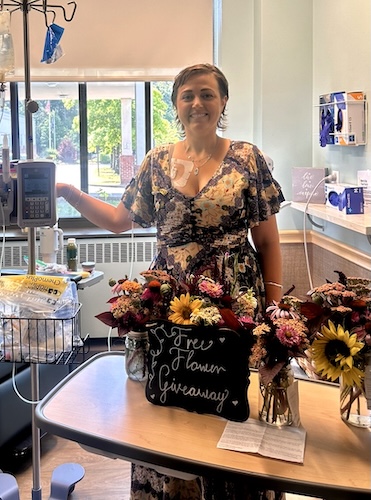
There are times when I can’t get into the garden or cut or weed. My family steps in and helps when I am not well enough. The primary purpose is that I primarily give flowers away, including at my oncology infusion center. They welcomed me with open arms and let me put up a little station by the front desk. Each year, I put up a sign: “Growing Kindness flowers from patient Alicia.” I put out little bouquets, and patients or staff take them home. So, I can spread not just my passion, but joy, and this project has created ripples in my life and community.
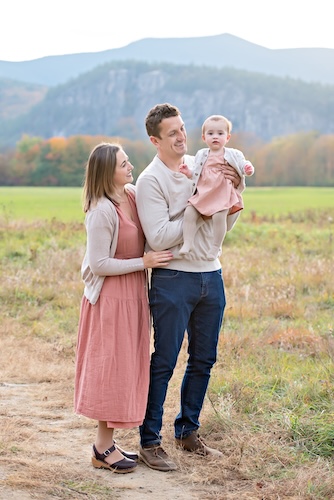
We also give flowers at the grocery store, post office, and farmers’ market, and to our neighbors and friends. My four-year-old daughter will say, “I think we should give so-and-so flowers; they’re really sad.” That makes me so proud. If you don’t see joy, spread joy; be the joy. I truly believe these are ways to make an impact in your community; it can be as simple as giving someone a flower.
In winter, we put together seed packets from seeds saved from our garden and hand them out. If someone doesn’t have a green thumb, I tell them to throw the seeds on the side of the road. These seeds are noninvasive, okay for the climate.
Make the world a place you want to live in, and spread beauty. That’s what I do with my days now.
How my life has changed after my diagnosis
Being diagnosed with cancer has changed my life in many ways. I have more patience and more appreciation for slowing down. I am lucky to live in a small, kind community where people care about each other. Everyone’s business is known, and people are always generous. Out in the world, I have more patience. I try to make conversation at the grocery store, hold the door, make time for small connections, making ripples and an impact.
If we don’t make the world a better place ourselves, no one will. If we all look at our phones and never connect, we become robotic, never making connections.
To me, human connection and love are what the human experience is about. So I try to take time to jump into those experiences in real time and really spread joy when I can.
My body image and identity
I have always been extremely confident. Bile duct cancer has changed so much about my life: how I saw my future as a mother, wife, friend, daughter, and community member. It changed my appearance; I lost all my hair. It actually still falls out with every chemo infusion, so I am not completely bald, but I do lose hair. A little bit has grown back, but I don’t really have any eyebrows.
Especially in a society where looks are important, I lean into myself and my confidence. Beauty is in the eye of the beholder, and when you exude confidence and self-love, people gravitate to you and feel your energy. I truly believe in authenticity, being yourself, wearing your heart on your sleeve, and letting your soul shine. People love you for you and not just your appearance.
It is hard to walk around without hair or eyebrows, as a woman, wearing turbans and hats. People can tell you have cancer, and for me, the hardest part was not wanting to be seen as weak and sick. Recently, someone said to my mom at an event, “Is that your daughter? You would never guess she has cancer.” That’s the world I want to live in; cancer is a part of me, but not my whole identity. I am proud to be a cancer fighter, and I am still strong, just in many different ways.
The physical and emotional impact of chemotherapy
As of October this year, at my third anniversary, I have had over 80 chemotherapy infusions of three very strong chemotherapy drugs. I go every two weeks, and we have adjusted treatment, removed immunotherapy, and lowered dosage to help manage side effects. They are still very strong chemo agents.
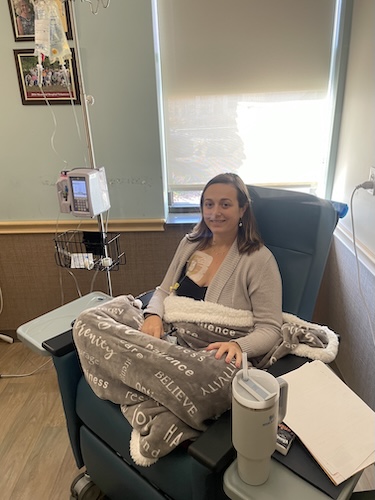
On chemotherapy day, I am at my infusion from 8:00 AM to about 2:30–3:00 PM. My mom drops me off on her way to work, and my husband picks me up. We pick up my daughter from daycare, go home, and I go straight to bed. Symptoms start during the day, and I have a predictable flow: days one, two, and three are symptomatic.
We have strategies to manage this: anti-nausea medications, drinking tea, staying hydrated to flush out the drugs, and using every available tool. If I feel off, I’m knowledgeable enough now to know when to go to the hospital. I am confident in my body, treatment, and plan, which is a good place to be. The unknown is scary; not knowing what to expect, each chemo would be awful.
We know what symptoms are coming, and prepare for them. My nadir, periods of low immunity, usually come on days seven and eight. Steroids give a false sense of wellness, but after my nadir hits, there’s a low. I prepare by making sure the house is in order, laundry is done, meal plans are made, and arranging for my daughter’s daycare rides. I rely on my family. Sometimes, I’m not well enough for chemotherapy, and that’s a sign my body needs a break — I take a two-week break rather than just skipping a week. These breaks allow me to feel the best I’ve felt in months.
My symptoms include nausea, extreme lethargy, bone aches, and severe neuropathy in my hands, feet, arms, and legs. I have many tools for managing these. I still experience upper right quadrant pain by my liver, which is chalked up to internal neuropathy or permanent nerve damage from liver radiation. My greatest tool is my heating pad; I use it at all times, even in summer, when I sleep, and have portable ones for driving, thanks to my husband. It helps me manage these nerve pain symptoms.
How I’ve advocated for myself
Faced with a scary bile duct cancer diagnosis, I became a huge advocate for myself: asking tough questions, seeking information, and not settling for answers that didn’t sit well with me. I am a strong proponent of getting second, third, and fourth opinions; if insurance approves it, everyone should see a new specialist annually.
Everybody is different, so even if one treatment is standard, you need to question what’s happening. If you’re not involved in your care, you’re not doing yourself any justice. There are never too many opinions. I have met with four cholangiocarcinoma specialists in New England and New York, and all have agreed to keep me on standard care.
The more opinions I can gain, the better. At this point, I don’t question whether I’m on the right treatment or if I need more genetic testing. I have had many eyes on my case. I keep notes on potential treatments for the future.
Advocating for myself helped me receive Y-90 radioembolization, a strong dose of radiation beads delivered through the femoral artery, directly into the tumor. It helped kill the grapefruit-sized tumor on my liver, most of which is now necrotic, though some cells remain. By the grace of God, I have answered three years on one line of chemo, which is extremely rare.
Clinical trials and research: considering new treatments
With aggressive cancers, many patients progress quickly and have only clinical trials as an option. This is vitally important for the cancer community and for the future. There’s always hope that a clinical trial may be the “golden egg,” a cure, especially for palliative patients.
I have not removed clinical trials as an option. Every oncologist I’ve met asks, “Is now the time?” Every single one has said, “Given your stability, stay on your current treatment.” That makes it easier for me, and I’m lucky to be in this position; it’s not every patient’s outcome.
Each time I have a scan, my local oncology team consults with my team in Boston — Dr. Haley Ellis, a Harvard researcher and leading bile duct cancer expert. If it came to needing a clinical trial, I know she could send me anywhere for one. Keeping communication open as a patient keeps you at the forefront of your doctor’s mind. Being young and relatively healthy makes me a good candidate; if a drug arises that would help, I believe I’d be called.
Understanding palliative care
In cancer, you learn many definitions and acronyms: palliative care, terminal illness, hospice. Many people confuse these as interchangeable, but they have very different meanings. Palliative care typically means you are not curable; it’s hard to hear, but doctors must be honest.
Doctors told me, “You will not be cured, but we’ll manage your cancer.” I’m not in hospice or considered terminal today. I’m not actively dying. These are difficult terms, but palliative care only means it can’t be cured; it opens resources and therapies that help manage treatment.
It’s medical coding, setting tone, but it does not mean you’re dying tomorrow.
How I keep going
One thing I often say, and many people do about challenges, “I don’t really have a choice.” Early in my diagnosis, a nurse told me, “You do have a choice. You can get up every day and fight to the best of your abilities or not.” There is a difference.
That realization really stayed with me. The fact that I show up every day through hard days is my way of moving forward. Everyone’s journey is different, and I recommend being gentle with yourself.
Some days, I am the warrior. Other days, I am defeated, emotional, crying, feeling lost. It can change day to day, hour to hour, moment to moment.
Allowing yourself grace and not always being at the top of your game is key to moving forward, physically and emotionally.
What I want others to know
If I could go back and say anything to myself before diagnosis, I would say to stop taking myself so seriously. Life is to be enjoyed. Your career is not everything. Just enjoy living in the moment and take things slowly.
What I want my daughter to take most from this experience as she grows is to live with intent and spread joy and kindness. The waves we make in our village and community by being kind are important. I don’t ever want her to forget that one small action can change the world.
It’s not all doom and gloom with bile duct cancer or cancer as a whole; there are horrible days, but there are wonderful days. I hope she takes the feeling of joy from me and pushes it forward in the kindness she spreads throughout her life.
Inspired by Alicia's story?
Share your story, too!
Related Cancer Stories
Dania M., Colon Cancer, Stage 4, with Liver and Peritoneal Carcinomatosis
Symptoms: Constipation, diarrhea, severe bloating, swollen belly as if pregnant
Treatments: Surgery, immunotherapy

Brittany B., Liver and Bile Duct Cancer, Stage 4
Symptoms: Amenorrhea, unexplained weight loss, loss of appetite, pain in right upper quadrant of abdomen
Treatments: Surgery, immunotherapy