
Living with Metastatic Papillary Thyroid Cancer (Tall Cell Variant): Alyse’s Story
Alyse’s experience with metastatic papillary thyroid cancer began unexpectedly in April 2024, turning her life on its head. A mother of two girls from New Jersey, Alyse had long prioritized health, exercising daily, leading group fitness classes, and modeling an energetic lifestyle for her daughters. The diagnosis of metastatic papillary thyroid cancer, tall cell variant, challenged her sense of certainty and forced her to confront the unpredictable nature of health.
Interviewed by: Taylor Scheib
Edited by: Chris Sanchez
Alyse’s experience was complicated by a family history of thyroid disorders and her own Hashimoto’s disease, an autoimmune disorder that can cause hypothyroidism or underactive thyroid, and which can also mask warning signs. She remained vigilant, undergoing regular thyroid lab panels and paying close attention to her body, which helped prompt timely medical intervention when a suspicious nodule was discovered during a routine examination. Even though her blood work was normal and she felt physically strong, a biopsy revealed metastatic thyroid cancer. The cancer’s aggressiveness heightened the shock of the diagnosis.
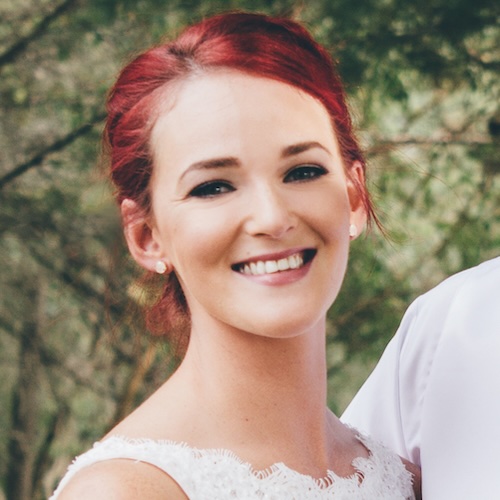
Navigating treatment brought obstacles, both practical and emotional. Alyse advocated for a highly experienced surgical team out of state and faced the financial strain of out-of-network care. She made an informed decision to postpone radioactive iodine treatment, given its risks for breastfeeding mothers and the tall cell variant’s lower response rates. Alyse’s recovery included recalibrating her fitness routine, emphasizing quality of life over rigid discipline, and embracing help from family as she rebuilt her physical and mental strength.
Alyse shares the complexity of living with “invisible” cancer, learning to balance vigilance with hope, and the importance of intentionally seeking mental health support. Through changes, setbacks, and new uncertainties, she focuses on meaning, faith, and the everyday moments that endure beyond diagnosis. Her story empowers other patients to advocate for themselves, question their options, and find personal fulfillment within and beyond cancer care.
Watch Alyse’s video and scroll through her edited interview transcript for more about how:
- Self-advocacy in pursuing a comprehensive evaluation made a difference for Alyse as early diagnosis of metastatic papillary thyroid cancer can be complicated by normal lab results and few physical symptoms
- Finding a treatment center and team with extensive experience can critically impact both physical outcomes and peace of mind
- Alyse’s experience highlights how all-consuming the disease’s uncertainty can be, and why support for physical, mental, and emotional health matters so much
- Quality of life is paramount; living fully, not perfectly, is crucial for all patients facing serious illness
- Adapting to “what’s next” after treatment is its own transformation, one that includes letting go of perfectionism, accepting support, and rediscovering joy in the everyday
- Patients are not defined by their disease; Alyse stresses the importance of not allowing cancer to become one’s whole identity
- Name: Alyse V.
- Diagnosis:
- Thyroid Cancer (Papillary Thyroid Carcinoma, Tall Cell Variant, Metastatic)
- Age at Diagnosis:
- 36
- Symptoms:
- None before routine thyroid examination with her Hashimoto’s disease
- Lump discovered during thyroid examination
- Treatments:
- Surgeries: neck dissection, lymphadenectomy
- Integrative therapies
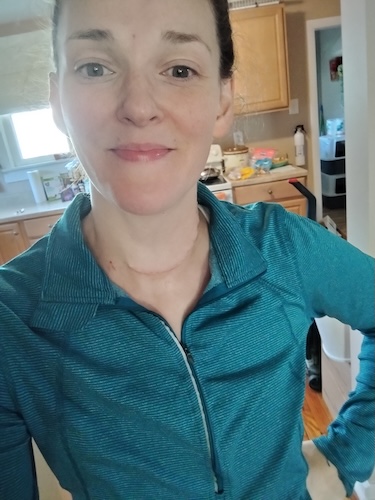
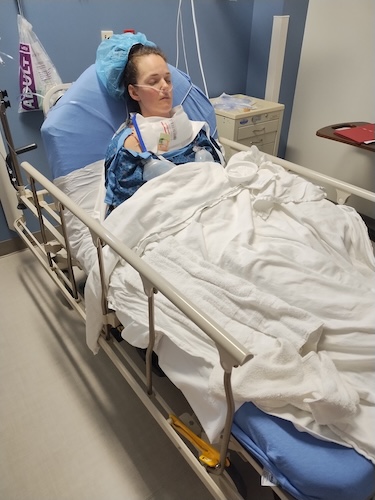
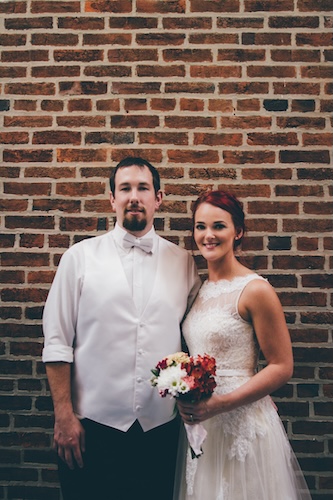
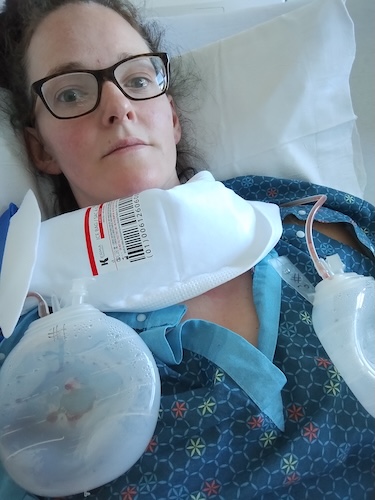
This interview has been edited for clarity and length. This is not medical advice. Please consult with your healthcare provider to make informed treatment decisions.
The views and opinions expressed in this interview do not necessarily reflect those of The Patient Story.
- Hi, my name is Alyse
- Fitness before and after my diagnosis
- I was diagnosed with Hashimoto’s
- Living and training with an undiagnosed thyroid disease
- The moment the thyroid nodule was discovered
- "How can this be cancer?" – I had no symptoms, but it was cancer
- The moment everything changed
- Advocating for a second opinion: choosing the right surgeon
- How my surgery went
- I learned about my tall cell variant
- Adjusting to my new normal
- My mental health and coping with uncertainty
- Exploring integrative and alternative options
- What I want others to know
Hi, my name is Alyse
I was diagnosed with metastatic papillary thyroid cancer, tall cell variant, in April of 2024. I am from New Jersey.
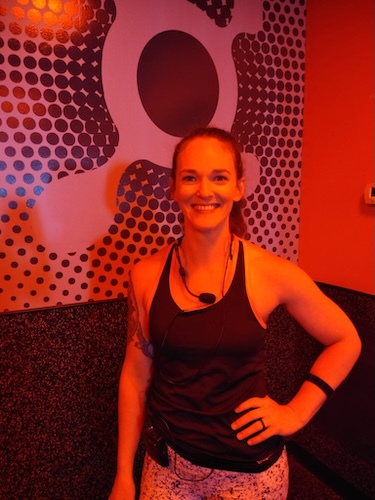
I got into fitness and working out about 15 years ago. I was just on that path of, “Let’s be healthy. What can I do?” I saw my mom watching fitness videos when I was in my mid-20s. I started getting into HIIT training and weightlifting. I was running for a while, and that became a huge part of my life, a major passion. I felt great. I always talk about the runner’s high, but there’s a lifter’s high, too; you feel great.
I had been struggling with anxiety and depression before that and was always looking for what else I could do to help my mental health. Exercise helped a lot. That passion became a career. For a few years, I was doing group fitness, and I absolutely loved it. I loved the people I worked with, the clients who came in. I made that a huge center of my life and thought I was doing the right things. And then, of course, cancer came along later.
Fitness before and after my diagnosis
Exercise has always been an everyday part of life for me. At first, it’s a chore, but after a few months, you look forward to it. I got married, and two years later, I was pregnant, which was new for me as a personal trainer who loves to work out. I continued to exercise throughout my pregnancy. My midwife approved, and after having my first child, I would work out with my kids. They started joining in on the workouts or would remind me, “Hey, Mommy, you haven’t worked out today,” if I took a rest day. My oldest, especially, because my youngest is only two and a half, has been around throughout much more of my fitness journey and would always tell me to work out.
Now, showing my girls that exercise can be enjoyable and is just part of a healthy lifestyle is an integral part of my life. I tell them it’s important so that, when you’re 85, you can go up a flight of stairs and still be strong.
I was diagnosed with Hashimoto’s
I have a family history of thyroid disorders and autoimmune conditions, specifically hypothyroidism and Hashimoto’s. All my immediate family members have these conditions.
After my first pregnancy, my midwife suggested I see an endocrinologist to check my thyroid levels. I wasn’t on any medication during that first pregnancy. At six weeks postpartum, I saw the endocrinologist, who told me I had postpartum thyroiditis, but it wasn’t severe enough to need medication. I left it at that and didn’t revisit it, especially since I wasn’t planning on having more kids.
Fast forward four or five years, and I decided to have another child. I knew I needed a full thyroid panel, not just a TSH test. I found a great endocrinologist and had full thyroid labs done. It turned out I had full-blown hypothyroidism. I had all the symptoms: tiredness, fatigue, and hair loss. On top of that was Hashimoto’s, which explained things like getting sick more often and for longer, as well as joint pain. My knee pain, which I thought was from exercise, was connected to Hashimoto’s. That was in May of 2021.
I started immediately on a T4/T3 combination and became pregnant a year later, remaining on medication throughout that pregnancy.
Living and training with an undiagnosed thyroid disease
It was frustrating because I felt irresponsible not knowing I had a thyroid condition sooner, especially since my first pregnancy was wonderful up until the very end. I developed preeclampsia and had to be induced, ending with a C-section. Later, I learned that untreated hypothyroidism can actually lead to preeclampsia. I was disappointed I didn’t know this earlier.
Through fitness and training, though, it didn’t bother me much. Medication made me feel better. I still had joint pain, but would just monitor exercises to avoid aggravating it. Mentally, it didn’t affect me too much either. I knew I was doing the right things and feeling better, setting myself up for a successful pregnancy. My second pregnancy was wonderful, no preeclampsia, and I felt like, “Yes, I prevented it. We’re okay now.”
From the time of my initial Hashimoto’s onset to my cancer diagnosis, I had labs run every six months. Every six months, we did a full thyroid workup: TSH, free T4, free T3, reverse T3, and TPO antibodies to check the Hashimoto’s. Everything was stable and looked great.
The moment the thyroid nodule was discovered
In March of 2024, one year postpartum, I was fully breastfeeding and not sleeping much. I went to see my endocrinologist. Labs looked good, but he did a manual thyroid exam, where you tilt your head back and swallow several times, so he could feel for abnormalities. He was taking a long time, and I knew he was going to tell me something I didn’t want to hear. He said, “You have a nodule on your thyroid.” Immediately, my heart sank, and I kind of blacked out.
My instincts, which I call the Holy Spirit, told me, “You have thyroid cancer.” I already knew, in my heart, that this was a life-changing moment.
He said to go for an ultrasound and maybe a biopsy if needed.
During the two weeks between seeing him and having the ultrasound, I dove headfirst into books, YouTube videos, and all the Google searches. I learned about thyroid cancer symptoms, treatments, and surgery. Most nodules are benign, but I knew this wasn’t benign.
Most thyroid cancers are treatable with surgery and sometimes radioactive iodine, with a very high five-year survival rate, about 99%. That brought some comfort about the potential diagnosis on paper, but I still couldn’t believe this was happening when I had spent my life trying to be healthy. “I work out all the time, I eat well, so how could this actually happen?”
“How can this be cancer?” – I had no symptoms, but it was cancer
My blood work was completely normal. They did a CBC and full thyroid panel; everything was normal. On paper, nothing suggested there was anything wrong except for the Hashimoto’s.
It’s frightening and confusing to know you can have cancer with no symptoms, feeling totally fine. I wondered, “If this is cancer, why do I feel so good? Aren’t I supposed to be sick or debilitated?” Part of me doubted my intuition (“It has to be just a nodule”), but I still knew there was no other explanation.
My main concern became, “Am I going to die suddenly from this? Am I going to leave my husband and two kids behind?” It was terrifying, but also confusing, because there were no symptoms. No pain, nothing to hint at cancer.
The moment everything changed
Two weeks after the ultrasound, I had the biopsy because the ultrasound showed it wasn’t just a nodule. My endocrinologist said there was multiple lymph node involvement and a large one under my collarbone. I never noticed or felt it.
He urged me to get it biopsied because whatever it was seemed to be involving other tissue and nodes. I scheduled the biopsy for two weeks later.
I didn’t even want the biopsy; I always thought if I had cancer, I’d just live with it. But when faced with reality, opinions change. I realized I had to know.
The biopsy was incredibly painful, more than I expected. The ENT, who was also the thyroid surgeon, had great bedside manner, which helped. The day before, as he held the ultrasound probe to my neck, he left the room and then came back and asked, “Are you a straight shooter? Can I be honest with you?” I said yes. He said, “You have thyroid cancer. It has spread to your lymph nodes on the left side of your neck. I don’t even need to do a biopsy. I’m that sure.”
The next hour, he talked through surgery, neck dissection, radioactive iodine, the fact that I was high risk and not low risk. He said it could have metastasized to other parts of my body and requested a CT scan of my chest.
Nothing I had read prepared me for those statements. I was told it was low risk, but this was not low risk. He said this had probably been growing for ten years. That was shocking. I’d had two children during that time. If I’d known I had cancer, I wouldn’t have had kids.
Advocating for a second opinion: choosing the right surgeon
After the biopsy, I was scheduled for surgery with that ENT two months out. He joked, “You’ll be hit by a truck before you die of this,” which was oddly reassuring. But I had a CT scan, which showed a lot of lymph node involvement and a chest nodule on the same side as the cancer.
I asked how often he did neck dissections; he said, “Twice a month.” I wondered, “Is that a lot or a little?” He mainly did thyroid removals and occasional neck dissections.
With time to research, I found the Thyroid Center in Tampa, Florida. They do these surgeries all day, every day. Their team is world-renowned. I felt confident in their abilities after a phone and an in-person consultation. They ran comprehensive evaluations, went over all the details, and gave me confidence that they were the right fit.
Our health insurance deductibles were extremely high, and the Tampa center wasn’t covered. We ended up paying for the surgery with donations from friends and people in our church. The hospital that took my insurance wanted the deductible up front. God provided the finances for us to have the surgery.
There was also pressure about radioactive iodine, but breastfeeding mothers can’t have that treatment right away. Even after stopping breastfeeding, you have to wait months. The radioactive iodine can go into breast tissue and increase breast cancer risk. I decided to hold off.
How my surgery went
My husband, children, and I flew to Tampa, planning to stay at least a week post-surgery. The staff was wonderful; kind, attentive, and detail-focused. Dr. Roy, my surgeon, explained everything ahead of time, including surgical risks, the potential effect on my voice, and how they would operate. I said, “Let’s just do it. It’s okay if I can’t talk again.”
The surgery lasted about three hours. I woke up vomiting, which, given the incision, was difficult. My husband and kids weren’t there immediately, but the staff checked on me regularly. I spent one night in the hospital with two drains in my neck.
My neck and upper back were very sore afterwards, as expected. The team got me up and walking right away to prevent blood clots and had a physical therapist work with me on shoulder exercises to prevent frozen shoulder. About 12 hours after surgery, I was feeling much better. All I could stomach to eat was a huge piece of chocolate cake.
They were diligent about medication, and I want to praise them for monitoring my parathyroids. After an invasive thyroidectomy, parathyroids can be shocked, controlling the body’s calcium. They checked calcium levels every few hours to ensure it didn’t drop dangerously low, and I was on calcium supplementation for four to six weeks. I had never come across parathyroid risks in all my research, so their vigilance was admirable.
I learned about my tall cell variant
After surgery, I returned home to New Jersey to recover. Parathyroid and other levels looked great. Then I received the surgery and pathology reports. The patient gets them before the doctor. I read through all 40 pages. They removed 65 lymph nodes from the left side of my neck, six of which were positive for papillary cancer. The pathology described how difficult and invasive the surgery was, with 20 areas of new cancer growth found during the operation.
Finding out it was a “tall cell” variant was shocking. I learned “tall cell” is more aggressive than typical papillary thyroid cancer; often resistant to radioactive iodine, oral chemo, or radiation; and tends to recur.
That scared me deeply. Did I do all this for nothing? Thankfully, a nurse practitioner called 20 minutes after I read the report and confirmed the findings, taking time to walk me through what it meant.
My surgeon said radioactive iodine probably wouldn’t work. That confirmed my decision not to pursue it, but left me wondering, “What am I supposed to do from here?” My endocrinologist said to “watch and wait,” which meant waiting to see if it makes its next move.
Six months after surgery, I had my first post-op ultrasound and labs. Thyroglobulin was very low (0.2), but a new lymph node had appeared just under my scar line. It may have been microscopic during surgery and was now growing. The option was a biopsy or more surgery, but I couldn’t face another surgery so soon. I decided to leave it alone and forget about it for a while.
Adjusting to my new normal
That was in March 2025. Since then, my recovery has been great. I never developed frozen shoulder and returned to working out three to four weeks after surgery, once cleared.
The first three weeks after surgery were challenging; I couldn’t pick up my daughter, do laundry, vacuum, or any of the stay-at-home mom tasks. My seven-year-old, mother, and husband helped a lot. Mentally, that was the hardest period, but once I resumed exercising, things improved.
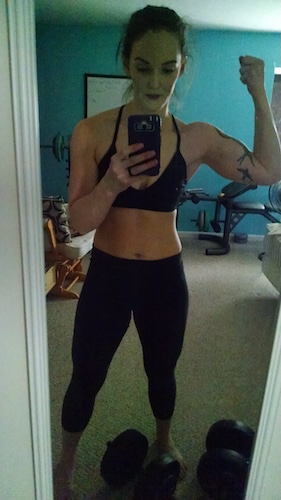
I feel strong. I’ve lost the baby weight I carried for well over a year postpartum. Now, instead of obsessively working out six days a week or 90–120 minutes per day, I focus on maintaining muscle mass with just two to three 30-minute sessions each week. I also take walks and keep my routine less stressful, giving myself more grace.
I found out my cortisol was extremely low, which meant my body was burnt out. Exercising more would just fuel that fire, so now, exercise is part of my life, but not an obsession. I still love it, just not at the old pace.
My mental health and coping with uncertainty
At the six-month post-surgery appointment, learning that a new lymph node was there made me wonder what the next year or next 20 years might hold. Would this thing take over my body? I was so steeped in research, but my husband asked, “Are you applying any of this to your life?” The knowledge made me feel less alone, but I wasn’t making changes, so I decided to stop reading and just try to forget I had cancer for a while. I prayed a lot.
I’m still being pressured to do radioactive iodine or see an oncologist. I’ve called several oncologists; many don’t even treat thyroid cancer. I left it alone for now and continued to pray, ”Lord, show me what treatment is right.” If nothing is right, then I trust nothing will be shown.
Living with cancer means walking around feeling and looking healthy, but always knowing it’s there. My oldest, who is eight, understands some things and knows I needed surgery, but doesn’t know the extent. It’s hard not to be able to communicate the full situation to my kids. But the Lord has blessed me: I feel fantastic, am at a healthy weight, and am still exercising. For me, quality of life matters more than quantity. I’d rather live a shorter, fulfilling life than a long, miserable one. Right now, I feel great and live in that joy.
Exploring integrative and alternative options
Being told to “watch and wait” or that repeated surgeries were the only solution was not realistic, especially with the risks and scarring involved. My surgeon explained that oral chemo pills exist, but were not beneficial and had many risks. As treatment options kept narrowing or being denied to me, I realized I’d have to find another path if I wanted something besides radioactive iodine or repeated surgery.
I prayed, ”God, show me what I should be doing.” If doors closed, I trusted that meant I shouldn’t take that route. Even getting an oncologist appointment became impossible; one had a nine-month wait.
My research explored options like hyperthermia, which is sometimes used for certain cancers alongside chemotherapy or radiation. I hoped to try it without those, but the California hyperthermia center turned me down. That led me to consider care outside the United States.
What I want others to know
Cancer is a teacher. Cancer is a gift. This does not have to be a death sentence. It has given me deep insight into my own life and areas that were not working for me, like overexercising. Stress and mindset also play a role. How are you living? Handling anxiety? Dealing with dysfunctional relationships or unresolved issues?
See a therapist or mental health practitioner. At the six-month ultrasound, when I learned the cancer had come back, I knew I needed to talk to someone outside my family and friends. Over the past six or seven months, that has helped tremendously.
Confide in someone unrelated to you or even a cancer support community. Suppressed feelings and emotions come out in other ways; I believe that was a trigger for me; not voicing my feelings, not asking for forgiveness, or not forgiving others. That’s not about curing cancer, but about healing mentally, bringing more joy and peace.
Don’t let cancer become your identity. You are different from what’s happening to your body.
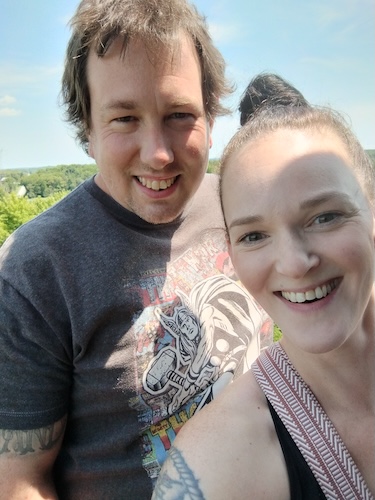
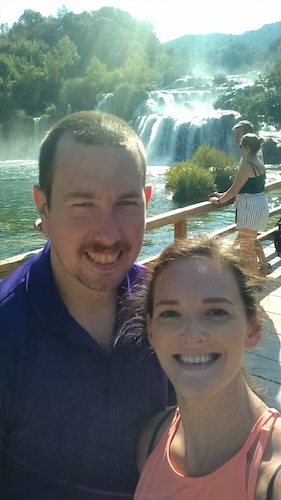
I’ve continued exercising and traveling. I’m still doing the things that bring me joy. Many people lose themselves to cancer and let it become them. Don’t let it become you, because you are different from the cancer that’s happening to you.
Inspired by Alyse's story?
Share your story, too!
More Thyroid Cancer Stories
Grace B., Thyroid Cancer (Papillary Thyroid Carcinoma), Metastatic
Symptoms: Significant and unexplained weight gain, persistent fatigue, brain fog, bloating
Treatments: Surgery (subtotal thyroidectomy with central neck dissection), watch and wait/active surveillance
...
Taylor Scheib, Thyroid Cancer (Oncocytic Thyroid Cancer)
Symptom: Appearance of a visible lump on the neck
Treatments: Surgeries (hemithyroidectomy, completion thyroidectomy), radiation therapy (radioactive iodine)
...
Cyndi F., Thyroid Cancer (Papillary Thyroid Carcinoma), Stage 1
Symptoms: None per se, nodules discovered during thyroid examination
Treatments: Surgeries: hemithyroidectomy, isthmusectomy, mid-neck dissection, parathyroid transplant
...

Laura C., Follicular Lymphoma, Stage 4 (Metastatic), Grade 1 to 2; Papillary Thyroid Carcinoma
Symptoms: Incidental finding after hysterectomy (follicular lymphoma), thyroid nodule detected on imaging (papillary thyroid carcinoma)
Treatments: Immunotherapy (rituximab and lenalidomide or R² regimen), surgery (thyroidectomy)
...