
Jake’s Testicular Cancer Story, IVF, and the Family He Was Told He’d Never Have
Jake’s stage 3 testicular cancer experience began when he was a 17-year-old high school football player. He initially thought his back pain and poor sleep were part of the season, so he brushed them off. Two weeks after the final game, he noticed a lump on his testicle, so he finally went to the doctor.
Interviewed by: Nikki Murphy
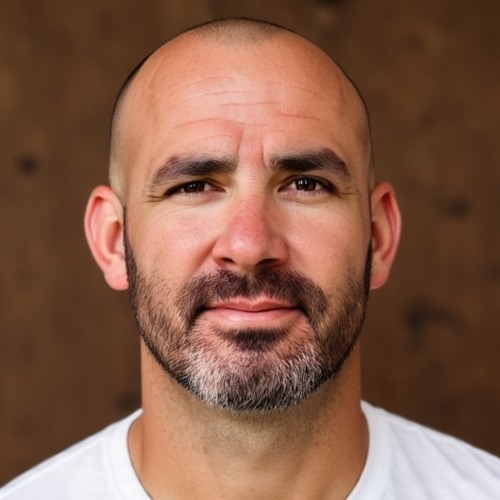
In a single Friday, he moved from a morning appointment and scans to hearing the words “testicular cancer” and orchiectomy that same afternoon, with chemotherapy scheduled to start the following Monday. Further scans showed that the disease had spread from his testicle to his lymph nodes and his lungs, leading to an advanced testicular cancer diagnosis and an intense chemotherapy plan.
Jake went through four rounds of chemo (five days a week for eight hours a day), followed by a 10-hour, non-nerve-sparing retroperitoneal lymph node surgery (RPLND) at a testicular cancer center in Indianapolis. The surgery removed a mass roughly the size of two fists, left him with a large abdominal scar, and led to a 70-pound weight loss during recovery. Even in those brutal months, he focused on what he had to do next, while acknowledging how emotionally devastating it was for his parents.
The long-term impact of his stage 3 testicular cancer experience was clearest in his fertility. At 18, Jake was told that there was a significant chance he would never have children naturally, and the lymph node surgery ultimately confirmed that.
For years, he and his wife, Brittany, carried a quiet understanding that kids likely were not in their future. A decade into marriage and in their mid-30s, they decided to explore options, meeting with a male fertility specialist and a female fertility team. Together, they created three high-grade embryos: two boys and a girl.
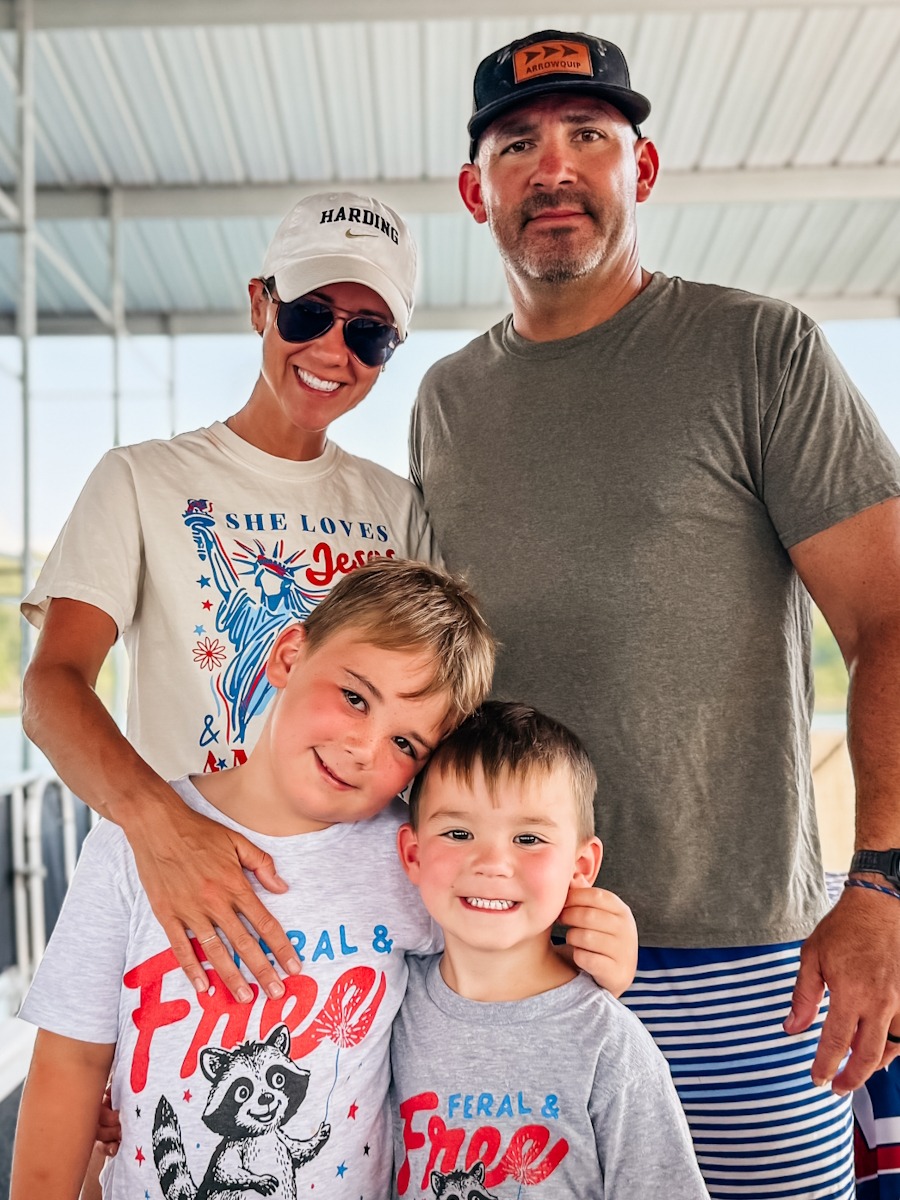
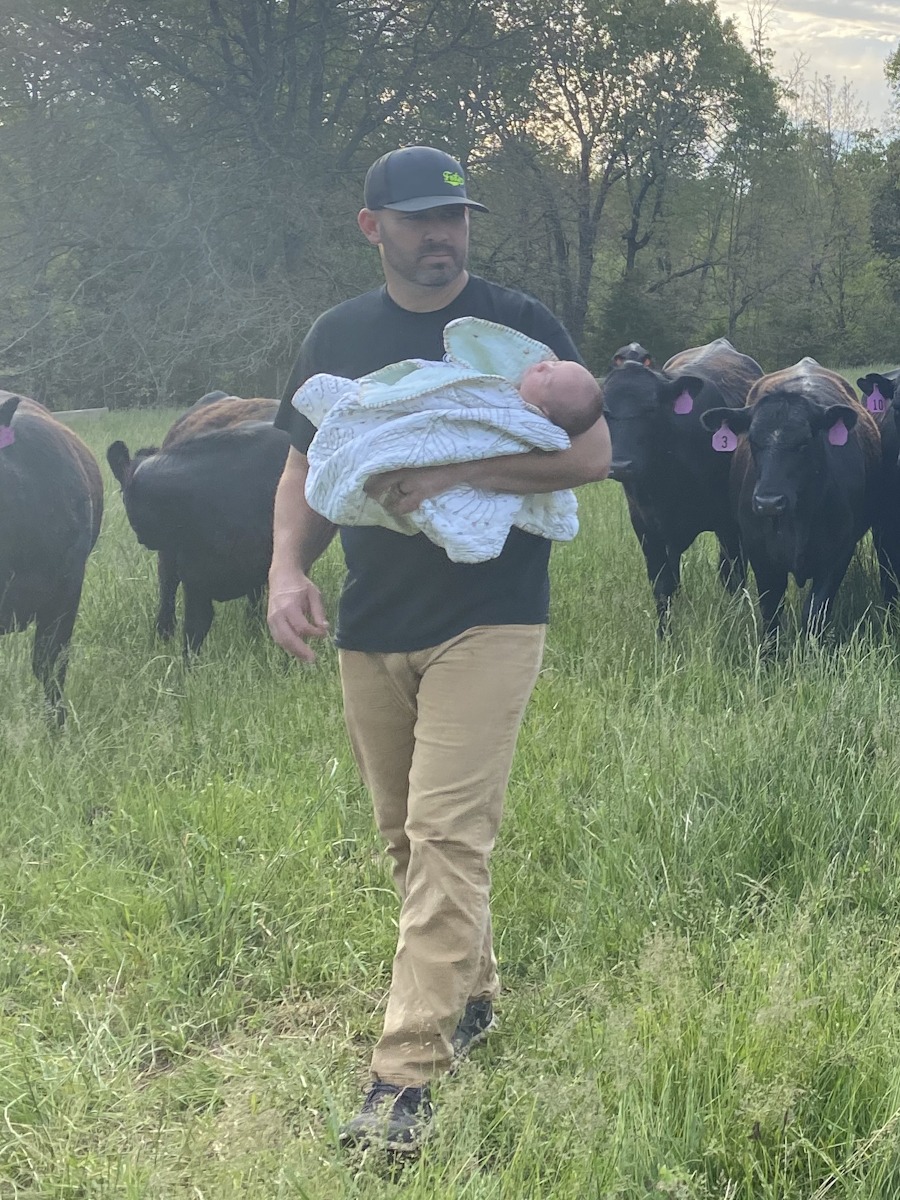
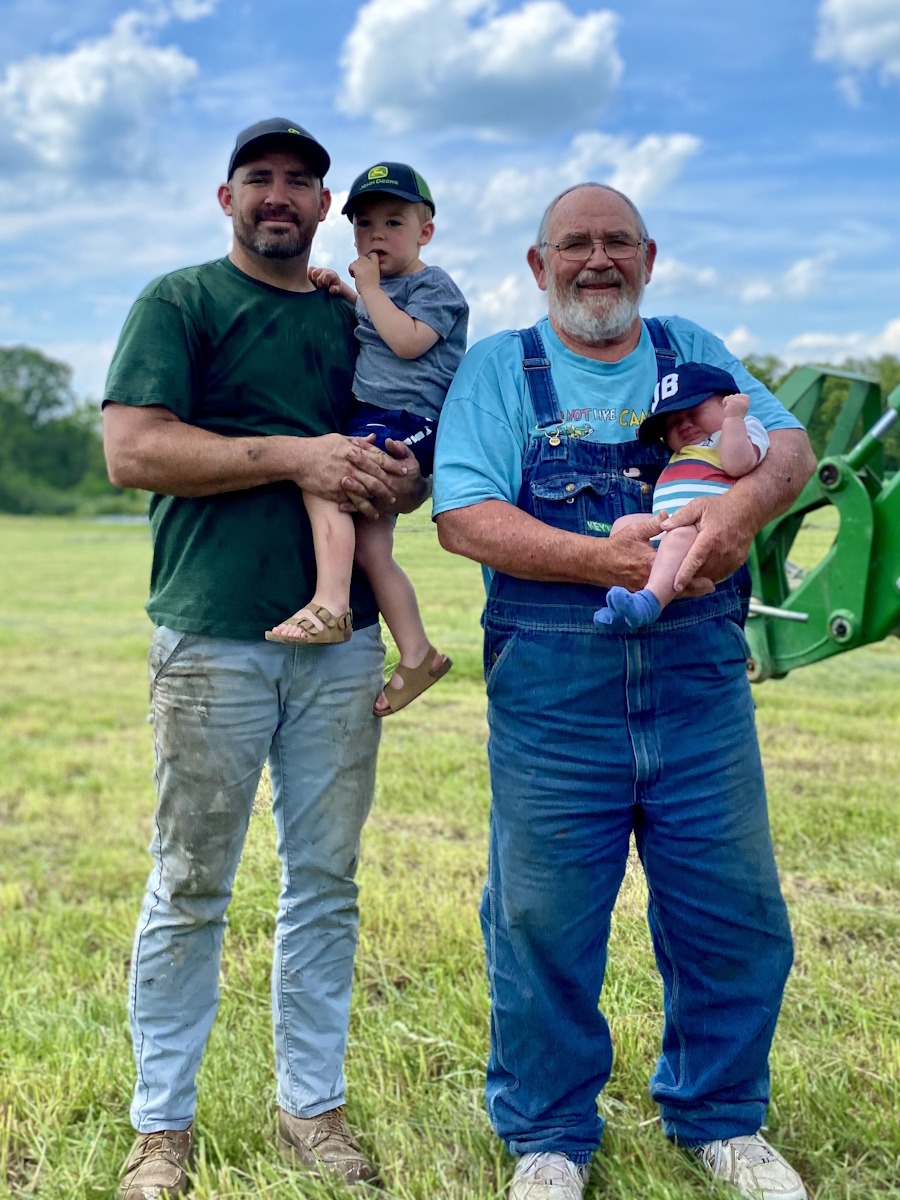
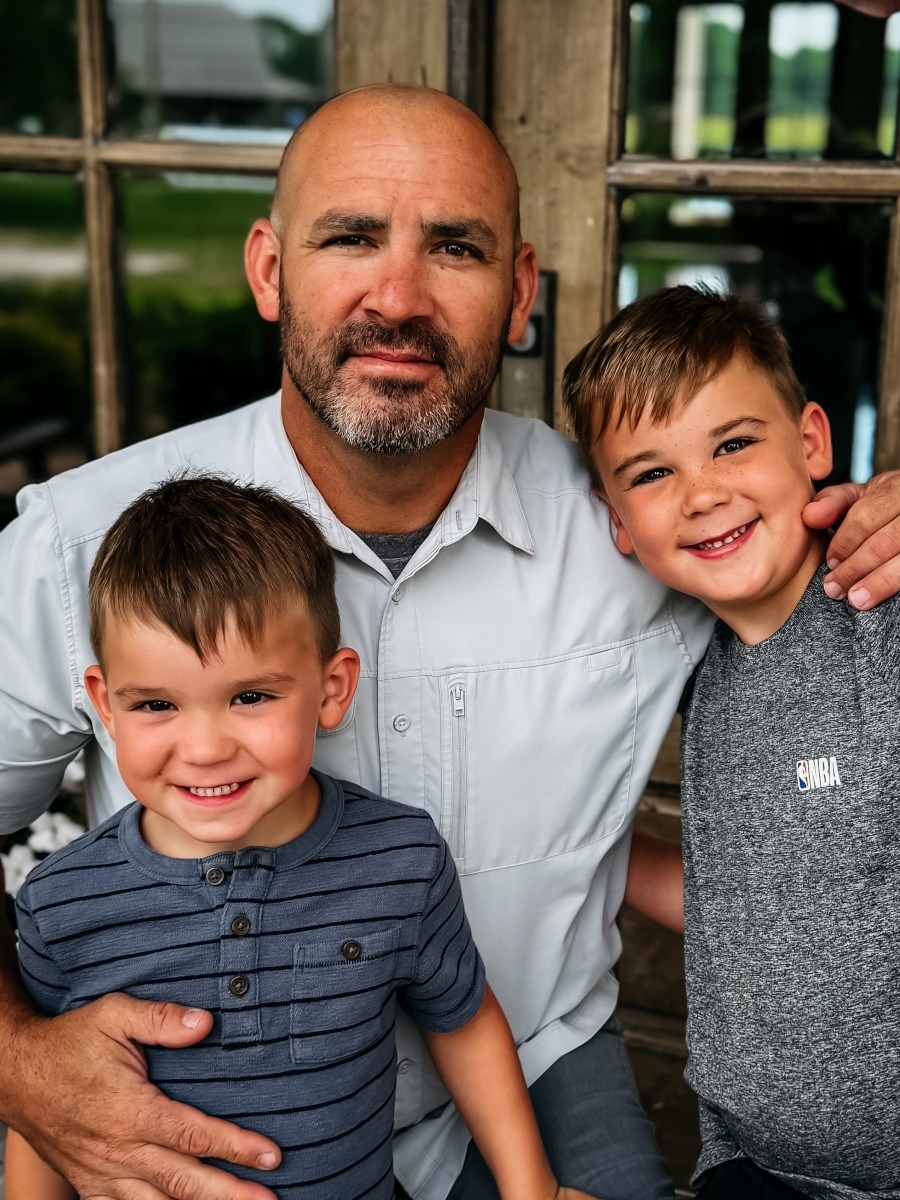
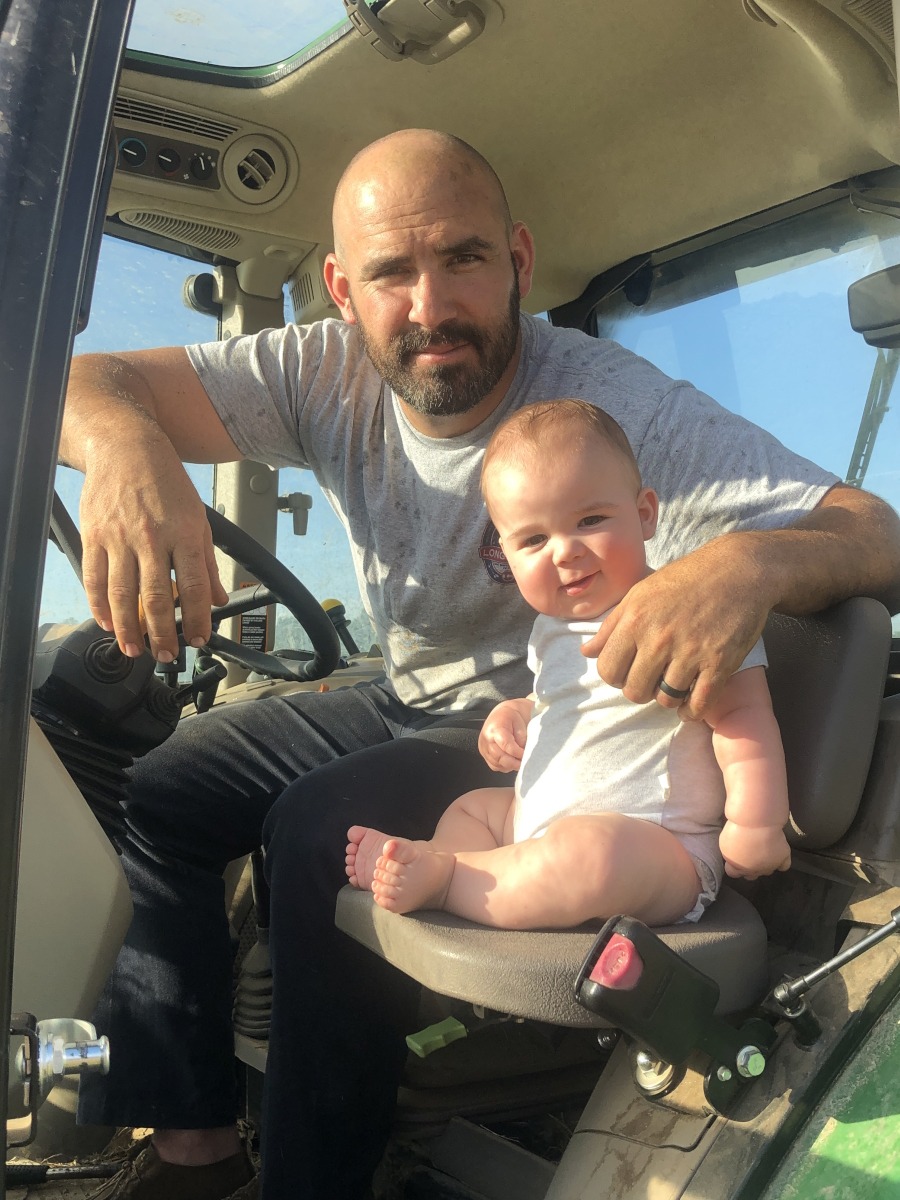
Today, Jake is a school superintendent and third-generation farmer raising two boys on the same land he grew up on, while honoring the daughter they lost after embryo transfer. He talks openly about hope, scanxiety, and why men need to speak about fertility and survivorship so others know they are not alone. His story underscores that “never say never” is more than a phrase; it’s a way of holding on to life, family, and faith even when the odds feel impossibly long.
Watch Jake’s video or read the edited transcript of his interview to find out more about his testicular cancer experience:
- Early testicular cancer symptoms like back pain and a lump on the testicle can be easy to dismiss, making it vital to listen to your body and seek care quickly.
- Jake’s stage 3 testicular cancer treatment permanently affected his fertility, yet he continued to focus on the next step in front of him.
- IVF and ICSI opened a path to parenthood years after treatment, illustrating how modern fertility options can create possibilities even when doctors say natural conception is unlikely.
- A universal truth in Jake’s story is that hope grows in community. Honest conversations, supportive partners, and sharing experiences help people feel less alone during and after cancer.
- Jake’s transformation is visible in how he moved from a stunned 18-year-old patient to a school superintendent, farmer, and father who now uses his voice to encourage other men to talk about exams, fertility, and survivorship.
- Name:
- Jake L.
- Age at Diagnosis:
- 17
- Diagnosis:
- Testicular Cancer
- Staging:
- 3
- Symptoms:
- Difficulty sleeping
- Back pain
- Leg pain
- A lump on the testicle
- Treatments:
- Chemotherapy
- Surgeries: orchiectomy (testicle removal), non-nerve-sparing post-chemotherapy lymph node dissection
This interview has been edited for clarity and length. This is not medical advice. Please consult with your healthcare provider to make informed treatment decisions.
The views and opinions expressed in this interview do not necessarily reflect those of The Patient Story.
- Who Jake is and my life on the farm
- Cancer symptoms, diagnosis, and initial treatment
- Follow-up, scanxiety, and long-term health
- Life now: Superintendent, farmer, and daily routine
- Fatherhood, IVF, and the journey to our boys
- Raising boys on the same farm and the meaning of fatherhood
- Reflections on cancer, work, and hope
- Messages to other men about fertility, survivorship, and hope
Who Jake is and my life on the farm
Growing up on a dairy farm and becoming a teacher
My name is Jake, and I’m 42 years old. I grew up in a family of six on a dairy farm, which was our livelihood. I’ve worked in education for about 17 years while also working on the family farm. I’m a third-generation farmer.
Childhood dreams, college, and career path
When I was young, I didn’t know for sure what I wanted to do, but one thing was for certain: I wasn’t all that interested in the dairy business. The farming that we did was dairy farming, and I knew that I didn’t want to do that. I was very involved in activities and athletics. My mother was a special education teacher, so I was very involved in education.
When I went to college, I knew that I liked being hands-on, so I thought I would want to be a teacher and a coach. I enrolled in our industrial technology education program, so my teaching career started as a shop teacher.
Why coming back to the farm mattered
It was something that I was always coming back to, even though I went away for college. I came home all the time. I always came back on the weekends and helped in between college classes. I knew that I wanted to come back, live on the farm, and be a part of it.
Being able to be right where my grandparents were is important to us. My wife, Brittany, and I, and the boys have been able to add to the farm, so that’s meaningful to us as well.
Siblings and carrying the farm forward
I’m the only boy. I have three sisters, but none of them live on the farm. One lives about 15 miles away, and the others are a couple of hours away. There’s not a whole lot of interest from them in farming. They’ve always said, “Okay, that’s going to be your deal,” but it’s worked out okay.
Carrying the farm and family name
It was definitely important to carry on the farm and the family name. My dad was the only son of four children. He came along later; his three sisters are quite a bit older than he is. When he came along and was able to continue on the farm and the family legacy, it was a surprise and a blessing to my grandparents. I’ve heard my dad talk about that.
I’m an only boy as well. Being able to continue that legacy and having two boys myself, knowing that it hopefully continues, is pretty cool to think about. But to be honest with you, life is busy, and I probably don’t stop and reflect on that as much as I should.
Size and growth of the farm
We have about 800 acres. We’ve grown it from 160 acres to about 800. We run beef cattle. It’s a cow-calf operation. We’ve added to that throughout the years, and a lot since Brittany and I have been married. But we live on the original 160 acres, and we’re nearing a century with that piece of the farm.
Cancer symptoms, diagnosis, and initial treatment
First signs that something was wrong at 17
I was 17 years old and in my senior year in high school. Throughout the process, I turned 18. My birthday is in November, so this was through the fall.
It was football season and the first thing I noticed was not being able to sleep well at night and having back pain. Being 17, I didn’t think a whole lot of it, especially being in football season. I thought I was sore from that. I went through the season and played, but I still had pain in my legs and my back.
Two weeks after the season was over, I was still having problems. I noticed a lump on my testicle and continued to have back pains, which was what triggered me to go to the doctor.
The one-day path to testicular cancer diagnosis and surgery
I had a doctor’s appointment on a Friday morning, which I remember like it was yesterday. They did an exam and sent me directly over to the hospital that same day. I drank the MRI liquid that highlights your body, and they did a scan.
I went back to my primary care doctor probably mid-afternoon. At that point, they said, “We believe that you have testicular cancer.” They sent me over to a urologist that same day. They did a couple of tests and then said, “We think that you have testicular cancer, and we want to do surgery on you today.”
Later that same day, I had surgery. I had the orchiectomy (testicle removal surgery) and was scheduled to start chemotherapy the following Monday. All of that was in one day.
Hearing the words “testicular cancer” at 18
Being 18, it helped that I thought I was bulletproof. I can remember it being very tough on my parents, though. To this day, I believe the whole process was much harder on them than it was on me from a mental and emotional standpoint.
For me, it was a process-driven experience. What do I have to do? I have to do this, then this, then this, and ultimately, hopefully be okay. I didn’t let it all sink in. My parents thought the worst and expected the worst.
Before going into surgery, I can remember being there with them. They said, “Do you want to get another opinion or delay this and go do something else?” I said, “Let’s just do it,” so I had the surgery that day.
Going into surgery, they told me, “We know you’re just 18, but once we do this and you go through chemo, there’s a chance your sperm cells won’t redevelop and come back, even though you’ll still have one testicle. Do you want to go this weekend and bank some sperm?” I thought, “How in the world am I going to have this surgery and then go do what it takes to bank some sperm?” I opted not to do that at that time because everything was already lined up. I started chemo the following Monday.
Discovering stage 3 disease and the cause of back pain
It was not localized. Throughout the scans, they found that my lymph nodes were enlarged, that the cancer had spread from my testicle to my lymph nodes, and a little spot on my lungs. The spot on the lungs is how they classified it as stage 3 cancer.
The biggest problem was the mass on the lymph nodes, which was causing my back pains because it was pressing against the nerves in the back.
They told me I’d have three rounds of chemotherapy, possibly four, to shrink the mass. I ended up having four rounds. I was receiving treatment five days a week for eight hours a day. Then they gave me a treatment the following two Mondays and I’d have the rest of those weeks off.
Being told I might never have children
Brittany and I were friends/dating at the time this was going on. She remembers it better than I do, but she says we had a conversation where I said, “If it’s meant to happen, it’ll happen some way.”
The prognosis from chemo was basically 50/50 that my fertility would come back. What solidified that I wouldn’t be able to have kids naturally was the post-chemotherapy lymph node dissection. It was non-nerve-sparing; they had to take out part of those nerves that are part of the reproductive process. That’s when they said, “You’re not going to be able to have kids naturally.”
That surgery didn’t happen until about five months down the road. I went to Indianapolis and had the post-chemotherapy lymph node surgery.
Complete treatment timeline and the brutal lymph node surgery
It started with the orchiectomy, which is the removal of the testicle. Then I had four rounds of chemotherapy. That lasted from the end of November through about March of the following year, because each round was about a month.
They gave me a little time to recover from chemotherapy. The chemo made me pretty sick. I remember being sick, nauseous, and vomiting about every day through that process.
Upon completion of chemotherapy, they said, “Okay, we feel like this is good,” and sent me to Indianapolis to Indiana University Health. That’s the same center that treated Lance Armstrong, and they specialize in this surgery and treating testicular cancer. We went there for a consultation first and then scheduled the surgery.
The surgery took about 10 hours. We went back and read the surgery report. They literally have to open you up from the inside. I have about a 10-inch scar from the bottom of my chest going down. They open you, pull out your intestines, set them to the side, and carve out the lymph nodes from the back.
Recovering from that surgery was the hardest part of the whole process, including chemotherapy. I lost about 70 pounds during recovery. It definitely slowed me down.At that age, I did have 70 pounds to lose. I played football, so I was a heavier person. I weighed probably 235–240 pounds and got down to about 165 pounds by the end of the recovery from that surgery.
Finishing treatment and moving into survivorship
I did not have more chemo after that surgery. That surgery was the completion of my treatment. I found out then that they were unable to save the nerves that are part of the reproductive process. It was a non-nerve-sparing post-chemotherapy lymph node removal. They said they took out a mass about the size of two fists put together.
I recovered from that. In the meantime, I was trying to figure out what I was going to do with my life because I was just graduating from high school. I didn’t know what I was going to do until about two weeks before the start of the fall semester. I got a call from a coach at Missouri Southern State University in Joplin, Missouri. He had actually called the day I had my first surgery in November and said, “We’d like to recruit you. Would you like to come down?” I told him, “Here’s the deal. I just got this news.”
He stayed in touch with me. His name was Mark Smith. He’s a Razorback legend and was a coach there at Missouri Southern at that time. Coach Smith stayed in touch throughout my treatments and followed up with me late in the summer. He said, “Hey, come over here.”
I spent the whole first fall season on the video crew. I didn’t practice or participate because I hadn’t been cleared yet. I was part of the video crew and filmed for them. Then I worked out and started rebuilding some of my strength.
Follow-up, scanxiety, and long-term health
Being declared in remission and long-term follow-up
I think it’s 10 years before they say you’re essentially clear. I had to go back every month for the first year, every two months in the second year, every three months in the third year, every four months in the fourth or fifth year, then every six months, and then once a year up to 10 years.
After 10 years, they basically say you have a better chance of developing some other type of cancer than this one returning. That all worked out perfectly for me. No warning signs and no scares along the way. They truly treated it, removed what they needed to remove, and cured me.
Fear of recurrence and scanxiety
There was always a fear that it would come back. Every single time you go in, you think, “What are we going to find out now?” That developed more as I got a little older.
I hate that for anybody who’s been through cancer treatment. Every time you go in for a blood test, you wonder what it’s going to show. The anxiety that you have with that is something you really can’t explain, but it is definitely a real thing.
Staying on top of my health after cancer
I do go to the doctor regularly. I have my annual visit and make sure we get all the markers we need from a blood test standpoint. Anybody I talk to who is having these issues, I tell them, “Don’t delay. Just go do your exams.”
I believe young men should do testicular self-examinations, much like we encourage women to do their self-exams. Men need to be doing the same thing.
Life now: Superintendent, farmer, and daily routine
Balancing school leadership and farming
I work off the farm and I’m a school superintendent. I’ve been in school administration for about 13 years. I love the work. I love helping kids. I love the complexities of the school systems, but I also love the farm. I know those things have to be maintained together.
About every morning between 4:30 a.m. and 5 a.m., I wake up and take care of our chores. Many times, people ask, “How do you do everything? How do you do this?” Between getting kids around and everything else, I’ve learned the processes that have to take place to make sure the chores get done, the cattle get fed, and then we pick up the outlying pieces after work, on weekends, and on holidays.
Morning chores and farm management
Morning chores take about an hour and a half in the winter and about 30–45 minutes in the summer. It’s important to maintain your grass and pastures in ways that keep them as low-maintenance as possible. It’s also important to have a good network of people to help get it all done, like mechanics and fencing folks, to help you accomplish it all.
The hardest and most rewarding parts of cattle farming
The hardest parts are adapting to the market and the cost of inputs you’re using, whether it be feeds, fertilizer, or the market for the cattle you’re raising. Those things are not set in stone, and if you do the same thing over and over again, you’re probably not going to maximize your earning potential.
Knowing how much your inputs cost matters. If you usually take your calves to 850 pounds, sometimes it might not make financial sense to take them that far. It might be better to wean them and sell them. Recently, there have been times when it didn’t make sense even to do that, and you might want to sell them off the cow. Adapting to those ebbs and flows is challenging.
The most rewarding part is simply the work. For the past seven years, it’s been doing it with my family. For the past year, the best part has been Brittany’s involvement and our Faithful Farming marketing and social media aspects, where we’re documenting this and sharing the journey with anyone who wants to follow along. It’s the most fun we’ve had in farming, and I think it’s because all of us, including my dad, have a part in it. It’s been good.
Lasting physical effects of treatment on farm work
I haven’t experienced neuropathy. The biggest thing I’ve noticed through the years is scarring, probably from all the nausea and vomiting. I think I’ve got some long-term effects from that, but those are pretty treatable with proper medication. Outside of that, I consider myself very blessed.
Farm tasks that feel most purposeful
Feeding and caring for the livestock are what make me feel most connected to my purpose. I like doing those the most. That’s the daily grind. Everything else is a one-off project, but the daily feeding and caring for the livestock, and making sure everything is healthy and has the nutrition it needs, is the work I enjoy the most.
A typical workday and farm day
On a workday and a school day, I come in at about 6:30 a.m., turn on the lights, and start waking everybody up. Since having kids, the challenge has been how to slip out quietly so the boys can keep sleeping and get their rest. My oldest knew the second I got up and was with me all the time. Between about ages one and three, he would get up at 4:00 a.m. and go with me, but I knew that was unsustainable once he started school.
When I come back in, that’s when we start getting ready for school. The boys go to school with me. I’m in a small K–8 school here, and I’m very blessed to have them with me in the same building all day long.
On a non-workday or non-school day, it becomes a farm workday. I’ll have a number of projects lined out. The family helps me with that. They usually go and feed with me as well. We pick out some chores and wrap up the day as best we can. Those one-off projects are where I struggle to get ahead, because I feel like I never get as much done on those projects as I want to. But that’s probably life in general.
Working cattle, vaccinations, and weaning
Every now and then, we have to bring the livestock in for vaccinations or treatments. We work the cattle about once a quarter for various health reasons: annual or semiannual vaccinations, deworming, or addressing herd health issues. Weaning is when we take the calves off the mothers, and we have a specific protocol we go through for that.
Evening chores and spending family time outside
When we get home from school, we still have chores to do. In the morning, most of those chores are done in the dark. In the evening, we get an hour to an hour and a half of daylight in the winter and a few hours in the summer. We work on either projects or general maintenance and catching up.
The boys’ favorite parts of farm life
The boys love being around the cattle and working the cattle. They’re always up for an adventure. My oldest likes driving any piece of equipment that exists, and he’s pretty good at it. He loves operating a tractor, the skid steer, or the side-by-side.
As a family, we love to go on an evening cattle check. Those are pretty special to us because all four of us are together, checking the cattle, and making sure everything is good. There’s always something that comes up, though.
Fatherhood, IVF, and the journey to our boys
Discovering fertility options years after cancer
Being a father has been the greatest experience of my life. Brittany and I were married for 10 years before having kids. We were close, and from the beginning, she had been on the journey with me. We knew we weren’t going to be able to have kids naturally.
We were on vacation in 2017 when we said, “We’re not getting any younger.” Time was ticking away. We were both 35, and we said, “If we’re going to have kids or try to have kids, we might want to explore what options are out there.” We didn’t know if there would be any options, but we didn’t want to be 10 years down the road and not have at least explored and tried.
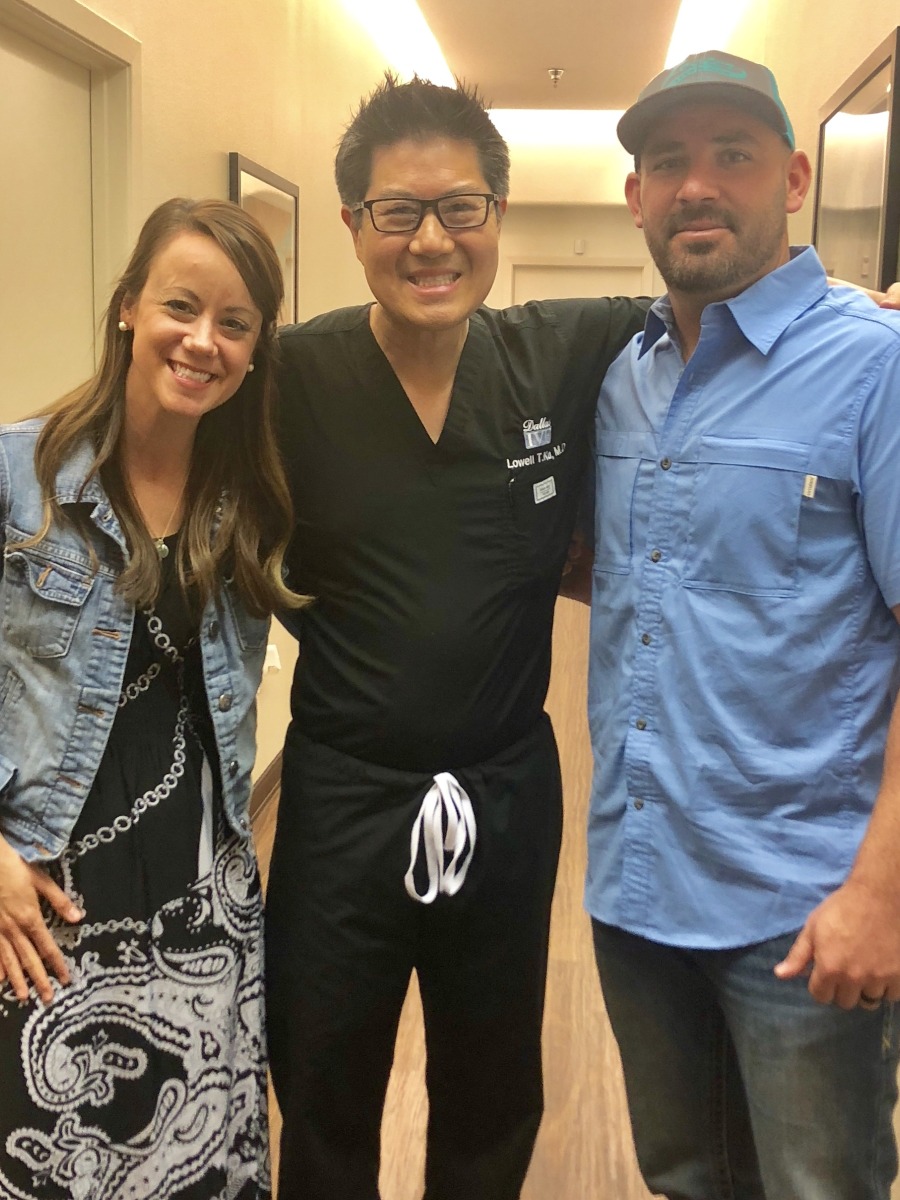
I started with a local urologist and asked what they thought. They referred me to a specialist in Frisco, Texas. Brittany and I went to a male fertility specialist, Dr. Bush, in Frisco.
Here’s a little different part of our journey. We share our in vitro fertilization (IVF) story with couples regarding infertility. We knew where the issue was; it was with me. I think that simplifies the IVF journey for people. Often, couples don’t know where the issue lies, so that allowed us to hone in on what direction to head first.
The needle test and the first miracle: Viable sperm
When we went to see Dr. Bush, he said, “I’m going to take this needle and stick it into your testicle to see if you’ve got any viable sperm.” I said, “Okay.” He numbed me up a little, stuck the needle in my testicle, pulled the sample out, and squirted it into a dish.
He said, “Now I want you to go across the road to a female fertility specialist.” We set up an appointment for Brittany, and they laid out the process of harvesting her eggs and what would come next. We got all the drugs for Brittany to get her set up. That whole process is hardest on her because of the hormone injections and everything that goes into it. It’s a tough process for any woman who has to go through it.
Egg harvest, ICSI, and that unforgettable “pocket” day
We scheduled a date: I’d go back to Dr. Bush, and Brittany would go back to the female fertility specialist on the same day. Brittany would have her eggs harvested, and I’d provide the sperm sample.
Brittany went through the process and had her eggs harvested. I think they got about 30 good eggs. They allowed her time to recuperate. We did intracytoplasmic sperm injection (ICSI), where they put my sperm and her eggs together on the same day.
That day was very interesting. Brittany dropped me off at the male fertility specialist and went on to her appointment, where they were going to harvest her eggs. I went to Dr. Bush. He did just what he had done before: he pulled a sample with a needle out of my testicle, squirted it into a little tube that looked like an old film canister, and put a lid on it.
Prior to that, he said, “Make sure you wear a shirt with a pocket on it.” I said, “Okay, I’ll wear a shirt with a pocket.” He put an ice pack on me, took that tube, stuffed it in my pocket, tapped me on the chest, and said, “Go over there and give that to them,” pointing across the road.
I walked into the embryologist’s office and gave it to them. I said, “Make sure you put my name on that.” At the same time, they harvested Brittany’s eggs.
We knew we didn’t want any more embryos than what we planned to use. We limited the fertilization to 10 eggs. That’s a tough process for anyone. Whether you get zero embryos or 15, the cost is the same. If we had 30 good eggs but only fertilized 10, they could have fertilized all 30, but we did not want any unused embryos with life that we weren’t willing to implant and carry out. We knew beforehand we’d only fertilize 10 eggs.
They fertilized 10 eggs and froze the rest of her eggs. On the way home, we got a call: seven were showing life. That was the same day. On the way home, we said, “We’re going to have to buy a conversion van or a big bus,” joking about the number of kids.
Three days later, we got another call and found out we had lost two; we were down to five. On the fifth day, we lost two more, so we were down to three. On day five, you either implant the embryos or freeze them. We chose to freeze all three embryos.
That same day, we did genetic, gender, and chromosome testing. We found out that all three embryos were either AA grade or AB grade, so they were all of very high grade. We had two boys and one girl. I remember Brittany coming to see me at work. She pulled out baby outfits: a boy outfit, a girl outfit, and another boy outfit. It was a great moment.
Implanting J. Henry, Jack, and Anna Kate
About 30–45 days later, we let Brittany’s body recover and get set up for implantation. We named all three of them from the beginning: J. Henry, Jack, and Anna Kate. They put in the first embryo, our first boy, J. Henry, and everything went great. He was the joy of our life for two years when it was just him, Mom, and Dad.
Then we started the next process. We decided we wanted to go boy-boy-girl in birth order, so Jack was put in next. He was a pill to Brittany during the pregnancy. He pinched off her urethra at one point. He’s been a pill since the day he went in, but everything went well. He was great and healthy.
About two and a half years later, we put in Anna Kate. She made it for about two weeks, and then we lost her. I hadn’t been emotional about that since the whole thing, but we feel very blessed to have the two boys. They are a lot of our lives.
Deciding to be done and not using donor sperm
We decided we were good and that we were blessed to have the boys we have. We never considered using donor sperm. We considered adopting an embryo. We learned how many “snowflake babies” are out there, which are embryos that have been given the blessing of life but are just frozen. We considered that if it didn’t work out with our own embryos.
We only did one round of IVF to get those 30 eggs. Even in preparing for implanting the embryos, Brittany had to go through another process, which was tricking the body to act like it was pregnant. Anytime you’re injecting hormones into any of us, it’s tough. It’s good in one sense because of the outcome, but it’s still hard. The more natural things can be, the better. That’s the way God intended it. But this is what we needed to do.
What Brittany endured through IVF
I don’t think I talked about her enough. None of this would be possible — children or even marriage in the way we know it — without Brittany. What a woman has to go through for IVF, carrying a child, and the anxiety and unbearable weight of going through that same process two more times is nothing I’ve ever been through and nothing most men ever go through.
We were blessed beyond belief, but while the blessings were enormous, the weight that Brittany had to carry, knowing that each round was another round of shots and everything that came with being pregnant, carrying the baby, and everything leading up to it, was huge. In my opinion, what I went through was a drop in the bucket compared to what Brittany had to go through to bring our children to life.
Raising boys on the same farm and the meaning of fatherhood
Who the boys are today
Our two little boys fight like crazy. One moment, you can be furious with them; the next moment, you love them to death and wonder how anybody can be so sweet yet so ornery in the same body. We love them. They are everything to us.
Watching them grow up where I did
Every day, I count the blessings that they’re out there digging in the same dirt that I dug in and playing in the same barns that I played in. Not only that, they’re the same barns my dad played in. We see that as very special.
It’s also very special to have Papaw just down the road. I know they love that. They adore their Papaw. When he wants to get out and cruise around on the side-by-side, or when they want to run down and see him, that’s pretty special. Knowing that we have this place, and knowing how close it was to not happening, makes me feel blessed every day.
Little moments on the farm I never want to forget
Right now, I feel like every day is something I never want to forget. We’re at a good age. They’re both capable. They still want to be around Mom and Dad. They act as if they like us. They’re definitely growing into themselves right now. It’s fun seeing their relationship develop.
For several years, little brother wasn’t as capable as big brother. Seeing big brother recognize that little brother is pretty relevant to his life now and seeing their relationship grow has been very awesome the past couple of years.
What I hope my sons say about me one day
When my boys are grown, I hope they can look back and see the Christian influence I tried to be for them. I hope they recognize what it means to be a good person, what it means to be a Christian, and what it means to be a father, and that they can reflect on their experiences with their dad for that.
What I hope the farm represents for future generations
I would love nothing more than for them to find a way to live here and make it work. Ultimately, I want the farm to be able to support them in whatever direction they want to go. That’s every farmer’s dream, for their kids to come back and carry it on. Why else would we be doing it?
But if they want nothing to do with it, I’m not saying it wouldn’t bother me, but I want it to help them do whatever they want to do.
Reflections on cancer, work, and hope
How the diagnosis-day version of myself would see my life now
The version of me from diagnosis day probably wouldn’t believe where I am today, especially when it comes to the kids. It was a hard “no” from the time of the surgery until Brittany and I were sitting in Ocean Springs, Mississippi, saying, “Do you think we ought to try this?” It was a hard no until that conversation, when the idea was planted that there might be hope. I don’t think that earlier version would believe where we’re at now.
Surviving, fear of other cancers, and family history
I don’t think I face the fear of this cancer returning. I think the fear of a different kind of cancer might be a little stronger than for the average person. I believe what the doctors told me was that there’s a greater chance of getting a different type of cancer than this one returning at this point in my life.
My dad went through prostate cancer treatment. It definitely took a toll on him, but he was able to move through that pretty well. That’s something of concern. You hear horror stories, particularly in men, about colon cancer and pancreatic cancer, and those things are always at the back of my mind.
How cancer changed my sense of a hard day’s work
Cancer definitely made me grow up quicker. At that time, I remember having a different perspective than some of my peers and friends. On the negative side, sometimes I feel like it has made me a little less compassionate about some of the small things we complain about.
I try to be conscious of not getting hung up on small things and of talking with and counseling people to not get hung up on the small things. Things could be worse. However, we each have our own battles.
Messages to other men about fertility, survivorship, and hope
To men who have been told they may never have children
Never say never. At that time, I didn’t even know what options could have been available. The technology is pretty incredible. Life is very incredible. God has a ton of blessings. Never say never about anything. We don’t know.
Why men need to talk about fertility and survivorship
Men need to talk about fertility and survivorship so that others with the same struggles know they’re not alone and can maintain hope. Hope is such an important word when it comes to cancer and when it comes to men being able to have children. Without hope, things can get overwhelming and feel defeating. Conversations, dialogue, and hearing each other’s stories create hope.
What my story says about hope
My story says that hope is there and to never give up. Don’t take no for an answer. Keep the hope alive.
Inspired by Jake's story?
Share your story, too!
More Testicular Cancer Stories
Matt B., Testicular Cancer (Embryonal Carcinoma, Metastatic)
Symptoms: Severe lower back pain, loss of sensation in left leg, dizziness, fatigue, night sweats, heart complications
Treatments: Surgeries (retroperitoneal lymph node dissection or RPLND, orchiectomy, liver resection, hernia repair surgery), chemotherapy
Josh T., Testicular Cancer, Stage 3A
Symptoms: Pain in his chest, lower back, and abdomen; shortness of breath, especially during exercise; mass found on one testicle
Treatment: Chemotherapy
Steven C., Testicular Cancer (Non-Seminoma), Stage 2B
Symptoms: Enlarged left testicle, tenderness in left testicle, lump in back (retroperitoneum)
Treatments: Surgery (orchiectomy and retroperitoneal lymph node dissection), chemotherapy
Matthew O., Testicular Cancer (Non-Seminoma), Stage 3C
Symptoms: Fatigue, one swollen testicle
Treatments: Chemotherapy, surgery

Hugo T., Testicular Cancer (Non-Seminoma), Stage 2B
Symptom: Pea-sized lump on right testicle
Treatments: Surgery (removal of right testicle, lymph node resection), chemotherapy
Steve L., Testicular Cancer (Non-Seminoma), Stage 3C
Symptoms: Grape-sized tumor on neck; hip and pelvis pain; tumor on right testicle
Treatments: Chemotherapy, surgery (removal of right testicle, lymph node resection, and tumor dissection in the neck)
Rick H., Testicular Cancer (Seminoma), Stage 1
Symptoms: Noticed one testicle larger than the other, dull pain
Treatments: Orchiectomy (surgical removal of one testicle), chemotherapy