
When a Mole Becomes Melanoma: Tara on Body Image, Wellness, and Being Heard
Tara’s stage 1B melanoma experience began with a small but nagging change on her back that refused to be ignored. In her early 30s, she noticed a mole on her shoulder blade getting thicker and increasingly irritated by her bra strap. Despite bringing it up repeatedly at annual skin checks, her concerns were brushed off as “cosmetic.” Eventually, encouraged by a friend and limited by Medicaid’s provider restrictions, Tara sought a second opinion at a skin clinic within her primary care network. A shave biopsy first came back clear, but pigment quickly returned, leading to a second biopsy and the call no one expects in their early 30s: melanoma.
Interviewed by: Keshia Rice
Edited by: Chris Sanchez
Hearing the word “melanoma” while sitting in a salon chair, waiting for her eyebrows to be waxed, Tara’s mind leapt straight to chemotherapy, hair loss, and mortality. Instead, her treatment course centered on surgery: a wide excision of the melanoma site followed by a sentinel lymph node biopsy a few months later. In less than two months, her tumor went from 0.35 mm to 0.85 mm and from Stage 0 to Stage 1B, a stark reminder of how aggressive melanoma, a kind of skin cancer, can be. While she didn’t need chemotherapy or radiation, the emotional, financial, and employment impact ran deep. A physically demanding retail job let her go while she was still healing, leaving her to juggle rent, food, and medical needs during the isolation of the COVID-19 pandemic.
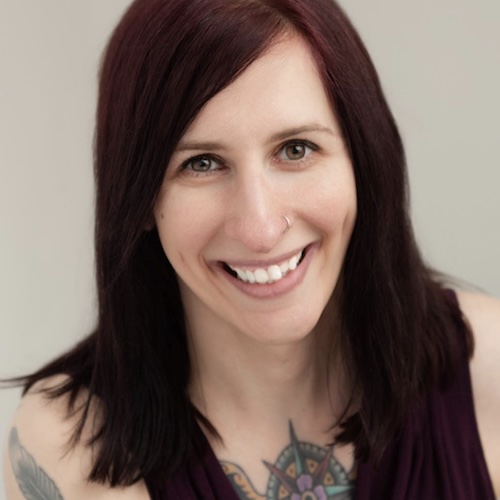
Before cancer, Tara had already lost about 50 pounds through diet and exercise. After her diagnosis and pandemic disruptions, her weight climbed to around 240 pounds, and she began experiencing joint pain she’d never had before. Requesting bloodwork and nutrition support, she committed to her health in a new, more holistic way — focusing on nutrition, therapy, and sustainable movement rather than perfection. Over time, she lost 110 pounds, got into the best shape of her life, and eventually transitioned into full-time work as a personal trainer, with plans for a future in physical therapy.
Today, Tara talks openly about scars, both visible and invisible. She emphasizes that skin cancer is not “just” skin cancer, that surgery-only treatment is still real treatment, and that survivorship is valid whether or not chemotherapy is involved. Her experience has turned into advocacy: urging young adults to push for second opinions, learn their insurance, stay on top of skin checks, and seek out community resources and young adult cancer groups so no one feels alone with a melanoma diagnosis.
Watch Tara’s video or read her edited interview transcript for more about her story.
- Trust your instincts and advocate for yourself; Tara pushed past repeated reassurances and a dismissive response to get a second opinion that ultimately found her melanoma early
- Melanoma can progress quickly, even without a family history or tanning bed use, underscoring the importance of regular skin checks and acting on changes
- Surgery-only cancer treatment is still real treatment; survivorship is valid and meaningful even when it doesn’t involve chemotherapy or radiation
- Tara’s experience led her to rebuild her relationship with her body, moving from fear and fatigue to losing 110 pounds and finding empowerment as a fitness professional
- Community support, mental health care, and young adult-focused cancer organizations helped Tara feel less isolated and more empowered to speak up for others
- Name: Tara S.
- Age at Diagnosis:
- 31
- Diagnosis:
- Skin Cancer (Melanoma)
- Staging:
- Stage 1B
- Symptom:
- Mole on back that became thicker and changed color
- Treatment:
- Surgeries: wide local excision, sentinel lymph node biopsy
This interview has been edited for clarity and length. This is not medical advice. Please consult with your healthcare provider to make informed treatment decisions.
The views and opinions expressed in this interview do not necessarily reflect those of The Patient Story.
- Hi, my name is Tara
- The first signs that something was wrong
- Hearing “melanoma” and my first emotional reactions
- What surprised me about melanoma treatment
- The emotional and mental toll of melanoma
- How cancer shifted my view of health and wellness
- Staying committed to weight loss after cancer
- Changing careers into fitness and future goals
- Identity, cancer, and taking power back through fitness
- Fitness, strength training, and finding empowerment
- Being diagnosed in my 30s and medical dismissal
- What survivorship means to me
- Stigma, tanning, and public perception
- My messages for doctors and young cancer patients
- My advice on moles, skin checks, and early detection
- What I wish I’d known before cancer
- Impact on friendships and relationships
- Living as a melanoma survivor today
- Finding community and other young adult survivors
- My final messages for young adults facing cancer
Hi, my name is Tara
I am in Pennsylvania. I was diagnosed with Stage 1B melanoma in 2020.
The first signs that something was wrong
I was always kind of a very “moley” person. That sounds so weird to say that out loud, but I had a few pretty prominent moles on me. There was one roughly around the shoulder blade that I was getting really concerned about. It kept irritating my bra strap whenever I would go to change or adjust it. At the time, I went to my dermatologist. I would go and get yearly skin exams, and for a couple of years, he kept saying that it was just cosmetic and didn’t need to be removed. I went in with the intention of having it checked out.
I was noticing changes. It’s either getting a little bit thicker or it’s getting a little bit bigger. Something’s going on. He said his same song and dance, and I was a little bit frustrated.
I was on Medicaid at the time of my diagnosis and stuff. I say that because in 2020, it was already really challenging to get into doctors’ appointments, whether they were for somebody new or somebody that you were already going to.
A friend of mine and I go to the same health system for our primary care physician, in different locations, but within the same health system. She had mentioned to me that they had a skin clinic. She said, “Maybe you should try to get a second opinion from there, because with Medicaid, you are relatively limited in terms of providers to be able to go see.”
At the time, I didn’t necessarily want to drive all the way out into the city. I lived about 45 minutes south of Pittsburgh at the time. I went to the PCP’s office for a regular checkup exam and got the referral. I got scheduled for that skin clinic. This was right after COVID was really starting to get rampant in the U.S., when it was starting to get more publicly known, so late spring of 2020.
When I got referred to the skin clinic, they ended up doing a shave biopsy. They said they would send it out and let me know the results within a couple of weeks. Initially, the first biopsy done with them was fine, but then maybe about a month or so later, not even, I noticed pigment coming back onto the same area that they had biopsied.
I went back and said, “Hey, I’m noticing some pigment. What’s going on here? I don’t know if you guys said anything.” I saw the same doctor. He said that sometimes with a shave biopsy, they don’t get deep enough into the skin, so they would go ahead and do a second biopsy and let me know the results. They said sometimes a shave biopsy just doesn’t get big and doesn’t go deep enough, so I shouldn’t be too concerned. I had no family history of skin cancer and melanoma, so I really didn’t think too much of it.
Then I got the call. I want to say it was sometime in early June, maybe the end of May. I can’t remember an exact date off the top of my head, but I got the call around 5:30 or 6:00 at night while I was sitting at the salon, which was relatively late for a doctor to be calling me. I got the call that I had melanoma. They said that it was caught early. It was called melanoma in situ, so I would need to see my dermatologist to have the excision done and continue tests.
Hearing “melanoma” and my first emotional reactions
I’m 36 now, so I was 31 at the time of diagnosis.
Again, you hear the C-word, you hear cancer, and the general population doesn’t think of someone our age going through a cancer diagnosis. You hear the C-word, and you think pediatrics, or you think geriatric or older adult. I was freaking out internally. I was in the salon, getting my eyebrows waxed, so I couldn’t really do too much at that point, but I did mention to the lady that I was seeing, “I have cancer,” and she knew me pretty well, so it wasn’t crazy. I was scared because I knew skin cancer existed, but I didn’t really understand what the course of treatment would look like for me. Was I going to lose my hair, go through chemotherapy and radiation? Am I going to die? I hate to be morbid, but you hear the C-word and your mind automatically goes there.
I also felt very frustrated and angry because, as I said earlier, for two years I was seeing this dermatologist, and he continued to blatantly ignore my concerns. When I did finally get in, on July 22nd of 2020, when I had my wide excision done at the dermatologist, he had the gall to say, “Thank God the person that found this did when they did.”
I was sitting there during the cauterization, when they were finalizing the excision and trying to stitch back up, making sure that there was no blood loss or anything. I was sitting there with stitches being pulled through my skin and feeling angry. I wanted to say something to him at that point, like, “No thanks to you. You didn’t listen,” and I just didn’t really have the wherewithal.
To finish up the initial cancer story, when the dermatologist did their biopsy, they sent it out as well. It went from a 0.35 to a 0.85 mm cancer in under two months. From that second biopsy I had done at the PCP’s office near the end of May or June to the time I had the wide excision done, it went from Stage Zero to a 1B in under two months.
It was aggressive. Melanoma can get aggressive very quickly; it’s one of the most aggressive forms of skin cancer. It was really concerning. At that point, my dermatologist referred me to an oncologist to potentially do a sentinel lymph node biopsy. I had that done in October of 2020.
What surprised me about melanoma treatment
I was surprised about treatment in terms of not needing to go through immunotherapy, chemo, or radiation, but I was ignorant. I had no idea. You automatically hear cancer, and your mind goes to those things. I really didn’t have much education about skin cancer. That was definitely a bit of a surprise.
I also didn’t realize how much of a toll it was going to take on me financially and emotionally, and even in terms of employment. At the time, I was working in retail, living paycheck to paycheck. I still do, it’s 2025, right? I was working in retail as an online grocery shopper, putting together customer orders. It was a relatively physically demanding job. For two weeks, because I had stitches in my back, I had to be on light duty. I couldn’t do the full load of what I did for my employment, and they ended up letting me go because I had been there for under a year. I wasn’t eligible for benefits through them yet.
I couldn’t get FMLA, and I essentially got screwed over with my job because of it, which led to a lot more difficulties — being able to afford food, rent, car payments, and basic needs. I struggled with that for a couple of years because, as I was looking for new employment, oftentimes these jobs didn’t want to accommodate me for the time off I would need to go to my checkups. That included therapy, because I’m a huge advocate for mental health, and going to my new dermatologist, because I definitely found somebody different after that initial diagnosis was cleared.
The emotional and mental toll of melanoma
A lot of it was due to everything happening at once. In full transparency, right before the diagnosis, I had finally gotten my first appointment through some different programs where I live. Not only am I a cancer survivor, but I’m also a domestic violence and sexual assault survivor. I was finally getting out of that. The situation wasn’t active per se, because a lot of this stuff happened in my childhood, but during the pandemic, there were a lot of community resources and nonprofits doing housing programs and things like that. I found out about them during the pandemic.
I was trying to process all these things. I was moving out for the first time, then I got hit with cancer, I lost my job, and I was trying to figure out how to support myself. There was also the isolation that 2020 brought. We had to be socially distanced, so I couldn’t have friends coming into the doctor’s appointments with me. We had to wear masks, so you couldn’t see anybody’s faces. I feel like 2020 brought on a lot of isolation that led to a lot of mental health problems as well.
How cancer shifted my view of health and wellness
I’m going to backtrack a little bit. Before my diagnosis, I lost about 50 pounds through diet and exercise. My weight always fluctuated a little bit throughout my adulthood. Then, with the pandemic shutting the world down — gyms down — and dealing with cancer, priorities shifted.
I gained it all back, plus some, and I reached a lifetime high of almost 240 pounds, believe it or not. You look at me now, and you’re like, “What?” Getting diagnosed with cancer, once I was out of the initial clearance of the surgeries and follow-up visits, I reached out to my PCP’s office. I could feel the weight that I had gained on my joints, especially. I had never really had joint issues before. I thought, “I really need to start getting this together. I have a good baseline, but I want to see where my bloodwork is now so I can start fresh. I’m out of this initial diagnosis; let’s go from here.”
My A1C was borderline pre-diabetic. I asked for a referral for nutrition services, and that’s what really started helping me take care of myself both nutritionally and through therapy, really working on holistic health and wellness overall, and then working on my diet and exercise.
I ended up losing 110 pounds and got in the best shape of my life. It also transformed my career, which I’m sure we’ll touch on later.
Staying committed to weight loss after cancer
The shifts in perspective because of my diagnosis definitely helped me stay committed to taking care of myself.
When you get hit with that C-word, you really start to think about what you’re putting in your body. I am not perfect by any means, still to this day. I will sit here and eat a processed protein bar because it is satiating and filling. If I want something that’s a bit of a sweet treat, I would rather eat a protein bar than a candy bar. At least it has protein.
Do I eat whole foods 100% of the time? Absolutely not. However, I’m a lot more mindful about what I put in my body. My meals now, the majority of the time, are a lot more balanced as well. Working in the fitness industry full-time, I’m surrounded by that, and it’s a constant motivation to continue down that journey. Even when you have slip-ups, one meal doesn’t matter. That’s okay; you just continue to go along the path.
Changing careers into fitness and future goals
My original background was actually nonprofit. I have done some marketing and development work in that industry. It’s a very challenging field to get into because a lot of people in that industry stay in it for a long time.
A lot of the positions I was involved in were more short-term or volunteer. I’ve done AmeriCorps, which is a domesticated version of the Peace Corps. You get placed at a school or a nonprofit agency, but it never led to anything long-term for me. I found myself wanting to be more involved in the health and fitness industry.
I’m a full-time personal trainer. I teach some group fitness classes, but ultimately, my next steps are to go back to school for physical therapy. I feel as though physical therapy is a really great combination of what I do now as a personal trainer and a more holistic perspective in a medical-based field, which leads to longer-term career opportunities.
Identity, cancer, and taking power back through fitness
It’s funny, because being a melanoma survivor and having a lot of excisions done — cancer, pre-cancerous, or moles removed for diagnostics just to make sure they don’t become cancerous — I have a lot of scars on my body. Some of them have faded better than others. I remember I had one on the side of my jaw that got removed a few years ago.
My dermatologist at the time said, “Do you want me to send you a referral over to the plastic surgeon’s office?” She didn’t necessarily feel the most comfortable removing that one since it was on my face. At that point, I said, “You know what? Just do it. If you are comfortable enough to remove it, I’m going to trust you.” I said that I would rather live with a thousand scars than ever have to fight cancer again.
Going back to my cancer story, I’ve never used a tanning bed. Clearly, look at me. I’m very fair-skinned. I’ve never used a tanning bed. Have the thoughts been there? Absolutely. I remember a few weeks when I was going to Planet Fitness, which is notorious for its Black Card and having the hydro bed and the tanning beds. Have I been tempted? Absolutely. But I never did. I was aware enough of skin cancer and the UV rays from those that I didn’t want to risk it. It’s a good thing I didn’t. I would rather live with the scars than ever have to deal with this diagnosis again because it’s life-changing.
I was blindsided. I’ve even gone through genetic testing, and there was no family history. There was nothing that should have ever determined me to have skin cancer as far as I know, unless it was something environmental, but I was completely blindsided.
Working in fitness has helped me feel more present and powerful in my body. It’s part of how I took my power back.
Fitness, strength training, and finding empowerment
My decision to go into the fitness industry helped with my identity and empowered me again after my health diagnosis. I was on this journey before the cancer diagnosis, so who knows what would have happened if the pandemic hadn’t happened.
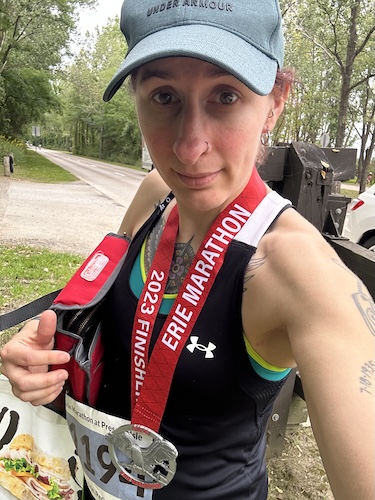
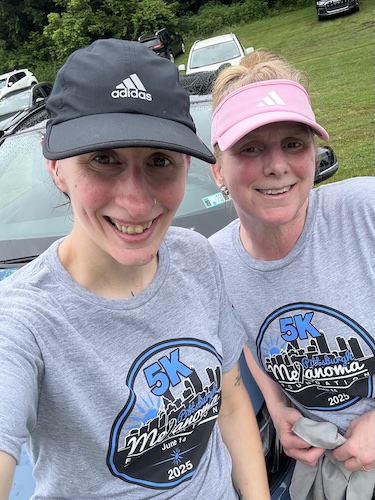
I started doing a lot of cardio. Initially, when I was on my health and fitness journey, I would incline walk or use the elliptical. I didn’t start out running like a lot of people think I did. Eventually, I got into running and decided to start training for my first half-marathon. The Pittsburgh Marathon is a huge event in the city. They do what’s called Run for a Reason, a charity program where they have a list of charities that you can help fundraise for. If you raise a certain amount — I think it was about $500 for the half — you get your registration fee back. On this list was a group called Young Adult Survivors United. They are a Pittsburgh-based nonprofit that helps support young adults who have had a cancer diagnosis between certain ages.
It was a full-circle moment to help support an agency that means so much to me now, and to bring awareness to young adults who have been through cancer and the impact of that. In the fitness industry, I find strength training makes you a lot more mindful and physically aware of your body because of the contractions you’re doing with lifting weights. You’re more present in that. There’s still some of that in running, but running also takes your breath, so it’s a give-and-take. I find strength training to be a lot more empowering, especially as you continue the process and start noticing progress. If I’m using 10-pound weights and then I start pressing 20-pound weights, that’s really cool.
As I joined that group and talked about my story on social media, people saw me as a fitness expert, this person who has been through cancer and come out on the other side. It’s been a really interesting story.
Being diagnosed in my 30s and medical dismissal
I feel like being diagnosed in my 30s is a disadvantage because doctors felt that since I was young, it’s less likely that something is wrong. I told you before, I was seeing the same dermatologist for two years and never noticed too many changes with a lot of the moles on my body. But this one was pretty prominent. I even had a couple of pictures I was taking of it, the best I could — it’s a little hard to do a selfie with your back — but I definitely feel like he continued to ignore my concerns because I’m not a doctor and I’m young. I don’t look like I’ve ever tanned, so he didn’t seem to care, honestly. That was really frustrating.
I also want to include that they don’t talk about the aftermath or the support we still need. Just because I “only” had skin cancer doesn’t make my cancer any less significant. I don’t think doctors either have the knowledge or care to talk about support for cancer diagnoses, especially for people our age.
What survivorship means to me
The biggest thing I can think of is that survivorship means something different to everyone. As a skin cancer survivor, I hear all the time, “It was just skin cancer, it’s not that serious.” I’ve had friends tell me that, family tell me that, random strangers tell me that.
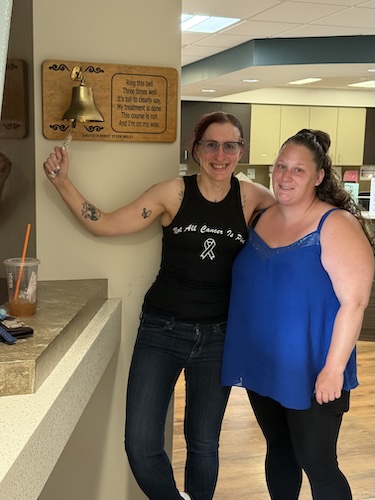
This summer was my fifth cancer anniversary. For me, survivorship was when my excision was removed, and I got to go to the hospital where my second surgery, the wide excision and lymph node biopsy, was done, and I rang the bell.
When I called the hospital, one of the staff members said the bell was typically reserved for people who had finished chemotherapy, immunotherapy, or radiation. I said, “Just because I didn’t have chemotherapy or any formal suppressive therapies doesn’t make my survivorship and my anniversary any less significant.”
My treatment was all surgery-based, and that doesn’t make it any less significant. That’s something I really want to push forward and speak about to the public: just because somebody doesn’t have those types of treatments doesn’t make that cancer any less significant. It is still cancer at the end of the day.
Skin is the largest organ of the body, and it’s just as important to take care of it as anything internal.
Stigma, tanning, and public perception
I had a couple of people mention spending too much time in the sun or hitting tanning beds, but anyone in my personal circle never really approached it that way because they know me well enough to know I’ve never used a tanning bed. They either said, “It’s just skin cancer, it’s not that big of a deal,” or they didn’t know what to say because it’s the big C-word, and they were scared. They didn’t understand, just as much as I didn’t understand what was happening to me at the time.
This is why I want to have these conversations — podcasts and public awareness — because I don’t feel like there’s enough attention to melanoma and skin cancers. I’m speaking out of my own experience; my cancer was still relatively early, so I don’t know what treatments look like for stages two, three, four, and so on. I’m just speaking about my story.
My messages for doctors and young cancer patients
To medical staff and personnel: listen to your patients. Reflecting on my experiences with that dermatologist, I felt so dismissed by his ignorance as a dermatologist, as a professional in the field of skin cancers. For him to say that it was just cosmetic and didn’t need to be removed was ignorant. I want these doctors to just listen. I want them to show compassion. I want them to treat their patients like family. I know their cases are loaded, but if we can ground ourselves, be more centered, and be individually focused, making sure that you are listening and being attentive to those needs, that goes a long way.
To young and new patients: don’t be afraid to get a second opinion. Obviously, it depends on the stage, but I had no idea my PCP’s office had this skin clinic at the time. Being able to get into that clinic wasn’t with a traditional dermatologist, but it literally changed my life. I got the diagnosis because of that. With Medicaid, it can be challenging to find a physician because there are limitations, but don’t be afraid to drive farther to get a second opinion. That’s something I wish I had thought about initially. I have anxiety driving in the city and in areas I don’t know, and I feel like maybe I would have found out sooner if I’d made that choice sooner. Lean into community resources because losing my job because of cancer was frustrating. It leads to a ripple effect of potentially losing food, rent, and so many things. Do your research on community resources locally and in the young adult cancer population. There are organizations out there, but it takes research and time. Be patient, but it’s out there. If I can do it, anyone can.
My advice on moles, skin checks, and early detection
This is actually something I’ve learned recently, as I’ve gone through my forms of treatment, which were skin checks every so many months. At initial diagnosis, it was every three months. As I progressed through that five-year course of checks, it went to every six months, and now I’m back to yearly.
If I notice something, I’m going to get in sooner. That would be one thing: if you notice something, get in as soon as you can, even if it’s just your PCP’s office, because they can do skin checks too. I forget the formal name of this, but you take, say, a mole on your shoulder and compare it to a coin, like a nickel. You use that coin on the edge of the mole to continually check over several weeks or a couple of months. If you’re noticing that the mole continues to grow along with the size of that coin, that’s a good indication that something is changing. It’s time to go to the doctors to get an opinion.
With skin cancers, they talk about the A, B, C, D, E of skin cancer: asymmetry, borders, color, diameter, and evolving. If the size changes, it gets darker, or has irregular borders, those are important things to notice in any moles or marks on your body.
What I wish I’d known before cancer
I think the biggest component is advocacy. I hear it in the cancer space. I hear it when my friends have health issues over time and have to navigate health systems, or they find out they have one issue, and the course of treatment causes another issue.
Advocate, advocate, advocate, because you know your body more than anyone else, so you have to fight for it no matter what. That is something I will continue to preach. I literally got a second opinion because I was noticing changes, and this doctor wouldn’t address them until it was almost too late. It was already there, and thankfully, it was caught early, but no thanks to that doctor.
In terms of melanoma, doing self-checks between appointments to make sure nothing is changing is important. I’m not saying to be a hypochondriac, but sunscreen, sunscreen, sunscreen, and self-checks between doctor’s appointments are key. Continue to advocate.
Try to have a good base knowledge of your insurance and be prepared to get a second opinion if you have to. Reach out to your insurance to find other providers that are in-network, because there is a cost to medical care. I went through an insurance change this year that ended up affecting who I was able to see. There are two major networks in the Pittsburgh area for health insurance and hospital systems. My insurance changed at the beginning of the year, and I had to change half of my doctors because my local health system went to one network, and my insurance took the other. That meant dermatologists and my PCP, whom I’d been seeing for 15–20 years. It was really frustrating to get blindsided when you build trust in doctors and suddenly can’t see them anymore.
Do your education on insurance, reach out, and understand your benefits. Often, there are navigators either within the insurance company or within the doctor’s offices to help you. Do as much research as you can.
Impact on friendships and relationships
A therapist of mine never ceases to remind me that when she gets her skin checks, she thinks of me. She always reminds me how much seeing me go through my diagnosis affected her, even though she had already gone for yearly exams. She’s a lot more diligent about checking her skin now, as well as her husband’s skin. I’ve always appreciated that. Some of my friends, not so much. I still have one who likes to go tanning, and another who has been supportive but doesn’t really do skin checks. She’s more, “If something comes up, I’ll deal with it.” My friends have been supportive as best as they can. It’s one of those things: with the C-word, you don’t know what to say until you go through that process. I get it.
The pandemic made things really challenging because I couldn’t have anybody with me. The lymph node biopsy was the first time I had ever had a true hospital surgery. Pre-cancer, the most I’d had was my wisdom teeth removed under twilight sleep. The aftermath was painful, but it was okay. Being in the hospital with nurses, being put under, the pre-surgery process — I was terrified. I was so scared. I was isolated because I couldn’t have anybody with me. It took three nurses to get a vein for the IV. That was traumatizing because I was getting poked and prodded, I didn’t know what was happening, I was overwhelmed, and then I woke up with a drain tube attached to my armpit. That drain tube was there for about two weeks after the surgery, for fluids from the lymph node biopsy in my right armpit.
The lymph node biopsy determines which lymph node stands the biggest risk of cancer. The day before surgery, I went for a radiation tracer near the melanoma site, the initial tumor, to determine which lymph node had the biggest risk of cancer. That lit up to my right armpit. Then I had the surgery, they removed the lymph node, and I had a drainage tube for about two weeks that was stitched to my armpit for the fluids coming out from the surgery. Thankfully, it was clear; everything was good. I’ve only had one other mole that was higher risk since the initial diagnosis, but it was not pre-cancerous or cancerous. I’ve been very lucky since. Knock on wood.
Living as a melanoma survivor today
The worries and fears I had are definitely still there, especially around checkups. I don’t think this is necessarily a cancer thing, but because the surgery was correlated to cancer, my mind goes there.
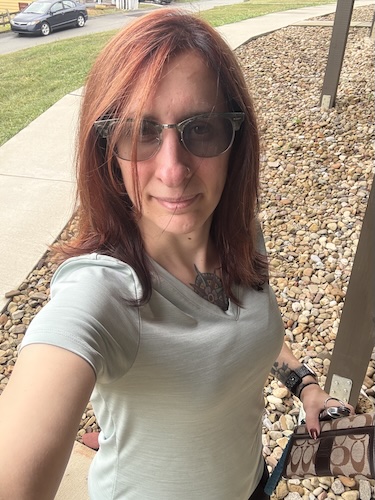
When I had the lymph node biopsy, I ended up with some numbness in my right armpit from the nerves. When I talked with other ladies in our support group from Young Adult Survivors United, they said that’s normal after surgery. Even my best friend, who had an ACL reconstruction, still has numbness around her knee. For me, that’s directly correlated to cancer, so when I go to shave, I’m reminded of that surgery. I think, “Oh yeah, that’s a thing. I hate this.” Then I think, “I should get a tattoo in my armpit because I wouldn’t be able to feel it anyway,” because that’s where my weird thoughts go. I have quite a few tattoos; I have one on my chest, and I’m pretty covered.
Certain little things remind me of that diagnosis. I’ll catch a scar, and I’m reminded of those times. It comes and goes. I have periods where I do pretty well and am just going through the motions, and then something will remind me of when I was going through that, or something in the community will bring it up again. I have my ebbs and flows. I don’t want it to take over my life, but it still shaped who I am today. It’s still a huge part of me. I think there needs to be more awareness. Somebody has to be the one to talk about it, and that’s why we’re having this conversation today. I appreciate the opportunity to speak on melanoma and the young adult population.
Finding community and other young adult survivors
I told you how I found out about Young Adult Survivors United through the Pittsburgh Marathon. That’s really what started it. This isn’t just melanoma-specific; it’s for young adults. A lot of the members in the Pittsburgh area and beyond join in virtually. We even have people from out West. Because of that group, I was able to get involved in other organizations targeted to young adults.
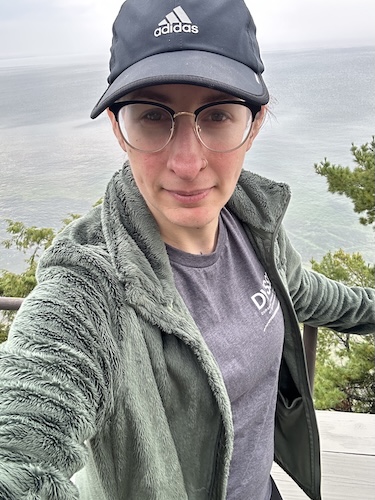
I had the opportunity to go to a retreat camp through an organization called True North Treks in the Upper Peninsula of Michigan. It was a retreat camp specifically for melanoma survivors through the Melanoma Research Foundation. It was absolutely incredible. The views were amazing, and I think I have a couple of pictures uploaded from that trip. What made it special was that it was specifically for melanoma survivors. At the time that I went, it was the first time I had ever met any other melanoma survivors.
It was cool — even though cancer sucks and none of us want to go through that — to meet other survivors who can literally understand what you’ve been through.
Fun fact: melanoma can happen in the eye. Ocular melanoma is actually a thing. I didn’t know that until that trip.
My final messages for young adults facing cancer
For the young adult population: when you get hit with cancer, you typically think geriatric adult or pediatrics. Young adult cancer is so unique because this is the time of our lives where we are developing our careers, buying our first homes, getting out of abusive situations, getting married, dating, having kids — and then you find out that you have cancer and it has such a large effect on so many areas of your life. I say support the local organizations that support young adults specifically, because they are, in a way, the most vulnerable. Sometimes you are forced to choose: do I pay for my medical treatment or keep a roof over my head? That’s not an easy decision to go through. Groups like Young Adult Survivors United, the Melanoma Research Foundation, and anything geared toward that specific population are so important to support because they have a direct impact on the livelihood of young adults who have been through cancer.
Get your yearly skin checks. Stay shady, use sunscreen, and be a community. There are so many things happening in this world right now, and when you get hit with a diagnosis, be a support.
Inspired by Tara's story?
Share your story, too!
More Melanoma Stories
Tara S., Melanoma, Stage 1B
Symptom: Mole on back that became thicker and changed color
Treatments: Surgeries (wide local excision, sentinel lymph node biopsy)
...
Brittanny G., Skin Cancer (Melanoma), Stage 3A
Symptoms: Mole that enlarged, changed shape, and became dry, patchy, and flaky, fatigue
Treatments: Surgeries (wide local excision, lymphadenectomy), immunotherapy
...
Teresa B., Recurrent Breast Cancer (Hormone-Positive), Oral Cancer (Lip Cancer), and Skin Cancer (Melanoma)
Symptoms: Lip cancer: chapped lips & a pimple-like growth on lip, breast cancer: enlarged left breast with lump, melanoma: none
Treatments: Surgeries (bilateral mastectomy with reconstruction, lumpectomy, craniotomy, Mohs, surgery, wide local excision), hormone therapy, radiation therapy
...
Jennifer M., Melanoma, Stage 4 (Metastatic)
Symptom: Persistent cough, body and chest aches and pains, night sweats, fatigue
Treatments: Immunotherapy, surgeries (lung resection, pericardiectomy)
...
Cheyenne E., Melanoma, Stage 3B
Symptom: Itchy mole on her back that changed in appearance
Treatments: Surgeries (wide local excision, sentinel lymph node biopsy, lymph node removal), immunotherapy
...
Robin A., Melanoma, Stage 4
Symptom: Appearance of a small bump on the chest
Treatments: Chemotherapy and immunotherapy (under a clinical trial)
...