From “Get Your Affairs in Order” to 16 Years in Remission: Tristan’s Hodgkin Lymphoma Story
Tristan’s Hodgkin lymphoma experience began just as he was stepping into adulthood, leaving his small hometown of Huntsville, Alabama, for college in Indianapolis and dreaming of a future working on diesel engines and railroads. In late 2006, what started as relentless itching quickly escalated. One night, after developing an unusually severe headache, Tristan noticed a lymph node on his neck that had swollen to the size of half an orange. Within hours, he was in a hospital room hearing the devastating words that would change everything: he had stage 4 Hodgkin lymphoma, and his life and plans were no longer on the path he imagined.
Interviewed by: Keshia Rice
Edited by: Chris Sanchez
Alone in a different state and terrified, Tristan describes an experience that shifted his perspective for the better. In the middle of that night, while he was in the hospital, a traveling pastor appeared at his door with a Bible verse that shifted Tristan’s focus from “Why me?” to “How do I protect my parents and family from this pain?” That moment of spiritual grounding, along with his father’s unwavering presence and support, became a turning point in how he viewed his Hodgkin lymphoma experience and his role within his family.
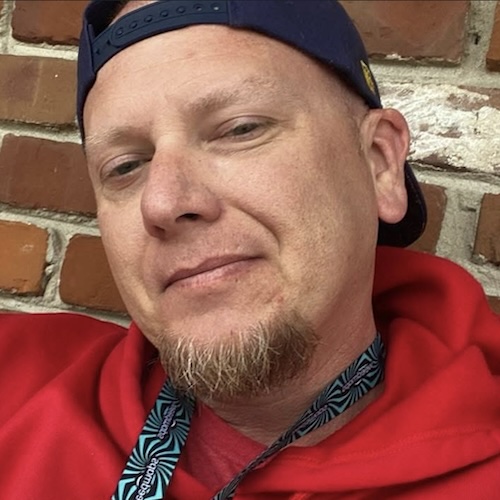
Back home in Alabama, Tristan started chemotherapy and radiation at the Clearview Cancer Institute. Initial remission came quickly, but so did relapse. More aggressive disease led to a harsher chemotherapy regimen, then an autologous stem cell transplant, followed by an allogeneic transplant after miraculously discovering a 99% donor match. Each time he heard, “Get your affairs in order,” Tristan refused to let the disease define him, even if it meant doing things his doctors hated, like skydiving and drag racing, just to live his life and feel in control.
Years later, Tristan is more than 16 years in remission and living with the long-term effects and financial weight of his treatments, including ongoing scans, specialist visits, and significant out-of-pocket costs. He speaks openly about feeling “less than a man” when his wife was the primary earner and he stayed home with the kids, and how therapy, perspective, and fatherhood helped reshape his sense of purpose. Today, Tristan is building a career, planning a new business, celebrating his “second birthday” every May 8th, and preparing to become a grandfather. His experience reveals not only the challenges of treatment for Hodgkin lymphoma, but also how faith, community, and self-compassion can help people rebuild a life they never thought they’d get to live.
Watch Tristan’s video or browse his transcript below to find out more.
- Faith, spirituality, or a grounding belief can radically shift focus from self‑fear to caring for family and making meaning from a difficult diagnosis
- Honest communication and strong support from loved ones, like Tristan’s father and wife, complements the chemotherapy itself in getting through a cancer experience
- The financial impact of cancer and long‑term maintenance care can last for decades, shaping work choices, housing, and family plans even after remission
- Resilience one has often becomes clear only in hindsight, especially when facing serious illness.
- Tristan’s transformation runs from angry, impulsive teenager to intentional husband, father, and soon‑to‑be grandfather who plans ahead, builds community, and uses his experience to advocate for others
- Name: Tristan C.
- Age at Diagnosis:
- 19
- Diagnosis:
- Hodgkin Lymphoma
- Staging:
- Stage 4
- Symptoms:
- Severe, persistent itching
- Appearance of large nodule in neck
- Treatments:
- Surgeries (port installation, catheter placements)
- Chemotherapy
- Radiation therapy
- Stem cell transplants (autologous and allogeneic)


This interview has been edited for clarity and length. This is not medical advice. Please consult with your healthcare provider to make informed treatment decisions.
The views and opinions expressed in this interview do not necessarily reflect those of The Patient Story.
- My name is Tristan
- My early Hodgkin lymphoma symptoms
- My emotional reaction to my stage 4 Hodgkin leukemia diagnosis
- A visit from a traveling pastor changed my life
- My father’s strength and the power of support
- I started Hodgkin lymphoma treatment back home in Alabama
- Chemotherapy and radiation, and the side effects I experienced
- I relapsed and went on a harsh chemo regimen
- We decided to undergo an autologous stem cell transplant
- How my first transplant went and the life-threatening complications I faced
- I had an allogeneic transplant: the miracle of a 99% match
- My second allogeneic transplant and achieving remission
- When the gravity of a stage 4 Hodgkin lymphoma diagnosis really hit me
- Surviving cancer and dealing with crushing medical debt
- Building a new career, moving, and still paying for my cancer treatments
- Ongoing maintenance: scans, bloodwork, and specialist visits
- Rebuilding masculinity and purpose after cancer
- Survivor identity and accepting long-term risks
- How cancer in college changed my 20s and 30s
- I would still choose this life over my old one
- Thinking about the future: 26 and 36 years out
- Becoming a grandfather and living a life I never expected to have
- My final reflections and advice for other patients
My name is Tristan
I’m in Huntsville, Alabama. I’m 38 and was diagnosed with Hodgkin lymphoma, stage four, in January of 2007.
You know, as every kid does, I had those grandiose dreams of getting out of the small town and going on to do bigger and brighter things. I left from a small town — well, it was a small town, Huntsville — to go to Indianapolis to start college. I always wanted to work with tractors and diesel engines and stuff. I grew up, as every kid does, seeing the big truck go down the road, trying to honk the horn and stuff. I wanted to work for the railroad and had envisioned myself being a single guy and just riding the railroad and seeing new places, and getting to live a life unlike anybody in my family had ever done.
I had the chance to break out, and it came crashing down so fast.
My early Hodgkin lymphoma symptoms
That was the one that almost put my nail in the coffin. I began college about mid‑August of 2006, and about a month into it, I got an injury. I’d cut myself pretty badly and had to have some stitches. About two days after I got those stitches, I started itching relentlessly. I mean, to the point where, even whenever I would try to sleep, I’d be in the fetal position, just steadily clawing myself. It was bad. The skin was coming off my legs, and it was not just isolated. It was widespread all over my body, but my legs were the worst.
To the point where I would take off my socks, and pieces of skin would come off with it. I’d gone to little walk‑in clinics, and I was told it was a laundry allergy, it was just anxiety, it was this, that, and the third. I was misdiagnosed five different times before the actual diagnosis came in. I was in school one night. I had to go to night school so I could work during the day, but I’d gone into class, and I got a headache, which was for me just the most bizarre thing. I’ve had like ten in my entire life. I’ve been so fortunate with that, but it was a sign that something was definitely wrong.
So I told my professor I’d go to the washroom real quick and wash my face. I’ll be back. When I went and I looked in the mirror, I saw a lymph node that popped up on my neck about the size of half of an orange, and immediate panic set in. I ran to the dean of the school and said, “Look, man, I am so far away from my family. I don’t know what to do. Please give me some help.” They called the paramedics, and I went to Saint Vincent Hospital in Indianapolis. They did some blood work. Within a couple of hours, a doctor walked in with a pack of papers and the most sour look on his face. Here comes the devastation. He explained it to me and put the brakes on hard, really, really quickly. I started to freak out. This was on January 7th,
My emotional reaction to my stage 4 Hodgkin leukemia diagnosis
The very first thing I’ll tell you is that if the window on the 11th floor of the Saint Vincent Hospital had been opened, I would have jumped out of it. I can tell you that it wasn’t, because I checked. I was instantly terrified. Not only was I the only one of my dad’s kids to be able to go to college, but now I have to tell or call and figure out a way to explain, “Hey man, I’m not going to finish school, but I potentially might not survive what’s about to happen.”
This is a part of the story that always gets me. I grew up in a family where religion wasn’t always at the forefront. We didn’t talk about God a lot. It had never been a subject I really even cared about. I was 18, 19 years old. I couldn’t see past Friday night at the time. But a doctor comes in; he’s really rushed in the way that he went about it. He’s like, “You’ve got Hodgkin. It’s very survivable, this, that, and the third, but I’ve got to do something. I’ll be back in a little while to explain a little further to you.”
I lay in the bed. This is about 1 a.m. I was laying in the bed and just going over every single thing in my mind, trying to figure out, to the best of my ability, what I was going to do next, who I was going to tell, how I was going to tell them, if I was going to tell anybody, if I was just going to disappear into the ether and go and do whatever or live through whatever may come.
A visit from a traveling pastor changed my life
A nurse knocked on the door. It’s about 3 a.m., and she said, “Man, there’s a guy out here that really wants to talk to you. Would you mind if I send him in?” “Please. I have no idea who he is, but please send him. I’ll talk to anybody right now.” This guy walks in, and he’s holding a Bible in his hand. I still have the Bible in my room here. He’s just flipping through it. We’re introducing one another. He said, “Hey, man, I’m a traveling pastor in Chicago. Something tells me you really need to talk to me tonight, and you have no idea what kind of hornet’s nest you just walked into.”
After a few moments, he stopped. When people say the expression “He was grinning ear to ear,” I saw it once with my own eyes. This guy looked at this book, and all you could see were teeth. He’s like, “Does this mean anything to you?” He turned it around and showed me Jeremiah 21:17: “You have been cast away and you’ve been called Zion, and I will take away all of your pain and heal your wounds for you, my child, and you will suffer no more.”
In that instant, it allowed me to pivot from “Oh, me! Oh, what do I do, what do I do?” to “How do I prepare my parents? How do I prepare my family? How do I give them the strength to watch what’s about to happen?” From that point, I didn’t worry about myself. It was more about them. I made the phone call to my dad that night—well, it was the morning. It was about 4:30 in the morning. I called and said, “I’ve got the craziest news you didn’t expect to hear, and this is what’s happening.” Being the rock of my life, my dad said, “What do we do next? How do we begin?”
“I don’t know. Just come. Come be with me.” It’s about a six‑hour drive from Huntsville to Indianapolis. It seemed like he was there in three. They put the wheels in motion. I had the support group that, from the moment I said, “I need help,” I had help, and I had God’s strength to help me along. That’s the part that always kind of trips me up a little bit.
My father’s strength and the power of support
I can understand where he’s coming from in my adult years. But at the time, I had never seen my dad shed a tear. I’d never seen him show any moment of weakness. It was several months into it before I actually started to see the stress take effect on him. He didn’t know anything about me. None of us did. Who is even supposed to know about cancer whenever you’re in a small town, or you’re a young person? Why should you know anything about cancer?
None of us was educated on the subject. Anytime I made a decision, or if I needed somebody to help make a decision, all I had to do was reach out and say, “Hey, guys, this is beyond me. What do I do?” Whether it was right or wrong, they supported everything I did through it. Support is one of the biggest facets of treatment that you can have. You have to have people to back you up, whether it’s family, friends, or you call a support line. There’s always somebody out there to give you that shove that you need, but you can’t do it all alone. You have to have somebody to lean on from time to time.
I started Hodgkin lymphoma treatment back home in Alabama
Thinking about school really didn’t bother me at the time. I was so absolutely concentrated and focused on the direct objective. I had an incredible team. I was diagnosed on January 7th of 2007. I got biopsied that night. They got the results on January 8th. On January 9th, I was back in Huntsville, Alabama. On January 10th, I was at Clearview Cancer Institute in Huntsville.
I met my oncology team for the first time — Dr. Jeremy Hahn and all of his incredible support staff. They had the plan right away. They knew exactly which treatment to use. Hodgkin is largely a very treatable illness, so they already knew what needed to happen. It was just trying to get my mindset right, to say, “All right, man, you have to listen to this. You have to buckle down. You don’t know everything,” because every 18‑, 19‑year‑old, we already know everything. Nobody can tell us anything.
I had to really be receptive to whatever news was going to come, whether it was bad or good. I had to learn how to listen and have a perspective other than, “Hey, nobody can touch me.” Within a week, I had a port put in, and we started treatment. My oncologist was second to none.
Sugar-coating is the worst thing. I can’t stand for somebody to try to give me the best possible scenario. Tell me the truth. Give me facts. Let me process how I need to, but give me whatever facts I need to be able to process. He was very straightforward with me. He said, “This is what we’re going to do. This is what kind of sickness you’re looking at. You’re going to be in bad shape for a little while, but the overall prognosis is looking really good.” We went from there. I was very blessed to have the team that I had, for sure.
Chemotherapy and radiation, and the side effects I experienced
Right off the bat, I started with my chemo regimen. The wildest drug I took was what nobody wants to hear, they’re about to get put into them. It turns your skin into a fluorescent red shade. Funny enough, that’s how my dad found out that I had a tattoo. “Well, you’re red. Let me see if the rest of you is like that.” He lifted my shirt and found out I had a tattoo, which was totally taboo at that time.
I think it was eight cycles of chemo. I went three days a week for eight weeks, and then right after that, I jumped straight into radiation. Radiation was pretty rough. They do the tattoos to get you lined up and everything. They forewent the little mesh mask because I’m so incredibly claustrophobic. I promised them, “I will not move if you just don’t put this thing on my face.” So someone went through that setup with me.
I didn’t lose any hair. I wasn’t really losing much weight. It was mainly trying to keep my sanity through all of it and trying to still wrap my head around the things that were happening. I achieved remission in July of 2007. I achieved my first remission.
I relapsed and went on a harsh chemo regimen
It was short‑lived. By October, I was right back in stage three, and it was more aggressive this time. It moved from just the neck and chest area to where I had 17 nodules in my chest. I had four in the groin, a couple more in my neck, and we were trying to decide what to do next.
He moved on to the next chemo treatment. This is where I really started getting sick, and I could really feel the weight of everything crashing in. I was not responding well at all. They kept saying, “You might want to start getting your affairs in order. You might want to get a living will.” “What are you talking about? I feel fine. What are you talking about?” I didn’t realize at the time, but I was still wearing clothes that I was wearing in college, but now they’re falling off of me. I’m having to cinch my belt up even tighter, and shirts are looking like nightgowns on me. So it really started to weigh in.
We decided to undergo an autologous stem cell transplant
I went through that from about September 2007 through about February or March 2008. With the limited response I was having to the chemo, doctors moved on and said it was time to try an autologous transplant, an autologous stem cell transplant.
At the time, I couldn’t hear that news. I was so emotional about everything. Again, my dad comes into play: “Tell this guy, if this guy says that it’s okay, then I’ll follow his lead. I’m going to believe and trust in him.” My oncology team was so incredible. The transplant staff at Clearview Cancer Institute — they were amazing. They laid out step by step what would happen. They put me through every part of it. I got set up for apheresis.
I was sitting in an apheresis lab every day with the phlebotomist. I was doing my lab draws every day. He’s coaching me on. He’s like, “You got it, man. You’re the strongest.” They really set me up for success. They gave me all the support staff. Different people came into my life at the time that really helped build me up and gave me the strength I needed to do that.
How my first transplant went and the life-threatening complications I faced
May 8th of 2008, I went into Huntsville Hospital to do my first transplant — it’s autologous. I spent 17 days in there. It starts with high‑dose chemotherapy. They take all of your bone marrow and all of your blood counts and everything to absolute zero. They kind of dangle you right there at death’s door, and whenever everything hits zero, then they give you your stem cells back, and then you wait for the graft.
You’re waiting on those stem cells to graft, and your blood counts start to rebound and stuff. Almost instantly, I’m starting to feel better. Kind of a side note: they told me right off the bat, “You’re going to lose your hair. Whatever you do, do not shave. Don’t use a number two pencil or anything that might puncture your skin. It’ll be a dangerous situation.”
So what did I do right off the bat? I got out of bed, and I shaved my head in the middle of the night while none of the doctors were there, and I nicked the back of my head and nearly bled to death over this. They had me wrapped like a mummy from here all the way around to keep me from bleeding out. I had to do transfusions and stuff.
Again, a 20‑year‑old kid not listening to anybody—“I’m going to do what I want to do.” Mistake. Mistake so bad. I got out of there in the middle of June. I walked out under my own power. That was my determination: I’m going to walk into this hospital, and I’m going to walk out of this hospital. I’m not going to be in a wheelchair. I’m not going to be carted out. I can do this. And I did.
The hardest part of any of that was actually coming off the pain medications. They overwhelmed me with the amount of pain medications. Largely, it wasn’t a physical pain I was dealing with. It was the mental anguish that I was going through: the inevitability of time running out and things left unsaid and things left undone.
I moved forward from there. It was June. By September, I had relapsed again. Now everybody’s backpedaling, trying to figure out the next treatment — what do we do now, and how do we get to the next step? I was given the treatment again. This time, I was responding a little better, but it still wasn’t a viable long‑term solution.
I had an allogeneic transplant: the miracle of a 99% match
Then we moved on to, “Now it’s time to do the allogeneic transplant.” I went in March of 2007 to get typed and matched — Dad, brother, mom, and any family that was available to go. We all went to Vanderbilt, which is in Nashville, Tennessee, to get typed and matched. I recall the doctor walking in and saying, “Nobody’s matched. You have very limited time.” This was the second time I was told to go home and get my affairs in order because time was very limited.
This goes back to God’s will and God’s power. I think it was March 21st of 2007 — the dates stick with you whenever stuff happens. March 21st, I’m told nobody’s a match. March 22nd, I wake up, and I have a voicemail on my phone. It’s Vanderbilt saying, “Hey, you have a 93% viable match. You can go ahead and start making arrangements to get back up here, and we’ll get this transplant underway.”
While I was on the phone, Vanderbilt beeps in again, and the lady is almost hysterical on the other side: “We have a 99% viable match. This almost never happens. We’ve never seen it here at this clinic. When can you be back?” My dad’s listening to it on speakerphone, and he’s grabbing me the whole time like, “We’re going now.” He starts moving me toward the vehicle, and we start making our way back to Vanderbilt.
My second allogeneic transplant and achieving remission
I get to Vanderbilt. They do the initial assessment. They have to restage me and see where I’m at at this point. Then we move on to what’s next. We have to wait on the donor to do apheresis and for his cells to get there. In the meantime, they’re keeping me on a therapeutic level of chemotherapy to try to keep me in place where I’m at.
May 8th of 2009, 365 days to the day from my first transplant, was my day zero for my second transplant. They say life begins at day zero. That’s whenever they give you all the high‑dose chemo, and they knock you down to absolute zero and dangle you again right there at death’s door and hope that the graft takes. I achieved full graft. Counts started rising.
I was still incredibly sick at this point. The amount of immunosuppressants and medications that they had me taking — some days it would be upwards of 150‑plus pills. By the time I swallowed everything, I immediately regurgitated everything because you have nothing in your stomach with these prescriptions. It took a little while.
Again, very diligent parents, very strong‑minded parents. Not a whole lot of people, I imagine, could sit and watch their child go through that. They had their poker faces on. If they were worried, I didn’t see it firsthand. Through conversations after the fact, they absolutely had their worries and their doubts.
I went through that entire summer, this is the summer of 2009, to the best of my ability, staying active. We had a gym there at Vanderbilt, so I would go down and try to lift weights or just get on a treadmill or just try to be social with somebody, somebody other than the medical staff. I got so sick of being sick. I couldn’t talk to these people anymore.
August 14th of 2009, I walked out of the building under my own power again. I got a PET scan a couple of months later — still in remission. Six months later — remission. A year later — remission. I just celebrated 16 years this past May 8th. 16 years in remission. January 7th of this coming year will be 19 years since I was diagnosed. Still in incredible health, in my opinion, having had a couple of transplants and all the things. It was a hell of a journey for a little while.
When the gravity of a stage 4 Hodgkin lymphoma diagnosis really hit me
The seriousness of the whole thing didn’t really hit me until it was all over. They told me to get my affairs in order, and like a typical child, I put the pedal down. I started partying with friends. I was, against my compromised immune system, going to parties and going to bonfires. I lived life to whatever ability I had.
All my doctors were furious with me more often than not. “This kid will not listen. Somebody say something.” What are you going to say? I have cancer. What are you going to tell me? That was my excuse; terrible excuse, by the way. But also, that’s what kept my mental health together: not allowing cancer to identify me. I’m not cancer. This is just a stepping stone to bigger and greater things.
As soon as they told me that, I bought a motorcycle. I started going to meets. I started drag racing, doing all the typical things that doctors are mortified of, jumping out of airplanes, going skydiving, all of those things. “Oh, I’m sick. Okay. I’m going to die anyway. So I’m going to do something crazy and reckless because it makes me feel better. It makes me feel like I’m still in control,” because that was literally the only thing I had control of.
During the treatment in the fall of 2007, they kept telling me over and over; I’m watching the scale go down every single day. I’m getting on the scale and seeing a couple of pounds come off. I’m starting to realize the gravity, but at the same time, it was pushing me further: “Hey man, you better go live while you have a chance.” So I absolutely did that.
It wasn’t until I was probably in my mid‑20s, and I got married in 2011, and I’m starting to raise my own kids, that I’m like, “Whew, boy, you were foolish. What were you doing?” It took a little while for it. I had to be a parent to see the nonsense I was doing.
Surviving cancer and dealing with crushing medical debt
I was absolutely financially devastated. That was probably the hardest part of it. There are different types of challenges, but this, being the least life‑threatening of any of them, was definitely the most difficult. Whenever you get a bill, and you see six zeros behind what your bill is, you think — “How am I going to achieve this?“
I was on Social Security and SSI at the time and am potentially going to be on disability for the rest of my life. I can’t do anything. I was really kind of hindered for a long time. My wife has always been an incredibly hard worker. She did what she could throughout the time. But back to the mental health part of it: I couldn’t see myself sitting on the couch the rest of my life.
I knew that I had to make a plan, and it had to be sustainable for my health. I couldn’t be in the sun. Certain things put you at risk for graft‑versus‑host disease. I had to make sure that I limited whatever exposure I had to protect myself the best I could.
I tried — Lord, there were some years I had four or five W‑2s — because I would try a job and, a couple of weeks in, I would be so incredibly sick that I couldn’t go on, or I saw it just wasn’t a good fit long term.
Building a new career, moving, and still paying for my cancer treatments
It was 2011, 2012. I moved my wife and me to Gatlinburg, Tennessee. Back up — I got married in 2011. That winter, I moved my wife and me to Gatlinburg. We started our own business. It was just her and I, so I didn’t really have a lot of exposure, and who knows me better than my wife? She was able to help me through whatever medical needs I had at the time. She’s always been my biggest advocate post‑treatment.
I had to learn how to do things for myself and find a niche that I could specifically exploit to benefit myself. That lasted for a little while, but when you’re looking at post‑care, you’re looking for the most beneficial and sustainable long‑term care you can get, and I couldn’t find that anywhere but in either Vanderbilt or other major centers. The Southeast has a lot of great medical facilities — there’s Atlanta, and Birmingham has one of the best long‑term care facilities in the U.S. — but Knoxville and Gatlinburg, Tennessee, just don’t have them. So I ended up having to move back home, and I got involved with Toyota.
They have lots of great manufacturing plants there, and I was able to find a career that really fits me. I’ve always been a brains‑not‑brawn sort of guy. If I had the ability and I was able to get into something where I could just type and be able to coach and teach others, it would have worked out great. But I still have not fully financially recovered from treatments. Every time you get something paid off, now you have another scan to do. Now you need these blood draws or whatever it may be. There are so many setbacks that come along post‑treatment that are involved with cancer that I just really don’t think people are prepared for.
My family was not incredibly wealthy. I had a hell of a hard‑working dad. My mom was always just the same as he was. But unless you’re one of the 1% up there, cancer is devastating. The financial responsibility that comes along with it is huge. I’ve seen several people that I’ve tried to mentor and coach who have turned down treatment that was going to be life‑saving because they couldn’t afford it, and they didn’t want to put that financial responsibility on their family if something happened. That was the really hard part of it, for sure.
Ongoing maintenance: scans, bloodwork, and specialist visits
My particular plan was: you need a PET scan every six months, you need lab draws every two months, sometimes even sooner than that, depending on whether I had a cold or something like that. I had infusions to do. I had to do plasma and blood transfusions several times.
My responsibility with my insurance is 20%. So you’re talking about a $15,000 PET scan every six months, and you have to come out of pocket 20% for that before they’ll even allow you to get the scan, and you’ve got to do that twice a year. It’s a challenge. The amount of payment plans I had — it was almost my entire check every year going toward that.
My maintenance these days is about 15,000 dollars a year — what it takes me to make sure that I’m healthy and to look for any upcoming things. I’m 17 years now from treatment, so the secondary effects are starting to show their head. I have to see a cardiologist. I have a pulmonologist. I have an endocrinologist. I have an oncologist and my primary care physician. Those bills are astronomical. If it weren’t for payment plans, it’s not sustainable, at least not in my situation.
It definitely takes some serious planning and diligence to be able to stay on top of it and find the correct facility that can work with you in those instances. There are grants out there available and stuff. There are lots of ways to pay for them, but those are very limited. It’s a hassle. It’s a huge hassle. But just the same, it’s a necessary evil. You have to stay up on that care, or it was all for naught. What did I go through that for if I’m not going to take care of myself now?
Rebuilding masculinity and purpose after cancer
To be sitting at home taking care of the kids at 22, 23, 24 years old while your wife gets up at 4 a.m. to go to work — that hurts. That is a serious thing for me. Just the same, my wife’s incredibly understanding, and we knew it wasn’t going to be a forever thing. Well, we had hoped it wasn’t going to be a forever thing.
As we started, we had to play it by ear. I still had a very low immune system, so little things got me sick, and there was no way around that. I was still in protection mode. Before I’d even gotten married, I tried to push everybody away so that nobody could be mad at me for not spending time with them or whatever. I tried to make people just leave my life. My wife wouldn’t allow that to happen. She’s as hard‑headed as I ever was, so we were a perfect match.
It took a toll on me mentally. It was the first time in my life that I had approached therapy sessions and stuff like that. “Who do I talk to about this? I can’t tell my wife that I feel, you know, less than a man right now. She just doesn’t understand. Obviously, she doesn’t have that chromosome.”
I had to fall back on perspective. One of the most valuable things that having a catastrophic illness taught me was perspective. I have to look at it through the eyes of everybody else. If I were my wife, what would I be telling me? “You need to sit yourself down. You need to take care of yourself. This is what you need to do.” That’s exactly what she was doing.
I understood to a point, but at the same time, I had to protect myself. I had to protect my identity. How do I contribute? How do I be needed? What is my purpose? What’s my role in this? The crazy thing about kids is that they give you purpose whether you want it or not. They’re going to give you something to do.
It was a serious time for reflection and a time for growth. It was a time when I leaned into my family hard. If I can’t do anything but be a dad, then I’m going to be a dad. This is what I’m going to do. It’s paid off tenfold to take that break and to be able to do that.
It’s something that you don’t really realize is happening until it’s already over. It took a while for me to understand. Once I got a job and was able to be the breadwinner again, not that that was ever a goal, and there’s nothing wrong with my wife being the breadwinner, I just wanted to feel like I was needed or like I was contributing my fair share to the relationship.
It took a long time for me to realize, “Man, you went from that to this. Look at how good you’re doing.” It was kind of my pat‑on‑the‑back situation. “You did all that, but here you are. Maybe you deserve to take that couple of years off. Maybe you deserve that break.” In hindsight, I probably should have taken a little bit longer for myself, but I was in such a hurry to get life back on track instead of just saying, “I’ve had cancer, I’ve had this, I’ve had that.” I had to stop using that as a crutch and get my mind back together and do what I knew I was capable of doing.
Survivor identity and accepting long-term risks
It’s always going to be something. You have so many risk factors that come along. All of the chemos are cardiotoxic. The radiation is incredibly harmful. So you do have stuff to be wary of.
But at the same time, whenever you’re told several times to get your affairs in order, and you haven’t even hit your second decade on this planet yet, to be sitting here talking to you now at 38 years old — yes, I’m a survivor. I’m more capable than I know. I’m more capable than I’m even aware of, if that makes sense.
Even if I don’t know I can do it now, posed with any challenge, I can do it. It may take some patience. It may take a few tears and a couple of hard conversations, but I’m capable. I’m a survivor, for sure.
How cancer in college changed my 20s and 30s
In my head, I was still certainly a baby at that time. It was way too early. “What’s happening?”
I’m on the cusp of starting my own business now, and it’s potentially going to give me that passive income that helps me better afford long‑term aftercare. It really made me more open to opportunities. It made me say yes to a lot of things that I previously probably would have stayed in my own lane on — “No, that’s not for me. I don’t even want to give that a shot.”
I’ve done jobs that people would have never imagined I would. I did everything from buying and selling scrap gold and working at a smelter to operating heavy equipment. I worked on power lines. I did everything I could do just for the sake of doing it — to say I’d done that and give myself a better view of the world around me.
I’m much more intentional now. I plan a year ahead for something that I’m going to do. For this business I have coming up, I’ve been working for the last year and working with places two states away from me, trying to understand what the market’s like in their area, and if this is going to be a viable business in their area — setting myself up for success.
Previously, it was about survival. It was about surviving the next rent payment. It was about surviving the next medical bill. It was all about survival. I did whatever job came along that was going to give me a paycheck that month or that week, and that I wasn’t going to get sick from. There was really nothing intentional about my 20s, other than loving my wife, loving my kids, and living.
It was trying to get myself from the state of mind of doctor‑doctor‑doctor to father‑father‑father, if that makes sense. So that was more of a time for a transitioning period — to understand what it was like to be an adult and not be a sick person or a burden on somebody.
It was teaching me how to have that strong work ethic and being able to say, “I’m getting up and going to work even though I don’t feel good.” You don’t feel good for years after the fact. It took me so long to get over the fatigue from the radiation and everything. There were many days when I was just, “I’m throwing in the towel. I don’t want to do this.”
But it was a time that I needed to say, “All right, this is where you’re at. We’re going to keep building on this. You did better this time. We’re going to do even better the next time.” It’s a wild story. My dad often says, “Man, you should really settle down and think about the long term.” “I don’t know if long-term is going to be here, man. I’m going to do whatever makes me happy for the moment.” It took a long time to get into the mindset of, “We have to buckle down. We need a plan.”
Now we plan for things. Again, my wife is a huge part of that. She likes to sit down and pick my brain: “What are you thinking about right now?” “I’m thinking about next March, whenever I’ve got this going on.” “That’s what I like to hear. Make that plan. Quit doing the crazy stuff.”
I would still choose this life over my old one
I’ve thought about that before, and I’ve been asked that several times. I was still in school when I was diagnosed. I had already been given a job with a railroad, and I already had my future laid out. That was the only time that I had a plan previous to illness, by the way. I had a plan.
I just don’t think I would have ever been happy doing that. I think it would have led me to a life of loneliness and isolation, and being away from people. Also, I just wasn’t the best person at the time. I was largely an angry person for no particular reason other than just — I was angry. I was a very hurtful person at the time. I even sold drugs when I was a kid.
It was a chance to wash that past away and say, “This is not who I am. This is who I choose to be.” Whether I live like a monk and have to eat rice for the rest of my life, I would choose to do this over whoever that alternative person could have ever been.
The incredible thing about having a catastrophic illness — you learn to love, whether you love yourself or you learn to love somebody else. It gave me all the tools at a very early age to have genuine connections and genuine relationships with people and to be able to see past just instant gratification.
Yeah, it would have been fun to work for the railroad, but even then, I don’t think it would have ever given me the amount of happiness that I’ve achieved today, or the quality of life that I’ve achieved today.
Thinking about the future: 26 and 36 years out
You know, I’ve never actually gone that far out, but I’m always looking forward to my second birthday. Every year on May 8th, we do a birthday cake and a small birthday party. That’s my time for celebration.
That’s a good question. I’ve never actually posed myself with 10, 20, 30 years post. But you look at survival among transplant survivors — largely, there’s not a lot of data out there for persons like me. I think the most recent I’d seen was 15 years, something to that effect, and there’s not a lot of survivorship outside of that.
It is time to really be diligent about my aftercare and to start looking for the future. What does 26 years post‑treatment look like? Those are things that do come across my mind. I’ve never actually put a time frame on it, but 26 years to me looks much brighter than today.
This is my first start with actually talking about my illness and putting it on a public platform and telling people that there is hope. Regardless of what happens, there’s always hope.
I really don’t mind whatever happens, whether my business is successful or not. It’s something that I tried, and if I fail, and I learned how not to start a business, I’m going to do it better the next time I do it. Same thing with my care or my aftercare. If there is a potential for a secondary cancer, or if heart disease comes along from any of the treatments I received, I have a plan for that, too.
I’ve already spoken with doctors about it. I do have a plan in place for all of those. At least now I have the maturity about myself and the previous experience that I’ll approach that whenever it comes along. But until then, I can’t worry about that because I have too many days in front of me to say, “In ten years, I might have heart failure.” I’ve got thousands of days in between now and then to worry about that.
Becoming a grandfather and living a life I never expected to have
I have my first grandchild on the way in March. I’m incredibly proud of my daughter. I’ve got a 25‑ and a 20‑year‑old, but my daughter’s having her first child in March. We learned about it back in September.
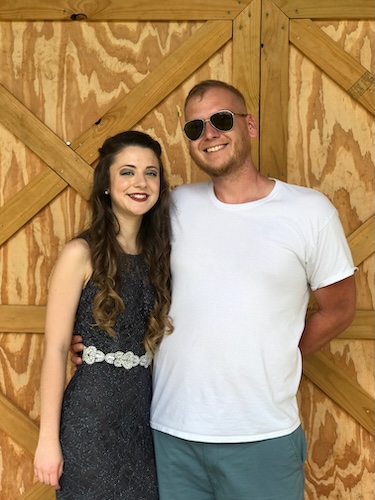
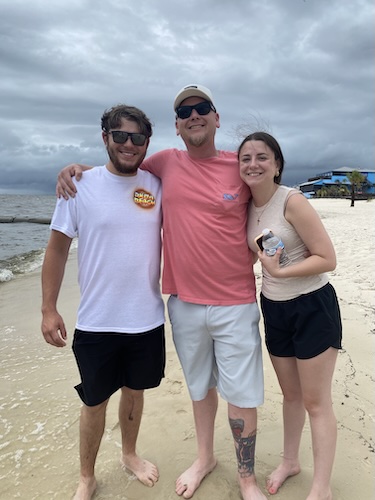
I’m actually in Biloxi, Mississippi, right now, which was always a bucket list item. I wanted to come and live by the beach and say that I lived by the beach, and I’ve done that. The prospect of having a family once was incredibly dim. I was told again, “Get your affairs in order.” I never thought I would even get a chance to be married.
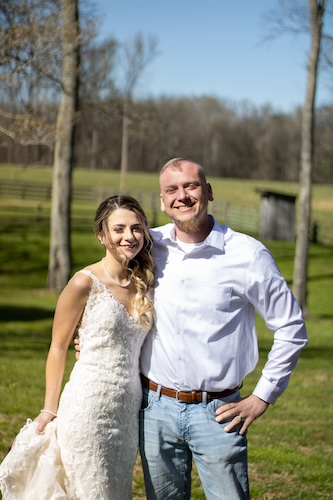
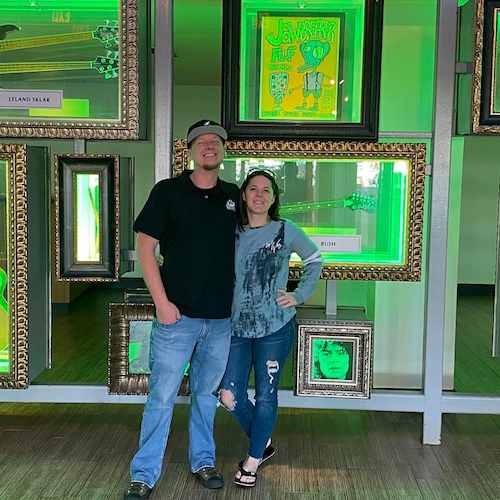
To sit here on the other side now, being married since 2011 and being with my wife for almost 19 years — I met her about four months after I was diagnosed. She was with me through all the treatments. I met my stepchildren — by all accounts, they’re my kids. I met them at the time, and there was a time when I didn’t think I would ever see them again.
To see what they’ve become and see the incredible young adults they’ve become; both of them are so hard‑working, really hard‑headed like me. It’s like looking through a keyhole. You get a very small view of things, but you get a very important view of things.
That, to me, is all my future consists of: taking care of my family and being a part of my family. Hopefully, my kids look at me like I look at my dad. He’s the glowing figure in the distance, but he’s there.
I told my daughter this morning, “I am so nervous to do this interview. I’m going to bring up stuff that’s really going to hurt my feelings. But at the same time, it’s my responsibility to tell the story, to put it out there.”
To have your kids tell you how proud they are of you — that’s incredible. I’m so fortunate to be a part of a family that adores me as much as I adore them. I can’t wait for the future. Nobody wants to rush past all the todays because you have to be present here. But every day I can put in between myself and a diagnosis or anything that deals with cancer in general: that’s a victory.
I can’t wait to see what the future brings — curveballs or straight‑up strikeouts. I’m here for it all.
My final reflections and advice for other patients
Have a sense of humor whenever you’re going through it. It’s incredibly valuable. You will understand things that your body can do that you never would have realized. You, at some point, will lose all dignity. People will see you at your absolute worst, but they’re trained for those situations.
Have a sense of humor about it. Don’t be too hard on yourself. I was incredibly vain as a teenager. Hair was everything for me. I had mohawks and colored hair, and I would spend an hour in the mirror fixing myself up. Do you see this? It’s a rough time of year for bald people, I’m just going to tell you that.
Have a sense of humor. The people around you would much rather make you laugh than see you cry. But also be responsible. In retrospect, if I could have changed something, I wish I had listened more closely to my doctors and taken some of that advice. But also, you have to live your life, right?
I’ve always had a knack for making people laugh. That’s just who I am. If I can brighten someone’s day, it makes me feel a little bit better. So have that sense of humor, because there are going to be times where you’re going to be like, “Oh my God, I can’t do this.” You can. It’s going to be unpleasant, but you absolutely can.
Inspired by Tristan's story?
Share your story, too!
More Hodgkin Lymphoma Stories
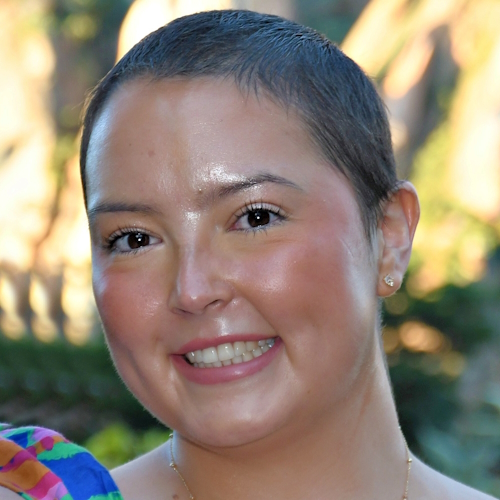
Jessica H., Hodgkin’s Lymphoma, Stage 2
Symptom: Recurring red lump on the leg (painful, swollen, hot to touch)
Treatment: Chemotherapy
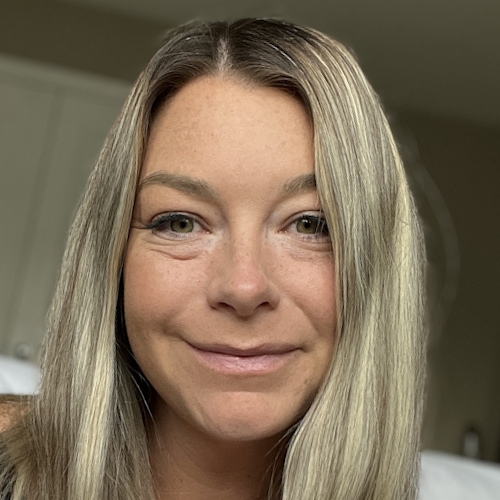
Riley G., Hodgkin’s Lymphoma, Stage 4
Symptoms: • Severe back pain, night sweats, difficulty breathing after alcohol consumption, low energy, intense itching
Treatment: Chemotherapy (ABVD)
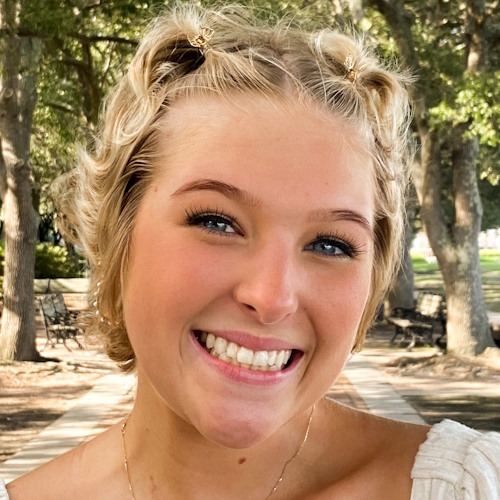
Amanda P., Hodgkin’s Lymphoma, Stage 4
Symptoms: Intense itching (no rash), bruising from scratching, fever, swollen lymph node near the hip, severe fatigue, back pain, pallor
Treatments: Chemotherapy (A+AVD), Neulasta

Brescia D., Hodgkin's Lymphoma
Symptom: Swelling in the side of her neck
Treatment: Chemotherapy: 6 rounds of ABVD