
Parenthood, Persistence, and Rare Cancer: Ali’s Adenoid Cystic Carcinoma Experience
Ali shares her adenoid cystic carcinoma story, a rare head and neck cancer. Her experience includes noticing a small lump under her jaw after childbirth to specialized surgery, radiation therapy, and learning to advocate for care with a rare cancer.
Interviewed by: Carly Knowlton
Edited by: Katrina Villareal
Ali was adjusting to life with a newborn in the Twin Cities, learning the rhythms of early parenthood while her body slowly recovered from pregnancy. Around that time, she noticed a small lump under her jaw. It didn’t hurt, and nothing else felt obviously wrong. Like many new parents, she assumed her body was still recalibrating.
At her six-week postpartum appointment, Ali mentioned the lump. She was reassured it was likely a swollen lymph node, something common for breastfeeding mothers. “Your body’s doing weird things right now, so I’m sure it’s fine,” she was told. Still, the lump didn’t go away. Over time, a quiet instinct stayed with her that something wasn’t quite right.
A year later, her instinct told her something was still not right. As a dental hygienist, Ali knew her anatomy well, finally prompting her provider to check again, leading to referral and a needle biopsy. “I brought it up to my doctor again. She palpated it and referred me to an ENT… They saw that it was not normal. It was cancerous.”
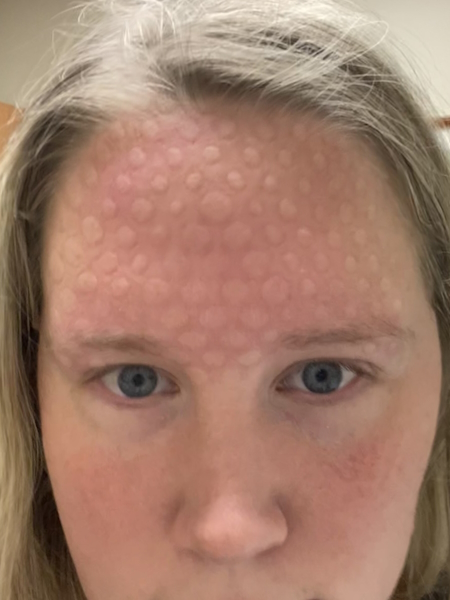
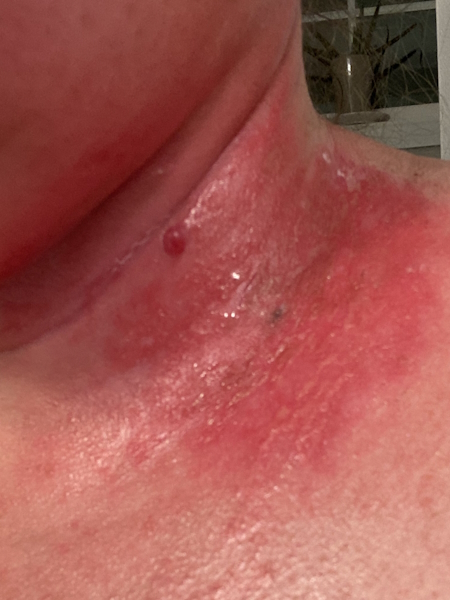
The diagnosis was adenoid cystic carcinoma, a rare head and neck cancer best managed by a specialized team. Ali’s aunt performed her surgery and coordinated care with an expert oncologist. Decision-making wasn’t straightforward: guidelines for this rare cancer are sparse. Surgery was followed by 30 sessions of targeted radiation therapy. The toughest side effects, like painful, sunburned skin and a sore mouth and throat, were often harder than surgery itself.
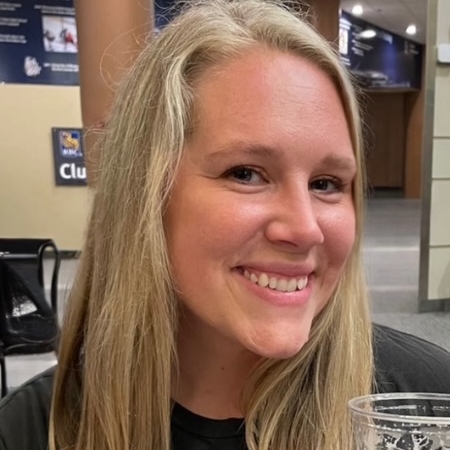
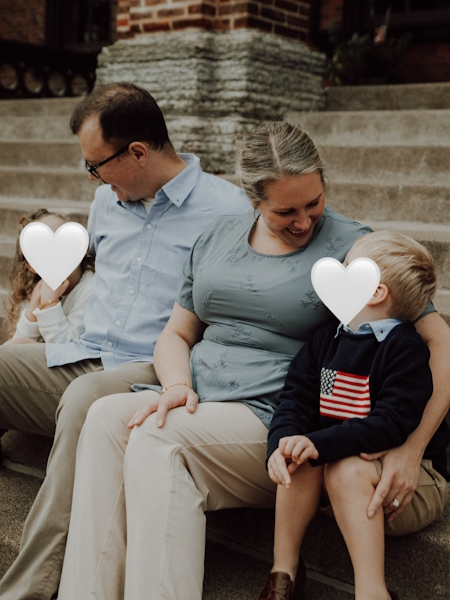
Ali’s adenoid cystic carcinoma experience forced daily adaptations as a mother. When treatment left her exhausted, her extended family cared for her children, then ages one and three. Her youngest’s separation anxiety and the family’s emotional toll were the price of vigilance and perseverance. Advocacy became a driving theme: “Always listen to your gut, seek a second opinion if needed, and don’t hesitate or feel guilty for asking for another doctor to look into it.”
Inspired to embrace life’s small joys and contribute to rare cancer research, Ali now runs, creates in her home pottery studio, and values each moment of wellness. “Take it one day, one hour at a time… See the good in everything and the magic in small things.” Her adenoid cystic carcinoma experience, shaped by intuition, advocacy, and community, is now a message of resilience for others facing rare diagnoses.
Watch the video of Ali’s interview or read the transcript below to find out more about her story:
- Early persistence and trusting personal instincts can lead to critical early detection
- Rare cancers require extra self-advocacy and aren’t always recognized by general doctors
- Always listen to your gut, seek a second opinion if needed, and don’t hesitate or feel guilty for asking for another doctor to look into it
- Transformation included learning not to take life or “shoulds” so seriously, and to prioritize joy, self-expression, and family
- Support networks, appointments, and daily routines change for patients and their families. Acknowledge the full impact
- Name: Ali C.
- Age at Diagnosis:
- 33
- Diagnosis:
- Adenoid Cystic Carcinoma (Submandibular Salivary Gland)
- Symptom:
- Small lump under the jaw
- Treatments:
- Surgery
- Radiation therapy
This interview has been edited for clarity and length. This is not medical advice. Please consult with your healthcare provider to make informed treatment decisions.
The views and opinions expressed in this interview do not necessarily reflect those of The Patient Story.
- My Name is Ali
- First Symptoms That Were Early Red Flags
- Confirming Something Was Wrong
- Receiving My Adenoid Cystic Carcinoma Diagnosis
- Finding My Care Team and Evaluating Treatment Options
- Side Effects of Radiation
- Surgery Experience and Recovery
- The Hardest Parts: Uncertainty, Anxiety, and Parenting
- Self-Advocacy and Second Opinions
- Giving Back: Advocacy, Awareness, and the Adenoid Cystic Carcinoma Community
- Advice for Cancer Patients and Survivors
My Name is Ali
I live in the Twin Cities area of Minnesota and Wisconsin. I was diagnosed with adenoid cystic carcinoma in 2023. It has been a couple of years. I was in my salivary gland. Right under my jaw is where they found it.
I love traveling. There are so many places on my bucket list. The most recent one coming up is Hawaii, where none of us have been before, so I’m excited for that. Other than that, I love getting together with family. I love doing pottery on the wheel, just using my hands and creating something from basically nothing. I also like photography. I haven’t done it in a while, but I do enjoy it.
First Symptoms That Were Early Red Flags
Really, it was just feeling something there. It was kind of tricky because I noticed it right after having a baby, so it was hard to tell. Was this postpartum stuff? Maybe I lost a little weight in my face, and that’s why I could feel it better. I don’t know. There wasn’t anything blatantly wrong, other than a small lump under my jaw.
I brought it up at my six-week appointment after having the baby. Because I noticed it, it was on my mind. The doctor asked if I had any concerns or anything new. I brought up the lump, and she didn’t pay much mind to it. She didn’t even feel for it. She just said, “Your body’s suggesting you’re breastfeeding. I’m sure it’s just a lymph node. Your body’s doing weird things right now, so I’m sure it’s fine.”
Confirming Something Was Wrong
A year later from that initial appointment, I said, “Yeah, I think something is going on.” Again, there weren’t any other symptoms, but it never went away. As a dental hygienist, that probably helped me notice, “Yeah, this isn’t right.”
I brought it up to my doctor again. She palpated it and referred me to an ENT. At the ENT, the first thing they did was a needle biopsy, which is not pleasant. They took a portion of that tissue, and from there saw that it was not normal — it was cancerous. We scheduled surgery, and that gave them a more detailed look at what exactly it was.
Receiving My Adenoid Cystic Carcinoma Diagnosis
I had heard of adenoid cystic carcinoma; it’s a very rare type of cancer. Years ago, I was in Waco at Magnolia, the silos with Chip and Joanna. They talked about someone who trained them for a marathon, a woman from the Twin Cities, like me, who had this type of cancer. When I was researching after my diagnosis, I found her account. She created a huge organization and raised a lot of money for rare cancer research, which is amazing. It’s so bizarre that I learned about such a rare cancer, and then years later, I ended up with the same type, from the same area.
Finding My Care Team and Evaluating Treatment Options
Through my aunt. She is amazing. I love her. She is extremely intelligent. She was the surgeon who did my surgery. She gave me a couple of options with my location and was concerned about how far I was willing to drive. I ended up picking an area that had a more dense population of cancer patients, rather than somewhere more convenient but less specialized. From there, she worked hand in hand with my oncologist. They are an amazing team, coordinating before each of my appointments, and it has been great so far.
With rare types of cancer, there’s not a lot of research, so they don’t know exactly how to plan treatment. There is a wide range of guidelines. The most typical treatment for this cancer is radiation therapy; it is chemo-resistant, so we didn’t pursue chemotherapy. After surgery, we decided on 30 rounds of radiation — Monday through Friday, with weekends off. Near the holidays, I had to do a couple of days of double doses, which completely zapped my energy. By the end, I was so, so exhausted.
Side Effects of Radiation
Since it was head and neck radiation, it was very targeted. My mouth and throat were very sore. Toward the end, I had to blend up my food because I couldn’t swallow without pain. We had a lot of people bringing us meals, which was very helpful. My voice still gets scratchy if I talk a lot. My skin felt like a sunburn times a hundred, oozing and requiring dressings. The bandages made me feel secure. The worst part was the water from showering — so painful.
Moving my neck wasn’t difficult during radiation, but after 30 doses, the muscles in my neck got really tight. Even after treatment, the radiation kept working for weeks. I saw a physical therapist for stretches and to improve my range of motion, which still isn’t what it once was.
I spent more time in the car than at the hospital. Daily appointments lasted only 15 to 20 minutes. I’d listen to a podcast on the drive to avoid thinking too much, do my session, then return home, continuing my day. Even now, I do the same routine for check-ups.
Surgery Experience and Recovery
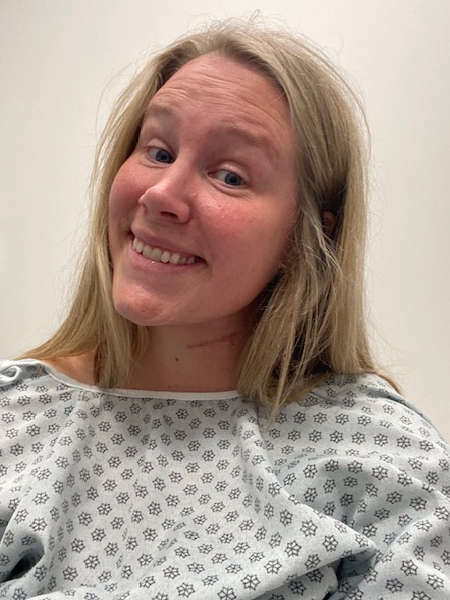
For surgery, they took out the tumor and about eight lymph nodes to check for spread. I don’t know how long the surgery lasted, but it was a same-day procedure, and I could go home. I had a drainage tube, which was a first for me, even though I’d had surgeries before. The recovery was more tolerable than the treatment; the treatment was far worse than surgery.
The Hardest Parts: Uncertainty, Anxiety, and Parenting
The hardest part was not knowing what they’d find in surgery or biopsies, if it had spread to lymph nodes, or what the future holds. My mind went to dark places, especially when thinking of my kids and “what ifs.” I knew I could handle pain, but not knowing outcomes was hardest.
Homeschooling came after the fact, but during treatment, my kids were one and three. Grandparents were amazing, and toward the very end, when I was sleeping most of the day, the kids stayed with my in-laws. My one-year-old experienced a lot of separation anxiety. Even after returning home, he would throw himself over baby gates or out of his crib trying to get to me. The whole family was traumatized, even if the kids didn’t understand why.
Self-Advocacy and Second Opinions
The biggest issue is that the first person you go to is your general doctor. You often take your doctor’s word as final. If I had done that, the cancer would have progressed further, and my outcome would have been worse. Always listen to your gut, seek a second opinion if needed, and don’t hesitate or feel guilty for asking for another doctor to look into it.
Giving Back: Advocacy, Awareness, and the Adenoid Cystic Carcinoma Community
Having a rare cancer [like adenoid cystic carcinoma] and connecting back to that person and her organization, Brave Like Gabe, has been powerful. I ran a 5K with their team, have raised money for rare cancer research, and I’ll be running a 10K this spring. We need the research because everyone’s treatment ends up different without clear guidelines.
I’ve found people through Instagram and Brave Like Gabe. It’s helpful to meet others with the same rare cancer. You can share everything with people, but only those who’ve actually gone through it truly understand.
Advice for Cancer Patients and Survivors
I don’t take life as seriously as I once did. Work and other “shoulds” don’t matter the way people think they do. There’s so much you don’t do in life because it seems like you shouldn’t, or “You’re 35, you shouldn’t be doing that.” Before radiation, I never had a tattoo; it felt like a “no-no.” But for radiation alignment, I got tattooed for the process, so afterward I decided to get my first real tattoo — one that says “magical” — as a reminder that life is magical.
Take it one day, one hour at a time. Some days are better than others, even now. The mind is powerful — good or bad. See the good in everything and the magic in small things.
I had two babies and cancer in three years, so I felt lost. It took a year or more after finishing treatment to feel like myself again. It’s crucial to do things for yourself, whatever brings joy, especially after long periods of illness or caring for young children. I set up a pottery studio at home so I can create whenever it works. Doing what makes you happy makes your family happier, too.
Inspired by Ali's story?
Share your story, too!
Related Cancer Stories
Vikki F., Head and Neck Cancer (Nasal Squamous Cell Carcinoma)
Symptoms: Nosebleeds that persisted for years, nose changed in shape, nasal pain, migraines
Treatments: Surgeries (subtotal rhinectomy, reconstruction surgery including radial forearm free flap, bone grafts, and cartilage), chemoradiation
...

Red S., Tongue Cancer (Squamous Cell Carcinoma of the Tongue), Stage 3
Symptom: Persistent tongue ulcer that increased in size
Treatments: Surgeries (partial glossectomy, flap surgery), radiation therapy
...
Alyssa N., Adenoid Cystic Carcinoma
Symptoms: Persistent jaw pain, lightning-like facial pain during the first bite of meals
Treatments: Surgery (tumor removal), radiation
...
Eva G., Oral Cancer, Stage 4
Symptoms: Sore on the tongue, which caused pain during eating and speaking; changes in the color and texture of the tissue where the sore was located
Treatments: Surgery (partial glossectomy, radical neck dissection, reconstruction), radiation
...
Teresa B., Recurrent Breast Cancer (Hormone-Positive), Oral Cancer (Lip Cancer), and Skin Cancer (Melanoma)
Symptoms: Lip cancer: chapped lips & a pimple-like growth on lip, breast cancer: enlarged left breast with lump, melanoma: none
Treatments: Surgeries (bilateral mastectomy with reconstruction, lumpectomy, craniotomy, Mohs, surgery, wide local excision), hormone therapy, radiation therapy
...