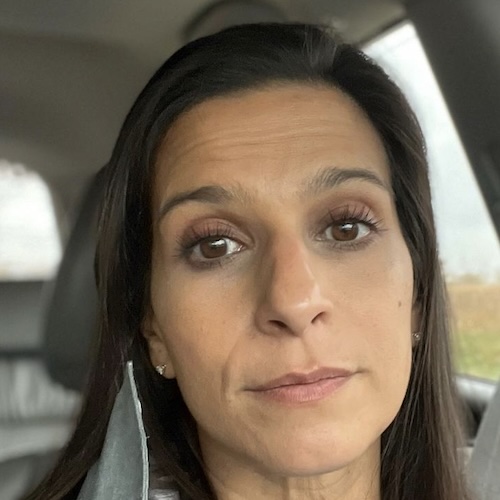
Michael Bugary on Medulloblastoma, Addiction, and Healing Through a Therapy Dog
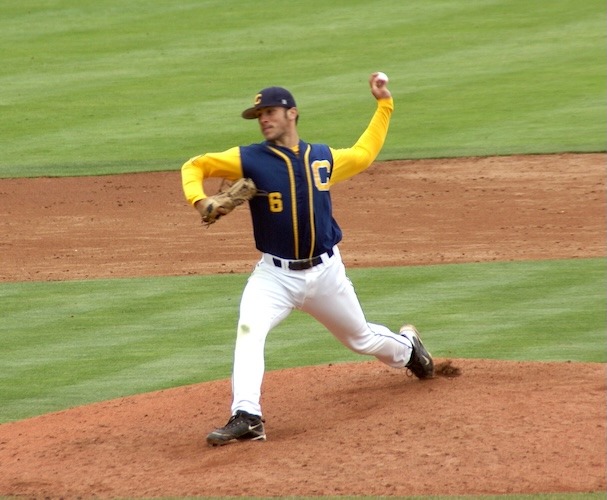
Michael Bugary was a professional baseball pitcher drafted by the Boston Red Sox. He had built his entire identity around baseball and external validation. When a career-ending arm injury shattered that life, he turned to substances to quiet the ache inside. Years later, he was diagnosed with a medulloblastoma, which is a type of brain cancer that develops in the cerebellum, the part of the brain responsible for balance and other motor and cognitive functions. The diagnosis forced him to confront not just the disease, but his entire sense of self.
Interviewed by: Ali Wolf
Edited by: Chris Sanchez
Michael describes multiple brain surgeries, followed by chemotherapy and radiation that left him tasting metal for a year and watching his hair fall out in clumps. The brain tumor and its treatment damaged his central nervous system, causing relentless nerve pain, buzzing sensations, hypersensitivity, and profound numbness that made it hard for him to walk and even sense where his body was in space. He went from being a professional athlete to feeling “basically decrepit overnight,” and he returned to substance use, including heroin, to cope with the mental and physical anguish.
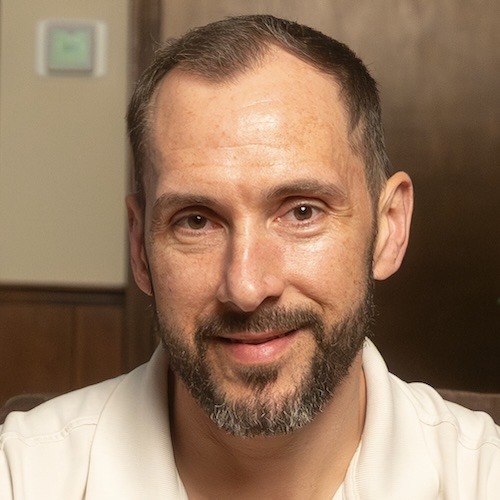
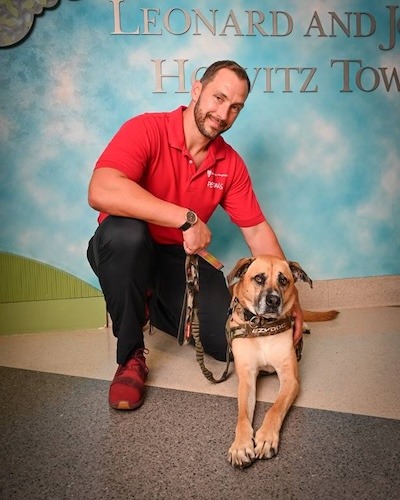
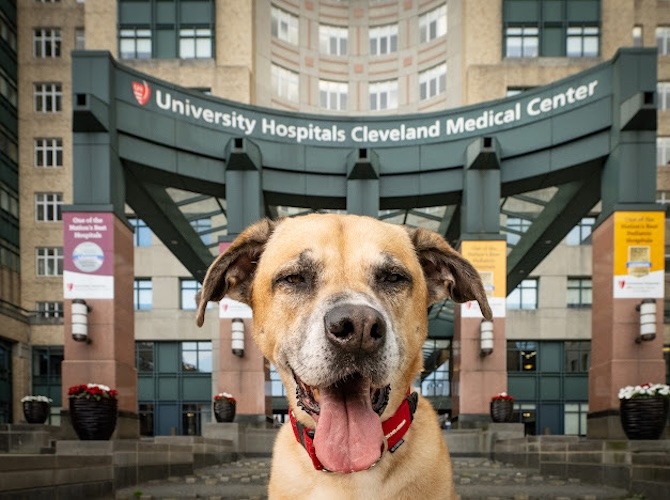
Michael shares that for most of his life, every solution came from outside of himself: drugs, alcohol, performance, and other people’s approval. The turning point in his brain cancer experience came when his therapy dog, Lingo, entered his life. He was originally a therapy dog on a military base who lacked a consistent handler. Michael’s mother brought Lingo home, hoping they might help each other. He became the first “good thing” Michael had experienced in a long time, and he gently pulled Michael back into the present moment.
Motivated to keep Lingo, Michael began meditating, studying neuroscience as best he could, and spending hundreds of hours focusing on his nerve endings and intentional movement. Over time, he regained more feeling and strength, returned to the weight room, and rebuilt his thinking alongside his physical recovery. Today, he discusses discipline over motivation, practices daily gratitude as an action, and manages pain well enough to look beyond himself and help others. Through speaking, writing, and therapy-dog visits with children and families facing cancer, Michael has turned his medulloblastoma experience into a life rooted in presence, responsibility, and service.
Watch Michael’s video and read the edited interview transcript below to know more about his story.
- He describes how losing his professional baseball career, developing addiction, and then being diagnosed with a brain tumor completely reshaped his identity and values
- Michael’s therapy dog Lingo became a powerful emotional anchor, helping Michael reconnect with the present moment and giving him a reason to engage in healing practices like meditation and exercise
- Over time, he shifted from relying on external validation and substances to cultivating discipline, daily gratitude, and personal responsibility as internal sources of resilience
- While pain, whether physical or emotional, can narrow a person’s world, learning to manage that pain can help one learn new ways to live in one’s body and provide an open space to care about others and find meaning beyond oneself
- Michael now uses his experience to support other patients and families, sharing his story honestly so that others might feel less alone and see that thriving after serious illness and addiction is possible
- Name: Michael Bugary
- Age at Diagnosis:
- 27
- Diagnosis:
- Brain Cancer (Medulloblastoma)
- Symptoms:
- Severe headaches resulting in loss of consciousness
- Sensitivity to light
- Treatments:
- Surgeries: craniotomy, brain tumor resection, ventricular drain
- Chemotherapy
- Radiation
This interview has been edited for clarity and length. This is not medical advice. Please consult with your healthcare provider to make informed treatment decisions.
The views and opinions expressed in this interview do not necessarily reflect those of The Patient Story.
- Michael’s introduction and brain tumor diagnosis
- Early life, baseball dreams, and identity
- "The Disease of Me" and creating a persona
- College baseball, substances, and distractions
- Addiction progression and losing baseball
- Cancer diagnosis as a turning point
- First symptoms and misunderstood relapse
- Hearing the prognosis and thinking only of drugs
- Pediatric-style treatment and aggressive care
- Brain surgeries, ventricular drain, and beginning treatment
- Chemotherapy, radiation, and nerve pain
- Delayed side effects and permanent nerve damage
- Addiction, pain, and hitting bottom
- Meeting Lingo, the therapy dog, and finding a reason to heal
- Meditation, neuroscience, and rewiring movement
- Discipline, gratitude, and rebuilding self‑worth
- Learning to sit in pain and managing it
- Therapy dog work, children with cancer, and giving back
- Purpose, perspective, and living gratitude
Michael’s introduction and brain tumor diagnosis
I’m Michael. I was diagnosed with a medulloblastoma brain tumor.
The best way I would describe myself is, for the first time in my life, I’m present. I have a lot of things going. I’m starting a motivational speaking career. I just finished a book. I’m involved in all these things with the hospital with my therapy dog. I’m present. And I think the big thing for me, and how I’ve learned to heal through all the things that I’ve gone through, is by helping other people. I try to do that in a lot of different ways, either by sharing my story through attraction rather than promotion, or in any way that I can. I moved to a new area. I’m out in Ohio, in the middle of nowhere, with my dogs. So I’m experiencing life differently, from a new perspective that I haven’t ever in my life had before.
Early life, baseball dreams, and identity
The best way I can describe it is that at 27, I was mentally, physically, and spiritually broken. A few years before that, my dream was to be a Major League Baseball player. It was always my dream. I felt that if I just got there, I would get everything I wanted. That was my dream. I had just had a career-ending arm injury a few years before that, pitching for the Boston Red Sox in my second professional season.
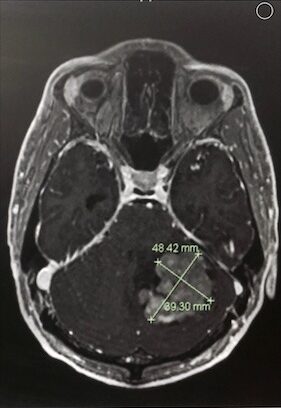
After that injury, I felt like I lost my self-worth, and I lost my purpose and my identity, and I fell into addiction. After my addiction progressed for a while, I was then diagnosed with this medulloblastoma. It was slightly smaller than a tennis ball in my cerebellum, the back part of my brain here. It was surreal with that diagnosis. I didn’t know how to face it or what to think. I went through multiple brain surgeries, chemotherapy, and radiation. After that, I was just at rock bottom. I just didn’t know how to live at that point, and what a difference ten years makes.
“The Disease of Me” and creating a persona
The book that I wrote is called “The Disease of Me”. The reason why I say that is because I always had this hole inside me, especially when I was younger and growing up. I always felt different. I felt like I didn’t belong, but then I also had these feelings of being special. I’m special. I’m different. I’m great, whatever. Playing baseball at an early age was a way for me to try to fill that.
I loved the game, but it was a way for me to find that identity. It was the path of least resistance for me to be great at something. When I saw the professional coaches I started to work with when I was younger, and I saw the way that they acted and the way that people treated them, I knew that’s who I wanted to be. That became my identity, and all I wanted to do was be this professional baseball player, because I felt, like I said earlier, that I would get everything I wanted and I would stop feeling this way about myself if I just got there.
So I created this character, this person that I thought I wanted to be, that I thought you wanted to see me as, that you would think was cool. That became my identity. It was really a way for me to keep everybody at arm’s distance, because I was really just afraid of rejection. I was full of fear and insecurities. But I practiced and practiced and practiced, and I got really good at it. I quickly learned that the better I performed, the more attention and validation I got. Baseball became my first addiction in that sense. As I performed and improved, I played on better teams, and I got a scholarship to the University of California, Berkeley — Go Bears, by the way.
College baseball, substances, and distractions
I got that scholarship, and then I started to get those things that I wanted. Once I had that, I started to drink a little bit of alcohol here and there. I started to use these other substances in my life to help me maintain this character off the field. I always managed to keep it in control, to some extent, as long as I had baseball in my life, because baseball was like my North Star, my higher power.
After I got to college, it was a little bit different. The stakes are a little bit higher. Being at a big school like that, there’s a lot more competition. Your actions have consequences. It took me a few years to get my stuff together and to really focus on baseball. Eventually, I was drafted by the Boston Red Sox.
It was a surreal feeling. As I said, I went through those ups and downs at Berkeley, and there was a real possibility that after two or three years, my dream wasn’t going to happen, and I really had to make some serious changes. I did that. That feeling of getting drafted and being on that path, it was surreal, and it was fun. But for me, it was never enough. I felt like I should have been drafted higher, I felt like I should have had this, and I felt like this should have happened. It was just never enough, and it was never going to be enough. I just have this incessant drive for more.
I look back at those times, and I’ve had to speculate on it, especially as I wrote. I was happy, but once I got drafted, I was kind of satisfied, when that was just supposed to be the beginning. My problem was that I was always caught up in distractions: going out and partying after, and not doing what I really needed to do. I worked hard in the gym. I worked hard when I played. I worked. But I always needed to show everybody how great I was. I had that need to just show them. I had to do it by womanizing, I had to do it by this, I had to do it by every single thing. My self-worth came from outside sources. It was based on my performance. It was based on what you thought of me. I was excited to have that dream, but at the same time, I didn’t know how to cultivate it. I didn’t know how to do the things that I needed to do to be truly great, to have that next level.
Addiction progression and losing baseball
That’s when my life became unmanageable, basically. I had always experimented with things, tried a few things here and there, but as I said earlier, as long as baseball was in my life, those things didn’t help me on the field, really, so I didn’t overdo it with the frequency. But when I lost baseball, I lost that sense of purpose, self-worth, and my identity. I just didn’t care anymore.
I would love to say, “Hey, I was this promising athlete that had this bright future, and I had this horrible injury, and that’s why I became an addict.” I mean, that’s a great story. I would love to put a fancy ribbon on it. I would love to say that’s the truth, but it’s not. I knew what those things were going to do to me. I just didn’t care because I just didn’t want to feel anymore. That’s who I am. I am the person who, when times get hard, would rather run away and use substances to numb my feelings and pain. That’s just who I am, and that’s who I will always be. As long as I accept that, I can move forward and progress from that.
Then it progressed from there. As I kept getting more bad news and more depression, it progressed. How addiction works is that you progress to the next level. Eventually, the opiates became heroin. Once heroin entered my life, I had no capacity to live a dual life or think about anything else. I was only focused on getting more. Fortunately, my family and parents started to take notice, and they helped me get into treatment after that. But I still went back to it before my cancer.
Cancer diagnosis as a turning point
So the cancer diagnosis, I think, was a gift for me in a sense, because it changed so many things that helped me. It helped me internalize. It helped me realize that baseball was over, because that’s what was going on in my head. I had no will, no acceptance of a life without baseball. In my mind, I would have died at 40 to play ten years in the major leagues. That’s all I cared about. I didn’t care about a family. I didn’t care about the future. All I cared about was that, because I had this belief that that’s what I wanted.
When I was diagnosed with brain cancer and had all those side effects of all those things, I knew that I couldn’t play anymore. Eventually, it helped me accept that.
First symptoms and misunderstood relapse
I had stopped using for a few months at that point, so I was completely sober when that happened. I was working at a gym, and I started experiencing these headaches, these unique type of headaches where I would pass out, my eyes would roll into the back of my head, and I’d wake up later not knowing what was going on. I’d go into work, and the light would be so intense. I’d have to wear sunglasses inside, and then I would just nod off again. It kept happening. It kept getting worse and worse every single day.
My girlfriend at the time, who I lived with, thought that I was using drugs again, rightfully so, because I had just gotten clean. We were working on some things. I was trying to go to meetings and work on my life when this happened. She thought I relapsed again, which is understandable. One day, she just dropped me off at the emergency room. It was headaches that were so all-consuming. I can’t even explain them. They would incapacitate me. It was so painful that it didn’t hurt.
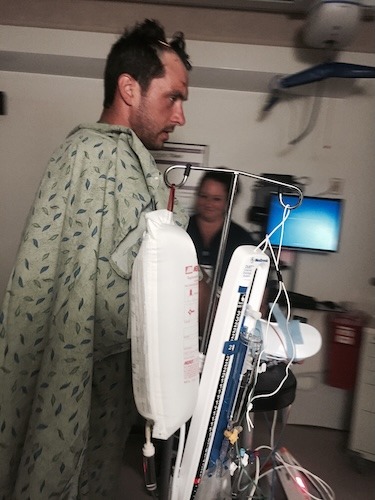
We got into a little argument about it because she thought I was just using drugs again. But when I got dropped off there, when you go in complaining about your head and the symptoms I was talking about, they immediately got me right into the doctor and to the MRI. That’s when they diagnosed me. That picture is part of the cover of my book, too.
Hearing the prognosis and thinking only of drugs
I share this story a lot when I speak, especially at treatment centers. The one vivid memory that I have is a couple of days later. Everything was happening so fast. My mom had flown down immediately. I was in Arizona at the time, and my mom had flown in from California. I remember the first time when the doctor was sharing everything with my mom and me, and she was sitting next to me. I’m lying in the bed, she’s in the seat next to me, and he’s going over on his whiteboard behind me, all these for this and the percentages for that, explaining everything to me in this language that I didn’t understand at the time.
He was so monotone. You can tell he’s given bad news to a lot of people. I don’t remember much. The only thing I remember thinking about was not what my mom must be going through — she had just put me through treatment, and now I have brain cancer. What must she be going through? My thought wasn’t about my percentages of life or what was going to happen to me. I was only thinking about the drugs that I was going to get now, because I knew that I was going to get some really strong drugs, and I was like, I’m going to get through this. It doesn’t matter. Just give me what I need and let’s go.
I reflect on that and think, what an insane thought to have. I was dead on the inside. Without baseball, without these things in my life, I was just surviving. I was hollow and spiritually broken, and I just didn’t care. I wanted something to numb me from it and just to get on with it. Give me a stick to bite on. Let’s do it.
Pediatric-style treatment and aggressive care
There were all these complications because the type of tumor I had, medulloblastoma, is more common in children. So with the treatment, they had to revert to the pediatric treatment protocols. That’s what they had to look at, even though the adult version is structurally a little different. It’s like a guessing game, albeit an educated one. They had to give me some things that had pretty nasty side effects, but they had to do what they had to do to save my life, basically.
It was all happening so fast. I just didn’t care. There was no ambiguity to any of it. It was just: this is this, boom, boom, boom, and then let’s get on with it.
Brain surgeries, ventricular drain, and beginning treatment
Most of it is a blur for me. I think there are a couple of things that I do remember. The worst parts were that they had to do something called a ventricular drain of some sort with my spinal fluid, where they had to take a saw and puncture a hole in the top of my head with a catheter. I had to be awake for that. That wasn’t fun. I remember that.
I had to have multiple brain surgeries because, for the treatment to work, they had to remove the tumor completely. For me to have a chance at recovery, they had to remove the tumor completely, and then chemotherapy and radiation — that was the treatment. They had to remove it, and then that was the treatment. In the first surgery, they only got 80% of it, so they had to do an MRI after, and that wasn’t fun. Then they had to go back the next day and take the other 20% out.
Once they were able to do that, I had a few months off where I had to go see the oncologist and do all these other things, let it heal before we started chemotherapy and radiation. For me, the acute stuff at the hospital — the cutting into my head and all that — was just pain. It was hard, but I got through that pretty easily. I’d been pretty used to being in pain at that point.
Chemotherapy, radiation, and nerve pain
What was really hard was the chemotherapy and radiation, just the side effects and what it did to my body, the way it made me look. They had to build that special cage for radiation where they bolted my head down so it wouldn’t move, and the radiation blasted the back of my skull. It was going through the back of my head into my teeth, so I tasted metal for a year. I was just losing so much weight. I lost all my hair. I remember waking up one morning, getting an itch, and my hair falling out. It just took a toll on me because it was a tumor of the central nervous system.
I started to experience this pain that I had never experienced before. I had this buzzing all over my body. It started in my brain and went down to where I could almost feel every signal being sent. I had this strange hypersensitivity and numbness — peripheral neuropathy, basically — but it was a little more intense than that. I didn’t have any feeling in any of my individual toes, but I also had sharp, needle‑like pain all over, and it made it really hard to walk. I didn’t have any spatial awareness, so I often stubbed my toes, which was the worst thing ever. My front shin muscles, the anterior tibialis, were numb, and that’s the part of your legs that lifts your foot when you walk, so jumping and running were out of the question. Mentally, I went from this professional athlete to basically decrepit overnight, and I just didn’t know how to cope with that. My solution was always substances. Even after I learned I was in remission, even after the treatment, I turned back to substance abuse and opiates and even heroin.
Delayed side effects and permanent nerve damage
My side effects were delayed for almost a year. They would come in different phases. For a while, my body wasn’t functioning right. I was told I couldn’t have children. I didn’t know if I could physically be that way again with anybody. Then it just transferred to my nerves. It was slow and gradual, and then it finally accumulated into nerve pain all over my body, just constant. It took a few months for that to happen.
I never had any recurrences of the tumors or anything like that. Fortunately, as I said, it’s been ten years now. My main issue is dealing with the permanent side effects of the treatment, the nerve damage and stuff.
Addiction, pain, and hitting bottom
I didn’t work through it very well, to be honest. It took me a long time. I remember another moment so well. At this point, I had used painkillers before for my mental pain. I wasn’t in physical pain back then. My arm hurt, but that wasn’t that big of a deal. My arm just didn’t heal right, but it didn’t hurt very painfully. Now I’m in physical pain too, so it’s a whole new ballgame.
Not only am I mentally in pain, but I’m physically in pain too. I think part of your brain justifies the usage because you’re in physical pain and you need it. But once I went back to that drug use again, and my family saw that, and my girlfriend saw that, everybody left. Now I’m alone again, more so than ever. I got to the bottom, where it’s such a lonely place.
That was my solution. It’s always been my solution. My solutions were always external substances, whatever they may be. It was never internal. I always needed something for something: something to feel better, something to get up, something to focus, something to sleep, something to make me seem cooler and better. I always needed something. Those were always solutions outside of me. So when I’m at this point where I need something, I need a solution, that’s all I knew. I didn’t know how to cope with it, and do the things I know how to do now. It just took me a long time to be able to do that. For so long, I was alone in this process.
Meeting Lingo, the therapy dog, and finding a reason to heal
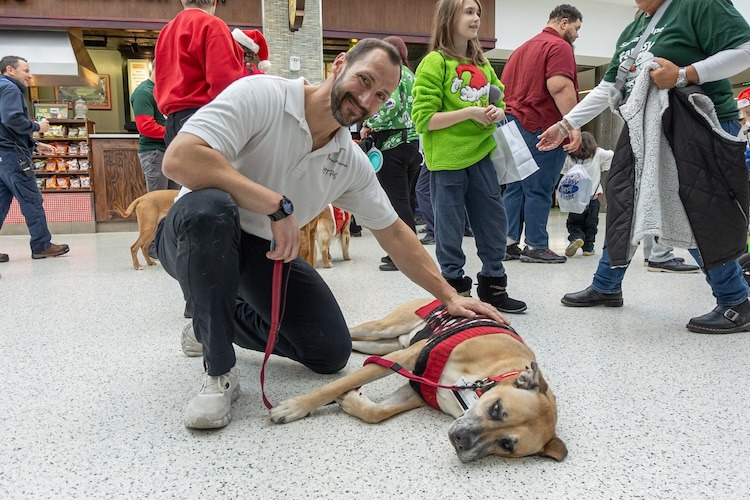
That’s where my dog comes in. He helped save me because when he came into my life, I was really broken. He showed up, and he was the first good thing to happen to me in a long time. Lingo, my therapy dog, was the first good thing to really happen to me in a long time. He kind of brought me outside and into some fresh air. He changed the way I view the world — just something, a creature to love me, that I didn’t have or didn’t think that I had. With him in my life, I was able to work on myself a little bit and be open to trying new things and suggestions.
I was in Arizona with my mom. My girlfriend left, and I couldn’t take care of myself alone anymore. I moved back in with my parents in California. Fortunately, they let me move back in with them. My mom worked at the military base in Monterey, California, called the Defense Language Institute. She was the chief of operations, pretty high up there in the food chain. That base had recently undergone a project and adopted a dog to be the therapy dog for the soldiers and to be a mascot for the base. They named him Lingo, after language. Everybody loved Lingo there.
I want to be careful, because they treated Lingo very well and did everything they thought they could do. But I think they didn’t assign Lingo a handler — somebody to bring him to work every day and bring him home, to give the dog a sense of consistency. Lingo didn’t have that. He stayed on the base. Sometimes on the weekends, some of the civilians would take him home, and sometimes some of the soldiers would have to take care of him. They had other priorities. Lingo would have to spend hours in a crate, and I think that lack of consistency was taking its toll on him.
My mom, one of the civilians who always looked after Lingo, said, “Hey, I’ve got a son at home who’s hurting, and I’ve got this dog here. Maybe they can help each other.” She brought him home that weekend. Ever since Lingo came into my life, my life completely changed. Once I got him that first time, we bonded immediately. Lingo taught me how to be present. That first time when I was with him, I wasn’t caught up in the past or worried about the future. I was just in the moment. Being present and being in the moment is where I heal.
Meditation, neuroscience, and rewiring movement
That’s what he showed me. I knew that in order to keep him, if I wanted to become his handler, I had to get better. I had to work on myself. That’s when I started to take suggestions. I learned how to meditate. I started reading books and reading stories about people who had gone through challenging times. What happened to me was so unique, and I couldn’t find any research on anybody who had gone through it the way I had. I had to do things differently.
I was doing all this research on neuroscience and stuff that I don’t really understand, but I was trying to understand it and figure out what was going on with me because I had no answers. That was the worst part about all of it for me — nobody could give me any answers about what my pain was. They just couldn’t help. I don’t think I was really told this, but they weren’t that concerned about the side effects. They were worried about saving my life right then, and once we got to that “side effects bridge,” we’d cross it then. But I was there, and nobody knew how to cross it, so I had to deal with this on my own.
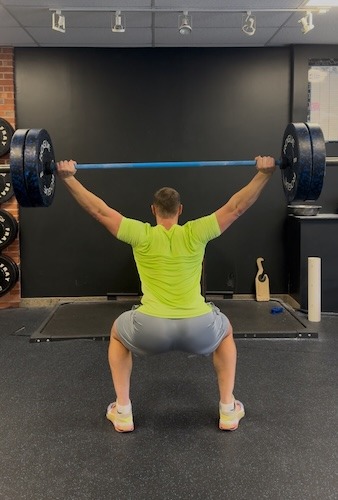
I learned about meditation and stories of people who healed their backs through meditation, or people with phantom limbs who still feel nerve impulses. I learned how to meditate and focus on my nerve endings. I spent hundreds of hours meditating, focusing on moving my limbs and my fingers without moving them, just sending signals. Slowly, I started to get feeling back. Slowly, my movements became more purposeful. I started back in the weight room. I started to do all these things, and as my movement turned purposeful, so did my thinking. That’s when I learned how to start taking personal responsibility and think about my past differently, and I really started to work on myself. I owe all of it to Lingo entering my life — that one change.
When he was ready to be adopted from the Army, when he was ready to retire, I was able to officially adopt him, with the promise that I would continue his work as a therapy dog to help other people in the way that he helped me.
Discipline, gratitude, and rebuilding self‑worth
In my entire life, I was always motivated by something external. As I mentioned earlier, I was motivated by somebody telling me I wasn’t good enough. I was motivated by a girl. I was motivated by all these other things to get better — I’m going to get better for her, I’m going to do this for that. But it was never internal. I say this now: discipline always beats motivation, because when I’m disciplined, when I have all these little wins every day and start a routine, that builds my self‑worth from the inside out. That’s what I had to create.
It wasn’t easy. I was mad at the world. I was mad at God. I was mad at baseball. I was just mad at everything. But the truth was that I was really mad at myself. Once I became willing and honest with myself, I was able to see things in a different light. For me, it was about gratitude. I had all these bad things that happened to me, but when I realized that all the bad things that happened to me were my fault — products of choices that I made — then I could open up and start to have gratitude.
Gratitude wasn’t easy for me. I had to start by making it part of my routine to write five things down that I was grateful for every day. At first, even finding five things was hard. Slowly, now, I just keep going on and on about what I’m grateful for. I got to the point where I was in so much pain that I couldn’t sit still, or I couldn’t move. I was just caught in that limbo of agony, I call it, where I had to do something different or just roll over and give up.
For me, it really stemmed from taking ownership. I can control what I can control. I can’t control all these other things going on around me, but maybe I can do this. I can do a little bit here and a little bit there, and then I can do a little bit more. It was really hard for me at first to get that, but that’s how it started — slowly.
Learning to sit in pain and managing it
As I said earlier, when I started to meditate and focus on my nerves, I learned to sit in my pain. I learned to sit in it and just observe it. The meditators call it equanimity — just being silent and just being there while you’re uncomfortable, in hard times. I just sat in it and learned to have a relationship with it. I’m not saying that I enjoyed it or developed some new appreciation for pain, but I learned to sit in it.
Once I did that and kept doing it, it became easier and easier. When I first started lifting weights, anything over 100–150 pounds made my head feel like it was in a fishbowl, and I couldn’t do it. The more I meditated and worked with my nerves, the more I did it — even if it hurt, I still did it — the more it opened up. I could do more and more and more. I got to a point where I’m lifting more than I did when I was playing baseball. I still have about 75% feeling now. I still have the headaches and the nerve pain, but I’ve learned to manage them, and that’s a big part for me.
The biggest part for me, one of the biggest things, is managing my pain. I’m not going to eliminate it. I can’t. I’ve accepted that. But if I can manage it, then I can live in a world that’s beyond me. When I’m in pain, mental or physical, I can only think of myself. I can only think about that. But when I can manage it, then I can think about other people. That’s the biggest thing for me — how do I get into a world that’s beyond me? When I just focus on me, me, me, that’s my problem. When I’m outside of myself, I listen to suggestions. I get ideas from other people. I can learn something from everybody. That’s when my life changes.
When you’re the smartest guy in the room, you’re the only guy in the room. I’ve been in a room by myself for a long time. When I manage my pain, it’s so important. I say pain is as idiosyncratic as our personalities. We all have different levels of pain, but how we manage that, I think, is the most important thing.
Therapy dog work, children with cancer, and giving back
As we mentioned earlier, one of the things that bothered me most about my brain tumor was that I knew what I went through — a lot of pain, a lot of misery — and I’m culpable for a lot of it myself through my actions, and I accept that. But to think of an innocent child going through that, that broke my heart more than anything. That was the motivation for why I started to work with Lingo at Rainbow Babies & Children’s Hospital in Cleveland.
That’s how it started — the little bit of joy we could bring to kids going through the hardest time of their lives. Lingo pops up on the bed with them, and they pet him. It teaches me so much every day, every time I go there. When we’re there, we’re visiting the patients, the kids. They’re just petting Lingo, but I’m not talking to them. I’m talking to their parents and their families. When we talk about Lingo’s story or the pets they have at home, it changes the way I think, because it makes me think about my family — my mom sitting next to me in that hospital room.
It makes me think about all the people I’ve hurt or the people who were there for me. As difficult as those thoughts are to have, I can only have those thoughts when I help somebody else without expecting something in return. I know that I can’t change the past. I can just do better in the future. It continues to help me every single time.
Purpose, perspective, and living gratitude
I feel guilty sometimes. I’ve watched a lot of the different episodes and heard people’s stories about people who have gone through these things unfairly, and some of them didn’t make it. Just to be able to be the way that I am now — if I think like that, it’s selfish too. It’s backwards‑looking. Instead, it’s: what do I do with the gift I’ve been given? That’s the perspective I have to have.
What do I do with it? I’ve been given this gift. How do I show up for my loved ones? How do I show up for my family? How do I make my living amends for the things that I’ve done? How am I impeccable with my word and reliable? How do I share my story — by speaking at treatment centers or wherever I can? I have to be honest. I have to share these things.
I found this purpose in my bones to share the things that I’ve gone through, so maybe that’ll prevent somebody else from going through the things that I’ve done. I say it’s a gift now because the subtitle of my book is How Losing My Professional Baseball Career, Drug Addiction, and Brain Cancer Saved My Life. Going through all those bad things saved my life. They turned me into a person I would never have been if I didn’t get injured or go through those things, and I’m grateful for that. But how do I show that gratitude? I have to do it every day.
Gratitude is an action word. It’s how I show up. It’s how I treat strangers. It’s how I do all these things. That’s my purpose now. I just hope that I can share my story with as many people as I can and hopefully let them know that they can get through the hardest times they’ve gone through — and they can also thrive afterwards too.
Inspired by Michael's story?
Share your story, too!