Understand Treatment Options for BPDCN
BPDCN Treatment Just Changed: Here’s What Patients Need to Know
A second targeted therapy was FDA-approved in 2026. One of the specialists who led both trials explains what it means for you.
The FDA approved a second targeted therapy for BPDCN in May 2026, giving patients and doctors a choice that didn’t exist before. But knowing a new option exists is only the first step. Knowing how to ask about it, evaluate it, and decide what’s right for your situation is where this conversational comes in.
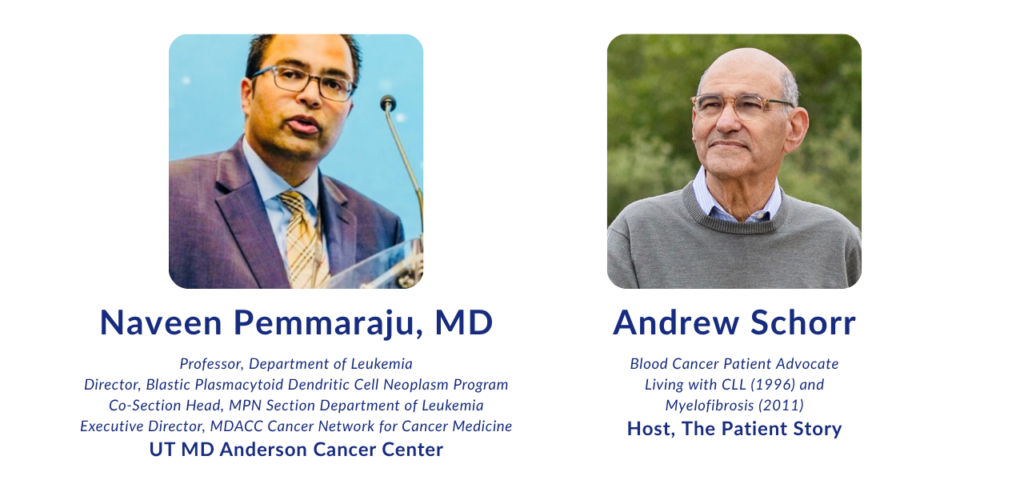
Dr. Naveen Pemmaraju of UT MD Anderson Cancer Center, the physician who led the clinical trials for both FDA-approved BPDCN targeted therapies, joins patient advocate Andrew Schorr for a free, in-depth conversation built for patients and care partners navigating this disease right now.
Program Topics
- Learn what changed and why it matters: Two targeted therapies are now FDA-approved for BPDCN. Get a plain-language breakdown of how each one works and what the approval means for patients.
- Understand your treatment options side by side: Dr. Pemmaraju explains the difference between tagraxofusp (Elzonris) and pivekimab sunirine (Decnupaz), the side effects to know about, and how to work with your doctor on deciding the right approach for you.
- Know which questions to bring to your next appointment: From biomarker testing to stem cell transplant eligibility, learn what to ask your care team and when to ask it.
- Find out where the research is headed: Hear what combination approaches are showing promise in clinical trials now, and why trials are worth considering at every stage, not just at relapse.
Program Panel
Program Partner
Thank you to Blood Cancer United for their partnership. They are here for you with information about clinical trials, resources, and dedicated support through their Information Specialists.
Program Sponsor

Thank you to our sponsor for its support of our independent patient education program. The Patient Story retains full editorial control over all content.
This is not medical advice. Please consult with your healthcare provider to make informed treatment decisions.
- Introduction
- How rare is BPDCN?
- The diagnosis journey: Why speed matters
- Confirming BPDCN: What biomarker testing involves
- Targeted therapy: How CD123-directed drugs work
- Two FDA-approved targeted therapies for BPDCN
- Black box warnings: Side effects to watch for
- What treatment looks like day to day
- Where chemotherapy fills a gap
- Stem cell transplant: The curative goal
- Making the treatment decision together
- Why clinical trials matter at every stage
- Finding the right specialist and team
- Should you get a second opinion?
- Key takeaways and looking ahead
- Conclusion
- Hear from people living with rare cancers
Edited by: Katrina Villareal
Introduction
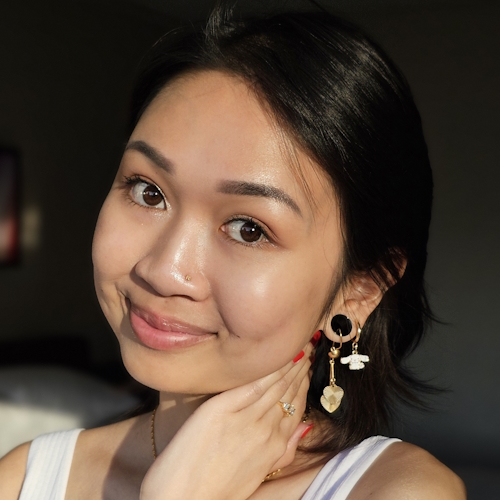
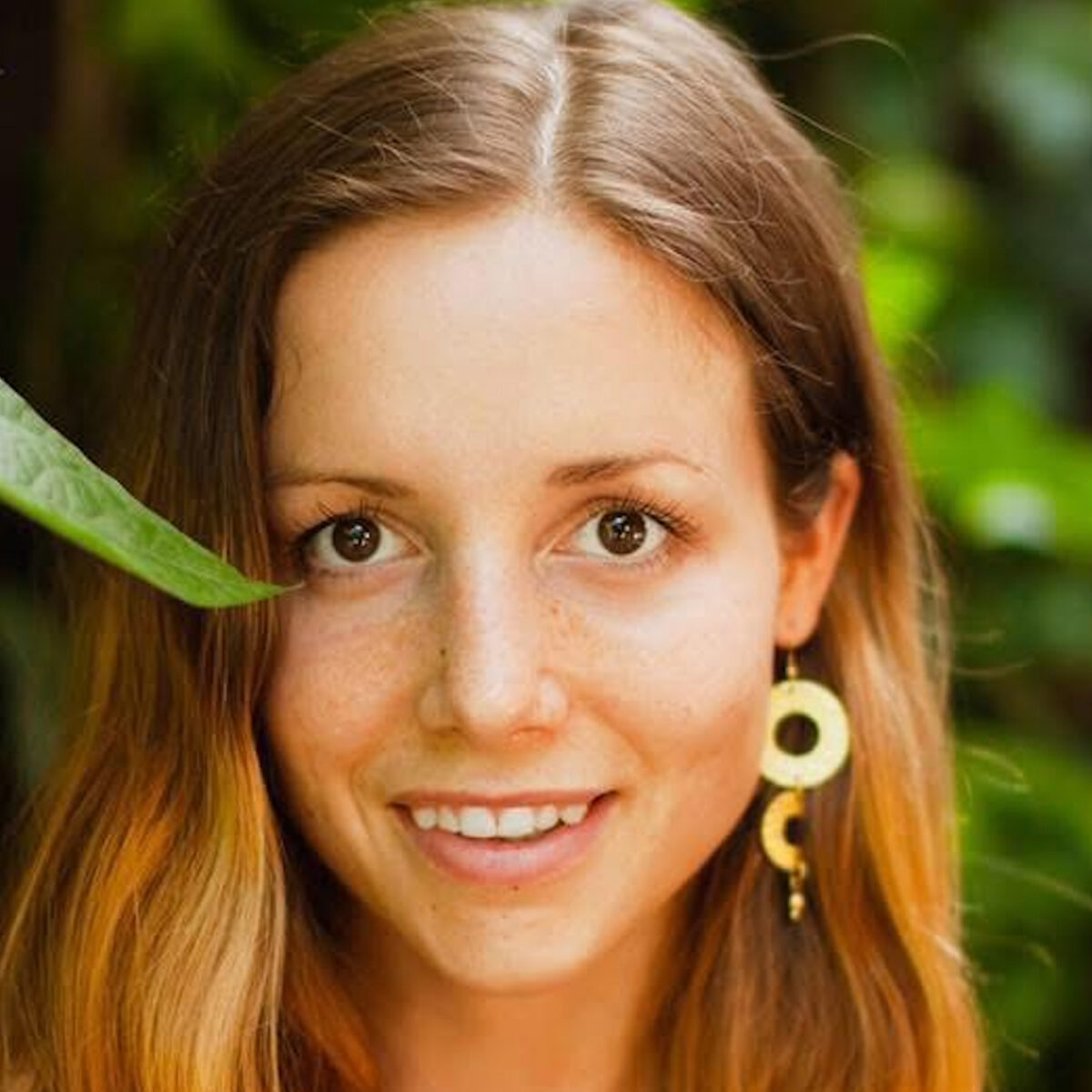
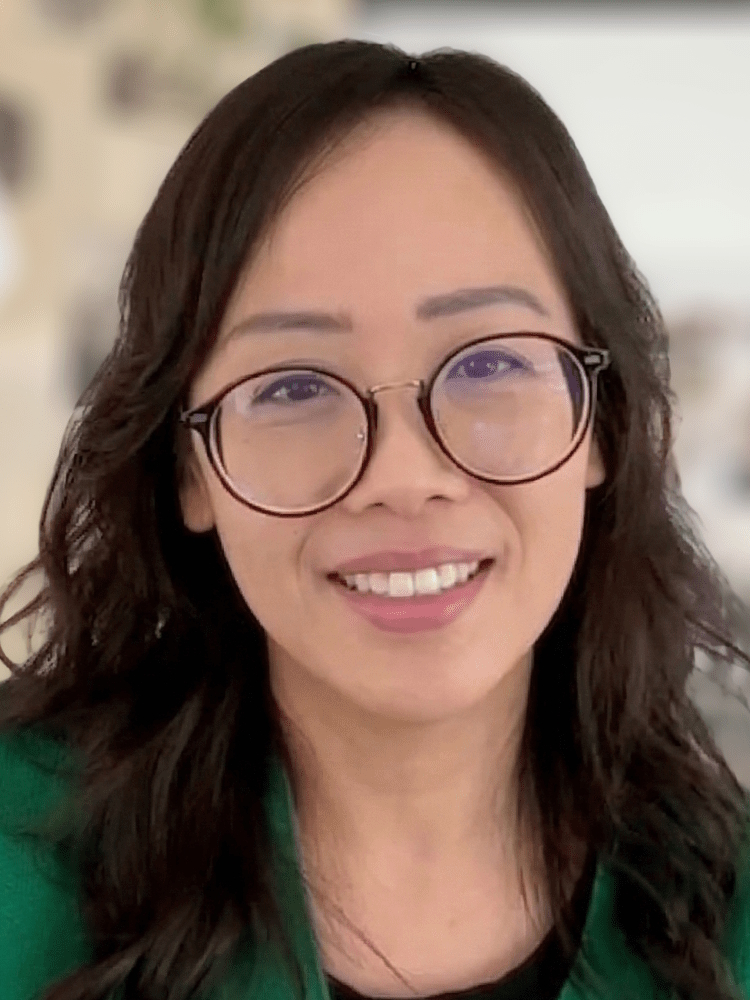
Stephanie Chuang: Hi, everyone, and welcome. I’m Stephanie Chuang with The Patient Story. I’m a blood cancer survivor and patient advocate, and I’m glad that you found us. We’re here to learn about blastic plasmacytoid dendritic cell neoplasm (BPDCN). We know how few people have even heard of BPDCN and how aggressive and incredibly rare it is, which also makes it incredibly isolating to deal with. Our goal is simple: We want to help you feel less alone and more informed, and we hope that you walk away feeling like you can have a better conversation with your care team.
We want to thank our sponsor, AbbVie, for its support of our independent patient education program. Their support allows us to provide more support for our patient and care partner community. As always, The Patient Story retains full editorial control of everything. Importantly, this is not medical advice. It’s not a substitute for talking with your doctors. This is meant to be a helpful starting point.
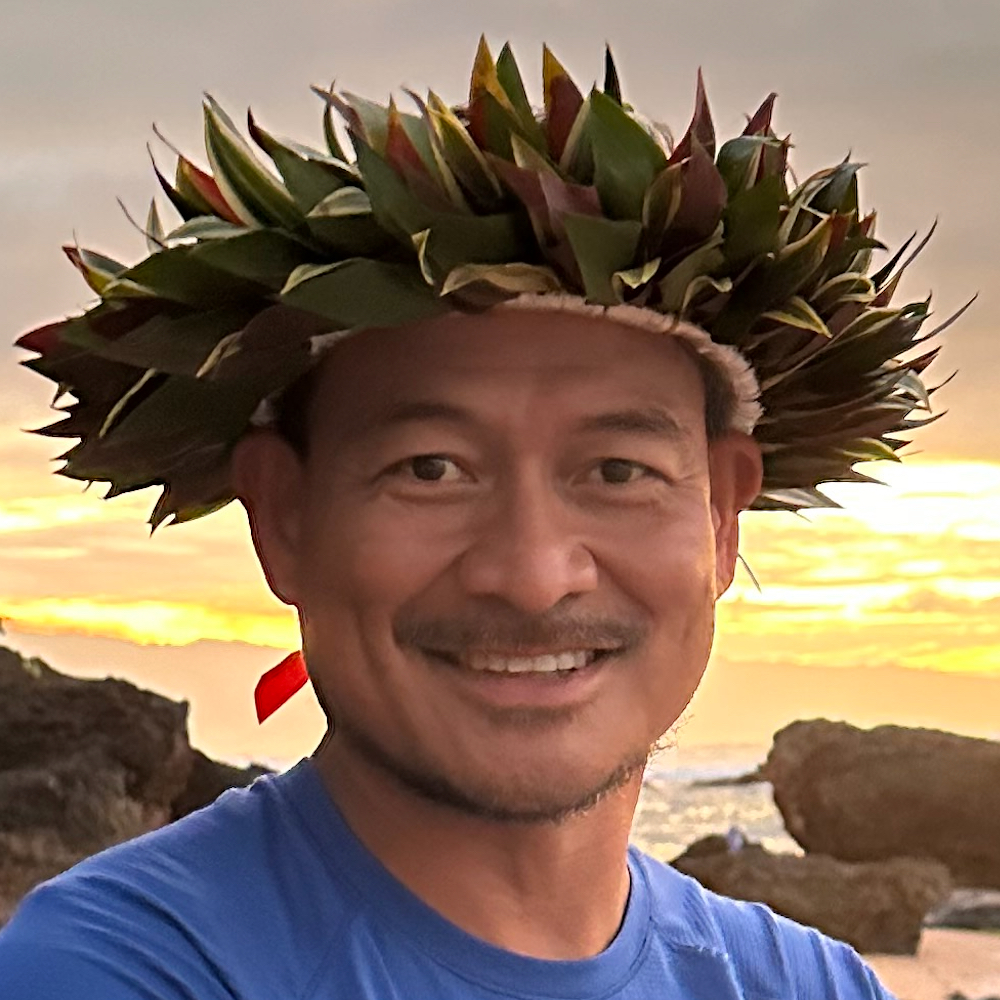
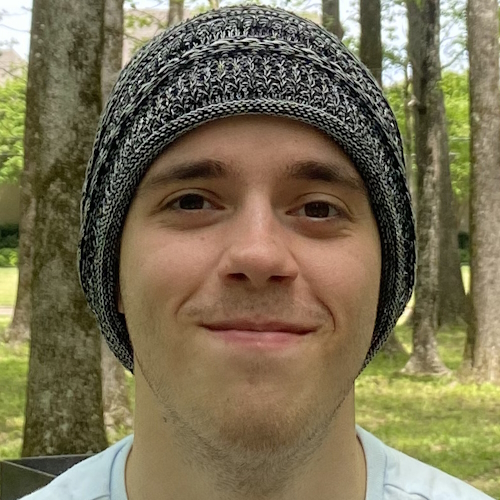
The Patient Story is all about highlighting real patient experiences on top of medical expertise from doctors and in this program, you’ll hear from all of the above. Jim T. is a BPDCN patient advocate who was officially diagnosed in 2025 with a rash on his back. As our program moves forward, you’ll hear from Jim what it felt like to go through this, how he chose where to get treatment, and how he’s doing today.
Meet our experts
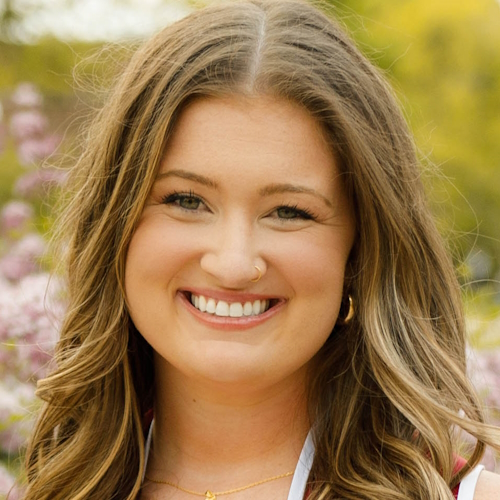
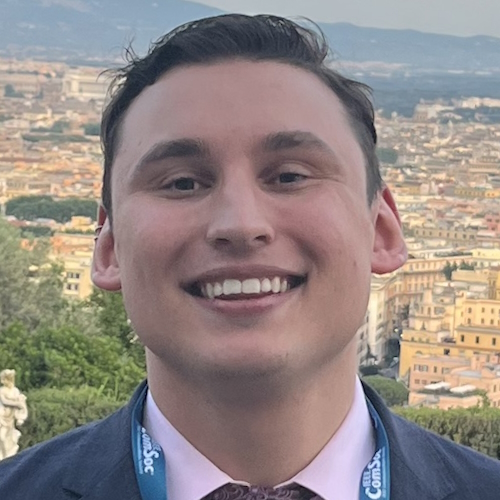
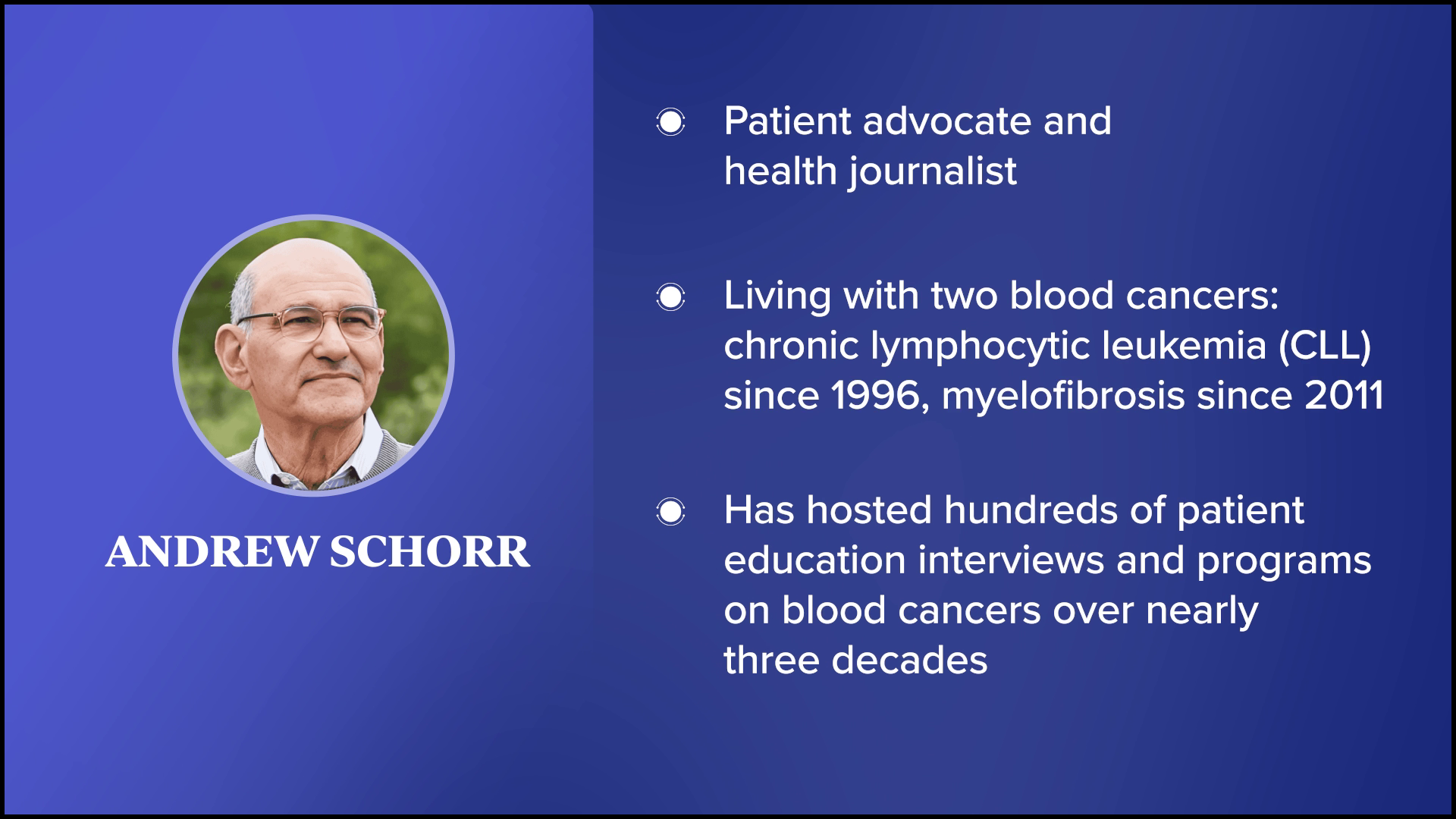
Stephanie: We also have incredible experts. First up, my colleague and friend, our host Andrew Schorr, who’s devoted his life to patient advocacy after getting two blood cancer diagnoses himself: chronic lymphocytic leukemia (CLL) in 1996 and myelofibrosis in 2011. Andrew has hosted countless patient education programs, bringing not just deep experience, but so much heart to each discussion.
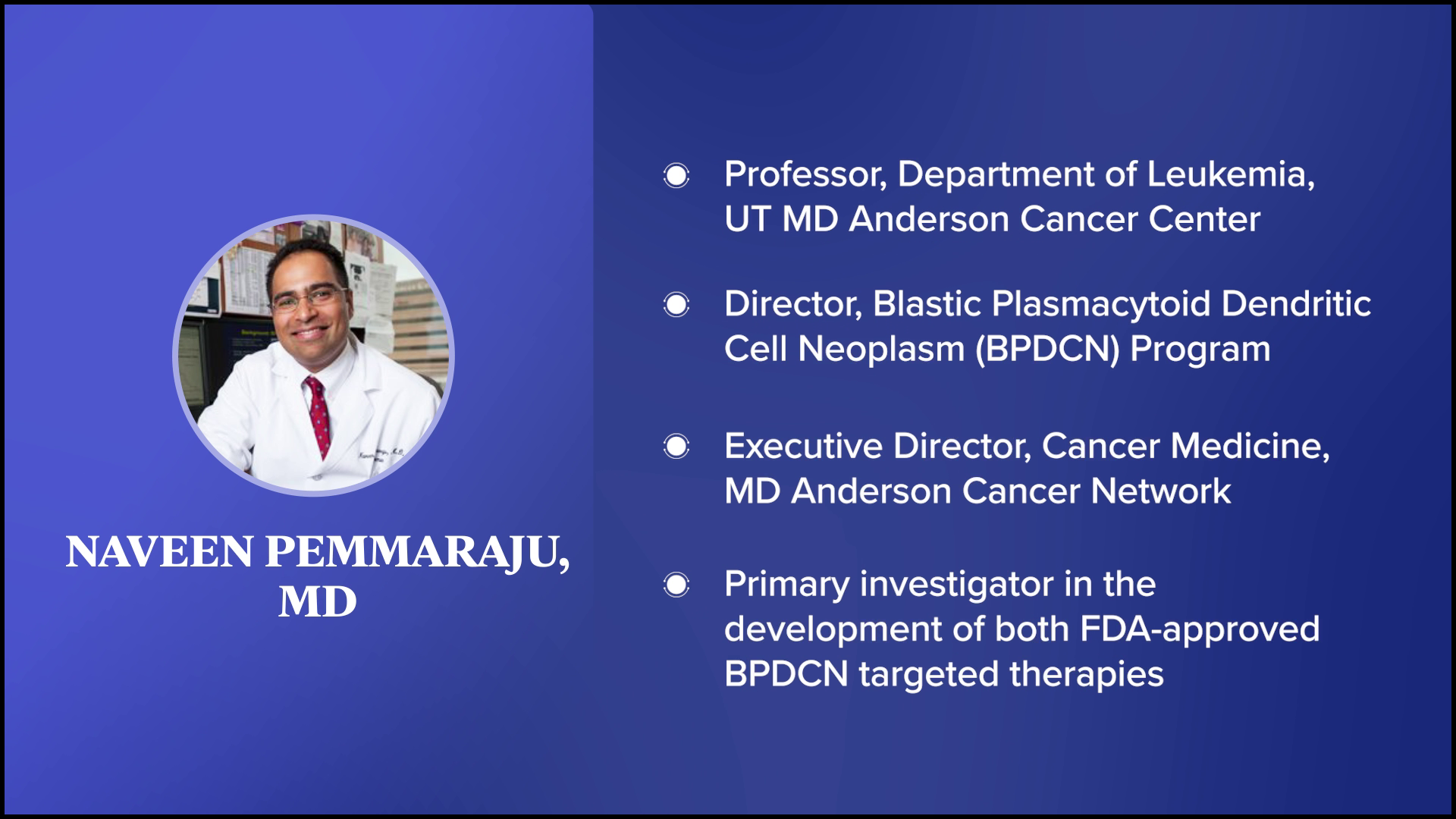
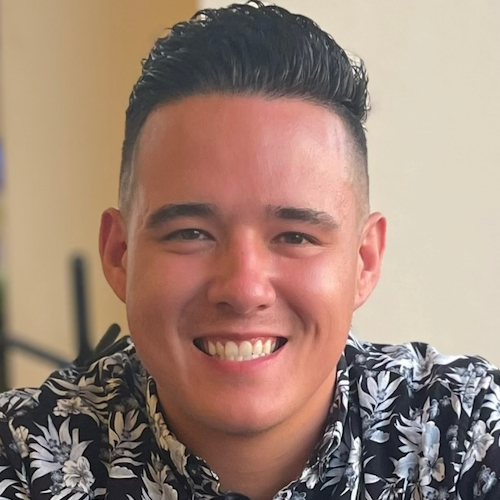
I can say the same about Dr. Naveen Pemmaraju of UT MD Anderson. He is many things, so we’re only going to name a few. He’s a professor in the Department of Leukemia at the UT MD Anderson Cancer Center, director of the BPDCN Program, and primary investigator for BPDCN targeted therapies, including the two FDA-approved drugs that will be discussed in this program. He’s also an international leader in BPDCN research. With all that, I’d love for us to get started. Here are Andrew and Dr. Pemmaraju.
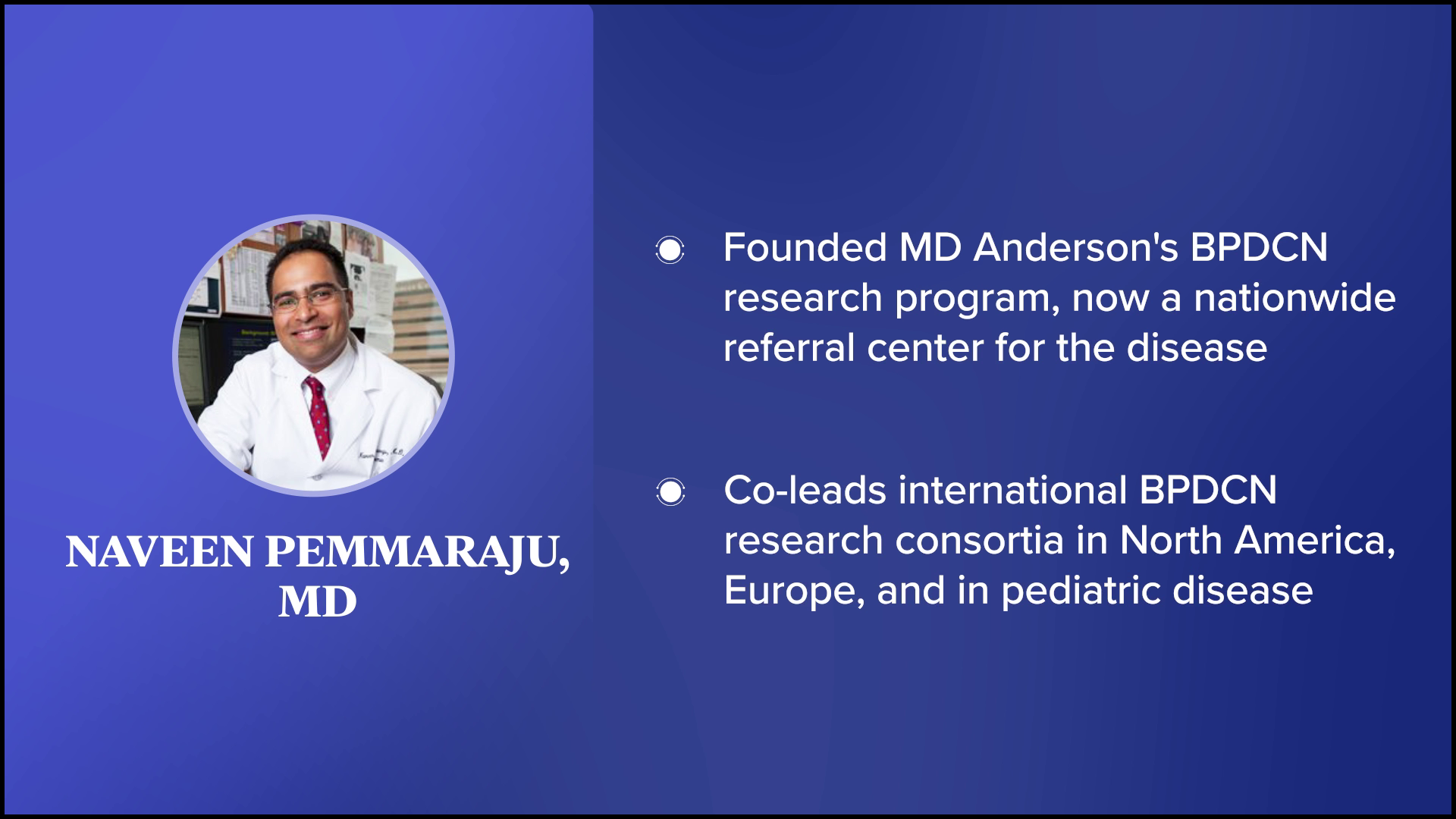
Andrew Schorr: Hello and welcome to this program where we’re going to learn a lot about BPDCN. I’m Andrew Schorr. I’m a blood cancer survivor of two blood cancers, but not that one. With us is a world expert who can tell us all about it. We’re going to go through it, so you have the latest information. Welcome to my friend, Dr. Naveen Pemmaraju, whom I’ve known for many years, at UT MD Anderson Cancer Center in Houston. He’s a world expert in this condition, the leader in the field. Naveen, welcome to our program.
Dr. Naveen Pemmaraju: Andrew, thank you so much for having me. On a personal note, I absolutely love seeing you and spending time with you. Thanks for everything you’ve done in terms of advocacy for our patients with rare and ultra-rare blood cancers.
I could not accept that there could be a disease that even experts couldn’t pronounce the name of.
Dr. Naveen Pemmaraju, Hematologist-Oncologist
Why Dr. Pemmaraju dedicated his career to BPDCN
Andrew: Dr. Pemmaraju, I’ve known you for years. You’re so devoted to rare blood cancers. How come?
Dr. Pemmaraju: Ooh, I love that question. There’s a real story there. When I started as a hematology-oncology fellow, I was at Johns Hopkins from 2005 to 2008. I knew I was going to do blood cancers; there’s no doubt about that. When I came to MD Anderson in 2008, I had two patients with BPDCN: one was a high school student and a middle-aged adult. Both patients were given the standard of therapy at that time, which included chemotherapy. This was before CD123 agents were available. Unfortunately, both passed away early, as was the common outcome for BPDCN patients at that time.
After the second patient, I took it hard. I presented it as a question to the group, the elders in my team: What should we do next? They actually said, and I’ll never forget it, Andrew, “There’s not much known about it. Since you’re bringing these questions that nobody in the world knows the answers to, what do you think about dedicating your time to this?” I said, “Oh. I didn’t know that was an option.” I didn’t understand that that’s how something is born.
Those two patients guided me and they still guide me today for two reasons. One: I could not accept that there could be a disease that even experts couldn’t pronounce the name of. In fact, it turned out that the disease just got its name in 2008. Previously, BPDCN had other random names because they didn’t understand the cell of origin. Two: There wasn’t very much information at that time. An internet search in 2008 could be very frustrating and not fruitful. I couldn’t accept that.
Be the change you wish to seek in the world.
Mahatma Gandhi (paraphrase of his 1913 philosophy)
Dr. Pemmaraju: There’s a quote from Gandhi that I live by, which is, “Be the change you wish to see in the world,” and I thought about that. After that presentation, I went home and thought, “These world experts just told me that nobody knows the answer to any of the 20 questions I asked. Why don’t I be the one to do it?” So that’s how it started.
We have a worldwide network of scientists, doctors, and experts at work. I want to give a shout-out to Professor Marina Konopleva, one of the great thinkers in our field, my close, dear friend, and mentor who’s now at the Albert Einstein College of Medicine in New York. She was one of the first people who said, “You know what, everyone else is telling you that you’re throwing away your life and career. They thought it was a gamble to focus on such a rare area. You go for it. With your passion and dedication, it’s going to be someone like you who will change the world.”
I wanted to share my story with you. It’s the first time I’ve said this story publicly.
Andrew: Thank you, Marina. Thank you, Gandhi.
How rare is BPDCN?
Andrew: BPDCN is an ultra-rare condition. First, let’s make sure everybody understands how rare it is. How would you describe it?
Dr. Pemmaraju: We should start with blastic plasmacytoid dendritic cell neoplasm (BPDCN). As you mentioned, it’s a rare blood cancer, maybe even ultra-rare. The latest estimate by my group is that it only affects 500 to 1,000 Americans per year. In Europe, it’s about the same.
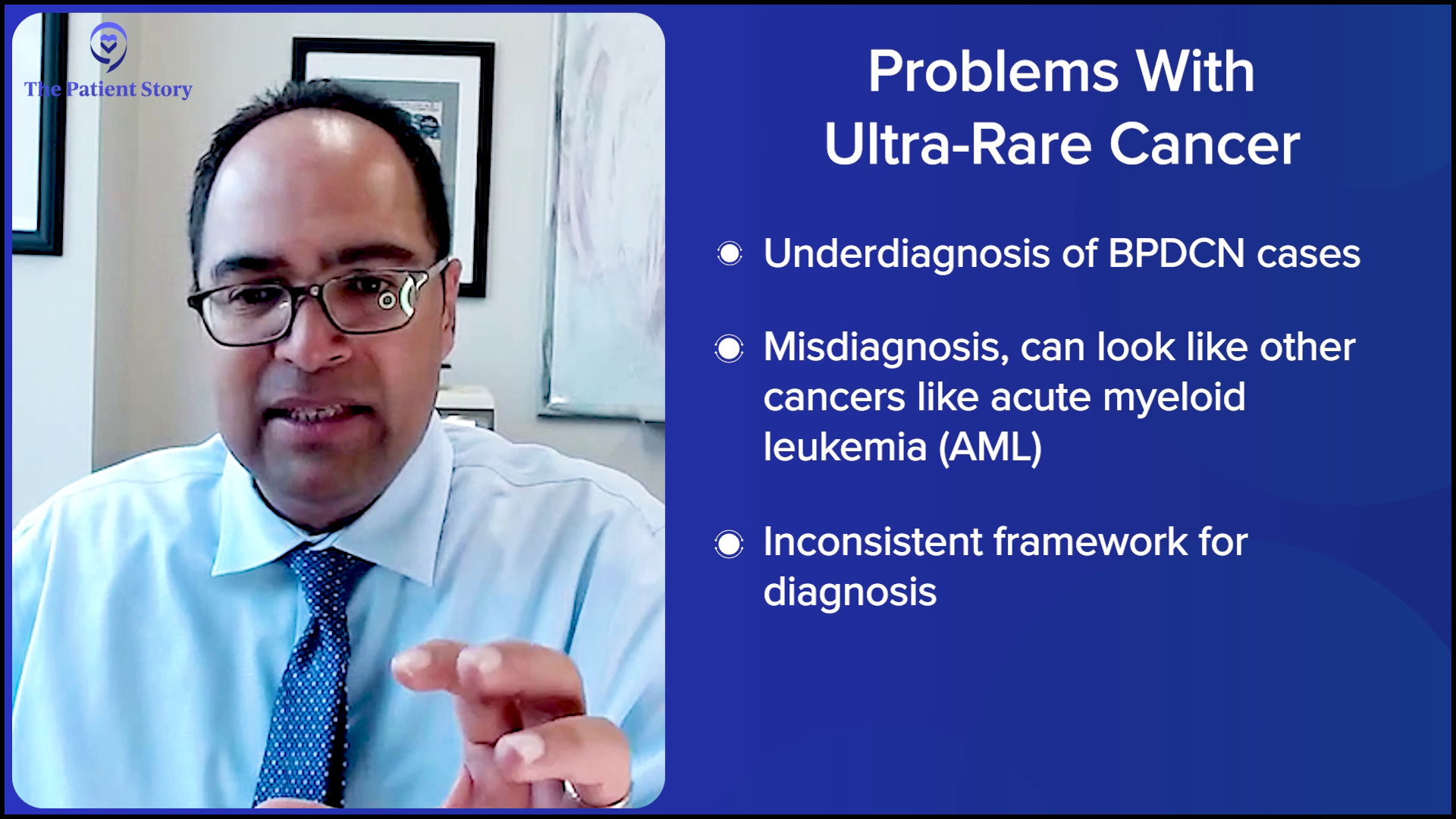
I would say three things, though. One: In any of these rare, esoteric blood cancers, as you and I know, sometimes there’s an underdiagnosis problem, meaning people haven’t even thought about the diagnosis. Two: There’s a misdiagnosis problem. It looks like acute myeloid leukemia (AML) or lymphoma, which are more common. Three: The name has changed a bunch of times and the diagnostic criteria have changed, so even the ability to make a diagnosis is improving over time. I’d like to put that out there.
Andrew: Most doctors have never seen it, right? You might go in with some sort of skin problem, which could be a million different things, and then it gets missed, right?
Dr. Pemmaraju: Exactly right. You make such a great point. With a lot of these blood cancers, obviously the bone marrow and blood are top of mind as the only thing or the main thing affected, including subsequent sequela from that, such as bleeding, clotting, bruising, and all of these disruptions of the bone marrow and blood system.
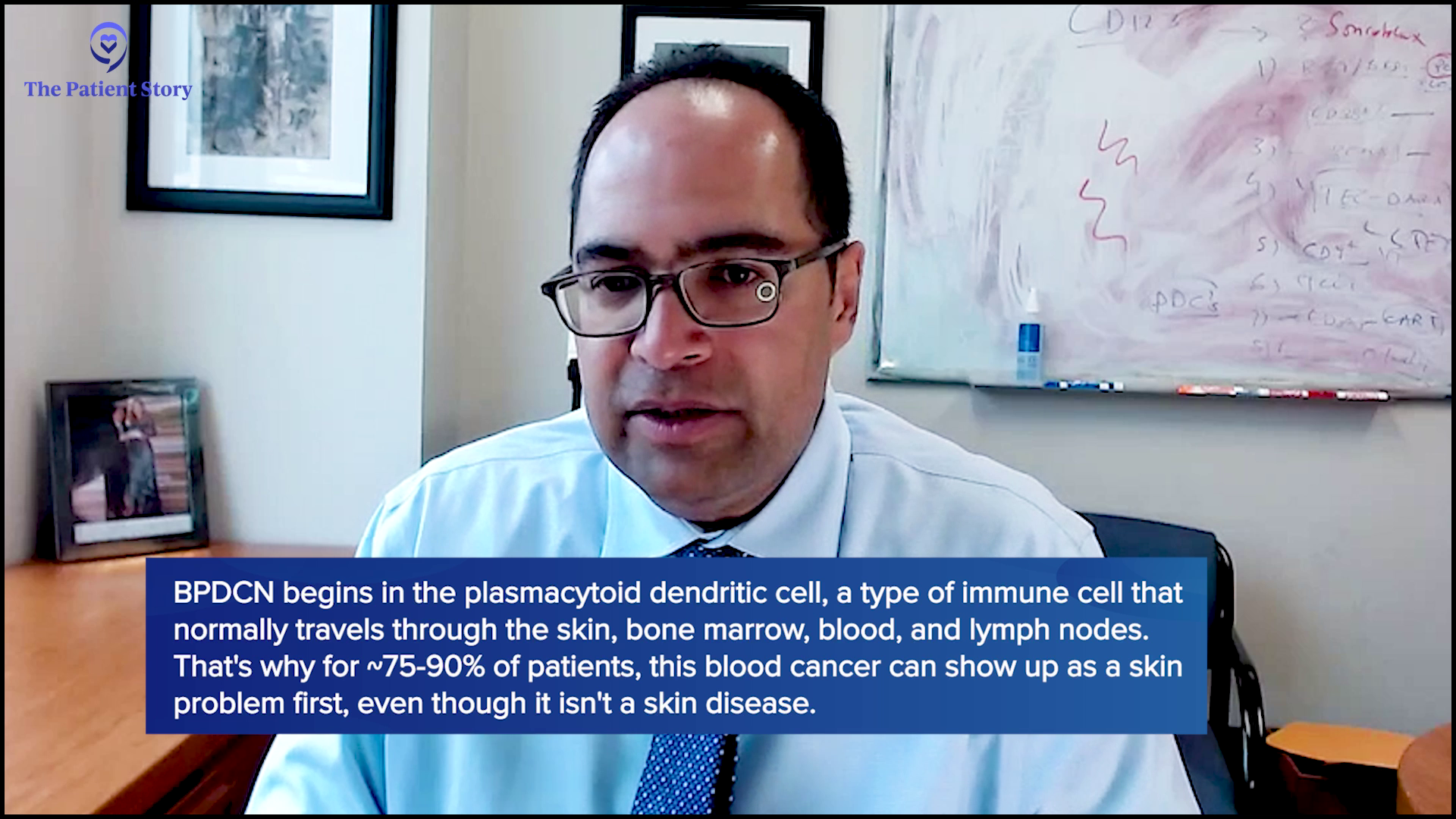
In BPDCN, one of the many things that makes it unique is the skin predominance. The vast majority of our patients, around 75 to 90%, will have skin problems either at the beginning of the diagnosis phase or later on. It’s not a skin disease; it’s a bone marrow, blood, and immune system disorder, but it has skin manifestations because the cell of origin — the plasmacytoid dendritic cell (pDC) — traffics. It’s an immune system cell that likes to hang out in the skin, bone marrow, blood, and lymph nodes.
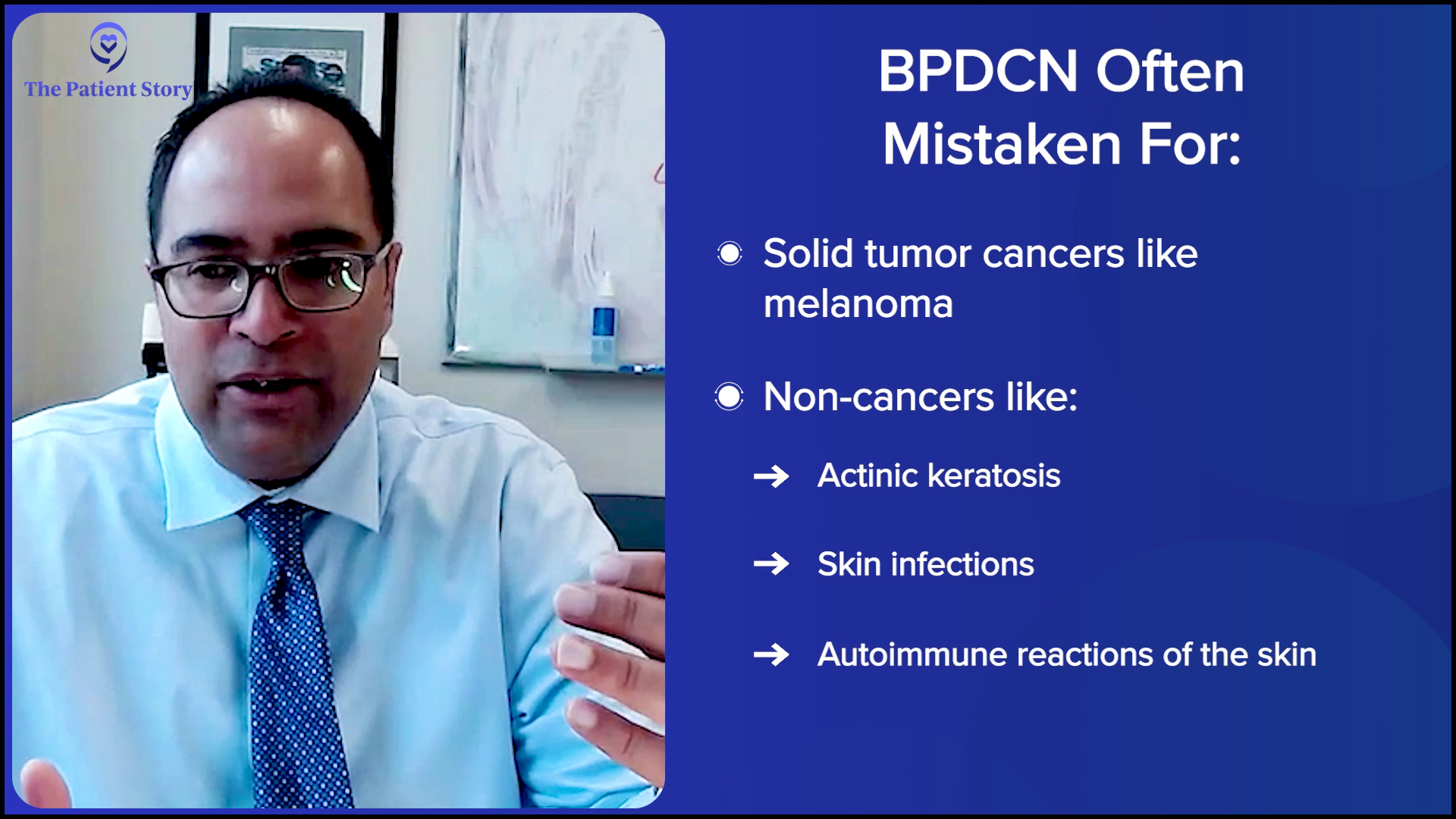
It’s interesting what you say because the most common presenting feature, a skin lesion, doesn’t look like something that you can diagnose, when, in fact, you can. Tissue is the issue. You have to biopsy it. Most of the time, no one thinks about this rare disease. It can be mistaken for other, more common diagnoses, like solid tumors, melanoma, solid non-cancers, actinic keratosis, other types of skin-affecting issues, infections of the skin, or autoimmune reactions of the skin.
If you see a skin lesion that isn’t improving, as we’ve learned with melanoma and other dermatologic experiences, get it checked out. Get a biopsy if it’s indicated. The skin turns out to be a window. Something’s abnormal in the skin. It may get transiently better with steroids and antibiotics, but then it comes back. Tissue is the issue.
The diagnosis journey: Why speed matters
Andrew: With this condition, what is the urgency of getting an accurate diagnosis? A patient has gone to a doctor and the doctor says, “Oh, it’s a simple skin problem.” Maybe proper testing hasn’t been done. Is the clock ticking for the patient?
If something isn’t right, we have to make sure that we get it checked out.
Dr. Naveen Pemmaraju, Hematologist-Oncologist
Dr. Pemmaraju: It is, unfortunately. When I first got into the field, the median overall survival was only eight months from the time of diagnosis to the time of death. Even if it starts “only as a skin lesion,” the disease can rapidly present as more of a leukemia presentation, which is a bone marrow and blood disease that ultimately has all of the awful side effects, complications, and problems of an acute lymphoblastic leukemia (ALL) or acute myeloid leukemia (AML). Said another way, you could be diagnosed only with a “skin lesion” of BPDCN.
I love what you said, which is sometimes there’s a delay on the side of getting checked. We see that a lot. Or you get checked out, but it looks like it’s minor, so you get a minor treatment. All of that is normal healthcare goings-on. But as something we’ve always talked about over the last decade together: If something isn’t right, we have to make sure that we get it checked out. What you said is important: Nobody is necessarily thinking about a rare disease upfront, but if something is persistent, changing in size, shape, or color, get it checked.
Patient insert: Meet Jim T., diagnosed with BPDCN in 2025
Stephanie: Before we move on, I mentioned Jim, who will share his experience as a BPDCN patient and survivor. He was diagnosed in his 60s in 2025 and he experienced exactly the type of delay that Dr. Pemmaraju is describing.
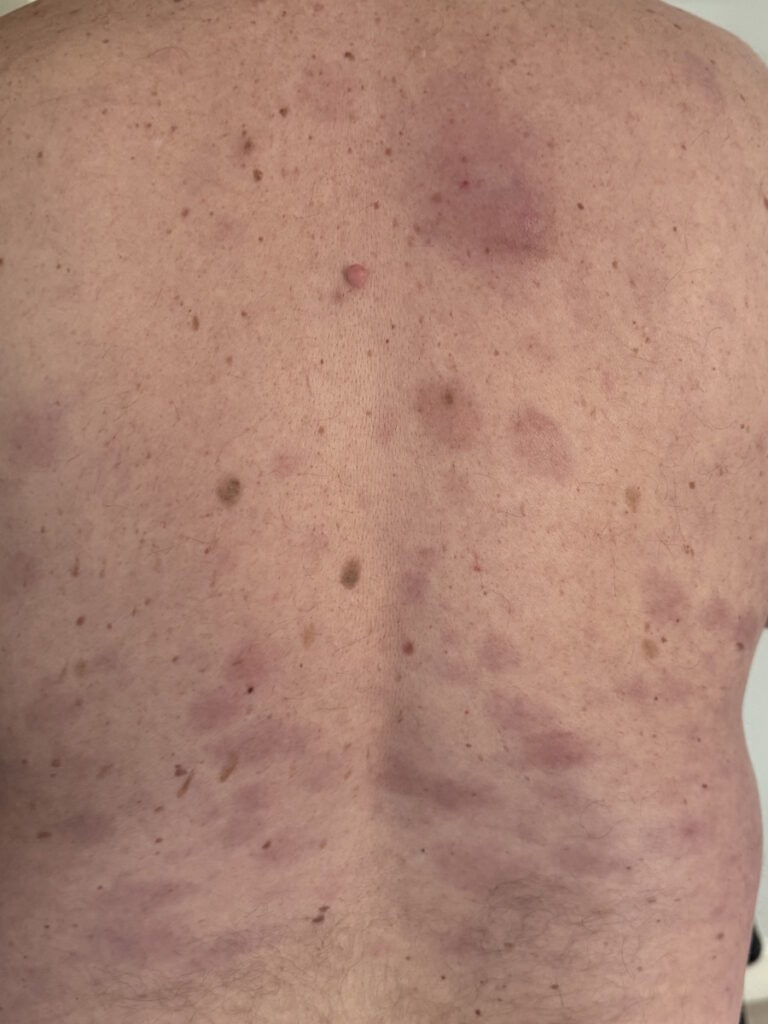
Jim T.: It itched before the rash started. The first thing I experienced was tremendous itching around October to November 2024. Then in December, I developed a rash at the top right side of my back. I had gone to the dermatologist four or five separate times. In retrospect, he had never seen a patient with BPDCN, didn’t think it was anything, and kept telling me, “Don’t worry about it.”
It got worse and worse. At my wife’s urging, I went to my PCP, and he said, “I’m not saying it’s anything to worry about, but I’ve never seen anything like that. You need to go back to the dermatologist and tell him he has to biopsy that.”
If you hear hooves, think about horses. But in our world, it’s the opposite. You have to think about the zebras, because if you don’t think about it, nobody else will.
Dr. Naveen Pemmaraju, Hematologist-Oncologist
Andrew: What is the saying you have in medicine? If you hear hooves, it’s probably a horse, but it could be a zebra.
Dr. Pemmaraju: I’ve spent my entire career on this and I’m very passionate about it. We were taught in medical school that saying to remind us that common things are common. Of course, there’s validity, but it’s a very powerful and profound teaching to remind the junior doctor who’s starting: Just because you’re excited about something super esoteric, think about the common things first. Common things being common. That’s the common: If you hear hooves, think about horses. But in our world, it’s the opposite. You have to think about the zebras, because if you don’t think about it, nobody else will.
Andrew: So if the patient or family member feels a sense of worry about something being something else, it seems that they need to get to a specialist or somebody who knows.
Dr. Pemmaraju: That’s well said. The corollary to that is once something is not common, look for who specializes in the uncommon because for them, the uncommon is common.
In a rare disease, one of your goals for your patient is to rule out the more common ones and to show your work, as they say.
Dr. Naveen Pemmaraju, Hematologist-Oncologist
Confirming BPDCN: What biomarker testing involves
Andrew: Now let’s talk about testing. You mentioned looking at the skin. You get into all these letters of CD this and CD that, and there’s a panel you look at to confirm this diagnosis.
Dr. Pemmaraju: To relieve the alphabet soup, I have two principles to share. One is that BPDCN is its own unique entity. It’s a blood, immune system, and bone marrow cancer that involves the skin, so it has its own fingerprint or profile. In fact, all the common ones have that too, like leukemia and its subtypes.
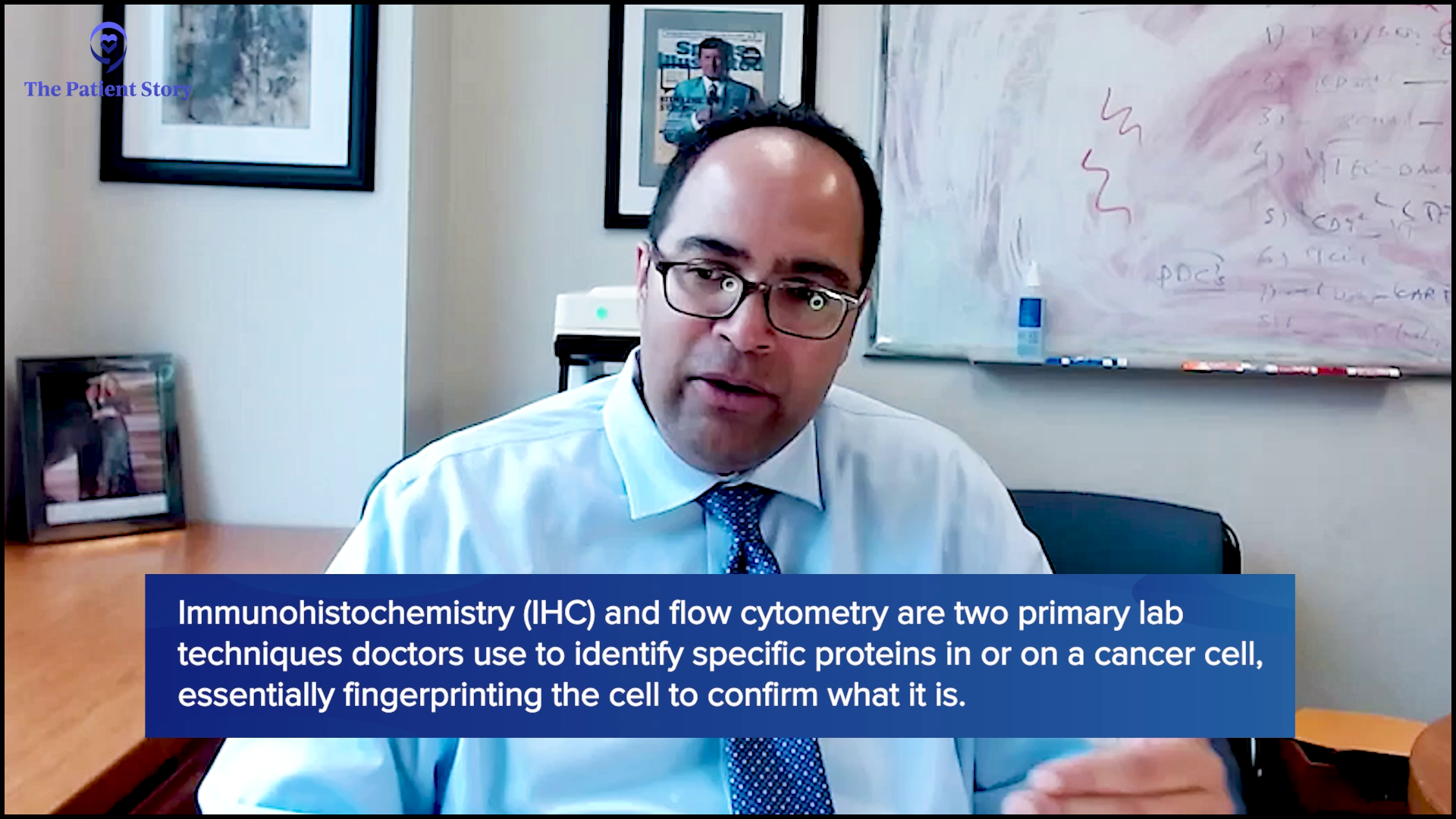
For that profile, the fingerprinting technique or tool that the pathologist uses is to stain the tissue; that’s called immunohistochemistry (IHC). Then they use side scatter of light in an advanced technique called flow cytometry. Those are two ways to fingerprint your tumor. Think about it as a barcode on the package that is the tumor. Now, once you get that, the alphabet soup is there.
It appears that almost all BPDCNs have a fingerprint, clusters of differentiation or CD markers, as you mentioned them. They’re on the surface. I think of them as antennae, proteins, or markers on the surface of a cancer cell that identify the cancer cell. Those are CD123, CD4, CD56, etc. The easy way to remember it is to think one, two, three, four, five, and six — that’s CD123, CD56, and CD4. Then there’s a host of other markers to add to the alphabet soup, but I will say they’ve helped identify the specificity of the disease.
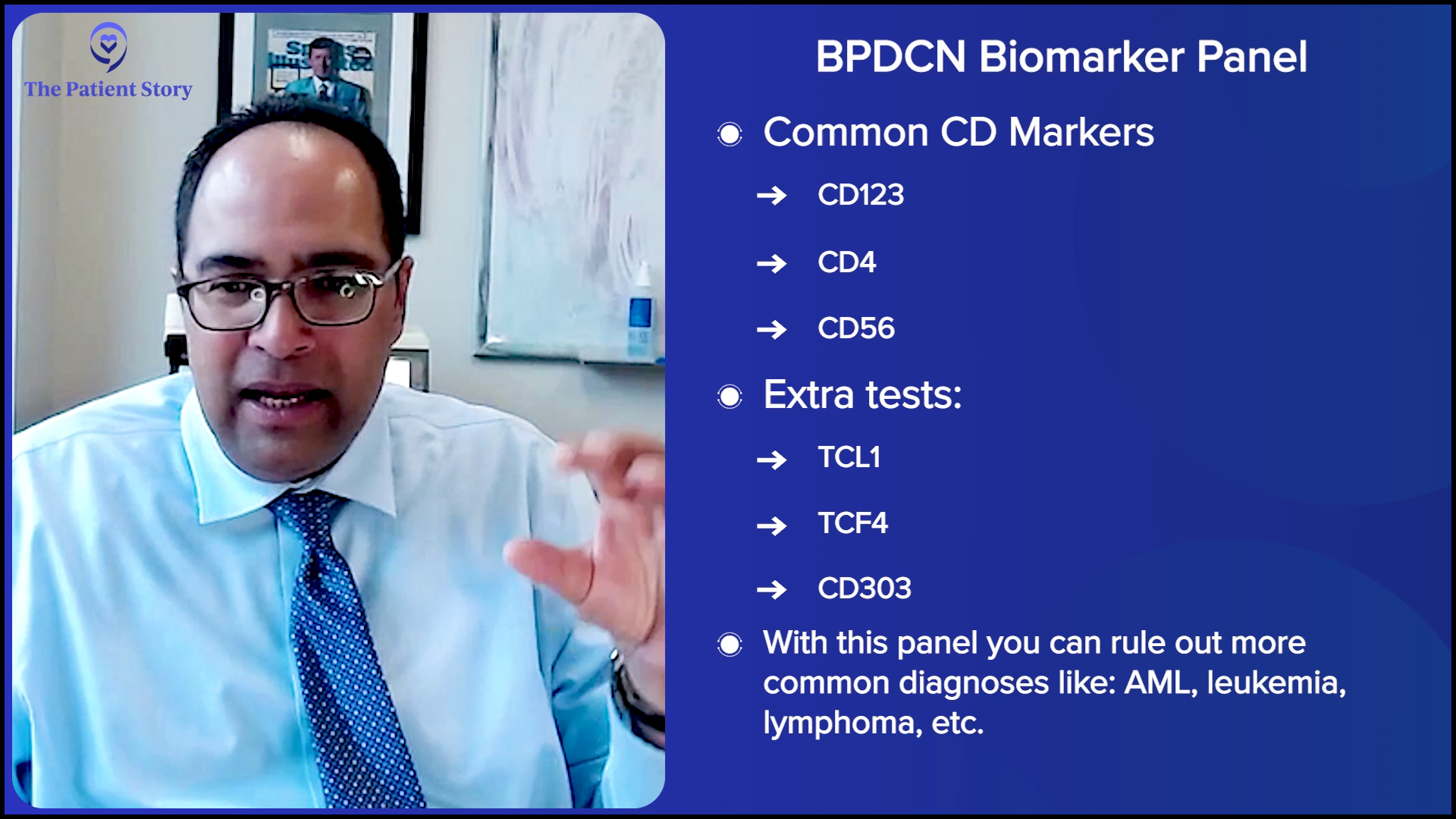
In a rare disease, one of your goals for your patient is to rule out the more common ones and to show your work, as they say in elementary math. Those extra tests are called TCL1, TCF4, CD303, etc. Basically, if you test this panel, you can rule out or confirm BPDCN as compared to the more common diagnoses, like leukemia and lymphoma. But always in the back of your mind, you ask: Can this skin thing be something else, like a solid tumor cancer or autoimmune disease?
Andrew: Okay, to be clear: Is there only one type of this rare disease or are there subtypes?
Dr. Pemmaraju: We’re trying to sort that out and this is all happening in real-time. We think of BPDCN as one disease, but it can affect four compartments, and not all at the same time. Rather than a staging system or subtypes, let me at least mention those.
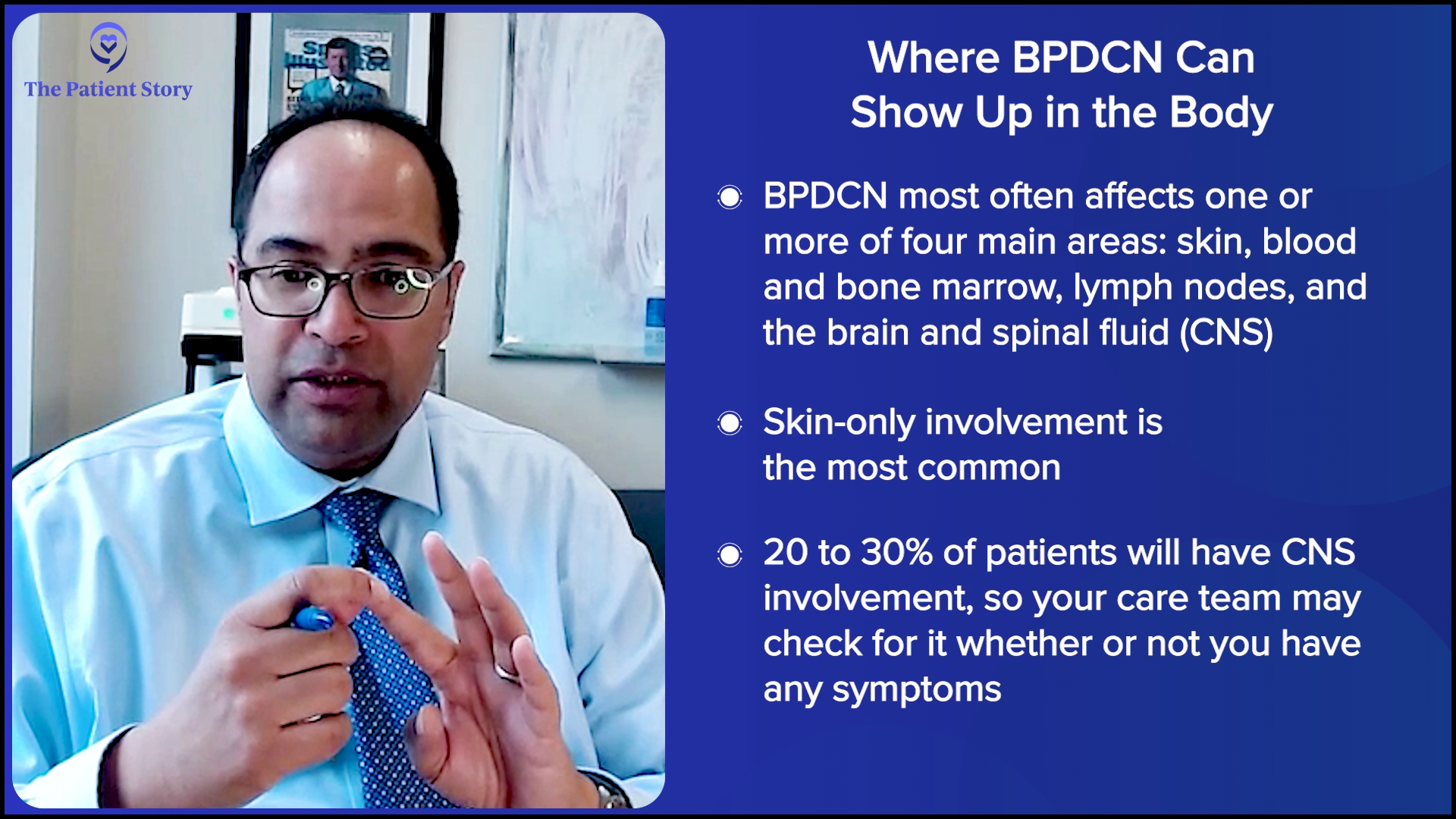
There can be skin-only-involving BPDCN, which is what you’ve been talking about here. That’s the most important to let people know about. But there’s also BPDCN that affects the blood, bone marrow, lymph nodes, or even the central nervous system, which is a pillar that we’ve added recently. That’s important because we think that anywhere from 20 to 30% of our BPDCN patients will have central nervous system involvement.
Four different major compartments and, unfortunately, they can be involved together in whatever combination or solo. They can happen at diagnosis or at relapse. If I can throw in another complicated factor: BPDCN has an extramedullary tendency, where it likes to go outside of not only the blood, bone marrow, skin, and lymph nodes, but anywhere.
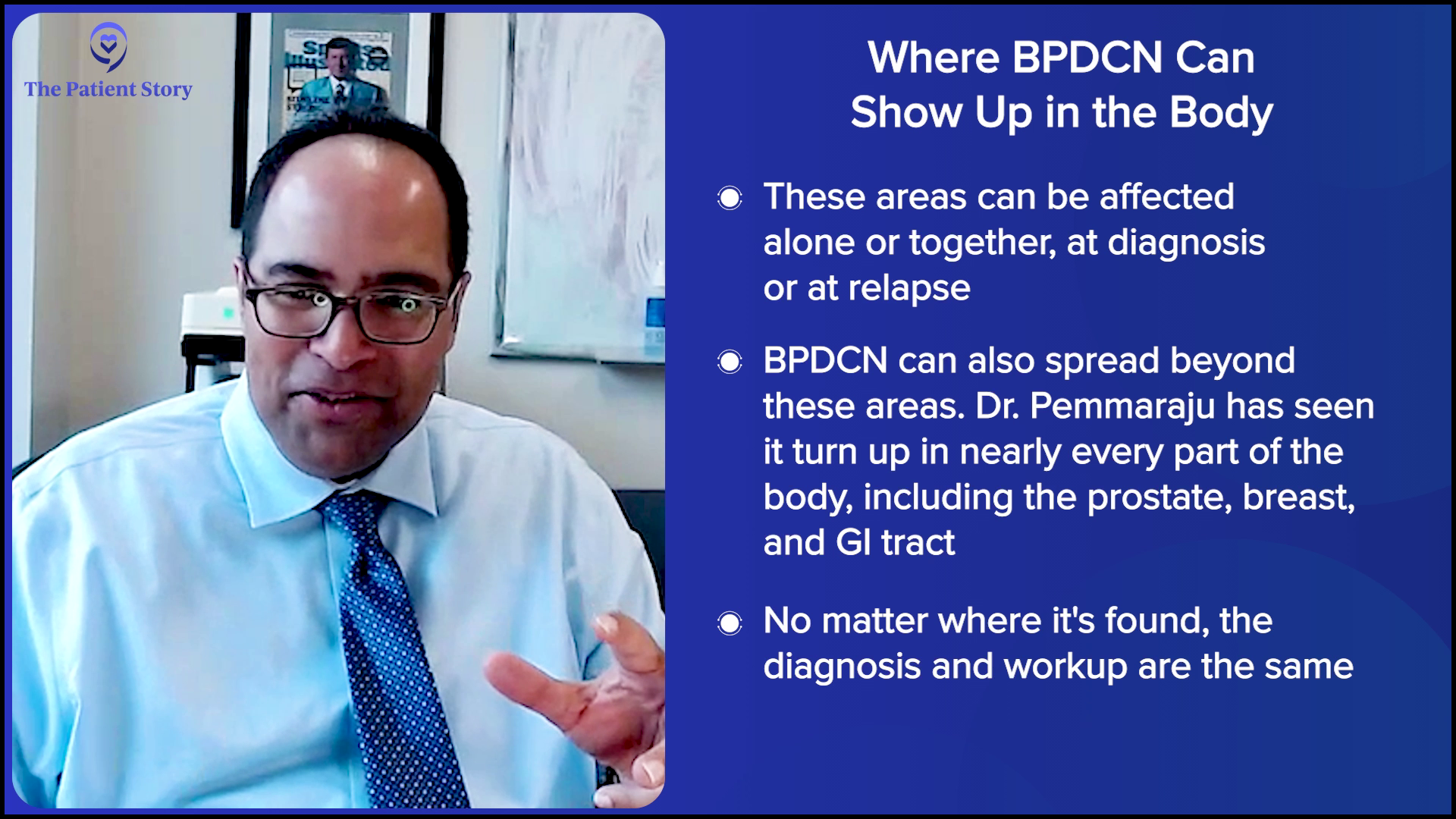
In my practice, we have had BPDCN diagnoses literally in every part of the body — of course, biopsy-proven — even in places that we may not have expected to see BPDCN. I’m talking about prostate, breast, ovary, gastrointestinal, etc. To your brilliant point, there are multiple different body areas of BPDCN, but at least the diagnosis is straightforward, so we’ll take that. The same diagnosis should apply no matter what tissue you’re looking at.
Targeted therapy: How CD123-directed drugs work
Andrew: I always think of targeted therapy like a freight train. It has a payload, something in the freight car, and you’re developing these therapies that go on the freight train and hone in on the protein. Is that correct?
Dr. Pemmaraju: That’s correct. I like that analogy. Sometimes we often use the analogies of smart-guided missiles or a homing device, but I like yours a lot better. The concept is what you said. If we think of cytotoxic chemotherapy or chemo as people call it, it’s more of a general field effect. It’s not necessarily seeking out a particular target; it’s seeking out all cells.
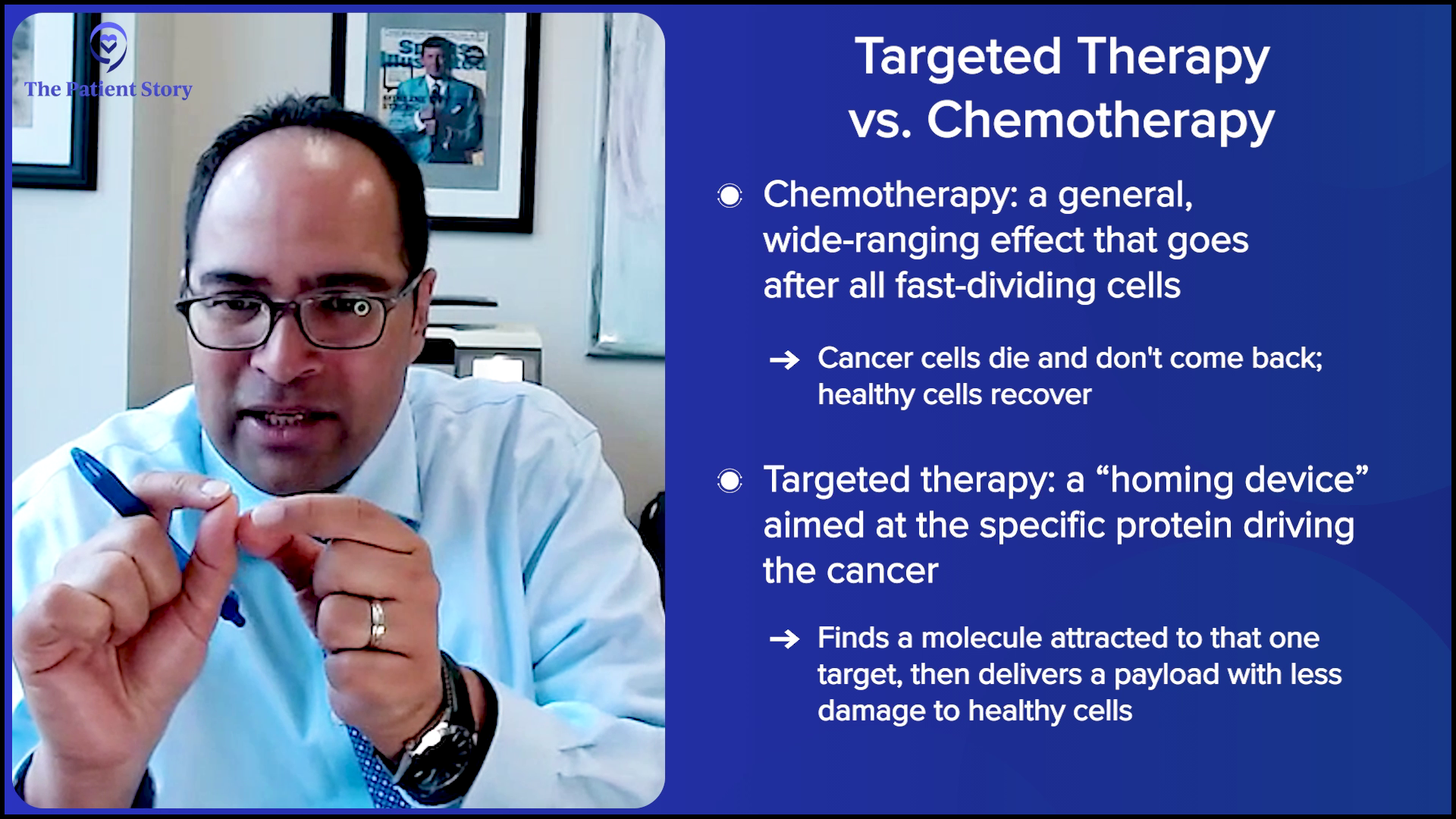
Cancer cells rapidly divide or divide more. They use more energy than regular cells. Cancer cells should die and not come back; regular cells will die or get stunned and then grow back. That’s the concept with general chemo.
With targeted therapy, your analogy is great. You try to hone in on the part of the cancer cell that drives the cancer itself — the headquarters, if you will — so you need to find a molecule or a factor that’s going to be attracted to and attractive enough where it only goes to that target. It blows up the target with minimum collateral damage. That’s the best way to think about targeted therapy. In so doing, are you achieving the goal? Are you having less toxicity than you would have with chemo?
Two FDA-approved targeted therapies for BPDCN
Andrew: You work with the patient and say, “This is what we think you have and where it’s showing up in your body.” Now, what do you do about it? You’ve had one medicine around for a little while, you have a stem cell transplant, and you have a newer medicine too. Tell us about what you have and how you have the discussion.
Dr. Pemmaraju: What a great setup. I’m proud to share that with you and the team, Andrew. The modern evolution has been about 20 years. Part one of three parts is that the treatments for BPDCN, regardless of where it is on the body, is we try to treat everyone systemically. The treatments were suboptimal. Initially, they were borrowed from AML, ALL, lymphoma, and skin-directed therapies, and that’s where we had that median overall survival for our patients of only about eight, maybe up to 12 months. That era showed two things: You can put people into remission, although not at a high rate, and that you probably need a stem cell transplant to consolidate.
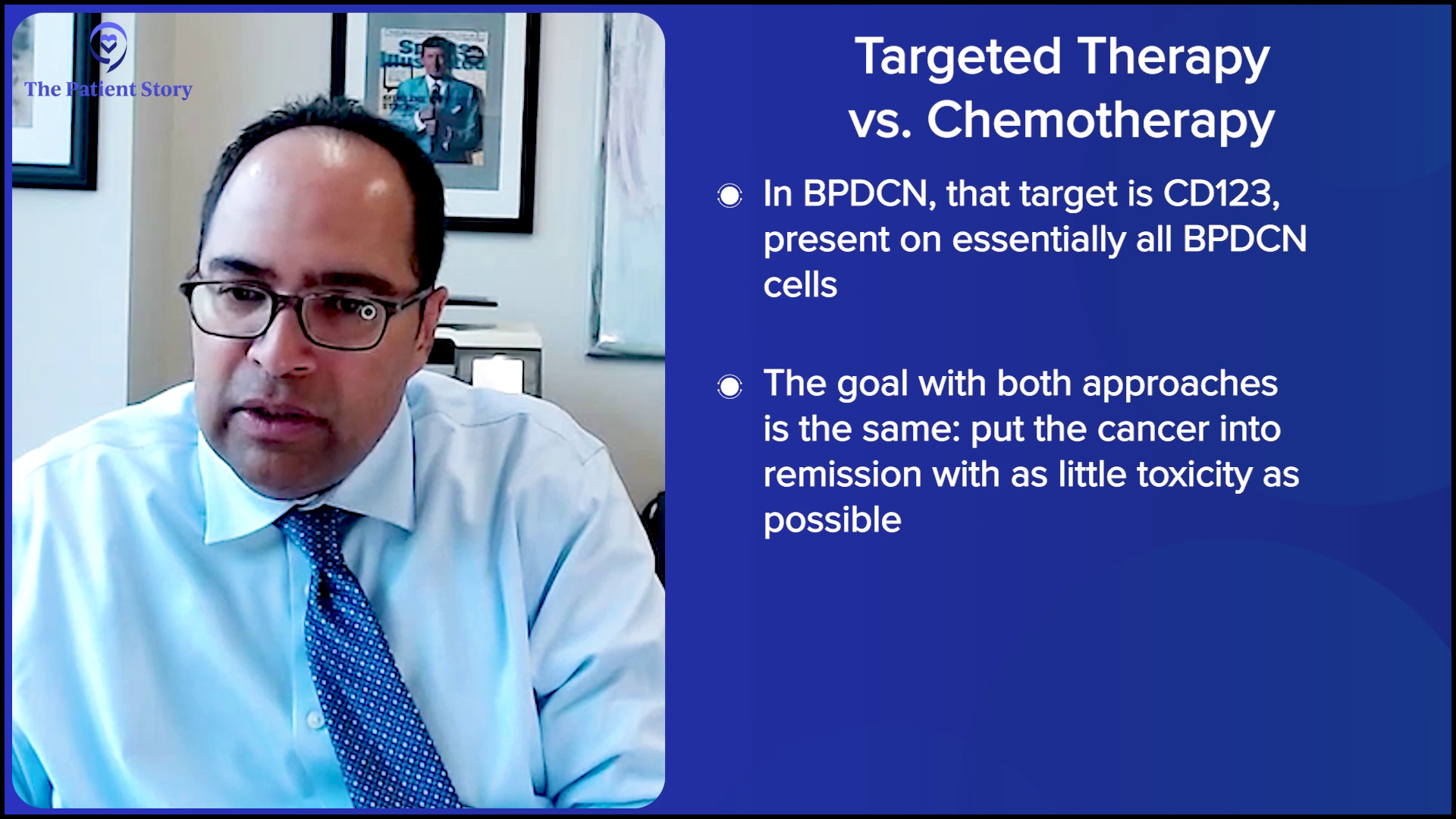
Then comes the next era, which my group and I were happy to pioneer, which was the targeted therapy revolution. I mentioned the markers. CD123 is on 100% of these tumors, so if you have BPDCN, you must have CD123.
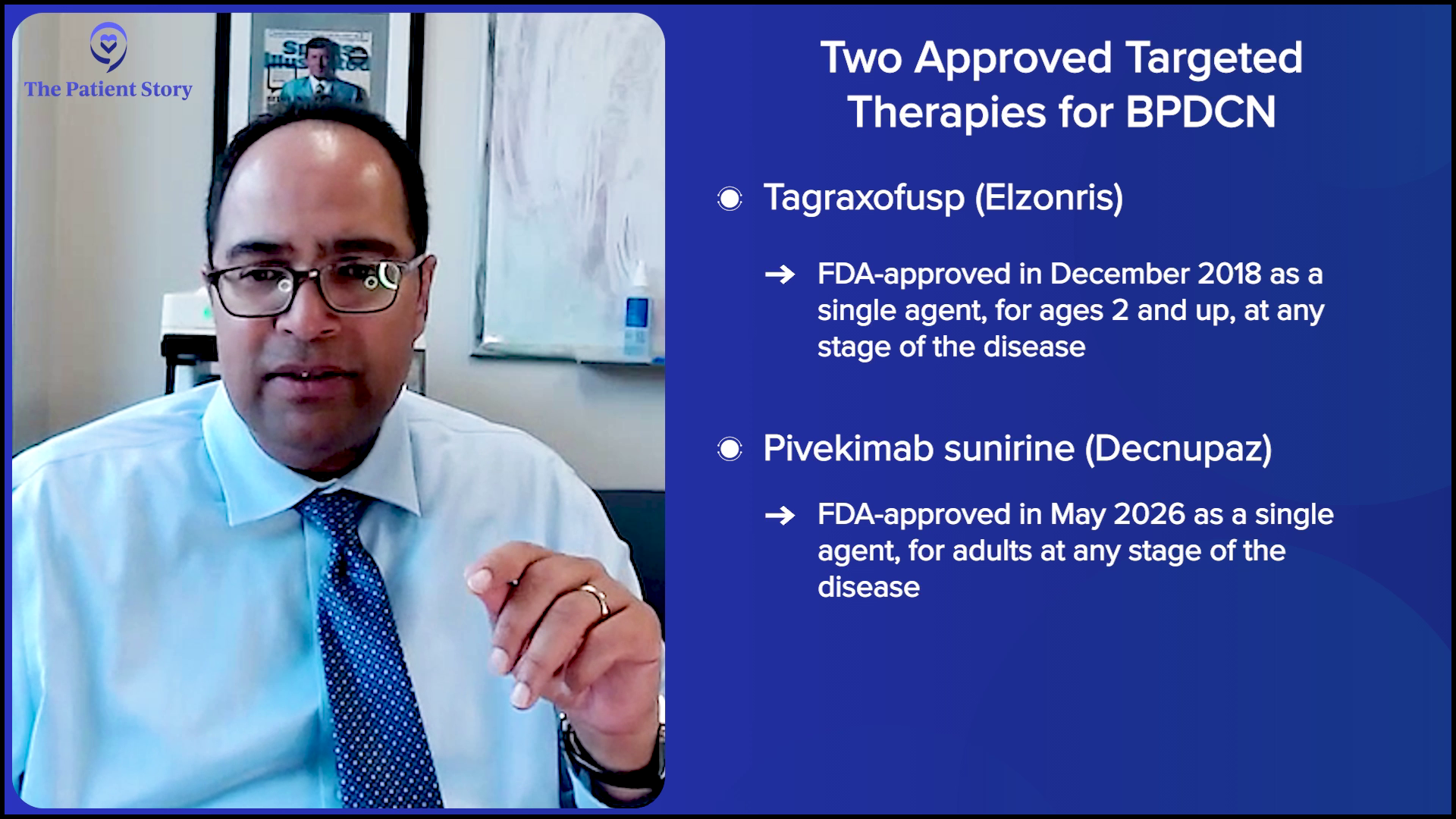
There were no approved targeted agents and our group was able to lead the first one; that’s called tagraxofusp (Elzonris), but we’ll call it TAG. It’s a CD123-directed agent. You put the IL3 there and then it goes to the IL3 receptor alpha, which is CD123. We got that approved in December 2018, for ages two and older, with BPDCN, as a single agent, in any line of therapy. That was a huge breakthrough for our field and it put us on the map.
But I’m glad to tell you that since then, we have had a second agent that was approved in May 2026, which is pivekimab sunirine (Decnupaz) or PVEK for short. PVEK also targets CD123. It’s the second approved agent in our field, but it uses a different toxin or a different payload, which is a cytotoxic chemotherapy payload called IGN. This agent also targets CD123 and is FDA-approved as a single agent in all lines of therapy.
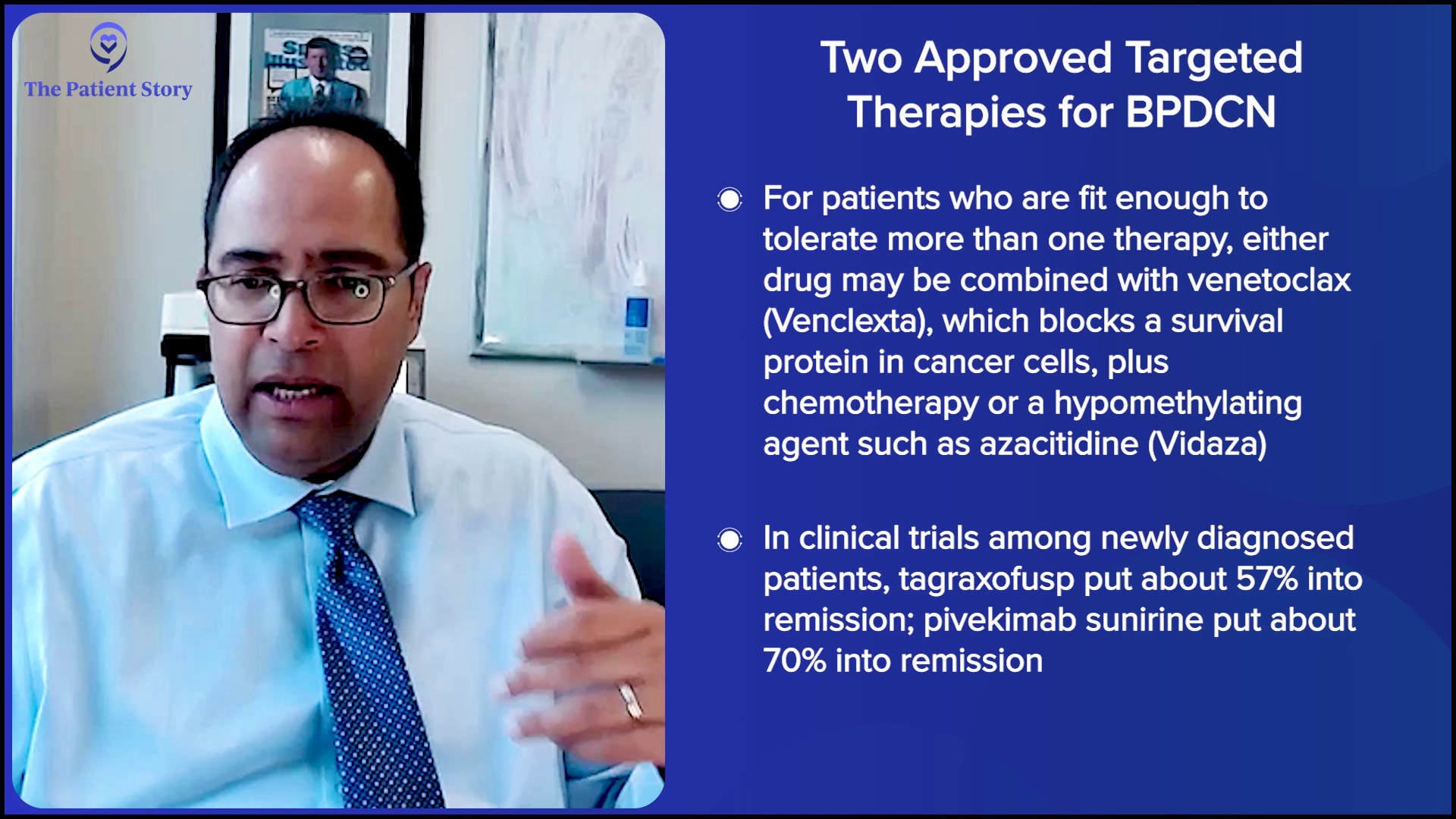
In addition to that, we’ve now moved into combination regimens in our field. If a patient is fit enough to withstand more than one therapy, we can combine the CD123 agents with venetoclax (Venclexta), which is a BCL2 inhibitor, and then either chemotherapy, hyper-CVAD, or a hypomethylating agent, like azacitidine (Vidaza). All of this that I’m telling you about is publicly available and published. We’ve presented it at the major meetings (EHA, ASCO, and ASH).
Any time we mention the excitement of new therapies, we must always, in the same breath, mention the new toxicities.
Dr. Naveen Pemmaraju, Hematologist-Oncologist
Black box warnings: Side effects to watch for
Andrew: I know that with these treatments, some of them have what the FDA calls a black box warning.
Dr. Pemmaraju: Yes. Very important.
Andrew: Let’s talk about monitoring when you’re getting these powerful treatments.
Dr. Pemmaraju: So important. Any time we mention the excitement of new therapies, we must always, in the same breath, mention the new toxicities. And they are there.
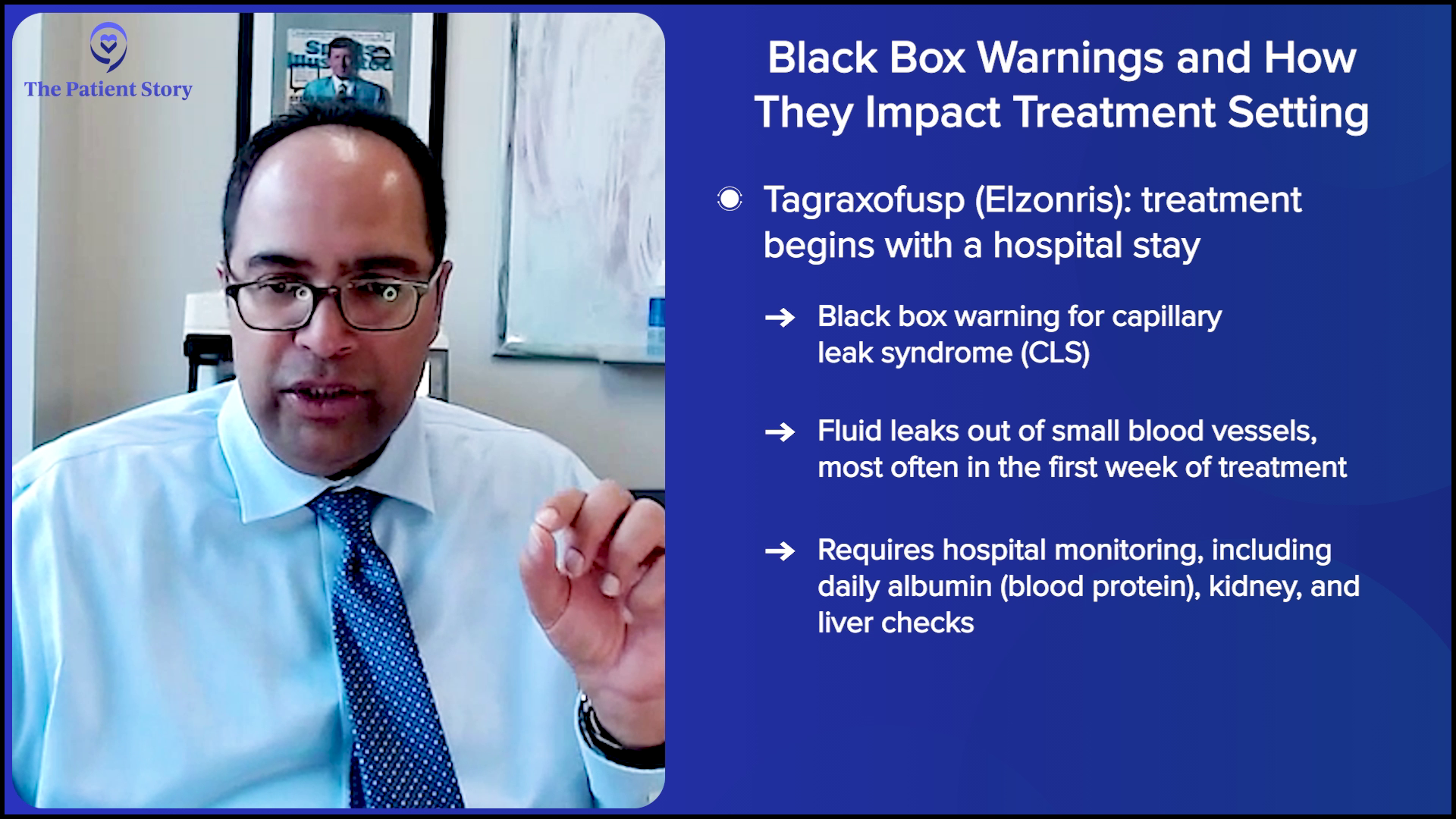
With tagraxofusp (Elzonris) or TAG, the first-in-class CD123, the diphtheria toxin-modified agent, there was an FDA black box warning, appropriately, for a potentially life-threatening complication called capillary leak syndrome (CLS). That’s very important.
In the early stages of the clinical trials, we observed patients who potentially passed away from too much fluid in their body, especially around the heart and lungs; one or two patients did pass away. Capillary leak syndrome is an old phenomenon that has been seen before with prior cytotoxic chemo at the time of transplant, even before targeted agents. But with TAG, we saw it can happen quickly at early onset, usually in that first week of therapy.
TAG has a black box warning for capillary leak syndrome, but it’s highly manageable if you know to monitor for it.
Dr. Naveen Pemmaraju, Hematologist-Oncologist
Mandatorily, we need to have patients hospitalized for close monitoring. If you do that, coupled with education of the patient and caregiver, education of yourself and your providing team, particularly over weekends, nights, holidays, and then monitoring the key parameters — albumin being the most important, which is the major protein in the body, as well as kidney function, liver function, daily weight, fluid intake, and administering diuretics when necessary — we were able to mitigate and avoid CLS. I want to mention that TAG has a black box warning for capillary leak syndrome, but it’s highly manageable if you know to monitor for it.
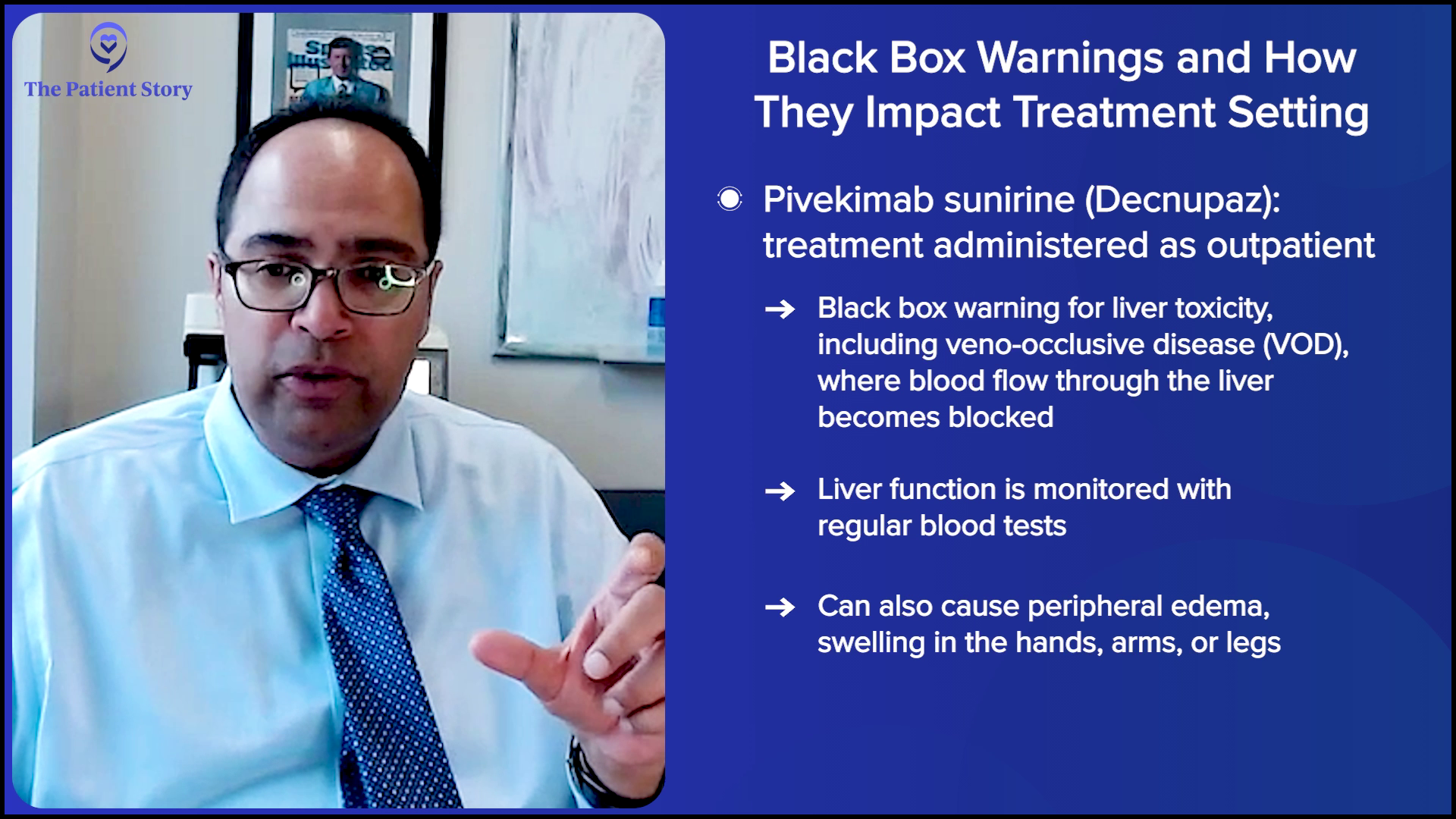
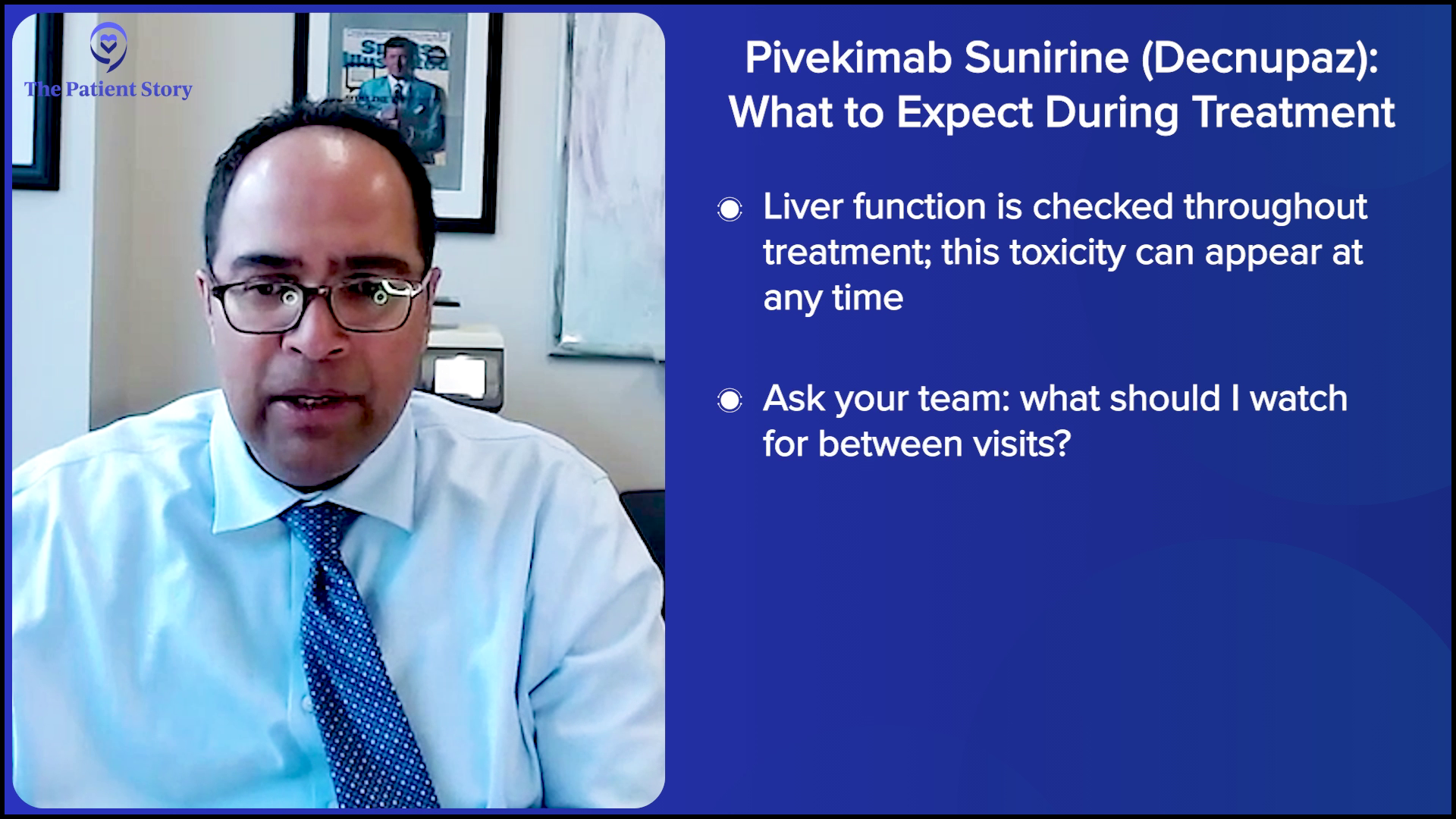
The second drug, the pivekimab sunirine (Decnupaz) or PVEK, also garners an FDA black box warning and appropriately so. These are major warnings for providers for liver toxicity or hepatic dysfunction. Now, it also targets CD123, so with this drug, there are two things I want us to watch out for.
The liver is important, so monitor the liver function tests. If somebody has prior liver damage, you’re looking out for a potentially life-threatening syndrome called veno-occlusive disease (VOD) or sinusoidal obstructive syndrome (SOS). There’s that alphabet soup, but basically, it’s a major liver toxicity that can cause a patient to be ill. Again, it can be monitored for, educated about, and prevented.
PVEK also garners an FDA black box warning and appropriately so. These are major warnings for providers for liver toxicity or hepatic dysfunction.
Dr. Naveen Pemmaraju, Hematologist-Oncologist
The second one is edema, but not central edema necessarily; it’s more focused on peripheral edema, which is a swelling of the hands, arms, and legs. It’s a little bit away from the heart and lungs, although that can still happen.
What you’re hearing is that there are some potentially serious toxicities. There are theories about it. Both of these drugs target CD123, this protein I mentioned. In addition to being on BPDCN cells, unfortunately, some healthy cells carry CD123 too. That’s what you’re seeing here: Some of the cells that surround the blood vessels of the heart, lungs, liver, linings, and endothelial cells also have CD123, so maybe it’s an on-target, off-tumor effect.

There are other side effects and toxicities for folks to get used to, but I’m glad you brought up the black box warning, Andrew. It’s all about the patients. It’s good to have a warning on new drugs, because it does make people pause, stop, think, read, and educate themselves. I look at a black box warning as: Hey, let’s stop and talk about this. Let’s see if there are any factors that we need to know about for the patient or the tumor to monitor for and to look for after-effects.
I believe in co-managed care. I have patients from all over the world. If you come to see me, it’s co-managed care. We have our team in Houston, but we’re also in contact with your local team.
Dr. Naveen Pemmaraju, Hematologist-Oncologist
What treatment looks like day to day
Andrew: You mentioned these different drugs and for one of them, you have to be in the hospital first. You talked about being close by because of potential complications. What’s required of the patient logistically?
Dr. Pemmaraju: Let me break that down for us, Andrew. What you’re referring to is the first experience: that’s the TAG, which was the game-changing first-in-class CD123, tagraxofusp (Elzonris). Because of the toxicities mentioned, the patient has to be monitored very closely. As you know, I believe in co-managed care. I have patients from all over the world. If you come to see me, it’s co-managed care. We have our team in Houston, but we’re also in contact with your local team.

For TAG, it’s complex. All of these new drugs are. The first cycle must be — mandatory — inpatient, which means getting admitted to the hospital electively. It’s planned for up to five days or five doses in the first cycle. I say up to because some patients may only need two, three, or four doses. You have to follow the parameters daily with your team, checking albumin, liver, kidney, fluid intake, daily weight, breathing status, heart rate status, and fevers, so each day is a daily assessment.

Once the planned up to five days are done, as long as there’s no capillary leak syndrome, the patient is discharged. Yes, you want to be close to the center that administered the drugs, because you’re looking for capillary leak syndrome, but also to check your liver, kidneys, platelets, fevers, and all of that. Once you get past that first cycle, which is usually defined as three to four weeks, the subsequent cycles of this IV drug can be given outpatient. That’s one key. It depends on you, your doctor, and your hospital. I still advise that some patients may need inpatient for subsequent cycles.
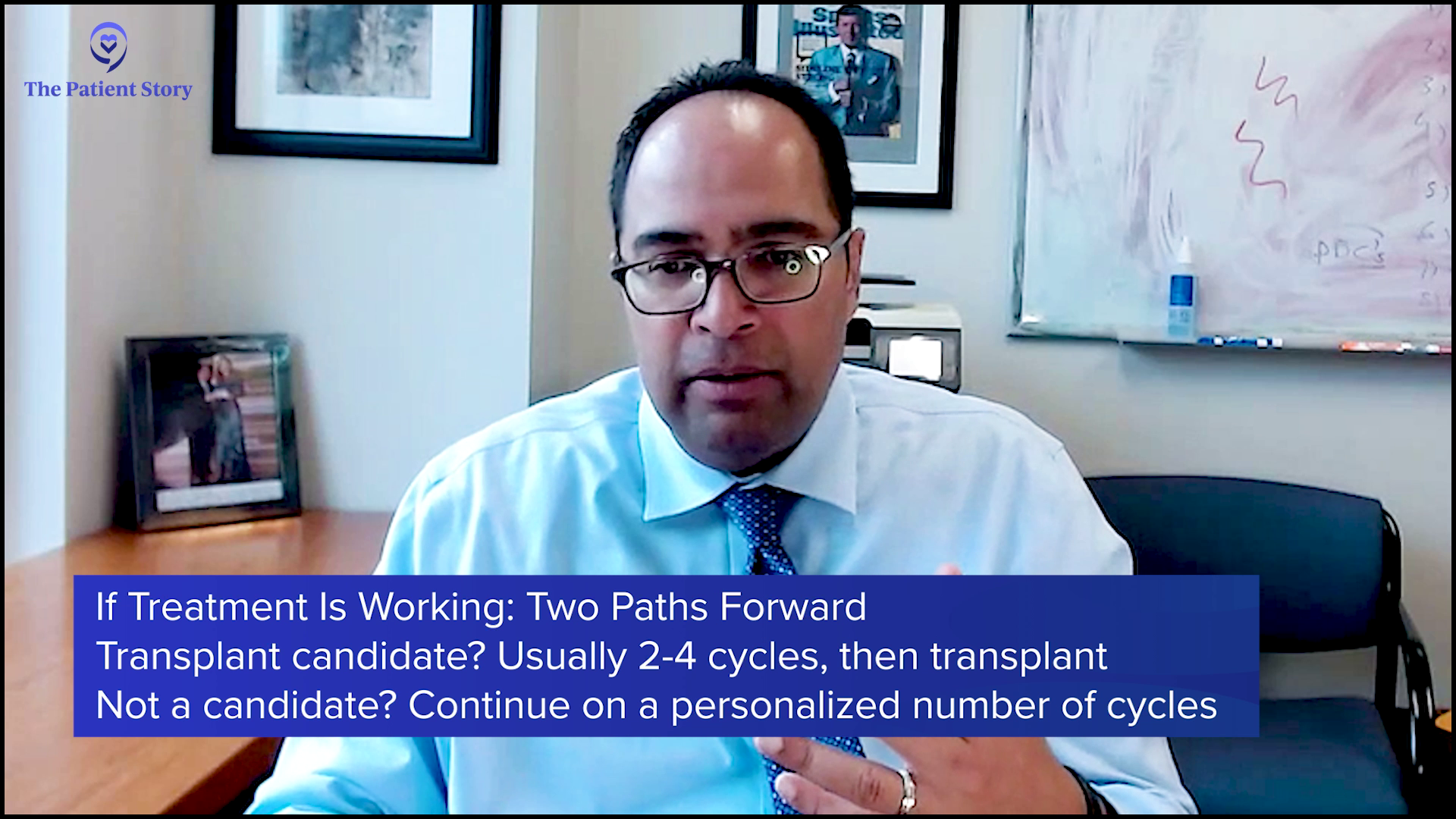
Timing is different for each patient. On clinical trials, we saw that patients were able to get into remission quickly after the first or second cycle; by two to four cycles, if they’re able to go to transplant, they’re able to go. That’s one off-ramp.
A second off-ramp is a patient isn’t able to go to transplant — whether it’s the patient’s decision or the doctor’s decision — and now they’re going to get X amount of cycles. It can be different for each patient. The doctor will assess and determine response, treatment holiday, and toxicity.
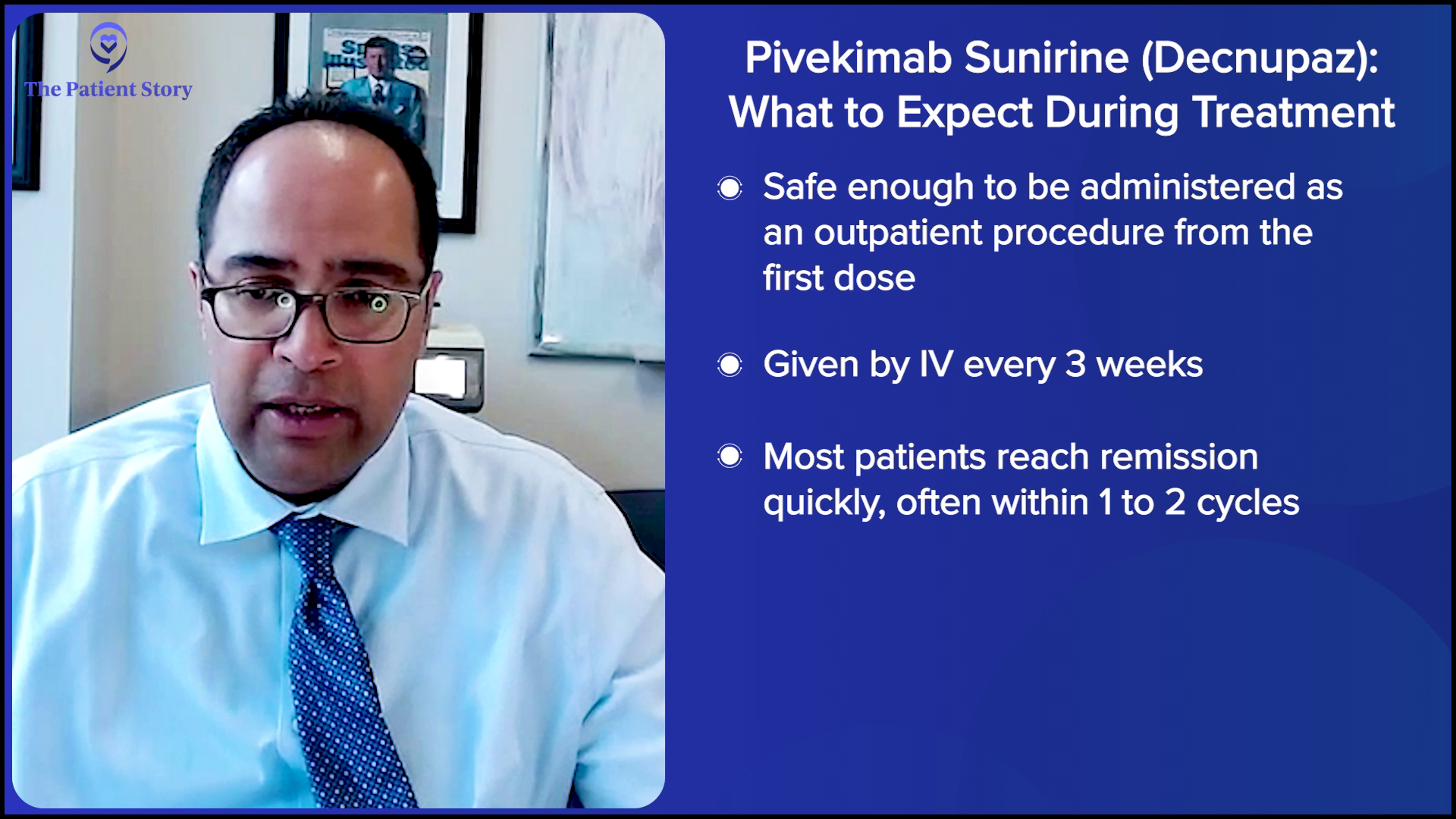
In the same breath, let me contrast that with pivekimab sunirine (Decnupaz) or PVEK. It also targets CD123, but with a different toxin or payload. What’s interesting is it’s safe enough to be given in the outpatient setting from the beginning, so that’s novel. Both TAG and PVEK are IV drugs, but PVEK is given every three weeks. These drugs can be given indefinitely or in a time-limited fashion. It’s also the same where stem cell transplant is an off-ramp. Patients went into remission very quickly with this drug as well, after one to two cycles for the majority of patients.
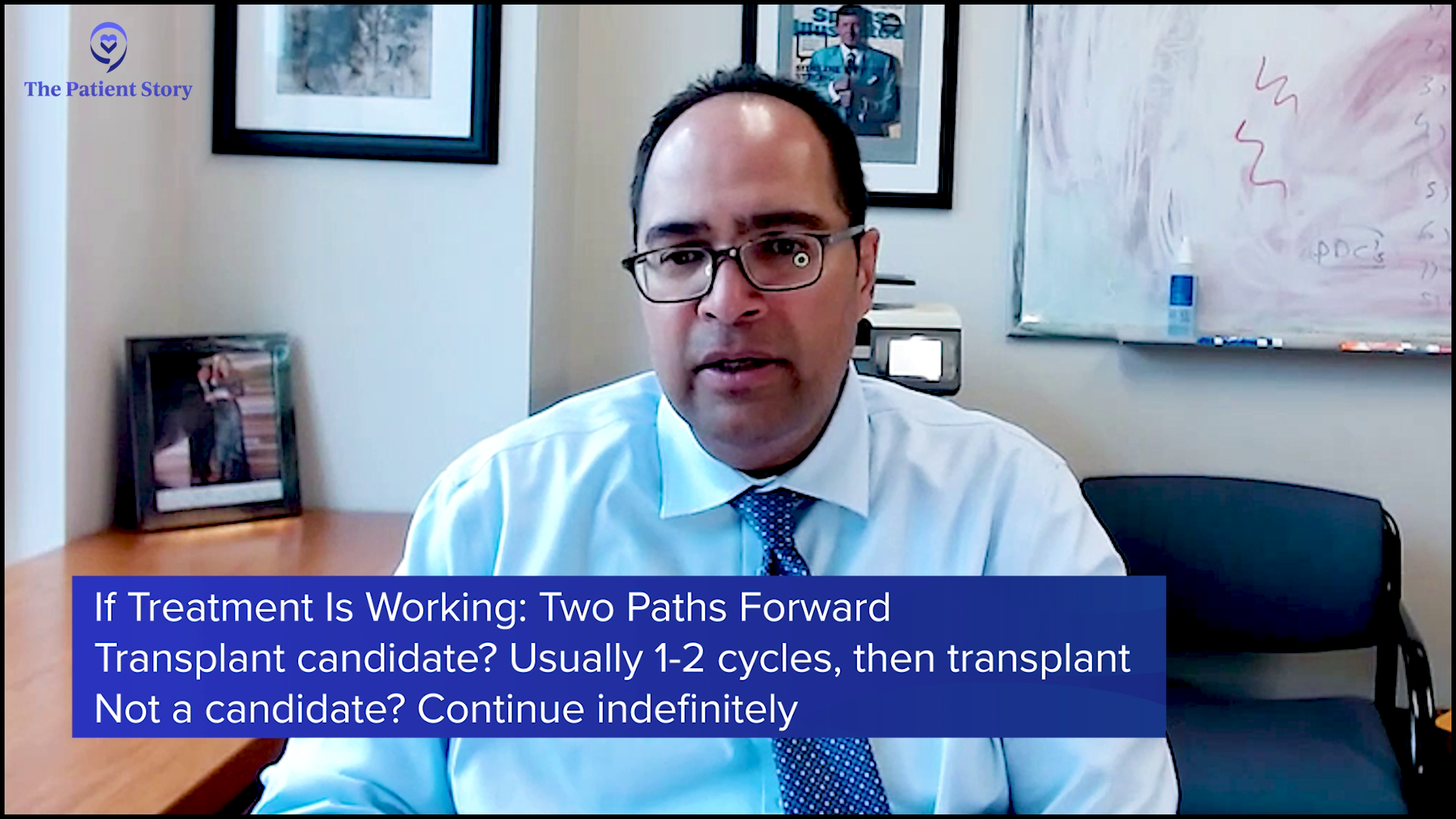
If the patient isn’t going for transplant, then they can get the drug indefinitely. You can see the duration of remission in the paper.
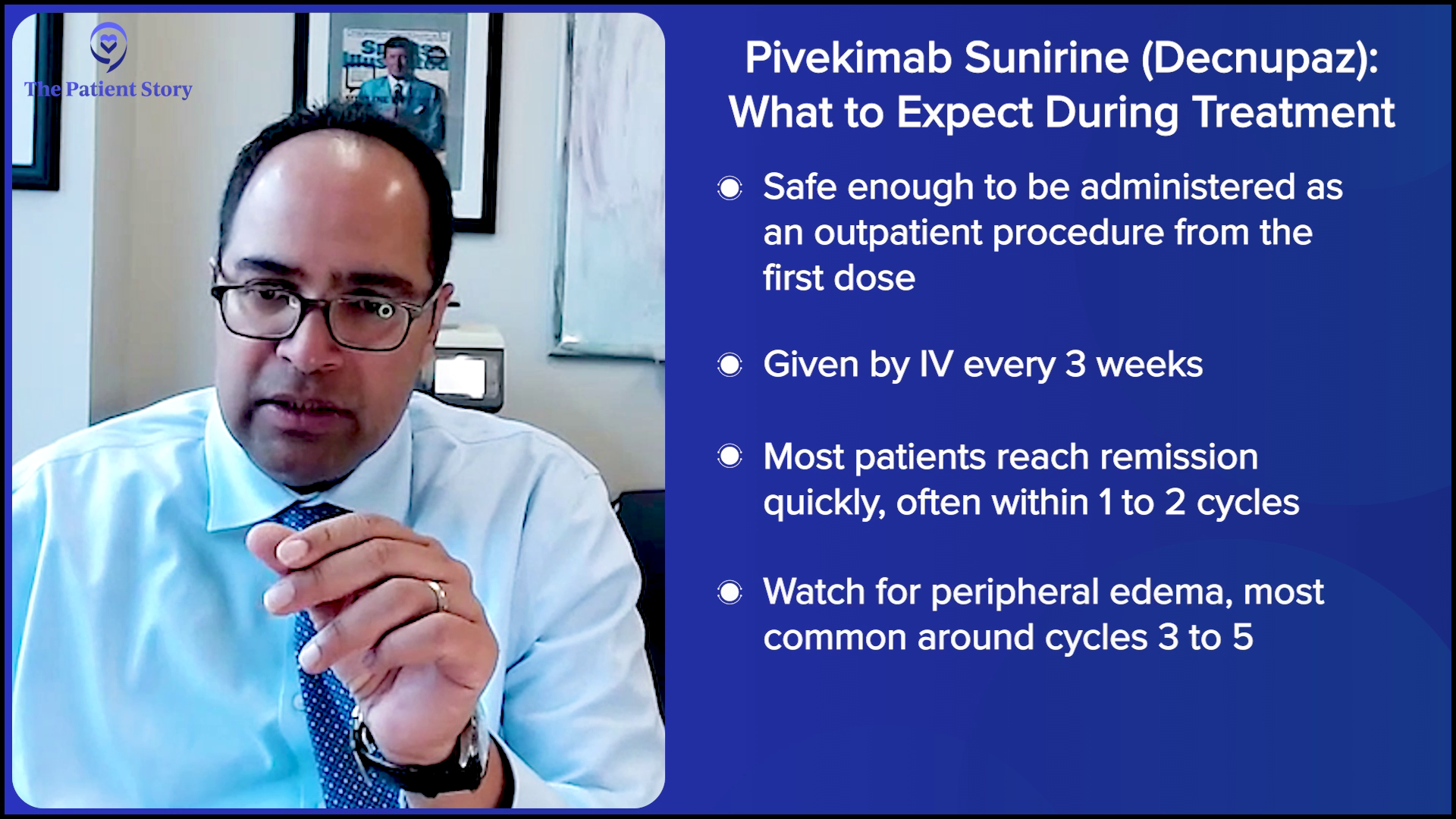
With PVEK, even though the patient doesn’t have to be admitted, at around cycles three, four, or five, we see some patients getting the signal for peripheral edema, so you have to watch out for that as it can require diuresis. If it gets serious, you may even have to go to the hospital for it. I want folks to watch out for fluid buildup. Liver toxicity, as mentioned, can happen at any time, so we’re watching the liver tests in addition to the blood counts.
I also want to mention that we’re using other drugs off-label in combinations and off the clinical trials; that’s the azacitidine-venetoclax approach in the older, unfit patient and what our colleagues do in AML. Some people, Andrew, do use CHOP, a lymphoma-based therapy, plus venetoclax. [Editor’s Note: CHOP is a combination treatment used to treat non-Hodgkin lymphoma that includes cyclophosphamide, doxorubicin hydrochloride, vincristine sulfate, and prednisone.] It’s interesting that in a rare disease, we mix, match, and borrow depending on the patient’s fitness. But we’re excited to have two monotherapy approvals that you can choose either one, depending on the patient’s preference, their comorbidities, and some contraindicating factors.
Where chemotherapy fills a gap
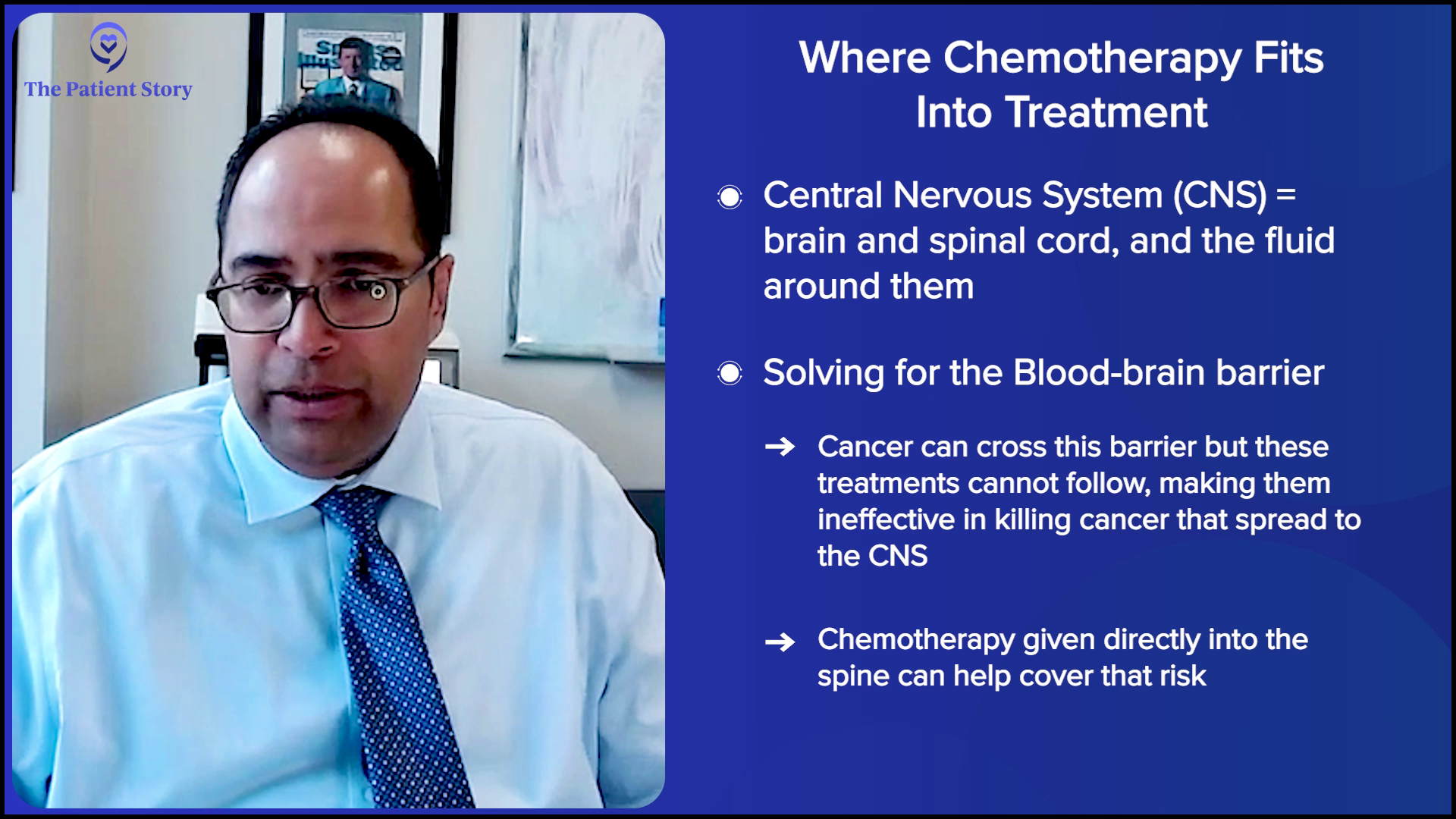
Dr. Pemmaraju: Don’t forget about the fourth component: central nervous system (CNS) involvement. When we were treating BPDCN with chemotherapy, we didn’t see as much CNS relapse. When we moved to targeted therapy as monotherapy, we started to see it again. We realized that we need to cover the central nervous system. The targeted agents do not cross the blood-brain barrier. We have a nice solution: We added intrathecal chemotherapy. With the combinations, we’re hoping to add agents that cross the blood-brain barrier.
Stem cell transplant: The curative goal
Dr. Pemmaraju: Finally, we’ve optimized the allogeneic stem cell transplant, Andrew. That was a very scary and difficult thing to do for some of our patients 20 years ago when I first started in this. Now, we think that almost every patient — if not every patient — has a potential donor. We’re able to do it for older patients and more centers can do it.
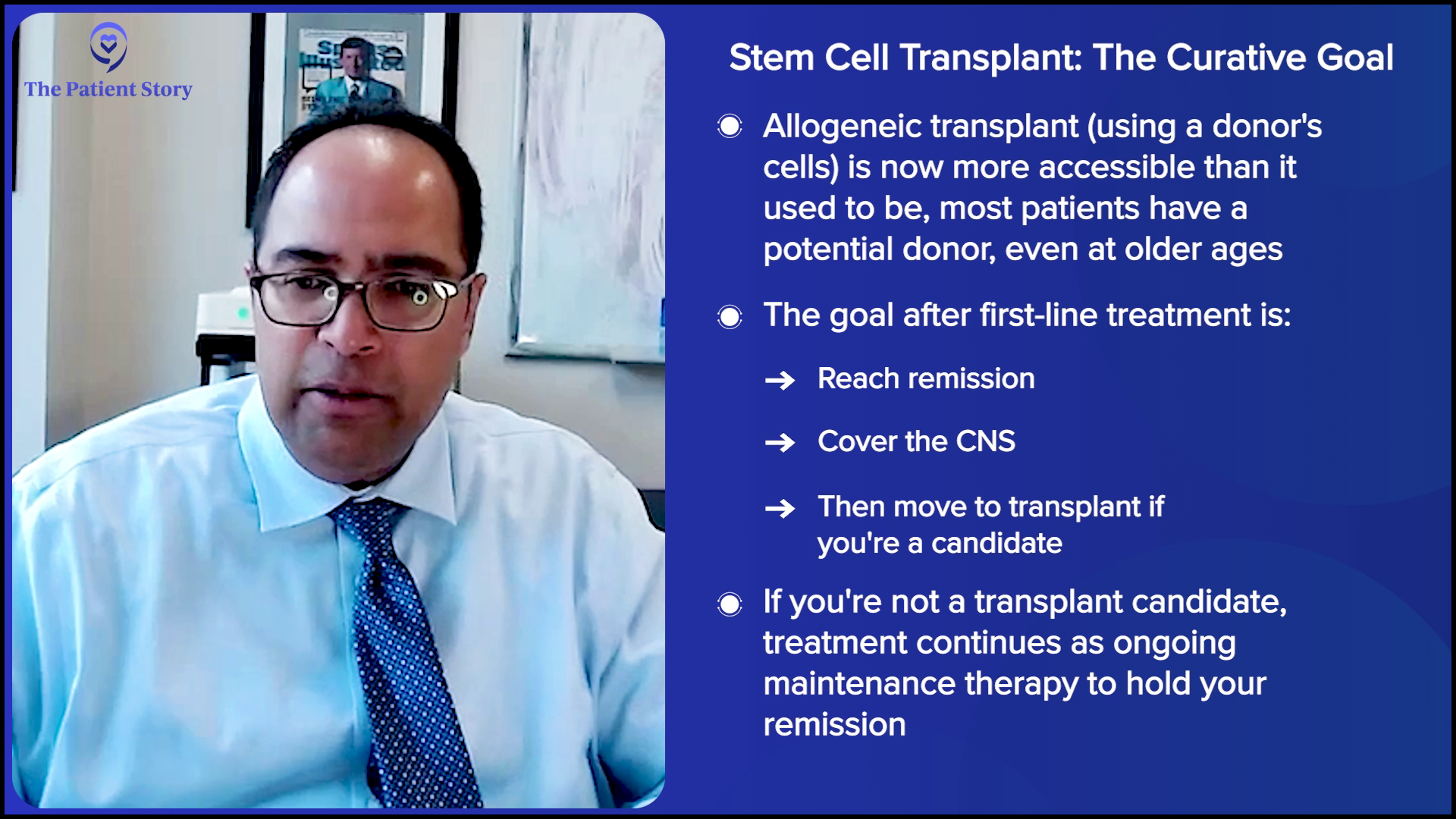
The paradigm for BPDCN is targeted therapy plus other therapies, if you’re able to get them. Get into that first remission. Get central nervous system prophylaxis. Get to an allogeneic stem cell transplant, if you can. The vast majority of patients may not be fit enough to do all that, so we’re using single agents or monotherapy regimens. Then, if not able to get into transplant, an extended period of maintenance and consolidation.
It’s tremendously exciting to see the advances… You wouldn’t be talking to me today if this was in 2016 instead of 2026, so I feel tremendously lucky.
Jim T., BPDCN Patient
Patient insert: What having treatment options means for a BPDCN patient
Stephanie: Before we go on, Jim was treated with the same kind of targeted therapy and stem cell transplant that Dr. Pemmaraju was talking about. Now, here he is on how he thinks about the science that’s still moving forward.
Jim: It’s very exciting that all of these advancements were made for such a rare disease that only hits 500 or so people a year in this country. Yet they’re not stopping. They’re continuing to look at other drugs. I hope Dr. Pemmaraju has success in his trials and that there comes a time when you can beat this without having a stem cell transplant.
It’s tremendously exciting to see the advances. I hope we continue to give science its proper place in this country, work through these things, and utilize the resources for research because it saves lives. We’re here talking to each other, clearly. You wouldn’t be talking to me today if this was in 2016 instead of 2026, so I feel tremendously lucky. I hope we can make a difference in what we do and have somebody 10 years from now say the same thing that I’m saying today.

The determination of these therapies, because they’ll never be randomized head-to-head, is personalized based on the doctor or patient preference and your comorbidities.
Dr. Naveen Pemmaraju, Hematologist-Oncologist
Making the treatment decision together
Andrew: This comes down to understanding what you have, your healthcare team, and your options, so now there’s a discussion. I have this illness. I’m sitting across from you. How do we discuss a treatment plan? You have an older drug, a newer drug, transplant, and combination approaches. How do we decide?
Dr. Pemmaraju: That’s a good problem to have for our patients in 2026. In BPDCN, we have now entered a golden era of personalized BPDCN therapy. We just didn’t have it before; everyone was treated the same way.
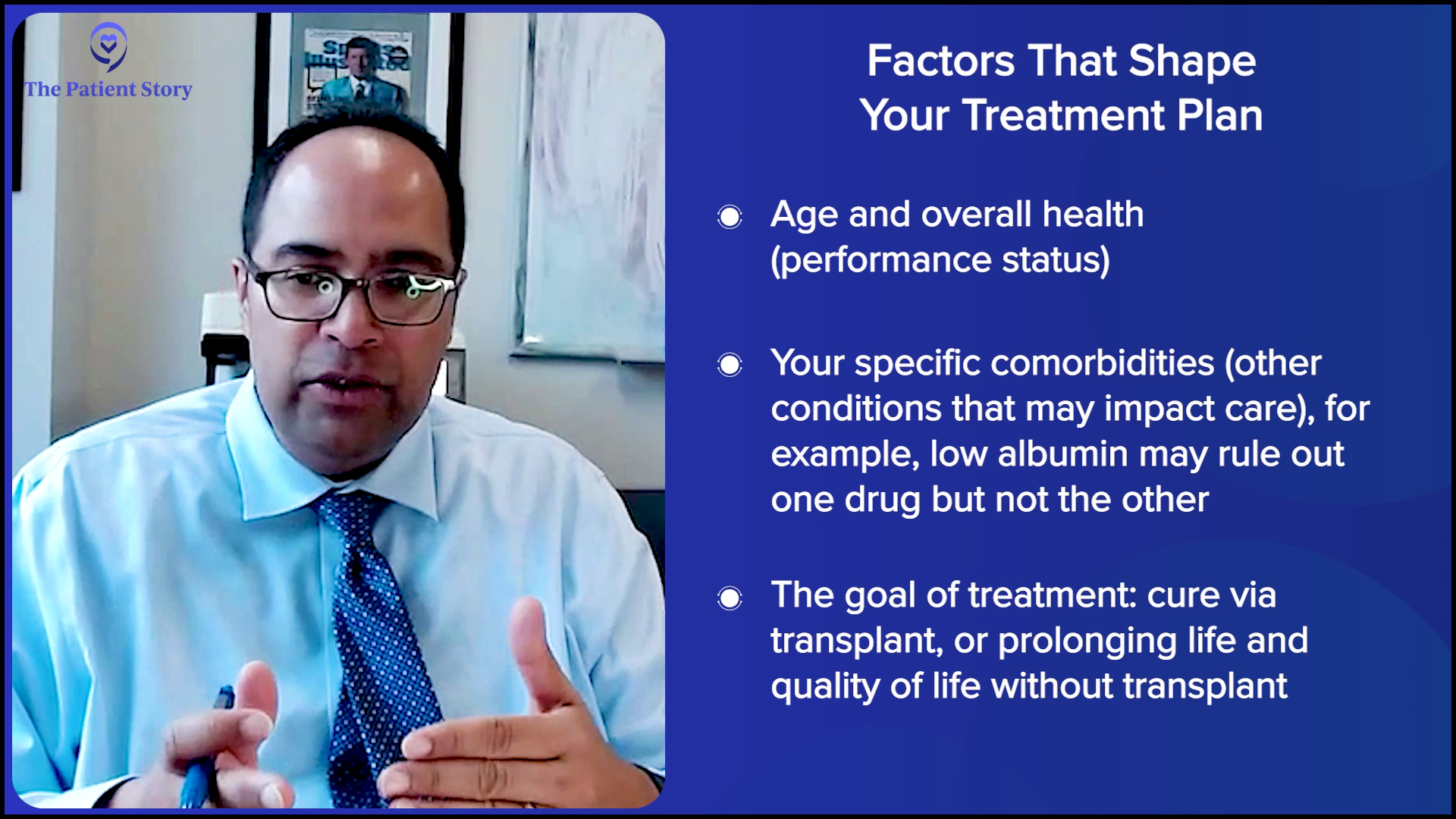
There are three main factors that we talk about. One is age and comorbidities or, as some people call it, performance status. That’s your overall health condition and what’s going to direct what therapy you could have. For example, if you have an ultra-low albumin for whatever reason — below 3.0, for example — you may not qualify for TAG, because that’s one of the main things to consider. So the first factor is a combination of your age, comorbidities, and what you can tolerate.
Number two is: What is the end goal of the therapy? If the end goal is curative intent, then your next move is going to be a stem cell transplant. You want to optimize the therapy that’s going to get you to transplant with the least amount of toxicity and the most amount of verve going into it.
Finally, if you’re not going to stem cell transplant, what is the goal of extended life and quality of life? That may be, as you said nicely, these combination therapies upfront as an induction and lesser therapy as you move forward.
There’s no molecular-guided therapy. We haven’t gotten there yet, so hopefully we’ll be there. But the determination of these therapies, because they’ll never be randomized head-to-head, is personalized based on the doctor or patient preference and your comorbidities.
Andrew: The targeted therapies have some side effects that need to be monitored. You’re working on combination therapy.
Dr. Pemmaraju: We’re working on it. That’s in clinical trials.
The more agents we add upfront, there can be and will be an upfront toxicity. What’s the payoff for the patient?
Dr. Naveen Pemmaraju, Hematologist-Oncologist
Andrew: People are being frank with you or their specialist on their goals, and you’re being frank with them about appropriate expectations in terms of longevity and quality of life.
Dr. Pemmaraju: Yes. I think you have to say this out loud, because it’s historically such a deadly disease and still is to this day. As I’ve become more and more seasoned as an oncologist, what I’ve found is that discussion is necessary, even if it’s difficult. This isn’t a disease with a track record of years and years of survival, so that’s what we’re changing with all the things we’re talking about.
Quality of life is very important. The issue is that the more agents we add upfront, there can be and will be an upfront toxicity. What’s the payoff for the patient? Is it extended life? Is it cure? Is it getting to transplant? Or is the goal palliative and, therefore, quality-of-life support?
What you said is so important in BPDCN. We can contrast that with getting a diagnosis of essential thrombocythemia (ET) or polycythemia vera (PV) in the myeloproliferative neoplasms (MPNs) space. Historically, we expect the track record to be measured more in decades. The final issue is the quality of life vis-à-vis the toxicities. We mentioned here the possibility of central capillary leak syndrome of TAG and hepatic dysfunction and peripheral edema of PVEK, which are very important for the patient’s quality of life.
I also want to mention timing. For PVEK, we observed that peripheral edema usually occurs a bit later, typically in cycles three, four, or five. Liver toxicity can occur at any time. Whereas with TAG, the toxicity appears to be more restricted to the first cycle, during inpatient induction. With TAG, you’re in the hospital for that first cycle; that’s mandated. Whereas with PVEK, you can get it outpatient from the beginning.
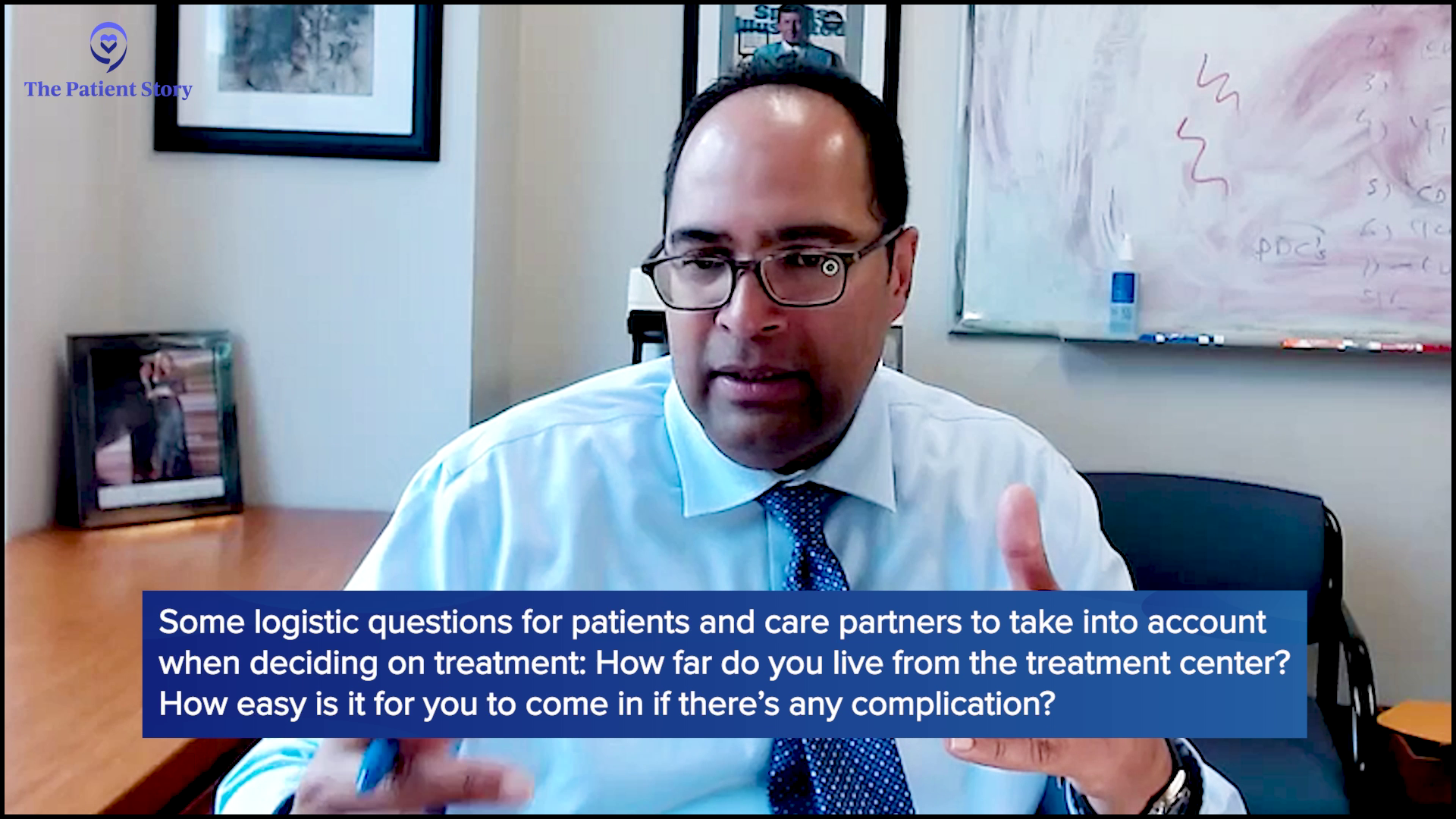
There are logistical concerns to take into account for the patient, the family, and the caregiver. How far do you live from the center? How easy is it for you to come in when you have a complication? This has to be taken into account when we give a treatment regimen.
Why clinical trials matter at every stage
Andrew: Dr. Pemmaraju, when is a clinical trial part of the discussion?
Dr. Pemmaraju: Andrew, I feel passionately about this. Clinical trials are always part of the discussion. There, I said it. It may surprise some. Some people still think that clinical trials are and should be offered as a last resort or last-ditch effort when all else has failed. Certainly, there’s a role for that.

But what we’re seeing now, in partnership with regulatory agencies, pharmaceutical sponsors, government agencies, and academic universities, is a breakthrough in offering clinical trials upfront, so that means even as a frontline option. It’s an option and hope for something that builds on an already-approved strategy. In these rare diseases, there’s often no standard of care, so you’re still trying to establish it. Make sure people know that clinical trials are available even in the frontline setting, so we encourage folks to look into those if they qualify.
Andrew: Wow. Okay, let’s talk about clinical trials. All of these drugs went through clinical trials. You’re working on more. You’re action central for that at UT MD Anderson, for sure. Everybody says, this is what you have today. Is there something better coming down the line? Would it be appropriate for me? Tell us about clinical trials and whether they could offer some hope.
Dr. Pemmaraju: You have been one of the best advocates for that over the last decade and a half, and I think that’s a passion area for you. You’re right. Everything I’m telling you, I’m proud to tell you, but they’re past achievements, which are directly benefiting our patients right now, and that’s wonderful. That’s because of brave patients and family members who signed up for these clinical trials over the last 15 to 16 years, but we can always do better.
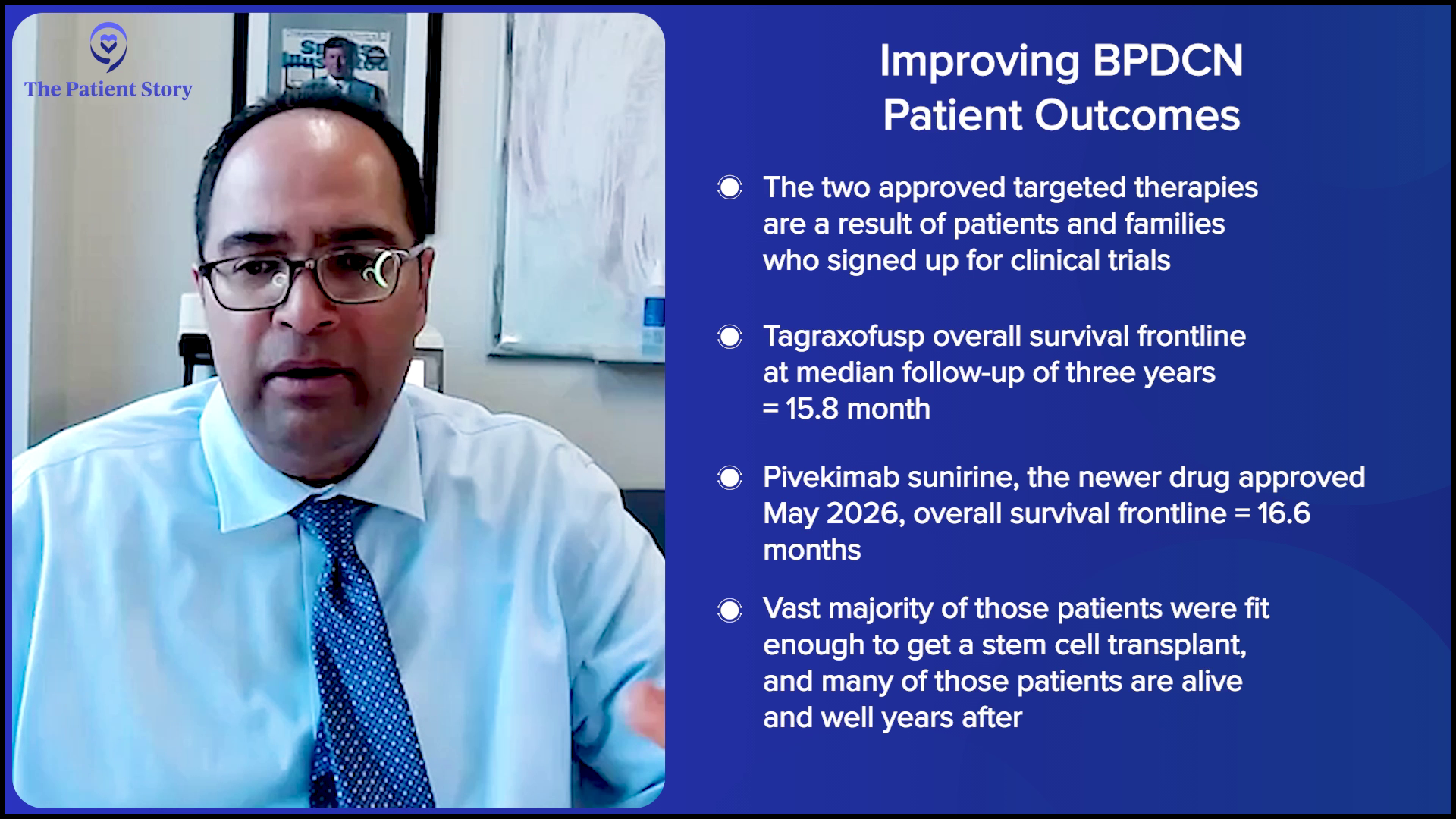
The TAG overall survival frontline data that I updated in the Journal of Clinical Oncology (JCO) a few years ago, at a median follow-up of three years, is only 15.8 months. For PVEK, the newer drug that we got approved in May 2026, the median overall survival for a frontline patient is 16.6 months. The vast majority of those patients were fit enough to get a stem cell transplant, and many of those patients are alive and well years later, which is great.
But with those numbers, we still have work to do. Those are as single agents in clinical trials. Then we ask the question: What’s happening? Why are people relapsing after such high success early on? Unfortunately, the disease itself comes back. Yes, some patients die of infection, sepsis, or multi-organ dysfunction. Some patients die of other things that we can’t control. But the vast majority are dying of relapse. It means that either we need to do more upfront to prevent the relapse or go for curative therapies.
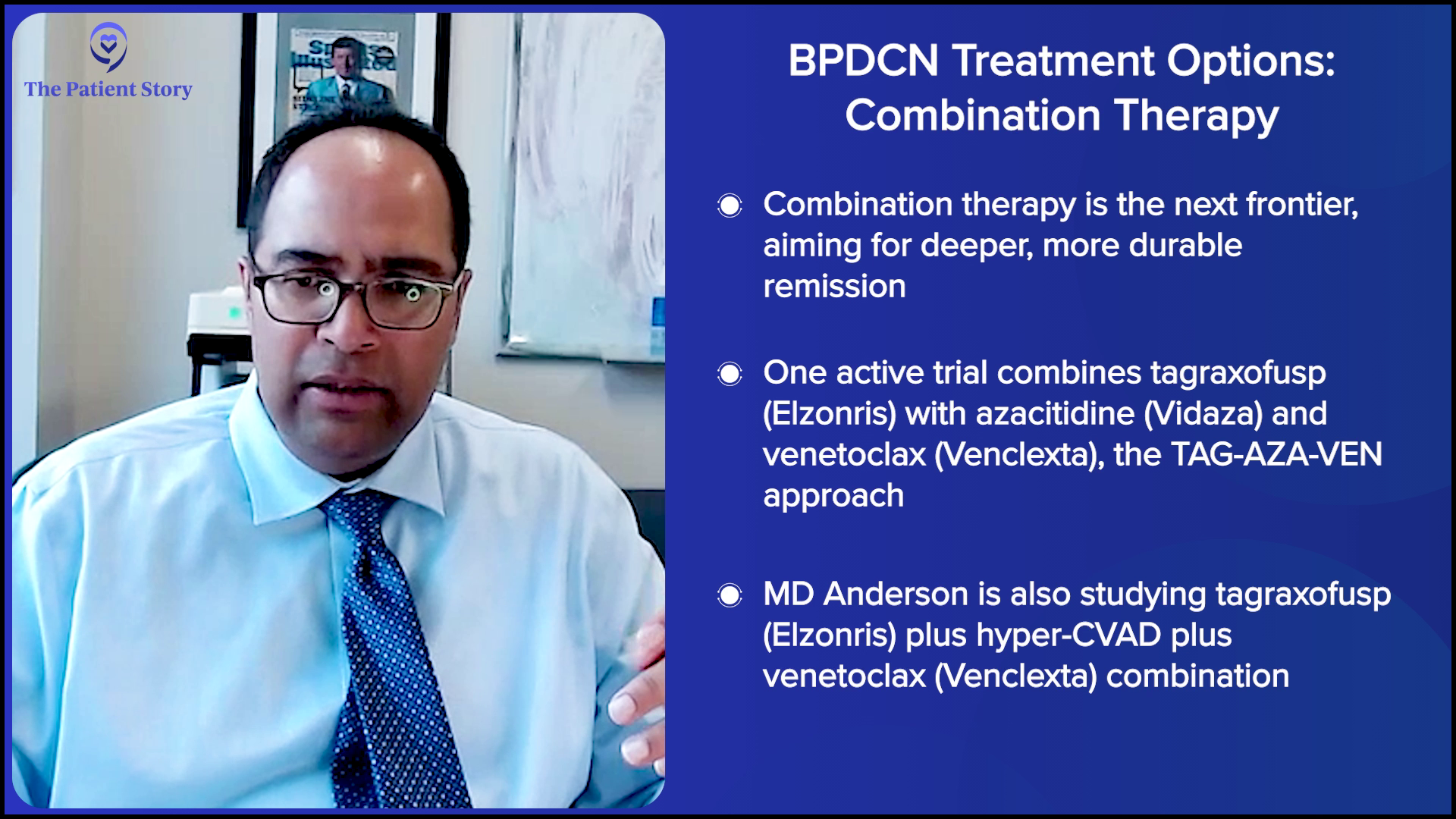
In that background, we have clinical trials ongoing and there are two I’d like to highlight. We’ve added AZA-VEN (azacitidine-venetoclax), which many know from the AML paradigm, so that’s TAG-AZA-VEN (tagraxofusp-azacitidine-venetoclax). That trial has been presented at the American Society of Hematology (ASH) meetings, which has been well received. We’re giving three drugs upfront, with the ability to drop down to maybe two or one as the patient goes on to maintenance and consolidation. Let’s see how that data matures.
In our own center at UT MD Anderson, as you highlighted, the TAG-hyper-CVAD-VEN program, alternating doublets. Again, we’re asking the question: Can we prevent relapse? Can we cure patients with therapy alone without needing the transplant? Or, if we go to transplant, can we optimize outcomes?
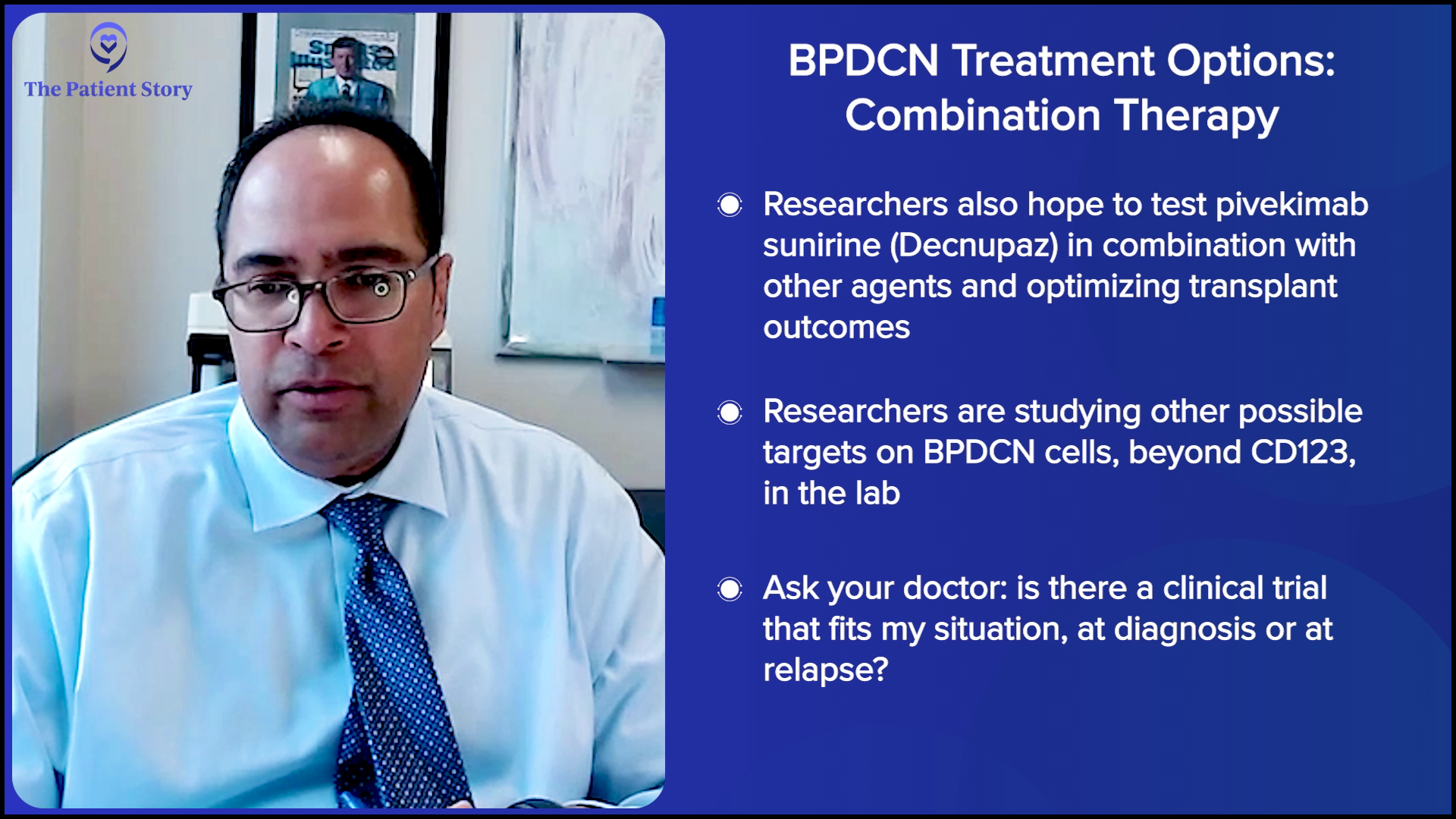
We hope to do similar trials with PVEK. Can we do combinatorial trials of PVEK with other agents? Outside of that, we’re testing in the lab, so it’s preclinical, meaning before it gets to patients. Are there other markers on the surface of BPDCN cells or inside of it that we can target? I hope to bring those to the clinic in the coming years.
Andrew: One thing about clinical trials that I always wonder about is: If I embark on an approved current therapy, does it preclude me from being in a trial?
Dr. Pemmaraju: Oh, that’s a great question. Sometimes yes, sometimes no, but by and large, we will find a clinical trial that can benefit a patient. Sometimes the trials will be written where if you had X treatment, then you can’t get X combination, but oftentimes, that’s not the case. I would say not always. It’s not going to preclude you. Almost always, it doesn’t. Sometimes, even if you’ve received an agent as monotherapy, we will allow you to go onto the clinical trial in combination. You just have to look at the details of each trial.
You have to look for specific items that may end up excluding you from a trial, but the key is that it may not carry over to another.
Dr. Naveen Pemmaraju, Hematologist-Oncologist
Andrew: What about comorbidities or earlier conditions you’ve had? Do they rule you out from being in a clinical trial?
Dr. Pemmaraju: Sometimes yes and sometimes no. The key with these new trials is that it’s for patient safety, but it’s also based on the mechanism of the drug. You have to look for specific items that may end up excluding you from a trial, but the key is that it may not carry over to another.
With PVEK, we know that there’s a signal there for the liver, so that may be something that precludes someone from getting on that drug. With TAG, you know that there’s the signal for the albumin and central capillary leak. Individual comorbidities could restrict someone from one trial, but not necessarily the other.
Each trial is so different. Each center may have different eligibility, if it’s an investigator-initiated trial at their own institution. Each sponsor may have one. The answer to your very good question is not necessarily. That’s why you have to inquire and go through the checklist for each patient.
With rare diseases, we’ve found that the best approach is a multidisciplinary approach… Technology has democratized it and made it very easy for people to reach out.
Dr. Naveen Pemmaraju, Hematologist-Oncologist
Finding the right specialist and team
Andrew: Someone gets to a specialist like you, and I’m sure there are not many.
Dr. Pemmaraju: Correct.
Andrew: How does somebody get to someone like you? They’re at a clinic somewhere in the world, they have these weird symptoms, they want to get the right testing, and they want to have the right team. How does that happen?
Dr. Pemmaraju: Andrew, I’m glad you asked because with rare diseases, we’ve found that the best approach is a multidisciplinary approach. When we started, multidisciplinary used to mean physically multidisciplinary. You have a team sitting in a room together, and either sees the patient at the same time or on the same day. In BPDCN, it’s a true multidisciplinary field. It’s us as leukemia, but also dermatology, pathology, the stem cell transplant team, and in the case of our younger patients, the pediatric or adolescent and young adult (AYA) team.
We found out over time, and the COVID pandemic catalyzed this, that multidisciplinary care can be virtual. Technology has democratized it and made it very easy for people to reach out. Now, not everyone has access to technology and we know that, but the vast majority of people around the world are starting to.
Even if you have such an ultra-rare diagnosis that doesn’t have an exact home or it’s a work in progress, there’s something called category or field effect. Oftentimes, the new diagnosis will fall into a broader family of diagnoses.
Dr. Naveen Pemmaraju, Hematologist-Oncologist
Believe it or not, if you get diagnosed or have a suspicion of a very ultra-rare diagnosis that your center has not seen, your first step is to turn to the internet. If you go online, usually you’re going to find a specialist somewhere in the world who’s working on what you have.
Even if you have such an ultra-rare diagnosis that doesn’t have an exact home or it’s a work in progress, there’s something called category or field effect. Oftentimes, the new diagnosis will fall into a broader family of diagnoses. For example, with BPDCN, we first found our home with the MPN team and the AML team. As time has gone on, we’ve led two drugs to FDA approval and, finally, it may be its own field.
Perhaps one way to look at it is finding an adjacent specialist to reach out to, not out of desperation, but because that may be the home where that rare disease resides. It’s okay to use the internet, AI, and social media, but verify the source. Find respected and trusted sources. At the end of the day, you can always look up a major university, find someone there, and reach out.
Expertise, especially in rare diseases, can oftentimes be experience and opinion, so getting more than one is essential… It’s a great idea to get multiple opinions because sometimes, the personality may not click.
Dr. Naveen Pemmaraju, Hematologist-Oncologist
Should you get a second opinion?
Andrew: That brings up another question, which is a second opinion. You’re a world expert and maybe in some other place, there’s another top expert. Should I be commuting?
Dr. Pemmaraju: This is very important. I want each patient to know this: It’s your body, your life, your journey, and therefore, it’s your choice. No matter how expert the person is, whether it’s me or anybody else, I encourage you to get a second or even a third opinion, if it’s necessary. That’s for two reasons.
One is what you said: Expertise, especially in rare diseases, can oftentimes be experience and opinion, so getting more than one is essential. Two, and I want to emphasize this: It’s a great idea to get multiple opinions because sometimes, the personality may not click. It’s your life and it’s how you feel. Maybe the attitude of the providing physician is not clicking with you. Maybe your family member doesn’t have a great feel. Maybe it’s the team or the clinic office dynamic. Seeking a second opinion, particularly in rare diseases, is great.
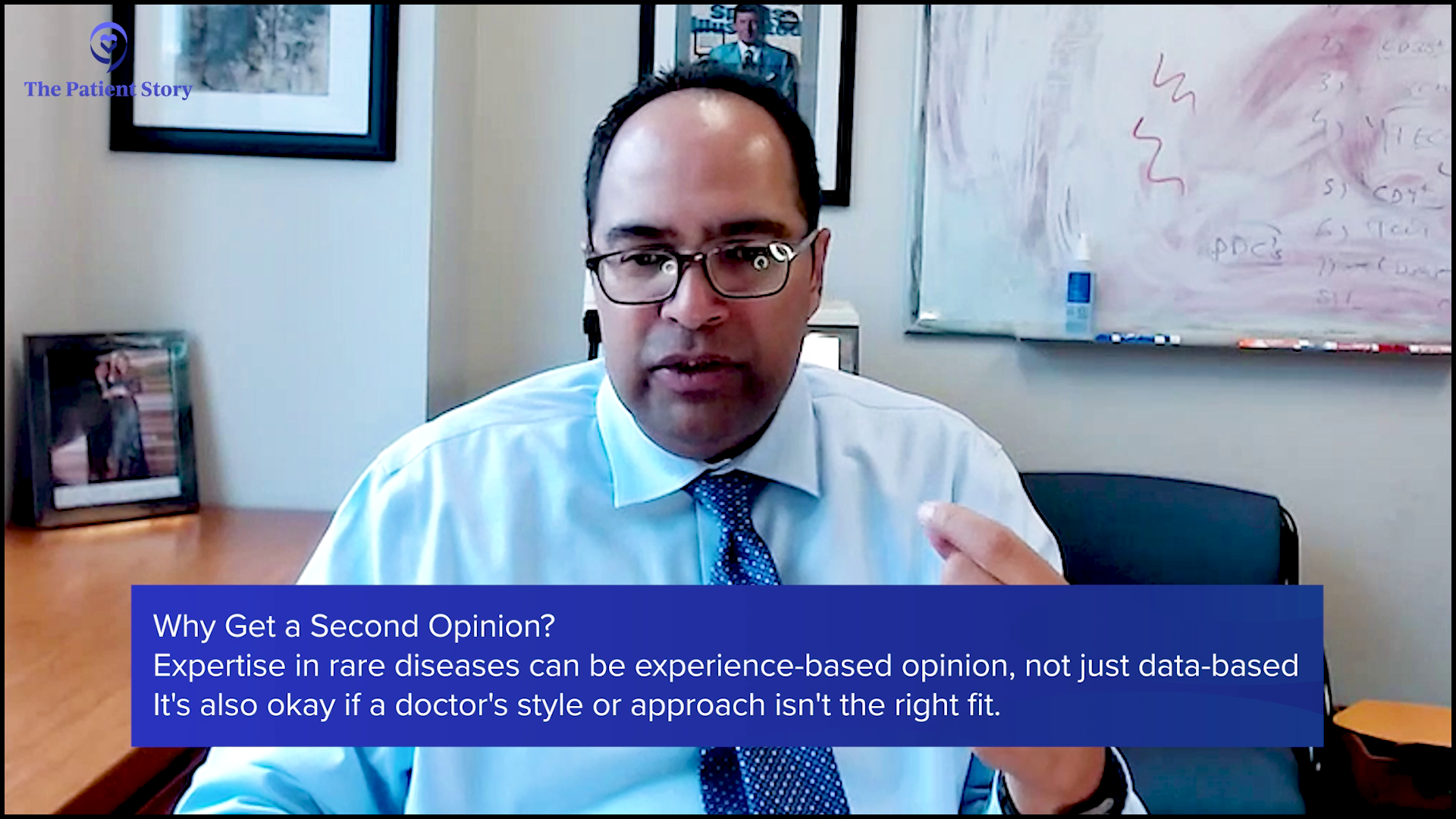
Oftentimes, patients are surprised to know that all of us, most of us, are friends and not just colleagues. We have dinner together. We attend meetings together. Oftentimes, we may be discussing these cases together, so it’s more multidisciplinary than you think.
I also want to put it out there and maybe it’s good for someone to hear a doctor say this: Never feel embarrassed, lonely, scared, or worried to seek a second opinion. “What’s my doctor going to think? What’s this person going to think?” It’s your body, your life, and your journey, so it’s your choice. I want to empower people to do what you asked, particularly in rare diseases, and to understand and know that it’s a good idea to have experts talking to each other in the toughest cases.
Dr. Luskin said, ‘You’re going to be wherever you get treated for a year, so you have to be within the vicinity of the hospital. Use that to make your decision…’ And that very much helped guide me to decide to get treated at Penn.
Jim T., BPDCN Patient
Patient insert: Second opinions and choosing a center
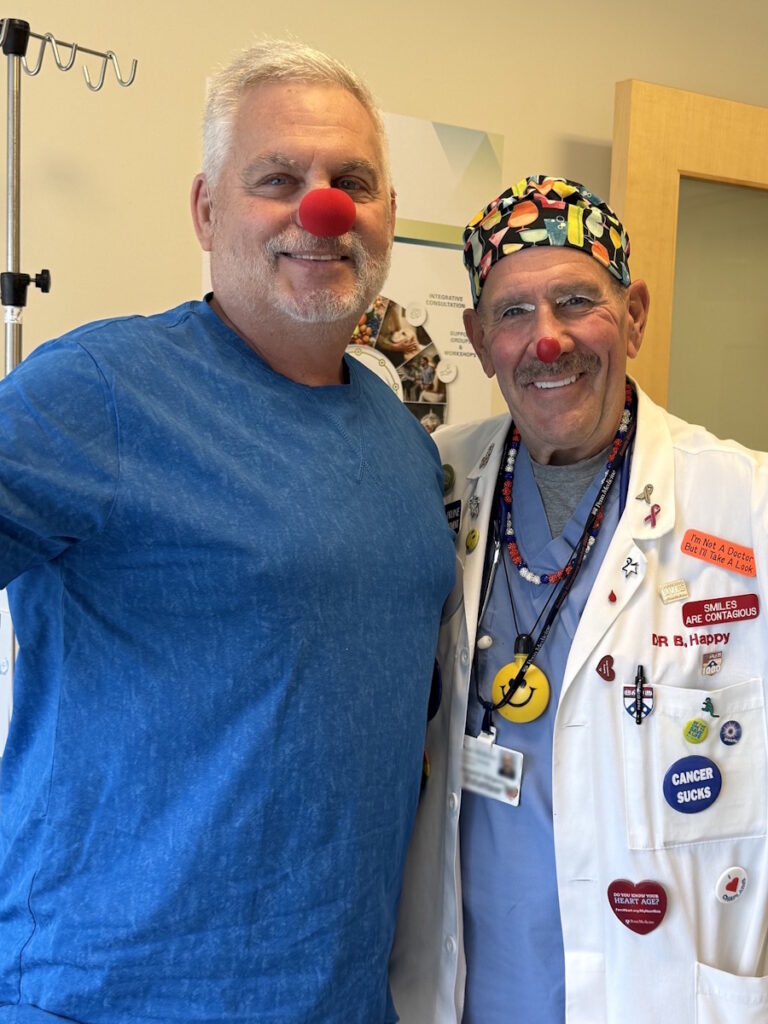
Stephanie: Dr. Pemmaraju is saying that the specialists in this small field often know one another and Jim found that out firsthand when he sought more than one opinion, meeting Dr. Pemmaraju and other top leaders in the field, like Dr. Marlise Luskin from the Dana-Farber Cancer Institute in Boston.
Jim: I didn’t have a lot of hope in the six days between my diagnosis and when I met Dr. Luskin. We flew up to Boston on a Tuesday night, and had more blood work and another biopsy on the rash to confirm that it was BPDCN. She felt that it was likely that I was in the early stages of the disease and therefore it would be more treatable than someone in a later stage.
We talked for a while. She knew I was going to Houston the next day to meet Dr. Pemmaraju. But Dr. Luskin said, “Listen. I’d love to treat you. I think there’s going to be a good chance of success. I see you live right outside of Philadelphia; I know the doctor at Penn Medicine, Dr. Keith Pratz. He’s excellent and he’s going to use the same protocol that I would. Whether you go here, Houston, or Philadelphia, you’re going to be wherever you get treated for a year, so you have to be within the vicinity of the hospital. Use that to make your decision. You’re either going to be in Boston for a year, in Houston for a year, or at home when you’re not in the hospital.” And that very much helped guide me to decide to get treated at Penn.
Then I got on a plane, flew to Houston, and had a somewhat different conversation with Dr. Pemmaraju. He concurred with Dr. Luskin that I was an excellent candidate because he too felt that it was early in this process. He was in the midst of a trial with 21 participants that would have tried to cure without having to go the stem cell transplant route. It was a difficult decision. He’s an excellent doctor with a tremendous reputation.
That was a Thursday when we had that conversation. I had another bone marrow biopsy at UT MD Anderson. The following Tuesday, I saw Dr. Pratz for the first time at Penn and had a very similar conversation as I had with Dr. Luskin. I actually doubled back to Dr. Luskin through the message portal. Without quite saying it, she helped steer me to the stem cell transplant route. The next day, I got back to Dr. Pratz and said, “I’m in. Let’s proceed.”
We were able to take and show an ultra-rare cancer that’s difficult to pronounce, that most people have never heard of, and put it into the mainstream, and that’s because of lab scientific breakthroughs
Dr. Naveen Pemmaraju, Hematologist-Oncologist
Key takeaways and looking ahead
Andrew: Let’s go over some of this. We have our audience who have been diagnosed with an extremely rare condition, hopefully got the proper testing, and now have a healthcare team that’s knowledgeable in this rare condition. There are choices based on different therapies that have been approved over the last few years, one even just this year, and transplant as a question. Then you discuss expectations. What are some key takeaways that can give them hope?
Dr. Pemmaraju: I have a lot of hope in our field, Andrew, and three key takeaways from the BPDCN field for 2026 and beyond.
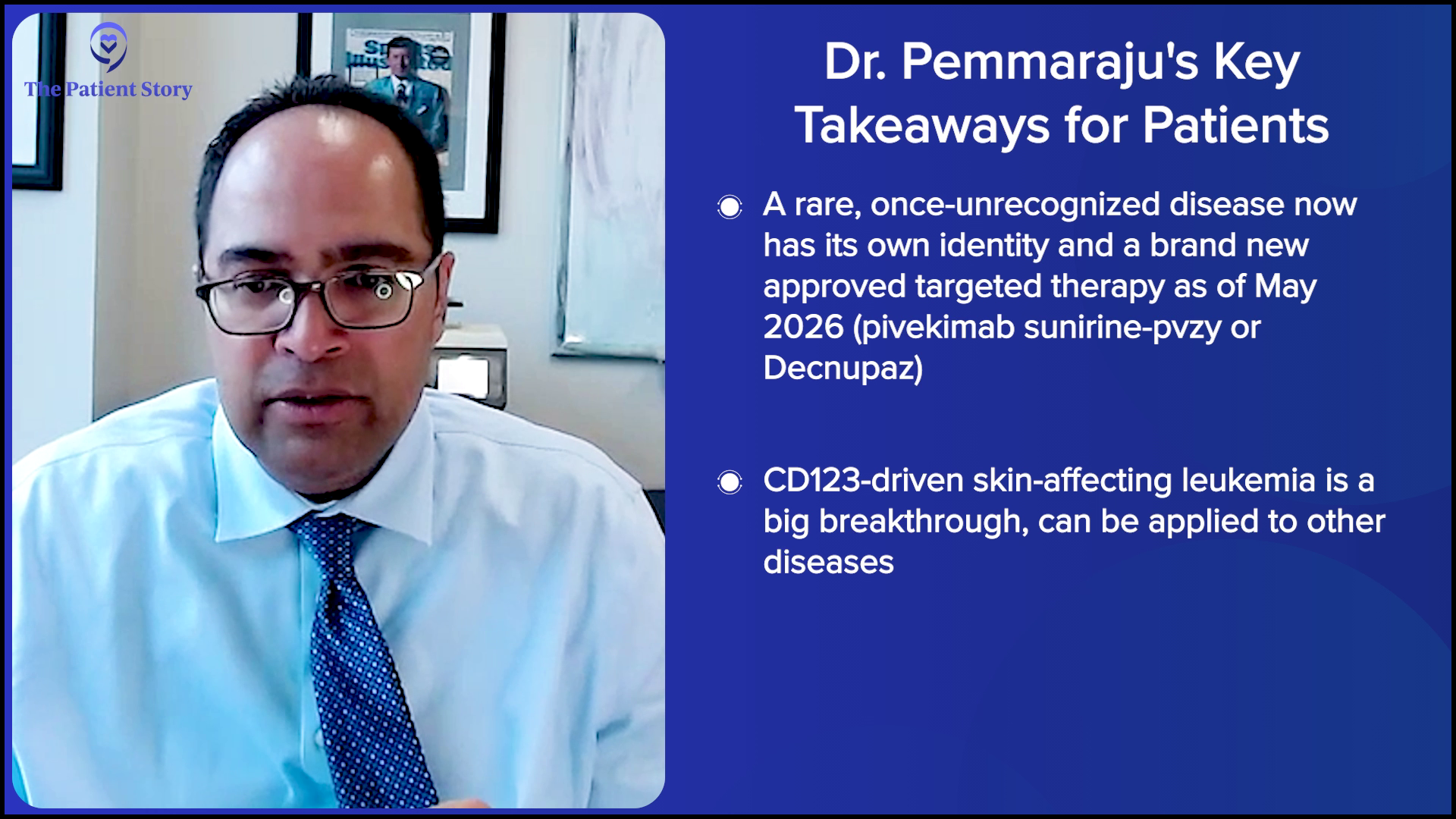
First takeaway: We were able to take and show an ultra-rare cancer that’s difficult to pronounce, that most people have never heard of, and put it into the mainstream, and that’s because of lab scientific breakthroughs. It was something that didn’t make any sense and was lumped into other categories — “Oh, it has CD123, CD4, CD56, TCL1, etc. It can affect the skin, blood, bone marrow, lymph nodes, and brain. This is a little bit different. Let’s give it its own bucket.” That breakthrough was huge and I think it can be applied to other rare diseases or teasing out a rare subset of a more common disease.
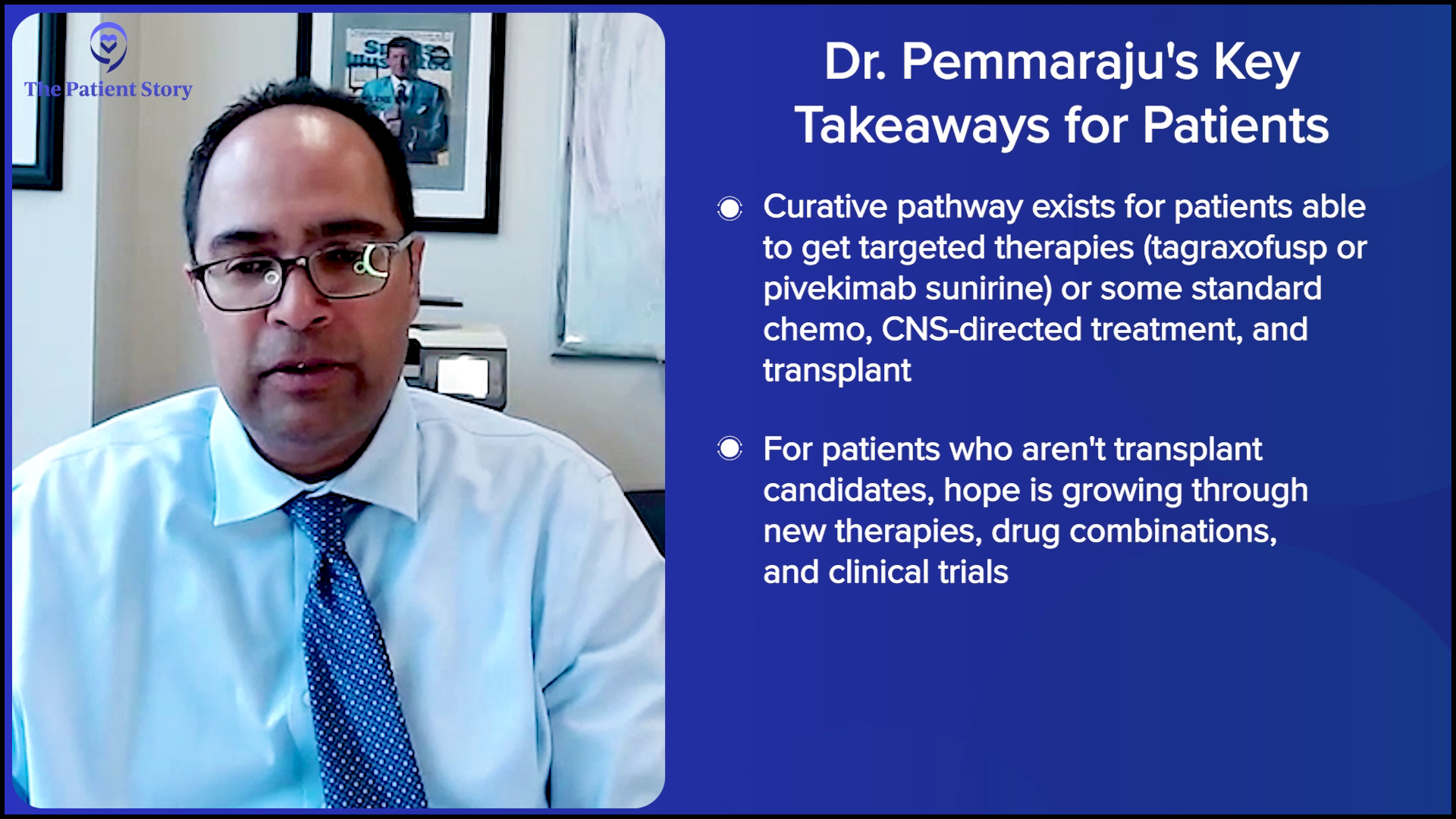
Second takeaway: We found we have a lot of hope, because now we have a curative pathway, at least for patients who can do it, which are the younger patients, fitter patients, or the older fit patients. That cure appears to be three components. First is getting a powerful agent or agents to put them into remission, so the CD123-targeted agents, such as TAG or PVEK, or standard chemotherapy. Second is getting central nervous system prophylaxis, regardless of what you give initially. If you give the targeted agents, give the lumbar-puncture chemo. If you get the chemo, make sure that’s crossing the blood-brain barrier. Third, if you’re able and qualify, stem cell transplant appears to be a curative part of the journey for the disease. If you’re young and fit, you’re going for a cure with those components.
Third takeaway: The vast majority of our patients are either older and unfit or older and fit, but they can’t withstand stem cell transplant, or they’re in a part of the world where some of those things are not available. There’s a lot of hope there because, as you mentioned, we have two targeted therapies now and we have other modalities — HMA-VEN, mini-hyper-CVD-VEN, CHOP —so we can borrow from multiple myeloma-based therapies.
We’re asking the question: Can we cure the disease? We’re not quite there yet.
Dr. Naveen Pemmaraju, Hematologist-Oncologist
What I’m envisioning and hoping for the older “unfit” patient is to give something that looks like an AML or myeloma paradigm: upfront induction, followed by a consolidation, followed by a maintenance. We’re working out the details of that for each patient.
But even in the absence of stem cell transplant, we’re asking the question: Can we cure the disease? We’re not quite there yet. Transplant’s a curative part of the journey. If we can’t cure it, can we prolong overall survival along with quality of life? Those two should go hand-in-hand. If, unfortunately, a patient relapses, do we have salvage agents? We have clinical trials in the works that involve CAR T-cell therapy, bispecific antibodies, novel targets beyond CD123, and combinations.
The final part of hope is that I’ve been able to lead several consortia together, which is something you and I are passionate about. You’ve helped us bring people together, Andrew. Now we have the North American BPDCN Consortium (NABC); we published that in “Blood” a few years ago. We published the European, Italian-led consortium. We have the AYA pediatric consortium, led by my friend and colleague, Dr. Branko Cuglievan at UT MD Anderson, and so on.
The approval of PVEK in 2026 has reinvigorated the international field. I presented at the EHA meeting and at the ASCO meeting. At ASCO, we presented the TAG-hyper-CVAD-VEN data. At EHA, we presented updates and subgroups of PVEK. But there’s a galvanized community of patients, caregivers, stakeholders, pharmaceutical agencies, and government agencies who now see this rare disease as its own entity.
By the way, regarding the CD123 target, the only approved CD123 drugs are these two. We’re working on it potentially being applied to other more common cancers. That’s another benefit of studying and making breakthroughs in rare disease. It’s not only for our patients, but for other patients.
Get the right advice and go to the right doctors. I was so fortunate that I did.
Jim T., BPDCN Patient
Patient insert: Key takeaways and looking ahead
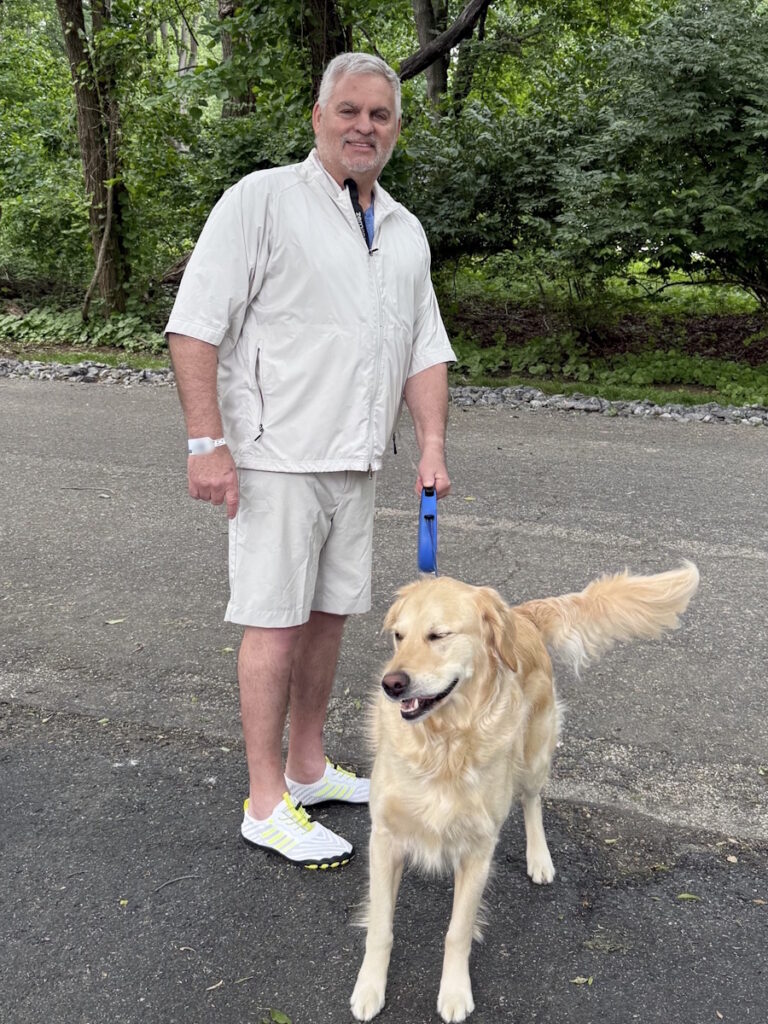
Stephanie: Hope and beyond. For Jim, of course, it could not be more personal. Here are some final thoughts from him on how he’s moving forward and what he hopes others will take away from his experience.
Jim: Just be positive. It was a very scary diagnosis. And if it’s anything remotely serious, don’t let geography be a barrier. Go to the best person that you can consult with to get good advice, which is what we did. Not everybody’s going to have the opportunity to go to Dana-Farber or UT MD Anderson, but those are good places to start if you have the opportunity.
Information is king, especially going forward as they continue to make progress, as there will be even more options. Get the right advice and go to the right doctors. I was so fortunate that I did.
Dr. Pemmaraju: BPDCN, CD123, and beyond. I’m filled with joy, gratitude, and hope.

Conclusion
Andrew: Wow. You’re so passionate about it. Thank you for you and your colleagues worldwide, where you have a definition of this illness, you’ve carved it out, and drug development and combination therapy are going on. That gives us tremendous hope for the future and options now.
Dr. Pemmaraju: Beautifully said: options for now and the future. We’re not going to rest on what is clearly unmitigated success of a new and emerging field. We have good options now. We have a good backbone. Let’s allow these FDA approvals and field recognition to galvanize a golden era of research discovery that’s not theoretical but directly benefits our patients. You got me super excited by saying that, Andrew.
Andrew: We love your passion and dedication to science and to all of us who are living with rare conditions. Once again, Dr. Naveen Pemmaraju from UT MD Anderson in Houston. Thank you for leading the way and helping explain BPDCN.
Dr. Pemmaraju: Thank you, Andrew. It’s always great to see you, and I look forward to seeing you again.
Stephanie: What a great conversation. I know I learned a lot. My thanks, Dr. Pemmaraju from UT MD Anderson, for sharing your expertise so generously, and Andrew, for guiding us through it. Of course, a special thank you to Jim for opening up about his experience so honestly; stories like his are why we do this.
Thank you again to our sponsor, AbbVie, for its support of our independent patient education program. The Patient Story retains full editorial control. For connecting with others in the BPDCN community, we wanted to also give a shout-out to our partner and friends at Blood Cancer United (formerly known as The Leukemia & Lymphoma Society), where there are also Information Specialists who are available to help patients and care partners navigate life after diagnosis.
Please remember: Everything discussed was for educational and informational purposes, and not a substitute for medical advice. Bring your questions and these topics to your care team. You know your body and you deserve to be heard, included, and supported in every decision.
Again, we’d love to hear from you. Please let us know what you’d like to learn more about and if this program was helpful. With that, from all of us here at The Patient Story, I’m Stephanie Chuang. Hope to see you at the next conversation. Take good care.
Program Partner
Thank you to Blood Cancer United for their partnership. They are here for you with information about clinical trials, resources, and dedicated support through their Information Specialists.
Program Sponsor
Thank you to our sponsor for its support of our independent patient education program. The Patient Story retains full editorial control over all content.
This interview has been edited for clarity and length. The views and opinions expressed in this interview do not necessarily reflect those of The Patient Story. This content does not replace professional medical advice.
Hear from people living with rare cancers
Real experiences with diagnosis, treatment choices, side effects, and life beyond rare cancers — in their own words.