
From Shock to Strength: Sarah’s Stage 2A Rectal Cancer Diagnosis and Recovery
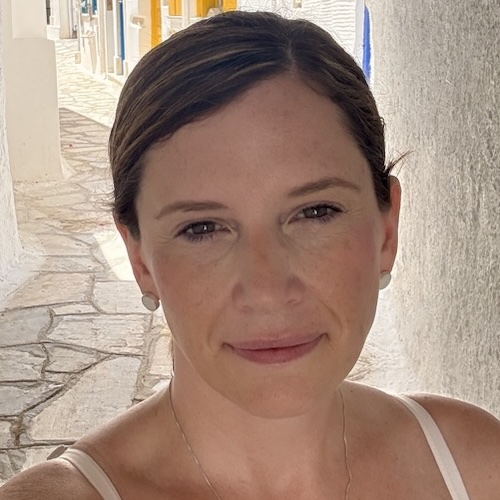
Sarah, a 39-year-old mother of two from Boca Raton, Florida, was blindsided by a rectal cancer diagnosis in early 2025. Because of her active lifestyle and commitment to health and fitness, Sarah’s symptom, occasional bleeding, was easy to dismiss. She had always been athletic, competitive, and deeply involved in her children’s lives, making the diagnosis feel surreal. When a colonoscopy revealed a large tumor, Sarah was initially told she had stage 1 rectal cancer. However, after surgery in April, her diagnosis was updated to stage 2A, reflecting the tumor’s aggressive characteristics.
Interviewed by: Carly Knowlton
Edited by: Chris Sanchez
Sarah’s rectal cancer experience highlights the importance of listening to your body, even when symptoms seem minor. Her story began with uncertainty and disbelief, but she quickly found strength in her support system and proactive medical team. After surgery, she faced a challenging six months of chemotherapy, balancing treatment with parenting and maintaining her identity.
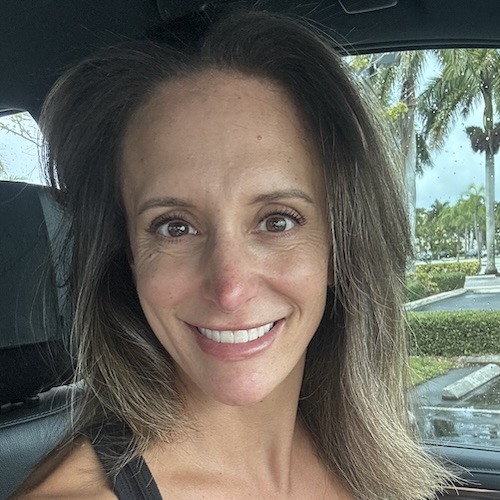
Throughout her treatment, Sarah remained open about her struggles and triumphs, from managing side effects to helping her children understand her diagnosis. She shares practical advice for patients, including the importance of undergoing colonoscopies, managing side effects effectively, and finding joy in everyday moments. Sarah’s experience is a reminder that rectal cancer can affect anyone, regardless of age or health status, and that early detection and a strong support network are crucial for recovery.
Watch Sarah’s video and read through her edited interview transcript below to learn more about her story.
- Listen to your body. Even minor symptoms, such as bleeding or constipation, can signal something serious. Don’t dismiss persistent changes
- Seek expert care. Sarah’s proactive medical team, including a tumor board, ensured she received the best possible treatment plan
- Self-advocacy matters. Sarah encourages patients to trust their instincts and ask questions, even if they feel healthy or young
- Support systems are vital. Family, friends, and medical professionals played a crucial role in Sarah’s recovery
- Stay positive and resilient. A positive mindset helped Sarah navigate the emotional and physical challenges of treatment
- Name: Sarah G.
- Age at Diagnosis:
- 38
- Diagnosis:
- Rectal Cancer
- Staging:
- Stage 2A
- Mutation:
- Symptom:
- Minor and inconsistent rectal bleeding
- Treatments:
- Surgery: low anterior resection (LAR) surgery
- Chemotherapy: FOLFOX


This is not medical advice. Please consult with your healthcare provider to make informed treatment decisions.
- My name is Sarah
- About me and my passions
- My initial symptoms
- How I discovered that I had rectal cancer
- Initial diagnosis to surgery planning
- My surgery experience and recovery
- Follow-up and pathology
- My emotional response to my treatment plan
- Telling my kids
- Chemo: my plan and experience
- Chemo delivery and my daily life
- My hardest moments
- Balancing parenting and cancer
- Ringing the bell and finishing treatment
- My life after chemo
- My advice to viewers
My name is Sarah
I am now 39 years old. I live in Boca Raton, Florida, and on January 31st of this year, 2025, I had a colonoscopy where a tumor was discovered. I was officially diagnosed in February with what was believed to be stage 1 rectal cancer. But after surgery in April, it was stage 2 rectal cancer.
About me and my passions
My husband and I have two kids. My oldest is ten. My youngest is five. We’re big into just going out, exploring, having fun, traveling. My daughter and I do a lot of 5Ks together. She’s so into it now. We don’t quite run them because I have shin splints and she’s not a runner, but she’s starting to run them, and it’s really cute to see.
My initial symptoms
My symptoms started — well, at least started enough for me to pay attention — when I was pregnant with my son. He’s five now, so this was five and a half years ago. Towards the end of my pregnancy, I had what I chalked up to just basic pregnancy constipation and hemorrhoids. I didn’t really think much of it, but I remember distinctly towards the very end — like, two weeks before my scheduled C-section — I had an episode of bleeding.
At the time, I didn’t really know where the blood was coming from, and I automatically assumed it was coming from the baby. So I went to the ER, and they did a full workup, and the doctor said, “Oh no, it’s just hemorrhoids or whatever.” I just kind of left it at that, had the baby, and went on with life. I never really had a recurrence of those symptoms to be consistent or to be fearful of anything.
That was the craziest thing for me — I didn’t have any symptoms, really. When I did, when I had episodes of bleeding, it would come with constipation and would happen maybe once every two weeks, then once a month, then once every two months. It wasn’t consistent, so it wasn’t troublesome or scary for me at the time.
How I discovered that I had rectal cancer
So the symptoms actually did pick up in 2024. They weren’t scary. I didn’t have any other symptoms other than what felt like constipation with bleeding. I did have a little pain on the right side when I would digest food sometimes. I thought, “What is that?” I didn’t have an appendix, so I knew it wasn’t that.
I thought, “I have really good insurance. Let me just make an appointment with a GI and see what he has to say — maybe it’s fiber supplements or something else.” My friend is a physician and recommended a good GI. I got in with his physician’s assistant, who’s actually my age and very proactive. She said, “It sounds to me like it’s just a little constipation, but I’m not okay with not sending you away with a colonoscopy script.”
My appointment with her was in November. I had my colonoscopy in January.
Initial diagnosis to surgery planning
At the colonoscopy, there was a polyp described at the time, but it was 40mm, or four centimeters, like a grape. That’s what was protruding into my colon and causing the bleeding. After the official pathology, it was carcinoma. Then I met with the oncologist. Before surgery, based on the scope and initial CT scans, they said it was a stage one tumor, but after surgery, it was updated to stage two.
My pathology took two weeks to come back because my doctor sent it off to the Cleveland Clinic for testing. He kept in touch with me the whole time, which was so nice. Dr. Stern — shout out to him — was very proactive. The second he got the results, he called me at 8 p.m. and immediately got me in with a colorectal surgeon and an oncologist. The next morning, both called to set up appointments. The oncologist ended up taking my case to the tumor board, which was great — they all evaluate the best course of treatment.
Thanks to a friend who was a radiologic technician, I got in right away for scans. The best course of treatment was determined to be removing the tumor first, not chemo or radiation right away.
My surgery experience and recovery
After the initial tumor board meeting, my oncologist called regarding lung nodules found during my CT scan. With colon cancer, the lungs or liver are usual sites for spread. The nodules were small, so I saw a pulmonologist (also a friend), who got me in immediately and spent two hours exploring and taking biopsies. The pathology came back benign.
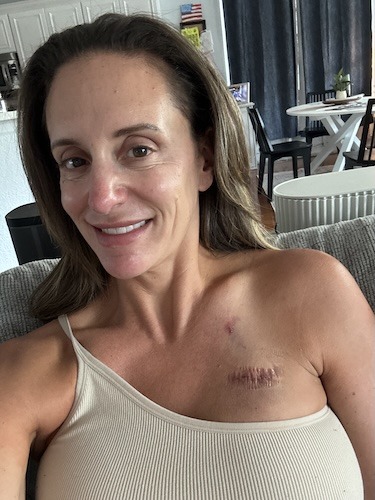
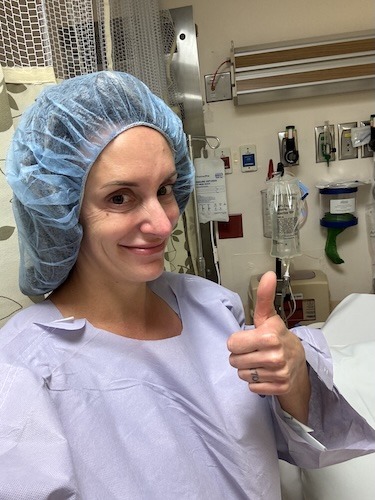
Once cleared, I proceeded with surgery scheduled for April 1st, 2025. Meeting my surgeon for the first time, I felt overwhelmed. The only previous surgeries I had were an emergency appendectomy and my C-sections. This was going to be an eight-hour surgery with multiple specialists involved, including urology for stents. I would need a temporary ileostomy. Processing all this was hard; my husband and I sat in silence for hours afterward. Initially, I hoped to avoid such extensive surgery, but less invasive options carried the risk of microscopic spread. Surgery was the safest choice.
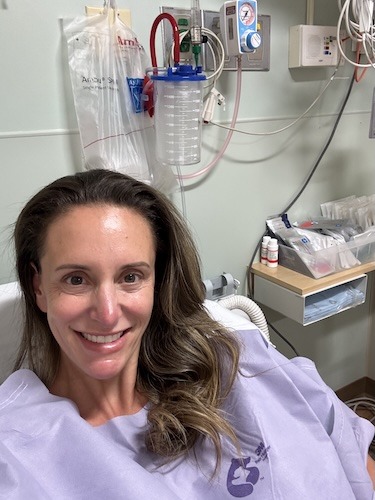
I packed a full suitcase for the hospital, expecting a 5–7 day stay. I was fully prepared, but thanks to my active and healthy lifestyle, my surgeon discharged me the day after my surgery, which is not typical. I was up and walking; the ileostomy was manageable with the nurse’s help.
Follow-up and pathology
My surgery was on April 1st, a Tuesday; I was discharged on Wednesday. By Friday, my surgeon got the pathology back: Stage 2, no lymph nodes involved (24 taken).
The tumor had high-risk characteristics: high tumor budding, lymphovascular invasion, and perineural involvement. It was staged as a T3 tumor.
Due to these factors and my age (38), my oncologist recommended aggressive treatment. Chemo was the next step.
My emotional response to my treatment plan
I remember going to that oncologist appointment — I call him the Grim Reaper, because I always go in happy, expecting good news, and he brings new challenges. I went in not thinking I would need chemo, and left devastated.
I called work and said, “I can’t come in today,” and cried for hours. Afterward, I accepted it — I had to get through six months of chemo.
Telling my kids
The little one didn’t understand much — he thought skeletons and X-rays were cool. My daughter, older, was upset because I wouldn’t be home the same day as with other surgeries. When she saw me home, well, she was okay.
We had a “cancer” talk; for my daughter, I called it “bad cells” and explained we had to get rid of them. I still have a hard time saying the word “cancer,” even on medical forms.
Chemo: my plan and experience
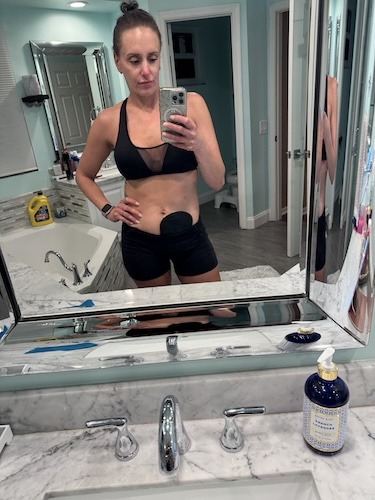
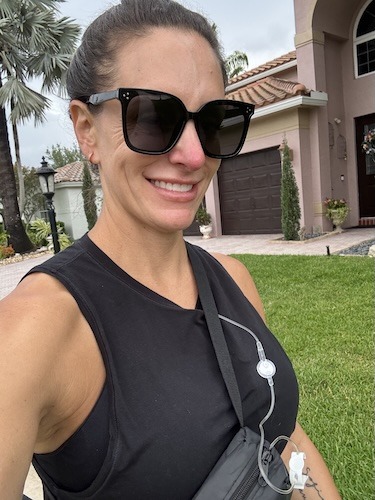
After meeting the oncologist, I was set to do 12 rounds of FOLFOX. The tumor board did not see the need for radiation, thankfully. Radiation can be brutal. I received oxaliplatin and 5-FU, which was administered via a pump I brought home for 48 hours. My kids put googly eyes on the pump and called it a pineapple (it looked like a lemon).
I functioned at about 80% of my full capacity. Side effects included facial flushing, hair thinning (lost about 80% of my thickness), fatigue, mild nausea, and neuropathy. The oxaliplatin caused cold sensitivity in my throat and lingering neuropathy in my hands and feet. My tear duct in one eye constantly produced tears and mucus. Oxaliplatin was stopped after the seventh round due to a good response.
Chemo began in May, right after surgery and chest port placement April 23rd, continuing until October 13th for a total of six months.
Chemo delivery and my daily life
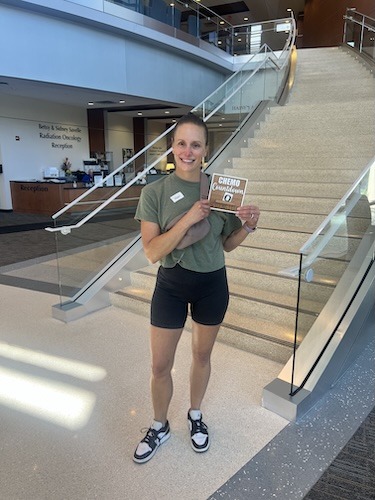
I’m part of the Baptist Health network in Boca Raton. The cancer institute has a chemo infusion floor where I received treatment. With oxaliplatin, I sat for 4–5 hours, then wore the pump home for 48 hours. All of my treatments were outpatient.
I was in the gym with my pump on (being careful not to lift or raise my heart rate too much). The nurse advised that if you elevate your heart rate too much, the drug can pump too quickly and cause side effects.
My hardest moments
Honestly, the beginning — before pathology, staging, or surgery — was the hardest. Not knowing was awful. So many opinions and messages from friends and family made things more stressful. Too many people were getting involved, many with unrelated advice.
My husband tried to be supportive by talking to others, but it resulted in unhelpful feedback and pressure.
Balancing parenting and cancer
I think the hardest thing was being a parent with young kids during diagnosis. You start picturing them growing up without you — it’s terrifying.
My life did not stop; everyone was shocked by my ability to maintain normalcy for my kids and myself. I was still social, still wore a bikini with my ostomy.
Ringing the bell and finishing treatment
I wasn’t expecting to get so emotional when ringing the bell. At the end, it hit me that I had beaten cancer. That relief—it was one of the top five moments of my life.
We have such a great support system. My husband’s friends showed up with flowers and gifts, and the medical staff were all genuinely happy for me.
My life after chemo
Things are slowly returning to normal. Little hairs are growing back, and I finally had my port removed, a huge milestone — my oncologist trusted this part was over. I had my ileostomy reversed and had a few weeks with no medical care. Technically, though, I still had follow-up procedures.
I’m still recovering, but looking forward to real normalcy: beautiful hair, simple pleasures like facials and getting nails done. I’ll never complain about my hair again.
I look at life differently now. Before, we were always going and doing and never stopping to enjoy things. Now, every day feels special — like a treat.
My advice to viewers
My biggest advice is: feel all the feelings. Allow yourself to be upset, grieve, but then push forward. A positive mindset really helps your outcome.
Do your own research — Google may show you the worst-case scenarios, but it helps to be educated for your doctor’s appointments. Block out the noise from everyone else, go with your gut, and find a care team you trust. Be your own advocate.
I fortunately had good medical advocates, but many people get gaslit by doctors. For me, I gaslit myself, thinking, “It can’t be colon cancer, I’m too healthy.”
Don’t dismiss your thoughts. Go get checked if something feels wrong.
I was terrified of colonoscopies, but honestly, it wasn’t a big deal. My advice: follow a bland diet five days prior — chicken, rice, applesauce. Stick to the clear diet and don’t panic about the prep: it does end. I looked at it like a detox, starting fresh. Now, I’ll do a colonoscopy every year if I need to, and I’m okay with that.
If you can get a Signatera test (by Natera), I highly recommend it. It’s a diagnostic tool for cancer recurrence. I had it done during surgery; if it’s positive after surgery, you may still have microscopic disease. I was negative each time, which is a good sign. Ask your doctor; it can also sometimes be done at the time of a colonoscopy biopsy.
Inspired by Sarah’s story?
Share your story, too!
More Rectal Cancer Stories
Laura B., Rectal Cancer, Stage 3B
Symptoms: Rectal bleeding, one instance of pencil-thin stool, fatigue, bowel urgency
Treatments: Radiation therapy, chemotherapy, surgery (rectum and colon resection, temporary ileostomy, ileostomy reversal)

Kalei M., Rectal Cancer, Stage 4 (Metastatic)
Symptoms: More frequent bowel movements, presence of mucus, tissue-like substance, and blood in stool, stomach cramping and sharp pains
Treatments: Radiation therapy, chemotherapy (FOLFOX), surgeries (two lung resections)
Sarah G., Rectal Cancer, Stage 2A
Symptom: Minor and inconsistent rectal bleeding
Treatments: Surgery (low anterior resection or LAR), chemotherapy (FOLFOX)

Kalei M., Rectal Cancer, Stage 4 (Metastatic)
Symptoms: Presence of mucus and tissue-like substance and blood in stool, stomach cramping
Treatments: Radiation therapy, chemotherapy, surgeries (two lung resections)

Jessica A., Rectal Cancer, Stage 4 (Metastatic)
Symptoms: Changes in bowel movements, blood in stool, abdominal pain, back pain, difficulty sitting comfortably, constipation, feeling of incomplete evacuation (as if some stool remained after bowel movements), mucus-like stool consistency, bloating
Treatment: Immunotherapy under a clinical trial

Shiva S., Rectal Cancer, T2, and Renal Cancer, T3
Symptoms: Pressure and urgency of bowels, back pain
Treatments: Chemoradiation (for rectal cancer), surgery (ileostomy, combined bowel and kidney surgery), immunotherapy (for kidney cancer)
Leave a Reply