
Community, Music, and Life Without a Stomach: Amy’s Experience with Stage 3B Stomach Cancer
Living in Ontario, Canada, Amy had struggled with heartburn and digestive trouble since 2018, while tests and prescriptions repeatedly failed to explain what was really wrong. These would be the early symptoms of her stomach cancer, or gastric adenocarcinoma. A passionate music teacher and performer, Amy powered through, teaching and even forming a new band, Rowan Tree.
Food began to get stuck in her throat and she started to lose weight. The turning point came with anal bleeding, prompting Amy, on her fifth ER visit, to insist on more testing. Only then did a CT scan reveal that she had a tumor, and that it had already invaded her pancreas and lymph nodes.
Interviewed by: Carly Knowlton
Edited by: Chris Sanchez
Her stomach cancer experience became a testament to survival and advocacy. Amy says, “If your general practitioner isn’t listening to you or not getting you the proper tests, you’ll have to go to the emergency room and demand a CT scan, because that’s the only way they can know for sure.” Her oncology team moved quickly, and she began seven cycles of chemotherapy, then endured arduous radiation therapy. Radiation left her dehydrated and gaunt, at one point pausing after she experienced intense side effects and dangerous blood clot scares.
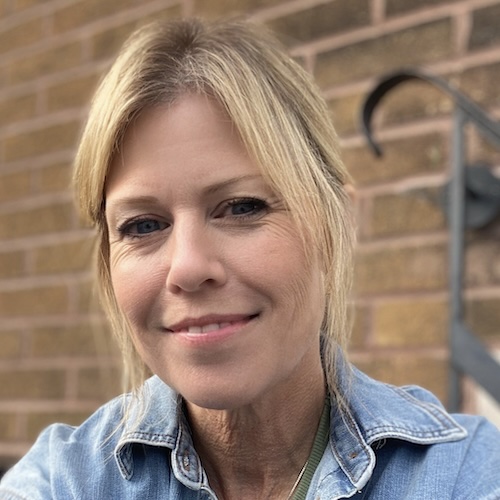
This gastric adenocarcinoma experience reshaped Amy’s life both physically and spiritually. Her treatments were grueling and recovery was slow; she needed to relearn how to eat and faced new limitations, and had to learn to be patient with herself. Post-treatment, her beloved music proved to be a powerful healing force, and support from family and online groups became essential. Amy’s gratitude practice and openness to “post-traumatic stress growth” transformed fear into a focus on living with intention and compassion. She says, “[After] this kind of experience, you become a better person, you’re more thoughtful, you’re more careful with your words.”
Today, Amy finds meaning in the magic of small joys, the connections in music and daily gratitude, and in urging others to listen to their instincts and push for answers. Although, as she notes, “I’m not off the hook until five years,” her experience offers hope, inspiration, and real-world advice for anyone also navigating stomach cancer.
Amy’s video provides insights regarding how:
- Self-advocacy is crucial; insist on proper tests if symptoms persist, even after negative results
- Cancer symptoms may be subtle and easily missed. Push for clarity when something feels wrong
- Profound life changes, even unwanted ones, can deepen empathy, gratitude, and self-awareness
- Music, support groups, and rituals of gratitude can be powerful sources of healing and resilience
- Amy moved from doubt to advocacy and gratitude-driven living, redefining her sense of purpose and hope
- Name: Amy M.
- Age at Diagnosis:
- 54
- Diagnosis:
- Stomach Cancer (Gastric Adenocarcinoma)
- Staging:
- Stage 3B
- Symptoms:
- Unexplained weight loss
- Fatigue
- Blood in stool
- Stomachache
- Trouble swallowing
- Treatments:
- Chemotherapy
- Radiation therapy
- Surgeries: gastrectomy, partial pancreatectomy
- Immunotherapy
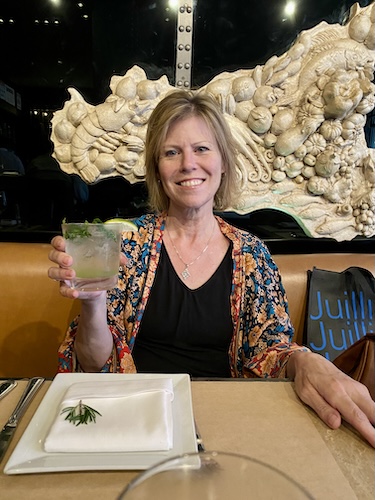
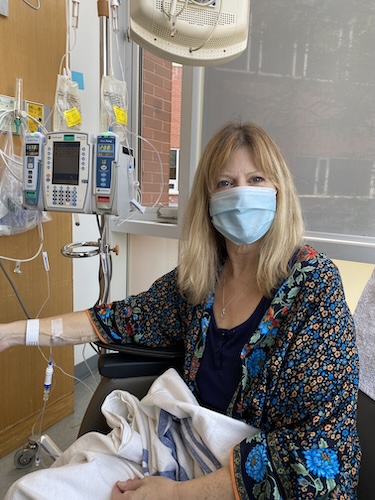
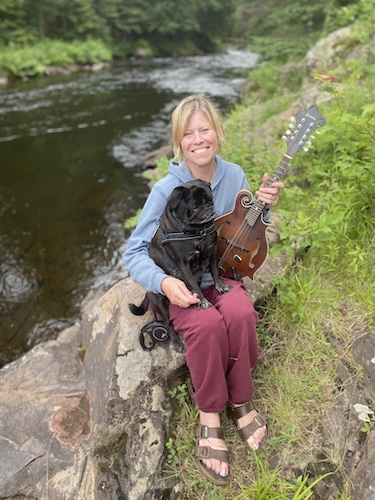
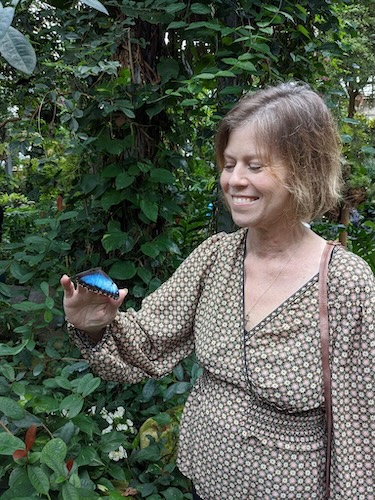
This interview has been edited for clarity and length. This is not medical advice. Please consult with your healthcare provider to make informed treatment decisions.
The views and opinions expressed in this interview do not necessarily reflect those of The Patient Story.
- Hi, my name is Amy
- My early symptoms and red flags
- Struggling to get a diagnosis
- My reaction to hearing “you have a tumor” and my diagnosis
- Creating an aggressive treatment plan
- Radiation side effects and dehydration
- Facing major surgery
- Surgical pain and immediate recovery
- Immunotherapy and adjusting to life without a stomach
- My scariest moments: blood clot and vomiting blood
- Support from my family and my emotional journey
- Identity, music, and renewed purpose
- Completing my treatment and living with scanxiety
- Advice for others facing cancer
- The power of support networks
- Gratitude for surgeons and oncologists
- Advocating for yourself in the medical system
Hi, my name is Amy
I live in Guelph, Ontario, Canada, and I was diagnosed with gastric adenocarcinoma with invasion to the pancreas on July 25, 2022.
I am a full‑time musician and a music instructor. I am accredited with the Royal Conservatory of Music of Canada, so I teach classical music to children and adults. I teach piano, violin, guitar, and mandolin, and I am very passionate about that.
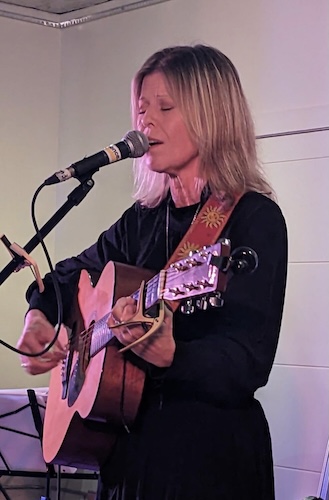
I am also a performer and I perform with my band. I have a band called Rowan Tree, which I formed after treatment and surgery, and we are thriving. We have been part of the Hillside music festival here in Guelph for their Hillside Inside last winter.
My early symptoms and red flags
For years, since 2018 or 2019, I had gastric problems. I had heartburn and was always taking Tums, Gaviscon, and things like that. I just was not feeling well. At that time, I do not think I had cancer; I think there was a weakness there. In 2017, they sent me for an ultrasound on my stomach. They did not find anything, so they prescribed different kinds of antacids. They were not really helping, but I was taking them.
When I really started to notice something was wrong was probably the autumn before my diagnosis. I went to eat something, and it got stuck in my throat. I thought that was strange, but it only happened once, so I assumed I just needed a drink to wash it down. Then it happened a couple of other times.
Other symptoms appeared: weight loss and a lot of blood in the toilet when I went to the bathroom, number two. I do not think that is classically a symptom of stomach cancer; it is more a symptom of colon cancer, but I had been cleared for colon cancer. It was my tumor that was bleeding.
Struggling to get a diagnosis
I complained to my family doctor a lot. They sent me for ultrasounds and blood tests, but they did not find anything.
In April or May of 2022, they sent me for a barium swallow test. I do not know how they missed it, because apparently, I had quite a large, growing tumor there, and they did not see it. They said everything was fine. I knew that something was not fine because I was still not feeling well. I was choking a lot, and my weight was spiraling down, which was not like me because I had been having a hard time losing weight before that. It was very unusual that every time I got on the scale, I was a few pounds less, and I thought, “I am not even trying.”
It was not until I went to the emergency room for the fifth time that something changed. I finally said to them, “I should have said this before,” but that time I told them I was having anal bleeding, and that was not right. At that point, they said they had better do a CT scan, and that is when they found the tumor.
My reaction to hearing “you have a tumor” and my diagnosis
My reaction was shock. I thought, because of where the pain was, that it was going to be my gallbladder or my appendix or something like that.
I was able to work. I was working as a teacher at the Waldorf school here in town. I was working every day. I would come home, be tired, and rest, but I could get through a workday. I did not think it was that bad. I thought if it were something like cancer, it would be really, really bad.
I found out it was stomach cancer on July 25, 2022. That is when I got my diagnosis.
There was a young woman who was shadowing the ER doctor who was on call, and she was in tears. They had to tell me, and it did not look good. It was invasive to the pancreas, there were lymph nodes affected, and it was at the gastroesophageal junction. They were not even sure if the esophagus was cancerous, too, at that time. They could not tell until further diagnostic tests.
Creating an aggressive treatment plan
They sent my file to Kitchener, to the Grand River Cancer Centre, and the oncologist there, Doctor Valdez, called me. He said, “We have to get you into treatment right away. If we do not get you into treatment, you will not make six months.” It was really serious.
They were going to delay my treatment for some reason, but he said, “No, I am getting her in,” and he advocated for me. I really appreciate that.
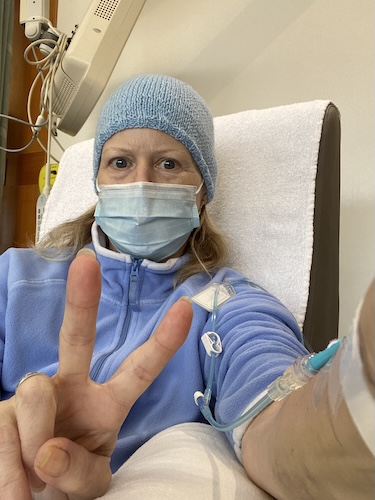
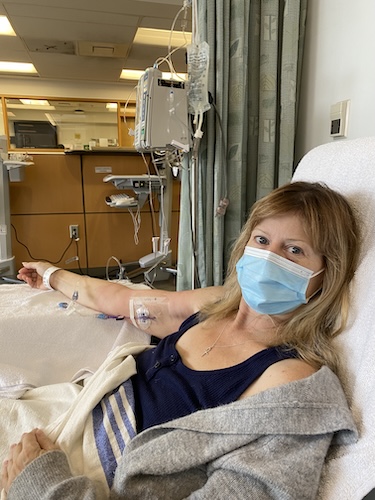
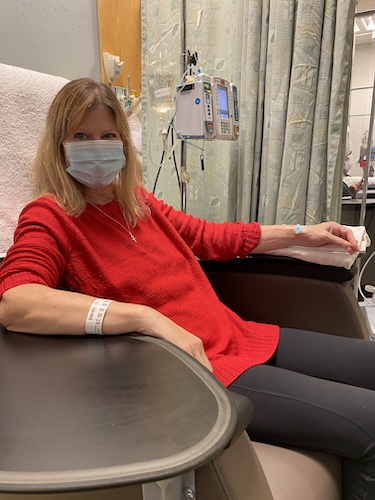
He got me in, and they started me on a type of chemotherapy which is very strong, but as soon as I started the chemo, I started feeling better. But of course, you do not feel great right after a chemotherapy session. You are tired and feel a little sick, but they give you a lot of anti‑nausea medication now, so it is not like it used to be. When my mother had breast cancer 30 years ago, she was so sick she could not do anything when she had chemotherapy. I was able, after maybe a day of rest, to get up and do things, and I started feeling better right away. The chemotherapy was working.
I did seven rounds of that chemo drug, and then radiation started. They were not at the same time. It was the seven rounds of chemo and then radiation after that. Then they put me on a low‑dose chemo every other week, approximately, while they were doing the radiation.
Radiation side effects and dehydration
The radiation was hard. I found it very difficult because of where they had to radiate me, right at the bottom of my breastbone and down into my stomach. It was a big area they had to radiate, and it really dehydrated me. I was extremely dehydrated.
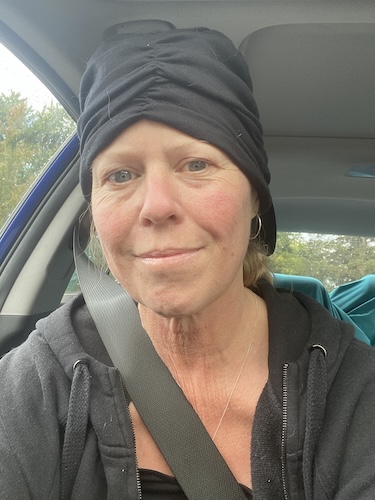
From chemo, I did not have many side effects. Once I started radiation, it started out fine. You have to go every day for 26 days. You get a break on the weekends, but you go Monday to Friday, and by the end of it, I was very sick. My hair was falling out. I did not look well at all. I looked really gaunt. I remember I was wearing my hair in a braid, and the braid kept getting smaller and smaller because my hair was falling out. I would be washing my hair and pulling out a big clump of hair.
I cut my hair really short. I did not shave my head; I did not go bald or anything like that, but it was so thin that there was no point in having long hair.
I was supposed to have 26 radiation sessions, but they had to stop at 19 and give me a break. I was so sick. It made me very sick. I woke up in the middle of the night, and I was vomiting blood. The technicians at the Grand River Cancer Centre were concerned because, when they saw me on the screen (it is kind of like a CT scan where they can see your insides), they said my insides, my guts, had shrunk from the radiation. They had to call the radiologist to ask if it was okay to continue, and she said no, that I needed a break. I really did, because I could not eat anything, and I was so skinny. It was pretty bad.
I took about a week or a week and a half break, and then I went back and finished the radiation to 26 sessions. That was the end of November, and then they gave you a break before doing the gastrectomy.
Facing major surgery
I was very terrified about the whole thing. I have a friend who is a therapist, and he does hypnosis. He offered to give me a free hypnotherapy session. His name is Phil Naylor. He is an amazing therapist, an amazing hypnotherapist.
I remember the hypnotherapy session very well. He asked me to call on whom I felt was a spiritual guide, and I did. He said, “When you are going into the surgery, you are going to be calm, all your worries are going to melt away, and you are going to know that your spiritual guide is with you and you are not going to be afraid.”
On the day of the surgery, I was very scared. I was saying goodbye to my husband and crying because you do not know how it is going to go. It could be bad. I was in good hands, though; I had an excellent surgeon. Just as my friend Phil had said, as they were wheeling me into surgery, this calm came over me, and I thought, “Let’s do this.”
The surgery was longer because I had to have two surgeons. Because of the pancreas, my main surgeon only does gastrectomies; he does other things, but he does not work with the pancreas. There was another surgeon, Doctor Ling, who did the pancreas. They had to take the tail of the pancreas off. The stomach sits on top of the pancreas, so it had started to invade the pancreas.
Surgical pain and immediate recovery
I had an epidural going into surgery, but it did not take. This had happened to me when I gave birth to my first child as well; they tried to give me an epidural, and it did not take, so I felt that pain. I felt this pain, and I cannot even describe that kind of pain. It is a pain nobody ever wants to feel. They were right there to give me a shot or whatever I needed, but coming out of surgery, I was in a lot of pain.
Once they give you the morphine and everything, you are okay. They give you a morphine pump as well, so when you feel the pain coming, you can press the pump, and it helps. Eventually, they have to wean you off it because you can get addicted to it. After about a week in the hospital, they said, “No more for you, take Tylenol.”
I was in the hospital for ten days, and I did not have any problems or issues. My swallow test was fine, and there were no leaks in the join to the small intestine. I went home, and after six weeks, I started immunotherapy.
Immunotherapy and adjusting to life without a stomach
Immunotherapy was fine. It was easy. You go in, they put an IV in, it takes about an hour, and that is it. You are done.
At home for those six weeks, I do not think I had much pain. I took Tylenol and was fine. I got up and started walking right away.
I was weak. I could only walk to the end of the street at first, and then eventually I could go a little farther, and I pushed myself each day. It was important for me to get out, go for a walk, get into nature, and be with my dogs.
The first six months after surgery were tricky because my body had a shock, and I had to learn to eat again. At first, it is only a few bites, and that is all you can eat. If you push it and eat more than you can handle, it is not going to go well; it is not going to stay down. You have to eat really slowly and chew thoroughly. You have to be patient with yourself and with your healing.
My scariest moments: blood clot and vomiting blood
There were a couple of very hard times. One time, I ended up having a blood clot. That was back when I was having chemotherapy and had a PICC line in my arm. One day, a friend of mine came over and said, “You do not look well.” I said, “My arm is red,” and she looked at it and told me I had better go to the hospital. I did not want to go because I did not want to wait six to eight hours in the waiting room, but she talked me into it, and it is a good thing she did.
I had a blood clot in my neck. It had gotten all the way up my arm into my neck, and that scared me. If it had gotten into my lungs, I could have had a pulmonary embolism; had it gotten into my heart, it could have caused a heart attack. That was frightening.
I know a lot of people choose to have a port, but I was not having any problem with the PICC line until that day. They took the PICC line out, and after that, I had to get an IV each time I had chemo.
The other scary time was with radiation when I was sick at night. I went to throw up, and it was pure blood. That really scared me because I had not had anything like that for a while, and I had never vomited blood. That spooked me.
Support from my family and my emotional journey
My husband was with me through the whole thing. I also have a few close friends who were very supportive, and I appreciate them a lot.
It is really hard mentally and emotionally. You always think you are going to die someday, but you do not think about it. You think that is later, when you are old, and you do not have to think about it now. Then you get a cancer diagnosis and it could go that way. It could happen, and it happens to a lot of people. It is precarious. You feel like it could all be over.
You wonder if you have done all the things you wanted to do, and you think about your relationships. A lot of things go through your mind. It really shakes you up. It shakes your foundation.
I heard of something called post‑traumatic stress growth. Instead of just post‑traumatic stress disorder, it means you change so much through this kind of experience that you become a better person. You are more thoughtful, more careful with your words, more spiritual, because you start to ask what you believe, what your faith is, and where you lie on that spectrum.
I think of myself as a spiritual person, but this deepens everything. It deepens your relationships. It deepens your thoughts.
Identity, music, and renewed purpose
My identity has totally shifted. One thing I have really focused on as a healing aspect of my recovery is my music and working very hard at it. There came a time when I realized I did not want to waste any time. I have always worked hard at music. I started when I was six years old, and I studied classical guitar at McGill University, but now I want to make sure I put my very best foot forward with my music.
I spend my days working on music. If it is not a piano piece, it is a guitar piece, or something on a bouzouki, a mandolin, or a violin. I am always working on it. In the band, I am with musicians who are amazing and very serious about it. They are excellent musicians, and it is wonderful to be with them. We get together every week and practice our material. It is rewarding for them, but for me, it is out of this world. It is for the soul.
I started playing the violin when I was in kindergarten. In my teens, I went to classical guitar, and then mandolin, and I have always played piano, though I just taught myself piano.
I have a YouTube channel. I am starting to put more things online again because there was a period when I focused on live performance and was not doing online content. Now I have started posting again, and that is great because my listeners have stayed with me through all of this absence. They were happy to see me back at it again.
Completing my treatment and living with scanxiety
Once I finished immunotherapy, that was the end of my treatment plan, and I was able to ring the bell. Since surgery, I have been clear. It is great.
The moment I found out the good news was a relief, but there is always something in the back of your mind. The statistics on this kind of cancer are that it often returns, usually within two years after gastrectomy. It often comes back. I will be three years out in January, but I am not off the hook until five years, until the five‑year clear. You live with that hanging over your head.
In August, I had a CT scan, and they noticed some abnormalities in my colon. Then I had to go for a colonoscopy. I was having panic attacks and was very anxious. I thought, “Is it back in my colon?” It was not. I had the colonoscopy, and everything was fine, and it was a huge relief, but leading up to it, for about three weeks, I was a nervous wreck.
To cope with scanxiety, I pray. That is what I do.
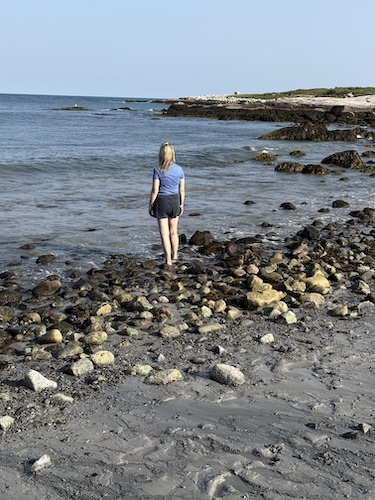
I feel good. I am healthy. I do a lot of yard work. I am always walking my dogs. I go for two walks a day, and I spend a lot of time with friends and family. That is what is important to me.
Advice for others facing cancer
For someone going through the same thing, or cancer in general, I would say you have to trust. It is hard to trust because it is like you are on the edge of a cliff, but you have to trust that whatever is going to happen is what is supposed to happen for you. You have to pray. You have to surround yourself with love and family and support. You have to take it one day at a time because none of us knows what is going to happen.
We never know. I could walk out of my house and get hit by a car. We do not know what is going to happen day to day. Before this diagnosis, you are just living life and going along, and you are not thinking about these things. Once this happens, it sharpens your focus. You start to think it could happen any day.
There is a Buddhist meditation I like. I am not a Buddhist, but I like this meditation. Before you meditate, you say to yourself, “It is certain that I will die. I do not know when, and it could be today.” That forces you to live in the present moment, to not worry about the future, to forget about the past because it is gone, and to focus on the here and now.
I once saw a sign that said something like, “Forever is composed of all the nows,” or “Every now leads to forever.” I may be misquoting it, but the point is that what is happening right here, right now, is the most important thing. We do not know what is going to happen tomorrow.
The best we can do is be happy, be loving, and be grateful. That was a big thing my godmother told me when I found out I had cancer, and she also lost her daughter to cancer. She said, “Every day, I want you to write down five things you are grateful for. Start a gratitude practice.” That is important, and it has helped me. I still do that every night as I am lying in bed, thinking about all the things that happened that day that I am grateful for. It helps a lot.
The power of support networks
I found support networks to be very helpful. At the Grand River Cancer Centre, they offered a women’s support group, which I attended for a couple of years. There ended up being a time conflict, so I have not been going lately, but it was a good group. It was all women with different kinds of cancers, and it had a sisterhood feel.
Online, there is a group called Stomachless Living, which I am a member of. We talk about what we are going through and offer advice and help each other. That is helpful because it is a challenge to live without a stomach. There is also a group called Stomach Cancer Sisters on Facebook, another good support group. Everyone is supportive of each other, and they have Zoom meetings so we can meet the other members.
Gratitude for surgeons and oncologists
I would like to give a shout‑out to my surgeon, Dr. Matthew Kilmurry. He has been an amazing surgeon and doctor. He came to see me every day in the hospital. He performed an excellent surgery on me and has been following me. Every six months, we have an appointment. I ended up having to have my gallbladder out last March because people with my operation tend to get a lot of gallstones, and it can be quite painful, so he performed that surgery as well. He does all my endoscopies. He did my colonoscopy. He is an amazing doctor, and I am very grateful to him.
If anyone is going through this and lives in the Kitchener‑Waterloo–Guelph–Cambridge area and is looking for a surgeon, I have to say Dr. Kilmurry is the best.
Dr. Valdez, my oncologist, was the one who advocated for me to get chemo right away. At the beginning, they did not think it was operable, but they took it to the tumor board, and he advocated for surgery, and I am grateful for that.
Advocating for yourself in the medical system
What I have to say about advocating for yourself is this: if your general practitioner is not listening to you or not getting you the proper tests, you have to go to the emergency room and demand a CT scan, because that is the only way they can know for sure. I knew there was something wrong a year before. I did not feel right. I had a strange, sickly feeling I cannot describe. I had never had that feeling before.
I went vegetarian, I quit drinking alcohol, and I did a lot of things to try to get healthy, but I still felt sick. I think we have an intuition about these things. If you have that intuition and feel you are being dismissed, you have to push. It was also during COVID, which made it hard to get in with a specialist. If I had waited for my specialist appointment, I would have died, because they would not have been able to see me until the end of September, and my cancer was growing fast.
Dr. Valdez got me in for chemotherapy in the first week of August. My diagnosis was July 25, and my first chemo was on August 7. That was quick, and I appreciate that, because if I had waited for what my GP had planned, the end of September, that would not have been good. It had already invaded my pancreas, and it would have spread everywhere. You have to act quickly and push for it.
I had asked for a CT scan in the emergency room earlier, but it was not until I told them I was having bleeding that they took me seriously. I do not know why I did not tell them earlier. Maybe I was embarrassed. I was just telling them I had this pain. Once there is blood involved, they have to do a CT scan and get you in.
Inspired by Amy's story?
Share your story, too!
More Stomach Cancer Stories
Andy G., Stomach Cancer, Stage 4 (Metastatic)
Symptoms: Stomach pain, back pain, chest pain, extreme exhaustion, shortness of breath after short walks
Treatments: Chemotherapy, immunotherapy
...
Alyssa B., Stomach Cancer, Stage 4 (Metastatic)
Symptoms: Fatigue, elevated resting heart rate, heartburn, difficulty swallowing, weight loss
Treatments: Chemotherapy, immunotherapy, surgeries (total gastrectomy; partial esophagus removal; bilateral oophorectomy and fallopian tube removal), clinical trial
...
Brittany D., Stomach Cancer, Stage T1b
Symptoms: Choking suddenly while eating and attempting to speak, neck and right shoulder pain, neck tightness, trouble swallowing certain food items
Treatments: Surgeries (subtotal gastrectomy, D1 lymphadenectomy, gastric bypass)
...
Camilla C., Stomach Cancer, Stage 4 (Metastatic)
Symptoms: Issues swallowing, swollen gland in the neck
Treatments: Palliative chemotherapy was offered but declined, nutritional changes to support her comfort and energy, meditation and mindfulness practices, self-directed healing methods
...
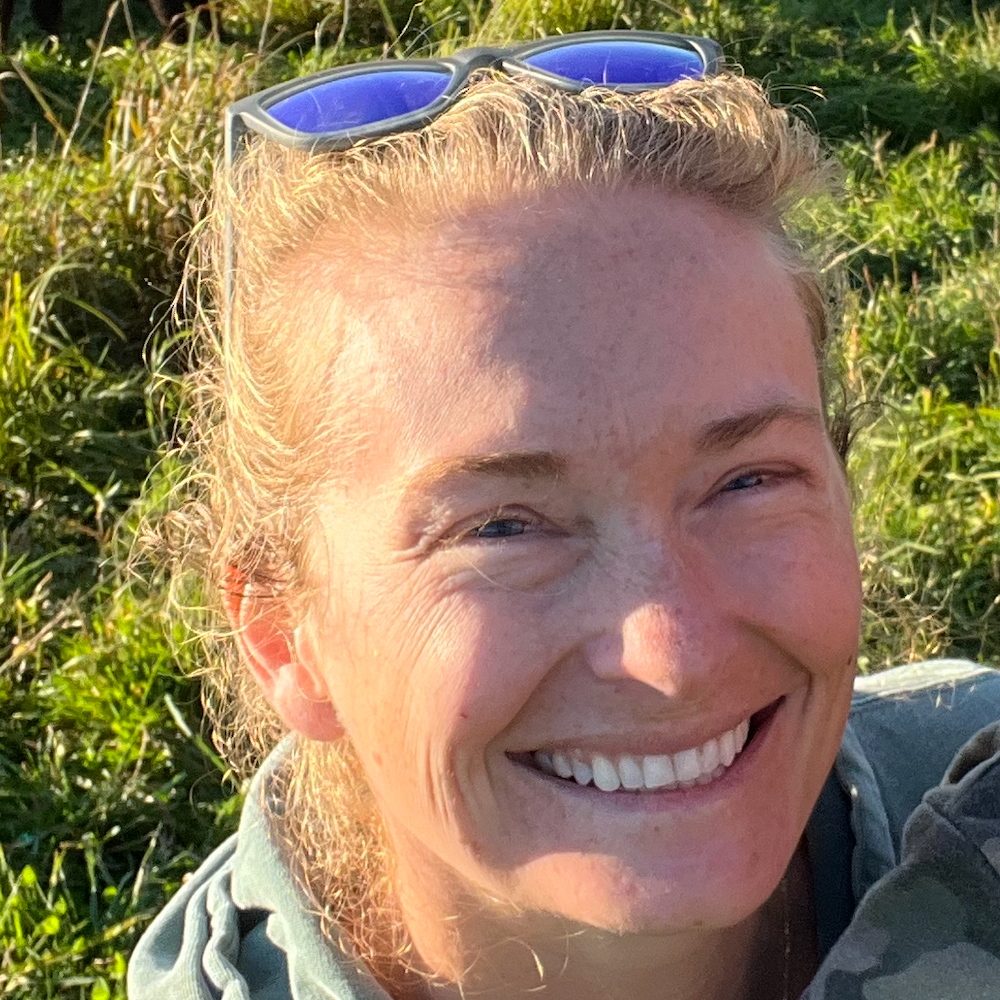
Emily D., Stomach Cancer (Gastric Adenocarcinoma), Stage 4 (Metastatic)
Symptoms: Persistent postpartum stomachache, early satiety, difficulty swallowing, vomiting
Treatments: Chemotherapy, immunotherapy
...
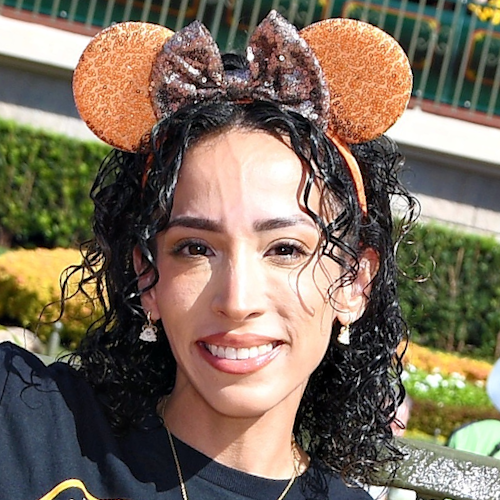
Alyssa B., Stomach Cancer, Stage 4 (Metastatic) (Hospice Update)
Symptoms: Fatigue, elevated resting heart rate, heartburn, difficulty swallowing, weight loss
Treatments: Chemotherapy, immunotherapy, surgeries (total gastrectomy; partial esophagus removal; bilateral oophorectomy and fallopian tube removal), clinical trial
...