
Phil is Living with ROS1+ Stage 4 Lung Cancer
When Phil was finally diagnosed with ROS1 lung cancer (stage 4), he had already spent months being told his relentless cough was “just” pneumonia or possibly coronavirus. By the time a lung biopsy revealed cancer, he was sitting in a COVID-era exam room, masked and separated by plastic, listening to a local pulmonologist tell him to go home and “get his affairs in order.” Phil had never smoked and had just lost his father to lung cancer the year before, so the diagnosis and prediction of only a few months to live landed hard on him and his family.
Interviewed by: Keshia Rice
Edited by: Katrina Villareal
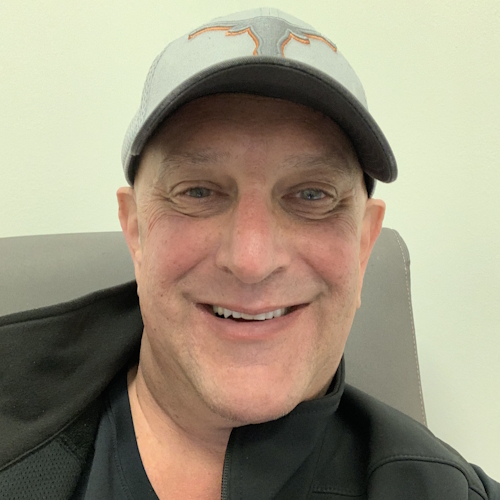
Instead of accepting that first opinion, Phil turned to trusted family members for help. His cousin and her husband, who was a retired physician, urged him to seek care at a National Cancer Institute-designated center and walked him through how to make his own appointment with the chief thoracic surgeon at UT Southwestern in Dallas. He met Dr. Ben Drapkin, who recognized how advanced and aggressive the tumor was and pushed for genetic testing when surgery and radiation became too risky. That testing uncovered a ROS1 mutation, opening the door to targeted therapy designed specifically for this rare form of lung cancer.
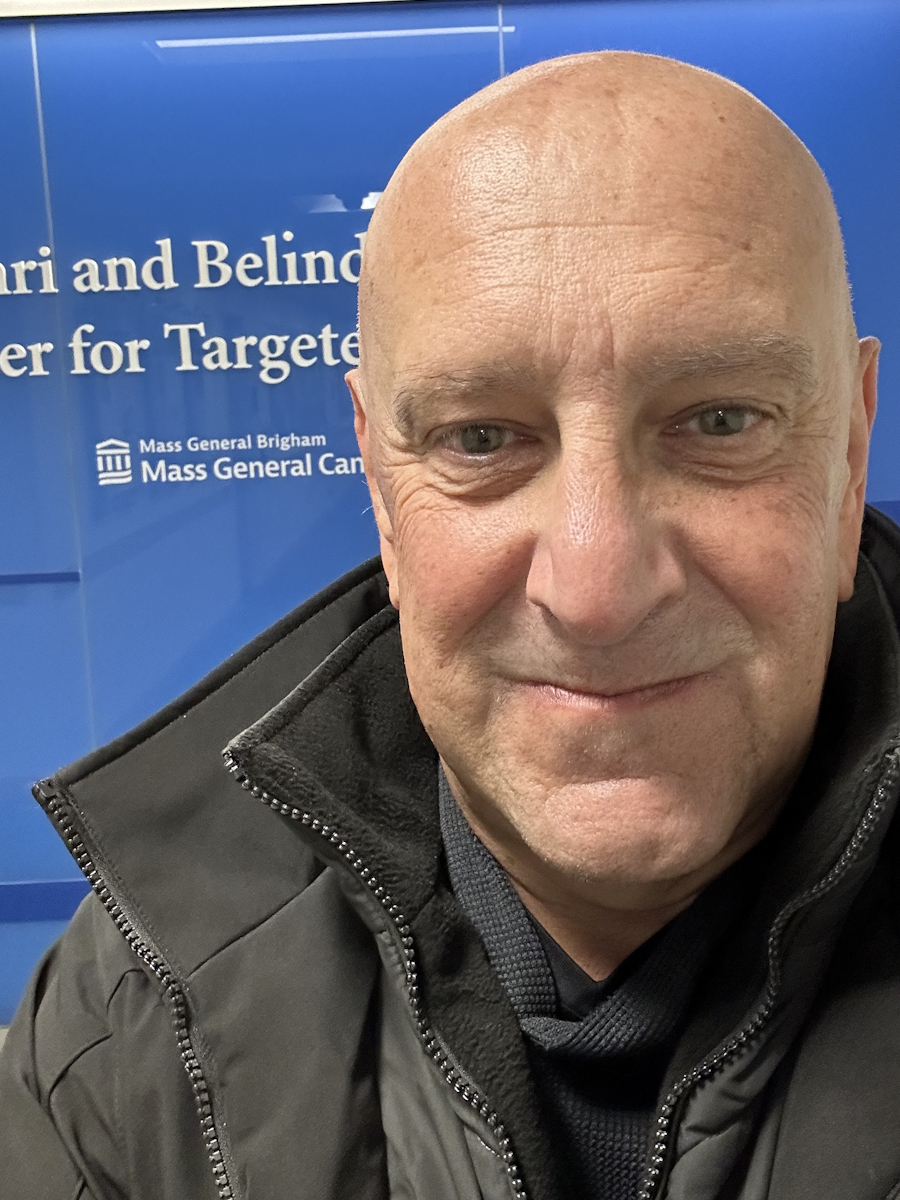
The first targeted drug worked well for about two years, shrinking and controlling the cancer until it eventually developed resistance, including the G2032R mutation. Rather than stopping there, Dr. Drapkin connected Phil with Dr. Jessica Lin at Massachusetts General Hospital for a clinical trial of a newer ROS1 inhibitor that better fit Phil’s active lifestyle goals. The trial required frequent travel from Texas to Boston, but it also gave Phil stability: his scans showed very small tumors that were not growing, including a treated metastasis in his spine.
Phil talks openly about building a full support team, including a palliative care doctor, a cancer psychologist, a primary care physician, and even a dentist, to manage side effects, mental health, and day-to-day quality of life.
Retired from his Fortune 500 career, he and his wife enjoy their weeks with simple routines, like walks at Costco, and longer-term plans, like cruises, trips to Tahiti, and dreams of sailing from Hong Kong to Singapore. Most of all, he focuses on the future. He looks forward to seeing his three daughters complete their graduate degrees and begin careers in healthcare and education, trusting that science and the right team will continue to open doors.
Watch Phil’s interview or read the edited transcript below to dive deep into his story:
- The importance of advocating for yourself by seeking a second opinion at a National Cancer Institute-designated cancer center
- How comprehensive biomarker testing can change everything, especially when it comes to treatment decision-making
- Why a strong care team goes beyond your oncologist and how each specialist can play a critical role in a patient’s quality of life.
- How Phil lived fully with ROS1-positive stage 4 lung cancer through mental health support and intentional routines
- How Phil moved from expecting only months to live to planning cruises and celebrating family milestones
- Name: Phil P.
- Diagnosis:
- Non-Small Cell Lung Cancer (NSCLC)
- Staging:
- Stage 4
- Mutation:
- ROS1
- Symptoms:
- Persistent cough
- Nasal drip
- Shortness of breath
- Inability to speak in full sentences
- Treatments:
- Chemotherapy
- Targeted therapy: next-generation ROS1 inhibitor (clinical trial)
- Radiation therapy
This interview has been edited for clarity and length. This is not medical advice. Please consult with your healthcare provider to make informed treatment decisions.
The views and opinions expressed in this interview do not necessarily reflect those of The Patient Story.
- My life before cancer: personality, family, and daily life
- Early symptoms and delayed diagnosis before COVID
- The COVID pandemic, suspected coronavirus, and struggling to see a pulmonologist
- Finally seeing the pulmonologist and getting the lung cancer diagnosis
- Getting to an NCI-designated cancer center and UT Southwestern
- Meeting the oncologist who saved my life
- Facing the odds and choosing hope
- Learning about ROS1 and starting targeted therapy
- Radiation, waiting for progression, and the G2032R mutation
- Traveling between scans and choosing a clinical trial in Boston
- Enrolling in the Boston clinical trial and gaining weight
- Fulfilling the Tahiti promise and going on an 18-day cruise
- Serendipity: Meeting my oncologist on a plane after Tahiti
- Living with stage 4 cancer: Ongoing trial, frequent travel, and trusting science
- Retirement, supportive employer, and daily life with cancer
- Why mental health support is essential with cancer
- Building a full care team: Palliative care, therapist, PCP, and dentist
- Looking ahead: Future plans, bucket lists, and hopes for my daughters
My life before cancer: personality, family, and daily life
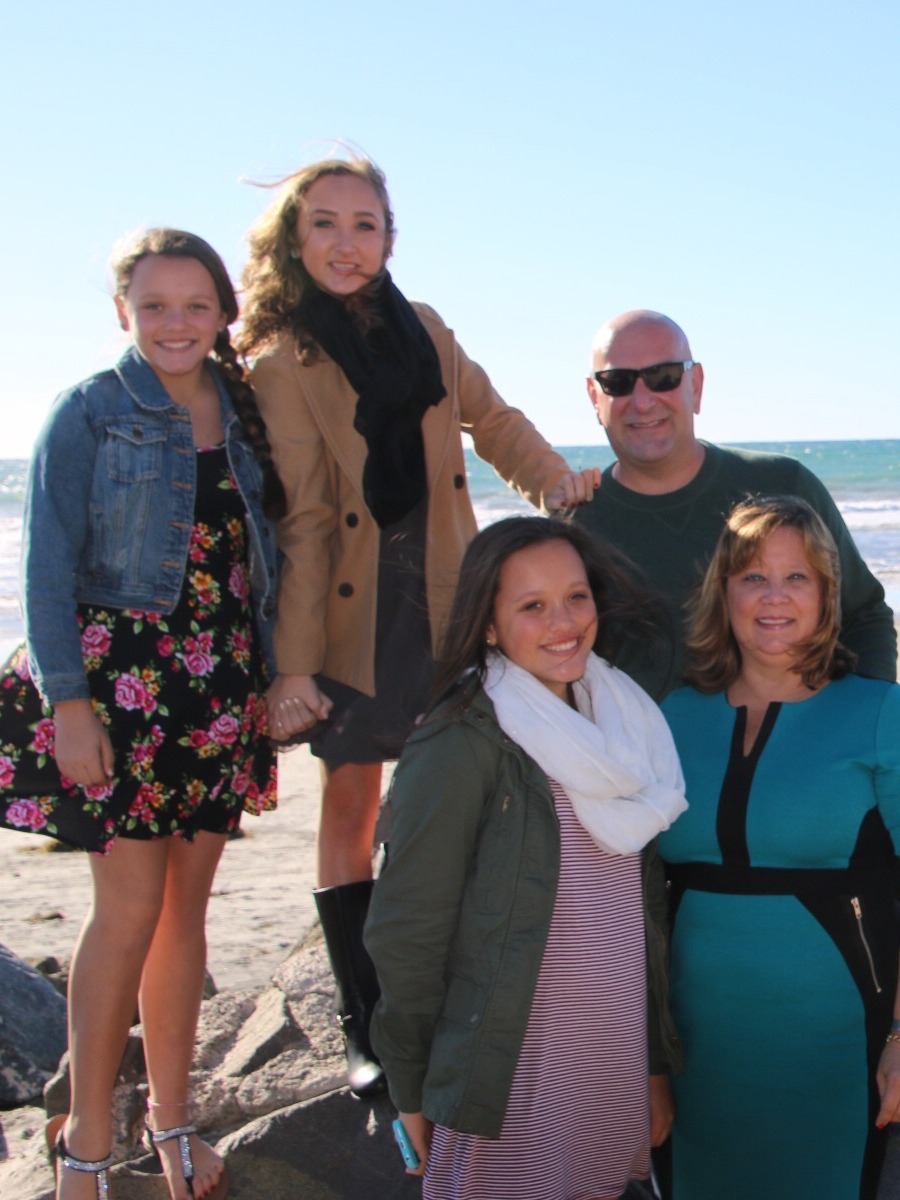
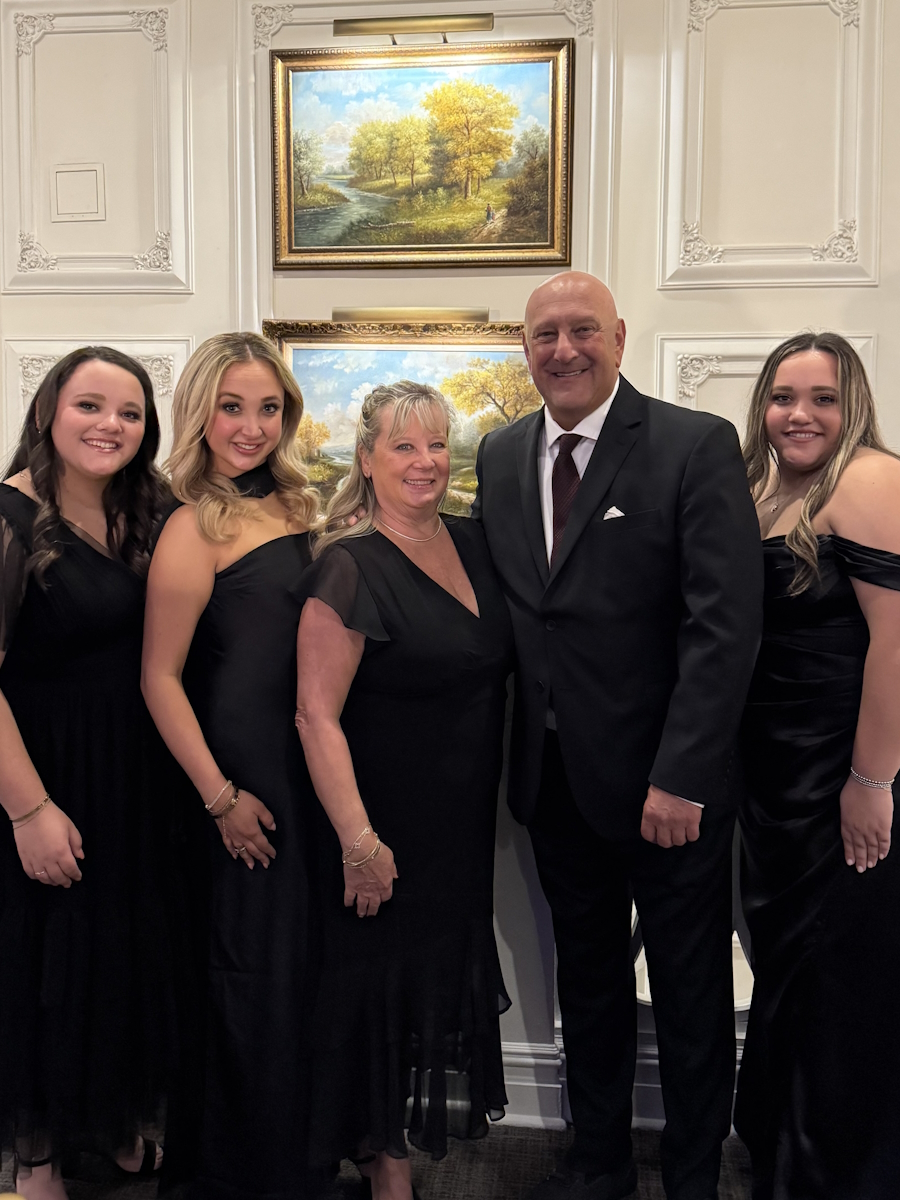
Up until about a year ago, I was working. I have a fantastic career and a fantastic family. My wife and I are parents of three daughters. Our eldest is Jacqueline, and we have identical twins, Caitlin and Christina. We moved from San Diego to Texas because our dream was for them to go to The University of Texas at Austin. As somebody put it, it’s like catching lightning in a bottle to get three kids into that university, but they did. We have always been very focused on our children from the time we raised them.
Jacqueline is going to get her doctorate from The University of Texas at Dallas. She is going to be a doctor of audiology specializing in pediatric and geriatric hearing loss. The twins are both in graduate school at Texas State University. They’re going to be school psychologists. They are two years into their graduate program and have another two years.
I was your typical Fortune 500 corporate executive. Most of my career was with Sony in New Jersey. Then they moved us around 2004 to San Diego. I had a very heavy travel schedule. I ran technical support and a few other things. I was traveling from San Diego to Florida every other week, a lot of trips to Japan, and a tremendous number of trips to Manila. That is where I had most of my team, as well as Costa Rica and El Salvador. I was the guy doing 100,000 to 150,000 miles per year flying and home with the kids very often and doing all the kid stuff.
I got a similar job at another Fortune 500 company, Global Payments, which is what brought us to Texas. They do financial technology. I spent a lot of time traveling to Manila. We had a team and an operation over there. I worked in downtown Dallas until the pandemic and my illness, and then I worked from home.
My ability to work slowly declined due to treatment, a lot of doctors’ appointments, neuropathy that made it difficult to type, and other the side effects that go along with treatment. At 65, I decided to retire and let Medicare pick up their part of the treatments that I go through.
Early symptoms and delayed diagnosis before COVID
Everything went about as wrong as it could possibly go. A year prior to my diagnosis, I went to Manila. We have a team over there and there was a huge holiday party. Certain executives from around the world flew in to show their support and meet with the teams. Every single time I have been to Asia in the past 35 years, I come back with a sinus infection. I came back from Manila, and, like always, I had a nasal drip and a cough. After about a month, one of my colleagues goes, “Phil, that cough isn’t going away. You should see a doctor.”
I saw a doctor — it was easy to get an appointment back then — and he loaded me up on antibiotics, which was not unusual. After two weeks, I went back and he said, “It’s still not cleared. I will give you another two weeks. That will clear it up.” But it didn’t, so I was given more antibiotics and more antibiotics. Eventually, he had a chest X-ray done and said I had pneumonia, so they gave me more antibiotics. This was when I learned that the quality of chest X-rays and radiologists are not the same everywhere.
[Editor’s Note: Many people with lung cancer are first diagnosed with pneumonia. Because symptoms and imaging findings can overlap, a study published in the British Journal of General Practice shows that this occurs in an estimated 20–25% of cases and reflects a known challenge in identifying lung cancer early.]
I took the antibiotics for a while and he said, “We have to do a CT scan.” I also learned that the quality of CT scans is not the same everywhere. I didn’t know then that it should have just taken about 30 seconds with modern equipment, but since it was a very old machine, the scan took about 30 minutes.
A year prior, my father died of lung cancer. He smoked from 1950 to 1970. I smoked one cigarette in the eighth grade. My doctor said we have to check for cancer. I still remember the phone call when the results came back. He said, “Nope, it is not cancer. We’re going to get you into a pulmonologist.”
Then it was the worst time in the world: COVID happened. I remember it clearly because my twins were graduating from high school, so we were planning a trip to Italy for them, my wife, and other people. I was watching the news and seeing all these people in Italy locked in their homes because of this new virus.
The COVID pandemic, suspected coronavirus, and struggling to see a pulmonologist
All of a sudden, it comes out that it’s spreading in China. When this whole thing started, I was in the Philippines. I ended up changing planes and spent a day in Narita, Japan. Now my doctor was saying, “You might have this coronavirus.” Of course, everything went into lockdown.
I got one of the first tests in Dallas for this disease that I did not have. I had to drive up and a nurse in a hazmat suit did the swab test. By now, it’s April and I couldn’t get into a pulmonologist until November.
Between April and November, my coughing got worse and worse. I couldn’t get a sentence out. I couldn’t speak or breathe. I was pretty miserable. I couldn’t interface with people because they immediately thought that I had COVID, when COVID was deadly, which I did not. I would say, “No, I have something else. We do not know what it is, but it is going to get cured.”
Finally seeing the pulmonologist and getting the lung cancer diagnosis
Finally, in November, right around election day, I got in with the pulmonologist at the local hospital. I went in and there were a lot of very sick people at the time because this was when COVID was at its peak. I had a lung biopsy done.
It was the day before Thanksgiving. It was 4:30 p.m., the last appointment before he shut down for the holidays. He was on one side of the room and I was on the other side of the room. He was wearing a KN95 mask and I had one. We have plastic up everywhere. He said, “We found some cancer cells.” I said, “How could that be? I have never smoked. It makes no sense.” He goes, “Don’t know. Don’t know what caused it.” Now he was guessing. Everybody typically wants an answer to how this happened. “Maybe you were around a lot of smoke.”
I asked him what we were going to do. He was going to send me to a local oncology clinic that had a lot of doctors. He said, “You’re going to have to have chemotherapy and radiation. Then we’re going to remove your lung. We have to get you this guy and that guy and another guy, and ultimately we will take your lung out,” which would have killed me.
I asked him the question that I always knew that you should ask a doctor: “What would you do if this were you?” I was waiting for him to tell me to go to Memorial Sloan Kettering or do something spectacular. He said, “I would go home and get my affairs in order if I were you,” which was devastating, but I did not take it as dire as he pointed out. I cannot say I’m a pretty positive person, but I was pretty positive about this one. I said, “We’re going to beat this.”
The most important thing that you could do, which I did, is to find somebody you trust, hopefully somebody from your family, someone you know, or someone who is highly educated in this particular area, who can advise you. I went home and I called my cousin Cindy and her husband, Lenny, who is a retired physician and has worked for the drug companies.
Getting to an NCI-designated cancer center and UT Southwestern
Lenny said, “No, you have to go to a National Cancer Institute hospital. Let’s go online and find one. UT Southwestern is right by you in Dallas. It’s one of the top hospitals.” I asked, “How do I go there?” I was thinking you needed a pathway in, somebody to recommend you, or someone to write something. He said, “You need a lung removed. Let’s search under lung and thoracic surgeons. Let’s find the chief of the department. Tomorrow morning, call his office and tell him you have been diagnosed with lung cancer and you need to see him.”
I said, “That’s it? I don’t have to have any magic? You don’t have to call? I don’t need another doctor? I don’t have to stand on my head and eat a bug?” He said, “No, this is what they do.” I never imagined that I could go to the best hospital, to the best guy, and call and say, “I need to come in.”
When I called, they asked, “What’s your insurance? What’s your diagnosis? You’re going to need this test, that test, and the other test.” I had all those tests, so they said, “You’re going to need copies of all of this stuff. How is next Tuesday at 10 o’clock?” “That is it?” “Yeah.”
I went to UT Southwestern. It was a terrible time because my daughter was having knee surgery, so my wife was there. By now, it’s the Christmas break. The kids are on break from Christmas, so she’s getting knee surgery. I said, “I will see this other surgeon with Jacqueline. We will have her take notes.”
He looked at my X-ray and immediately knew what it was. He said, “You have had this a long time. This is a big tumor.” He showed me the measurement. I said, “That is why I cannot breathe.” “Yeah, that is why you cannot breathe.”
He said, “Before I can take out that lung, you are going to need 30 chemotherapies and 30-some-odd radiations. Then we’re going to get you healthy again to make sure your other lung can sustain you before we take out the lung. Then you have to go through recovery.” I thought, “Man, this is going to be hard, but we’re going to do it.” It was right around the holidays. We have a strong family and had a good Christmas, and there was no downside to anything
Meeting the oncologist who saved my life
He set me up with an oncologist. This is the man who eventually saved my life, Dr. Ben Drapkin. He was relatively new then and probably the first doctor I ever saw who was far younger than me. I kept calling him Dr. Drapkin, but he kept referring to himself as Ben and wanted me to call him Ben. I said, “No, you’re my doctor.”
The surgeon identified the stage. He said, “I’m going to call this 3A,” but while he was looking, he said, “You know what? This is 3B, but it’s just in this lung. It has not spread, so it’s not 4.”
Each hospital has its own portal, but I have MyChart and I can see everything. I can see my test results before talking to the doctors about it. I see all my appointments in there. There are 30 chemotherapies and 30 radiations, and the surgery is three months out. I keep looking at it because every time I look, there are more and more appointments.
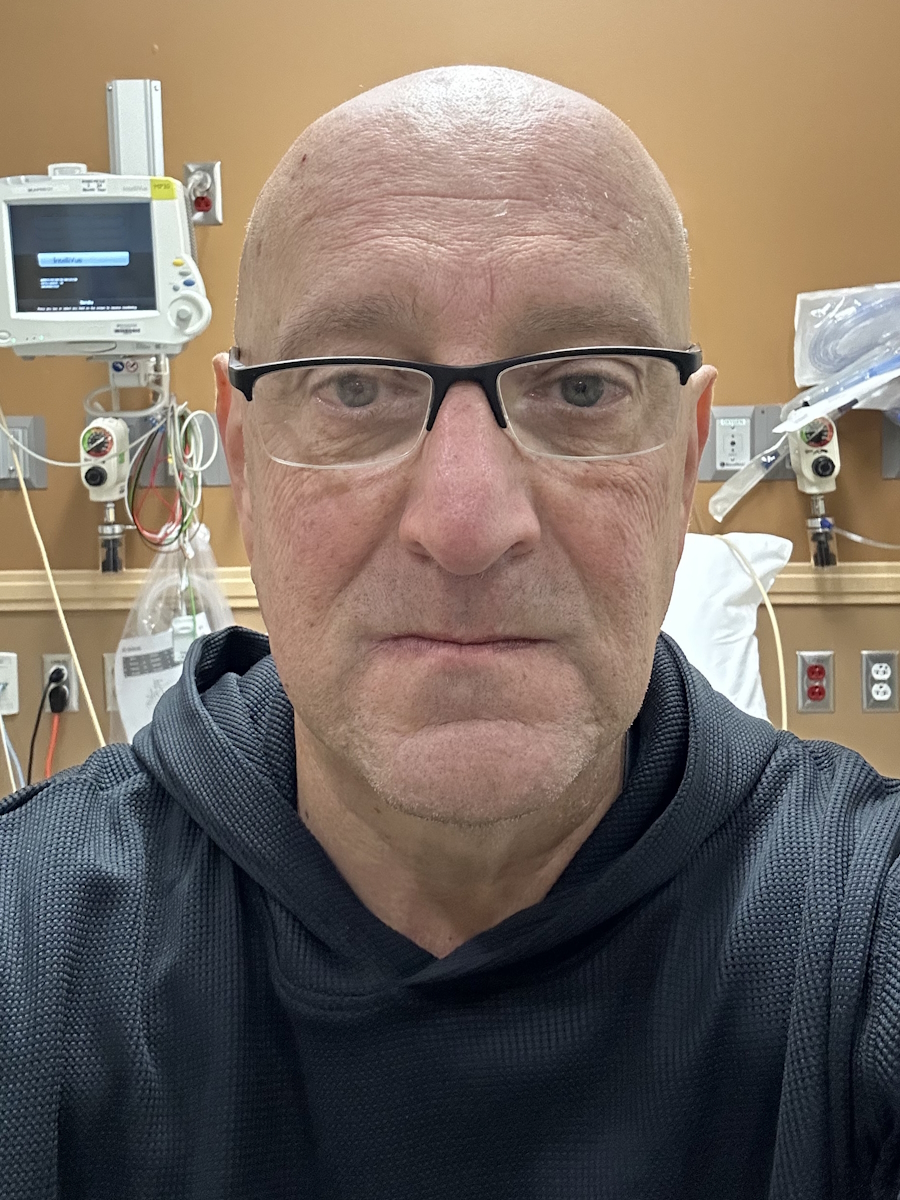
Then, all of a sudden, all the appointments disappeared. Right then, I get a phone call: “Doctor says you have to go in.” My wife and I went in, and he said, “Phil, from the time the surgeon, Dr. Kernstine, saw the scan and when I looked at it, it had leaped over. It has gone into your lymph nodes, your heart, and your other lung. It’s moving very fast and very aggressively. We cannot remove your lung because it’s going to go into your other lung. We cannot do radiation. It’s too close to your heart.” “Well, what are we going to do?” “We’re going to check for genetic mutations.”
At the time, I wasn’t exactly sure what that was, but I recall my cousin Cindy and Lenny were saying, “You have to have him check for genetic mutations.” All of a sudden, it has caught my attention. I had heard it before. “How do we do that?” “We have got to do another biopsy.” Back to the hospital, trying to find a pulmonologist who could do it, while they were all taking care of COVID patients.
Through luck, I was able to get in and get the biopsy done. In the meantime, he said, “We’re going to start you on chemotherapy because we have to slow this down. The mutation test takes weeks. This is going to take your life in three to four months. Unless we do something, unless we find what this is, you will be dead in three to four months.”
Facing the odds and choosing hope
This is a fantastic story. I was trying to use my analytical mind to figure out how much trouble I was in. How can I be optimistic about this? I was sitting there with my wife and said, “What are my odds? How long can I live with this?” He said, “Every cancer is different and everybody is different.” I prodded, “No, tell me the truth. With stage 4 metastatic lung cancer, what are my odds of living a long life?” Stupid question to ask, but he said, “Well, one year, 40%. Two years, 20%. Five years, 5–7% chance you will be alive in five years.” I turned to my wife and said, “It sounds like in five years, you and I are going to Tahiti to celebrate.”
I went through two different chemotherapy regimens. It wasn’t difficult in the beginning because chemo is cumulative. The first two sessions were pretty easy. From what I understand, it doesn’t become bad until the fourth session.
Learning about ROS1 and starting targeted therapy
The results from the genetic testing came back. He said, “Great news. You have ROS1.” I asked him if it was hereditary. He said, “No, it’s bad luck. Bad luck caused it. We don’t know exactly what triggers it, but a gene broke and fused with another gene, sent a signal to grow these tumors, and now you have a tumor.”
“But there is a drug, and the drug works on 80% of the people, so there’s no reason why it wouldn’t work on you. This will not cure it. It will never be cured. It’s in your lymphatic system, so you will always have it. But this drug will stop it and arrest it from doing what it has been doing — from growing like that.”
I asked him how long the drug will last. He explained, “In about 10% of the people, it falls off after a year and the cancer mutates. Another 10% in the second year. By the third year, usually the cancer mutates around it and goes, but some people have been on this drug for 10 years and are doing great.”
I asked him what happens when the cancer mutates around it. He said, “We hope there is a new drug, and there will be because they are working on drugs for this, and there’s always a new drug. I cannot tell you what is going on in all the labs across the country. But science is trying to understand this as well, and they are making great headway, so you just have to go with it.”
I take these pills — these amazingly expensive pills. Thankfully, I had good insurance. The pills cost $25,000 a month for a bottle of 60 pills. I would take them twice a day. Thankfully, I only paid $25 for my first copay, and for the next three years that I was on this drug, I did not pay.
As expected, the drug lasted about two years, then the cancer started progressing.
Radiation, waiting for progression, and the G2032R mutation
I had radiation done on my lower right lung. It was like surgery without cutting through the skin. That part of the lung is no longer functional, but the cancer is not going to grow there. The hope is that they have now eradicated the trouble spot, but maybe not. We monitored it every three months and, unfortunately, the cancer started to grow, so he said, “We need to do another biopsy, but we have to wait until it gets big enough to take a biopsy. It’s in different spots, but we need a good spot.” For about six months, I was going back every 30 days to get scans.
Eventually, the tumor size reached one centimeter and they were able to take a sample for biopsy. This is where science comes in. He said, “You have the G2032R mutation, which is a very common mutation for ROS1.” What happens is the cancer outsmarts the drug. These two genes get together and communicate to the other genes, “Hey, this is great. We can do this and we can grow,” which is what it wants to do, and the ROS1 drug stops that from happening. Then the cancer says, “You know what? We can get together like this and that drug cannot stop us.” Then it communicates on a molecular level and you have a tumor.
What we have to watch next is that this doesn’t go to my brain. In his words, he said, “The cancer will try to seek refuge in your brain.” “What do we do if it does that?” “We do radiation to your brain.”
At this point, my wife and I were trying to travel and squeeze in what we wanted to do during retirement within a year or two. One place that we decided to visit is a particular resort in Cancun called Live Aqua, which we like.
Traveling between scans and choosing a clinical trial in Boston
I would get my scans and my doctor would say, “Now we have to wait another three months.” In the car on the way back, I would say, “Okay, book Live Aqua within the next three months,” and we would book it and go to Cancun. Then we would come back and I would get the scans again. “How did I do?” “Still have to wait, still have to come back.” “Okay, let’s go again.”
Once he discovered the mutation, he said I had two options. “There is a drug that was recently approved by the FDA, but it has some unpleasant side effects and could potentially interfere with your ability to enjoy life. You and your wife are retired, but are very active, like to go to the gym, work out, and go to the beach. There is another drug that we think is as good, but with a side effect profile that is more in tune with your lifestyle. It’s on a clinical trial in Boston. You are going to have to go to Dr. Jessica Lin in Mass General.” This is where having a doctor who is doing his job matters. I said, “Fine, we are going to go with the clinical trial. What do I have to lose?”
We want to go with the best option. The best option that would give me the best quality of life was this clinical trial in Boston with Dr. Jessica Lin. My doctor, Dr. Drapkin, had done his fellowship there, by the way. He kept on referring to her as Jess, and I said, “No, Dr. Lin. I don’t go by first names with people whom I am trusting with my life.” He said, “Okay, but you’re going to have to go to Boston.” I said, “Fine. That’s fine.”
He was going to Europe for Christmas break and when he gets back, we’re going to prepare a packet and submit it to enroll me in the clinical trial. I thoughtI had about a month, but he called the next day and said, “Okay, I spoke to Jess. You’re perfect for the trial. One of the things they want to see is people who are healthy with longevity. For your age and your disease, you’re doing great. They think you can tolerate it fine and it’s a good choice for you. They’re going to call you.” I thought, “What do I have to lose?”
Enrolling in the Boston clinical trial and gaining weight
I headed to Boston the following month. I went through the exam and they said, “Okay, you’re accepted into the trial, but you have to come here every week, Monday through Thursday.” I said I could do it because I was used to it. I did it for my job early on. Now I am doing it for me. For about a month, it was every week. Then it became every other week. Then it became once a month.
One side effect that I experienced was that I started putting on a lot of weight. Over the course of a year, I put on 37 pounds. I thought it was from the drug, so I asked Dr. Lin if the drug was making me put on weight. She said no. Then I realized that during all my trips to Boston, I was living in a hotel and eating in restaurants at the hotel. Then there was this fantastic ice cream place nearby and every night, I would go over and get ice cream.
I will be in the trial for the rest of my life. I’m on this new drug. I graduated from going every week to every three months. Unless I have progression, I will be going every three months for the rest of my life.
I talked to Ben and said, “If anything ever changes, I will come see you. I want you to still be my oncologist.” He said, “No. Jess is the best doctor you can get. That’s where you need to be. You have a very, very rare and very, very aggressive disease, and they have it under control. They are, of course, part of Harvard Medical School, and its labs are working on these drugs. They have the best research team and the next drugs are going to come out of there. You want to make sure that if you need the next drug, you’re getting the next drug.”
Fulfilling the Tahiti promise and going on an 18-day cruise
When Dr. Drapkin told me that the odds of living five years would be 5–7%, I thought, “Whatever I say to her is going to set the tone for how this goes.” I could say, “Oh my God, we have to go buy a casket.” But instead I said, “In five years, we’re going to go to Tahiti to celebrate.”
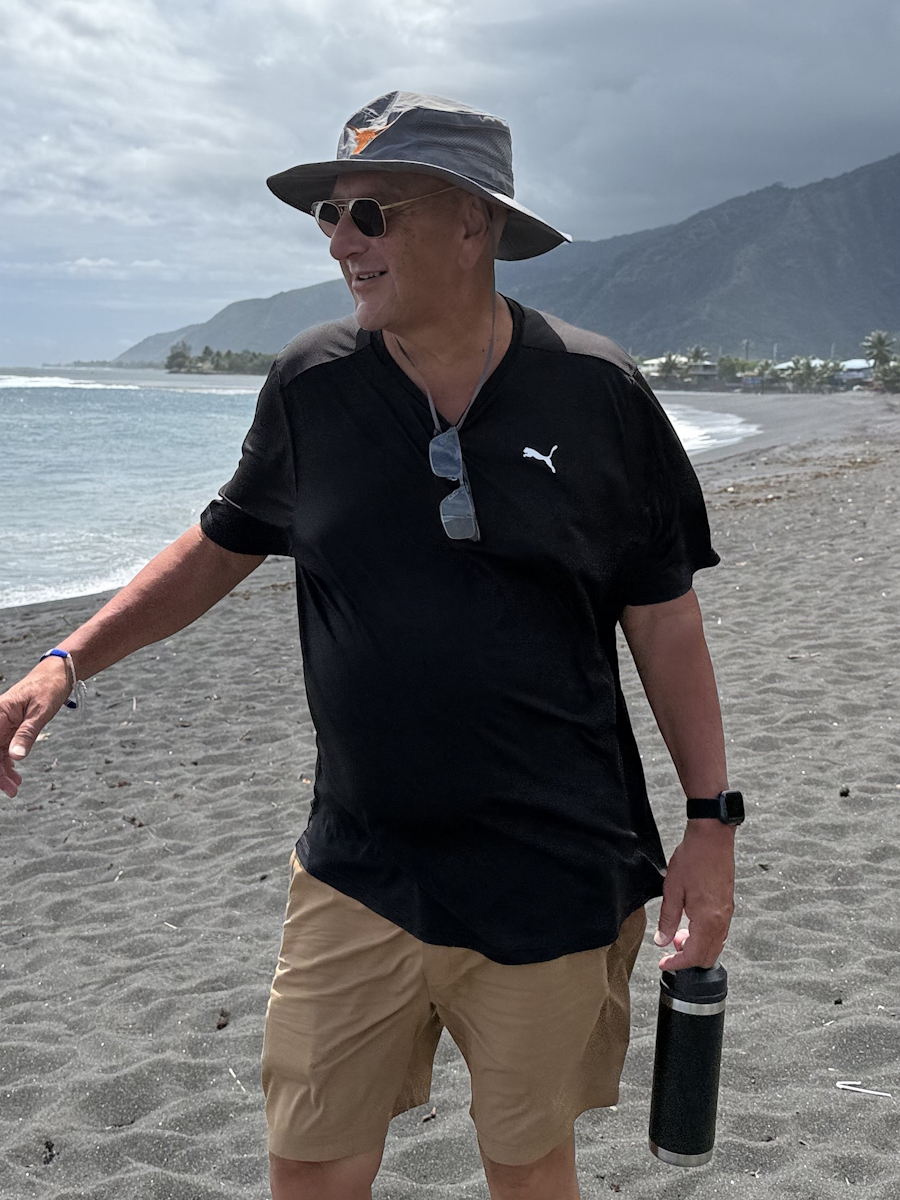
Earlier this year, I hit five years, so we planned our trip to Tahiti. It was an 18-day cruise on a small ship of about 600–700 passengers. My wife and I went to Papeete and spent four days there, then we went on an 18-day cruise from Tahiti. We went through the different islands there. We went to the Marquesas. We crossed the equator. There was a big ceremony on the boat for the people who crossed for the first time. We went to Hawaii.
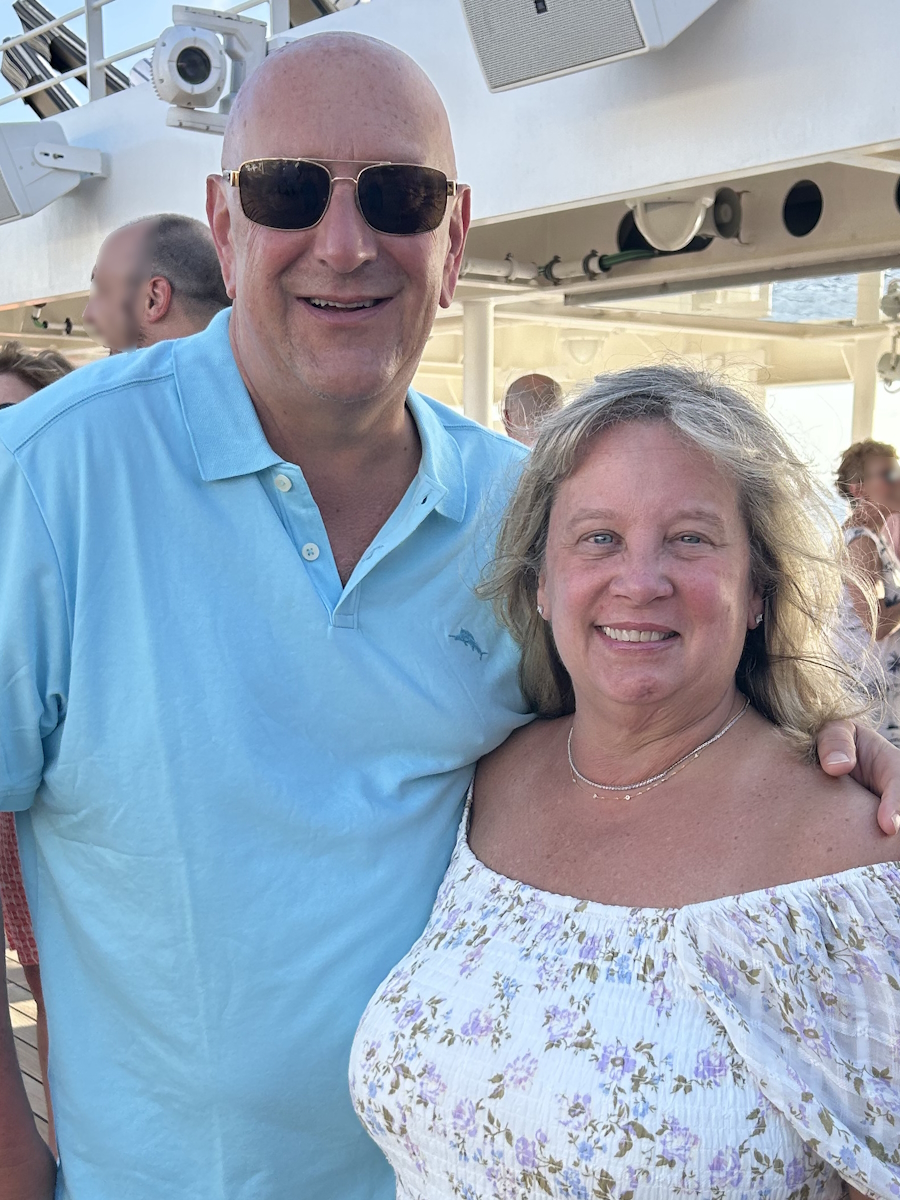
The trip happened to coincide with our 25th anniversary. We were married in Hawaii and sailed to LA. That is something you plan, and it takes time and money, and we were fortunate enough to have both. I told her that in five years, we were going to go to Tahiti to celebrate — and we did.
Serendipity: Meeting my oncologist on a plane after Tahiti
From LA, we had to fly back to Dallas. My daughter was going to meet us there. While on the plane, a guy walks past me. I said to my wife, “That looks like Dr. Drapkin, but much younger,” because the only time I have ever seen him was in a white coat with a stethoscope. He has headphones on, into his music, and dressed like any of us would dress when flying.
I asked the flight attendant and she checked the flight log. Sure enough, it was my oncologist. Five years ago, he told me that I was potentially going to die from this disease, but he ended up saving my life with his knowledge, stopping them from taking out the lung, knowing to look for the mutation, finding the mutation, and then finding the trial for me. He worked hard for me, so to have him on this flight was serendipity.
I walked toward him and said, “Ben Drapkin.” He looked up and said, “Yes?” I said, “Dr. Drapkin.” He said, “Yeah?” I said, “You do not recognize me?” Again, he gave me the look. I said, “You saved my life.” The blood drained from his face. He stood up and the two of us hugged. It was the most fantastic thing because he looked after me.
Afterwards, we met in baggage claim. We have a picture of all of us with my daughter. It just so happened that about a month prior, my daughter was getting her doctorate from The University of Texas in Dallas, and you have to be hooded by another member of the faculty and another doctor. She asked, “Do you think Dr. Drapkin would hood me?”
Now here we all are in Dallas. He said, “I will be honored to hood you,” because the only reason that she was able to go and get this degree — all three of my kids, the only reason they were able to get their degrees — is because they want to help children. They’re going through eight years of college and graduate school to help children because I was able to work.
I lost my life insurance through a bad series of events. There’s money there, but not enough to pay for their education. But I was able to work and pay for their education because of the work that he did, and because of it, they are hopefully going to do work for other people as well, other children, so it’s a happy ending.
Living with stage 4 cancer: Ongoing trial, frequent travel, and trusting science
It’s not over. Hopefully, there are many years ahead. The drug I’m on hasn’t been approved yet, but it has been submitted to the FDA, so hopefully, it will be approved shortly. I go to absolutely the best hospital and the best doctor for what I have.
It gets a little bit cumbersome. I put those visits on my calendar. I have them on the calendar for the rest of the year. Fortunately, I only have to go four times a year now. I buy the plane tickets and make the hotel reservations. Then I have to get up at 3 a.m., drive to the airport, and fly to Boston. I take an Uber to the hospital, get a CT scan, and then take another Uber to another part of Boston to get a brain MRI. I spend the next day sitting in a hotel room, hitting refresh on my computer until the results come in. I try to interpret the results myself.
I usually take the results and upload them into an AI tool, saying, Explain this to me the way an oncologist would explain it to a patient.” So far, it says, “This is good news. This is great news. There has been no progression.” I have tumors, but they are very, very small. They’re measured in millimeters, but they’re not growing.
One of the things that Dr. Lin discovered that was a little bit scary was something in my L3 vertebra, which is the pathway up the spine to the brain, which is the migration that lung cancer takes. This was about nine months ago. There was something on my L3 that had not been seen before. They believe it’s treated metastasis, meaning the cancer spread there, but the drug took care of it, so it’s now a dead tumor.
Retirement, supportive employer, and daily life with cancer
At this point, I’m fully retired. I miss working. I miss the people. They were absolutely fantastic. We keep in touch. I send them emails once in a while, and they want to know how I’m doing. We follow each other on Facebook. I owe a lot to my boss and the president of the company because when I got cancer, they said, “You do whatever you need to do.” This went all the way up to the C‑level of the company. They were very supportive. “We are behind you. Whatever you need to do, you do. If you don’t feel like working, do not work. If you don’t want to show up for a meeting, do not show up for a meeting. If you want to disappear for a month to recover but still get paid, you can disappear and get paid.” But I didn’t. I worked. I worked through chemotherapy. I worked with needles in my arms. I attended meetings. Because I wanted to.
But now, I don’t want to, actually. Fortunately, my wife and I can live a full life, even with a metastatic lung cancer diagnosis. Every morning, I go to the gym. I don’t do anything crazy because I can’t. My muscles have atrophied. But I can spend 30 minutes walking briskly on a treadmill. I can use the old‑guy weights and keep things from atrophying too much.
Every Monday, we go to Costco to walk around, buy chicken, have free samples, and spend $200 on stuff we don’t need. But we do it every Monday. That’s our routine. We see our kids very often. They’re always here. We travel a lot. Sometimes we go to Puerto Vallarta, rent an Airbnb, and spend the week drinking two pots of coffee, walking up and down the Malecón, and eating tacos for dinner.
We’ve gone to Tahiti, and we’re doing another bucket list trip, which is sailing on a ship that we have been on before. It’s a passenger sailing ship, but it’s like a cruise ship. It holds 200–300 people. We will sail from Barcelona to Venice, which includes all the places that we have wanted to see, so we’re going to see them together.
At some point, cancer is going to win. The cancer is never gone; it’s always there. It colors everything that you do. It’s always in the back of your mind. I asked Dr. Lin, “This drug, is this going to beat ROS1?” She said, “It’s not a cure. It’s a very good drug, but we don’t know how long it’s going to last. We’re learning how long it’s going to last from you. You’re one of the earliest patients on it.” Based on what they see, it’s going to last longer.
When Dr. Drapkin saw me, he was so happy that I was doing well. He said, “There’s going to be another drug. Yeah, it will not last, but there is going to be another drug.” But eventually, whether the other drug has side effects that affect your life or the side effects cause the end of it, cancer is going to win.
Five years ago, we thought that was it. They said I had months. It was during the start of the COVID pandemic, so you couldn’t do anything. I thought, “If we could only get another year, another two years, if I could only see my kids graduate from the University of Texas…” I wanted to see that. I did. Now I am going to see them get doctorates and master’s degrees. Never thought we would do that. Never thought we would go to Tahiti. I’m pretty fortunate. It’s pretty amazing.
I went through a lot, but I got more than most people. When I was diagnosed — and this is a calculation I always go back to — I thought I was going to die in three or four months — that was five years ago. From that point until now, roughly 300 million people in the world have died. Chances are, none of them knew they were going to die. People got sick and died. People got into accidents and died. I have nothing to feel sorry for or feel sad about.
It’s been five years and I’m still going strong at 65 years old. I’m planning on being around as long as I can. Everybody’s time comes; I’m just glad that it wasn’t five years ago. I’m trusting the science. It hasn’t failed me.
Why mental health support is essential with cancer
Mental health support is so important. You need a team. Your oncologist treats cancer, but he doesn’t treat everything else. You want to talk to him about stuff, but that’s not what he does, even with side effects. They referred me to a palliative doctor. The palliative doctor at UT Southwestern recommended Dr. Martin Howe, a cancer psychologist on staff at The University of Texas Southwestern.
I was taking a lot of gabapentin for side effects, which affects mood as well. I have been a patient of hers. We have been talking once a month for the past three to four years, and I intend to keep that going as long as I can. It helps you frame things. It’s very important to see: Is what I am feeling the effect of the drugs or the effect of me? Because they can both be understood.
We have a one‑hour appointment and I talk the whole time. She asks, “How are things going?” and I just talk. At the end, we set up another appointment. I’m their easiest patient. What I find most important is that it gives you the license to talk to yourself during that month. I could see her more often if I needed to, but once a month is fine.
When I say talk to myself, I literally mean talk to myself. During the half hour on the treadmill, that’s my mental health time. I only listen to Spanish music, but since I don’t speak Spanish, I get the rhythm, but I don’t have any story. The story is in my head. “If I had to talk to Dr. Martin Howe this afternoon, what am I going to tell her that is going on? What are all the terrible things that are happening to me because of this cancer? What are all the terrible things that I cannot do? What are all the unfair things? What are all the things that I am afraid are going to happen? What would I tell her?” She does not have to tell me anything. I just talk through it.
The following week, when I get on the treadmill, I cannot even remember all those things that were huge problems a week ago because I have gotten past them. I have dealt with them. I no longer think about them. That happens because every day, I can have these conversations with her in my mind. I can categorize the problems that I have and the things that are making me upset. Then I start to shift myself and the conversation with her to things that are making me happy, like the things that I’m grateful for and the things that are going well. You start to think about those and say, “Oh, I have to tell her this happened to me. That was fantastic. This is what’s going on with me that I can do now.”
Building a full care team: Palliative care, therapist, PCP, and dentist
You need a palliative doctor for the side effects that you are going to have. These things are second-nature to them. We talk about my bowel movements. You can have these conversations with a palliative doctor, who then he says, “Try this or try that,” or, “Let’s increase this or decrease that,” or, “I will write you a prescription for this.” Your oncologist won’t do that.
I don’t know whether a regular therapist would be the same value as a cancer therapist. The cancer therapist understands the drugs. She understands the treatment. This is all she deals with, which is an important part of it.
Your regular primary care physician is there, right along with the side effects. When I put on 37 pounds from eating too much ice cream and pasta, I had to manage my blood sugar, my blood pressure, and all these other things. Your PCP needs to treat that.
Unfortunately, I needed a good dentist. With all the drugs, my mouth became very dry, so there’s a higher chance for plaque to grow. My gums started to recede. With dental work done 25–30 years ago, if something gets underneath and a tooth breaks off, I’m going to live without that tooth. If another tooth next to that breaks off, now you have two teeth missing. I reached the point where I needed a lot of work done, which isn’t cheap. If you’re not working and don’t have company insurance, it’s not cheap.
My wife and I recently got back from Cancun. We went for dental work — not that I am recommending it to everybody. I spent 7.5 hours in a chair and got two extractions, two implants, seven crowns, and a root canal in one sitting. You need a good dentist and have to go regularly because the drugs are going to affect your teeth differently.
A mistake that I see people making is going to their oncologist for everything. The oncologist did go to medical school, but they treat cancer. The whole purpose of why we get treated is not to make us live forever. We won’t. It’s to extend our life, but with a high quality of life.
Quality of life is the most important thing. I learned that from Dr. Lin when I first started with her up in Boston. My wife and I had a trip planned, and it coincided with one of my many trips to Boston. I asked my doctor, “What should I do?” She goes, “Phil, the reason we do this treatment and go through all this is so you can do those types of vacations with your wife. We will move the appointment. Enjoy your life. That is why we do this.”
I’m a 65‑year‑old Italian from New Jersey. Psychology and therapy aren’t something that I grew up with. But if you get a diagnosis like this, you’d better talk to somebody who can help you navigate the mental health aspect. Otherwise, you take it out on your family, your job, or yourself. Or you say, “I’m going to get the most out of each day.”
Looking ahead: Future plans, bucket lists, and hopes for my daughters
Before, nothing was more than 30 days out, and then nothing was more than 90 days out. Now, it’s different. My wife and I are booking a trip for January 2027. We have the bucket list that we want to do. I never would have considered booking that far out. I will buy the insurance, but we’re confident enough that we’ll make the trip. We want to go on a cruise through the Panama Canal. When she grew up, she lived in Panama for a while, so she saw the Panama Canal as a child. We will sign the dotted line in March.
The real bucket list trip will have to wait because it’s a tough one: We want to do a trip from Hong Kong to Singapore, which goes into Vietnam and Thailand. I used to go to Hong Kong for work, and I haven’t been there since 2002 or 2003. My wife has never been there. I want to go there and I want us to see what Hong Kong is like. I have been to Singapore on business once, but I didn’t get to see anything. We’re going to do that trip in 2028. I’m not going to pay for it yet, but we are going to do that.
As far as our three daughters, I’m looking forward to seeing them graduate and begin their careers. Jackie is already seeing patients, and I get to witness her excitement when she calls me about what they were able to do for a particular patient. She runs a big part of their Medicare practice for people who come in and don’t have any money. The Callier Center has programs for them and that’s where she’s involved, especially with young kids who have disabilities. She’s very good. I see her excitement in doing this role as a resident.
The twins are still in the classroom. They have two years left before they graduate. I want to be there to see them as they begin their careers. I want to see them bring home paychecks. I want to see them pay for their first car insurance bill.
I cannot wait for their weddings. I cannot wait to see grandchildren, if they choose to get married. I think they will. I will be there. I didn’t even think that was a possibility.
Inspired by Phil's story?
Share your story, too!
More ROS1+ Lung Cancer Stories
Phil P., Non-Small Cell Lung Cancer, ROS1+, Stage 4 (Metastatic)
Symptoms: Persistent cough, nasal drip, shortness of breath, inability to speak in full sentences
Treatments: Chemotherapy, targeted therapy, radiation therapy, next-generation ROS1 inhibitor (clinical trial)
...
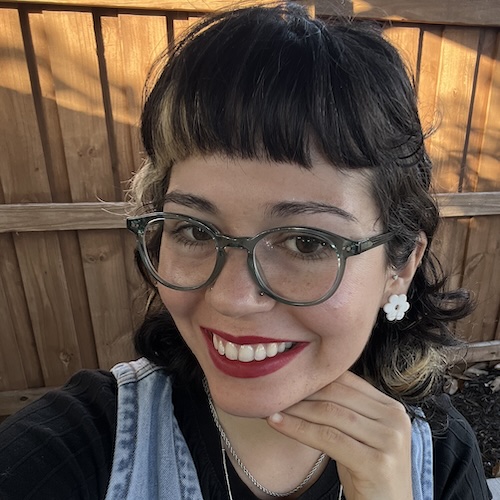
Drea C., Non-Small Cell Lung Cancer, ROS1+, Stage 4 (Metastatic)
Symptoms: Swollen ankle resulting from a deep vein thrombosis or blood clot, mysterious bruising, extreme weight loss, persistent shortness of breath, rattling sound coming from the throat while breathing
Treatments: Radiation therapy, chemotherapy, targeted therapies
...
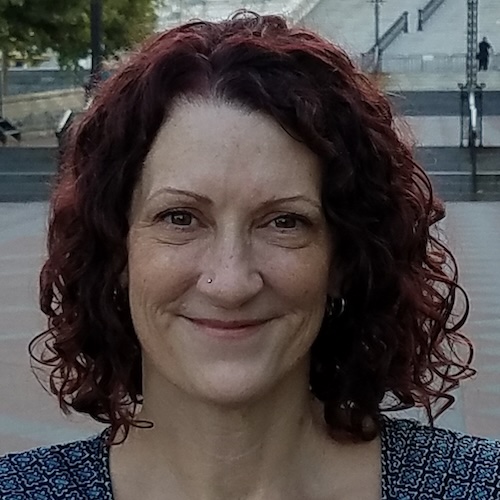
Lysa B., Non-Small Cell Lung Cancer, ROS1+, Stage 4 (Metastatic)
Symptom: Severe but intermittent back pain
Treatments: Chemotherapy, radiation therapy, targeted therapy (including through a clinical trial), surgeries (lung resection, metastatic spine tumor surgery)
...
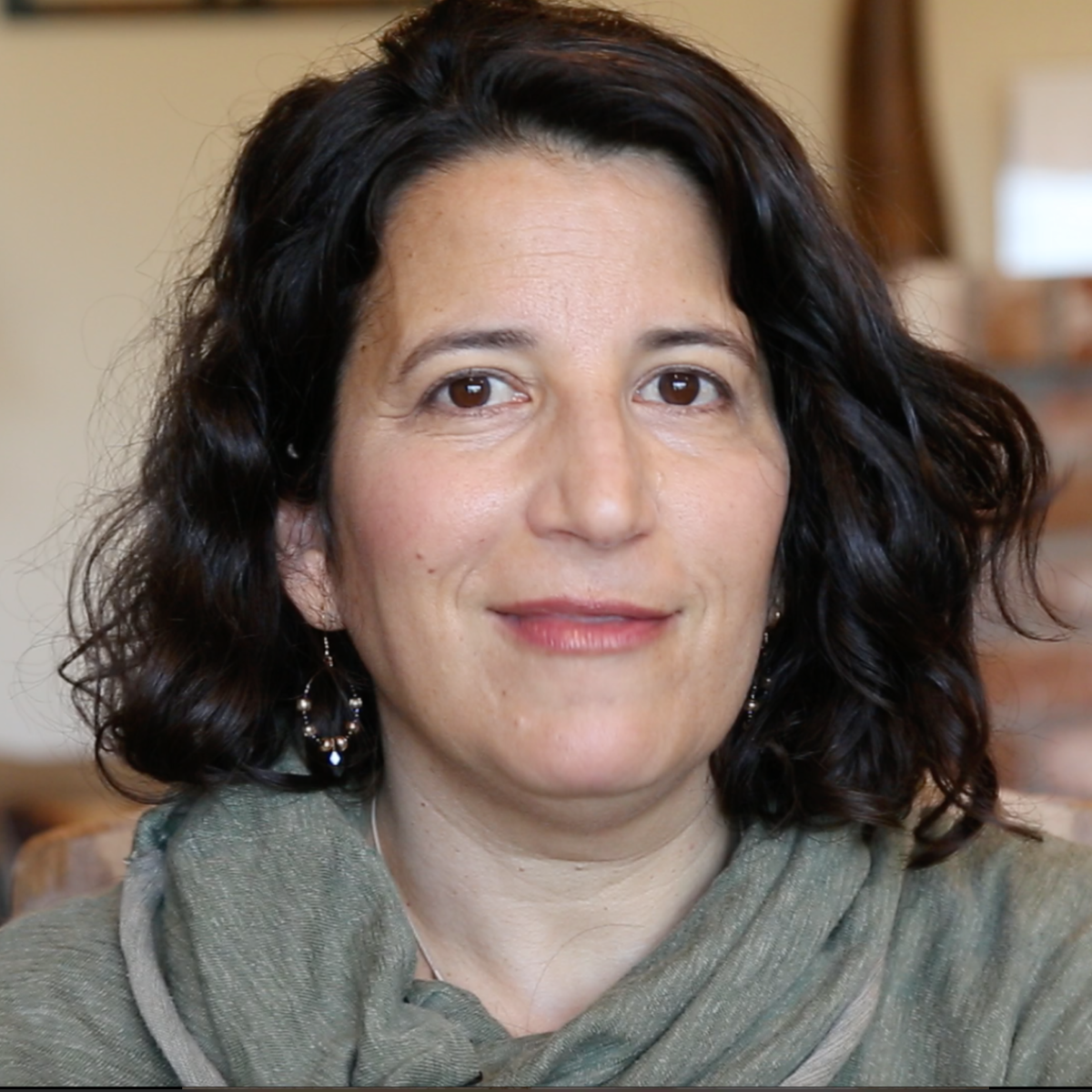
Lisa G., Non-Small Cell Lung Cancer, ROS1+, Stage 4 (Metastatic)
Symptoms: Persistent cough (months), coughing up a little blood, high fever, night sweats
Treatments: Chemotherapy (4 cycles), maintenance chemotherapy (4 cycles)
...