Cancer Care Partners & Caregivers
When someone is diagnosed with cancer, the ripple effect touches everyone around them. A spouse adjusts their whole life overnight. An adult child suddenly becomes the parent. A parent watches their child fight a disease they cannot fight for them.
At The Patient Story, we know that caregivers deserve their own care. That’s why we’ve spent years documenting not just patient stories, but the experiences of the people who show up every day: the cancer care partners. Their honesty has shaped everything on this page.
Hear from cancer caregivers and care partners
Real experiences with caring for cancer patients — in their own words.



What Is a Cancer Care Partner?
The language around cancer caregiving has evolved. The term care partner has gained traction in recent years. It acknowledges that the person supporting a cancer patient isn’t just performing tasks; they are an active partner in navigating one of the most difficult experiences a family can face.
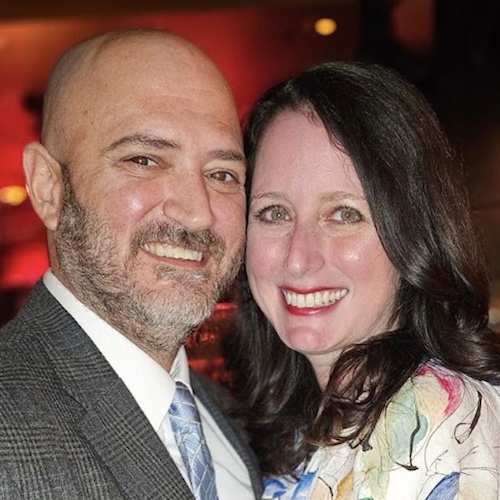
A cancer care partner might be the spouse or long-term partner who attends every appointment. It might be an adult child who travels across the country to coordinate care for a parent. It might be a parent sitting in a pediatric oncology waiting room. What unites them is the depth of their involvement along emotional, logistical, and relational lanes and the reality that a cancer diagnosis changes their life as profoundly as it changes the patient’s.
You need to take care of yourself as well as you take care of the person that you love so much who’s going through it.
Esther Schorr, care partner to her husband Andrew after his CLL diagnosis
As Esther points out, care partners need their own support system, their own space to process fear and grief, and their own community.
Lessons from Our Care Partner Community
Below are common story themes from dozens of conversations with spouses, children, and parents who have supported a loved one through cancer.
Presence matters more than words
Care partners consistently report that showing up physically, at appointments, at home, in quiet moments, meant more than any perfect thing to say. Being there was the message.
Vague offers rarely get accepted
‘Let me know if you need anything’ almost never leads to help. The most useful supporters were specific: ‘I’m going to the grocery store. What do you need?’ or ‘I’m coming over Tuesday to clean.’
The care partner is also going through it
The patient’s experience and the care partner’s experience are profoundly different, and both are real. Ignoring the care partner’s grief, fear, and exhaustion doesn’t make them stronger. It makes them break down later.
Role shifts strain intimacy
When a spouse transitions into a caregiver role, the adult intimate connection can fade. Couples who talked about this openly and intentionally worked to preserve their relationship, not just survive it, fared better.
Self-care is not optional
Exhausted, burned-out care partners are less able to support their loved ones. Care partners who built in small daily moments for themselves (a walk, a drive, a support group) sustained their capacity to care.
Community with other care partners is irreplaceable
Friends and family who haven’t been through it can offer sympathy but not understanding. Care partners who found others with similar experiences, in support groups, online communities, or through platforms like this one, found something different: genuine recognition.
Grief is part of the journey, not a sign of failure
Multiple care partners have described needing to “let themselves grieve” the life they expected: the plans, the future, the version of their partner or parent who existed before diagnosis. This grief is valid and necessary.
Advocacy is a skill that can be learned
Care partners who showed up to appointments, asked questions, researched options, and pushed back when needed describe it as one of the most powerful things they did. No one is born knowing how to navigate cancer care, but anyone can learn.
Joy is allowed and even necessary
Care partners who found small moments of normalcy and celebration throughout treatment (a trip, a game, a favorite meal) describe these as anchors. Permission to feel good doesn’t betray anyone.
Care for the Care Partner
Every experienced care partner in our community arrives at the same realization, often too late in the process, that they cannot sustain their support if they are running on empty. Care partner self-care is not a luxury. It is a prerequisite for being the person their loved one needs.
The risk of neglecting yourself
Multiple care partners describe the early phase of a cancer journey as “survival mode,” where they simply stop thinking about their own needs and focus entirely on the patient. This is understandable and often unavoidable. But extended survival mode has real costs: physical health decline, emotional burnout, and a decreased ability to provide the care that motivated them in the first place.
What actually helps care partners
Based on what our community has shared, these are the most consistently beneficial practices for care partner wellbeing:
Individual therapy or counseling – A private space to process emotions without managing the patient’s reaction to them. Many care partners say this was transformative.
- Care Partner-specific support groups – Being around others who understand the specific experience, rather than simply sympathizing with it, provides a kind of relief that’s hard to find elsewhere. Both in-person and online groups have value.
- Daily moments of independence – Even small windows (a drive with the windows down, a coffee outside the house, a workout) that are entirely for the care partner can serve as anchors that prevent total identity loss.
- Accepting help from others – Care partners who allowed the wider network of friends and family to pitch in reported significantly less exhaustion. Letting people help is itself a skill, and it benefits everyone.
Find other people who are going through the same thing you are. This journey is very isolating and very lonely.
Blair D. – care partner spouse to Kyle, brain cancer patient